




Abstract
Governments globally are stressing both direct nutrition interventions combined with nutrition sensitive policies and programs to combat malnutrition. Governance at all levels has been identified as a critical element in ensuring success of national nutrition plans. For example, the most recent National Nutrition Program (NNP) in Ethiopia discusses the essentiality of governance and coordination at all levels. The research uses a qualitative study based on semi-structured interviews with key informant. The research discussed in this article focuses on governance structures from national to regional to district level in Ethiopia with an emphasis on translation of a strategy and implementation of the NNP. This article concentrates primarily on results from the national and regional levels. Data at both the national and regional levels indicate that there is general agreement on the nature of the nutrition problems in Ethiopia. At all levels of government, under nutrition, food insecurity, and micronutrient deficiencies were listed as the main nutrition problems. The challenges in governance and implementation identified at both the national and regional levels, however, varied. The implementation of the 2013 NNP was in its early stages at the time of this research. While there was palpable energy around the launch of the NNP, respondents indicated issues related to leadership, coordination, collaboration, advocacy, and budget would be challenges in sustaining momentum.
Introduction
There has been a renewed interest in strategies to accelerate the reduction of malnutrition globally. Much of this interest has focused on the “1000 days” or the period from conception to 2 years of age. The Lancet series on Maternal and Child Malnutrition, published in 2008, identified key interventions targeting the first 1000 days of life that reduce significantly mortality and morbidity in the developing world. 1 The series also noted that 90% of infants and young children who suffered from stunting and long-term effects of poor nutrition live in 36 high burden countries and recommended a key set of interventions to improve nutrition and prevent related disease. The updated 2013 Lancet series advanced the knowledge provided in the earlier series. The 2013 series provided more emphasis on nutrition sensitive approaches to improving nutrition. 2 In addition, there was a clear articulation in the 2013 Lancet that governance and an enabling environment were critical for effective policy design and implementation both for direct and nutrition sensitive interventions. 3
The concept of good governance is not new. In 1999, the World Bank defined national governance as “the traditions and institutions by which authority in a country is exercised.” 4 Alternatively, good governance is defined as the processes for making and implementing decisions. 5 Embedded in these definitions are a composite of factors including, but not limited to, transparency, accountability, equity and inclusion, efficiency, participation, legislation, and monitoring and evaluation. A former United Nations secretary general observed, “good governance is perhaps the single most important factor in eradicating poverty and promoting development.” 6 Despite the emphasis on good governance at the international and national level, the concept remains poorly understood. At the operational level, governance is generally thought of as the ability to perform efficiently, effectively, and responsibly. 7
A second crosscutting issue that has emerged in the development literature is the essentiality for an enabling environment. Similar to governance, “enabling environment” is a somewhat ambiguous term. One definition of enabling environment is a set of interrelated conditions—such as legal, organizational, fiscal, informational, political, and cultural—that impact on the capacity of the development actors. 8
The 2008 Lancet series provided the science base for the Scaling Up Nutrition (SUN) Movement. 9 Scaling Up Nutrition is one example where both direct nutrition interventions and nutrition sensitive policies and programs are stressed as a strategy for accelerating improvements in nutrition status, with a particular emphasis on the first 1000 days. Scaling Up Nutrition also stresses governance and an enabling environment as 2 key factors needed for success.
Ethiopia was one of the initial countries—called early risers—participating in the SUN Movement. The Government of Ethiopia’s (GOE) first National Nutrition Program (NNP) of 2008 mirrors 10 the approach of SUN. The NNP was developed through a collaborative process involving relevant government departments, donors (also called partners), civil society, and the research community. The GOE recognized nutritional problems as major public health issues that needed a harmonized approach. In addition, the GOE recognized that the rate of progress in stunting and underweight was not sufficient to meet the Millennium Development Goals. 11 Prior to the development of the first NNP, most nutrition interventions in Ethiopia concentrated on emergency feeding and micronutrient supplementation and very little on prevention. The 2008 NNP was supported and funded primarily by the World Bank and United Nations Children’s Fund (UNICEF).
The revision of the NNP was begun in 2012 and completed in 2013 with an emphasis on direct interventions as well as multisector approaches for decreasing malnutrition across the life cycles. 12 The second NNP identifies specific strategies and programs for health, agriculture, education, social protection, trade, and relevant regulations and standards, 12 and covers the period from June 2013 to June 2015.
Both at the country and subnational level in Ethiopia, there is increased awareness that investment in nutrition is a key to development of human capital. Indeed, Ethiopia has made progress in decreasing malnutrition. Between 2000 and 2011, based on Demographic and Health Survey (DHS) data, 13, 14 stunting decreased from 58% to 44% and during the same time period, underweight was reduced from 41% to 29%. While progress has been made in improving nutrition, the GOE, with its partners, wants to continue to accelerate the rate of decrease in levels of malnutrition. A key part of second NNP is an emphasis on governance. 12 The governance structure for nutrition at the national level revolves around a National Nutrition Coordinating Body (NNCB), chaired by the State Minister for Programs from the Ministry of Health (MOH) and cochaired by the State Minister for Agriculture and Education. The NNCB membership includes each Ministry with direct or indirect involvement in nutrition. The NNP has identified specific objectives for governance and implementation at the national, regional, and woreda (district) level.
The research discussed in this article focuses on governance structures from national to regional to district level with an emphasis on translation of a strategy and implementation of the NNP. This article concentrates primarily on results from the national and regional levels.
Design and Methods of the Study
This study is a qualitative study from which some relevant metrics were derived, and key informants (also called interviewees) at the national and subnational level were interviewed. Interviewees were purposefully selected based on their involvement in the development and/or implementation of the NNP. Information was collected at the national and subnational (region, zonal, and woreda—2 woredas from the Agriculture Growth Program (AGP) and 2 from non-AGP woredas) levels in 4 regions (Amhara, Oromia, SNNPR, and Tigray) of Ethiopia. A woreda is the equivalent of a district within a region. The sectors that were included but were not limited to health, agriculture, education, finance and economic development, women, children and youth affairs, and social protection. The selection of people for interviews at all levels was based on the position held; positions most directly involved in the NNP was the basis of selection. Interviewees included stakeholders from the government, academic institutions, United Nations agencies, bilateral donors (USAID, DFID, and CIDA), and nongovernmental bodies. The term “partners” used by many of the respondents refers to either UN or bilateral donors or international nongovernmental organizations.
Key informants were selected based on their knowledge of the policy landscape in Ethiopia. All information contained in the interviews is confidential. Interviews were conducted anonymously following structured interview guides, allowing for easy aggregation of results. Descriptive analyses are complemented by a synthesis of key messages.
A total of 24 interviews were conducted at the national level, and 307 interviews were conducted at the subnational level. A purposeful sample of 4 regions, 2 zones from each region and 2 woredas from each zone, was selected. Interviews were conducted from January 2013 to July 2013.
It is worth emphasizing that the answers in the survey are the perceptions and opinions of key stakeholders involved in the NNP. There is no attempt in the analyses to identify a “right” answer. However by better understanding the lens through which different constituents view the multisector nutrition plan, policy officials will be more effective in identifying opportunities and challenges in implementing the NNP.
At the national level, interviewees were categorized as government, nongovernmental organization (NGO), donor, and academic/research groups. A slightly different approach was used at the subnational level due to the greater complexity of the sample. First, answers were segmented into the 4 regions; within each region, the government respondents were classified as health, economic, or social sectors. A separate category in each region was created for the partner group. This partner group included donors and international NGOs. The economic sector in each region included agriculture, trade and industry, finance and economic development, small-scale enterprise, cooperative union, water, and energy. The social sector included administrative, education, women and child affairs, civil service and good governance, early warning, and food security. The partners represented UN agencies, bilaterals, and international NGOs.
A series of open-ended, structured questions were used for all national and subnational level interviews. The questions are clustered into 4 domains, and the analysis and results are reported for the 4 domains using the national and subnational segmentation: (1) nature of the nutrition problem; (2) decision making and ownership; (3) program design and implementation; (4) challenges in implementing the national nutrition strategy and national nutrition plan. This article focuses primarily on the results for the national and regional levels.
Results
Domain I: Nature of the Nutrition Problem
There was a general consensus at the national level that 3 problems account for the major portion of nutrition problems in Ethiopia; these include food insecurity (27%), under nutrition (30%), and micronutrient deficiencies (20%). The respondents who provided more detail on the nature of malnutrition overwhelmingly identified stunting as the most prevalent nutrition issue in the country. The research/academic interviewees provided a more nuanced response to the question of malnutrition in Ethiopia and suggested that it is misleading, in many ways, to talk about the country as a whole. The nature of malnutrition varies by region, as noted by: Ethiopia is not one country when it comes to nutrition; policy officials and program implementers need to understand the diversity of problems and causes within the country. This will lead to a more meaningful approach to solving the distinct problems. Academic researcher, Addis Ababa
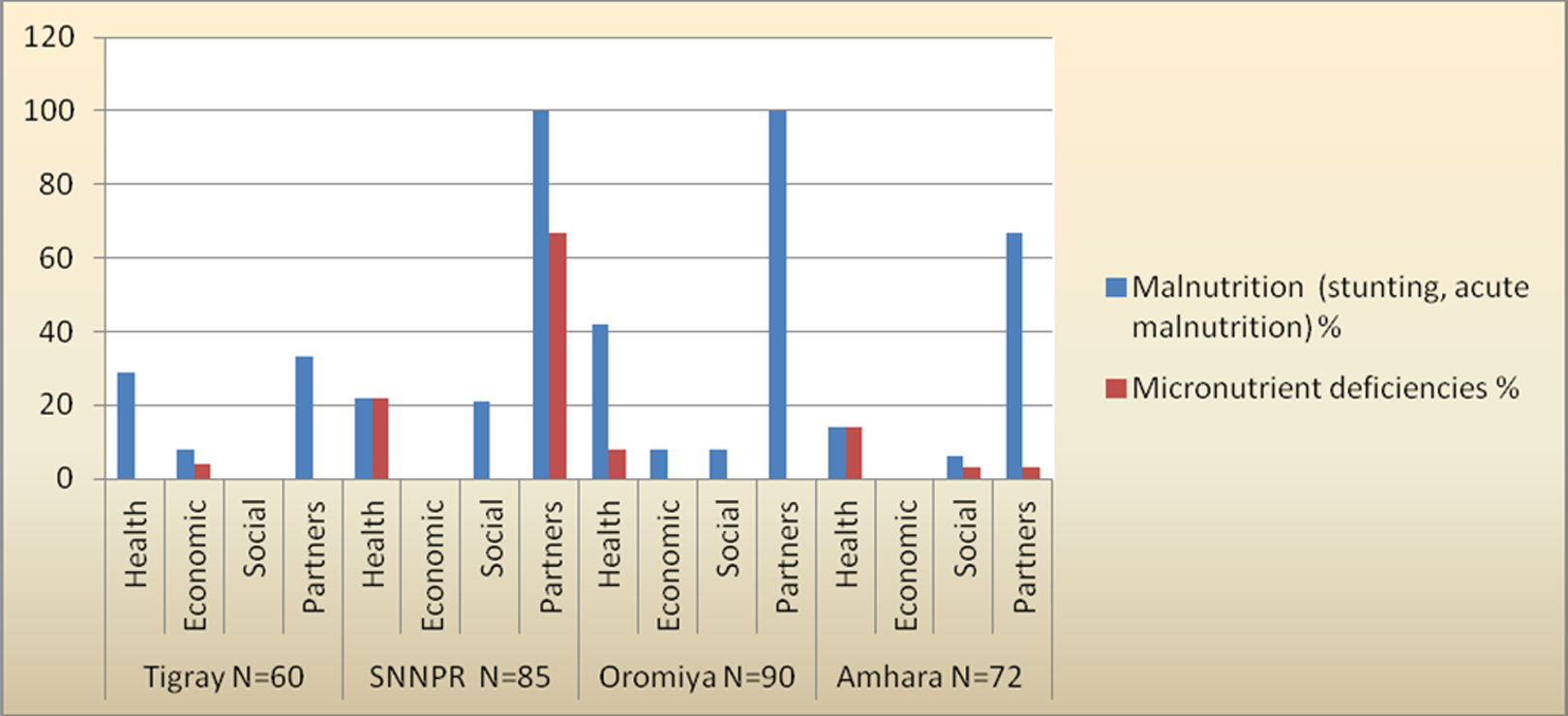
Major nutritional problem by region.
All regions identified food insecurity, low dietary diversity, low awareness, and poor maternal and child feeding practices as major causes of malnutrition in their area (Figure 2). There were, however, differences in the perception of causes of poor nutrition across sectors in each of the regions. The respondents from the health sector in Tigray and SNNPR were less likely to identify food insecurity as an issue, and those in the economic or social sector were more likely to view this as a problem. The entire partner group, except in Amhara, viewed food insecurity as a key issue. In Tigray, SNNPR, and Amhara, the health sector identified a lack of awareness about nutrition as a major problem. For example, in Amhara, 100% of the health sector respondents identified lack of awareness as a concern, while only 35% and 28%, respectively, in the economic and social sector held the same view. Causes of nutritional problem by sectors in %.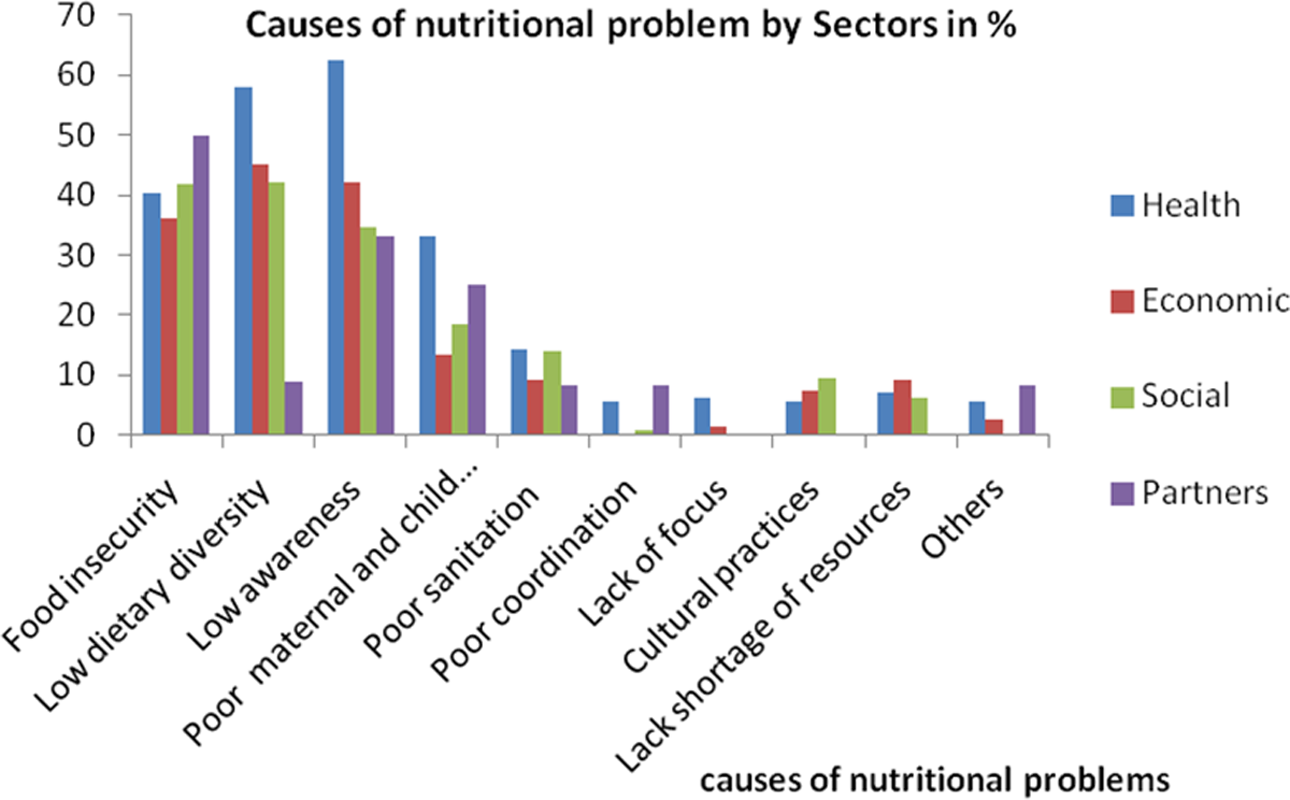
There is a problem of lack of awareness among the people, even children from well-to do families also suffer from malnutrition because the families do not know how to utilize the resources available at home properly. SNNPR, Wondo-Genet woreda social sector
Domain II: Decision Making and Ownership
There were a number of questions in the interviews that related to how the NNP was formulated and whether this affected the sense of ownership of the NNP. The 2 most common responses to the NNP formulation at the national level emphasized the role of international NGOs (26%) and the involvement of different parts of the government (32%). A spirit of collaboration and active involvement was reflected in many of the detailed answers.
The SUN Movement, Renew Efforts against Child Hunger and under nutrition (REACH) and NGO partners were also credited with galvanizing some of the key meetings; indeed, within the government respondents, 24% believed that SUN and REACH and NGOS influenced the multisector approach to addressing nutrition that is reflected in the NNP. There has been a reawaking of interest in nutrition globally. SUN and the 1000 days had a big positive influence in giving visibility to nutrition sensitive development. Ethiopia was one of the early SUN countries. NGO representative, Addis Ababa
At national/federal level, all sectors knew about the National Nutrition Strategy (NNS)/NNP whereas awareness of NNS and NNP was lower at the subnational/regional level. In addition, there were stark differences in awareness in each of the regions among sectors. For example, in Tigray SNNPRS, Oromia and Amhara awareness of the NNP ranged from 71%, 78%, 83%, and 86%, respectively, for the health sector. For the economic sector in the 4 regions from 16% to 52% of respondents were aware of the NNS and NNP. Similarly in the social sector in the regions awareness of the NNP ranged from 13% to 56%.
Related to the formulation of the NNP, interviewees were asked what processes or documents were important in developing the plan. Here again, at the national level, 2 answers dominated the responses; 29% of those samples indicated that a 2010 workshop on the acceleration of reduction of stunting was a key event and 47% felt that a technical working group was significant in influencing the NNP. In addition, 39% of the national respondents said that the development of the 2013 plan was more inclusive and 25% highlighted the 2013 meeting that included all state ministers at a seminal event. Yet 25% of the sample could not comment on the tone or nature of discussion during the development of the 2013 plan.
Results from the national level indicated that for the NNP to be successful, there needed to be involvement at the subnational level. At national/federal level, all sectors knew about the NNS/NNP, whereas awareness was low at subnational/regional level. The health sector and partners at the subnational level were aware of NNP and NNS as compared to economic and social sectors. Key informants in the 4 regions were asked about the degree to which they have been consulted on nutrition issues The majority (more than 70%) of the health sector and partners were more likely to indicate that they had been consulted on nutrition issues, whereas the participation was lower for social and economic sectors (below 25%). There was low participation at the subnational level as compared to the national level especially for social and economic sectors. In Tigray, SNNPR, and Oromia, 100% of the partner representatives indicated they are consulted on nutrition issues.
Those interviewed at the national level were also asked to comment on any resistance, or as labeled by some, “push back” from individuals or organizations. About 50% of the respondents perceive that NNP is a MOH initiative and thus the Ministry of Agriculture (MOA) and other sectors do not see their role as clearly defined. It is not fair to say the NNP is multi sector; MOH took the lead in developing the NNP and agriculture is only marginally involved. Donor representative, Addis Ababa We need a better articulation of how agriculture can help nutrition; this is not clear to MOA. And even less clear how other sectors and agencies are expected to be involved. Donor representative, Addis Ababa
There was more diversity in responses at the national level as the research probed further into how the NNP is perceived. The NNP is clear that success of the program depends on a clear delegation of responsibilities and an expectation of accountability across sectors. Three main challenges were highlighted as factors to address in creating a shared sense of ownership of the NNP: (1) the perception that the MOH is the sole “owner” of the NNP; (2) at present, the NNP is on paper but there is limited accountability for action; and (3) MOA needs to be more involved.
At the national level, there was the view expressed by NGOs (43%) and the Academic/Research Community (50%) that the MOH is perceived as the lead architect of the NNP and, in part, this creates an issue of how to generate enthusiasm from other sectors to take a more active role: MOH is the sole owner of the plan and this is not fair to nutrition. Government representative, Addis Ababa
Finally, while hopeful for a multisector approach to nutrition, 38% of government respondents at the national level believed that, at the moment, NNP is on paper but the roles of the various sectors and accountability had not yet been established; curiously, none of the donors stressed this point of “on paper” versus actual.
The research uncovered more diversity of opinion for the challenges in successfully implementing the NNP. Two of the key areas identified are related. First, 31% of the total sample said that nutrition needs to be the focus in all sectors at the highest levels, and an additional 21% felt that there needs to be a specific champion for the multisector approach to nutrition. The weight applied to these 2 responses varies by sector. To a lesser extent, interviewees said lack of an effective coordinating body (12%), lack of sufficient budget (10%), and demonstrated models of agriculture–nutrition (12%) presented challenges to the effectiveness of the NNP.
Some top line messages emerged from the questions related to decision making and ownership of the NNP. While awareness of the national nutrition plan does not guarantee implementation of a program, it is reasonable to assume that if there is no awareness, little in the way of operations will happen. Awareness of the NNP at the national level was high; comments throughout the national level interviews pointed to specific initiatives such as SUN and REACH, which not only shone a spotlight on nutrition but were one factor in coalescing a range of stakeholders to action. The results were mixed at the regional level. Here again, similar to identifying the nutrition problems, those from the health sector were more aware of the NNP; the economic and social sectors tended to be less knowledgeable about the specifics of the NNP. This, indeed, might reflect a certain period of time is needed for the priorities at the national level to “trickle down” to the lower levels. These results parallel what was elicited from the questions about involvement in the development of the NNP. Involvement in the design and implementation of the NNP is one way to ensure “buy in” to the government’s strategy and action plan. Involvement of the key informants was higher at the national level; at the regional level, the health sectors and partners were more likely to have been directly involved compared to those in the economic and social sectors. The perceptions of the ownership of the NNP were explored in a different way. At the national level, the NNP is viewed as an MOH initiative. A clear message at all levels is that if the NNP is to be truly multisector, all sectors need to be involved, including in leadership positions.
Domain III: Program Design and Implementation
To determine key elements of NNP design, national interviewees were asked whether the program was driven by the budget available or if the plan came first and then budget followed. The majority, 74%, had no idea; the remaining 26% said that budget drove many of the design and implementation decisions.
Unlike the earlier 2008 Nutrition Plan, which relied heavily on partners and consultants, including external consultants, 47% felt that the 2013 plan is viewed as totally or mostly GOE owned. Interviewees were then asked whether there were sectors not involved who should be. The largest response was that the research community should have been more involved. This was a heavily skewed answer with 100% and 75% of the research and NGO sectors responding, respectively. Other key informants noted that the private sector (20%) and food production/marketing sector (10%) should have more involvement in the NNP.
Given the earlier comment that in defining the country’s nutrition problems, it is difficult to think of “One Ethiopia,” the research was interested in determining how much tailoring to local needs was incorporated into the plan. A quarter of those sampled thought there was tailoring, but 65% had no idea.
Each of the regions have existing nutrition programs, the most common of which are productive safety net, community based nutrition, and nutrition education. The research was interested to determine from the respondents how to improve the implementation of the NNP, given the emphasis on multisector approaches to nutrition. All of the regions proposed mainly 2 initiatives as a way to advance the NNP. The first is awareness creation. Key informants at the subnational level indicated this was essential to make progress. Awareness is the major problem. The focus for nutrition from MoH is very low. It should work better to improve the strategy on maternal nutrition. So we can work based on the strategy and there is also poor integration/coordination among sectors, MoH should work on this. Tigray, economic sector Unless there is focus at the sub national level on awareness and capacity development, the nutrition plan will fail. Government representative, Addis Ababa The first thing should be the understanding and awareness on nutrition. Then, policy development, social mobilization and collaboration among the different sectors will play a vital role to improve nutrition. Amhara, social sector
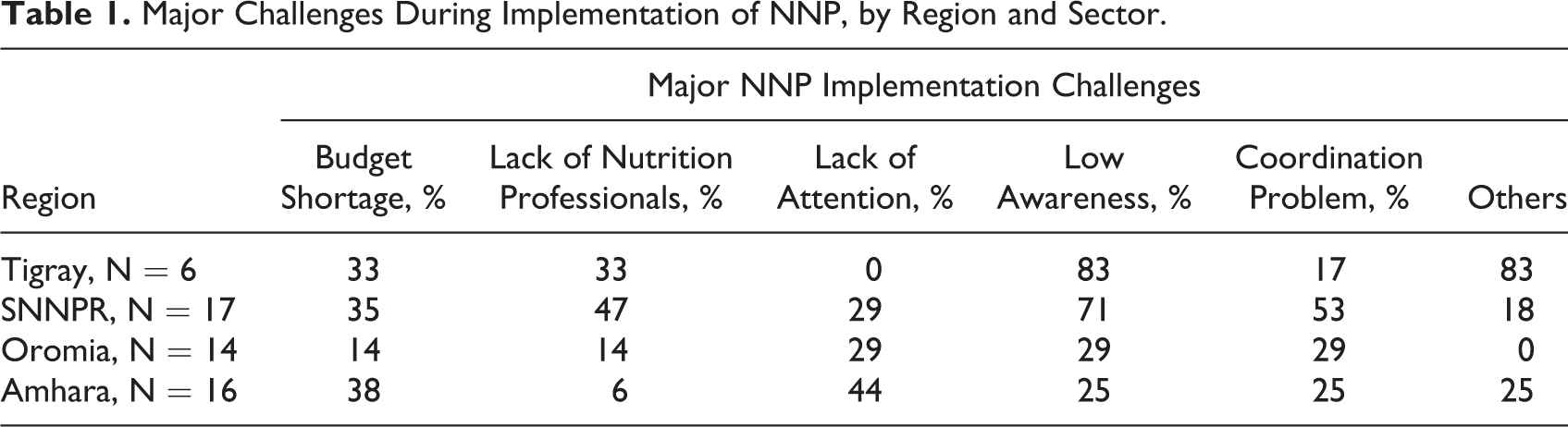
Major Challenges During Implementation of NNP, by Region and Sector.
A respondent from the region mentioned that, Government should work to improve market linkages and to improve access to variety of food items and strengthen agricultural productivities. Tigray, Economic sector Major challenges are: working procedures (Federal, Region level); the role and responsibilities is not clear; different ideas are emerging while at the same time work on other activities is not completed; this is confusing. Lack of trained professionals and a high turnover in the government sectors, and low government salary is also an issue. Tigray Partner There is difficulty in leading the multi-sectored approach. Less participation of other sectors and giving the work only to health sector is a problem. It is better to be led by higher offices other than health; we need commitment from all stakeholders and attention from government to implement. Partner, Tigray The major challenge would be the understanding and awareness of the different sector offices about the implementation of NNP. If there is the same understanding and awareness on nutrition and how nutrition is important for our region, we can effectively implement the NNP. Region economic sector
Domain IV: Challenges
The results for questions related to challenges will be presented separately for the national level and subnational level data.
National level
There is a high level of support for both the NNS and NNP at the national level. Overwhelmingly, respondents noted that there was an enthusiasm for a greater emphasis on nutrition at both the national and subnational levels yet most respondents were realistic that there are challenges ahead. There was a general agreement among respondents that challenges fall in 4 key areas: (1) leadership, (2) budget, (3) lack of coordinating body, (4) and incentives for collaboration. Effective leadership was identified as a challenge (22%); respondents indicated that while there is general enthusiasm for a multisector approach to nutrition, it is no one’s primary responsibility. While the data suggested that many key informants felt that the MOH had ownership of the NNP, the ministry did not have the necessary expertise to take a broader approach to dealing with malnutrition. Need high level commitment, which is not yet there. Donor representative, Addis Ababa We can’t do all that is expected in the NNP without more staff and funds. It’s just not realistic. Government representative, Addis Ababa We should make a strong recommendation to GOE that we need an autonomous body that has authority and accountability to implement the multi sector plan. Maybe an office of nutrition based in the prime minister’s office. Donor, Addis Ababa The NNCB is supposed to coordinate but they rarely meet. Even if they do, they don’t have the clout to get things done. Government representative, Addis Ababa
Finally, the key informants indicated that there needs to be incentives for collaboration. Incentives were not limited to financial rewards but included nonmonetary factors. Several respondents in each region indicated that “helping the community” was reward enough. However, the more dominant view was that the NNP is asking the government to do more work with no additional staff or funds.
The issue of challenges was probed further by asking each key informant within their actual agency or organization what “kept them up at night” or put another way, what are their chief headaches; the dominant responses clustered around: (1) sectors working together, (2) process for buy-in, and (3) need for a line item for nutrition in each agency’s budget.
In principle, most interviewees can see the benefit in collaboration and coordination but find it difficult to envision a modus operandi that will be effective in accomplishing this end.
Related to collaboration, 27% indicated that there does not appear to be a process for “buy in” to the NNP process. The NNP provides a framework of action but what is now needed is more of a road map of how this can be accomplished. A lot of work has gone into the NNP; we now need an operational plan by sector that provides guidance on what is expected of the key actors. NGO, Addis Ababa
Many of the comments from the open-ended discussion highlighted partnerships as a positive aspect of the multisector approach to nutrition. A majority (50%) indicated that the process of developing the NNP has been a positive activity in bringing all of the sectors together. In addition, 23% of the respondents felt that the NNP and the process of developing the plan have given more positive visibility to nutrition. Finally, the process of inclusion in developing the 2013 NNP has also given more specific policy direction.
Effective partnerships were viewed as key to effective implementation of NNP. There are a number of strengths that were identified because of partnering on the NNP. Clearly, bringing all the sectors together is seen as strength (50%); the process of developing the NNP has given more positive visibility to nutrition. The respondents also indicated that there is a more strategic direction in the 2013 NNP than was present in the earlier plan.
Key informants identified some limitations; 46% of government officials felt that the GOE has a limited interest in nutrition. Second, some respondents indicated that there was an unrealistic time frame to implement the NNP. Finally, across the groups, many indicated that it was not clear to all sectors how to implement specific parts of the plan.
The research wanted to assess what key officials saw as success of the NNP. Respondents indicated that there was need to engage at the regional and district levels; many key informants commented that the activities will be implemented below the national level and therefore a lot of attention needs to be devoted to how to involve the subnational level. In addition, more clarity is needed on what nutrition sensitive development entails. Much of the discussion in developing the NNP revolved around a multisector approach to nutrition, which is often referred to as nutrition sensitive development. While this is a term of art that is used, the interviewees had different interpretations of what this actually means. Without a general agreement of the specific road map for nutrition sensitive development, it is unlikely that efforts across sectors would be coordinated. Finally, the success of the NNP will depend on strong advocacy at all levels in order to keep the momentum of multisector approaches to nutrition alive. Need to keep momentum going—this will require results; we need a champion at the highest level that will take on nutrition as a priority. NGO, Addis Ababa
Regional/Subnational Level
The emphasis of the NNP on a multisector approach provides opportunities for more and different types of collaborations. The research was interested in identifying factors that are perceived to contribute to collaboration within and across sectors. The potential to interface and have joint meetings was identified as a positive in Amhara, Tigray, and SNNPR. In Oromia, 23% of interviewees stressed job satisfaction. Having a good M&E system encouraged the sharing of data and for SNNPR and Oromia the fact that the NNP was a mandated activity–fostered collaboration.
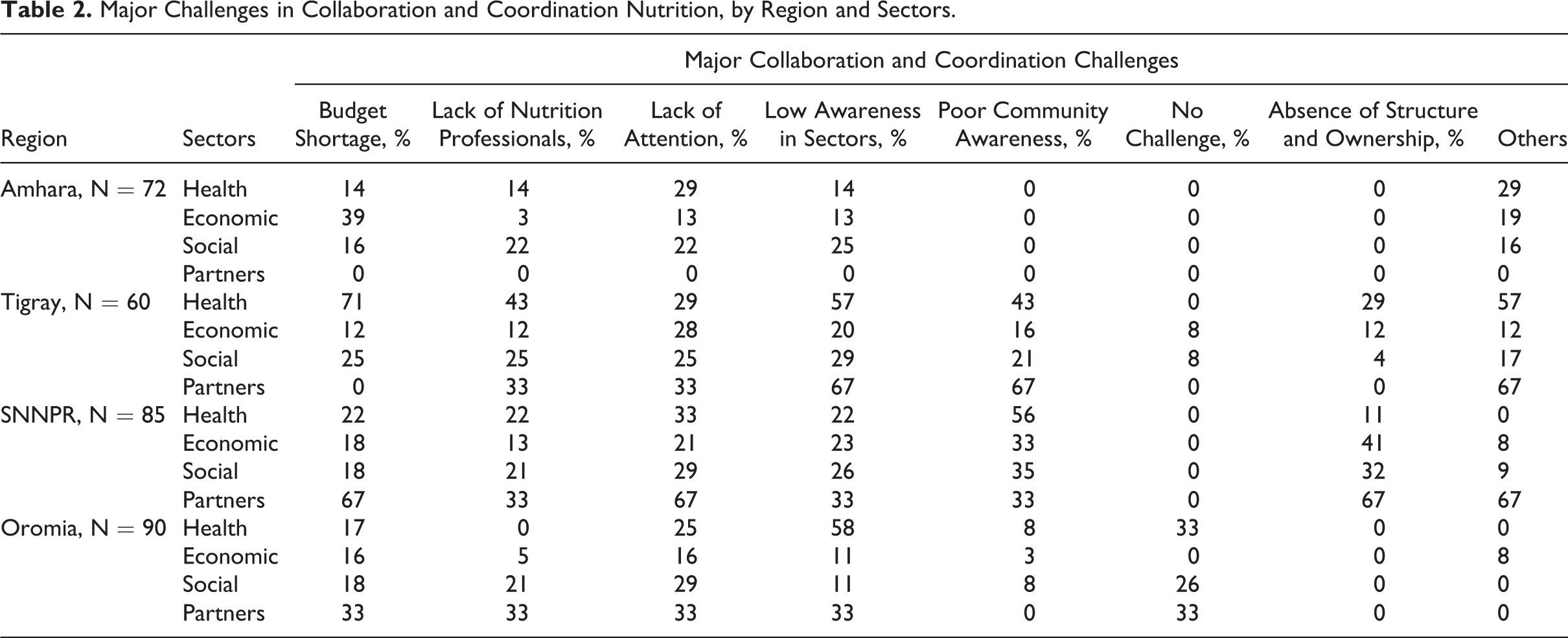
The issues of collaboration and coordination came up repeatedly as an actual and potential challenge in effectively carrying out and implementing the NNP. As shown in Table 2, there are variations in types of responses both within sectors and across regions. For example, 71% of health sector respondents in Tigray identified budget shortages as key issues, while in Amhara (14%), SNNPR (22%), and Oromia (17%), budget was less of a challenge. A similar split in responses can be seen in the partner’s answers; SNNPR (67%) and Oromia (33%) viewed budget constraints as an issue, while in Amhara and Tigray none of the partner’s representative viewed budget as a problem. The other categories identified—lack of nutrition professionals, lack of attention to nutrition, low awareness, poor community awareness, and absence of a structure and ownership show similar variability within sectors and across regions. These data reinforce the message that while there is some guiding principles in implementing the NNP, the plan also needs to be context specific.
Major Challenges in Collaboration and Coordination Nutrition, by Region and Sectors.
Key informants were asked how long they thought it would take for nutrition to no longer be a problem in Ethiopia. This particular question generated a lot of detailed comments. Many people said this question is very difficult to answer without a better understanding of how the underlying causes of malnutrition have been handled. Factors like the commitment of government, alleviation of economic problems, problems associated with natural disasters, ability to increase productivity, change in dietary patterns, use of inputs, increased resources, collaboration, effective behavior change, level of education, improved food security, and implementing the agriculture strategic plan will all have bearing on the answer to this question.
Some of the differing points of view can be seen in, It requires a long (improvement in nutrition) because it is based on the income of an individual and the problem is chronic (stunting). Within the last 20 years the stunting rate in Ethiopia has only been reduced by 5% (from 49% to 44%). Partner Since no activity is going on, it is very difficult to estimate the time. It is better to estimate after doing some activities. I don’t think that it can be time-bounded. It depends on income level. No time will come without any nutrition problems because of its double phase (under nutrition, over nutrition). Regional health sector Work is not started yet. It is difficult to estimate the year. But in the coming 10 years the problem will be decreased if we work on food security. Regional SNNPR, economic sector
Discussion
The GOE, in 2008, launched the country’s first NNP. 10 The goal of the NNP is to ensure that all Ethiopians are able to achieve an adequate nutritional status in a sustainable way. A series of seminal events led to the successful launch of the first NNP. A rigorous stocking taking and planning exercise, stewarded by UNICEF and World Bank, provided the basis of the 2008 NNP. A continued global support for nutrition through efforts like SUN and REACH, as well as increased bilateral, UN, and international NGOs support for nutrition, kept this momentum going. In 2013, the NNP was updated with a more specific focus on both direct nutrition interventions and nutrition-sensitive approaches to improve nutrition with clear role and responsibility of each sector. 12 Indeed, while the concept of linking agriculture to nutrition for improved results is not new, there has been a renewed emphasis on revisiting a multisector approach to enhance nutrition. The 2013 NNP has placed a spotlight on nutrition-sensitive development.
As shown from the data at the national level, the Lancet series were key documents influencing the NNP. Both the 2008 and 2013 Lancet series provided solid evidence on the efficacy of nutrition interventions, 1, 15 in essence, providing answers to the question “what works.” A key element to consider, however, in implementing policies and interventions is the role of governance in influencing policies and programs. The Lancet series identified areas that warranted more attention 3 ; as noted, “A crucial third level of action exists which relates to the environment and processes that under pin and shape the political and policy processes.” A number of research articles have highlighted the fact that the role of governance structures in successful implementation is a grossly under studied and a neglected area of study. 3, 16, 17 The World Bank 4 described governance as the institutional capacity of public organizations to provide public goods and services demanded by the citizens in an effective, transparent, impartial, and accountable manner. The World Health Organization (WHO) landscape analyses provided more detail on indicators of nutrition governance including commitment as measured by a national nutrition plan; existence of an inter-sector coordinating committee; maintenance of surveys and data collection systems; as well as the allocation of budgets specific to nutrition. 18
The aim of the current research was to elicit insights from among key policy makers, stakeholders, and implementers about opportunities and challenges in governance and implementation of the NNP. The data generated from the national and subnational interviews highlight some key findings. First, both at the national and subnational levels, there was general agreement that food insecurity, malnutrition (particularly stunting), and micronutrient deficiencies are seen as the major problems in Ethiopia. The subnational responses were more expansive on the range of nutrition problems, possibly reflecting proximity to the recipients of policies and programs. The interviewees also informed the study that Ethiopia couldn’t be viewed as a homogenous entity. Thus while the existence of malnutrition is generally known, there are discrepancies among sectors. Respondents from the economic and social sectors in some regions and some regional representatives had not clearly grasped the significance of malnutrition in their areas (Figure 1).
There was less agreement on other aspects of governance and implementation when examining vertical linkages (national to subnational) as well as horizontal linkages (within national and within subnational levels). Ethiopia was one of the early countries to participate in the SUN movement. The SUN framework has identified 4 pillars that are used as indicators for tracking progress: a legal and political framework is one of these pillars. 19 The legal and political framework for nutrition in Ethiopia was set by the NNS and implemented by the NNP. While the majority of respondents at the national level were aware of the NNP, surprisingly 19% had no idea they existed. Yet, at the national level, there was a clear indication that the process for developing the 2013 NNP was more inclusive than the earlier plan, with more involvement of Ethiopian stakeholders and less emphasis on external consultants. This has created a positive attitude that the NNP is “country owned.” At the subnational level, awareness of the NNP, with the exception of the partners, was much lower.
To be successful, the NNP must have involvement of individuals at the regional, zonal, and woreda levels. As discussed, the health sector and partners were more likely to have been consulted in development of the NNP. The economic and social sectors in each of the 4 regions were much less likely to have been consulted, creating challenges a priori for “buy in” to the NNP.
Rightly or wrongly, the NNP is viewed at the national and subnational levels as being led by MOH. In part, this perception comes from the fact that it is the MOH who is tasked with leading and coordinating the plan. Therefore, while many key informants at all levels encouraged a multisector approach to nutrition, these same individuals indicated that the NNP is a plan on paper, which has yet to demonstrate actual implementation or success. Related to these comments was the sense that a road map for multisector strategies does not really exist. The issue of coordinating the efforts of three or more sectors seems daunting. Key informants in agriculture were asked specifically for information on how to make agriculture more nutrition sensitive. Indeed most systematic reviews of nutrition–agriculture linkages show modest or no effects on nutrition indicators. 20
The policy process is ever evolving and, in an iterative cycle, needs to focus on challenges and constraints. Since implementation of the NNP will occur at the local level, the research wanted to identify perceived constraints at the subnational level. To achieve this, the key informants at the subnational level identified 5 main issues that can be barriers to effective implementation. These include low awareness, lack of coordination, budget shortages, lack of professionals, and low attention to nutrition.
Despite a lot of attention in Ethiopia on the NNP, subnational level respondents cited lack of awareness as a key factor limiting implementation and momentum for the NNP. Awareness is sometimes used synonymously with advocacy. A multi-country case study noted, “The rapid and sustainable reduction of stunting on a national scale is a large undertaking involving nutrition-specific and nutrition sensitive actions within multi-sector policies, programs and society at large from national through community levels”. 17 Awareness creation is essential to the long-term momentum across sectors.
One theme that resonated at the national and subnational level was the call for strong, more visible leadership. In order to provide a platform for a multisector strategy for nutrition, oversight at the highest level is critical. A recurring comment from the key informants was to have the coordination of the NNP nested in the Office of the Prime Minister (OPM). This would accomplish several objectives; the NNP would have higher visibility, be a mechanism to more effectively coordinate the broad range of sectors involved in the NNP and finally would provide a bully pulpit for keeping up momentum. The launch of the 2013 NNP provides the opportunity for the GOE to revisit the most appropriate governance structures to coordinate and carry out the stated goals of the NNP. A 6-country study 17 observed, “At the core, nutrition success stories in Brazil, Peru, and Vietnam, have strong and effective networks of national nutrition leaders.” Currently the MOH, through the NNCB, coordinates the NNP. As noted from comments given, the NNCB meets infrequently and is viewed as having little clout. Here again, a shift of this function to the OPM might revitalize the ability of a coordinating body to effectively harness the energy in all sectors.
The NNP is viewed by many as a health and/or health and agriculture program. Interviewees from other sectors were often unclear of their specific role. This was particularly noted for the private sector and representatives from the academic/research community. The private sector has the enormous potential to contribute to the plan, yet their role in the NNP continues to be ambiguous. Despite much attention on public–private partnerships, the evidence of effective models of operation continues to be few.
Finally, the issue of financing was highlighted at all levels. Various scenarios were identified by the key informants. A typical suggestion was a dedicated budget at the national level for nutrition. An alternative suggestion was to have a line item in the budget of each agency. Respondents were clear that the budget process has to done in a transparent manner; obviously the availability of funds would be one incentive to encourage collaboration. The SUN movement uses the alignment and mobilization of resources as one metric for successful implementation. There was a clear sense from the key informants that more attention to budget would be an effective mechanism for encouraging multisector collaboration on the NNP.
The GOE is committed to improving the nutritional status of the population. Enormous gains have already been made in reducing stunting and micronutrient malnutrition within the country. There was palpable enthusiasm from many of those interviewed about the 2013 NNP. If the GOE can identify mechanisms to harness this energy, the implementation of the NNP will be facilitated.
Summary and Conclusions
There is a palpable level of enthusiasm for multisector approaches to improving nutrition at the national and international levels. There is also an almost universal agreement that good governance is essential for effective design and implementation of direct and indirect approaches to improving nutrition. Much of the literature until now has focused either on theoretical concepts of governance and/or application to a broad development agenda. There is a dearth of information on governance models for nutrition policies and programs. Indeed, there is a clarion call for research that examines governance at country or subnational level to ascertain actual experiences.
This study was one of the few, to date, that explored the perceptions of policy officials and other stakeholders on the opportunities and challenges in governance and implementation of a multisector approach to improving nutrition. As such, this research helps to begin to fill some of the gaps in our understanding and knowledge of operationally relevant governance and implementation. The data presented here provide a perspective of those directly or indirectly involved in the NNP. A question underlying the four domains for this research is “what can be done to improve governance?” Although this research focuses exclusively on Ethiopia, it provides one example of the experience of stakeholders involved in designing and carrying out a multisector nutrition plan. Ideally more country-specific research of this type may help identify the range of paradigms that, as implemented, reflect the concept of good governance.
Footnotes
Acknowledgments
The authors wish to thank Drs Patrick Webb and Shibani Ghosh for their comments on the protocol that was used for this research.
Author Contributions
Eileen Kennedy and Habtamu Fekadu were involved in the design of the research protocol, and conduct and analysis of the data. Joan Van Wassenhove oversaw the analytical work. All other authors were involved in the collection and analysis of data. This research is original work of the team, and the article has not been submitted elsewhere.
Declaration of Conflicting Interests
The author(s) declared no potential conflicts of interest with respect to the research, authorship, and/or publication of this article.
Funding
The author(s) disclosed receipt of the following financial support for the research, authorship, and/or publication of this article: The authors of this report acknowledge the support of the United States Agency for International Development, under the terms of Award No. ENGINE: AID-663-A-11-00017. The opinions expressed herein are those of the author(s) and do not necessarily reflect the views of the U.S. Agency for International Development. Any remaining errors or omissions are the sole responsibility of the authors.