




Abstract
Background:
Although much work has been done on the theoretical links between agriculture and nutrition, there is limited understanding of the evidence from observational and experimental research studies on the impacts of agriculture programs on nutrition outcomes.
Objective:
To assess the emphasis of the literature on different agriculture–nutrition pathways in Bangladesh.
Methods:
Twenty databases and Web sites were searched, yielding more than 2400 resources that were pared down through an iterative, eliminative process to 60 articles. These articles were then rated for quality and mapped to 1 of the 6 agriculture–nutrition pathways.
Results:
The body of evidence reveals gaps in knowledge in all of the pathways, but especially in the areas of agriculture as a source of livelihoods, and women’s role as intermediaries between agriculture and good nutrition and health within their household.
Conclusion:
More research is needed on the links between agriculture and nutrition in country-specific settings, particularly as regards the role of women. Nutrition-related outcomes, such as dietary diversity and women’s empowerment, need to be measured more explicitly when evaluating the impact of agricultural production systems and development initiatives.
Introduction
During the last 2 decades, Bangladesh has made impressive strides in economic and agricultural growth and poverty reduction. From 2006 to 2012, the country’s average annual agricultural growth rate was approximately 4%, up from 2% in the 1970s and 1980s, while the annual growth rate of its Gross Domestic Product (GDP) reached an average of 6%. 1,2 The national rate of poverty was slashed from 58% in 1991/1992 to 32% in 2010. 3,4
Despite these achievements, undernutrition in Bangladesh persists, especially in the form of childhood undernutrition, maternal undernutrition, and different forms of micronutrient deficiencies. According to global estimates, about 45% of all child deaths in developing countries, including Bangladesh, can be attributed to undernutrition.
5
The reduction in stunting among under-5 children nationally has remained relatively stagnant, declining from 43% in 2007 to 41% in 2011. Wasting rates have seen a similar lack of movement, declining by only 1 percentage point between 2007 and 2011.
6
Micronutrient deficiencies are similarly widespread. Bangladesh’s 2013 national micronutrient survey reported that the prevalence of anemia in preschool-aged children was 33%, with much higher rates in rural areas (37%).
7
Night blindness has been sharply reduced due to the large-scale implementation of a vitamin A supplementation program, but pregnant women still have inadequate vitamin A intake. The national prevalence of zinc deficiency is approximately 45% among preschool-aged children.
7
At the same time, overweight and obesity are increasingly prevalent in Bangladesh alongside persistent micronutrient deficiencies and undernourishment. Recent data indicate that 24% of married women nationwide are undernourished (body mass index [BMI] < 18.5), while 17% of this same cohort are overweight or obese (BMI
To address the persistence of undernutrition in Bangladesh, multiple evidence-based, nutrition-specific interventions have been in place for a couple of decades. These include national-level infant and young child feeding counseling, food supplementation, vitamin A supplementation, and immunization programs, some of which have brought about dramatic changes in reducing vitamin A deficiencies, night blindness, and child morbidity and mortality. Bangladesh has also made strides in taking forward lessons learned from the Bangladesh Integrated Nutrition Program, which was limited in impact, and the National Nutrition Program, which was beset by weaknesses in program design, to mainstream nutrition into health and family planning services. 9 Despite these advances, not much focus has been placed on the broader determinants of nutrition, such as agriculture or economic growth. In Bangladesh, agriculture is the main source of livelihood for a large portion of the population, with a significant share in the national GDP and may therefore have a unique role to play in addressing Bangladesh’s nutrition challenges.
Agriculture impacts human nutrition in many ways, both positive and negative. As a source of food, agriculture provides vital macro- and micronutrients, as well as dietary diversity, to smallholder households. As a source of income for approximately half of the people of Bangladesh that depend on it for their livelihoods, of which two-thirds are women, agriculture allows those same producers to purchase foods that supplement their home production. 10 This income may be used to purchase healthy, diverse foods but can also be used to purchase processed, nutrient-scarce foods that lead to overweight and poor health. Production and purchasing power are just 2 examples of the complex linkages between agriculture and nutrition. Other links relate to agricultural policies; women’s roles and empowerment; and the association of agriculture with disease, illness, and environmental hazards. Although much work has been done on the theoretical links between agriculture and nutrition, there is limited understanding of how existing evidence from observational and experimental research studies that documents the impacts of agriculture programs on nutrition outcomes aligns with these links, particularly in developing countries such as Bangladesh. A number of papers have summarized the impact of multiple agricultural interventions on nutrition and health, but most of these have focused on a particular program or intervention design (eg, homestead food production) or have examined aggregated findings across multiple countries. 11 -14 Country-specific evidence is crucial due to the importance of geographic context: the outcomes of development interventions often depend on region-specific agricultural production systems, environmental exposures, and cultural behaviors. Thus, examining the evidence from Bangladesh in particular could offer insights into its unique nutrition and health challenges, such as why undernutrition persists despite economic gains or how to elevate the role of women in promoting nutrition. This review follows on 2 other recently published country-specific evidence reviews of agriculture and nutrition undertaken by researchers from the Leveraging Agriculture for Nutrition in South Asia (LANSA) consortium: one on India 15 and the other on Pakistan. 16 Following the India LANSA study, we focused on 6 pathways between agriculture and nutrition in Bangladesh (illustrated in Figure 1 and described in Box 1).
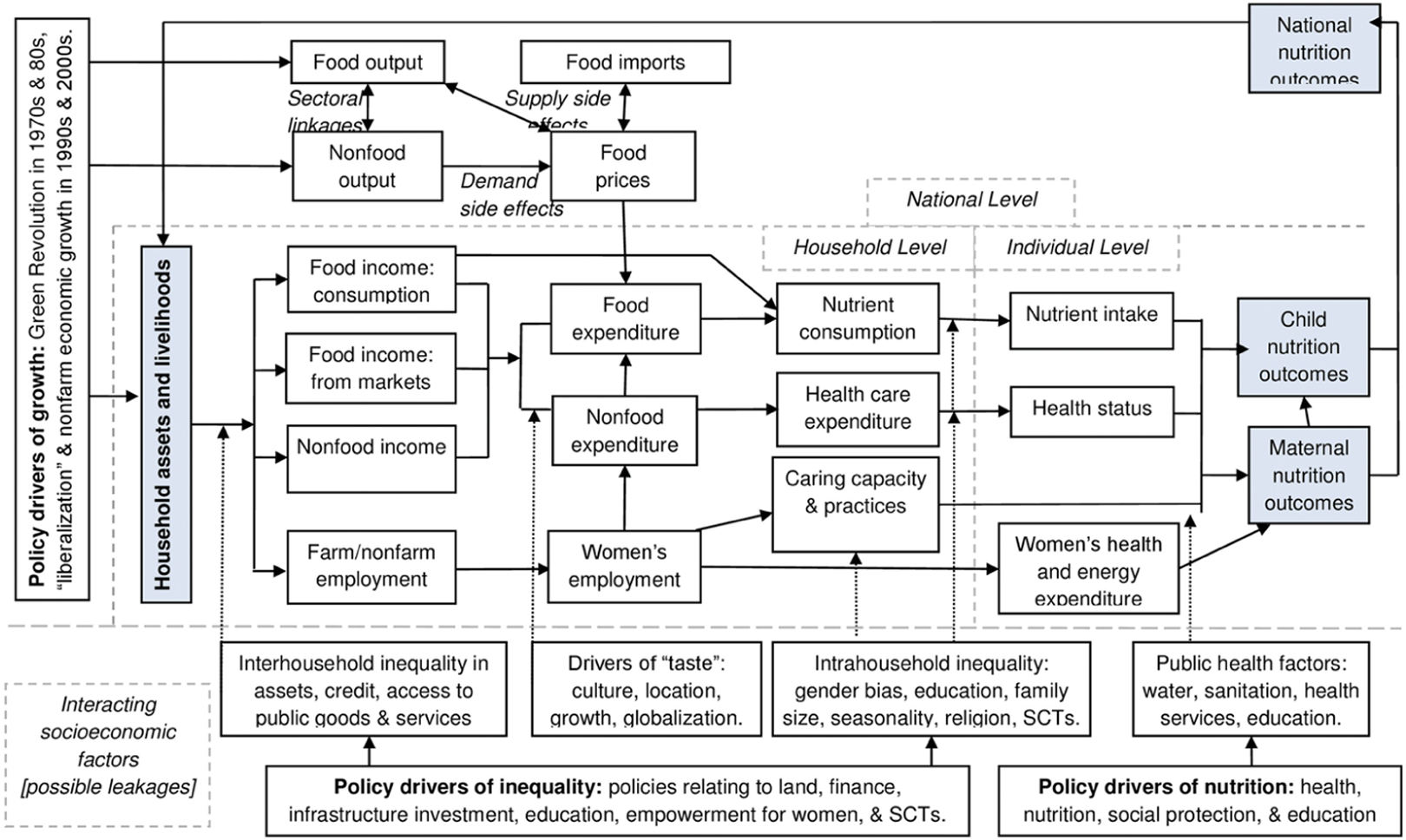
Agriculture–nutrition linkages. Adapted from Kadiyala et al 15 with permission to reprint obtained from John Wiley and Sons on September 3, 2015, License number 3701551009970.
Agriculture–Nutrition Pathways in Bangladesh.a
Agriculture as a source of food: Farmers produce for own consumption
Agriculture as a source of income for food and nonfood expenditures: As a major direct and indirect source of rural income, agriculture influences diets and other nutrition-relevant expenditures.
Agricultural policy and food prices: Agricultural conditions can change the relative prices and affordability of specific foods and foods in general.
Women in agriculture and intrahousehold decision making and resource allocation may be influenced by agricultural activities and assets, which in turn influences intrahousehold allocations of food, health, and care.
Maternal employment in agriculture and child care and feeding: A mother’s ability to manage child care may be influenced by her engagement in agriculture.
Women in agriculture and maternal nutrition and health status: Maternal nutritional status may be compromised by the often arduous and hazardous conditions of agricultural labor, which may in turn influence child nutrition outcomes. Agricultural hazards may affect the nutritional status of both men and women through the consumption of tainted foods.
Like other productive sectors, agriculture is a source of household income, which can be used on nutrition-enhancing goods and services (pathway 2), especially by the poor and undernourished. Market failures may however prompt producers to consume their own farm produce (pathway 1), potentially making agriculture a special sector as compared to nonfarm sectors. Pathway 3 hypothesizes that agricultural production conditions can determine the relative prices of food, highlighting the macroeconomic linkages between agriculture and diets. The next 3 pathways focus on links between child undernutrition and maternal socioeconomic and nutritional status. Pathway 4 acknowledges that agricultural production conditions can empower women to make household-level decisions regarding food and health care that may have more favorable nutrition outcomes. Pathway 5 focuses on whether women’s workloads in agriculture influence child care outcomes through inadequate child care practices. Pathway 6 looks at the impact of arduous and hazardous conditions of agricultural labor on maternal nutritional status and an intergenerational transmission of undernutrition as well as whether environmental hazards affect the nutritional status of farmers. We hypothesized that there would be a dearth of published work on the subject in all pathways except agricultural production and that this shortage would lead to an inconclusive picture of the impacts of agriculture on nutrition.
Methods
We carried out a review of the empirical literature examining the nutrition implications of agriculture in Bangladesh. We aimed to determine the extent of the published literature from Bangladesh against specific pathways from agriculture to nutrition as well as what the evidence says about the nutrition-relevant impacts of agriculture.
Search Criteria and Protocols
We searched 10 databases (eg, WorldCat, PubMed, EMBASE, and Google Scholar) between November 2013 and March 2014 using search terms pertaining to agriculture, nutrition, and food. The search terms included different combinations of the key words Bangladesh, nutrition, food security, agriculture, farm, and smallholder. We further searched 10 different Web sites associated with the Government of Bangladesh and international research and development organizations, such as CGIAR, World Bank, United Nations Standing Committee on Nutrition, and the Food and Agriculture Organization and searched the bibliographies of relevant studies for additional, nonduplicate references. This initial search yielded 2400 articles. We included full-text publications in indexed journal articles, books, grey, or unpublished sources linking nutrition outcomes to elements of agriculture in Bangladesh, published or released between January 1994 and March 2014. Examples of nutrition-relevant outcomes included the intake of calories, macronutrients, micronutrients, or specific foods; changes in anthropometry; dietary diversity; food- and nonfood expenditures; and women’s status and empowerment as linked to nutrition outcomes. The dietary intake of environmental contaminants, most notably arsenic, was included due to its direct impact on health status and in many cases related nutritional outcomes. This time period was chosen because the large majority of studies published earlier did not include any type of impact evaluations. We excluded opinion pieces, conceptual papers, research released prior to 1994, publications that were not available in English, research that did not relate elements of agriculture to nutrition-relevant outcomes, animal studies, research that did not contain Bangladesh-specific results, research that solely focused on the consumption of foods produced outside the homestead instead of by the household itself, meeting abstracts, literature reviews that summed up articles that were already included in the results, and research that could not be retrieved through more than 5 additional databases and search functions. All sources were entered into RefWorks, and duplicate, irrelevant, and inaccessible studies were removed. Figure 2 shows this exclusion process.
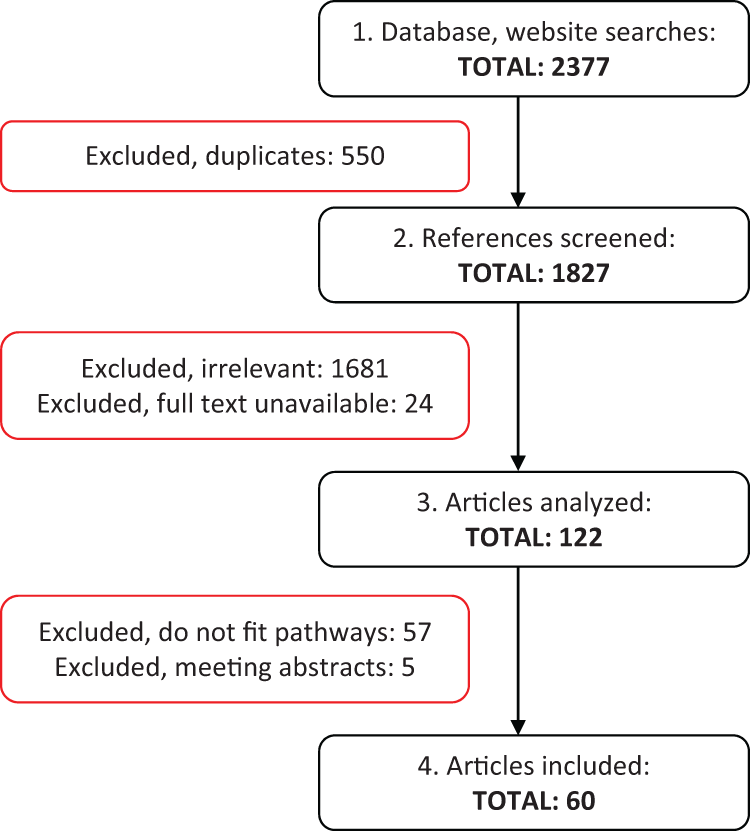
Exclusion flow diagram.
Analytic Approach
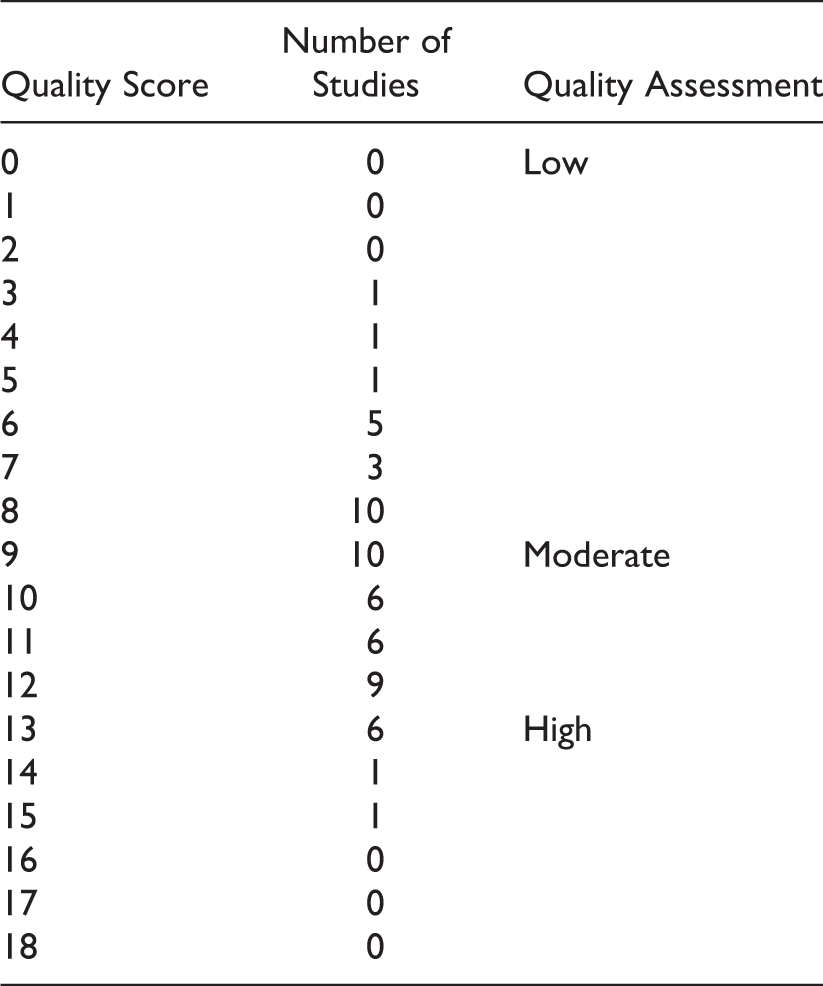
The final included studies were mapped to one or more of 6 agriculture–nutrition pathways and the relevant nutrition-relevant outcomes they measured. Box 1 shows the pathways. Each study was rated separately by 2 independent reviewers according to research quality using an adapted version of quality review protocols developed by the UK’s Department for International Development. 17 The protocols were adapted by assigning more weight to internal validity and assigning actual point values to the criteria. The research quality rating system comprised 15 tests on conceptual framing, transparency, appropriateness and rigor, internal and external validity, reliability, and clarity. Fourteen indicators received 1 point each, with the final indicator, internal validity, receiving more weight with 4 points (Table 1). Internal validity scores were assigned based on the study design used: randomized controlled trials (RCTs) received 4 points; quasi-experimental studies received 3 points; longitudinal studies received 2 points; and descriptive and cross-sectional studies received 1 point. Based on their cumulative performance on this 18-point system, the studies were then graded as high quality (13 to 18 points), moderate quality (9 to 12 points), or low quality (0 to 8 points).
18-Point Quality Rating System.a
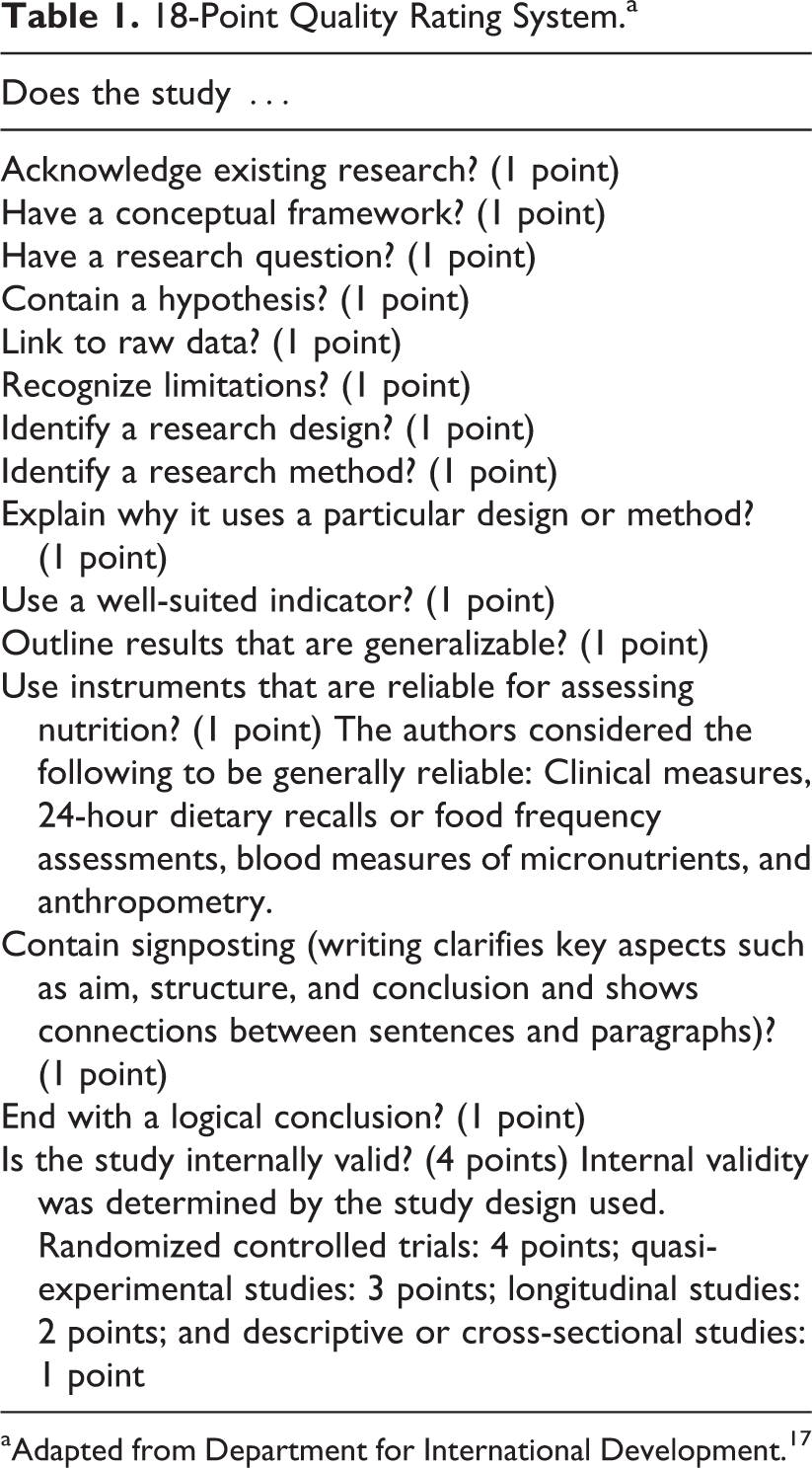
aAdapted from Department for International Development. 17
Results
In total, 60 articles were included in the evidence review. Table 2 shows the search results as mapped against the 6 agriculture-nutrition pathways. Pathway 1 (agriculture as a source of food) is the most populated with nearly 30 studies, while pathway 2 (agriculture as a source of income) and pathway 6 (women in agriculture) contain 17 and 18 studies, respectively. The remaining pathways contain few studies. Table 3 displays the quality of the studies, disaggregated by research design.
Number of Studies per Pathway.
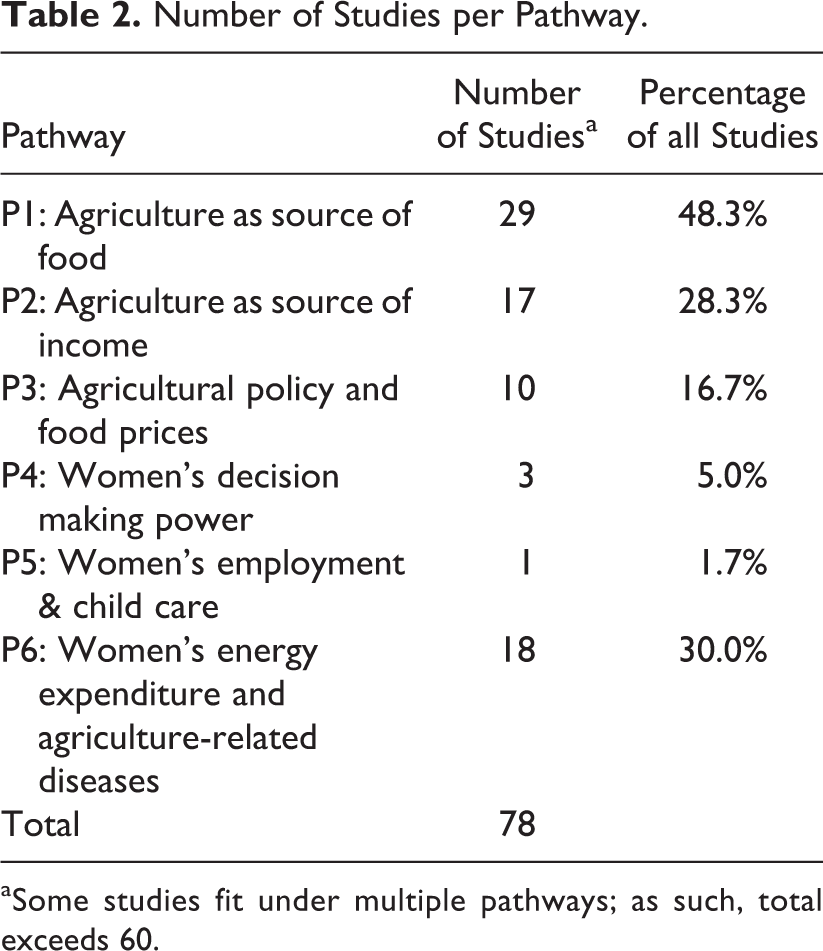
aSome studies fit under multiple pathways; as such, total exceeds 60.
Quality of Studies.a
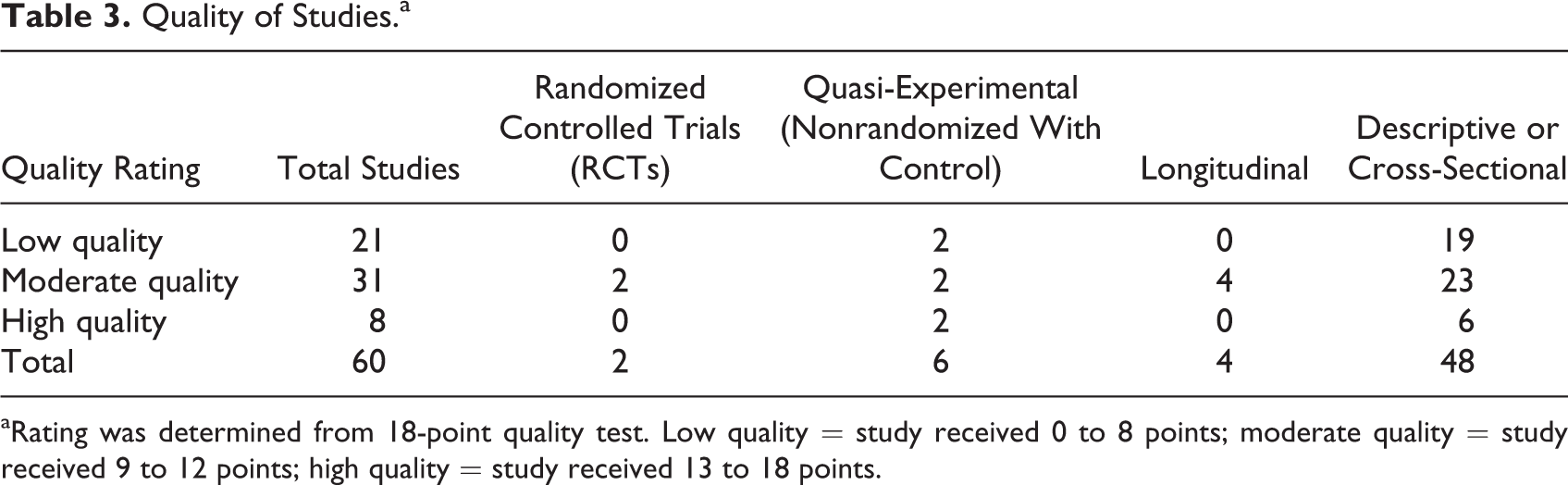
aRating was determined from 18-point quality test. Low quality = study received 0 to 8 points; moderate quality = study received 9 to 12 points; high quality = study received 13 to 18 points.
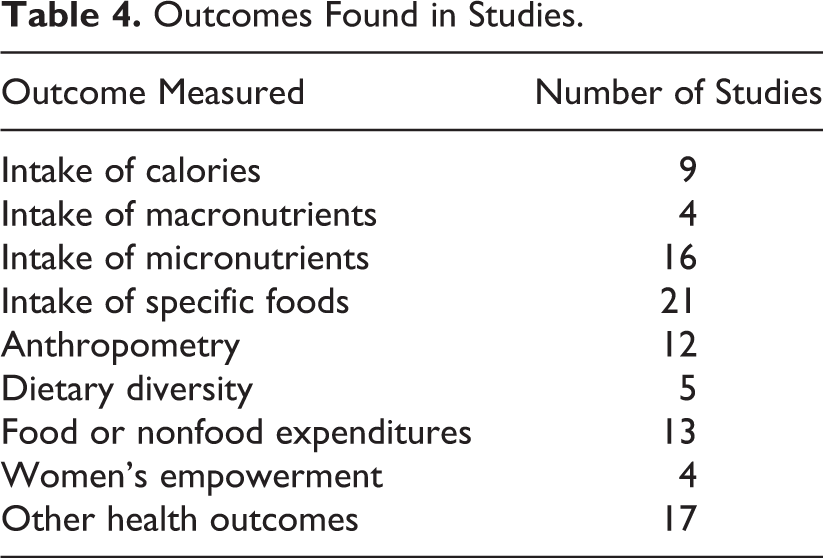
Descriptive or cross-sectional studies were the most common research design by far, representing 80% of all studies. The intake of specific foods, such as grains, vegetables, and animal-source products, was the outcome most commonly measured (21 studies), followed by other health outcomes, such as the intake of arsenic or child care practices (17 studies) and the intake of micronutrients (16 studies). Table 4 displays the number of studies that relied on each outcome. Subsequently, we describe representative findings for each pathway from the moderate- and high-quality studies.
Outcomes Found in Studies.
Pathway 1: Agriculture as a Source of Food
Twenty-nine articles looked at the role of farmers’ own production of food as a source of calories, micronutrients, or dietary diversity for them or members of their households, ultimately affecting their nutritional status. Of the 17 studies considered to be moderate- to high quality, 3 were quasi-experimental studies, 2 were longitudinal studies, and 12 were descriptive or cross-sectional studies. We present highlights from the moderate- to high-quality studies.
The evidence on this pathway was inconclusive. Agricultural interventions aimed at boosting production show mixed impacts on nutrition, the results depending heavily on program design and delivery. One study analyzed the homestead food production model and found that the program improved animal source food consumption among participating households, with a marked increase in liver and egg consumption. 18 The authors also found a statistically significant decrease in child anemia prevalence, and although prevalence also declined within the control households in 3 countries, the magnitude of change was higher in program households. In assessing the impact of a nutrition education and seed distribution project, another study found a doubling in the proportion of preschool-age children consuming green leafy vegetables, and only small changes in the prevalence of night blindness (from 1.8% of children to 1.5%), although simultaneous decreases in rice prices complicate the interpretation of the findings. 19 One longitudinal survey analyzed the impacts of ricefield-based fish (carp and Nile tilapia) seed production on poor households in northwest Bangladesh. The study showed an increase in fish consumption among producing households, with large size fingerlings providing nutrient-dense food sources during the hungry months, thus smoothing consumption. 20 More recent research found that an improved vegetable program resulted in increases in vitamin A consumption (and iron consumption for men), an increase in average weight-for-age Z-scores among children, an increase in women’s BMI, and a reduction in the proportion of stunting in girls and underweight in boys. Nutritional impacts in fishpond sites, however, ranged from mixed to negative. The authors attributed these mixed results to problems with technology dissemination and targeting as well as differences in intrahousehold distribution of food. 21
Crop diversification may also impact positively on nutrition. One dissertation suggested that household-level diversity in crop production may increase individual intakes of vitamins A and B, iron, calcium, and other micro- and macronutrients. 22 Another dissertation probing the effects of a large-scale, crop-diversification project implied an increase in the number of nutritious foods produced and consumed by small farm households. Livestock ownership, most likely an indicator of overall wealth, was also significantly related to household consumption. 23
Pathway 2: Agriculture as a Source of Income for Food and Nonfood Expenditures
Sixteen papers probed the contribution of agriculture to livelihoods or, more specifically, its role in providing income that can then be spent on food or other areas, such as health or education, and the effect this spending has on nutritional outcomes. Of these, 10 were moderate- to high-quality studies, and of this latter subgroup, none were RCTs, 2 were quasi-experimental studies, a further 2 were longitudinal studies, and the remaining 6 were descriptive or cross-sectional studies.
No clear conclusions could be derived from the moderate- to high-quality studies included under this pathway, as evidence was lacking. Most of the studies did not explicitly address whether the income from agricultural livelihoods was used on nutrition or nutrition-related investments in health and education. One study looked at the impact of farmer training and dissemination of low-cost aquaculture technologies on consumption, among other variables, and found that annual per capita fish consumption of project households increased at a rate of 6.6% compared to 2.3% for control households, and consumption of staples such as cereals increased by 0.6% annually compared to 1.5% for control households. The increases in productivity fulfilled 65% to 70% of the fish consumption requirements of the households, leading the authors to assume that increased income from fish sales was used to purchase more fish from other sources. 24
Some studies looked at the role of agriculture as a source of income but did not go further to make nutritional claims. One dissertation exploring the impact of aquaculture production and marketing on rural livelihoods in 3 regions of the country found that fish and vegetables from integrated aquaculture systems represented half of the fish and vegetables consumed by the household, and that the activity was the biggest source of income for most households, although no link into the use of this income was made. 25 A small observational study of backyard poultry raising that focused mostly on animal–human disease transmission found that in addition to consuming poultry eggs and meat, the majority of the studied households used the income from poultry raising to purchase food, clothing, and agricultural seeds as well as pay for children’s schooling. 26
Several studies found an association between nongrain expenditures and good nutrition, these expenditures being a possible proxy for higher income, dietary diversity, or both. One, for example, used data from the nationally representative Bangladesh Nutrition Surveillance Project to analyze the relationship between food expenditures and child malnutrition. It found that households that spend more income on nonrice foods and less on rice had a lower prevalence of stunting in children aged 5 to 59 months, as well as lower rates of maternal underweight, even after adjusting for differences in socioeconomic status using weekly per capita household expenditure as a proxy for income. 27 Another study corroborated these results, and using a diet diversity scoring system, the authors found diet diversity to be associated with per capita nongrain food expenditures. 28 Examining food expenditures likely does not capture the full extent to which agriculture may affect household income, nor does it necessarily reflect only the influence of agriculture on income.
Pathway 3: Agriculture Policy and Food Prices Affecting Food Consumption
Ten articles investigated the effect of agricultural policies or prices on consumption or child underweight, under the assumption that agricultural conditions can affect the relative prices and affordability of foods. Of these, 7 studies were rated as moderate- to high quality, all of them descriptive or cross-sectional studies.
Although this pathway was straightforward, the evidence on it was mixed. Some of the moderate- to high-quality studies assessed the association between national policies and calorie or commodity consumption. One article used seasonal multimarket models to analyze the effect of both existing and hypothetical program designs associated with Bangladesh’s targeted food programs. The authors’ models suggested that in-kind wheat deliveries increased wheat consumption and calorie consumption far more than an equivalent cash transfer. 29 Another set of authors found that the consumption of potatoes in the country rose positively and strongly with income, indicating a positive income elasticity. 30
Other studies investigated the effect of high and/or volatile food prices. One relied on Nutritional Surveillance Project data collected in 1992 to 2000 to assess the association between rice price changes and child underweight. The authors found rice expenditure to be positively correlated with the percentage of underweight children. As households’ rice expenditure declined and they spent more on other foods, increasing dietary diversity in the process, nonrice expenditure per capita was negatively associated with the percentage of underweight children. The authors hypothesized that macroeconomic food policies that keep food staple prices low can impact positively on nutrition. 31 Another set of authors examined the effect of food price volatility on calorie intake across different socioeconomic groups in Bangladesh. Their model suggested that the households which are self-employed in agriculture are less vulnerable to the impact of volatility on calories. 32 A recent modeling study concluded that income from sources other than rice was responsible for improvements in household welfare from 1985 to 2005 (the author used proxies for welfare, such as land size, income shares from agriculture and rice, etc). The authors argued that while agricultural trade liberalization in Bangladesh led to increased rice production, bringing rice prices down, agricultural households did not benefit much perhaps due to a greater decrease in producer prices than in consumer prices. 33
Pathway 4: Women in Agriculture and Intrahousehold Decision Making and Resource Allocation
Only 3 studies probed whether agriculture as an occupation and source of assets affects women’s decision-making power and thus indirectly impacts the allocation of resources, such as food, health, and care, and nutritional status within the household. Of these, one was considered to be high quality. In terms of research design, 2 were quasi-experimental studies, with the remaining study having a descriptive or cross-sectional design. Given the lack of evidence in the top tier, the highlights include all 3 studies.
Although the evidence all along this pathway was lacking, the relevant studies mainly observed positive associations between participation in horticultural programs and nutrition outcomes. The first looked at the impact of a homestead gardening program and found that female participants gained more influence in household decision making and that, alongside this change, their households produced 190% and consumed 120% more vegetables than the control households over a 3-month period. However, the study did not establish causality between women’s empowerment and improved consumption. 34 A different author tested whether vegetable gardens and nutrition education could improve the nutritional status of women and children. Compared to control households, women in target households were more than twice as likely to make decisions about the distribution of garden produce for household consumption or sale. Target households’ consumption increased by 29% compared to 6% in the control households, and vitamin A deficiency also decreased by 1.1 percentage points. 35 A third study assessed 3 poverty reduction interventions, one of which was the introduction of agricultural technologies. The authors found that households that were early adopters of a vitamin A- and iron-rich vegetable intervention, supplemented with a targeting modality that emphasized women’s empowerment, experienced an increase in women’s BMI but a decrease in men’s BMI. 36
Pathway 5: Female Employment in Agriculture and Child Care and Feeding
The evidence review yielded only 1 study that examined the link between women’s employment, maternal caring practices or health seeking, and nutrition and health outcomes. This longitudinal study looked at the effect of a mother’s work status (among other maternal factors such as age, number of live births, and birth interval) on the duration and frequency of breastfeeding. It found that housewives gave their babies one more bout of feeding per 8 hours than agricultural workers (tea pluckers), with a larger difference at months 2 and 3. At 6 to 13 months, the difference was not statistically significant, but at 13 to 27 months, tea pluckers continued to breastfeed for significantly shorter spans of time and with less frequency than housewives. The authors hypothesized that since working mothers spent most of the 8-hour observation period laboring in tea gardens, they were unable to provide breast milk to their babies but may have possibly breastfed more in the nonworking period. 37
Pathway 6: Women in Agriculture and Maternal Nutrition and Health Status and Agriculture-Associated Health Hazards
Eighteen studies looked at the association between agriculture and maternal nutrition and/or health status. Of these, 2 studies probed the link between women’s energy as a result of working in agriculture and their health status. One was an RCT and the other, a longitudinal study. Both were of moderate quality. Sixteen studies looked at the link between nutrition and health and occupational or environmental exposures associated with agriculture. Ten of these were considered to be of moderate- to high quality. Of these, one was an RCT, and the rest were descriptive or cross-sectional studies. Due to varying focuses, these 2 groups are discussed separately.
The evidence under the first group, which probes the agriculture-maternal energy link, was lacking. The 2 studies suggest that energy expenditure of female agricultural workers is higher than that of nonagricultural workers. A very small observational study assessed the energy expenditure and intake of lactating tea pluckers. Food intake and expenditure were higher in pluckers than housewives, but the energy balance between the 2 groups was not significantly different, although pluckers had a negative energy balance during all observations. 38 An RCT investigated the effect of iron supplementation and anthelmintic treatment on female tea pluckers’ labor productivity. Anemic workers plucked 7% and earned 4% less daily than their nonanemic counterparts. Height was the most significant predictor for labor productivity, followed by mid upper-arm circumference and weight (not BMI). This latter study however seemed to focus more on the link between supplementation and energy than the link between agriculture and energy. 39
The group of studies looking at the link between agricultural hazards and consumption and/or nutrition-related outcomes, mostly analyzed the presence of arsenic in groundwater or food, considered to be a public health epidemic in Bangladesh that has indirect links with agriculture through the use of irrigation water. The evidence under this group was more robust but inconclusive. One set of authors assessed the link between arsenic contamination in groundwater and adolescents’ IQ and social competence. They found that exposure to arsenic was positively associated with lower IQ, after controlling for socioeconomic indicators, with cooking water suspected as a key source of arsenic. 40 Another set looked at associations among dietary patterns, exposure to arsenic, and skin lesion risk. They found that gourd- and root-vegetable heavy diets that are also diverse may reduce the risk of arsenical skin lesions. 41 Yet another study conducted an intervention trial to assess the levels of exposure to arsenic from various foods irrigated with contaminated water, with the intervention group receiving food purchased from a village with noncontaminated water. The authors found no discernible difference in concentrations of arsenic in urine samples between the “clean food” intervention group and the contaminated food control. 42
Some studies investigated the effects of other agriculture-associated chemicals on human health and nutrition. One looked at levels of organochlorine compounds in breast milk and found low levels of PCBs and pesticides but high levels of the insecticide compounds dichlorodiphenyltrichloroethane (DDT) and dichlorodiphenyldichloroethylene (DDE) in comparison to other countries. Testing on mothers indicated that 58% had recent or ongoing DDT exposure. 43 Another tested cadmium concentrations in infants’ urine and found them to be correlated with concentrations in maternal breast milk, saliva, and urine. Levels were especially high at 3 months but continued from 1.5 to 5 years of age, with rice being the most likely source of exposure. 44
Discussion
In terms of assessing the extent of the literature among the pathways, we confirm a shortage of high-quality studies under all of the pathways, as characterized generally by a weak research design with low internal and external validity and reliability. The evidence was lacking within many pathways and their intermediate linkages. In instances where the linkages had been looked at more comprehensively, such as under pathway 1 (production), pathway 3 (agricultural policies), and pathway 6 (agricultural hazards), the findings were mixed.
There was a sizable number of studies under the first pathway, perhaps due to the relative ease of measuring agricultural production, but the evidence was mixed. Production-oriented agricultural interventions had varying effects on nutritional outcomes such as child anemia, night blindness, stunting, and vitamin A consumption. In this regard, the distribution of food within the household makes a huge difference for individual members, especially children. Agricultural and other development programs should take into account the most vulnerable members of a household, particularly children, in targeting, design, and delivery. The role of women in intrahousehold allocation of food and other nutrition-related investments such as education and health care deserves more study. The role of crop diversification, particularly of nutrient-rich foods in increasing dietary diversity and household consumption of nutritious foods requires further research as well.
There is very little research on the specific uses of agricultural income (pathway 2), especially for improving diets and making other nutrition-relevant expenditures. Few research questions probe the level of household expenditures on nutrition and health, let alone the effect of agricultural income on those expenditures. Several studies suggest that expenditures on nongrains is associated with better nutrition (eg, through lower stunting), although this relationship only confirms that the increased consumption of nongrains, presumably fruits and vegetables, as well as having a more diverse diet in general, is a good health proposition. Future studies should look at nutrition- and health-relevant uses of income, although the fungibility of money makes it difficult to determine whether extra income is used for nutrition investments. In these cases, associations between added income and nutrition can be probed further using qualitative methods.
The literature on agricultural policies, though more extensive, is inconclusive. Although it confirms that nongrain expenditures are a signal of higher household income and/or better nutritional status, it brings no conclusions to bear on the effect of national policies or food price volatility on calorie intake at the very least and nutritional outcomes at most. Far more research is needed on the household- and individual-level effects of macroeconomic conditions and agricultural policies and programs. Since it is difficult to establish counterfactual scenarios within this type of research, cross-regional and cross-country comparisons would be helpful in drawing lessons on this relationship.
The role of gender in mediating the influence of agriculture on nutrition-relevant outcomes (pathways 4-6) is conspicuously lacking in the literature. Although some studies explore the empowerment of women engaged in agricultural production systems and interventions, very few mention or link empowerment causally to expenditures on food or other nutrition-related decision making. Similarly, there is virtually no research on the link between women’s employment, in agriculture or other sectors, and their caring practices, or their own health and their children’s health. While empowerment is seemingly difficult to measure, nascent research has begun quantitatively measuring it using a variety of indicators that comprise an index—coupling these results with household- or individual-level data on nutrition would yield rich insights on the associations between the status of women and the well-being of their household members. 45 This type of research could be further enhanced with qualitative methods that probe the impact of women’s empowerment and access to resources on nutrition.
The effect of environmental toxins in agriculture on nutrition (pathway 6) is another area that is in critical need of further study, considering the epidemic levels of arsenic in Bangladesh. The link between agriculture and arsenic is not yet well understood, especially in terms of the role of irrigation (and tubewells) in increasing concentrations of arsenic, the presence of arsenic in the food chain, and the impact of arsenic on nutrition and vice versa. More research is needed on the modes of exposure, effects of consumption on health and nutrition, especially of young children, and strategies to mitigate the presence and impacts of these toxins.
The intake of specific foods was the outcome most commonly assessed among the 60 studies included in the review. This is logical considering that much of the research evaluated projects that aim to improve the production or productivity of specific commodities such as grains, vegetables, fruit, or animal source products. The intake of micronutrients was also a common measure. Diet diversity and women’s empowerment were not commonly assessed, pointing to a need for methods and tools that can measure these outcomes easily and practically in the field. However, the appropriateness of the indicators used should always be bound to the most feasible study design. In other words, a small-scale agriculture–nutrition project that does not aim to improve anthropometry should not be evaluated with anthropometric measures. 46
These findings are similar to the LANSA sister studies on India and Pakistan. The India study found a poor and inconclusive evidence base on the links between agricultural development and nutrition outcomes in India. Although the first 3 pathways somewhat illustrated the contribution of agriculture to income and expenditure, dietary patterns of producers who consume the food they grow, and relative prices of food as a whole and specific food items, the quality of research was still poor. The gender-related pathways had especially low quality and a dearth of studies. Unlike the findings from Bangladesh, however, the India study found anthropometric or micronutrient-status-related measures of nutrition to be rare, with calorie intake or food expenditures the more commonly used proxy for nutrition. 15 The Pakistan study echoed the need for more research on agriculture-nutrition links, although the paper could not confirm a lack of evidence since it was not structured as a comprehensive literature review. The authors did cite limited examples of the ways in which agriculture impacts nutrition through pathways 1 and 2, for example, calculating that agricultural households consume more calories and that calorie consumption and dietary diversity improve as income rises. The remaining pathways remain theoretical, pointing to a number of knowledge gaps, including those related to access to land and gender relations. 16
This evidence review had a number of limitations: (1) It was difficult to assess and summarize the intermediate linkages within each pathway, due to the diversity of study designs, scopes, and outcomes. We thus only focused on the beginning and end points of each pathway; (2) In order to retain important results essential for filling the knowledge gap, some nonpeer reviewed literature was included, including PhD dissertations and organizational reports. However, only 9 resources fell under this category; and (3) some study characteristics were not considered in assessing quality, including study size, and a short duration of follow-up on the part of the field researchers.
The complexity of agriculture–nutrition interactions, with their multifaceted pathways and outcomes, poses challenges to research and evaluation efforts. Researchers have employed a diversity of research questions, study designs, and indicators to assess this relationship, making a systematic literature review of how agriculture affects nutrition inherently difficult. The current gaps in evidence nonetheless suggest that far more work is needed to address specific research questions. This review identifies particularly large research gaps on how farming households use their agricultural income, and the ways in which the status of women in agriculture affects households’ expenditures on food, health, and education, internal allocation of resources, child care practices, and women’s own health. It also finds that the current research very rarely measures diet diversity and women’s empowerment as outcomes, representing a missed opportunity to present the whole picture of nutrition. Finally, this review finds an overabundance of descriptive or cross-sectional studies which, in many instances, makes it difficult to establish causality between agricultural interventions and nutritional outcomes. Such a limitation may bar policy makers and practitioners from acting upon research findings to design and implement effective agricultural–nutrition-health interventions and policies in Bangladesh.
Footnotes
Appendix A. Full List of 60 Studies Included
Appendix B. Quality Rating Results
| Quality Score | Number of Studies | Quality Assessment |
|---|---|---|
| 0 | 0 | Low |
| 1 | 0 | |
| 2 | 0 | |
| 3 | 1 | |
| 4 | 1 | |
| 5 | 1 | |
| 6 | 5 | |
| 7 | 3 | |
| 8 | 10 | |
| 9 | 10 | Moderate |
| 10 | 6 | |
| 11 | 6 | |
| 12 | 9 | |
| 13 | 6 | High |
| 14 | 1 | |
| 15 | 1 | |
| 16 | 0 | |
| 17 | 0 | |
| 18 | 0 |
Acknowledgments
This evidence article is one of a series of country evidence reviews completed for LANSA, an international research program consortium comprising 6 organizations around the world. LANSA is supported by a grant from the UK government’s Department for International Development (DFID). We are grateful to the anonymous reviewers who provided helpful suggestions on an earlier draft of this article and to Santhia Ireen and Tahmeed Ahmed from the International Centre for Diarrhoeal Disease Research, Bangladesh (ICDDR, B), as well as Mahabub Hossain, W.M.H. Jaim, Md. Moslem Uddin Mia, and Adiba Sanjana, all from BRAC, who authored an earlier LANSA paper that provided invaluable insights on agriculture and nutrition in Bangladesh.
Authors’ Note
Mahabub Hossain additionally provided feedback on this manuscript. Sivan Yosef conducted the literature search and quality ratings and wrote the manuscript. Andrew Jones reviewed the studies selected for quality and research design, provided feedback throughout the search, and made substantive edits to the manuscript. Barnali Chakraborty wrote a section of the introduction and provided feedback on the manuscript. Stuart Gillespie provided feedback on the search process and the manuscript.
Declaration of Conflicting Interests
The author(s) declared no potential conflicts of interest with respect to the research, authorship, and/or publication of this article.
Funding
The author(s) disclosed receipt of the following financial support for the research, authorship, and/or publication of this article: This study is part of the research generated by the Leveraging Agriculture for Nutrition in South Asia (LANSA) research consortium and is funded by the UK Government. The views expressed do not necessarily reflect the UK Government’s official policies.