



Abstract
Background:
Softball pitchers exhibit high throwing shoulder distraction force, which is a theorized mechanism of throwing shoulder overuse injury. Windmill pitching involves a variety of highly individualistic pitching styles, and certain kinematics preceding ball release likely influence the amount of shoulder stress that a pitcher accrues.
Purpose:
To examine the association of trunk and throwing arm kinematics, kinetics, and timing variables with peak throwing shoulder distraction force in high school softball pitchers.
Study Design:
Descriptive laboratory study.
Methods:
A total of 37 high school pitchers (mean ± SD; height, 1.71 ± 0.06 m; weight, 75.53 ± 16.12 kg; age, 16 ± 2 years) threw 10 fastball pitches at regulation distance (43 ft [13.1 m]) and with maximum effort. Kinematic data were collected at 240 Hz using an electromagnetic motion capture system synced with motion analysis software. The 3 fastest pitches were averaged and analyzed. Kinematic, kinetic, and timing variables were entered into a stepwise linear regression analysis.
Results:
Four variables were included in the significant model (F4,39 = 147.51; P < .001) and explained peak shoulder distraction force (R2 = 0.944; adjusted R2 = 0.938; SE = 0.036): increased peak elbow distraction force (t = 19.90; P < .001) and extension moment (t = 3.63; P = .001), as well as decreased elbow flexion velocity (t = −2.37; P = .023) and trunk flexion at foot contact of the pitch (t = −3.00; P = .005).
Conclusion:
Elbow kinetics and angular velocity, as well as trunk positioning at foot contact, are associated with peak throwing shoulder distraction force in high school softball pitchers.
Clinical Relevance:
Variables associated with peak throwing shoulder distraction force provide information regarding injury mechanism and coachable cues that might reduce shoulder injury risk among pitchers.
Keywords
Women’s softball continues to be a prominent high school sport1,37 despite the high prevalence of upper extremity injury among softball players.16,19,29,30,38 Specifically, softball pitchers exhibit high rates of throwing shoulder injury, accounting for approximately 60% of all pitching-related injuries. 36 The high rate of shoulder injury is theorized to result from overuse attributed to the dynamic andrepetitive nature of softball pitching and the high shoulder stresses exhibited throughout the pitching motion.5,18,29,34,36,40,42 Injury reports have shown that softball pitchers regularly experience anterior shoulder pain as well as biceps and labral pathology,31,35 which might suggest that the biceps-labral complex is under great stress during the windmill pitch. In some cases, throwing shoulder distraction force (force directed away from the shoulder and along the length of the upper arm) can exceed 100% of a pitcher’s body weight5,20,26,42; therefore, this force has become a suspected cause of throwing shoulder pain. 33 Two recent studies have acknowledged a potential link between pain prevalence and increased throwing shoulder distraction force25,26; therefore, research is needed to understand how to mitigate these possibly harmful forces to decrease injury susceptibility.
Throwing shoulder distraction force peaks near ball release (BR), which ends the acceleration phase of the softball pitch.5,18,33,42 Research typically defines the beginning of the acceleration phase (Figure 1) as when the throwing arm is at the top of the backswing or at a corresponding location defined by when the front foot makes foot contact (FC) with the ground. 11 Evidently, because of the high velocity and large range of motion of the throwing arm during the acceleration phase of the pitch, throwing shoulder distraction forces are suitably high. 22 The excessive force about the throwing shoulder has been regarded as a point of injury among softball players. One study highlighted the stress explicitly placed on the biceps tendon attributed to the high distraction force incurred during the softball pitch. 33 In fact, research has shown that biceps tendon thickness increases during a single bout of pitching, which suggests that the stress that the tendon undergoes while pitching is significant.4,23 Furthermore, biceps tendon changes reportedly vary according to pitching kinematics throughout a simulated game, which might indicate that specific movement patterns place additional stress on the biceps tendon. 23 Therefore, despite the typical windmill motion being generically the same among pitchers, movement patterns differ among pitchers because of a host of variables, such as the style of pitching, expertise, body anthropometrics, and muscle mechanics.11,21,24 The mechanics that occur to position a pitcher for BR are important in setting up a purposeful pitch; therefore, the preparatory and preceding movements in the pitch can affect the later movements, particularly at BR.
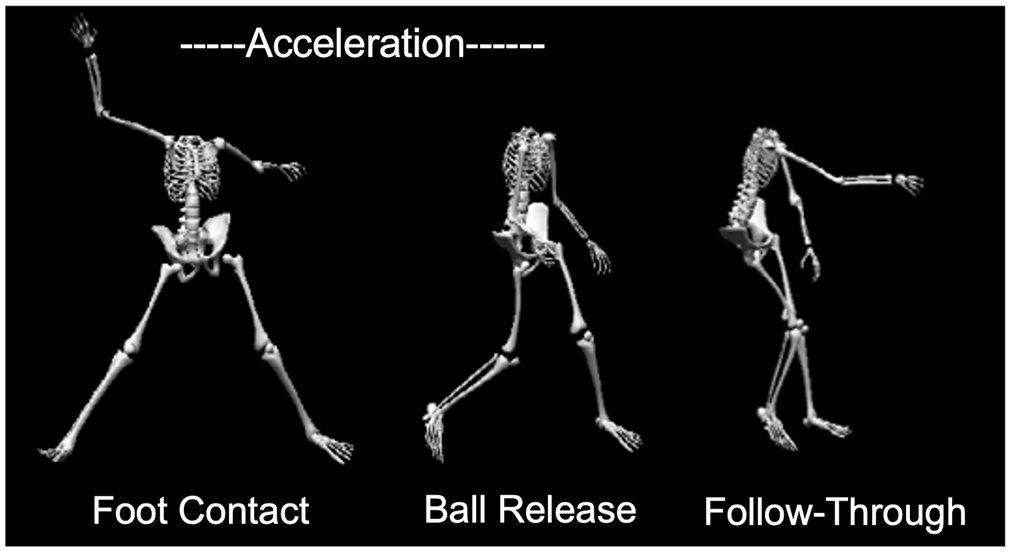
The acceleration phase (foot contact to ball release) and follow-through event of the softball pitching motion (defined as 100 milliseconds after ball release). 11
Previous work has sought to understand biomechanics linked with increased throwing shoulder distraction force among an elite population of softball pitchers. 42 However, because of the varied biomechanics present among pitcher groups and the high prevalence of high school pitchers’ upper extremity pain, it was the purpose of this study to examine trunk and throwing arm kinematics, kinetics, and timing variables that might explain peak throwing shoulder distraction force in high school softball pitchers. It was hypothesized that trunk and throwing arm kinematics and kinetics and variables of timing would be significantly associated with peak external distraction force exhibited at the throwing shoulder. Understanding biomechanics linked to increased shoulder stress can help inform pitching practice for pitchers, coaches, and clinicians as they work to decrease stress and combat the high rate of shoulder injury currently present among high school softball pitchers. Similarly, understanding the mechanics associated with high shoulder stress can offer insight to the high prevalence and mechanism of shoulder injury among high school softball pitchers.
Methods
The university’s institutional review board approved all study procedures. A total of 37 high school softball pitchers (mean ± SD; height, 1.71 ± 0.06 m; weight, 75.53 ± 16.12 kg; age, 16 ± 2 years) from various schools within the southeastern United States agreed to participate in this laboratory study. Participants were informed of the study procedures, and patient consent or parental consent and patient assent (if a minor) were obtained. Inclusion criteria required participants to (1) currently be in high school, (2) have pitched in a game within the past year, and (3) have at least 1 year of pitching experience. Pitchers were excluded from the study if they had undergone surgery or incurred an injury within the past 6 months. Pitchers arrived at the testing laboratory having refrained from physical activity for 24 hours.
Pitchers wore a loose-fitting T-shirt and shorts and shoes in which they were comfortable pitching. Pitchers completed their typical generic, dynamic warm-up before any throwing activity. Once pitchers indicated that they were warm, they were suited with 14 electromagnetic sensors affixed to body segments, which are presented in Table 1 and Figure 2. After sensors were affixed to the skin, a digitizing process was completed with a 15th sensor attached to a plexiglass stylus to identify joint positions and create local segment axes. A link segment model was developed by palpating and digitizing bony landmarks, which are presented in Table 2. Two digitization points described the longitudinal axis of each segment, and a third point on the segment defined the plane of the segment. Joint centers were calculated as the midpoint between 2 digitized points, except for the shoulder and hip. The shoulder joint center was determined using a rotation method previously validated.39,43,44 Hip joint location was established using the Bell method. 7
Sensor Placements on Body Segments a
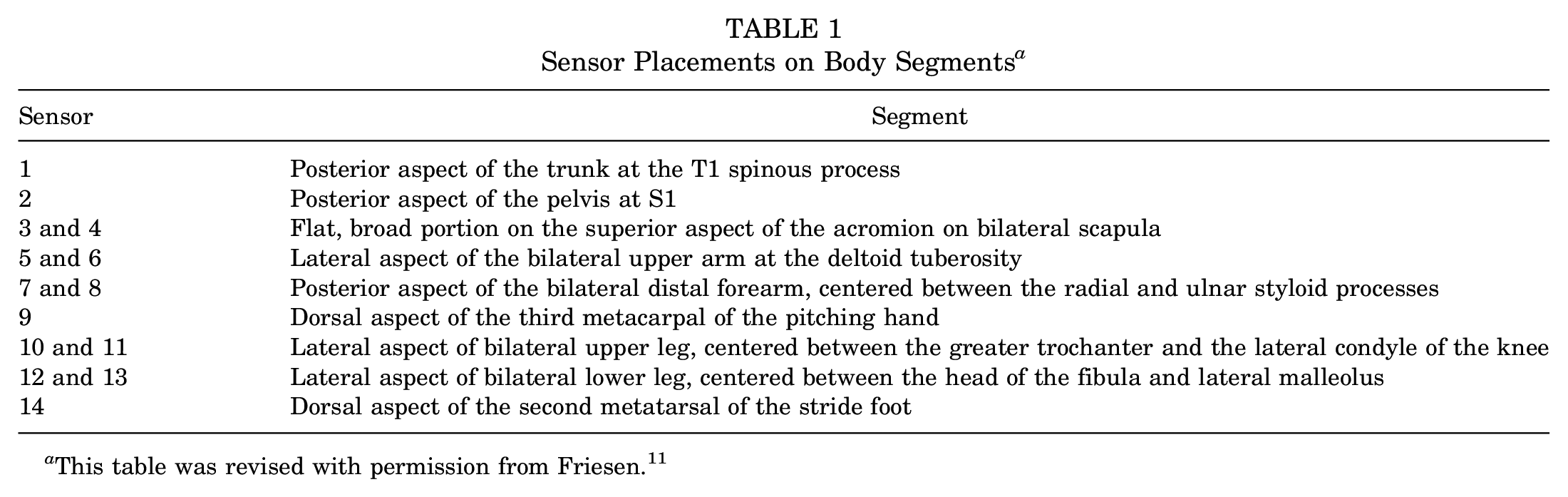
This table was revised with permission from Friesen. 11
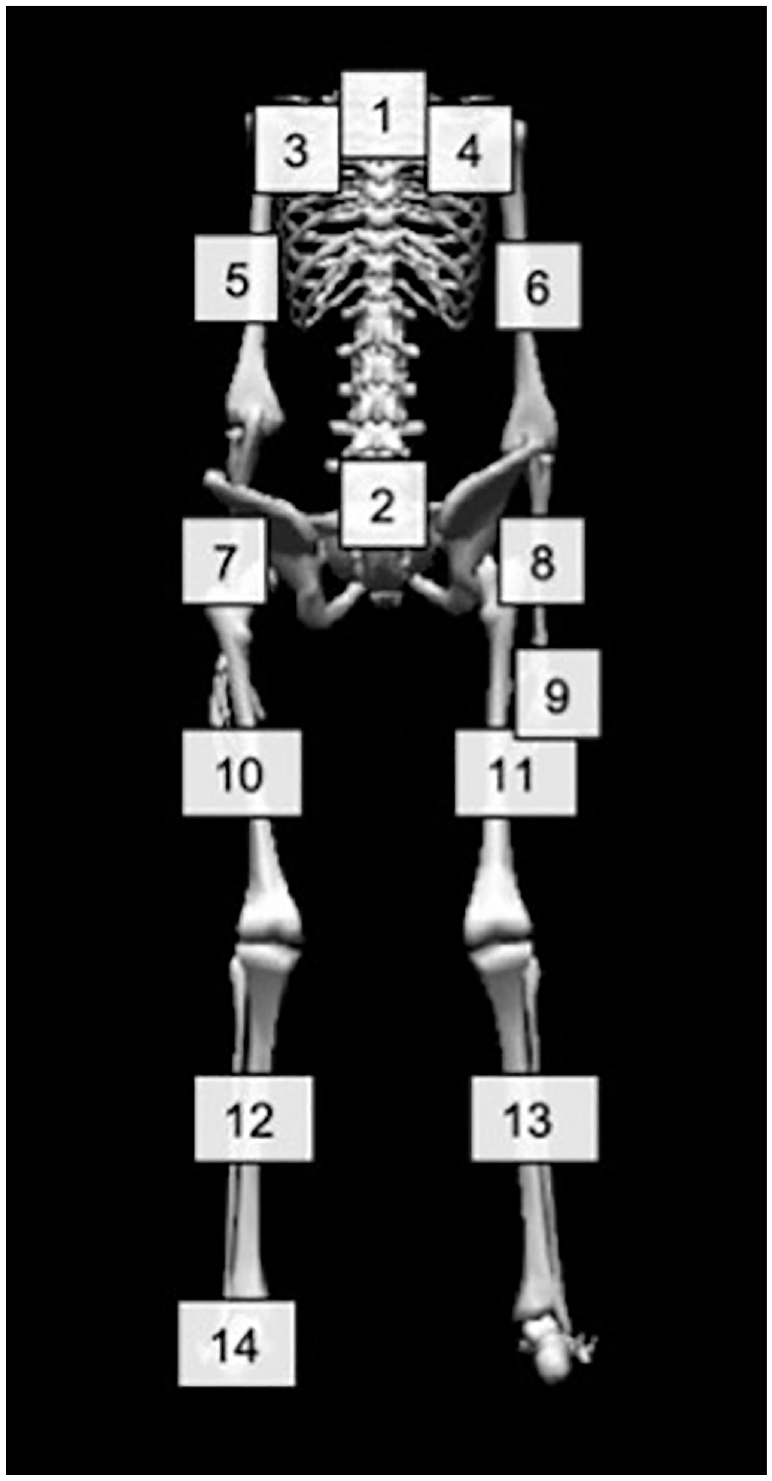
Electromagnetic sensor placement for a right-handed pitcher.
Description of Bony Landmarks Used to Create the Segment Link Model a
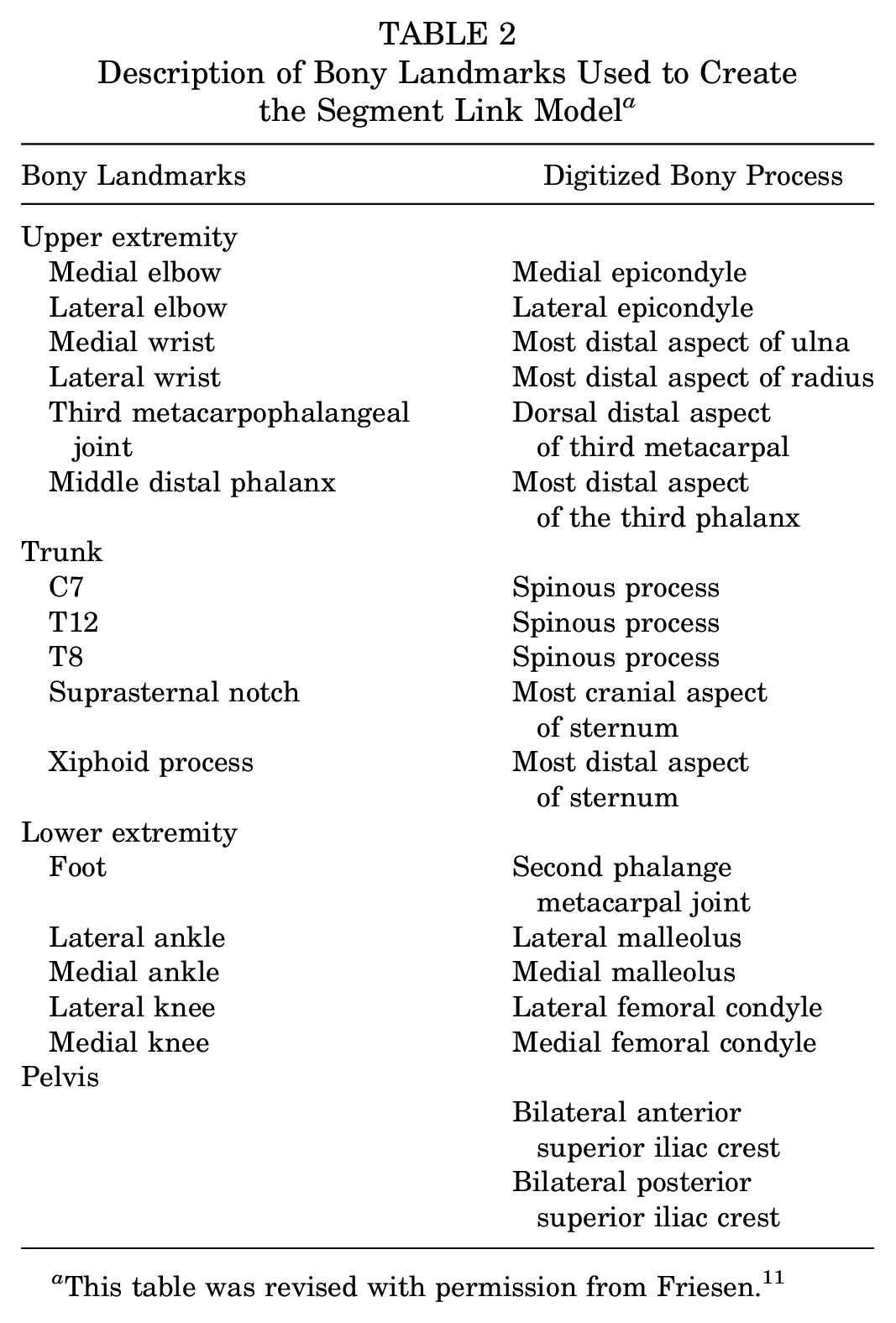
This table was revised with permission from Friesen. 11
Once digitization was completed, pitchers underwent their typical pregame pitching-specific warm-up. When pitchers indicated that they were fully warm and ready to pitch with maximum effort, the data collection process began. Pitchers were instructed to start with the push foot (ipsilateral to the pitching arm) on the in-ground force plate (Bertec 4060 NC; Bertec Corp) and the opposite foot off the back edge of the force plate. Pitchers were instructed to throw fastballs for strikes to a catcher located at regulation distance (43 ft [13.1 m]). A pitch was saved for analysis if the primary investigator (K.B.F.) considered it a strike. Pitchers had approximately 20 seconds of rest between pitches and threw as many pitches as needed until 10 strikes were captured (all pitchers completed this in <30 pitches).
All data were synchronized via a data acquisition board and time-stamped using the MotionMonitor (Innovative Sports Training). Force data were collected at 1200 Hz and expressed as a percentage of body weight (N), while moments were expressed as a percentage of body weight × body height (Nċm). Kinematic data were collected at 240 Hz using an electromagnetic tracking system (trakStar; Ascension Technologies Inc) synced with motion analysis software (MotionMonitor). The measurement system was previously validated (intraclass correlation coefficient >0.96). 17
Kinematic data were expressed according to a world axis system that was fixed to the corner of the force plate and defined with the positive y-axis in the upward vertical direction and with the positive x-axis anterior to the y-axis and in the direction of the pitch. Orthogonal and to the right of the xy plane was the positive z-axis. Raw data were transformed to a locally based reference system for each segment based on Euler angle decomposition sequences described according to recommendations set by the International Society of Biomechanics.43,44 Specifically, shoulder joint data were expressed using the Euler angle decomposition sequence yx′y′′ to represent humeral motion relative to the thorax, while the other joint motions in the body were calculated using the zx′y′′ decomposition sequence.43,44 Kinetic data were measured using the motion analysis software using inverse dynamics. Shoulder distraction (+) and compression (–) force was measured in the y direction relative to the throwing shoulder axis.22,26
All data were independently filtered within the motion analysis software using a fourth-order Butterworth filter with a cutoff frequency of 13.4 Hz. 9 Data from the first 3 fastest pitches were averaged and analyzed, as previous reports have suggested that 3 trials are sufficient to analyze pitch motion.6,40
Statistical Analysis
Twenty-two variables were extracted using MATLAB (R2020a; MathWorks): trunk flexion at FC, trunk lateral flexion at FC, trunk rotation at FC, trunk flexion at BR, trunk lateral flexion at BR, trunk rotation at BR, throwing arm elevation at BR, throwing arm plane of elevation at BR, throwing arm elbow flexion at BR, time between push foot off the force plate and FC, time between FC and BR, maximum stride hip rotation, maximum push hip rotation, throwing arm peak elbow distraction force, peak throwing shoulder flexion moment, peak throwing shoulder adduction moment, peak elbow valgus moment, peak elbow extension moment, peak trunk rotational velocity, peak shoulder flexion velocity, peak elbow flexion velocity, and pitch velocity.
SPSS Statistics 26 (IBM Corp) was used to examine the influence of kinematic, kinetic, and timing variables that explain peak throwing arm shoulder distraction force. The 22 variables were entered into a stepwise multivariate regression. A P value <.05 was considered statistically significant. Before analysis, Shapiro-Wilk tests of normality were run. A majority of variables (>80%) revealed approximate normal distributions; therefore, data were considered to be normally distributed.
Results
The final linear model of the stepwise linear regression was statistically significant (F4,39 = 147.51; P < .001) and included 4 variables: peak elbow distraction force, trunk flexion at FC, peak elbow extension moment, and peak elbow flexion velocity. Means and standard deviations of these 4 variables are presented in Table 3. The regression equation explained approximately 94% of variance in peak throwing shoulder distraction force (R2 = 0.944; adjusted R2 = 0.938; SE = 0.036). Greater peak elbow distraction force (t = 19.90; P < .001; 95% CI, 1.157 to 1.420) and elbow extension moment (t = 3.63; P = .001; 95% CI, 0.590 to 2.084) as well as lesser trunk flexion at FC (t = −3.00; P= .005; 95% CI, –0.002 to .000) and peak elbow flexion velocity (t = −2.37; P = .023; 95% CI, –7.7 × 10⁵ to −6.0 × 10⁶) were associated with increased peak throwing shoulder distraction force (Table 4). Figure 3 shows the mean values of data expressed between the event of FC and follow-through. Mean throwing shoulder distraction force is illustrated in Figure 4. The biomechanical factors included in the significant regression equation are compared across studies with various age groups in Table 5.
Descriptive Statistics for All Variables in the Regression Equation (N = 37) a
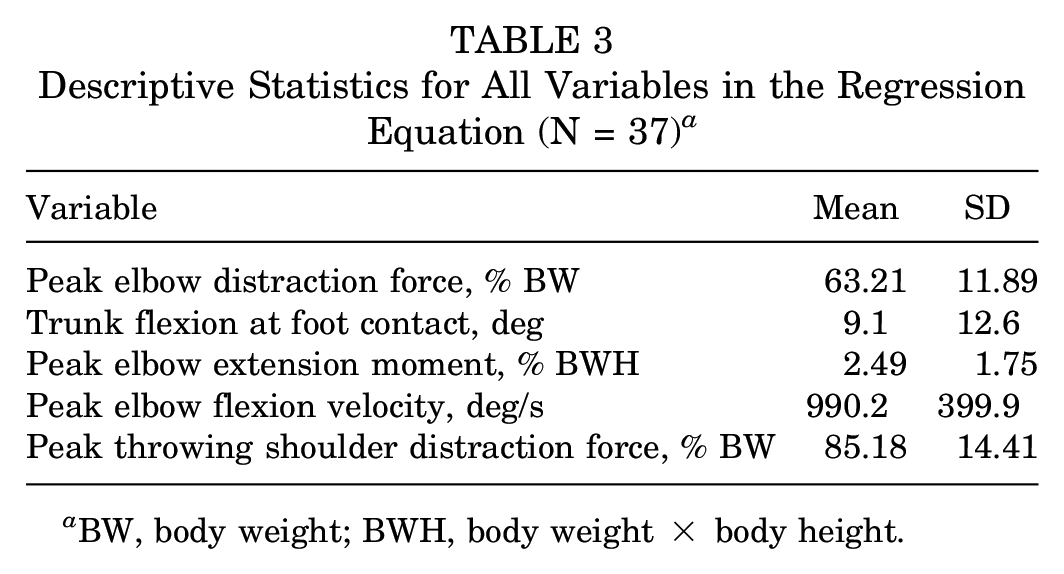
BW, body weight; BWH, body weight × body height.
Regression Coefficients for the Throwing Shoulder Distraction Force Regression Equation a
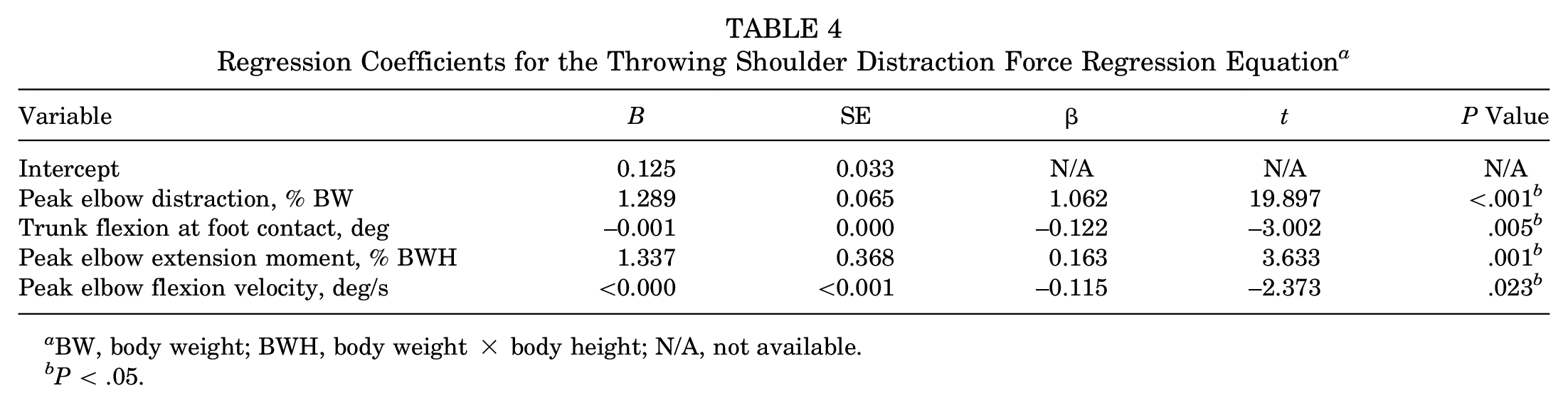
BW, body weight; BWH, body weight × body height; N/A, not available.
P < .05.
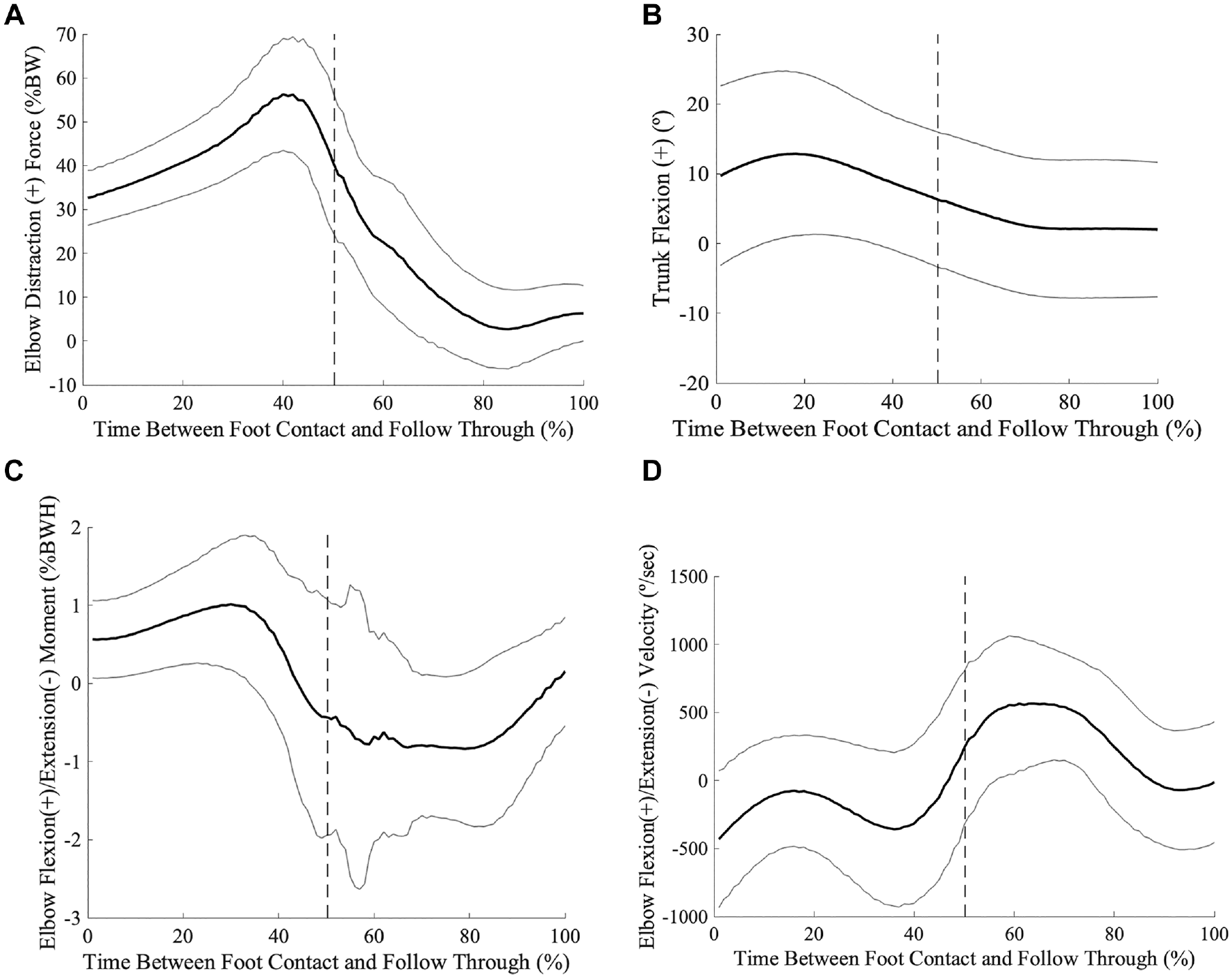
Pitchers’ (A) elbow distraction force, (B) trunk flexion, (C) elbow flexion/extension moment, and (D) elbow flexion/extension velocity between the event of foot contact (0%) and follow-through (100%). Black line, mean; gray line, SD; dotted line, mean position of ball release; BW, body weight; BWH, body weight × body height.
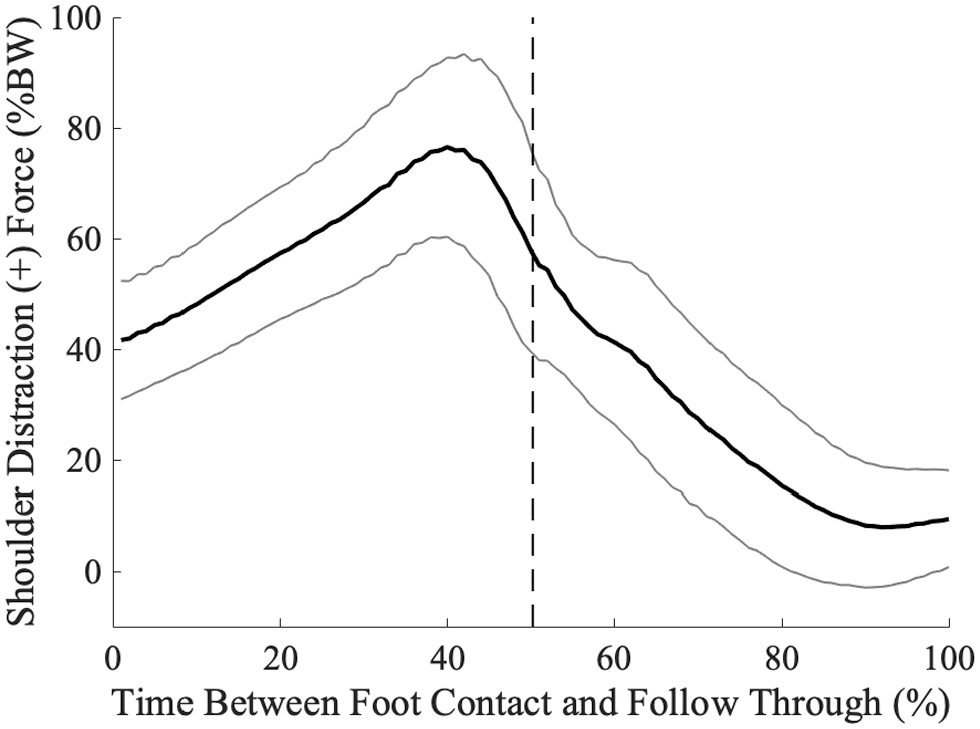
Pitchers’ throwing shoulder distraction force between the event of foot contact (0%) and follow-through (100%). Black line, mean; gray line, SD; dotted line, mean position of ball release. BW, body weight.
Comparison of Significant Regressors Across Other Studies/Age Groups a
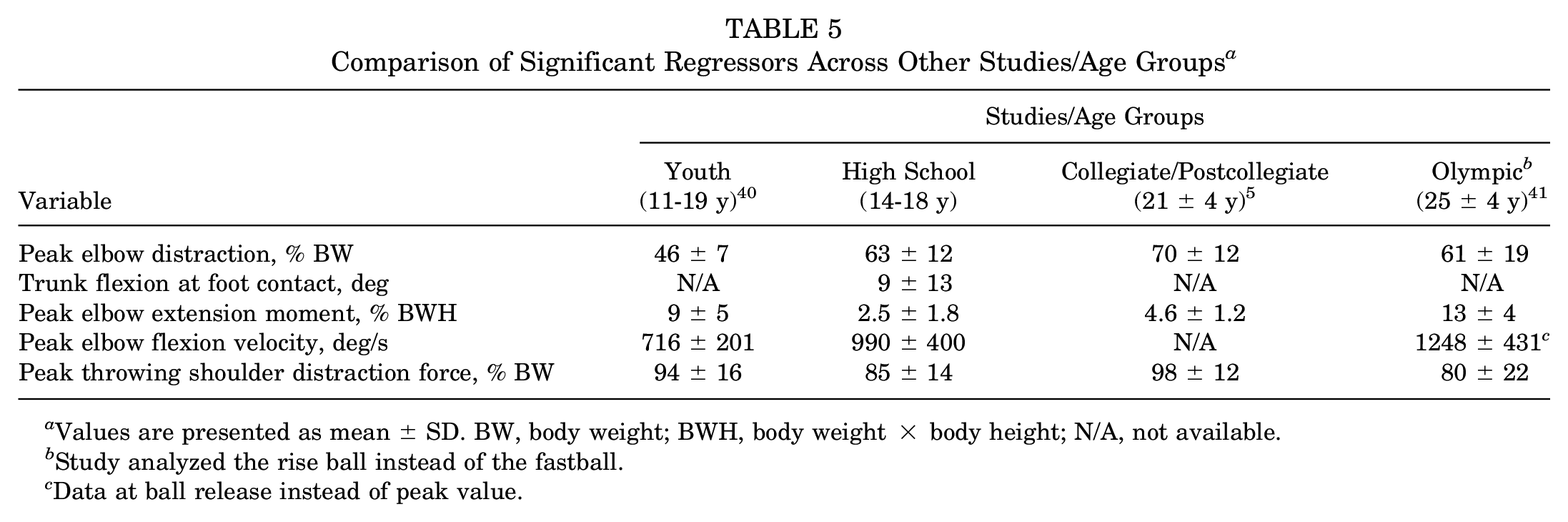
Values are presented as mean ± SD. BW, body weight; BWH, body weight × body height; N/A, not available.
Study analyzed the rise ball instead of the fastball.
Data at ball release instead of peak value.
Discussion
In the current study we sought to understand biomechanics related to throwing shoulder distraction force within a high school group of softball pitchers. This study showed that peak throwing shoulder distraction force was influenced by peak elbow distraction force, extension moment, and flexion velocity and trunk flexion at FC. Elbow distraction force and extension moment were positively related to increased throwing shoulder distraction force, while elbow flexion velocity and trunk flexion at FC were negatively related to shoulder distraction force. Shoulder distraction force is a commonly studied variable within the softball pitching literature because of the large range of motion of the throwing arm.5,33,42 During the arm circle of the windmill pitch, the glenohumeral joint experiences distraction that nearby structures—namely, the biceps labral complex—must resist while providing elbow flexion torque.5,33 In lieu of the high demand placed on the biceps brachii5,33 and the high rates of shoulder injury among pitchers,16,19,29,38 research analyzing the kinematics and kinetics that lead to increased throwing shoulder distraction force is warranted. Previous researchers have sought to understand the biomechanics involved with windmill softball pitching,5,13,22-24,27,28,40,41 including 1 study that examined the relationship between throwing shoulder distraction force and kinematics and kinetics in an elite pitching population. 41 However, because of the varied mechanics according to pitcher expertise and age,10,21,24 more research is needed to examine softball pitching biomechanics within more homogeneous pitching populations to better apply findings.
The current study found strong relationships between elbow variables and shoulder distraction force. The relationship between elbow and shoulder stress is likely because of the nature of the windmill pitch and the common motion of the entire upper extremity. Although the arm is often segmented into 3 separate segments (upper arm, forearm, hand),11,24 the windmill motion requires total arm circumduction through a large range of motion. 5 The distraction force exhibited during this rapid circumduction causes stress at the elbow and shoulder joint, 42 which might explain why these 2 variables were positively related. Because of the inherent relationship between the throwing arm elbow and shoulder, future work should examine how sequencing of segment motion between relative forearm and upper arm segments may influence force distribution through the kinetic chain. In light of the sequential nature of the arm during the pitching motion, more research is needed to understand how these interactions might influence forces at the shoulder joint and potentially help to minimize risk of injury at the shoulder joint.
While previous research has noted that the biceps tendon endures great stress during the windmill pitch,4,23,33 increased throwing shoulder distraction force linked with increased elbow extension moment might further point to the biceps tendon as a location of injury and anterior shoulder pain among softball pitchers. The biarticular and mechanical nature of the biceps tendon and its influence at the shoulder and elbow joint can make it particularly susceptible to injury. Previous work has highlighted the importance of the biceps tendon in assisting with shoulder and elbow flexion during the acceleration phase of the pitch. 33 Likewise, the slowing down of elbow extension causes an eccentric muscle action of the biceps brachii 33 ; therefore, increased elbow extension torque places greater stress on the biceps tendon. While proper delivery of the softball requires the biceps tendon to flex the shoulder and elbow actively, there may be a hierarchy of needs and outcomes necessary during the pitching task. Previous research has noted that the role of the biceps as a humeral head depressor is to provide elbow flexion torque and humeral head compression. 5 Therefore, researchers have delved into the role of the biceps brachii and considered the large role that it plays during the windmill pitch to be a potential mechanism of injury.4,23 Specifically, the biarticular nature of the biceps brachii may predispose it to active insufficiency in that it cannot adequately lend itself to control both joint actions. It is possible that the demand of the biceps brachii to properly flex the elbow for accurate BR is too great, and as a result, the long head of the biceps tendon near the shoulder cannot properly manage shoulder distraction force, although this is currently unknown. As a result, more insight is needed regarding the relative motion of segments during strenuous upper extremity tasks, such as windmill pitching.
Researchers have sought to describe the relative motion of adjacent segments and noted proximal-to-distal sequencing as a means of providing optimal distal segment velocity. 8 In 1982, Alexander and Haddow 3 described throwing arm segmental sequencing during a windmill pitch and noted that the upper arm decreases angular velocity while the forearm increases angular velocity. Researchers have debated whether the simultaneous increase in distal segment (forearm) velocity and decrease in proximal segment (upper arm) velocity is a product of distal segment active flexion or whether it is the negative acceleration (deceleration) of a proximal segment.15,32 In any case, increased elbow flexion velocity and increased angular acceleration of the forearm can negatively accelerate the upper arm segment to potentially alleviate some throwing shoulder distraction force. Greater elbow flexion velocity may therefore have the potential to decrease movement of the upper arm segment and may subsequently decrease throwing shoulder distraction force. We hypothesize that the increased elbow flexion velocity occurring near BR alleviates some of the distraction force at the shoulder by means of creating a reversed effect on the proximal adjacent segment in preparation for BR. Another potential explanation for the inverse relationship may be the increased elbow flexion velocity and elbow flexion of the throwing arm resulting in a decreased lever arm. Shortening the lever arm can subsequently lead to decreased torque experienced at proximal joints 2 and may be why elbow flexion velocity relates to decreased throwing shoulder distraction force. Despite the suggested reasons explaining why these 2 variables are related, more research is needed to understand how the sequential involvement of the throwing arm is related to pitching outcomes. While it is important to understand how certain mechanics may enhance potentially injurious forces, it is also necessary to consider how specific biomechanics are of use to pitching success and variables such as pitch accuracy, body timing, and pitch velocity.
The current findings revealed that decreased trunk flexion, a more easily modified variable, was associated with greater shoulder distraction force. Previous work has shown that with shoulder distraction force being related to pain, certain trunk positions are associated with prevalence of pain.22,26 Specifically, more trunk lateral flexion toward the glove side at BR 26 and greater trunk rotation toward the ball side at FC 22 are related to throwing arm pain. No study to date has noted a relationship between trunk flexion and shoulder pain or injury, although there may be associations similar to what has been previously observed.
While there were no significant associations between arm positioning and distraction force, we hypothesized that increased trunk flexion can somewhat alter the plane of the arm circle that occurs during the windmill pitch. Our findings suggest that a slightly more flexed trunk may help to minimize the injurious forces at the shoulder; however, more research is needed to examine whether manipulating trunk flexion can influence shoulder forces in a positive way. It is also important to consider that the trunk is a major point of stabilization for the softball pitch 14 and trunk positioning can alter the biomechanics of other segments. Of note, a previous study has shown that increased trunk flexion was associated with greater rise ball pitching performance, so perhaps suggestions for a slightly more flexed trunk may be beneficial for performance purposes. 12 This is not well understood because of the retrospective design of the study and the uncertainty of how altering trunk flexion can influence other factors of performance, accuracy, pain, and injury.
The relationship between trunk flexion and throwing shoulder distraction force might have implications for pitch type. For example, since our findings suggest that pitches that position the pitcher with more trunk flexion upon FC might place one at lower risk of exhibiting high shoulder distraction forces, it might be advantageous to throw pitches that require greater trunk flexion, such as the drop ball. The modifiable nature of trunk flexion allows for intervention work to assess the influence of trunk flexion on throwing shoulder distraction force, pitch velocity per pitch type, and pain and injury susceptibility. Future work should seek to examine trunk flexion as a modifiable risk factor in lieu of the other variables that might influence a pitcher’s ability, health, and safety.
The current study results showcase the relationship of various biomechanical factors, including kinematics and kinetics, and the amount of peak throwing shoulder distraction force exhibited during the windmill pitching motion. Elbow mechanics seemed to be greatly associated with throwing shoulder distraction force. While altering kinetics is less plausible, values of trunk flexion upon front FC may offer a more easily adjustable variable. More research is needed to examine whether various values of trunk flexion at FC influence throwing shoulder distraction force. Previous work has shown that trunk lateral flexion and rotation are associated with shoulder stress, but this is the first study to signal trunk flexion as a related variable.22,26
Various biomechanical factors associated with increased throwing shoulder distraction force signifies the importance of acceleration phase pitch biomechanics on peak shoulder stress near BR. A previous study that sought to find biomechanical relationships with throwing shoulder distraction force found many significant kinematic parameters. 41 Contrarily, our study revealed 2 kinetic and 2 kinematic factors that predicted throwing shoulder distraction force. The discrepancy in shoulder stress predictors may be due to the sample population age difference and the pitch type under investigation, pitch type under investigation, as well as the varied data capture methods and variables entered into the regression.
Limitations of this study exist. Because of the retrospective nature of this study, it is improper to make recommendations concerning future athlete development; however, understanding the similarities in biomechanics with potentially harmful kinetics is an important base for future research to build upon. Future research should examine the development of pitchers’ biomechanics and throwing shoulder distraction force while tracking the incidence of pain and injury rate. Because the current study did not measure pain or injury, we cannot state that the variables associated with throwing shoulder distraction force are causing pain and injury. Consequently, more research is needed to continue to identify potential injury mechanisms. Another limitation of this study was the laboratory environment. Unfortunately, pitching fastballs in a controlled environment does not fully replicate the many situational factors and intense environment exhibited during a typical game competition. As well, the adolescent sample population can include pitchers across a variety of skill and experience levels, which can influence the results. As seen within Table 5, the diverse skill and expertise levels of pitchers can result in different value ranges for certain variables.
Elbow kinetics and angular velocity, as well as trunk positioning at FC, are associated with peak throwing shoulder distraction force in high school softball pitchers. Understanding pitching mechanics that most closely relate to this deleterious force can help researchers build upon injury prevention efforts and offer insight regarding the mechanism of shoulder stress and the high rates of shoulder injury. Findings might also suggest why some pitchers are more susceptible to throwing shoulder injury than others. Biomechanics that precede the event of BR and occur near BR influence the amount of peak throwing shoulder distraction force. Consequently, attention should be drawn to understanding how to limit the stress at the shoulder joint while not limiting performance potential.
Footnotes
Submitted March 24, 2021; accepted July 23, 2021.
One or more of the authors has declared the following potential conflict of interest or source of funding: M.G.S. has received speaker fees and educational and hospitality support from Arthrex; education support from Smith & Nephew; and grant support for fellowship training and travel/lodging from DJO. AOSSM checks author disclosures against the Open Payments Database (OPD). AOSSM has not conducted an independent investigation on the OPD and disclaims any liability or responsibility relating thereto.