



Abstract
Background:
Previous studies have shown that changing acutely from shod to barefoot running induces several changes to running biomechanics, such as altered ankle kinematics, reduced ground-reaction forces, and reduced loading rates. However, uncertainty exists whether these effects still exist after a short period of barefoot running habituation.
Purpose/Hypothesis:
The purpose was to investigate the effects of a habituation to barefoot versus shod running on running biomechanics. It was hypothesized that a habituation to barefoot running would induce different adaptations of running kinetics and kinematics as compared with a habituation to cushioned footwear running or no habituation.
Study Design:
Controlled laboratory study.
Methods:
Young, physically active adults without experience in barefoot running were randomly allocated to a barefoot habituation group, a cushioned footwear group, or a passive control group. The 8-week intervention in the barefoot and footwear groups consisted of 15 minutes of treadmill running at 70% of VO2 max (maximal oxygen consumption) velocity per weekly session in the allocated footwear. Before and after the intervention period, a 3-dimensional biomechanical analysis for barefoot and shod running was conducted on an instrumented treadmill. The passive control group did not receive any intervention but was also tested prior to and after 8 weeks. Pre- to posttest changes in kinematics, kinetics, and spatiotemporal parameters were then analyzed with a mixed effects model.
Results:
Of the 60 included participants (51.7% female; mean ± SD age, 25.4 ± 3.3 years; body mass index, 22.6 ± 2.1 kg·m-2), 53 completed the study (19 in the barefoot habituation group, 18 in the shod habituation group, and 16 in the passive control group). Acutely, running barefoot versus shod influenced foot strike index and ankle, foot, and knee angles at ground contact (P < .001), as well as vertical average loading rate (P = .003), peak force (P < .001), contact time (P < .001), flight time (P < .001), step length (P < .001), and cadence (P < .001). No differences were found for average force (P = .391). After the barefoot habituation period, participants exhibited more anterior foot placement (P = .006) when running barefoot, while no changes were observed in the footwear condition. Furthermore, barefoot habituation increased the vertical average loading rates in both conditions (barefoot, P = .01; shod, P = .003) and average vertical ground-reaction forces for shod running (P = .039). All other outcomes (ankle, foot, and knee angles at ground contact and flight time, contact time, cadence, and peak forces) did not change significantly after the 8-week habituation.
Conclusion:
Changing acutely from shod to barefoot running in a habitually shod population increased the foot strike index and reduced ground-reaction force and loading rates. After the habituation to barefoot running, the foot strike index was further increased, while the force and average loading rates also increased as compared with the acute barefoot running situation. The increased average loading rate is contradictory to other studies on acute adaptations of barefoot running.
Clinical Relevance:
A habituation to barefoot running led to increased vertical average loading rates. This finding was unexpected and questions the generalizability of acute adaptations to long-term barefoot running. Sports medicine professionals should consider these adaptations in their recommendations regarding barefoot running as a possible measure for running injury prevention.
Registration:
DRKS00011073 (German Clinical Trial Register).
Keywords
Whether running barefoot is beneficial for running performance and injury risk has been debated over the past decade.1,24 However, no clear evidence has been provided yet to confirm or refute this hypothesis.13,27
Previous studies showed that changing acutely from shod to barefoot running induces several changes to running biomechanics.2,8,11,16,35,42 These adaptations include changing from a rearfoot to more anterior foot strike pattern (midfoot or forefoot strike).3,5,18,33 Furthermore, it was reported that running barefoot as compared with shod was associated with reduced foot and ankle dorsiflexion at ground contact, increased knee flexion at ground contact, reduced stride length, higher cadence, reduced vertical ground-reaction forces, reduced peak knee extension and flexion, and reduced peak ankle internal rotation.2,3,5,8,11,14
While moderate evidence was reported for reduced ground-reaction forces in barefoot running, conflicting results were demonstrated for loading rates in a habitually barefoot or shod population.8,18,33,36 The habituation to barefoot or shod running has been discussed as a reason for these opposite findings. Furthermore, and in contrast to these reports for acute effects of barefoot running on biomechanics, evidence for long-term habituation effects is limited. 13 It was shown that adults habituated to barefoot locomotion have lower rates of rearfoot strikes7,17,18 and corresponding reduced ankle and foot strike angles, as well as altered ground-reaction forces.7,17,18,22 The findings for reduced rates of rearfoot strikes were not confirmed for nonathletic and pediatric populations, in which females and younger children habituated to barefoot locomotion predominantly used a rearfoot strike.9,10,12,26
The limitations of these findings on long-term adaptations of barefoot locomotion are that they were derived from cross-sectional studies. This study design does not enable a causal relationship between barefoot habituation and biomechanical differences. Only 1 prospective study investigated the effects of progressive barefoot running and showed large differences in individual responses (positive/negative responder and nonresponder) with no overall group differences for kinetics and kinematics. 37 It remains uncertain whether the reported changes in foot strike patterns and lower extremity kinematics are permanent or only an immediate effect of unfamiliarity with the (new) barefoot running condition. To better understand habituation effects of barefoot locomotion, there is a need for prospective studies investigating the habituation to barefoot locomotion.1,13
The purpose of this randomized controlled study was to investigate the causal effects of habituation to barefoot locomotion on running biomechanics. Additionally, acute effects of barefoot running were analyzed as compared with shod running. We hypothesized that a habituation to barefoot running would result in a different adaptation of lower limb running kinetics, kinematics, and foot strike patterns as compared with a habituation to cushioned footwear or no habituation.
Methods
Study Design
This study was a prospective 3-arm randomized single-blinded controlled study over 8 weeks, that was approved by the local ethics committee (protocol ID37). All participants granted their informed consent. Reporting of this study adhered to the CONSORT statement 31 (Consolidated Standards of Reporting Trials), and it was prospectively registered in the German Clinical Trial Register (DRKS00011073).
Participants and Setting
Healthy, physically active participants aged between 18 and 35 years were recruited from the university surroundings (convenience sample of students and employees) without experience in any barefoot or minimally shod sports (eg, gymnastics, ballet, combat sports, barefoot running). Further exclusion criteria were musculoskeletal injuries 6 months before the study and neuromuscular diseases.
Interventions and Randomization
After inclusion, participants were randomly assigned to a barefoot intervention group, shod intervention group, or passive control group (Figure 1). A randomization method stratifying for sex was used with a primary block of 6 lots and a secondary block of 4 lots per study arm. All researchers involved in the data processing and analysis were blinded to study arm assignments. Due to the study design, participants and scientific staff administering the treatment and performing the statistical analysis were not able to be blinded.
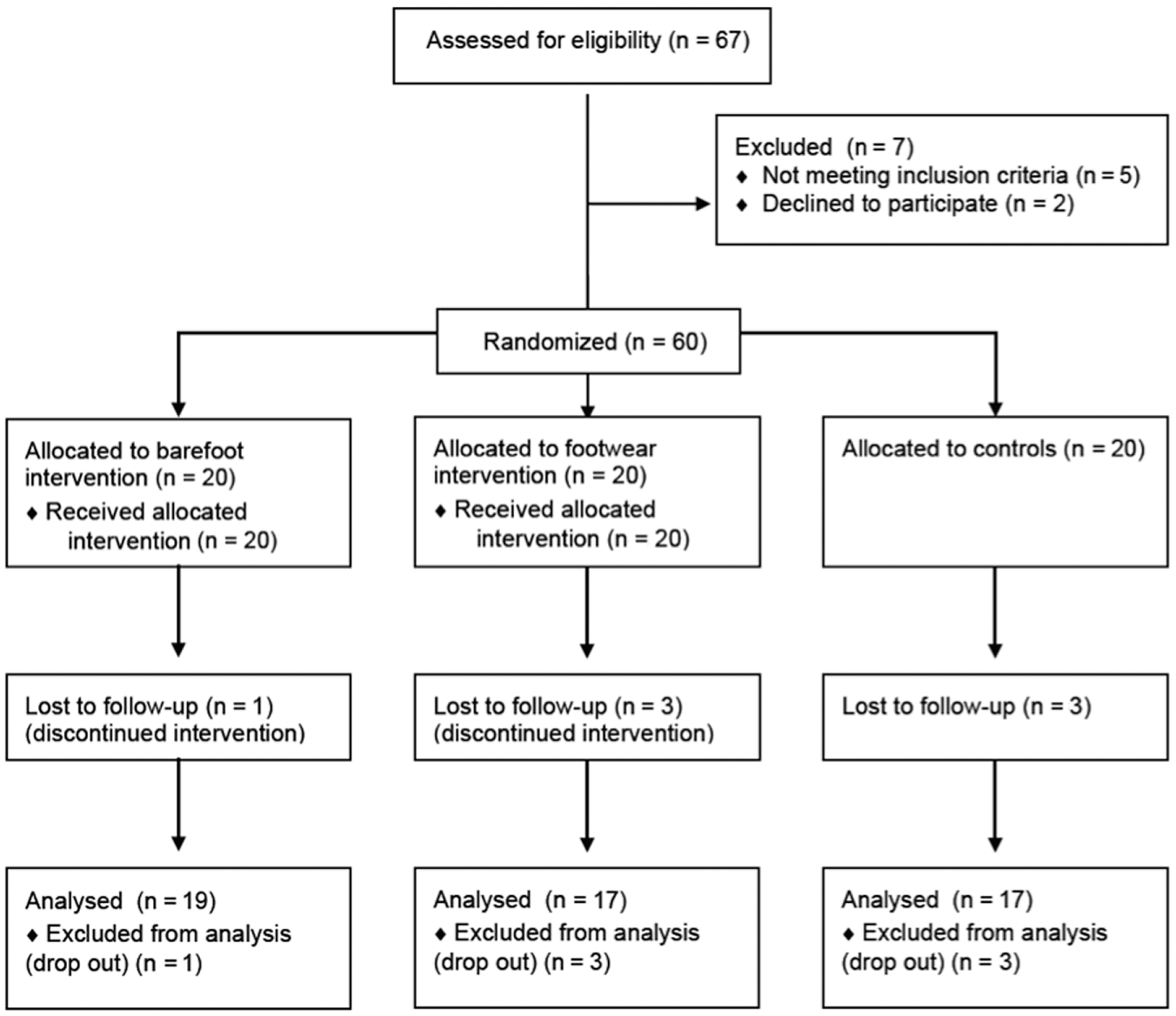
Flowchart of participants.
Intervention
The intervention was divided into 7 sessions approximately 1 week apart. Each session consisted of habituation to barefoot or new footwear locomotion by running on a treadmill (TRAC 4000; Ergo-Fit GmbH & Co KG) and learning a new balance task on a stability platform (model 16030 L; Lafayette Instrument Company) 43 under barefoot (experimental group) or shod (active control group) conditions. For running habituation, participants ran in the interventional footwear (barefoot or shod) for 15 minutes on the treadmill at 70% of their previously determined velocity at VO2 max (Quark CPET; COSMED). VO2 max was determined with an established ramp protocol that was previously reported. 20 The mean ± SD velocity for running was 10.7 ± 0.9 km/h (range, 8.8-12.4 km·h-1). For the balance task, participants were asked to stand on an unstable platform and maintain it in a horizontal position for as long as possible. 28 The duration of the balance task was 30 seconds, and it was repeated 15 times with a 1-minute break. Participants were asked to hold their hands to the hips, although a handrail was present to prevent falls. The results of the balance tasks were published elsewhere. 43
The interventional shoe was a commercially available cushioned running shoe (Asics 17, 10-mm heel drop, neutral arch support, 336 g, for male US size 9) and individually standardized for every participant. The passive control group did not receive any intervention and continued with their usual physical activity in the habitual footwear over the 8 weeks between pre- and posttests.
Instrumentation
Before and after the intervention, a 3-dimensional running gait analysis (VICON; Vicon Motion Systems Ltd) was conducted on an instrumented treadmill (h/p/cosmos) with a capacitance-based pressure platform under the surface (FDM-THQ; Zebris Medical GmbH). The surface was 174 × 65 cm and contained 10,240 sensors in a sensing area of 136 × 54 cm (0.85 × 0.85 cm each). The pressure data were used to determine vertical ground-reaction forces by multiplying each pressure sensor signal by its area and subsequently summing the data from all sensors. The data were sampled at 200 Hz, and this treadmill was shown to be reliable for the assessment of temporal and kinetic parameters of running. 38
Retroreflective markers were applied to specific anatomic landmarks of the pelvis and lower limbs according to the lower body marker set of Willwacher et al. 41 Participants from all 3 groups ran at 1 fixed velocity (10 km/h) barefoot and under a standardized footwear condition in a randomized order. Separate calibrations of the marker set were performed in each running condition (barefoot or shod). After a habituation period of 5 minutes per test, two 30-second trials were recorded. Participants were given a 1-minute rest between trials. Only the first trial was investigated, and the second trial served as a backup.
Data Processing
Three-dimensional marker trajectories were filtered with a recursive fourth-order Butterworth filter (cutoff frequency, 12 Hz). Anatomic coordinate systems were attached to 5 segments representing the right lower extremity (pelvis, thigh, shank, rearfoot, forefoot) during a standing calibration trial. The relative orientation of segments with respect to the laboratory coordinate system (for segment orientations) and the proximal segment coordinate system (for joint angles) was described with rotation matrices. From these, orientation and joint angles were extracted with the Cardan angle convention (sequence of rotation: flexion/extension, adduction/abduction, internal/external rotation).
Primary and Secondary Outcomes
The primary outcome in this study was the foot strike index, as determined with the method of Santuz et al. 30 The index was calculated as the distance from the heel to the center of pressure at ground contact divided by the foot/shoe length. Therefore, it accepts values between 0 and 1, with higher values representing more anterior foot placement. Secondary outcomes were ankle angle, foot angle, and knee angle at foot strike (threshold force, 40 N), as well as cadence, flight and contact time, step length, vertical average loading rate, and peak and average force. Cadence was determined as the inverse of stride time (time from foot strike to ipsilateral foot strike). Flight and contact times were defined as the durations of force lower and greater than 40 N, respectively. Vertical average loading rates were determined as the average rate of force development during the initial 50 milliseconds of the stance phase. Peak and average vertical forces were determined during each stance phase.
Statistical Methods and Study Size
Two separate statistical analyses were performed to investigate (1) the acute effects of barefoot and shod running conditions during the pretest over all groups and (2) the habituation effects among groups. The acute effects were tested with paired t tests adjusted for multiple testing with the Benjamini-Hochberg method. For analyzing the habituation effects, we tested for group effects, test-condition effects, and interaction effects in the pre- to posttest differences with a mixed effects model incorporating a random intercept at the participant level. To account for the unbalanced design, we approximated the denominator degrees of freedom with the Kenward-Roger method. Confidence intervals were adjusted with Bonferroni corrections. Tukey honest significance difference tests were applied in the post hoc analysis. Marginal means were used to describe the mean change calculated by the mixed effects model. We double-checked our significant mixed effects results with robust estimation and inferential procedures for mixed effects models based on the Welch-James test, trimming, and the bootstrap. This additional validation step produced equivalent results.
According to the a priori power analysis, 46 participants were needed to detect significant group effects (effect size = 0.7, P < .05, power >0.95). With an estimated dropout rate of 25%, we included 20 participants in each group. Statistical analyses were performed with R (v 3.5.1). The R packages lme4 and lmertest were used for estimation and inference in the linear mixed effects models. For the robust mixed effects model estimation and inference, we used the R package welchADF.
Results
Participants
Sixty participants were included in this randomized controlled trial (51.7% female; mean ± SD age, 25.4 ± 3.3 years; height, 176.3 ± 7.9 cm; body mass, 70.4 ± 10.5 kg; body mass index, 22.6 ± 2.1 kg·m-2). There were no statistically significant differences among groups for age (P = .868), height (P = .605), weight (P = .638), body mass index (P = .405), or sex (P = .984). During the course of the study, loss to follow-up occurred in the barefoot habituation group for 1 participant, the shod intervention group for 3, and the passive control group for 3. Reasons for dropouts were illnesses (n = 5), anterior cruciate ligament rupture (n = 1), and a toe injury (n = 1), which were not related to the study intervention. The total dropout rate was 11.67%, with a mean adherence to habituation sessions of 97.9% ± 5.1%. Figure 1 shows the participant flow through the study. There were no adverse events during the conduct of the study.
Acute Differences of Biomechanical Outcomes When Running Barefoot or Shod
During pretesting, overall differences for barefoot versus shod running occurred for the foot strike index and ankle, foot, and knee angles at ground contact (P < .001), as well as vertical average loading rate (P = .003), peak force (P < .001), contact time (P < .001), flight time (P < .001), step length (P < .001), and cadence (P < .001). No differences were found for average force (P = .391). Table 1 presents all pretest mean and SD values.
Pretest Data and Statistics for Barefoot and Shod Running Conditions a
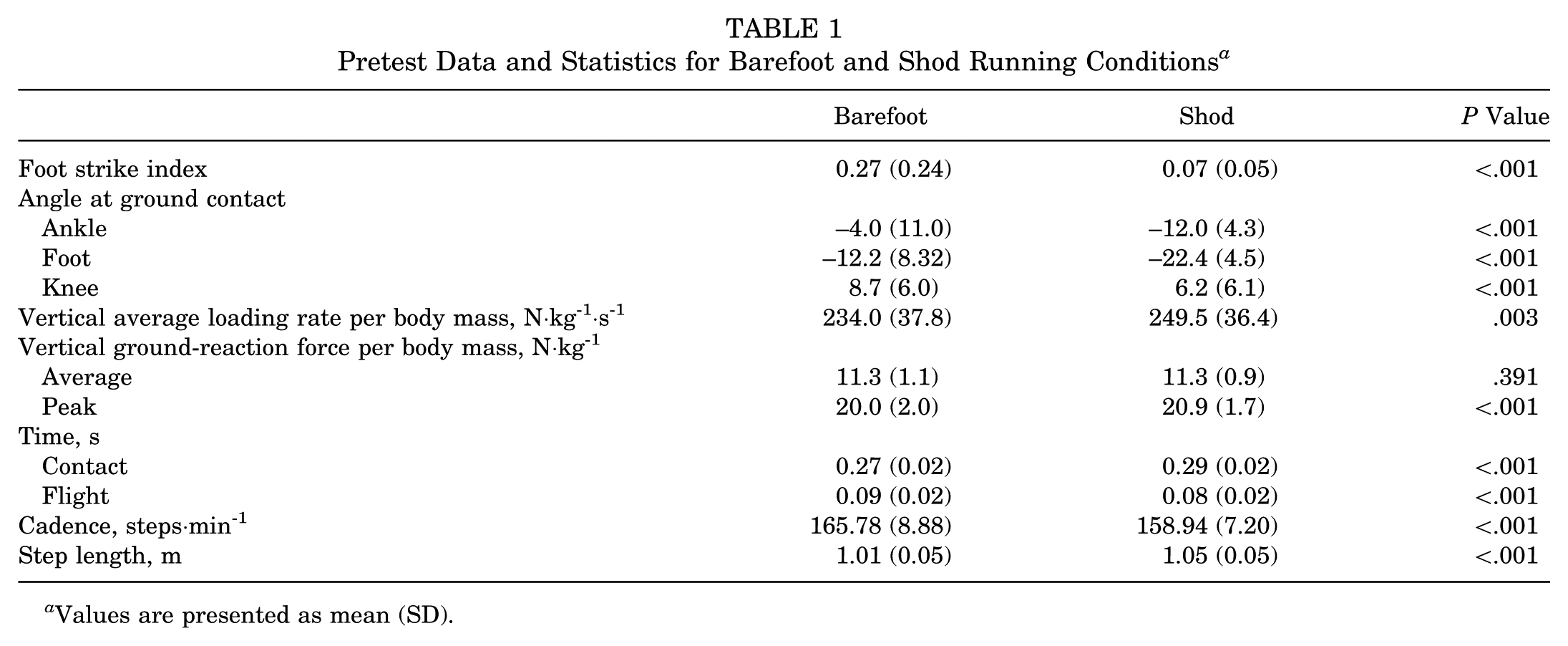
Values are presented as mean (SD).
Changes in Biomechanical Outcomes After Habituation to Barefoot or Shod Running
The foot strike index showed significant pre- to posttest differences in the barefoot habituation group for the barefoot running condition (P = .042) (Figure 2A). The post hoc effect estimation (Tukey method, Figure 2B) showed a significant increase of the foot strike index (more anterior foot placement) in the barefoot habituation group as compared with shod habituation group for the barefoot running condition (marginal means = 0.13, SE = 0.04, P = .006).
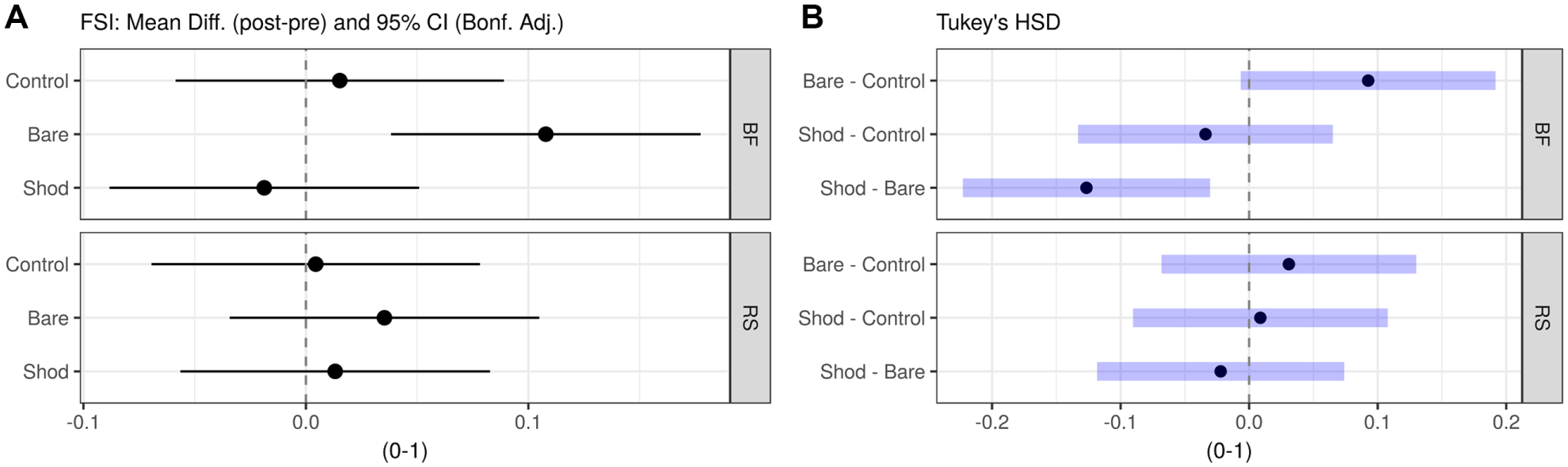
Post hoc analysis of significant effects for both habituation groups (barefoot and shod) and passive controls regarding foot strike index (FSI). (A) Mean differences (posttest-pretest) with Bonferroni-adjusted 95% CI conditionally on the running shoe (RS) and barefoot (BF) test conditions show a significant increase of the FSI (more anterior foot placement) after the barefoot habituation when running barefoot. (B) Groupwise comparisons of the mean differences (posttest-pretest; Tukey honest significant differences [HSDs]) show a significant group difference in the mean differences (posttest-pretest) between the shod habituation group and the barefoot habituation group for the barefoot running condition.
For vertical average loading rates, significant differences in pre- to posttest changes were found in the shod habituation group for the shod running condition (P < .001), as well as a tendency for higher vertical average loading rates in the barefoot habituation group and reduced vertical loading rates in the shod habituation group in the barefoot running condition (Figure 3A). Thus, the post hoc effect estimation (for pairwise contrasts) revealed an increased vertical average loading rate in the barefoot habituation group versus the shod habituation group for the barefoot running condition (marginal means = 21.1, SE = 7.41, P = .01) and the shod running condition (marginal means = 25.31, SE = 7.41, P = .003) (Figure 3B).
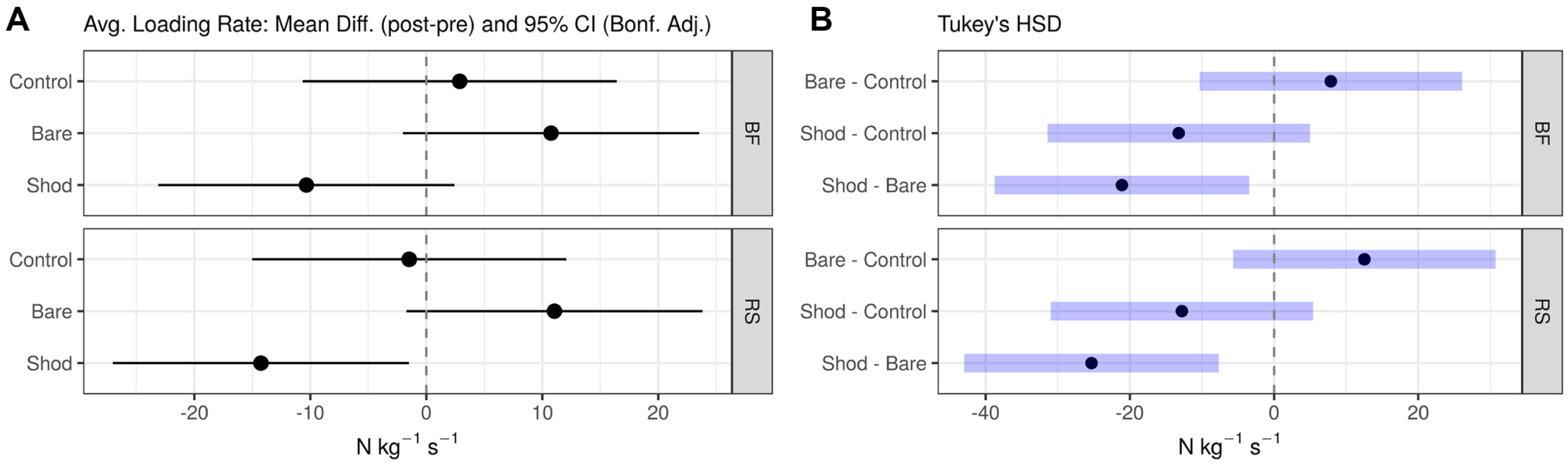
Post hoc analysis of significant effects for both habituation groups (barefoot and shod) and passive controls regarding vertical average loading rate. (A) Mean differences (posttest-pretest) with Bonferroni-adjusted 95% CI conditionally on running shoe (RS) and barefoot (BF) test conditions show a significant decrease of the vertical average loading rate after the shod habituation when running shod. (B) Groupwise comparisons of the mean differences (posttest-pretest; Tukey honest significant differences [HSDs]) show a significant group difference in the mean differences (posttest-pretest) between the shod habituation group and the barefoot habituation group for the barefoot and shod running conditions.
The average vertical ground-reaction force rate showed a significant pre- to posttest difference in the barefoot habituation group for the shod running condition (P = .039) (Figure 4A). For pairwise contrasts, the barefoot habituation group increased the average vertical ground-reaction force rate for the shod running condition (marginal means = 0.61, SE = 0.21, P = .01) (Figure 4B).
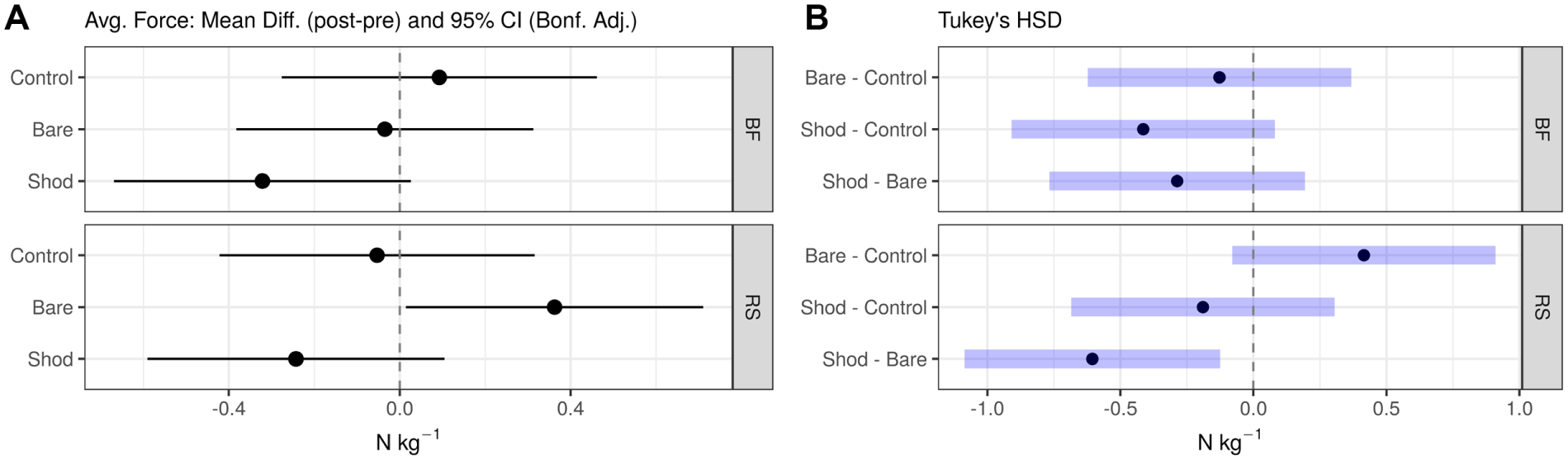
Post hoc analysis of significant effects for both habituation groups (barefoot and shod) and passive controls regarding average force. (A) Mean differences (posttest-pretest) with Bonferroni-adjusted 95% CI conditionally on running shoe (RS) and barefoot (BF) test conditions. (B) Groupwise comparisons of the mean differences (posttest-pretest; Tukey honest significant differences [HSDs]) show a significant group difference in the mean differences (posttest-pretest) between the shod habituation group and the barefoot habituation group for the shod running condition.
Descriptive statistics for pretest, posttest, and pre- to posttest changes and the analysis of variance tables from the mixed effects models are available in Tables 2 to 4.
Foot Strike Index and Ankle, Knee, and Foot Joint Kinematic Data at Ground Contact: Pre- and Posttests of All Groups During Barefoot and Shod Running a
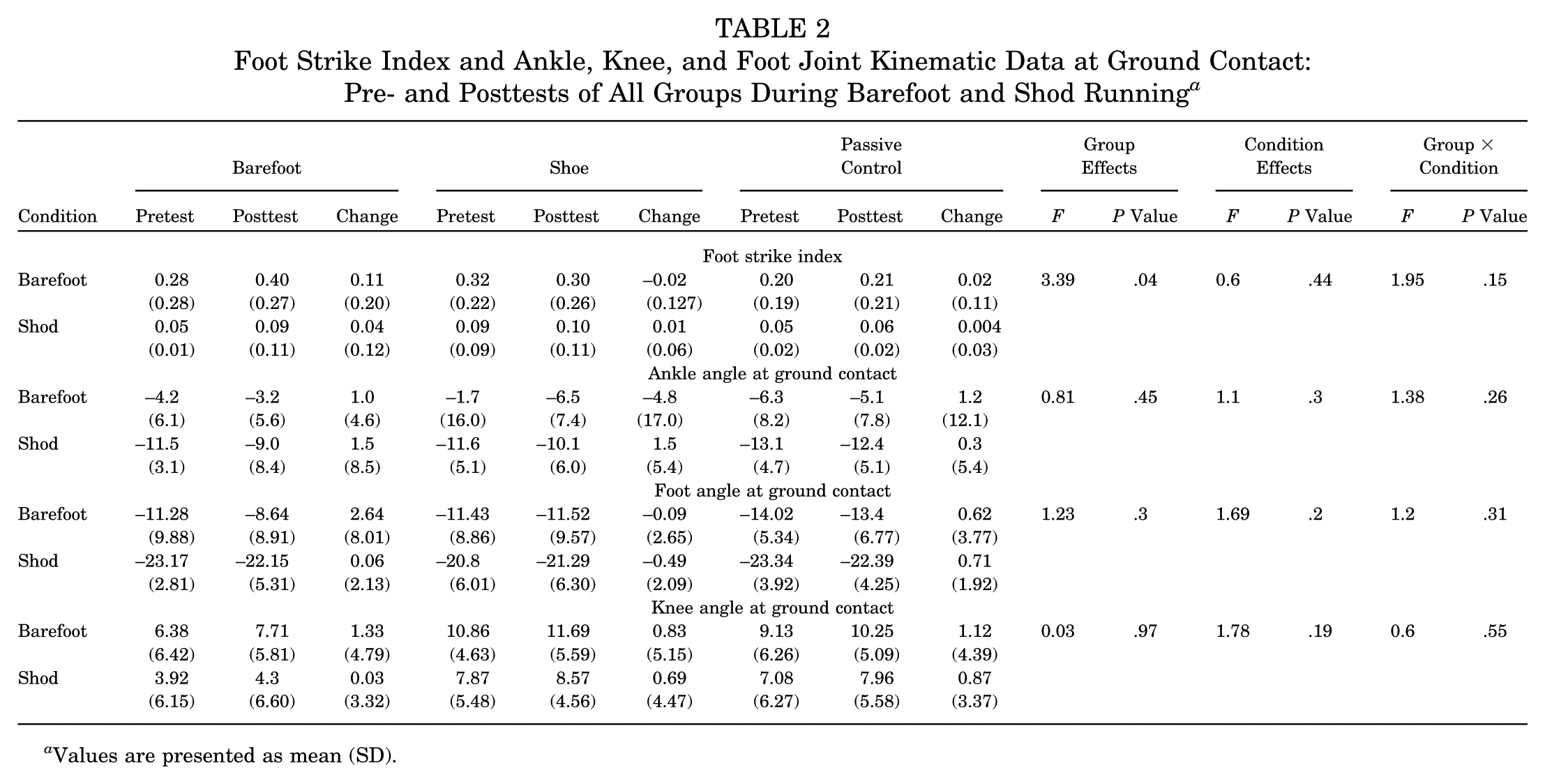
Values are presented as mean (SD).
Average Loading Rate and Average and Peak Vertical Ground-Reaction Forces: Pre- and Posttests of All Groups During Barefoot and Shod Running a
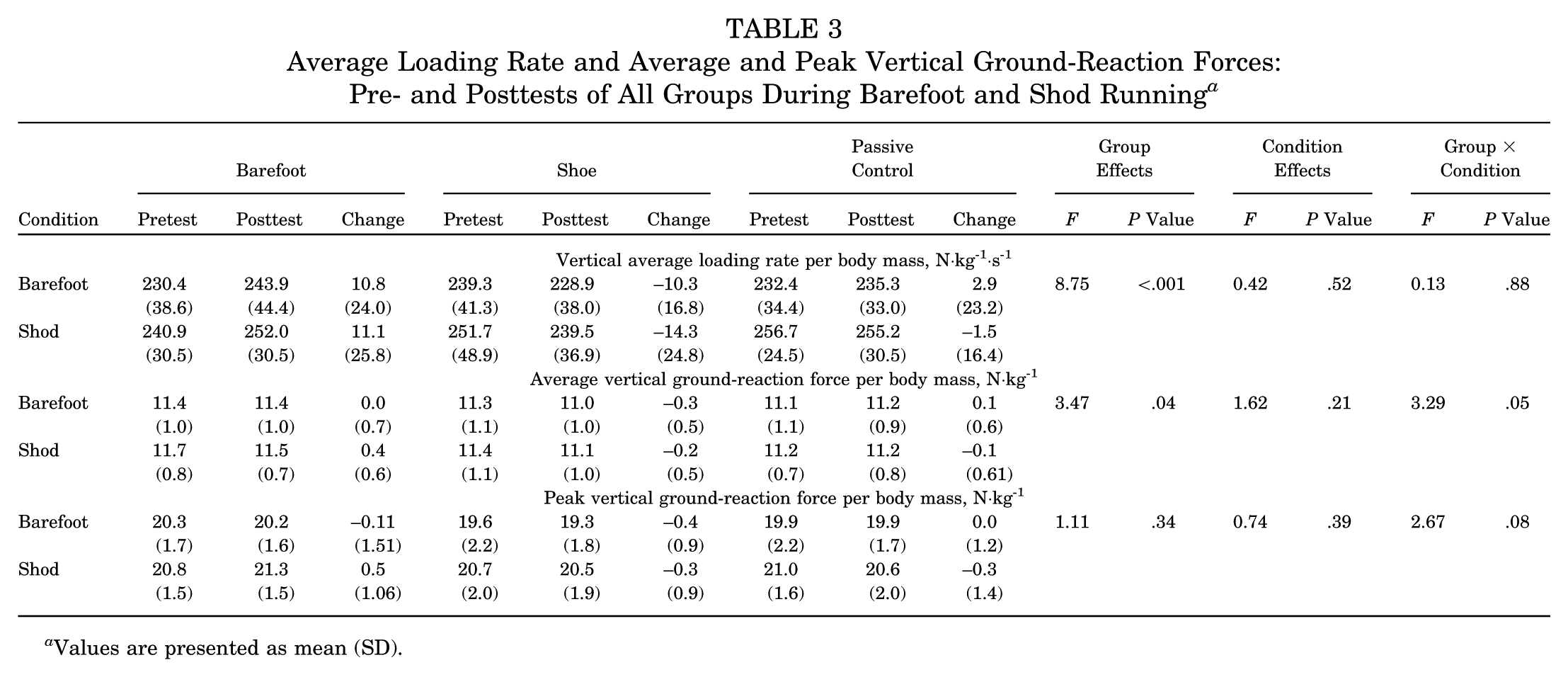
Values are presented as mean (SD).
Contact Time, Flight Time, Cadence, and Step Length: Pre- and Posttests of All Groups During Barefoot and Shod Running a
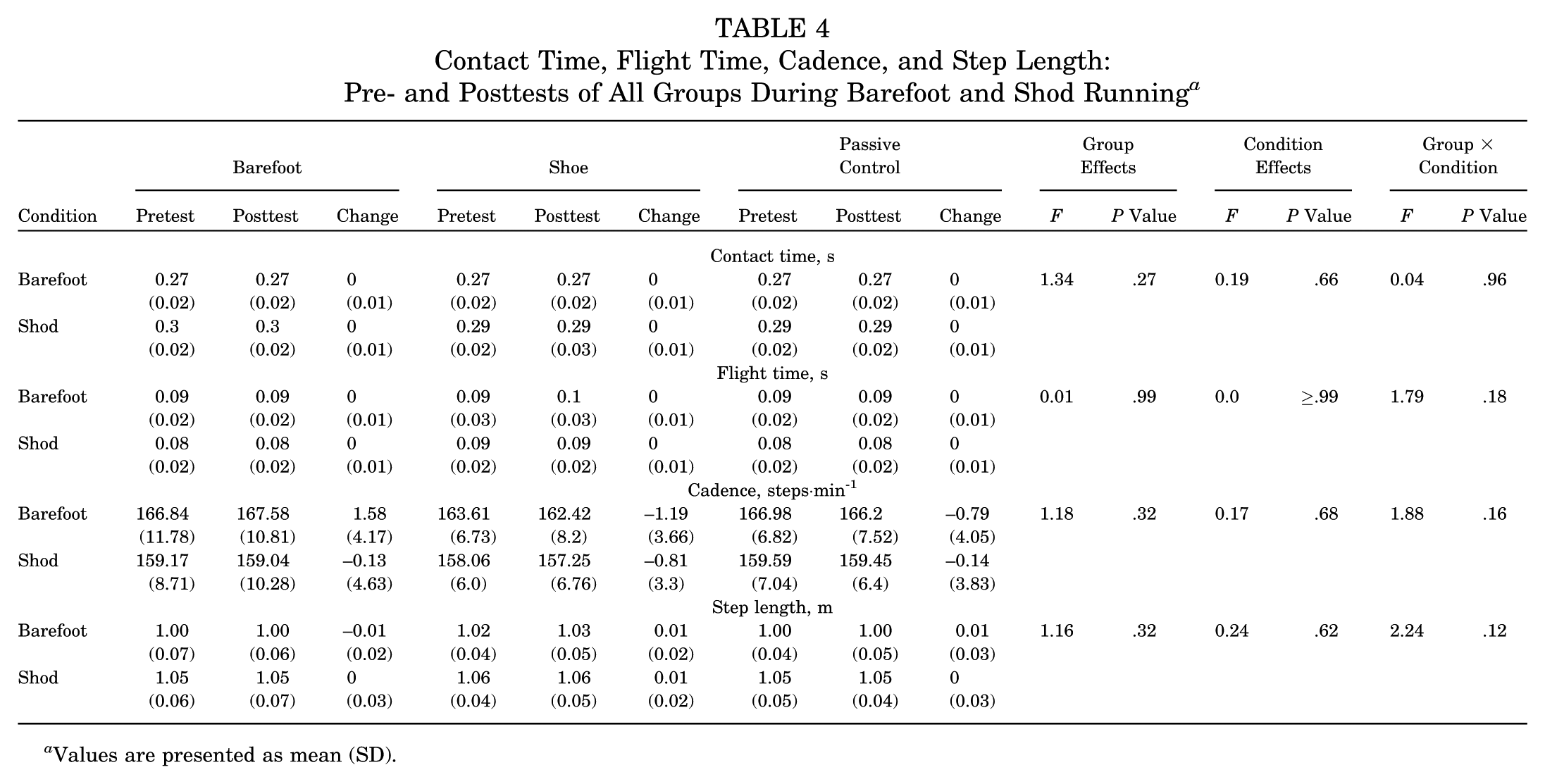
Values are presented as mean (SD).
Discussion
In this randomized controlled trial, an 8-week habituation to barefoot running led to an increase of foot strike index, average ground-reaction force, and vertical average loading rate during landing, while no changes were observed in an active group (8-week running intervention in new cushioned footwear) and a passive control group. When acutely changing from shod to barefoot running, participants in this study showed the same kinematic and kinetic adaptations that were frequently documented before (more plantarflexion at ground contact, increased cadence and knee flexion, reduced contact times and stride length, and lower vertical average loading rates).8,11,18,33 However, when habituated to barefoot running, participants exhibited higher vertical average loading rates in this study. This is contradictory to the asserted injury prevention potential of barefoot running attributed to reduced vertical average loading rates.1,23
The 8-week habituation to barefoot running influenced foot strike index, vertical average loading rates, and average vertical ground-reaction forces. For barefoot running, the foot strike index increased (more anterior foot placement) after the habituation to barefoot running when compared with the shod running intervention. There are few studies with which to compare the data. Those that do exist examined either habituation to simulated barefoot running (minimalist footwear) or populations habituated to barefoot locomotion. For simulated barefoot running, evidence exists for more anterior foot placements after a habituation,21,40 while in different juvenile or adult populations habituated to barefoot locomotion, a more posterior foot strike was found.9,12,26 Regarding foot strike characteristics, it needs to be mentioned that while pre- to posttest changes in foot strike index significantly differed between groups, sagittal ankle and foot angle at ground contact did not. Nonetheless, the direction of changes in both angles represent a more anterior foot placement. Reasons for this could lie in a reduced power for kinematic data or a higher sensitivity of the foot strike index in the detection of small changes.
The increase of the vertical average loading rate for barefoot running is in contrast to the results of Lieberman et al, 18 who showed habitually barefoot runners to have significantly reduced loading rates as compared with habitually shod runners, at least for barefoot running. Tam et al 37 showed that progressively introduced barefoot running did not change loading rates overall but that participants differed in their adaptation strategies. In another study, habitually shod runners exhibited an increased loading rate when acutely changing to barefoot running. 34 Taking those and our results together, the findings for short-term effects of barefoot running might be a reaction to an unfamiliar condition and cannot directly be transferred to longer-term adaptations. Therefore, caution should be exercised when transferring short-term effects to injury prevention recommendations. Impact forces and loading rates have been in the focus as a link between barefoot running and possible injury prevention, 27 but no clear evidence has been established yet.13,25 Nonetheless, a recent study by Futrell et al 6 showed higher instantaneous and vertical average loading rates among habitually shod rearfoot striking runners who sustained an injury and the lowest rates among forefoot striking runners.
A possible explanation for an increase of impact loading in our study could lie in an increase of ankle stiffness. There is evidence for reduced ankle stiffness when acutely changing to barefoot and simulated barefoot running. 32 Furthermore, Liebl et al 19 showed that habitually shod forefoot runners have stronger plantarflexors than habitually shod rearfoot striking runners. Another study showed that a 6-week habituation to simulated barefoot running led to a decrease of electromyographical activation in the preactivation phase (just before the foot strike) of the tibialis anterior and an increase of the preactivation of the gastrocnemius muscles. 15 Even though neuromuscular changes were not directly investigated in this study, they could contribute to a stiffer ankle and consequently to higher impact forces once habituated to the barefoot condition. 4 Nonetheless, comparability is difficult, since Khowailed et al 15 used an additional exercise program to actively adapt a forefoot strike pattern. In contrast, in our study no such instructions were given. Furthermore, comparability between barefoot and simulated barefoot running is not entirely given.2,11 Therefore, further research is needed to understand the impact of barefoot habituation on ankle stiffness and neuromuscular changes.
When generalizing the results of our randomized controlled study, one must keep in mind that our study sample consisted of healthy and active adults who were not competitive runners. Therefore, our results cannot directly be translated to juvenile or competitive runners.
Furthermore, currently no consensus exists on how to transition to barefoot running. 29 For simulated barefoot running, a recently published systematic review 39 found that most current research suggests a careful (slow) transition period to reduce injury risk. In our study, we used a habituation to barefoot running that implemented 15 minutes of running per week. With this amount of barefoot running, no injuries occurred, but maybe the transition was not complete. Future studies are needed to investigate the dose-response relationships of different habituation and transition protocols. There is a need for further prospective studies on barefoot running in different populations.
Conclusion
Acutely changing from shod to barefoot running induces several biomechanical changes, of which a reduction of loading rates is potentially beneficial for the prevention of running-related injuries. However, in this study an increase of loading rate was observed after a habituation to barefoot running. Therefore, caution should be exercised when directly transferring short-term findings onto longer-term implications, such as a reduction of injury risk.
Footnotes
One or more of the authors has declared the following potential conflict of interest or source of funding: This project (Barefoot LIFE) was funded by the Ministry for Science and Research in Hamburg (grant LFF-FV13). AOSSM checks author disclosures against the Open Payments Database (OPD). AOSSM has not conducted an independent investigation on the OPD and disclaims any liability or responsibility relating thereto.
References
Supplementary Material
Please find the following supplemental material available below.
For Open Access articles published under a Creative Commons License, all supplemental material carries the same license as the article it is associated with.
For non-Open Access articles published, all supplemental material carries a non-exclusive license, and permission requests for re-use of supplemental material or any part of supplemental material shall be sent directly to the copyright owner as specified in the copyright notice associated with the article.
