




Abstract
Misogamist discourse prevailed among western European early modern scholars. This article examines whether misogamist discourse translated into behaviour in the Dutch Republic. We identify marriage trends of professors employed by the universities of Leiden and Utrecht in the seventeenth century, using quantitative and qualitative approaches. We analysed a prosopographical dataset of professors and their wives, explored here through several case studies. Against views of exceptionality, seclusion and celibacy in scholarly culture, based on self-fashioning and a handful of memorable examples, we argue that scholars overall replicated and intensified the European Marriage Pattern, and marriage strategies of the Dutch civic elite.
Keywords
Introduction: Misogamists or Family Men?
A few days before his wedding in June 1634, Adriaan van der Myle – a young nobleman associated with Remonstrant intellectual and political elites – received a celebratory letter. The letter was to be printed within a volume of occasional marriage poetry and came from his former tutor, Caspar Barlaeus (1584–1648), with whom van der Myle had lodged whilst an undergraduate in Leiden twenty years earlier. At the time, Barlaeus had been professor of Philosophy at Leiden University. However, by 1634 he held a chair at the Amsterdam Athenaeum and was one of van der Myle‘s many high-profile contacts in the Dutch Republic. Barlaeus’ letter celebrated his ex-pupil‘s marriage with reference to mythological examples and classical commonplaces, but one anecdote went against the grain: Lately I had several conversations on this topic with a certain misogamist who, having learned to debate vehemently in university, contended that marriage is a burdensome affair, a laborious estate, and a source of sorrows. It is onerous when fertile; and shameful when sterile. If she is beautiful, she is a prostitute; if ugly, pitiful. If he is rich, she takes pride on it; if she is poor, he does. I am hearing the examples of the logicians and, I replied, the cunning arguments of the dialecticians who are accustomed to bother young men in university and twist their good minds.
1
It is unclear whether the episode was an actual occurrence or a literary device, but Barlaeus’ inclusion of it in an otherwise positive letter attests to the prominence of anti-marriage rhetoric in the Dutch academic circles of the seventeenth century.
In 1665, an anonymous Utrecht academic wrote in his private notebook that ‘Mrs. is pronounced almost like Misery‘.
2
In the same year, renowned scholar Nicolaas Heinsius (1620–1681) was forced, through a lawsuit, to marry the daughter of a Lutheran minister with whom he had fathered illegitimate children. When in 1679 the promising young classicist Hadriaan Beverland (1650–1716) wrote an introductory letter to Heinsius, he chose to discuss the intellectual benefits of bachelorhood. In relating his successful abandonment of a woman who, he argued, had lured him into cohabitation, Beverland clearly sought the older scholar‘s sympathy, appealing to a shared conception of the hindrance women represented in the life of an intellectual.
3
In his writing, Beverland remained prone to misogamist and misogynistic outbursts throughout his life, stating that: Learned men, even when they are wealthy and, despite growing pale spending seven hours a day over a manuscript, they perform their marital duties vigorously, are hated by the whore, who deserves to be pinched while asleep. As Scaliger said, woman is the scabies of the mind.
4
Besides Beverland, others like Joseph Justus Scaliger (1540–1609) — son of the doctor quoted above — Baruch Spinoza (1632–1677) and Christiaan Huygens (1629–1695) readily come to mind as both eminent scholars of the Dutch Republic and as resolved bachelors.
Alongside celebrated single men, however, the legacies of learned family men also loom large. In many of the funerary orations given upon professors’ deaths, marriage and domesticity were commended as scholarly virtues. The same year that Beverland approached Heinsius and eulogised the advantages of remaining a bachelor, Utrecht professor Johan Georg Graevius (1632–1703) praised a recently deceased colleague who “(…) looked carefully after the family home” and “was a most diligent paterfamilias.”
5
The oration given after Graevius’ own death pronounced that: (…) all those unworthy of friendship cannot spend time harmoniously with their wives, their children, and their family. The discipline that [Graevius] kept within his household was not horrid, but a master of courtesy and taste. Towards his wife, he was an optimal and benign husband, whose love and intimacy maintained an unremitting bond which nothing ever damaged, not even death.
6
Opinions were polarised surrounding the significance of marriage and family life for scholars in the Dutch Republic. There was a duality at play, inviting the examination of whether the misogamous sentiment in circulation actually translated into a social reality of scholarly celibacy, or whether complaints were more often empty displays of scholarly bombast. Did Dutch scholars predominantly remain unmarried? If not, what were the motivations and considerations that might lead an academic to the altar? If professors did marry, it is worth investigating whether they were more likely to choose women from within scholarly circles, thereby supporting and forwarding their professional lives and perhaps forming an endogamic group. Did scholars share cultural norms, values and goals that influenced their life cycle and their choice of marriage partners? In sum, going beyond this conflicting anecdotal evidence, was there such a thing as a well-established and distinct scholarly marriage pattern?
Early Modern Marriage: The Dutch Context
By the seventeenth century, anti-marital sentiment had a long history in scholarly circles. The social lives of late mediaeval scholars had been dominated by ideals of prescribed celibacy and it was only on the eve of the Reformation that the formal prohibition of scholarly marriage in (most) northern European universities ended. This had taken place slightly earlier in the universities of Southern Europe, where the lives of those in the legal and medical faculties had become increasingly secularised throughout the late Middle Ages. As many began to claim their new right to marry, they found themselves members of the growing urban elite. 7 However, alongside nascent marital freedoms a well-established misogamous discourse remained, stressing the distractions marriage could herald for the studious man of letters. Steven Shapin has demonstrated the extent to which the early modern period inherited an intellectual paradigm of solitude, which had been hugely influential in ancient Greece and within early Christianity. 8 Yet as the sixteenth and seventeenth centuries progressed, commentators increasingly sought a middle ground between the ‘two extremes of solitude and active engagement in society‘. 9 Gadi Algazi has emphasised the ambiguity of models promoted by humanists in this context, as scholars both involved in and detached from the domestic family were simultaneously idealised. 10
Though the ideal of solitude and celibacy remained prevalent, wedlock became an increasingly acceptable scholarly state in the wake of the Reformation. Richard Kirwan has highlighted the significance of marriage in transforming the scholar into a ‘socially productive being‘ in German Protestant settings. 11 Marriage was also used as a token of sincere conversion by Catholic defectors. In contrast to the previously cloistered existence of scholars within the German institutions central to Kirwan‘s research, this marked a new transition into civic life. Unlike most of Europe, all universities in the Dutch Republic were newly founded: they were not reformed mediaeval institutions and did not rely on a pre-existing scholarly and ecclesiastical ecosystem. Furthermore, the official status of the Reformed Church as state religion (public church) had large cultural and legal implications on the institution of marriage. Most notably, marriage was no longer considered a sacrament, and consequently became a civil process, albeit one subject to strict moral discipline and expectations. 12 Pastors — after their academic training and examination, which constituted a drive towards professionalisation — were expected to lead their parish by example through marrying and forming a family. The newly founded universities were primarily intended as training colleges for the priesthood and civil service, and professors were requested to sign the Three Forms of Unity of the Reformed Church. With no direct link between the Dutch institutions and an older, almost-monastic model of scholarly celibacy, the ideals and standards to which Dutch scholars were subject had greater potential to be altogether different in character.
The northern Netherlands was the most urbanised region in early modern Europe. Comprising fifty-seven cities each with its own group of ruling regents, the area was characterised by decentralised political powers exercised within a network of strongly localised civic cultures. 13 Dirk van Miert has argued that in this landscape of urban particularism the founding of educational institutions was an act of identity formation by which a city could demonstrate the esteem in which it held learning. 14 To the extent that higher education provided a platform for those pursuing administrative or ecclesiastical careers, previous historical scholarship has portrayed universities as integral to Dutch civic life. 15 However, the role of university-employed scholars in the civic and organisational fabric of Dutch Republic cities has been far less considered. Without this perspective, not only is any understanding of scholars themselves compromised, but it is possible to achieve only an incomplete picture of urban power in the early modern Northern Netherlands.
Research into sixteenth and seventeenth-century universities elsewhere in Europe has elucidated the strong ties between educational institutions, urban identity and civic power. Considering the political composition of Italian university towns at the beginning of the early modern period, Jacques Verger has highlighted scholars’ ‘constant presence in the heart of the city‘. 16 In a later context, Robert von Friedeburg and Wolfgang Mager have shown the especial upward social mobility available to ‘learned men‘ as state, urban and ecclesiastical officials in seventeenth-century Germany. 17 In fact, higher education was so useful to those seeking governmental careers that Paul Grendler has labelled this a ‘stereotype‘ of the early modern university. 18 Existing literature has predominantly explored this stereotype in relation to university graduates, but what of the learned men employed by the universities themselves? Where much of intellectual history has focussed on the exceptionalism of scholars, they have inadvertently been abstracted from civil society. At least in the Dutch Republic, where the ‘Golden Age‘ saw rich civic cultures develop in tandem with new schools and academies, such abstractions are misleading. In Leiden city centre, for example, the up-market Rapenburg canal was inhabited by the richest and most well-connected families on the town council, as well as many university professors. 19 Scholars were interwoven with the social fabric of the towns in which they lived, well-placed to occupy positions of power outside the universities as well as within them. With this in mind, any consideration of the social conditions surrounding marriage or celibacy among university-employed scholars must be equally concerned with questions of civic and social authority
Analyses of marital decision-making are well-suited to quantitative approaches developed within socio-economic history. When he codified the European marriage pattern (EMP) in the 1960s, John Hajnal argued that high age at first marriage, high proportions of ‘never married‘ individuals, and neolocality (the formation of an independent household upon marriage) became the norm throughout Western Europe in the early modern period. 20 Katherine Lynch has explored the causes of low marriage rates and late marriage in urban environments, postulating an EMP-positive model that may have been at play within cities throughout Western Europe. Lynch argues that though the causes of this pattern may have varied at different social levels, the effects remained the same. 21
Exploring the causes of the EMP in a specifically Dutch context for the first time, Sarah Carmichael et al. and Charlotte Störmer et al. have shown how the economic conditions and high levels of migration in this period served to reinforce cultural tendencies towards late marriage. 22 Comparably, in a case study of the Leiden patriciate, Dirk Jaap Noordam has demonstrated the strategic utility of late marriage for dynastic alliances within elite circles – as well as routine abstention from marriage where a suitable match could not be found. 23 Dutch scholarly marriages have rarely been considered. Intellectual historians such as Carol Pal and Martine van Ittersum have made crucial contributions, demonstrating the centrality of family structures (whether symbolic or biological) in bolstering the careers of the learned Anna Maria van Schurman and Hugo Grotius respectively. 24 Nonetheless, Schurman and Grotius both operated outside the universities, excluded for different reasons, and cannot be seen as representative. In seeking to understand how marriage functioned for the average scholar in the Dutch Republic, a wider lens is required.
This article deals with the marriage patterns of scholars at the universities of Leiden and Utrecht. It considers both institutions from the years they were founded (1575 and 1636 respectively) until 1715, when the final treaties of the Peace of Utrecht were signed – the date conventionally considered the ending point of the so-called Dutch Golden Age. The dataset underpinning this research contains all professors employed by the universities as well as their wives, and has been compiled with reference to documentary evidence, biographical dictionaries and previous research. Comprising 147 Leiden professors and 53 Utrecht professors, the dataset represents 193 individuals (when the duplicate entries for 7 professors who were employed at both institutions have been removed). The considerable numeric difference between the two universities can be explained by the fact that Leiden was not only founded earlier than Utrecht but was also bigger. The United Provinces had three other universities located in the northern cities of Franeker, Groningen and Harderwijk, as well as 6 successful Illustrious Schools or ‘Athenea‘ which offered introductions to university degrees as well as a standalone education. Of all these academic destinations, in the sixteenth and seventeenth centuries Leiden and Utrecht were arguably the most desirable. Owing to the elite status of the two universities, combined with a high degree of contemporary academic mobility, many of the scholars featured in this dataset received their appointments after careers at other institutions in the United Provinces and elsewhere in Europe. Where this is the case, considering the lives and marriage patterns of scholars employed by Leiden and Utrecht is doubly significant, offering a snapshot of some of the most successful European academics alongside partial insights into the life cycles of scholars at other Dutch institutions.
There are also practical reasons why Utrecht and Leiden provide a good basis for a quantitative study. Since these two universities were successful institutions and employed notorious scholars, fairly complete biographical information has been consistently available, which we have taken as a starting point for our research. During the 1980s a research group of social historians, the workgroup Elites, undertook the compilation of a thorough prosopography of Leiden professors. 25 Compiled over five years, the prosopography includes valuable information on the family lives of Leiden academics but owing to the untimely death of the project‘s principal investigator, no thorough analysis has yet been undertaken. This resource constitutes the marrow of our dataset, which has been supplemented by further archival sources and secondary material. In the case of Utrecht, the digital edition of the Catalogus Professorum Academiae Rheno-Traiectinae has been used to provide core biographical information of the professors and their appointment dates, while all information concerning their marital status and partners has been collated from other primary sources and biographical dictionaries. 26
Employment and Marriage
Despite the prevalence of misogamist ideals throughout the learned community of north-western Europe, a prosopographical approach makes it absolutely clear that married academics were the rule rather than the exception in the seventeenth-century Dutch Republic. Owing to the fact that scholars employed by the universities of Leiden and Utrecht had disparate origins (most notably German and French, but also other nationalities in the Reformed international) it is not possible to confirm the marital status of every professor. However, even if we assume each untraceable professor to be a bachelor, unmarried men still constitute less than a quarter of the total (Figures 1 and 2).
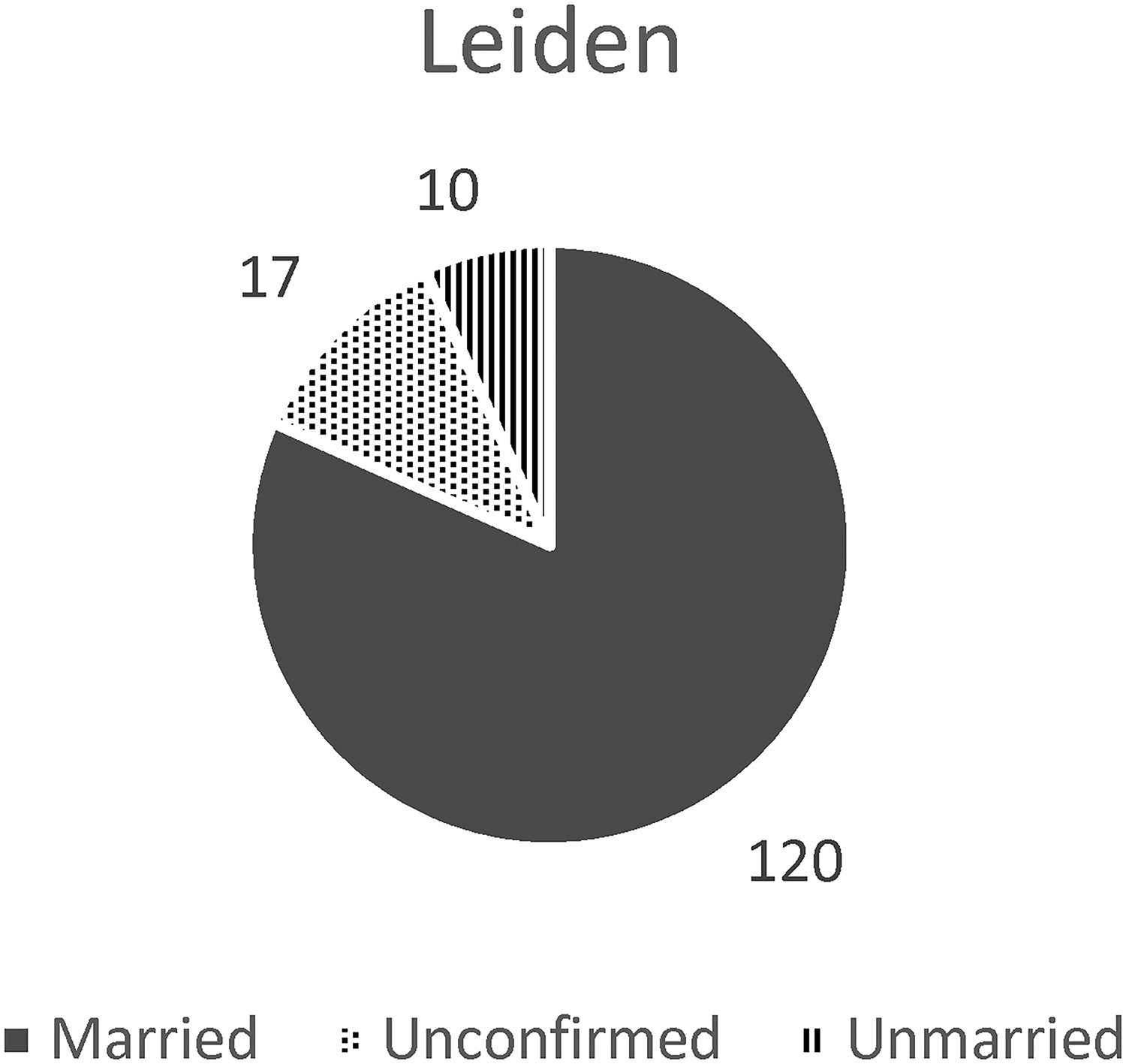
Marital status among professors at Leiden.
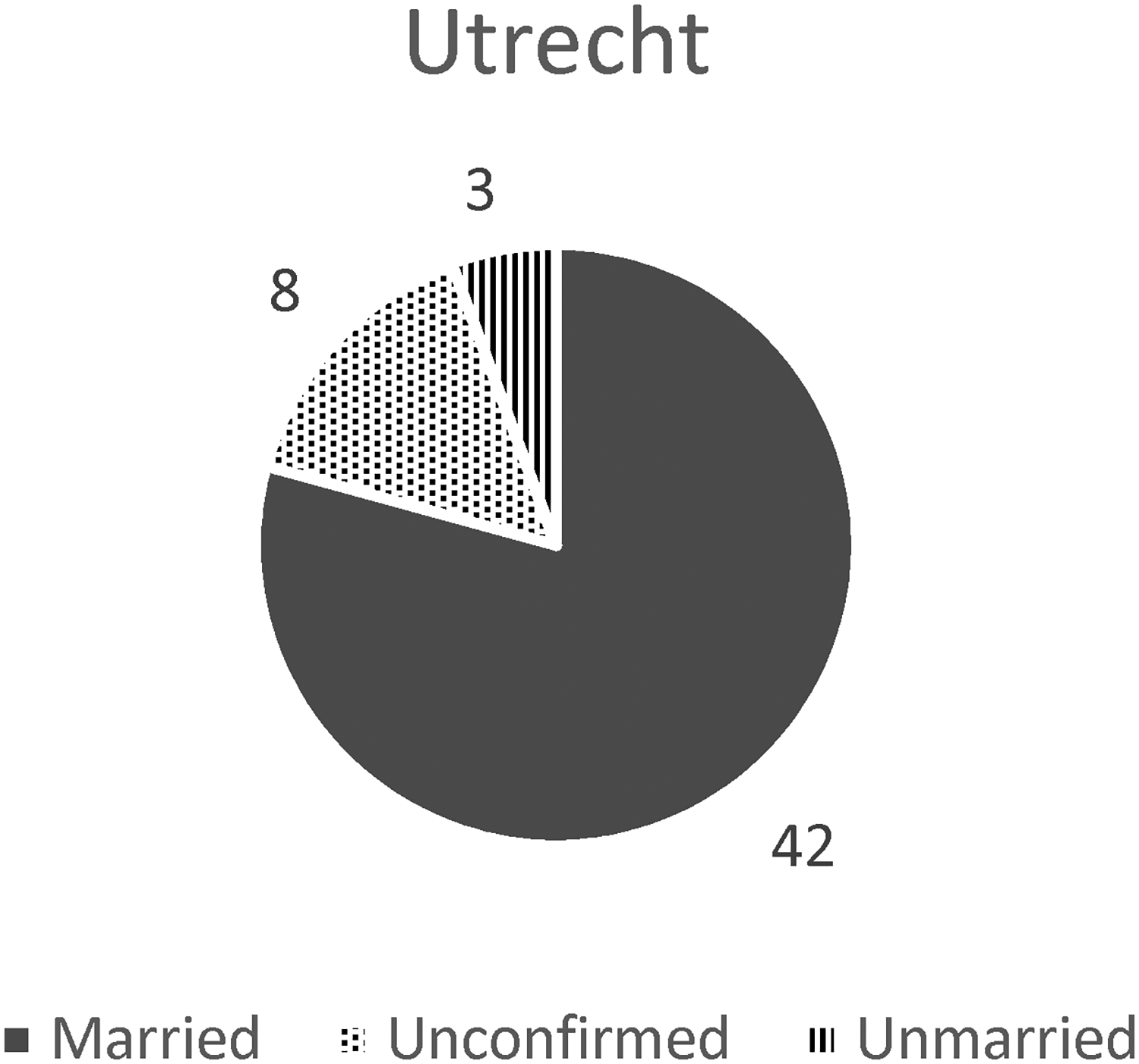
Marital status among professors at Utrecht.
Among scholars for whom documentary evidence is available, married professors constituted a majority of 75% at Leiden University and 80% at Utrecht. These figures are nonetheless modest, for it is plausible that the portion of professors absent from the archives comprised married men as well as bachelors. With this in mind, it seems likely that 10%–15% of teaching staff across the two universities remained single, while some 80%–85% of professors married at some point in their lives (Table 1).
Leiden and Utrecht Marriage and Appointment General Trends.
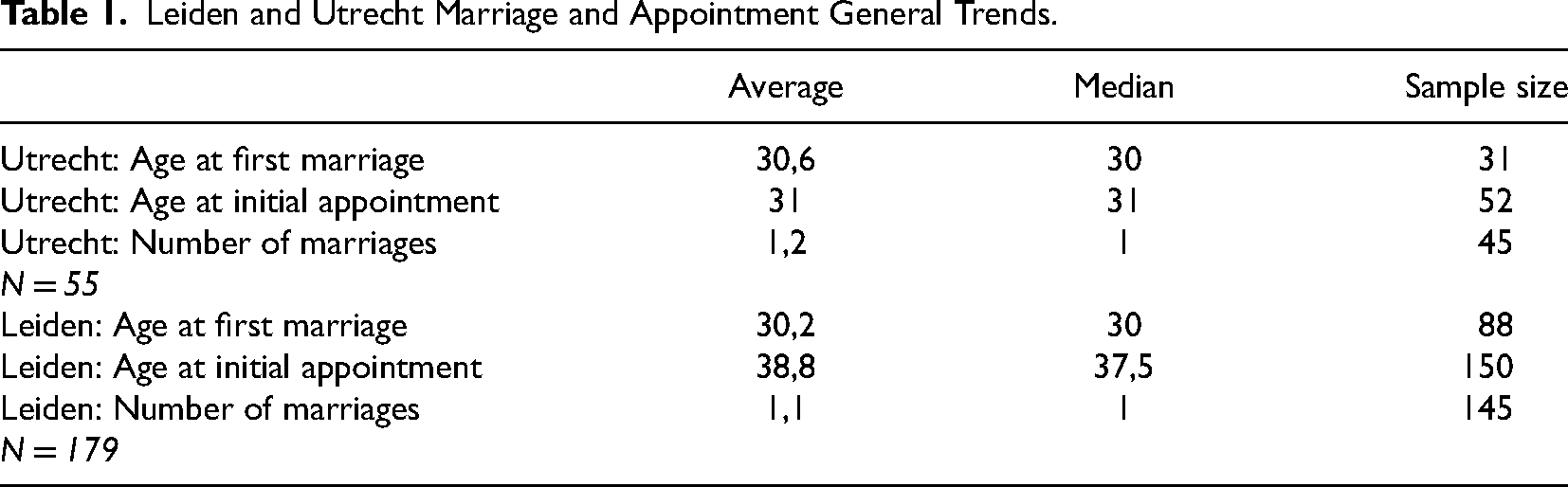
This data demonstrates that rather than showing a pattern distinctly different from the EMP, Dutch academics appear to have exhibited an intensified EMP trend. Firstly, unlike the rest of the population of the Dutch Republic who were marrying in their mid or late twenties, it was common for scholars to delay marriage at least until their early thirties. 27 Secondly, in comparison with those in other occupations during this period, marriage incidence was higher among university professors: while the general male population displayed celibacy rates of 10% to 20%, very few academics remained unmarried and the data from Leiden and Utrecht suggests that at most 15% were remaining single by the middle of the seventeenth century. 28 Examining these numbers at faculty level makes it possible to understand the motivations underpinning the trend.
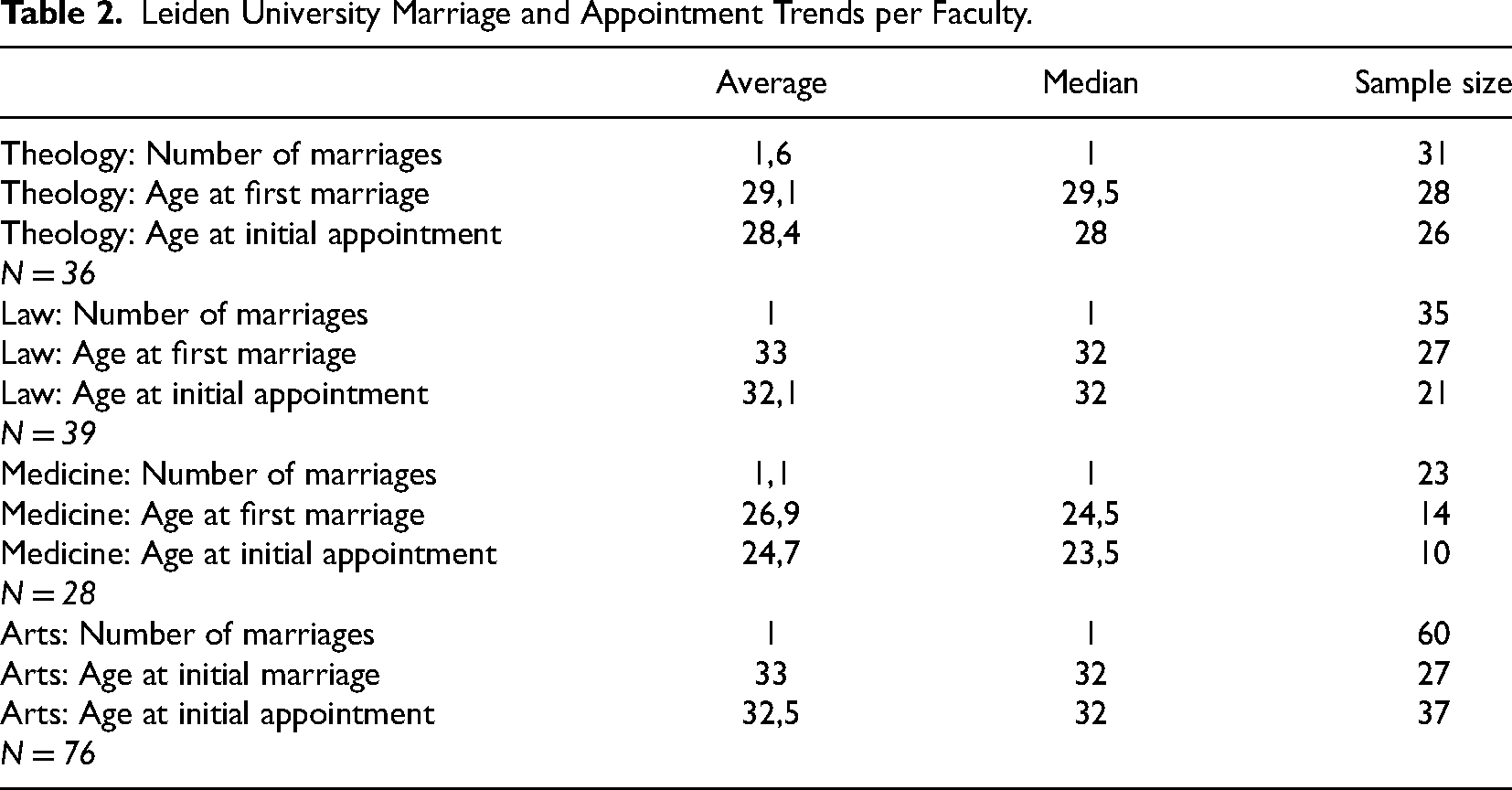
Tables 2 and 3 show that the highest number of bachelors were associated with the secular faculties. The evidence available for the Leiden theology faculty does not indicate any celibate professors whatsoever, while only one bachelor appears in the dataset for theology at Utrecht. Also common among theologians at both institutions is the high incidence of remarriage for widowers, resulting in a higher average number of marriages for theology professors overall. A plausible explanation for this tendency is exemplary behaviour: where marriage was a celebrated religious ideal but was not necessarily universal, a professor of theology would have been most likely to opt in to married life. Those in other faculties had more options for job mobility, and particularly in the case of legal professors the fact that some moved into academia after a long civic career is likely to have influenced some jurists’ decisions to remain single when they reached maturity.
Leiden University Marriage and Appointment Trends per Faculty.
Utrecht University Marriage and Appointment Trends per Faculty.
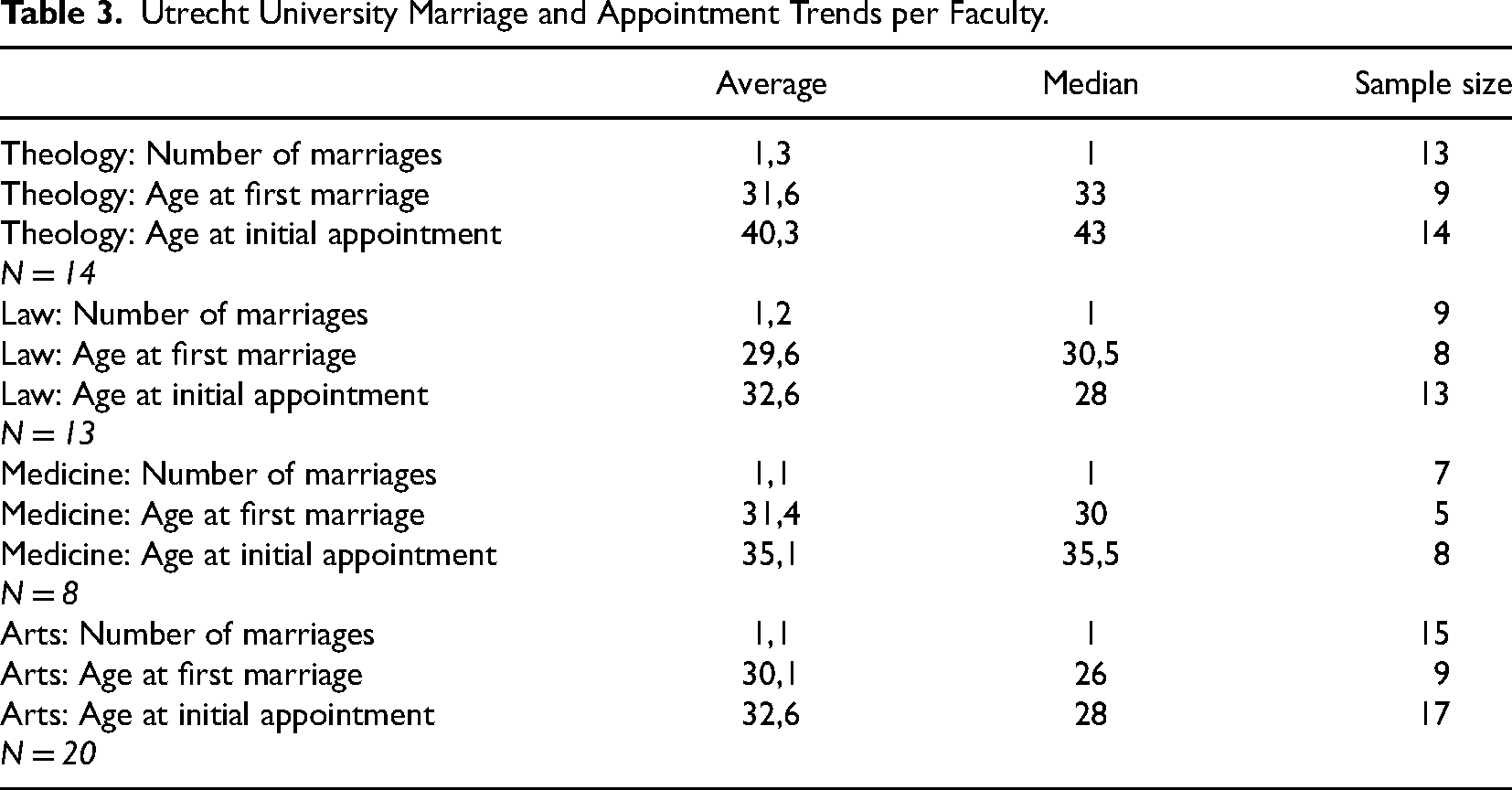
Evidence is available for the birthdates of both marriage partners in the case of only fifteen marriages across Leiden and Utrecht. The sample is small but reveals an average spousal age gap of five to ten years, and suggests that adolescent brides were uncommon.
In these first calculations we have considered the whole lifespan of each professor rather than their employment period within Leiden or Utrecht. Notwithstanding, about half of all professors were already married at the time of their appointment. In the case of Utrecht, on average scholars married three years before their appointment, taking into consideration the available sample of 40 out of a total of 55 individuals. Among these 40 scholars, 22 were already married at the start of their appointment, 9 married within less than three years of their appointment and the remaining 9, who largely married in their late thirties and forties, went down the aisle within 3–15 years of their appointment. Leiden presents a slightly different picture. On average, Leiden academics married about eight years before their initial appointment at the university. Out of a sample of 109 married scholars, 70 were already married upon appointment, 14 married within three years of their appointment, and the remaining 25 at a later time. While one must take into account the different time span and number of professors in the two datasets, a tentative explanation of this difference is that Leiden was often the final step in the academic cursus honorum of the Dutch Republic, reflected in a higher average age of appointment. In order to gauge whether variations over time existed, the gap between the date of first marriage and appointment at Utrecht and Leiden is visualised in Figure 3. A positive score in the x-axis means the professor married for the first time that number of years after his appointment at the university, while a negative score means that the professor married n years before he was appointed. Zero signifies that the marriage and the professorial appointment occurred in the same year. A trend line has been added to ease the reading of the graph.
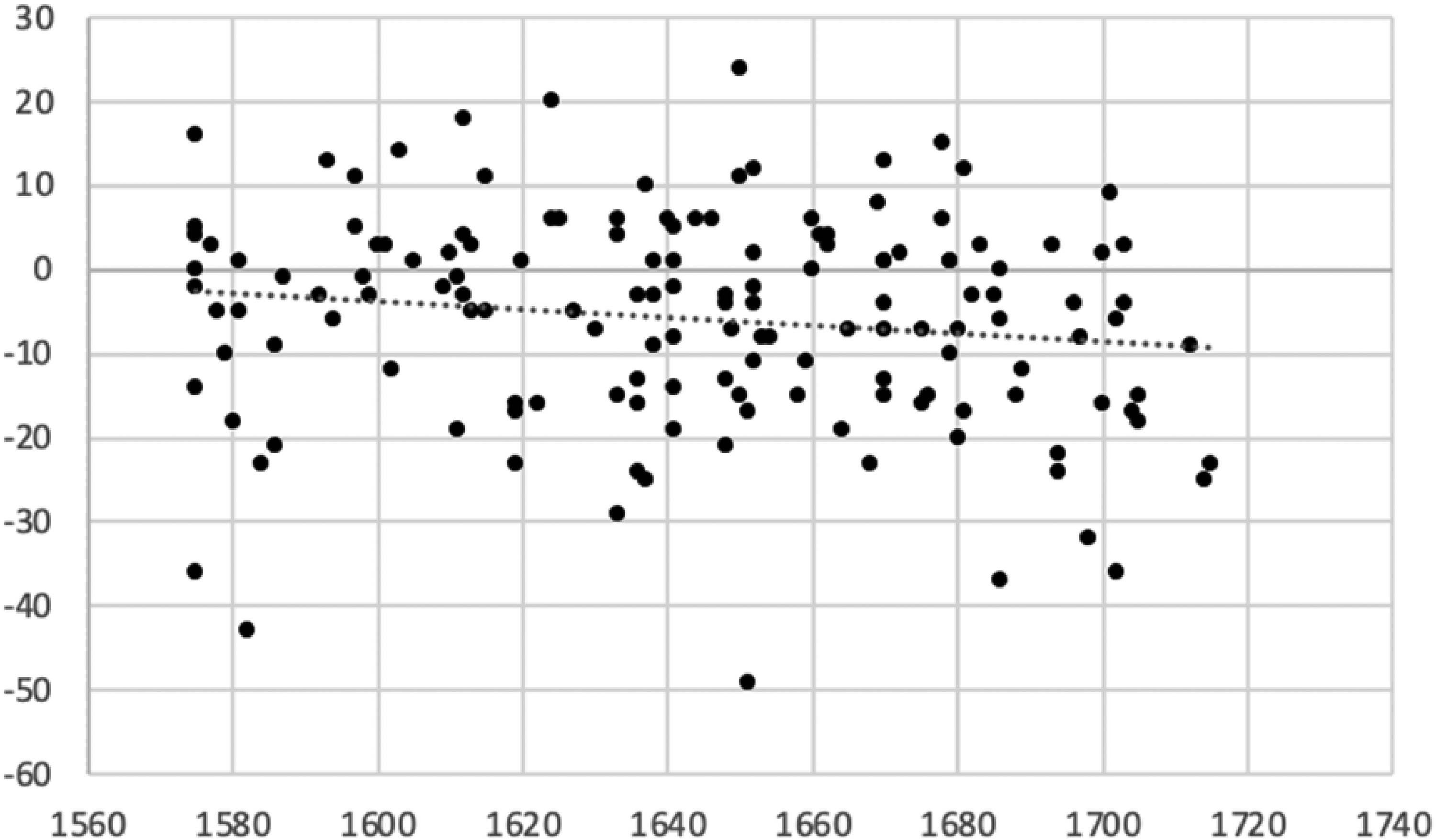
Diachronic year gap between marriage and initial appointment in Leiden and Utrecht (n = 149, N = 162).
Diachronically, there was a slight tendency towards employing more unmarried professors as the second half of the seventeenth century progressed, who in many cases married soon after taking up their posts. This was a pattern common to both Utrecht and Leiden university professors. It is a clear sign that marriage did not necessarily play a role in securing an academic appointment at elite universities, but rather that many scholars delayed marriage until obtaining a good academic appointment in order to better integrate into their new community.
Promotion, Marriage and Career Change
Not only did marriage serve as an opportunity to reinforce or elevate social standing, but it was in the interests of both partners to seek socially or economically beneficial matches. Among the mid-seventeenth-century Leiden patriciate, daughters of patricians remained single in higher quantities than their brothers, which Dirk Jaap Noordam has suggested may be attributed to the costs of dowries. 29 Whether or not this was the case, high celibacy rates suggest that actualising a proper match could be more important than whether marriage occurred at all. Noordam has demonstrated that age at first marriage among the Leiden patriciate often aligned with the European marriage pattern, as do our previous analyses of the age of the marriage pair. However, marriages occasionally deviated from this norm and some patrician marriages exhibited the ‘Florentine pattern‘, where significantly older men became betrothed to younger women (as prevailed among patricians in Florence from the fifteenth century onwards). 30
This is particularly visible during the last decades of the sixteenth century. In Leiden in 1580, aged thirty-one, law professor Cornelius Neostadius (1549–1606) married a sixteen year old, Maria Odilia Buys (1564–1636). Buys was significantly below the average female marriage age in the early modern low countries, and had parents well established among the Leiden elite. 31 Her family had significant ties with the legal profession: her mother, Marie van der Maersch, was daughter of a councillor at the Court of Holland while her father, Paulus Buys (1531–1594), was a nobleman prominent in city as well as state politics, having held positions as pensionary of Leiden and state pensionary of Holland. When Odilia Buys married Neostadius, her father was curator of Leiden university. 32
In the year of his marriage, Neostadius began two new roles - first becoming councillor at the High Court in The Hague and then a fiscal lawyer, also in The Hague, before requesting his dismissal from the university in November. Moving into the area in which his new father-in-law exercised significant influence, marriage may have facilitated and strengthened a career shift for Neostadius. Indeed, eleven years after his father-in-law Paulus Buys lost his curatorship in 1591, Neostadius was inaugurated as curator of Leiden university. 33 While movement in and out of academic institutions was particularly possible for those in the law faculty, it is far too narrow to assume that scholars from any faculty focussed their ambitions solely on the universities. Inasmuch as marriages reflected social status, they also provided opportunities to bolster social positions and could serve as a spur to career progression and ultimately to power.
The strong correlation between the acceptance of a new post and the decision to marry reinforces the argument that wedlock was often contingent on economic and social stability. For many scholars, this stability was determined by migration. Out of the 15 foreign professors in Utrecht University, 13 married Dutch women. In the case of Leiden, at least 30 marriages out of a total of 120 took place in the city and considering that it was customary to celebrate the wedding in the hometown of the bride, it is highly likely that most of these women were native to Leiden. These numbers buttress the argument that for many academics a permanent position was an important prerequisite for marriage. This trend is also consistent with the overall sex ratio of seventeenth-century Dutch cities, where a shortage of adult men favoured the integration of male immigrants at different social levels. 34
Yet, sometimes regional identities played a role in the decision to marry. Calvinist Julius van Beyma (1539–1598) was native to Friesland and, after completing his studies in Groningen and Orléans, worked as a lawyer in Leeuwarden. With the outbreak of the Dutch Revolt in 1568, Beyma fled to Wittenberg to escape religious persecution. He was professor of law there for ten years. With the adoption of the Lutheran Formula of Concord in Saxony in the late 1570s, the privileged position of Calvinism altered. Ministers and teachers were summoned to subscribe to the document, and several professors at both Leipzig and Wittenberg were dismissed for failing to do so. Beyma returned to the Dutch Republic likely as a result of these pressures and in 1581 accepted an initial year-long appointment as a lecturer at Leiden University. In August 1582, Beyma was offered a role as professor of law. He married in the same year.
Beyma‘s situation as an exile was one of relative uncertainty, and his case illustrates the interconnectedness of marriage with stability and career progression. Jesse Spohnholz‘ consideration of Dutch Calvinist exiles in the German town of Wesel in the 1570s revealed a community that maintained its separation from its host city, biding their time until able to return to the Dutch Republic. Spohnholz also demonstrated complete endogamy within the exile community, making Beyma‘s decision to remain single or at least to delay marriage unsurprising. 35 Beyma‘s spouse, Maijke Gadema (?–1619), was also Frisian. In 1596, the couple relocated from Leiden to Friesland, where Beyma accepted a professorship at Franeker. After a year in post, he resigned in favour of becoming councillor at the Court of Friesland – a decision he upheld despite repeated attempts from both Franeker and Leiden universities to offer him reinstatement with a new, higher salary. Beyma‘s two sons also went on to posts in the Court of Friesland, and one later became mayor of Leeuwarden. Beyma‘s own father had been mayor of the Frisian city of Dokkum. His family evidently had extensive close ties to the region, meaning civic responsibility and duty may have been valued more highly than an academic career. Fluidity existed between academic and civic posts, particularly for scholars of law, and to refer to a figure like Beyma simply as a scholar is misleading in terms of his aspirations, role and dynastic position. 36 Marrying a woman of Frisian descent even while living in Leiden, it is clear that Beyma‘s regional identity was more significant than his place within the university city.
Beyma‘s movements between cities and countries were heavily influenced by his religious associations. Nicholas Terpstra has argued that it was in the early modern period that ‘the religious refugee became a mass phenomenon‘. 37 Between 1585 and 1780, at least six percent of the Dutch population was born outside the Dutch Republic, and its large migrant community comprised labourers and economic migrants as well as many political and religious refugees. 38 High migration levels were reflected in the make-up of the universities and a significant proportion of professors had non-Dutch origins. 39 Ronald Sluijter has emphasised that Dutch teachers were preferred but that, on account of living there long-term as economic, political or religious refugees prior to their appointment, many born outside the Republic were not in fact seen as ‘real‘ foreigners. 40 For scholars, the distinction between Dutch and non-Dutch could be relatively permeable. In addition, nationality was not the most essential mark of identity. Towns and cities in the Dutch Republic were highly autonomous and carried civic and social benefits for those who held ‘citizen‘ status within them. 41 Marrying the daughter of a citizen was the most common avenue to obtain burghers’ rights, and the fact that most scholars did not come from a university town indicates that one of the virtues of marrying a local woman was to become a citizen and thus partake in communal governance.
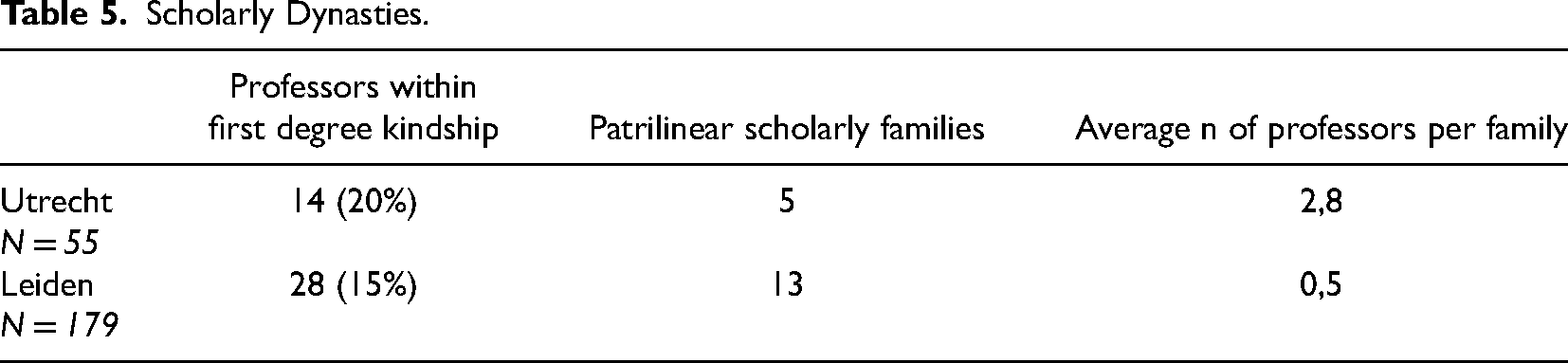
Urban, regional and provincial identities co-existed with nationality – with numerous tensions – and intranational migration between Dutch cities deserves consideration alongside the international. 42 Charlotte Störmer et al. made this point in discussing marriage trends in the Netherlands after 1650. They demonstrated that couples where either or both partners had migrated were those marrying latest and revealed that age at first marriage increased exponentially with migration distance. 43 Migration levels were high throughout Western Europe in the sixteenth and seventeenth centuries and the Dutch Republic exhibited high levels of internal migration. Among scholars, proportions of migrants rose to about half of the teaching corps. 44 With many marrying considerably later than the EMP average, migration may well have contributed to this delay. Marriage offered an opportunity for integration into a new urban community, and this would have been no different for scholars in the early modern Dutch Republic. Gadi Algazi has suggested that by the seventeenth century scholars were forming intermarrying groups of their own, creating dynasties and cultivating familial alliances which spanned several generations. This model, while certainly visible in the German-speaking areas, was not as prominent in the Dutch Republic. Table 4 shows the number of professors that were directly related (fathers, sons, and brothers) to others in the same institution, as well as the number of distinct families, and their average number of members employed. 45
Synchronic Year Gap between Marriage and Initial Appointment (Leiden n = 109, Utrecht n = 40).

The difference between Utrecht and Leiden is significant. Proportionally, Utrecht had more blood-related professors distributed amongst a smaller number of families, of which almost all of them had three professorial chairs. Leiden chairs were sparsely distributed amongst many families, mostly for a couple of generations only. No doubt the smaller size of Utrecht university and the close involvement of the magistrate played a role in creating a more nepotistic culture.
A particularly stark example of this is the Matthaeus family, where at least five generations of Matthaeus men held professorial posts. Three fall within the scope of our dataset: Antonius Matthaeus II (1601–1654) who was professor law at Utrecht, and his two sons Antonius III (1635–1710) and Philippus (1641–1690) who were Utrecht professors of law and medicine respectively. Grandson of Konrad Matthaeus who had been professor of eloquence at Marburg, and son of Antonius Matthaeus I (1564–1637) who had been professor of law at both Marburg and Groningen, Antonius II was one of four brothers who all entered university careers. While lecturing in civil law at Harderwijk in February 1633, he married Anna Pontanus (1615–?) only six months before starting his appointment in Utrecht, suggesting that he had already been approached with an offer of employment. Anna was the daughter of Harderwijk professor and prominent historian Johannes Pontanus (1571–1639), a colleague of her new husband. Notably, Antonius II‘s brother Christophorus (also a professor at Harderwijk) made a parallel match six years later, marrying Anna‘s sister Helena Pontanus in September 1639.
Marriage offered an opportunity for cementing familial ties. For scholars, however, marriage could also provide a means of establishing themselves as part of a scholarly family. Through double marriage, these two Harderwijk families, the Matthaei and the Pontani, reinforced their scholarly status. Of Antonius II and Anna‘s two sons, one continued the scholarly dynasty. Antonius Matthaeus III had one son who also became a professor of law at Deventer. Antonius Matthaeus IV died childless, but it is worth noting that his widow went on to marry Franeker professor Dionysius Andreas Roell, who later became mayor of Deventer. This sequence of events is consistent with the model common in the Holy Roman Empire during the sixteenth century. 46 Examining scholarly behaviour in this community, Kirwan has argued that marrying the daughter and widow of another professor created and reinforced the scholarly networks which pivoted around professorial chairs, thereby rendering it both desirable and widespread.
Males in the Matthaeus family consistently pursued academic careers across at least six generations, and several married into other scholarly families. It is notable that even where Matthaeus men were not formally in the employ of Dutch universities, patterns of scholarly marriage are still visible. Grandson of Antonius Matthaeus I and son of Konrad Matthaeus II, professor of medicine at Groningen, Antonius Matthaeus VI was a minister rather than a professor. Nonetheless, his wife was Jantien Widmarius, daughter of the renowned Groningen theology professor Abdias Widmarius. Cousin of Antonius VI, Antonius Matthaeus IV was professor of law like his father, Antonius III. He married Judina van Hurck in Leiden in 1702, and took up his post in Deventer‘s Illustrious school the same year. Hurck‘s father was secretary of the Court of Holland.
While close reading of exceptional cases like the Matthaeus family certainly leaves the impression that marrying scholar‘s daughters and widows was common, a quantitative approach paints an altogether different picture. Since academics are one of the best documented professional groups of early modern Europe, it is possible to assess quantitatively their social standing using the background of their fathers as proxy. This approach has been applied by Karel van Berkel in his study of Groningen University academics, where having a father working either as a professor, pastor or Latin school rector was the rule, on the basis of the available data. 47 In the case of Leiden, Willem Otterspeer presented a tentative percentage of professors’ parental backgrounds in the first volume of his comprehensive history of the university. By Otterspeer‘s calculation, 80% of Leiden professors came from the well-established bourgeoisie, while only 13% came from among the regent patriciate and 6% from the middling classes. 48
Following the same approach as van Berkel and Otterspeer, we have compiled information on the backgrounds of both professors’ and their wives’ fathers wherever possible in order to gauge differences in social status between marriage partners. We classified the socio-professional group of their fathers in the following broad categories: academic (encompassing all engaged in Latin education across universities, illustrious schools, and Latin schools), artisans and lower middling classes (musicians, low ranking army officers, instrument makers), law and administration (clerks, notaries, army administrators), nobility, physicians, pastors, and regents (town councillors, aldermen, institutional regents, and mayors). For those who exercised more than one profession, for instance pastors doubling as Latin school rectors or merchants that eventually became involved in town governance, we have indicated the occupational background with the highest social status: academics over pastors, and regents over merchants. This data is presented here in two matrices, Tables 5 and 6, showing the number of pairings in parental background. The profession of the scholar‘s father is given vertically, while that of his wife‘s father is provided horizontally.
Scholarly Dynasties.
Status Pairing in Leiden University (n = 54).
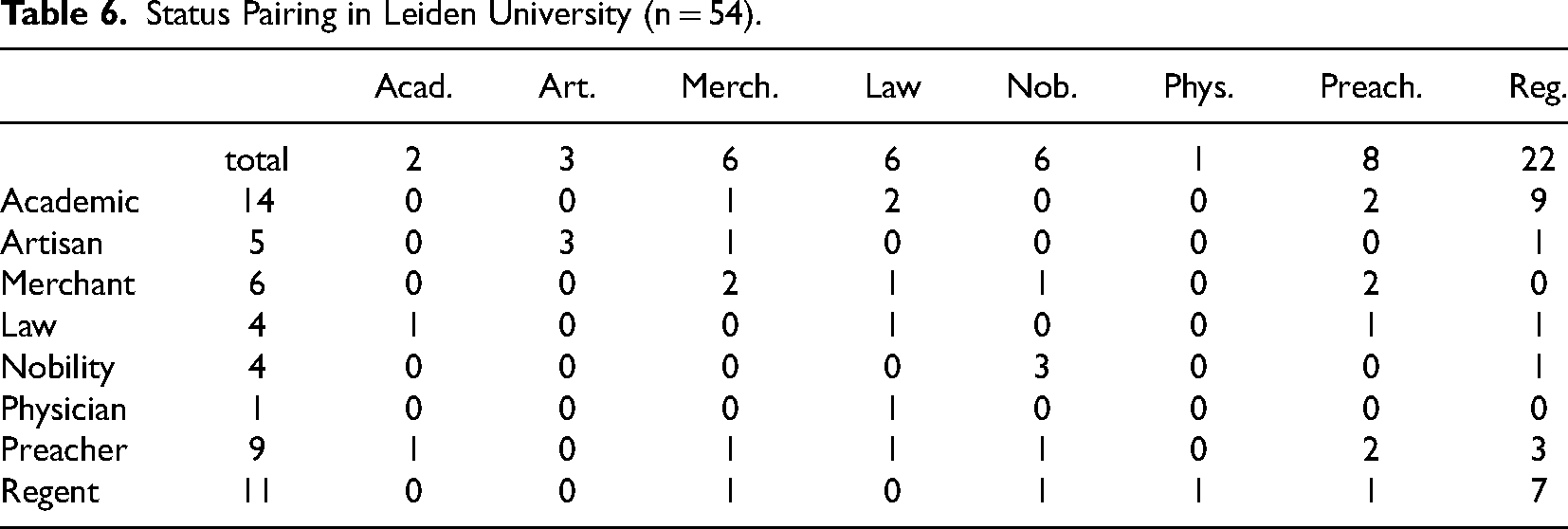
While the background of Leiden scholars was largely academic or patrician, in the case of their wives there is a clear trend. Most were daughters of regents, who only secondarily had other occupations related to civic life. Most remarkably, only two brides in the sample were daughters of other academics. The pairings also show conclusive trends: most common was marriage between the son of an academic and the daughter of a regent, while second most common were two marriage partners with regent parentage. The most endogamic group is that of the nobility and regents, but the sample reveals virtually no endogamic marriages between the sons and daughters of academics (Table 7).
Status Pairing in Utrecht University (n = 12).
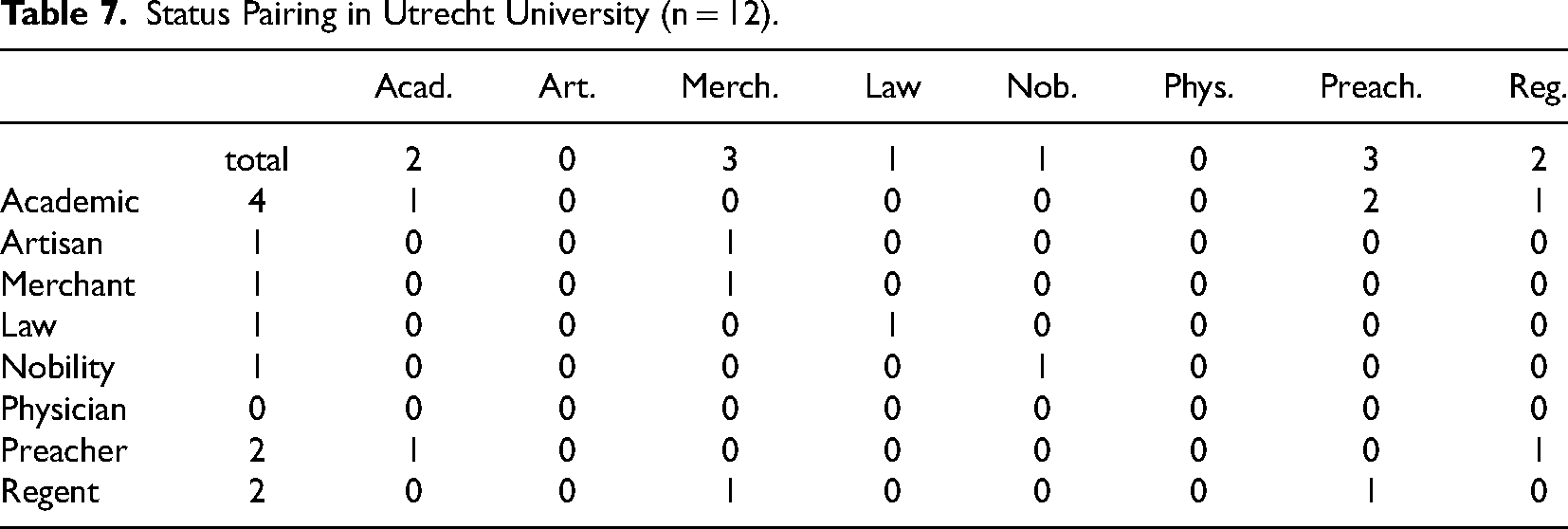
Judging by the small available sample, the situation in Utrecht seemed to have been slightly different. Here, the daughters of regents were less prominent, and the pairings are split amongst different groups. However, this sample is too small to be significant, and no other strong inference should be drawn from it.
Conclusion
All in all, the scholarly marriage pattern exhibited among Leiden and Utrecht professors deviated from the EMP in two aspects: marriage occurred at a slightly later age, owing to an extended traineeship period and, commonly, migration; and celibacy rates were remarkably low. Professors overwhelmingly married daughters of regents of the city where they eventually intended to settle. This embedded them within the social fabric of their university towns’ civic elite in complex patterns, and regional identity sometimes played a role in their career and marriage choices. Kinship of the second and third degree was the rule between academics, who would likewise be connected to lawyers, notaries, town councilors and burgomasters, while straightforward patrilinear scholarly dynasties were relatively few in the Dutch context. There was no observable upper mobility through education and marriage during the seventeenth century. Thus, self-fashioning and social reality, ideals and pragmatism were at odds with each other. Scholars fancied themselves as a clearly distinct status group and affected Graeco-Roman misogamy and principles of meritocracy. At the same time, they in fact formed a socio-economic continuum with the rest of the urban elite, married more often and outside their professional group than was common among the population at large, and did not marry women of lesser means and lower birth.
Footnotes
Declaration of Conflicting Interests
The author(s) declared no potential conflicts of interest with respect to the research, authorship, and/or publication of this article.
Funding
The author(s) received no financial support for the research, authorship, and/or publication of this article.
