




Abstract
Migration is an important life transition that creates opportunities for both learning and the (re)construction of identity. In this article, we discuss the migration experiences of great aunt Neža Gerkšič, a.k.a. Agnes Lacroix, as a field of learning being interpreted through the theory of biographical learning. Biographical learning is treated as a process occurring in everyday life and the (re)construction of identity, knowledge, skills, attitudes, and values. The study, following the phenomenological paradigm of qualitative research, was developed on the basis of an autobiographical record that includes the entire course of Neža's life and all her migrations. By analyzing the autobiographical record, we show how, in the first half of the twentieth century, this active subject of migration acquired knowledge and (re)constructed her identity through various strategies.
Keywords
Introduction
Migration is as old as humankind is. People have always moved in search of better living conditions for themselves and for their loved ones or escaping dramatic situations in their homeland. These two main driving forces formed the basis of the “push and pull” theory, first proposed by Lee in 1966. 1 According to Floya Anthias, 2 the push and pull model of migration, based on neoliberal economic theory, is the most widely used model among migration researchers, and it has long been a kind of standard classical model, according to which individuals migrate primarily for economic reasons, that is, to make a better life for themselves and their families. According to this economistic assumption, the decision to migrate should be a rational one, interpreted by researchers, as an optimization strategy, in which individuals (and sometimes families or households) use a migration to access higher and more secure sources of income and other livelihood opportunities, weighing costs, and benefits. 3
Criticisms of a homo economicus approach have been voiced by social and cultural anthropologists, as Caroline Brettell 4 notes. They stressed that the individual is not only a rational being, who migrates for economic reasons alone, but that the migration process is shaped and reshaped by social and cultural contexts. The so-called classical migration studies have also largely ignored women's migration experiences. In these studies, researchers have treated migrants as “genderless beings” or assumed that all migrants, regardless of gender, experience migration in the same way. 5 Women as potential migrants have only been considered as those migrating for family reunification, that is, joining male migrants. 6
An overview of contemporary approaches in migration studies shows that women are important agents in migration processes, not only because of their increasing scale, but also because of their growing contribution to the economic and social life of the new societies. 7 Moreover, researchers 8 have pointed out that migrant women who, even if many of them had actually migrated with the aim of reuniting their families, have always played an active economic, social and political role in the new societies.
Migration is not merely the physical relocation of groups or individuals from one geographical area to another motivated by factors such as love, study, improvement of living conditions, war or adventure, long studied by various disciplines, but it is also related to the changes experienced by the individual who migrates. This includes changes in knowledge and skills, their self-image, identity, mental patterns, values, and everyday practices. Many studies have addressed migrant identities in terms of hyphenated, hybrid, fluid, and even transformed identities, but none has focused on the process of identity reconstruction or transformation. 9
The study that resulted in this article focused on the process of (re)construction of identity through learning in the context of migration. The concept of biographical learning was used in the analysis, interpreting learning as a process of holistic change in the individual involved in the life-world. 10 Jarvis defines learning as a combination of processes in which the whole person (with their body, marked with genetic records, physical and biological activity, and their mind, which includes knowledge, values, skills, habits, beliefs, attitudes, emotions, feelings) experiences a social situation in their life-world. 11 The perceived content of this situation is emotionally, cognitively, and/or actively or practically transformed and integrated into the individual biography of the person. The learning outcome is the (re)formation of an individual's experience, knowledge, skills, values, the development of new ways of thinking, feeling, and acting, and the construction of identity. 12
Biographical learning as a process of forming knowledge and identity appears more clearly in processes of transition. 13 Transition is a period when an individual is faced with relatively unpredictable changes in the dynamics arising between the course of their life and the environment. One such transition is migration. The experience of relocation is a stressful, emotional, sometimes even extremely negative life event for an individual. The stress of migration is associated with a departure from the familiar to a new, unfamiliar environment in which the individual is exposed to new experiences that are not part of routine patterns and they therefore necessarily lead to change. New situations lead to the so-called disjuncture or disharmony between identity as an individual's psychosocial structure in the life-world and the outside world, as the individual's routine behavior and past patterns do not (usually) work in the new environment. 14 Therefore, not only does a need arise to acquire and accumulate information, construct knowledge, and form values, but also to change identity 15 and to develop new practices (innovative learning). Disjuncture can emerge as a small gap between one's own biography and the perception of a situation, to which an individual can respond with minimal adjustments in everyday life; however, this gap can be larger and require a lot of learning at multiple levels (cognitive, emotional, value, action). An individual in the process of migration, with reflective thinking as an active observer of one's own experience, develops learning that includes processes of transmission (acquisition, data transfer), transaction (dialogue with oneself and the environment, exchange in relationships), and transformation (awareness of cognitive patterns and identity construction).
The basic design of the study presented in the present article was developed on the basis of the autobiographical record of great aunt 16 Neža Gerkšič. The purpose of the study, designed according to the principles of phenomenological methodology 17 and grounded theory, 18 was to determine how an individual with migration experience in the first half of the twentieth century constructed her identity with different learning strategies. Our aim was to identify, in the autobiographical narrative describing the life of the migration heroine in the original society, her motives for migration, her experience crossing borders, the effect of migration on her (dis)empowerment, her life in the new society, and the changes to her identity (as reported). In addition, we wanted to shed light on the long-overlooked field of research of the woman as an active subject of migration processes. In understanding and studying historical and contemporary migration, women were seen as passive companions of migrants or those who were left behind. It was not until the past three decades that research has shown that women were active economic migrants 19 or mere adventurers who wanted to see the world, 20 which, in terms of the feminization of migration, they have remained to date.
The Analysis of the Autobiographical Story
Introductory Remarks
The autobiographical record of the life of great aunt Neža, which was gifted to us in the autumn of 2005, has a significant title: Everyone has their own destiny. We found the typewritten life story fascinating and a rich example of biographical material to serve as the basis for an analysis of learning from migration experiences, as it very vividly illustrates the insight into learning and the processes of migration at the level of the individual. The life story, comprising just over sixty pages, reads like a novel where the ongoing theme is Neža's migration to Africa and the love story between her and her husband. The title of the record could be understood as the author's belief in the uniqueness of an individual's life paths or as a passive devotion to destiny, but the content reveals that she was an active subject in her own actions and not merely a passive victim of circumstance.
Like any other historical source, however, the autobiographical narrative has its limitations. The narrative is a reflection of inner experience, it is a construction that touches reality and the cultural perceptions of reality, but it is not in itself reality, as it does not necessarily objectively describe events. We also asked ourselves to what extent is the description of past events actually consistent with past reality. The question concerns the relationship between a memory and a narrative. The fact is that there are certain deviations in the telling of past lives over time, as human memory is selective in storytelling 21 and memories fade with time. 22 Neža wrote the story in 1994, when she was 81 years old, which is not a fact to be ignored. Furthermore, she wrote the story at a time when she was already a changed person and looked back on her past differently. Many authors dealing with autobiographical materials find that memory does not only depend on one's own experience, but (re)forms over time in interaction with many other factors. Therefore, to verify individual pieces of information and Neža's life events, we relied on electronic correspondence with Neža's daughter Malou and granddaughter Sandrine, and read the adventure novel Africa, Africa, 23 which was written on the basis of personal conversations with our migration heroine.
The first feature of the writing that we wish to highlight is the use of language. Neža emigrated from Slovenia immediately after finishing primary school and rarely used the Slovenian language in the course of her life. Nevertheless, she remained fluent in her mother tongue and her vocabulary was almost unbelievably rich. As language is a living organism, constantly changing and being enriched with new expressions, her language got “stuck in time” due to its non-use. The text is written in archaic Slovenian, such as was used in the first half of the twentieth century, with a Bela Krajina dialect word creeping in every here and there, but that only makes the text even more authentic and at times even romantic.
By writing her life story, Neža became a historical, social subject. She entered her female name, Neža, a.k.a. Agnes, in the field of historical, social memory and knowledge. The next feature to highlight is the duality in the use of her personal name in the story. In the course of the story, migrating to Algeria, her birth name Neža changes to Agnes. We notice that in the story she uses her original name Neža or Nežika (Little Neža) more often than Agnes. Especially in the first part of the text, where she describes her childhood spent in Slovenia, she writes her name very often, especially in dialogues. The moment she arrives at the estate in Algeria, where her brother Jože worked, her hosts call her by the name of Agnes. From then on, her “new” name is written more rarely, and there are fewer dialogues. From this, we can deduce how fondly she remembered her childhood and carefully nurtured the memories of it.
Finally, let us mention another brave and “free-minded” woman, Emilija Srna. Neža's writing contains fragments of her life story, which, like Neža's, goes beyond the stereotypical notions of female migration in the first half of the twentieth century. After a sad childhood, Emilija married early, marrying a much older man who drank a lot. Fleeing abroad initially meant liberation from a life of suffering from an alcoholic and a bully, but then she would discover new worlds out of curiosity and a desire to broaden her horizon. Their paths then crossed in a convent in Sarajevo where Emilija, by sharing her story, experiences and cosmopolitanism, encouraged Neža to discover and learn about the world outside the convent walls, and also made it possible it for her (financially). They then traveled part of their way together.
Neža's Childhood and the Decision to Move
Neža was born on May 8, 1913 in the village of Suhor in Bela Krajina. 24 The sensitive and intelligent girl was the youngest of six children. She had three brothers and two sisters: Janez, Jože, Tone, Metka, and Mica. Her otherwise happy childhood was marked by the family's need to work hard to survive. Poverty and hard work were the predominant experiences of her family life in her home village. In the summer, when school was out, she brought lunch to the field where her parents, her brother Jože and her sister Metka worked. At that time, she assessed the life she would end up living if she stayed in her home village for the rest of her life. She knew that this place had nothing more to offer her than just working in the field, which she hated. Through self-reflection and self-analysis, she learned what kind of a person she wanted to become, what her desires and longings were, and what kind of a future she wanted to create. The two processes are understood as observation, self-reflection, as an internal dialogue with oneself. The processes allowing an individual to be both an object and a subject of observation lead to transformational action and the (re)construction of identity.
Neža liked to contemplate the places “outside” her life that she had learned about in geography class and dreamed of visiting: “Picking potatoes or carrots was so uninteresting, and I decided that, although still being a little girl, I would never work in the fields. When we learned about geography at school, I dreamed of the distant places which Miss pointed to us on the map. At first, I was drawn to neighbouring countries such as Italy, France, and Spain; then later especially to the countries across the sea, such as Africa and America. Deep down, I decided I would go somewhere far away when I grew up, probably to Africa, where the sun always shines and where women are slaves to men. I think this is the case everywhere and that women all over the world are more or less slaves 25 —first to their husbands and then to their children. I kept all these plans safe in my heart and wondered how I might leave Suhorje to go anywhere, since my parents didn't have the money for their little Neža to go promenading around the world; no one had ever seen anything like that” (Photo 1).
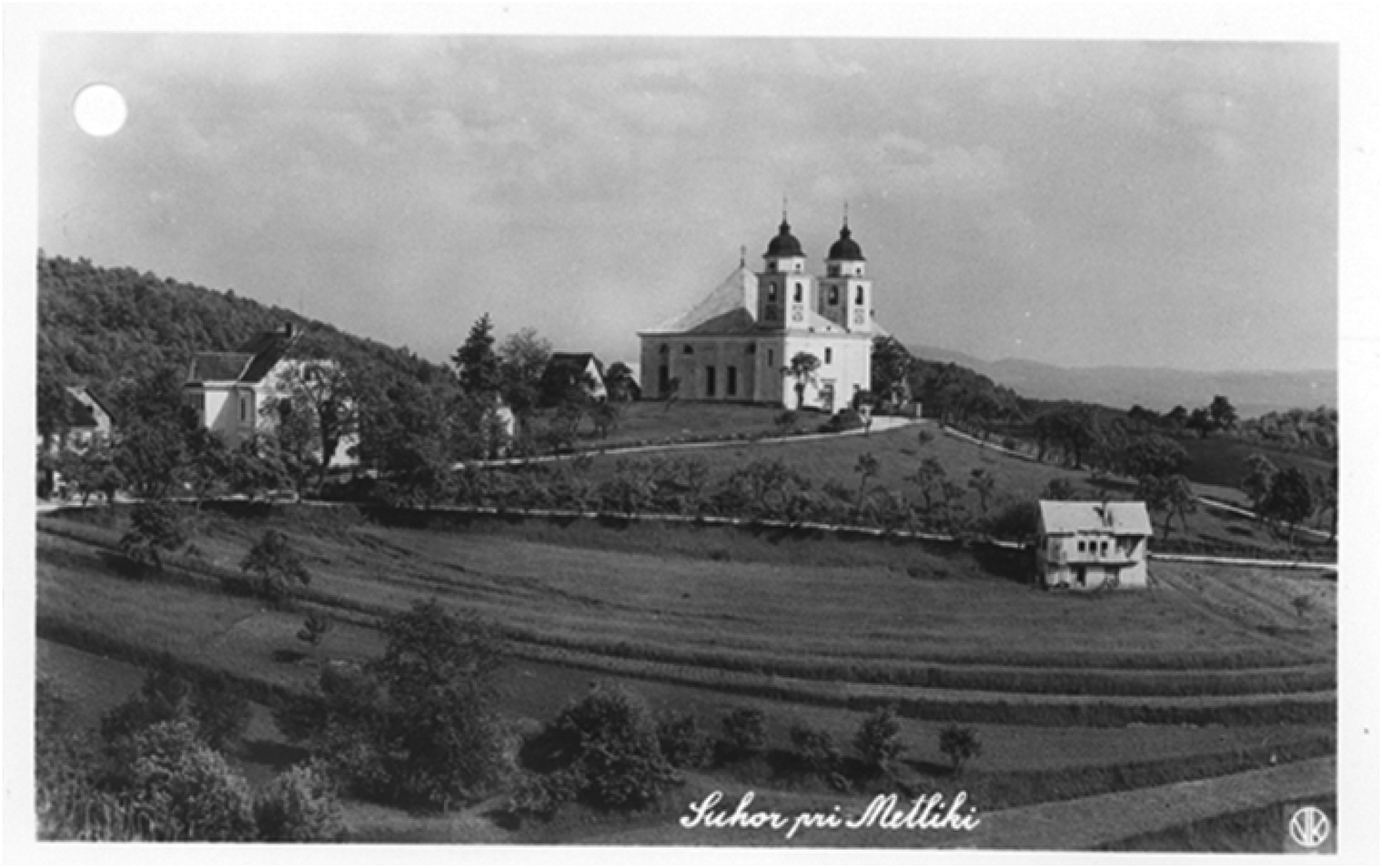
The village of Suhor pri Metliki between 1928 and 1947.
Neža's dream of going abroad became her only plan for the future, because moving meant breaking free from the expectations of her original society. She was a straight-A student and she did not enjoy working in the fields, and so she wanted to continue her education after primary school, which would open the door to the world. Yet her parents did not have the money to provide for her schooling in Metlika 26 or in Novo Mesto, 27 so the only way for her to continue her education was to enter a convent. She decided to join a convent in Sarajevo, the order where her cousin Marija lived. At first, Neža's parents did not agree with her decision, but eventually, because of their daughter's persistent negotiations, they changed their minds and supported her in her decision. Nevertheless, her mother's heart broke, as foreign countries had already “taken” two of her sons: “I had a brother, Janez, who left for America when he was eighteen. […] Janez never returned from America. He got married there, his wife gave birth to two sons and I think he lived happily with his family … Mother suffered greatly because of her son, because she would have wanted Janez to come back home, and Father wanted the same. […] And Jože went to France, where he was the caretaker at a large vineyard owner, and two years later he moved to Algeria, North Africa. He was involved with vineyards there too, even larger ones, and was respected and appreciated by all, the French and the Arabs.”
Bela Krajina is the region in Slovenia from which, in addition to the Dolenjska and Prekmurje regions, most people emigrated in the period before World War II. The reasons for this were mainly economic, as capitalist production bypassed the area at the end of the nineteenth century. In the north, the Gorjanci mountain range geographically cut it off from the Dolenjska region, therefore transport connections to the rest of Slovenia were extremely poor. The railway between Novo Mesto and Karlovac was not completed until 1914. As there was no major industry in Bela Krajina until the period after World War II, the people of Bela Krajina made a living mainly from agriculture, livestock farming, and viticulture. The small amount of arable land and farms and the unfavorable natural conditions made it difficult to introduce modern farming and intensive market production. In the last decades of the nineteenth century, vine lice were also brought to Europe from the American continent, which, together with downy mildew, almost completely destroyed the vineyards in Bela Krajina. Farmers began to either go into debt or leave their farms.
At that time, word started to spread across Bela Krajina about the promised land across the ocean, the “land of milk and honey.” The first letters with colorful foreign stamps started to arrive in the villages of Bela Krajina, tempting villagers to foreign places. Along with the letters came migration recruiters describing to people in Bela Krajina the beautiful life across the ocean. Villages in Bela Krajina overflowed with advertising posters and leaflets with price lists for journeys to America printed by numerous travel agencies. 28 They sold train and ship tickets to Slovenian people crossing the ocean in search of a better life, or even organized medical examinations before they left. The first to leave were missionaries and mostly younger men in hope of making enough money in a few years to pay off their debts, repair their houses or buy new houses or fields before returning home; they were followed by farmers and other residents.
While Slovenians mainly emigrated across the ocean before World War I, migration after the war was mostly continental. The United States nearly closed the route across the ocean, so Slovenian emigrants started to look for work in industrialized European countries. France became the “new America.” Neža's brother Jože also found work in France and then in the French colony of Algeria.
As mentioned in the introduction, theoretical discussions of the causes of migration are most often based on push–pull theory, which attempts to identify the causes of mass migration movements by analyzing objective cultural and, in particular, economic and political contexts, as well as the extent and direction of international migration. 29 However, these factors cannot explain why some people migrate from a particular environment and others do not. More importantly, they do not explain what people experience and how they interpret it. The causes of international migration can be better understood by incorporating a variety of perspectives and factors—cultural, social, and particularly personal, as the analysis of the autobiographical story of Neža Gerkšič has shown.
Neža's decision to migrate was out of curiosity and a desire to learn. Even as a little girl, she knew that working in the family vineyards and fields was not something that would make her feel accomplished. Her desire was to travel, to discover new, distant places, and to experience life beyond the border. The lack of prospects in the home environment had already driven her brothers away, although their reasons for emigration were not identical. The decision to migrate depends on social contexts and different individual interests that encourage or even compel an individual to relocate. An individual weighs his/her options among different causes and reasons both rationally and emotionally. 30 Neža's emotional element in deciding to leave home was her longing for travel, and her rational element was entering the Sarajevo convent. At that time, that was the only option for Neža, both for education and for her desired migration.
Across the Border to a New Life
A few weeks after she finished primary school, the time came for Neža to enter the convent. She boarded a train in Metlika with her father, and it first took them to Zagreb, where they then boarded a train to Sarajevo. Neža observed the passengers, about whom she wrote that they “spoke strangely and were not dressed the same way as the people in Slovenia.”
After arriving in Sarajevo, she and her father stopped at a café where she tasted a dish for the first time that she was not accustomed to: “A young Turk brought us black coffee in small cups, and after coffee, he brought us a kind of Bosnian goulash with potatoes. The sauce was all red and it felt like fire in my mouth because there was too much paprika, and we were not used to such food. But we were hungry, so we ate it all and we put out the fire in our mouths with half a litre of wine and yet another coffee!” After arriving at the convent, they met with her cousin Marija and she bid farewell to her father.
Some of the girls acquired theoretical and other practical skills at the convent, such as cooking, sewing, embroidery, and knitting, and some were educated for the secretarial profession. When the sisters read Neža's school assignment, they decided that she could continue her general education (grammar school) at the convent: “Things here were so very different than in Suhorje! Among the many school subjects, we learned German and French, which was difficult for all of us, and I thought I would never be able to pronounce the words.” She attended piano and singing lessons three times a week. Neža mainly adapted to the convent environment by learning foreign languages and the piano, singing, by adopting certain habits, and by respecting the rules and norms.
Just a few months after Neža entered the convent, her cousin Marija suddenly fell seriously ill and passed away. She was only twenty-four years old. Neža was severely shaken by Marija's passing and it aroused in her existential questions and reflection: “I was sad and thought I was alone in the world; what if I die as young as my cousin? Far away from home and my parents.” It was because of Marija's death that Neža became aware of the fragility and shortness of life, and at the same time she feared for her own, yet she still had so many plans and wishes for it. Through reflection and self-analysis, she gained knowledge about herself—her understanding of what she wanted to achieve and become in life only intensified after this event.
After Marija's death, Ms Emilija was a great consolation to her. The sisters would sometimes welcome old and wealthy ladies at the convent, mostly widowed or unmarried women. One of these was Emilija Srna, whose room was just above Neža's large bedroom, which she shared with other girls. Neža would bring her tea in the afternoon and chat with her. One day, she asked Neža if she would like to travel with her to Egypt and the Holy Land. Neža was excited about the invitation and the only thought in her mind was how to persuade her parents. What is interesting is that in her writing Neža does not reveal any factors that would act as a deterrent to her decision to travel with a lady who was almost a stranger to her, such as leaving her education, bidding farewell to her friends and parents, a fear of the unknown, dangers on the way. Based on what was written, her decisions seem impulsive and youthfully naive.
At the convent, she requested a three-day absence to visit her parents and tell them about her plan to travel with Emilija. To her great surprise, her parents approved of her traveling with an unknown lady. Neža rejoiced at the imminent realization of her dream to travel and returned to the convent the same day, announcing her departure. Neža met with Emilija in Zagreb as soon as she obtained her passport. “Father and I went to the parish church at Suhorje to get our passports, because Father wanted to accompany us to Italy. So, we met in Zagreb and went straight to the Egyptian consul to validate our passports. He was very kind, but among other things he said that it was not wise to go visit Egypt and Palestine; that it was dangerous because of the political situation, that there were great riots between the Egyptians and the English. […] We were very disappointed.”
Despite the disappointment that they were advised not to travel to Egypt, this did not prevent them from leaving, they only changed the itinerary and destination of their journey—they took a train to Lourdes, a pilgrimage site in southwestern France. They stayed there for two months then continued their journey to Spain. They stopped in the city of Bilbao and, after two months of living in the north of Spain, they continued their journey to Madrid. They would go to Mass and to the market every day and visit towns nearby. By resisting the expected social norms and developing an alternative lifestyle, Neža gained various socio-cultural knowledge through observation and experimentation—she learned about different cultures, people's habits, ways of life, diverse cuisine, learned different (types of) dances. She adapted to the new environment by learning the language. Her Spanish improved with every day: “Everyone said I was such a fast learner, which made me very happy.” Neža quickly got used to the way of life in Spain. She loved the lively and busy streets, fragrant gardens, and its museums.
She wrote to her parents and the sisters every week. One day she decided to write to her brother, our grandfather, who lived and worked in North Africa. Her father sent her Jože's address by post from Suhorje, and Neža informed her brother the very same day that she was in Madrid with her friend Emilija. Jože wrote back immediately, surprised at her being in a foreign land “all alone”: “But you are just a child! Send a telegram when you arrive at the city of Oran in Africa!” She and Ms Emilija hurried to the south of Spain by train, through fragrant gardens of orange trees.
It was getting dark when they arrived at the city of Malaga, where they boarded a ship for Morocco. When they woke up the next morning, they were in the city of Melilla in Africa. After a short visit to the city, they sailed to the port of Oran in Algeria. They took a taxi to the hotel, from which they sent a telegram to Jože. And her brother came to the hotel the very next morning. He was upset that their parents had allowed Neža, who was still a minor, to travel with an unknown lady. He said to Emilija: “Madam, I don't know what your plans are and where you want to travel, I am not against it, but my sister will go with me to the estate where I work. She will stay with the manager and his wife, who look forward to welcoming her. And next October, we will return home to Slovenia together!” Neža knew that her older brother was right, so she did not resist his plan and she bid farewell to her travel companion. It was not a rationally based decision, but rather an intuitive one. 31
Life in Africa and her First Love
The next morning, they traveled to the south by bus. The estate where Jože worked was 200 km away from the town of Oran, half of which was traversed through the desert. The road they took was full of dangerous bends and finally, they reached the city of Mascara, which was the complete opposite of the country she had seen through the bus window: “Beautiful houses with beautiful gardens, trees, and endless fields and vineyards all around. It was right on May Day and the wheat had already ripened. So much cattle and horses and sheep!” When they arrived at the estate, the manager and his wife were waiting for them in the garden. Neža did not understand a word they said, despite having learned French in the convent. She decided to learn it quickly: “I learned Spanish pretty quickly; after three months of being at the estate, I was already fluent in French, which amazed everyone!” Foreign language learning is influenced by several factors: personality traits, a talent for language, the manner, and strategy of language learning, along with one of the key elements—motivation. 32 Neža being highly motivated to learn the language, her learning was successful despite the lack of language skills she displayed during her education at the Sarajevo convent.
Neža had no issues with crossing borders. Crossing borders meant freedom, it allowed her to discover new places, cultures, landmarks, different ways of life, learn languages, and discover new possibilities. The first time she crossed the border was a minor culture shock for her, as it was the first time that she heard a language she did not understand, saw people who looked, behaved, dressed differently, and it was the first time she tasted a (Turkish) dish she was not accustomed to. Each subsequent acquaintance with a new culture was less dramatic, as she was completely open to new experiences.
Arriving in Africa, Neža got a new name: Agnes. The days after her arrival went by quickly. One Sunday afternoon, Jože reminded his sister she should get ready for the journey home, but Agnes surprised him with her decision to remain at the estate for a while longer, learn French, and then return home on her own. Jože was surprised by his sister's words, but the manager and his wife reassured him with a promise to take good care of her. Neža's emotional maturing, which occurred as a result of the difficult challenges life imposed on her, is reflected in her overcoming her grief after Jože's departure: “I missed my brother, but then again, time heals all wounds, especially when we are still so young; one cries soon but laughs even sooner, because otherwise we wouldn't be able to be alive!”
In 1933, a new caretaker came to the estate, along with his wife and their son Georges. After two months of being friends, their friendship grew into love, which his parents did not accept too enthusiastically: “One day Georges got into such an argument with his parents that his father ordered him to go wherever he wanted; that they would never allow him to marry so young. He secretly came to bid me farewell, saying he was going to join the military and when he completed his military service, we would get married. I was terribly desperate and sad. I promised him that I would wait for him as long as necessary!” Agnes kept her promise, but the boy never sent her a single letter in the few months he was absent.
Before he left, Georges and Agnes would get visits at the estate on Sundays from his cousin Justin, with whom they became good friends. Justin continued his Sunday visits even after Georges had left, and he stood by the suffering Agnes. When Justin came to visit again one Sunday afternoon, he surprised Agnes by proposing. The next morning, they announced to the manager that they were getting married. He was not too excited about the news: “If you want to get married, you must go to your parents and explain everything to them; and if you are still determined to get married, then come back!” The manager's wife also tried to talk her out of getting married, telling her she would meet her future husband in her homeland, Slovenia. Her concern may relate to doubts about the success of marriage because of cultural differences, but it may also relate to the perception of romantic love in its socio-historical context. In modern times, marrying someone because of infatuation or romantic love is expected and socially acceptable, however, in the past this was not the case. The motives for marriage were often rational, conditioned by the expectations and efforts of the family to marry their children according to social criteria.
Returning Home and the Culture Shock
Agnes informed her fiancé that she was going home to her parents to get permission to marry. In 1935, she left for the port city of Oran with the manager and his wife. The couple went on holiday to France and Agnes went home. Together they traveled to Marseille, from where Agnes continued by train via Venice to Ljubljana. After arriving in the Slovenian capital, she stayed in a hotel to rest after her strenuous journey, then continued to Metlika, where her brother Jože awaited her. Upon arriving home, she experienced a minor culture shock: “I can still remember how strange it was for me to hear people speaking Slovenian on the train; for it has been six years since I spoke our language!” As she entered the family house, she felt something indescribable: “Father and Mother had aged a lot. The house and everything around felt so small to me that I found it almost unbelievable that I lived here in my earliest years. Father and Mother cried with joy, but Grandmother was gone; she died when she was eighty-four years old.”
She was invited to visit relatives or friends every Sunday, and when they saw that she wasn't drinking wine (anymore), they teased her: “Little Neža doesn't drink wine because she's ill; don't you see how pale she is! She will surely die soon.” And at Mass, they also looked at her, “as if she were some strange thing”. The attitude of her environment toward Neža's new experiences was diverse: the immediate environment accepted her (family), albeit with humor and teasing about her new habits. The wider environment (the local community at Mass) perceived her as “strange.” This encouraged her to realize that she was a “changed person.” However, this was not only a process of growing up (changing from a girl to a young woman), but also a distinction from the environment (“village life”) which she left behind. She realized that she was no longer the Little Neža, the carefree girl running around this little village in Bela Krajina who everyone loved. A few years later she returned a changed person—Agnes, a girl who was no longer accepted by the “old,” unchanged village community. She felt that Bela Krajina could no longer be home to her. When her cousin Janez tried to persuade her not to return to Africa, her reply was: “I couldn't live here. I’m used to the hot sun and that dry wind blowing from the desert far away, and the wild African nature, and I promised my boyfriend I would come back to him because I really love him and want to live where he is!” She decided she would only stay in her home village until Christmas. She wanted to experience the autumn harvest season for one last time, to hear Holy Night and other Christmas songs in her home church. In January 1936, she obtained her passport, said goodbye to her family and friends for the last time, and set out again. When the ship reached Oran, she saw her fiancé in the harbor.
Marriage and a New Family
Justin and Agnes were married on March 28, 1936, in Oran. In addition to her name changing from Neža to Agnes after arriving at the hot continent, the wedding erased the last Slovenian remnant of her personal name—her surname. By being wed, Neža Gerkšič became Agnes Lacroix. An important event, such as a wedding, brought about a symbolic change—a change of name and surname. The name means and says a lot, it is a kind of “essential feature of identity.” It attaches to a person his/her personal and family identity, personal history, ethnic origin, culture, and marital status (Photo 2). 33
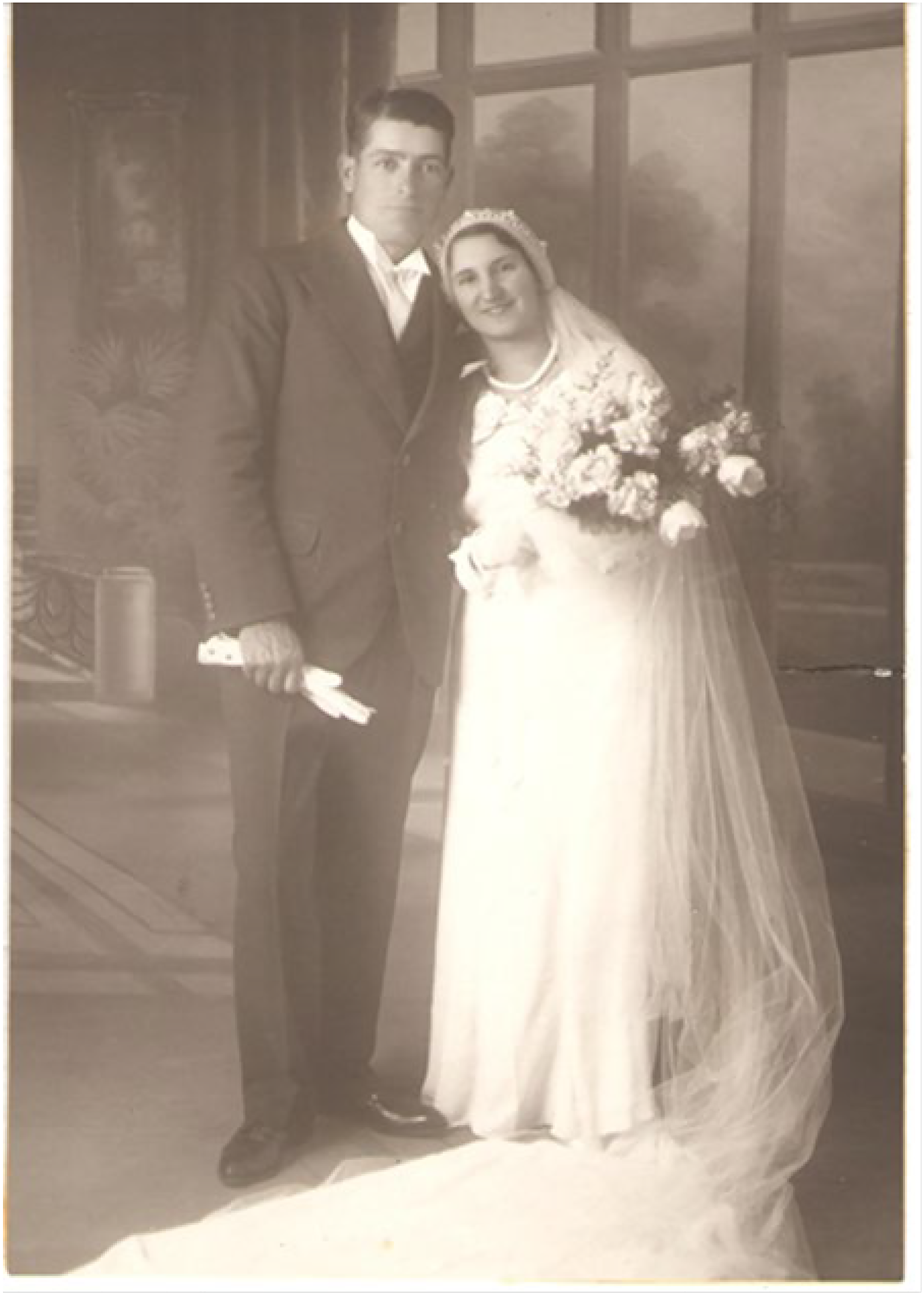
Wedding photo of Justin and Agnes, Oran 1936.
The wedding of Justin and Agnes also meant a ceremony of a new transition, a life change in which new responsibilities and roles were assumed. After the wedding, Agnes worked from morning until night. She was exclusively in charge of the housework, and she did not have to work at the estate. She did the laundry, ironed, sewed, and repaired various things, which indicates the diverse (practical) knowledge she had acquired in everyday life. Shortly after the wedding, she became pregnant and in December 1936 gave birth to her first-born son and only fifteen months later a daughter. The months and years passed, the children grew and the others were busy with their work.
Agnes loved to visit the Arab market with her husband. Despite only men being allowed to come to the market and the Arab wives having to stay at home, this did not stop Agnes from visiting her favorite spot. This indicates the development of her alternative lifestyle and the socio-cultural knowledge that is reflected in the comparison she made between Spaniards and Arabs: “Spaniards are passionate and when engaged or married, they are awfully jealous. A woman is not allowed anywhere alone, just like with the Arabs. And they would beat up their wives for every little thing.” We must take into consideration that from her autobiography we can deduce a lot of learning that developed as a way to resist against the established and expected rules. In fact, it was exactly that resistance and desire for knowledge that drove her from home and into the wide world.
In 1939, World War II broke out. Immediately after the outbreak of war, Justin reported to the Mascara barracks, and Agnes was left alone with her mother-in-law, 34 her children, and the workers. “The Germans were everywhere and they brought with them great misfortune. They stole food and clothes around the cities; it was even worse in France! In Africa, we did not suffer from a shortage because we were stocked up quite well. I sent my uncle various food twice a week so that neither our children would suffer nor the whole family, until the end of the war, which lasted five years!!!” After her husband's return, she became pregnant with their third child, a girl, and eighteen months later their second son. When the youngest two children were old enough to enroll in school, they went to live with friends and came home on Sundays. After the death of her mother-in-law, Agnes and Justin were left alone at the estate. Not long after the end of World War II, in 1954, in early November, the Algerians began to resist their French colonizers due to the unsatisfactory economic and political situation. The Algerian drama reached its peak in the spring of 1958 when generals from Algeria and the Pied-Noir 35 (the European immigrants there) and the French population revolted and succeeded in bringing Charles de Gaulle, whom they saw as a savior, to rule in France. Despite the fact that de Gaulle knew from the very beginning that France had to withdraw from Algeria, it was not until September 1959 that he began to pursue a policy of withdrawal from Algeria, which led to new uprisings in the 1960s. Large insurgent demonstrations and well-organized actions broke out throughout the country, with the aim of the Algerians gaining their independence. In 1962, with the Évian Accords, Algeria became independent, and one million European immigrants had to move to the other side of the Mediterranean. 36
“Armed Arabs raged through the estates; when they found a family in the house, they first killed the children, raped the women, and then they cut off everyone's heads, one by one. Terrible things happened and we all lived in great fear!” The wealthy French fled first. Landowners left behind all their possessions and went to live in the city or they returned to France. Agnes and her family were also preparing to leave, which made them terribly sad, especially her husband. They left their home on Easter in 1957 and moved to Saida. 37 The state of affairs between France and Algeria worsened by the day. Justin did not want to return to France, and Agnes no longer imagined her life outside of Algeria. Justin fell seriously ill. To restore his joy, Agnes, despite the poor conditions, the colonial war, and her husband's illness, took courage and in the spring of 1958 opened her own restaurant. The youngest children promised to help with the work.
Change of Position: Empowerment
Neža's individuality was refined at an early age when she decided to realize her childhood dream and convinced her parents to allow her to leave her home village. Later, her strong will and independence showed when she left the convent and traveled all the way to Algeria. There, in a way, she submitted to a new way of life, letting herself be led and taught. Even later, when she married and had children, her individuality was not expressed. It was refined again at the outbreak of war when her husband left home, and she was left alone at the estate with their children. It was then that her inner sense of power and control was strengthened as she took on a major role in the family. Agnes faced unpredictable events for which there were no socially assumed roles. Women develop different roles during the war than in peacetime. This type of learning is called innovative learning because learners do not have any patterns to follow. After her husband returned from war, her position remained unchanged. Even more, the tenser the social situation, the greater the role she occupied within the family.
Although her days were busy, she often wrote home and received letters from her family. Her father and mother had already died. Justin too felt worse every day and passed in January 1961. He was buried in a large Catholic cemetery in Oran where his entire family was buried. She returned home after the funeral and resumed work only eight days later. She was soon able to afford a nice and much larger apartment not far from the restaurant. However, in early 1962, it was clear that the war would be over and that all French people would have to leave Algeria. Fewer and fewer guests came to the restaurant, especially after the Évian Accords were signed on July 1, 1962. With this, Algeria became an independent and internationally recognized state, the cost of which was eight years of war and many casualties and significant material damage. The French settlers lost everything. Agnes never gave up and she persisted in her work, to the very day when the Arabs declared independence and advised her to close the restaurant: “Some friends advised me not to open the restaurant that day; they said that the Arabs would break everything; but I wasn't afraid and the restaurant was open all day!”
Most of the French fled, including Neža's children, all except for her youngest daughter who stayed with her mother. Neža's restaurant was increasingly empty, as there were no more French officials in the city. In the spring, Agnes and her daughter prepared everything necessary for their departure, carefully tidied and cleaned the restaurant one last time, then closed it with dignity. On June 20, 1963, they drove to the port of Oran and boarded a large ship waiting for refugees. “From the ship I looked up towards the place where my husband was buried; I prayed with all my heart for the peace of his soul, for my sister's and my uncle's; now they all rest forever in this foreign land. Hot tears poured down our faces, mine and Malou's, so we didn't notice that the ship was already far from the port!”
The Process of Identity Change
Identity is constantly exposed to processes of change. 38 Although an individual tends to reduce these processes and establish strategies to maintain a sense of personal continuity, identity transformations are an inevitable part of any biography. However, change takes place procedurally, as newly acquired experiences only gradually affect change in self-definition. Disjuncture consists of several minor discrepancies. These moments in the biography, however, allow the individual to detect changes and allow him or her to explore and validate the new aspects of identity. The easiest way to change an identity is to clearly define and evaluate it from the point of view of the present. In the case of the analyzed narrative, a later visit to the original society plays a key role in the process of reflective awareness of personal change. After six years abroad, Agnes returned home to ask her parents’ permission to marry Justin. She immediately felt that she had changed too much during her stay in Africa and that she could no longer live in the environment in which she grew up. At home, everything seemed so small: her birth house, the gardens, vineyards, fields … She was disappointed with the narrow-mindedness and “smallness” of the people among whom she grew up. Because she no longer drank wine, the village ladies described her as “sick” and predicted her imminent death. But when she went to Mass on Sunday, she had the feeling that they looked at her as if she were a “strange thing”. And so, her decision to return to Africa was not only the result of a commitment to her fiancé, but her personal decision. When she visited her home village, she realized that she had outgrown it, and that she had changed too much to live there and among people who no longer accepted her. As some previous studies have shown, migrants face these challenges if/when they return home. 39 Just as they had to be adaptable and creative in their learning upon entering a new culture, they must be adaptable and creative upon their (possible) return to their home culture. An individual's relationship changes as he/she changes, just as the cultural environment from which he/she left.
Disjuncture may appear as a minor discrepancy between a biography and an unknown situation to which the individual responds with minor adjustments, but this deviation may be greater and may require plenty of learning at all levels. Moving from one cultural space to another certainly requires more biographical work, which occurs during the transformations of experience and practice in the socio-cultural environment. Biographical work in “fragile” 40 identities is a complex and time-consuming process, 41 while in resilient personalities it seems a simpler and faster process. The latter is also evident with Neža. For her, learning seems very easy, almost fun, but it still takes a lot of effort and perseverance. It seems easy, especially when writing from the point of view of an older, mature person who looks at her youth and all the transitions from a distance.
Migration freed Neža from the simple, poor, and hard-working way of life that had marked her family. Out of gratitude for a life opportunity, she was willing to take on everything from the environment that was offered to her. Living abroad offered her abundance, not only in a material sense, but in gaining invaluable experience, learning, getting to know new cultures, languages, people, different landscapes, cuisines, lifestyles, dances, mentalities. Being open to acceptance, her transformation occurred easily, quickly, and painlessly. Yet not all experiences were painless and non-conflicting.
We identified Neža's pain in the narrative of her daughter, Malou, about (not) transmitting her mother tongue to her children. She confided in us that at the age of twelve she asked her mother why she did not teach them their mother tongue, but Neža only turned her back on her and never answered. Apparently, the question her daughter asked was a sore point in her life. Malou told us that moving to the house of her father's parents was the end of singing Slovenian songs and uttering Slovenian words for Neža. Her mother-in-law demanded that only French be spoken at the house. This indicates how the environment significantly influences the subject. In this case, the migration situation proves to be an obstacle to learning and to the knowledge transfer to younger generations. Very similar stories (memories) can be read in the study of the Dalmatian Bride. 42 In Brkini, (Slovenian) mothers-in-law restricted their grandchildren from learning their mother tongue, that is, the language of the “Dalmatian brides.” We can observe a pattern of mother-in-law power that affects which language the grandchildren will learn.
Despite the fact that Neža did not pass on her culture (language) to her children, during her autobiographical record she confirms that she lived her life as a person with several identities, 43 languages, homes, and homelands, without rejecting any, as evidenced by her words at the end of the autobiographical story: “Whoever may be reading these lines, I ask you to forgive me for perhaps not every word is in place; after so many years, one can forget one's native language, even if I have always felt it in my heart! Not a single day goes by without me quietly singing our beautiful Slovenian songs, because it is true that it is easiest for me to remember the songs which I sang in Suhorje, where my home was! I was only sixteen years old when I came to Africa and I experienced and spent the most beautiful years of my life there with a loving husband and our beautiful children. And now, after so many years, I dream of those times and my thoughts fly to our estate, to our neighbors and the small river where we went for walks; of course, this river still rushes down the hot field in big bends until it reaches the sea, where it turns into mighty waves! I often wonder if storks still come to nest on our roof; I feel like I can still hear their rattling ‘clack, clack, clack’!”
Agnes died four years after writing her life story, on March 24, 1998, at the age of 85 years old.
Learning Strategies During Migration
The autobiographical story was analyzed according to the principles of the grounded theory developed by Strauss and Corbin. 44 Considering that human memory is selective in storytelling, 45 a single narrative alone is not sufficient to assess transitional learning. Therefore, we developed an experimental theory of learning from migration experiences based on the autobiographical record of Neža Gerkšič a.k.a. Agnes Lacroix, research carried out 46 and literature analyzed. 47
Transitional learning arises when individuals are confronted with unpredictable changes in the dynamics between their life course and the transforming context. Moreover, when they are confronted with the need to (learn to) anticipate, cope and reorganize these changing aspects of life. The situation triggers a continuous process of constructing meaning, making decisions, taking responsibilities, and dealing with the changes in the personal and social context. 48 The authors argue that biographical learning is an effective transitional learning process that helps people to adapt to change. 49
At the first glance, learning when entering a new environment seems to be mainly related to adaptation, but in the autobiographical record, using an inductive approach, we were able to identify five different learning strategies: Adaptation, identity growth, distinction, resistance, and innovative learning. Learning occurred under the influence of the social environment and individual life, of the set of knowledge, beliefs, values, and of the formed personality traits.
The first learning strategy is the strategy of adaptation, that is, adaptation to cultural patterns, because the circumstances (social structures, relationships) are perceived as unchanging. In the first learning strategy, Neža prioritized the existing cultural patterns and social requirements, within which she formed abilities such as the ones that the environment expected of her. She adapted to the new environment by learning the language, adopting certain habits, changing the way she dressed, and respecting the rules and norms. This kind of learning from experience takes place mainly by “surrendering” to socio-cultural “requirements” or expectations, but in Neža's case, it must be pointed out that her adaptation was a consciously selected strategy, so we can easily call it active adaptation. Adaptation (at least for the most part) was not marked by surrender, passivity; in her construction of knowledge, she was active.
Another strategy used by our active subject of migration in her learning was identity growth. The change in the environment brought up existential questions. She wondered who she was, what her values were, and what kind of a person she wanted to become. Learning about herself also occurred on the basis of distinguishing herself from others. By learning about new cultures, mentalities, and values, she became aware of her own and she would constantly assess with whom she could identify, see as her own and whom she could not. An individual also changes his/her identity when he/she learns (subjective perception) and feels that part of the situation is unchanging (e.g., the environment), and the other part is something he/she can change, which he/she can influence. He/she usually finds this other part within himself/herself, because he/she can change himself/herself, just as he/she can change the interpretation of events and meanings. In this way, the individual can experience himself/herself as free, being able to make decisions and choices.
The third strategy is the development of an individual or an alternative lifestyle (distinction). The situation in which an individual finds himself/herself is oppressive for him/her, so he/she “resists” the rules, develops (new) habits and practices that are significantly different from the previous ones. This strategy manifests itself in the analyzed story as resistance against the rules and an individualized solution to social demands to which the individual does not want to submit. At the same time, our active subject of migration introduced her own rules, her own practices.
To a lesser extent, we detected a fourth strategy in the writing, that is, the path of resistance and changing the environment. Interfering with the social rules of the environment means a critical reflection and change/transformation of social factors and active interference with the culture/society of the environment, where the individual tries to introduce innovations in order to change the requirements and expectations of the environment. One could say that Neža's very decision to leave home was a reflection of her resistance against the expected social rules.
The analysis of the autobiographical record revealed consistency with the transitional learning model, 50 which discusses the four basic strategies of making meaningful connections for transitional learning. In analyzing Neža's autobiographical story we discovered the fifth strategy, which Neža used during the war when she was left alone in the house and she took over the work at the estate, is the strategy of innovative learning, which means moving away from repetitive routines. The heroine was facing new, unknown, and unpredictable events and situations for which there were no socially assumed roles. An individual uses the strategy of innovative learning when he/she does not have patterns to emulate, so he/she researches, seeks new concepts or changes old ones, and invents new practices. This increases the importance of intuition and creativity.
In the analyzed story, we observed mainly an interlocking of strategies, with the first two strategies—adaptation and identity growth—being the most explicit. 51 Biographical learning took place as transmission in the transfer of various information, the reception of knowledge, and the imitation of skills; as transaction in social experiences in dialogue with the environment; and as transformation in the (re)construction of identity, the awareness of mental schemas and concepts. A crucial element in this process was disjuncture, which occurs when there is a conflict between an individual's biography and his/her current experience. Thus, prior (learning) experiences no longer enable people to make sense of their current situation, and they become consciously aware that they do not know how to act, which triggers new learning, a search for new meaning, and understanding. The learning outcome is the (re)construction of identity, knowledge, skills, attitudes, and values.
Conclusions
Learning is a complex process that is an integral part of all practices in postmodern dispersion and change. 52 We agree with the quote of the philosopher Bergson, 53 who wrote that for a conscious being, to exist is to change, to change is to mature, to mature is to go on creating oneself endlessly. Such learning is also understood by the authors of the theory of biographical learning. Learning is a fundamental process of humanity 54 ; learning is an ever-present living process 55 with which an individual creates his/her biography and (re)constructs an identity. Just as a person is constantly breathing, so he/she is constantly learning.
The autobiographical writing of great aunt Neža Gerkšič, a.k.a. Agnes Lacroix showed several successive instances of migration (Sarajevo, Lourdes, Bilbao, Madrid, Algeria, migration within Algeria, departure from Algeria to France) throughout Neža's entire life. It provided insight into the complexity and heterogeneity of learning and the experiences brought by migration, and it went beyond views on learning that emphasize information transfer and do not take into account the integrity of learning in a particular cultural setting.
Despite the fact that entering a new cultural and social environment seems to be primarily related to adaptation and adjusting, we discovered five different learning strategies in the analysis of the autobiographical record. The adaptation strategy emerged in response to cultural change and expectations of society, with our active subject of migration having the opportunity to integrate into the new environment by adopting new habits, learning the language, respecting norms and rules, while also developing a strategy to foster an individual or alternative lifestyle as resistance against the established rules and social demands to which she did not want to submit. In the autobiographical record of our migration heroine, the phenomenon of identity change is noticeable and can be explained by the reflection of Bron, 56 who finds that we are more often and intensively faced with the questions of who we are, why we are, and what our future will be, part of which is also migration. The strategy of interfering with the social rules of the environment, with which our subject of migration would actively interfere with the new cultural/social environment, and the strategy of innovative learning, which in new, unpredictable situations requires the individual to overcome repetitive routines, were less pronounced in the writing. Neža used this strategy during both wars when she had to face unknown and unpredictable situations first at home, at the estate, and later by opening her restaurant, which required her to innovate and take on (new) responsibilities. The presented strategies represent a tool, which can help us in the analysis and interpretation of learning while experiencing migration.
The importance of the study also lies in the fact that it rejects stereotypical notions about migrant women, particularly those dating back to research up to the 1970s, which saw migrant women primarily as will-less objects. 57 Women, who have migrated for their own interests—survival, intellectual, cultural, artistic, or simply curiosity to discover the world, were invisible and irrelevant at the time. Through the study presented in this paper, the story of Neža, which until now has not been given importance in the field of knowledge, historical and social memory, has been rehabilitated—it has become important. Moreover, Neža a.k.a Agnes also represents other courageous women of the time whose life experiences were hidden and unrecognized by society.
The study opens up opportunities for further research, enriches the understanding of human history, contributes to the knowledge of the inclusion of adults (especially women) in a new social environment, and the learning that occurs concurrently and further illuminates the field of learning in everyday life.
Footnotes
Declaration of Conflicting Interests
The author declared no potential conflicts of interest with respect to the research, authorship, and/or publication of this article.
Funding
The author received no financial support for the research, authorship, and/or publication of this article.
