




Abstract
This article compares interethnic and interreligious marriages in Russia and Norway during the decades around 1900. State churches dominated religious life in both countries with over 90 percent of the population but both were losing influence during the period we focus on—rapidly in Russia after the 1917 Revolution. The part on Norway employs nominative and aggregate census material which from 1865 asked questions about religious affiliation, while the Russian case study utilizes the database of church microdata being built for Ekaterinburg—a railway hub and an industrial city in the Middle Urals, in Asia—in addition to census aggregates. Our main conclusion is that religion was a stronger regulator of intermarriage than ethnicity. Religious intermarriage was unusual in Ekaterinburg, even if official regulations were softened by the State over time—the exception is during World War I, when there was a deficit of young, Russian men at home and influx of refugees and Austro-Hungarian Prisoners of War (mostly Catholics and Lutherans). The situation was also affected by the 1917 Revolution creating equal rights for all religious denominations. The relatively few religious intermarriages in Norway were mostly between members of different Protestant congregations—nonmembers being the only group who often outmarried. We conclude that representatives of ethnic minorities and new religions seldom outmarry when religion was important for maintaining their identity.
Keywords
When analyzing household structure in the multiethnic setting of the Kola Peninsula in the 1926 Soviet Polar census, we came across ethnic Sami people. One group, with the ethnonym “lopari,” were members of the Russian Orthodox Church, others were Lutherans, the latter called “fil’men” both with a history of reindeer nomadism across the borders. There were many interethnic marriages in that community, but none between fil’men and lopari, even though they were co-ethnics. 1 In this article, we look more closely into ethnicity and religion as promoters or blockers of intermarriage, both from the Russian and Norwegian perspective. The part on Norway employs the nominative census material which from 1865 for nearly a century asked identity questions about ethnicity and religious affiliation; after Canada the longest series of census questions on religion in the world. 2 Since Russia has discarded most of its historic census manuscripts, and aggregates combining information about husband and wife are scarce, the Russian case study utilizes the database of church microdata being built for Ekaterinburg in the Urals, in addition to contextualizing the issues with census aggregates as background factors. The geographic scope of our study has been extended significantly compared to the Kola study, but we stress that our method is still exploratory due to the nature of the source material currently at our disposal.
Since the main religions (Lutheranism in Norway and Orthodoxy—Eastern Christianity—in Russia), the source materials, and the historic settings are different between Russia and Norway, we have chosen for the most part to write separate sections on the two countries. We still aim to analyze similar research questions and draw comparative conclusions. After all, state-run churches dominated religious life in both countries, both loosing influence during the period we focus on. This was a slow process in Russia until 1917 but was accelerated by the Bolshevik regime, so that in the 1937 census, only 60 percent characterized themselves as religious. 3 In Norway, at that time, over 96 percent of the population were State Church members, and the slow decline of the State Church continued until immigrant nonconformism and nonreligious humanism grew more rapidly from the 1970s. 4
Our main research questions are:
Russian Culture and Context with Reference to Ekaterinburg
Since the late sixteenth century, the Urals region had been a territory receiving migrants due to the general colonization process and later on because of developing metal production. Economic reforms in the late nineteenth and early twentieth centuries initiated major immigration waves, which brought thousands of peasants from western and central Russia to the Urals. The region’s location in the middle of the Eurasian continent on the border between Europe and Asia with Ekaterinburg as its unofficial capital (at 565′ N/60°4′E) made it a major railway hub on the way to Siberia in the late nineteenth century.
Peter the Great founded Ekaterinburg in 1723 with the main metal (copper, iron, and cast iron) producing plants in Russia. Georg Wilhelm de Gennin, a general of Dutch origin in Russian service and Peter the Great’s friend, was the city’s governor for twelve years (1723–1734). A Lutheran himself, he was known for his religious tolerance and employed people without considering their religious affiliation. 5 In 1905, the First Russian Revolution brought some democratization of religious life in Russia and the 1917 Revolution proclaimed religious freedom, which did not last long due to the Bolsheviks’ atheistic policy.
Even if dominated by the Orthodox Church, Russia was far from religiously homogeneous, but with a long history of coexisting religious traditions, including provinces with Muslim, Catholic, Lutheran, Buddhist, or shamanistic majorities. Other regions, such as the Urals, had significant minorities adhering to other religious societies than the Orthodox Church. Pre-Revolutionary Ekaterinburg was an industrial city with growing ethnic and religious diversity, especially in the first quarter of the twentieth century. 6
While several studies deal with urban nuptiality in Russia, 7 little has been done on mixed marriages. Most of the studies addressed the legislation and were based on aggregate data, except research focusing on Ekaterinburg, which became possible due to the Ural Population Project (URAPP) database, building on the transcription of parish records. 8 Ekaterinburg was one of the major cities in Russia throughout the nineteenth and twentieth centuries even if not among the biggest, and its situation can be a key to understanding demographic dynamics in the core of Eastern Eurasia.
More than 91 percent of Pravoslavnye—members of the Russian Orthodox Church (including Edinovertcy) in the city according to the 1897 census were overwhelmingly ethnic Russians, which was also the case for the additional four percent Old Believers. After them, the city’s Muslim community was the second biggest religious minority, composed of Tatars and Bashkirs were in-migrants from rural suburbs. The overwhelming majority of the 0.8 percent Lutherans were Germans and most of the 0.7 percent Catholics were of Polish origin. An equal proportion of Jews (cf. Table 1) came from diverse places, mostly in western Russia.
Religious Denominations in Ekaterinburg, 1897.
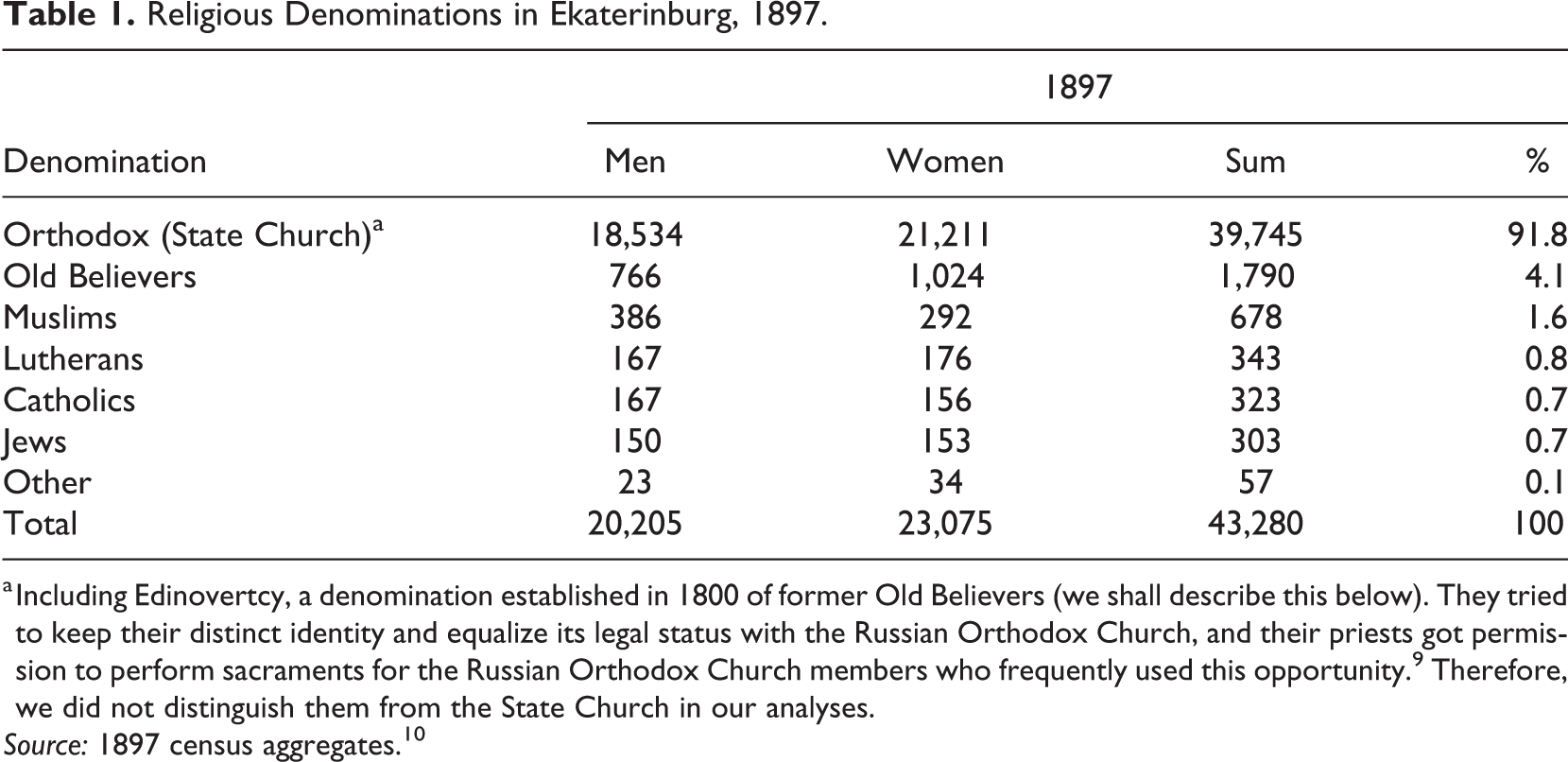
a Including Edinovertcy, a denomination established in 1800 of former Old Believers (we shall describe this below). They tried to keep their distinct identity and equalize its legal status with the Russian Orthodox Church, and their priests got permission to perform sacraments for the Russian Orthodox Church members who frequently used this opportunity. 9 Therefore, we did not distinguish them from the State Church in our analyses.
Source: 1897 census aggregates. 10
By the beginning of WWI, the city population reached 100,000. 11 All the non-Orthodox denominations expanded their share in the religious composition of the city, mainly due to in-migration, but also natural population growth; some increased its size several times since 1897. 12 The Bolsheviks attempted to take a national census already in 1920, including questions about ethnicity. Due to lack of resources, foreign interventions, and civil war, it could never cover the whole territory. 13 Ekaterinburg, however, managed to register its population, reflecting the general population decline and the changes in the ethnic composition of the city caused by the civil war. There was no question about religion, but we use ethnic markers to distinguish religious identity, for they were closely related. We distinguish Poles as “ethnic Catholics,” Germans as “ethnic Lutherans,” Tartars and Bashkirs as “ethnic Muslims.” According to the 1920 census interpreted in this way, the Jewish population increased significantly, the Catholics’ share grew somewhat, while all other ethnic groups and denominations suffered drastic decreases, Muslims in particular (see Table 2).
Ethnic/Religious Denominations in Ekaterinburg, 1920.
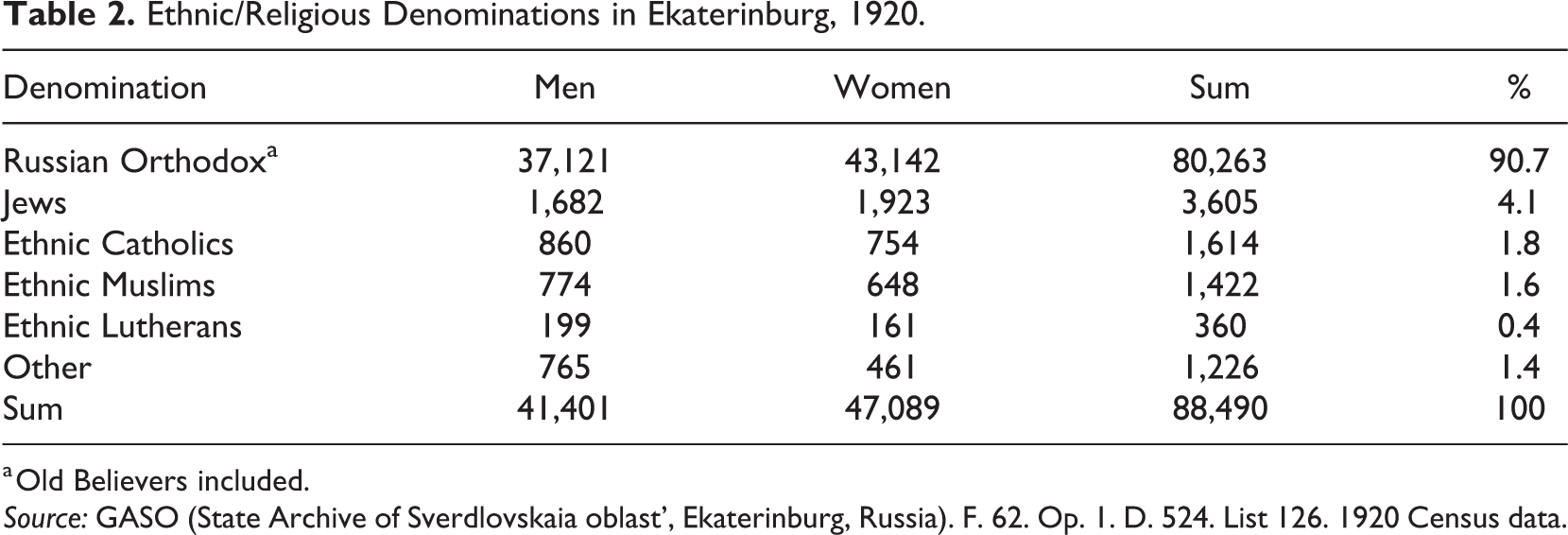
a Old Believers included.
Source: GASO (State Archive of Sverdlovskaia oblast’, Ekaterinburg, Russia). F. 62. Op. 1. D. 524. List 126. 1920 Census data.
The ultraconservative Old Believers in the seventeenth century had left the Orthodox Church, were later attracted by the booming metal production in the Urals, and were still active in Ekaterinburg around 1900. 14 They were the biggest religious minority among ethnic Russians. However, their legal position was rather weak, for the Russian state did not allow them to organize their own ecclesiastical board, while other non-Orthodox denominations (including Muslims and Buddhists) were ruled by their own religious authorities who acted as mediators between the communities and the State. During the state persecutions of the Old Believers in 1825–1855, marriages performed by their ministers were not recognized, and their children considered illegitimate. 15 Only in 1874, were the Old Believers’ marriages legitimized on the condition that they were confirmed and registered by the local police, thus considering the marriage as a civil act rather than a sacrament. Due to the Religious Freedom Manifesto in 1905, the Old Believers achieved inclusion into the multiconfessional establishment of the Empire and were allowed vital events record keeping. 16
Russian Legislation on Mixed Marriages
While there are several relevant articles that examine how the Russian state used legal instruments in the regulation of marriage between the adherents of different religions and confessions in the western provinces, 17 we shall analyze microdata in the midst of the country with a predominantly Russian population who were members of the State Church. Far away from the Catholic and Lutheran worlds, the mixed marriages registered in the Urals were not much implicated in political contests, as was the case near the Empire’s western borders according to Paul Werth’s comprehensive study. Before analyzing the microdata, we shall overview the Russian legislation about interreligious marriages connected with Russia’s multiethnic diversity. While there were no legal issues about the spouses’ ethnicity, his or her religion did matter. This legislation was based on the classification of religions, where the Russian State Church was perceived as supreme, and all other Christian denominations as superior to the non-Christian. Religious dissenters, like Old Believers, Baptists, Evangelic Christians, and other “sects” rather than religions, were not explicitly considered in the legislation, resulting in much confusion.
Traditionally, religiously heterogeneous marriage for Russian State Church members was strictly banned. One had to be baptized and join the Russian State Church before marrying its members. Peter the Great modified this rule due to the large number of the Swedish prisoners of war placed in the country after the Northern War in 1709. Some Swedes accepted Russian Orthodoxy in order to marry, others were allowed to marry and keep their own religion. In such cases, however, the Holy Synod of the Orthodox Church demanded non-Orthodox (usually Lutheran) bridegrooms to sign an official marriage statement (brachnaya raspiska), promising not to proselytize his Orthodox spouse toward his own faith and that their children would be baptized and brought up in Orthodoxy. Such marriages were to be registered in the Russian State Church by an Orthodox priest. 18
This rule existed until 1905, and violation was a criminal offense. However, the Polish territories with a Catholic majority had a distinct status. Until the mid-nineteenth century, a mixed wedding should be registered in the bride’s church, whether Russian State Church or Catholic, unless the priest refused to conduct the ceremony. This was often the case, for the Catholic Church also had strict rules about mixed marriages. Tsar Nicholas II (1868–1918) spread Russian legislation on mixed marriages in Poland, thus promoting Orthodoxy. The Catholic priests, fearing to lose their flocks since children in mixed marriages were to be baptized and brought up into Orthodoxy, refused to announce mixed marriages and provide the bride and groom with marriage bans. After numerous complaints, the Russian government passed a law in 1891 allowing the Catholic fiancé/bride, in the case of an Orthodox-Catholic marriage, to obtain the banns from the local police instead. Another exception was Finland where the Lutheran Church had rights on a par with the Russian State Church. If an Orthodox married a Lutheran, the wedding took place in both churches, and the children were to be brought up in the faith of their father.
The Catholic and Lutheran Churches were the largest non-Orthodox Christian denominations in late nineteenth- early twentieth-century Russia. 19 They could intermarry legally in a Lutheran or Catholic Church. However, the Lutheran Church felt inferior, for the Catholic priests usually demanded Catholic baptism and upbringing for the children born to such marriages. In addition, Catholic priests conducted weddings without inviting Lutheran pastors who repeatedly complained to the government. The Manifesto of 1905, “On the Principles of Religious Tolerance,” issued by Tsar Nikolas II radically changed the situation and attitudes toward mixed marriages. Now an Orthodox spouse could legally change his or her religion and join a non-Orthodox congregation. The Catholic Church in Russia, hitherto an ardent opponent of mixed marriages, started to support them. The Catholic clergy expected non-Catholic spouses to be converted to the Catholic faith due to the active position of Russian Catholic laymen and preachers. When the Pope prohibited the registration of mixed marriages in 1907, conversion became the only possible way to marry a Catholic and get a wedding in a Catholic Church.
The Lutheran church applied the same tactics using marriage as a tool to obtain new converts, since the same 1905 Manifesto granted Lutherans the right to conduct weddings of Catholic–Lutheran couples without involving Catholic priests. The Orthodox Church in its turn tried to prevent this use of loopholes in the legislation—there was no direct regulation about the children of the mixed couple introduced in 1905. Thus, the Orthodox clergy insisted on applying the old rules. According to the 1905 Manifesto, if the conversion took place in connection with marriage, future children were to be baptized and brought up in the Church of the parents (Lutheran or Catholic). However, if their Orthodox mother decided to join her husband’s Lutheran or Catholic Church after 1905, the children baptized into Orthodoxy before the 1905 Manifesto had to stay Orthodox. 20
Marriage with a Non-Christian
Both clerical and secular law forbid Russian State Church members to marry a non-Christian. However, Lutheran citizens could marry Muslims and Jews on the condition that Christianity would be given priority with a wedding in Church, no Christian spouse was to be converted into a different religion, and children to be baptized and brought up as good Christians.
Ironically, even if Sharia Law allowed Muslims to marry both Christians and Jews, it seldom happened, for such marriages were outlawed in the Russian Empire. Russian Law demanded baptism prior to the wedding if one of the spouses was a Muslim, Jew, or a representative of some ethnic religion. Even if marriage between a Christian and a Muslim or a Jew became a legal option according to the 1905 Manifesto, the spouse’s non-Christian religion could be an unquestionable reason for divorce. 21
Russian Sources
Unfortunately, individual-level census data have not been preserved, and the aggregates do not allow the study of intermarriage. That is why our empirical focus is on vital events registered on the individual level in the parish books of Ekaterinburg’s religious communities. This registration of vital events—about baptisms, about marriages, and about burials—was gradually introduced since 1722 and took place until the October Revolution in 1917 all over the Russian Empire. After that, a civil office established by the State took over the registration in each municipality.
We found annual parish books for Ekaterinburg in the State Archive of Sverdlovsk oblast’ (GASO) with baptisms, weddings and funerals. Our controls of baptismal and burial records prove that the early twentieth-century parish books were rather accurate with mean age deviation for the adult population of about eight months. 22 Another argument in favor of the accuracy is the normal sex ratio of the newborn registered in the church books: boys outnumbered girls with on average 106–100.
The registration of marriages in the parish books provides names (first, family, and patronymics), wedding date, marital status, social status and/or occupation of grooms and brides, their place of origin or registration, age, and religion. We have transcribed marriage books for the six Russian State Church parishes, from 1900 to 1919 with altogether 5,818 marriages in the database “Ural Population Project” (hereafter called URAPP). In addition, we have transcribed the data from the Old Believers’ parishes, the St. Anna Catholic Church books, the St. Paul Lutheran Church books, as well as similar sources from the Synagogue and a Mosque into separate database tables and analyzed them, using statistical software. Altogether, we analyzed about 7,000 marriages registered in thirteen city parishes (see Table 3).
Number of Marriages by Year and Denomination in Ekaterinburg.
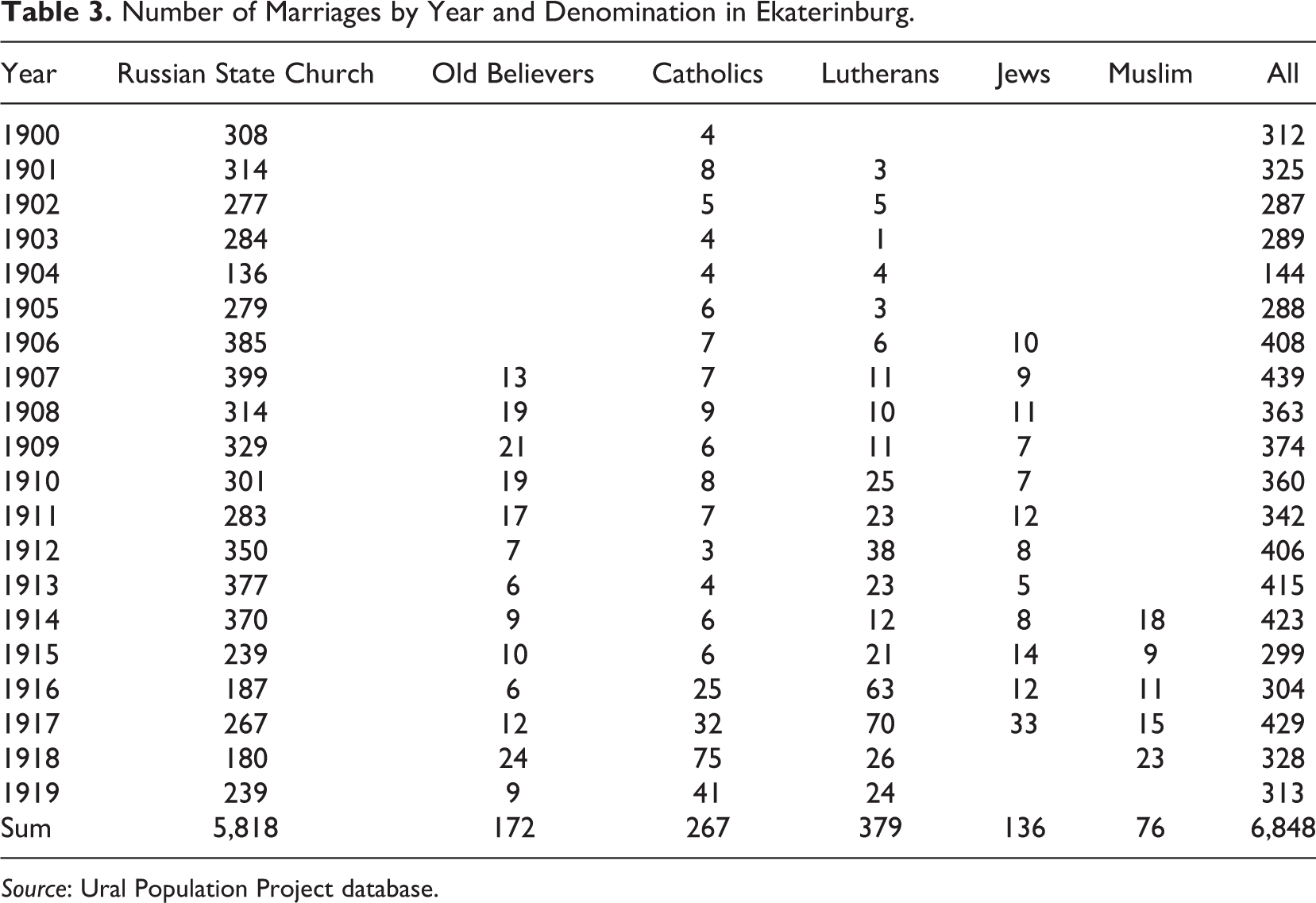
Source: Ural Population Project database.
In order to detect interreligious and interethnic marriages, we analyzed Russian State Church records on baptisms in order to find adult baptisms, which were required for marrying its members. The criteria were the difference between dates of birth and baptism or the foreign names of bride or groom. We found 335 such converts: 168 men and 167 women: Catholics, Lutherans, Muslims, Jews, Old Believers, and Buddhists 23 converted between 1900 and 1919 (see Figure 1). Registration completeness may vary between communities and was naturally affected by the events from 1917 onward.
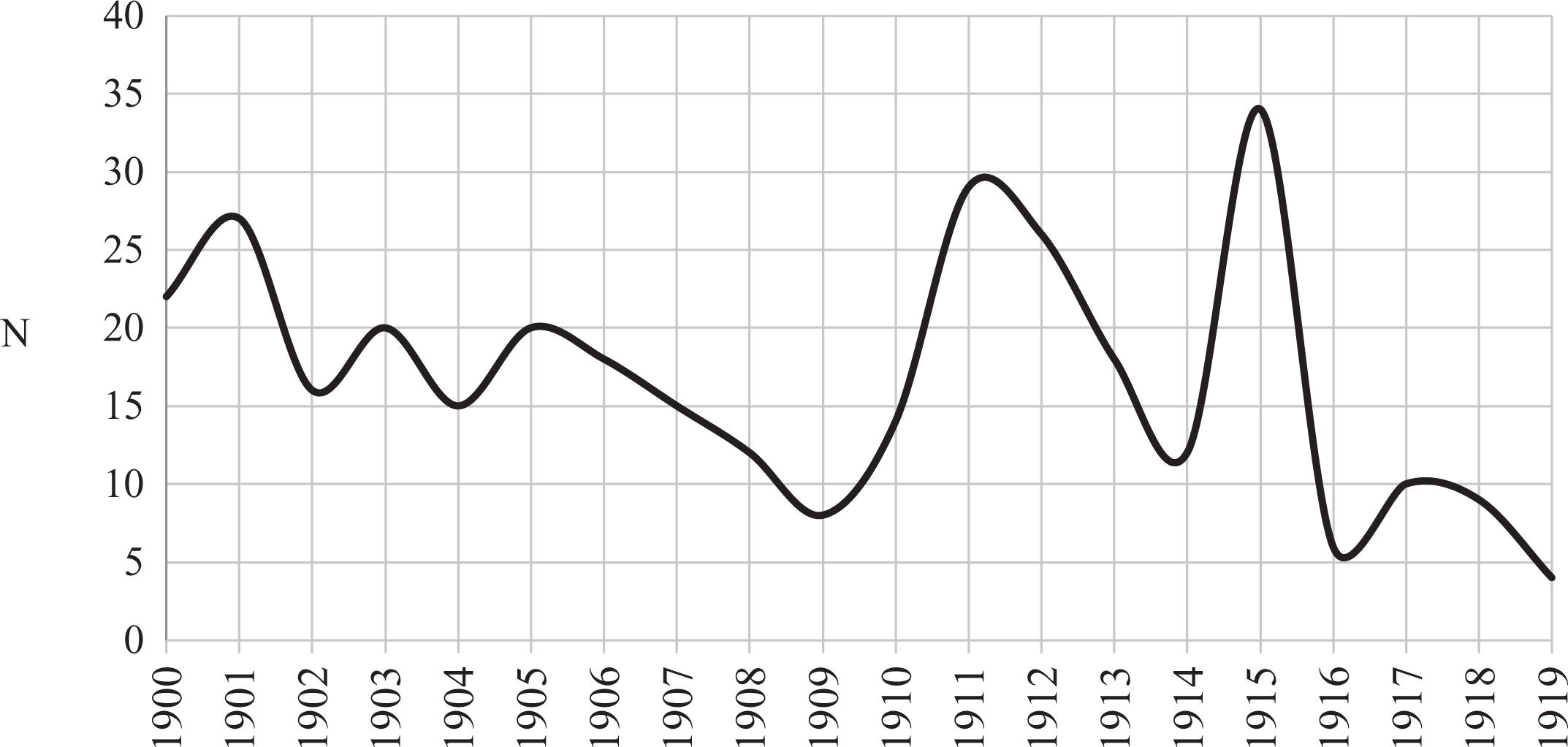
Conversions in the Orthodox Church in Ekaterinburg (N = 335). Source: Ural Population Project database.
We also analyzed St. Anna Catholic parish’s records on funerals because some priests added notes about the late person’s family members and their religious affiliation if they were not Catholics. For example, priest Yosef Verigo registered nineteen such cases in St. Anna Catholic Church parish between 1898 and 1904, when a spouse or children were Lutherans or Orthodox Church members. As we can expect in a rapidly growing city with heavy in-migration, there was only partial overlap between the listed marriages and the married couples living in the city. The city’s population doubled from 1897 to 1913, mostly explained by in-migration. 24 Without nominative censuses, it is difficult to prove to what extent religiously heterogeneous couples lived in the city after marrying elsewhere. However, the St. Anna parish records allowed us to reconstruct several mixed families on the eve of Catholic spouse’s death. In addition, it allowed us to check the application of the law concerning children born to some mixed couples. For example, Vladimir Stanislavovich Buinitskii, a twenty-nine-year-old Catholic medical doctor, married the twenty-four-year-old Orthodox church member Ekaterina Ivanovna Ivanova in 1880. They had their wedding in the St. Catherin Church. The next year, the couple got their first son Vladimir and a year later another one—Eugenii. Five years later, the daughter Ol’ga was born to the couple. All three children of this mixed family were baptized in the same St. Catherin church.
Another reconstructed mixed family’s story is the one about Piotrovich, Vikentii Ioakhimovich, a Catholic employed at the telegraph station. He married in 1895 at the age of forty, a rather late first marriage even for Ekaterinburg’s Catholics, whose average age at first marriage was 28.5. 25 His wife was the nineteen-year-old Borozdich, Elizaveta Iosifovna, an Orthodox Church member and the wedding took place and was registered in the St. Catherin’s Orthodox Church. Two years later, the mixed couple got the son Sergei, who was baptized in the same St. Catherin’s Orthodox Church. The godparents for Sergei were the father’s colleague Filipp Abramovich Oliger and aunt Sofia. Vikentii Piotrovich died the next year due to tuberculosis, the most usual death cause at the time. Three years later, his widow Elizaveta remarried, and again with a Catholic, Skorupskii Gustav Nikolaevich, and again in the same St. Catherin Orthodox Church. She had obviously kept the Catholic connections of her late husband who helped her to find another spouse there rather than among her own parish members. The same year and less than five months after the wedding, the mixed couple got the daughter Natalia, again baptized in St. Catherin Orthodox Church.
Intermarriage in Ekaterinburg by Confession
As expected, most of the marriages registered in Ekaterinburg between 1900 and 1919 were religiously endogamous; however, there were 268 cases (3.9 percent), when either groom or bride married a person with a different religion (see Figure 2).
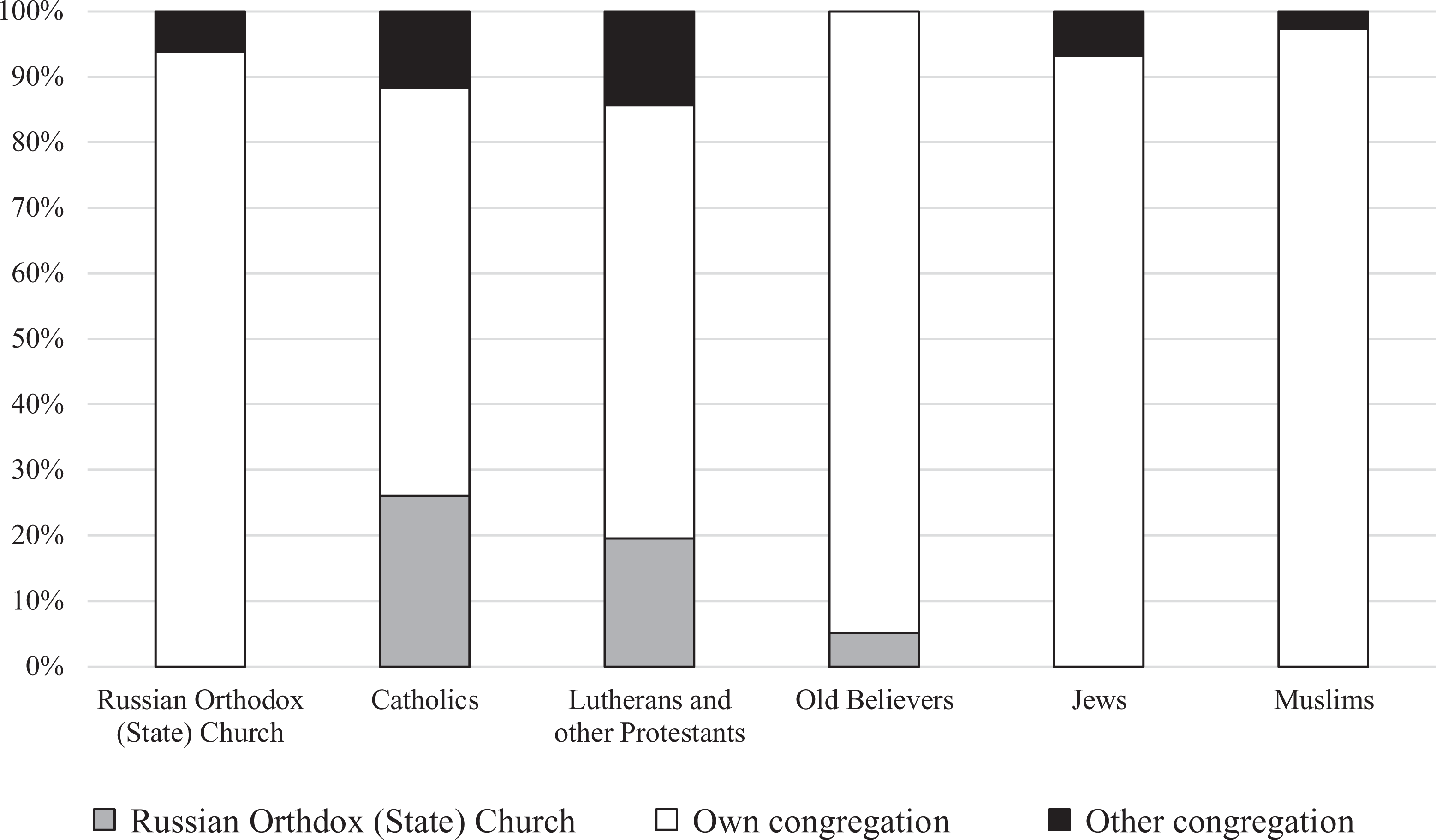
Intra- and interreligious marriages registered in Ekaterinburg 1900–1919. (N = 6,848). Source: Ural Population Project database.
The Russian Orthodox Church Parish Records with Mixed Weddings
Among the 5,818 marriages registered in the six Russian Orthodox Church parishes in Ekaterinburg between 1900 and 1919, only 172 or 3 percent involved a non-Orthodox Church member. However, the share of mixed marriages steadily increased, reaching 7 percent during WWI (see Figure 3). The most usual choice if not to marry a co-religionist for Orthodox Church members was a Catholic (1.44 percent) or a Lutheran (including other Protestants).
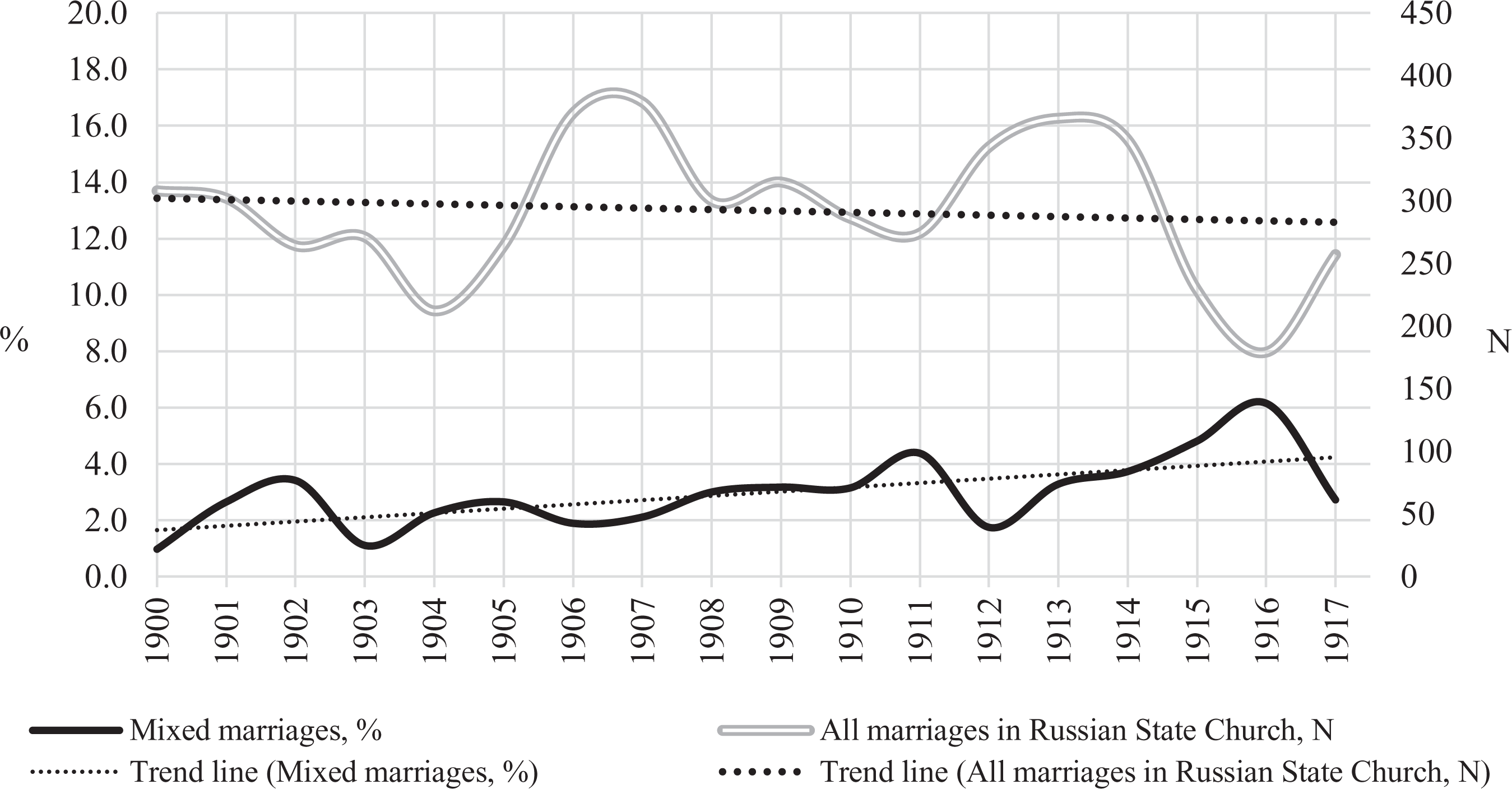
Number of all marriages, registered in Orthodox (State) Churches in Ekaterinburg and percent of mixed marriages. Since the 1904 church book is missing in the archive, we reconstructed the amount of marriages and mixed marriages using annual averages for this parish for the period 1900–1914. Source: Ural Population Project database.
A surplus of local women during the war easily resulted in religiously mixed marriages. The marriage market did not offer enough co-religionist grooms for them due to conscription of soldiers. At the same time, there was influx of prisoners of war and refugees. According to the parish records in URAPP, especially Catholic and Lutheran men formed religiously mixed families (see Figure 4). As was discussed earlier in Glavatskaya’s and Borovik’s article, 26 many were Austrian-Hungarian prisoners of war for whom marriage was a survival strategy.
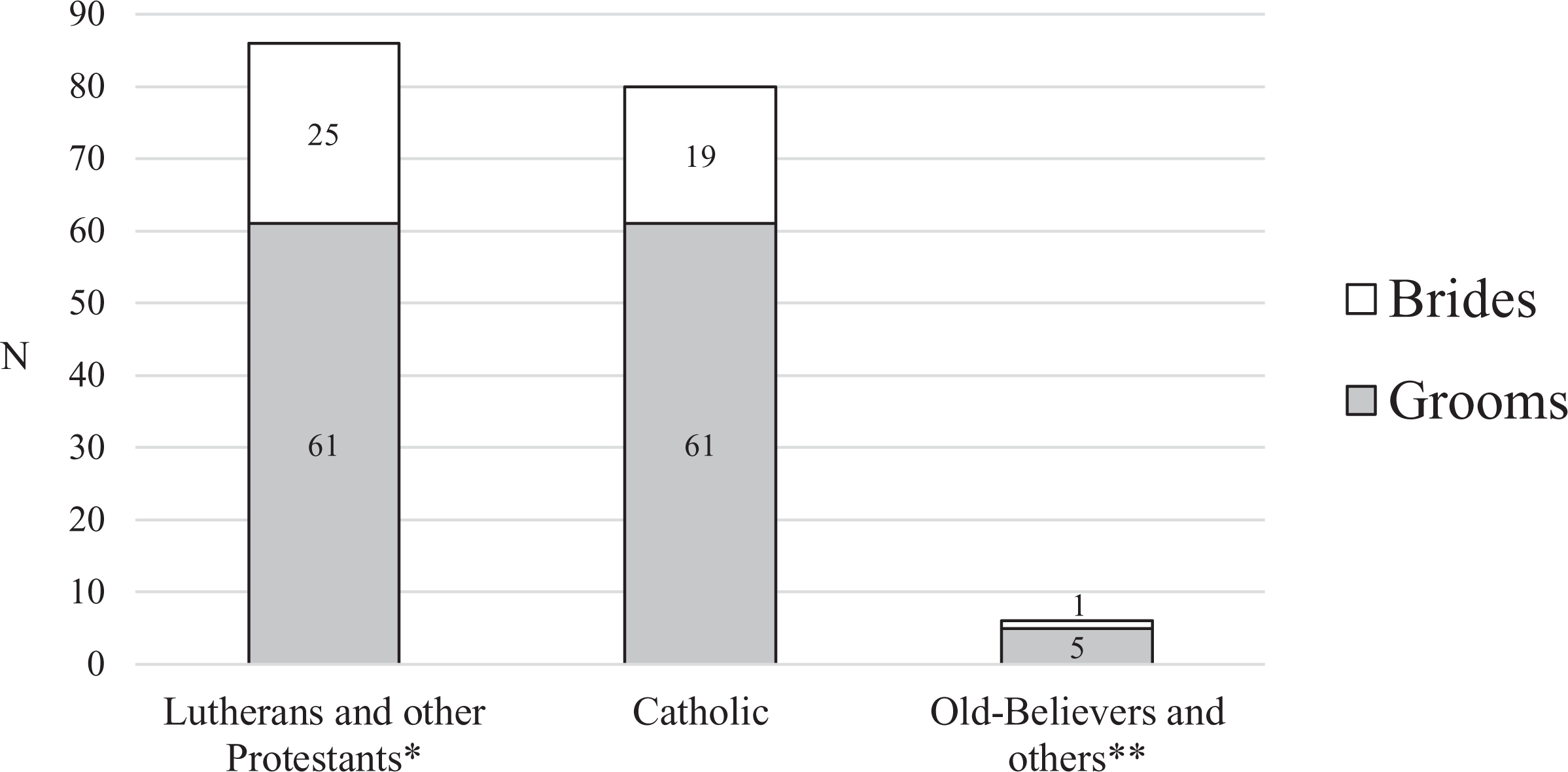
Number of mixed marriages by gender registered in Russian Orthodox parishes (N = 172). *Presbyterians, Anglicans, Evangelists. **Armenians (two grooms). Source: Ural Population Project database.
The Lutheran Church Parish Records with Mixed Weddings
Ekaterinburg’s Lutherans were the most tolerant about marrying outside their own church. There were 379 marriages registered in their church books, among them 63 (16.3 percent) were mixed marriages. There were two peaks in mixed marriages: after the Manifesto of 1905 and during WWI, the latter due to the reasons given for the Russian Orthodox Church.
According to URAPP, it was usually Catholic men who registered their marriage with a representative of another religion in the Lutheran Church because the Catholic Church did not tolerate mixed marriages (cf. above). The Lutheran church was the only place where two Muslim brides, seven Jewish brides, and three Jewish grooms could legally marry outside their own religion (see Figure 5).
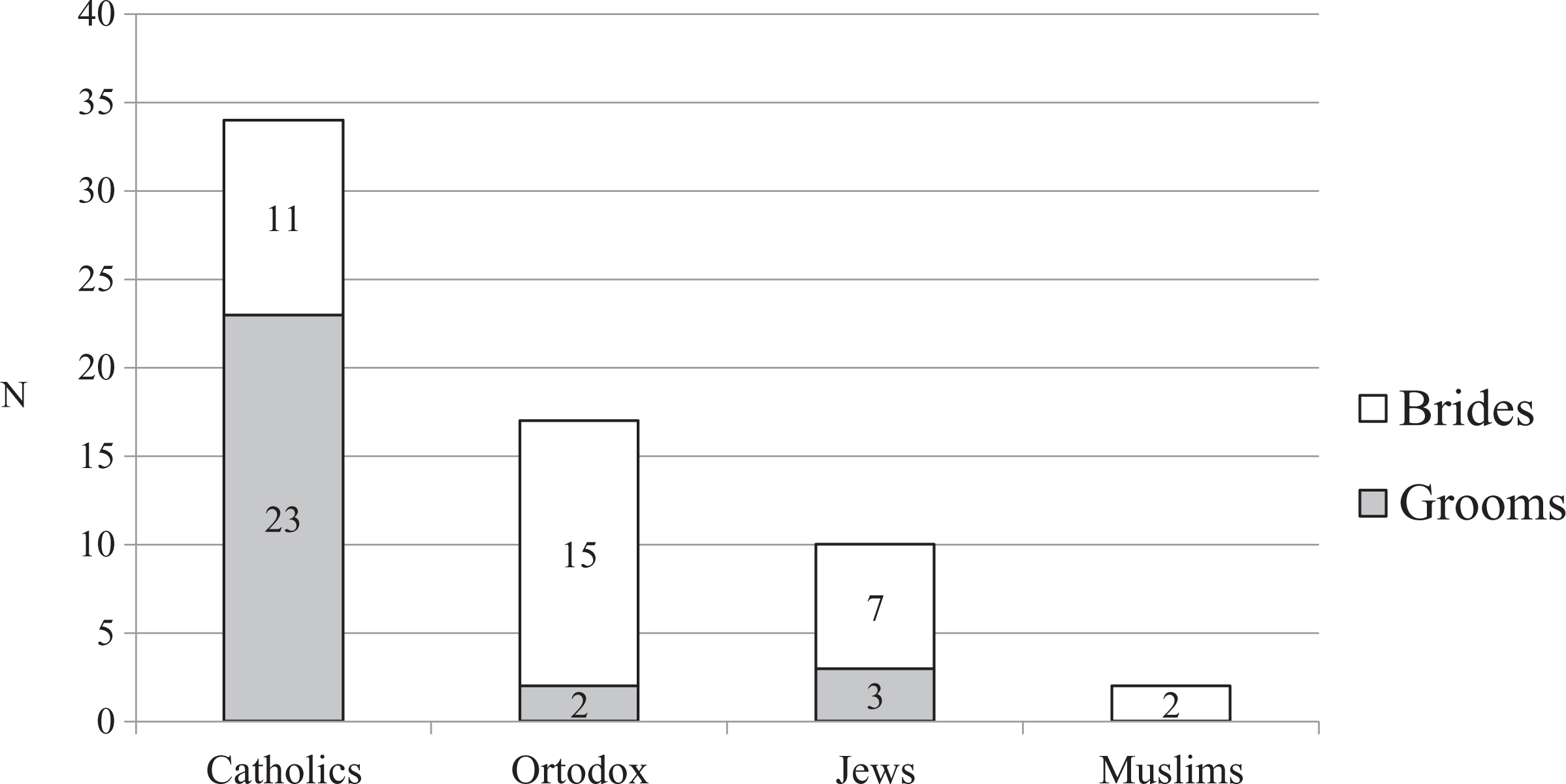
Number of mixed marriages by gender registered in the Lutheran Church (N = 63). Source: Ural Population Project database.
The Catholic Church Parish Records with Mixed Weddings
Altogether twenty-one mixed marriages were registered in St. Anna Catholic Church of Ekaterinburg. In four of these mixed marriages, Catholic men married Lutheran women, in 1900, 1906, 1918, and 1919. The first two couples had to seek a Catholic Bishop’s permission. Registration of the other seventeen mixed marriages involving Catholic grooms and Russian Orthodox brides became an option after the introduction of religious freedom in 1917. Only then, the Catholic Church got the same rights as the State Church in Russia and could perform weddings involving Russian Orthodox Church members.
Norwegian Context and Data
Norway has been denoted an anti-pluralistic society, where the independent congregations had difficulty competing with the State Church’s professional organization. In 1814, the Constitutional assembly in §2 forbid the entry of Jews and Catholic monk orders, specifically the Jesuits, into Norway. Parliament lifted the ban on Jews in 1851, while the monk orders were not granted official entry until 1956, which had of course no consequences for intermarriage. In the mid-1840s, Parliament liberalized the monopoly of the State Church on public religious assemblies granted during enlightened despotism in 1741, when Norway was ruled from Copenhagen. There was no specific legislation against interreligious or interethnic marriages in Norway, but many did not tolerate them. While there are many studies of interethnic marriages, even substantiating marriages between Sami and Norwegian spouses according to the Old Norse sagas, this has not been contextualized together with interreligious marriages. 27
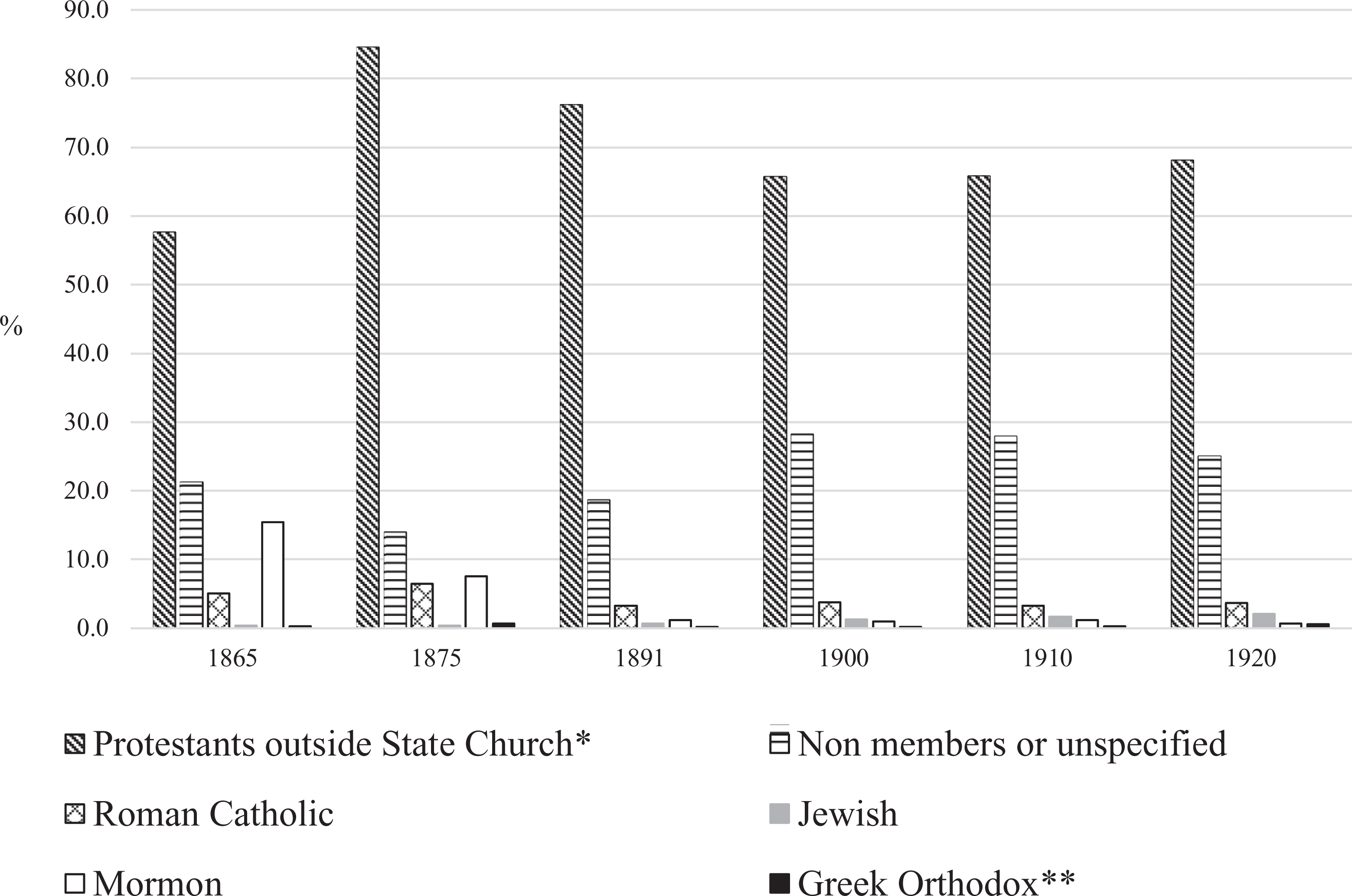
After the State allowed dissenters to practice their religion in public from the 1840s, the Norwegian censuses provide a long overview of the spread of nonconformism, from 1865 to 1980. Locally, dissenters could still muster up to one-third of the population as followers. They had solid bastions along the coasts in the north, the south-east, and the south-west, mostly for alternative Lutheran congregations. Relatively speaking, dissenters were stronger in towns than in the countryside, which among other things can be seen from the predominance of women among the many migrants to urban areas and among their dissenters. 28 Table 4 and Figure 6 show the development of the religious groupings until 1920.
Norwegian (Lutheran) State Church and Other Congregations in the Censuses 1865–1920.
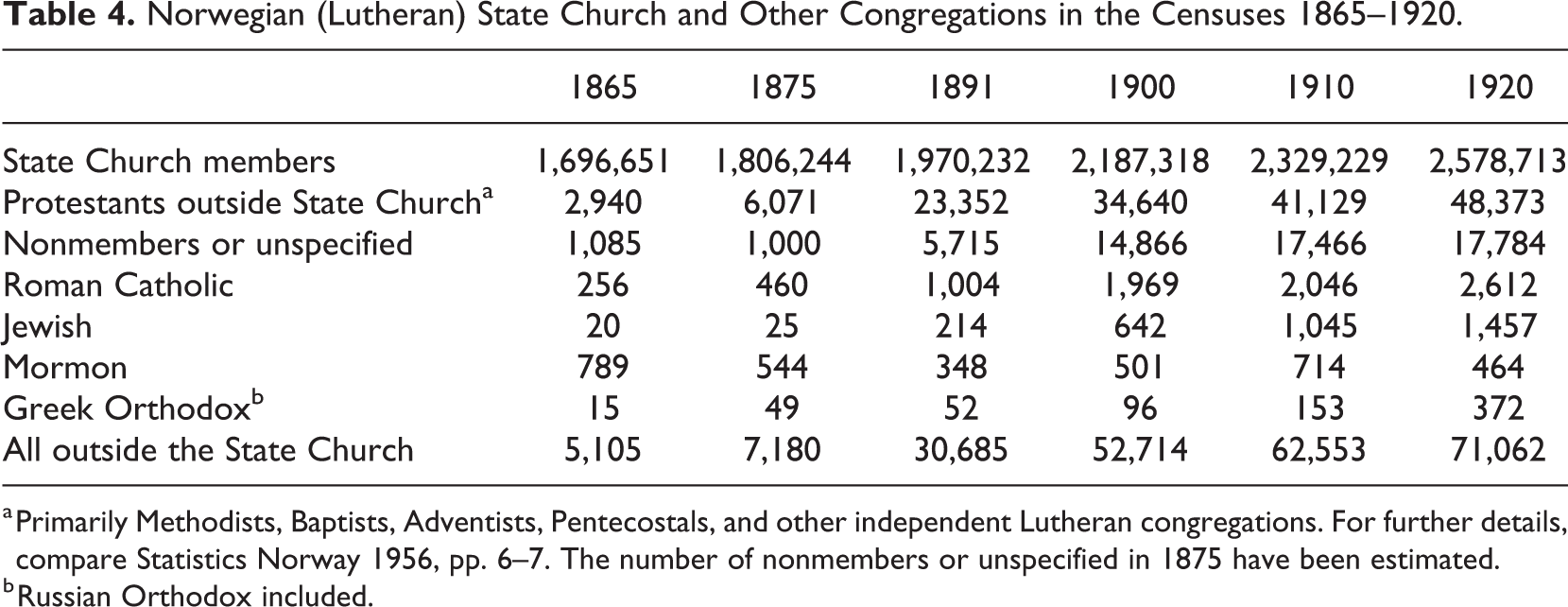
a Primarily Methodists, Baptists, Adventists, Pentecostals, and other independent Lutheran congregations. For further details, compare Statistics Norway 1956, pp. 6–7. The number of nonmembers or unspecified in 1875 have been estimated.
b Russian Orthodox included.
There was only exceptionally reason to ask census questions about ethnicity south of the Polar circle, since nearly all persons of non-Norwegian lineage were the Sami and the Fins living in the northernmost part of the country.
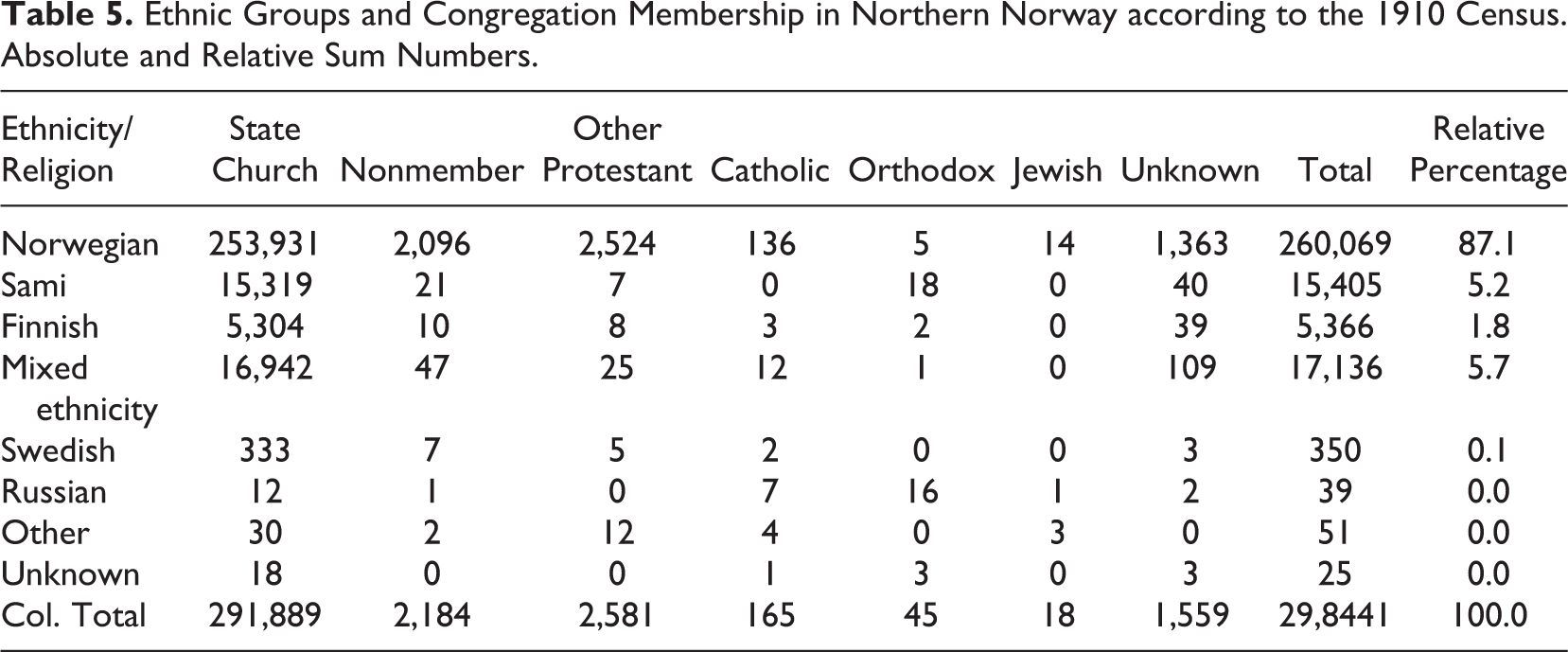
The only significant exception may be some 50,000 Swedes at the start of the twentieth century, mostly recent in-migrants gravitating toward Oslo. But they were fellow Lutherans and Scandinavians, speaking a closely related language almost like a Norwegian dialect. 29 The ethnicity columns in the censuses, denoted “Nationalitet,” employed ancestry as the main criterion for distinguishing the Sami and the Fins from 1865, but from the end of the century increasingly used the language criterion. 30 Most Sami and Fins were devout members of the State Church (cf. Table 5).
Ethnic Groups and Congregation Membership in Northern Norway according to the 1910 Census. Absolute and Relative Sum Numbers.
The 1865, 1875, 1900, and 1910 censuses are transcribed and exist both as verbatim and encoded versions, the latter being part of the North Atlantic Population Project (cf. http://nappdata.org). In addition, we are presently digitizing the 1950 census, a 2 percent sample of households exists which is being expanded into a full count version for the whole country. 31 From the 1960 census, which was the last to ask about specific memberships outside the State Church, we have an anonymized 10 percent sample created as part of the aggregation process at the time.
Religion
Since the enumeration in 1910 is the last full-count, transcribed, and open census until 2020, we start by analyzing the married couples there—when nonconformism had spread for a couple of generations, and 62,353 persons or 2.6 percent of the population belonged outside the State Church. There were female majorities among the biggest groups of dissenters: 52 percent among the Evangelical Lutherans, 56 percent among the Methodists and the Baptists, and 60 percent among the Adventists. Calvinist, Church of Scotland, Congregationalist, Episcopal, German Lutheran, Independent, Plymouth Brethren, Presbyterian, Protestant, Reformed Church, Salvation Army, and Unitarian adherents have been grouped as “other Protestants.” However, men made up a majority of 55 percent among those declaring no religious society—we may call them nonmembers. Other small groups in the 1910 microdata were Catholics, Pentecostals, Quakers, Mormons, Muslims, Jews, and Orthodox 32 (cf. Table 4).
By combining the information about religious affiliation for married couples, we can ask how many shared the same congregation membership and how many belonged to different congregations. The spouse location variable (SPLOC), implemented by the Minnesota Population Center for the NAPP data sets, enables a link from the husband’s person number to the wife’s SPLOC. In addition, we test that the gender of the spouses is different and that both have marital status married. We find that the overwhelming majority of 355,210 couples 33 shared the same formal religious adherence, while only 6,668 or 1.9 percent had different ones, an expected result given the dominance of the State Church. However, also less than 10 percent of those outside the State Church had a spouse with a different affiliation, and we should remember that in most cases, they both belonged to different Protestant religious societies. Thus, in 1910, there were interreligious marriages in Norway, but they were quite rare, and the difference between the spouses was one of belonging to separate but similar Christian organizations rather than ones with wide disagreement about religious membership. As is illustrated in Figure 7, the nonmembers formed the only group who more often than not, did not share their type of affiliation with their spouse.
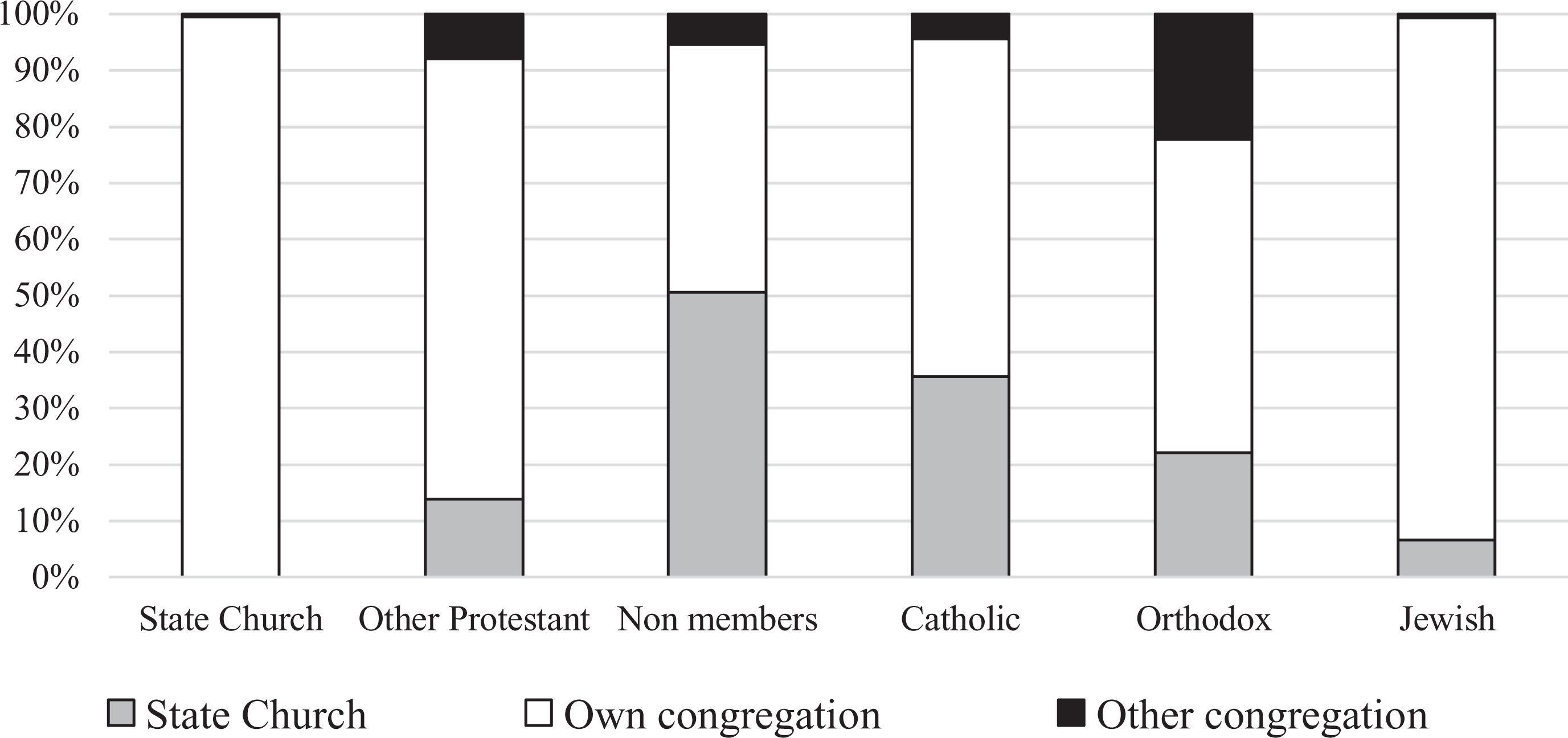
Intra- and interreligious marriages in Norway 1910 (N = 343,696). Source: Own compilation from full count transcribed 1910 census at the Norwegian Historical Data Centre. In total, 351 cases with unknown religion omitted.
Thus, it seems that nonmembers were not only in disagreement with the vast majority of religiously oriented people but often with their spouses as well. At the left end of the continuum, we find the State Church members who in less than 1 percent of the marriages did not share the same church membership. More than three-fourth of the Evangelical Lutheran, Methodist, Baptist, Pentecostal, Mormon, and Jewish men had joined the same religious congregations as their wives. The lower proportions among the members of the Anglican Church, Catholics, Orthodox, and Quakers were likely because mixed marriages were not tolerated in these congregations as we saw in Russia or it may simply be due to their small numbers.
In a side glimpse using 1950 microdata, we can see that little had happened with the structure of religious societies in Norway since 1910, except that the Pentecostal Church had become a significant movement among the dissenters. The State Church membership had declined by a couple of percentage points—to about 96 percent of the population. It still dominated religious life in Norway, which largely explains why only a small proportion of marriages were heterogeneous in terms of religion. The nonmembers had even more marriages where the spouses disagreed about their attachment to religious societies—expressing a higher degree of tolerance for differing viewpoints with respect to membership in religious organizations. The adherents to the Pentecostal Church experienced the highest degree of religiously homogeneous marriages, which is a characteristic feature of any young or emerging religion.
Intermarriage in Norway by Ethnicity
In his century-old book based on extensive travels, Carl Schøyen called Northern Norway “the meeting place of three tribes”—Norwegians, Sami, and Fins (1918). 34 Table 6 shows how the population of the northernmost region—from 65 degrees latitude and northward was distributed by ethnicity in the census by 1910. Ethnicity was defined by a combination of ancestral and cultural criteria, among them language. Ethnic Norwegians dominated with nearly 90 percent of the population, but there is little doubt that this group included Sami and Fins who had Norwegianized. One reason was that intermarriage between persons belonging to the different ethnic groups had increased significantly since the middle of the nineteenth century. The distinctly ethnic Sami partly lived from farming fishing along the coast (as did most Norwegians in the North) and partly from reindeer herding. The latter group was bigger than the group classified as nomads in the census. In absolute terms, the mixed groups were mostly Sami-Norwegian persons, but in relative terms, the small group of quite recent immigrants from Finland made many inroads into Norwegian and Sami families.
Ethnicity of Married Couples in Northern Norway according to the 1910 Census.
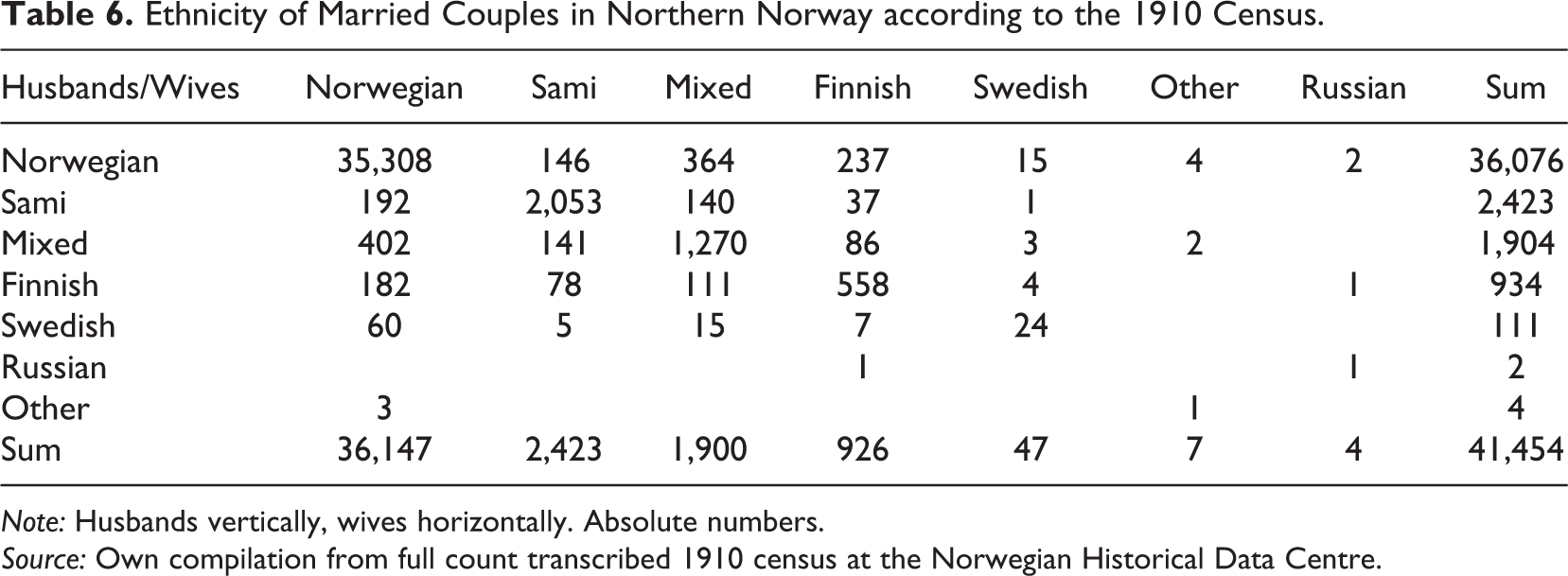
Note: Husbands vertically, wives horizontally. Absolute numbers.
Source: Own compilation from full count transcribed 1910 census at the Norwegian Historical Data Centre.
We limit the analysis of ethnic intermarriages to Northern Norway (cf. Table 6), since the southern part of the country was homogeneous—except for the 50,000 Swedes. Figure 8 shows how the large Norwegian ethnic group dominated and outmarried in only 2 percent of the cases.
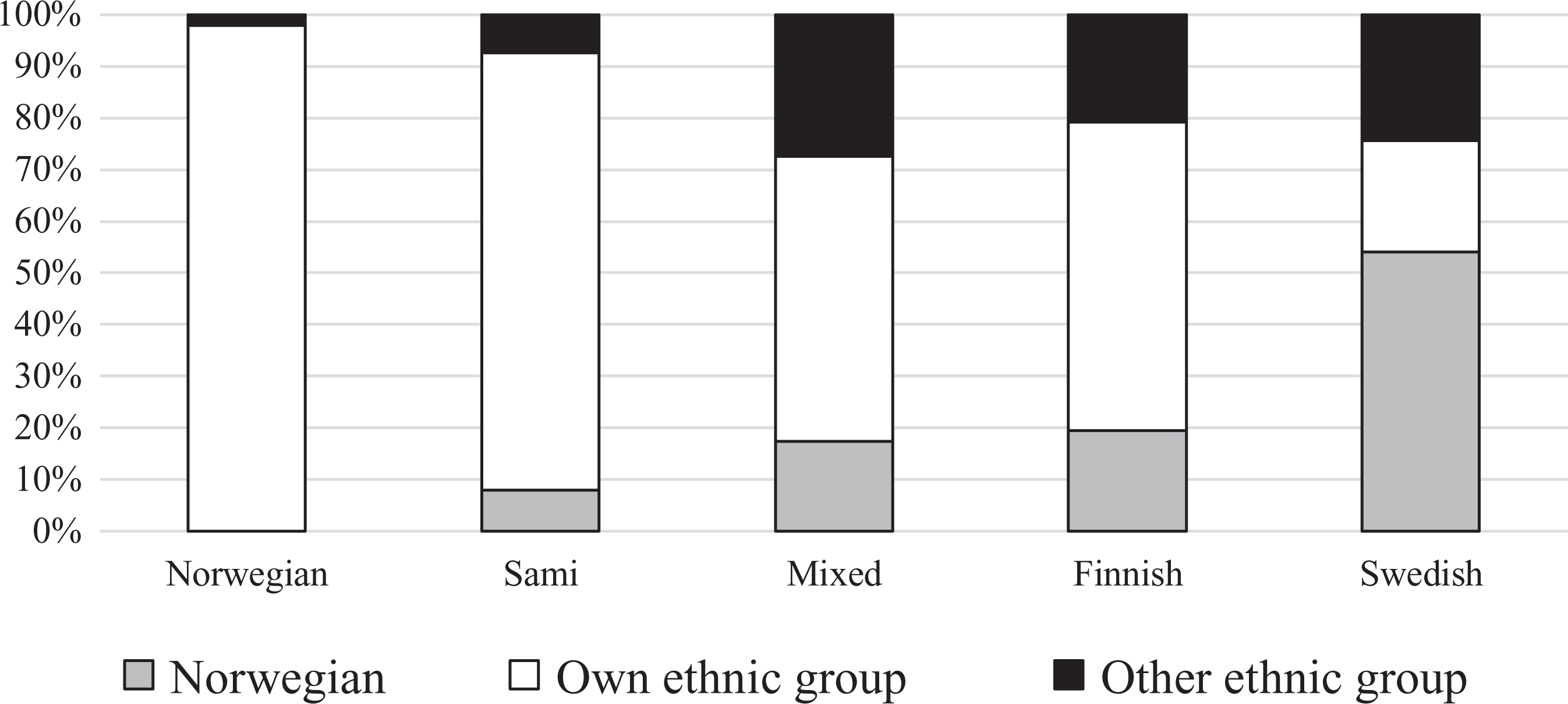
Interethnic marriages in Northern Norway according to the 1910 census (N = 41,454 couples). Marriages with two Russian and four other husbands left out. Source: Own compilation in table 8 from full count transcribed 1910 census at the Norwegian Historical Data Centre.
The Sami had most often formed ethnically homogeneous unions but married the limited group of Fins as often as they married ethnic Norwegians. As expected, the 111 Swedes were the most eager to outmarry, most often with Norwegians. It is more surprising that the Fins, who spoke a different language and had recently formed a distinct group of immigrants, were married to persons with a different ethnicity in forty percent of the cases. One explanation is that Fins brought strong agricultural traditions when they emigrated, and both Norwegian and Sami spouses likely had access to land, which Fins knew how to cultivate more rationally. It probably also helped that the Sami and Finnish languages both belong to the Finno-Ugric language family, and finally it was a strategy of naturalization.
Conclusions
The ethnic identity variable was more dynamic than religiosity over time in Russia as well as in Norway. Both the Fins and the Swedes married other persons than co-ethnics quite often although we may hesitate to distinguish Swedes as a separate ethnic group among Scandinavians. There was until 1950 no religious society as likely to outmarry—if we except the relatively tolerant Norwegian nonmembers in terms of matrimony. (Unfortunately, Russian censuses did not register nonbelievers with the exception of in 1937, when the whole census was discarded.) Both in 1910 and 1950, about three-fourth or more of the marriages in the dissenting societies were between co-members, in spite of the State Church members being the main marriage market all over Norway. One meta-aspect of difference between ethnicity and religiosity helps explain this finding. The meeting of the three main ethnic groups in Northern Norway had resulted in significant and growing groups of people with mixed—double or multiple—ethnicity. There was no corresponding religious society created in Norway as a compromise between different religious beliefs, you were either a member of the State Church or a different society. There were, naturally, individual and family differences influencing the marriage decisions, which are difficult to fathom. Spouses belonging to different religious societies may have reconciled the different theological ideas more privately in ways that are hidden to us. For instance, a third generation Methodist likely took the church membership less seriously than a newly salvaged Baptist when considering wedding a member of the State Church. More generally, we interpret the somewhat increasing proportion of mixed marriages as a sign of modernization and the declining power of religion.
Russia was dominated by the Orthodox Church, nearly like the State Church–dominated religious life in Norway, but was still more diverse due to its varied ethnic and religious population. Only after the 1840s could dissenters practice their religion in public meetings in Norway, so that the spreading of Atheism and religious nonconformism came off to a later start. Both Norwegian and Russian civil legislation allowed mixed marriages, but Russian law regulated them according to the religions of the spouses. These regulations were steadily modified during the eighteenth to early twentieth centuries, easing restrictions against the non-Russian State Church members until finally all limits were abandoned in 1917. According to the URAPP database, there is a causal link between legislation and number of mixed marriages registered in Ekaterinburg. The tighter connection between ethnic and religious identity in Russia worked together with the legal restrictions. In actual practice, the number of mixed marriages was higher, for some had to be converted before marrying and such religiously homogeneous but ethnically heterogeneous marriages are currently difficult to spot both in Russia and Norway. Most such marriages registered by Orthodox Church members were with converted Jews, Koreans, Mari, and so on. Russian legislation did not restrict ethnic or racial groups in terms of marriage; it was only concerned with religion. Thus, it is not surprising that we found no intermarriages between the small groups of Orthodox Lopari and Lutheran Fil’men on the Kola Peninsula, even if they were all ethnic Sami. We can discover more ethnic intermarriages in the church book’s baptismal lists, unless the baptism happened outside Ekaterinburg. It is also possible to make a guess about bride or groom’s non-Russian ethnicity by analyzing their names. Our hypothesis is that non-Christians were reluctant to outmarry due to their ethnically defined religiosity, requiring the change of lifestyle when entering a new family. In addition, the religious venues were important sites for matchmaking.
The Norwegian data support these hypotheses, which allows the conclusion that representatives of ethnic minorities and new religions seldom outmarry when religion was important for maintaining their identity. Taken together, our exploratory analysis of the Russian and Norwegian data sets has convinced us about the usefulness of obtaining data that will in the future allow us to perform multivariate analysis of the effect of the ethnicity/religion complex on intermarriage, where the interactions with other factors such as occupations, birthplaces, and place of living are analyzed.
Footnotes
Acknowledgments
The authors acknowledge financial support from the Russian Science Foundation and Russian Foundation for Basic Research.
Declaration of Conflicting Interests
The author(s) declared no potential conflicts of interest with respect to the research, authorship, and/or publication of this article.
Funding
The author(s) disclosed receipt of the following financial support for the research and/or authorship of this article: The URAPP database was built and researched with financial support from the Russian Science Foundation grant, (Project Number 16-18-10105). Additional transcription of the church records and their analyses, record linkage, family reconstruction as well as the final stage of preparing the article were sponsored by the Russian Foundation for Basic Research, (Project Number 19-29-07154). Elizaveta Zabolotnykh's work was funded by Insitute of History and Archeology, Ural Branch of the Russian Academy of Sciences, for the project "Historical continuity and transformation processes in the context of anthropo-natural interactions" (State registration number AAAA-A19-119080590022-9, 2019-2021).