



Abstract
The maritime industry has a substantial impact on the environment and public health, particularly through ship operations and port-related activities. Shore power (SP) offers a promising solution by allowing docked ships to connect to local electrical grids, thereby reducing auxiliary engine usage during hotelling. One of the key challenges to SP adoption is the substantial amount of investment required from both port authorities and ship owners or operators. In this study, an optimization framework is developed to allocate a limited budget for SP deployment at terminals and subsidies, to encourage commercial ship retrofitting to maximize the environmental and economic benefits of SP. The framework takes account of the perspectives of ship owners and operators, port authorities, and the government to reflect the interactions in their decision-making. The framework is applied to the Port of Houston, based on commercial ship hotelling activities at its public terminals in 2022. The results demonstrate that, with an annualized budget of $5.5 million, up to 50% of SP-eligible hotelling activities can be powered by SP; this can generate substantial environmental and economic benefits. Additionally, the results indicate that the cost of SP electricity to ship operators plays a critical role in balancing economic incentives between ports and ship owners in the adoption of SP. Sensitivity analysis confirms the framework’s robustness to several key environmental and economic factors and assumptions. The proposed framework can serve as a practical decision-support tool for coordinate between stakeholders and ensure that limited resources generate the greatest possible environmental and economic benefit.
Keywords
Introduction
The maritime industry is a key player in global trade and transportation; at the same time, it also has a substantial impact on the environment and public health. In response to growing concerns about the industry’s environmental and public health impacts, both the International Maritime Organization (IMO) and the U.S. Environmental Protection Agency (EPA) have implemented significant measures to reduce the environmental footprint of maritime activities, with a particular focus on ship operations and port activities ( 1 , 2 ).
Shore power (SP) has been identified as a key technology for reducing the environmental footprint of ship hotelling activities at ports ( 3 – 6 ). By connecting berthed ships to the local electrical grid to reduce the need for auxiliary engine usage during hotelling, SP provides several benefits, including reduction of harmful pollutants ( 7 – 9 ) and noise ( 10 ), and public health improvement ( 11 ) around the port area.
Despite the benefits, SP adoption remains limited in many regions. For example, within Texas coastal ports, only the Port of Galveston currently offers operational SP infrastructure ( 12 ). The combination of high capital cost, lack of standardization, and limited regulatory enforcement contributes to this underutilization ( 13 – 15 ). Moreover, the industry faces a classic “chicken-and-egg” dilemma: ports are reluctant to invest in infrastructure without sufficient SP-capable ships, while ship owners are hesitant to retrofit ships without guarantees of shoreside availability and usage incentives ( 16 ).
The SP system involves three major components: electrical substations, cable management systems, and ship-side retrofitting ( 17 ). Effective SP deployment thus requires the investment and collaboration of the following key stakeholders:
Ship owners (used here to represent both ship owners and operators in this study) weigh retrofit costs against operational savings and incentives.
Port authorities consider infrastructure investment costs and potential revenue from offering SP services and electricity.
Government agencies aim to allocate limited public funds to achieve maximum environmental and economic benefit.
Given the substantial capital investment typically required for SP adoption, a decision-support framework is essential to enable stakeholders to make coordinated, cost-effective, and strategic investment decisions. However, the existing literature is largely focused on benefit–cost analyses, assessing environmental benefits relative to infrastructure and retrofitting costs, or on operational models, such as berth allocation and ship scheduling, often assuming that ships and terminals are already SP-capable. Few studies provide an integrated framework to guide the optimal allocation of limited budgets between several stakeholders, a critical gap that might hinder widespread SP implementation.
In this study, this gap is addressed through the development of a comprehensive optimization framework to support SP adoption for commercial maritime vessels (CMVs) at complex multiterminal ports. The proposed framework explicitly models the decision-making dynamics of ship owners, port authorities, and government agencies, and solves for an optimal allocation of a constrained budget between terminal-level SP infrastructure deployment and ship-side retrofitting incentives. The model is further enhanced by incorporating detailed ship activity data and ship-specific characteristics to more accurately estimate hotelling pollutants and SP demand at the individual ship level.
The framework is applied to a case study at the Port of Houston (POH). The results yield significant policy-relevant findings, highlighting how different budget allocation strategies, incentive structures, and investment decisions can influence SP adoption outcomes. These insights offer practical guidance for policy-makers and port stakeholders seeking to accelerate SP deployment while maximizing environmental and economic returns.
The rest of the paper is organized as follows. In the next section, relevant studies on improving SP efficiency and infrastructure deployment are reviewed. The following section presents the formulation of the SP deployment optimization model. Then comes a description of the processing of automatic identification system (AIS) data and the methodology of pollutant estimation and cost savings. After this, the proposed framework is applied to a case study of the POH. Finally, the paper is concluded, with key insights and policy implications.
Literature Review
SP Facility Deployment
To overcome financial and operational barriers to SP adoption, numerous studies have been conducted to explore strategies for optimizing infrastructure deployment and ship retrofit prioritization. One commonly used approach is benefit–cost analysis (BCA), which involves comparing expected pollutant reductions and fuel savings against retrofit and infrastructure costs.
For example, Kim ( 18 ) conducted a BCA for the port of Busan, demonstrating that larger container ships generally yield greater pollutant reductions and fuel cost savings, making them favorable candidates for retrofitting. Similarly, in the Shenzhen Port study ( 19 ), both the capital and operational costs associated with SP installation were quantified, indicating that retrofit feasibility depends heavily on ship call frequency and berth time. However, while BCA approaches help to identify high-impact ship types and quantify total cost-effectiveness, they generally fail to address investment trade-offs under constrained budgets, and do not provide tools for selecting deployment priorities when funding is limited.
To overcome this limitation, several studies employ optimization-based frameworks to maximize SP environmental and financial benefits. One research direction is focused on the design of government subsidies and pricing incentives to enhance adoption. For example, Lu and Huang ( 20 ) analyzed different government subsidy strategies using an optimization model to minimize operational costs and CO2 amounts. Similarly, Wang et al. ( 21 ) proposed a subsidy and electricity pricing scheme to balance pollutant reductions with port operator revenue, modeling ship-level decisions based on cost and incentive structure.
Another research branch is focused on SP scheduling and operational optimization. Zhang et al. ( 22 ) built a two-stage model to first allocate SP berths to container ships and then schedule day-ahead ship operations and port microgrid energy dispatch, considering uncertainties in power demand and renewable generation. The model minimizes the port’s operating cost, including power generation, grid transactions, and power shedding penalties. Zhen et al. ( 23 ) formulated a berth allocation model to minimize total berthing costs by jointly scheduling ships and deciding which ship should be retrofitted. More recently, Zhang et al. ( 24 ) developed a multi-objective optimization framework using the Nondominated Sorting Genetic Algorithm III (NSGA-III), which collaboratively optimizes SP allocation and berth scheduling to balance economic benefits, environmental impact reduction, and operational efficiency. Their approach demonstrates that coordinated scheduling and SP deployment can significantly reduce pollutants and improve port resource utilization, providing practical decision support for green port development.
While these optimization models offer significant insights for improving SP efficiency, they are primarily designed for ports where SP infrastructure has already been deployed. They do not address the strategic planning challenges faced by ports in the early stages of SP adoption, including how to prioritize terminal SP deployment or select which ships to retrofit within a budget.
In some studies, this gap is bridged by jointly considering infrastructure deployment and ship retrofit decisions. Wu and Wang ( 25 ) and Qi et al. ( 26 ) addressed SP deployment for ports and ships on certain routes, with the objective set as maximizing total electricity use under terminal capacity and retrofit budget constraints. This approach implies that maximizing SP electricity use leads to maximum pollutant reduction, which might not hold, owing to differences in engine type, tier level, and real-time electrical load ( 17 ).
Likewise, Vaishnav et al. ( 11 ) optimized SP deployment for U.S. ports by balancing retrofit and infrastructure costs against environmental benefits, and Peng et al. ( 27 ) minimized cost and pollutants for different types of SP system at the berth. However, while effective for strategic berth deployment, these two models do not incorporate stakeholder decision-making processes or the total budget limit. To address these limitations, Sheng et al. ( 28 ) developed an integrated optimization framework to maximize port cost savings and environmental benefits under various subsidy schemes, ensuring that the ship retrofit cost would be economically justifiable through fuel cost savings.
Recently, a game-theoretic approach has begun to be adopted for considering port competition dynamics in SP deployment. For example, Lu et al. ( 29 ) examine how neighboring ports compete to attract ship traffic by offering differentiated SP services—varying in price, quality, and compliance under pollutant regulations. While this model captures equilibrium adoption behavior, it does not offer guidance for strategic subsidy allocation to maximize societal or environmental outcomes.
Research Gap and Study Contribution
While the existing literature offers valuable insights into optimizing SP usage, most studies are focused on ports where SP infrastructure is already in place, with the aim of improving operational efficiency through berth scheduling or incentive-based mechanisms. However, a limited amount of research addresses the needs of ports considering initial SP adoption, particularly in identifying strategies that maximize environmental and economic benefits under budgetary constraints.
To fill this gap, in this study an optimization framework is developed, which is designed to support strategic SP adoption at complex multiterminal ports. The aim of the framework is to maximize the environmental and economic benefits of SP adoption by optimally allocating a limited budget among terminal SP deployment and incentives for retrofitting ships. A key innovation of this work lies in its integrated consideration of decision-making by three primary stakeholders: ship owners, port authorities, and the government ( 30 ), accounting for cost savings, operational incentives, and policy drivers.
Moreover, unlike previous studies, which often rely on generalized assumptions to estimate hotelling activities at a macroscopic level, this study more accurately captures hotelling activity and SP demand at the ship level by incorporating detailed ship activity data and ship-specific characteristics. The proposed framework could serve as a practical tool to guide SP deployment decisions in ports lacking existing infrastructure.
Methodology
Stakeholders Considered in the Framework
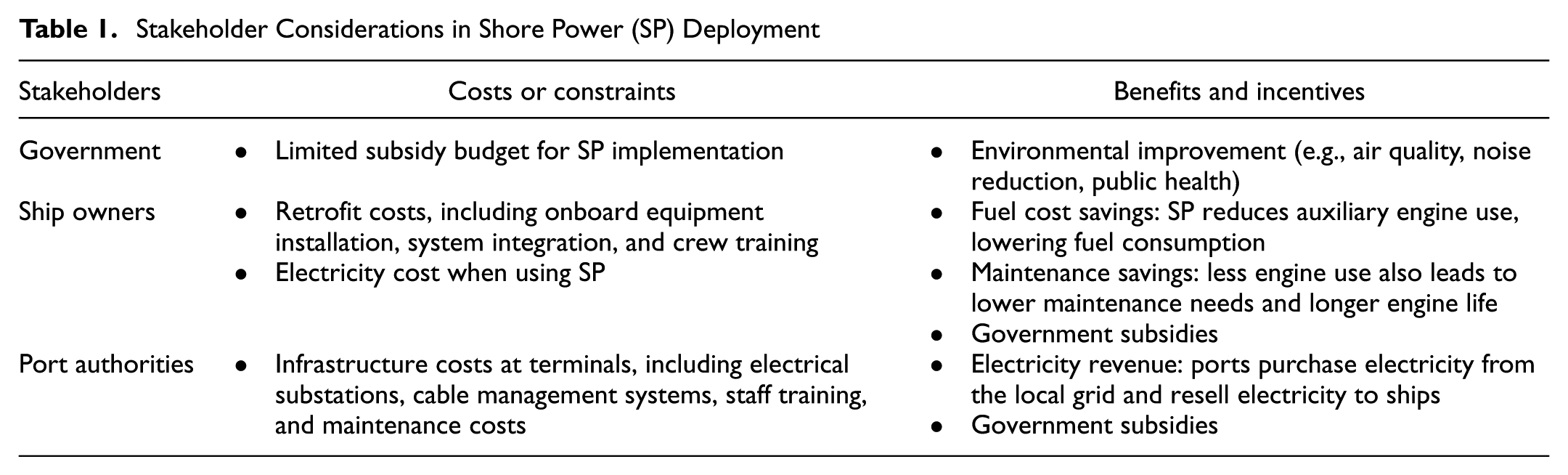
SP adoption involves three key stakeholders: government, ship owners, and port authorities. The government aims to maximize environmental and economic benefits with a limited budget, while ship owners and port authorities need to avoid financial loss resulting from SP adoption. To reflect the decision-making processes realistically, the model incorporates key costs, savings, and incentives for each stakeholder, as summarized in Table 1. While SP may provide broader benefits, such as noise reduction and improved public health, this study is focused specifically on pollutant reduction, as this is the most substantial and quantifiable benefit.
Stakeholder Considerations in Shore Power (SP) Deployment
Assumptions
The proposed model is based on the following key assumptions.
Consistent activity pattern. Ship activity patterns are assumed to remain relatively stable during the lifespan of the SP so that historical data can be used for planning.
Terminal-level deployment. When a terminal is selected for SP deployment, all berths within that terminal can provide SP. This assumption, along with Assumption (1), would ensure that ships can maintain their current berthing or terminal usage patterns to use SP.
Connection time requirement. Each ship requires a fixed preparation time to connect to SP, during which its auxiliary engines continue to consume fuel. In other words, there is an initial delay before SP usage begins.
Consistent electricity pricing. Terminals within the same port are assumed to adopt a uniform SP electricity price set by the port authority, ensuring consistency across facilities.
Maintenance cost. The maintenance cost of the auxiliary engines is assumed to be proportional to their operating durations.
Ship- and terminal-specific costs. Retrofit costs for ships and the infrastructure costs associated with terminal-side SP deployment can vary substantially for different ship types and terminal configurations. Accounting for this variability is essential when developing an effective SP adoption strategy. The proposed framework is designed to accommodate port- and ship-specific cost inputs. In practical applications, particularly when detailed cost data are unavailable, uniform cost assumptions may be used to simplify the modeling process.
Rational ship owners. Ship owners are willing to retrofit ships for SP, as long as the overall monetary benefits (including government subsidy) exceed the retrofit costs.
Port authority investment criteria. Port authorities are willing to deploy SP at a terminal, as long as doing so will bring in positive income (including government subsidy).
Problem Formulation
Ports typically estimate annual CMV activities and their associated environmental impacts. To maintain consistency with this common practice and to allow ports to leverage existing data and analysis, the budget, costs, savings, and environmental impacts referenced throughout the remainder of this paper are expressed as annualized values, based on their total amounts over the lifespan of SP systems. However, the proposed framework is flexible and can accommodate inputs over other periods (e.g., multiyear) as needed.
Let V denote the set of vessels ever calling at the port in a year, with each vessel represented by
For ship owners, the monetary benefits of adopting SP include cost savings
Three decision variables are introduced. A binary variable
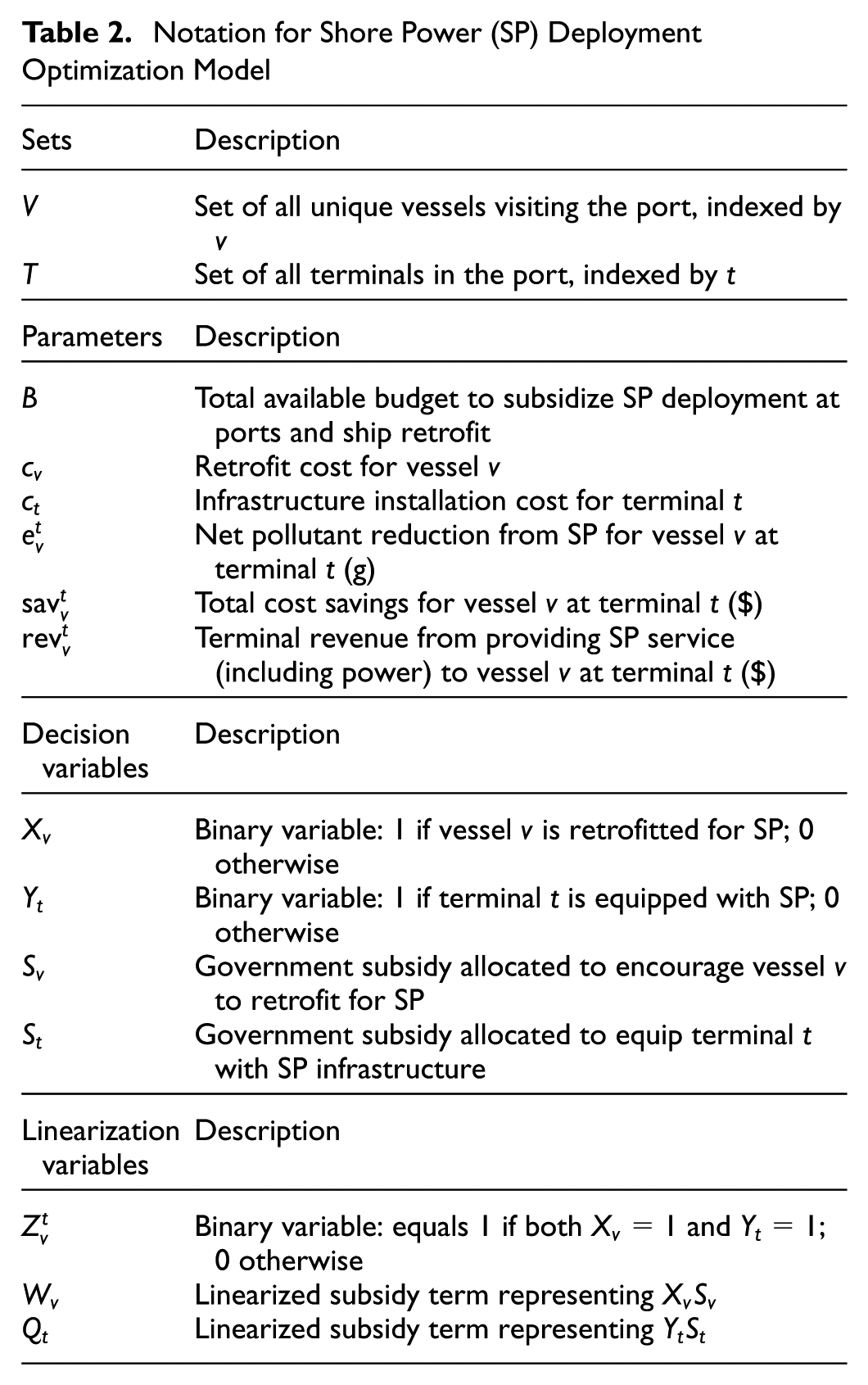
The optimization model is formulated as follows. (Table 2 summarizes the notation used throughout both the original and linearized formulations.)
Notation for Shore Power (SP) Deployment Optimization Model
Objectives:

Subject to:







This objective function (1) acts to maximize the total annual hotelling pollutant reduction at all terminals through ship retrofitting and terminal SP installation. Since hotelling pollutants are closely tied to auxiliary engine usage, reducing these pollutants also reduces fuel consumption and engine maintenance costs while increasing SP electricity consumption and port revenue from SP services. Constraint (2) ensures that the government subsidies for ships and terminals are limited to be within the budget. Constraint (3) reflects the decision-making of ship owners, who will adopt SP only if the retrofit cost
The current formulation is nonlinear, as it includes the products of binary and continuous variables. To ensure tractability for standard solvers, the formulation is linearized into mixed-integer linear programming (MILP). The binary variable



The linearized formulation then becomes as follows.
Objectives:

Subject to:













Constraints(3) to (8) from the original formulation remain unchanged and are applied here:
Pollutant Reduction and Cost Estimation
AIS Data Processing and SP-Eligible Time Computation
In this study, AIS data from the Marine Cadastre ( 31 ) are used to estimate ship activity patterns. The dataset provides ship positions, speeds, identification details (Maritime Mobile Service Identity [MMSI] or IMO), and timestamps. AIS data processing is conducted in four key stages.
Study area filtering. Nationwide AIS records are filtered to retain commercial ships operating within the study area.
Ship mapping. Each ship is assigned to EPA ship categories and ship-specific characteristics to standardize pollutant calculations according to EPA guidelines ( 32 ), using such sources as the Sea-Web Ship Database ( 33 ), the U.S. Army Corps of Engineers Digital Library ( 34 ), and direct IMO and MMSI searches.
Voyage and mode identification. For each ship, AIS records are chronologically sorted, and any gap exceeding 30 min is marked as the start of a new voyage. Within each voyage, operational modes are defined based on average segment speeds.
● Transit: speed >3 knots ● Maneuvering: 1–3 knots ● Hotelling or anchorage: <1 knot, depending on geographic location.
SP eligibility analysis. For each ship voyage, continuous hotelling segments are identified and evaluated. Only those hotelling durations that exceed a predefined connection preparation time at a terminal are considered eligible for SP.
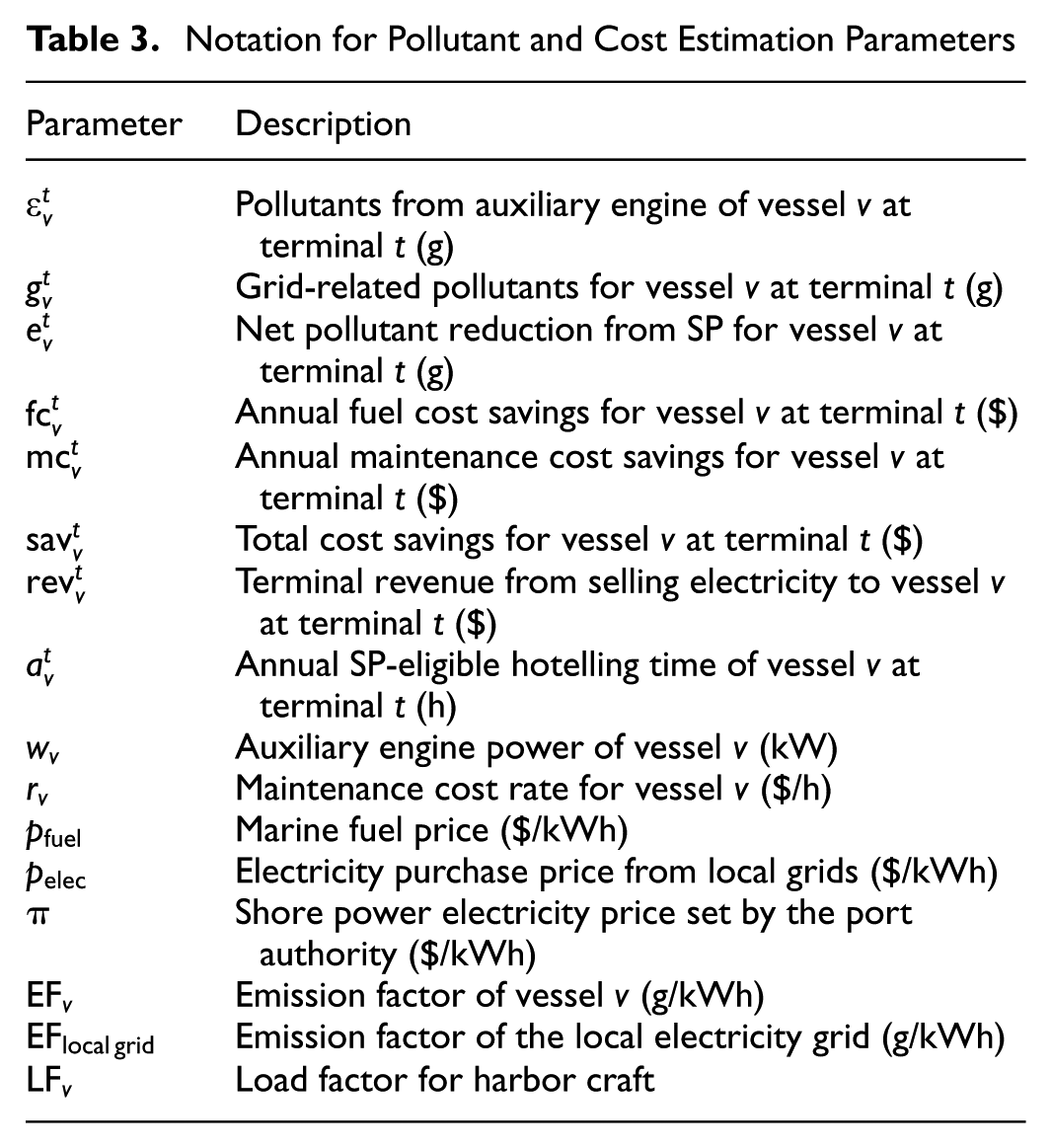
Using this information, we estimate pollutant reductions, ship owners’ cost savings, and terminal revenues under SP adoption. Relevant parameter definitions are summarized in Table 3.
Notation for Pollutant and Cost Estimation Parameters
Pollutant Reduction Analysis (
)
Based on the annual SP-eligible hotelling duration
For ocean-going vessels (OGVs):

For harbor craft (HBC):

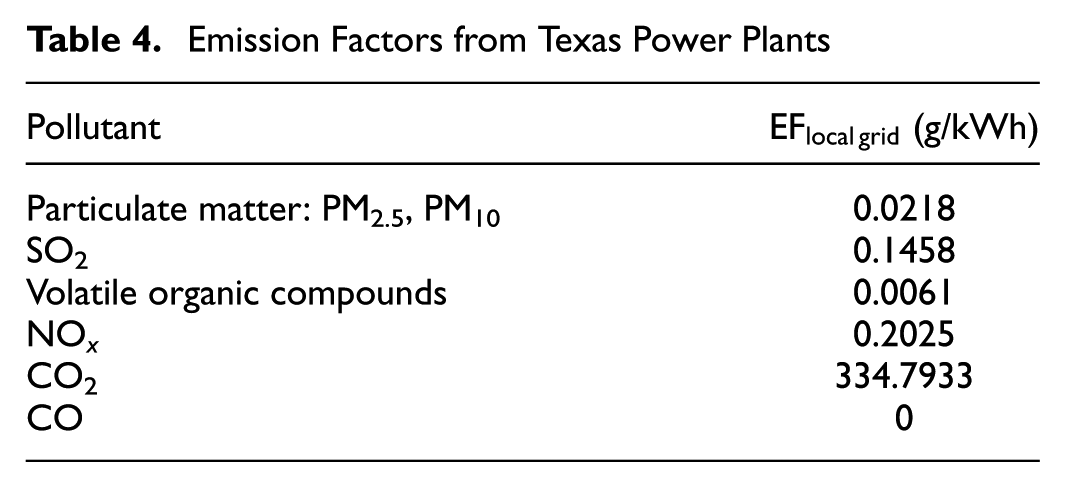
In this study, reference is made to the

Emission Factors from Texas Power Plants
Therefore, the net pollutant reduction achieved by SP for a ship–terminal pair can be obtained as

Ship Owner and Operator Cost Savings (
)
For the ship owner, the cost savings from SP adoption comprise two main parts: fuel cost savings,



Ship owners can get fuel cost savings because, typically, electricity costs less than marine fuel on a per-kilowatt-hour basis.
Diesel: $ 0.149/kWh ( 35 )
Liquefied natural gas (LNG): $ 0.135/kWh ( 36 )
Electricity from local grids: $ 0.036/kWh ( 37 ).
In addition, SP usage reduces the runtime of auxiliary engines, lowering wear and tear and extending service intervals. For this analysis, the maintenance cost rate
Terminal Revenue (
)
For ports, SP deployment presents an opportunity to generate revenue by providing service and selling electricity to ships at a price above their procurement cost from the local grid. For this study, we consider the revenue primarily from energy sold to each ship, which is calculated as

Case Study at the POH
The framework is applied to the POH—the largest container port on the Gulf Coast and the top U.S. port by foreign waterborne tonnage as of 2024 ( 39 ). The port spans the length of the Houston Ship Channel, which experiences complex traffic, because several terminals share the same waterway, as shown in Figure 1. The POH is located within the Houston–Galveston–Brazoria (HGB) ozone nonattainment area, which is designated by the U.S. EPA as failing to meet federal 8 h ozone standards. Currently, the POH lacks SP infrastructure. Given the scale and operational complexity of the POH and its location within a nonattainment area, it is imperative for stakeholders to evaluate SP adoption strategies. Identifying which terminals to deploy SP and which ships to be subsidized for retrofit makes it possible to maximize both environmental and economic benefits of SP deployment.
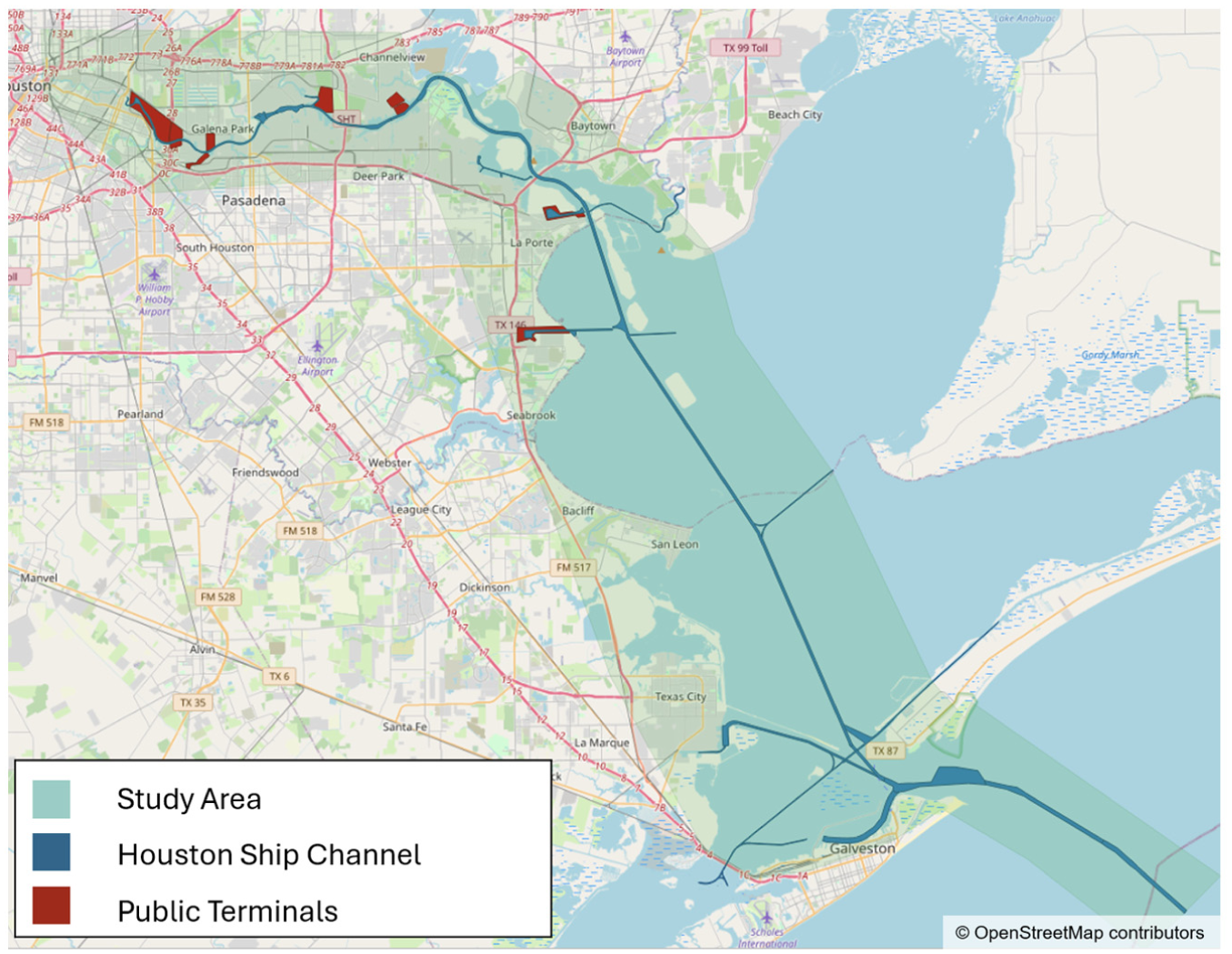
Port of Houston domain and Houston Ship Channel.
Data Description
This study utilizes AIS data from 2022 to evaluate the potential for SP deployment at the POH. A total of 3,247 OGVs and 1,232 HBC were identified. Figure 2 presents the distribution of ship types and their cumulative operating times, revealing that tankers dominate the OGV category, while towboats account for the majority of HBC operations.
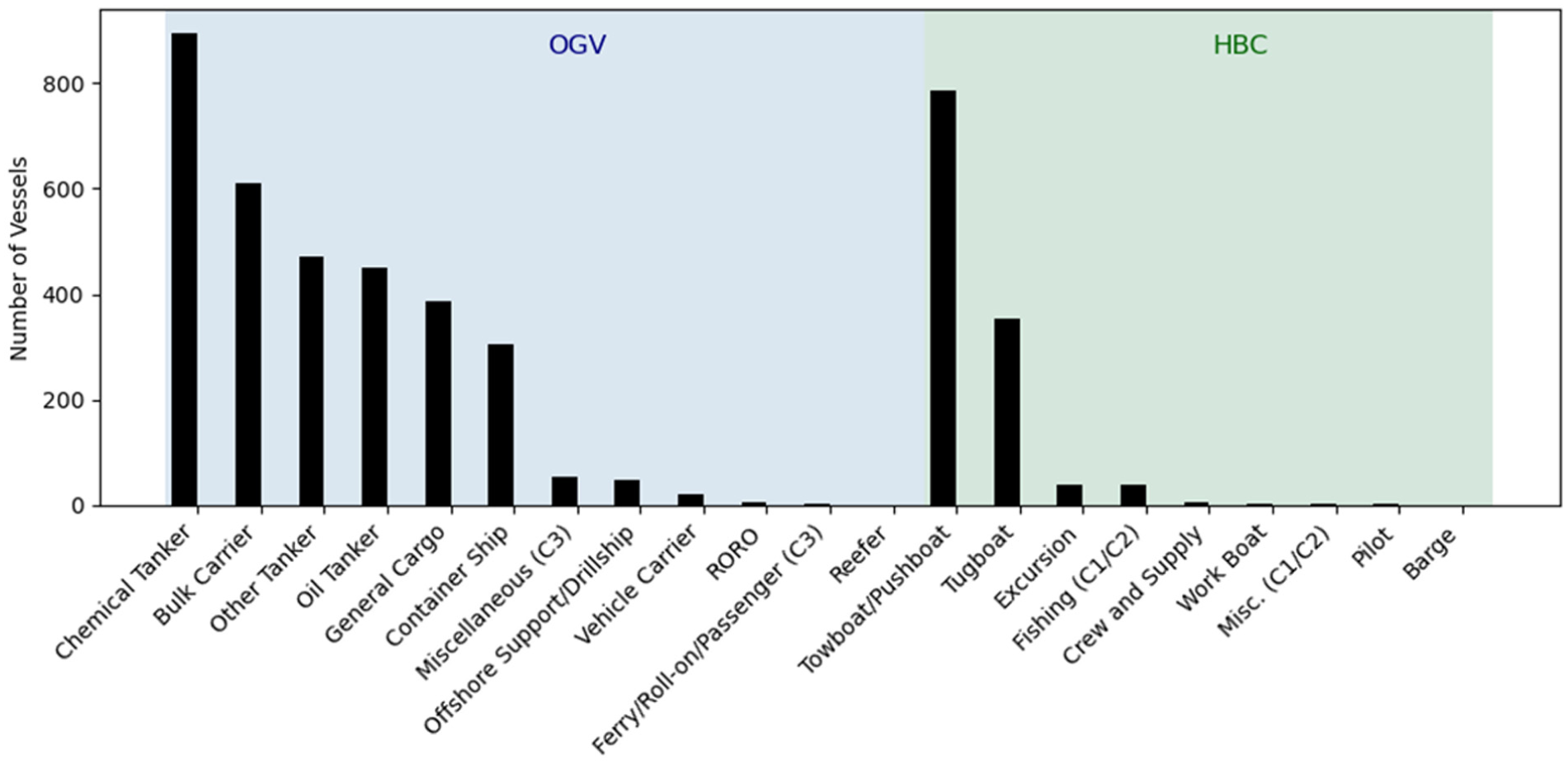
Number of each ship type.
The POH consists of 11 public terminals, as shown in Figure 3. Terminal-level analysis in Figure 4 shows that Bayport, Barbours Cut, and Turning Basin are the most active terminals, considering the SP-eligible durations.
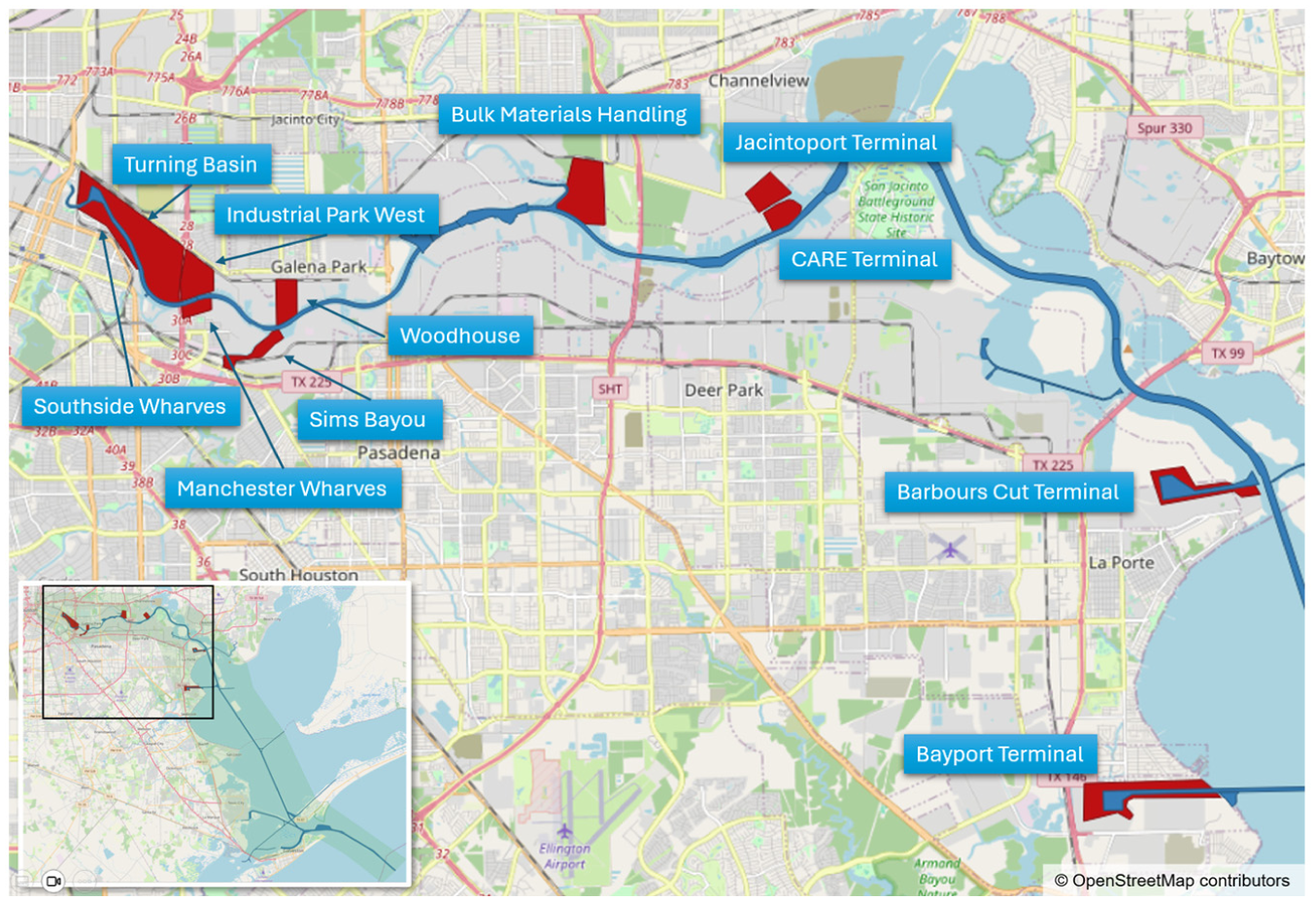
Public terminals in Port of Houston.
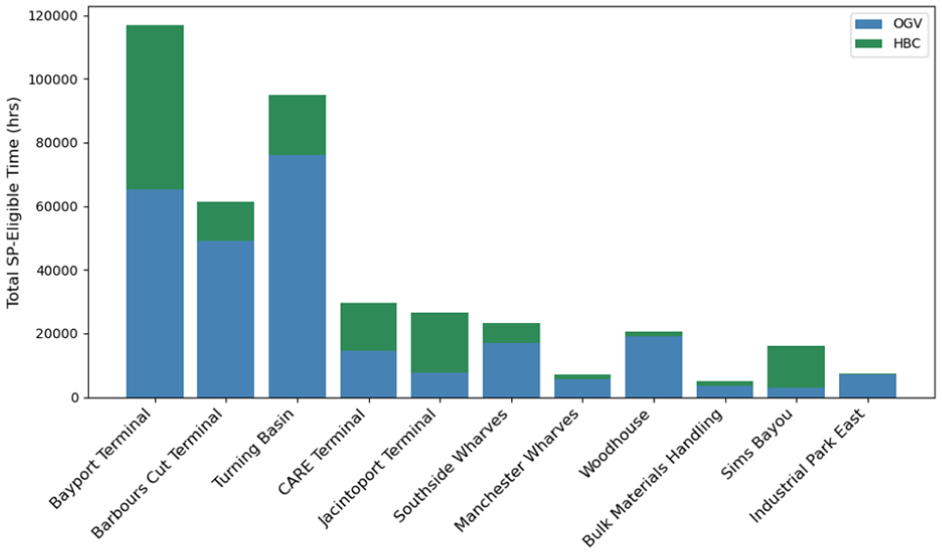
Total operating time of each terminal in Port of Houston.
The annualized retrofit cost is set at $25,000 per ship, based on a capital cost of $ 0.5 million amortized over 30 years at a 3% discount rate. Similarly, the annualized cost of SP infrastructure per terminal is set at $1.5 million, derived from a capital investment of $30 million, under the same financial assumptions ( 40 , 41 ). For simplicity, in this study, uniform ship retrofit costs and terminal infrastructure costs are assumed. However, the framework is designed to incorporate port- or ship-specific cost variability. In comprehensive applications, port- or ship-specific costs should be used whenever such data are available.
The default SP electricity charge to ships is $ 0.036/kWh, equal to the price paid by terminals to the local grid. This implies that the terminal will gain no benefits from ships, and all the SP infrastructure costs must be covered through government subsidies. Scenarios with different SP selling prices will be examined in a subsequent subsection.
The MILP model was computed via the Python interface and the commercial solver Gurobi 10.0.1, using a laptop with an Intel Core i7-1255U and 16 GB DDR4-3200.
Facility Deployment and Ship Retrofitting Optimization
Figure 5 presents the pollutant reductions and the number of ship retrofits for varying annual budget levels, with the model objective focused on minimizing NO x pollutants. The dashed line indicates total pollutants produced by SP-eligible hotelling.
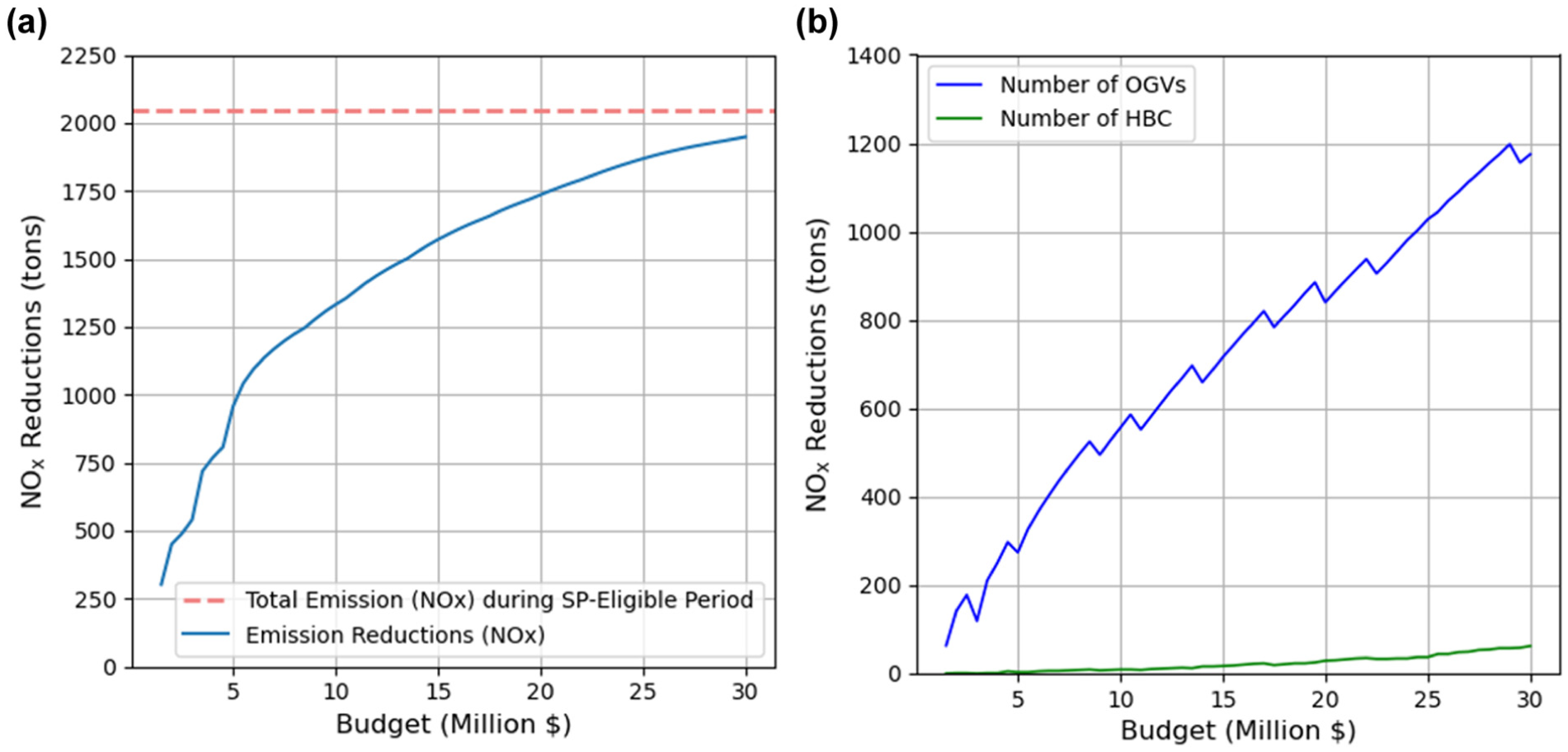
NO x reductions and numbers of ships for various annual budgets: (a) NO x reduction versus budget; (b) number of retrofitted ships versus budget.
With an initial budget of $1.5 million—equivalent to the cost of deploying SP infrastructure at a single terminal—the model achieves approximately 300 tons of NO x reduction, which accounts for 15% of the pollutants produced by SP-eligible hotelling. This initial reduction is attributed to ships that can self-retrofit because fuel and maintenance cost savings alone already exceed the retrofit cost.
As the budget increases, additional ships are subsidized, and pollutant reductions increase significantly. At $5.5 million, approximately 50% of the pollutants produced by SP-eligible hotelling are mitigated. Beyond this point, the marginal reduction rate slows but continues to improve with additional budget. Figure 5b shows that, despite the large number of tugboats and towboats in the dataset, relatively few HBC are selected for retrofit, as their hotelling pollutants are comparatively low.
Figure 6 further breaks down the retrofit and infrastructure decisions by ship type and terminal. With a $1.5 million budget, the Turning Basin Terminal is selected first. Bulk carriers and general cargo ships are willing to retrofit because their long hotelling durations can yield sufficient fuel and maintenance cost savings to cover the retrofit cost. With the increase in budget, Barbours Cut and Bayport Terminals are selected for their high ship activity. Additionally, larger emitters, such as container ships and tankers, are targeted for retrofit.
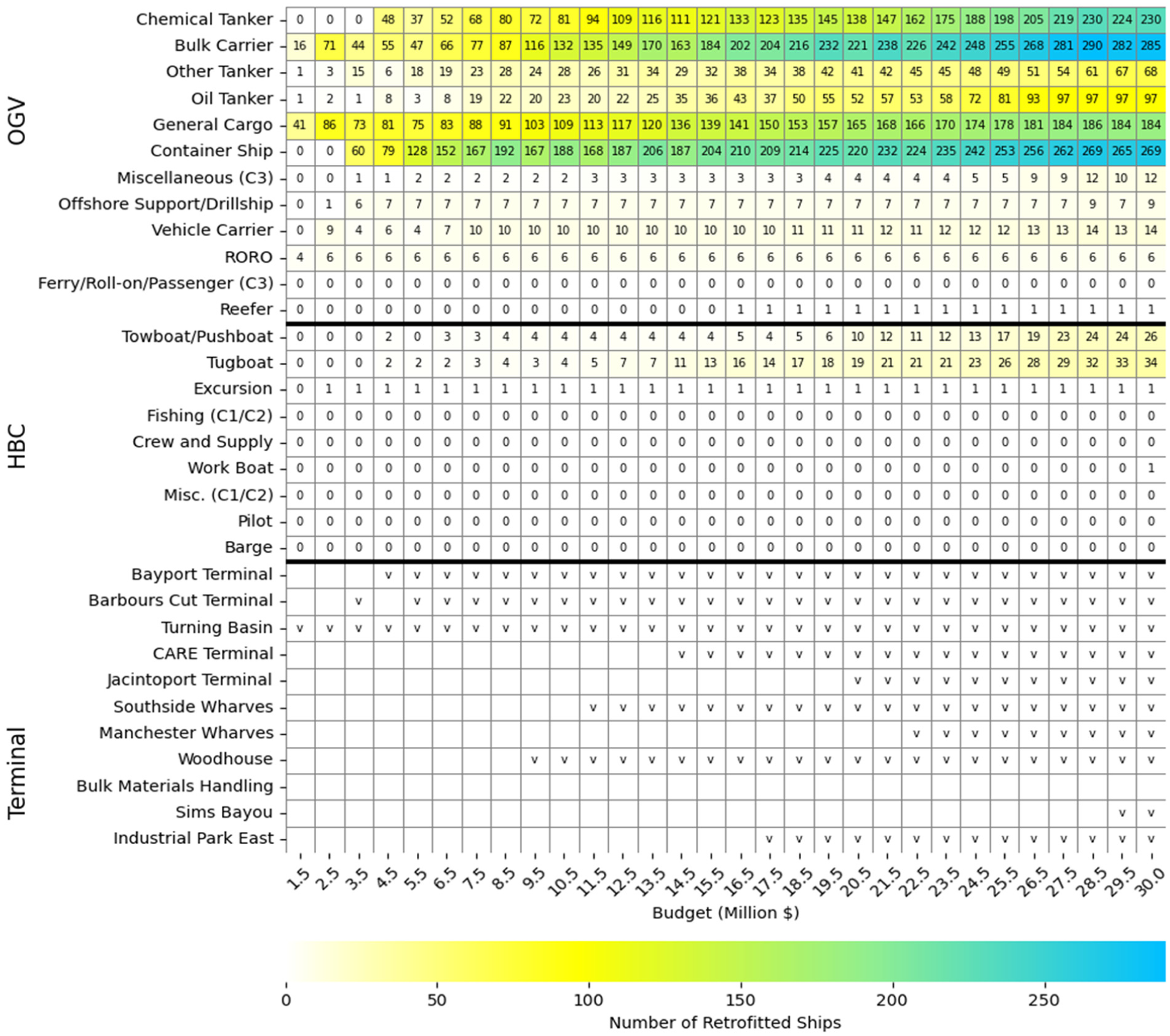
Detailed retrofitted ships and terminal installations for various budgets.
Overall, OGVs are subsidized and retrofitted at a significantly higher rate than HBC. This is primarily because of OGVs’ larger auxiliary engine sizes, making them more effective candidates for achieving substantial NO x reductions for each retrofit.
Sensitivity to Target Pollutants
One key input to the framework is the selection of the target pollutant. This choice may be guided by regional or local environmental priorities. For example, because the POH is located in an ozone nonattainment area, NO x or volatile organic compounds may be appropriate target pollutants. At ports where community health impacts are the primary concern, particulate matter (PM), especially PM2.5 (particles with a diameter of 2.5 micrometers or smaller), may be a more relevant target. In cases where funding programs are focused on specific pollutants, those pollutants can be selected to align the analysis with program requirements.
Because ships emit pollutants at different rates, depending on their operating activities and engine characteristics, it is important to evaluate how the choice of target pollutant influences SP adoption strategies. This section presents a sensitivity analysis, examining the responsiveness of SP adoption strategies to the selected target pollutant.
Figure 7 shows the number of retrofitted ships and terminal installations for different target pollutants. The numbers of retrofitted ships and terminal deployments remain mostly consistent across pollutant types when the annual budget is below $10 million. This is because the model prioritizes ships with the highest SP-eligible hotelling activity, which inherently exhibit high levels of all pollutants.
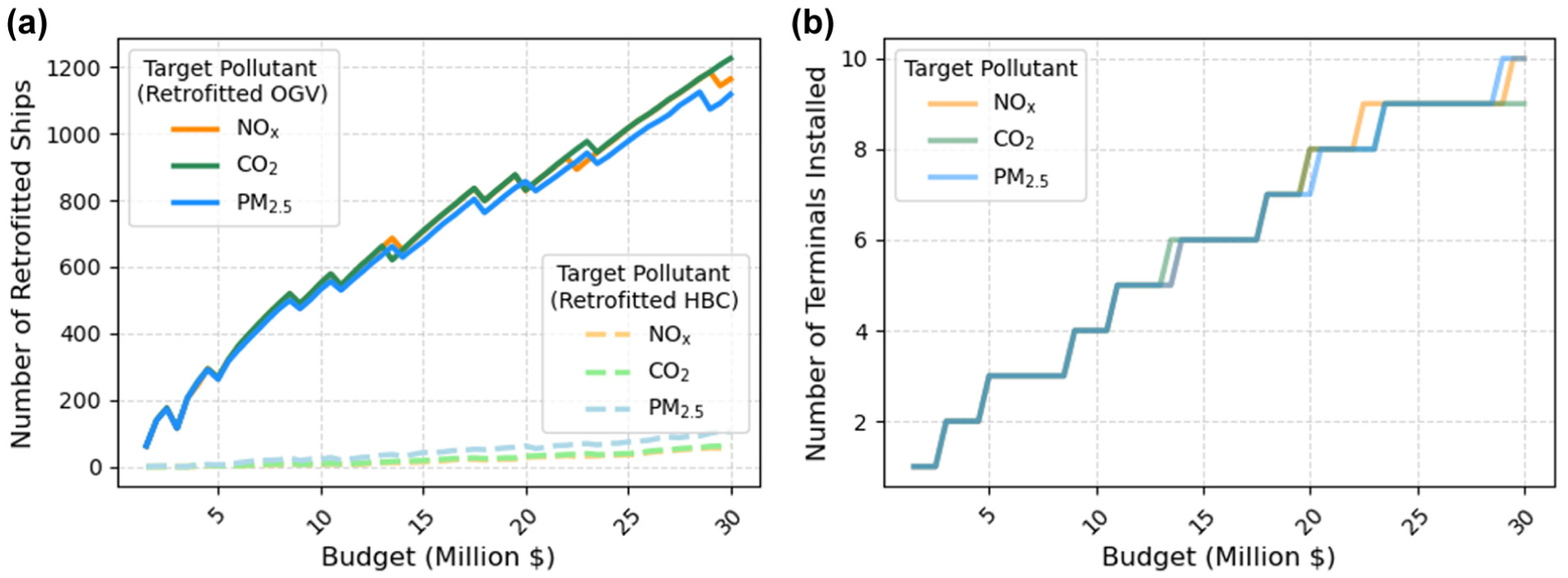
Retrofitted ships and terminal installations for different pollutants: (a) retrofitted ships by budget; (b) terminal installations by budget.
Beyond $10 million, the PM2.5-targeted scenario has more HBC retrofitted than the NO x and CO2 scenarios. This shift is caused by higher emission factors of PM2.5 for HBC, particularly because of their prevalence in Tier 0 and Tier 1 engine classes. The resulting change in retrofit allocation also influences terminal prioritization. Nonetheless, the overall deployment pattern remains relatively insensitive to the choice of pollutant.
Sensitivity to Ship Costs
Figure 8 explores the sensitivity to varying HBC retrofit costs. Five scenarios are examined, based on the ratio of HBC to OGV annual retrofit costs: 1:1, 1:2, 1:3, 1:4, and 1:5 (with OGV cost remaining the same). Results show minimal change in terminal selections and OGV retrofits across these cost scenarios. While the number of retrofitted HBC increases as retrofit costs decrease, these ships are typically subsidized using the remaining budget after OGV and terminal investments are achieved. Therefore, the overall deployment strategy is dominated by OGV-related decisions.
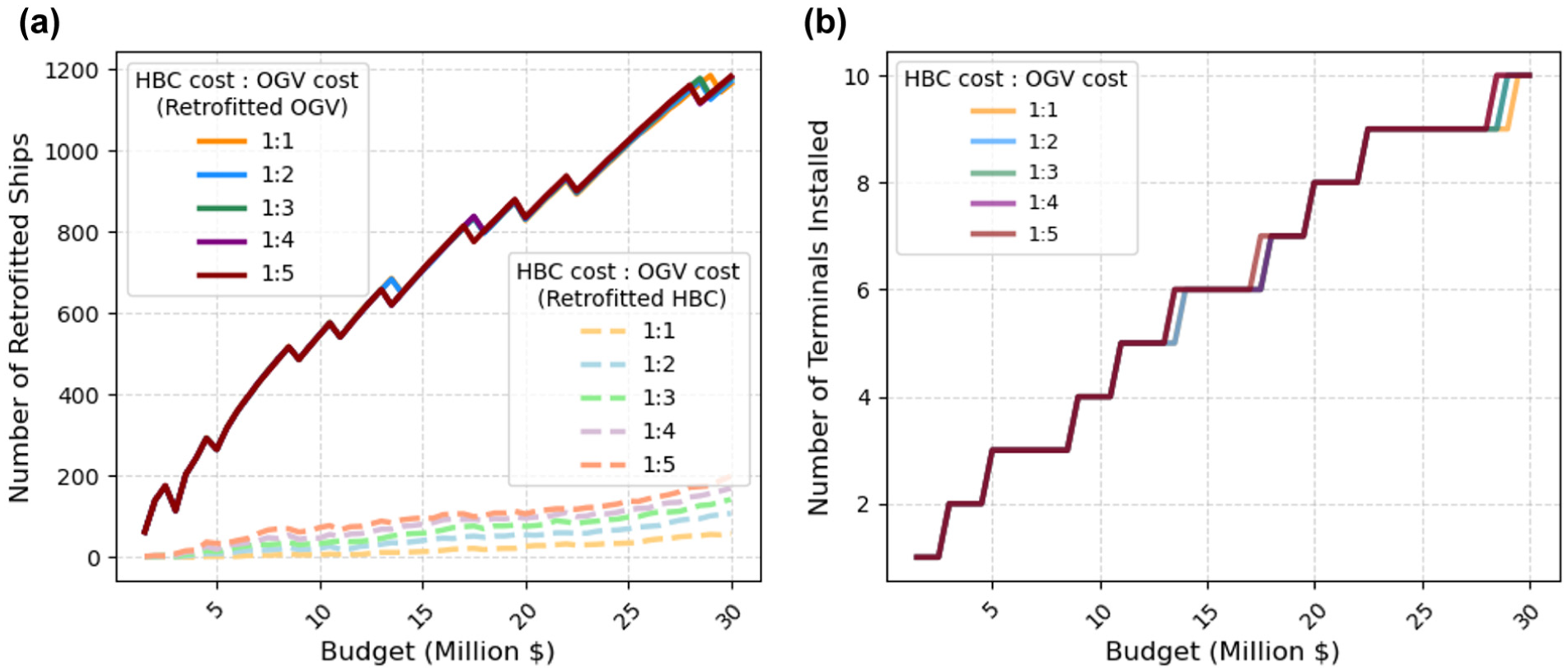
Retrofitted ships and terminal installations for different ship costs: (a) retrofitted ships by budget; (b) terminal installations by budget.
Effect of SP Electricity Price
The SP price (π) affects both the terminal’s revenue and the ship owner’s cost savings. A higher SP price increases terminal revenue but reduces the fuel cost savings for ship owners; this can influence subsidy allocations and overall effectiveness.
Figure 9 evaluates scenarios where π ranges from $ 0.036/kWh (equal to the grid cost) to $ 0.149/kWh (equal to the marine diesel cost). The results show that extremely low and high SP prices diminish NO x reduction outcomes, especially when budgets are tight.
High price scenario ($ 0.149/kWh).
At this rate, terminals generate significant revenue, reducing the need for terminal infrastructure subsidies. As a result, the model suggests that more terminals could be equipped with SP because the required subsidies are minimal. However, the high electricity cost diminishes ship owners’ fuel savings. Most ships are unable to self-finance retrofits, and the government must provide nearly full subsidies. This limits the flexibility to target high-emitting ships efficiently.
Low price scenario ($ 0.036/kWh).
In this case, ship owners benefit from high fuel cost savings, making retrofits easier to justify and subsidize. However, terminals have no revenue from selling SP electricity and must be fully subsidized. This delays infrastructure deployment, especially under low-budget conditions.
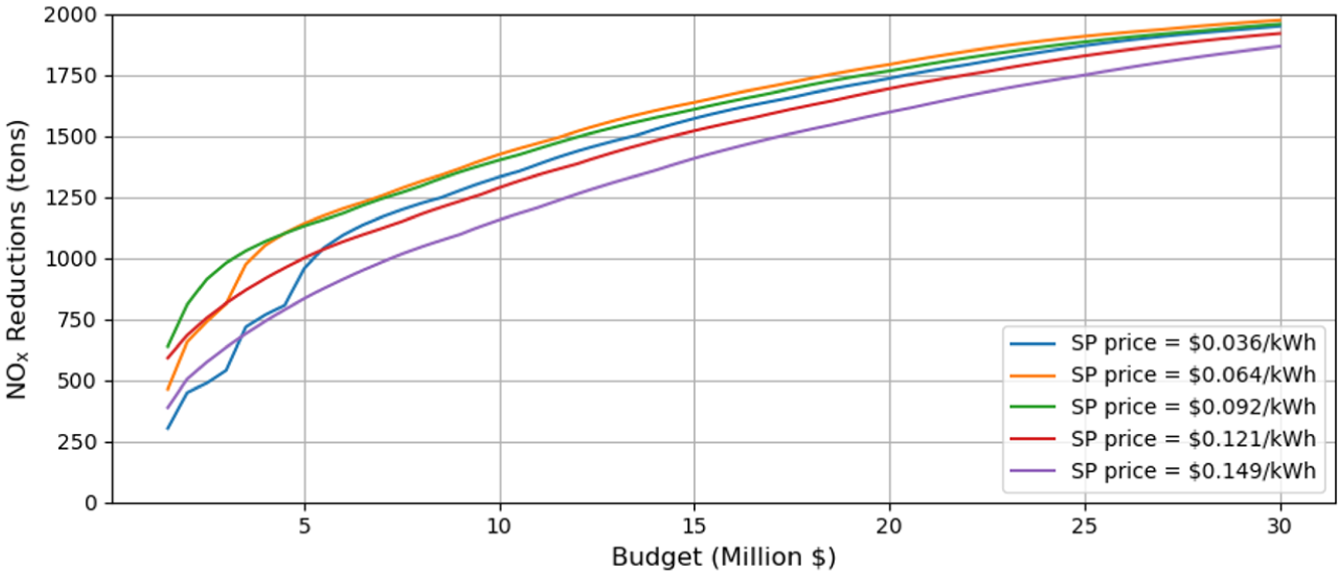
NO x reductions under various annual budgets and SP (shore power) price levels.
Intermediate SP electricity prices lead to the best results when budgets are limited. At a price of $ 0.092/kWh, the model performs best when the annual budget is below $4.5 million. When the budget exceeds $4.5 million, a lower price, of $ 0.064/kWh, gives better outcomes. This shows that moderate pricing provides the best balance between ship cost savings and terminal revenues, making the government subsidy plan more flexible in supporting high-impact ships and terminals.
Conclusion
In this study, an optimization framework is developed to support strategic SP deployment at multiterminal ports, with the aim of maximizing environmental and economic benefits. In the model, government subsidies are allocated to encourage terminals and ships to adopt SP. By incorporating the perspectives of ship owners (who prefer positive net savings by retrofitting for SP), the port authority (which prefers positive net revenues to adopt SP), and the government (which focuses on improving public benefits, such as environmental and economic benefits), the model realistically captures the trade-offs involved in SP implementation. Overall, this framework provides port authorities and policy-makers with a replicable tool for cost-effective SP deployment and budget planning.
The model is applied to a case study of the POH, which includes several public terminals and a diversity of ship traffic. The results show that, even with modest budgets, SP deployment can yield significant environmental benefits. For example, with just $1.5 million—the cost of equipping one terminal—the model achieves 300 tons of NO x reductions by prioritizing ships that do not need a subsidy to retrofit. At $5.5 million, approximately 50% of all the pollutants produced by SP-eligible hotelling can be mitigated. Additionally, larger OGVs, such as tankers and container ships, are more likely to be selected to receive a subsidy for retrofitting, owing to their higher pollutant reduction per retrofit dollar.
Sensitivity analysis demonstrates that the model is robust across various pollutants and relatively insensitive to HBC retrofitting costs. However, the cost of SP electricity to ships has a notable effect. Higher SP electricity costs discourage participation from high-emitting ships, while low prices slow SP deployment, owing to a lack of economic benefits for ports. Therefore, establishing a reasonable SP pricing structure is critical to balancing the interests of both terminals and ships, enabling the effective use of limited budgets to maximize environmental and economic benefits.
Based on results for the POH, policy implications include the following.
For subsidies, OGVs with long hotelling durations and high emission factors should be prioritized to maximize environmental gains.
Terminal selection should begin with locations with higher hotelling activities (e.g., Turning Basin, Barbours Cut) to accelerate infrastructure impact.
The overall SP rollout is insensitive to the choice of target pollutant when the budget is limited. This is because ships with high activity levels generally contribute large amounts of all pollutants and are therefore prioritized for SP adoption, regardless of the specific pollutant target.
HBC SP retrofits are less cost-effective than OGVs, when it comes to reducing the ship’s environmental impact. They should be considered for subsidizing only if the budget is relatively large.
The cost of SP electricity plays an important role in balancing the economic benefits between port authorities and ship owners, and accelerating SP deployment and ship retrofitting.
Although the framework is demonstrated using the POH, its design is general and can be applied to other U.S. ports and international settings by incorporating local inputs. The primary data input, namely, AIS data, is available globally. Other key inputs, such as emission factors, budget, subsidies, ship retrofitting costs, SP infrastructure costs, and electricity prices, can be developed using local data. Many of these data elements are often already available through regional environmental or energy studies, emission standards, regulatory requirements, or policy incentive programs.
Furthermore, the target pollutant can be selected based on the environmental priorities of a given port. For example, NO x may be emphasized in regions where ozone formation is a primary concern, while PM2.5 may be prioritized where the associated human health impacts are more severe; SO x may also be selected in areas where sulfur-related air quality issues or fuel-sulfur compliance requirements are a key focus. These features allow the framework to be broadly applicable for strategic SP planning worldwide.
Future research could be focused on the following areas.
Exploring optimal SP electricity pricing strategies to maximize environmental benefits and improve adoption rates among ship operators.
Incorporating partial deployment scenarios, enabling terminals to equip berths based on hotelling activity levels, thereby enhancing investment flexibility, cost-effectiveness, and environmental returns.
Refining model parameters to better reflect real-world conditions, including ship-specific retrofit costs and terminal-specific infrastructure expenses, as well as integrating additional cost and benefit factors, such as carbon credits or tax incentives, to support more informed stakeholder decision-making.
Examining how the framework can be used to pursue several environmental objectives (e.g., reductions in several pollutants), thereby enabling subsidies and budget allocations tied to different goals to be combined to support more efficient SP deployment.
Footnotes
Author Contributions
The authors confirm contribution to the paper as follows: study conception and design: Min-Ci Sun, Tao Li, Jim Kruse, Madhusudhan Venugopal, Rodolfo Souza; data collection: Min-Ci Sun, Tao Li, Jim Kruse, Madhusudhan Venugopal; analysis and interpretation of results: Min-Ci Sun, Tao Li, Jim Kruse, Rodolfo Souza; draft manuscript preparation: Min-Ci Sun, Tao Li, Jim Kruse, Madhusudhan Venugopal. All authors reviewed the results and approved the final version of the manuscript.
Declaration of Conflicting Interests
The authors declared no potential conflicts of interest with respect to the research, authorship, and/or publication of this article.
Funding
The authors disclosed receipt of the following financial support for the research, authorship, and/or publication of this article: financial support provided by an organization that has chosen to remain anonymous; this contribution made this work possible.
