



Abstract
Moisture damage of asphalt pavement has always been one of the major concerns for researchers in the pavement engineering field. Mitigating this moisture-induced damage is essential for improving pavement performance, extending service life, and reducing lifecycle costs. Several studies have reported that waste plastic can potentially increase the cohesion between asphalt and plastic molecules and enhance the adhesion between asphalt and aggregate, improving the moisture damage resistance of asphalt pavements. The present study aims to understand the effect of incorporating different waste plastics as modifiers on a binder’s fundamental properties, such as cohesive bond energies. To achieve this goal, three different waste plastics—high-density polyethylene (HDPE), polypropylene (PP), and polyethylene terephthalate (PET) in 2%, 4%, 6%, and 8% by weight of the total binder—were used to modify the conventional asphalt binder (PG 58-28). The surface free energy (SFE) was determined by depositing one polar and one non-polar liquid on the solid samples by using the liquid needle drop deposition technique while adopting three different theories. Finally, the cohesive bond energies of the modified asphalt binders were calculated. The results showed that waste plastics significantly increased the total SFE and cohesive bond energy of the asphalt binder up to 4% plastic addition and then dropped. Besides, the comparative analysis revealed that PP modification was most effective for improving moisture damage resistance among the three plastics. Therefore, the use of plastic waste for asphalt binder modification was found to be a promising approach for enhancing moisture damage resistance.
Keywords
Understanding the chemical composition and surface characteristics of an asphalt binder is crucial to assess its effectiveness. One key aspect of this composition involves complex hydrocarbon molecules, such as maltenes and asphaltenes, and their internal interactions, for which asphalt binder possesses low-energy surfaces ( 1 ). This makes it challenging for other materials to adhere to asphalt effectively, leading to poor bonding and reduced durability. This phenomenon causes stripping, where the asphalt binder separates from the aggregates as a result of moisture infiltration or poor adhesion. Therefore, bond strength is a crucial factor in evaluating a binder’s ability to resist moisture damage ( 2 ).
Moisture damage of asphalt pavement has always been one of the major concerns for researchers in pavement engineering ( 3 ). It occurs when water penetrates through the pavement layers and causes the binder to separate from aggregate particles. Lower cohesion within the bitumen mass of the mixture or lower adhesion between aggregate particles and bitumen are the primary causes of reduced strength in asphalt mixtures ( 4 ). These two factors alone, or in combination, can cause moisture damage. The decrease in the internal strength of the asphalt mixture is further lowered by continuous traffic loading. Asphalt pavements may undergo bleeding, rutting, raveling, and fatigue cracking as a result of a prolonged period of traffic loads under water pressure ( 5 , 6 ). Mitigating the moisture-induced damage is, therefore, essential for better pavement performance, ultimately extending its service life and reducing lifecycle costs. Different strategies have been adopted in other studies to reduce the effects of moisture damage, as it is one of the primary reasons for premature failure of asphalt pavement. Surface free energy (SFE) has been widely adopted as an effective tool for characterizing the adhesion and cohesion parameters ( 1 , 4 , 7 – 10 ). Most of the studies thoroughly outlined the incorporation of modifiers into asphalt mixtures ( 11 ). The additives previously studied are nanoparticles, fly ash, polymers, recycled materials, waste plastics, cement filler, antistripping agents, and so forth, and they showed better resistance against moisture damage ( 3 , 8 , 9 , 12 , 13 ).
Recently, waste plastics have increasingly been used for asphalt binder modification as they offer several benefits in enhancing asphalt binder properties as well as promoting sustainability. According to a report submitted to Environment and Climate Change Canada, approximately 3.3 million tons of waste plastics are produced annually, of which approximately 2.8 million tons end up in landfills ( 14 ). This vast amount of plastic waste has become a potential environmental threat. One possible way to reduce this environmental pollution is to incorporate plastic waste into asphalt pavement ( 15 ). On the other hand, the recent sharp increase in the price of asphalt paving materials has made it possible to find more affordable substitutes. Different kinds of plastics such as high-density polyethylene (HDPE), low-density polyethylene (LDPE), polyethylene terephthalate (PET), polyvinyl chloride (PVC), polypropylene (PP), polystyrene (PS), ethyl vinyl acetate (EVA), and others are mostly incorporated into asphalt for modification. The commonly adopted approaches for the incorporation of plastics into asphalt are dry process and wet process. While the wet process involves blending waste plastics directly into the asphalt binder, the dry process incorporates plastics into the aggregate mix. Molecular dynamic simulations revealed that waste plastic can potentially increase the bond between asphalt and plastic molecules and enhance the adhesion between asphalt and aggregate ( 16 ).
Haider et al. used 9% HDPE and LDPE by weight of the asphalt binder in the mixture. They found that HDPE is less susceptible to moisture damage compared with LDPE, but LDPE also improved other physical and mechanical properties of asphalt mixture ( 17 ). Radeef et al. used 1% LDPE with 2% hydrated lime and evaluated the impact of moisture damage. It was recommended that incorporating plastic waste can increase the resistance against moisture damage ( 18 ). Zhou et al. employed waste PP wax-modified asphalt binder to characterize the adhesive properties. The results indicated that it effectively increased the adhesion and moisture susceptibility of the asphalt matrix ( 19 ). In addition, micronized recycled PET was used in a study as a binder modifier to understand the cohesive and adhesive properties. The results showed that the aggregate-binder adhesion was improved, increasing moisture damage resistance ( 20 ). Hamedi et al. analyzed the effect of PP as an antistripping additive to evaluate the moisture susceptibility of asphalt mixtures. They found that PP increased the adhesion-free energy and decreased the aggregate-binder stripping tendency ( 21 ).
However, there is still limited research that has reported the comparison of moisture susceptibility among different types of waste plastic–modified asphalt binder. Thus, this study aims to analyze the moisture-induced damage resistance of different plastic-modified (HDPE, PP, and PET) asphalt binders through the SFE approach.
Objectives
The main objectives of this study are to:
determine the effect of different types and percentages of plastics on the SFE components of asphalt binder using contact angle measurement; and
investigate the cohesive bond energy of the modified asphalt binders and compare them based on the ability to resist moisture-induced damage.
Surface Free Energy (SFE) Method
Overview of SFE and Contact Angle (CA)
The net forces experienced by molecules at the surface and those in the bulk are quite different. In the bulk of a material, molecules are surrounded by similar neighboring molecules on all sides, resulting in an equal distribution of forces and a zero net force on each molecule. However, at the surface exposed to air, known as the solid–vapor interface, molecules only have similar neighboring molecules on their side and below, with minimal interaction with air/vapor molecules (
22
,
23
). This lack of interaction with air molecules leads to an excess of energy at the solid interface. The additional energy at the surface, compared with the bulk of the material, is referred to as the SFE of the solid (
22
). Though the term SFE can be used interchangeably for both solid–vapor and liquid–air interfaces, for simplicity, the SFE term is reserved for solids, whereas the surface tension term is reserved for liquids. Every system seeks to minimize its free energy. Liquids achieve this by adopting the smallest possible surface area for a given volume, often forming spherical droplets in weightlessness as a result of surface tension. In contrast, solids cannot reduce their surface area through deformation. Instead, they minimize free energy by forming interfaces with liquids, a process known as wetting. Consequently, the SFE of a solid is closely linked to its wettability. Whereas the measurement of the surface tension of the liquid is straightforward, the direct measurement of a solid’s SFE is impossible. Liquid/solid CA and the surface tension of the probe liquids should be known to compute the SFE of the solid (
24
). Optical (sessile drop) and mechanical (Wilhelmy plate) measurement techniques are commonly used for measuring the CA of the probe liquids in contact with the surface of the substrate. The angle formed by a tiny liquid drop on the surface of a solid is known as CA (
25
), denoted by
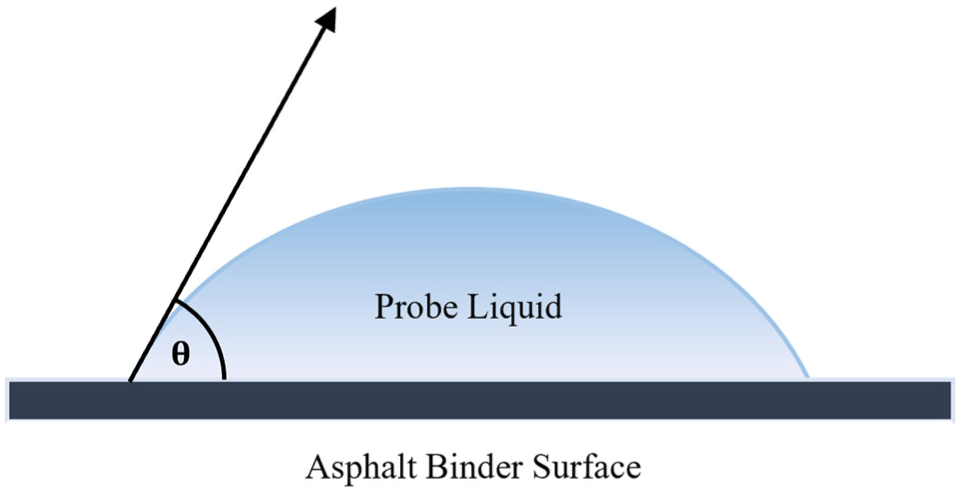
Contact angle of probe liquid on asphalt binder sample.
The selection of appropriate probe liquids is an important factor for SFE determination and it depends on various factors ( 26 ) such as:
SFE of probe liquids should be known.
The liquid’s SFE should be higher than the substrate’s SFE.
The liquid should be pure, uniform, and incompatible with asphalt binder.
The liquid must not dissolve or chemically react with asphalt binder at test temperature.
If the optical measurement technique is employed, the drop volume of the probe liquids should be free from gravity and other external body forces.
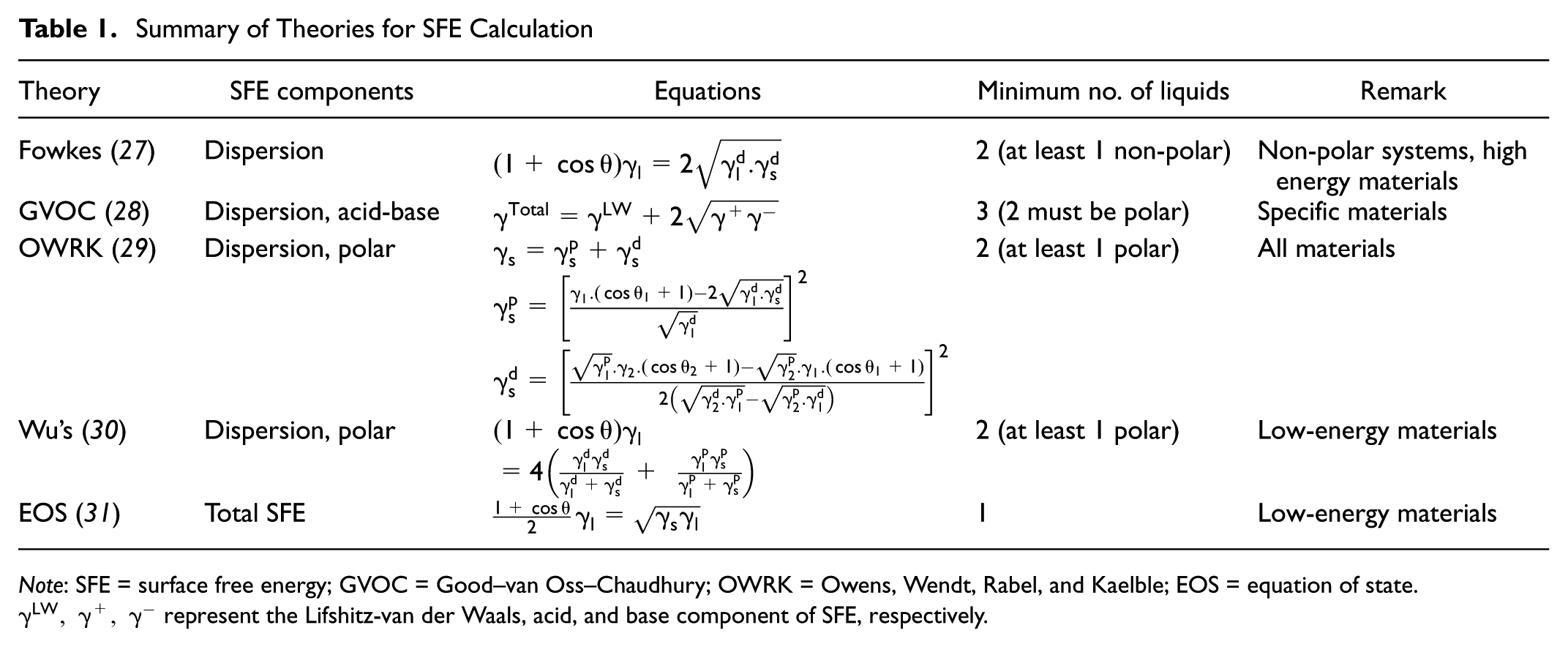
Hefer et al. ( 1 ) recommended five different probe liquids based on their condition number that can be used to measure the SFE of asphalt binder—distilled water, formamide, ethylene glycol, glycerol, and diiodo-methane. Again, several theories can explain the SFE of a solid or liquid obtained from CA values such as Fowkes ( 27 ), Good–van Oss–Chaudhury’s (GVOC), Owens, Wendt, Rabel, and Kaelble (OWRK), Souheng Wu (Wu’s), equation of state (EOS), and so forth. These theories are known as the three-component or two-component models based on their component parts. Table 1 summarizes the commonly adopted theories for SFE calculation. Among all these theories, OWRK, EOS, and Wu’s techniques were used in the present study to compute the SFE components and total SFE of asphalt binders using known CA from two probe liquids.
Summary of Theories for SFE Calculation
Note: SFE = surface free energy; GVOC = Good–van Oss–Chaudhury; OWRK = Owens, Wendt, Rabel, and Kaelble; EOS = equation of state.
OWRK and Wu are both two-component models where at least two liquids with known disperse and polar parts of the surface tension are needed to compute the SFE of the solid, where at least one of the liquids needs to have a polar part >0. In the Wu method, two equations can be obtained using CA from two liquids and their known SFE components (
Work of Cohesion or Cohesive Bond Energy
Cohesive bond energy refers to the amount of energy required to completely separate or break apart the atoms or molecules within a substance. It is a measure of the strength of the bonds holding the molecules together within the material. In fracture mechanics, the work of cohesion is an essential measure that shows how much energy is needed for microcracks to grow inside the asphalt binder ( 32 ). It is, therefore, desirable to have higher cohesive bond energies of the binder for improved moisture resistance. Cohesive bond energy is directly related to SFE, which can be measured from the total SFE of asphalt binder.
Work of Cohesion,
where
Experimental Plan
Materials
Paving Asphalt PG 58-28, supplied by McAsphalt Industries Ltd. was used in this study as the base binder. For PG requirements, the standard asphalt cement grade used in the Province of Ontario, Canada is PG 58-28 ( 33 ). Three different types of waste plastic were collected from EFS-Plastics Inc.:
high-density polyethylene (HDPE) pellet;
polypropylene (PP) pellet; and
polyethylene terephthalate (PET) flake.
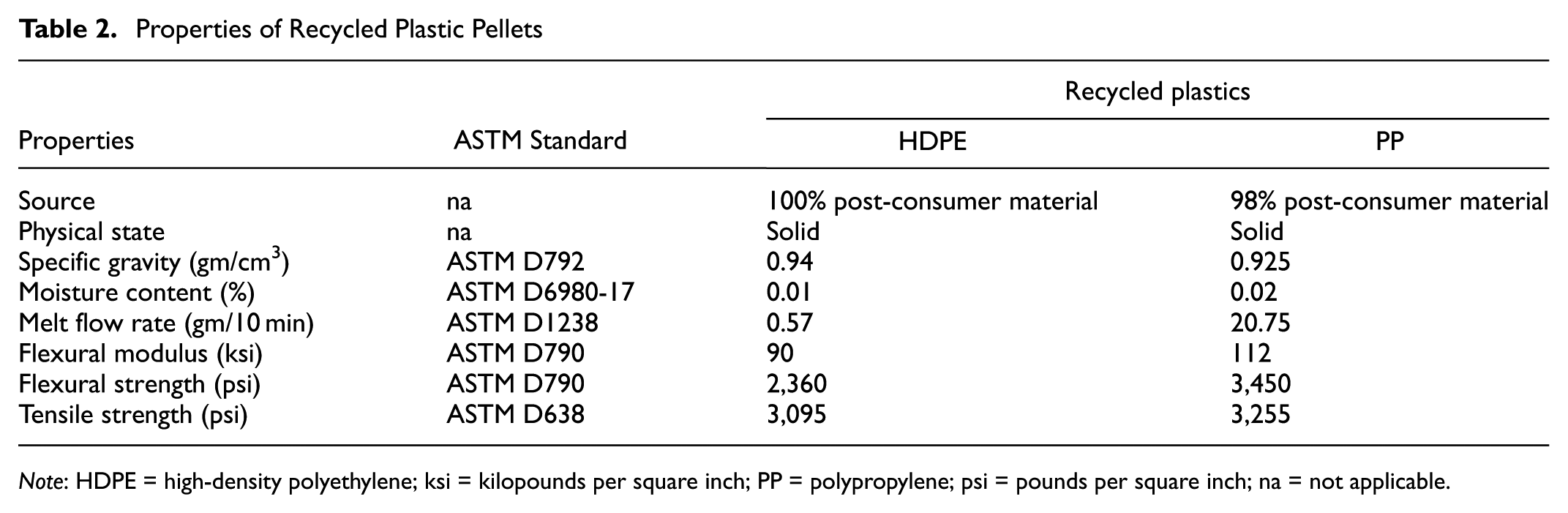
Typical properties of recycled waste plastic pellets (HDPE and PP) obtained from the supplier are represented in Table 2.
Properties of Recycled Plastic Pellets
Note: HDPE = high-density polyethylene; ksi = kilopounds per square inch; PP = polypropylene; psi = pounds per square inch; na = not applicable.
The plastic pellets differed not only in properties but also in physical appearance. The HDPE pellets were gray in color and PP pellets were black in color. The suppliers did not use any additional chemical additives during the production of the pellets, but they added a black colorant to the PP pellet. Both of the pellets had a smooth feel. On the other hand, the PET flakes collected were raw in nature and the color was ash/dull gray. In addition, the edges of the flakes were very sharp and had a rough feel. Figure 2 shows the images of the pellet and flake forms of the obtained plastics.
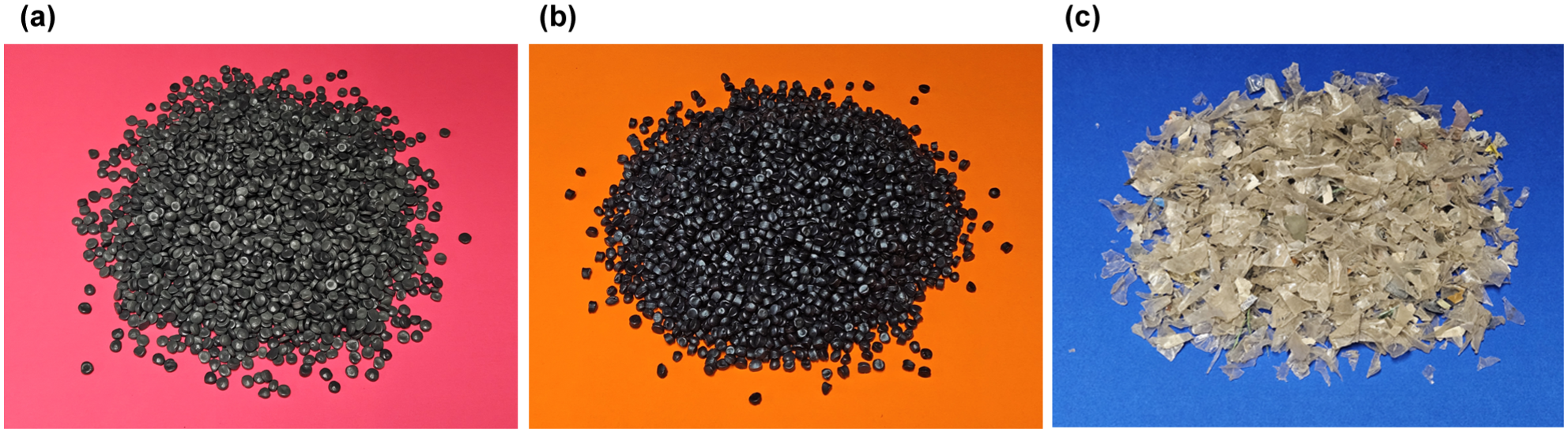
Modifiers as collected: (a) high-density polyethylene (HDPE) pellet; (b) polypropylene (PP) pellet; (c) polyethylene terephthalate (PET) flake.
To lessen the melting time and to obtain a homogeneous blend of the plastics and asphalt binder, the waste plastics were ground into powder form. After that, the fine particles were sieved with sieve No. 30 (approximately 600 μm). Figure 3 shows the waste plastics after grinding and sieving.
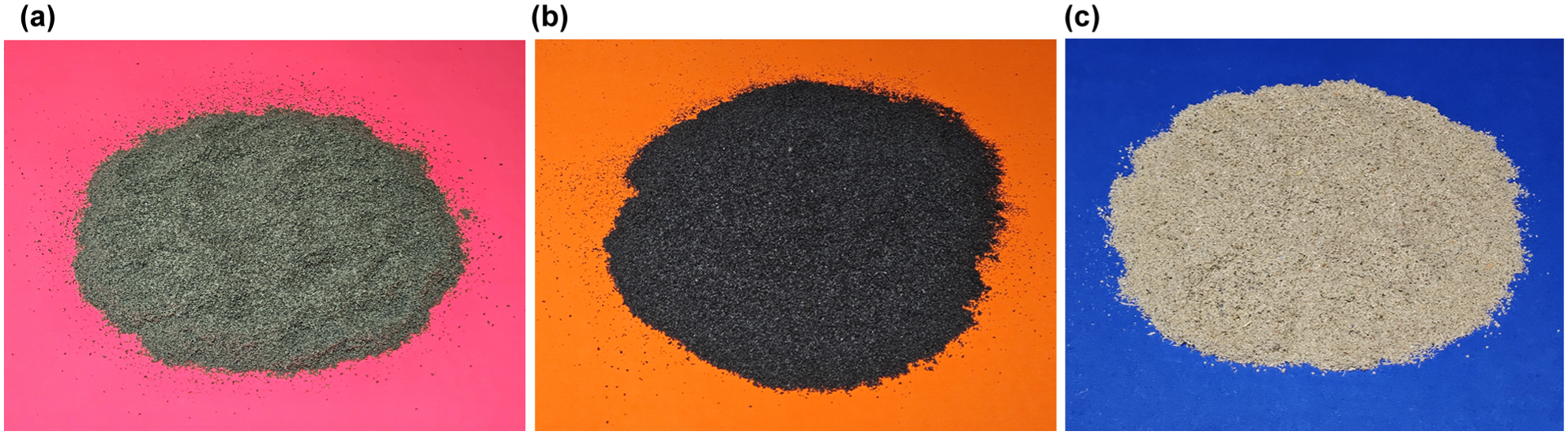
Modifiers in powder form: (a) high-density polyethylene (HDPE); (b) polypropylene (PP); (c) polyethylene terephthalate (PET).
Blending Modifiers with Asphalt Binder
The base asphalt binder was blended with HDPE, PP, and PET plastic powder through a wet process in different percentages (2%, 4%, 6%, and 8%). To avoid repeated heating, approximately 7 kg of asphalt binder was separated from a large sealed container by heating it at 160°C for 2 h and dividing it into smaller quart cans (Figure 4a). The quart cans were then stored at room temperature for further blending. Again, each quart can was preheated to 160°C for 1 h before blending to make the binder liquid enough for mixing with plastic powders. 500 gm of binder was transferred into a measuring cup for final mixing (Figure 4b), and heating continued using a heating mantle. At first, the binder was stirred at a low speed (∼500 rpm) for 5 min using a manual mixer to ensure there was no air trapped and to enable the internal temperature to reach 190°C to 200°C. At this time, different percentages of plastic powder were added slowly. Stirring was continued at a high speed (∼1,500 rpm) for 60 min until a homogeneous mixture was obtained. The laboratory set-up is represented in Figure 4c. The whole process was, therefore, the same for all the plastic-modified asphalt blend preparations.
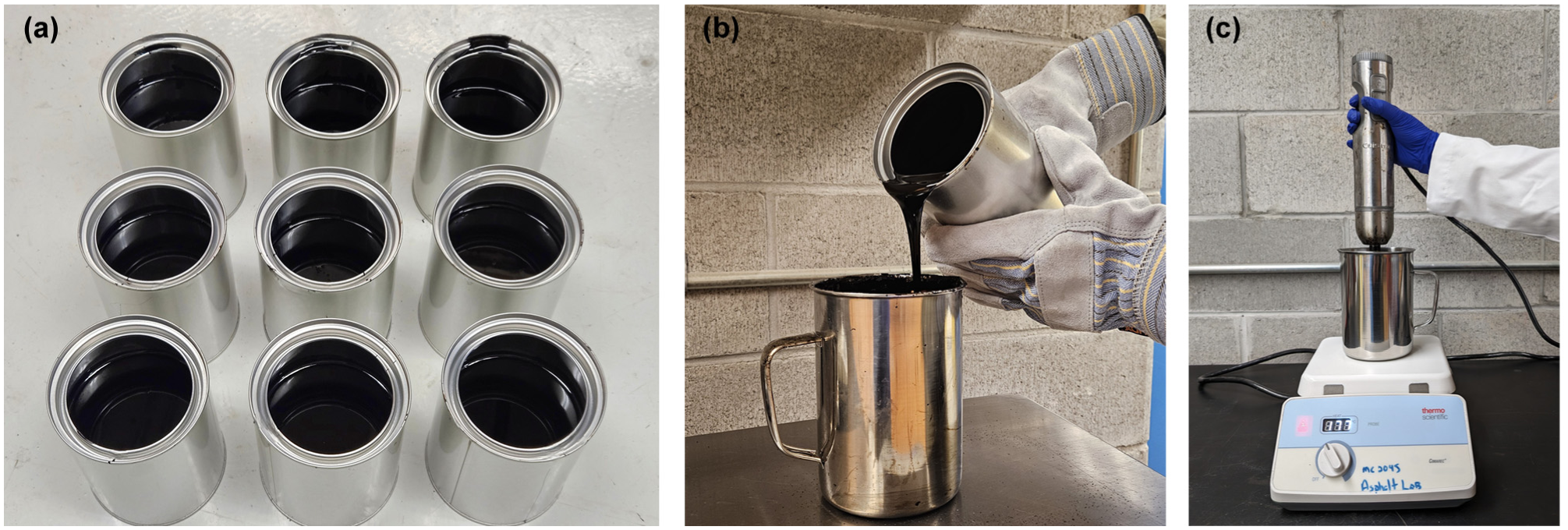
(a) Asphalt binders in quart cans; (b) transfer of asphalt binder from quart can into measuring cup; (c) laboratory set-up.
Preparation of Test Specimens for Contact Angle (CA) Measurement
To obtain the most precise and reliable findings possible from a CA measurement, the samples must be prepared with great care. The sample base should be thoroughly cleaned and dried. The sample’s surface should be perfectly horizontal, smooth, and dust-free. A rectangular metal base, 6 mm by 12 mm in size, was used to prepare the sample, as shown in Figure 5a. A few drops of plastic-modified asphalt were placed on the metal base and kept on the heating mantle for 5 min so that it spread throughout the base. A total of 10 samples were prepared for each of the percentage mixes. Finally, the prepared samples were allowed to cool down and were stored in a closed container to ensure dust-free clean surfaces, as shown in Figure 5b. CA measurements of the prepared samples were taken after 48 h for both probe liquids.
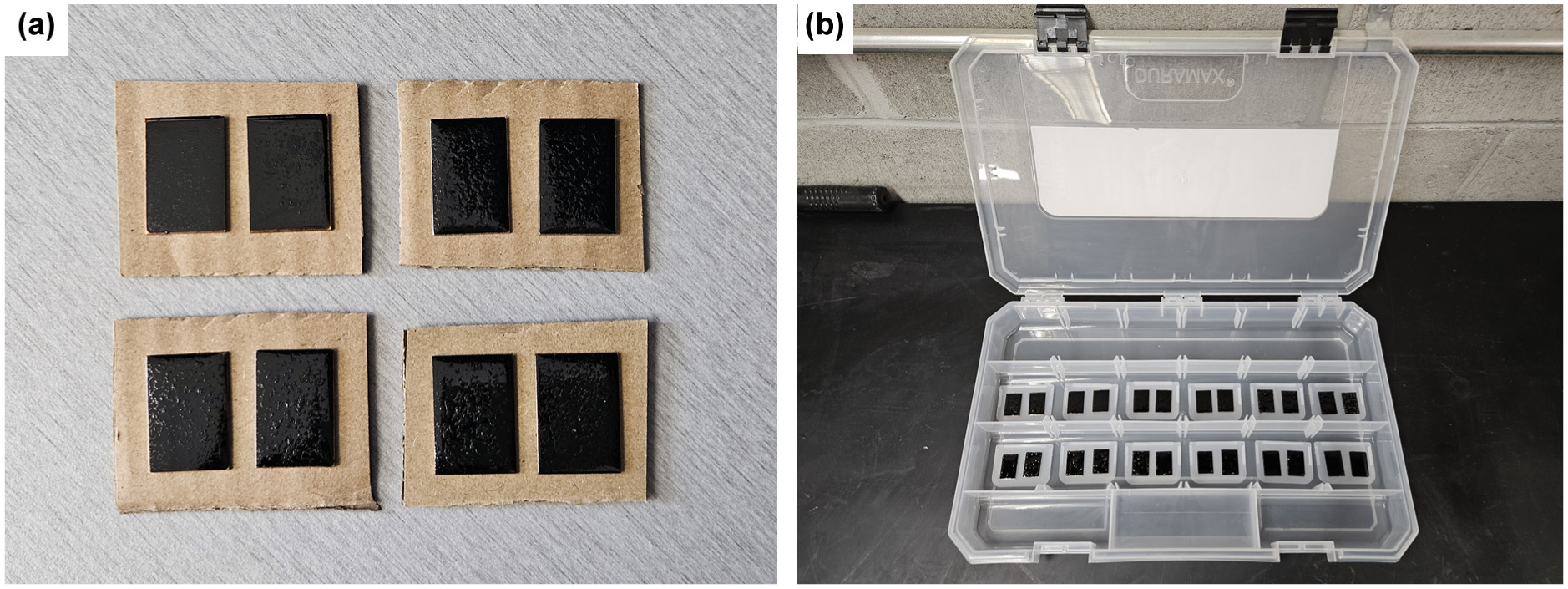
(a) Prepared samples for contact angle (CA) measurement; (b) sample storage box.
Overview of SFE Equipment
As mentioned earlier, asphalt is non-polar in nature. Therefore, there is a probability that non-polar probe liquid may dissolve with the asphalt. This may cause erroneous measurements of SFE if a longer time is required to measure the CA and the drop deposition technique is not free from external body force. In general, the commonly used needle-based drop deposition technique cannot ensure the instantaneous measurement of CA, and it is also subjected to applied body force from the needle ( 34 ). To resolve this issue, a jet-based/liquid needle drop deposition technique was used to generate drops of probe liquids on the substrate ( 34 ). It is to be noted that the flow rate (15 ± 2 μl/s) of the jet is low enough to ensure that the drop deposition is free from the kinetic energy of the jet but high enough to form a continuous jet. The commercial device used in this study that facilitates this technique is known as mobile surface analyzer (MSA) (purchased from KRÜSS) (Figure 6a). This device, along with its integrated optical system and image processing software (KRÜSS ADVANCE software), ensures the direct measurement of CA and SFE of solid within a second, as shown in Figure 6b. It doses parallel drops of two liquids on the sample surface with just one click. To increase the measurement’s sensitivity, it also provides the option to control a drop’s volume.
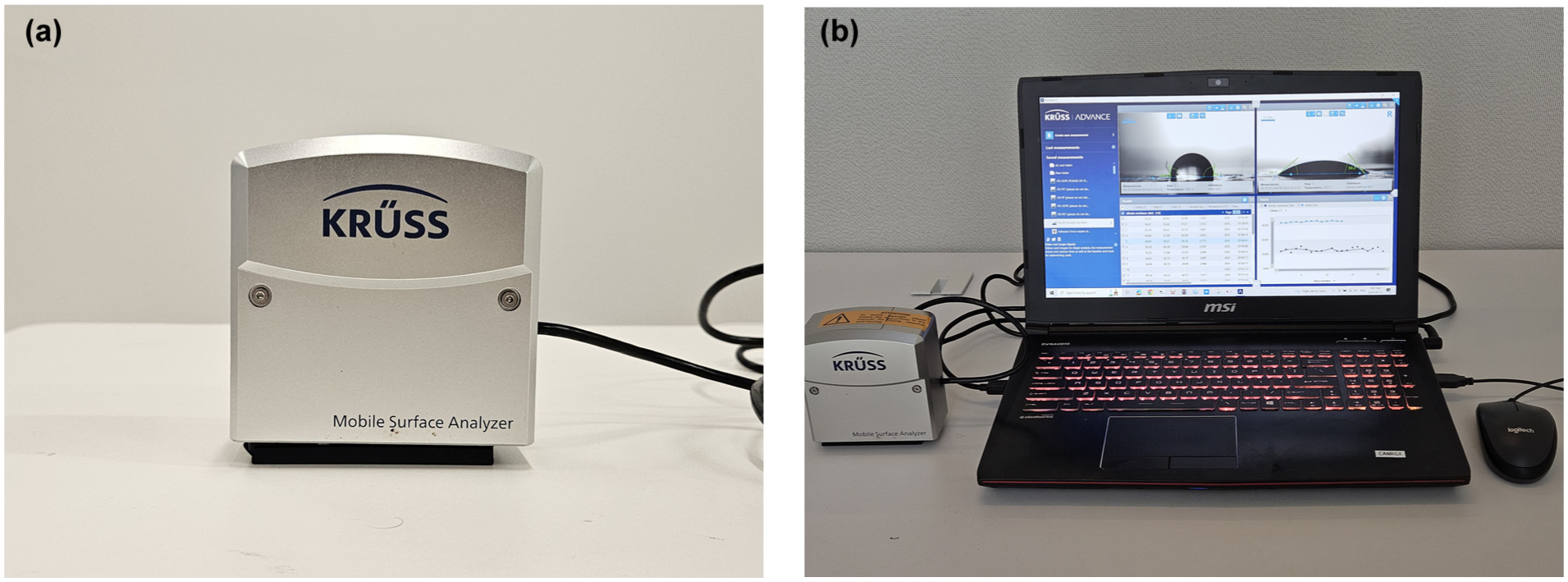
(a) Mobile surface analyzer (MSA); (b) contact angle (CA) measurement set-up.
CA Measurement of Asphalt Binders
The double sessile drop method was adopted to measure the CA using the MSA. In this study, two probe liquids (distilled water and diiodo-methane) were used, and a droplet volume of 2 μL was dosed on the sample surface. Figure 7 shows the CA on the sample surface for both probe liquids. The ellipse (Tangent-1) fitting method was set for the CA measurement. Approximately 300 measurements were taken, including at least 20 measurements for each probe liquid and each percentage mix of the modified asphalt binders. The same location was never selected for repeated measurements on a single sample. Finally, the mean CA from each liquid was taken to compute the SFE components. The CA values for water were relatively steady, whereas the liquid droplet spread was rapid and quite noticeable in the case of diiodo-methane. Therefore, the measurements obtained within a few seconds of the droplet deposition were used in this analysis for both probe liquids. The SFE components of the selected probe liquids are shown in Table 3.
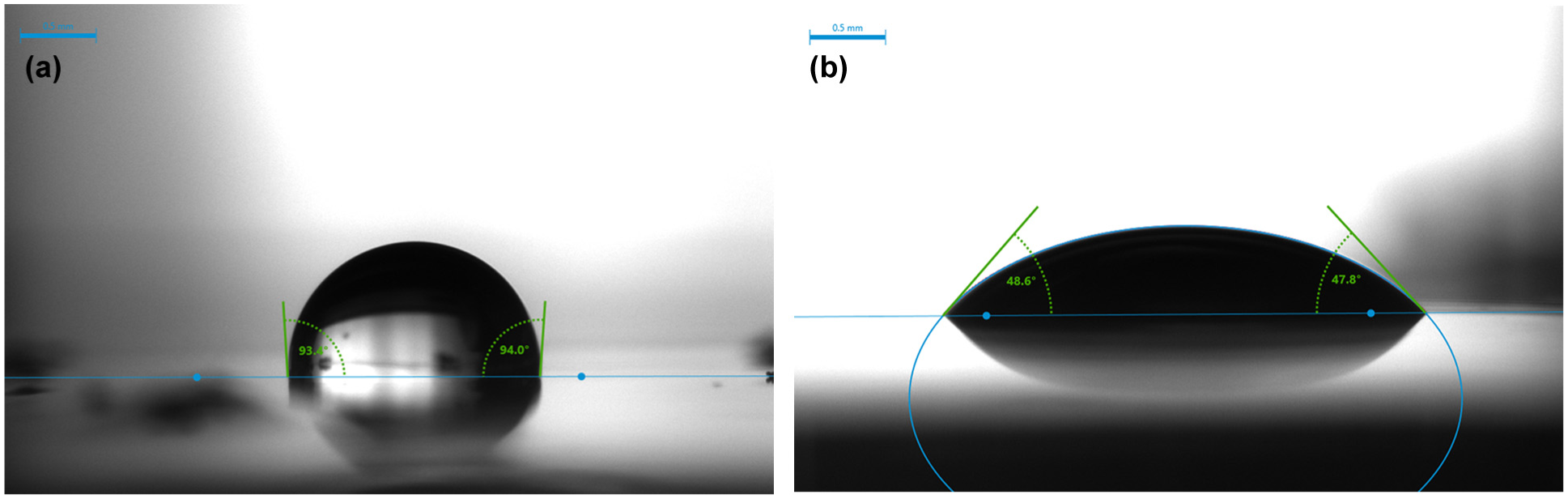
Measured contact angle (CA) from: (a) a drop of water; (b) and diiodo-methane.
Surface Free Energy (SFE) Components of Probe Liquids (mN/m) at 20°C

Results and Findings
Effect of Modifiers on Contact Angle (CA)
In general, wettability is the ability of asphalt binder to coat the aggregate easily. Lower CA wets the surface well, providing better adhesion to the aggregate surface and making it less susceptible to moisture damage. If the CA between the solid surface and probe liquid is larger, the solid surface is poor wetting ( 32 ). Hydrophobic modifiers, such as specific polymers or plastics, can increase the CA and hydrophobicity of the binder. Although a higher CA suggests superior water repellency, if the binder does not sufficiently wet the aggregate surface, it can occasionally cause problems with initial adhesion. Table 4 represents the CA values measured for the base asphalt binder and modified asphalt binders from distilled water and diiodo-methane. Mean CA, standard deviation (SD), and coefficient of variation (COV) of an average of 10 observations are shown Table 4. For the calculation of mean CA, only the values having a maximum difference of 1° between left-hand side CA (L) and right-hand side CA (R) of the droplet shape have been considered.
CA Summary of Different Asphalt Binders (No. of observations, N = 300)
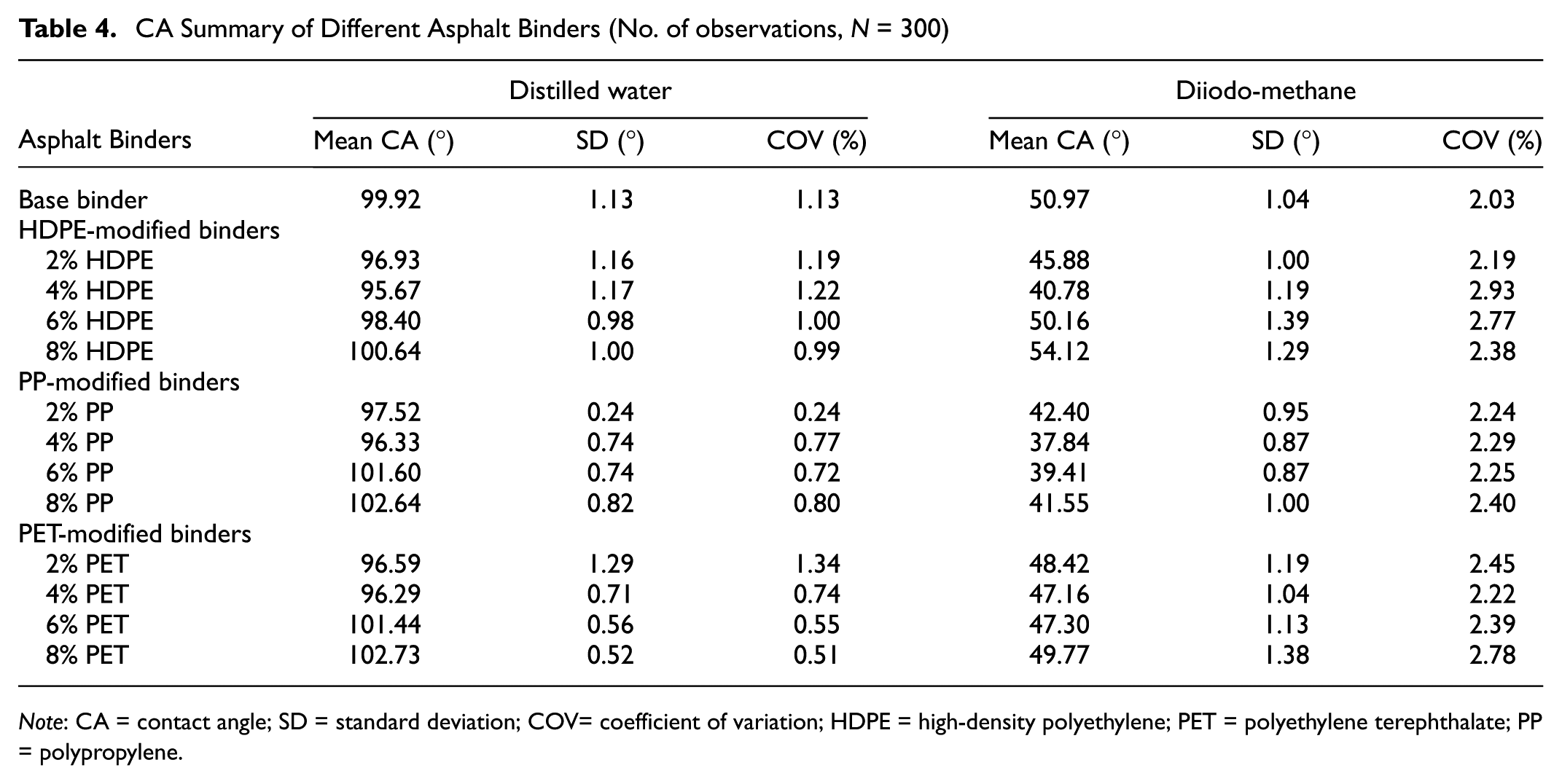
Note: CA = contact angle; SD = standard deviation; COV= coefficient of variation; HDPE = high-density polyethylene; PET = polyethylene terephthalate; PP = polypropylene.
In general, the hydrophilic and hydrophobic surfaces are strongly correlated with the water CA. A solid surface is considered hydrophilic when the CA is less than 90° and hydrophobic when it is greater than 90° ( 35 ). The rheological performance and moisture susceptibility of asphalt binders are adversely affected by the hydrophilic characteristics. The CA results of the modified binders revealed a decreasing pattern in the CA values with the increase in dosage rate up to 4% for all three types of plastic modification. This trend can be attributed to the chemical and physical effects of the waste plastic modifier on the binder’s surface properties. As the modifier content increases, it alters the binder’s surface energy, particularly by increasing the polar component. This results in improved wettability and reduced CA. Further addition of plastics increased the CA values for both probe liquids. The highest CA value for HDPE was observed for 8% addition, which even exceeded the CA values for the base binder. Furthermore, when 6% PP and 6% PET were mixed with the binder, the CA value was even higher than the base binder for water. This is because the addition of hydrophobic modifiers might have increased the hydrophobicity of the asphalt binder. Therefore, adding more than 4% plastic might have increased the surface roughness and heterogeneity of the asphalt binders, leading to higher CA.
In addition, COV (%) was measured which revealed that the variations are more in the case of diiodo-methane probe liquid because of its quick dispersion behavior. However, a significant variation in the CA values was observed between the two probe liquids, possibly because of the difference in polarity and molecular force between the liquids. Overall, the particular increasing or decreasing pattern of CA might be a sign of better compatibility of the asphalt binder with these modifiers.
A one-way ANOVA test was conducted at a 95% confidence level to analyze the CA measurements obtained for the base binder and varying percentages of plastic-modified binders. The test aimed to determine whether the addition of plastic modifiers caused statistically significant differences in the observed CA or not. The null hypothesis stated that there was no significant difference in the mean CA resulting from the addition of plastic modifiers. However, the results showed p < 0.05 for all tested modified binders, indicating that the null hypothesis could be rejected. Consequently, the alternative hypothesis was accepted, confirming that the mean CA varies with the addition of different doses of plastic modifiers.
Effect of Modifiers on Total Surface Free Energy (SFE)
The SFE of asphalt binder is very important for characterizing the cohesiveness of binder molecules. Figures 8 to 10 represent the comparison of the total SFE of HDPE-, PP-, and PET-modified asphalt binders for different percentages based on the three models. The dotted lines represent the SFE of the base binder; they are 23.10 mN/m, 35.4 mN/m, and 36.63 mN/m for EOS, OWRK, and Wu models, respectively. Additionally, the errors bars in the figures represent the SD of the measured values, indicating the reliability and variability of the data obtained from several observations. It suggests that the measurements are precise and consistent since there is very little deviation for the data points from the average value.
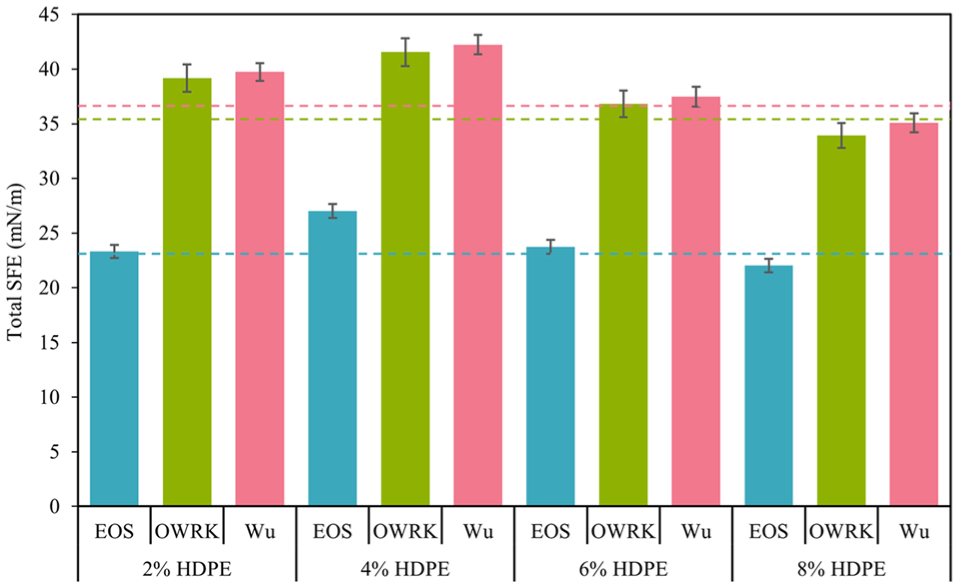
Total SFE of HDPE-modified asphalt binders.
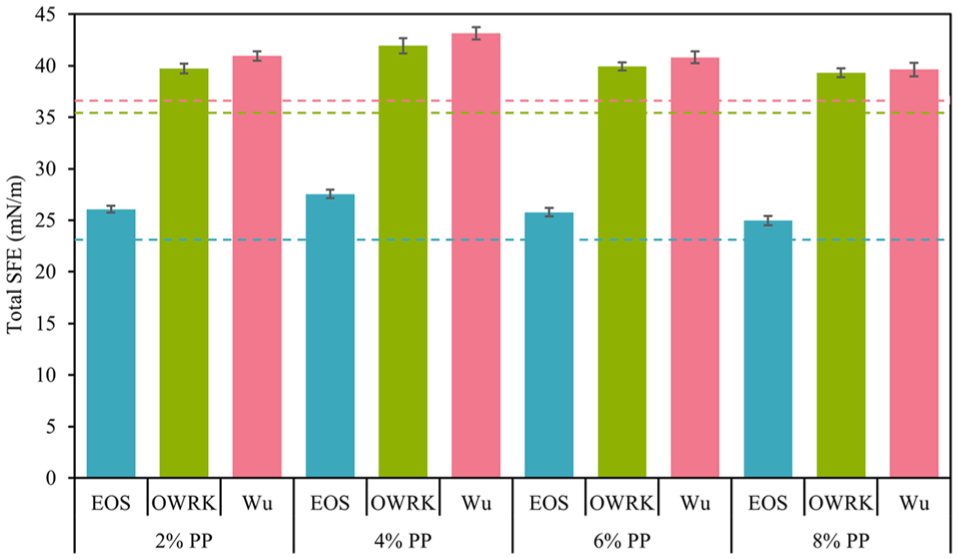
Total SFE of PP-modified asphalt binders.
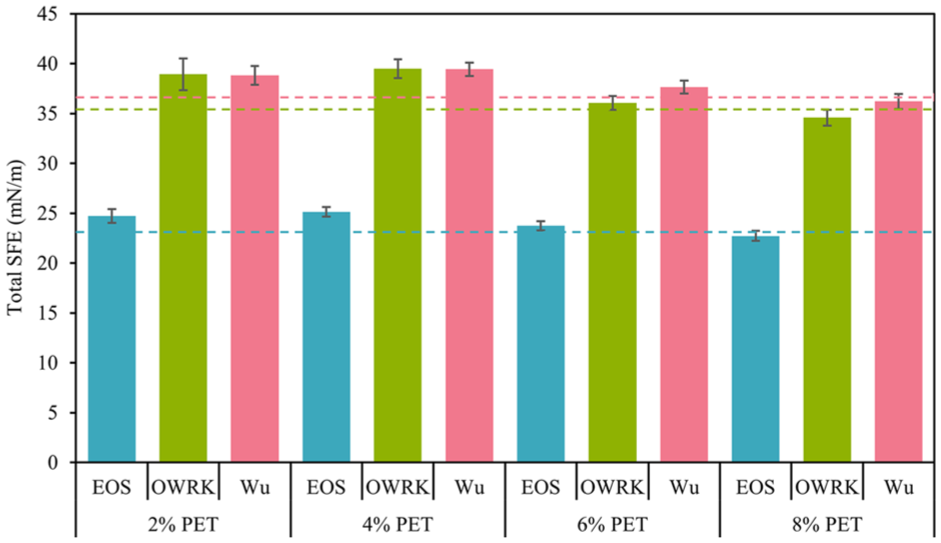
Total SFE of PET-modified asphalt binders.
From Figure 8, it can be seen that the SFE increased as a result of the addition of HDPE up to 6% in concentration. When 8% HDPE was added, the SFE decreased from the base binder in all three cases. In addition, the maximum SFE of 42.23 mN/m was obtained from Wu model when 4% HDPE was added to the base binder. Further increase in HDPE concentration decreased the SFE value. The lowest values of SFE were recorded as 22.03 mN/m, 33.93 mN/m, and 35.09 mN/m for EOS, OWRK, and Wu models, respectively, in the case of 8% addition of HDPE.
From Figure 9, it can be observed that the addition of PP improved the SFE properties. The SFE values increased with the increase in dosage rates up to 4%. After that, the increase in PP percentage decreased the SFE of the asphalt binders. However, in all cases the SFE was higher than that of the base binder. The maximum SFE was reported to be 43.15 mN/m when 4% PP was added, computed using Wu method. By contrast, the lowest SFE was recorded 24.97 mN/m using EOS model for 8% addition of PP.
It can be observed from Figure 10 that PET modification can be effective in improving the SFE of the asphalt binder. The SFE values increased with the increase in PET percentages up to 4% in concentration, further addition of PET dosage rates decreased the SFE values. The maximum SFE was reported to be 39.49 mN/m for 4% PET and computed using OWRK method, while the lowest SFE was recorded at 22.73 mN/m using EOS model for 8% PET. The addition of 8% PET showed the lowest total SFE among all the percentages used, and it is even lower than the base asphalt binder. This indicates that adding more than 6% PET will no longer be effective for improving the SFE components of the binder.
In summary, the addition of plastic waste proved to be effective in improving the SFE components of asphalt binders up to 4% in concentration. Beyond this percentage, the compatibility between the asphalt binder and the plastic might have decreased. There is also a probability of phase separation when higher plastic concentrations are added, and an inconsistent binder matrix can adversely affect the SFE. Among the three models, the total SFE measured using the Wu method yields the highest value for most of the cases, followed by the OWRK method and then the EOS method. Furthermore, the SFE values generated from the OWRK method were relatively close to the SFE values obtained from the Wu model. However, the EOS model generates comparatively lower SFE values than the other two models. This might be because of the differences in CA, molecular force, and polarity of the probe liquids, as the SFE measured from water CA was lower than the SFE obtained from diiodo-methane CA. But the increasing or decreasing trend was similar for all three models. The OWRK model can, therefore, be representative of SFE computation in all cases, and for this reason it was used to quantify the cohesive bond energy and analyze the moisture-induced damage of the asphalt binders.
Comparison of Surface Free Energy (SFE) Components of Modified Asphalt Binders
The SFE of asphalt binder is computed for two components: the disperse
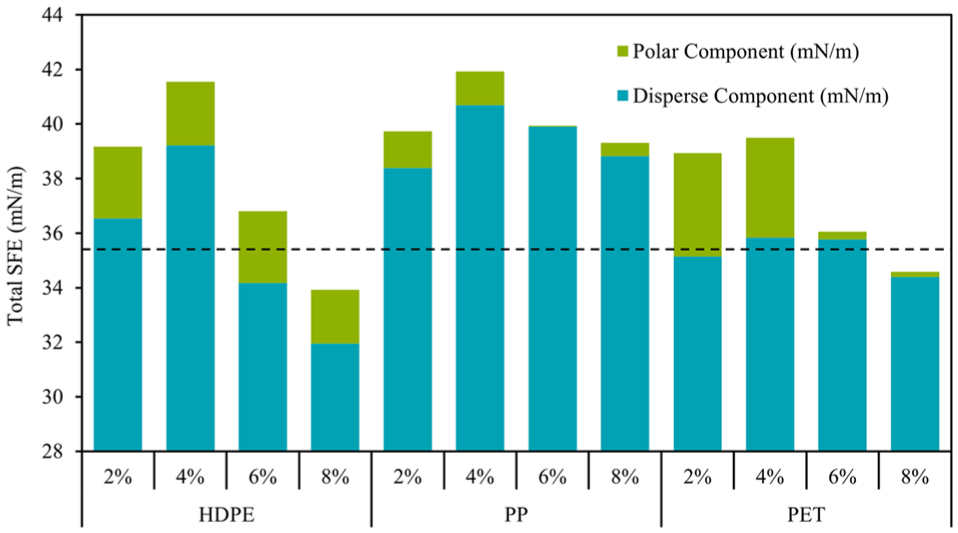
SFE components of modified asphalt binders by the OWRK method.
The addition of HDPE increased the disperse component up to 4% in HDPE concentration and then dropped for the further addition of HDPE, while the polar components did not follow any particular increasing or decreasing pattern for increases in the dosage rates. This may be a functional difference in compatibility among the various components of the blend. In the case of PP plastic, the dispersive components followed a similar pattern to HDPE. The polar components decreased with the addition of PP until the addition of 6% PP, then increased again when 8% PP was added. Furthermore, asphalt binders modified with PET plastic maintained the same trend for the dispersive components as the other two plastics. When polar components were considered, it had an inverse relation with the PET dosage rates, that is, the addition of PET percentages reduced the polar components. Higher dispersive components with zero to lower polar components indicate a surface that is strongly hydrophobic ( 37 , 38 ). Polar liquids are, therefore, unable to spread evenly and wet such surfaces. Overall, hydrophobic surfaces are characterized by reduced wettability, decreased ice and water adhesion, and increased water damage resistance ( 39 ).
Effect of Modifiers on Cohesive Bond Energy
Cohesive bond energy is a fundamental property of asphalt binder that enables prediction of the rutting resistance, fatigue cracking resistance, and shear strength of asphalt concrete ( 40 ). In general, the higher cohesive bond energy or higher work of cohesion indicates higher resistance to moisture-induced damage ( 41 ). Figure 12 represents the cohesive bond energy for all the modified asphalt binders computed using the total SFE from the OWRK model. Since the cohesive bond energy is directly related to the total SFE of the asphalt binders, the increasing or decreasing pattern of the modified asphalt binders will follow similar trends of total SFE for the dosage rates of the modifiers. The cohesive bond energy of the base binder was recorded as 70.80 mN/m, which is displayed as a dotted line in the figure.
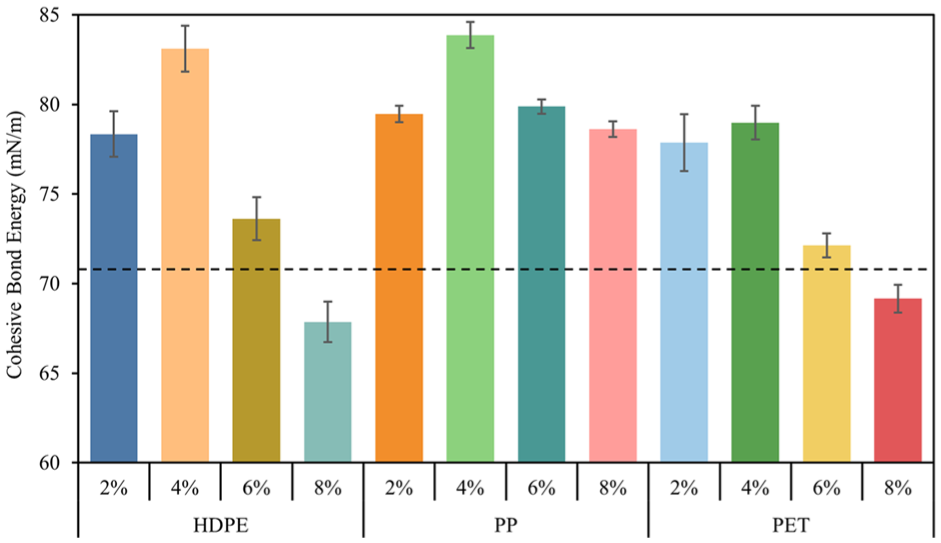
Cohesive bond energy of modified asphalt binders.
It can be observed that when the base binder was modified with HDPE, the cohesive bond energy increased significantly with the increase of HDPE percentages up to the addition of 4% HDPE. The highest value was reported as 83.10 mN/m for 4% HDPE addition which is a rise of about 17.37% compared with the base binder. Further increase of HDPE dosage reduced the bond energy, creating the lowest value at 67.86 mN/m for 8% HDPE that is no longer effective in improving the moisture sensitivity.
For the PP-modified asphalt binders, it can be seen that the cohesive bond energy jumped to 83.86 mN/m for 4% PP addition, which is about 18.45%, and then dropped with further addition of PP. The lowest value was observed as 78.62 mN/m for 8% addition of PP dosage, which is again an 11.05% increase compared with the base binder bond energy. However, the bond energies ranged between 78 mN/m and 84 mN/m for PP modification, and they were higher than the cohesive bond energy of base binder in all cases.
For PET modification, lower cohesive bond energies were recorded compared with the HDPE and PP-modified asphalt binders. The highest cohesive bond energy was reported as 78.98 mN/m for 4% PET, which is an increase of about 11.55% compared with the base binder. However, the lowest cohesive bond energy was 69.16 mN/m for 8% PET addition, which is even lower than that of the base binder. The lower cohesive bond energies are related to cohesive failure and early cracking of binders in a mixture, leading to undesirable premature pavement failure.
Based on the experimental results, the asphalt binders with higher cohesive bond energies can be ranked as 4% PP > 4% HDPE > 6% PP > 2% PP > 4% PET among all three waste plastic–modified asphalt binders. Overall, PP modification seemed to be more effective for improving moisture damage resistance for their cohesive bond energies than the other two plastic modifiers.
Conclusions
The present study aims to understand the effect of incorporating different waste plastics for asphalt binder modification for their moisture damage resistance. To obtain this research goal, three different types of plastic waste—HDPE, PP, and PET—were employed at different percentages (2%, 4%, 6%, and 8%) by weight of the total asphalt binder to modify the conventional PG 58-28 asphalt binder. The experimental study incorporated the CA measurements with two different probe liquids: distilled water and diiodo-methane to measure the SFE components of modified asphalt binders using MSA and quantified the work of cohesion of the respective binders. Based on the experimental evaluation, the following conclusions can be drawn:
Incorporation of plastic wastes decreased the CA values up to 4% concentration for all three plastics, then increased with further addition of plastic dosage rates for both of the probe liquids. The asphalt binders showed higher CA values with distilled water compared with the diiodo-methane probe liquid.
The total SFE of the asphalt binder increased with the increase in plastic percentage up to 4% concentration for all three plastics, then decreased with further addition of plastic percentages. The total SFE was higher than the base binder in all cases of PP modification. However, 8% HDPE and 8% PET modification were no longer effective in raising the SFE of the base binder.
The contribution of dispersive components was much higher than the polar components in total SFE computation for all the asphalt binders, making the dispersive component the major contributory factor for total SFE computation.
4% HDPE, 4% PP, and 4% PET can be considered the optimum percentages for modification of PG 58-28 binder in moisture susceptibility since the cohesive bond energies were reported to be maximum at these dosage rates.
The cohesive bond energy of the modified asphalt binders increased by about 18.45%, 17.37%, and 11.55% for optimum percentages of PP, HDPE, and PET, respectively, compared with the base binder. Therefore, among the three waste plastics, PP modification seemed to be most effective for improving moisture damage resistance.
The findings of this study, therefore, provide valuable insights into the potential use of waste plastics in asphalt binder modification, particularly in enhancing moisture resistance. By understanding the SFE properties of these modified binders, the study offers practical guidance on selecting appropriate plastic dosages for optimal binder performance.
Limitations and Future Directions
This study is entirely focused on asphalt modification in binder levels. Since the internal characteristics of raw materials of the asphalt mixture are highly dependent on the types, sources, and chemical composition, future work in this area should consider mixture level testing to understand the compatibility and adhesion among the asphalt binders, waste plastics, and different aggregates.
Footnotes
Acknowledgements
The authors want to thank EFS-Plastics Inc. for their cooperation, professionalism, and generous contribution of materials for this research project. The free version of the generative AI tool ChatGPT, based on GPT-4 by OpenAI, was used solely to aid in editing the grammar of the manuscript.
Author Contributions
The authors confirm contribution to the paper as follows: study conception and design: M. Biswas, K. Hossain; data collection: M. Biswas, S. Paul; analysis and interpretation of results: M. Biswas, K. Hossain; draft manuscript preparation: M. Biswas, S. Paul, A. Ahmed, K. Hossain, P. Waghmare. All authors reviewed the results and approved the final version of the manuscript.
Declaration of Conflicting Interests
The authors declared no potential conflicts of interest with respect to the research, authorship, and/or publication of this article.
Funding
The authors received no financial support for the research, authorship, and/or publication of this article.
