




Abstract
Emerging technologies, such as mobility as a service, autonomous vehicles, and artificial intelligence, are transforming the transportation planning paradigm. However, there is a significant gap in understanding how transportation planning agencies are considering the impact of these technologies on vulnerable communities. This study addresses this gap by investigating the different approaches agencies are using to assess the equity implications of emerging technologies. A comparative analysis was performed on the US and South Korea, where smart transportation systems are extensively piloted and implemented. In total, 36 planning documents, 20 from the US and 16 from South Korea, were analyzed to measure the extent to which social equity, emerging technologies, and their equity implications are reflected in long-term planning documents. Our findings reveal that over half the agencies in both countries include equity in their vision and goals, US Metropolitan Planning Organizations tend to focus on impact considerations, whereas South Korean agencies monitor technology trends. Only four of the 36 agencies examined considered the equity implications of technology through alternative scenario planning, modeling, research studies, and pricing considerations. These results highlight the need for further efforts to protect vulnerable populations from potential impacts. This study contributes to the existing literature by providing a contextual understanding of equity considerations in the deployment of emerging technologies and offers practical insights for policymakers and industry practitioners. It may provide a catalyst for integrating equity into the planning and implementation of smart transportation systems, ensuring that these technologies benefit all members of society.
Emerging technologies, such as Mobility as a Service (MaaS), connected and autonomous vehicles (CAV), and applications of artificial intelligence (AI), are rapidly transforming urban transportation. However, integrating these innovations comes with challenges. Transportation planning agencies face a complex range of issues, including infrastructure adaptation, technology integration, building public acceptance and trust, data management and privacy, ensuring equitable outcomes, and navigating an uncertain regulatory landscape.
As the range of emerging technologies in transportation grows rapidly, transportation planning organizations must be prepared to take advantage of these innovations for long-term mobility objectives. A recent survey of the Departments of Transportation (DOTs) of the US revealed uncertainty about AI’s role in transportation ( 1 ). Most studies focus on CAVs, neglecting other mobility innovations and their implications for equity. In addition, no studies currently provide international comparisons ( 2 – 7 ).
This study compares the planning practices of US Metropolitan Planning Organizations (MPOs) and South Korean (henceforth, Korea) transportation planning divisions. The objective of this study is to assess how cities in both countries plan for equity, emerging technologies, and their implications for equity. The US MPOs are federally designated policy boards responsible for metropolitan transportation planning in urbanized areas with populations over 50,000. The MPOs are required to uphold Title VI of the 1964 Civil Rights Act ( 8 ) and the President’s Executive Order (EO) on Environmental Justice of 1994 ( 9 ), which prevent federally funded actions from disproportionately impacting minority and low-income populations. Equitable planning practices vary widely across MPOs and are crucial when considering emerging technologies.
The US has a longer history of protecting vulnerable populations through legislation, and Korea excels in leveraging cutting-edge technologies to build advanced transportation systems. Korea is introducing two national pilot smart cities that leverage AI and 5G networks. Busan is using AI to improve healthcare, safety, and education, and Sejong City is implementing smart technologies, such as traffic optimization ( 10 ). In addition, there are growing efforts to harness innovative technologies to provide tailored services for diverse user needs ( 11 ), as well as to improve safety and accessibility for “mobility disadvantaged persons” ( 12 ).
The complementary strengths and weaknesses of the US and Korea make them ideal for a comparative study. This study aims to understand how transportation planning agencies in both countries plan for equity in emerging technologies. Through a qualitative review of transportation planning documents from 2020 to 2024, this study compares how agencies define equity, identify vulnerable populations, explore the emerging technologies adopted, and analyze the strategies used to incorporate equity into their plans. The research team found that, while agencies in both countries include equity in their vision and goals, US MPOs focus on impact considerations, whereas Korean agencies monitor technology trends. Only four of the 36 agencies studied considered the equity implications of technology through scenario planning, modeling, research, and pricing considerations, indicating a need for greater efforts to protect vulnerable populations from potential impacts.
Literature Review
This section reviews the relevant literature on various theories of equity and advancements in emerging transportation technologies, and concludes by summarizing existing literature related to considering these concepts in planning practices in the US.
Different Theories of Equity
Equity is a multifaceted concept that varies depending on the context. Equity can be defined as a situation in which everyone is treated fairly according to their needs, without any group receiving special treatment ( 13 ). This definition underscores the principle of fairness as central to the concept of equity. Equity is also tied to notions of justice ( 14 ), equal rights and opportunities ( 15 ), and the fair distribution of goods ( 16 ). In transportation, equity involves initiatives and policies that address inequities and recognize the needs of those with limited mobility ( 14 , 17 ).
Within the realm of transportation equity, the concepts of horizontal and vertical equity are frequently utilized. Horizontal equity assumes equal abilities and focuses on improving general accessibility, as well as ensuring an equal distribution of access across regions ( 15 ). Ji et al. ( 18 ) note that horizontal equity tends to receive more attention in transportation equity studies because of its emphasis on equal resource distribution. Vertical equity addresses the distribution of benefits among social groups based on their ability and willingness to pay for services ( 15 ). This form of equity is influenced by economic, psychosocial, and cultural contexts, focusing on explicitly addressing inequities experienced by disadvantaged individuals or groups ( 14 ) by allocating resources according to varying levels of need ( 18 ). For instance, when constructing fare systems, maintaining equal costs for all adult passengers, regardless of their income, can be seen as horizontal equity, and offering reduced fares for students and seniors, who tend to have less economic power, can be regarded as vertical equity.
In addition to these theoretical constructs, the US Department of Transportation (USDOT) defines equity in its 2023 Equity Action Plan as “the consistent and systematic fair, just, and impartial treatment of all individuals, including individuals who belong to underserved communities that have been denied such treatment” ( 19 ). This definition highlights the importance of addressing historic and systemic inequities through proactive measures, aligning closely with the principles of vertical equity. In contrast, the Korean Ministry of Land, Infrastructure, and Transport (MOLIT) does not explicitly define equity in its official documents. However, its policies reflect core principles of equal opportunity, fairness, convenience, and safety ( 11 ). The MOLIT emphasizes enhancing mobility options to meet diverse needs, ensuring equitable travel opportunities across regions, and improving public transportation accessibility and safety for vulnerable groups ( 20 ). These demonstrate the Korean government’s commitment to enhancing the quality of life for all citizens, regardless of socioeconomic status.
Policy Context in Equity Planning
The US and Korea have distinct regulatory frameworks that influence equity considerations in transportation planning. This study does not delve into a detailed analysis of these policies; it is crucial to acknowledge the role that both federal and state policies play in shaping how MPOs, planning departments, and other agencies integrate equity into their planning practices.
The US has a long history of addressing equity, civil rights, racial justice, and environmental justice within transportation planning through several key federal mandates. These include Title VI of the 1964 Civil Rights Act, EO 13985, Advancing Racial Equity and Support for Underserved Communities Through the Federal Government, and its successor, EO 14091, and EO 12898 on environmental justice. These mandates seek to ensure nondiscrimination and the protection of underserved, overburdened, and disadvantaged communities in any program or service that is funded by the federal government. The Justice Initiative under EO 14008 takes this a step further by setting a goal to ensure that 40% of the overall benefits flow to disadvantaged communities. A milestone in these equity efforts was the USDOT’s first Equity Action Plan in 2022, which unifies these mandates and provides a comprehensive framework for advancing and institutionalizing equity in transportation programs and policies.
In addition to federal requirements, each US state has its own set of state-level mandates, which vary significantly across the nation. As recipients of federal funding, MPOs must comply with federal and state mandates. These complex policy layers lead to considerable variability in how equity is prioritized in MPO planning processes. State-level policies may establish their own definitions of equity, provide additional resources, or prioritize specific groups, creating different regional emphases and approaches to equity in transportation planning.
Discussions surrounding transportation equity in Korea have multiple dimensions, including spatial imbalance, accessibility for vulnerable populations, and digital divides. Although these discussions share a similar framework to those in the US, they also reflect specific Korean national contexts. In the US, transportation equity is often intertwined with race, income, and urban form, leading to challenges such as inadequate infrastructure, burdensome transportation costs, and dependence on automobiles. In contrast, despite having a highly developed public transportation system, Korea struggles with issues such as capital region concentration, geographical constraints in peripheral regions, and digital accessibility gaps. In particular, while transportation equity is frequently framed within the broader concept of environmental justice in the US, a growing recognition of the need to balance equity and efficiency has been recently emphasized in Korea, leading to the emergence of quantitative equity assessment tools and increased attention to mobility rights for vulnerable populations. Both nations acknowledge the link between transportation access and social inequality. Korea can be interpreted as being in a phase of overcoming efficiency-centric policy practices and institutionalizing equity as a core value. The US also continues its efforts to fully integrate and systematize equity in transportation planning. For example, the Americans with Disabilities Act of 1990 has long mandated accessibility in transportation for individuals with disabilities, setting a federal standard. More recently, tools such as the Environmental Protection Agency’s EJScreen were developed to help identify communities facing environmental and health burdens. Although these policies reflect significant strides in addressing equity at the federal level, there are still political and practical debates around how equity should be defined and implemented across different states and regions.
Research on transportation equity in Korea reveals several key characteristics and directions that are distinct from those in the US. First, there has been a notable shift from a past emphasis on efficiency-driven large-scale infrastructure investment toward increased concern for regional balance and equity, particularly following the enactment of the Special Act on Balanced National Development in the 2000s. Second, studies are generally centered on metropolitan cities, such as Seoul, and analyze spatial disparities in public transportation accessibility and mobility challenges faced by socially vulnerable groups, including low-income individuals, the elderly, and persons with disabilities, at a micro-spatial level. This contrasts with the metropolitan-wide analyses common in US MPO studies, focusing instead on identifying transportation-disadvantaged areas through detailed intracity spatial analysis. Third, the concept of transportation equity is expanding beyond mere mobility convenience to include broader values, such as mitigating social exclusion, enhancing welfare, and addressing digital accessibility gaps, aligning with inclusive transportation policies. Fourth, there is a growing effort to quantify the trade-offs between efficiency and equity, aiming to enhance the objectivity and legitimacy of policy decisions. Finally, Korea is actively experimenting by introducing new mobility options, such as shared bicycles and personal mobility (PM) devices, in areas with limited public transportation access to strengthen the mobility rights of socially vulnerable individuals. US cities have also widely adopted micromobility options, such as e-scooters and bike-share programs. Korea’s emphasis is specifically on using these new modes to address gaps for vulnerable populations in underserved areas. This shows a clearer aim compared with the more general uses for micromobility in the US. Collectively, these research trends and policy efforts suggest that, compared with the MPO-centric metropolitan planning in the US, Korea places a greater emphasis on small-scale spatial analysis and the advancement of inclusive transportation equity centered on socially vulnerable populations.
The transportation plan in Korea on a national level consists of the Basic Plan and the Implementation Plan, which make up the Metropolitan Transportation Plan. The Basic Plan divides the nation into five key metropolitan regions, which serve as the primary spatial scope. While its guidelines apply nationwide, the focus remains on these five major regions. Projects outside these regions adopt the Basic Plan’s strategic direction and adapt it to local conditions.
The US sets clear federal mandates for equity, but enforcement and implementation can vary significantly across states and MPOs, leading to regional discrepancies in how equity is prioritized and addressed. Korea’s regulatory structure is more centralized. The implementation section of the Metropolitan Transportation Plan in Korea is established on a 5-year basis, with the fourth plan currently underway for 2021–2025, under the supervision of the MOLIT. This plan is a statutory framework mandated by Article 3 of the Special Act on the Management of Intercity Transport in Metropolitan Areas, aiming to effectively expand metropolitan transportation infrastructure and improve transportation systems as outlined in the Metropolitan Transportation Basic Plan. The MOLIT leads this process in coordination with local governments. Responsibilities are distributed across national, municipal, and district levels, with cities formulating policies based on the directives and local districts implementing measures suited to regional needs. Cities outside designated metropolitan areas follow the national strategy and focus on specific policies suggested to reflect local circumstances. This top-down approach allows for more streamlined, consistent implementation, while accounting for local considerations.
The unique policy and regulatory environment of each country, in addition to differences in transportation planning processes, such as stakeholder engagement processes, shape how equity prioritized in planning for emerging technologies in transportation.
Emerging Technology in Transportation
Emerging transportation technologies can be categorized into vehicle, infrastructure, and service levels. Since the 2010s, automated and connected technologies have focused on improving traffic safety and reducing congestion ( 21 , 22 ). The autonomous vehicles (AVs) offer safety benefits, such as accident prevention and improved alertness, compared with human drivers ( 21 , 23 ). The CAVs are perceived as a potential solution to many of the current transportation system’s challenges ( 24 ). However, both technologies require further discussion in relation to cybersecurity measures and supporting policies and regulations ( 22 ).
Transportation infrastructure is changing rapidly with the development of Intelligent Transportation Systems (ITSs) and Vehicle-to-Everything (V2X). The ITS is a novel concept that interoperates various fields within the transportation system, such as policies, operations, infrastructure, and control methods ( 25 ). In addition, the emergence of 5G and the upcoming 6G wireless communications have had a significant impact on the V2X and ITS markets ( 26 ), contributing to the growth of the Internet of Vehicles sector ( 27 ). Beyond V2X, smart signal systems are being used for efficient traffic operations and management ( 28 , 29 ). The Internet of Things (IoT) offers numerous advantages to drivers in smart cities, including traffic management, improved logistics, efficient parking systems, and enhanced safety measures ( 30 ). To further advance ITSs and smart city technologies, extensive testing is required, and there is a need for expansion through virtual environment technologies, such as digital twins ( 31 ).
Emerging technologies are being integrated into public transportation, leading to significant growth in public transportation services. Innovations, such as micromobility, traveler information systems, e-fare collection systems, and e-security systems, are transforming public transportation by significantly improving operational efficiency and passenger satisfaction ( 32 ). Moreover, the development of smart cities is increasingly emphasizing the importance of smart public transportation, with predictions indicating a future shift toward on-demand services ( 33 ). Of note, demand-responsive transit (DRT) is being piloted in many cities; however, it faces issues related to service autonomy, integration with other mobility options, and incomplete policies ( 34 ).
Planning for Emerging Technologies
Since 2015, studies have examined how US MPOs plan for emerging technologies (2–4, 6 ). Others have explored how equity is incorporated into project prioritization processes ( 5 ), with only one study addressing equity in the MPO plans for emerging technologies ( 4 ). The CAVs have been the primary focus of planning for emerging technologies. The rapid development of these technologies has recently led to more serious consideration of how they are being incorporated into long-term transportation planning. In 2015, none of the 25 largest MPOs in the US had incorporated AVs into their long-term plans, with only one mentioning the technology ( 2 ). By 2018, over 60% of long-range transportation plans in the largest urban areas included discussions of CAVs (3). In 2021, a small proportion of MPOs (12 out of 52) began to develop policies addressing AVs ( 6 ). However, many agencies emphasized a high level of uncertainty. A recent study by McAslan et al. is one of the few studies that examine the responses of MPOs to emerging technologies beyond CAVs. Their study did not identify specific emerging technologies; the majority of MPOs (60%) discussed mapping technology trends and broadly considered their impacts ( 7 ).
Few studies explore how MPOs incorporate equity impacts, generally and from emerging technologies, into their planning practices. A study by Williams et al. ( 5 ) found that, while all Florida MPOs in this study included equity in project prioritization processes as per Title IV requirements, practices varied widely across MPOs. In 2019, Kuzio reviewed long-range planning documents adopted in 2016–2017 for 20 MPOs in the US and found that only 20% of agencies considered the equity implications of autonomous and connected vehicles in their plans ( 4 ). Equity considerations in regional long-term plans vary widely between agencies, and it is necessary to understand the latest developments in how agencies consider equity, specifically in the context of emerging technologies.
A few studies examine transportation planning practices for emerging technologies in Korea. Some studies have examined national plans for the deployment and management of intelligent transport systems, acknowledging their potential to address worsening traffic conditions ( 35 – 37 ). Other studies have explored policies relating to autonomous vehicles ( 38 ) and smart mobility policies ( 39 ). However, none of these studies explicitly examines equity considerations.
Based on the current literature, there is a clear gap in understanding how planning agencies are considering the equity implications, not just for CAVs, but for the growing range of emerging transportation technologies. Since Kuzio’s study, long-range plans have been updated, presenting an opportunity to review changes in planning practices ( 4 ). Of note, only one study compared planning practices internationally ( 38 ).
Methods
The methods used in this study are based on those in Kuzio’s 2019 study on the MPO planning processes for emerging technologies ( 4 ). Kuzio employed summative content analysis to review long-range plans from 2016 and 2017, using guiding questions and keywords to identify content related to social equity, emerging technologies, and their equity implications. With the rapid advancement of transportation technologies and the recently updated plans, this study aims to assess how agencies have evolved in their planning approaches and to compare these practices with those in other countries. In addition, this study introduces new keywords to explore more detailed equity approaches and extends the framework to compare planning documents in Korea. The following section describes the scope of the analysis and the guiding questions used to explore the three themes of equity, emerging technologies, and their implications on equity. In this study, summative content analysis, which uses guiding questions and specific keyword searches, was used to explore the degree to which the plan considered the three key concepts.
Study Area
Although the US and Korea are leaders in the transportation and automobile sectors, they differ significantly in their overall perception of transportation. The US has a high car ownership rate because of its vast territory, low population density, and cultural preferences, resulting in less efficient public transportation. In contrast, Korea has an advanced public transportation system driven by rapid urbanization, high population density, and policies aimed at reducing private car use in cities. Despite their advanced technological capabilities, the two countries have different directions in the transportation field, making a comparative study of transportation planning practices a compelling research direction. A total of 36 planning documents were reviewed from planning agencies across the US and Korea (Table 1).
List of Planning Organizations Included in this Study
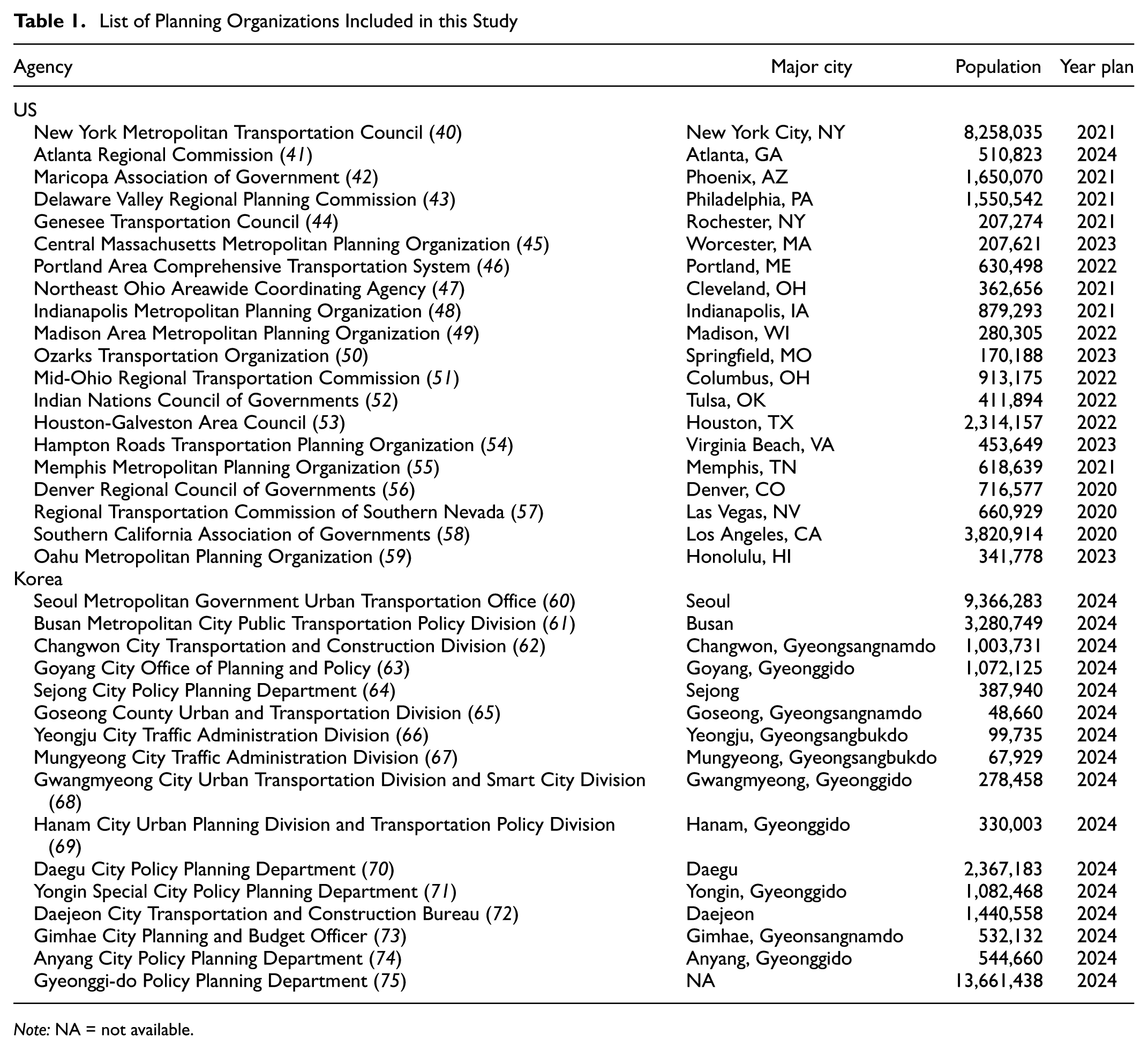
Note: NA = not available.
The comparative analysis of planning documents from Korea and the US is subject to inherent methodological considerations arising from differences in their temporal and spatial scales. Korean urban plans are typically updated annually, in contrast to the 4–5 year update cycles prevalent for US MPO documents. This temporal asynchronicity may affect direct comparability; the chosen update frequencies reflect an effort to capture the most current planning practices within each national context. In addition, the geographical scope of planning differs, with Korean documents often focusing on individual cities. In contrast, in the US, MPOs serve as the primary agencies responsible for coordinating and developing major transportation plans at the metropolitan and regional levels. These structural differences, arising from each country’s administrative system, complicate the direct correspondence between planning units. However, despite variations in population figures, the majority of selected cases in Korea and the US represent substantial urbanized areas, typically from several hundred thousand to over 1 million inhabitants. This generally comparable scale allows for a broadly meaningful, if not perfectly precise, comparative analysis of planning approaches.
This study examines 20 long-range transportation plans (LRTPs) developed by MPOs for major metropolitan areas across the Northeast, South, Midwest, and West regions of the US. As federally mandated entities, MPOs play a central role in long-term transportation planning at the metropolitan level. The LRTP, typically covering a 20-year horizon, articulates the region’s transportation vision and priorities, and guides organized goal setting and project selection ( 76 ). Transportation plans vary in their planning horizon, scope, purpose, and geographic scale; however, each MPO follows the same general planning process. The LRTPs guide decision-making by prioritizing future funding for projects in the near and long-term within the respective region.
In Korea, the transportation policies mentioned in the annual work plans of 16 cities and counties were examined. The selected regions included major cities, metropolitan areas, small cities, and county areas to ensure diversity in this study’s scope. Long-term plans in Korea are announced nationally, and regional reports are published annually. Therefore, long-range documents between the two countries could not be compared directly. Korean planning agencies must release annual Unified Planning Work Programs, which contain planning priorities and activities to be carried out within a metropolitan planning area ( 77 ). These documents do not include overarching goals or projects beyond a 1-year scope, such as emerging technologies. Therefore, the long-term plans were the closest match to the analyzed Korean documents.
Keyword Selection
Focusing on themes of equity, emerging technologies, and the equity implications of these technologies, the guiding questions and keywords were updated to better align with technological advancements since the 2019 study, as shown in Table 2. For social equity, the definitions of “low-income” and “vulnerable communities” were broadened to include more diverse groups.
Guiding Questions and Keywords for Each Concept
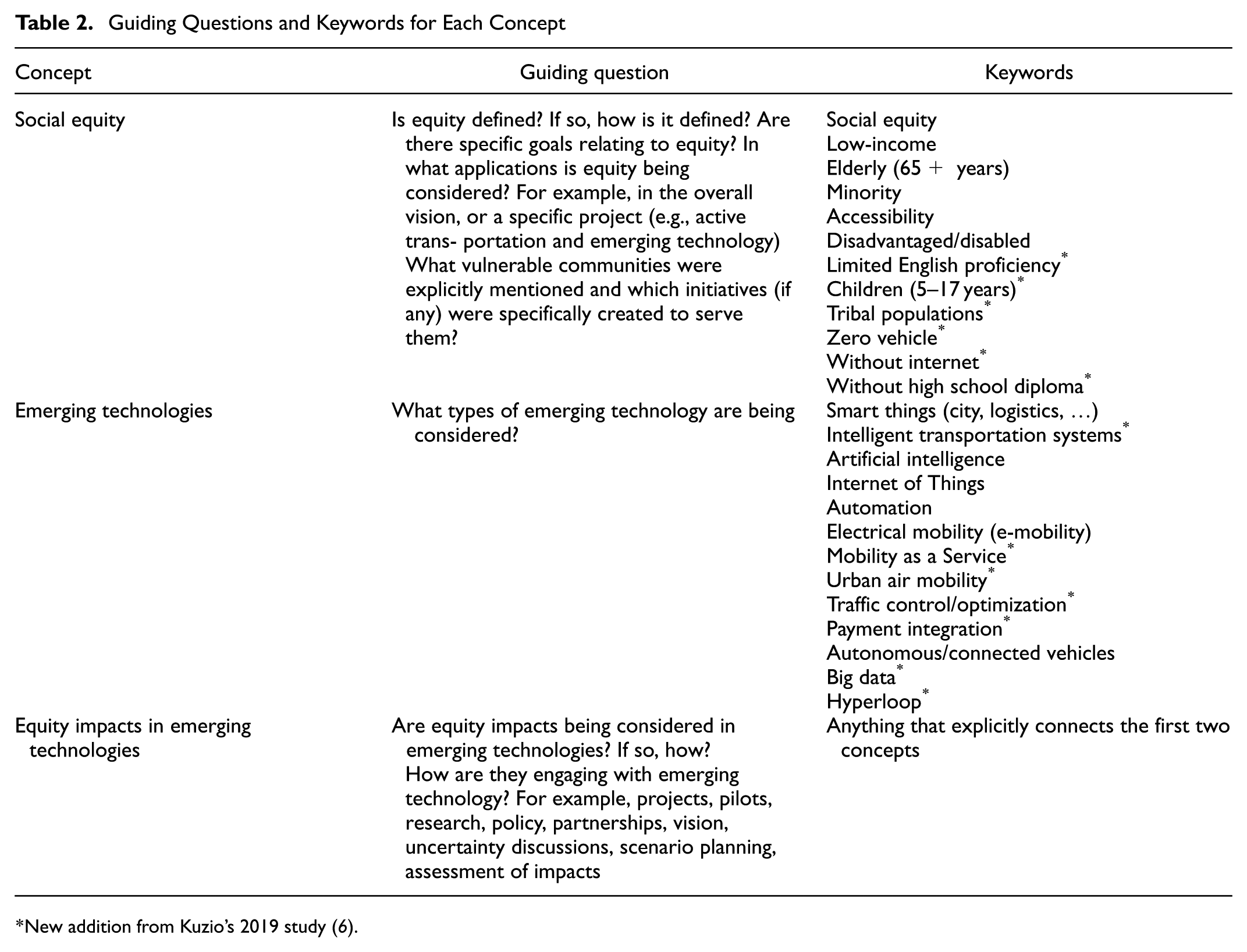
New addition from Kuzio’s 2019 study (6).
In this study, we identified 10 key vulnerable populations: low-income, minority, individuals with disabilities, those with limited English proficiency, the elderly (65 years or older), children (ages 5–17 years), tribal populations, zero vehicle households, households without internet, and individuals without a high school diploma. These groups represent the commonly identified communities or populations explicitly referenced in federal and state mandates relating to equity. We classified the frequency of reference to these groups into one of three categories: “absent” (i.e., keyword not found), “mentioned” (i.e., transportation services should serve low-income populations), and “specifically targeted” (i.e., fixed-route bus operators in regions heavily populated with low-income and minority communities).
Emerging technologies were coded using the keywords presented in Table 2. These definitions were applied to evaluate the progress of planning agencies and to map the degree of technology considerations. Key indicators for equity implications of technology included examples of how the planning organizations engaged with assessing equity for emerging technologies. Low visibility in this category was expected because of the primary focus on equity in the US and on technology in Korea.
The results of the keyword searches and guiding questions were coded on a stage to show the degree to which each theme was considered in the plan. Equity and emerging technology were categorized on the following four-point scale: “organizing concept,”“included in vision and/or goals,”“mentioned in the plan,” and “not included in the plan.” The equity implications of emerging technologies were categorized by “discussion of equity issues of emerging technologies,”“ideas for using technology to improve equity,” and “not discussed in plan.” These scales, based on Kuzio’s study (6), were used to objectively compare the 36 cities.
Results and Discussion
This section presents findings from the qualitative review of transportation planning documents from agencies across the US and Korea. Table 3 describes the degree to which agencies have considered equity, emerging technology, and the equity impacts of emerging technology in their plans.
Summary of Equity and Emerging Technology Considerations
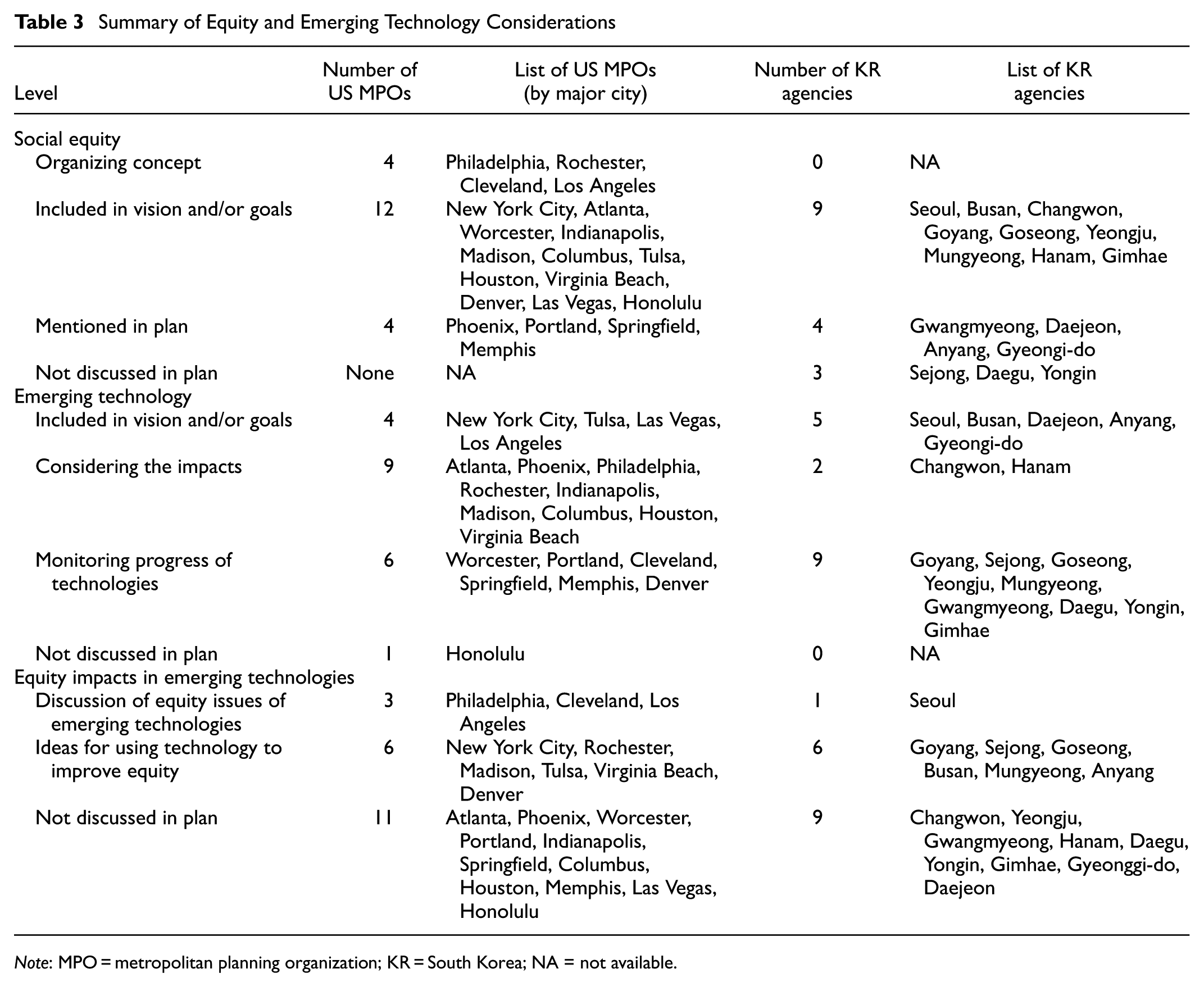
Note: MPO = metropolitan planning organization; KR = South Korea; NA = not available.
Equity Considerations
Definitions of Equity
Of the 20 US MPOs in the study, 12 (60%) included a definition of equity in their plans. Among the eight MPOs with explicit definitions, most (10 out of 12) aligned with horizontal equity, emphasizing fairness by using terms such as “just,”“fair,”“equal,”“impartial,” and “for all.” Examples include: “a fair distribution of costs and benefits that serve users” ( 40 ), “equality ensures that all mobility options are provided equally to all populations regardless of need” ( 44 ), and “consistent and systematic fair, just, and impartial treatment of all individuals, including those in underserved communities” ( 50 ). Only two MPOs, DVRPC and SCAG, focused on vertical equity, addressing inequities for disadvantaged groups ( 14 ). The SCAG defined equity as “the actions, policies, and practices that eliminate bias and barriers that have historically and systemically marginalized communities of color, to ensure that all people can be healthy, prosperous, and participate fully in civic life.” ( 58 ) This definition emphasizes affirmative and restorative justice actions to address systemic inequities, as opposed to merely minimizing negative impacts on vulnerable populations.
None of the Korean work plans specifically defines equity, but policies aim to improve transportation accessibility and safety for mobility-impaired individuals. The 2004 Act On Promotion Of The Transportation Convenience Of Mobility Disadvantaged Persons ( 12 ) defines these individuals as those facing daily mobility challenges, including people with disabilities, the elderly, pregnant women, those with infants, and children. Therefore, most municipal and metropolitan governments concentrate their equity-related efforts on enhancing mobility for these populations.
Rather than articulating conceptual definitions, Korean transportation plans tend to adopt a standardized format centered on policy implementation. Equity is addressed implicitly through targeted measures, rather than through formal frameworks or definitions. This demonstrates a clear intent to support vulnerable groups; the absence of an explicit definition limits the ability to systematically identify equity challenges or track progress in addressing them. Of note, the MOLIT introduced national policy initiatives titled Customized Measures for Transportation-Inconvenient Areas in 2024 and Protection of Transportation-Disadvantaged Groups in 2025. These initiatives further reflect an emerging national commitment to transportation equity. However, they still fall short of providing a clear and formal definition of what equity entails in the transportation context.
Consideration of Vulnerable Populations
This analysis evaluated how MPOs address vulnerable populations. The SCAG was the only MPO to mention all 10 groups, although only 60% had a “specifically targeted” framework. Overall, 65% of the mentioned populations had specific initiatives, such as funding or short-term plans, across all 20 MPOs. Populations without a high school diploma and children had the lowest targeting rates at 0% and 44%, respectively, indicating a lack of policies for these groups in LRTPs.
It is worth noting that different states have diverse approaches, which influence how these issues are integrated into planning. For example, California’s AV Strategic Document includes equity components and is supported by a statewide task force, offering a framework that MPOs, such as the SCAG, can incorporate into long-range plans. In contrast, states lacking such documents leave MPOs, such as the INCOG in Oklahoma, to independently navigate these challenges without cohesive state-level guidance. Acknowledging these disparities, assigning such complex considerations to MPOs without robust state-level policy support or national frameworks may overwhelm smaller MPOs, leading to inconsistencies. Instead, states with task forces or strategic documents should provide unified guidance to ensure equitable and consistent integration of AV/CV (Connected Vehicles) impacts into long-term planning.
Figures 1 and 2 display the percentages of the five most-referenced populations categorized as “mentioned” and “specifically targeted.” Federally mandated low-income and minority groups are categorized together; however, neither achieved 100% in mentions or targeted policies. These results underscore the need for improved attention to the needs of vulnerable populations.
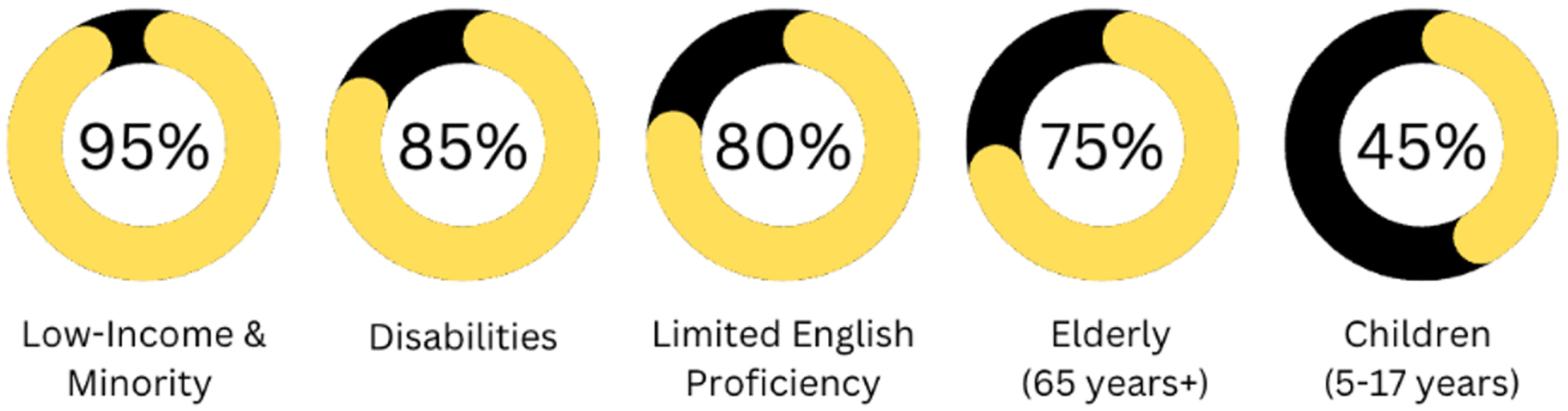
Percentage of long-range transportation plans (LRTPs) that “mention” the following communities.
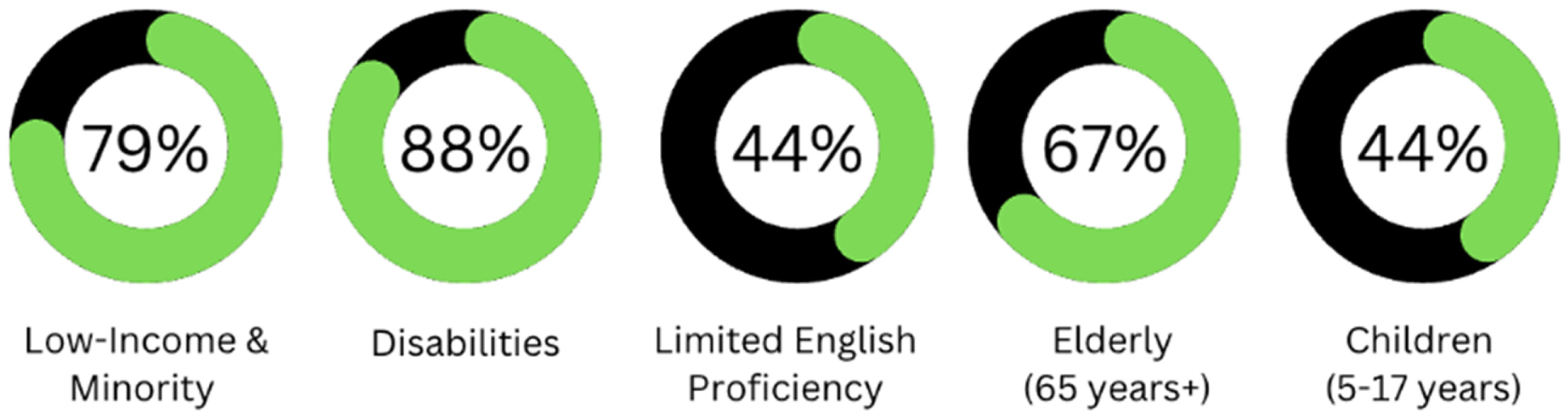
Percentage of long-range transportation plans (LRTPs) that “specifically targeted” the following communities.
Some MPOs have implemented innovative solutions to serve vulnerable communities better. In 2021, the Greater Madison MPO allowed library cardholders to check out bicycles, improving accessibility for low-income and unbanked individuals. The NOACA launched the CrowdGauge Tool, an open-source framework for creating educational online games to engage historically less-involved populations in the planning process. The DVRPC’s Equity through Access initiative features a web map showing disparities in access to essential services in Greater Philadelphia. In addition, the CMMPO, in collaboration with the United States Department of Agriculture Community Connect Program, funded broadband projects in economically challenged rural communities. These examples demonstrate effective strategies MPOs have used to support and involve vulnerable communities in decision-making.
Discussion of General Equity Considerations
In relation to general equity considerations in planning processes, the majority of US MPOs surveyed (60%) incorporated equity into their vision and/or goals. Compared with the findings from Kuzio (6) under the same framework, over half of the MPOs (11 out of 20) increased the level of consideration of equity since the last plan adopted (e.g., moving from “not mentioned” to “mentioned” in the plan) ( 4 ). The MPOs in Phoenix, Portland, Springfield, and Memphis only briefly mention equity concepts, whereas Philadelphia, Rochester, Cleveland, and Los Angeles prioritize equity as a central organizing concept in their long-term plans. For these agencies, equity was part of their vision for the region and was used as a guiding principle that shaped various elements of the plan. For example, the NOACA uses equity as a guiding principle in shaping transportation objectives, public participation strategies, performance measures, and investment distribution. The agency proposed to achieve the vision of “an equitable Northeast Ohio with thriving communities in both urbanized and rural areas” by developing an efficient highway system, enhancing roadways for all users, building an effective transit system that connects people to jobs, and leveraging emerging technologies ( 47 ).
From analyzing Korea’s transportation sector work plans, over 80% of the regions presented goals or plans related to equity, although no explicit definition was provided. Among the transportation department work plans of nine cities, key policies and directions mentioning equity included keywords such as “transportation vulnerable groups” ( 60 , 65 , 67 , 69 , 73 ), “transportation convenience” ( 62 ), “life-oriented” ( 61 ), and “transportation welfare” ( 63 ). Yeongju notably emphasized mobility rights for residents in transportation-vulnerable areas through a detailed public taxi support program ( 66 ). In contrast, equity policies were not outlined in Sejong, Daegu, and Yongin; Sejong mentioned technology but did not provide specific equity measures. Although equity was not explicitly mentioned in the main plans of Daejeon, Anyang, Gyeonggi Province, and Gwangmyeong, implementation plans were proposed.
A common policy in these plans is the introduction of low-floor buses, aligning with 2022 regulations that mandate their use when replacing old buses and prioritize environmentally friendly vehicles. The introduction of low-floor buses was proposed in Seoul, Busan, Changwon, Goyang, Yeongju, Gwangmyeong, and Daejeon. In addition, voucher taxi programs supporting non-wheelchair users and pregnant women are mentioned in Busan, Daejeon, Goseong, Anyang, Yeongju, and Hanam. Plans were presented in 10 cities to expand tailored transportation services for transportation-vulnerable groups, although specific plans were not detailed in some cases. Achieving equity goals necessitates considering the introduction of various tailored transportation options beyond low-floor buses and voucher taxis.
Agencies in both countries incorporate equity to some extent in their planning documents—typically through infrastructure improvements and subsidies for vulnerable groups—their approaches diverge in meaningful ways. In the US, equity is pursued through a broad, multidimensional lens that includes race, income, language, and environmental justice. This comprehensive framing is rooted in a history of systemic inequalities and supported by mandates such as Title VI of the Civil Rights Act. Consequently, the US planning places a strong emphasis on inclusive public participation and employs equity metrics to evaluate policy impacts. In contrast, Korea adopts a more targeted and welfare-oriented approach, primarily addressing mobility-constrained groups, such as older adults, people with disabilities, and low-income individuals. Of note, a significant focus has been placed on improving transportation access for the elderly in rural areas and for individuals with disabilities, often through specialized transit and demand-responsive services. Instead of relying on formal equity definitions or evaluation metrics, equity in Korea is typically embedded within broader social welfare policies aimed at enhancing accessibility. These contrasting approaches reflect each country’s distinct social, institutional, and cultural contexts, rather than indicating a normative preference for one model over the other.
Emerging Technologies
Types of Emerging Technologies Discussed in the US and Korean Plans
A total of 25 different emerging technologies were identified from the review of planning documents. Similar technologies were consolidated into representative categories. For example, the Advanced Driving Assistance System was integrated into the AV and CAV categories, and digital twins were integrated into the ITS and Smart City categories. This resulted in 13 categories of emerging technologies (Figure 3).
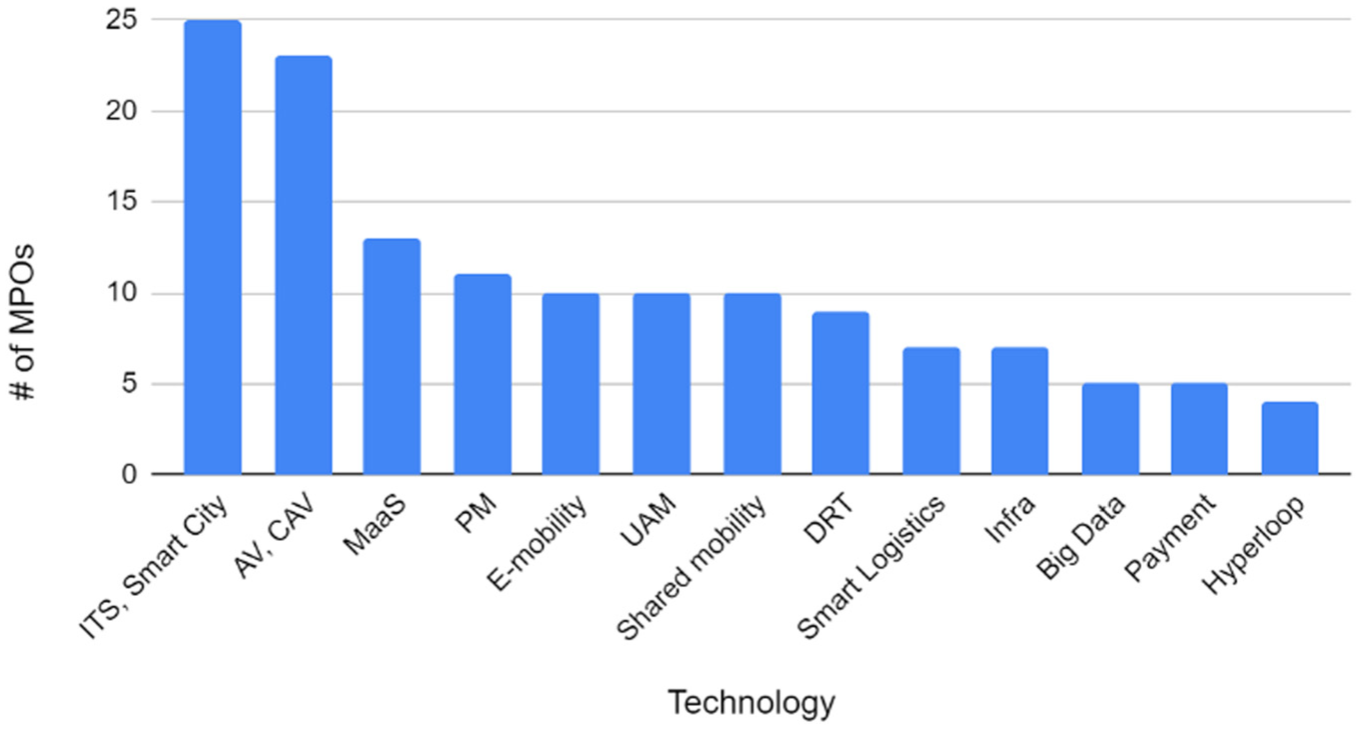
Total number of planning agencies that mentioned each emerging technology.
Out of 36 MPOs, 25 (69.4%) included plans for ITS and smart cities, indicating strong national interest in these technologies in both countries. In Korea, ITS and smart cities were the most frequently mentioned, supported by detailed plans and active national R&D projects. In general, high interest was noted in traffic monitoring ( 50 , 73 ) and smart signal management ( 44 , 68 ). The ITS and smart cities are broad concepts that can be defined in various ways, depending on the perspective and objectives of individual planning agencies. The Indianapolis Metropolitan Planning Organization (IMPO) defines ITS as the use of technology and management strategies to improve the safety, efficiency, and coordination of transportation networks to enhance mobility and deploy solutions that benefit the local area and the broader state of Indiana ( 48 ). Seoul operates an advanced ITS known as the Seoul Transport Operation and Information Service. This integrated traffic management center is responsible for overseeing real time traffic information, bus operations, road monitoring, and advanced traffic enforcement. It uses cutting-edge IT to optimize traffic flow, reduce congestion, improve safety, and provide valuable data to the public and private sectors for better transportation management in Seoul. Smart cities are a conceptual model of urban development utilizing human, collective, and technological resources to drive growth and improve prosperity in urban areas ( 78 ). Sejong, designated as a national pilot project for a smart city, aims to enhance the quality of life by actively involving citizens in solving urban challenges across various sectors such as mobility, education and employment, energy and environment, safety, culture, governance, and healthcare.
The second most mentioned technologies are AVs and CAVs, which were referenced more frequently than ITS in the US (Figure 4). Both countries emphasize AVs and CAVs, with several cities planning AV pilots ( 52 , 60 ). The NOACA in the US and Anyang in Korea plan to integrate these technologies with public transportation, such as autonomous buses ( 47 , 74 ). Following ITS, AVs, and CAVs, MaaS and PM were commonly mentioned. Both countries included MaaS in their plans at a similar rate, approximately 35%, reflecting growing global interest. However, PM is emphasized more in the US, with 40% of US MPOs and 18.8% of Korean MPOs highlighting it. The US MPOs often use the term micromobility rather than PM and integrate it with mobility-sharing concepts ( 52 , 58 ). E-mobility and shared mobility show significant differences in the frequency of mentions between the two countries. In the US, these technologies were highly likely to be included in plans, with 50% of MPOs mentioning shared mobility. In contrast, shared mobility was not mentioned in Korean plans at all. This may be because, unlike Korea’s cities, which have well-developed public transportation systems, the US has less developed public transportation systems, leading to a higher demand for ride-sharing services.
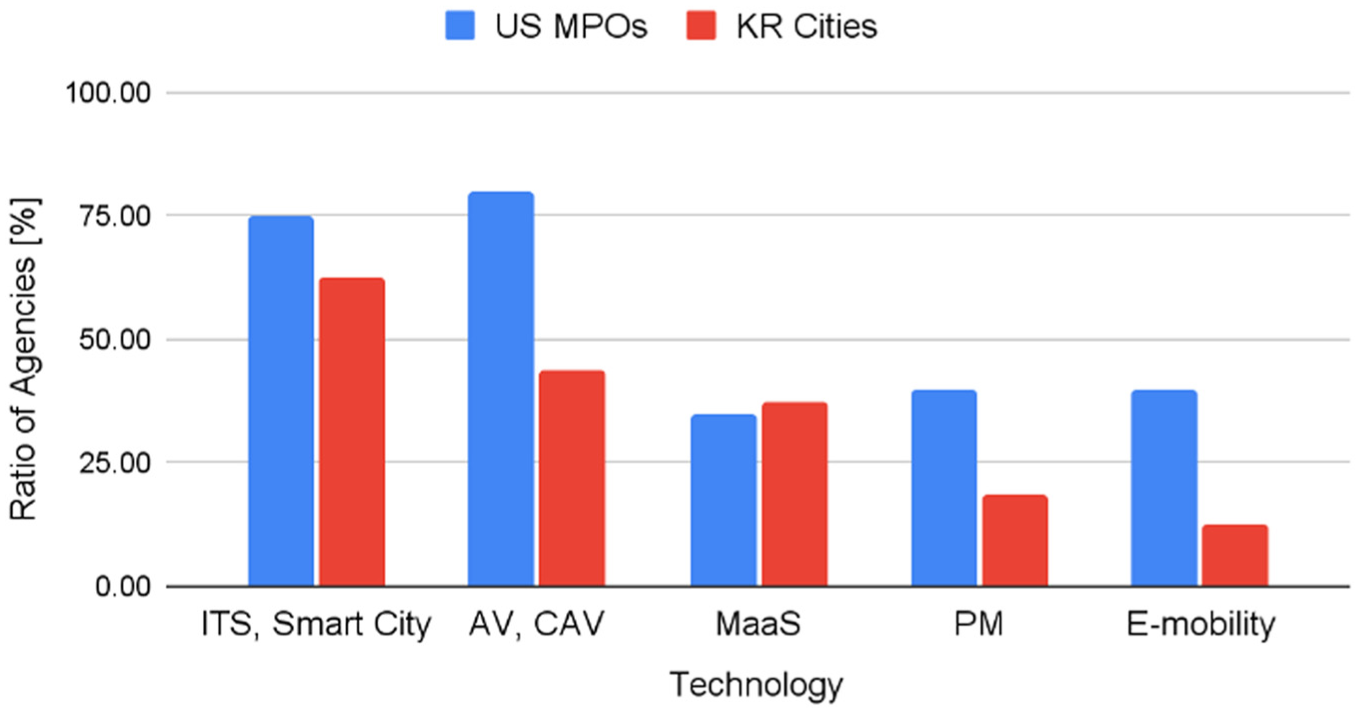
Percentage of agencies’ plans that mentioned each of the top five emerging technologies.
In contrast, Korea exhibits significantly higher engagement with DRT, with relevant plans and policies appearing in 43.8% of reviewed documents, compared with 10% in the US. While DRT is already in operation and actively expanding in several Korean cities—particularly as a response to insufficient coverage in suburban and rural areas—interest in DRT in the US remains minimal and largely limited to pilot programs. The limited interest in the US can be attributed to structural factors, such as the vast geographic scale, low-density development, and high car dependency, which pose challenges to the cost-effectiveness of DRT. In contrast, Korea’s focused investment and policy support indicate a more proactive and committed approach to implementing DRT as a sustainable mobility solution ( 61 , 63–65, 67 , 71 , 74 ).
Other technologies included in MPOs’ plans are smart logistics, smart infrastructure, big data, fare payment integration, and hyperloops. In Korea, fare payment integration is less of a concern because of the widespread use of transportation cards. In the US, where public transportation usage is lower and technology adoption slower, several MPOs have included plans to improve fare payment systems ( 40 , 46 , 52 , 57 ). In addition, the hyperloop is necessary in the US because of its vast territory and limited intercity transportation options. However, Korea cities, with their existing rapid train systems like Korea Train Express (KTX) and Super Raid Train (SRT), did not mention hyperloop in their current plans. Instead, Sejong is currently discussing the establishment of the Daejeon–Sejong–Chungcheongbuk-do metropolitan railway ( 64 ), and Seoul is reviewing policies aimed at providing advanced intercity transportation options between cities, such as the establishment of the Great Train Express (GTX) to improve transportation convenience in the metropolitan area ( 60 ).
Overall, the US exhibits a broader and more diverse involvement in various emerging transportation technologies, and Korea focuses on specific technologies such as ITS, AV, and DRT. These differences highlight the distinct priorities and stages of technology adoption in transportation innovation in each country.
Discussion of General Emerging Technology Considerations
The US MPOs remain speculative about the potential impacts of emerging technologies on regional transportation. Overall, 30% of MPOs continue to monitor developments in the growing range of emerging technologies (Figure 3). Compared with the findings from Kuzio ( 4 ) under the same framework, more than half of MPOs (11 out of 20) have increased their consideration of emerging technologies since the adoption of the last plan. However, there is much speculation in relation to the development and potential impacts of these technologies, with 40% of MPOs in this study mentioning uncertainty.
Only four MPOs included emerging technologies as a core component of their long-range plans. For these agencies, technological innovations are a key strategy for addressing regional issues and achieving transportation goals. For instance, the NYMTC prioritizes “harnessing technological advancements to improve the transportation system” ( 40 ), and the INCOG’s policy and technical action plan promotes “smart mobility options” to create economic opportunities, improve environmental sustainability, and address equity ( 52 ). Recently, discussions and policy formulations in relation to emerging transportation technologies have increasingly expanded beyond the MPO levels to include state-level efforts as well. States, such as Oklahoma, Texas, and North Carolina, have begun actively integrating a variety of emerging technologies—such as autonomous vehicles, unmanned aircraft systems, and connected infrastructure—into their transportation planning processes ( 79 – 81 ). These efforts reflect a broader trend of aligning state-level strategies with the rapid pace of technological advancement. As these plans are frequently updated to incorporate the latest innovations, ongoing review and revision will be essential to maintaining their relevance and effectiveness in a rapidly evolving mobility landscape.
Compared with Korean transportation agencies, more US cities are assessing the potential impacts of emerging technologies. Almost half of US MPOs are considering impacts by engaging in research partnerships, funding pilot studies, or scenario planning. The MAG is exploring the use of ITS to improve traffic signal operations through pilot initiatives, which aim to provide insight into technological feasibility and regional scalability. These pilot initiatives will be independently evaluated by a public university task force ( 42 ). Scenario planning is a proactive approach MPOs are using to consider and prepare for potential impacts. In the DRCOG’s Mobility Choice Blueprint, stakeholder groups developed two different planning scenarios—a future with and without emerging mobility technologies—and evaluated the impacts on the economy, congestion, safety, equity, and air quality ( 56 ).
In Korea, regional organizations have incorporated emerging technologies into their plans, with five cities leading the way. Seoul aims to pilot Level 4 autonomous vehicles, while Busan is focusing on optimizing routes and integrating ICT-based logistics. Daejeon is working on smart intersections, Bus Management System (BMS), and infrastructure for autonomous vehicles and MaaS. Anyang is implementing ITS and smart intersections to advance toward becoming a smart city, and Gyeonggi Province is emphasizing future mobility projects, including Urban Air Mobility (UAM) and drones. Changwon plans to introduce contactless fare systems for buses, and Hanam is developing a smart city platform through its Smart City Business Council. Larger cities, such as Seoul and Busan, address a wider range of technologies, and smaller cities focus on practical, immediate solutions, reflecting different scales of technology adoption.
Overall, both countries are considering emerging technologies; Korea’s approach is characterized by efforts to monitor advancements through pilot programs, whereas the US exhibits more uncertainty and the exploration of potential impacts. There are key contextual differences that have impacted the rates of technology adoption in both countries. In Korea, each city’s plans evolve from a central national strategy, with the government actively encouraging the adoption of new technologies through subsidies and supportive policies. In contrast, technology adoption in the US varies significantly between states and regions and depends on federal, state, and local government policies and incentives. Moreover, the market-driven approach in the US is heavily influenced by diverse consumer preferences and levels of public acceptance. These challenges may pose barriers to implementation, requiring US MPOs to undertake a more thorough assessment of impacts.
Equity Considerations of Emerging Technologies
Over half of the MPOs did not include any discussion of equity impacts in their plans. In addition, the remaining six discussed how technology could be utilized to address specific equity issues. For example, the DRCOG stated that embracing innovative mobility technologies would allow “91,000 people who would otherwise face mobility challenges to enjoy a range of travel options enabled by coordinated adoption of new mobility technologies” ( 56 ). Compared with the findings from Kuzio ( 4 ), half of the MPOs that did not discuss equity impacts failed to address the equity impacts of emerging technology during this reassessment. This trend reflects the significant level of uncertainty that still exists as agencies consider these new technologies.
Only three MPOs discussed potential equity impacts in their LRTPs. The DVRPC created various scenarios based on rising inequality, climate change, and digital transformation. The NOACA developed four different modeling scenarios, one of which includes investments in several emerging technologies, such as installing electric vehicle (EV) charging stations and allocating lanes to autonomous vehicles ( 47 ). The SCAG’s Mobility Innovations and Pricing Study utilized stakeholder engagement, technical analyses, and communication strategies to explore the potential equity implications of road pricing and other innovative transportation policies ( 58 ). The DVRPC, NOACA, and SCAG MPOs also used equity as an organizing concept, which may explain why these agencies have taken a more proactive approach in thinking about equity impacts. These types of initiatives exemplify how MPOs can leverage mobile technologies to better serve vulnerable populations.
In Korea, seven out of 16 regions mention equity in the utilization of emerging technology. Seoul was the only city actively considering equity through the deployment of emerging technologies and introduced the Early Morning Autonomous Bus in 2024 to enhance transportation accessibility for commuters who need to travel outside typical public transit operating hours ( 60 ). Later this year (2024), Seoul intends to pilot autonomous taxis as well. The cost of labor is predicted to drop significantly with autonomous transportation. Labor expenses account for approximately 70% of total transportation costs in Seoul ( 82 ). By switching to autonomous transportation, it is possible to provide cheaper transportation fares and reduce the burden on low-income passengers. Specifically, the cost of operating taxis can ultimately decrease up to 71%–78% ( 83 ).
Busan is considering introducing integrated server-based AI video analysis through CCTV cameras to automatically call elevators for vulnerable users, such as those using wheelchairs or electric scooters ( 61 ). In cities such as Goyang, Goseong, Sejong, Mungyeong, and Anyang, DRT is used to ensure equity for residents in transit-sparse areas through the application of emerging technology. In these cities, policies utilizing emerging technologies aim to address spatial inequalities perceived by citizens resulting from the implementation of route optimization policies in response to lower public transit demand (63–65, 67 , 74 ).
Planning agencies in both countries have a limited consideration of equity in planning for emerging technologies. The uncertainty and complexity of these technologies make it difficult to forecast potential impacts. Moreover, agencies may lack the resources and expertise to undertake holistic equity assessments. For plans that do address equity, agencies in both countries typically view technology as a tool to improve equity, rather than discussing the potential disparate impacts of technology on vulnerable populations.
Despite this shared limitation, each country incorporates equity into its technological planning in distinct ways. In the US, there is a stronger emphasis on exploring how emerging transportation technologies can specifically benefit underserved communities and avoid reinforcing existing inequalities. This has led to a wide range of technological initiatives, such as shared mobility, micromobility, and digital engagement platforms, accompanied by robust equity evaluation frameworks. In contrast, Korea’s approach tends to emphasize leveraging emerging technologies to improve overall affordability and accessibility, often targeting predefined vulnerable groups through services, such as ITS, AV, and DRT. Overall, the US exhibits a broader and more socially inclusive framing of technological innovation, and Korea demonstrates a more targeted and service-oriented deployment. These differences reflect each country’s stage of technology adoption and its distinct policy priorities and interpretations of equity in the transportation context.
Lessons Learned and Best Practices
One key lesson in transportation planning is the importance of defining equity and explicitly targeting vulnerable populations. The SCAG was the only MPO to address all 10 vulnerable groups mentioned in the case of the US. The MPOs with broader definitions of vulnerable populations tended to explore a wider range of strategies and technologies to serve these groups. Therefore, to better address the needs of underserved communities, transportation planners should aim to include a broad range of vulnerable populations in their equity definitions.
Emerging technologies, such as AVs and CAVs, present opportunities to enhance equity by improving accessibility; however, each country must carefully assess how to deploy these technologies in ways that best serve vulnerable groups. In addition, the US has focused on shared mobility and Korea on DRT; both countries lack concrete plans for how to integrate these technologies to address equity. Therefore, both nations should develop strategies that consider how these technologies can address the mobility challenges faced by vulnerable groups, ensuring they are not left behind in the adoption of these innovations.
A promising practice comes from the DVRPC, which used scenario planning to consider how emerging technologies could address potential transportation challenges, allowing for more proactive and tailored solutions. Seoul’s Early Morning Autonomous Bus initiative could benefit from incorporating such technologies to provide more affordable, accessible transportation for commuters traveling outside typical public transit hours.
To effectively promote equity in transportation, MPOs and cities need to define vulnerable populations and develop accommodating strategies by learning from successful practices, such as scenario planning and proactive solutions exemplified by Seoul’s approach to create more inclusive, accessible transportation systems that better aid vulnerable communities.
Moreover, because this comparative study illustrates equity and the integration of emerging technologies in both countries, it offers valuable benchmarking cases. However, Korea and the US differ significantly in their geographic, societal, and cultural contexts. These differences extend beyond levels of technological interest and fundamentally influence how equity goals and emerging technologies intersect. Therefore, efforts to adopt best practices from other countries must move beyond technical considerations. A careful understanding of each country’s geographic conditions, consumer behavior patterns, and sociocultural norms is essential to effectively adapt equity-oriented technology strategies to the local context.
Conclusions
Emerging transportation technologies, such as CAV, MaaS, and ITS, are rapidly transforming urban transportation. Despite their advanced technical capabilities, the equity issues resulting from their introduction remain unclear. This study builds on Kuzio ( 4 ) by reviewing planning documents from 20 US MPOs and extending the analysis to include an additional 16 Korean planning agencies. It investigates the themes of emerging technologies and equity ( 4 ).
In total, 12 US MPOs included equity definitions in their plans, with six focusing on horizontal equity and two focusing on vertical equity. In addition, 60% of US MPOs have incorporated equity into their visions and goals, and more than half have increased the level of equity consideration since their last plan. In Korea, most plans included policies to improve access for disadvantaged groups and enhance transportation welfare, but they lacked explicit equity definitions.
The reviewed documents focus on vision planning for emerging technologies rather than on the complete technical research for specific technologies. As a result, the degree of advancement may be unclear. Thirteen emerging technology categories were identified, with ITS, smart cities, AVs, and CAVs being the most prominent. Approximately half of the US MPOs assess the impact of new technologies through research collaborations, pilot studies, and scenario planning, with four MPOs including new technologies in their long-range plans. In contrast, Korea focuses on specific technologies, such as ITS, AV, and DRT, with less emphasis on shared mobility, e-mobility, and payment integration, which have gained more attention in the US. Both countries prioritize new technologies, with larger cities adopting a variety of advanced technologies and smaller cities focusing on budget-friendly implementations, such as smart intersections and infrastructure deployment.
However, only three US MPOs and one Korean city discussed the potential equity impacts of new technologies, indicating that equity considerations are poorly addressed in both countries. The US MPOs assess equity impacts through qualitative scenario building, modeling, and research, and the Seoul government agency considered pricing autonomous shuttles for vulnerable populations. These findings suggest that while some US MPOs and Korean cities have begun to consider equity impacts, more widespread adoption and refinement are needed.
Based on these findings, both countries should prioritize equity-related discussions when considering the introduction of emerging technologies. Agencies in both countries offer examples of how this can be achieved. First, incorporating equity as part of the agency’s overall long-term vision and goals can be used to shape plans related to emerging technology. Tying these to specific outcomes can encourage agencies to be explicit in how technologies may be used to enhance equity outcomes. Second, scenario planning through hypothetical scenarios or modeling can be a helpful tool that agencies can use to proactively consider the range of potential outcomes. Third, as several Korean agencies have achieved, agencies can explicitly incorporate equity implications by considering how technology can be used to provide tailored mobility solutions for specific vulnerable populations. Finally, as technology rapidly advances, agencies should continue to monitor trends and adjust plans accordingly. Every country should implement transportation policies tailored to its unique regional characteristics, infrastructure, culture, and diversity. This will support efforts to build equitable, efficient, and sustainable transportation systems.
This study reviewed and compared transportation plans from 36 planning agencies in the US and Korea, but acknowledges the limited sample size, especially for smaller US metropolitan areas. Moreover, in Korea, city transportation departments are small, leading to a shortage of varied and detailed plans, commonly adopting visions from the MOLIT in Korea. Future research should monitor the progress of these planning practices and include additional cities to identify best practices in planning for emerging technologies. Furthermore, incorporating qualitative methods, such as interviews or surveys, could more accurately reflect how equity and emerging technologies are interpreted and implemented in practice.
Footnotes
Author Contributions
The authors confirm contribution to the paper as follows: study conception and design: P. Ho, Y. Yu, S. Jeon, L. Park; data collection: P. Ho, Y. Yu, S. Jeon, L. Park; analysis and interpretation of results: P. Ho, Y. Yu, S. Jeon, L. Park; draft manuscript preparation: P. Ho, Y. Yu, S. Jeon, L. Park. All authors reviewed the results and approved the final version of the manuscript.
Declaration of Conflicting Interests
The authors declared no potential conflicts of interest with respect to the research, authorship, and/or publication of this article.
Funding
The authors disclosed receipt of the following financial support for the research, authorship, and/or publication of this article: The authors acknowledge funding from “IRES Track II: US-Korea Advanced Transportation Infrastructure Informatics Institute (ATI3): National Science Foundation, 07/01/2020 - 06/30/2024.”
