



Abstract
The main goal of the study is to evaluate the potential of polyethylene (PE) modification in improving cracking and stress relaxation properties of asphalt mixtures at low temperatures. In this process, PE and asphalt binder were subjected to differential scanning calorimeter (DSC) to evaluate the heat flow, glass transition (Tg), and thermal responses at low temperatures (<0°C). Further, to determine the relaxation and modulus properties, dynamic mechanical analyzer (DMA) and bending beam rheometer (BBR) were used for PE and asphalt materials respectively. The thermal and modulus data of asphalt-PE materials obtained from DSC, dynamic complex modulus (DMA), and BBR were then used to correlate the performance of PE-modified asphalt mixtures. Disk-shaped compact tension test (DCT), three-point bending beam fracture test (3PBFE), low-temperature indirect tensile strength (IDT), and DCM tests were performed on PE-modified asphalt mixtures as a part of low-temperature cracking assessment. The study identified that PE and asphalt binder attain similar modulus values at low temperatures (<0°C) and merge approximately at Tg of asphalt (−28°C). This unique phenomenon leads to a reduced influence of PE on asphalt mixtures at low temperatures, specifically below Tg of asphalt. As a result, although PE was influential in improving the true tensile strength of asphalt mixtures above Tg of asphalt (−28°C), its impact diminished below Tg of asphalt (<−28°C). From master curves and phase angle analysis, PE imparted elastic behavior to asphalt mixtures and exhibited potential crack resistant tendency temperatures greater than Tg of asphalt. Overall, the influence of PE modification on hot mix asphalt (HMA) mixtures at low temperatures is heavily relied on Tg of asphalt binder.
Keywords
Asphalt layers in flexible pavements are susceptible to temperature and loading effects owing to the viscoelastic nature of asphalt binder ( 1 ). As a result, hot mix asphalt (HMA) layers often experience distresses such as rutting at high temperatures, fatigue cracking at intermediate temperatures, and thermal cracking at low temperatures ( 2 , 3 ). To resist these distresses, polymer modification of asphalt binders and mixtures is attempted to extend the service life of HMA pavements ( 4 ). Styrene butadiene styrene (SBS), ethylene vinyl acetate (EVA), styrene butadiene rubber (SBR), and reactive elastomeric terpolymer (RET) are commonly used polymers for asphalt binder modification ( 5 , 6 ). However, usage of these polymers is an economically expensive process involving significant energies and virgin resources ( 7 ). In this process, waste plastics are continuously explored as a potential alternative polymer source by the asphalt industry ( 8 ). As a result of its ability to impart polymeric benefits along with the existing low recycling rate ( 9 ), incorporating waste plastics into HMA is anticipated to benefit environment and infrastructure simultaneously ( 10 , 11 ). Commonly utilized waste plastics include low-density polyethylene (LDPE), high-density polyethylene (HDPE), polypropylene (PP), polystyrene (PS), polyethylene terephthalate (PET), among many others ( 12 , 13 ).
Plastic-modified asphalt mixtures are produced either by wet or dry mixing process. Wet mixing involves modifying asphalt binders with plastics before mixing with aggregates, requiring high temperatures and energies. This process faces storage stability issues between asphalt and plastic leading to phase separation and inconsistent polymer distribution ( 13 , 14 ). In dry mixing method, plastic is initially thoroughly mixed with dry aggregates followed by addition of asphalt binder. This is a relatively convenient method of incorporation which does not involve additional modification energies at the binder level, reducing the cost of construction. As a result, most transportation agencies prefer dry mixing method even with field trial sections ( 15 – 21 ). From either method, incorporation of plastic into HMA mixtures is identified to induce significant changes in mechanical properties of HMA, which may either benefit or compromise the performance of asphalt mixtures ( 22 ). For instance, Yin et al. ( 23 ) mentioned that incorporating recycled polyethylene (rPE) through dry mixing enhanced the rutting resistance of mixtures containing either SBS or RET-modified binders. Further, plastic-modified binders recorded significantly higher Glover Rowe (G-R) results, endangering them to block cracking susceptibility. Revelli et al. ( 12 ) evaluated PS and PET in asphalt mixtures through the dry mixing method and reported that plastic modification improved the rutting tolerance index (RTindex) compared with control mixture by 1.5–1.9 times. The same study also identified that cracking tolerance indices (CTindex) of all the plastic-modified mixtures were lower than the control mixture making them more susceptible to fatigue cracking ( 10 ).
Overall, the majority of studies on plastic-modified HMA mixes reported that plastics, specifically PE is beneficial against rutting and detrimental for intermediate-temperature fatigue cracking ( 12 , 13 , 15 – 18 , 22 , 23 ). However, the influence of PE on low-temperature performance is reportedly a conflicting understanding hindering its adaptability ( 24 ). Yu et al. ( 25 ) identified that PE plays a bridging role in asphalt and reduces the crack propagation in asphalt mixtures at low temperatures as observed from scanning electron microscope images, although contradicted by low ductility of PE-modified asphalt binder. Yousefi et al. ( 26 ) noticed a decrease in Fraass breaking point owing to PE addition along with pyrolytic oil to base binder, which reflects the improvement in binder flexibility. Contrarily, Rafiq Kakar et al. ( 27 ) demonstrated that low-temperature performance of plastic-modified mixtures was relatively similar or slightly lower than the control, based on semicircular bending test. Yao et al. ( 28 ) identified that the addition of PE significantly increased the susceptibility of asphalt binder toward low-temperature cracking owing to high creep stiffness. Further, the behavior of plastics at low temperature is observed to vary when combined with other polymers and compatibilizers ( 24 ). Peng et al. ( 29 ) identified SBS as a potential compatibilizer along with PE that can reduce the low-temperature ductility of asphalt. Revelli et al. ( 14 ) reported SBS along with pretreated LDPE using waste cooking oil can reduce long term aging effects from critical temperature differential (Delta Tc evaluations at low temperatures.
While some studies encouraged PE modification in cold regions to resist low-temperature cracking distress ( 25 , 27 , 28 ), few researchers reportedly warned the side effects of increase in risk of thermal cracking ( 26 , 30 ). Such conflicting conclusions may also be attributable to differences in type, dosage, method of application of plastics in preparing HMA mixtures, and the tests used to evaluate the performance at low temperatures. Nevertheless, this inconsistency in performance of PE-modified asphalt makes the agencies and researchers hesitant to adapt PE-modified HMA at low temperatures. In cold regions that are prone to frost induced deformations, asphalt pavements experience severe tensile strains resulting in cracking ( 31 ). In such cases, plastics along with their polymer stiffness may offer a sustainable solution for enhancing the life of pavement. Capturing such available polymeric benefits from PE can encourage the design and usage of PE-modified HMA mixtures for cold regions. In this process, PE incorporation into HMA requires better understanding toward thermal and mechanical response at low temperatures.
Therefore, the present study focuses on this research gap by evaluating the thermal and mechanical changes that occur in PE and asphalt at low temperatures. Exploring thermal and mechanical characteristics facilitates the understanding of material response toward temperature and loading effects respectively. Particularly, the influence of PE modification on cracking, fracture energy and relaxation properties of asphalt mixtures at low temperature conditions (−18°C and below) are evaluated in this study. Also, since thermal cracking is highly anticipated to occur closer to glass transition point (Tg) of asphalt ( 32 ), the changes occurring in modulus of PE around Tg transition needs to be understood and correlated to mixture tests. Insights from material characterization including asphalt and PE moduli are to be utilized to verify the responses observed in mixture level evaluation. The outcome of the present study enhances the understanding on PE-asphalt behavior and improves the adapting scenario of waste plastics at low temperature conditions.
Goal and Objectives of The Study
The main goal of this study is to evaluate the low-temperature cracking and relaxation properties of PE-modified asphalt mixtures. The specific objectives of the study are to:
Characterize the modulus of plastic and asphalt binder individually to explain the stiffness variations in PE-modified asphalt mixtures at low temperatures (0°C to −40°C).
Determine the thermal characteristics of asphalt and PE at low temperatures (0°C to −40°C).
Determine the influence of PE modification on thermal cracking resistance of asphalt mixtures at low temperature (−18°C).
Evaluate the relaxation potential of PE-modified HMA mixture beams at 1,200 µε and 2,400 µε flexural strain levels corresponding to deflection of 0.25 and 0.5 mm.
Materials
PG 58-28 as the base asphalt binder and granite aggregate of 9.5 mm nominal maximum aggregate size (NMAS) were used for producing asphalt mixtures. Figure 1 represents the gradation information of the aggregates used in this study. The gradation of the mixture conformed with New Jersey department of transportation requirements for asphalt concrete mixtures ( 33 ). PE used in the study was obtained from a local supplier in New Jersey. The source of PE was known to be roof panels with a density of 0.906 g/cc as represented in Figure 2a. Further, PE is identified in regard to degree of crystallinity (Xc %), which is unique to each PE and determined as a suitable parameter to address the variability in source of PE ( 34 ). The PE used in the study has an Xc value of 60% as predetermined from previous phase of study. The PE was identified to have low melting enthalpy and viscosity that do not alter HMA workability. More information on the significance of the Xc value and its influence of HMA properties can be accessed at Revelli et al. ( 34 ). The obtained plastic was ground from 5–10 mm to a size of approximately 2 mm for an enhanced dispersion of PE in HMA mixtures as seen in Figure 2b. To avoid re-agglomeration of PE during grinding, the grinding process was halted at regular intervals, allowing the PE to cool down to room temperature. The plastic was ground for a duration of 2 min considering the size break down tendency using a high-speed multi-function grinder shown in Figure 2c followed by sieving through 2.36 mm sieve.
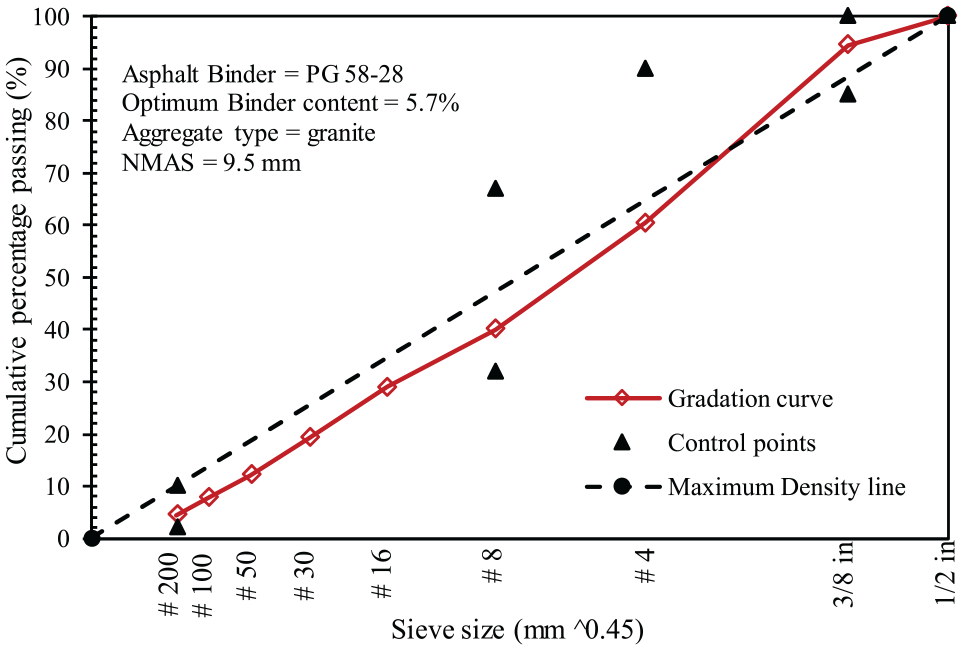
Gradation used for asphalt mixture design.
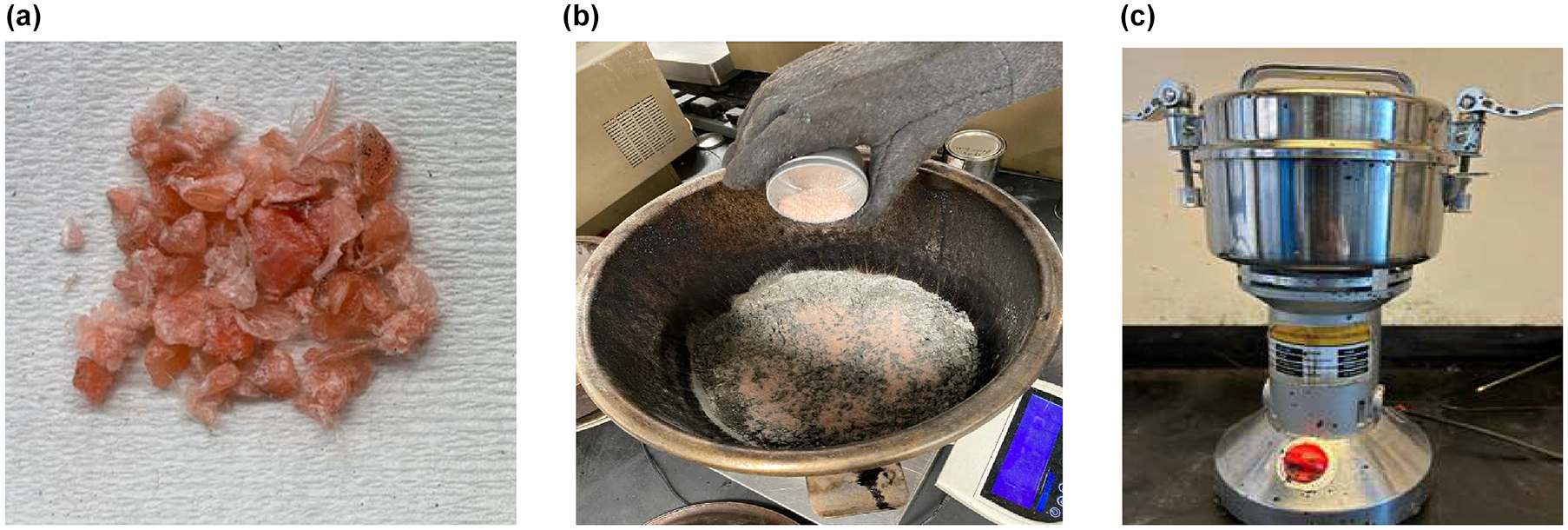
(a) Low-density polyethylene (LDPE) obtained from supplier, (b) LDPE grinded to 2 mm before dry mixing, (c) grinder used for shearing PE.
Asphalt Mixture Preparation
Asphalt binder, PG 58-28 was heated to 162°C for at least 2 h until the binder reached a viscosity of 0.17 Pa.s, determined as per AASHTO 316. 3 min of mixing time was allotted for sample preparation, followed by 2 h of loose mixture conditioning for short term aging as per AASHTO 312. The optimum binder content (OBC) was determined to be 5.7% which resulted in air void content of 4.02%. In the case of PE-modified HMA mixtures, dry mixing was adopted which includes 2 min of mixing between PE and hot aggregates. PE was added at 3%, 6%, and 9% by weight of asphalt binder as an additive to hot aggregates. In this additive process, the binder weight was not adjusted for PE-modified HMA mixtures and maintained the same as control mixture with 5.7% of OBC. The PE-aggregate blending was immediately followed by the addition of asphalt binder with 3 min of mixing in Hobart mixer. The asphalt mixtures were then short term conditioned at compaction temperature for 2 h at 155°C. The conditioned loose mixtures were compacted to 75 gyrations for volumetric evaluation and to 7 ± 0.5% air voids for all the performance evaluations. At least three replicates were used to report the volumetric and performance results. Table 1 represents the volumetric design results of control and PE-modified HMA on the 75 gyrations compaction effort with PE considered as a part of non-aggregate / binding substance.
Volumetric Assessment of Control and Polyethylene (PE)-Modified Hot Mix Asphalt (HMA)
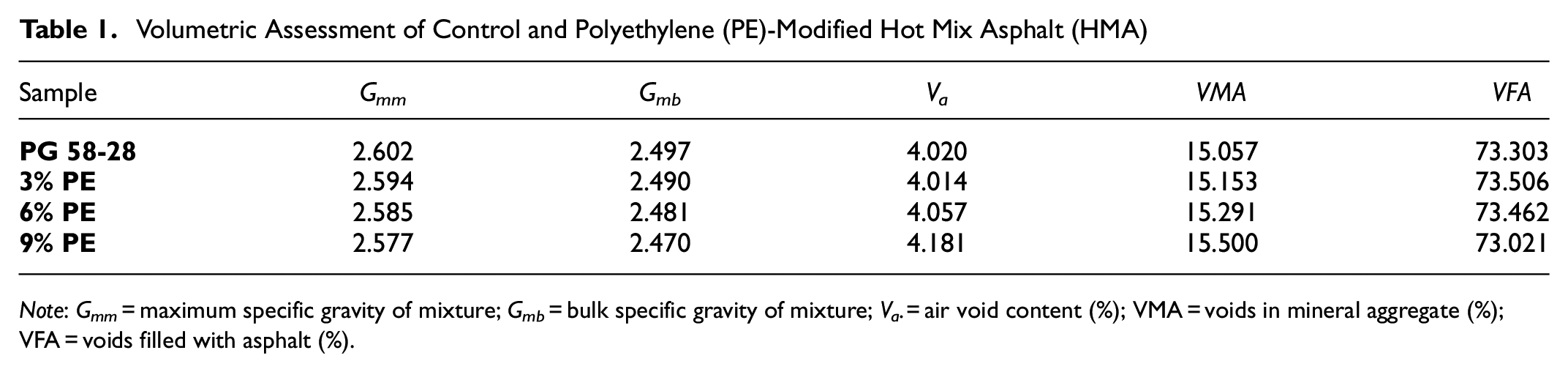
Note: Gmm = maximum specific gravity of mixture; Gmb = bulk specific gravity of mixture; Va. = air void content (%); VMA = voids in mineral aggregate (%); VFA = voids filled with asphalt (%).
Asphalt mixture beams were prepared to dimensions (390 mm × 70 mm × 70 mm) using a vibratory compactor. Control and plastic-modified mixtures were compacted by laying the loose mixture in the beam as a first step. Preliminarily compaction was applied to the loose mixture in the mold by manual tamping using a rod. Further the mold with asphalt mixture was moved to vibratory compactor and compressed to desired dimension. In case of 150 mm diameter circular specimens for low-temperature indirect tensile test (IDT) and disk-shaped compact tension (DCT) tests, the loose mixtures were compacted to 7 ± 0.5% air void content using gyratory compactor.
Methodology
Figure 3 represents the workflow adopted in this study to understand the influence of PE modification on low-temperature mechanical performance of asphalt mixtures. Initially plastic and asphalt were subjected to differential scanning calorimeter (DSC) to determine the thermal characteristics and changes occurring over low temperatures. Following to DSC, a dynamic mechanical analyzer (DMA) and bending beam rheometer were used to determine the modulus of plastic and asphalt binder respectively at low temperatures. After evaluating the thermal and mechanical behavior of plastic and asphalt, PE-modified asphalt mixtures are prepared through dry mixing method. Disk-shaped compact tension (DCT) and three-point bending beam fracture (3PBFE) tests were performed at −18°C to determine the influence of PE modification on cracking resistance of asphalt mixtures. Fracture energy and work of failure were calculated from DCT and 3PBFE as performance assessment parameters. Further, stress relaxation of asphalt mixtures at low temperatures and the influence of PE on modifying the relaxation tendency was evaluated. Low-temperature IDT was also performed to measure the tensile strength of PE-modified mixtures. Finally, dynamic complex modulus (DCM) test was performed to capture the influence of PE modification on modulus and phase angle of asphalt mixtures.
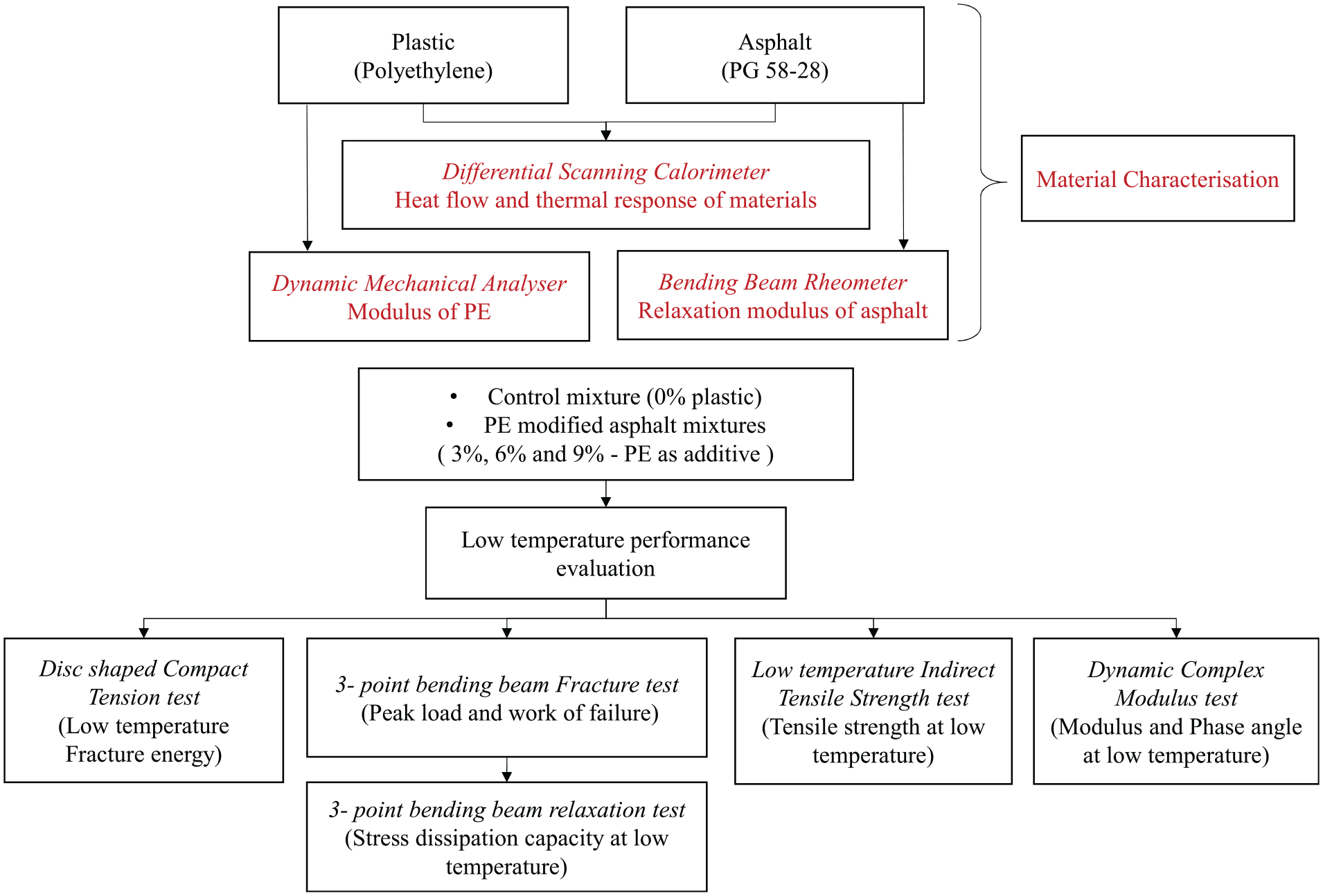
Methodology adopted in the study for low-temperature performance.
Experimental Testing Program
Differential Scanning Calorimeter for PE and Asphalt Heat Flow Analysis
Differential scanning calorimeter (DSC) test was performed on asphalt binder and PE according to ASTM D3418. The test was conducted to determine the thermal and physical changes from −70°C to 135°C, to determine the heat flow changes in PE until melting point. Both materials were individually weighed to approximately 7 mg in sample pans and maintained in isothermal state for 5 min. Further, the samples were subjected to an increased heating rate of 10°C/min from −70°C to 135°C. The heat flow versus temperature data from the test was used to determine melting (Tm) and glass transition temperature (Tg) of the materials ( 35 ). These temperatures act as margins for change in physical state of PE to rubbery (>Tg) and amorphous state (>Tm) in asphalt mixture.
Dynamic Mechanical Analyzer for Mechanical Characterization of PE
PE samples were tested using a dynamic mechanical analyzer (DMA) to determine the modulus of the material across different temperatures. Initially, the plastic specimen is molded to shape into a flat rectangular strip with dimensions of 18 mm × 14 mm × 4 mm (length × width × thickness, respectively) by melting at 160°C. Further, the specimen is locked in the cantilever setup as seen in Figure 4 and subjected to flexural loading with forced oscillation. With a frequency of 1 Hz and strain rate of 1%, the test is carried out following ASTM D 7028. The test method captures storage modulus, loss modulus and tan delta values of the plastic as the temperature is swept at a rate of 5°C/ min from −40°C to 0°C. These mechanical properties enable the understandings on strength and relaxation properties of PE in HMA mixtures at different temperatures.
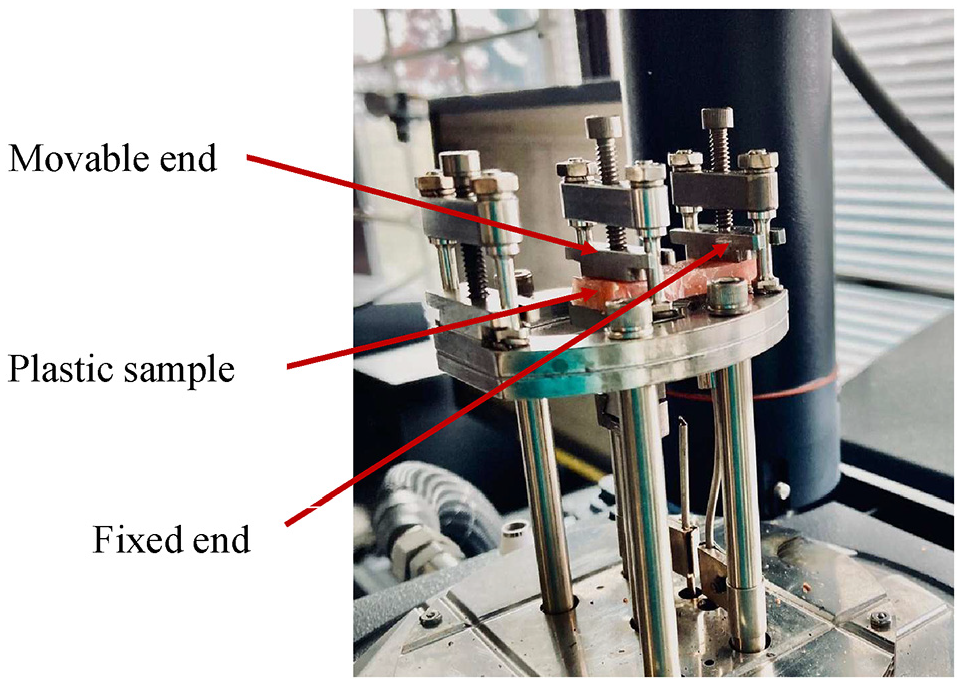
Polyethylene beam in cantilever setup of dynamic mechanical analyzer (DMA).
Bending Beam Rheometer for Low Temperature Modulus of Asphalt (BBR)
A thermoelectric bending beam rheometer was used to capture the stiffness and deflection behavior of asphalt binder below 0°C. The test was performed according to ASTM D6648 standard with at least two replicates on rolling thin film oven (RTFO) aged binder to correlate the binder at mixture stage. The RTFO test was performed according to AASHTO T240 to simulate short term aging. The transient data (constant stress mode) obtained from BBR were converted to dynamic data (oscillatory mode). The conversion was performed to compare the modulus of asphalt and PE in similar oscillatory domains. From the dynamic data, complex modulus (G*), storage modulus (G’), and loss modulus (G”) were determined for temperatures below 0°C at a frequency of 1 Hz, toward the mechanical characterization of PE.
Modulus Comparison Between Asphalt and Polyethylene
Figure 5 provides the plan utilized to construct and compare modulus plots of PE and asphalt at different temperatures. The framework was designed to compare the changes occurring in modulus of HMA at low temperatures. While DMA data were used to build the PE modulus across different temperatures, BBR was employed for asphalt to determine the modulus at low temperatures. The test was performed from 0°C to −34°C at an interval of 6°C with at least two replicates. The transient data (stiffness versus time) were then converted to dynamic data (modulus versus frequency) ( 36 ). The modulus data were further coupled with the Tg value obtained from DSC, used as a threshold where the modulus of asphalt no longer increases with reduction in temperature.
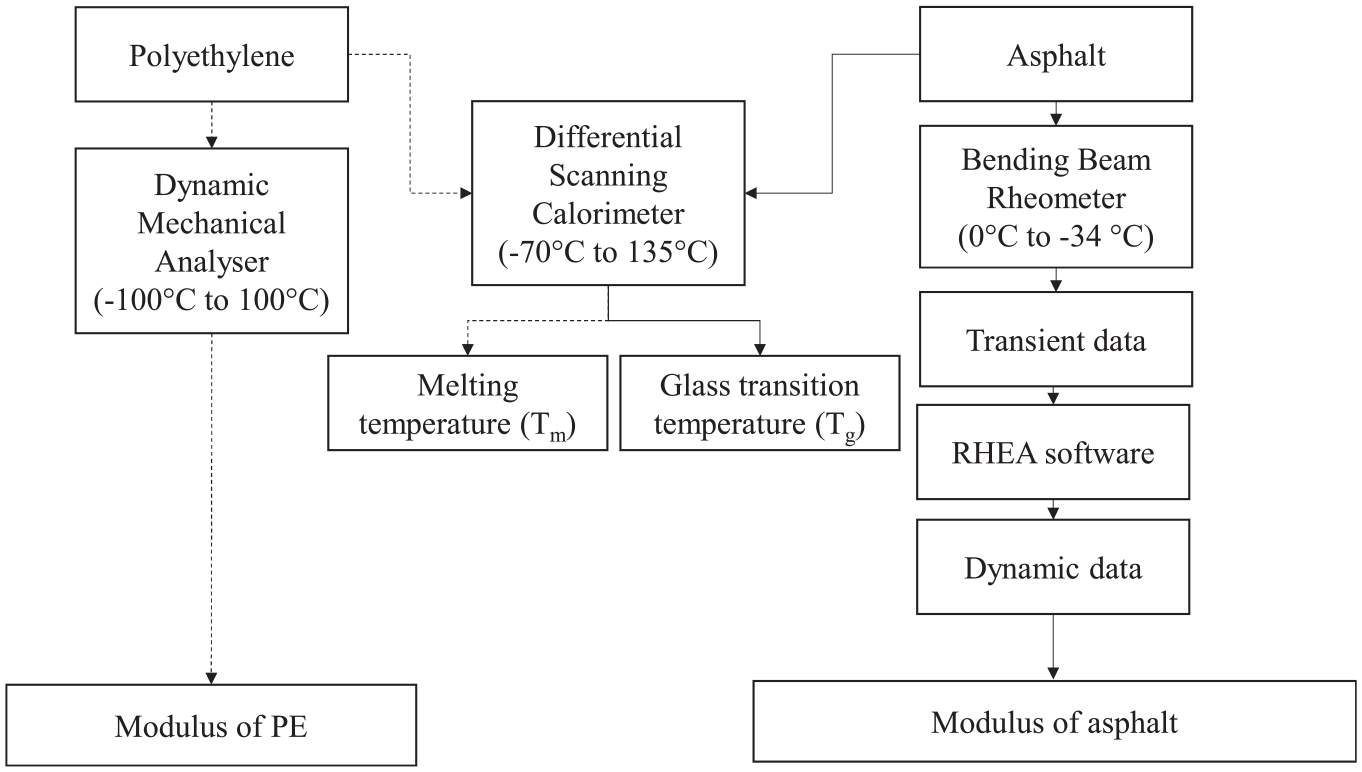
Workflow adopted to determine and compare the modulus of polyethylene (PE) and asphalt binder.
Three-Point Bending Beam (3PB) Fracture Test
A 3PBFE was performed on the specimens compacted to 390 mm × 70 mm × 70 mm using a vibratory compactor. The specimens were compacted to 7% air voids and conditioned to −18°C for overnight duration. Two monotonic loading rates including 5mm/min and 2.5 mm/min were induced at the mid span of the specimen fixed with a supporting span length of 300 mm. The low-temperature cracking resistance of asphalt mixtures was evaluated by comparing the peak load and work of failure throughout the monotonic loading test. In general, higher peak load and subsequent higher work of failure are desirable for an asphalt mixture to have better low-temperature performance ( 24 , 37 ).
Three-Point Bending Beam Relaxation Test
Stress relaxation ability of plastic-modified asphalt mixture beams was captured using the 3PBFE. A relatively new approach was attempted in this study to capture the stress dissipation capacity of asphalt mixtures at low temperatures. Initially a seating load of 0.5 kN was applied on the beams to ensure stable and consistent contact of the actuator with the asphalt mixture beam. Later, the beams were subjected to fixed displacement of 0.25 mm and 0.50 mm to induce a flexural strain of 1,200 µε and 2,400 µε, respectively in the beam specimens. The strain values were designed and calculated using the targeted mid span deflection values using ( 38 )

where: ε = flexural strain; δ = mid span deflection (0.25, 0.50 mm), d = depth of beam specimen (70 mm), L = distance between beam supports (300 mm).
The target level of displacements (i.e., 0.25 mm and 0.5 mm) were achieved at a constant rate of 2.5 mm/min as displayed in Figure 6. The displacements beyond 0.5 mm were not included as beams tended to break beyond 0.5 mm vertical displacements at low temperature (−18°C). After reaching the target displacement, the actuator was locked at the position for 300 s, allowing the beam to dissipate stresses. During this process, the reduction in load on the actuator as a result of relaxation behavior of asphalt mixture was captured. At low temperatures, it is desirable for asphalt mixtures to exhibit better stress relaxation which can be reflected by load reduction on actuator. Such relaxation tendency indicates the potential of asphalt mixtures against thermal cracking and frost induced deformations. The test was designed to evaluate the potential of plastic modification on improving the stress dissipating capacity of asphalt mixture beams at low temperatures.
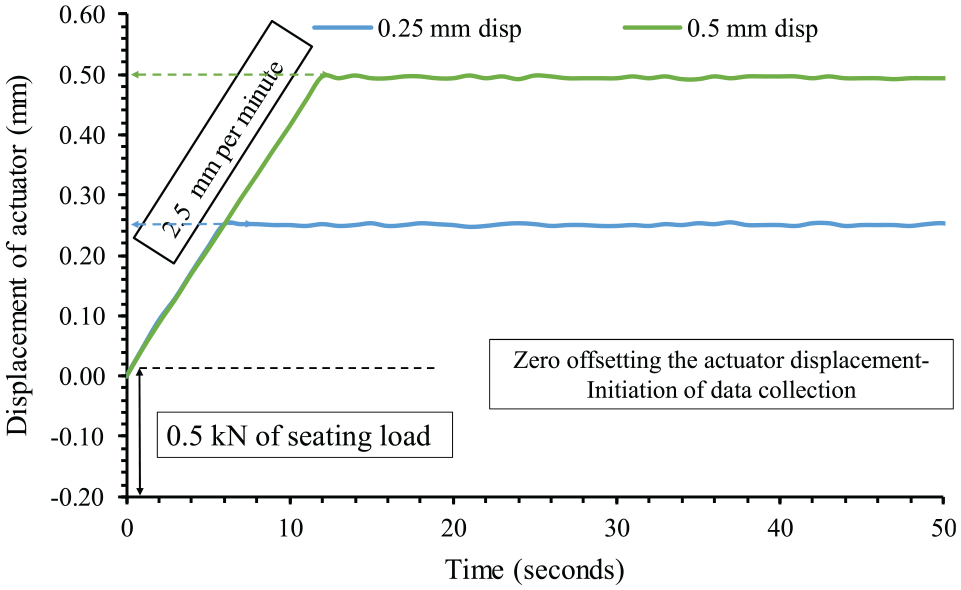
Schematic representation of asphalt mixture beam relaxation test.
Low Temperature Indirect Tensile Test (NCHRP Report 530)
Indirect tensile (IDT) strength test was performed at low temperature to determine the total, pre-peak, and post-peak fracture work of the asphalt mixtures ( 39 ). While the pre-peak fracture work denotes the energy required for crack initiation in the specimen, post peak signifies the energy needed for crack propagation. For this purpose, asphalt mixture specimens with 150 mm diameter and 38 mm height at air void content of 7% were used. The specimens were wet sawed from 50 mm thickness specimens using saw cutter. The sawed specimens were conditioned at −18°C overnight before testing. The samples were subjected to axial loading at a rate of 12 mm/min and the peak load achieved in the test was used to calculate indirect tensile load. The uncorrected tensile load value obtained without any displacement sensors was then used to determine the true tensile strength of the specimen using
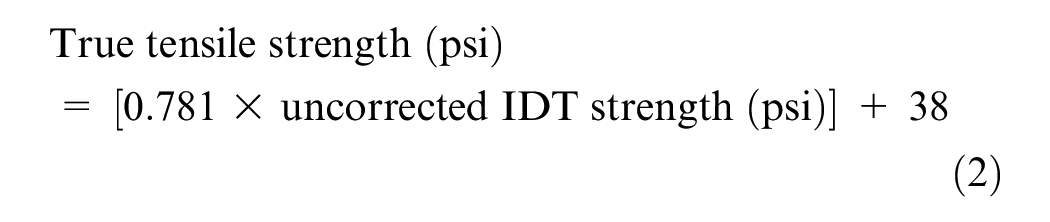
The IDT test was performed based on the recommendations from NCHRP Report 530 to determine the true tensile strength of asphalt mixtures.
Disk-Shaped Compact Tension (ASTM D7313-20)
Disk-shaped compact tension test was used to determine the low-temperature fracture energy of control and PE-modified asphalt mixtures at −18°C. Asphalt mixture specimens were compacted to 7 ± 0.5% air void content with 150 mm diameter to 50 mm thickness. Further, 25 mm holes were cored into the specimen followed by 65 mm crack depth to the center of the holes. Metal studs were attached to the specimens symmetrical to the crack to capture the crack mouth opening displacement (CMOD) with applied actuator load. After conditioning the asphalt mixture specimens at −18°C for at least 2 h, the samples were subjected to tensile displacement (1 mm/min). The fracture energy required to fail the specimen by cracking was calculated as guided by ASTM D7313 using

where: Gf = fracture energy of the specimen (J/m2), Wf = fracture work of the specimen (J), r = radius of the specimen (m), a = notch depth (m), b = thickness of the specimen (m). It is desirable to achieve higher Gf values to completely fail the specimen in tension which reflects the cracking resistance of mixtures at low temperatures.
Dynamic Complex Modulus Test (AASHTO T378)
Dynamic complex modulus test was performed to capture the linear viscoelastic behavior of asphalt mixtures and its sensitivity to plastic modification, predominantly at low temperatures. Asphalt mixture samples of 100 mm diameter were cored from 150 mm diameter samples. The cored samples were trimmed to 150 mm height at both ends for even and consistent load application. Three replicates with air void content of 7 ± 0.5% were considered for each combination of asphalt mixture. Five test temperatures were considered in the test including −30°C, −15°C, 0°C, 15°C, and 30°C. Considering the soft binder grade (PG 58-28), the test temperatures beyond 30°C were not explored. The strain level in the samples was controlled between 75–150 µε during the sinusoidal load applied at frequencies of 25 Hz, 10 Hz, 5 Hz, 1 Hz, 0.5 Hz, and 0.1 Hz. The master curves were constructed using a sigmoidal function:

where: |E*| = dynamic modulus (MPa); δ, α, β, and γ = curve fitting parameters; fr = reduced frequency (Hz).
Results and Discussion
Thermal Characteristics of Polyethylene and Asphalt
Figure 7a presents the heat flow curves of PE and asphalt binder from DSC analysis. Although the asphalt did not undergo rapid melting, PE melted at 125.32°C with a normalized heat flow of 2.02 W/g. PE is identified to attain a viscous and flowable state during mixture preparation as the melting point is relatively lower than asphalt mixing temperature (165°C). While there were no signs of glass transition for PE from −70°C to 135°C, there is an abrupt melting phenomenon at 125.32°C. This observation represents that the polymer was already in a rubbery phase even before −70°C. Therefore, the glass transition of PE can be interpreted to be lower than −70°C.
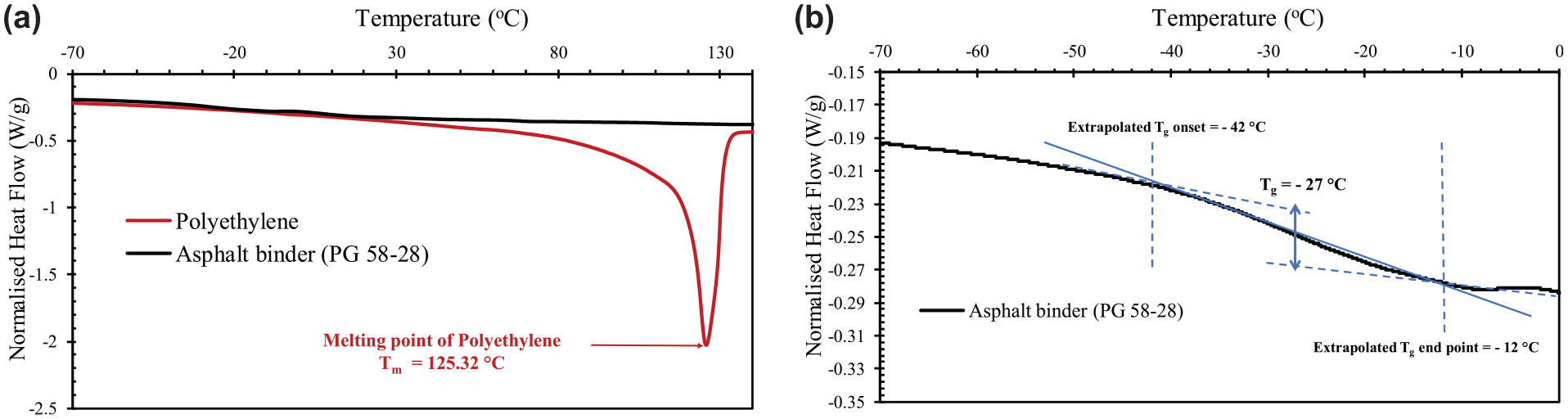
(a) Heating curves of polyethylene and asphalt binder from −70°C to 135°C, (b) heating curve of only asphalt binder from −70°C to 0°C.
In case of asphalt binder, glass transition phenomenon is observed below 0°C as seen in Figure 7b. On increasing the temperature from −70°C, Tg onset and end points appeared as −42°C and −12°C. From these temperatures, glass transition of the asphalt binder is identified as −27°C which indicates that the binder attains a constant modulus value from −27°C and below temperatures. Above −27°C, asphalt gradually loses its elastic behavior with increase in temperature.
Dynamic Mechanical Analysis
Figure 8 presents the storage modulus (E’), loss modulus (E”) and tan delta values of PE plastic at a loading frequency of 1 Hz. Similar to DSC, Tg of PE could not be detected through DMA as there is no significant drop in storage modulus of the plastic between −100°C and −5°C. However, the storage modulus during the rubbery state (>Tm) reduced steeply as the testing temperature approached melting point (125.32°C). The loss modulus of plastic was observed to be fluctuating within a range of 10 to 100 MPa, representing insignificant variation in viscous nature of plastic. However, the reduction in storage modulus is justified with contemporary increase in tan delta value. PE used in this study is detected to be prone to energy dissipation with increase in temperature after −5°C, as a part of material characterization. As a result, the storage modulus of plastic proportionally reduced with tan delta and temperature.
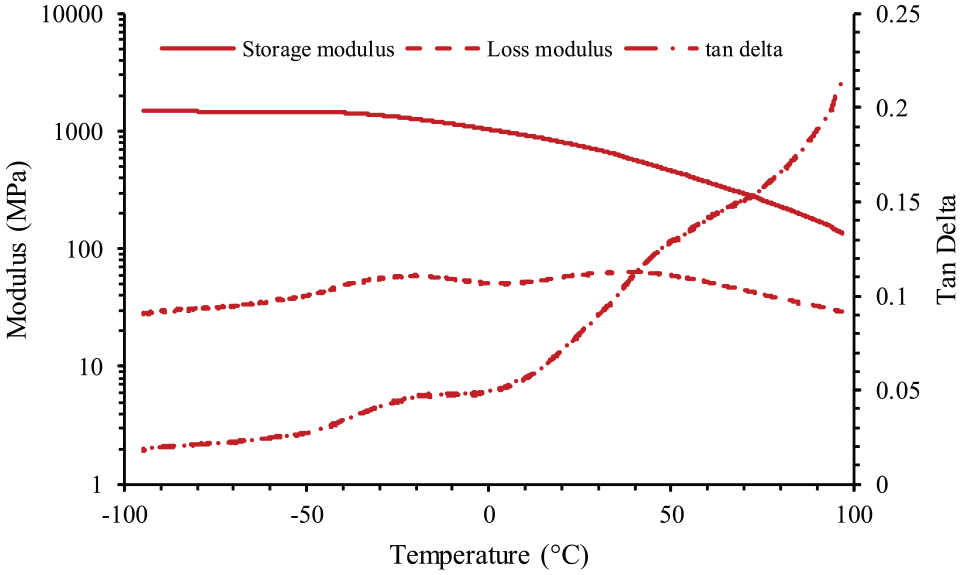
Modulus and tan delta of polyethylene from dynamic mechanical analyzer (DMA).
Overall the DMA plots provided the information on modulus of PE from −100°C to 100°C, which cover the asphalt performance temperatures. The modulus data can be further utilized to evaluate the influence of plastic modification at asphalt mixture level performance.
Comparing Moduli Values of Asphalt Binder and PE Across Temperatures
Figure 9 represents the comparison in the storage modulus of asphalt binder and plastic across different temperatures. The data from DSC, BBR, and DMA were utilized to build the modulus plots. Initially, storage modulus for the PE plastic was obtained directly from DMA instrument in the range of −100°C to 100°C at 1 Hz frequency. To build the modulus versus temperature for asphalt, BBR test was performed on asphalt samples from temperatures across −4°C to −34°C at 6°C interval. The transient data obtained from BBR were used as an input to RHEA software ( 36 ) to convert to dynamic data with regard to frequency. The BBR data were further merged with the shear data consisting of frequency versus modulus from 4°C to 30°C obtained from DSR. Also, the thermal analysis from DSC revealed the Tg of asphalt as −28°C which accounts for constant modulus beyond −28°C. With the data gathered from DSC and BBR instruments, the modulus information of asphalt was constructed across different temperatures at a frequency of 1 Hz.
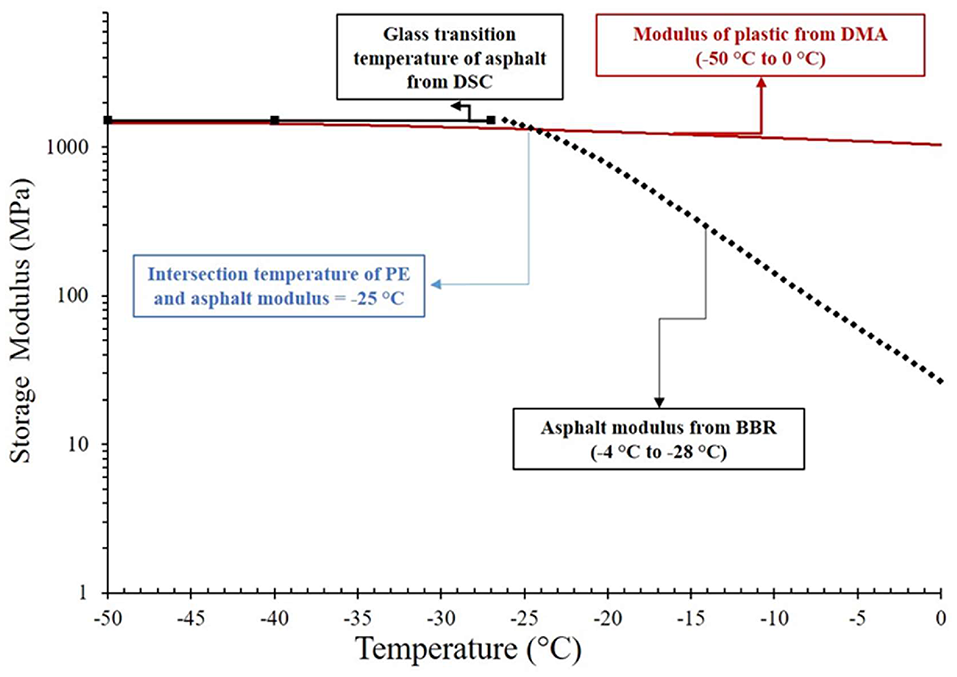
Storage modulus of asphalt and polyethylene (PE) from −50°C to 0°C.
Furthermore, the asphalt binder modulus is highly susceptible to change in temperatures greater than −25°C. However, the modulus of asphalt binder remained constant approximately at 2 × 10³ MPa below the glass transition point of asphalt. Such sensitivity to temperature is not observed in case of PE as the modulus remained unaffected from −50°C to 0°C. Interestingly, the modulus of both asphalt binder and PE are detected to merge with reduction in temperature. After −25°C, the storage modulus plots of both PE and asphalt binder overlapped on each other and remained undisturbed. The observation hints that the control and PE-modified HMA mixtures are expected to have similar storage modulus at low temperatures. With this information of PE and asphalt mechanical properties forehand, the study is designed to validate the response of PE-modified HMA mixtures at low temperatures.
Fracture Energy from Three-Point Bending Test
Figure 10 presents the peak load and corresponding work of failure determined from the 3PBFE. At 2.5 mm/min loading rate, the control mixture observed a peak load of 4.35 kN which increased to 4.81, 4.54, and 4.96 kN at 3%, 6% and 9% addition of PE, respectively. PE modification has improved the crack initiation (peak load) resistance of asphalt mixtures. The increment was further reflected in work of failure as the PE-modified mixtures subsequently demanded higher energy to fail the specimen. At an increase loading rate of 5 mm/min, the trend was inversed as the PE-modified mixtures noticed lower peak loads and subsequent work of failures. PE dosages of 3%, 6%, and 9% resulted in peak loads of 3.42, 4.45, and 4.13 kN, respectively, which were relatively lower than the peak load of control mixture. However, it is to be noted that the difference in peak loads of PE-modified mixtures at both loading rates are not significantly different from control mixture. The error bars displayed in Figure 10 represents the limits with a one standard deviation form average value of the sample results. Owing to the non-parametric nature of data, Wilcox t-test was used to determine the significance of PE modification with respect to control mixture results. The p-values were identified to be 0.125 > 0.05 and 0.137 > 0.05 at 2.5 mm/min and 5 mm/min loading rates respectively. Therefore, incorporating PE in asphalt mixtures does not influence the fracture energy of asphalt mixtures at low temperatures (−18°C) and also does not worsen the mixture fracture resistance relative to control mixture.
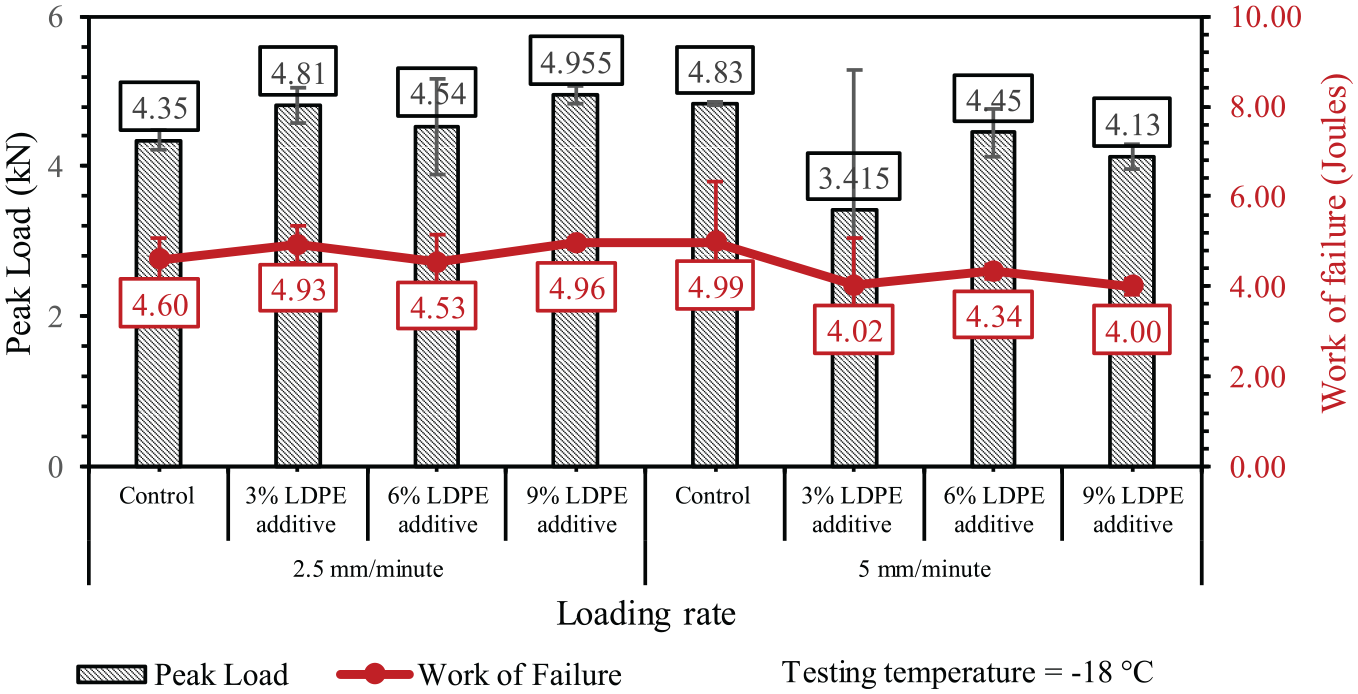
Peak load and work of failure from three-point bending fracture test.
Relaxation Behavior of Plastic-Modified Asphalt Beams
Figure 11 represents the stress relaxation ability of control and PE-modified asphalt mixtures at low temperatures. The graphs were produced after evaluating at least three replicates that produced repeatability in test results and disregarding inconsistent outlier samples. The repeatability was assessed after evaluating the peak load along with actuator load at 150 s and 300 s. These three loads were considered to evaluate the consistency in test replicates, limiting the coefficient of variation to 20%. Figure 11a presents the load reduction on actuator after subjecting the asphalt mixture beam to a displacement of 0.25 mm, that is, at a flexural strain of 1,200 µε. After achieving the target displacement of 0.25 mm, the load on the actuator gradually reduced, representing the stress relaxation ability of asphalt mixtures. The control mixtures recorded the lowest load for inducing a displacement of 0.25 mm. The PE-modified mixtures required higher loads than the control to induce similar deformation towing to their elevated stiffness. Even with such high stiffness, the relaxation ability of PE-modified mixtures was substantial as the stress dissipation data from actuator was similar to control mixtures. Therefore, PE modification resulted in increased stiffness of mixtures without disturbing the relaxation ability of asphalt mixtures at 0.25 mm displacement.
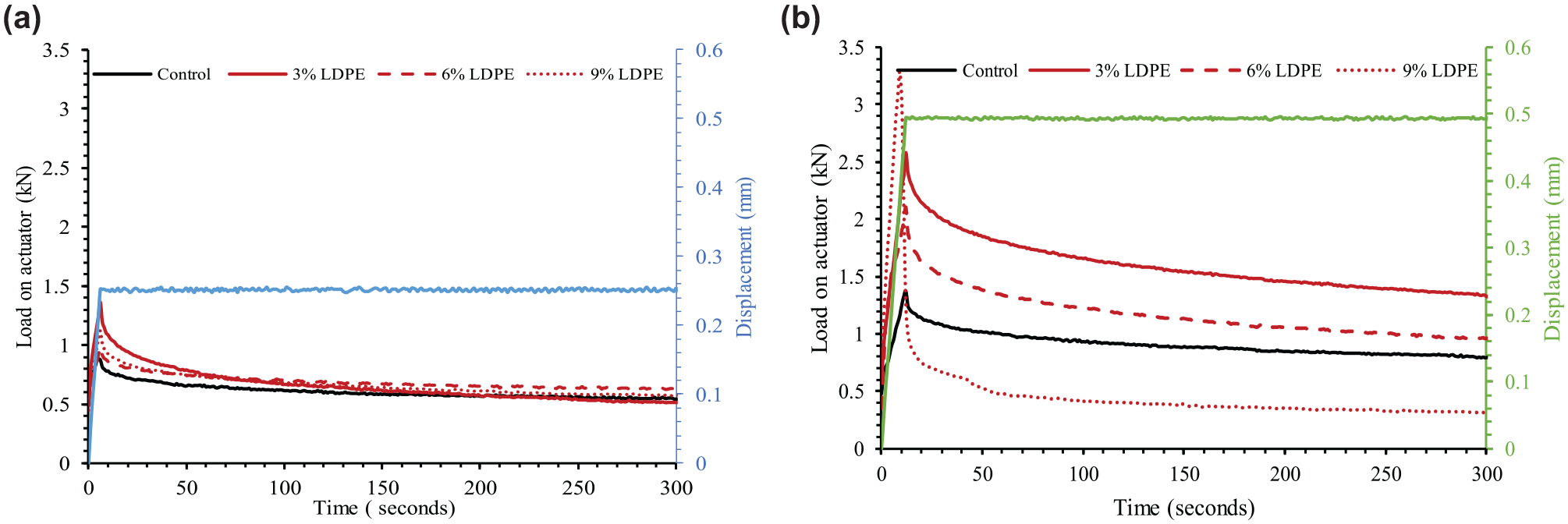
Stress relaxation plots of asphalt mixture beams at (a) 0.25 mm and (b) 0.5 mm displacement.
Figure 11b represents the load reduction on actuator after subjecting the asphalt mixture beam to a higher displacement of 0.5 mm, that is, at a flexural strain of 2,400 µε. All the mixtures demanded higher loads than in the case of 0.25 mm deformation as anticipated, to displace up to 0.5 mm. Specifically, the PE-modified mixtures recorded significantly higher loads for displacing to 0.5 mm. Although high stiffness may be accounted for resistance to deformation, the relaxation ability of PE-modified mixtures after displacing is relatively poor compared with the control mixture. The PE-modified mixtures resulted in severe actuator loads even at the end of the test duration, resisting dissipation of stresses. Such a state can lead to permanent damage or potentially cracking at low temperatures owing to brittle behavior. It can be interpreted that PE modification may not improve the stress dissipation capacity of asphalt mixture on severe deformations at low temperatures.
True Tensile Strength of PE-Modified Mixtures from Low Temperature IDT
Figure 12 represents the influence of PE modification on tensile strength of asphalt mixtures at low temperatures. When evaluated at −18°C, the true tensile strength of asphalt mixture proportionally increased to 467.4, 506.1, and 529.5 psi at dosage levels of 3%, 6%, and 9%, respectively. PE modification at 9% dosage level improved the true tensile strength by almost 113 psi. Further evaluating at −38°C, the proportional increment is not observed like in case of −18°C. A marginal increment of only 60.1, 11.7, and 37.2 psi is observed at 3%, 6%, and 9% dosage levels, respectively. Even statistically, the difference in true tensile strength between control and PE-modified mixtures appeared to be insignificant at −38°C (p-value = 0.250 > 0.05) and significant at −18°C (p-value = 0.031 < 0.05). The observation can be correlated to DMA results between plastic and asphalt. Up to −25°C, the modulus of PE is greater than asphalt representing possibility of imparting additional strength to asphalt mixture. However, at temperatures below −25°C the storage modulus of PE is found to be similar to the modulus of asphalt. As a result, the influence of PE addition is not noticeably reflected at −38°C unlike at −18°C.
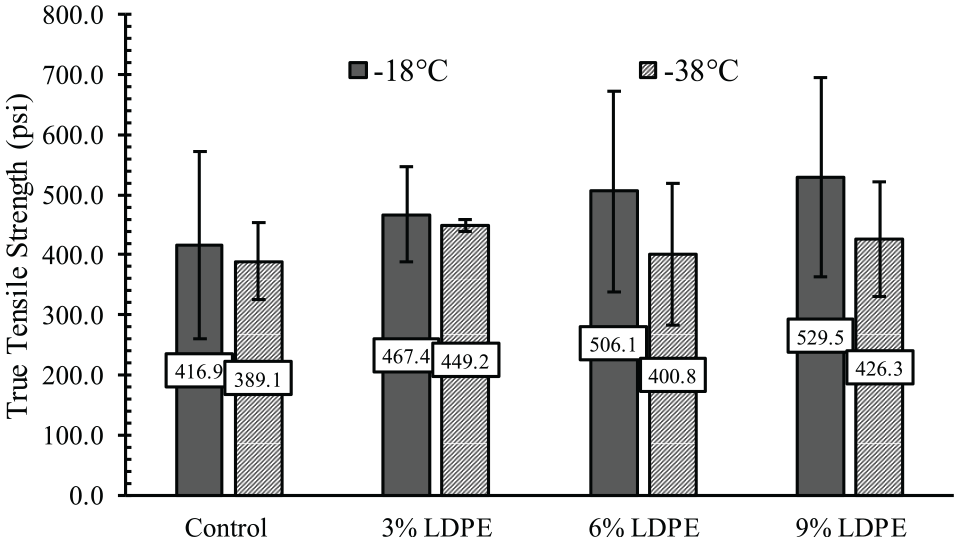
True tensile of strength of asphalt mixture at low temperatures.
Fracture Energy of PE-Modified Asphalt Mixtures
Figure 13 represents the influence of PE addition on low-temperature fracture energy of asphalt mixtures evaluated at −18°C. From load versus CMOD displacement curves, plastic addition improved the peak load which reflects the resistance to crack initiation tendency of a specimen. However, plastic-modified curves reached an earlier plateau than the control after the peak load, leading to rapid crack propagation in the specimen. The increased peak load was simultaneously nullified by the compromised post peak loads. As a result, the fracture energy measured as the area under the curve is found to be unaffected by plastic modification. Therefore, PE modification can be reported to have an insignificant influence on low-temperature cracking resistance of HMA mixture at −18°C (p-value = 0.125 > 0.05). The difference noticed in modulus values of asphalt and PE at −18°C was not reflected in mixture level.
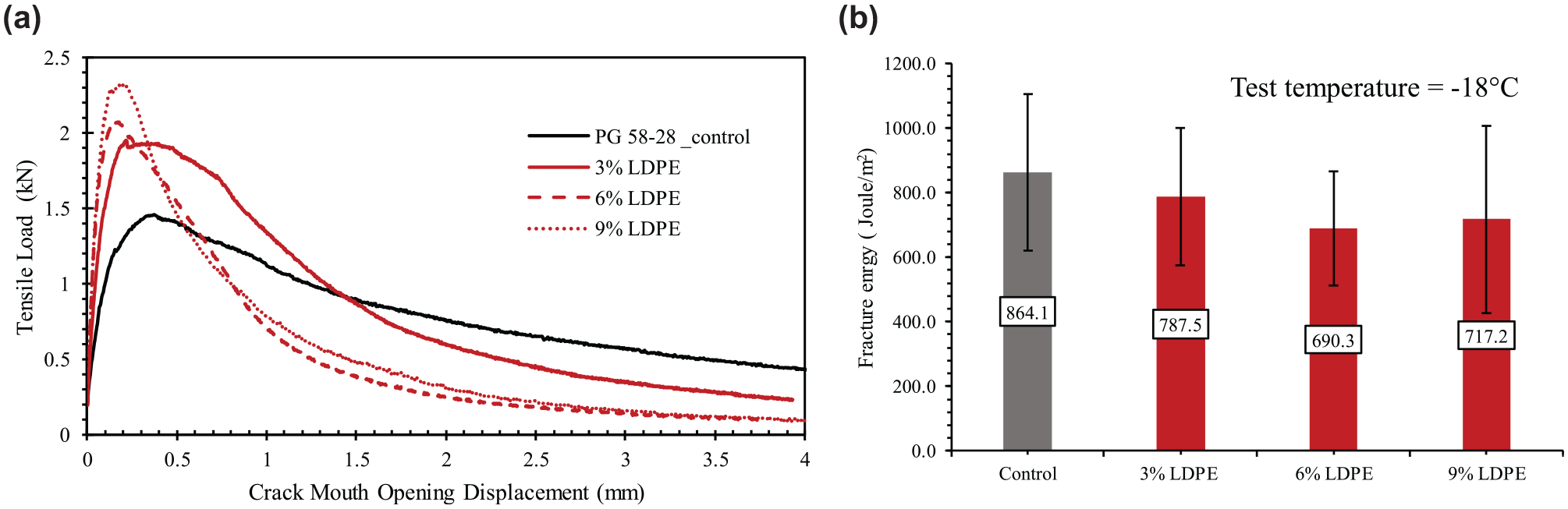
(a) Load versus crack mouth opening displacement graphs, (b) fracture energy of polyethylene (PE)-modified asphalt mixtures at −18°C.
Dynamic Complex Modulus and Phase Angle of PE-Modified Mixtures
Figure 14 represents the dynamic modulus data of control and plastic-modified HMA mixtures evaluated at −18°C and −30°C as reference temperatures. Although the modulus values of HMA mixtures remained unaffected at high frequencies, the influence of plastic modification was reflected at low frequencies.
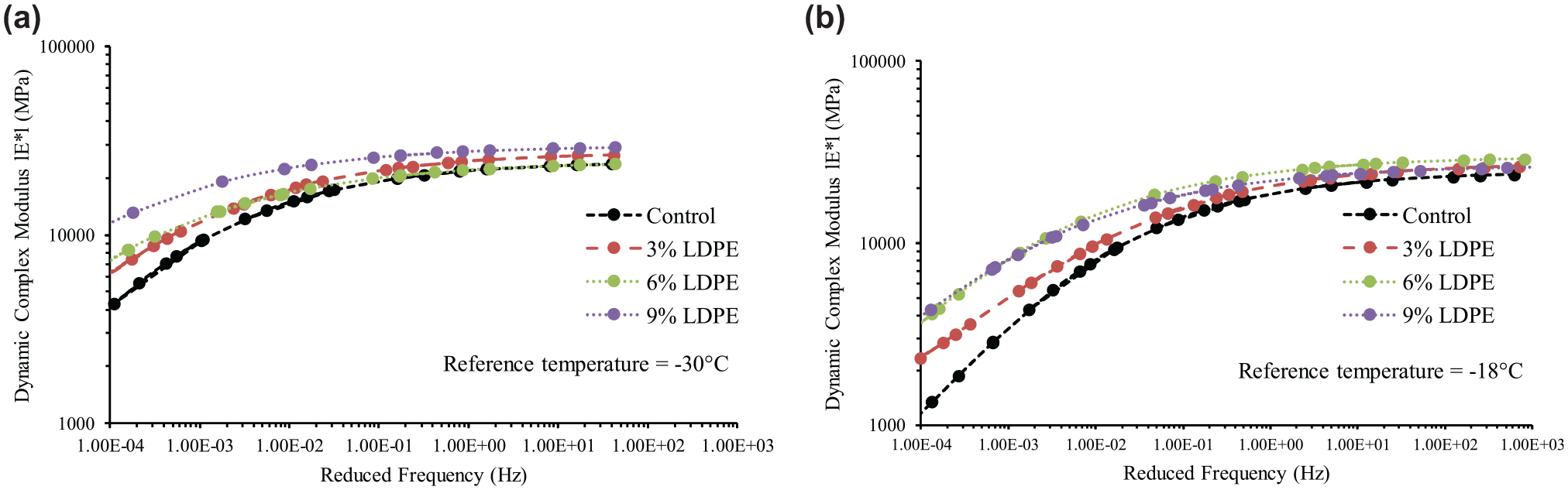
Master curves of control and polyethylene (PE)-modified asphalt mixtures at (a) −30°C and (b) −18°C.
At −30°C, PE modification resulted in |E*| increment across low and high frequencies as observed in Figure 14a. However, there was a minimal variation in |E*| value between control and PE-modified mixtures at high frequencies. For instance, although |E*| values in 3% PE curve were substantially higher than the control |E*| values, 6% PE curve was lower to 3% PE curve, overlapping with the control at high frequencies. The master curves at −30°C did not deliver a significant influence of PE presence in asphalt mixture as in case of −18°C. Further, at −18°C as seen in Figure 14b, plastic modification has clearly improved the |E*| values of the asphalt mixtures as anticipated from PE-asphalt modulus comparison. The increased dosage of PE consequently increased the |E*| value of PE-modified asphalt mixtures over all frequencies. From the master curves, it can also be identified that PE offers rutting resistance owing to higher |E*| values at low frequencies. The cracking performance of HMA was also influenced by PE modification as the |E*| values are marginally higher than the control at high frequencies. Similar to DMA analysis, it can be interpreted that the influence of PE modification on stiffness of HMA mixtures gradually reduces at low temperatures.
Figure 15 represents the phase angle variation in control and PE-modified HMA mixtures. Majority of phase angle curves across range of frequencies observed lower values for PE-modified mixtures than the control mixtures. Similar to |E*| master curve analysis, the phase angle plots at −30°C did not observe a proportional trend with PE dosage as seen in Figure 15a. At low frequencies, the control mixture experienced lower phase angles than 3% PE and higher phase angles than 6%, 9% PE. The observation is not the same in case of −18°C from Figure 15b, as all PE-modified mixtures experienced lower phase angles than the control mixtures at low frequencies. The findings from phase angle master curves indicate that the addition of PE imparted significant elastic behavior to HMA mixtures at only −18°C, although the plots overlapped at high frequencies. Such significance of PE modification is not prominent at −30°C, complying with DMA observation of coinciding moduli between PE and asphalt.
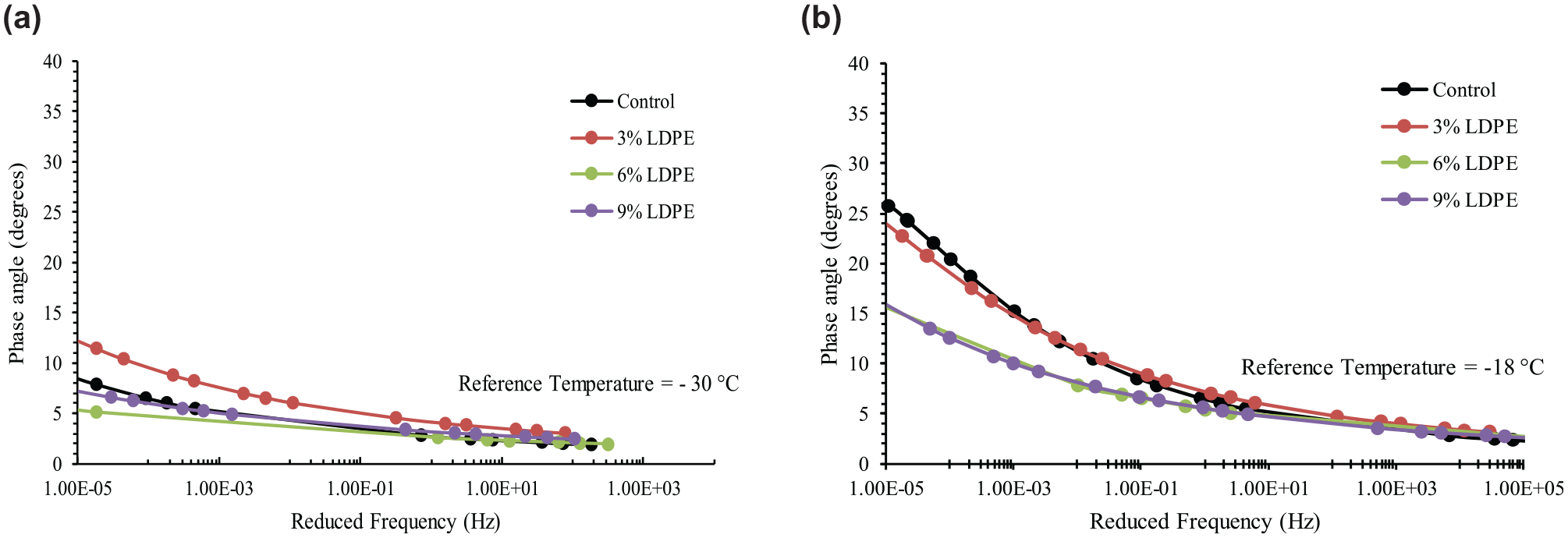
Phase angle of control and polyethylene (PE)-modified asphalt mixtures at (a) −30°C and (b) −18°C.
Conclusions
The present study was designed to evaluate the influence of PE modification on low temperature cracking and relaxation properties of asphalt mixtures. After evaluating the modulus of asphalt and PE, the following conclusions are drawn with respect to low-temperature performance of PE-modified asphalt mixtures.
From DMA analysis, the modulus of PE was found to be insensitive to temperature changes until the onset of melting point of PE (around 100°C). Conversely, the susceptibility of asphalt binder toward temperature triggers instantly on reaching its glass transition point, typically at −25°C and remains active.
At low temperature s (<0°C), modulus of asphalt merges with modulus of PE with further reduction in temperature. In this study, the modulus of asphalt binder overlaps with PE below the glass transition point of asphalt (−25°C).
PE modification neither improved nor worsened the fracture energy of HMA mixtures as the difference between control and PE-modified HMA sample results was identified to be statistically insignificant.
At low flexural strains up to 1,200 µε generated from 0.25 mm mid span deflection, PE modification improved the stiffness of asphalt mixtures by 1.1 to 1.5 times the control mixture without compromising the relaxation ability. Conversely at higher strain levels of 2,400 µε from 0.50 mm deflection, PE-modified mixtures failed to dissipate the stresses.
PE modification improved the tensile strength of asphalt mixtures by approximately 12–30% at −18°C (>Tg of asphalt). Further at −38°C (<Tg of asphalt), PE modification did not influence the tensile strength property of asphalt mixture.
The DCM test showed that at low frequencies, the |E*| values of PE-modified mixtures were almost twice the control mixture at −18°C and −30°C. At high frequencies, the |E*| values of PE-modified mixtures at −18°C were approximately 15% higher than the control. However, such improvement was not observed at −30°C (below Tg) with inconsistent variations in |E*| values on PE modification.
Finally, incorporation of PE in HMA mixtures has the potential to resist cracking of asphalt mixtures at low temperatures above Tg of asphalt. Further, PE modification improves the stiffness and modulus of HMA which facilitates the resistance to crack initiation. Also, PE imparts superior stress relaxation properties to HMA at low strain levels up to 1,200 µε. However, the influence of PE may diminish gradually in the HMA mixtures at temperatures lower than Tg of asphalt. At temperature below Tg, where thermal cracking is likely to occur ( 32 ), PE modification may not influence the HMA mixture resistance toward cracking.
Overall, the performance of PE-modified HMA mixtures at low temperatures largely depends on modulus of PE along with Tg of asphalt binder. Therefore, it is recommended that asphalt with lower Tg and PE with higher modulus are desirable for designing PE-modified HMA mixtures for cold regions.
Future Work
The present study focused on the influence of low-density PE with Tm of 125.32°C and 60% Xc in combination with unmodified binder. However, the study could be expanded to evaluate impact of plastics with different Xc and Tm values on broad range of base binders. Such evaluation opens more pathways for incorporating different plastics for an effective design of HMA mixtures for low-temperature conditions. Further phases of the study are also designed to explore in-depth viscoelastic behavior of PE-modified HMA at high, intermediate and low temperatures, with multiple PE types and dosages. Also, the influence of loading rates in the monotonic tests on capturing the plastic modification need to be assessed further. The assessment would be necessarily to determine a validated loading rate that can capture the difference between PE-modified HMA and control HMA.
Footnotes
Acknowledgements
The authors would like to thank Douglas Congdon from Eagle plastics, New Jersey for supplying plastic. The authors would also like to thank Liam Phillips, undergraduate student worker at Rowan university for his assistance in performing laboratory tests.
Author Contributions
The authors confirm contribution to the paper as follows: study conception and design: Venkatsushanth Revelli, Anil Kumar Baditha, Ayman Ali, Yusuf Mehta, Ben C. Cox, Sadie Casillas, Wade Lein; data collection: Venkatsushanth Revelli; analysis and interpretation of results: Venkatsushanth Revelli; draft preparation: Venkatsushanth Revelli. All authors reviewed the results and approved the final version of the manuscript.
Declaration of Conflicting Interests
The authors declared no potential conflicts of interest with respect to the research, authorship, and/or publication of this article.
Funding
The authors disclosed receipt of the following financial support for the research, authorship, and/or publication of this article: This material is based on work supported by the Broad Agency Announcement Program and the U.S. Army Engineer Research and Development Center (ERDC) under Contract No. W913E521C0020. Any opinions, findings conclusions, or recommendations expressed in this material are those of the author(s) and do not necessarily reflect the views of the Broad Agency Announcement Program and the U.S. Army Engineer Research and Development Center (ERDC).
ORCID iDs

Data Accessibility Statement
The data presented in this manuscript can be accessed on request from and approval of the corresponding author.