



Abstract
This study is centered on assessing the influence of nano-modifiers on healing and the fatigue properties of asphalt binders. Nano-modified binders were prepared by incorporating three nanomaterials (i.e., nanoclay, nanosilica, and nanoalumina) into performance grade (PG) 58-22 and PG 76-22 binders at 1%, 3%, and 4% dosages by binder weight. The binders’ fatigue life was evaluated using the conventional linear amplitude sweep test by obtaining the number of cycles to failure corresponding to 2.5% strain. The self-healing capability of nano-modified asphalt binders was assessed by employing different rest periods (10, 20, and 30 min) and damage levels (25%, 37.5%, and 50%) in a linear amplitude sweep healing test. It was observed that nanoclay was the best performing modifier, followed by nanosilica and nanoalumina. Also, the healing capability of the binders was found to improve with the addition of rest periods that is, 10 and 20 min, beyond which it again starts decreasing. Moreover, the damage level of 25% was found to be most effective for introducing rest periods, which can be considered as the micro damage zone. Finally, the nanoclay at higher dosages (4%), 20 min rest duration, and 25% damage level was recommended as the ideal combination for self-healing in the asphalt binders based on the outcomes of this study.
Flexible pavements offer a vital role in the transportation field because of their resilience and exceptional road performance. The adhesion in such pavements is provided by asphalt binders and therefore is considered pivotal in resistance against distresses such as fatigue, rutting, moisture damage, and low-temperature cracking ( 1 , 2 ). Despite being robust, factors such as vehicular loading, oxidation, and environmental aspects deteriorate the binder, causing pavement degradation. Cracking is one of the major distresses in asphalt pavements, which becomes more critical in the case of colder climates. Fatigue cracking initiates because of the bending of the bottom bound layer, resulting in the development of flexural stresses ( 3 ). The relaxation ability of the binder decreases with time, which prevents the flexing of pavement under traffic loading, causing microcracks that grow into macrocracks, ultimately leading to failure ( 4 , 5 ).
Asphalt binders possess inherent self-healing characteristics, which are not sufficient to heal the asphalt pavement without any external stimuli or the binder modification. Researchers have utilized induction heating ( 6 ) and microencapsulation ( 7 ) techniques for pavement healing, with each method having its own drawbacks. For example, induction heating consists of adding ferrous materials to asphalt mixtures followed by applying an alternating electromagnetic field to induce electric current in the ferrous materials, resulting in increased temperature of the binder. However, this excessive heating process requires extensive machinery and may also lead to damage in the binders ( 8 ). Moreover, the release of rejuvenator from the microcapsules is quite difficult because of limiting thermal stability and mechanical strength; as a result, the efficiency of microencapsulation is limited ( 9 ). As an alternative, modification of asphalt binder with nanoparticles can be a potential solution for these limitations. Conventional materials (say, clay or silica) when reduced to size of the order of nanometers (generally less than 100 nm) are termed nanomaterials (nanoclay [NC], nanosilica [NS], etc.) ( 10 ). Significant enhancements in asphalt binder and mixture performance have been achieved using various macro- and micro-scale modifiers; however, examining the potential of nanotechnology to improve asphalt pavement performance remains an intriguing area of study. Consequently, the application of nanomaterials in asphalt binders and mixtures has been widely explored and reported globally.
Healing of asphalt binders has been explored in a plethora of studies employing numerous testing protocols. Tan et al. ( 11 ) utilized a fatigue-healing-fatigue testing methodology to assess the healing abilities of asphalt binders using different healing index parameters. They concluded that the healing index was able to accurately predict stiffness recovery, including the modulus ratio and cycle ratio. Xie et al. ( 12 ) modified the conventional linear amplitude sweep (LAS) test by introducing a rest period within the testing protocol to account for healing. On a similar note, Wang et al. ( 13 ) used the linear amplitude sweep healing (LASH) test to assess the healing ability of polymer-modified binders under short-term aging conditions and concluded that healing is higher in softer grade binders. Mitra et al. ( 14 ) utilized both stiffness-based and damage-based indices for quantifying healing via time sweep and LASH tests, respectively. The addition of nano-modifiers showed significant improvement (quantified by the damage recovery) in the self-healing of asphalt binders, with NC being the most effective modifier; however, the optimum dosage could not be obtained.
Researchers also used various nanoparticles for improving the self-healing of asphalt binders because of their smaller grain size and higher specific surface area. Cheng et al. ( 15 ), in their study, concluded that the NC dosage and use of polymer improves the self-healing in asphalt binders. Amin and Esmail ( 16 ) recommended styrene-butadiene-styrene (SBS) and NS for higher self-healing as a result of faster diffusion in the binder and an enhanced crack closure rate, respectively. Kim et al. ( 17 ) suggest that a higher value of the molar ratio of hydrogen and carbon atoms in methyl and methylene (MMHC) results in reduced self-healing capacity, whereas Bhasin et al. ( 18 ) concluded that a higher magnitude of surface free energy (SFE) as well as the ratio of methylene to methyl (CH2/CH3) increased the diffusion rate, leading to enhanced self-healing properties.
Asadi and Tabatabaee ( 19 ) postulated that stiffness-based healing indices overestimate the healing potential because the increase in stiffness immediately after the rest period does not cause damage reduction. Also, the study emphasized using either an increase in material integrity or decrease in damage because of intermittent rest periods as healing indicators. Therefore, the stiffness-based parameter may not be adequate to assess the self-healing potential of nano-modifiers. Moreover, various parameters, such as modifier type and dosage, binder type, healing period, and degree of damage, affect the self-healing process in asphalt binders, because of which an ideal combination of the major variables is required that can provide optimum healing. There are also no studies available, to the best of the authors’ knowledge, that examined multiple variables under a single umbrella for self-healing.
The present study aims to assess the influence of nano-modifiers on the self-healing capability of asphalt binders, with a focus on fatigue performance rather than changes in rheological properties, such as stiffness. The present study is an advancement to the currently used healing indices and hypothesizes that performance parameters, such as the number of cycles to failure, may render more accurate quantification of self-healing with the addition of nano-modifiers. Moreover, a comprehensive study covering the majority of variables can help in identifying the most critical factors affecting the healing ability and the performance of nano-modified asphalt binders.
Objectives
The main objectives of this study are listed below:
study the self-healing characteristics of asphalt binders at varying dosages of three nano-modifiers (NC, NS, and nanoalumina [NA]) using performance-based healing indicators;
assess the influence of varying rest periods and damage levels on the self-healing potential of nano-modified asphalt binders;
determine the optimum combination of different variables for improved self-healing in asphalt binders based on fatigue performance.
Materials
Asphalt Binder
This study utilizes two base asphalt binders (i.e., performance grade [PG] 58-28 and PG 76-22) for the preparation of nano-modified binders. The PG 58-28 binder is widely used for the construction of asphalt pavements in colder regions, whereas PG 76-22 is known to be used for paving in warmer climates. The PG 58-28 binder was a neat binder, whereas PG 76-22 was a polymer-modified binder. The aim was to select binders with a significant difference in high-temperature PG to consider the effect of binder type in quantifying the self-healing capability of asphalt binders.
Nano-Modifiers
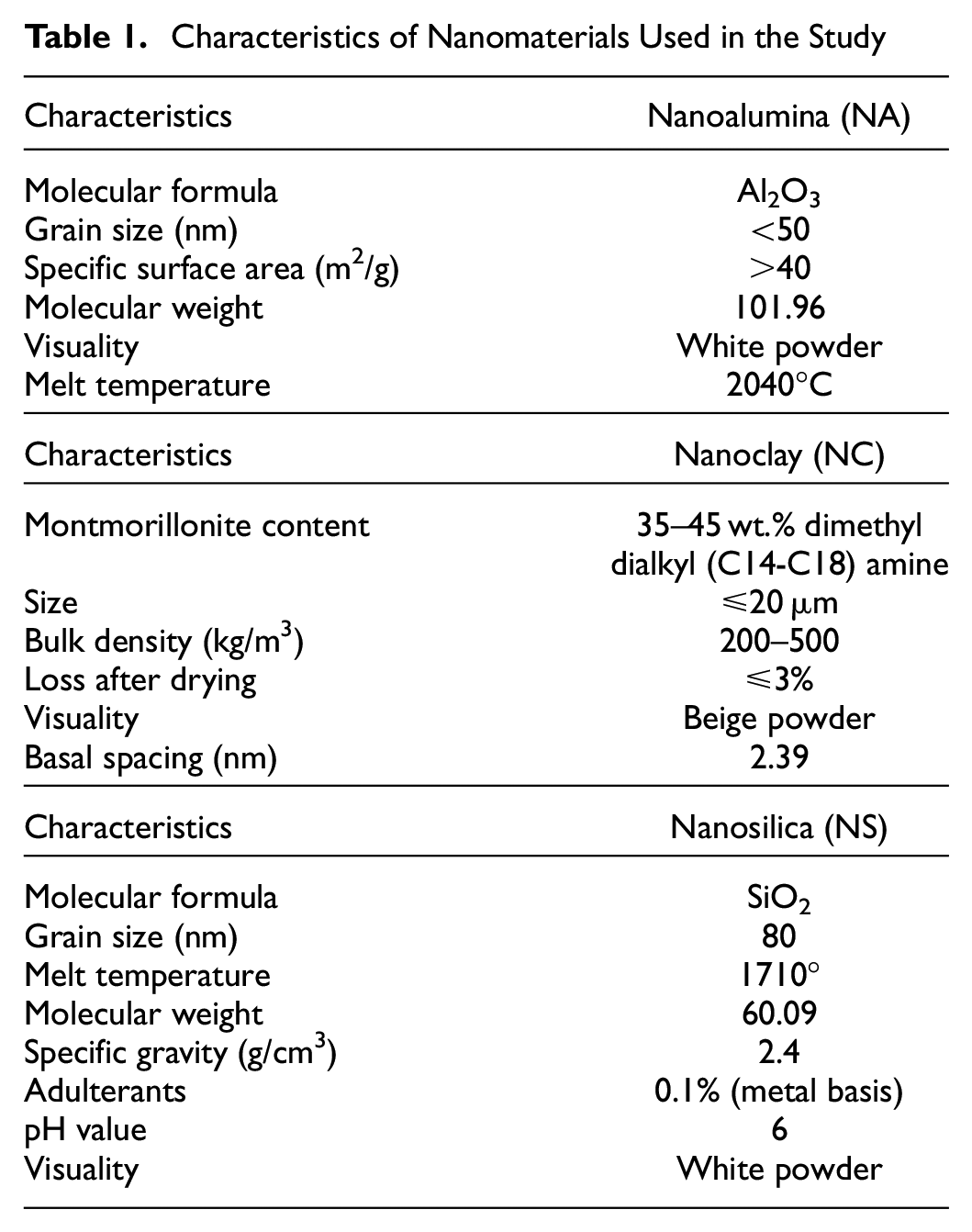
Three different nano-modifiers, namely NA (Al2O3), NC/nanomontmorillonite ((Na,Ca)0.33(Al,Mg)2(Si4O10)(OH)2.nH2O), and NS (SiO2), were used to modify the base binders at three dosages of 1%, 3%, and 4% by binder weight. The structure of NC, which is organophilic in nature, shows an octahedral alumina sheet wedged between two tetrahedral silica sheets, thereby enhancing the interaction between asphalt and NC ( 20 ). On the other hand, NS and NA are metal oxides recognized for providing stability and, therefore, they were selected as modifiers in this study. Table 1 presents the properties of the nano-modifiers.
Characteristics of Nanomaterials Used in the Study
Preparation of Nano-Modified Binders
The binder modification process employed for this study consisted of the gradual addition of nano-modifiers to preheated (to 160°C) base asphalt binder. The modifier and the binder were mixed using a low-shear mixer at 200 rpm for 30 min, followed by high-shear mixing at 5000 rpm for 30 min, and low-shear mixing at 200 rpm for another 30 min. This procedure was adopted from the work or Zhang et al. ( 21 ). Therefore, the performance outcomes from the study may depend on selecting a mixing procedure that directly affects the distribution, dispersion, and interaction of nanoparticles within the asphalt matrix and therefore a different procedure may give different outcomes. Figure 1 shows the low-shear and high-shear mixers used in the study for the preparation of nano-modified binders. After completion of the mixing process, all prepared nano-modified binders underwent short-term oxidation aging using a rolling thin film oven (RTFO) at 325°F (163°C) for 85 min, following the specifications outlined in American Association of Highway and Transportation Officials (AASHTO) T240.
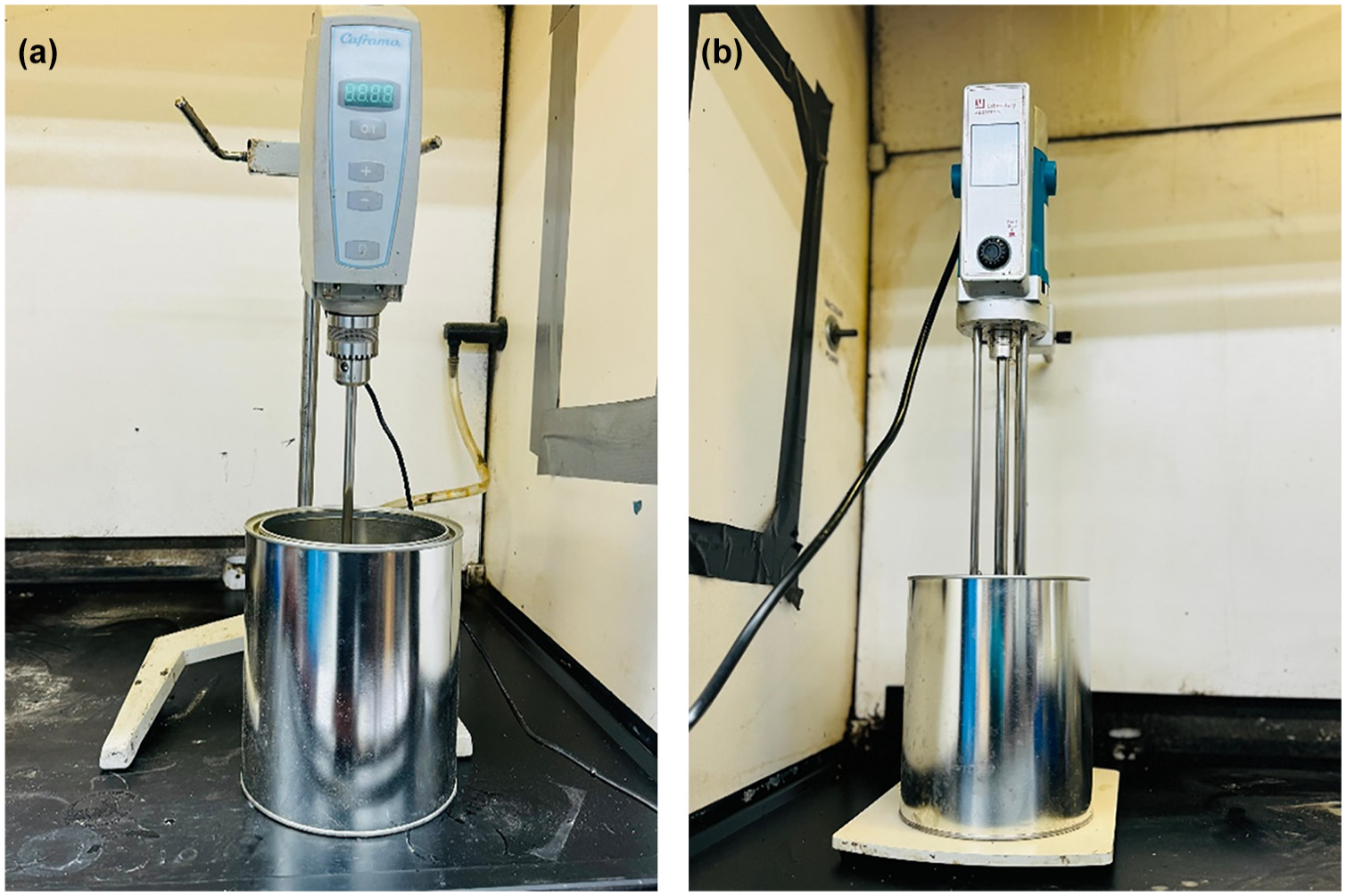
The (a) low-shear mixer and (b) high-shear mixer used in the study.
Experimental Methodology
The current study is focused on evaluating the self-healing characteristics of nano-modified binders prepared with two types of binders and three nano-modifiers at three dosages each (Figure 2). The SFE of the base and nano-modified binders was determined using the sessile drop method, the details of which can be found in the study by Mitra et al. ( 14 ). The fatigue performance was evaluated using the LAS test, while self-healing was quantified with the LASH test by introducing different rest periods at certain damage levels. The failure point was selected based on the peak shear stress criteria as per AASHTO TP 101, while the change in fatigue failure cycles at 2.5% shear strain was selected as the performance criteria calculated using the viscoelastic continuum damage (VECD) model. The impact of nano-modifier on the self-healing ability of asphalt binder was assessed by comparing the various nano-modified binders with the base binder. The effect of modifier dosage was evaluated by comparing the number of cycles to failure at all the dosages compared to the base binder for each modifier type. Three rest periods at three damage levels were introduced during the testing to investigate the influence of rest periods and damage levels in the self-healing capability of asphalt binders. Finally, the optimum combination of all the variables can be suggested based on the fatigue performance of nano-modified asphalt binders.
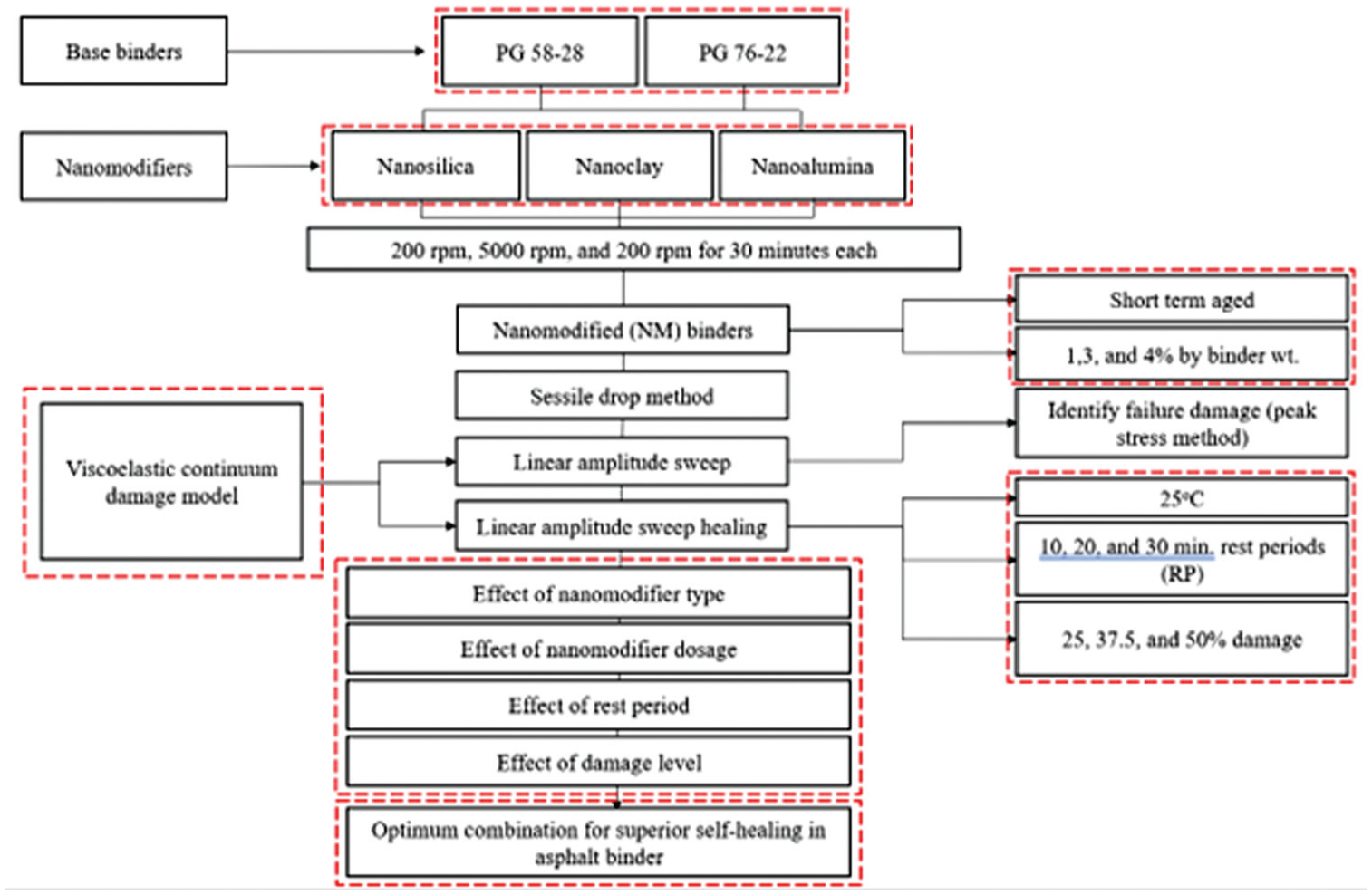
Experimental methodology used in the study.
Surface Free Energy
SFE quantifies the energy needed to generate a new unit area on a material’s surface in a vacuum. Bhasin et al. ( 18 ) showed that the wetting parameter indicating the contact between two cracked surfaces and the SFE are interrelated, where a higher SFE corresponds to greater attraction between the molecules. The attraction increases the rate of two surfaces coming closer, resulting in enhanced self-healing in the binder. Therefore, the SFE parameter is widely utilized to investigate the self-healing characteristics of asphalt binder.
The sessile drop method, a contact angle measurement approach, has been employed to evaluate the SFE of the binders in this study. This involves dropping the drops of probe liquid on the top surface of asphalt binder using a syringe. The device then continuously recorded the right- to left-hand contact angles for 10s at 14 frame rates through a high-resolution digital camera. After analyzing, the machine prompted the final contact angles for the probe liquids. The study utilizes three probe liquids—distilled water, formamide, and ethylene glycol—for the SFE analysis using the sessile drop method.
Linear Amplitude Sweep Test (AASHTO TP 101)
The conventional LAS test measures the fatigue resistance of asphalt binders by inducing accelerated fatigue damage through systematic increases in amplitude at a constant frequency. The data collected from the standard LAS test can be analyzed to establish a material function termed the damage characteristic relationship, aligning with the VECD theory. The LAS test was conducted in two distinct stages: the frequency sweep test and the amplitude sweep. The frequency sweep test and amplitude sweep test offered two model parameters, designated as A and B respectively, which were further utilized to obtain the fatigue life (number of cycles to failure, Nf) with respect to applied strain (γo). Model parameter A represents the integrity of the material, while parameter B signifies the strain susceptibility. Therefore, a higher value of A and lower magnitude of B is desirable for better fatigue life (Nf), which can be calculated as follows ( 22 ):

where:

and:

where f is the frequency, that is, 10 Hz, Df is the damage at failure, and k is equal to 1 + (1 –C2)α, where C1, C2 are the curve fit coefficients, obtained from linearization of the power law adapted, and α is the undamaged material property, taken as the inverse of the slope from the log–log plot of the storage modulus versus frequency. The damage intensity, D, can be obtained by the following ( 5 ):
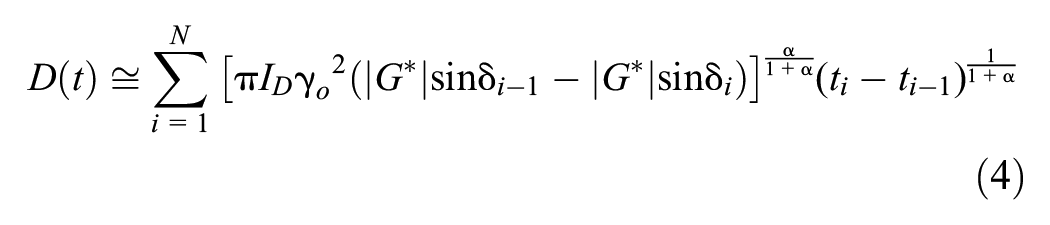
where ID represents the initial undamaged dynamic shear modulus in MPa, normalized by a modulus of 1 MPa, and ∣G*∣ is the amplitude of the complex modulus, defined as the ratio of maximum stress to maximum strain. In addition, δ is the phase lag between the stress and strain cycles.
The number of cycles to failure was evaluated at the 2.5% strain level using the VECD model. The previous literature generally reports the fatigue life at 2.5% and 5% strain levels for the assessment of fatigue performance of asphalt binders because the strains corresponding to 2.5% and 5% simulate the actual strains in the binder in a typically thick and thin pavement, respectively ( 23 – 26 ). Actually, the strain in a thick pavement having a thickness of more than 4 in. is 500 µ, whereas a thin pavement with a thickness of fewer than 4 in. experiences a strain of approximately 1000 µ ( 27 ). Since the strain in the asphalt binder is approximately 50 times the strain in the mixture ( 28 ), the strain in the binder in thick pavement = 50 × 500 × 10–6 = 0.025 = 2.5% and the strain in the binder in thin pavement = 50 × 1000 × 10–6 = 0.050 = 5%. Therefore, 2.5% and 5% strains are the expected strains in the binder and, therefore, are generally chosen for reporting the fatigue life. Similarly, the current study provides a comparative evaluation of the fatigue performance of neat and modified binders at 2.5% strain.
Linear Amplitude Sweep Healing Test
Healing in the pavement can be simulated by adding rest periods during laboratory fatigue testing. The LASH test is a modified LAS test, where a rest/healing period is introduced during the amplitude sweep phase after a certain strain, referred to as resumed strain ( 12 ). The loading continued from the subsequent strain level immediately after the rest period. Therefore, the LASH test can be considered as a three-stage test consisting of a frequency sweep test and a two-step amplitude sweep test (i.e., before and after healing). Three rest periods (i.e., 10, 20, and 30 min) were considered in this study based on a literature review carried out on the incorporation of rest periods in conventional fatigue testing ( 29 , 30 ).
The inclusion of the rest period at a specific damage level is also a judicial decision as it needs to be effective for optimum healing. The resumed strain was calculated from the conventional LAS testing corresponding to the intended damage level. The damage corresponding to the peak shear stress is considered as failure damage, based on which other damage levels and the corresponding resumed strains were calculated. Considering the damage levels, 25% and 50% damage levels are taken from the work of Xie et al. ( 12 ), while an additional damage level that is in the middle of these was selected for additional analysis on the effect of damage levels on the self-healing capacity of asphalt binder.
Researchers have suggested that nano-modifiers are effective when the damage is in the form of microcracks; therefore, lower damage levels ranging from 25% to 50% were selected for this study ( 31 – 33 ).
The performance of the base and nano-modified asphalt binders was quantified with respect to fatigue life or number of cycles to failure (Equation 1) obtained from conventional (LAS) and modified (LASH) fatigue testing. The effect of change in the modifier, dosage, rest period, and damage level were also studied by comparing the fatigue life at the 2.5% strain level, which is considered a typical binder strain in thick pavements ( 26 ). In addition to performance evaluation, the current study also calculated the conventional stiffness-based parameter, percent recovery, to assess its validity in identifying the self-healing characteristics of nano-modified asphalt binders. A higher magnitude of percent recovery corresponds to better self-healing. This involves a percentage change in the complex shear modulus with the inclusion of a rest period, which can be calculated as follows:

where Gf* is the complex shear modulus after a rest period and Gi* is the complex shear modulus before a rest period.
Results and Discussion
Effect of Nano-Modification on Fatigue Properties of Asphalt Binders
Figure 3 shows the number of cycles to failure (Nf) at 2.5% strain obtained from the LAS test for the base PG 58-28 and nano-modified binders. It is observed that the addition of nano-modifiers resulted in higher failure cycles as compared to the base binder. This behavior was observed in both NC and NS, whereas no definite trend was noticed for NA. Therefore, NC can be regarded as the best performing modifier, followed by NS and NA. Considering the dosage, the failure cycles were higher than the base binder at all dosages of NC and NS, whereas NA did not show any improvement in fatigue life. This implies that the ability of binders to withstand repeated loading was strengthened at the higher dosages. Overall, it was observed that the addition of NC and NS enhanced the fatigue performance of the base asphalt binder (PG 58-28) regardless of the dosage used.
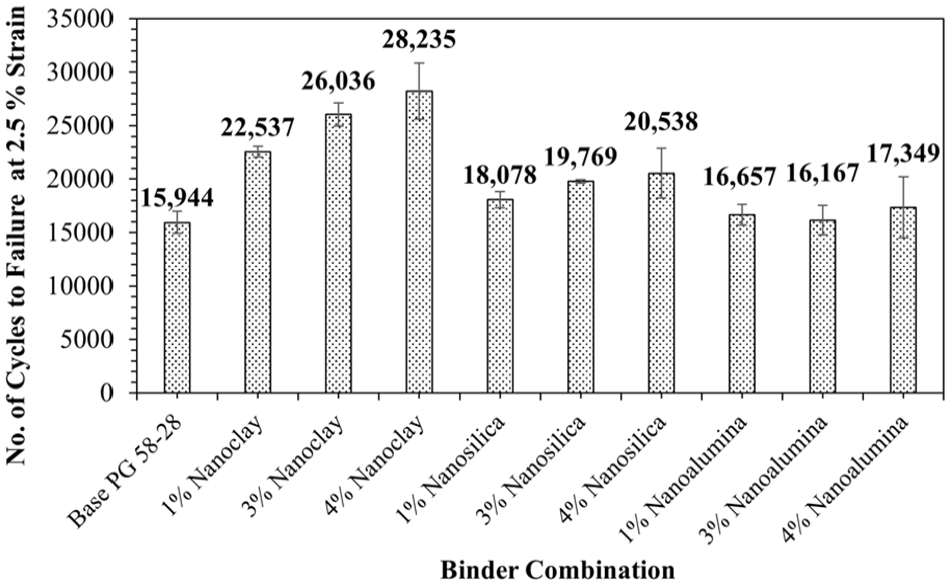
Number of cycles to failure for performance grade (PG) 58-28 base and nano-modified binders obtained from the linear amplitude sweep test.
Effect of Nano-Modification on Percent Recovery in Asphalt Binders
Figure 4 presents the healing in PG 58-28 asphalt binders with respect to percent recovery corresponding to a 10 min rest period obtained using the LASH test. It is observed that the base binder exhibited a 21% recovery quantified with respect to change in the complex shear modulus immediately after the rest period. The addition of nano-modifiers resulted in a marginal increase in percent recovery ranging from 21% (4% NA) to 25% (4% NC), which is analogous to that of the base binder (21%).
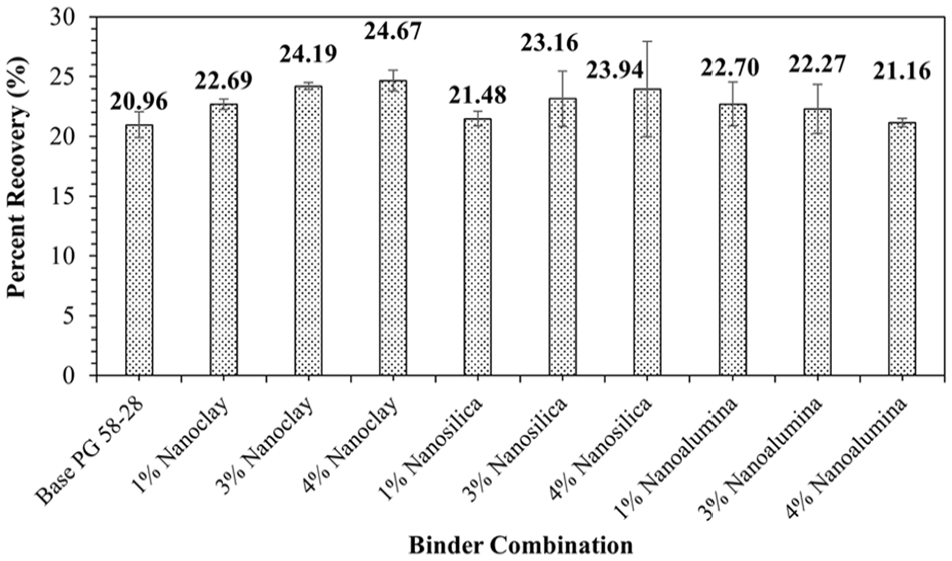
Percent recovery for base and nano-modified binders obtained from the linear amplitude sweep healing test at a 10 min rest period.
The analogy in the percent recovery corresponding to all the materials showed that the stiffness-based healing index, such as the percent recovery parameter, is not able to capture the effect of nano-modification. This finding aligns with the outcomes of the previous study by Asadi and Tabatabaee ( 19 ). Therefore, a more realistic healing index is required to better characterize the self-healing in the asphalt binder. Therefore, the current study attempts to quantify the self-healing in base and nano-modified binders using the performance parameter, that is, the number of cycles to failure obtained using the LAS and LASH tests. This will facilitate the accurate quantification of the effect of nano-modifiers on self-healing in asphalt binders.
Effect of Nano-Modification on Asphalt Binder Healing
Figure 5 shows the fatigue life (or number of cycles to failure) for the base PG 58-28 and modified binders tested at 25% damage level with different rest periods (10, 20, and 30 min). It is observed from Figure 5a that that all modified binders had higher fatigue life in comparison to the base binder, showing the effectiveness of nano-modifiers in enhancing the self-healing capability of asphalt binder. Also, NC yielded the highest failure cycles, followed by NS and NA. The subsequent addition of modifiers resulted in a higher number of cycles to failure, with NC being the most effective. For example, the failure cycles increased by 25%, 58%, and 83% at successive dosages of NC of 1%, 3%, and 4%, respectively. Similarly, the fatigue life increased by 4%, 16%, and 58% with 1%, 3%, and 4% NS, respectively. NA was found to be the least effective modifier, with the improvement of 10%, 14%, and 25% in fatigue life at the respective dosages of 1%, 3%, and 4%, respectively. It can be concluded that the inclusion of rest periods (10 min) enhanced the healing potential of asphalt binders with different modifiers exhibiting different healing abilities, as evident from the higher fatigue life. Therefore, the healing effect of nano-modifiers was effectively captured by the performance parameter, that is, the number of cycles to failure.
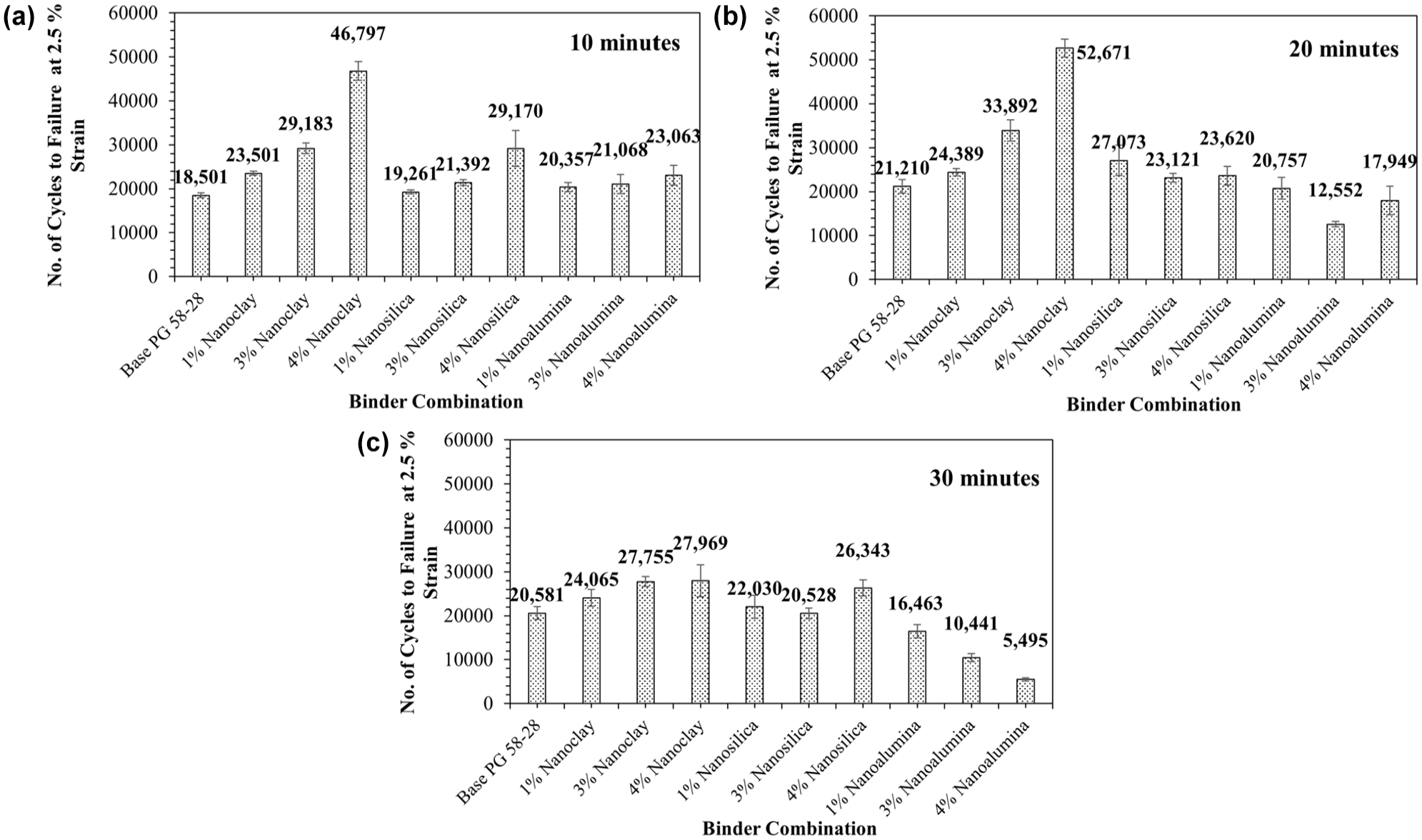
Self-healing in base and nano-modified binders with respect to failure cycles at 2.5% for (a) 10 min (b) 20 min, and (c) 30 min rest periods.
The base and nano-modified binders could resist the applied loading to a greater extent with the inclusion of rest periods; therefore, the effect of loading was reflected in the test results. The performance enhancement with the addition of nano-modifiers was also observed with an increased rest period (i.e., 20 min), as evident from the higher fatigue life of nano-modified binders (Figure 5b). Similar to previous findings, NC showed a consistent higher fatigue life with the higher dosages of nano-modifier, whereas no such trend was observed with NS and NA. On a similar note, NC yielded the highest fatigue performance, followed by NS and NA. For instance, the failure cycles increased by 15%, 58%, and 93% with each subsequent dosage of NC. While the increases at successive dosages were 28%, 9%, and 11%, the NA modified binders showed decreases of 41% and 15% at 3% and 4% dosages, respectively. This can be attributed to the distinct physical characteristics of the nano-modifiers, such as grain size and specific surface area ( 34 ). The rest periods allow the material to relax and recover the stresses, resulting in the enhanced performance after healing. Therefore, the rest period was further increased to 30 min, as shown in Figure 5c. NC was again found to be the best performing modifier with increased fatigue life of 17%, 35%, and 36% at successive dosages of 1%, 3%, and 4%, respectively.
Bhasin et al. ( 35 ) proposed a model that explains healing as a function of the SFE of the binder and the self-diffusion of asphalt molecules across the crack interface. The onset of cracking reduces the bulk density near the crack interface, causing density gradient in the material. The self-diffusion driven by Brownian motion restores the molecules to the low-density region, resulting in a lower gradient across the wetted crack interface. The addition of nano-modifiers in the asphalt binder can enhance SFE by improving adhesion and cohesion at the molecular level, which facilitates the crack closure and therefore the enhanced fatigue performance. In the phase of the 10–20 min rest period, the balance between SFE and the material’s ability to recover is optimized, leading to improved performance. However, extended rest periods can result in a redistribution or imbalance in SFE, causing a reduction in the energy available to prevent crack reopening because of decreased molecular mobility. Also, the nano-modifiers may interact with the binder to create weaker, less cohesive bonds because of agglomeration or phase separation, leading to increased energy dissipation and crack reopening under vehicular loading.
Effect of Rest Periods on the Healing Capability of Asphalt Binders
The healing capability of the asphalt binders was measured using the number of cycles to failure obtained from LASH testing after introducing three rest periods (i.e., 10, 20, and 30 min at 25% damage level). Figure 6 shows the variation in fatigue life for the PG 58-28 base and nano-modified binders at all rest periods. The conventional fatigue testing results are shown by bars, while the healing performance is represented by lines. It is observed that the fatigue performance consistently increased with extending the rest period to 20 min, after which it again starts decreasing. Therefore, the 20 min rest period yielded the highest fatigue life as compared to other rest periods in the majority of the combinations. It is to be noted that increasing the rest period from 20 to 30 min did not exhibit substantial healing, which signifies that there exists a duration up to which the optimum self-healing in the asphalt binders is observed. The performance enhancement in the asphalt binder with the addition of nano-modifiers can be attributed to the SFE of the nano-modified asphalt binders, which is discussed in the following section.
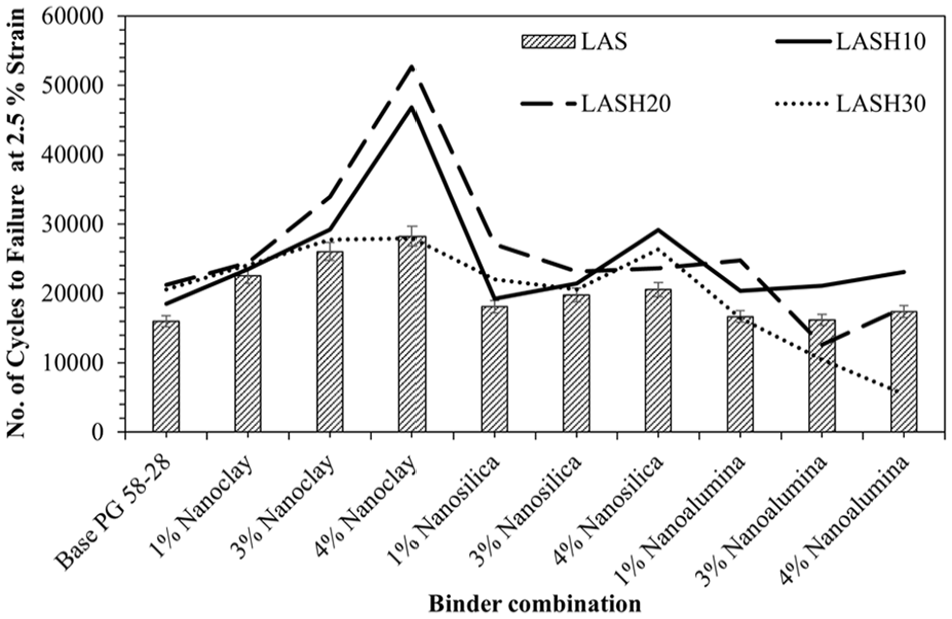
Failure cycles for base and nano-modified binders at all rest periods compared to conventional testing.
Surface Free Energy Parameter for Base and Nano-Modified Binders
Figure 7 presents the SFE for the PG 58-28 base and corresponding nano-modified binders for different modifiers and their dosages. The NC-modified binders exhibited higher values of SFE (31.1, 36.8, and 49.4 mN/m) with increasing dosages compared to the base binder (29.1 mN/m). Specifically, the SFE increased by 6.9%, 26.5%, and 69.8% at dosages of 1%, 3%, and 4%, respectively. Similarly, NS-modified binders also showed significant improvement in SFE, with increases of 71.8% and 93.1% observed at 1% and 3% dosages, respectively. However, at a higher dosage of 4%, the SFE decreased by 10.0%. This suggests that while lower dosages of NS greatly enhanced the SFE, but exceeding a certain threshold (in this case, 3%) led to a decrease in this parameter. The incorporation of NA into binders demonstrated a reduction in SFE values, specifically showing a decrease of 18.9% at a 1% dosage and 5.2% at a 3% dosage. This suggests that NA is less effective at enhancing the surface characteristics of the asphalt binder compared to NC and NS, which showed higher SFE values. The relative comparison in the trend between fatigue life and the SFE parameters showed there are some combinations where a discrepancy is observed between SFE and the fatigue life, such as 1% NA and 4% NS. This shows that the SFE may not provide a precise quantification of the healing performance, and the actual healing capability of the binders should be evaluated using performance testing. The SFE may provide an idea of the general fatigue trend, but it may not be a true indicator.
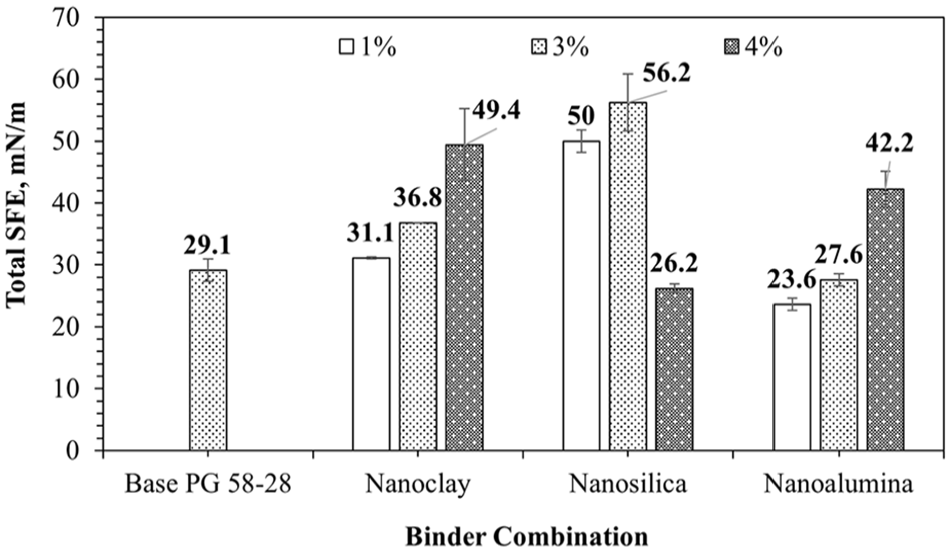
Surface free energy for base and nano-modified binders at respective dosages.
LASH Testing at 37.5% and 50% Damage Levels
The self-healing testing results for PG 58-28 base and nano-modified binders at the 25% damage level showed that the incorporation of nano-modifiers enhanced healing potential in the asphalt binders with NC being the most effective modifier, followed by NS and NA. In addition, the healing duration can be extended to 20 min, beyond which no substantial healing was observed. Therefore, the NC-modified binder with a rest period of 20 min is optimum for superior fatigue performance based on the results corresponding to 25% damage; however, the other damage levels should also be considered. The aforementioned results were obtained corresponding to the 25% damage level; however, the results were validated at another two damage levels, that is, 37.5% and 50%. A similar methodology of determining the effective shear strain at corresponding damage levels calculated as per VECD modeling was employed to apply the rest period. Nevertheless, the rest period of 10 min was selected for further testing, which includes the selected testing matrix considering the effect of nano-modification (1% NC, 3% NC, 4% NC, 3% NS, 3% NA), modifier type (3% NC, 3% NS, 3% NA), and dosage (1% NC, 3% NC, 4% NC), as illustrated in Figure 8.
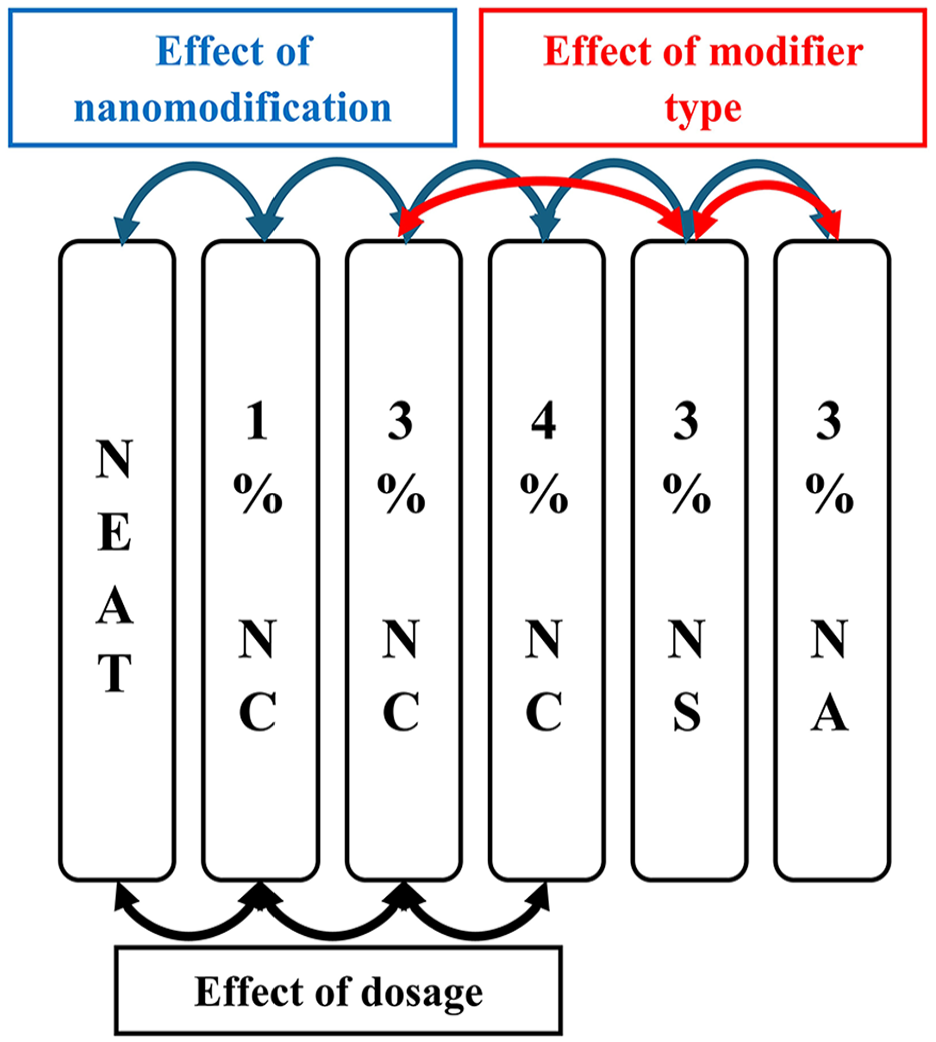
Testing methodology for fatigue testing at the 37.5% and 50% damage levels.
Effect of Damage Levels on Healing of Asphalt Binders
The number of cycles to failure at all damage levels for the PG 58-28 base and nano-modified binders are presented in Figure 9. The observations from the 25% damage level were also found to be valid at 37.5% and 50% damage levels. The addition of NC at successive dosages resulted in higher fatigue performance, as evident from the consistent increase in the failure cycles. For example, the increase in failure cycles was found to be 49%, 90%, and 160% at 1%, 3%, and 4% dosages of NC, respectively, at the 37.5% damage level. On a similar note, the failure cycles increased by 25%, 44%, and 97% at 1%, 3%, and 4% dosages of NC, respectively, at the 50% damage level. Also, NC was found to be the best performing modifier, followed by NS and NA, at both damage levels. The percentage increase in the failure cycles was observed as 90%, 38%, and 10% corresponding to NC, NS, and NA, respectively, at the 37.5% damage level, while the failure cycles increased by 44%, 13%, and –11% for NC, NS, and NA, respectively, at the 50% damage level. Considering the damage levels, it is observed that the nano-modifiers are most effective at the 25% damage level regardless of the dosage and the type of modifier. Further increase in damage levels showed minimal improvement in the fatigue behavior when compared to conventional LAS testing. For instance, the number of cycles to failure was found to be 9% higher at the 25% damage level, 4% higher at the 37.5% damage level, and 3% higher at the 50% damage level when compared to the failure cycles corresponding to no rest fatigue testing, that is, conventional testing. This can be attributed to the crack healing by the addition of nano-modifiers, which are proficient when the cracks are micro ( 31 – 33 ).
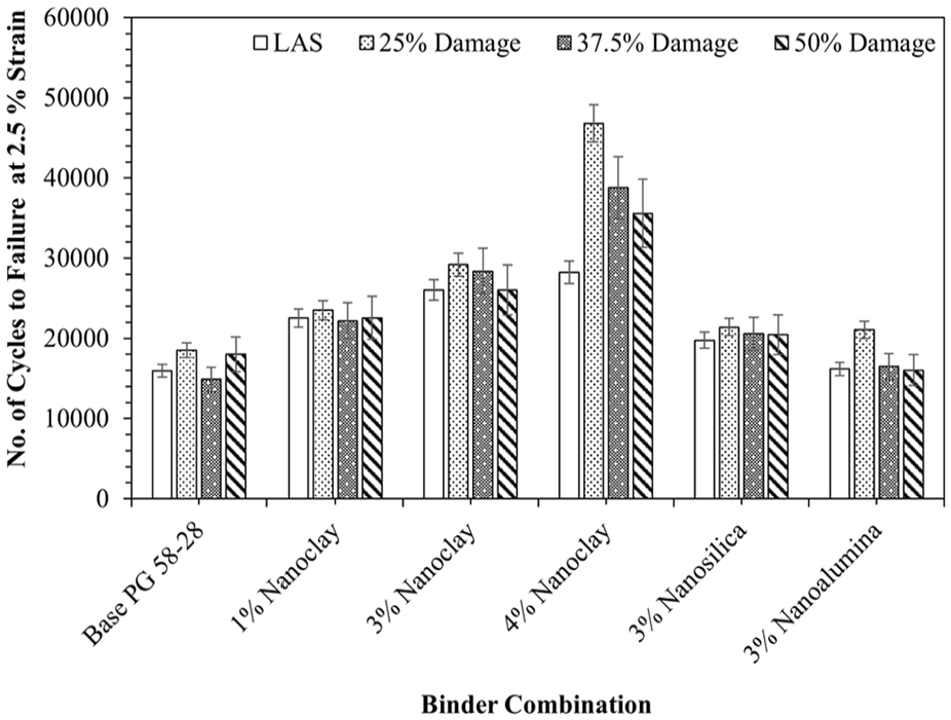
Failure cycles for base and nano-modified binders for the performance grade (PG) 58-28 binder at all damage levels.
The aforementioned results indicated that the nano-modifiers, especially NC at 4% dosage, can be used at the 25% damage level with 20 min of rest period for optimum self-healing in asphalt binders. These results are in accordance with the PG 58-28 binder. Furthermore, these outcomes were verified with another higher grade binder, that is, PG 76-22, to validate their efficacy with the change in binder grade. The statistical analysis (post hoc analysis at 95% confidence interval) showed that 10 and 20 min rest periods were not statistically significant (p-value = 0.324); therefore, the 10 min rest period was selected for the further testing, which was also time saving with respect to testing duration. Therefore, the selective testing plan mentioned in Figure 8 has been followed for PG 76-22 base and nano-modified binders corresponding to the 25% damage level and a 10 min rest period.
Figure 10 presents the number of cycles to failure for the PG 76-22 base and modified binder. The enhancement of the self-healing capability of asphalt binder through the addition of nano-modifiers is evident. The failure cycles were found to be improved by 49%, 89%, 103%, 32%, and 15% corresponding to 1% NC, 3% NC, 4% NC, 3% NS, and 3% NA, respectively for the conventional test, while the increase was 58%, 104%, 140%, 30%, and 14% for the same combinations with the LASH test. The relative performance of the nano-modifiers was also found to be similar to that of the PG 58-28 binder (Figure 9), that is, NC being the most prominent modifier, followed by NS and NA. Furthermore, the successive incorporation of NC in subsequent stages led to improved fatigue performance similar to that of the PG 58-28 binder.
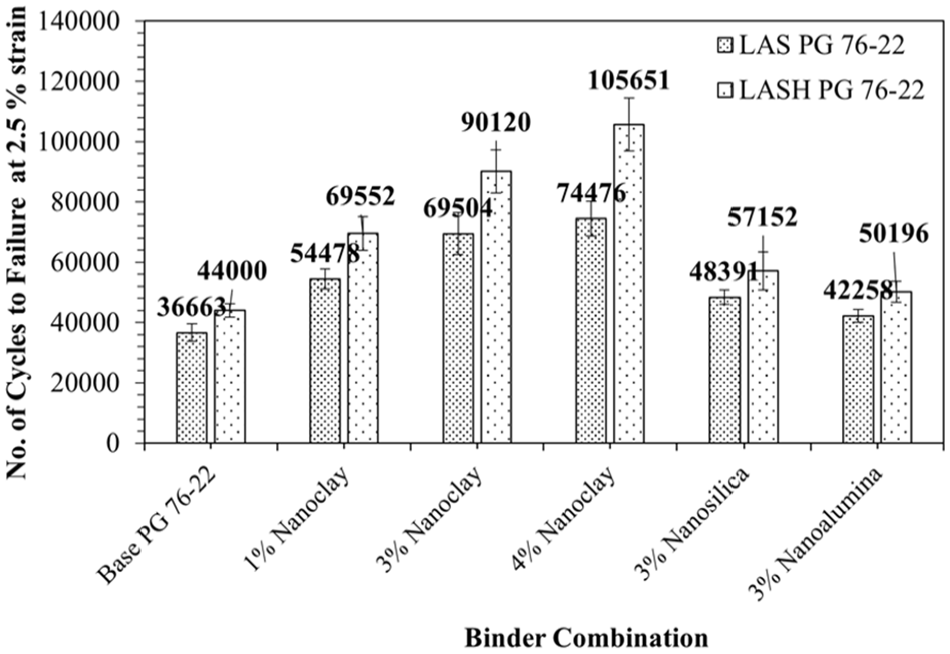
Failure cycles for performance grade (PG) 76-22 base and nano-modified binders for linear amplitude sweep (LAS) and linear amplitude sweep healing (LASH) testing.
Selection of the Ideal Combination of Nano-Modifiers for Optimum Self-Healing in Asphalt Binders
Figure 11 shows performance diagrams in the form of radar charts to identify the best possible combination of all the variables for optimum self-healing. The number of cycles to failure is normalized on a scale of 0–1 by dividing it by the maximum value of failure cycles. It can be concluded that the nano-modifiers are effective in improving the self-healing capability of asphalt binders regardless of the type of binder. Also, it is evident from Figures 11a–d that NC yields the highest self-healing in PG 58-28 nano-modified binders with 4% as the best dosage. This observation also holds true for the PG 76-22 binder, as apparent from Figures 11e and f . Nevertheless, Figures 6 and 9 show that the inclusion of a 20 min rest period after the 25% damage level resulted in the highest enhancement in the self-healing of asphalt binders. Optimum healing was observed at 4% NC with a 20 min rest period and 25% damage level.
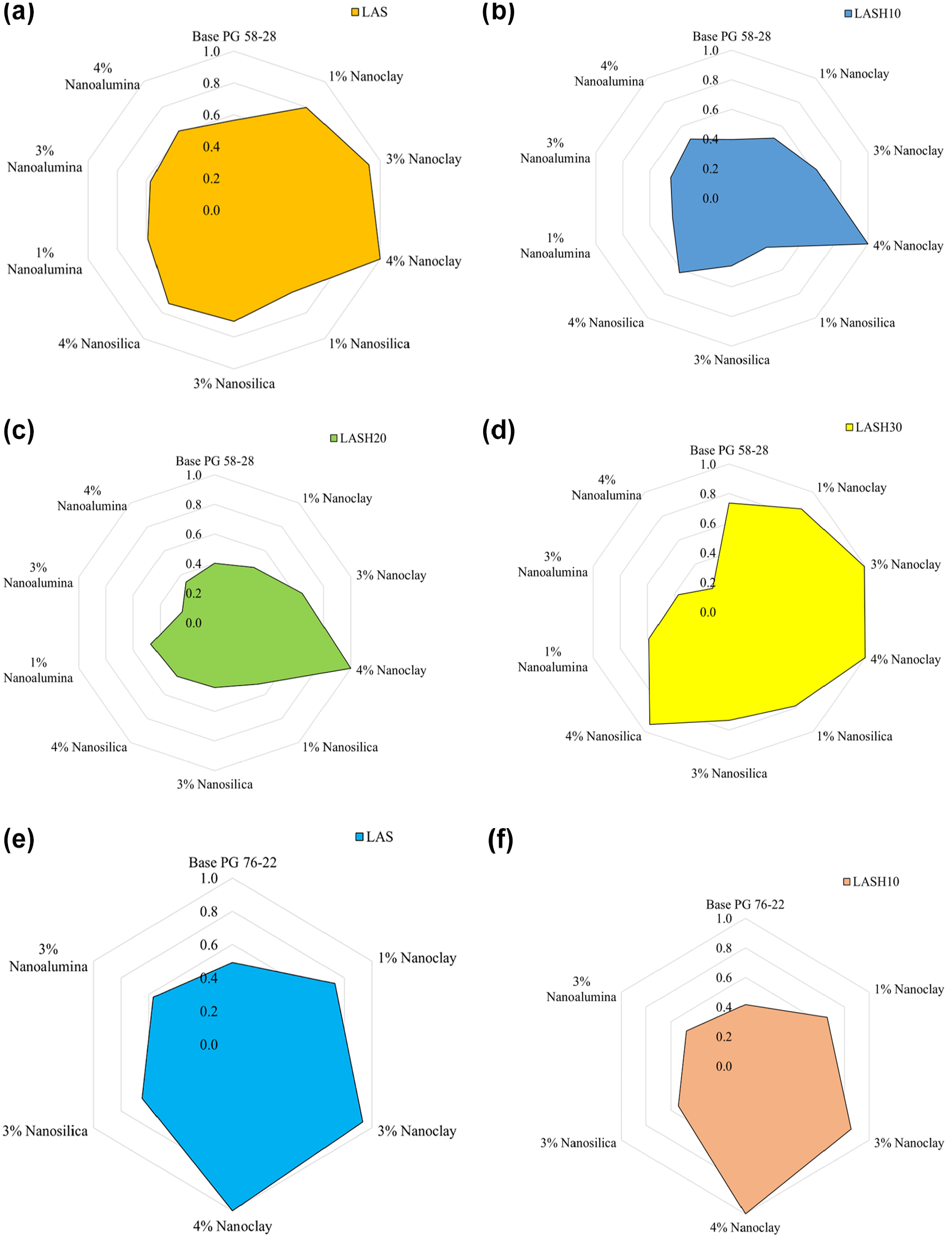
Radar charts for normalized failure cycles corresponding to performance grade (PG) 58-28: (a) linear amplitude sweep (LAS) test, (b) linear amplitude sweep healing (LASH) test with 10 min rest period, (c) LASH test with 20 min rest period, (d) LASH test with 30 min rest period and PG 76-22, (e) LAS test, and (f) LASH test with 10 min rest period.
Statistical Analysis
The LASH test showed that fatigue performance of the asphalt binders was influenced by the addition of nano-modifiers. The effect of different variables, such as type of modifier, dosage, and healing duration, was observed on the self-healing behavior of nano-modified binders. A multi-factor analysis of variance (ANOVA) was performed using SPSS software at the 95% confidence interval (p-value ≤ 0.05). The statistical significance of response variables (i.e., nano-modifier type, dosage of nano-modifier, and rest/healing period) on the self-healing behavior of PG 58-28 asphalt binder was determined.
The effect of all the variables on the self-healing in asphalt binders was found to be significant, as observed in Table 2. Nevertheless, the interaction between the variables also displayed statistical significance. Therefore, it can be concluded that the constituents as well as the interaction between them affect the healing potential of modified asphalt binders. In other words, different constituents of the nano-modified binders (modifier type, dosage, rest periods) played important roles in the self-healing capability of asphalt binders and therefore need to be addressed comprehensively.
Analysis of Variance Results
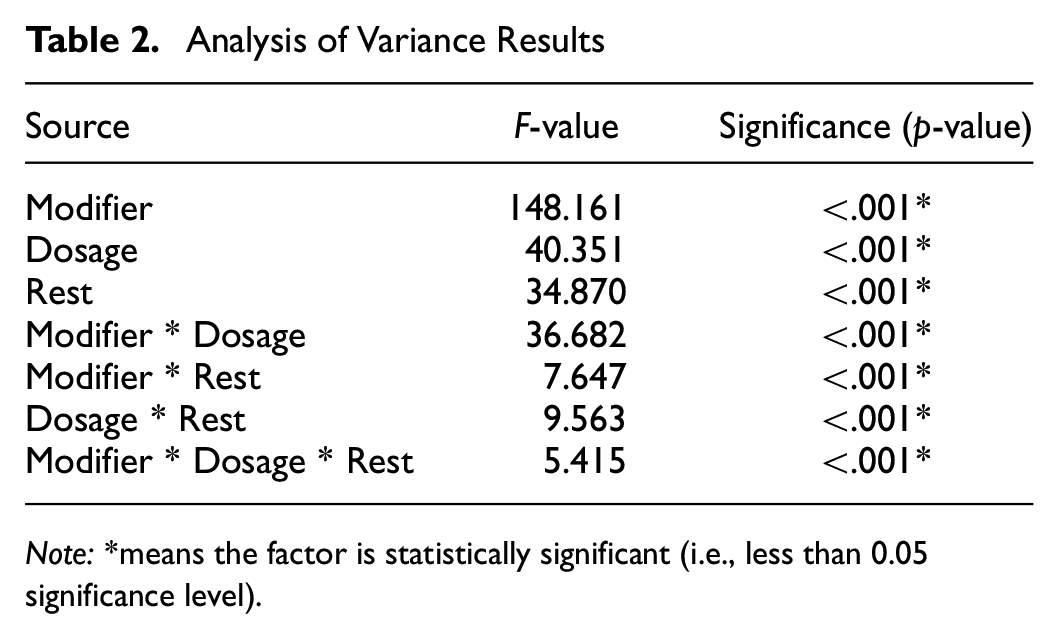
Note:*means the factor is statistically significant (i.e., less than 0.05 significance level).
Conclusions
This study evaluated the fatigue and healing characteristics of asphalt binders prepared with different nanomaterials. The asphalt binders were prepared with three nano-modifiers (NC, NS, and NA) and two binders (PG 58-22 and PG 76-22) at three dosages (1%, 3%, and 4% by binder weight) under the short-term aging (RTFO) condition. The fatigue performance of the binders was assessed by the LAS test. The self-healing was quantified by the LASH test, incorporating three rest/healing periods (10, 20, and 30 min) at three damage levels (25%, 37.5%, and 50%). The effect of all the variables was studied by the change in the number of cycles to failure employing the dissipated energy approach using the VECD approach. Based on the testing results and statistical analyses conducted, the following conclusions can be drawn from this study.
The number of failure cycles for NC-modified asphalt binders was found to be highest, followed by those modified using NS and NA, respectively. The NC-modified binders had the highest number of cycles to failure at a 2.5% strain level and when compared to the PG 58-28 base binder. It is also noted that this finding was true regardless of binder type, damage level, or rest period.
The healing capability of the base and nano-modified binders increased with the addition of rest periods relative to the conventional fatigue testing protocol at both damage levels, but there exists an optimum rest period, that is, 20 min, beyond which the healing is not considerable.
The performance parameter (i.e., number of cycles to failure) was able to capture the effect of nano-modification in the asphalt binders. It was evident that the addition of nano-modifiers at different dosages led to a substantial increase in the failure cycles at different damage levels and rest periods. Therefore, it can be concluded that self-healing in asphalt binders can be captured with the number of cycles to failure obtained from the LASH test when compared with stiffness-based indices.
The ANOVA showed that all the response variables, such as the modifier, dosage, and rest period and their interactions, are statistically significant at the 95% confidence interval.
Recommendations
The recommendations based on the study are as follows.
This study provides a methodology for identifying the best combination for optimum healing in asphalt binders. Based on the observed fatigue performance and self-healing of the asphalt binders used in the study, NC as a modifier at 4% dosage is recommended for optimum self-healing in PG 58-28 and PG76-22 binders.
The 20 min rest period resulted in optimal healing responses, while the 25% damage level can be proposed as a possible representation of microcracking damage, based on the outcomes of the current study.
Moreover, performance-based healing indicators, such as the number of cycles to failure used in this study, are recommended for accurate quantification of self-healing in asphalt binders.
The current study is focused at the binder level; however, the validation of binder results on the mixture scale is required, which can be a possible future direction of research in the same domain.
Limitations and Future Work
The present study aimed to assess the effect of nano-modifiers on the fatigue and healing capabilities of asphalt binders using the LASH test. This work can serve as a pathway for future studies attempting to incorporate healing in the conventional testing protocols. The study is limited to the binder scale only; therefore, the outcomes of the binder testing should be validated on the mixture scale, which may exhibit different behavior under real-world conditions. Different types of nanoparticles possess distinct characteristics, influencing their interaction with asphalt binders and, consequently, the mechanisms of self-healing improvement. A detailed characterization of these nano-modifiers, which is not covered in this study, is necessary to evaluate these differences and can be explored in future research. The study also left a margin for the exploration of other nano-modifiers, such as carbon nanotubes, graphene oxide, or polymeric nanocomposites, in future research.
Footnotes
Author Contributions
The authors confirm contribution to the paper as follows: sample preparation: M. Chaudhary; laboratory experiments and data analysis: M. Chaudhary; drafting manuscript preparation: M. Chaudhary; proofreading the paper: A. Ali; guidance for data interpretation: A. Ali; experimental plan: Y. Mehta; guidance for the conduct of the research and interpretation of the data: Y. Mehta; guidance and feedback for the research and interpretation of the data: B. Cox. All authors reviewed the results and approved the final version of the manuscript.
Declaration of Conflicting Interests
The author(s) declared no potential conflicts of interest with respect to the research, authorship, and/or publication of this article.
Funding
The author(s) disclosed receipt of the following financial support for the research, authorship, and/or publication of this article: This study is supported by the Broad Agency Announcement Program and the U.S. Army Engineer Research and Development Center (ERDC) under Contract No. W913E521C0020. The opinions, findings, and conclusions or recommendations expressed in this material are those of the author(s) and do not necessarily reflect the views of the Broad Agency Announcement Program and the U.S. Army Engineer Research and Development Center (ERDC).

Data Accessibility Statement
The data presented in this manuscript can be accessed on request from and approval of the corresponding author.