



Abstract
This study presents a new experimental procedure for evaluating the durability of stabilized soils subjected to multiple wetting and drying (W-D) cycles. An integrated experimental program combining dynamic shear rheometer (DSR) testing with W-D cycles was designed and implemented to assess moisture-induced performance degradation in natural sand stabilized with two types of rapid-setting cementitious stabilizers. Small cylindrical specimens (10.5 mm in diameter and 35.0 mm in height) of stabilized sand mixes were compacted, cured, and subjected to up to seven W-D cycles. Each W-D cycle was meticulously controlled to gauge its impact on the material’s durability. The mechanical properties of the stabilized samples were evaluated at different stages of the W-D cycles using the strain-sweep DSR testing based on a methodology developed from preliminary work. The proposed test method focuses on the shear properties of the material, measuring its mechanical response under the torsional loading of a cylindrical sample and providing dynamic mechanical properties and fatigue-resistance characteristics of the stabilized soils under cyclic loading. Test results demonstrate water-induced deterioration of stiffness and reduced resistance to cyclic loading with good testing repeatability, efficiency, and material-specific sensitivity. By combining dynamic mechanical characterization with durability assessment, the new testing method provides a high potential as a simple, scientific, and efficient method for assessing, engineering, and developing stabilized soils, which will enable more resilient transportation infrastructure systems.
Keywords
The durability of stabilized soils under cyclic moisture conditions is a critical concern for the construction of transportation infrastructure, especially in areas prone to variable weather patterns. To address the challenges posed by environmental stressors such as heavy rainfall, floods, temperature fluctuations, and extreme weather events, the construction industry has effectively employed various soil-stabilization techniques. Among these, chemical stabilization has played a crucial role in enhancing the strength and durability of soils used in civil engineering applications because of its easy and efficient applicability ( 1 , 2 ).
Over the past decades, significant progress has been made in developing and refining soil-stabilization practices, with a solid body of knowledge about the formation of stabilization products and their properties. Researchers and practitioners have developed a mature understanding of how different chemical additives, such as calcium-based stabilizers, alkali-activated materials, polymers, and fibers, affect soil behavior. Traditional stabilizers like Portland cement and lime have been extensively studied and implemented because of their proven effectiveness in improving soil stiffness and stability ( 3 – 5 ). However, the widespread use of lime and cement has resulted in issues associated with their environmental impacts, cost implications, and energy consumption. To mitigate these issues, recent research has focused on alternative stabilizers and novel additives, such as alkali-activated materials, organic polymers, and fibers ( 6 – 10 ). These alternatives aim to address both environmental and economic concerns while maintaining or enhancing soil performance.
Despite advancements in soil-stabilization techniques, there remains a gap in understanding the long-term performance of different stabilizers under fluctuating moisture conditions. Wetting and drying (W-D) cycles are a widely used method to simulate cyclic moisture conditions and assess soil durability. This method involves subjecting soil samples to alternating periods of wetting and drying, thereby mimicking, to some extent, real-world conditions that may lead to deterioration in the mechanical properties of stabilized soils. Such deterioration can occur through factors such as loss of cohesion, breakdown of stabilization agents, or changes in pore structures induced by moisture intrusion ( 11 – 14 ). While W-D cycles are commonly employed to study the volumetric changes (e.g., swelling and shrinkage) of expansive clays treated with various stabilizers, there is no universally accepted testing protocol for these cycles. Several studies have attempted to adapt this approach to different soil types and stabilizers. For example, Guney et al. developed a testing protocol where W-D cycles were repeated until no further changes in the swelling potential of lime-treated clay were observed, defining the number of cycles required to achieve stability ( 15 ). Similarly, Yazdandoust and Yasrobi employed a similar approach for polymer-stabilized expansive clays, finding that four W-D cycles were sufficient to reach equilibrium of soil properties exposed to moisture fluctuations, comparable to lime treatment result ( 16 ).
Despite several attempts, the existing methods for employing W-D cycles still lack standardization. Testing protocols vary significantly in duration, moisture content, and environmental conditions, leading to inconsistencies and limiting the comparability of results across different studies. Furthermore, current testing methods often fail to accurately correlate laboratory-simulated W-D cycles with the moisture fluctuations experienced by stabilized soils in real-world conditions. This study seeks to address these challenges by developing a novel integrated testing approach that combines a fundamental mechanical testing with controlled W-D cycles. The proposed experimental program should be a method that can be easily conducted and efficiently and accurately evaluate the material-specific impact of stabilizers on soil properties and durability over time, offering valuable insights into the long-term performance of stabilized soils without requiring much experimental and analytical burden.
One promising method to meet the need is a dynamic mechanical analysis (DMA) which can be readily carried out by using a dynamic shear rheometer (DSR) with a small cylindrical specimen of soil. DMA provides a sound framework for assessing mechanical properties, particularly under repeated loading scenarios. Unlike conventional static tests, such as the unconfined compressive strength (UCS) test or triaxial shear test, DMA can offer a new perspective on soil response. It captures key parameters like stiffness, damping characteristics, and deformation behavior spanning an undamaged linear regime, a nonlinear zone, and damage under cyclic loading conditions ( 17 , 18 ). Traditional laboratory and field tests, such as the resonant column test, cyclic torsional shear test, cyclic triaxial test, and bender element test, target specific deformation domains of soil behavior. However, these methods often fail to provide a comprehensive view of the soil’s response across a broad range of deformation levels ( 19 – 23 ). In contrast, DMA can cover a wide spectrum of deformation levels and loading frequencies, making it a time- and cost-efficient approach. While extensively used in pavement engineering to analyze materials such as asphalt binders and mixtures with fine aggregates ( 24 – 26 ), the application of DMA to characterize stabilized soils remains under-explored. Previous studies have been preliminary, presenting an opportunity to develop DMA into a practical, specification-type testing method ( 27 , 28 ). This study aims to develop a reliable durability assessment of stabilized soils, which we hypothesize is achievable by integrating the core characteristics of DMA with controlled W-D cycles.
Research Scope and Objectives
The scope of this study encompasses the development and application of an experimental procedure to assess the fundamental properties and moisture-induced durability of stabilized soils. This study specifically focuses on the effects of W-D cycles and integrates dynamic mechanical characterization to understand how moisture intrusion and fluctuations influence the mechanical performance and durability of stabilized soils with a trial focus on sandy soil at this stage. The experimental program involves:
Developing a laboratory procedure of W-D cycles for the untreated and stabilized soils by investigating the effects of testing conditions on soil characteristics arising from moisture fluctuations;
Applying a non-standardized DMA approach to the stabilized soils with W-D cycles to evaluate the impact of cyclic moisture conditions on the mechanical characteristics of stabilized soils.
These objectives collectively aim to establish a reliable and efficient method for assessing the moisture-induced durability of stabilized soils, thereby enhancing the understanding of the degradation mechanisms of stabilized soils caused by moisture fluctuations and contributing to more resilient transportation infrastructure systems.
Materials and Mixes
Soil
Natural sandy subgrade soil collected from College Station, Texas, was used in this study. The soil was air-dried and then screened through a No. 40 sieve (0.425 mm). Table 1 presents the fundamental geotechnical properties of the tested soil, including its Unified Soil Classification System (USCS) classification, specific gravity (Gs), plasticity index (PI), optimum moisture content (OMC), and maximum dry density (ρdry-max). Figure 1 displays the particle size distribution curve of the soil, which shows dominance of fine sand particles and underscores the material’s uniform and granular nature.
Basic Soil Characterization Data
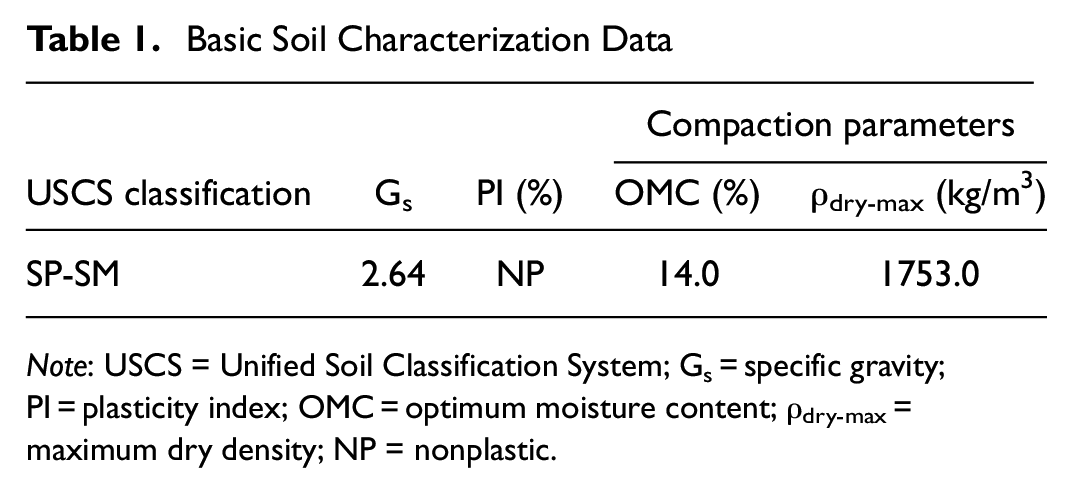
Note: USCS = Unified Soil Classification System; Gs = specific gravity; PI = plasticity index; OMC = optimum moisture content; ρdry-max = maximum dry density; NP = nonplastic.
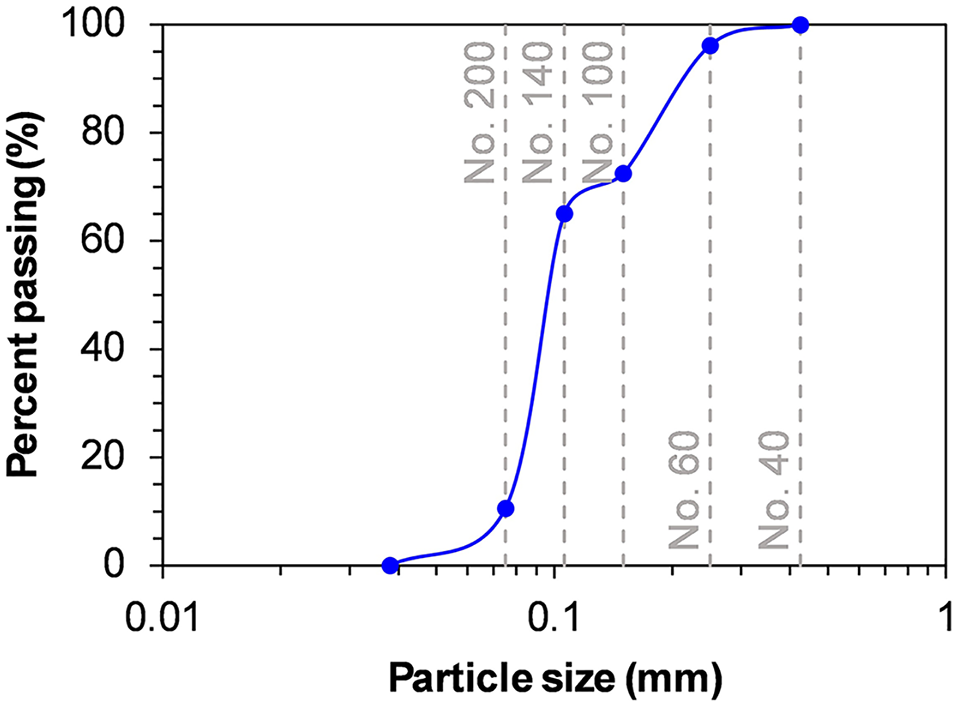
Particle size distribution of natural sand.
Stabilizers and Mixes
Natural sand was mixed with two types of commercially available rapid-setting cementitious stabilizers, referred to as A and B. The details of the three mixes (i.e., untreated, Mix A, and Mix B) are outlined in Table 2. Stabilizer A is a cost-effective and eco-friendly stabilizer composed mainly of cementitious materials and chemical additives, designed for rapid setting. Stabilizer B is a fast-setting calcium sulfoaluminate (CSA) cement, which serves as a sustainable alternative to ordinary Portland cement (OPC) and is known for its ability to achieve significant strength gain within a relatively short timeframe.
Mix Design and Testing Matrix

Note: MC = moisture content; ρdry-max = maximum dry density; RH = relative humidity; na = not applicable.
Each stabilizer was applied at a uniform dosage of 4% of the dry weight of the soil, reflecting practical field application requirements. The moisture content for the stabilized mixes was adjusted to account for the stabilizer content, resulting in minor modifications to the OMC and maximum dry density (ρdry-max), as determined by the standard Proctor compaction test ( 29 ). The specimens were cured for 1 day and 7 days under ambient conditions to ensure proper stabilization and assess both short-term and long-term strength developments.
Methods
This study develops an experimental framework for assessing the mechanical properties and durability of stabilized soils under cyclic moisture conditions. The primary interest is to evaluate how stabilizers affect the mechanical performance of soils exposed to cyclic moisture conditions through an integrated approach that encompasses material characterization, mix design, sample preparation, and testing under W-D cycles, as shown in Figure 2. The experimental program includes DSR testing of the stabilized soil samples subjected to moisture conditioning. At various stages of the W-D cycles, specifically after the drying cycle, the dynamic mechanical properties and deformation capacities of the soil mixes are evaluated, with a particular focus on strain at failure. Such a failure indicates that the soil cannot maintain capacity to deform, likely because of moisture-induced damage. Consequently, the properly identified number of W-D cycles is considered a necessary process to assess moisture-induced durability of the soils with and without treatment. The DSR test results are analyzed to enhance the understanding of the effects of moisture intrusion and fluctuations on the stability of the soil.
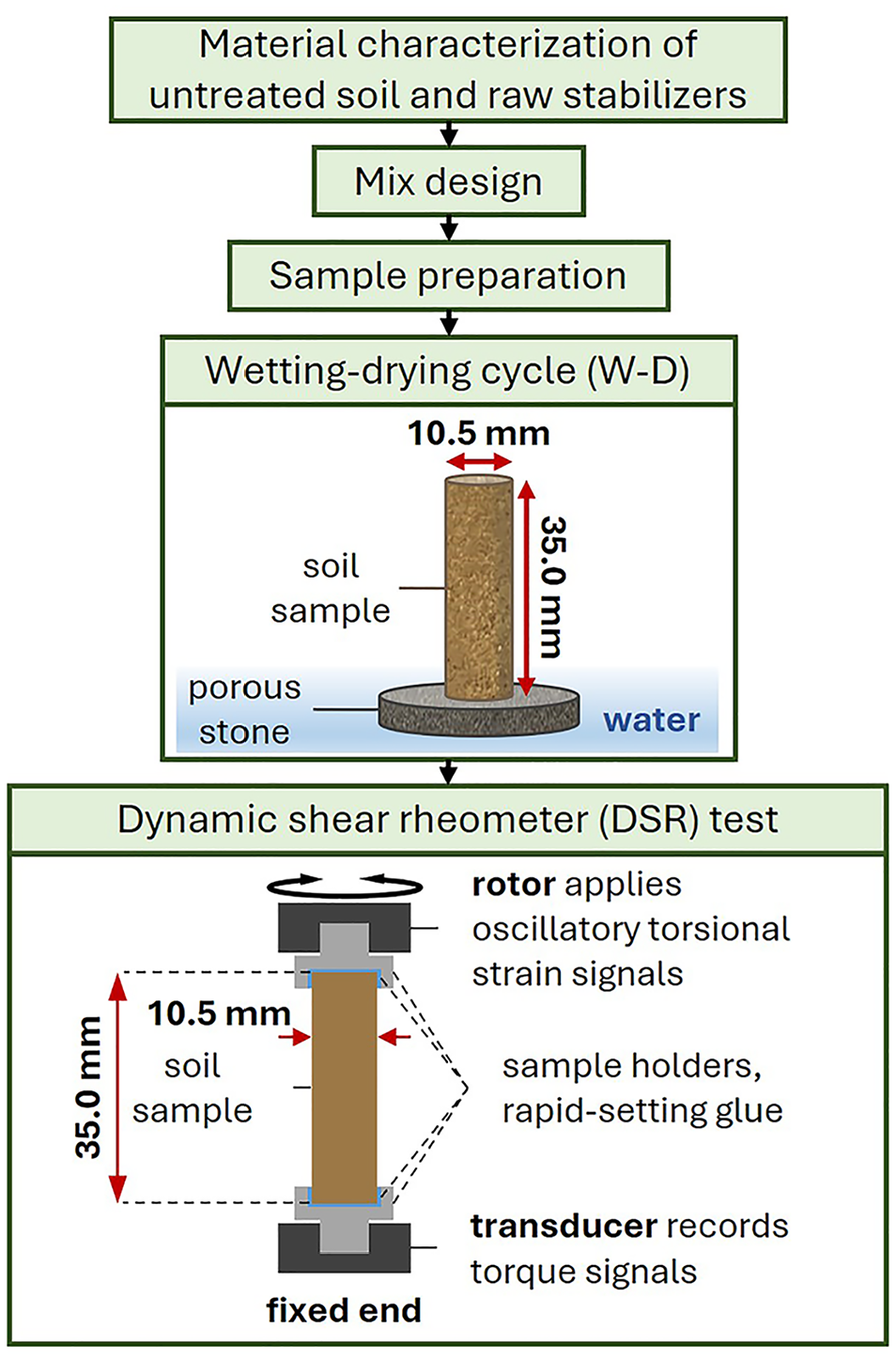
Overview of experimental program.
Sample Preparation
The soil was mixed thoroughly with the stabilizing additives at the corresponding OMC to ensure an even distribution of the stabilizers. Within 15 min of mixing, to prevent premature hardening because of the rapid-setting nature of the stabilizers, the soil–stabilizer mixes were compacted into cylindrical specimens with a diameter of 10.5 mm and a height of 35.0 mm using a stainless-steel mold, as our previous study demonstrated the feasibility and reliability of the geometry for DSR testing of stabilized soils ( 27 , 30 ).
The compaction process followed the methodology developed by Kim et al., utilizing a standard penetrometer equipped with a dial gauge and a lever arm ( 31 ). This setup functions as a loading frame that applies a vertical monotonic load of up to 65 kg-f over 10 s at both ends of the mold, ensuring uniform compaction throughout the specimen’s height. After compaction, the samples were cured under ambient conditions in an environmental chamber maintained at a constant temperature of 25°C and a relative humidity of 50% for 1 and 7 days, respectively, which allows mechanical properties to be developed in the stabilized soil.
Wetting and Drying Experiments
The stabilized soil samples cured for 7 days were subjected to multiple W-D cycles. The wetting phase was simulated using the capillary-suction method, as illustrated in Figure 2. In this method, stabilized samples were placed on top of a porous stone and exposed to moisture intrusion through capillary action for 1.5 h. Preliminary testing compared this method with placing air-dried samples in a 100% humidity chamber for an extended period of time. The capillary-suction method was chosen because of its effectiveness, achieving a degree of saturation of approximately 96%, which exceeded that of the humidity-chamber method. Moreover, capillary-suction-based saturation in this study is intended to simulate extreme moisture exposure, beyond typical field precipitation events. Unlike gravity-driven top-down wetting, which might be more representative of field conditions, capillary suction allows for uniform moisture distribution and a controlled level of saturation, which is essential for repeatability and consistency across samples. It is observed that the capillary-suction-induced wetting enables a controlled degree of saturation throughout the height of the sample, which can avoid another effect of wetting caused by the gravitational flow, allowing better isolation of the effect of W-D cycles mostly governed by soil suction. Also, this approach allows for the acceleration of the potential degradation mechanisms in stabilized soils and captures deterioration scenarios that may arise under more intense environmental exposure, enabling a robust assessment of durability under intensified testing conditions. For the drying phase, samples were air-dried under ambient conditions for 24 h, reaching a degree of saturation of around 49%.
To establish the testing parameters, particularly the durations of the W-D cycles, the wetting and drying rates of both untreated and stabilized sand mixes were measured. This involved subjecting samples to W-D cycles and monitoring moisture content change over time (solid line) and calculating the rate of moisture change over time (dashed line), as summarized in Figure 3. Saturation was monitored by measuring the overall moisture content in duplicate samples after each wetting and drying phase. The small geometry of the samples used in this study (10.5 mm in diameter and 35.0 mm in height) allows for uniform saturation across the specimens. By using smaller samples, this experimental procedure achieves a degree of saturation that is feasible to measure, avoiding the potential saturation gradients commonly encountered in larger samples (e.g., 4–6 in. in diameter and 8–12 in. in height) used in conventional testing. This setup highlights the convenience and efficiency of the proposed method, as smaller specimens facilitate easier handling, uniform sample compositions, and consistent moisture conditions essential for repeatable testing.
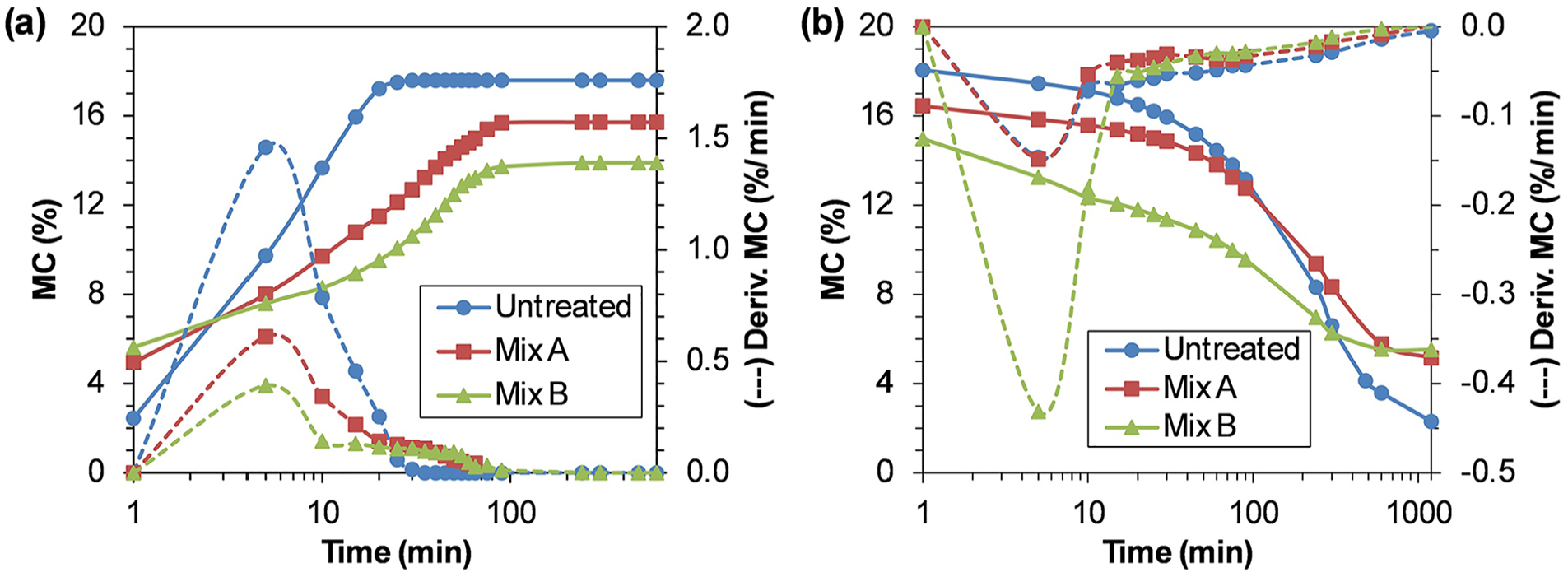
Moisture content (MC) change over time during (a) wetting and (b) drying.
For the wetting process plotted in Figure 3a, it was found that 30 min was sufficient for untreated sand to achieve a constant moisture content and approximately 96% saturation through capillary suction. In contrast, each of the two stabilized mixes required about 90 min to reach a similar saturation degree. Stabilized mixes demonstrated a slower wetting rate than that of the untreated sand, likely because of the effects of the stabilizers, which alter the pore structure and surface properties of the soil, impeding capillary action and slowing moisture penetration. Air-dried samples exhibited rapid moisture intake during the initial 10 min, followed by a gradual decrease in the rate of wetting. This behavior is attributed to the initial high water absorption capacity of the dry soil, which diminishes as the soil becomes saturated.
The drying phase plotted in Figure 3b required approximately 20 h for untreated sand, 13 h for Mix A, and 10 h for Mix B to achieve a constant moisture content and reach an air-dried state with a degree of saturation of approximately 49%. The drying rate was notably rapid within the first 10 min, especially for Mix B, which exhibited the highest drying rate. This accelerated drying in Mix B is likely a result of the rapid-setting nature of its stabilizer, which enhances moisture evaporation by facilitating quicker moisture migration to the surface. The drying rates are significant for designing soil mixing and compaction procedures, as they indicate the need to limit mixing and compaction time for certain rapid-setting stabilizers to prevent premature hardening of the soil–stabilizer mix.
DSR Test
The mechanical properties of the stabilized samples were evaluated at various stages of the W-D cycles, specifically after the drying cycle, using a DSR in strain-amplitude-sweep mode. This DSR test aimed to assess the deterioration of mechanical properties of stabilized soils caused by moisture intrusion and determine the number of W-D cycles required for sufficient degradation of the samples. The DSR test results are dependent on the saturation level of the tested sample, where higher saturation (wet state) produces lower stiffness under cyclic loading, whereas lower saturation (dried state) results in higher stiffness. This study, with a limited work scope, did not attempt to directly compare the impact of wetting and drying separately on mechanical degradation. Instead, the mechanical properties were evaluated after each W-D cycle, which ensures consistency in testing and analysis.
For this study, a TA Instruments Discovery Hybrid Rheometer HR 30 with a torsional solid bar geometry was employed. The DSR setup, illustrated in Figure 2, provides a pure shear condition without additional confining pressure or axial load, focusing solely on shear stress–strain relations. To fit the required geometry for testing in the DSR, the upper and bottom caps adhered to the soil cylinders using a rapid-setting glue, as illustrated in Figure 2. The glue is applied only at the ends of the samples and does not penetrate throughout their height, reducing the possibility of any chemical reactions with the stabilizers or soil. This approach ensures that the cylindrical sample is securely mounted on the testing wall.
The testing procedure involved subjecting the samples to oscillatory strain signals in torsion, with strain amplitudes increasing logarithmically from 0.0001% to 0.1%. This logarithmic increase in strain amplitudes allows for capturing material properties across a broad range of deformation levels within a relatively short period. Notably, despite the maximum strain parameters, all specimens failed at deformation levels significantly below these limits. A total of 45 strain signals were applied, with each strain level undergoing three loading–unloading cycles, totaling 135 cycles, and each cycle recording 245 data points. The testing procedure was consistently applied across five replicates for each mix. All tests were conducted at a constant frequency of 1 Hz and a temperature of 20°C to ensure controlled and consistent experimental conditions. A frequency of 1 Hz was selected as a baseline for simulating traffic-induced loading in the subgrade layer ( 32 ).
The stress–strain behavior at an individual deformation level is illustrated in Figure 4a. This data allows for the computation of dynamic mechanical properties ( 33 ). Phase lag, δ, between input strain and output stress signals measures the material’s hysteretic behavior. The stress–strain hysteresis loop in Figure 4b illustrates the energy loss during each loading–unloading cycle, indicating nonelastic soil behavior. Additionally, the dynamic shear modulus, |G*|, representing soil’s stiffness under repeated loading, is calculated as the ratio of shear stress amplitude (τ0) to shear strain amplitude (Ɣ0).
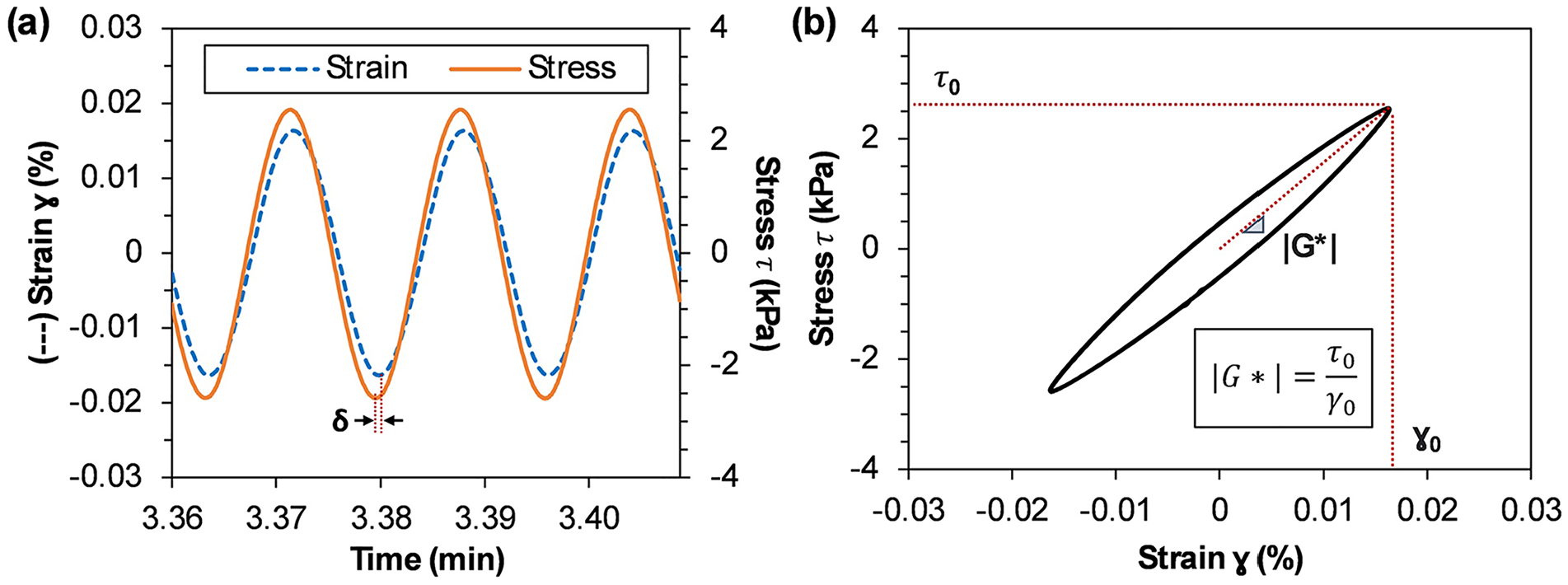
(a) Stress–strain response as a function of time and (b) corresponding stress–strain hysteresis loop.
Results and Discussions
Effect of Stabilizers on Dynamic Mechanical Properties of Soil
The application of chemical stabilizers significantly improved the stiffness of the sand samples, as illustrated in Figure 5. Notably, as seen in Figure 6a, Mix B achieved a maximum dynamic shear modulus of 455 MPa after 1 day of curing. This value is approximately 20 times greater than that of the untreated sand and 1.5 times higher than the 1 day cured Mix A. This highlights the effectiveness of Stabilizer B in rapidly enhancing the dynamic mechanical properties of the sand. However, after a 7 day curing period, Mix A outperformed Mix B, showing a maximum dynamic shear modulus of 1216 MPa, which is about three times higher than that of the 1 day cured Mix A. In contrast, Mix B exhibited only a 100% increase in dynamic shear modulus over 7 days, indicating that Stabilizer B was less effective for longer-term stiffness enhancement. This behavior is attributed to the different chemical compositions of the selected stabilizers. Stabilizer A, likely containing more reactive components, may enhance soil stiffness more effectively over extended curing periods, whereas Stabilizer B is more effective in gaining a rapid initial stiffness. The DMA approach (i.e., strain-sweep) using small cylindrical soil specimens could sensitively capture the mechanical characteristics of soils affected by different additives and chemical reactions, and the results among five replicates are generally repeatable as the error bars included in the dynamic modulus curves are small.
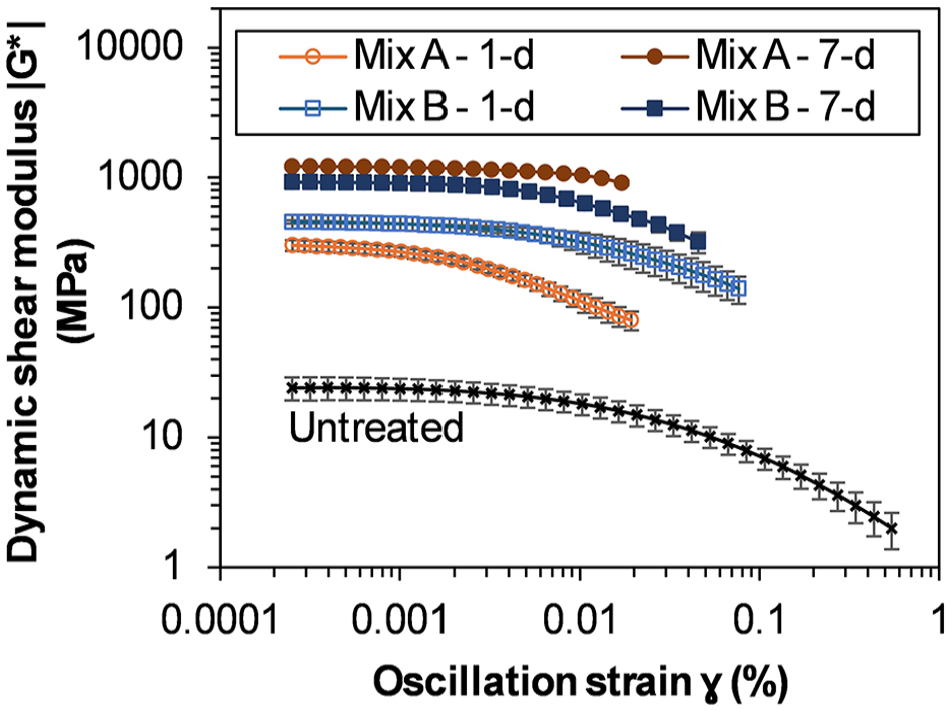
Untreated versus stabilized: dynamic shear modulus over oscillation strain.
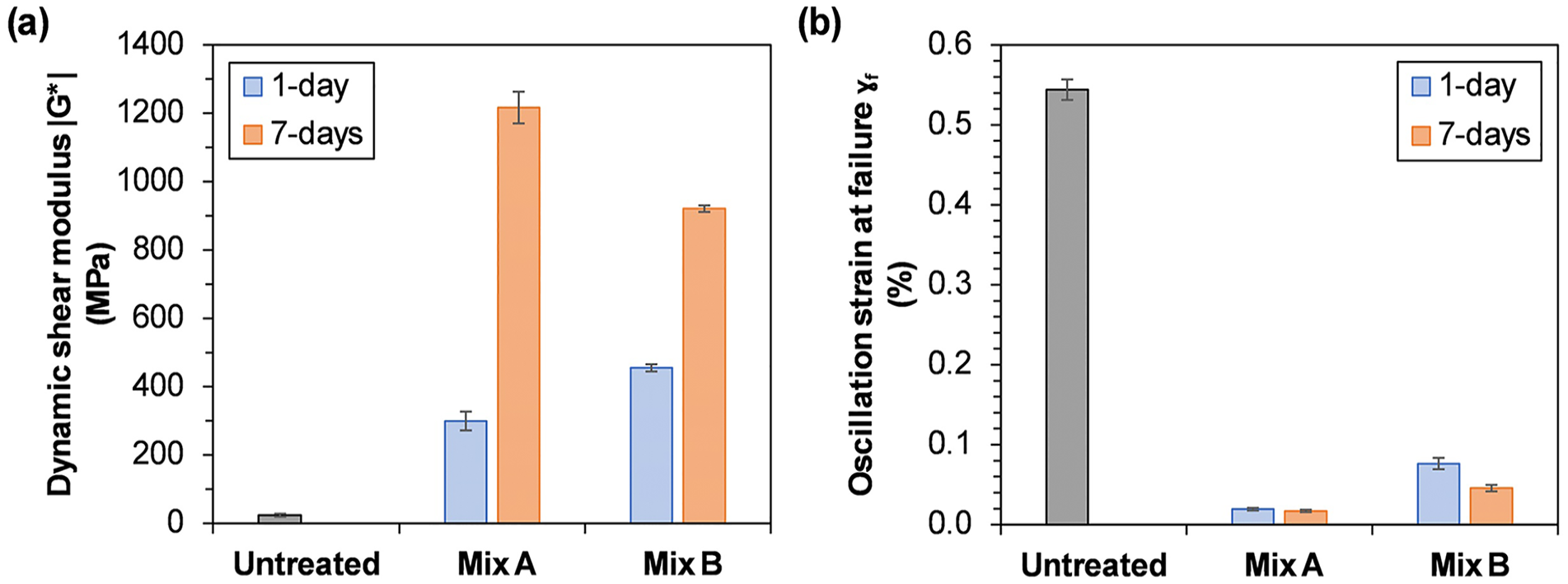
Untreated versus stabilized: (a) shear modulus and (b) oscillation strain at failure.
As deformation levels increased, the dynamic shear modulus of both untreated and stabilized samples deviated from its initial value, indicating a transition to the nonlinear regime of material behavior. This transition is attributed to microstructural changes within the soil, such as the formation and propagation of microcracks during repeated loading–unloading cycles. These microcracks contribute to the ultimate failure of the material, with critical strain values serving as indicators of the material’s brittleness and susceptibility to failure under cyclic loading conditions. Figure 6b demonstrates that both 1 day and 7 day cured samples of Mix A experienced ultimate failure at much lower strain levels (0.019% and 0.017%, respectively) compared with untreated sand (0.544%) and Mix B (0.076% and 0.045%, respectively). This result implies that Stabilizer A, while enhancing soil stiffness, also increases brittleness and facilitates early failure of the soil, making the material more prone to damage from repeated loading. This brittleness may result from the chemical stabilizer’s effect on the soil’s cohesive properties, potentially causing a more rigid structure that is less capable of absorbing and dissipating energy under cyclic loading. In contrast, Stabilizer B may offer a more balanced performance, providing adequate stiffness while maintaining some level of ductility. Understanding the brittleness resulting from chemical treatment is crucial in selecting appropriate stabilizers for soil-stabilization projects. Effective soil stabilization requires not only enhancing stiffness, but also ensuring that the material can withstand cyclic loading without premature failure.
Overall, the coefficient of variation of the measured dynamic mechanical properties across different cases ranged from 10% to 20%, indicating good repeatability of the results. This range underscores the reliability and consistency of the experimental data, confirming that the observed trends in the dynamic shear modulus and strain at failure are reliable.
Effect of Stabilizer on Moisture-Induced Durability of Soil
The dynamic mechanical properties of Mix A and Mix B were evaluated as the stabilized mixes underwent durability assessment with W-D cycles. Figure 7 summarizes the DSR strain-sweep test results over one, three, five, and seven W-D cycles. Significant degradation in soil stiffness and a reduction in the failure strain were observed with more W-D cycles, which indicates a substantial loss of material integrity and weakening of the stabilized soil structure as a result of cyclic moisture conditions. The failure strain is the last strain value shown in each curve and that is when the specimen breaks.
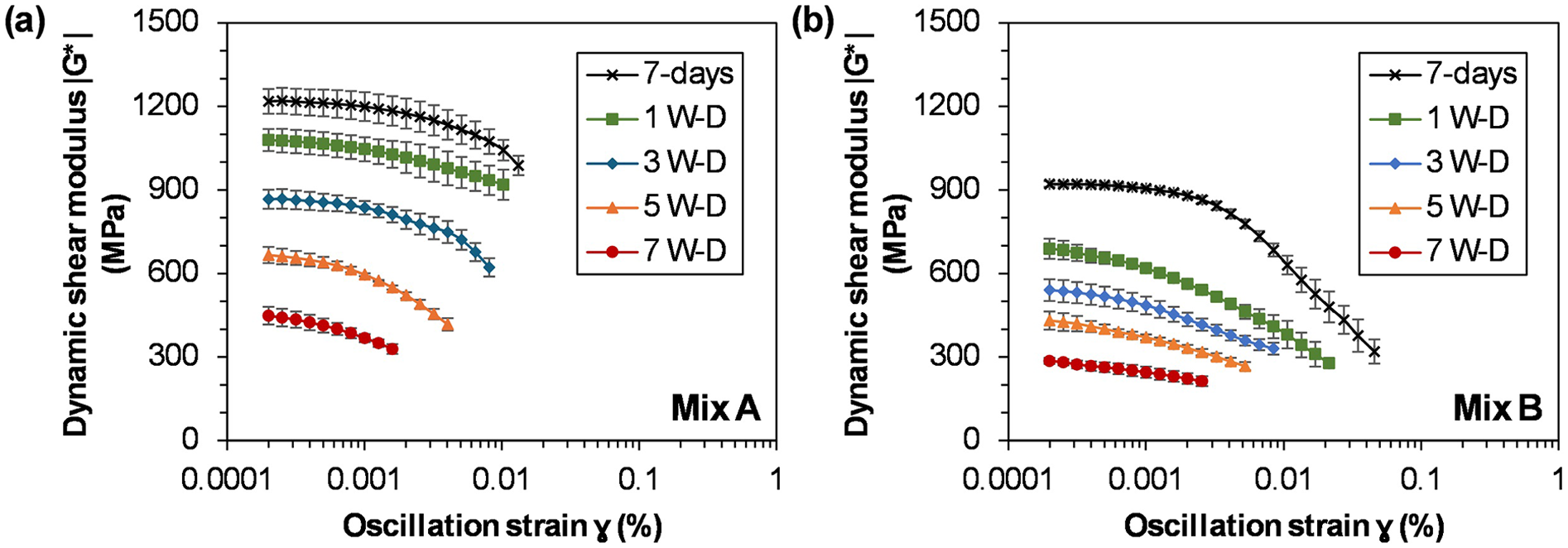
Dynamic shear modulus over oscillation strain at various W-D cycles: (a) Mix A, and (b) Mix B.
The initial stiffness of stabilized Mix A, measured at 7 days of curing, was 1216 MPa, with a failure strain of 0.0132%. After seven W-D cycles, the stiffness decreased by approximately 63%, as shown in Figure 8a. Concurrently, the failure strain diminished significantly from 0.0132% to 0.0016%, as shown in Figure 8b. This substantial reduction can be attributed to the breakdown of bonds formed by the stabilizer because of moisture fluctuations, leading to a loss of stiffness and increased deformation under cyclic loading. Repeated exposure to wetting can dissolve stabilization products and leach stabilizing agents, thereby reducing cohesion between soil particles. Furthermore, the drying phase can induce internal stresses that contribute to the formation of microcracks, further weakening the stabilized soil structure ( 34 – 36 ).
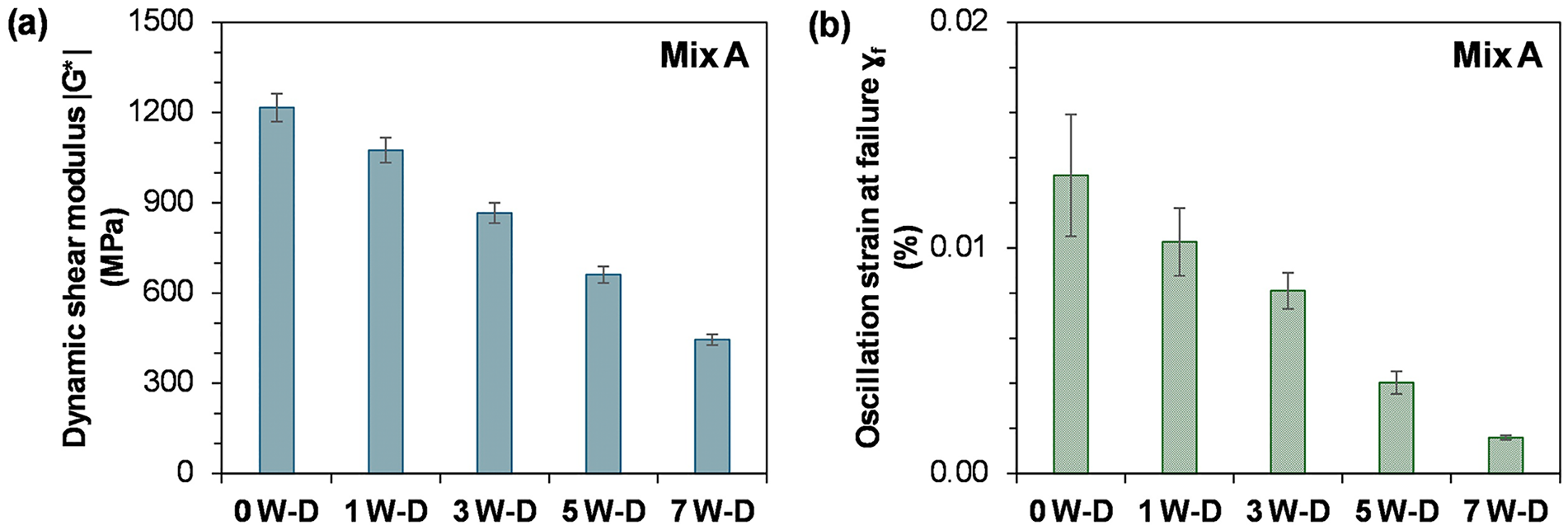
Mix A: (a) shear modulus and (b) oscillation strain at failure at various W-D cycles.
For Mix B, the durability assessment revealed an approximately 70% reduction in stiffness, from an initial value of 921 MPa, after seven W-D cycles, as illustrated in Figure 9a. The failure strain of Mix B decreased from 0.0456% to 0.0025%, as shown in Figure 9b. A comparative analysis of Mix A and Mix B indicates that Mix B experienced a more pronounced reduction in stiffness under the same testing conditions. This behavior may be attributed to the rapid-setting nature of the stabilizer used in Mix B, which can accelerate drying, leading to increased internal stresses and microcracking. This suggests that the rapid-setting stabilizer used in Mix B is less effective in preserving structural integrity under prolonged exposure to moisture fluctuations than is the stabilizer used in Mix A. Once again, the DMA approach could capture the mechanical characteristics of soils affected by different additives and moisture conditioning in a sensitive manner, and the results are generally repeatable with small error bars among replicates.
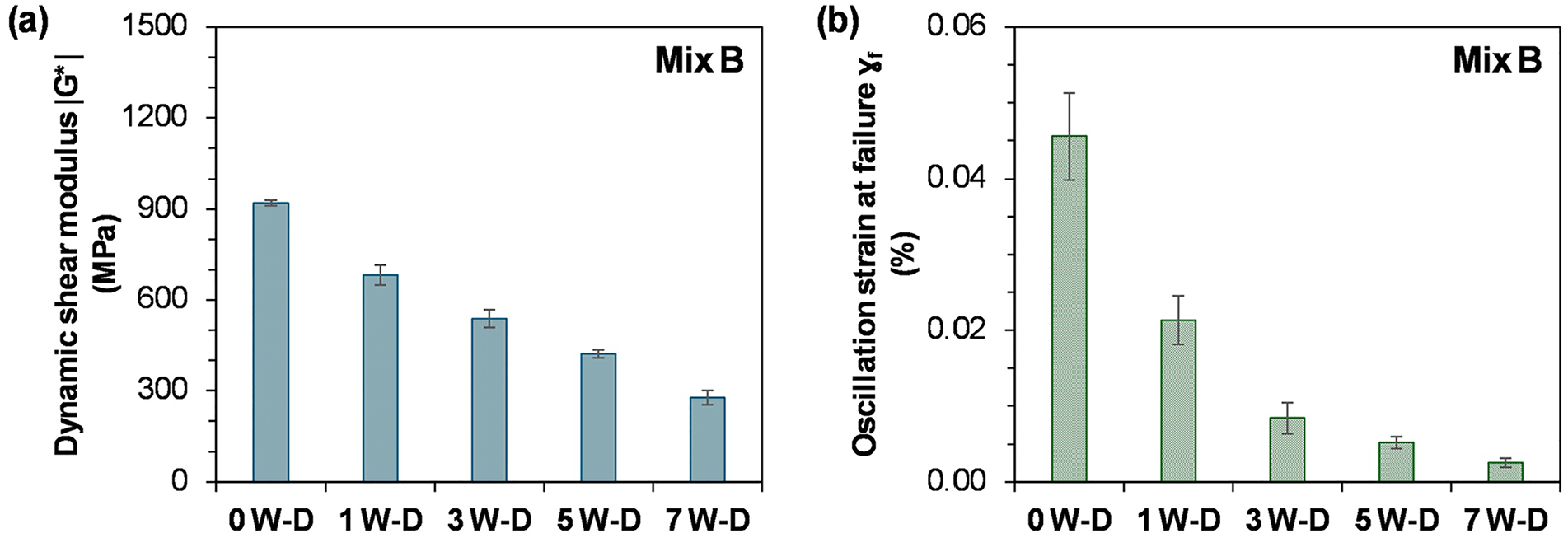
Mix B: (a) shear modulus and (b) oscillation strain at failure at various W-D cycles.
The observed degradation in stiffness and failure strain for both Mix A and Mix B with the W-D cycles can be attributed to several factors, which require further examination to accurately identify them and their level of contribution to the mechanical characteristics. Expected mechanisms associated are loss of cohesion, breakdown of stabilization agents, and alteration of pore structures because of cyclic moisture conditioning. Additionally, repeated W-D cycles can lead to the dissolution of stabilizing agents and the leaching of soluble components from the soil–stabilizer matrix, thereby diminishing the binding capacity of the soil and compromising its mechanical properties. These cycles also induce swelling and shrinking in the stabilized soil matrix, which alters pore characteristics. Although the impact on pore structure might be less pronounced in nonplastic sandy soil such as the one investigated in this study, even minor changes in the pore structure can affect material integrity and reduce mechanical properties.
Figure 10a illustrates the stress–strain hysteresis loops of the stabilized Mix A, as an example case, at a deformation level of 0.001% across various W-D cycles. Overall, this deformation level corresponds to the linear regime of material behavior for the tested soil, where the loops are expected to be quite similar in shape across different cases. In general, the stress–strain hysteresis loops of the stabilized Mix B at the level of 0.001% are similar to the data of Mix A. As shown, the hysteresis loops are notably narrow. The narrow alignment of these loops indicates that the material exhibits a predominantly elastic response within the tested strain range, suggesting minimal energy dissipation. This behavior suggests that stabilized mixes remain relatively stable and rigid under low-strain conditions, even after undergoing multiple W-D cycles. However, it is important to consider that while narrow hysteresis loops indicate low energy dissipation, they also reflect the material’s potential brittleness. The increased W-D cycles reduced mixture stiffness which is indicated by the reduced slope of the hysteresis loops.
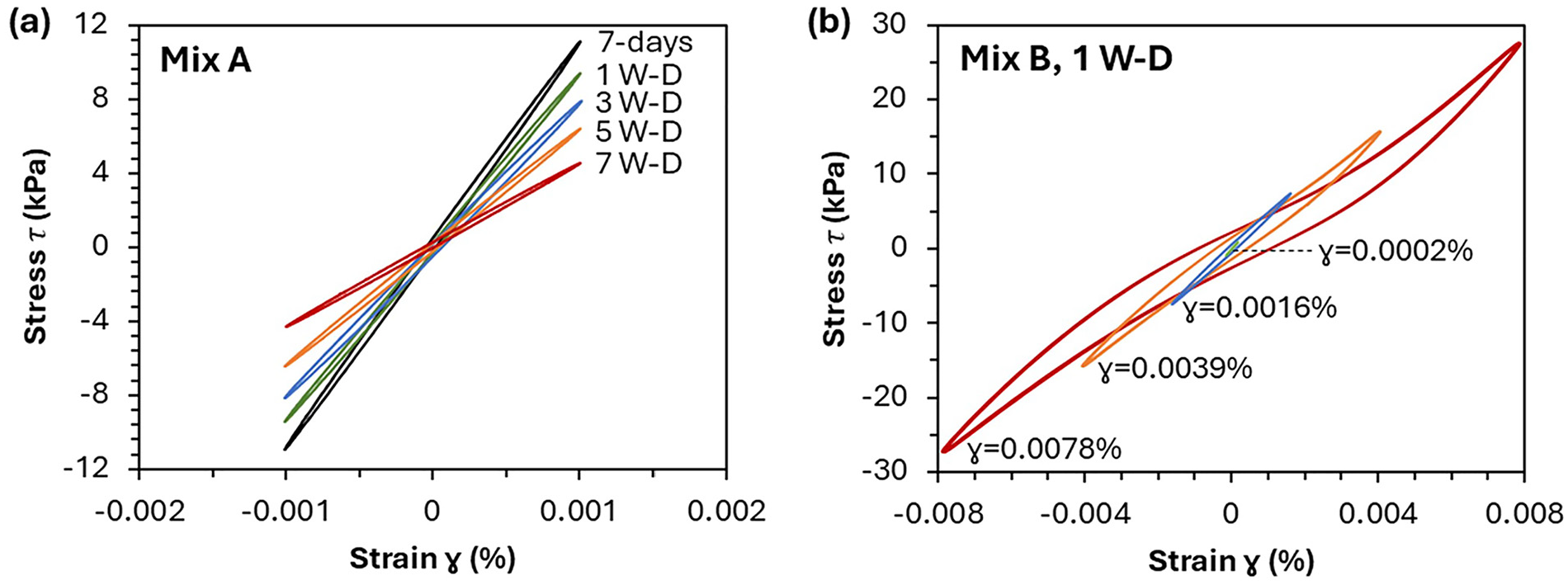
Effect of (a) W-D cycles (Mix A) and (b) oscillation strain (Mix B) on stress–strain hysteresis curves of stabilized mixes.
Figure 10b presents the stress–strain hysteresis loops of stabilized Mix B, as an example case, when it was subjected to one W-D cycle at various deformation levels. The stress–strain hysteresis loops of the stabilized Mix A are similar to the data of Mix A; thus, the results of Mix B were adopted for a demonstration purpose in the figure. Overall, the differences in hysteresis loop shapes between small and large strain levels for Mix B indicate that this material exhibits a more complex response to cyclic loading, with increased energy dissipation as deformation levels rise. The plots demonstrate that as the strain amplitude increases, the shape of the hysteresis loops undergoes significant changes. Specifically, the loops become wider and more irregular with increasing deformation levels. This widening of the loops signifies a rise in energy dissipation, as evidenced by the larger area within the loops. The changes in loop shape with varying strain levels reflect the material’s response to increased cyclic loading and its ability to absorb and dissipate energy. When hysteresis loops deviate from a symmetric elliptical shape, they reveal the onset of material nonlinearity, often resulting from microstructural changes like microcracking. The DSR test effectively captures these subtle variations, providing insights into how the material’s behavior evolves under different loading conditions and strain amplitudes.
The new DMA testing integrated with the controlled W-D cycling could effectively demonstrate the substantial changes in the mechanical characteristics (e.g., stiffness, failure strain, energy dissipation) when stabilized soils were subjected to W-D cycles. This is new information not likely obtained from other conventional tests such as the UCS testing. Seven W-D cycles utilized in this study seem to be sufficient to bring stabilized soil to a state of considerable damage, specifically for the soil type and stabilization methods employed in this study. This finding can serve as a basis to define a more robust and comprehensive testing framework for the development of a durability assessment method, while further studies are needed to explore the effects of various stabilizers on different soils and consider diverse environmental conditions (e.g., W-D and freeze–thaw). Soil-water characteristics related to soil composition, degree of saturation, and site-specific factors should also be included in the effort.
Summary and Conclusions
This study investigated the mechanical properties and durability of stabilized sand under cyclic moisture conditions using a DSR test. The proposed strain-sweep DMA method using a DSR demonstrated its effectiveness in capturing the impact of stabilizers on the mechanical characteristics of soils, while the durability assessment provided valuable insights into the degradation of stabilized soil samples subjected to repeated moisture conditioning. The integrated experimental program developed for this study yielded the following key findings:
Strain-sweep DSR testing incorporated with repeated W-D cycling of soils clearly demonstrated water-induced deterioration of stiffness and reduced resistance to cyclic loading with good testing repeatability, efficiency, and material-specific sensitivity.
The method developed in this study was effective in evaluating material-specific characteristics of chemical stabilizers. For instance, Stabilizer A was more effective for enhancing long-term strength, while Stabilizer B provided rapid initial strength gain. Both Mix A and Mix B experienced significant degradation in stiffness and strain capacity after exposure to seven W-D cycles.
The study provides a practical benchmark for evaluating the moisture-induced durability of soil-stabilization techniques. Seven W-D cycles were sufficient to bring stabilized soil to a state of considerable failure, specifically for the soil type and stabilization methods employed in this study.
By combining dynamic mechanical characterization with long-term durability assessment, the new testing method provides a high potential as a simple, scientific, and efficient method for assessing, engineering, and developing stabilized soils, which will enable more resilient transportation infrastructure systems.
The controlled laboratory conditions for W-D cycling, which presented saturating soil samples to 96% and then drying to 49%, may not fully replicate actual field environmental conditions. Accurate mimicking of actual field moisture fluctuations is a challenge. Future research should incorporate field data and simulate a broader range of environmental conditions, considering soil-water characteristics related to soil composition, degree of saturation, and site-specific factors.
This study used nonplastic sand, which limits the applicability of the findings to other soil types, particularly those with high plasticity. The behavior of clays and silts under similar stabilization and durability conditions could differ significantly as a result of moisture-related volumetric alterations. Thus, further research is needed to explore the effects of various stabilizers on different soil types and under diverse environmental conditions. Additionally, to adapt the proposed experimental procedure for clayey soils, future research should explore potential modifications to the testing conditions and/or specimen design to properly address the volumetric changes.
Future studies should incorporate comparative analysis with conventional tests, such as the resilient modulus test and UCS test, to better evaluate the effectiveness of the proposed technique. This comparison would help to highlight any significant differences in mechanical property assessments and durability evaluations under cyclic moisture conditions.
Footnotes
Author Contributions
The authors confirm contribution to the paper as follows: study conception and design: Yong-Rak Kim, Dallas N. Little, John F. Rushing; data collection: Ayazhan Bazarbekova; analysis and interpretation of results: Ayazhan Bazarbekova; draft manuscript preparation: Ayazhan Bazarbekova, Yong-Rak Kim. All authors reviewed the results and approved the final version of the manuscript.
Declaration of Conflicting Interests
The author(s) declared no potential conflicts of interest with respect to the research, authorship, and/or publication of this article.
Funding
The author(s) disclosed receipt of the following financial support for the research, authorship, and/or publication of this article: This research was supported by the U.S. Army Engineer Research and Development Center (ERDC) under contract #W912HZ19C0042, the National Center for Infrastructure Transformation (NCIT), and the Texas A&M Engineering Experiment Station (TEES).

Data Accessibility Statement
Data supporting the findings of this study is available from the authors on request.