




Abstract
In the aftermath of the COVID-19 pandemic, it’s crucial to understand how in-person and online activity engagement has changed, as their impacts on travel differ. For instance, ordering a meal for delivery might replace a restaurant trip, whereas online shopping could suppress more trips by increasing home-based activities. Conversely, online engagement may save time that, if spent on discretionary travel, will increase travel. Therefore, this study explores the impact of COVID-19 on in-person and online non-mandatory activities using data from a 2022 web-based survey in the Okanagan region, British Columbia, Canada. We examine in-person grocery shopping, personal business, health services, dine-in activities, and their online counterparts using a multivariate ordered probit model. This model uncovers interdependencies among activities and confirms the influence of sociodemographic factors, technology accessibility, mobility tools, attitudes, transport infrastructure, and land use attributes. Key findings reveal that online food ordering is positively linked with frequent online personal business, indicating that individuals are comfortable with various online activities. Regular in-person business activities boost dine-out frequency, showing efficient time management. Additionally, young adults are more likely to engage in online shopping and dining out. Transport infrastructures in residential areas positively influence in-person activities. These findings suggest significant implications: older adults need support for equitable digital engagement, and exposure to ICT devices could help. Planners and policymakers should carefully evaluate the diverse effects of online non-mandatory activities; for example, telemedicine may reduce congestion and emissions, whereas online shopping’s impact depends on delivery and pick-up modes.
Tele-activities such as teleworking and teleshopping can be effective travel demand management tools to reduce traffic congestion and greenhouse gas emissions. Although tele-activity is not a new concept, the COVID-19 pandemic introduced many to the feasibility and ease of completing daily activities online (1,2). Although there was a surge in tele-activities during the pandemic, the big question is: what will happen after the pandemic? In this line of investigation, a large body of literature exists on mandatory activities such as teleworking ( 3 – 5 ). Tele-activities enable individuals to have greater control over their activity–travel options by substituting or eliminating the need for commuting. This kind of flexibility may promote nonmandatory activities ( 6 ).
Non-mandatory tours are not necessary for a specific time or travel circumstance. A non-mandatory tour can be scheduled, cancelled, or rescheduled whereas the mandatory tours typically have a designated primary location ( 7 ). On the contrary, non-mandatory trips have more spatial flexibility and may vary across individuals and situations (8,9). Furthermore, the progress in technology has enabled the growth of e-commerce, social networks, and messaging programs, thereby transforming the ways and locations in which individuals can engage in non-mandatory activities ( 10 ).
The COVID-19 pandemic accelerated this transformation, forcing many individuals to familiarize themselves with technology and use it for the first time in their lives ( 11 ). This shift raises important questions about how these changes affect travel behavior and urban dynamics. Therefore, it is interesting to observe the variability of these activities among individuals and the interplay between one activity and the choice of another. Understanding these interactions is important not only because it affects travel behavior, but also because it may have broader implications for urban planning and the future of commerce in our cities.
In the case of non-mandatory activities, the majority of the studies investigated online shopping and food ordering (12,13), and some have investigated their interactions with their in-person counterparts such as visiting grocery stores and dine-in at a restaurant (14,15). However, other non-mandatory activities such as virtual health care and online appointments for personal business (e.g., banks) are critical but received less attention (16,17). This research gap puts forward a need to investigate these different types of activities which could be inter-dependent.
In particular, the method to participate in different types of non-mandatory activities could be interacting with each other, given that they are similar in nature compared with mandatory activities. For example, non-mandatory activities are often decided day-to-day on an as-needed basis, contrary to mandatory activities (which have a longer-term dimension as the arrangement is made with the employer, and many, like full-time workers, must do it five days a week). As a result, different types of non-mandatory activities could be interdependent. There could be commonly observed and unobserved factors influencing these decisions. For instance, an individual making online groceries may decide to stay home owing to time constraints and make an online appointment with the bank. Similarly, a doctor’s appointment at a healthcare facility may influence a person’s decision to trip chain (since he/she is already outside) and opt for a dine-in at a restaurant (maybe with a friend) after the doctor’s visit. This indicates a possible existence of inter-dependencies among in-person and online counterparts of the same non-mandatory activities and among different types of activities. Therefore, the research question is: how do individuals’ decisions to participate in online and in-person counterparts of different types of non-mandatory activities interact with each other and what factors influence these choices?
Keeping the above discussion in mind, this study aims to investigate participation in the following non-mandatory activities: grocery shopping, personal business, health services, and dine-in, after the COVID-19 pandemic. Particularly, the present study focuses on in-person and online counterparts of these activities. This study used data obtained from a web-based survey conducted in the Okanagan region of British Columbia (BC), Canada, from October 2022 to December 2022. The survey was administered several months after the government of BC lifted COVID-19 restrictions in March 2022, allowing individuals to resume their pre-pandemic routines ( 18 ). Although there exist many studies on online and in-person activities after the pandemic, the majority used data that were collected during the pandemic and the post-pandemic-related responses were for stated preference scenarios.
This is one of the earlier studies to use revealed preference data to evaluate a wide-ranging actual choice after the pandemic. To address the inter-dependencies among multiple non-mandatory activities, a joint multivariate ordered probit (MVOP) modeling technique was employed. For example, the unobserved components of the utility were tested to be correlated. Moreover, the study considered possible endogenous effects among different in-person and online activities and explored the interdependencies that may exist among these activity domains. Lastly, the study extensively examined the effects of socio-demographics, access to technology, availability of mobility tools, individual attitudes, and attributes of the built environment such as land use and transportation infrastructure.
Literature Review
The intersection of transport and telecommunications, as initiated by Salomon (1986) ( 19 ), sets the stage for understanding the dynamic interplay between traditional transportation modes and evolving digital landscapes. Salomon’s work outlines three potential outcomes: substitution, complementarity, and enhancement, providing a theoretical foundation for exploring the impact of information and communication technologies (ICTs) on travel behaviors which opened the door for a new dimension of research. Expanding on this groundwork, Brynjolfsson and Smith (2000) ( 20 ) underscore the transformative impact of the internet, emphasizing personalized pricing and content tailored to individual behaviors and demographic traits. Couclelis (2000) ( 21 ) extends the discussion by noting the typical outcome of new ICTs—fragmentation and recombination of formerly holistic activities. Work, once confined to specific times and locations, undergoes a transformation. Similarly, the shopping process, once tethered to brick-and-mortar stores during defined non-work periods, becomes a fluid, dynamic activity conducted anywhere, anytime, and intertwined with other daily pursuits.
Moving forward, Mokhtarian’s (2004) ( 22 ) work takes center stage, providing invaluable insights into the impact of e-commerce on transportation. This period, spanning 1986–2004, captures the transition from catalog shopping using phones and landlines to the burgeoning era of digital commerce. Mokhtarian discusses, at a conceptual level, the transportation and spatial impacts of e-shopping. The study reviewed the comparative advantages of store shopping and e-shopping, concluding that neither type uniformly dominates the other. The study analyzed future shopping-related changes in transportation as the net outcome of four fundamental causes: (1) changes in shopping mode share, (2) changes in the volume of goods purchased, (3) changes in per capita consumption spending, and (4) demographic changes. Some factors result in reduced travel, whereas others increase it. The combined outcome of all factors does not support the expectation that e-shopping will reduce travel overall. Instead, there may be localized increases in travel. This nuanced understanding becomes pivotal for urban planners, prompting them to consider the complex implications of e-commerce on transportation.
In 2007, Weltevreden et al. ( 23 ) examined 3,200 internet users in the Netherlands, and found that 20% of the online buyers made fewer trips to the store owing to e-shopping. Conversely, Cao ( 24 ), using 539 adult internet users found that e-shopping increases store shopping. However, Calderwood and Freathy, studying consumer behavior in the Scottish Islands, showed that these effects might coexist ( 25 ). Using 952 internet users in two cities in Northern California, Zhai et al. ( 26 ) showed that these behaviors unfold in four stages: awareness of products, information search, product trial, and transaction. Shah et al., analyzing data from the 2017 US National Household Survey, identified four latent shopper classes: time-pressured shoppers, dual-channel shoppers, traditional shoppers, and infrequent shoppers ( 27 ). Their study revealed that time-pressured shoppers are more likely to replace shopping trips with online shopping, whereas traditional shoppers tend to continue shopping in person. All these studies point toward consumer behavior on e-shopping and shopping-related travel being complicated ( 28 ).
These behaviors are not only complementary and supplementary to each other but are also influenced by participation in other activities. For example, individuals who choose to dine in at a restaurant might prefer to shop for groceries to save time ( 29 ). This shows that consumer behavior across different activities is interconnected and complex.
The COVID-19 pandemic has further complicated these interactions. The pandemic forced a massive shift to remote work as organizations adapted to lockdowns and social distancing measures. Many workers experienced a detachment from traditional office spaces and schedules, similar to what Couclelis described, and embraced flexible work arrangements, including hybrid models that combine remote and in-office work. The pandemic accelerated digital transformation across industries. Companies invested in digital technologies to streamline operations, enhance online services, and adapt to changing consumer behaviors ( 29 – 31 ).
Despite the easing of COVID-19 restrictions and the gradual return to pre-pandemic routines, tele-activities continue to grow, indicating that individuals recognize the benefits and feasibility of online activities such as travel time savings. Using utility theory, time geography, theory of planned behavior and social practice theory, Van wee and Witlox (2021) ( 32 ) tried to explain the long-term effects of COVID-19. The study concluded that the COVID-19 pandemic has led to significant shifts in travel and activity behavior, with disruptions in habitual behavior, changes in attitudes, and new equilibriums in the trade-offs between online and onsite activities. Although lower congestion and more flexible travel times may persist, many indirect effects such as increased travel distances could offset reductions in commuting time, emphasizing the need for further research on the long-term impacts of these behavioral changes across different groups, geographic contexts, and socio-economic factors. A study conducted in Sweden concluded that digital services will persist and be used even more extensively ( 33 ). In Canada, after the lifting of public health restrictions, in-store purchasing resumed, leading to a decline in retail e-commerce sales. However, it is worth noting that retail e-commerce sales have stabilized at levels higher than before the pandemic ( 11 ). This accelerated adoption of tele-activities during the pandemic has resulted in a lasting cultural shift, with many businesses intending to maintain online services even after COVID-19 is no longer a concern ( 34 ). For example, the COVID-19 pandemic has compelled many healthcare providers to step out of their comfort zones, leading to a reassessment of the role of telemedicine in their practices. This crisis will undoubtedly usher in a “new normal” in healthcare, both for providers and patients ( 35 ). Moreover, a study conducted in the Portland–Vancouver–Hillsboro Metropolitan area found that households, which previously made few online deliveries, anticipate greater reliance on online shopping even in the post-pandemic period ( 36 ). The pandemic has also influenced personal business practices, such as visits to government offices and legal professionals, with remote operations becoming more prevalent in the legal sector. ( 37 ).
This transition in daily, non-mandatory activities from in-person to online may influence their choice of activities. For example, a study conducted on Canadian patients concluded that the time saved by patients not having to travel for consultation has been added to other leisure and shopping activities, and this may affect the number of trips and the overall gross domestic production (GDP) ( 38 ). Another study by Colaço and Silva (2023) ( 39 ) used a two-wave seven-day shopping and travel survey implemented in Lisbon before the COVID-19 pandemic and after. Adopting a structural equation model, they found out that the regular trend of physical and online shopping balance of pre-COVID moved toward a more generalized adaptation of online shopping in the aftermath of COVID. Although numerous studies have been conducted to explore the non-mandatory activities primarily focusing on shopping and dining, there are very few studies that explained the endogenous effects that these activities have on each other.
Dias et al. ( 29 ) is a relevant study which used a MVOP joint modeling technique to explore in-person and online activities for grocery shopping, non-grocery products, and meals and their endogenous effects. They used data from the 2017 Puget Sound household travel survey (greater Seattle) and attributes such as socio-demographic characteristics (e.g., income, employment status, household structure, and dwelling type and land use indices such as residential density) to accommodate the activity pattern. Their endogenous study revealed that there are positive inter-dependencies between in-person and online shopping, as well as between in-person meals and online groceries, among other findings. However, the study identified a negative effect of online meals on in-person shopping and in-person grocery on online groceries. Exogenous findings were also interesting; for example, higher-income households tended to prefer dining out in person, possibly owing to their capacity to afford discretionary eat-out activities, while homeowners were less likely to make online purchases but favored in-person shopping for non-grocery items. They also found that having children in the household makes an individual more inclined to online grocery and meal delivery which was also found in the prior research ( 40 ).
In a recent study on the data collected from the Central Okanagan region of BC, Canada in 2020, Hossain et al. ( 41 ) used an MVOP approach to estimate people’s perceptions of activity after the removal of COVID-19 restrictions, which encompassed a futuristic scenario. The study also revealed complex interplay between in-person and tele-activities. However, they only studied substitution and complimentary effects and found that online grocery is substituting in-person groceries. Additionally, their model revealed that younger adults are more likely to do frequent online activities, and larger households showed a positive propensity toward in-person activities. They also tested land use attributes and travel tools to accommodate travel behaviors and found possession of travel tools like driver’s license and transit pass is positively correlated with in-person activities and negatively associated with online activities.
In a separate study, Kim and Wang ( 42 ) analyzed the 2018 NYC DOT Citywide Mobility Survey data using a seemingly unrelated ordered probit model to examine retail, grocery, and meal frequency. They developed a simultaneous equation system to accommodate the endogenous effects. The study found that in-store shopping negatively affects online delivery frequency. They also found that younger individuals are more likely to order all foods and goods online, and smartphone ownership and higher income are positively associated with online deliveries.
Apart from endogenous effects, several other studies were conducted to estimate the in-person and online activity frequencies while accommodating socio-demographic factors, land use characteristics, and travel tools such as driver’s license, bus pass, and individual’s attitudes. Cao et al. ( 43 ) used structural equation modeling with data from Minneapolis-St. Paul metropolitan area and revealed an interaction between in-store and online shopping. They found that the attitude toward shopping affects the type of shopping. Additionally, their findings showed that older individuals tended to prefer in-person shopping, while internet accessibility and frequent internet use positively influenced tele-activities. In Davis, California, Lee et al. ( 31 ) used pairwise copula-based ordered response models to link online purchasing with in-store shopping rates. They found complementary effects between online and in-store shopping. Etminani et al. ( 44 ) used structural equation modeling (SEM) with data from Shiraz, Iran in 2015, focusing on behavioral and attitudinal factors. They discovered that living near urban-cores increased the likelihood of in-person shopping, while suburban areas were more conducive to online activities, and higher land use areas led to more store visits.
Zhen et al. ( 45 ) used a joint ordered modeling technique to explore the relationship between online and store purchasing for different products. Possessing travel tools such as a driver’s license, transit pass, or private vehicle affects the frequency of in-store and online purchasing. Those who have a driver’s license tend to have a higher propensity for in-person activities. In another study using 2009 National Household Travel Survey (NHTS), Zhou and Wang showed that the wealthy were more likely than the poor to seek product information on the internet and to make online purchases. The study also showed that urban residents are more likely to be technologically proficient and participate in the sharing and delivery-based economy.
Nevertheless, the existing research primarily focuses on certain behaviors such as online shopping and dining, resulting in a significant gap in our comprehension of the intricate interconnections and interdependencies across various non-compulsory activities. The present literature has only paid little attention to non-mandatory activities, such as personal business and health services, in relation to online shopping and food ordering. Gaining a thorough understanding of the complex connections and possible interconnections between different optional activities is essential for a comprehensive understanding of travel behavior after the epidemic.
This study makes several important contributions to the existing body of research. Firstly, it addresses a research gap by examining the interdependencies and persistence of changes across a range of non-mandatory activities in the post-pandemic period. Unlike previous studies that focused on specific activities, this study considers grocery shopping, personal business, health services, and dining, both in-person and online, providing a more comprehensive understanding of individuals’ behavior. Secondly, the study uses a joint MVOP modeling approach, allowing for the simultaneous analysis of multiple activities, and capturing the complex relationships among them. Moreover, the study investigates the influence of several factors on activity engagement, including socio-demographic characteristics, technology access, mobility tools, individual attitudes, and the built environment. By considering these factors, the study unveils the multifaceted nature of individuals’ choices and how distinct factors shape their preferences for in-person or online engagement. By examining these effects, the study reveals the trade-offs individuals make when selecting between in-person and online alternatives for non-mandatory activities. Overall, this study’s contributions enhance our understanding of individuals’ behavior in the post-pandemic period, informing policymakers and urban planners in promoting sustainable and efficient activity-travel patterns.
Data Source
The data for this study were collected through a web-based survey conducted in the Okanagan region of BC, Canada, which includes five cities: Kelowna, West Kelowna, Vernon, Lake Country, and Peachland. The survey was administered between October and December of 2022. At the time of data collection, COVID-19-related restrictions were not in place in the study region ( 18 ).
The survey covered various in-person and online activities, including work, shopping, health services, personal business, dining, and recreation. Work referred to in-person and online work from home. Shopping encompasses in-store visits to retail outlets for groceries items, as well as online purchases. Health services involved both in-person visits and online consultations and appointments. Personal business encompassed in-person visits to government offices, attorneys, accountants, and banks, as well as online interactions. Dining referred to both in-person restaurant visits and online meal orders. Recreation included in-person visits to recreational facilities and events, as well as leisure activities at home, such as watching movies.
Participants were asked about the frequency of their activity participation for the past week on a scale ranging from never to one-day, two-day, three-day, four-day, and five or more days. The survey also collected location information, including place of residence and employment, and socio-demographics such as age, gender, household income, and dwelling type. Subsequently, participants were asked about their technology ownership such as owning a smartphone or a tablet, and the ownership of mobility tools, such as a driver’s license, bus pass, and carshare subscriptions. The survey also collected information concerning individuals’ attitudes toward various aspects, such as work preferences, online and in-store shopping, dining at restaurants, in-person, and online health services, as well as preferences for walking, biking, and using public transit. Responses were collected using a five-point Likert scale ranging from “strongly agree” to “strongly disagree.”
The survey data were validated against the 2021 Census Canada data using the iteration proportional fitting method using age groups and gender as controlled variables ( 46 ). The final weighted sample consisted of 525 respondents. A comprehensive comparison was conducted across various socio-demographic factors, including household income, dwelling type, age group, gender, highest education level, and occupation. Table 1 shows the description of the sample and comparison with the census distribution of the study region. Remarkably, all age groups and gender categories exhibited minimal deviation, with a margin of error within 3%. Specifically, age groups 35–44, 45–54, and 65–74 showed an impressively low margin of error, within 1%. Similarly, dwelling types like semi-detached, townhouse, and apartments, and annual household income groups of C$100,000–C$149,000; C$80,000–C$99,999, and C$200,000 or above, exhibited a margin of error within 3%. Notably, 75% of the 36 variable groups analyzed showed a margin of error within 5%. The dataset displayed a skew toward higher educational attainment, with an overrepresentation of university diploma holders below the bachelor’s level and university graduates. In contrast, there was an underrepresentation of individuals with high school certifications and no certification from an educational institute. This indicates a relative scarcity of participants with lower levels of formal education and an abundance of higher levels of education in the survey sample.
Description of the Sample
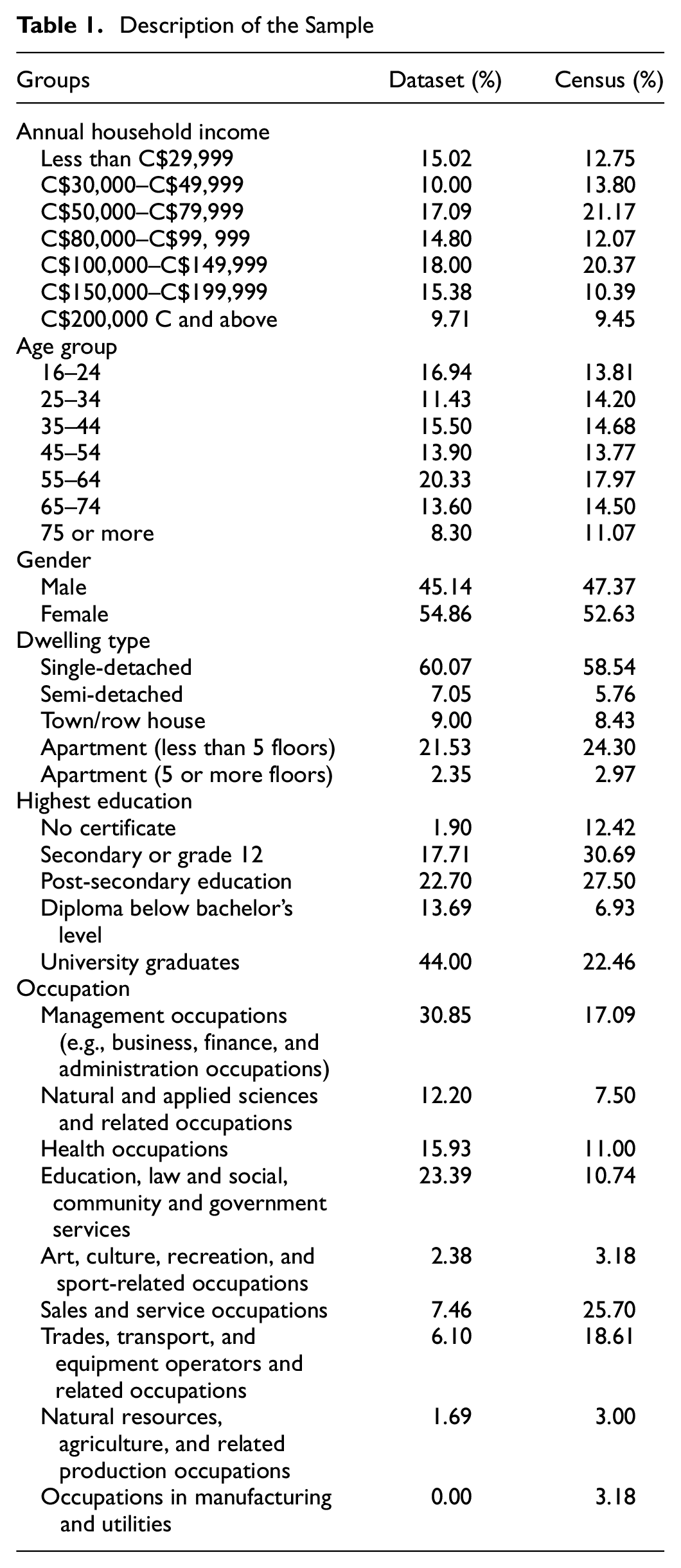
Moreover, the dataset showed overrepresentation in management occupations and fields like Education, Law, Social, Community, and Government Services, while underrepresenting Sales, Service, and Trades, as well as Transport and Equipment Operators and Related Occupations. This suggests that the survey may have attracted a higher proportion of professionals in leadership roles or public service positions. Conversely, the dataset was found to be underrepresenting individuals working in Sales, Service, and Trades, as well as Transport and Equipment Operators and Related Occupations.
Furthermore, this study incorporated secondary data sources, including land use information (residential and commercial land uses) and transportation network details (bike infrastructure and road network) obtained from various cities’ open data portals. Points of interest data, such as the location of restaurants, groceries, banks, and health care services, were collected from Desktop Mapping Technologies Inc.
Data Description
Figure 1 presents the frequency of online non-mandatory activities, including online shopping, online personal business, ordering meals online, and scheduling health services online, while Figure 2 depicts the frequency of their in-person counterparts, such as in-store shopping, in-person personal business, dining out at restaurants, and visiting health care facilities. In-store shopping was the most frequently engaged in-person activity, with over 90% of individuals reporting shopping at least once within the week recorded. Conversely, approximately 40% of individuals engaged in online shopping during the same period. This suggests a lower participation rate for online shopping compared with in-store shopping. However, online shopping remains significant, signifying that individuals possess substantial preferences for online activities. Similar patterns were observed for eat-out, ordering meals online, health service visits, and online health services. Notably, more individuals engaged in online personal businesses compared with in-person personal business having a significant percentage of individuals engaging in frequent online personal business.
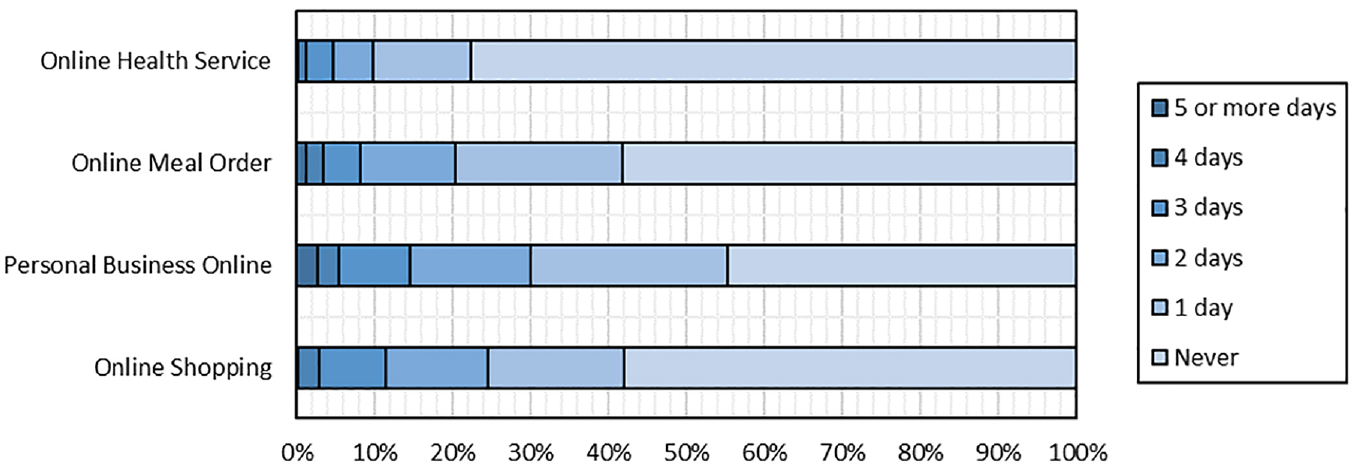
Weekly frequency of online non-mandatory activities.
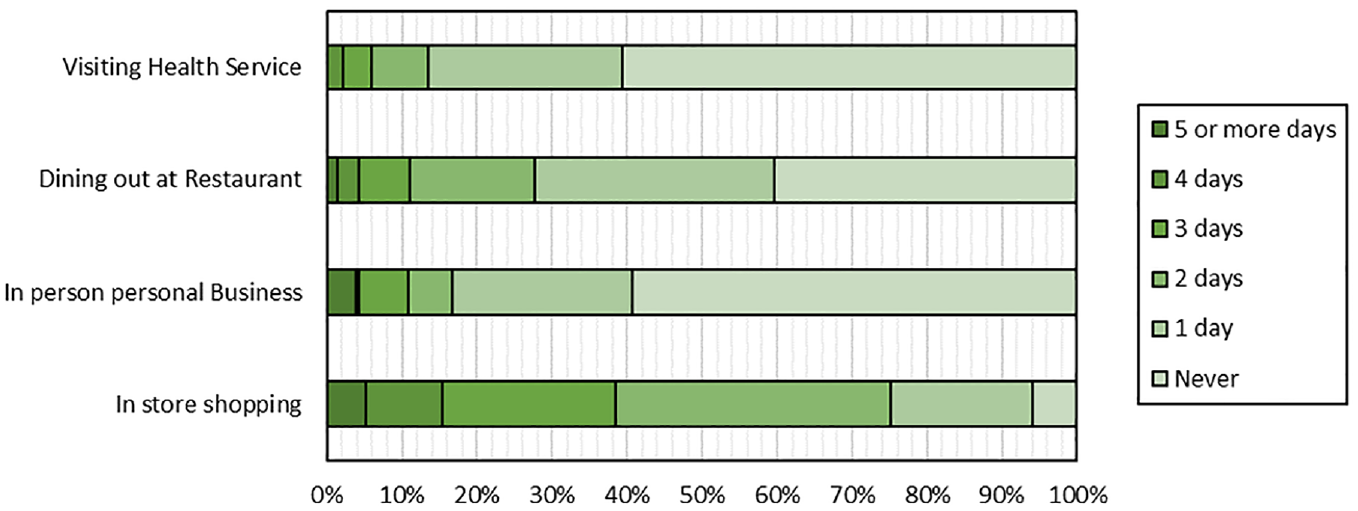
Weekly frequency of in-person non-mandatory activities.
Methodology
This study uses the MVOP modeling approach to investigate the post-pandemic weekly frequency of online and in-person non-mandatory activities. In a joint modeling framework, the model focuses on eight dependent variables. These include non-mandatory activities like shopping in person, eat-out at restaurants, in-person personal business, in-person health care services, and their online counterparts. The weekly activity frequencies are modeled in the following ordinal scale: 0 (never a week), 1 (once a week), 2 (twice a week), and 3 (more than twice a week). The latent propensity for engaging in an activity can be represented as follows:

Despite modeling the dependent variables directly with respect to the independent variables, this study used the simultaneous equation technique mentioned in the Kim and Wang (
42
) study to accommodate the influence of latent continuous variables

where
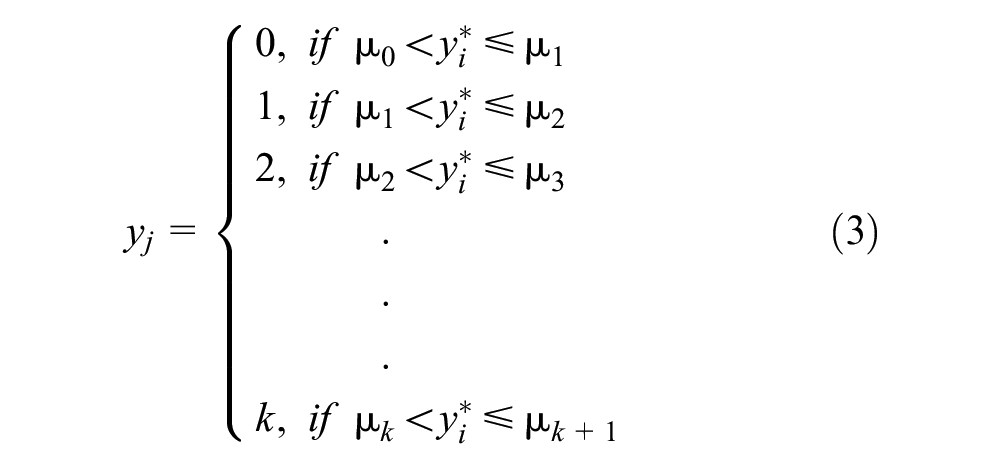
where
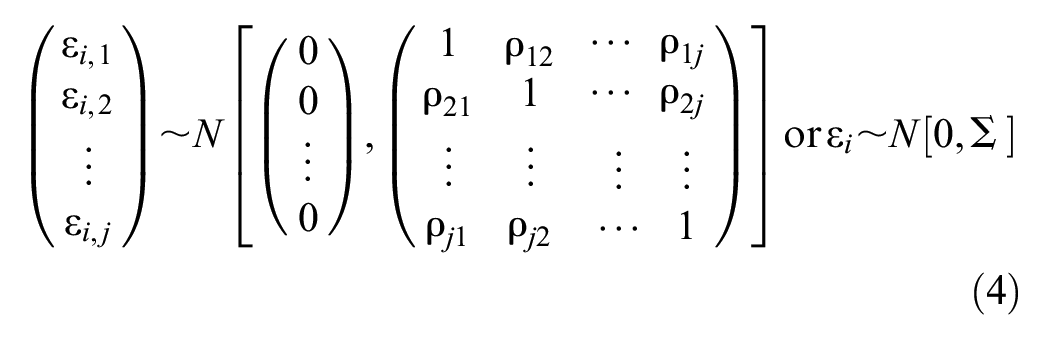
The off-diagonal components of

This study estimated the MVOP model using the CMP (conditional mixed process) module in STATA 15.0 ( 47 ).
Independent Variables
This study examines socio-demographic characteristics, mobility tools, attitudes, technological ownership, land use, and transportation infrastructure. Variables include age, gender, education level, dwelling type, and number of bedrooms for socio-demographics. Mobility tools encompass ownership of a driver’s license, bus pass, bike-share, and e-scooter pass, carshare subscription, and bike presence. Technological ownership includes smartphones, mobile data, tablets, and internet in residence. Land use attributes involve commercial land use density, density of business and recreational destinations, distance to the closest urban core, and population density. Transportation infrastructure features consist of bicycle lane length, sidewalk length, transit route length, and number of bus stops. These attributes are analyzed within a 500 m buffer from respondents’ home locations. Table 2 represents the descriptive statistics of the variables tested in the model.
Descriptive Statistics of the Variables Tested
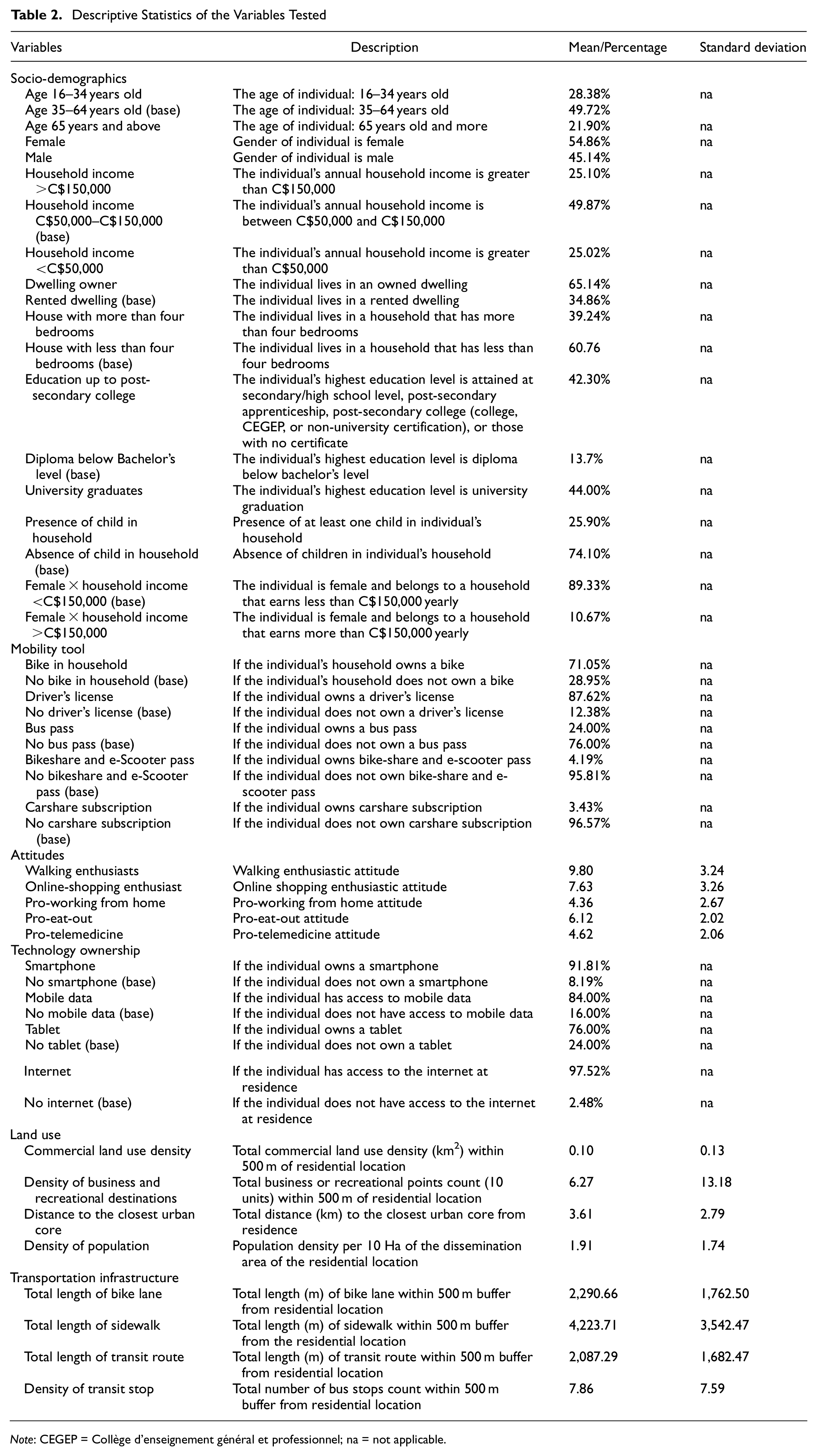
Note: CEGEP = Collège d’enseignement général et professionnel; na = not applicable.
For attitudinal variables, respondents were presented with 30 statements related to attitudes toward various online activities and travel modes. An exploratory factor analysis was used to identify underlying and unknown common factors among several relevant statements, thereby reducing the dimensions. The correlation between a factor and a variable (i.e., attitudinal statement) is termed factor loading. The value of the factor loadings ranges from 0 to 1 (both positive and negative) where a higher value represents a higher correlation. The analysis yielded five factors: online shopping enthusiast, pro-working from home, pro-eat-out, pro-telemedicine, and walking enthusiasts and 12 statements were directly representative of the factors. Table 3 displays the pattern matrices, with factor loadings below 0.75 removed for better representation. Here, online shopping enthusiasts have positive attitudes toward online shopping, including enjoying the experience and preferring it over in-store shopping. Pro-working from home individuals enjoy remote work and perceive it as more productive. Individuals who are pro-eat-out prefer social interactions at restaurants and enjoy dining out. Pro-telemedicine refers to those who favor online doctor’s appointments for flexibility and find in-person clinic visits exhausting. Walking enthusiasts are individuals who enjoy incorporating walking into their daily routines.
Factor Loading of the Attitudinal Variables
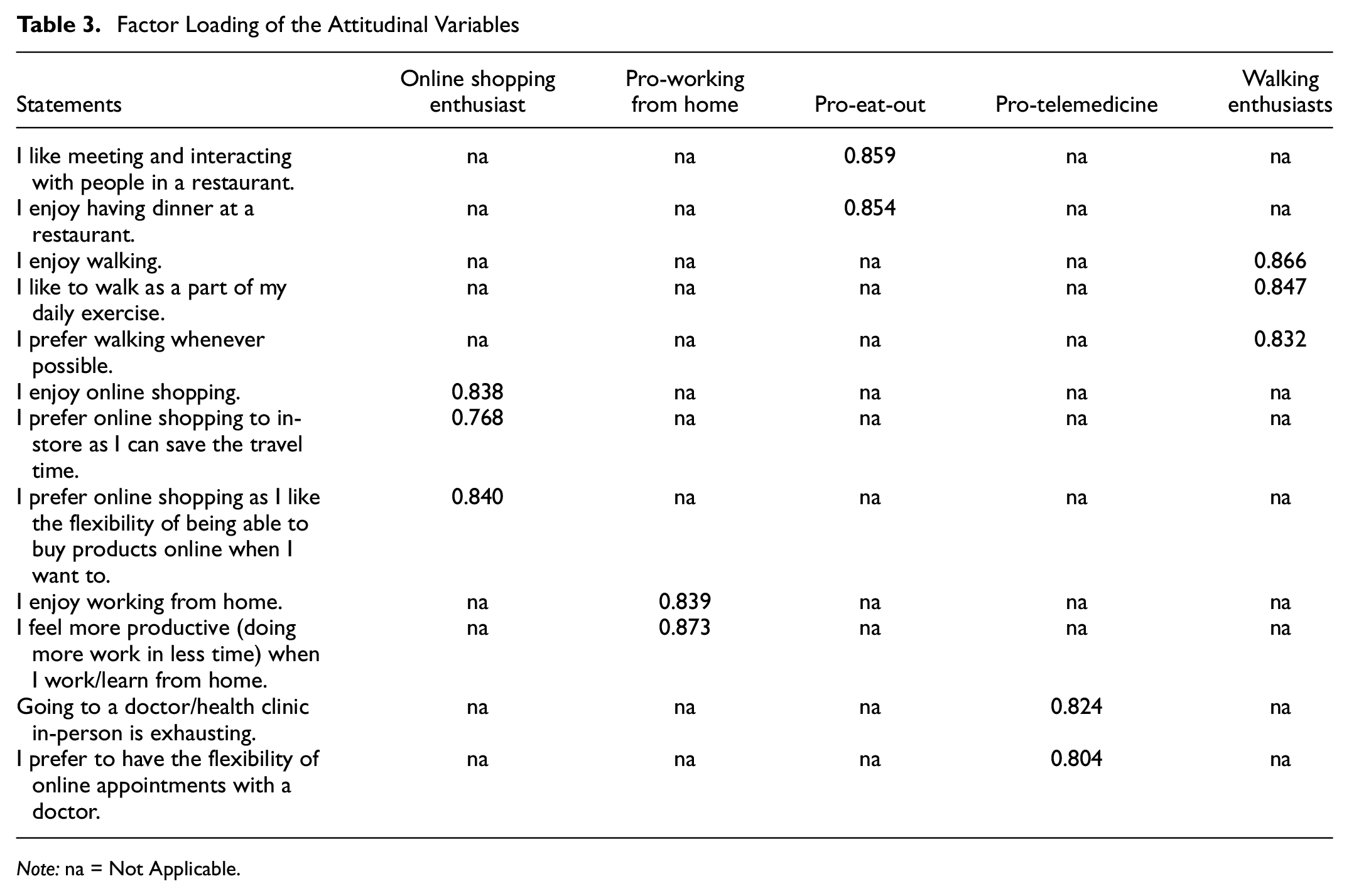
Note: na = Not Applicable.
Model Results
On scrutinizing the interrelations among variables and conducting a thorough logical analysis, hypotheses were created according to past literature reviews and different variables were tested. The final model retained variables that exhibited statistical significance. Additionally, certain variables seemed important, despite lacking statistical significance, were retained, considering the potential for their relevance with a larger dataset. Furthermore, to mitigate collinearity issues, the Pearson correlation test was performed, and highly correlated variables were excluded from the analysis.
Table 4 presents the results of the MVOP model. The goodness-of-fit measures include log-likelihood value (LLV), Akaike information criteria (AIC) value, and Bayesian information criteria (BIC) value. The LLV of the adopted MVOP model was −3627.04. To evaluate the multivariate approach’s goodness-of-fit with error correlation, we compared it with univariate ordered probit models for each non-mandatory activity. We conducted a likelihood ratio (LR) test to assess whether the multivariate approach performs better than the model assuming zero correlation. To determine LR, the following equation was used:

where
Parameter Estimation Results of Multivariate Ordered Probit Model
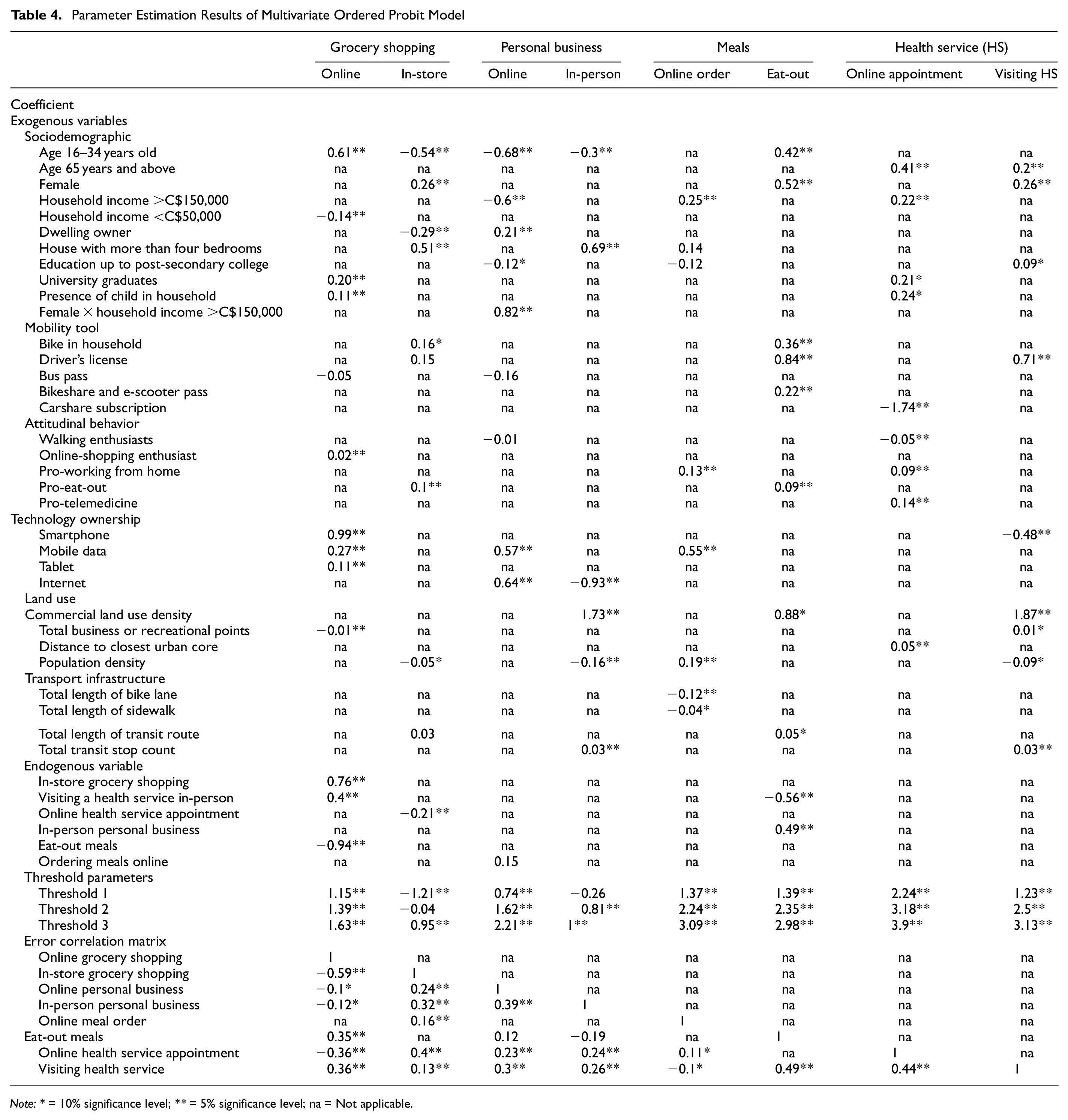
Note:* = 10% significance level; ** = 5% significance level; na = Not applicable.
Discussion
Endogenous Variables
The joint modeling approach revealed the interplay between the endogenous variables. In this context, the modeling approach revealed that doing one activity frequently might affect other activity frequency. For instance, frequent in-person personal business activities are positively associated with frequent eat-outs at restaurants. This may be because individuals may prefer trip chains to perform both tasks and optimize their time and effort combining personal business activities and dining out, reflecting a practical and efficient approach to managing their tasks and schedules. It maybe also because the individuals with frequent in-person personal business could be the individuals living in the densely commercial land use area which may be another reason for their frequent eat-out at restaurants. Similarly, eating out at restaurants is negatively associated with online grocery shopping which contradicts the model results of Dias et al. ( 29 ), suggesting that individuals who choose to eat-out may prefer in-person shopping to consolidate their activities. Conversely, ordering food online is likely to increase the frequency of online personal business. It may be because tech-savvy individuals are comfortable with performing many types of activities online; therefore, their participation in one type of online activity (e.g., online food ordering) may trigger them to engage in other types of online activities (e.g., personal business). Another reason could be the individuals with frequent online food ordering activities might be the educated people who would likely to do frequent online personal business.
Similar to the previous studies (45,48), frequent in-store grocery shopping is likely to be associated with frequent online grocery shopping. Interestingly, frequent visits to a health service in person are likely to increase the frequency of online grocery shopping and decrease the frequency of eat-out. This suggests that individuals prioritize addressing health concerns during in-person visits, which may leave them with limited time and energy for other activities. As a result, they may opt for the convenience of online shopping, which can be done without the need for additional travel or physical visits.
Exogenous Variables
Table 4 illustrates the model results, highlighting the effects of various variables on the weekly activity frequencies. Significant influences were observed for socio-demographic factors like age and gender. Young adults aged 16–34 exhibit a higher likelihood of frequent online grocery shopping and a lower likelihood of frequent in-store grocery shopping similar to the studies mentioned in the literature review (41,42). However, they are more likely to engage in frequent dine-out at restaurants which contradicts the literature. This may imply that younger individuals may prioritize socializing and find restaurants as a common gathering spot. Conversely, older individuals over 65 years old are more likely to make regular health services visits and virtual health care activities. This finding is logical, as older individuals often require regular medical attention, monitoring, and consultations with healthcare professionals. Therefore, they are likely to access both in-person and virtual healthcare services frequently. Gender also played an important role, with women showing a higher likelihood of frequent in-person visits for in-store shopping, eat-out, and visiting health service facilities, which is consistent with the existing literature (45,49).
Income had a significant positive effect on online activity engagement. Higher-income individuals were more likely to engage in regular online meal orders and online health service appointments, indicating their preference for convenience and time-efficient options that suit their busy schedules. The studies from the pre COVID era suggested that they had positive propensity on dining out in person owing to their affordability ( 29 ). This change in behavior may be attributable to their budgetary flexibility to afford additional costs that may be associated with online deliveries and an increased prioritization of convenience and time efficiency over the pre-COVID emphasis on the perceived affordability of dining out ( 29 ). However, they showed a lower propensity toward frequent online personal business activities. Higher-income individuals may prefer in-person interactions with professionals like attorneys, accountants, or bankers owing to perceived security concerns associated with online platforms in dealing with complex legal, financial, or governmental matters. In-person consultations offer a higher level of personalized advice and assurance, which is valued for sensitive or intricate matters. Interestingly, women from higher-income households exhibit a higher propensity toward frequent online personal business activities, indicating active engagement in managing such businesses online. This finding may be influenced by traditional gender roles and responsibilities, in which women take on administrative or legal responsibilities within the household ( 50 ), and the increasing accessibility and convenience of online platforms, which allow women to efficiently handle administrative or legal responsibilities from the comfort of their homes or workplaces.
Interestingly, homeowners displayed a higher propensity for online personal business activities and a lower propensity for regular in-store grocery shopping. This finding contradicts previous studies (29,51), which argued that homeowners tend to prefer traditional lifestyles and have a higher propensity to in-person activities. This shift may be attributed to homeowners embracing online options during the COVID-19 pandemic, finding stability and appeal in managing shopping and personal business digitally. Highly educated individuals with a university degree are more likely to engage frequently in online shopping and online health service appointments. Their educational background may foster a higher degree of trust and confidence in conducting online transactions and seeking medical advice online.
Ownership of mobility tools indicates access to specific travel modes, which has significant positive influence on individuals’ in-person activity frequencies ( 45 ). Those that own mobility tools such as driver’s licenses, bus passes, and carshare subscriptions, showed a higher propensity toward frequent in-person activities and a lower propensity toward frequent online activities which also supports the results of the study done by Zhen et al. ( 45 ). For example, possessing a driver’s license may provide access to a vehicle, facilitating trip chaining and engagement in various frequent in-person activities, such as shopping, dining out, and visiting health services. Conversely, bus pass owners are less likely to do regular online shopping and online personal business. Technology ownership such as having a smartphone and mobile data makes an individual more likely to engage in online activities and less likely to engage in in-person activities frequently. For instance, smartphone owners are more likely to do frequent online shopping while less likely to do frequent in-person health service visits. Those who have internet access are more likely to do regular online personal business and less likely to do frequent in-person personal business regularly. This is maybe because people with more access to technology for personal reasons were likely to search for information and make purchases online more often than those without.
Current literature suggests that areas with diverse land uses positively affect in-store grocery purchases owing to enhanced multi-modal access (29,44,52,53). The model results also suggested higher density of commercial developments near home positively correlates with increased frequency of in-person activities for personal business and dining out at restaurants. Dense commercial land use near residences provides convenient access to a variety of services and amenities, which may encourage individuals to visit these destinations. Conversely, people living away from the urban core have a lower propensity to frequently engage in in-person personal business and a higher propensity to use the health service online. These suburban/rural dwellers who are farther from personal business and health service centers; that is, typically near the urban core, may find it convenient to access services online. This result is further strengthened by the variable representing people living in higher densely populated areas which are presumably sub-urban areas and have a higher propensity to engage frequently in online meal orders and a lower propensity to frequent in-person activities such as in-store shopping.
Similarly, transportation infrastructure with more bike lanes, transit routes, and stops near homes offers safer and accessible multi-modal travel options, facilitating easier and convenient in-person activities, leading to a higher likelihood of frequent in-person engagements. For example, a higher total length of transit routes in the area of residence corresponds to a higher likelihood of frequent in-store shopping, dining out, and in-person health service visits. Conversely, a higher total length of bike lanes and sidewalks is associated with a lower likelihood of frequent online food ordering.
Among the attitudinal factors, walking enthusiasts showed a lower propensity toward frequent online activities like personal business and online health service appointments which can be attributed to their preference for active mobility. Their preference for in-person engagements, which aligns with their active lifestyle and desire for direct interactions, may make online activities less appealing to them. Interestingly, individuals who are pro-working from home show a higher likelihood of regularly engaging in online ordering meals and scheduling health service appointments. This may be attributed to their familiarity with online platforms and their preference for saving travel time and costs. Similarly, individuals who are pro-eat-out are more likely to engage in regular in-store shopping and dining out at restaurants. This could be because their pro-eat-out attitude aligns with the desire to physically inspect products, making in-store shopping a natural extension of their preferences.
Error Correlations
The error correlation matrix presented in the later part of Table 4 reveals statistically significant correlations between various error terms. This is expected as unobserved factors such as personal preferences, attitudes, lifestyle, and schedule constraints can influence participation in in-person and online activities simultaneously. For example, the positive correlations between online health services and online personal business suggest that unobserved attributes (e.g., technological proficiency) contribute to engaging in both activities. Similar positive correlations are observed between online shopping and meal ordering (which may be attributed to unobserved factors like efficient time management), in-person grocery shopping and in-person personal business, and in-person grocery shopping and online meal orders. Conversely, negative correlations are observed between online shopping and in-person health services (unobserved factors such as convenience), online grocery shopping and online health services (unobserved factors such as time availability and preference), online grocery shopping, and in-person personal business (unobserved factors such as technological proficiency). These negative correlations suggest that unobserved factors which influence the choice to do one activity may influence avoiding another activity or, vice versa. These results support the earlier discussion on the significance of correlations between activity frequencies, indicating the simultaneous influence of unobserved factors on multiple dependent variables. Therefore, the adoption of a MVOP is appropriate in this context.
Conclusion
This study explores individuals’ preferences toward in-person and online engagement of non-mandatory activities including shopping, personal business, meals, and health services for the post-pandemic period. The data comes from a web-based survey conducted in the Okanagan region of BC, Canada in 2022. A MVOP modeling approach is adopted to capture the interdependencies among different in-person and online non-mandatory activities. In this regard, model results confirm that several error terms for different in-person and online activities are significantly correlated. The study tests for endogeneity and confirms the existence of inter-dependencies between different online and in-person non-mandatory activities. The model confirms the effects of socio-demographics, mobility tool ownership, attitudes, technology ownership, and built environment attributes.
Several policy implications can be drawn from this study. For instance, endogeneity between different pairs of activities indicates that exposure to one type of online activity such as online meal ordering may motivate consumers to do other activities online too such as personal business (e.g., online bank appointments). This insight could indicate that increased opportunity for online non mandatory activities may be a promising technique for effective travel demand management. Additionally, policy makers must take proactive measures to effectively control the anticipated rise in delivery truck traffic to avoid unforeseen negative outcomes such as safety issues, exacerbated traffic congestion, and heightened air pollution.
It should be noted that this relationship between online non-mandatory activities and a reduction in travel is complex owing to the variety of non-mandatory activities. For example, online bank appointments are directly related to a reduction in travel; however, the same cannot be said for online meal ordering which is dependent on the method and mode of delivery/pick-up. Furthermore, characteristics of the location of residence are key factors to influence online/in-person activities. Suburban dwellers are found to be more inclined toward different types of online activities. As discussed above, depending on the type of activity it may indicate a reduction in congestion/emissions or an increase in delivery vehicles traveling longer distances to suburban areas. Policy makers can introduce subsidies for eco-friendly last-mile delivery methods in suburban regions, encouraging businesses to adopt sustainable practices and minimizing emissions associated with increased online activities by creating suburban delivery hubs. Moreover, results reveal that urban dwellers residing in areas with accessible multi-modal transportation infrastructure such as bike lanes, sidewalks, transit, and close by destinations encourage in-person activity participation. This implies the need to prioritize investment in urban multi-modal transportation infrastructure and continue monitoring their performance to allow individuals to travel shorter distances sustainably and safely. In the case of targeting population groups, older individuals need to be accommodated to have an equitable online footprint. Efficient policies must specifically target digital equality concerns, especially for those with lower incomes. Public welfare programs should be modernized to adapt to the evolving technology environment, guaranteeing that disadvantaged socioeconomic groups do not experience reduced availability of vital commodities and services as a result of both financial limitations and lack of digital resources.
In this line of investigation, results suggest that providing better access to ICT such as smartphones and data increases the frequency of engaging in different types of online activities. Therefore, maybe subsidizing ICT for older adults and providing training on the usage can give them equitable access to many services and activities, since traveling to access these services may be a barrier for many older adults.
Nevertheless, there are certain constraints. The study recognizes a constraint associated with the representation of health service visits. The sporadic and situation-dependent occurrence of these encounters, along with reliance on individual health concerns and the accessibility of telehealth alternatives, provides an element of unpredictability and intricacy. The study acknowledges that the decision to engage in telehealth services may be affected by external circumstances that are beyond an individual’s control. These factors might affect the applicability and comprehensibility of our findings within this category. This restriction emphasizes the necessity for future study to thoroughly investigate the intricacies of telehealth adoption and its distinct drivers, to get a more nuanced comprehension of the variables that influence health-related choices in the aftermath of the pandemic.
Future study should widen the scope to include non-mandatory activities including leisure activities, religious activities, and pick-up/drop-off obligations. Examining a broader range of activities will offer a more thorough knowledge of the interaction between online and in-person participation in different aspects of everyday life. Cross-cultural comparative research can be done to identify differences in non-mandatory activity patterns across various locations and cultural contexts. The generalizability of this study is limited to small to medium sized cities such as Kelowna. However, this study can be a baseline for future studies to compare how an individual’s actual behavior changes in other geographical locations. In this context, spatial transferability analysis can be done to see the applicability on other geographical locations. Therefore, efforts need to be made to continue data collection and gather information to compare individual’s activity frequency of non-mandatory activity.
As regards data, there is a need to capture temporal interactions between online and in-person activity engagement to better understand the time-use behavior. More specifically, time-use data need to be collected that encompasses how respondents spend time in-home/online and outside. One-day travel surveys can be extended to weeklong surveys capturing exhaustive longer temporal consumption of in-person and online activity patterns. Lastly, information such as the type of goods ordered, delivery modes, and technology used should be included in future activity-travel-based surveys. Overall findings of the study provide insights into how non-mandatory activity participation both in-person and online will evolve after the pandemic and assist in developing policies to promote sustainable goals for the communities and enhance the behavioral realism of activity travel demand models.
Footnotes
Acknowledgements
The authors would like to thank the Environment and Climate Change Canada—Climate Action and Awareness Fund, and Natural Sciences and Engineering Research Council—Discovery Grant for their financial support. The authors would also like to thank Nathan Nichol for proofreading the manuscript.
Author Contributions
The authors confirm contribution to the paper as follows: study conception and design: Imrul Kayes Shafie, Mahmudur Rahman Fatmi; data collection: Mahmudur Rahman Fatmi; analysis and interpretation of results: Imrul Kayes Shafie, Mahmudur Rahman Fatmi, Shivam Khaddar; draft manuscript preparation: Imrul Kayes Shafie, Mahmudur Rahman Fatmi, Shivam Khaddar. All authors reviewed the results and approved the final version of the manuscript.
Declaration of Conflicting Interests
The authors declared no potential conflicts of interest with respect to the research, authorship, and/or publication of this article.
Funding
The author(s) disclosed receipt of the following financial support for the research, authorship, and/or publication of this article: Environment and Climate Change Canada-Climate Action and Awareness Fund, and Natural Sciences and Engineering Research Council-Discovery Grant.
