




Abstract
Highway work zones are critical areas where accidents frequently occur, often because of the proximity of workers to heavy machinery and ongoing traffic. With technological advancements in sensor technologies and the Internet of Things, promising solutions are emerging to address these safety concerns. This paper provides a systematic review of existing studies on the application of sensor technologies in enhancing highway work zone safety, particularly in preventing intrusion and proximity hazards. Following the PRISMA (preferred reporting items for systematic reviews and meta-analyses) protocol, the review examines a broad spectrum of publications on various sensor technologies, including GPS (global positioning system), radar, laser, infrared, radio-frequency identification, Bluetooth, ultrasonic, and infrared sensors, detailing their application in reducing intrusion and proximity incidents. The review also assesses these technologies in relation to their accuracy, range, power consumption, cost, and user-friendliness, with a specific emphasis on their suitability for highway work zones. The findings highlighted the potential of sensor technologies to significantly enhance work zone safety. As there are a wide range of sensor technologies to choose from, the review also revealed that the selection of sensors for a particular application needs careful consideration of pertinent factors. Finally, although sensor technologies offer promising solutions for enhancing highway work zone safety, their effective implementation requires comprehensive consideration of various factors beyond their technological capabilities, including developing integrated, cost-effective, user-friendly, and secure systems, and creating regulatory frameworks to support the rapid development of these technologies.
Highway work zones play a critical role in the maintenance and expansion of transportation infrastructures, yet they simultaneously present substantial safety hazards. These zones are unique intersections of workers, construction equipment, and ongoing traffic, creating a dynamic and hazardous environment. Records indicate that between 1.5% and 3% of all yearly workplace fatalities in the United States are attributed to road construction workers ( 1 ). Data from the National Institute for Occupational Safety and Health reveals that from 1982 to 2020, a total of 29,493 individuals, averaging around 776 per year, were fatally injured in work zone incidents across the United States ( 2 ). Although this number includes drivers and passengers, a significant proportion of these fatalities were construction workers within work zones. According to the same source, of the fatalities between 2003 and 2020, 2,222 were construction workers who lost their lives at work zones ( 2 ). The majority of these accidents typically occur when workers are struck by vehicles. Among the transport-related accidents at work zones from 2011 to 2020, 63% involved workers being struck by vehicles, either intruding from outside or operating within the work zone, resulting in 577 deaths ( 2 ). These statistics underscore the criticalness of the implementation of effective safety measures in highway work zones to mitigate these risks.
Recognizing the paramount importance of safety in these zones, various conventional measures have been implemented to mitigate potential accidents. Such measures include the deployment of traffic cones and barrels, the use of flaggers, and the enforcement of reduced speed limits around and within work zones ( 3 ). Furthermore, work zones are typically designed to include safety buffers on both the longitudinal and lateral sides, separating the active work area from moving traffic ( 3 ). Despite these ongoing efforts, the rate of accidents and fatalities remains high and is showing an increasing trend, as such traditional measures often fall short in addressing the unique nature of these environments. According to the National Safety Council, 954 people were killed and 42,151 people were injured in work zone crashes in 2021, which represents a 63% increase in work zone deaths since 2010 ( 4 ). Moreover, data from the Bureau of Labor Statistics highlighted a growing concern that work zone fatalities rose from 756 in 2018 to 954 in 2021 ( 5 ). With the rapid advancement of sensor technologies, there is significant potential to mitigate accidents in highway work zones by proactively detecting safety risks and promptly alerting drivers and workers ( 3 ). Several studies have been conducted in this regard, leading to the development of diverse sensor-based systems for vehicle intrusion and proximity detection, each featuring a unique architecture. However, a comprehensive understanding is still lacking in regard to the wide array of sensors available for such applications, their suitability for various scenarios, and their comparative advantages and disadvantages. In addition, there is a gap in knowledge about how these sensor technologies can be systematically and optimally deployed for maximum safety benefit ( 3 ). The primary objective of this review paper was to conduct an extensive exploration and synthesis of contemporary literature on the application of sensor technologies for reducing intrusion and proximity incidents in highway work zones. By examining the mechanisms and applications of various sensor technologies, this review aims to provide a comprehensive understanding of their capabilities, advantages, and limitations, as well as to investigate their performance characteristics and the additional considerations necessary for their effective adoption.
Although there have been efforts to compile review papers in this regard, most have concentrated on general construction sites, often overlooking the specific challenges inherent to highway work zones. Unlike other construction sites, highway work zones are defined by a set of distinct conditions. Firstly, they are characterized by the presence of live traffic, necessitating specific safety measures against vehicle intrusion ( 6 , 7 ). Secondly, the typical noise of construction sites is further amplified by the sounds from moving vehicles, which requires special consideration when selecting sensor technologies ( 6 – 8 ). Thirdly, unlike stationary construction sites, highway work zones are often temporary and mobile, with work shifting periodically along road segments ( 7 ). Moreover, many highway work zones are situated in areas where a direct power supply is not readily accessible, making the choice of power source and consumption significant factors in selecting appropriate sensors. Lastly, the operational areas within these zones are frequently confined owing to the need to maintain traffic flow, presenting additional challenges ( 7 ). This paper presents a detailed review of sensor technologies in highway work zones, specifically addressing these unique challenges and characteristics. It primarily concentrates on examining sensor technologies identified in current research as appropriate for use in highway work zone environments. Emphasis is placed on location and motion sensors, which play a crucial role in detecting and alerting against proximity hazards and vehicle intrusions.
This review follows the PRISMA protocol (preferred reporting items for systematic review and meta-analyses). The methodology involves a detailed literature search, selection based on predefined criteria, and a thorough evaluation of the selected studies. This process ensures the inclusion of relevant, high-quality studies, enabling a comprehensive overview of the current state of sensor technology in highway work zone safety. The results of this review could be helpful in various ways. Understanding the diverse array of sensor technologies employed in highway work zones and assessing their effectiveness provides valuable insights for informed decision-making with regard to future sensor applications. The review also offers a detailed exploration of the distinct roles these sensors play in work zone environments and evaluates their relative suitability. By doing so, stakeholders can make better choices in aligning the right sensor technology with the intended purpose. Moreover, this review provides valuable recommendations on the successful adoption of these technologies and important factors to consider for effectively harnessing their benefits.
The structure of this paper comprises several sections to provide a thorough understanding of the topic. The methodology adopted in this study is described following this introduction, which details the systematic review process. This is followed by a section exploring the application of sensor technologies in highway work zones, specifically for the localization and detection of intrusion and proximity incidents. The subsequent sections discuss the performance characteristics of these sensor technologies, the challenges in adopting them, and potential future research directions. The paper concludes with a summary of the main findings.
Review Scope and Method
This research aims to contribute to the identification of potential areas of interest for both practitioners and researchers. Systematic literature reviews offer a structured approach to identifying pertinent studies, summarizing their outcomes, critically evaluating their methodologies, and offering insights and recommendations for future research endeavors ( 9 ). The systematic review methodology has gained substantial traction across various disciplines, encompassing fields such as medicine and healthcare ( 10 ), education and learning ( 11 ), entrepreneurship and management ( 12 , 13 ), computer science and software engineering ( 14 , 15 ), and building and construction ( 16 , 17 ). This review approach is valued for its explicit and reproducible nature ( 18 ). To facilitate the identification of sensor technology applications, this systematic review will provide a comprehensive overview of sensors, their definitions, characteristics, prevailing trends in the literature, and existing gaps in the study of sensor-based systems in construction work zones, particularly within the highway sector.
To conduct this comprehensive review, a systematic literature search was performed following the guidelines of the PRISMA protocol. Utilization of the PRISMA protocol not only ensures the production of evidence-based results but also enhances the transparency of the literature selection process ( 19 ). One of the key reasons for selecting PRISMA over other systematic approaches is its methodological clarity and ease of comprehension ( 20 ). Furthermore, the adoption of a similar approach has been observed in previous review papers within the field ( 21 – 23 ). A flowchart illustrating the PRISMA phases of this study can be found in Figure 1, and a detailed explanation of the process is provided below.
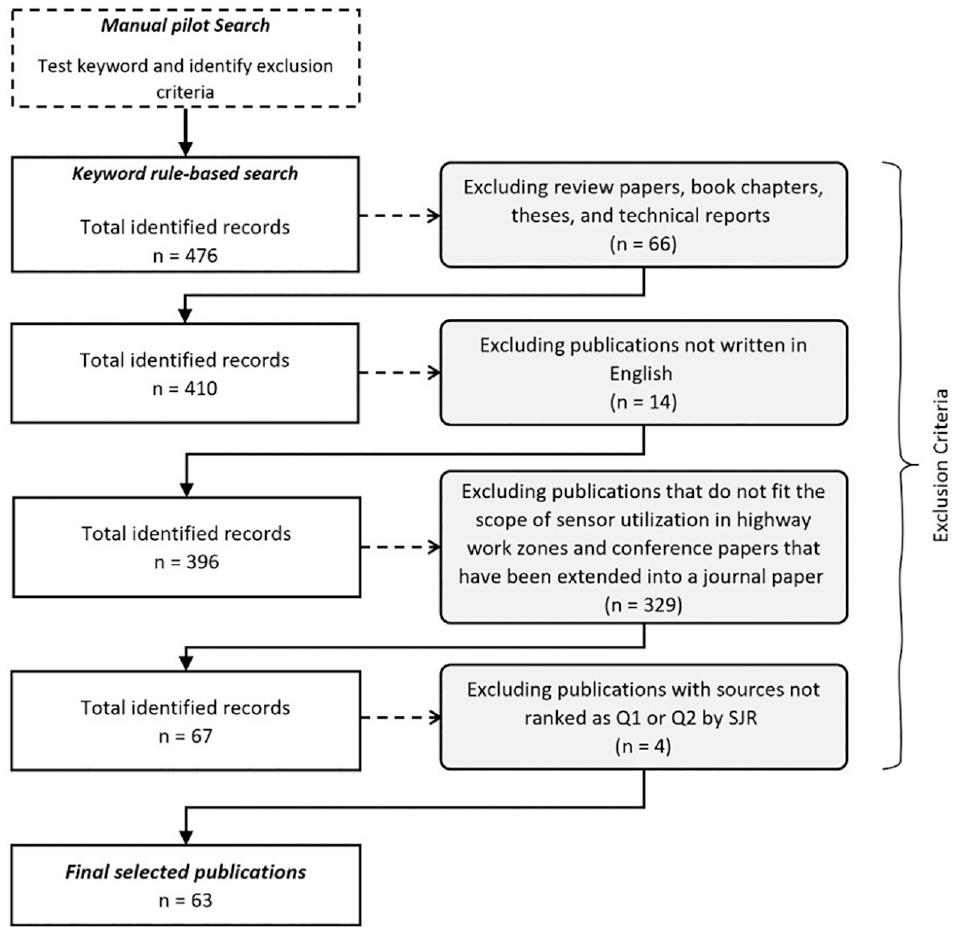
Illustration of the systematic publication selection process based on PRISMA.
Selection Criteria
In this review, the literature included publications that focus on the deployment of systems incorporating one or multiple types of sensors, with a specific emphasis on addressing the persistent issue of accidents within highway construction work zones. To systematically select the most pertinent publications aligning with the defined subject and scope, a review protocol was established. This protocol comprises inclusion and exclusion criteria, which are outlined in this section.
The following inclusion criteria were applied:
Only studies published between 2010 and 2023 were considered. This time frame was selected to ensure the inclusion of recent and relevant publications, offering insights into the contemporary state of the research topic.
Only peer-reviewed publications were included, as they undergo rigorous scrutiny, making it possible to thoroughly assess their research methodologies and objectives.
Although the primary focus of the review is on highway work zones, the first round of publication selection was not restricted to this area and also encompassed diverse domains, such as computer science and mechanical engineering.
Only literature published in the English language was included.
The following exclusion criteria were applied:
Publications that were not included in conference proceedings or peer-reviewed journals were excluded.
Research with the primary objective of analyzing environmental and behavioral work zone risk factors or developing predictive models related to severity, traffic delay, or similar parameters was not included. In addition, studies involving experiments conducted using simulators or virtual reality (VR) were excluded, as the main focus of this review paper is on real-world applications of sensing devices and systems.
Review papers, dissertations, and book chapters were excluded from the selection process.
Technical reports, including those from departments of transportation (DOTs), were not considered for inclusion. It is important to note that although DOTs often conduct research studies and generate project reports in this field, journal or conference papers are usually published based on the findings from these technical reports.
Conference papers containing identical content to journal papers were excluded from the analysis, because of the comprehensive coverage and provision of more detailed information often found in journal publications.
Systematic Review Strategy
The reference collection strategy was designed based on a systematic search of academic journals, utilizing specific keywords and adhering to the defined time span as outlined in the selection criteria. To ensure comprehensive coverage, similar to the approach adopted by Kim and Kim, a combination of automated and manual search methods was employed (
24
), utilizing two prominent online academic document search engines. For the automated search, Scopus (https://www.scopus.com/) was utilized because of its extensive coverage of various publication databases and its robust system for defining a complete set of search rules and filters. Scopus incorporates a powerful search engine, ensuring that the data returned align with the specified key terms and research scopes (
24
). The Google Scholar search engine (https://scholar.google.com/) was additionally employed for supplementary manual searches to guarantee the inclusion of all relevant literature. To select the most appropriate keywords, a pilot testing phase was carried out in Google Scholar with the initial keywords mainly expressing work zone smart hazard prevention systems (e.g., intrusion detection, collision avoidance, alert system), and working venue (e.g., construction work zone). During this phase, keywords were iteratively tested and replaced with alternatives from a pool of words related to highway construction site sensing systems, to encompass as much relevant literature as possible. Subsequently, for the automated rule-based search in the Scopus database, the following set of keywords and operators was applied to search within the title, abstract, and keywords of the papers: (highway OR roadway OR road) AND (“work zone” OR work-zone OR jobsite) AND (safety OR alert OR hazard OR warning OR collision OR intrusion OR crash OR proximity OR localization).
It is important to highlight that although the focus of this review paper revolves around the application of sensing technologies, the initial automated pilot search revealed that incorporating keywords directly related to that (e.g., sensing, wearable, technology) might have resulted in the omission of some relevant papers. Such an omission occurs when these specific terms are not present in the title, abstract, or keywords of certain papers. Based on the chosen key terms, the initial search yielded a total of 476 studies published between January 2010 and October 2023. Subsequently, 410 peer-reviewed conference and journal articles were retained, with book chapters, reviews, and other types of publications being excluded. An additional 14 papers written in languages other than English were also excluded from the selection.
The remaining publications underwent a screening process based on their titles and abstracts to assess their relevance to the scope of this study. Consistent with the aforementioned second exclusion criteria, papers unrelated to the development, application, or testing of a sensor-based system, specifically for functions such as intrusion and near-miss detection, or the localization of workers and equipment for other purposes, were removed from the reference pool. After that, one round of full-text screening was also applied on the remaining publications, since a more in-depth evaluation of the scope of some of the papers was required. The screening of titles and abstracts, and the second round full-text screening, resulted in a filtering out of 329 publications.
The relevant studies that met the specified inclusion and exclusion criteria underwent a further assessment to gauge the quality of each research paper and its impact on the academic community. In this study, a journal metric was used to assess the quality of the selected papers, a method that has been demonstrated to be beneficial for enhancing the quality of literature reviews ( 1 , 25 , 26 ). Similar to Ayodele et al., this study employed the SCImago Journal Rank (SJR) indicator as part of the quality assessment process to minimize potential discrepancies in study ratings or the inclusion of studies susceptible to bias ( 27 ). The SJR, which is sourced from Scopus, offers several advantages over other journal citation indicators. It encompasses a wider array of journals, provides journal rankings for individual years within a specified time frame, conducts more precise analyses based on the year of article publication, encompasses a broader period for citation inclusion, spans a wider range of countries and languages, restricts self-citations, and weights citations according to journal significance and the quality of the citing journal ( 28 ). Utilizing a 3-year citation window, SJR classifies journals into four quartiles. In this study, only papers published in journals within the first two quartiles (Q1 and Q2), which represent the top 50% of journals in their respective fields ( 29 ), were retained. Through this eligibility process, four papers were excluded from the review.
Finally, a total of 63 publications were selected for inclusion in this review, focusing on the role of sensing technologies in enhancing highway work zone safety. To facilitate content analysis, a Microsoft Excel spreadsheet was utilized to systematically extract essential information from the literature. This information encompassed the publication title, year of publication, type of journal, the country of research origin, and content-related information such as utilized sensor types and their applications. Subsequent to the completion of the data extraction process, a comprehensive content analysis was carried out. The results of this analysis are presented in the following section of this review.
Statistics of Publications
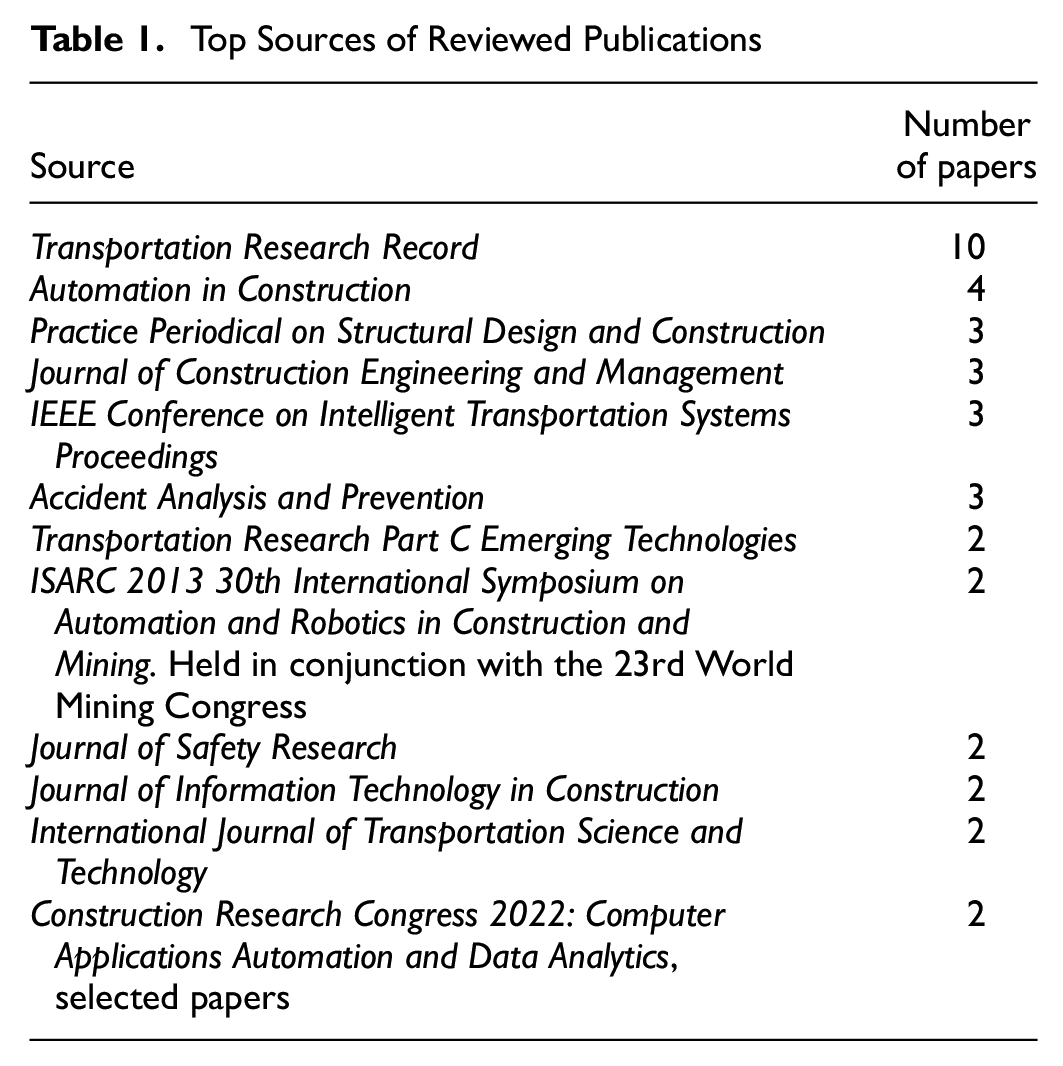
This section presents different statistical information about the reviewed publications. Figure 2 illustrates the number of publications per year. The publication trends from 2010 to 2023 indicate a generally increasing interest in the field, despite some year-to-year fluctuations. The publications for this review were sourced from 37 different journals and conference proceedings, with the most notable sources contributing two or more papers, summarized in Table 1. The listed sources contributed more than 60% of the total collection, whereas Transportation Research Record alone contributed around 16%.
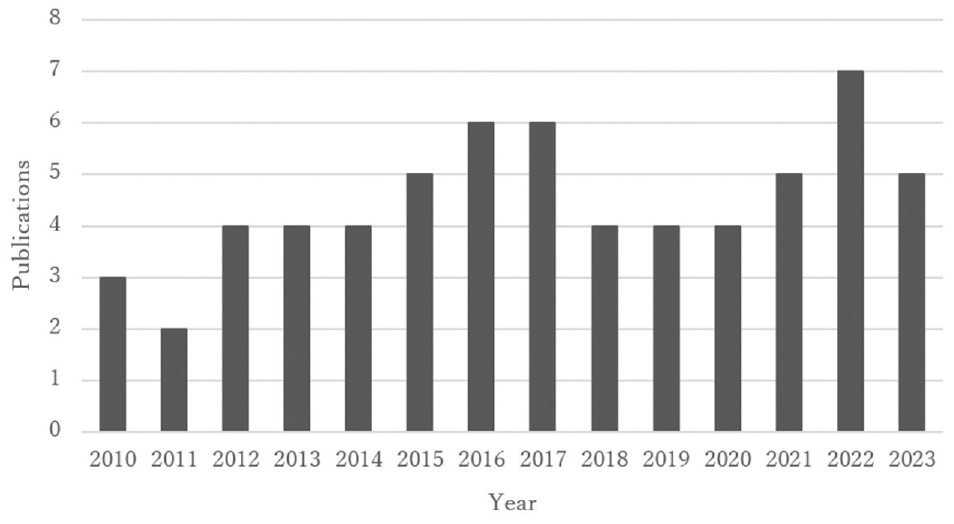
Number of publications per year.
Top Sources of Reviewed Publications
A keyword analysis was additionally conducted using VOSviewer to examine the frequency and network of keywords. The reference list, imported in CSV format from Scopus, was input into the software for this purpose. A co-occurrence analysis of all author keywords was then performed, with a minimum threshold set at one. This process identified 161 keywords, with 106 forming connections. These keywords were visually mapped, as shown in Figure 3. The graph distinctly segregates keywords, with those on the left primarily related to intrusion technologies, and the right highlighting proximity-related keywords and technologies. Notably, the graph indicates “work zone” and “safety” as the two dominant keywords, reflecting the core themes of this review paper.
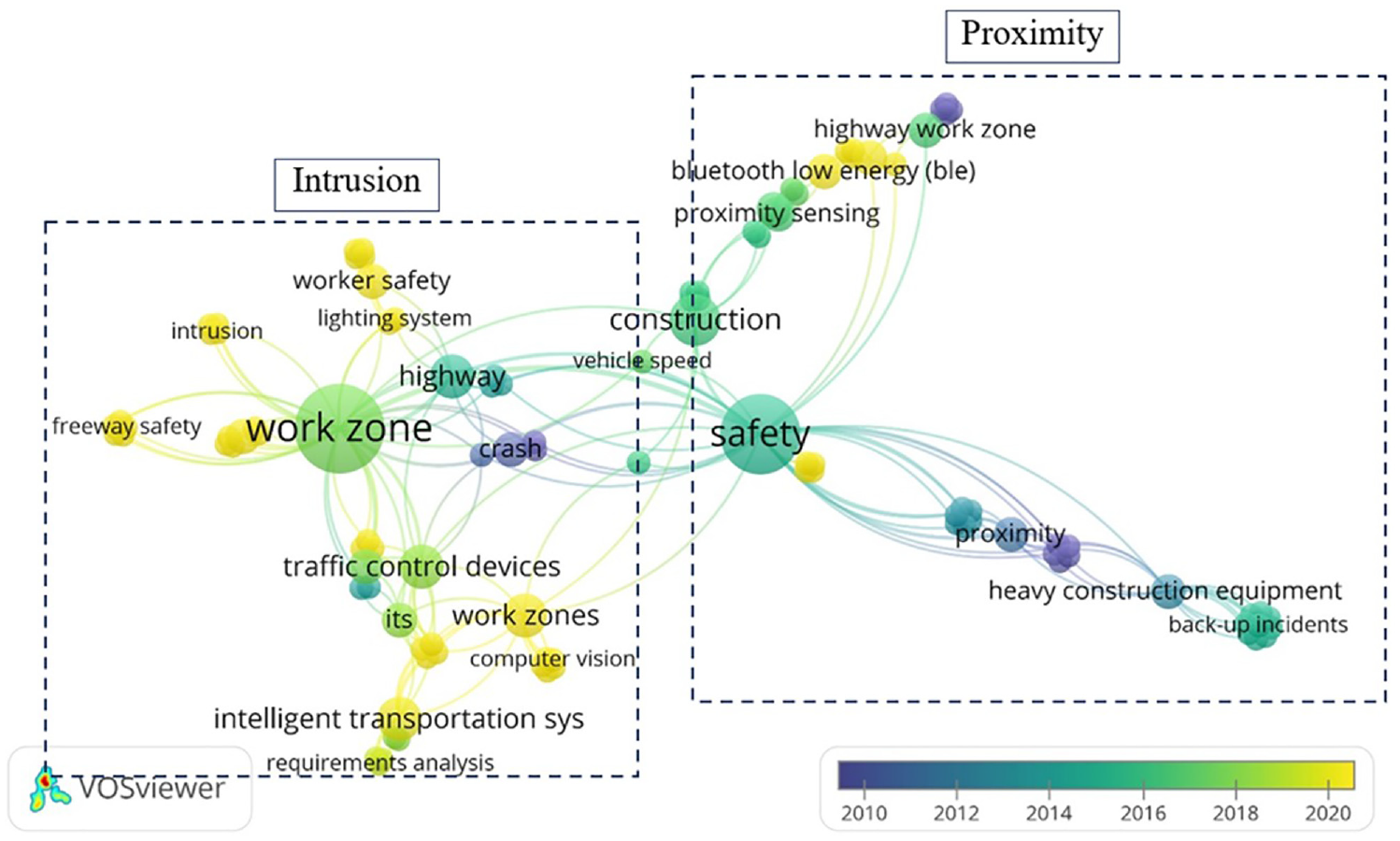
Keyword co-occurrence map: VOSviewer version 1.6.20.
Applications of Sensor Technologies in Highway Work Zone Safety Systems
The applications of sensor technologies in highway work zones are multifaceted, addressing various critical safety aspects. This section of the manuscript is structured into the application of sensor technologies in three distinct but interconnected areas, each emphasizing a different but crucial safety aspect: localization, vehicle intrusion, and worker-equipment proximity. The interplay of these elements is central to forming a comprehensive safety system. These sections collectively offer a comprehensive overview of the diverse sensor technologies employed and their respective roles in mitigating key safety challenges.
Localization: Basis for Safety in Work Zones
Localization technology is essential in the array of safety measures for highway work zones, providing the foundational layer on which systems for intrusion detection and proximity awareness are usually developed ( 30 – 32 ). The primary function of localization is crucial yet straightforward: it accurately tracks and monitors the real-time positions of workers, equipment, and vehicles. These critical data are the cornerstone of implementing effective safety measures, enabling the prompt identification of potential hazards, and facilitating swift action in response to emerging risks. The following paragraphs offer a detailed analysis of various sensors utilized for this application, whereas a summary of key publications in the area is presented in Table 2.
Summary of Key Publications on the Application of Sensor Technologies for Localization
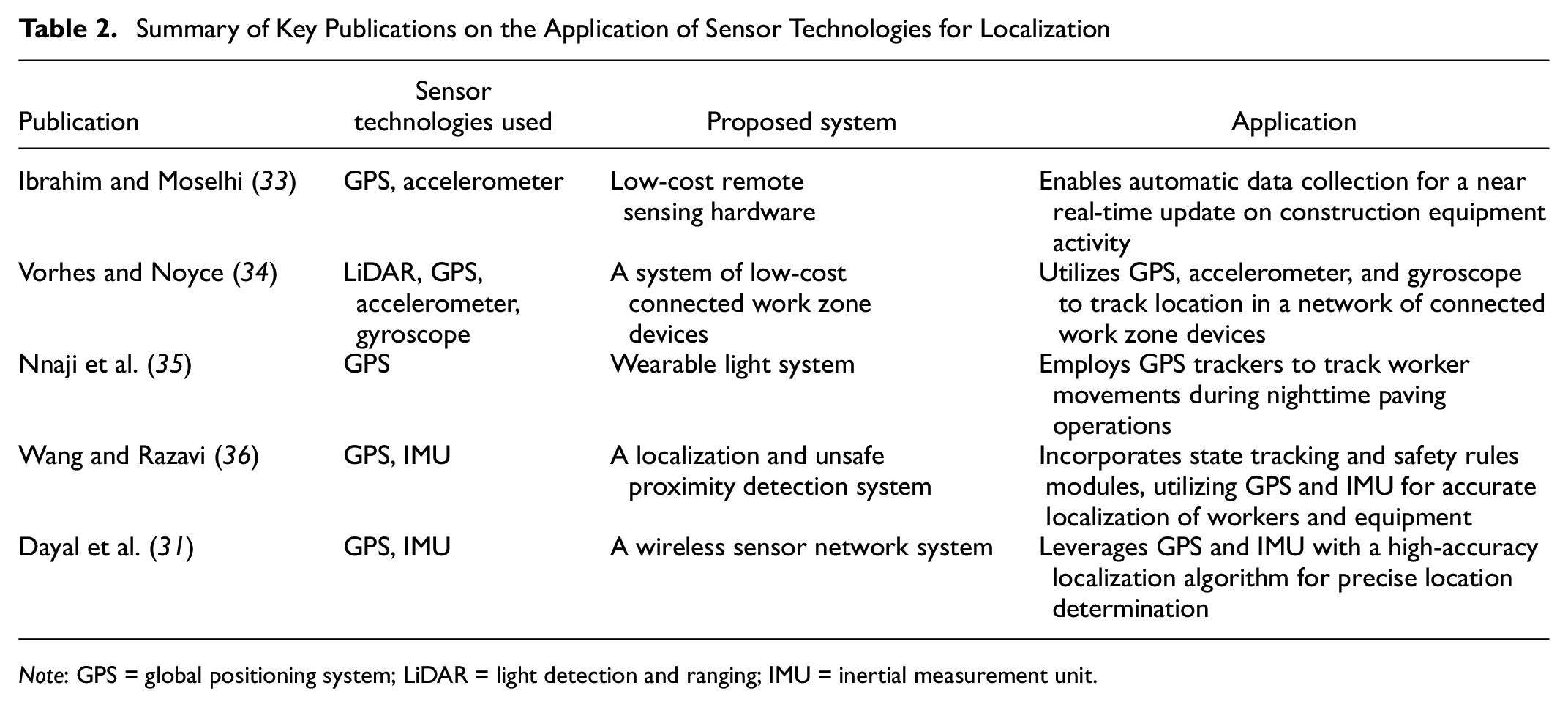
Note: GPS = global positioning system; LiDAR = light detection and ranging; IMU = inertial measurement unit.
Global Positioning System (GPS)
GPS is among the most widely used technologies for outdoor location tracking services ( 33 , 37 ). GPSs use a triangulation method to obtain the position (x, y, z) of a receiver. The position is calculated by measuring the distance from a set of satellites to the GPS receiver, the duration of travel of the GPS signal from satellite to receiver, and the speed of light ( 38 ). The main application of GPS in work zone safety systems includes continuously tracking the location of equipment and human objects for various purposes.
In the case of equipment localization and tracking, one notable exploration involves the incorporation of GPS in a low-cost remote sensing hardware system designed to support automated site data acquisition ( 33 ). This hardware, driven by an open-source microcontroller (Arduino Uno microcontroller), utilizes GPS for accurate location tracking in outdoor environments. The experiments showcase the versatility of GPS in facilitating near real-time progress reporting of construction operations. The system’s capability to detect aggressive driver behavior through a three-dimensional (3D) accelerometer, coupled with GPS tracking, exemplifies its adaptability for both equipment and personnel monitoring. In excavator equipment, GPS is employed in conjunction with kinematics to simulate real-world motion within a 3D virtual world ( 39 ). In this case, the GPS receiver provides equipment positions on a jobsite, facilitating accurate monitoring of end-effector movement.
Connected work zone devices also benefit from smart sensing technologies, including GPS, to enhance traffic monitoring and safety. In the broader context of smart traffic service systems, GPS serves as a linchpin, creating a connected environment. Integration with mobile devices and in-vehicle sensors enables the collection of real-time traffic data, forming the basis for intelligent decision support systems (see Jiao and Tsai [ 40 ]). GPS receivers in this scenario created a pervasive, cost-effective means of gathering anonymized data crucial for effective traffic monitoring and planning within work zones. The use of GPS technology in a simplified architecture for connected work zone devices is further developed by Vorhes and Noyce ( 34 ). These devices, equipped with GPS receivers, communicate data through a radio link to a central hub, enhancing work zone monitoring. This architecture reduces costs and simplifies data ownership and security concerns. GPS plays a crucial role in providing accurate location data, enabling effective communication and coordination among various devices within the work zone.
GPS trackers have also been employed in tracking workers on jobsites, specifically for assessing the effectiveness of wearable lighting systems (WLSs) for worker visibility in highway construction projects. Although paving roads overnight is a common procedure to minimize traffic congestion during the day, this not only creates the risk of vehicle intrusion into work zones but also increases the safety risk resulting from poorer worker visibility that can lead to injuries and fatalities. Evaluating the effectiveness of WLSs in enhancing workers vision, Nnaji et al. used GPS trackers to provide a detailed understanding of worker movements during nighttime paving and to enable a comprehensive analysis of the impact of WLSs on visibility ( 35 ). They recommended optimum locations for WLSs accordingly.
A persistent challenge in implementing GPS technology within work zones pertains to its accuracy. The attainment of high accuracy is crucial for the localization system to avert near-miss incidents and collisions in highway work zones. However, diverse studies have reported varying degrees of accuracy associated with the GPS sensors they employed. For instance, in the system outlined by Ibrahim and Moselhi, which incorporated a wireless communication module alongside GPS, real-time equipment tracking achieved a precision of 20 m in outdoor location tracking ( 33 ). In contrast, Lu et al. documented an average error of less than 10 m when combining GPS and dead reckoning technology with a Bluetooth beacon (situated on the roadside) ( 41 ) to track a truck’s location in a densely populated urban area. Pradhananga and Teizer recorded an average error of 1.1 m in an open area, escalating to 2.15 and 4.36 m in scenarios with nearby obstacles while evaluating GPS for equipment tracking in an urban setting (42). Remarkably, Ometov et al. cited an accuracy of 10 cm for GPS ( 43 ). However, it is probable that they integrated GPS with additional sensors to achieve this level of precision, as standalone GPS systems typically have a positional error on the scale of meters. The accuracy challenge becomes more pronounced on uneven surfaces; nonetheless, GPS demonstrates enhanced precision when integrated with multiple sensors, as evidenced by various experimental studies ( 44 , 45 ).
Inertial Measurement Unit (IMU)
Originally designed for the inertial navigation systems of aircraft in GPS-denied environments, traditional inertial measurement units (IMUs) have undergone a transformation with the development of microelectromechanical systems (MEMS) ( 46 ). This advancement allowed for miniaturization, making it possible to attach IMUs to the human body. A typical wearable IMU comprises a MEMS accelerometer, gyroscope, and magnetometer. The accelerometer, utilizing a movable proof mass and mechanical dampers, measures changes in capacitance resulting from acceleration. The gyroscope employs a vibrating mechanical element to measure the Coriolis force caused by angular rates, whereas the magnetometer gauges the Earth’s magnetic field through the deformation of the resonator caused by the Lorentz force generated from the interaction between electrical current and the external magnetic field ( 47 ). The raw measurements from the wearable IMU enable the derivation of velocity, displacement, and orientation data. Initially embedded in smartphones or smart wristbands for cost-effectiveness, MEMS accelerometers or gyroscopes attached to wearable IMUs have been instrumental in monitoring kinematic movement.
The synergy of GPS and IMUs marks a significant leap in precision for localization applications, especially in dynamic environments like highway work zones. When combined, GPS and IMUs complement each other: GPS offers a broad positioning context, whereas IMUs fill in the gaps with detailed, high-frequency movement data. This combination results in a robust system capable of delivering precise location information even in challenging scenarios where GPS alone may falter. A notable example is the work of Wang and Razavi, who developed a localization and proximity detection model using a GPS-aided inertial navigation system (INS) ( 36 ). This system enhances real-time location information with additional data on heading and speed, captured through the IMU, thus enabling a more precise identification of hazardous situations. The GPS-aided INS employed in their study combines GPS receivers and an IMU to deliver accurate 3D position, speed, and orientation data at high update rates. The system’s design features a state tracking module that gathers position, heading, and speed data, and a safety rules module that analyzes these data to pinpoint unsafe proximities. Controlled field experiments confirmed the system’s localization accuracy at 0.7 m, alongside a notable reduction in false alarms. Furthermore, the research presented in Dayal et al. demonstrates how accurate localization can be achieved using a wireless sensor network complemented by a high-accuracy localization algorithm ( 31 ). This system consists of a network of smart sensor cones equipped with GPS and IMU sensors. These sensor cones, including a master cone to map the topology of all the sensor cones, provide a comprehensive and precise overview of the work zone.
Although not a sensor, Wi-Fi technology has also been pivotal in enhancing real-time location tracking and communication in highway work zones. Wi-Fi, known for its high-speed wireless connectivity, is increasingly being integrated into Internet of Things (IoT) systems to facilitate efficient and real-time data exchange in dynamic environments like construction sites. A notable investigation into the performance of Wi-Fi-based IoT systems was conducted by Sabeti et al. ( 48 ). This study focused on evaluating the latency of Wi-Fi-based real-time communication between various devices within highway work zones. The IoT network in their case study incorporated diverse devices, including a camera, smart glasses, and a smartwatch, alongside standard networking and processing equipment. The research aimed to measure the communication delay in different network setups, particularly under conditions simulating a crowded work zone. The findings revealed that even in the most congested test scenario, the average latency was impressively low, at just 10 ms.
Vehicle Intrusion Detection and Alerting
A significant safety concern arises from vehicles accidentally intruding into work zones from outside. Effectively detecting such incidents and implementing the necessary safety measures are crucial for enhancing overall work zone safety ( 49 – 52 ). Identifying an intruding vehicle accurately is a complex task that involves considering multiple factors, such as the vehicle’s speed and orientation. Several methods have been proposed for the detection of intrusion hazards and subsequently alerting drivers and nearby workers ( 53 – 63 ). A summary of previous studies on the application of sensor technologies for vehicle intrusion detection and alerting is provided in Table 3.
Summary of Key Publications on the Application of Sensor Technologies for Intrusion Detection and Alerting
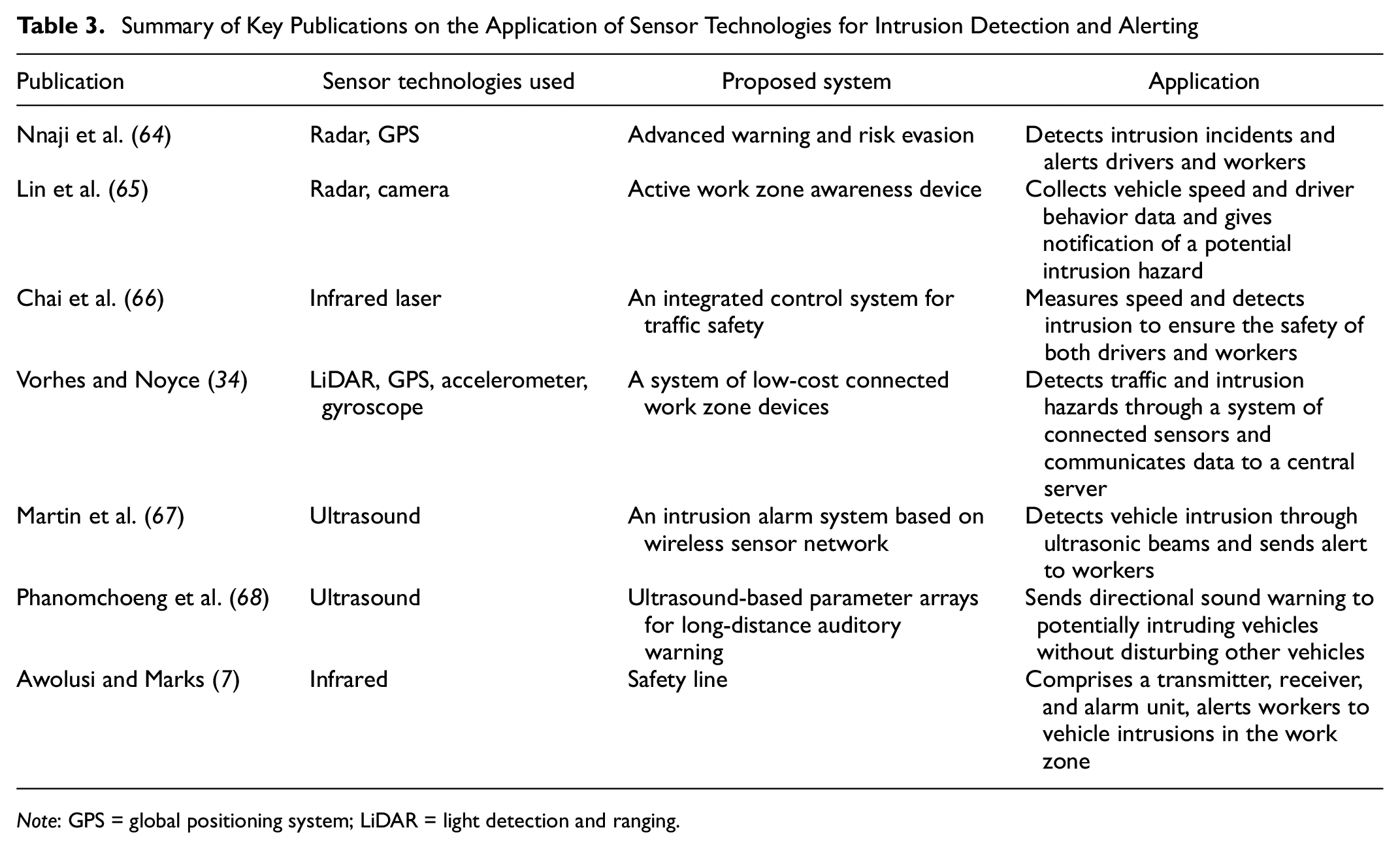
Note: GPS = global positioning system; LiDAR = light detection and ranging.
Radar
Radar sensor systems have been extensively used in highway safety research and practice to collect vehicle speed data ( 69 – 74 ). In recent developments, radar sensors have expanded their role in smart work zone (SWZ) systems dedicated to enhancing highway work zone safety through detection of vehicle intrusion hazards. The Advanced Warning and Risk Evasion (AWARE) system exemplifies this expansion, employing a vicinity monitoring unit equipped with GPS and radar systems to monitor specific environments. The primary goal of the AWARE system is to promptly alert workers within a work zone by generating visual and audio warnings in the event of an intrusion. In addition, a personal warning unit ensures that workers within a projected impact area receive timely notifications ( 64 ). Moreover, the application of radar sensors in work zone safety has evolved further. In a recent active work zone awareness device experiment in Florida, a radar device with dynamic speed feedback LED signs was incorporated, aiming at collecting precise vehicle speed data to enhance overall safety measures within work zones ( 65 ). These advancements underscore the continued integration of radar sensors in cutting-edge solutions for highway work zone management and safety.
The Wavetronix SmartSensor stands out as the preferred choice for speed detection radar sensors in various field experiments ( 65 , 69 , 72 , 73 , 75 ). Specifically, studies have utilized the SmartSensor HD Model 125 to gauge vehicle speeds in proximity to work zone areas. This device is a radar-based system that offers a range of information, encompassing vehicle speed, vehicle counts, and average speed ( 76 ). In addition to its functionality, the widespread adoption of this sensor device in research experiments may be attributed to its availability within state DOTs. For example, Iowa DOT reportedly maintains over 500 Wavetronix sensors across the state for traffic data collection ( 69 ). However, despite its prevalent use in research experiments, the literature falls short in offering a detailed exploration or evaluation of the advantages and limitations associated with this specific radar-based sensor device. Although its functionality has been leveraged effectively, there remains a gap in understanding how its features align with varying experimental needs and conditions. A critical analysis of the Wavetronix SmartSensor’s performance in different scenarios and under diverse environmental factors could provide valuable insights for researchers seeking the most suitable radar sensor for their specific applications. Additionally, an exploration of potential drawbacks or challenges associated with it would contribute to a more profound understanding of its utility and inform future advancements in radar-based sensing technologies.
Radar boasts advantages such as affordability, dependable performance in diverse weather conditions and dusty environments, and the reliable detection of substantial objects like other vehicles or people ( 77 ). Despite these merits, one challenge lies in the occurrence of false alarms, in which the operator may already be aware of an object behind the equipment that poses no danger. Whereas these alarms may seem harmless, overreliance on them can be hazardous, as the operator might assume there is no genuine threat and proceed to reverse without a full understanding of the actual situation ( 3 , 77 , 78 ). Moreover, within the array of features and parameters offered by radar sensors, the pivotal attributes of nonintrusiveness and ease of installation have significantly contributed to its emergence as a promising technology in highway environments ( 79 ).
Laser
Laser sensors show great promise for improving safety in highway construction work zones. In on-site detection and warning systems, laser sensors are crucial. For example, a comprehensive traffic safety system has been developed by the Research Institute of Highway at the Ministry of Transport of China. This system integrates various technologies like wide-area network communication, short-range microwave communication, vehicle intrusion detection, synchronized flicker, and infrared (IR) laser speed measurement. It focuses on controlling vehicle speed in advance warning areas, providing synchronized warnings and intrusion detection in transition and buffer areas, and implementing multifunctional alarms in work areas. The system also includes synchronized warnings in the work area and the construction management center, along with remote video monitoring ( 66 ).
LiDAR, a type of laser sensor, works by emitting laser light toward objects and analyzing the reflected light to measure distances and create detailed 3D images, enabling effective detection and tracking ( 80 ). LiDAR stands out as a key component in SWZ safety systems. Its ability to create detailed 3D images regardless of lighting conditions makes it valuable for predicting and warning workers about potential vehicle intrusions ( 81 ). Despite challenges like limited tracking ranges and sensitivity to adverse weather, LiDAR’s accuracy and reliability make it vital for effective SWZ solutions. As LiDAR technology advances and becomes more cost-effective, its integration into safety systems is increasingly feasible, opening the door to innovative solutions ( 81 ).
The combination of laser sensors, including LiDAR, with connected work zone devices enhances safety measures. The architecture outlined in Vorhes and Noyce envisions a network of affordable monitoring and incident detection devices communicating via a radio link to a central hub ( 34 ). Equipped with LiDAR and other sensors, this hub forwards information to a central server, enabling real-time monitoring and incident response. LiDAR’s role includes providing detailed 3D information, improving the detection of traffic-related elements such as cones and lane markings. Dehman and Farooq emphasizes LiDAR’s effectiveness in detecting traffic control devices, highlighting its robustness compared with camera-based methods ( 80 ). The utilization of device retro-reflectivity in LiDAR technology improves the robustness of detection, particularly in situations where lighting conditions may vary. The capacity of LiDAR to offer reliable and comprehensive 3D data enhances its versatility as a tool for the detection and monitoring of lane markings. This underscores its potential in the challenging context of highway construction work zones.
Laser sensors, especially when incorporated into highway work zone monitoring systems, bring both advantages and face specific challenges. The requirement for real-time mapping in dynamic highway work zones poses challenges related to line-of-sight dependence, necessitating sensor repositioning when there is an obstruction. The limitations of mapping sensors like laser scanners, relying on dynamic platforms, add complexity to the process ( 82 ). However, recent technological advancements have addressed computational costs and processing times, making real-time applications more practical. The benefits of laser sensors, exemplified by LiDAR, are apparent in their ability to provide precise 3D data of highway work zones in real time. Their high precision, quick response times, and extended detection range make them capable of delivering accurate and timely information. As seen in the findings from Darwesh et al., the LiDAR-based intrusion detection system showed an impressive precision rate of 100% in detecting vehicles ( 81 ). Despite these capabilities, laser sensors encounter challenges. Harsh weather conditions like heavy rain or fog can affect their performance, requiring additional measures for sustained effectiveness. Also, their sensitivity to interference from other light sources calls for careful deployment planning to enhance reliability. Moreover, interpreting data remains challenging owing to the complex nature of unstructured point clouds and varying density, calling for ongoing improvements in algorithms and machine learning for effective scene understanding ( 83 ). Important considerations include adapting sensor systems to changing highway work zone conditions, addressing privacy concerns, and ensuring transparent deployment.
Ultrasonic Sensors
Ultrasonic sensors utilize sound waves beyond the range of human hearing (ultrasonic waves) to detect and measure the distance to objects ( 84 ). These sensors vary widely in their measurement ranges: short-range ultrasonic sensors can detect objects from a few centimeters up to 2 to 3 m, whereas the range of long-range ultrasonic sensors can extend to more than 10 m ( 85 ). In Martin et al., ultrasonic sensors were employed for intrusion detection: they formed a virtual barrier to identify when vehicles breached the perimeters of work zones ( 67 ). Ultrasound-based parameter arrays were investigated in the study by Phanomchoeng et al., for the possible application of generating a directional sound for long-distance auditory warning of potential intruding vehicles, without disturbing other vehicles ( 68 ). Although ultrasonic sensors offer the advantage of tracking the speed of objects, surpassing other sensors like IR, a significant drawback is their susceptibility to interference from noise or atmospheric conditions such as fog, dust, or rain. Therefore, they are generally considered more appropriate for indoor rather than outdoor applications ( 86 ). Furthermore, their cost is considered to be relatively higher than other sensors for similar applications ( 68 , 87 ).
IR Sensors
IR sensors are a type of sensor that utilizes IR radiation to detect and measure various physical parameters. Among them, passive infrared (PIR) sensors, a distinct subset, specialize in detecting IR radiation, contrasting with active IR sensors that both emit and receive IR radiation. Their capability to detect motion, coupled with their effectiveness in low-light conditions, quick response time, and low energy consumption, renders them as promising alternatives for highway intrusion detection applications ( 84 ). An intrusion detection and alarming system based on IR sensors was investigated in research by Awolusi and Marks ( 7 ). The system consisted of an IR transmitter and receiver, combined with a mechanism that warns workers when a vehicle intrudes into a work zone. In addition, PIR sensors are particularly utilized in other highway and traffic applications, including vehicle speed estimation and queue warning systems; although the applications are different, the mechanism could be utilized for developing intrusion systems ( 66 , 87 ).
Worker-Equipment Proximity
In addition to the external threat of vehicles entering work zones, a significant internal risk exists from workers coming close to construction equipment within work zones. Sensor technologies have been identified as effective tools for detecting and providing alerts in such scenarios, offering promising solutions to enhance safety measures ( 88 , 89 ). Details of how sensor technologies can address these safety concerns are presented in the following sections, with a summary provided in Table 4.
Summary of Publications on the Application of Sensor Technologies for Proximity Detection and Warning
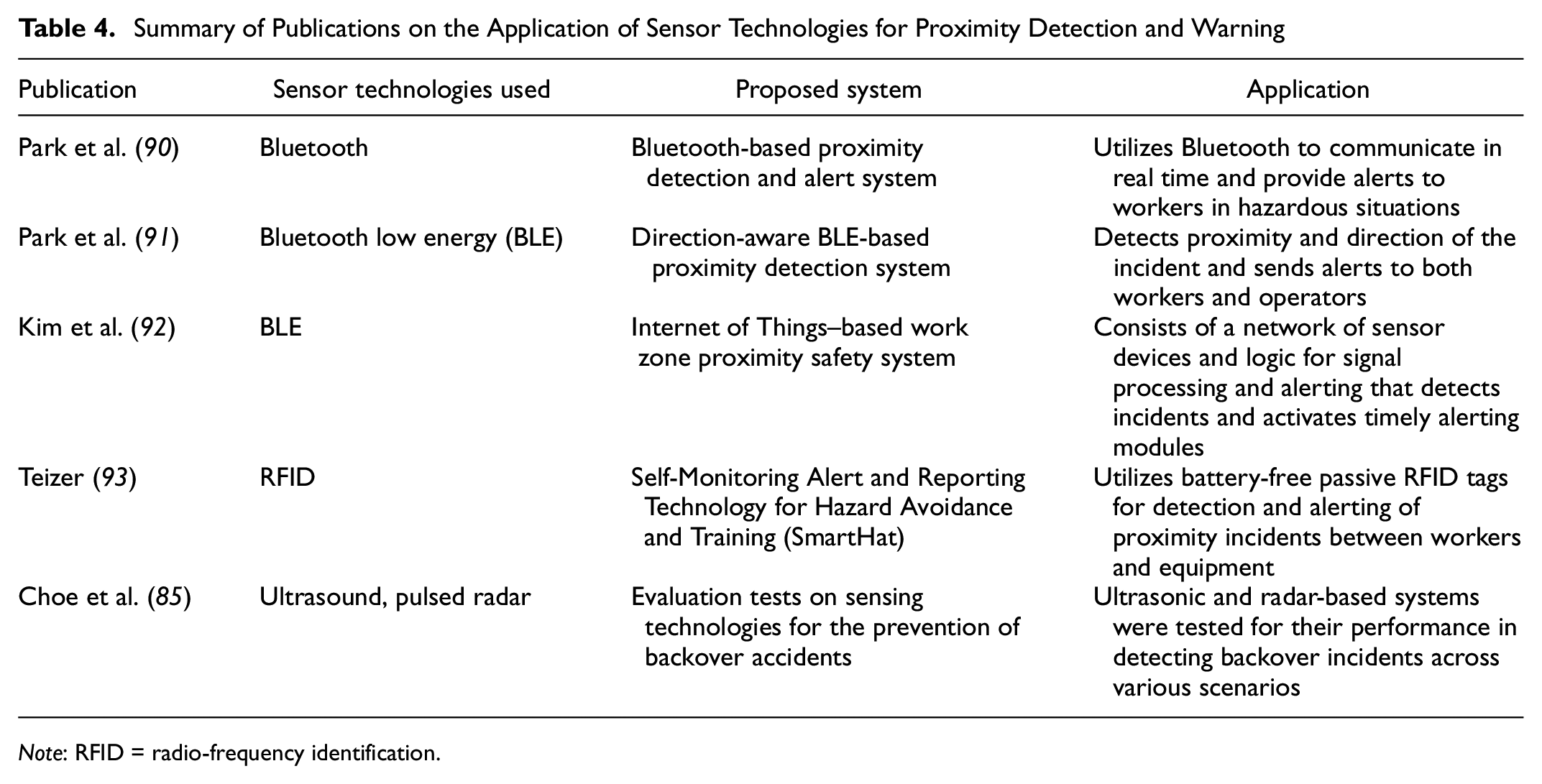
Note: RFID = radio-frequency identification.
Bluetooth and Bluetooth Low Energy (BLE)
Among other technologies, Bluetooth and Wi-Fi have become by far the most popular communication technologies used for various applications ( 94 ). Bluetooth is a wireless technology standard designed for exchanging data over short distances using short-wavelength ultra-high frequency (UHF) radio waves ( 95 ). Emerging from its conventional role in consumer electronics, Bluetooth technology has now been adapted to address the unique challenges of ensuring safety in highway work zones. A notable application of Bluetooth in this field is illustrated by Park et al., who developed a proximity warning and alert system using Bluetooth technology ( 90 ). This system incorporated an equipment protection unit installed on construction equipment and personal protection units (PPUs) for ground workers and equipment operators. Experimentation and comparison with radio-frequency identification (RFID) and magnetic field-based systems highlighted the unique strengths of Bluetooth technology, despite magnetic sensing systems showing superior performance in certain aspects.
Bluetooth low energy (BLE), on the other hand, has gained popularity over conventional Bluetooth technology mainly because of its efficient power consumption ( 96 ). Introduced in 2010 by the Bluetooth Special Interest Group as part of the Bluetooth 4.0 specification, it operates in the 2.5 GHz industrial, scientific, and medical band ( 91 ). BLE, compared with conventional Bluetooth, boasts attributes such as low cost, low energy consumption, ease of use, small form factor, and several other advantages ( 96 ). BLE was employed in Park et al.’s study to detect and alert proximity situations between ground workers and equipment ( 91 ). In this setup, location broadcasters—BLE sensors—were attached to construction equipment and PPUs. Although this system demonstrated its utility in alerting equipment operators to potential hazards, it was observed to have a significant delay in signal reception, pointing to areas for further refinement. The use of a signal processing algorithm proved to be effective in improving issues related to delay in signal reception and signal noise ( 96 ).
Bluetooth and BLE are well-suited for short-range data communication at a local level. To extend their reach for remote connectivity, these systems are often integrated with the Internet via additional technologies. This integration is exemplified in the IoT-based proximity safety system for work zones discussed in Kim et al. ( 92 ). The system is designed to utilize Wi-Fi or 4G/5G networks for remote data storage and management, demonstrating a seamless integration of local and remote communication capabilities. It features a two-way data communication system, which also enables remote monitoring and allows personnel to adjust system settings and parameters remotely.
Bluetooth and BLE have several key strengths that make them suitable for proximity-related highway work zone safety issues. Their rapid connectivity, cost-effective hardware, and minimal infrastructure requirements are particularly advantageous for such applications ( 90 ). In addition, BLE offers a highly efficient energy usage capable of operating for years with a coin-sized battery ( 91 ).
Radio-Frequency Identification
RFID is a sensor technology that is extensively used in proximity hazard detection and alerting systems. It operates by automatically identifying and tracking objects or people through small electronic devices, known as RFID tags. These tags can be read from a distance using RFID readers that emit radio waves to communicate with them ( 97 ). RFID tags come in two types: active, which have their own battery for power, and passive, which draw power from the reader’s signal during communication ( 98 ). The technology primarily utilizes four frequency bands: low frequency (125 to 134 kHz), high frequency (13.56 MHz), UHF (860 to 960 MHz), and microwaves (2.4 GHz) ( 98 ). Each frequency band has its specific use and range, making RFID a versatile choice.
A passive RFID tag was used in Teizer’s research to develop a battery-free real-time proximity warning system named Self-Monitoring Alert and Reporting Technology for Hazard Avoidance and Training (SmartHat) ( 93 ). The study also demonstrated through a field test that the system produced reliable results. However, one major drawback of passive RFID tags is their limited range; these tags have a range of only a few centimeters to about 15 m ( 43 , 93 ). In contrast, active RFID tags offer a more substantial range, up to 150 m, as discussed by Ometov et al. ( 43 ) and Hallowell et al. ( 99 ). This significant difference in range could be a crucial factor when deciding between active and passive tags for various work zone scenarios.
RFID technology offers the benefit of creating sensor networks that are cost-effective, energy efficient, and environmentally friendly ( 98 ). The advantage of passive RFID tags lies in their independence from power sources, although they are limited by a short operational range. Conversely, active tags can function over longer distances and, despite relying on batteries, are noted for their efficiency, often running for years on a single battery ( 100 ). However, the primary downside of active tags is their price, which is notably higher than that of passive tags ( 100 , 101 ).
Ultra-wideband (UWB)
UWB technology is a wireless communication method that employs a wide range of frequencies to transfer data over short distances. UWB technology, with its exceptional accuracy ranging from 10 to 50 cm, has proven to be tailor-made for highway construction work zones. UWB’s latency of less than 1 ms makes it ideal for real-time location tracking in highway work zones ( 102 ). The real-time location tracking capability of UWB was employed by Han et al. to create a connected work zone for automated detection of both proximity incidents and intrusion of connected/automated vehicles ( 103 ). The study, through tests conducted within smart road infrastructure, confirmed the effectiveness of the developed system. However, it also highlighted potential limitations in practical scenarios where sensing interruptions might arise. A significant advantage of UWB technology is its precision, capable of delivering accuracy to the centimeter level ( 103 ). Nevertheless, when compared with other sensor technologies, UWB’s comparatively higher cost can be a deterrent in its adoption for these applications.
Other sensors explored for proximity applications in work zones include ultrasonic and pulsed radar technologies. Choe et al. conducted an experimental evaluation of four commercially available sensor systems: one based on ultrasonic technology and three using pulsed radar technology ( 85 ). In their study, the sensors were installed at the back of trucks, and their performance was assessed in relation to detecting objects, particularly workers. The system was specifically designed to assess construction backover safety practices, a goal achieved through a series of tests. These included sensor installation review, static and dynamic testing, and a dirty sensor test to replicate real-world conditions.
Challenges and Future Directions for the Implementation of Sensor Technologies in Highway Work Zones
Highway work zones present unique challenges compared with general construction sites, including the presence of nearby live traffic, amplified noise levels from moving vehicles, and their temporary nature with frequent shifts along road segments. These zones additionally often lack direct power supply and have confined operational areas to maintain traffic flow. As illustrated in Figure 4, a typical work zone layout comprises a transition area that redirects traffic away from the usual path, a dedicated working space for construction activities, and a surrounding buffer zone to safeguard the work area ( 104 ). This layout is common for stationary temporary work zones, though variations like inclusion of lane shifts may occur. This environment demands sensor technologies that are not only precise in data collection, but also robust and adaptable enough to cope with the dynamic conditions ( 6 , 71 , 91 , 96 , 105 , 106 ). Sensors are expected to be cost-effective for such temporary settings, power-efficient, capable of identifying all potential hazards, and durable enough to withstand conditions like adverse weather and constant vibrations. On the other hand, the successful application of these technologies hinges on their ability to accurately and promptly detect potential hazards, enabling timely interventions to prevent accidents and ensure worker safety. Hazardous situations can arise suddenly, as vehicles often move at high speeds, reducing the reaction time available to workers and drivers. Research shows that key factors in work zone crashes are the speed of the approaching vehicle and the sensor system’s accuracy in detecting intrusions and issuing alerts ( 51 ). Immediate incident detection and alerting are crucial in these scenarios.
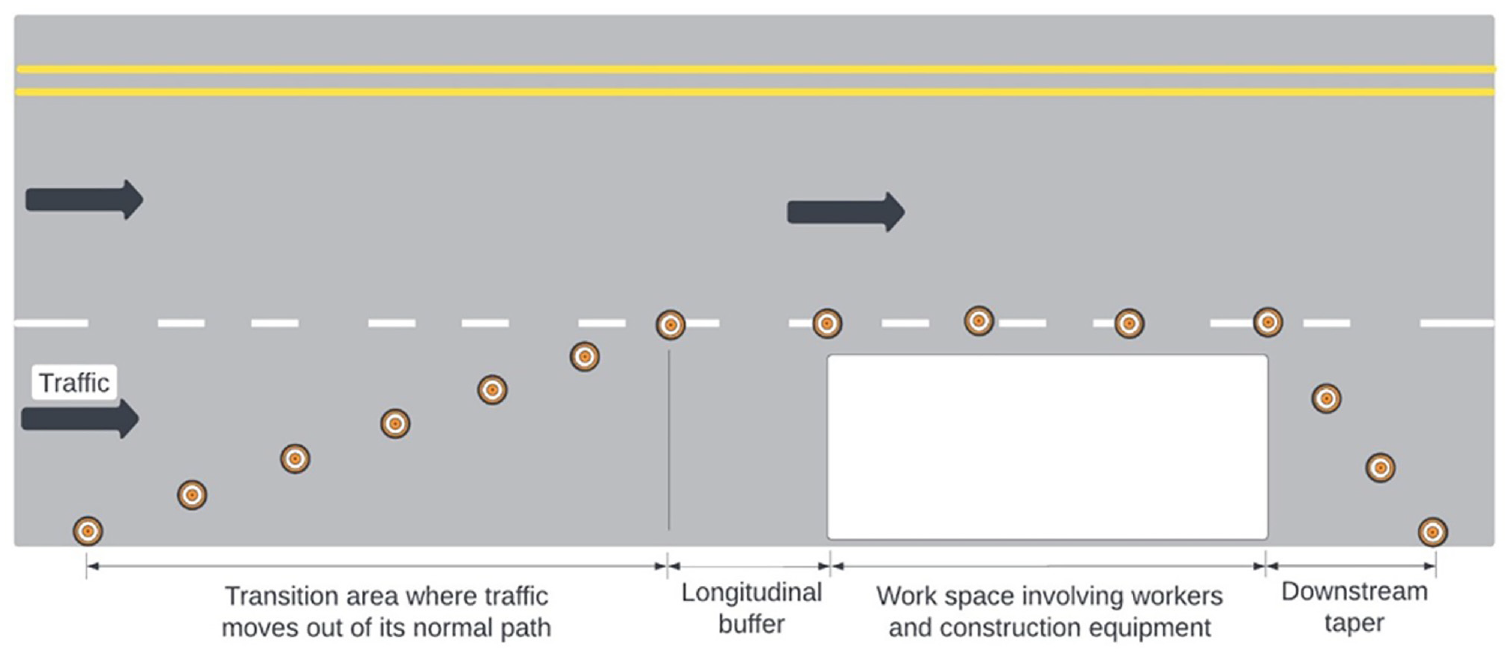
Typical highway work zone setup ( 104 ).
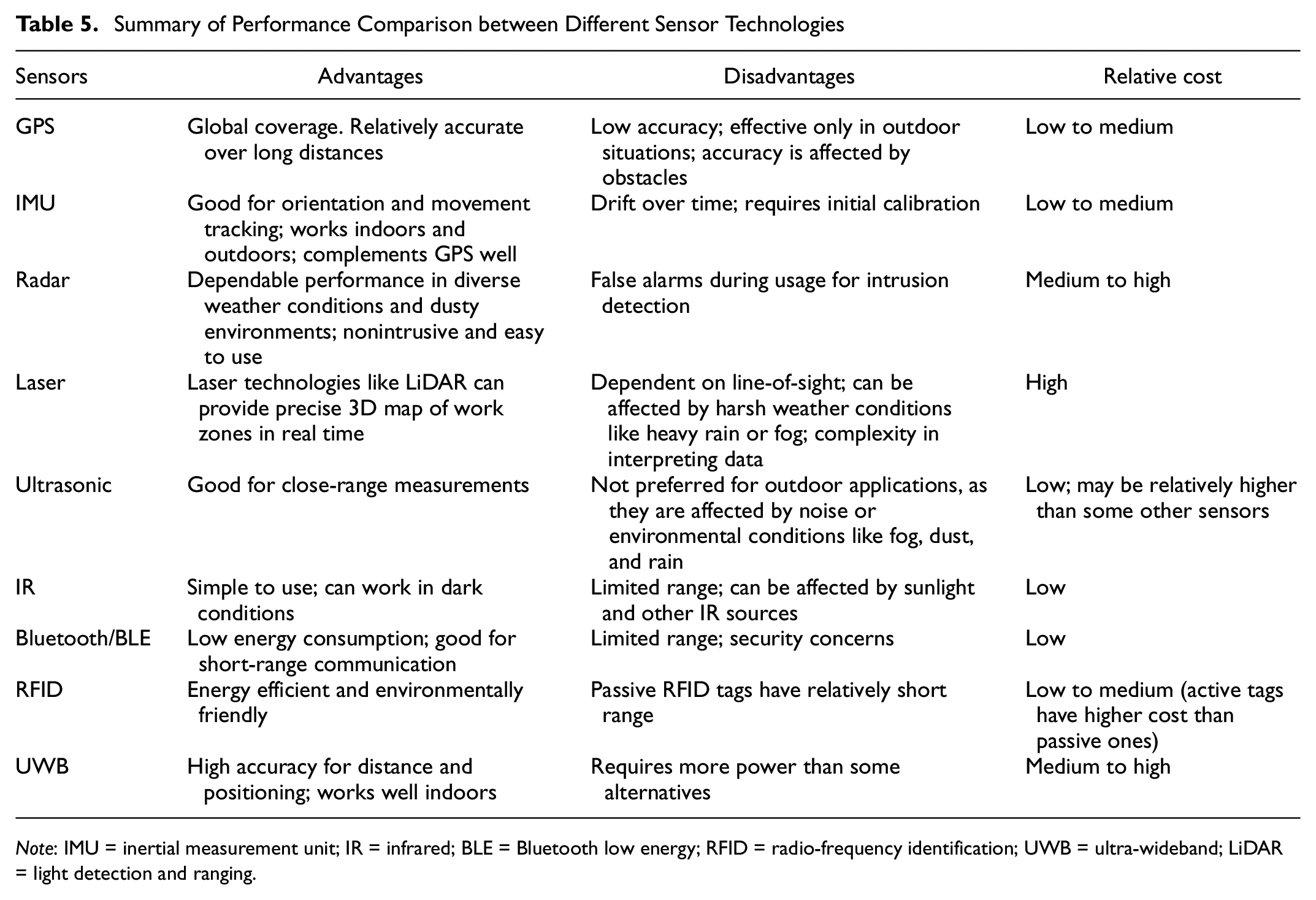
Furthermore, the deployment of sensor technologies in such a setting must take into account the user-friendliness aspect. Given the diverse technical skills of the workforce in highway work zones, it is essential that these devices are intuitive and easy to use, minimizing the learning curve and facilitating seamless integration into daily operations. Other key considerations include economic feasibility, durability, security, and adherence to regulations. This section aims to delve deeper into these specific challenges and characteristics of highway work zones, exploring how they shape the required performance of sensor technologies. It also provides insights and recommendations on the future prospects of these technologies and best practices for their implementation. Before these sections, a summary of the comparative advantages and disadvantages of different sensor technologies is provided in Table 5. This comparison is not intended to provide precise data on the various aspects of these technologies, given their wide range of properties influenced by numerous factors. Instead, it aims to offer general insights into the key characteristics that distinguish these technologies from one another.
Summary of Performance Comparison between Different Sensor Technologies
Note: IMU = inertial measurement unit; IR = infrared; BLE = Bluetooth low energy; RFID = radio-frequency identification; UWB = ultra-wideband; LiDAR = light detection and ranging.
Size and Weight
As sensors come in different sizes and weights, choosing the appropriate size is important. In environments such as highway work zones where space is limited, sensors are generally preferred to be small, compact, and lightweight for conveniently placing on workers, equipment, traffic cones, and other facilities. Although the size and weight of sensor devices can depend on several factors, including the manufacturer selected and the specific model, the sensor technology used is also a key factor.
Several sensor technologies (e.g., GPS, RFID, Bluetooth, BLE, IR, and IMU) are compact, making them convenient for highway work zone applications ( 91 , 107 ), however, some may be smaller than others. For instance, passive RFID tags, benefiting from their batteryless design, are notably smaller than their active counterparts ( 98 ). This compactness makes them particularly convenient for integration into equipment or wearable items like worker badges and vests. However, it is important to note that passive RFID tags, despite their size advantage, may not be ideal for certain work zone safety applications. They lack critical features such as real-time location tracking, long-range capabilities, and omnidirectional communication with the RFID reader, which are essential in dynamic work zone environments ( 100 , 101 ). On the other hand, sensors like Bluetooth, BLE, and IMUs usually come embedded in common devices such as smartphones and smartwatches ( 108 ).
A related issue is the implementation of modular design, which involves dividing a system into smaller, self-contained elements or modules. Modular design is crucial in ensuring adaptability, expansion, and integration simplicity ( 109 ). Owing to the temporary and dynamic character of work zones, there is significant variation in the dimensions, arrangement, and operational structure. The lack of attention to modular design principles restricts the ability to customize and adapt safety systems to meet the unique demands of individual work zones. The implementation of modular systems would enable safety engineers to construct safety solutions that are specifically designed for each work zone, thereby promoting the development of more efficient and situation-appropriate safety protocols. Instead of building a completely new system for each work site, the modular design offers the ability to modify the sensor modules based on new site properties and demands.
Moreover, the rapid development of sensor technology requires systems that can easily incorporate new improvements. Existing safety systems encounter integration difficulties with developing technologies in the absence of a modular design approach ( 110 ). Integrating new sensors or communication protocols into nonmodular systems becomes challenging and expensive. Implementing a modular framework would accelerate the ease of integration of state-of-the-art technology, which would ensure that the system can take advantage of newly invented sensors. The lack of modularity presents difficulties in relation to the capacity to upgrade and maintain the system. Furthermore, from repair and maintenance point of view, in nonmodular systems, upgrading a single component may necessitate significant overhauls or replacements of the entire system. Modular designs, on the other hand, enable targeted upgrades, reducing downtime, and minimizing costs associated with maintenance and system enhancements.
Modular design can be implemented by developing a standardized interface protocol for sensor modules, facilitating plug-and-play functionality for various sensors and standardizing the communication interface. This approach enables the quick and efficient interchange of sensor modules based on specific work zone requirements, eliminating compatibility issues. Moreover, developing a universal mounting system for these sensor modules could further enhance their adaptability in diverse work zone scenarios. Such a system should be designed for ease of attachment to a wide range of surfaces and objects commonly found in work zones, including construction equipment, traffic cones, and worker devices. A universal mounting system ensures that, regardless of the sensor type or manufacturer, modules can be securely and effectively integrated into the work zone environment. This method streamlines the process of deploying sensor technologies and significantly reduces the time and resources needed for installation and reconfiguration.
Overall, the lack of focus on modular design principles in the current literature presents significant barriers to the development, flexible expansion, and customization of highway work zone safety systems. For the purpose of advancing safety technologies in dynamic work zone contexts, future research should prioritize the development and study of modular structures. This will allow for the identification and resolution of the issues that have been identified, as well as the utilization of the benefits that modularity offers.
Accuracy and Range
In the context of safety in highway work zones, accurately identifying intrusion and proximity hazards is crucial and hinges on precise measurement of location, speed, and orientation, coupled with real-time notification capabilities. This necessitates sensors with high accuracy, a key criterion in their selection. Although the practice of sensor fusion, which involves combining data from multiple sensors to enhance accuracy, is prevalent, the inherent accuracy of each sensor remains a fundamental aspect. This is because the overall effectiveness of sensor fusion largely depends on the individual accuracy of the sensors used in the process. On the other hand, when considering sensors for highway work zones, it is essential that they possess a sensing range that is adequately wide to ensure comprehensive coverage of the significant areas of the work zone. Achieving such coverage could involve the deployment of sensor clusters. However, the importance of the sensing range becomes particularly pronounced when the use of sensors is limited in number. Taking into account the dimensions of work zones and the distance expected to be covered, these sensors can be broadly classified into three categories: long-, medium-, and short-range ( 97 ). Long-range sensors, such as GPS, radar, and UWB, are known for their extensive coverage capabilities, making them suitable for wide-area monitoring encompassing the work zone and its surroundings. Medium-range sensors, which include technologies like laser and RFID, offer a balance between range and precision. Finally, sensors that fall into the short-range category, including IR, Bluetooth, IMUs, and ultrasonic sensors, are tailored for more localized applications within smaller areas ( 95 , 97 , 107 ).
The accuracy and range of sensor readings in highway work zones can be significantly enhanced through the implementation of sensor fusion algorithms. These algorithms apply sophisticated methods that integrate data from various sensors, such as GPS and IMUs, to produce more comprehensive and accurate results ( 62 ). By intelligently combining the strengths of each sensor type, sensor fusion compensates for the individual limitations inherent in each sensor. This integrated approach is particularly effective in dynamic and complex work zone environments, where single-sensor data might be insufficient or prone to inaccuracies because of environmental factors like obstructions. In practice, sensor fusion algorithms can enhance the precision of location tracking, speed measurement, and orientation detection in real time, enabling more reliable hazard identification and decision-making processes ( 62 ).
Power Source and Consumption
Highway work zones are often situated in remote or undeveloped areas where access to a reliable and convenient power supply is limited. This scarcity is primarily a result of the transient nature of these zones and the logistical challenges in establishing a permanent power infrastructure in areas that are not typically served by the power grid. In addition, the fluctuating, short-term use of these zones makes it impractical to invest in extensive power delivery systems. Therefore, sensors deployed in such environments are required to be power-efficient and adaptable with regard to power sourcing. This necessity, however, introduces a tradeoff between the size and weight of sensors and their power efficiency, as higher efficiency often necessitates larger and heavier batteries. In this context, BLE sensors are a notable example of power-efficient technology. They are designed to consume significantly less energy than traditional Bluetooth devices, enabling them to operate on small batteries for extended periods, often lasting years ( 91 , 111 ). This long-term operation without frequent battery replacements makes them particularly suitable for use in work zones where power sources are scarce. RFID technology, particularly passive RFID tags, offers another power-efficient solution. Passive tags require no internal power source, deriving their energy from the reader’s signal ( 100 ). On the other hand, active RFID tags, though requiring a power source, are equipped with batteries that can last for several years ( 100 ).
It is also important to note that the power consumption of these sensors can significantly vary depending on the user-configured settings ( 95 ). Settings that require higher data transmission rates, increased operational frequency, or extended range can lead to increased power usage. Therefore, in environments like highway work zones where power availability is a prime concern, it is crucial to strategically optimize these settings. This balance between performance and power conservation must be carefully managed to ensure both the efficacy and longevity of the sensor systems. Such considerations have led to the development of sensor systems specifically designed for low power-consumption, ensuring prolonged operational periods. These considerations have been pivotal in the design of several existing sensor systems tailored for work zones ( 34 , 36 , 93 ). Furthermore, strategies like employing voltage regulators and integrating a low-power or “sleep” mode have been proposed to further curtail power consumption ( 34 ). In the future, the use of readily available power sources like solar energy could offer a more reliable and sustainable alternative for powering sensor systems in highway work zones ( 34 ).
Cost Implications
Affordability and practicality in costs are essential when deploying sensors in temporary settings like highway work zones, where extensive investment in sensor technology might not be justifiable. The expenditure on these sensors should be proportional to the benefits and functionalities they provide. The typical cost of existing SWZ devices is known to be between 1% and 5% of the total project budget ( 34 ). Factors influencing the cost include the price of individual sensors, the quantity required to adequately monitor the work zone, the infrastructure necessary for sensor integration, and operational cost ( 112 ). Although cost-effectiveness is a critical consideration in sensor selection, it is crucial to balance this with the quality and suitability of the sensors for specific work zone needs. For instance, passive RFID tags, known for their cost-efficiency compared with active RFID tags, might fall short in applications requiring the real-time location tracking of workers and equipment in highway work zones ( 100 , 101 ). In a broader view, technologies like BLE, IR, RFID, and ultrasound generally present more economical options ( 91 , 107 ). However, it is worth noting that within these categories, there can be cost variations, for example, ultrasonic sensors tend to be more expensive than their PIR counterparts ( 84 , 87 ).
The findings of this review indicate that the financial criteria have been significantly neglected in the existing literature proposing sensor-based work zone safety improvement systems. Although there are a few studies that propose decision-making frameworks for selecting safety technologies in highway construction, these studies often fall short in adequately addressing the financial implications of using different systems. For example, a five-step decision-making framework utilizing the choosing by advantages method was suggested in Nnaji et al.’s study ( 112 ). The defined criteria of this framework include the identification of general and in-category objectives, performance assessment of available technologies, and the selection and implication of the appropriate technology. However, in a case study conducted to illustrate the implications of the framework, cost and financial aspects were not among the criteria for selecting alternative technologies. One possible explanation for the absence of cost-related information in the field may be the recent focus on and need for developing such systems, which has led to prioritizing performance criteria over financial considerations. However, this emphasis on performance metrics without a parallel focus on financial implications presents a significant gap in the decision-making process, potentially hindering informed choice in relation to the adoption and implementation of these technologies. To ensure a comprehensive evaluation and to facilitate effective decision-making, future studies must strive to strike a balance between performance and implementation costs within decision-making frameworks.
Implementation costs, including but not limited to item price, the life cycle period, maintenance and replacement, and the impact of the system on worker productivity, are of even greater importance when considering sensor-based systems. This is because these systems often involve sophisticated technologies, requiring substantial initial investments that might not be transparently addressed in the existing literature. The financial implications extend beyond the mere acquisition cost of the sensor technologies, encompassing their entire life cycle. The lack of comprehensive financial assessments in the literature leaves a critical gap in understanding the overall cost-effectiveness and feasibility of implementing these systems.
One key aspect that is frequently overlooked is the consideration of maintenance and replacement costs. Sensor-based systems, by their nature, may require regular maintenance to ensure accurate and reliable performance. The frequency and complexity of maintenance procedures, as well as the associated costs, should be thoroughly evaluated. Moreover, understanding the expected lifespan of these systems and the costs associated with periodic replacements is essential for long-term planning and financial forecasting. Furthermore, the impact of these systems on worker productivity is a vital yet overlooked facet in the existing literature. The implementation of sensor-based safety systems has the potential to enhance overall work zone safety, but it may also introduce new dynamics affecting the efficiency and productivity of the workforce. For instance, the learning curve associated with adopting and adapting to these technologies, potential disruptions caused by maintenance activities, and the need for specialized training for workers can all influence productivity. The economic implications of these factors need careful consideration for a holistic evaluation of the cost-effectiveness of sensor-based safety solutions.
Ease of Use and User Acceptance
In application of sensors in practical work zone situations, the goal is to choose sensor technologies that enhance safety and efficiency without adding complexity to the work environment. The user-friendliness of sensors is a critical consideration, especially in the high-stress, fast-paced environment of highway work zones. According to a survey administered by Nnaji et al., difficulty in operation and maintenance was reported to be one of the top three barriers to adopting SWZ safety technologies, along with false alarms and inadequate work zone coverage ( 64 ). In addition, this identified barrier was used in Nnaji et al.’s research as one of four criteria for evaluating intrusion detection and alert systems, along with cost, alarm effectiveness, and effectiveness of the triggering mechanism ( 112 ). Sensors should be straightforward to deploy, operate, and maintain, with minimal training required for workers. Ease of use is vital to ensure that technology integrates seamlessly into work zones without causing disruptions or requiring extensive technical support. The use of certain previously developed systems was hindered by installation and usage difficulties, for example, a microwave-based alarm system that was rejected by the Alabama, Colorado, Iowa, and Pennsylvania DOTs because of setup problems ( 7 ). Conversely, ease of deployment was reported to be one of the major advantages of wireless sensor networks ( 67 ).
Whereas some studies touch on the challenges of workforce and driver acceptance ( 72 , 113 ), there is a noticeable absence of comprehensive models specifically designed to address user acceptance in the specific context of highway work zones. Limited attention has been devoted to understanding how operators, construction workers, and other personnel engage with these systems on a day-to-day basis. Insights into how sensor data inform decision making, potential challenges faced by the workforce in adopting new technologies, and their impact on overall work dynamics are essential components that require thorough investigation. To this end, exploration of aspects that influence the acceptability of sensor technologies, such as perceived usefulness, simplicity of use, and impact on job performance, has not yet been realized. Creating models that capture the complex interaction between technology features and human aspects could greatly enhance the successful integration of various systems. It is also recommended that consumer resistance to new technologies—here primarily workers—is addressed, and that comprehensive yet user-friendly instructions that clarify the device’s functionality, data collection processes, and data security measures are developed ( 43 ).
A key consideration in the successful implementation of sensor technologies is the level of training provided to the workforce. When conducting experiments, studies usually assume workforce familiarity with the proposed sensory system and its functionality. Although this is an accepted approach in academic research, real-world applications of such systems always involve challenges in relation to use and ensuring sufficient worker knowledge. It is crucial to comprehend the learning processes involved in adopting sensor technologies and the elements that either support or impede the integration of these instruments into regular routines. Moreover, while there is extensive literature on the critical success factors and adoption barriers of emerging construction technologies such as Building Information Modeling (BIM) and Virtual Reality (VR), the research on highway work zone safety systems remains underdeveloped and needs further exploration.
One critical human-related aspect that is a challenge for all fields and industries planning to adopt advanced technologies, including road infrastructure construction, is the psychological impact of constant surveillance and interaction with sensor technologies. Whereas this might seem a more tangible issue in relation to vision-based sensory and inventory systems, the efficacy of other types of systems, specifically those comprising sensors attached to workers, could also be affected by this human-centric factor. The issue of reliability and trust in online platforms and location-based services is an ongoing problem for users, and an aspect that is constantly evolving ( 43 ). The literature gap lies in understanding how the continuous monitoring and alerting features of these systems influence the stress levels, job satisfaction, and overall well-being of the workforce. Addressing these concerns is pivotal for creating a work environment that promotes both safety and the mental and emotional welfare of the individuals involved.
Long-Term Performance and Durability
One notable observation within the current body of literature is the limited exploration of extended performance metrics. Although initial studies often focus on the immediate benefits and real-time performance criteria, given their relative novelty, information about how these sensor technologies tolerate the test of time and prolonged exposure to the challenging environmental conditions prevalent in highway work zones is currently lacking. Highway work zones are dynamic environments characterized by unpredictable weather patterns, varying temperatures, and constant exposure to debris and construction activities. Despite acknowledging these challenges, a comprehensive understanding of how sensors endure real-world conditions and potential wear-and-tear remains notably absent. Again, owing to the recent emergence of SWZ sensor-based systems, the durability and long-term performance of such systems remains undiscovered. This fact, although natural and rational, emphasizes the necessity of longitudinal studies tracking the performance of sensor technologies through seasons, construction phases and locations, and diverse weather events.
However, it should be noted that there might be some overlap between durability and cost analyses of systems. In other words, when estimating the maintenance and replacement costs of elements of such systems, their long-term performance and durability in various geographical, environmental, and weather conditions should be taken into consideration. Therefore, the knowledge gap related to the long-term performance of sensor-based highway work zone safety improvement systems could also affect cost-effectiveness analyses of their implementation. This includes considerations of maintenance costs, the frequency of replacements, and the economic feasibility of sustained sensor deployment in highway work zones.
A further consideration that necessitates investigation is calibration drift, a phenomenon in which sensors gradually deviate from their initial calibration settings. Ensuring the accuracy and reliability of data over extended periods is crucial for making informed decisions and maintaining the effectiveness of safety measures. It is even more important when considering the delicate and dynamic nature of highway work zones, compared with static constructions such as buildings.
Cyber Security
In addition to the privacy and ethical considerations of using continuous data collection sensors, one notable research gap lies in the inadequate coverage of data security measures within sensor-based systems. Cyber security and data privacy are paramount in situations involving wireless communication ( 114 ), which forms the dominant context of work zone safety systems. Although studies highlight the data collected for real-time monitoring and decision making, comprehensive investigation into the encryption, storage, and transmission techniques used to protect this sensitive information is lacking. Furthermore, work zone sensory systems are susceptible to cyberattacks, and a depth understanding of the potential threats, vulnerabilities, and countermeasures is essential to protect these systems. The vulnerability of sensor networks to cyber threats and unauthorized access necessitate a more robust exploration of cryptographic techniques and secure communication frameworks designed to meet the unique demands of highway work zones. Robust cybersecurity protocols, intrusion detection mechanisms, and contingency plans in the event of a breach demand thorough exploration to ensure the resilience and reliability of sensor networks and communication.
Regulatory and Legal Considerations
Liability and accountability in the event of sensor system failures or accidents within work zones are critical considerations that requires more attention, particularly when considering the high fatality rate of highway construction accidents. By increasing the implementation of smart sensor-based work zone safety improvement systems, the potential for encountering system failures, such as system malfunctions, false positives/negatives, or accidents will accordingly grow. Research conducted in this field should offer detailed understandings of the legal structures that determine responsibility, and create systems for holding individuals accountable, so providing clear explanations to all parties involved.
Highway construction projects are likely to involve cooperation between different agencies and authorities and potentially across multiple levels of government. The existing literature lacks in-depth analysis of interagency collaboration arrangements and the legal obstacles that can arise as a consequence of jurisdictional barriers. The objective of the research should be to create models that facilitate collaboration, while considering the legal complexities related to sensor installations across different authorities. Moreover, the rapid evolution of sensor technologies requires a dynamic regulatory framework that can adapt to emerging innovations. In the context of the literature reviewed for this study, we observed a lack of comprehensive discussion on how regulatory bodies might proactively adapt their frameworks to incorporate technological advancements, while also ensuring safety and legal compliance. Future research should explore the mechanisms for dynamic regulatory adaptation to ensure that the legal landscape remains agile and responsive to evolving sensor technologies.
Conclusion
This comprehensive review has systematically examined the application and impact of sensor technologies in preventing intrusion and proximity hazards in highway work zones. Through a detailed analysis of various sensor types, their performance characteristics, and specific roles in work zone environments, the study presents a holistic view of current technological advancements and their practical implications. The results of the review indicate a significant potential for sensor technologies to mitigate risks associated with highway work zones. Their ability to detect intrusion, proximity hazards, and accurately track the location of workers and equipment positions them as invaluable tools in the quest to improve work zone safety.
The review highlights the unique advantages of different sensor technologies for localization, intrusion detection, and managing worker-equipment proximity. Selecting the right technology is essential for maximizing the safety benefits in work zones. The following points summarize the distinct sensor technologies and their respective advantages and disadvantages:
The research identified GPS and IMU sensors as key technologies for accurately tracking the location of workers and equipment within work zones. GPS provides broad location data, whereas IMUs deliver precise motion tracking, allowing for accurate and real-time updates of positions and movements.
For detecting vehicle intrusions into work zones, the study highlights the use of radar, LiDAR, and ultrasonic and IR sensors. These technologies identify unauthorized or unexpected vehicle entries, preventing accidents and ensuring occupant safety. Radar and LiDAR provide broad, comprehensive data but are more costly. In contrast, ultrasonic and IR sensors are more economical but have shorter range capabilities, making them ideal for localized applications.
Addressing the proximity between workers and equipment, RFID, Bluetooth/BLE, ultrasonic, UWB, and IR technologies were utilized in existing research. These sensors detect close-range hazards, enabling timely alerts to prevent collisions and injuries. Technologies such as RFID and BLE are energy efficient and cost-effective but have limited range. UWB offers a wider detection range but comes with higher costs and power consumption, presenting a tradeoff between range and efficiency.
To ensure the effective application of sensor technologies in highway work zone safety, several critical considerations must be taken into account. These key factors, outlined below, directly influence the practicality, efficiency, and success of deploying these technologies:
Effective sensor deployment requires seamless integration with existing work zone management and safety systems. This compatibility ensures that sensor data can be effectively utilized without the need for extensive modifications to current processes.
Considering the temporary nature of work zones, the cost of sensor technologies, both initial and operational, must be justified by the value they add in enhanced safety and efficiency. This includes evaluating the total cost of ownership, from purchase through maintenance to eventual replacement.
The design of sensor systems should take into account the ease of use for work zone personnel. This includes both the physical deployment of the sensors and the interface for monitoring and responding to the data they generate, ensuring that workers can effectively leverage these tools without extensive training.
Incorporating sensor technologies in highway work zones to enhance safety and efficiency brings forth a series of challenges that necessitate careful consideration and management. Among these, certain concerns stand out as particularly significant because of their potential impact on the successful deployment and acceptance of these technologies:
The introduction of wearable sensors for tracking purposes raises concerns among workers in relation to privacy and autonomy. Ensuring that these technologies are accepted requires clear communication about their purpose and benefits, and the measures in place to protect workers’ privacy and personal data.
As sensor technologies often collect and transmit sensitive information, robust cybersecurity protocols are essential to prevent unauthorized access and data breaches. Protecting the integrity and confidentiality of collected data is paramount to maintaining trust in the technology.
Ensuring that sensor technologies comply with current regulations and standards is a significant concern. This includes navigating the evolving legal landscape concerning data privacy, usage, and the liability issues that may arise from sensor malfunctions or misinterpretations, which could lead to legal challenges.
Looking to the future, efforts should focus on developing modular sensor systems that are flexible and easy to upgrade, facilitating seamless adaptation to new challenges, and simplifying maintenance processes. Comprehensive cost assessments are also essential, encompassing initial purchases, ongoing operational expenses, maintenance, and future upgrades to ensure informed decision making. Addressing implementation barriers, such as technical limitations and user acceptance issues, will be crucial for the successful deployment of these technologies. Furthermore, refining regulatory and cybersecurity measures will be vital to ensuring compliance with evolving legal standards and to protect against cyber threats.
Footnotes
Author Contributions
The authors confirm contribution to the paper as follows: study conception and design: A. Y. Demeke, M. Younesi Heravi, I. Sharmin Dola, Y. Jang, C. Le, I. Jeong, Z. Lin, D. Wang; data collection: A. Y. Demeke, M. Younesi Heravi, I. Sharmin Dola; analysis and interpretation of results: A. Y. Demeke, M. Younesi Heravi, I. Sharmin Dola, Y. Jang, C. Le, I. Jeong, Z. Lin, D. Wang; draft manuscript preparation: A. Y. Demeke, M. Younesi Heravi, I. Sharmin Dola, Y. Jang, C. Le, I. Jeong, Z. Lin, D. Wang. All authors reviewed the results and approved the final version of the manuscript.
Declaration of Conflicting Interests
The authors declared no potential conflicts of interest with respect to the research, authorship, and/or publication of this article.
Funding
The authors disclosed receipt of the following financial support for the research, authorship, and/or publication of this article: This research was supported by the Minnesota Department of Transportation (grant no. 1036338).
