




Abstract
Disasters caused by extreme weather and human-initiated events continue to disproportionately affect vulnerable and underserved communities. Although these communities often rely on public transit to travel, most North American jurisdictions still lack a fundamental understanding of equity-centered needs or evacuation plans that incorporate public transit use. Consequently, this study conducted a community-centered methodology with eight focus groups in February 2023 among historically underrepresented groups in evacuation planning. Comprising 52 participants in Edmonton, Alberta, the groups included carless residents, people with disabilities, older adults, lower-income households, racial and ethnic minorities, recent immigrants, parents/guardians of young children, and women. Thematic analysis of the focus group data was performed using MAXQDA. Participants identified challenges and concerns related to public transit costs, possible overcrowding, and inadequate assistance services for people with disabilities and the medically fragile during evacuations. The focus groups largely looked to emergency management offices and transportation agencies to ensure public transit reliability, affordability, and accessibility. Surprising references were also made to public transit as a potential tool for building community cohesion and reducing sentiments of anxiety during disasters. Finally, we found that each group had specific insights based on their vulnerability. For example, whereas lower-income households prioritized increased frequency of transit services during emergencies, older adults called for trained medical staff and accessibility features. We offer several policy recommendations to enhance both resilient and equitable evacuation planning.
Keywords
Disadvantaged populations, including those without access to reliable transportation, face considerable challenges during evacuations. In the wake of Hurricane Katrina in 2005, approximately 100,000 people in New Orleans lacked access to personal transportation required to evacuate the city ( 1 ). Those who wanted to leave the city by public transportation were often required to pay for the services, which presented a barrier for lower-income households ( 1 ). Older adults, people with disabilities, and tourists who were either unable to drive or lacked access to private transportation likewise faced difficulties evacuating and were most negatively affected by the hurricane ( 2 , 3 ). We define these groups (and several others) in the context of transportation as underserved, that is, groups that do not have sufficient access to transportation resources, destinations, and/or services, particularly in an evacuation context.
Nearly two decades after Hurricane Katrina, evacuation strategies continue to overlook the needs of underserved populations. A recent study focusing on the 50 largest American cities found that only seven cities in the United States had strong evacuation plans that included multimodal transportation strategies and evacuation assistance services for populations with limited mobility ( 4 ). As a rapidly changing climate continues to threaten cities, it is increasingly necessary to adopt a more equitable, multimodal approach to evacuation planning. Public transit has been shown to play a critical role in evacuating vulnerable and carless populations ( 5 , 6 ). However, public transit evacuation studies generally lack equity considerations and thus fail to address the specific challenges faced by underserved groups who rely on transit the most.
Our objective in this study was to work toward an understanding of the unique transportation needs of different underserved populations to inform more equitable approaches to evacuation planning. We also share the research process involving focus group discussions, which could be undertaken by jurisdictions and could provide equity-centered planning for resource-strapped disaster planners. To guide our research, we asked the following research questions:
What challenges do underserved populations generally face during evacuations?
What are the unique transportation needs of different underserved groups in the context of an evacuation?
How can emergency evacuation planners and transportation agencies equitably meet the identified needs and challenges of underserved populations?
Using the urban area of Edmonton, Canada as a case study, we conducted eight focus groups with a total of 52 participants. The findings from these focus groups provide valuable insights directly sourced from the underserved populations themselves. Our recommendations aim to add to a toolkit for emergency management offices and transit agencies to more effectively address the transportation needs of different underserved groups during evacuations.
We have organized our paper as follows. First, we present a brief review of the existing literature focusing on public transit evacuations and how diverse transportation needs can be accommodated during emergencies. Second, we describe the methodologies used for both data collection and analysis. We then present the results from each focus group organized by vulnerability. Finally, we offer recommendations for stakeholders involved in evacuation planning and discuss the study’s limitations and conclusions.
Literature Review
Natural disasters such as Hurricane Katrina and Hurricane Rita demonstrated the inequalities that existed between those who could successfully evacuate and those who could not. Many of those left behind were from vulnerable groups that have been historically underrepresented and underserved in planning ( 7 ). These disasters showed that cities are still inadequately prepared to evacuate those who primarily rely on public transit and do not have access to reliable personal transportation. It should be noted that our equity discussion in this review takes a normative approach rather than a positive one. That is, we focus on how transportation systems “ought to” function to be truly equitable ( 8 ). Given this context, we divide the review into two parts. First, we examine literature related to public transit evacuation planning in general and then on specialized transportation for underserved groups. We end with key gaps that this research aims to address.
Public Transit Evacuation Planning
Extensive research has been conducted on modeling traffic flow and managing automobile congestion during emergency evacuations (e.g., 9–12). However, as Hess and Gotham noted, the same cannot be said for public transit evacuation planning ( 13 ). For example, hundreds of transit and school buses were flooded in New Orleans during Hurricane Katrina ( 5 ), showing that while these resources existed, a lack of planning and strategic operations inhibited their usefulness. During Hurricane Rita, more than 2.5 million people evacuated by automobiles, creating impassable traffic that left many stranded or out of fuel ( 1 ). Furthermore, during the 2016 Fort McMurray wildfire in Canada, accessibility concerns were noted among wheelchair users who had to use school buses to evacuate ( 14 ). Disasters such as these have illustrated the need for a more comprehensive multimodal approach to evacuation planning.
To build a framework, previous research has identified four critical issues that need to be addressed in planning public transit evacuations ( 15 ). These include identifying potential evacuees, determining their locations, understanding their needs, and providing the transportation resources they need. With regard to identifying evacuees, the National Response Framework in the United States has emphasized inclusivity toward those who have additional needs in the areas of communication and transportation and those who need extensive medical care ( 16 ). These considerations have been expanded to include the elderly, children, people with disabilities, carless residents, tourists, and those with limited English proficiency ( 17 , 18 ).
Related to evacuees’ locations, several researchers have studied and analyzed pick-up locations and bus allocations for public transit evacuations. This has involved using both linear programming models ( 19 ) and mixed integer linear programming ( 16 –18, 20). It should be noted, however, that researchers seeking to optimize pick-up locations should do so based on the spatial distribution of carless and vulnerable populations to increase the potential for helping those with the greatest need for evacuation assistance ( 6 ). Pick-up locations should be easily recognizable in neighborhoods, offer large enough spaces for people to gather as they wait for transit, and be close to major roads for easy access ( 19 , 21 ).
A report from Transportation Research Board ( 23 ) further highlighted the importance of building adequate capacity for public transit evacuations. This involves ensuring adequate availability of drivers and transit vehicles (e.g., public buses, school buses, paratransit vehicles, and subways/trains) ( 22 , 24 ). Literature has also noted that agencies should keep an inventory of transit vehicles and their drivers with clearly established instructions for emergencies ( 1 ). Despite these recommendations and more concerted efforts with public transit evacuation planning (e.g., the city of New Orleans [25]), many North American jurisdictions do not have public-facing transit plans for disasters (see Renne and Mayorga [4] for the U.S. context). A cursory search further determined that in most large Canadian cities, evacuation plans are ad hoc rather than preplanned ( 26 , 27 ). Although this approach has worked in previous disasters (including the 2023 Alberta wildfires, see CTV News Edmonton Staff [28]), this trend could result in a lack of preparedness and consequently, insufficient resource allocations for transit-dependent populations.
Accommodating Diverse Transportation Needs During Evacuations
Despite growing research on optimizing transit allocations and pick-up points, the specific needs and associated equity metrics for underserved groups have not always been defined. As such, work has recommended that emergency management offices move beyond the use of the “special needs category” and instead specify the unique functional needs that vulnerable groups have to better address them ( 29 ). Similarly, whereas some vulnerable groups may simply require transportation, others, such as older adults and those with disabilities, may require a significant amount of assistance to be safely and effectively transported ( 5 ). This diversity of needs calls for identifying vulnerable individuals and assessing their needs before an evacuation ( 5 , 29 ). Cities are recommended to develop and maintain evacuation assistance registries to pre-identify specific transportation needs ( 23 , 30 ).
Apart from identifying the population and their needs, it is important to consider how to communicate with vulnerable groups during emergencies. A study on evacuating underserved populations recommended transmitting information through accessible media, trusted sources, and in languages that the groups can understand ( 31 ). Moreover, community-based organizations (CBOs) have often already earned the trust of the vulnerable groups they serve. Effective engagement of these organizations can help to communicate with vulnerable populations ( 32 , 33 ).
Emergency management offices should further consider adopting and preparing specialized transportation for individuals with specific needs. For example, research noted that whereas transit buses can be allocated to nonambulatory people such as the carless, door-to-door services with trained operators may be required for the medically fragile ( 4 ). Moreover, it is recommended that emergency responders utilize local paratransit providers who are typically familiar with the needs of those with limited mobility and possess vehicles capable of transporting medical equipment ( 34 ).
Finally, for public transit to meet the needs of vulnerable communities effectively and equitably during evacuations, decision makers could seek avenues for collaboration with these communities. In a review of local emergency plans in seven U.S. states and territories, researchers found a general pattern of disengagement with members of the disability community during disaster response planning ( 18 ). Consequently, local emergency offices may create evacuation plans with a limited understanding of the knowledge, needs, and firsthand experiences of vulnerable populations.
Key Research Gaps
Although there is a growing understanding of the need for multimodal evacuation planning with clear public transit operations, key gaps remain in the literature. First, we found that there was a lack of equity considerations in public transit evacuation research. Several studies seek to understand how to optimize public transit operations during disasters. However, few incorporate equity considerations for vulnerable/underserved populations. Second, we found a pattern of generalization of vulnerable populations groups as “special needs.” This can lead to overlooking transportation needs that are specific to a particular group. Finally, we noted a general lack of involvement of vulnerable populations during evacuation planning. This presents a missed opportunity for developing plans that cater to specific transportation needs.
In this research, we contribute to the literature by providing an understanding of the transportation needs of different vulnerable/underserved groups during evacuations, using the urban area of Edmonton, Canada as a case study.
Methodology
To understand the unique transportation needs of a diverse range of underserved/vulnerable populations, we conducted eight focus groups in Edmonton with 52 participants. Previous research has shown that 90% of themes are discoverable after three to six focus groups ( 35 ) and that saturation of themes can be achieved within six focus groups ( 36 ). Our decision to conduct eight focus groups to reach theme saturation was consistent with existing literature.
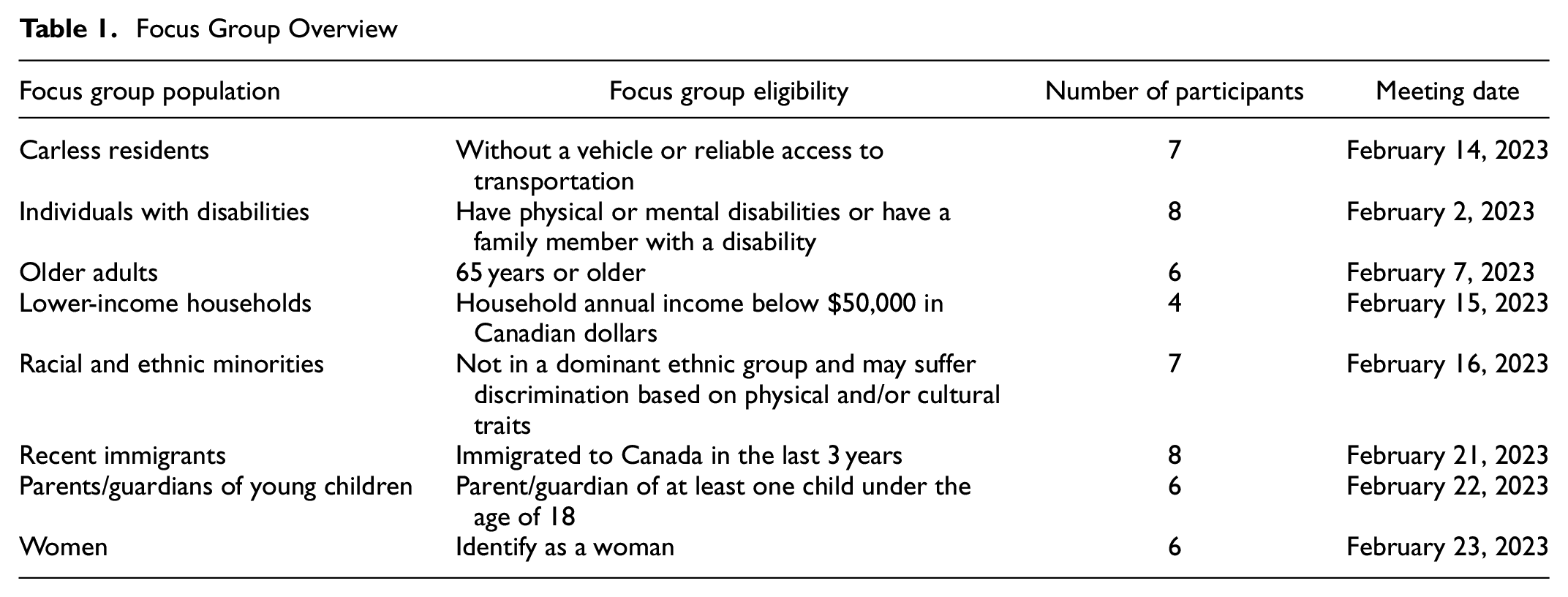
We specifically conducted focus groups among carless residents, people with disabilities, older adults, lower-income households, racial and ethnic minorities, recent immigrants, parents/guardians of young children, and women. Our objectives in conducting the focus groups were (1) to understand the transportation needs and challenges specific to particular underserved groups and (2) to create participatory spaces for underserved groups to provide their insights and inform more equitable evacuation planning. Although each community will need to conduct a similar methodology to capture geographic, cultural, social, and risk differences, Edmonton offers a relatively strong case for other mid-sized North American cities. Specifically, Edmonton has similarities with other noncoastal, autocentric cities with moderate disaster risks, including weather-induced and hazardous-material events. Edmonton also has a moderately-sized light rail system, some suburban sprawl, and a diverse population (in relation to age, minority status, immigration, income, etc.).
Data Collection
To obtain eligible participants for our focus groups, we employed a two-pronged approach. First, survey participants from a related study on resilience hubs ( 37 ) and evacuations, were given the option to participate in the focus groups and were selected on a first-come, first-serve basis. Second, we obtained focus group participants by connecting with CBOs and nongovernmental organizations (NGOs) that specifically work with underserved communities in Edmonton. We offered a $300 honorarium to CBOs and NGOs to help send emails to possible participants. Participants were also selected on a first-come, first-serve basis. All participants were incentivized with a $75 gift card for their time. This enabled us to minimize self-selection bias from those with extreme opinions and encourage participation from those who would have otherwise not been interested in the research topic ( 38 ). We also found it to be an equitable way to show the value of the participants’ information and insights. Criteria used to determine the eligibility for each focus group participant are further detailed in Table 1. The eight focus groups were conducted online in February 2023 in the evening. An online, evening format was chosen to reduce transportation, work, and childcare conflicts. Each focus group was 90-min long and followed a semistructured format with one moderator. The eight focus groups were recorded and transcribed by an external service provider. The research team then verified the accuracy of each transcript.
Focus Group Overview
We asked a series of semistructured questions to focus group participants. Several questions relevant to this study included the following:
Consider a situation where you have been ordered to evacuate due to a hazard. Will you be more likely to evacuate or not evacuate?
To what extent do you feel prepared for an evacuation?
What type of transportation mode will you use to evacuate and why?
What would motivate you to use public transportation over a personal vehicle/other mode?
How comfortable would you be to share accommodation/medical information with registries in case of an emergency?
We note that our questions did not specifically identify the type of hazard. However, this ambiguity was chosen for Edmonton since one hazard is not dominant (i.e., it is moderately at risk of flooding, wildfires, smoke, blizzards, heat waves, and hazardous-material events).
Data Analysis
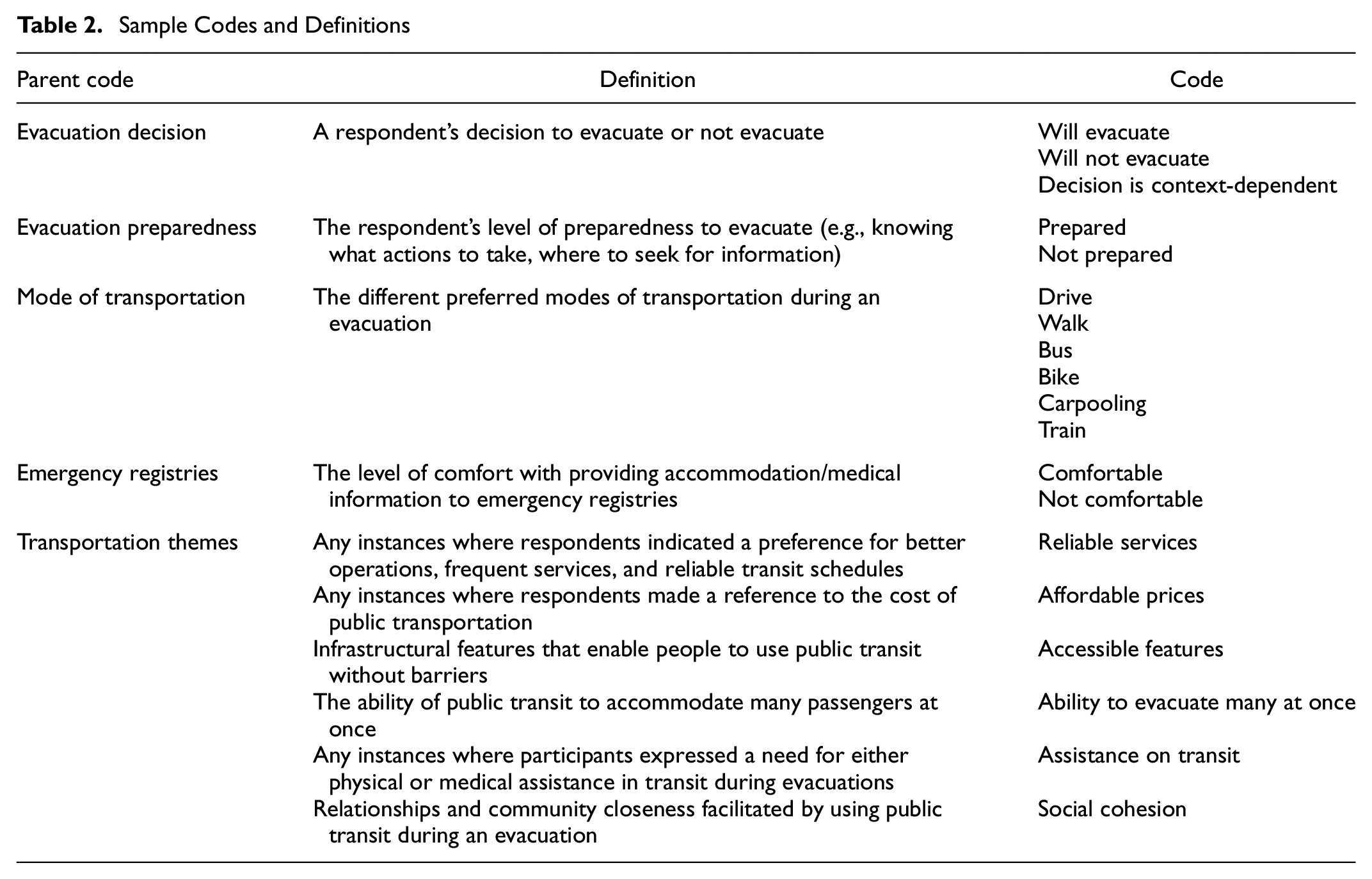
To identify and analyze recurrent themes from our focus group data, an iterative coding process was employed. A codebook was developed by adopting two approaches defined by DeCuir-Gunby et al.: theory-driven and data-driven coding ( 39 ). The initial codebook development process involved first developing theory-driven codes that were generated based on theoretical frameworks that guided our research ( 39 ). These included codes related to evacuation decisions, transportation modes during evacuations, and general evacuation preparedness. Data-driven codes were then developed by reviewing each focus group transcript to identify themes and patterns. Transcript review was conducted at the paragraph level as described by DeCuir-Gunby et al. ( 39 ). After comparing identified themes across focus groups, we then added to our codebook major themes that emerged during the data-driven coding process. Table 2 presents examples of identified codes and their corresponding definitions.
Sample Codes and Definitions
Thematic analysis of the focus group data was performed using MAXQDA software. Two members of the research team each applied the created codes to corresponding text segments within the transcripts. Differences in coding were discussed and resolved to create one comprehensive codebook. After refining the codebook, we used MAXQDA to compare code frequencies (i.e., the number of times a particular code was identified in the coded text segments). For example, with regard to modes of transportation during evacuations, this method of analysis enabled us to identify transportation modes that were more frequently mentioned across all the focus groups. Finally, we used the Code Matrix Browser (a tool that displays code assignments per transcript) to analyze code distributions across each focus group ( 40 ). This enabled us to understand the themes that emerged within specific underserved groups.
Results
We first present an overview of the MAXQDA codes, code frequencies (the number of times each code was referenced during the focus group discussions), and the corresponding percentages in Table 3.
Overview of Code Distribution
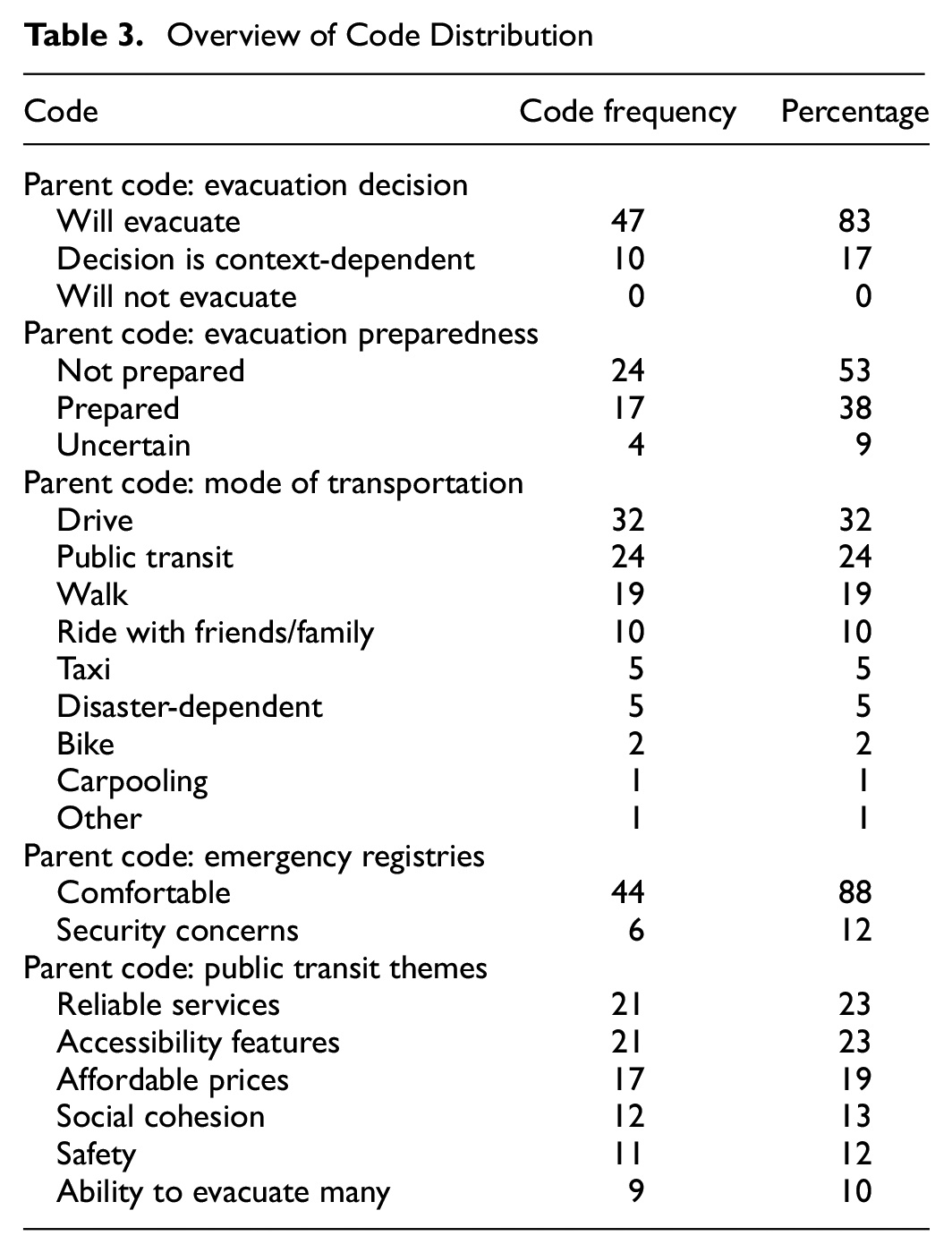
Findings from the code distributions show that, whereas a large majority of the focus group participants would evacuate from a disaster (83%), many of them (53%) were unprepared for an emergency. Driving was the preferred mode of transportation during an evacuation (32%), followed by public transit (24%), and walking (19%). Many of the participants further reported being comfortable with sharing information with emergency registries (88%) whereas 12% expressed concerns about personal data protection. Finally, among the public transit themes that emerged during the focus group discussions, reliable services and accessibility features were most cited (23% each). These themes are further explored in the following subsections.
Focus Group Summaries
Carless Residents
Among the carless residents, a surprising majority (5 out of 7) indicated a preference for walking over other modes. Being unable to afford public transit fares was identified as an obstacle for some of these participants. Moreover, others referred to the discomfort that comes with overcrowding when buses are limited during a disaster. On the other hand, only 2 out of 7 participants reported a preference for public transit, stating that this would be the fastest option for them during an evacuation. Participants discussed the need for predefined bus routes sent to communities and pre-identified shuttles to evacuate children stranded in schools during a disaster. Finally, participants in this focus group considered the role of public transit accessibility and equity, with one participant stating that priority during an evacuation should be given to children, older adults, and people with disabilities (see Supplemental Table A1).
People with Disabilities
People with disabilities had mixed responses related to mode choice. Three participants reported a preference for public transit, indicating that they would otherwise be unable to evacuate owing to an inability to drive. Another three stated a preference for a personal vehicle, noting that this option would provide the most comfort, control, and flexibility during an emergency scenario. Two participants reported that they would have to rely on assistance from family and friends to evacuate safely. Participants from this group called for stronger public transit accessibility for people with disabilities including those who use wheelchairs, walkers, or crutches, and those who have guide dogs for assistance. Participants further emphasized the importance of having trained staff to provide physical and medical assistance to those in need during an evacuation. Finally, participants discussed the need for sufficient public transit capacity to avoid overcrowding.
Older Adults
When asked about transportation modes for an evacuation, three participants from the older adults group indicated that they would seek evacuation assistance from family and friends. One participant described mobility challenges that would inhibit an evacuation without significant support from others. In contrast, two participants stated that they would use public transit, remarking that it could serve as a tool for togetherness and cohesion during disasters. They discussed the significance of being with other people in public transit and consequently finding “comfort and strength” during a disaster (see Supplemental Table A1). The other participants indicated a varied preference for transportation modes (e.g., personal vehicle, taxi, or bike). These participants reported overcrowding and a lack of reliability as potential barriers to using public transit. Within the older adults’ group, recommendations were given for public transit to be comfortable for evacuees to accommodate people with fragile health conditions. Participants also urged that trained personnel should be made available on buses to provide medical or physical assistance.
Lower-Income Households
Among the lower-income households, two participants stated that they would prefer to drive during an evacuation. The rest of the group was equally split between taking public transit and walking. The primary concern with regard to public transit within this group was whether buses and trains would be reliable and readily available for evacuees. Participants remarked that particularly during an emergency scenario, transit agencies should ensure efficient operations as transit reliability is necessary for those with no alternative transportation modes. Participants further commented on the importance of having pre-identified bus schedules and sending these out to evacuees. The lower-income focus group continued with the theme of social cohesion. Participants stated that using public transit can be an essential tool for community togetherness during disasters and can replace sentiments of anxiety with a sense of calm (see Supplemental Table A1).
Racial and Ethnic Minorities
Within the racial and ethnic minorities’ group, participants were nearly equally divided between public transit and personal vehicles during an evacuation. Among those who chose public transit (3 out of 7), safety emerged as a key theme. Participants noted that driving during an evacuation could lead to panic, traffic congestion, and crashes. These participants remarked that taking public transit would ensure better road coordination alongside cohesion with neighbors and other evacuees. Conversely, those who were inclined toward personal vehicles identified overcrowding and discomfort as concerns with public transit. Overall, participants within this focus group noted that although public transit could provide a safe alternative to using personal vehicles during evacuations, operations would have to be frequent, reliable, and sufficient.
Recent Immigrants
When asked about transportation modes, a majority of those who had recently immigrated to Canada (5 out of 8) stated they would walk to the nearest emergency shelter during an evacuation. Some of the remaining participants stated a preference for personal vehicles and only one participant would use public transit. With regard to these choices, those who preferred to walk were particularly concerned about traffic congestion during an evacuation, whereas those who chose personal vehicles stated concerns with bus timings and irregular bus schedules during emergencies. Public transit was a preferred choice for one of the participants who explained that public transit drivers generally follow safety directives from emergency management offices and would know safe routes. Whereas public transit reliability was a clear theme in this group, participants also discussed the key role that government agencies have in ensuring transportation availability and predetermining safe routes.
Parents/Guardians of Young Child(ren) Under 18
The parents/guardians of children were split between public transit (4 participants) and personal vehicles (2 participants). Among those who indicated a preference for public transit, participants discussed how both trains and buses have the capacity to carry a significantly larger number of people than personal vehicles, thus reducing traffic congestion during evacuations. On the other hand, those who stated a preference for personal vehicles reported concerns that there could be too few buses or they may simply be unavailable during evacuations. During the discussion, participants further pointed to the necessity of having accessible infrastructure for parents traveling with children in strollers. In the end, parents of young children suggested that transit agencies and emergency planners need to ensure enough buses with sufficient capacities and accessibility features (such as for strollers).
Women
Within the women’s group, there was consensus that using a personal vehicle would be a preferred mode of transportation during an emergency. A primary reason provided for this preference among the mothers was that evacuating with children and luggage would be burdensome on public transit. Other participants expressed concerns with both overcrowding and the financial cost of using public transit to evacuate. In addition, participants were generally apprehensive about the reliability of public transit since bus schedules would likely fluctuate, hindering their ability to evacuate quickly or get to a shelter. The women recommended better operations and clear communication of transit schedules during emergencies. Participants in this group further urged transit agencies and emergency management officials to consider offering fare-free transit services during an emergency, particularly for evacuees from lower-income families (see Supplemental Table A1).
Overall Observations
During the analysis, we paid particular attention to the preferred modes of transportation during evacuations and the challenges and needs related to these modes. A distribution of the mode choices is presented in Figure 1. We found that around 24% of the focus group participants would take public transit in an evacuation, far larger than previous evacuations, such as the 1% modal split for hurricane evacuations ( 41 , 42 ). This contrast may be because our study focused on underserved groups who are more likely to use transit during an evacuation, whereas research done by Lindell et al. ( 41 ) and Wong et al. ( 42 ) considered the broader population.
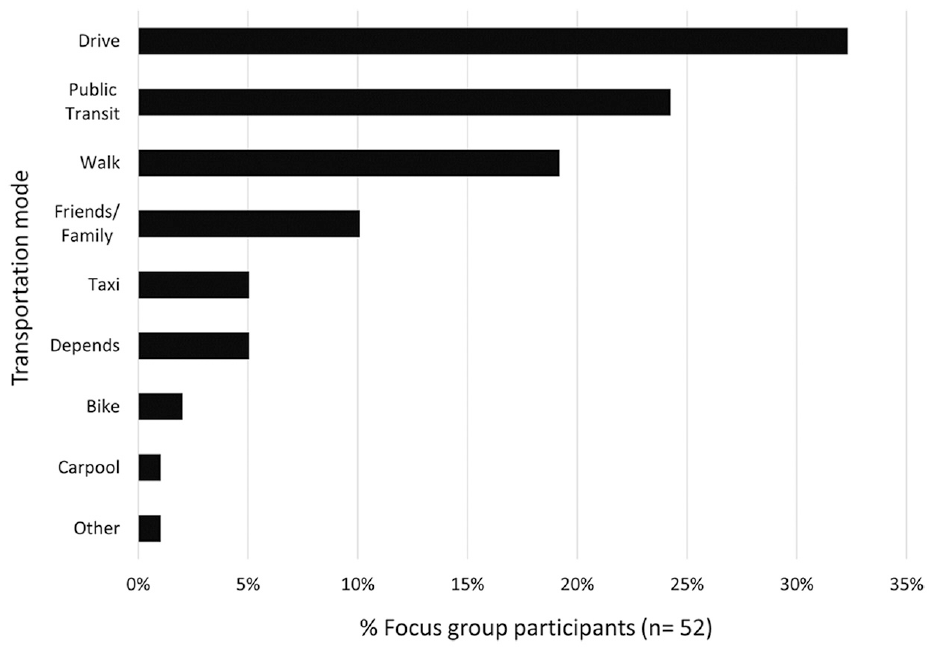
Mode preference distribution during evacuations.
Many participants also chose driving (32%) and walking (19%) while citing concerns such as overcrowding and lack of accessibility when using public transit.
Using MAXQDA and content-based coding, several common themes related to public transit were identified from the focus group discussions. Figure 2 shows the breakdown of public transit codes (n = 91 coded segments) by topic area, and Figure 3 specifies the number of times the codes were cited by each focus group. We found that reliability and accessibility were most frequently cited across all the groups, each accounting for 23% of the coded segments (see Figure 2). With regard to reliability, participants were primarily concerned about whether buses would be readily available and at regular intervals during an evacuation. They further raised concerns about overcrowding and called for sufficient transit capacities. Accessibility was a particularly significant theme among older adults and people with disabilities (see Figure 3). Many of these participants further noted that they would not be able to evacuate without receiving significant physical and medical assistance from family and friends or other evacuees.
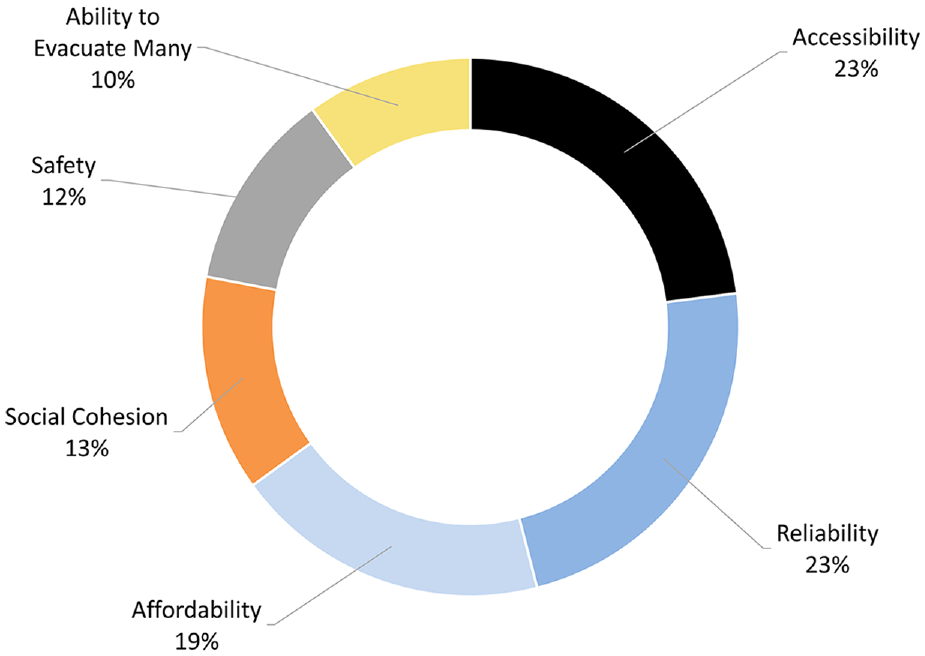
Topical breakdown of public transit themes identified from focus group discussions (n = 91 coded segments).
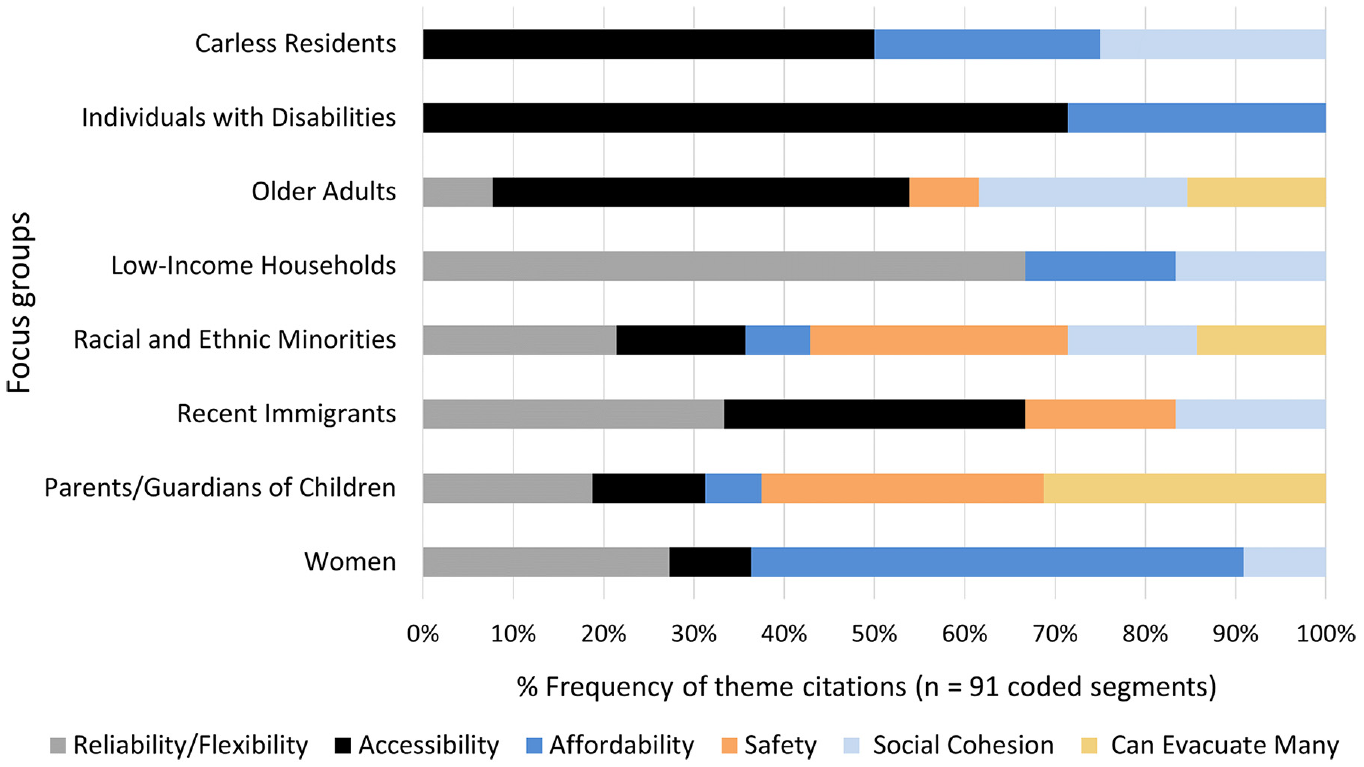
Transportation themes identified by focus group.
Affordability was another issue during our discussions, comprising 19% of the identified themes. It was a particularly key theme among the women and the lower-income households (Figure 3). Some participants noted that their only viable mode of evacuation was by foot as they would otherwise be unable to afford the cost of public transit.
A surprising theme from the focus group discussions was that of public transit as a tool for social cohesion during disasters. Representing 13% of the identified themes, participants, particularly from the older adults’ group (Figure 3), noted that evacuating with other people in public transit can reduce feelings of anxiety and panic that come with emergencies. Reliable transit services could also bring a diverse range of people together and provide opportunities for community members to offer both physical and emotional support.
Other themes that emerged were safety (12%) and public transit’s ability to evacuate many residents (10%) (Figure 2). These themes were particularly common among parents/guardians of young children (Figure 3). This group noted that both buses and trains should be safe for evacuees given their ability to evacuate many residents and thus reduce congestion during evacuations.
Policy Recommendations
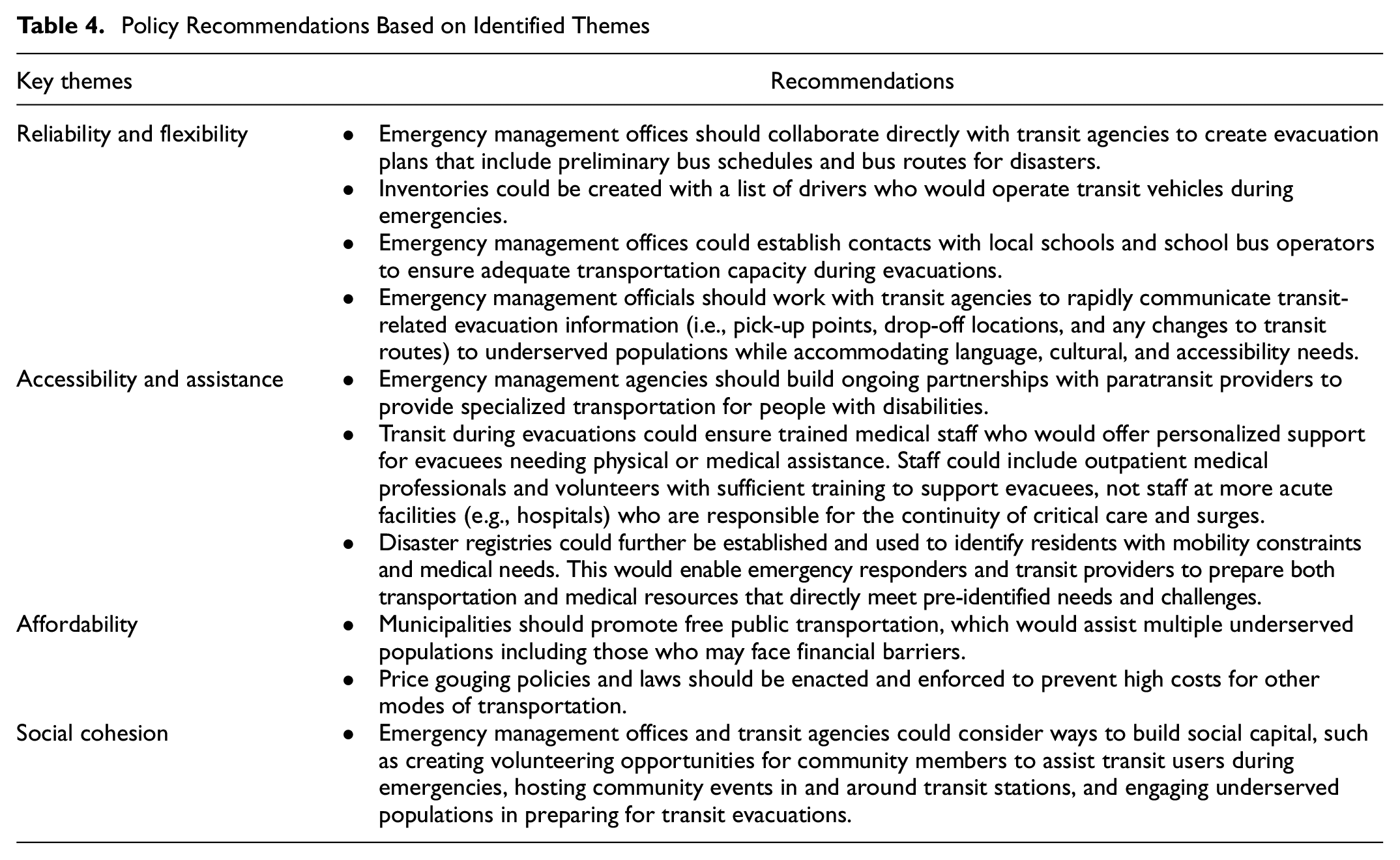
Based on the results and the identified themes, we offer the following recommendations for local emergency management offices and transit agencies in Table 4. We grouped the recommendations based on key themes for simplicity.
Policy Recommendations Based on Identified Themes
To create evacuation plans that effectively and equitably meet the needs of underserved communities, the insights and opinions of these very communities should also be integrated into the planning process. This process is likely to require ongoing collaborations with NGOs, CBOs, faith-based organizations, and the general public. Including nontraditional affected parties in planning has been shown to create trust and a sense of ownership among vulnerable groups ( 43 ). Therefore, we recommend that emergency management officials and transit planners engage communities by creating spaces for open dialogue where underserved groups are given the opportunity and resources to advocate for their needs.
Through our study, we also found that many of the participants, particularly recent immigrants, were not aware of emergency preparedness actions and did not know where to seek information and resources. For this reason, we recommend that emergency management offices consider making evacuation plans (including pick-up locations and bus routes) publicly available and accessible in multiple languages. Finally, future research could further explore transit’s role in fostering cohesion and mitigating anxiety during disasters. For example, focus groups or interviews could be conducted among underserved groups who have previously evacuated with transit to understand firsthand experiences in such contexts.
Study Limitations
Although this study provides practical insights into the transportation needs of underserved groups during an evacuation, several limitations should be taken into consideration. First, focus group participants were recruited through online forms and the discussions were conducted through a synchronous online platform. Consequently, those with limited Internet access were restricted from participation. However, the online platform added schedule flexibility and widened our participant pool by removing barriers around location and transportation. Second, we recognize that existing literature on the number of focus groups required for theme saturation has been primarily based on homogeneous groups ( 35 ). The heterogeneity of our sample may have affected theme saturation. To maintain a balance between heterogeneity and homogeneity ( 44 ), we conducted a heterogeneous series of focus groups each with homogeneous participants based on vulnerability (see Table 1). With this approach, we were also able to leverage group cohesion and encourage participation through shared experiences. Finally, it is important to note that 52 focus group participants represent only a small fraction of the underserved population in Edmonton. The insights from the focus groups may not completely represent those of the selected underserved population or the general population. Moreover, external validity to other communities in North America is somewhat limited, and a community-centered approach (such as the one presented in this study) should be undertaken to identify unique characteristics, actions, preparedness levels, and transportation needs. Future work should also capture the intersectionality of identities and vulnerabilities, which could influence results.
Conclusion
Evacuation planning in North America is still largely centered around automobiles. However, simply planning for public transit evacuations is not enough. Policy makers, emergency management officials, and transit agencies are responsible for meeting the needs of transit-reliant populations during emergencies.
Understanding these populations’ transportation needs and challenges is a step forward in creating equitable evacuation plans and increasing resilience during disasters. To achieve this objective, we used Edmonton, Alberta as a case study and conducted a series of focus groups based on specific vulnerabilities. First, participants highlighted the necessity of ensuring transit reliability during emergencies through adequate transit capacities and pre-identified bus schedules, routes, and drivers. Second, participants discussed the vital need for both physical and medical assistance alongside transit accessibility for evacuees with limited mobility and the medically fragile. Third, emphasis was placed on public transit affordability to ensure that residents are not hindered from evacuating because of financial barriers. Finally, participants shed light on the underappreciated role of public transit in fostering community cohesion and togetherness during disasters.
Emergency management and transit agencies could begin to address these needs by prioritizing public transit reliability, affordability, and accessibility. In addition, as our study has shown, social capital around public transit could be built and harnessed to foster community resilience. To move toward more equitable practices in evacuation planning, the insights and opinions of underserved populations require consideration and integration. By including the voices of the most underserved, equity considerations can be more effectively incorporated into evacuation planning.
Supplemental Material
sj-docx-1-trr-10.1177_03611981241245990 – Supplemental material for Incorporating a Public Transit Equity Lens in Evacuation Planning
Supplemental material, sj-docx-1-trr-10.1177_03611981241245990 for Incorporating a Public Transit Equity Lens in Evacuation Planning by Veronica Wambura and Stephen D. Wong in Transportation Research Record
Footnotes
Acknowledgements
Thank you to Thayanne Ciriaco and Sarah Wan of the University of Alberta for assisting in data collection and data checking. We also thank the many organizations who assisted in finding participants.
Author Contributions
The authors confirm contribution to the paper as follows: study conception and design: V. Wambura, S. Wong; data collection: V. Wambura, S. Wong; analysis and interpretation of results: V. Wambura, S. Wong; draft manuscript preparation: V. Wambura, S. Wong. All authors reviewed the results and approved the final version of the manuscript.
Declaration of Conflicting Interests
The authors declared no potential conflicts of interest with respect to the research, authorship, and/or publication of this article.
Funding
The authors disclosed receipt of the following financial support for the research, authorship, and/or publication of this article: This study was made possible through funding received from Mitacs, the Alberta Ecotrust Foundation and the City of Edmonton via funding from the Cities IPCC Legacy Grant Program.

Supplemental Material
Supplemental material for this article is available online.
References
Supplementary Material
Please find the following supplemental material available below.
For Open Access articles published under a Creative Commons License, all supplemental material carries the same license as the article it is associated with.
For non-Open Access articles published, all supplemental material carries a non-exclusive license, and permission requests for re-use of supplemental material or any part of supplemental material shall be sent directly to the copyright owner as specified in the copyright notice associated with the article.
