



Abstract
Canada’s national rail network plays a vital role in moving goods and people, transferring $320 billion worth of goods and over 100 million passengers annually. Severe train occurrences are rare events. But they have the potential to cause fatalities and injuries, as well as environmental and property damage. Recent severe incidents, such as Burlington in 2012 and Lac-Mégantic in 2013, have shown that there is still a need for increased awareness and enhanced risk assessment. This work focuses on risk assessment on the Canadian railway system using the Safety Risk Model (SRM). The study applied a customized Canadian SRM (C-SRM) to two groups of hazardous events: main-track derailments and collisions with fatality and injury consequences, calibrated for data between 2007 and 2017. The model used Fault Tree Analysis (FTA) and Event Tree Analysis (ETA) to identify the risks of hazardous events. The individual risks of the hazardous events were then evaluated for three groups of people: passengers, employees, and members of the public (MOP). Finally, the effectiveness of introducing a new control measure, Enhanced Train Control (ETC), was assessed. The results of the study showed that the collective risk of main-track derailments is higher than main-track collisions. Moreover, the risk to MOP and employees form the most significant proportion of individual risk. Finally, risk reduction analysis of the ETC revealed that developing this system reduced the risk of main-track derailments and collisions. This new control measure thus has the potential to make Canadian railways safer.
Canada’s national rail transportation system is the third largest in the world, operating more than 40,000 km of track across the country ( 1 ). The rail network connects industries, consumers, and resource sectors to ports on the Atlantic and Pacific coasts, which has resulted in transporting $320 billion worth of goods by rail each year ( 2 ). Furthermore, each year, over 100 million passengers travel on Canada’s railways ( 3 ). Severe freight and passenger train occurrences are rare events. However, when they happen, they have the potential to cause injuries and fatalities, along with environmental and property losses ( 1 ). The Lac-Mégantic accident, where 47 people lost their lives after a freight train derailment in 2013 ( 4 ), and the Burlington accident in 2012, where a passenger train derailment resulted in three fatalities and 45 injuries of various degrees ( 5 ) are two examples of recent railway accidents showing the potential consequences of these kinds of event. These rail accidents demonstrate the dangerous nature of the railway industry and emphasize the need for increased awareness and continuous enhancement and updating of risk assessments to control existing residual risks.
Understanding risk is essential for the safe management of any business, particularly those sectors called ‘high-hazard’ such as oil and gas extraction, mining, airlines, and railways ( 6 ). Applying an appropriate risk assessment tool will help to identify the current level of risk and develop a plan to mitigate those risks. Various risk assessment techniques are currently used in the railway industry ( 7 – 9 ). One popular and widely used model among those comprehensive and quantitative approaches is the Safety Risk Model (SRM). This model was developed in the UK for the first time to improve railway safety in an impartial and scientifically supportable manner. The SRM is developed in the form of a cause and consequence analysis using Fault Tree Analysis (FTA) and Event Tree Analysis (ETA). The model is focused on hazardous events which have the potential to lead directly to death or injury. Risk in the context of SRM is defined as the estimate of the potential for harm to passengers, staff, and members of the public (MOP) from the operation and maintenance of the railway. The results of SRM represent the level of residual risk. In other words, it shows the level of risk with the assumption that all current control measures are established with their current degree of effectiveness ( 6 ).
SRM has been widely used in the UK ( 6 , 9 ) and the US ( 10 ). In the UK, the outcome of SRM is used to produce a regularly updated “Risk Profile Bulletin,” which is used by UK railways in the production of their statutory Safety Cases. The model is also helpful in testing the impact of proposed new controls on risk levels ( 6 ). The Safety Management Information System (SMIS) database that is used to populate the SRM for the UK is very large and contains more than 2 million records ( 11 ). Dealing with managing these complex rail assets, recent studies have focused on the big data risk analysis (BDRA) program ( 11 , 12 ). This program is investigating how big data processing techniques can support the current SRM of the Rail Safety and Standards Board (RSSB), whether they will change traditional risk analysis, and if so, how. Van Gulijk et al. ( 11 ) presented six BDRA projects, including an on-train data recorder (OTDR)–based signal passed at danger (SPAD)–safety indicator, red aspect approach to signals (RAATS), learning from text-based close call records, visual analytics (VA), ontology, and Safety Management Intelligence System (SMIS+). These different projects provide a broad overview of the usefulness of big data to railway safety. Reviewing the literature also revealed that the UK further works toward its rail safety by developing geospatial models (GeoSRM) of rail safety hazards across its main-track rail network. The GeoSRM is web-based and shows how risk is distributed across the network. It provides the opportunity for users to submit queries on the risk level for specified regions, routes, hazard types, and so forth, and display the risk levels overlaid on a map ( 13 , 14 ). Sadler et al. ( 13 , 14 ) presented a technique for the development of a full-scale GeoSRM for a representative subset of the UK rail network. They also suggested an approach to make this accessible to a broad range of users. The UK is also working on developing a new SRM methodology. For this, users’ requirements were first identified, collated, and prioritized. Then the current SRM was reviewed and evaluated against these requirements to identify the areas that have the potential to enhance the current methodology. Potential new methodologies were then assessed for feasibility and potential benefits to determine the best approach for building the new SRM. The study suggested that the new SRM should provide more accurate and easier-to-use starting points for risk assessments, especially when undertaking localized assessments and evaluating the impacts of design changes ( 15 ). As mentioned earlier, the SRM is also used in the US. The Federal Railroad Administration (FRA) has developed the SRM as a means of quantitative risk-ranking to facilitate project selection. The results of the SRM assist the FRA in focusing its R&D effort on the topics that cause the highest level of harm in the railroad industry. It is beneficial in making strategic project investments for maximum safety benefit. Employing SRM also allows for future assessment of risk reduction resulting from implementation of the mitigation strategies ( 10 ).
Close collaborations between US and Canadian railways ( 1 ) motivated this research to investigate the application of the SRM in the Canadian rail network. Reviewing the literature revealed that a comprehensive SRM that aggregates Canadian railway operations (federally regulated) is not available. As a result, to address this gap and contribute to the continuous improvement of rail transportation safety, this research will focus on risk assessment of railway accidents by applying a customized Canadian SRM (C-SRM).
The techniques used in the SRM are applicable to other railroad industries; however, the FTA and ETA must be amended for the particular configuration of the railway. C-SRM is a nationwide risk assessment model that reflects Canadian railway operations’ characteristics. For example, the Arthur D. Little Inc. (ADL) cause classification was used to develop the FTA, which is commonly used in the Rail Occurrence Database System (RODS) for classifying the causes of Canadian rail occurrences. The contributing factors in the ETA analysis were based on the RODS database for Canadian rail events. Moreover, the main difference between SRM and C-SRM is that SRM considers different subdivisions for individual rail occurrence types. For example, the collision was divided into different consequence categories, such as a collision between two passenger trains (other than on the platform), a collision between a passenger train and a non-passenger train, and so on. In this study, given the limited database, all of the subdivisions related to one accident type (collision, derailment) were considered in one group, and no further subdivisions were investigated.
Developing C-SRM also provides an opportunity to apply risk reduction analysis to determine the effectiveness with the introduction of a new control measure, Enhanced Train Control (ETC). ETC technologies developed to increase awareness of the train operator in combination with fail-safe systems similar to the PTC system functionality implemented in the US ( 16 ). PTC is a well-known control measure that has been mandated by the Rail Safety Improvement Act of 2008 (RSIA) for development on certain Class 1 railroad main lines in the US to improve rail transportation safety. In December 2020, FRA announced that PTC technology would be implemented on all required freight and passenger railroad route miles ( 10 ). While the railway industry supports this measure, railway operators in Canada have raised several major concerns with regard to their experience with PTC implementation in the US such as expensiveness, complexity, and the significant effort requirement to apply it ( 16 ). The US experiences revealed that the systems’ cost and complexity greatly depend on the scope of the development and the amount of fail-safe functionality that is required. In reviewing PTC deployment in the US, in 2016, Canada’s Advisory Council on Railway Safety recommended that the development of a targeted, risk-based, corridor-specific train control approach is the best option for the deployment of this technology in Canada since the “one-size-fits-all” approach is not the best solution for the Canadian environment. Any ETC initiative for Canadian railways would be scaled and based on well-established risk factors and a thorough cost–benefit assessment ( 16 , 17 ). This suggestion has been the “working assumption” for implementing ETC in Canada. ETC technologies help to prevent certain rail accidents caused by human error and, as a result, improve safety for passenger and freight trains. These technologies act as a driver-assist mechanism by alerting the train crew to danger and, at their highest functionality, applying train brakes to slow or stop a train to prevent a collision or derailment. The recent Notice of Intent published in the Canada Gazette on February 5, 2022, revealed that Transport Canada (TC) intends to implement ETC in Canada to make the country’s rail transportation system even safer ( 1 ). Although a fail-safe system has already been implemented in the US, its functionality will differ for the Canadian network, as described in TC’s Notice of Intent. Therefore, an empirical evaluation of ETC’s effectiveness in risk reduction could not be completed and needs further investigation. A study conducted by the Canadian Rail Research Laboratory (CaRRL) showed that between 20.4% and 30.5% of main-track collisions and between 1.1% and 2.4% of main-track derailments could have been prevented with an ETC system ( 16 ). The current study is investigating if the result of risk reduction analysis of ETC through C-SRM is in line with the result of CaRRL research.
In high-hazard industries like railways, developing a good SMS, sound engineering, and competent staff can decrease the probability of hazard occurrence to a very low level. It could be beneficial in improving the overall safety performance of these industries in comparison with less-controlled human activity such as road transportation ( 6 ). To implement an effective SMS, it is essential to prioritize risks and available controls. Demichela et al. ( 18 ) stated that the SMS is often formulated without a quantitative risk assessment as it is seen as too costly and time consuming. Moreover, the required data is often unavailable to conduct a quantitative analysis. Yet, without a quantitative risk assessment, defining the objective of SMS is difficult ( 18 ). When railway engineers, managers, and safety analysts start with an understanding of the risks, they can allocate the limited available resources most effectively to enhance safety ( 19 ).
In the absence of a comprehensive SRM that aggregates (federally regulated) Canadian railway operations, the current research will focus on risk assessment of railway accidents by applying a C-SRM to quantify the level of risk for fatalities and injuries. Therefore, the risk is calculated as a collective risk (the average number of equivalent fatalities per year) and individual risk (the annual probability of equivalent fatality/year for a particular passenger or staff group using the railway). Then, the risk reduction analysis of ETC implementation is applied.
Methods
This study is focused on investigating the Transportation Safety Board of Canada (TSB) and Rail Occurrence Database System (RODS) databases for main-track train derailment and collision, Classes 1 to 5 occurrences (Appendix A—Definitions of classes of occurrences). The assessment is performed on the 1,085 reported main-track derailments and collisions in the eleven-year period between January 1, 2007, and December 31, 2017. This timeframe was chosen given the available databases for part of the study analysis (FTA analysis). For accidents not reported by RODS, TSB reports were used to collect the required information.
It is worth mentioning that trespassing and crossing accidents were not included in this research. These accidents are responsible for major fatalities and injuries every year. In 2020, 96.6% of fatalities and 81.6% of serious injuries in the rail industry resulted from trespassing and crossing occurrences ( 20 ). However, given the nature of these events, which are mainly related to the self-harm or reckless behavior of a third party, the estimation of the number of people exposed to such events was accompanied by difficulties and uncertainty ( 21 ) and outside the scope of this study.
SRM is a form of cause and consequence analysis using FTA and ETA to represent each of the hazardous events. A hazardous event is taken to mean an event that has the potential to lead directly to fatalities or injuries. This event can be considered as a knot between FTA and ETA. It is important to note that rail occurrences with a larger amount of Dangerous Goods (DG), a high number of cars derailed, and so forth, but no fatality and injury outcomes, could have had severe consequences if they had happened in a more populated area. Developing potential loss scenarios will be the focus of our future work. The focus of this study is on two groups of hazardous events: main-track derailments and main-track collisions with death and serious or minor injury outcomes. The RODS-injury database was used to see if a main-track derailment or collision could be taken into account as a hazardous event.
To apply FTA, Arthur D. Little Inc. (ADL) cause classification was used. ADL divided similar accident causes into 51 unique groups. These groups were also separated into five main categories, including mechanical, human, signal, track, and miscellaneous causes ( 22 , 23 ). The frequency of these cause groups for main-track derailments and collisions was obtained from RODS database (Appendix B) ( 21 ). Then, the probability of a hazardous event was calculated according to the miles that the train traveled.
ETA was then implemented. After a hazardous event, there are several processes, such as DG release, fire, and explosion that lead to the fatalities or serious or minor injuries. The critical factors influencing the final outcome of each hazardous event and their probability were identified by investigating the RODS database. Finally, by the combination of the FTA and ETA, the risk of the hazardous event was calculated.
In the first step of the study, the collective risk of the hazardous events was evaluated. The collective risk was calculated based on the following Equation 1:

where
F is the frequency (average frequency at which the hazardous event occurs) in the number of events per year,
C is Consequences (the average consequences if a hazardous event occurs) in the number of equivalent fatalities per event, and
CR is the collective risk which is the average number of the equivalent fatality per year.
As the next step, the individual risk of hazardous events was calculated for three groups of people, including passengers, staff, and MOP. Individual risk is the total annual risk to passengers, staff, and MOP using the railway ( 6 , 24 ). It has a similar formula to the collective risk, but the risk is evaluated in the average number of passenger/staff/MOP equivalent fatalities per year.
It might be worth mentioning that, to distinguish the difference in severity implied by injuries and fatalities, different weights were assigned to the fatality and major and minor injury. In an effort to do that, 10 major injuries and 200 minor injuries are both equal to one equivalent fatality ( 24 ).
During the third phase of the study, a risk reduction analysis was performed by using the C-SRM. This step assessed the impact of ETC implementation on rail transport risk. ETC system functionality falls into Driver Advisory Systems and Automatic Train Protection Systems. The Driver Advisory System provides various information and alerts for the train crew to enhance their situational awareness. In this category, train crews are still responsible for rule compliance. This system may, therefore, reduce the probability of human error but not eliminate it. The Automatic Train Protection System has the Driver Advisory System’s capabilities. In addition, in a situation when safety risk is imminent, it provides automatic (“fail-safe”) enforcement by applying the train brakes to prevent derailments ( 1 ). In this study, to consider the greatest benefit of ETC implementation, its functionality was considered in the Automatic Train Protection System category. This functionality could eliminate the role of human error in train accidents. Recognizing this potential, a 100% effectiveness was considered for two accident causes, main-track authority and speed, which could be preventable by ETC implementation at the Automatic Train Protection System level. Therefore, zero failure annual probability was considered for these causes in the FTAs. The FTA and ETA calculations were then done for main-track derailments and collisions, and the risk of these hazardous events was assessed in both terms of collective and individual risk. Finally, the results of this phase were compared with the previous phase’s results to assess the ETC system’s impact on risk reduction. The research methods of this study are summarized in Figure 1.
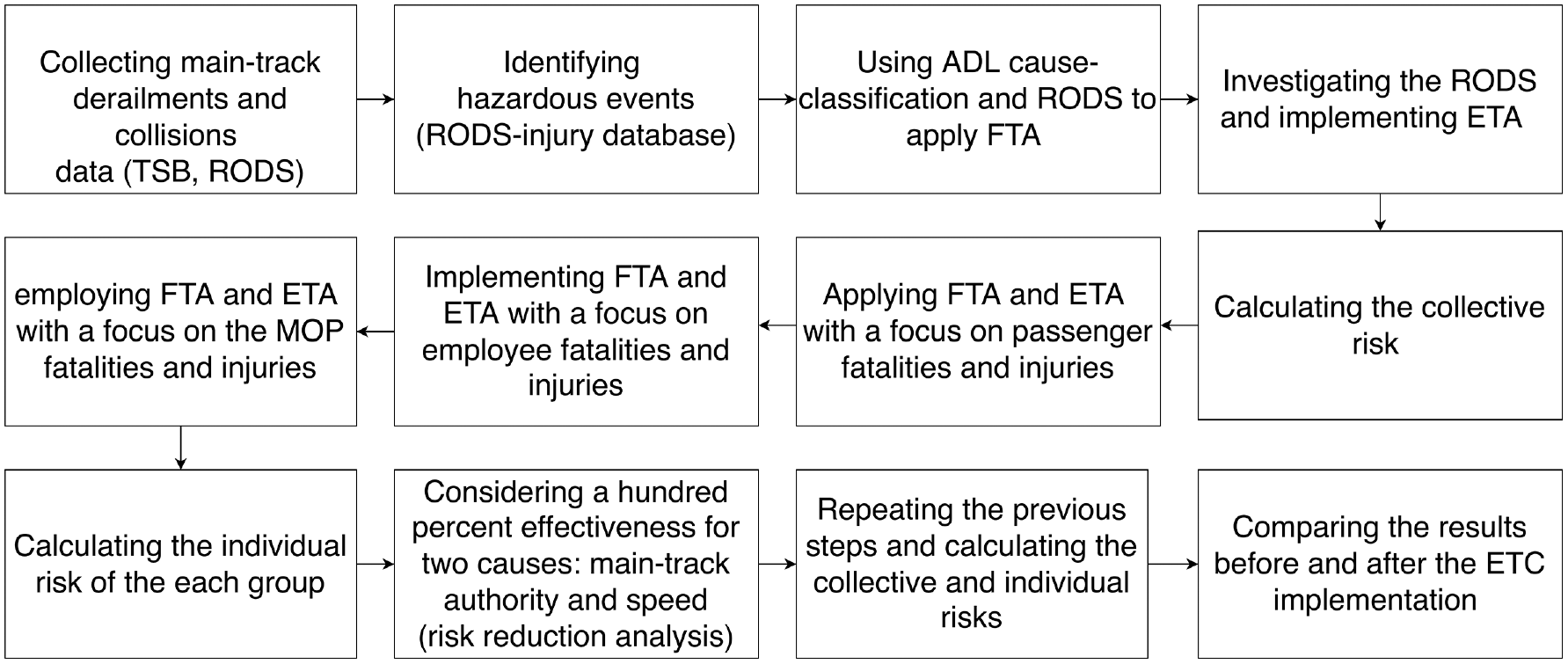
Research methodology for this study.
It is noteworthy that, at this time, the details of ETC capabilities are unknown. Therefore, preventing other accident causes, such as trains traveling on misaligned switches, was not considered. However, the consideration of movements exceeding the limits of authority and over speeding is a reasonable control provided by ETC.
Results
Collective Risk
Investigating the RODS database revealed that 1,026 main-track derailments with class 1–5 occurrences have occurred between 2007 and 2017. Evaluating the RODS-injury database showed that 14 freight and passenger train derailments resulted in fatalities and injuries. Figure 2 represents the distribution of the fatalities and serious and minor injuries based on the year of occurrence.
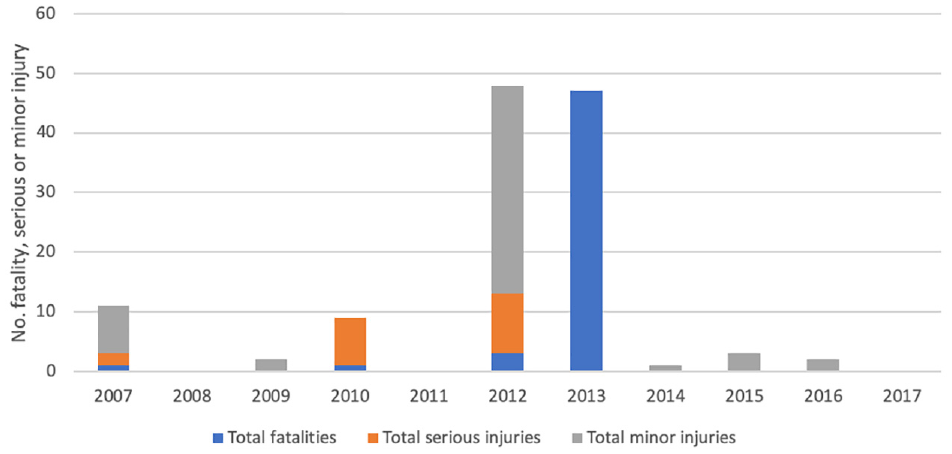
Number of fatalities/serious injuries/minor injuries per year for main-track derailments.
Since the data evaluation was limited to main-track derailments, the number of fatalities and serious or minor injuries has been zero for some of the years. A peak in fatalities in 2013 was related to the Lac-Mégantic disaster, with 47 casualties ( 4 ). Moreover, the spike in 2012 corresponded to the Burlington passenger train derailment which caused three fatalities as well as 10 serious and 35 minor injuries ( 5 ). Despite the fluctuation in the recorded data, no fatality or serious injury from 2014 to 2017 revealed an improvement with a decrease in the number of occurrences with the potential for fatality or serious injury. The reason for this improvement could be related to the development of further preventive and mitigative strategies. For example, replacing TC/DOT-111 tank cars with TC-117 tank cars, which are more puncture resistant and equipped with a thermal protection system ( 25 ). Moreover, temporarily restricting the train speed in some areas based on the environmental conditions ( 26 ) is helpful in reducing rail occurrences or mitigating their consequences.
To identify the collective risk of the main-track derailments, FTA was applied. The main groups and subgroups of causes reported for main-track derailments are shown in Figure 3. The FTA also consists of data relating to the failure annual probability of each cause. As shown in Figure 3, cause groups are led by track, roadbed, and structures, followed by mechanical and electrical failures. At the subgroup level, rail brakes, track geometry, and train handling show the highest probabilities respectively. Based on the failure annual probability of the causes, the annual probability of a main-track derailment leading to fatality and injury was calculated. Intending to eliminate the variability associated with train traffic fluctuation, the FTA was normalized per train mile. To do that, the total failure annual probability was divided by the total distance traveled by Canada’s freight and passenger trains on the main track between 2007 and 2017 (858.8 million train miles) ( 27 ).
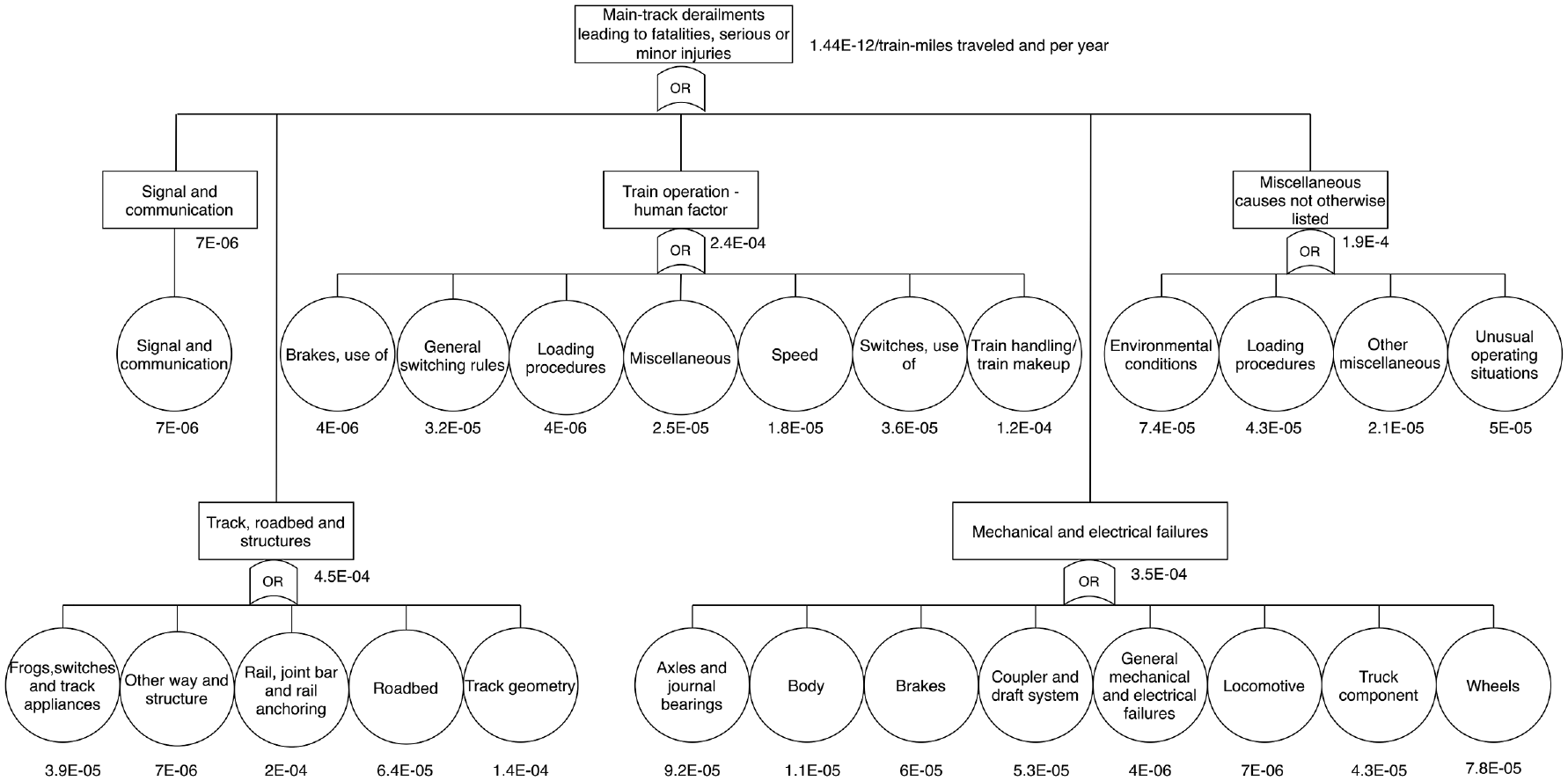
FTA for main-track train derailments leading to fatalities and injuries.
Followed by FTA, an ETA was applied. Evaluating the RODS showed that a main-track train derailment might lead to a collision, DG release, fire, explosion, and evacuation. In an ETA calculation, the sum of the probabilities of failures and probabilities of success for an intermediate event is equal to one. In the cases where one of these probabilities (failure or success) was equal to one, the probability of the other one was equal to zero. For example, in the first branch of ETA for main-track derailments, all of the main-track derailments with fatality, injury, and collision consequences resulted in DG release. As a result, the probability of success for DG release as an intermediate event was equal to one, and the probability of failure for this event was equal to zero. The same approach was applied to the other intermediate events. The results of the ETA are presented as frequency of occurrence (number of events per year) and the risk (number of equivalent fatalities per year). The accident scenario leading to all of the mentioned outcomes was associated with the highest level of risk to life which was 4.07 × 10⁻³ equivalent fatalities per year. It is noteworthy that the evacuation scenarios still have risks as fatalities and injuries may occur as a result of collision, DG release, fire, and explosion. The ETA outcomes and collective risk of main-track derailments causing fatality and injury are shown in Figure 4. The little difference in some of the numbers is caused by rounding up or down the numbers during the calculation process.
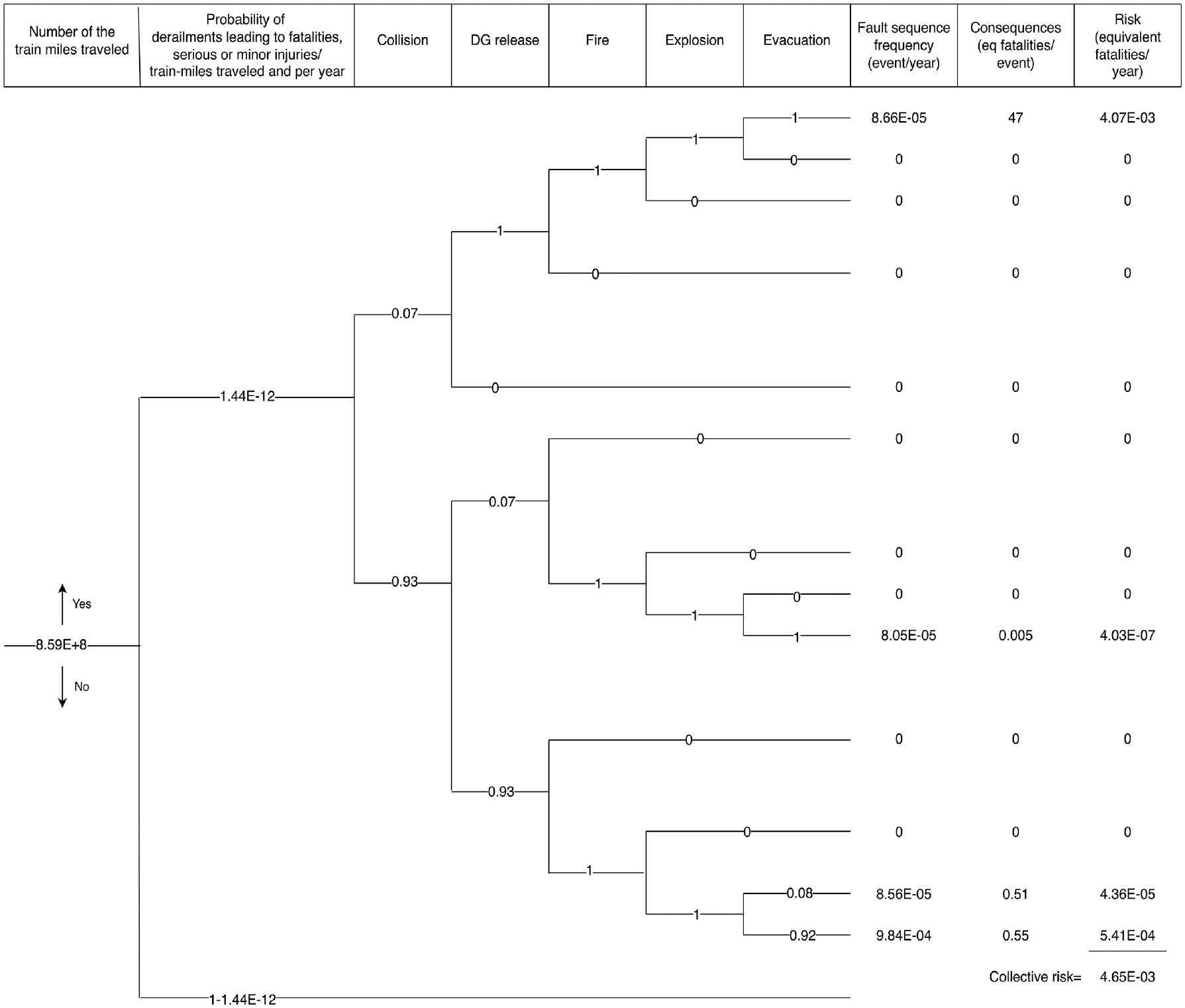
ETA for main-track train derailments leading to fatalities and injuries.
The next stage of the study was to evaluate the collective risk of the main-track train collisions. The assessment of the RODS database showed that 59 main-track collisions (class 1–5 occurrences) occurred between 2007 and 2017. Based on the RODS-injury database, six of the freight and passenger train collisions had fatality or injury consequences. The distribution of the fatalities and serious or minor injuries based on the year of occurrence are presented in Figure 5.
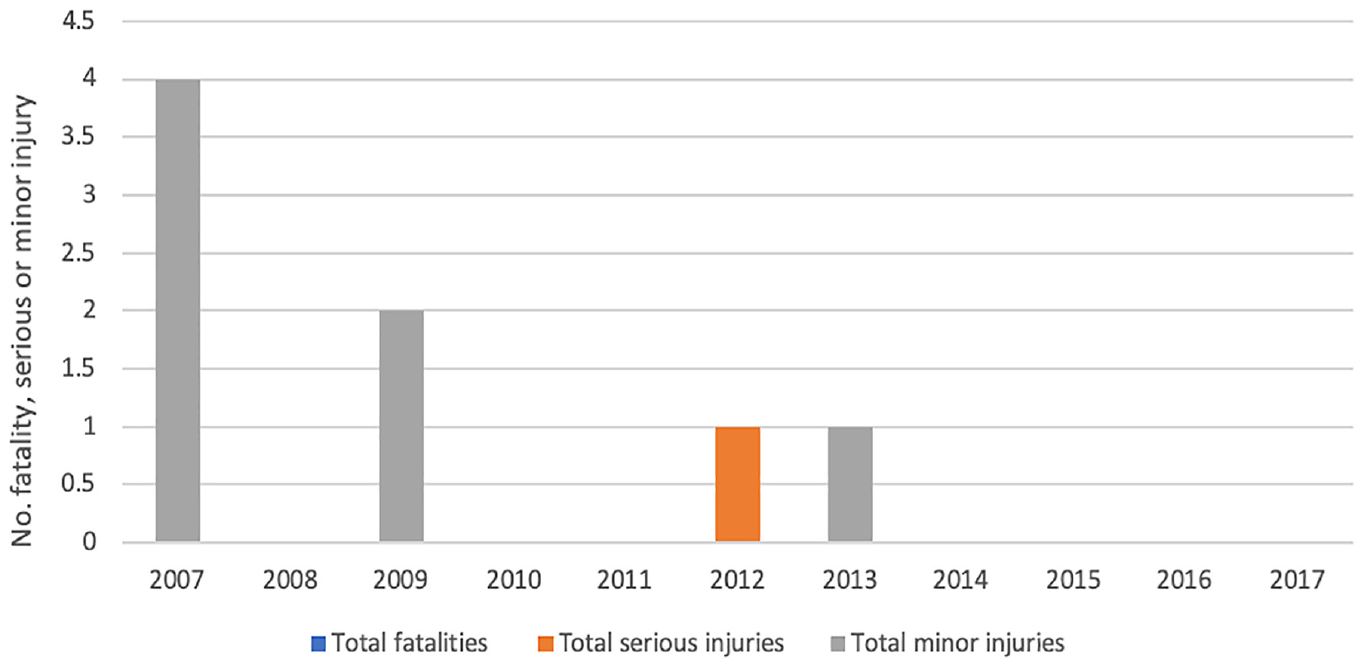
Number of fatalities/serious injuries/minor injuries per year for main-track train collisions.
Restricting the data assessment to the main-track collisions, the number of fatalities and serious or minor injuries has been zero for some of the years. Main-track collision accidents mainly resulted in minor injuries compared with fatality and serious injury consequences. Since 2014, there were no occurrences with fatality or serious or minor injury outcomes which indicates an enhancement in reducing the number of occurrences.
A diagrammatic representation of the FTA for main-track collisions is presented in Figure 6. The results provided by FTA illustrate that the train operation/human factors group is the leading cause group of these kinds of accident. This cause group also includes all the subgroups with the highest probability: speed, violations of authority, train handling/makeup, and the use of brakes. Similar to the previous stage, in the end step of the FTA, the annual probability of a main-track collision with fatality and injury consequences was calculated per miles traveled by the train.
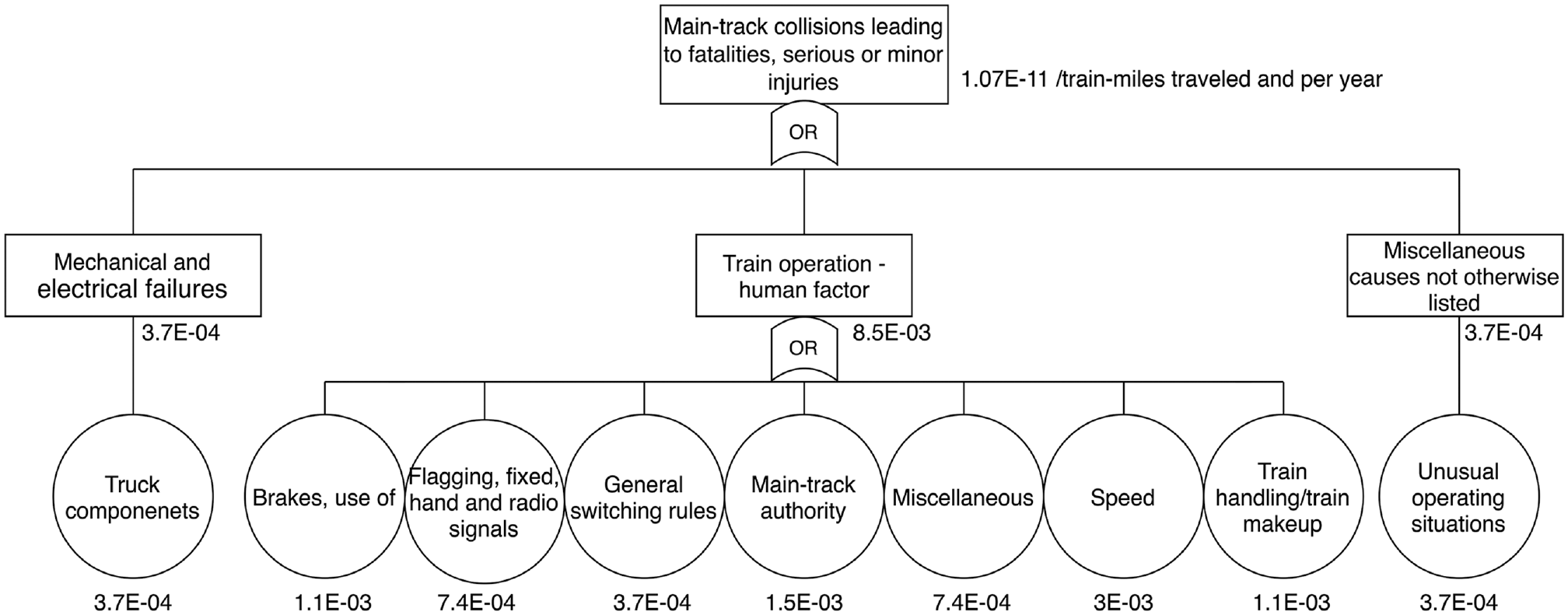
FTA for main-track train collisions leading to fatalities and injuries.
According to the RODS database, a main-track train collision might result in a derailment, DG release, fire, explosion, or evacuation. Figure 7 presents the probability of each consequence, frequency of occurrence (number of events/year) and the risk (number of equivalent fatalities per year) for each accident scenario. As shown in Figure 7, the highest level of risk to life was 2.16 × 10⁻⁴ equivalent fatalities per year which was related to the main-track collision followed by derailment with no DG release, fire, explosion, or evacuation outcomes. Finally, the risk of different accident scenarios led to identifying the collective risk of main-track collisions causing fatality and injury.
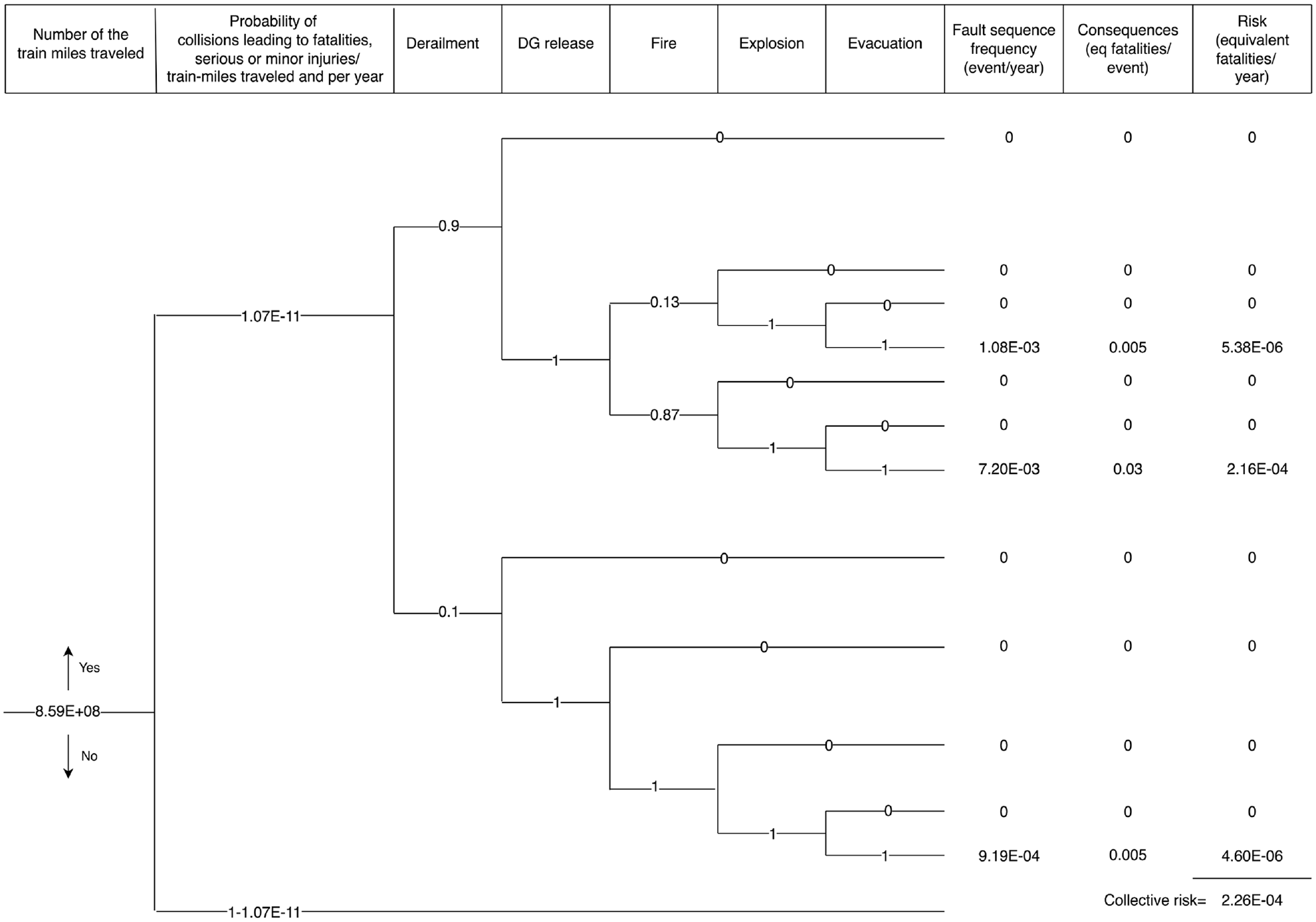
ETA for for main-track train collisions leading to fatalities and injuries.
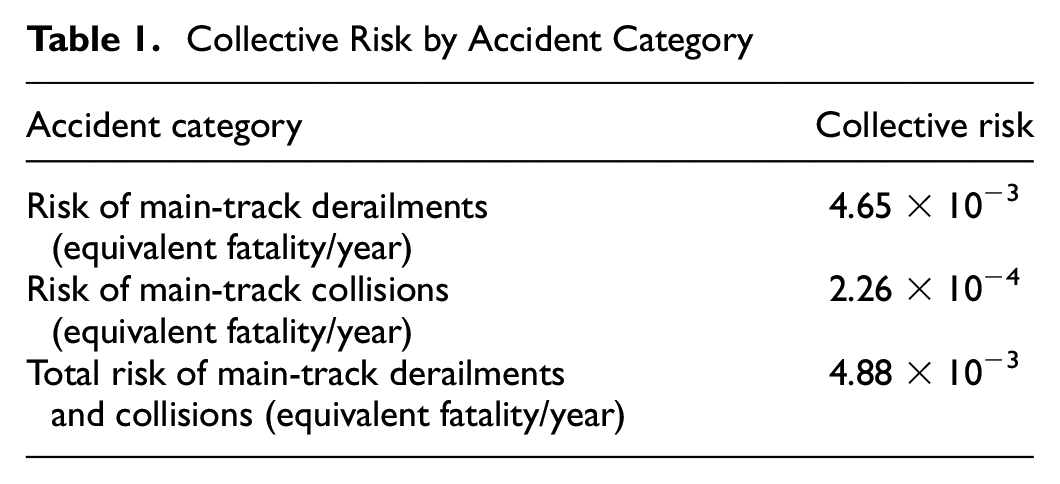
Table 1 shows the collective risk, the average number of equivalent fatalities per year, by accident category resulting from Figures 4 and 7. The total collective risk of main-track derailments and collisions is also presented.
Collective Risk by Accident Category
Individual Risk
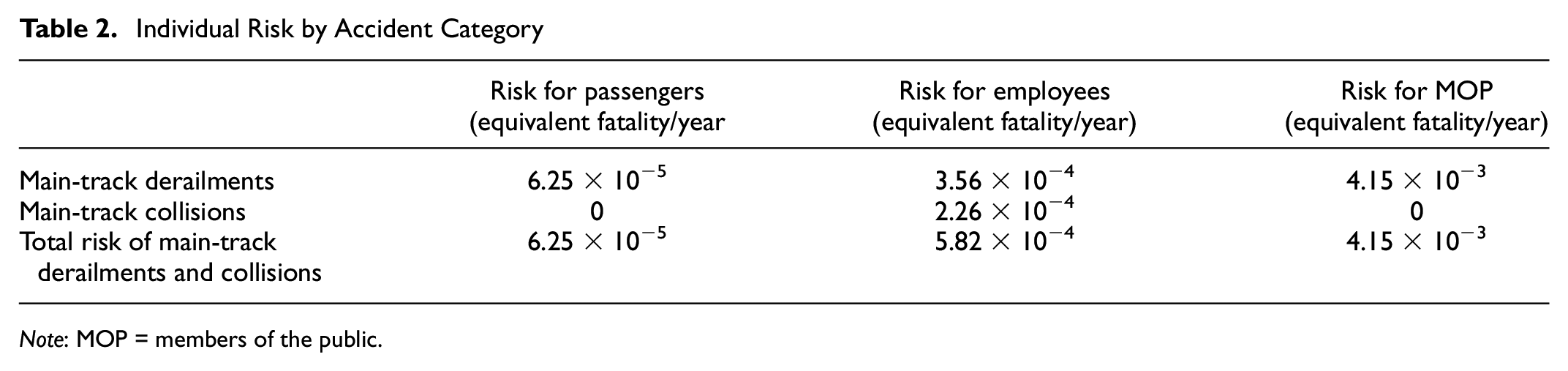
Individual risk is the probability of fatality per year for a particular group of people using railways, which means passengers, workforce, and MOP ( 6 , 24 ). Identifying the individual risk of two hazardous events, main-track derailments and collision, FTA and ETA were applied. The FTA was similar to the stage of evaluating the collective risk. The ETA also kept its structure with the difference that the number of fatalities and injuries considered for ETA was related to the group of people for which its individual risk was supposed to be calculated. For example, in an effort to evaluate the risk of main-track derailments for passengers, the number of passengers who died or were injured as a result of such an accident was counted toward applying the ETA. The ETAs for individual risk assessment are provided in Appendix C. Table 2 presents the results of this phase.
Individual Risk by Accident Category
Note: MOP = members of the public.
ETC Implementation
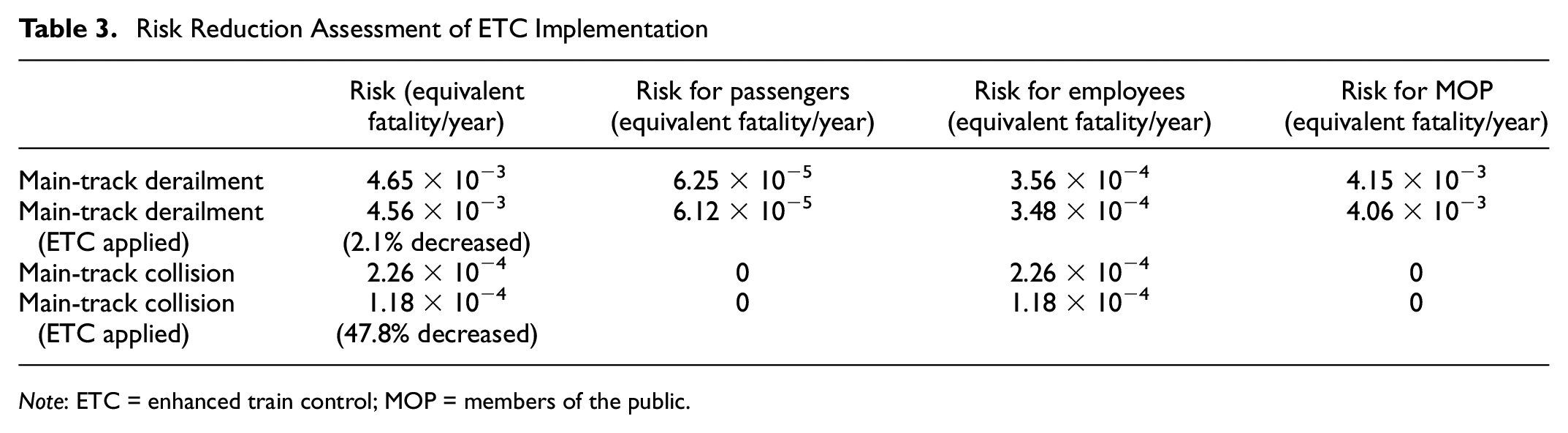
Applying C-SRM provided an opportunity to evaluate the effects of implementing ETC in Canadian railways. Two accident causes, main-track authority, and speed related to the train operation/human factor cause group of ADL cause classification may be preventable by applying ETC on the rail network. Considering a 100% effectiveness for those causes, the collective and individual risks of the main-track derailments and collisions were reassessed. The FTAs and ETAs, after applying the ETC, are presented in Appendix D. Table 3 shows the results of the risk assessment before (Tables 1 and 2) and after the ETC development.
Risk Reduction Assessment of ETC Implementation
Note: ETC = enhanced train control; MOP = members of the public.
Discussion
This research presented a Canadian customized risk assessment model (C-SRM) to improve the understanding of the risk. The model is based on the quantification of the risk resulting from hazardous events that have the potential to lead to fatalities, serious and minor injuries.
The results derived from C-SRM will enable the rail industry to understand the current level of the residual risks, prioritize areas for safety improvements, and plan for developing additional control measures that would decrease the risk. Moreover, it allows as low as reasonably practicable (ALARP) assessments and cost–benefit analyses to be undertaken to assist the decision-making process for applying proposed changes and modifications. SRM is also useful in identifying and prioritizing issues for the audit. It provides a basis for evaluating the risk for a particular line of rout or for a particular train company ( 6 ). Furthermore, this model enables sensitivity analyses to be carried out to evaluate the risk reduction from the introduction of new control measures ( 24 ).
Applying C-SRM was useful in evaluating the collective risk, the average number of equivalent fatalities per year, for two groups of hazardous events: the main-track derailments and collisions. The outcomes of the FTA revealed that the annual probability of a main-track collision leading to casualties and injuries per train mile is higher than that probability for a main-track derailment. In other words, when a train collision occurs, it is more likely there will be injuries than if a derailment occurs. However, applying ETA and identifying the collective risks of these two hazardous events demonstrated that the risk of the main-track derailments is greater than the risk of main-track collisions for fatality and injury. Risk is affected by both frequency and consequence. Higher risk of main-track derailments could be related to both factors. Considering the frequency, the proportion of main-track derailment accidents in 2020 was 7%, while only 1% of rail occurrences were related to the main-track collisions ( 20 ). Looking at the consequences, as shown in Figures 2 and 5, the main-track derailments resulted in fatalities and serious or minor injuries. In contrast, the main-track collisions mainly caused minor injuries with a few serious injuries. There were no fatality outcomes for this accident within the study timeframe. Since the weight of fatality and serious injury is higher than the weight of the minor injury in calculating the equivalent fatality, it had a significant impact on increasing the consequences of the main-track derailments and eventually increasing the risk of this hazardous event.
Despite identifying a higher collective risk for main-track derailments compared with the main-track collisions, both risks are at a lower level in comparison with the other countries’ SRM results. As presented in Table 1, the risks of the main-track derailment and collision are 4.65 × 10⁻³ and 2.26 × 10⁻⁴ equivalent fatality per year, respectively. However, these risks for the same period of time are 3.69 and 0.68 for Slovakian railways ( 24 ) which is higher than Canadian railways. In an effort to compare with the UK railways, the Hazardous Event Train (HET) accident category of UK SRM which includes collision and derailment accidents were considered. The risk of the HET is 7.8 equivalent fatalities per year in the period 1999 to September 2013 ( 28 ). According to Table 1, the total risk of the main-track derailments and collisions is 4.88 × 10⁻³ equivalent fatality per year for Canada, which is much lower than the UK. It is noteworthy that the HET category of the UK’s SRM includes some other types of accident (e.g., structural collapse at station, abnormal dynamic forces) in addition to derailments and collisions. Moreover, the UK SRM considers both reportable and non-reportable injuries in its assessment. In C-SRM, given limited available resources only reportable injuries were included. However, considering those differences between UK SRM and C-SRM, the gap between the two countries’ risks is still significant enough to show that the Canadian railways are still in the safe zone.
It might also be worth mentioning that the results of ETA (Figures 4 and 7) for both kinds of accident demonstrated the important role of evacuation on the risk of these occurrences. Fatalities and injuries were mainly observed in those branches where there was no evacuation after the accident. This shows that mitigation strategies related to the evacuation and emergency response plans still need further assessment and improvement. Evacuating more than 200,000 people after the Mississauga train derailment in 1979 in Mississauga, Ontario, Canada is a successful example of evacuation that saved people with no fatalities after the accident. Fordham ( 29 ) investigated some of the reasons for the success of this evacuation.
The collective risks of the hazardous events provided an overall view of the safety performance. However, it is also worth assessing this performance in relation to employees, passengers, and MOP. Developing C-SRM was helpful in identifying the individual risks of the main-track derailments and collisions. The risk under this approach is the annual estimation of the potential harm to the employees, passengers, and MOP from the operation of the railways. Table 2 shows that the risk for the MOP forms the greatest proportion of the individual risk of derailment accidents. Main-track derailment is one of the most serious types of rail occurrence when considering the potential risk to the public and financial damage, especially when it occurred in populated areas ( 20 ). The Lac-Mégantic accident with 47 fatalities ( 4 ) is an example of these rail events which played an important role in increasing the individual risk of train derailments for MOP in this study. These low-frequency high-consequence rail occurrences cause an elevated level of risk. In the UK, approximately 63% of the overall risk from passenger train derailment was related to low-frequency high-consequence events ( 6 ). Sattari et al. ( 21 ) further investigated the low-frequency high-consequence rail occurrences by evaluating their societal risk. The potential for this type of occurrence shows that there is still an opportunity for optimizing resource allocation for risk control and mitigation strategies in this regard.
For the main-track collisions, the highest individual risk was related to the employees. As shown in the Figure 6, human error is the leading cause of the main-track collision accidents. As a result, there might be a potential relationship between this factor and high risk to the employees. A study done by Kyriakidis et al. ( 30 ) identified distraction/loss of concentration, safety culture, proper communication between employees, workload, training, and stress as the most significant contributors to the operators’ performance in the rail industry. Esmaeeli et al. ( 31 ) discussed some of the appropriate strategies that can be implemented to reduce the employees’ errors. For instance, conducting regular team meetings to strengthen teamwork ( 32 ), providing practical training alongside the online training ( 33 ), and regular assessment of employees’ competencies to ensure that individuals are capable of properly applying their knowledge in practice. However, confirming the correlation between human error and risk for the employees needs further investigations and is beyond the scope of this study. It is noteworthy that no risk for the passengers and MOP might result from a limited database that consists of main-track collisions leading to fatality and injuries (six occurrences). Furthermore, most of the collision accidents within the study database were freight with no passengers.
Considering the individual risks of other rail industries is useful to get a better understanding of the level of risk on the Canadian railways. The individual risks of the HET category in UK SRM for passengers, employees, and MOP are 2.8, 1, and 4 equivalent fatalities per year, respectively ( 28 ). However, as presented in Table 2, the results of the C-SRM showed that the total individual risks of main-track derailments and collisions for passenger, employee, and MOP are 6.25 × 10⁻⁵, 5.82 × 10⁻⁴, and 4.15 × 10⁻³ equivalent fatalities per year, respectively. As mentioned in the discussion above, there are differences between UK SRM and C-SRM. Taking those differences into account, the gap between the level of individual risks of two countries is still significant enough to confirm that the risk of the Canadian railways is at a very lower level.
The results of employing C-SRM showed that the risk of the Canadian railways in fatalities and injuries is very low. However, applying new control measurements can further reduce the risk and even achieve the ultimate goal of zero fatality. Japan’s “Shinkansen” high-speed train system’s performance is an impressive example in this regard with zero passenger fatalities in train collisions and derailments for more than 35 years ( 6 ).
Employing C-SRM gave an opportunity to assess the effects of developing a new control measure, ETC, through a risk reduction analysis. ETC systems are fail-safe technologies developed to be similar to the PTC system functionality implemented in the US ( 16 , 17 ).
Applying Positive Train Control (PTC) on certain Class 1 railroad main lines in the US causes railway operators in Canada to raise several major concerns with regard to their experience with PTC implementation. For example, expensiveness, complexity, and significant effort requirement to apply it ( 16 ).
According to the Canada’s Advisory Council Research on Railway Safety in 2016, developing a targeted, risk-based, corridor-specific train control approach is the best option for deployment of this technology in Canada. This recommendation has been the “working assumption” for developing ETC in Canada. ETC systems are intended to prevent certain rail occurrences caused by human error. The technologies provide a wide range of innovative safety solutions to support the train crew. This could range from assisting in recognizing and following the signals to automatically applying the train brakes to prevent a collision or derailment ( 1 ). The core functional objective of ETC system in Canada is to prevent train-to-train collisions, over speed derailments, train entering a foreman’s work authority, and train occupying improperly aligned switches ( 16 ).
The current approach of controlling train movements in Canada is “rule-based.” Occupancy control system rules are applied on low density corridors, with verbal clearances and other instructions issued to train crews. Higher density corridors follow centralized traffic control, with wayside signals indicating speed limits and clearances. In both cases, it is the responsibility of the crews to comply with the rules. Currently, there is no regulatory requirement to install technologies on board locomotives to protect against excessive speed operation or not following a wayside signal indication. The reliance is solely placed on train crews. As a result, there have been occasions of unintended rule violations as a result of a loss of situational awareness resulting in derailments or collisions. It is this potential for human error that ETC technologies aim to address ( 1 ).
Implementing ETC technologies on the Canadian rail network is a priority for TC which is reflected in the recent Notice of Intent published in the Canada Gazette on February 5, 2022. It revealed that TC intends to establish ETC system on Canadian railways to add an important layer of safety to its already safe rail transportation system and enhance passenger and freight train safety ( 1 ).
In this study, to assess the impact of ETC on rail transport risk, a 100% effectiveness was considered for two accident causes, main-track authority and speed. As mentioned in the methods section, this level of effectiveness is achievable by ETC implementation at the Automatic Train Protection System level. The results of risk reduction analysis (Table 3) showed that developing an ETC system resulted in reductions of about 2.1% and 47.8% in the risk of main-track derailments and collisions, respectively. It is evident that the proportion of the risk reduction for collision accidents was much greater than that for derailment accidents. The reason for this can be related to the underlying cause of these accidents. The FTA of main-track collisions (Figure 6) demonstrates that human error is the primary cause of these accidents. It also shows speed and main-track authority are the most probable cause of main-track collisions in the subcategory level. However, the FTA for main-track derailments (Figure 3) reveals that human error was the third-ranked cause of these accidents. Moreover, there was no main-track authority subcategory in its FTA and the probability of the speed subcategory was also very low. Therefore, as ETC systems are intended to be effective on human errors (speed and main-track authority), their implementation was much more effective in reducing the risk of main-track collisions compared with the main-track derailments.
The result of the risk reduction analysis in this study is in line with the result of the CaRRL report to the TC. CaRRL ( 16 ) analysis also showed that a much greater proportion (on a percentage basis) of main-track collisions are preventable compared with the main-track derailments by implementing ETC. The outcomes of their study revealed that between 20.4% and 30.5% of main-track collisions and between 1.1% and 2.4% of main-track derailments could have been prevented with an ETC system.
Although the ETC technologies were more effective in decreasing the risk of main-track collisions, their impact on reducing the risk of main-track derailments is not negligible. Main-track derailments and collisions leading to fatality and injury are rare events with potentially high consequences. Decreasing the risk of these events even by a couple of percentage points would significantly improve the safety of passenger and freight trains. This is the reason why the ETC system is a useful control measure to prevent certain rare, but potentially high-consequence accidents.
Conclusion
This study contains the results of the risk assessment of the Canadian railways by developing a customized Canadian SRM called C-SRM. The risk in this context is defined in relation to rail occurrences leading to fatalities and injuries. The research is focused on two groups of hazardous events: main-track derailments and collision accidents. The outcomes of the employed model will increase the industry’s knowledge of the risk and allow the identification of areas of railway operation that need further risk controls. It also enables sensitivity analyses to be carried out to determine the risk reduction from the introduction of new control measures.
To implement C-SRM, FTA, and ETA were applied to the hazardous events. The outcomes of the study revealed that, when a train collision occurs, it is more likely that there will be injuries than if a derailment happens. However, the risk of the main-track derailments was greater. Evaluating the individual risk of hazardous events showed that the highest individual risk of the main-track derailment was related to the MOP. Low-frequency high-consequence rail events like the Lac-Mégantic accident played a prominent role in elevating the risk for this group of people. Moreover, the risk for employees was the highest individual risk of main-track collisions. There might potentially be a relationship between human error which was the most frequent cause of collision accidents and this level of risk for employees. However, it needs further investigation which was beyond the scope of this study. Comparing the results of other countries’ SRM with C-SRM demonstrated that Canada’s rail transport risks are at a lower level. However, there are still opportunities for enhancing safety and decreasing the risk even further. For example, improving emergency response plans, applying control measurements to mitigate low-frequency high-consequence accidents, and so forth.
The last step of the study was the risk reduction assessment of developing ETC systems on Canadian railways. The result of the analysis showed that ETC technologies are useful control measurements in preventing certain rare, but potentially high-consequence accidents. However, decision making about the development of this system on Canadian railways needs further assessment such as cost–benefit analysis.
Limitation of the Study
The limitation of the research is related to the scope of the study which was focused on main-track derailments and collisions. Considering other types of hazardous events and increasing the level of the details to categorize them would enhance the accuracy of the risk assessment. Furthermore, given the limited available resources, only reportable injuries were included in the analysis. Considering non-reportable injuries would definitely change the risk profiles and improve the level of accuracy.
Future Work
The C-SRM presented in this study provides a nationwide risk and does not show how the risk is distributed across the network. Future updates to the model will include means to assess the risk for a particular line of route. RSSB is an example in this regard that has developed geospatial models (GeoSRM) of rail safety hazards in Great Britain (GB) ( 13 , 14 ). Macciotta et al. ( 34 ) discussed some of the complexities of risk assessment for a particular corridor in Canada.
To assess the risk for a particular line, localized FTA and ETA are needed. This would greatly increase the number of calculations required for the C-SRM and therefore new and more efficient ways of calculating will be needed ( 15 ). Two different methods would be suggested: 1) converting the FTA and ETA into a Bayesian Network (BN) and undertaking calculations using algorithms in the SamIam software package ( 35 ); and 2) using traditional FTA and ETA calculations coded in the R software package ( 36 ).
Supplemental Material
sj-pdf-1-trr-10.1177_03611981231176549 – Supplemental material for Assessing the Risks Associated with the Canadian Railway System Using a Safety Risk Model Approach
Supplemental material, sj-pdf-1-trr-10.1177_03611981231176549 for Assessing the Risks Associated with the Canadian Railway System Using a Safety Risk Model Approach by Nafiseh Esmaeeli, Fereshteh Sattari, Lianne Lefsrud and Renato Macciotta in Transportation Research Record
Footnotes
Author Contributions
The authors confirm contribution to the paper as follows: study conception and design: N. Esmaeeli, F. Sattari, L. Lefsrud, and R. Macciotta; data collection: N. Esmaeeli; analysis and interpretation of results: N. Esmaeeli; draft manuscript preparation: N. Esmaeeli, F. Sattari, L. Lefsrud, and R. Macciotta . All authors reviewed the results and reviewed and approved the final version of the manuscript.
Declaration of Conflicting Interests
The author(s) declared no potential conflicts of interest with respect to the research, authorship, and/or publication of this article.
Funding
The authors declare the following financial interests/personal relationships which may be considered as potential competing interests: Renato Macciotta reports financial support was provided by Canadian Rail Research Lab. Lianne M. Lefsrud reports financial support was provided by Transport Canada. Lianne M. Lefsrud reports financial support was provided by Natural Sciences and Engineering Research Council of Canada. Lianne M. Lefsrud serves on the editorial board.

Supplemental Material
Supplemental material for this article is available online.
References
Supplementary Material
Please find the following supplemental material available below.
For Open Access articles published under a Creative Commons License, all supplemental material carries the same license as the article it is associated with.
For non-Open Access articles published, all supplemental material carries a non-exclusive license, and permission requests for re-use of supplemental material or any part of supplemental material shall be sent directly to the copyright owner as specified in the copyright notice associated with the article.
