



Abstract
Teleworking has been considered to be one of the emanating behaviors from the pandemic that may become long-lasting. Wider adoption of teleworking may fundamentally change urban mobility and spaces across cities. However, knowledge about the potential implications of teleworking on urban transport and land-use systems post-pandemic is limited. Through a comprehensive review of existing teleworking studies, this research identifies gaps in the literature, discusses major issues for exploration and suggests future research directions. It also explores ways to utilize teleworking as an effective travel demand management strategy. Analysis shows that teleworking has the potential to substantially change city landscapes and can assist in reducing traffic congestion, greenhouse gas emissions, and energy use. Priority areas for further research are identified, such as in-home activities, residential location choice, non-work trip patterns, and energy consumption decisions of teleworkers for a clearer understanding of the relationship between teleworking and urban systems. Analysis also reveals several planning and policy challenges surrounding teleworking, including digital divide, urban sprawling, and transformation of city centers, among others. To fully realize the benefits of teleworking, planners need to reconfigure community design principles to promote mixed-use, lively, and vibrant neighborhoods where people can both live and work. At the same time, governments should consider providing incentives to both organizations and employees with an aim to retain teleworking. Results of this paper will be highly beneficial to transport and land-use researchers, planners, and policy makers.
Keywords
Proliferation of information and communications technology (ICT) has transformed individuals’ work arrangements in far-reaching ways over the last several decades. It has faded traditional boundaries between the location of work and home, and made alternative telecommunication-based work styles (telework or telecommuting) more common ( 1 ). Nilles ( 2 ) first defined the term “telework” or “telecommuting” as working from a place other than the workplace using communication technologies. Along with working from home, this also includes working at a hub near home, working at a satellite location, or in another place rented or owned by the employers.
During the initial stages of its introduction, teleworking had been utilized as a solution to different organizational and social problems ( 3 ). It has been acclaimed as a strategy for several reasons: to help employers reduce office-related expenses ( 4 ), acknowledge workers’ needs for a healthy work–life balance ( 5 ), and in support of the 1990 Americans with Disabilities Act ( 6 ). From a transportation perspective, teleworking has been explored as a strategy that can help to reduce overall travel demand ( 7 ). From an environmental perspective, researchers have investigated whether teleworking can reduce greenhouse gas (GHG) emissions and energy consumption ( 8 , 9 ). Urban planners have studied the relationships of teleworking and land-use and have examined possible linkages of telecommuting with urban and sub-urban transformations ( 10 , 11 ). It is necessary to understand both the positive and the negative factors in different circumstances to devise plans for teleworking ( 12 ). Figure 1 illustrates a conceptual framework of the relationship between teleworking and urban systems. The figure was generated after conducting the initial round of literature review in this study. It provides a synopsis of the interrelationship between teleworking and different urban system components.
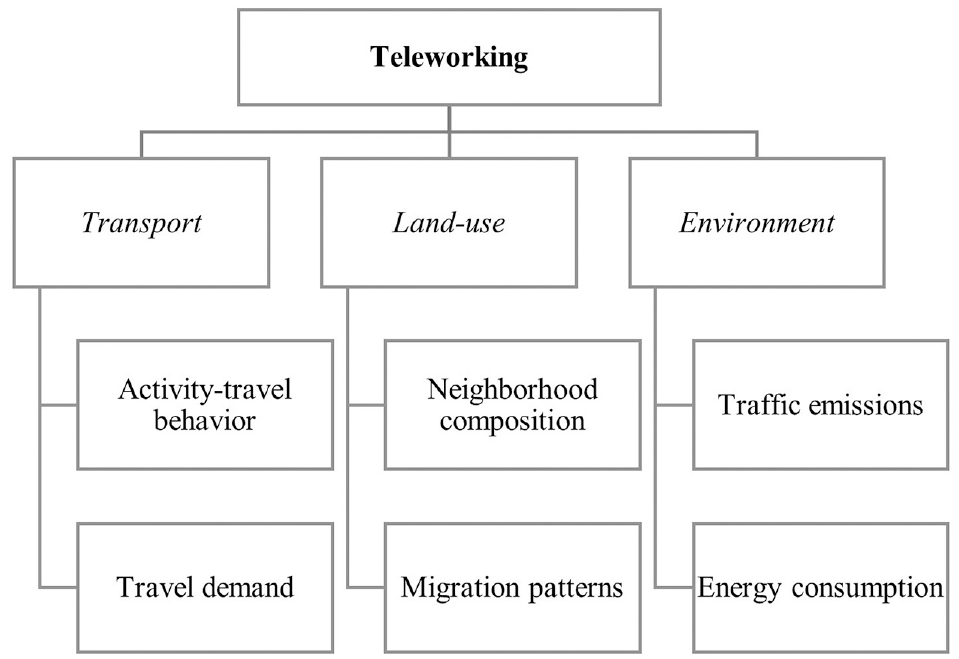
Conceptual framework of the relationship between teleworking and urban systems.
Between 2005 and 2013, the percentage of employees teleworking in the U.S. increased from 1.8 million to 3.5 million (11% increase on average per year) ( 13 ). The percentage of employees working at least sometimes from their homes increased from 5.2% to 9% between 2009 and 2019 in EU-27 (twenty-seven European countries) ( 14 ). Initially teleworking was more common in the ICT and knowledge-intensive sectors (e.g., educational institutions), and usually adopted by high-skilled workers. Although teleworking was slowly gaining popularity across professions, the outbreak of the COVID-19 pandemic has drastically increased the adoption rate ( 15 ). Stay-at-home orders and fear of the virus made commuting to workplaces nearly impossible for millions around the world. Even though people from certain occupations, such as construction workers, business owners, emergency and healthcare professionals, and transport staff had to continue going to their workplaces, a significant portion of the workforce was able to shift to working from home. An online survey conducted in March–April 2020 showed that 97% of North American employees teleworked more than 1 day per week during the pandemic (88% globally) ( 16 ). It is evident that the pandemic has revolutionized the concept of work arrangements and introduced newer methods to a wide range of industries.
As of April 13, 2022, it has been almost two and a half years since the outbreak of the COVID-19 virus. Over 500 million positive cases and around 6 million deaths have been reported worldwide as of April, 2022 ( 17 ). The third vaccine dose rollout is happening, and hospitals and care facilities are better prepared in dealing with COVID-19 patients. People are slowly returning to workplaces, and schools and universities are reopening. However, there is still a significant number of people continuing to telework and among this cohort; a major portion may continue to do so post-pandemic. During the oil crisis of 1970s, planners anticipated commuting habits switching to ridesharing would continue; however, once the oil supply became normal, people returned to their usual commuting patterns. The current work-from-home scenario resulting from the COVID-19 pandemic can be compared with the historical events. It is still unknown whether the current work-arrangement policies will continue to focus more on remote/hybrid working, or whether a return to normal (pre-pandemic in-person centered) is a possibility.
Initial evidence from COVID-19 travel surveys indicates growing acceptance of teleworking, both across employers ( 18 ) and workers ( 19 ). Global Workplace Analytics predicts that around 30% of the US employees will be teleworking more than one day per week after the pandemic ( 16 ). From the employers’ perspective, many of them perceive benefits of teleworking, such as reductions of real-estate costs, office costs, and increased productivity of employees. Online activities such as teleworking may reshape mobility and spaces in urban areas as they are connected to changes in individuals’ activity-travel decisions and land-use patterns. However, the answers to the following questions are still quite unknown:
- How might this increased adoption of teleworking resulting from COVID-19 affect transport and land-use systems?
- How might it transform urban mobility and activity patterns, use of public spaces, and land-use planning?
Answers to these questions are not simple, and finding them will surely not be easy. Nevertheless, it is crucial for transport and land-use planners to have clear answers to these questions to conduct informed decision-making while planning for the post-pandemic time. Through an in-depth review of related studies, this paper tries to gather insights about the impacts of teleworking on urban systems. Through discussions on current issues surrounding the pandemic it provides future research directions. The objectives of the paper are:
- Understanding the state of pre-COVID knowledge in relation to teleworking and urban travel behavior, land-use and environment.
- Exploration of COVID-19 and teleworking studies to analyze the current scenario, identify prospects and research gaps (e.g., areas that need further exploration).
- Discussion of the implications of the findings to guide future research agendas.
The results of this paper will be highly beneficial for city planners, transport and land-use professionals, and researchers. The structure of the paper is divided into four parts. It starts with a background section that sets the context, states research questions and objectives. The second part provides a critical review of pre-COVID literature on teleworking. The third section reviews some of the studies that deal with teleworking during COVID-19. The final section provides a discussion on the review analysis results and suggests future research directions.
Methodology
The study commenced with conducting a comprehensive literature search in Google Scholar, ScienceDirect, and Transport Research International Documentation (TRID) relating to impacts of teleworking on transport, land-use and environment. Searches for the academic literatures were performed between January 14 and April 1, 2022. The choice of the three databases is guided by the need to cover all relevant sources, including information belonging to gray literature, such as technical reports, and unpublished documents available from organizational and government websites, which are often very relevant because of the quickly evolving topics of this review ( 20 ). The following keywords were used to begin paper searching across all databases: “teleworking and travel behavior,”“teleworking and land-use,”“teleworking and emissions,”“teleworking and energy use.” Then, a snowball approach was adopted to include additional publications that either cited or were cited by the documents already included in the review. Focus was given to empirical studies published in English over the past 30 years. The collected papers were initially divided into two types based on their timeframe: (a) before COVID-19 (studies conducted between 1991 and 2019) and (b) during COVID-19 (studies conducted in 2020 and 2021). After that, the papers were divided into groups based on their topic of investigation. Finally, in-depth review and analysis of collected papers was carried out to develop a Topic–Significance–Direction framework to guide future telework research. Figure 2 illustrates the study workflow.
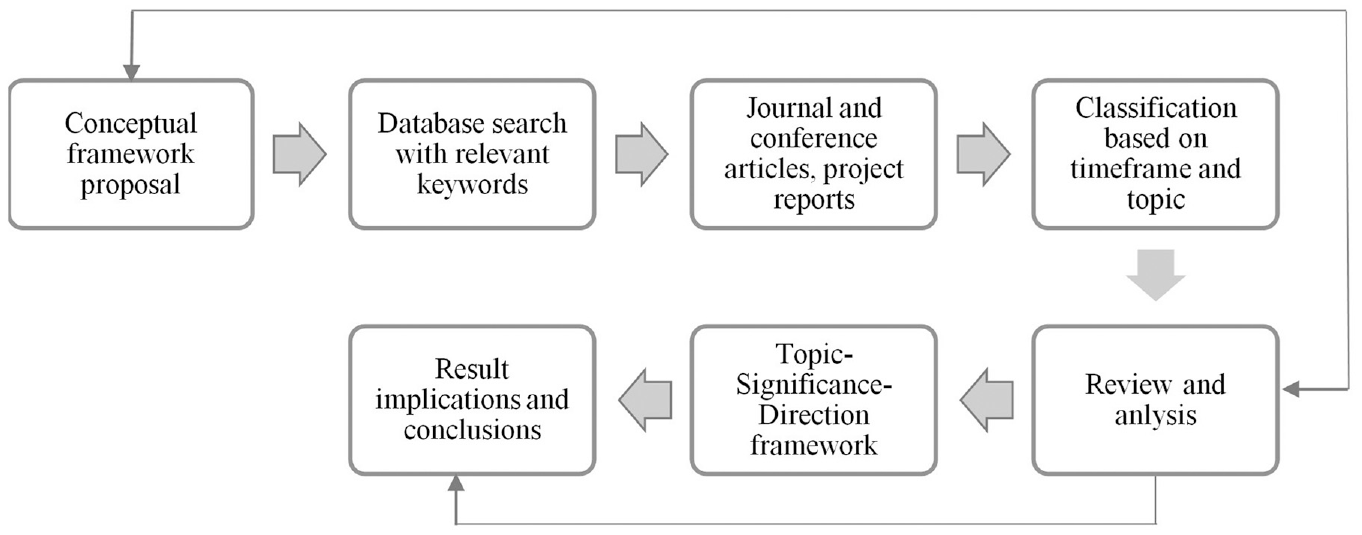
Workflow of the study.
Pre-COVID Studies on Teleworking
Teleworking has received increasing attention from both academics and professionals in the past three decades ( 21 ). Researchers from both developed (e.g., UK [ 10 ], Belgium [ 22 ], South Korea [ 23 ], and the US [ 24 ]), and developing countries (e.g., India [ 25 ]) have explored the topic. Exploratory and quantitative studies on teleworks’ effects have initiated a thorough understanding of its elements ( 26 ). For discussion purposes, this paper divides the pre-COVID relevant telework research into three types: (a) telework and travel behavior; (b) telework and land-use; (c) telework, emissions and energy. The following sub-sections review research studies on each topic.
Teleworking and Activity-Travel Behavior
Before the advent of COVID-19, “teleworking and travel behavior” studies were mainly focused on the following areas: (a) examining the relationship between teleworking and individual travel behavior, activity patterns and choices; (b) investigating whether teleworking increases or decreases number of trips, vehicle miles travel (VMT), and travel distance; (c) analyzing differences in travel behavior between teleworkers and non-teleworkers.
There have been debates in the scholarly community on whether teleworking considerably reduce trips, or if it has a rebound effect on trip-making. Some scholars through empirical analysis have demonstrated that teleworking reduces number of individual trips and VMT. Pendyala et al. ( 27 ) conducted an analysis of spatial and temporal patterns of travel behavior before and after the launching of a teleworking scheme. Using survey data collected through the State of California Telecommuting Pilot Project between 1988 and 1989, the authors tried to evaluate how destination choice and activity patterns of telecommuters transform. It was clear from their results that teleworking significantly reduces traveling and overall distance traveled. On teleworking days, teleworkers’ peak time trips were reduced by almost 60% and distance traveled by 75% on average. In addition, teleworkers were observed to allocate their trips over the day to circumvent a.m.-peak and p.m.-peak travel. Laria examined the relationship between teleworking and reduction of travel using recurring online surveys in Minnesota, U.S. ( 28 ). Findings showed that 7.46 million VMT were reduced by teleworking, which was the total VMT of 678 people in one year. Elldér examined the relationship between full-day teleworking and part-day teleworking with daily travel behavior ( 29 ). The authors applied various regression models on the Swedish National Travel Survey data for 2011 to 2016. They found that full-day teleworkers on teleworking days make fewer and shorter trips and are less likely to drive an auto. In contrast, part-day teleworkers make more trips, and travel longer distances. Henderson and Mokhtarian did a comparative analysis of home-based and center-based teleworking ( 8 ). They applied an ANOVA test on the collected travel survey data of 104 telecommuters in Seattle, U.S., through Puget Sound Telecommuting Demonstration Project. The authors found that center-based teleworking reduces person miles-traveled (from around 63 mi on non-teleworking days to 29 mi).
More recently, studies have demonstrated that teleworking has limited impacts over travel behavior. Surprisingly, these studies have found results that are opposite of traditional beliefs on teleworking and VMT reduction. Asgari et al. investigated the impacts of telecommuting on individuals’ daily activity generation and scheduling ( 30 ). They applied structural equation modeling (SEM) on the Regional Household Travel Survey (RHTS) data from 2010 to 2011. The RHTS was a survey of the socio-economic and mobility choices of people within twenty-eight counties of Connecticut, New York, and New Jersey. Results indicated that teleworkers invest more time on non-mandatory activities (e.g., recreation, errands) and generate more trips than do non-teleworkers. This confirms the notion that when teleworking tempers the restrictions related to work trips, teleworkers become inclined to distribute their time–space budget to accomplish non-mandatory tasks. This often results in added trips. More papers corroborate these outcomes showing similar results. Goulias et al. used motif and sequence analysis to conduct comparative analysis between teleworkers and non-teleworkers’ travel behavior ( 31 ). The paper utilized the California segment of the National Household Travel Survey (California-NHTS) data of 2017. It consisted of 24,448 part-time or full-time workers (4,168 teleworkers plus 20,280 non-teleworkers). Results indicated that teleworkers generate more VMT than non-teleworkers. However, teleworkers are more inclined to shared travel and have complex activity schedules. They visit additional locations and utilize their schedule flexibility to carry out work duties and different non-mandatory tasks. These findings were supported by additional studies by e Silva and Melo ( 10 ) and Zhu et al. ( 32 ).
It is quite clear from the above discussion that teleworking has a significant impact on individual and household-level travel behavior. Understandably, there is a difference in mobility choices of teleworkers and non-teleworkers. However, the answer to the question of “whether teleworking reduces travel” is quite complex. Although some studies have shown that teleworking has a complementary or positive effect on VMT, other studies have reported substitution or negative impact ( 33 ). Nevertheless, the context, sample size, and timeframe are different in each study—this could have an influence on the research outcomes. Studies that found teleworking to increase travel ( 10 , 30–32) have also demonstrated that teleworkers spend the time saved from not commuting making more non-work trips—traveling farther than before, resulting in more VMT. If communities can be planned in such a way that they provide residents with non-work trip destinations (e.g., shopping malls, restaurants, schools, recreational places) closer to the home (i.e., walking distance), these teleworkers may become more inclined to stay near their residences during the day ( 27 ).
Teleworking and Land-Use
Land-use is one of the crucial components of urban systems. Researchers from diverse backgrounds (e.g., transportation, planning, ecology, and economics) have explored the relationships between teleworking and land-use for the last 10 to 20 years. Studies have examined the impacts of teleworking on sub-urbanization, investigated land-use patterns that influence teleworking, and explored land-use by-laws needed to satisfy teleworkers’ needs. However, empirical studies on this topic are rare.
Fu et al. attempted to find the relationship between land-use patterns and teleworking ( 9 ). Using a case study of Ireland, the authors applied a logit model on the work-from-home data of the Irish Place of Work Census of Anonymised Records (POWCAR). The authors included quantitative variables related to land-use, such as percent of built-up residential area, proportion of commercial and industrial areas, and transport networks in their models. Results indicated that an increase of built-up residential, commercial, and industrial areas in an electoral district reduces the probability of working from home. Furthermore, the improvement of the road network also decreases the probability of working from home. Land-use characteristics and public transport infrastructure had significant effects on the teleworking adoption rate. Elldér examined in the context of Sweden how urban landscape and access to major activity places connect to daily mobility behavior of both teleworkers and non-teleworkers ( 34 ). The author used data from the Swedish National Travel Survey conducted in 2011 that consist of individual travel behavior and teleworking practices. The data also contained the location of all workplaces and homes where work is performed. Bivariate Pearson correlation and ordinary least square regression models were utilized as methods for the analysis. Findings showed that telework allowed flexibility in activity scheduling and choices, and encouraged more spatially heterogeneous travel habits. One of the key limitations of this study was the use of a single-day travel survey which often fails to capture the overall travel habits of individuals in a given week.
Several studies have an emphasis on community planning interventions that can promote teleworking. Alizadeh and Sipe examined the planning implications of teleworking by engaging with teleworkers in two live/work communities (one in Australia and the other in the USA) to understand their views about planning regulations governing their communities ( 1 ). The study was divided into two stages. First, a questionnaire survey was conducted with 160 respondents. Next, interviews were conducted with forty-one participants to better understand local planning and taxation impediments to teleworking. Teleworkers expressed their dissatisfaction about the planning regulations in their neighborhoods (only one-third of teleworkers were satisfied). “Special tax treatment” was identified as one of the key instruments in encouraging people to adopt teleworking. Interviewees urged planners and decision-makers to rethink the land-use by-laws at the community level to develop mixed-use neighborhoods where teleworkers can both work and live. More recently, Zenkteler et al. supported these findings in a study focused on community planning and design implications of teleworking within the City of Gold Coast, situated in Queensland, Australia ( 35 ). Similar to Alizadeh and Sipe ( 1 ), their work was focused on the community level. Survey data collection took place between 2016 and 2017. Results indicated that home-based workers are more inclined to reside in lively neighborhoods where they can socialize, exchange ideas, and share experiences with other similar-minded people.
One criticism teleworking received was that it causes urban sprawl ( 13 ). Several researchers have found that teleworking motivates people to move to the suburbs, triggering uncontrolled sub-urbanization ( 36 ). e Silva and Melo studied the impacts of teleworking on household-level weekly trips and travel distances by mode ( 10 ). The authors developed path analysis models using data from the National Travel Survey (2005–2012) in Great Britain. Results showed that teleworkers tend to locate in less accessible and more remote areas. Because of this, they have high vehicle ownership levels and are more dependent on personal vehicles. These findings are analogous to the results of Zhu et al. ( 32 ).
Based on the discussions presented here, Figure 3 graphically illustrates the impacts of teleworking on individuals’ activity-travel behavior and land-use characteristics. The figure indicates that teleworking contributes to increase individuals’ VMT when non-work activity destinations are far from the place of teleworking. This subsequently increases vehicle ownership level and causes uncontrolled growth of urban periphery. On the contrary, if activity destinations are closer to the place of teleworking (meaning teleworkers residing in mixed-use communities), it decreases VMT and trip distance.
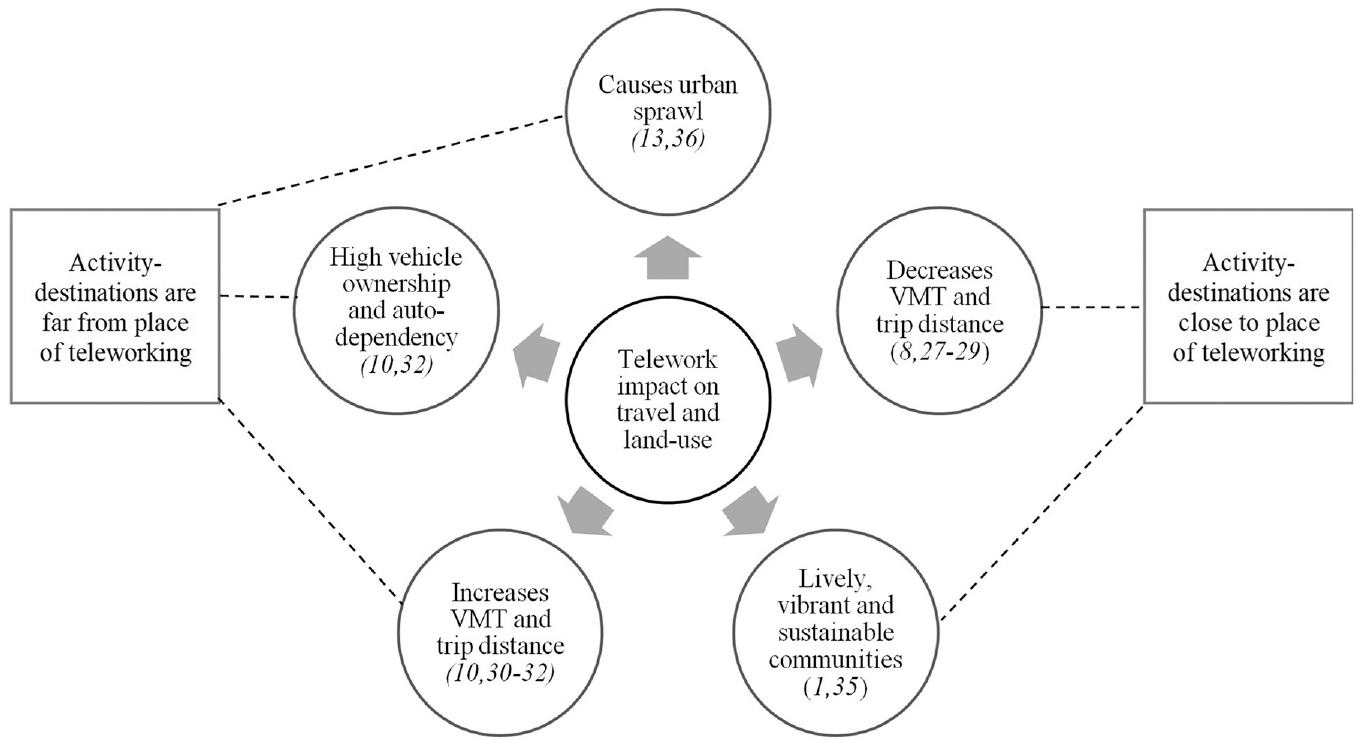
Impacts of teleworking on travel behavior and land-use.
Teleworking, Emissions, and Energy
Teleworking has been deemed to be one of the possible instruments to tackle climate change. It has been a key area of research for environment and sustainability enthusiasts for the last two to three decades. Scholars working in this research area have focused on examining the impacts of teleworking on GHG emissions and energy use of households.
Henderson and Mokhtarian found evidence of reduced pollutant emissions as a result of teleworking (around 50% reduction in oxides of nitrogen [NOx] and a slightly more than 50% decrease in particulate matter [PM]) ( 8 ). More recently, Cerqueira et al. provided results that are divergent to the traditional expectations on teleworking ( 36 ). They tried to examine impacts of teleworking on the environment in the UK by using National Travel Survey data (2002–2017) and adopting a path analysis approach based on SEM methodology. Findings showed that for teleworkers, there exist trade-offs between work and non-work trips, which increase CO2 emission levels. This result supports the studies that found that teleworkers often live in remote locations (e.g., suburbs) and depend on cars ( 10 , 32 ). CO2 emissions are more closely related to distances traveled, therefore; if teleworkers tend to live further away they will have longer trip distances. Additionally, the auto is a highly polluting mode of transportation; as such, if teleworkers are more dependent on it and VMT coming from non-work-related trips surpass VMT saved through not commuting to work, it will increase their emission levels. Non-teleworkers are associated with lower CO2 emissions as they travel shorter distances, indicating that they live closer to downtown (i.e., activity places). Furthermore, teleworkers are more inclined to make short trips spread throughout the day, which creates many cold starts. This behavior may lead to more air pollution than a single long trip of the same distance.
Although not prominent as a research topic, teleworking and at-home energy use has attracted the attention of several scholars. Through quantitative studies, researchers have demonstrated that teleworking reduces energy use. Fu et al. found that an average net energy saving of 9.33 kWh per day can be attained if someone shifts to teleworking ( 9 ). However, energy saving would not be possible if teleworkers’ lifestyle and work environment is not sustainable. More information is needed on teleworkers’ in-home structure and in-home activities to better understand the relationship between teleworking and energy use.
Based on the discussions presented here, Figure 4 shows the impacts of teleworking on emissions and energy use. The figure assumes that the teleworkers are working from home and not from teleworking centers. According to the figure, teleworking increases GHG emissions if teleworkers reside in remote areas and rely on cars to travel to downtown frequently. However, if teleworkers live in mixed-use areas where activity destinations are closer to home, then this reduces emissions. Furthermore, energy-use reduction by means of teleworking would not be possible if teleworkers’ lifestyle and home environment is not energy-efficient.
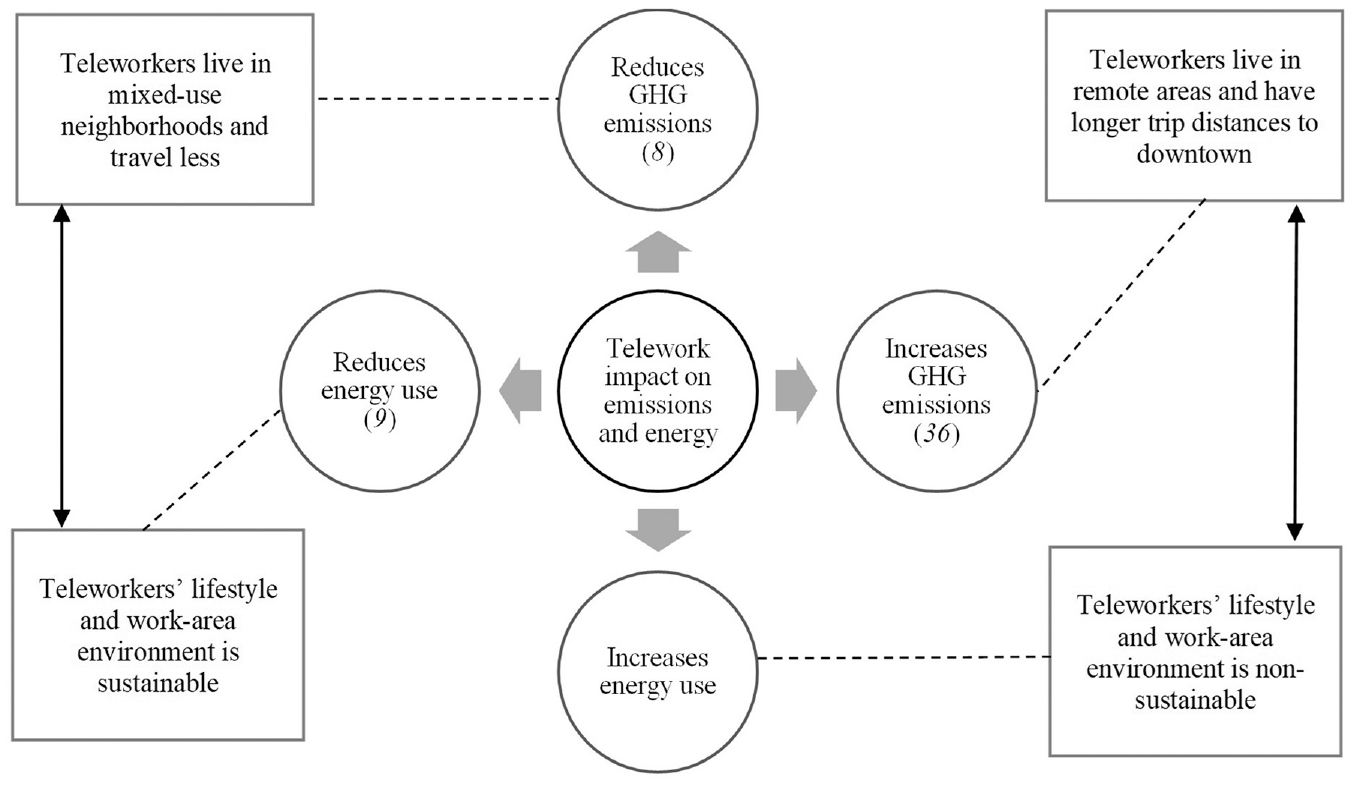
Impacts of teleworking on emissions and energy use.
The number of studies in the areas of teleworking, emissions, and energy use is still growing. Throughout during the lockdown period of COVID-19, the air quality index was found to continuously improve in cities across the world. During that time, a substantial amount of people worked from home, and as a result travel demand was significantly reduced. Although there were other factors responsible for the reduction of air pollution during COVID-19 (e.g., industries were closed, and air and water travel was suspended), teleworking has been identified as a major catalyst to reduce traffic-related emissions. Vehicular traffic emission is a major contributor to GHG emissions. Experts have discussed that, moving forward, teleworking can be utilized as a strategy to fight climate change ( 37 ).
Teleworking Studies During COVID-19
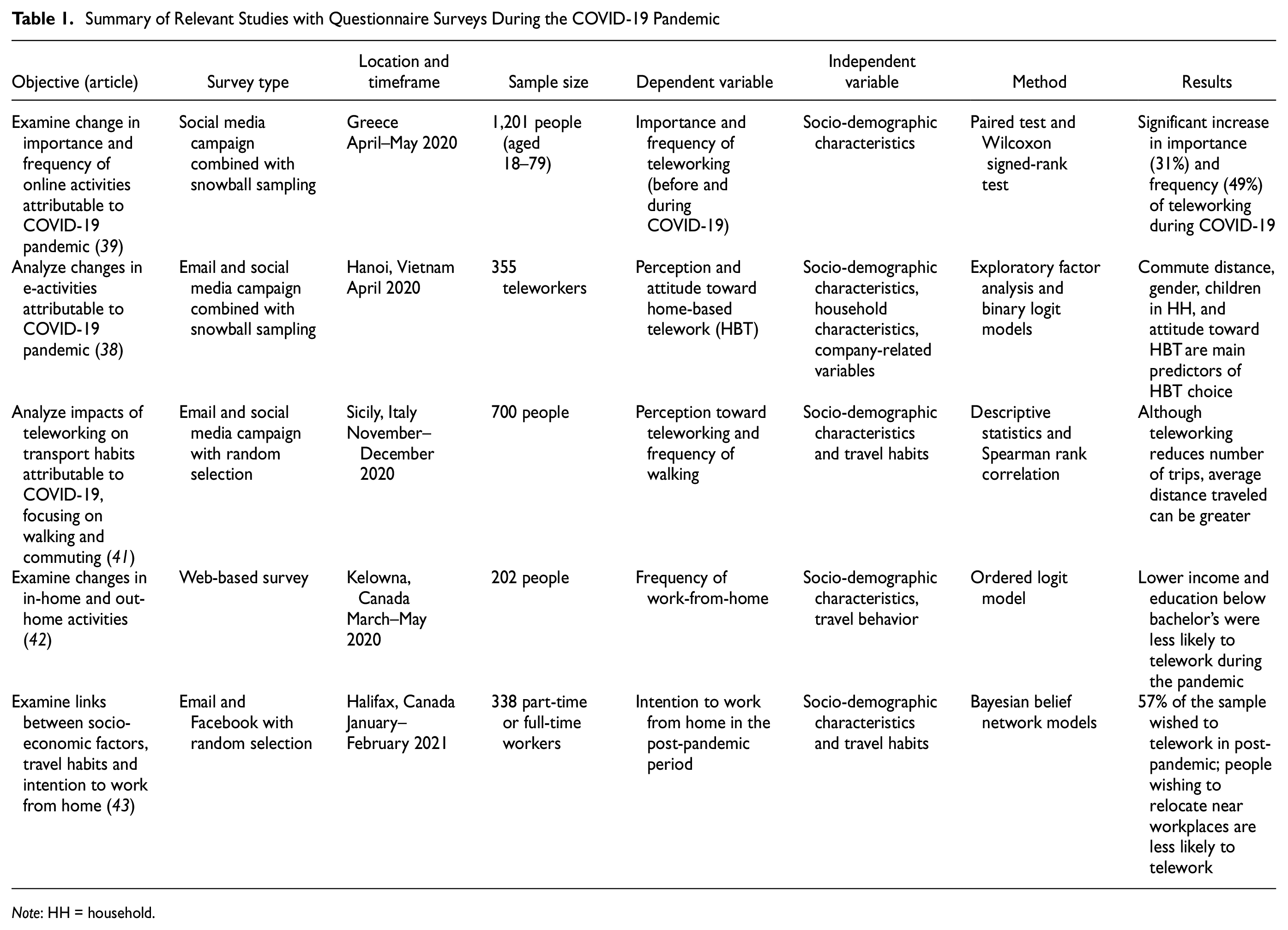
The COVID-19 pandemic has revealed the possibilities of communication technologies, thus motivating researchers to further explore their prospects. Scholars have been prompted to understand the dynamics of teleworking in cities across the world. Studies have focused on understanding the telework adoption rate in cities during the pandemic, explored factors affecting the choice to telework, attitude and perception toward it, and intention to continue teleworking in the post-pandemic time. Several other studies have examined its impact on travel behavior, while some have explored ways to utilize teleworking schemes to cope with complex urban issues such as traffic congestion and air pollution. Table 1 provides a synopsis of relevant studies conducted during the COVID-19 pandemic.
Summary of Relevant Studies with Questionnaire Surveys During the COVID-19 Pandemic
Note: HH = household.
Intention to Adopt Teleworking
Nguyen examined individuals’ intention to continue teleworking post-pandemic. The author used data of 355 teleworkers in Hanoi, Vietnam during April 2020 ( 38 ). It was found that the employers’ plan and the frequency of teleworking before the pandemic were the primary factors of teleworking choice. The paper identified fear of the virus as positive determinant, whereas difficulties in focusing on work and accessing data were recognized as negative factors. The author found gender, commute distance, and number of children in the household to be the main predictors of intention to telework. The author argued that telework has the potential to reduce traffic congestion, particularly in developing countries, and it can be boosted by prioritizing its environment-related benefits. Mouratidis and Papagiannakis examined changes in online activity participation before and during COVID-19 ( 39 ). The authors used data from a nationwide survey in Greece and applied descriptive statistics and t-test for assessing the perceived importance of online activities. Findings showed that both value and frequency of engaging in online activities (e.g., telework, e-shopping, e-learning) substantially increased during COVID-19 compared with pre-COVID.
Teleworking and Mobility Behavior
Several researchers have included teleworking questions into travel surveys and explored the effects of teleworking on activity-travel behavior during the pandemic ( 38 – 43 ) (Table 1). Researchers also explored the potentials of teleworking to reduce traveling time in the post-COVID era. Mehdi and Morissette showed that a full shift to teleworking would reduce the average time spent commuting by almost 1 h per day ( 44 ). Some studies focused on the equity issue of teleworking during the pandemic, demonstrating that most of the teleworking people belonged to high-income households ( 43 ). Additionally, essential workers (e.g., healthcare, emergency services, retail, and construction) could not work from home because of the nature of their work. Oftentimes, these people belong to low-income households. Moreover, areas where internet penetration and speed are low do not benefit from teleworking ( 45 ).
Teleworking and Traffic Emissions
It has been widely discussed that the economic recovery following COVID-19 should consider a multitude of issues, one of which is climate change ( 46 ). Several researchers have highlighted the significance of teleworking for a strong and positive return to a “new normal.” Shifting to telework can essentially reduce GHG emissions, as demonstrated by Mehdi and Morissette ( 44 ). The improvements achieved in relation to air quality during the pandemic should be maintained, and teleworking has the potential to assist the process. Cruickshank suggested that the extent of the pollutant emissions reduction that can be gained from teleworking in any context can be attributed to variety of factors, such as the mode choice of teleworkers and energy-use behavior ( 47 ). Furthermore, Tenailleau et al. reported the efficiency of teleworking for reducing traffic emissions in the context of a mid-size European city, with an average reduction of 0.42% for an increase of 1% in teleworking rate ( 48 ). Several other research efforts have found the potential of teleworking for reducing traffic emissions during the pandemic period and suggested prioritizing and promoting it as an effective contributor toward the reduction of long-term urban air pollution and short-term pollution peaks ( 49 , 50 ). Existing studies also indicate that teleworkers are more willing to use transit and active transport if their activity destinations are closer to their home ( 51 ). Therefore, mixed-use neighborhoods where people can both live and work are appropriate for reducing emissions with teleworking.
As illustrated in Figure 5, this study classifies both pre-COVID and during-COVID telework studies related to transport and land-use planning.
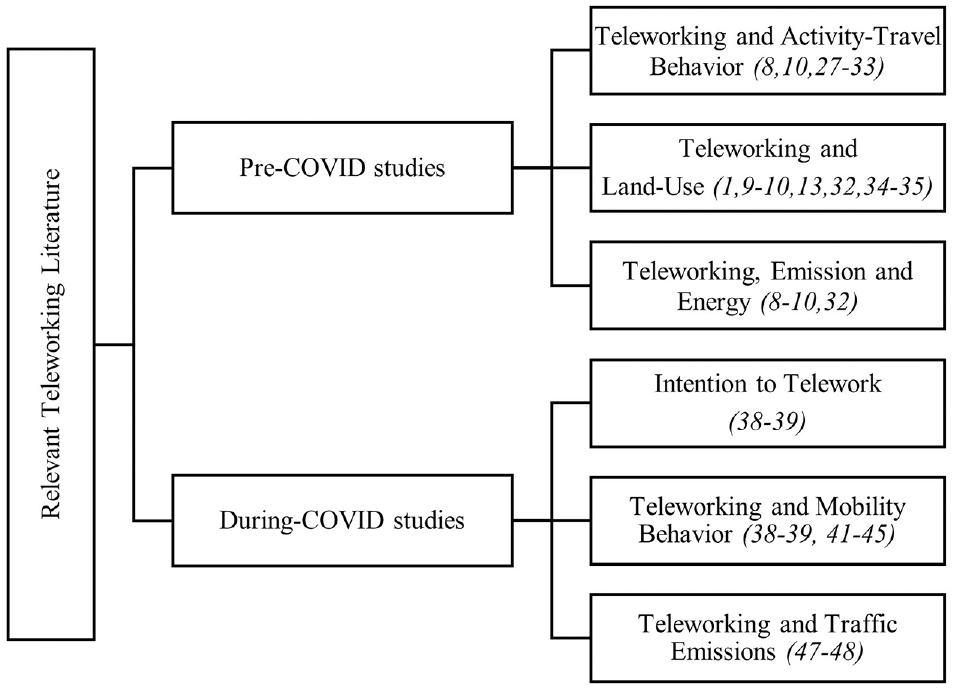
Classification of existing teleworking studies related to transport and land-use planning.
Figure 5 indicates that there exist overlaps of studies between topics; for example, Henderson and Mokhtarian examined the relationship of teleworking with both activity-travel and emission patterns ( 8 ). Furthermore, while investigating individuals’ intention to telework, Nguyen also investigated how teleworking affects people’s mobility behavior ( 38 ). Urban system components, such as transport, land-use, and environment are interconnected, and teleworking is related to each of them. Thus, researchers often delve into assessing the underlying relationships covering multiple topics in a single study.
Discussion
Teleworking or work-from-home is one the emerging behaviors from the COVID-19 pandemic that may become permanent. However, there exist a lot of gaps in the literature in relation to this topic, especially its potential effects on urban transport and land-use dynamics. Considering its high capability to transform urban mobility and landscape, this subject matter needs more attention. This paper reviews existing scholarly works to identify the sectors demanding further exploration. Considering the rigorous analysis of existing literature, this paper develops a Topic–Significance–Direction (TSD) framework to guide future telework research (Table 2).
Topic–Significance–Direction (TSD) framework for teleworking research.
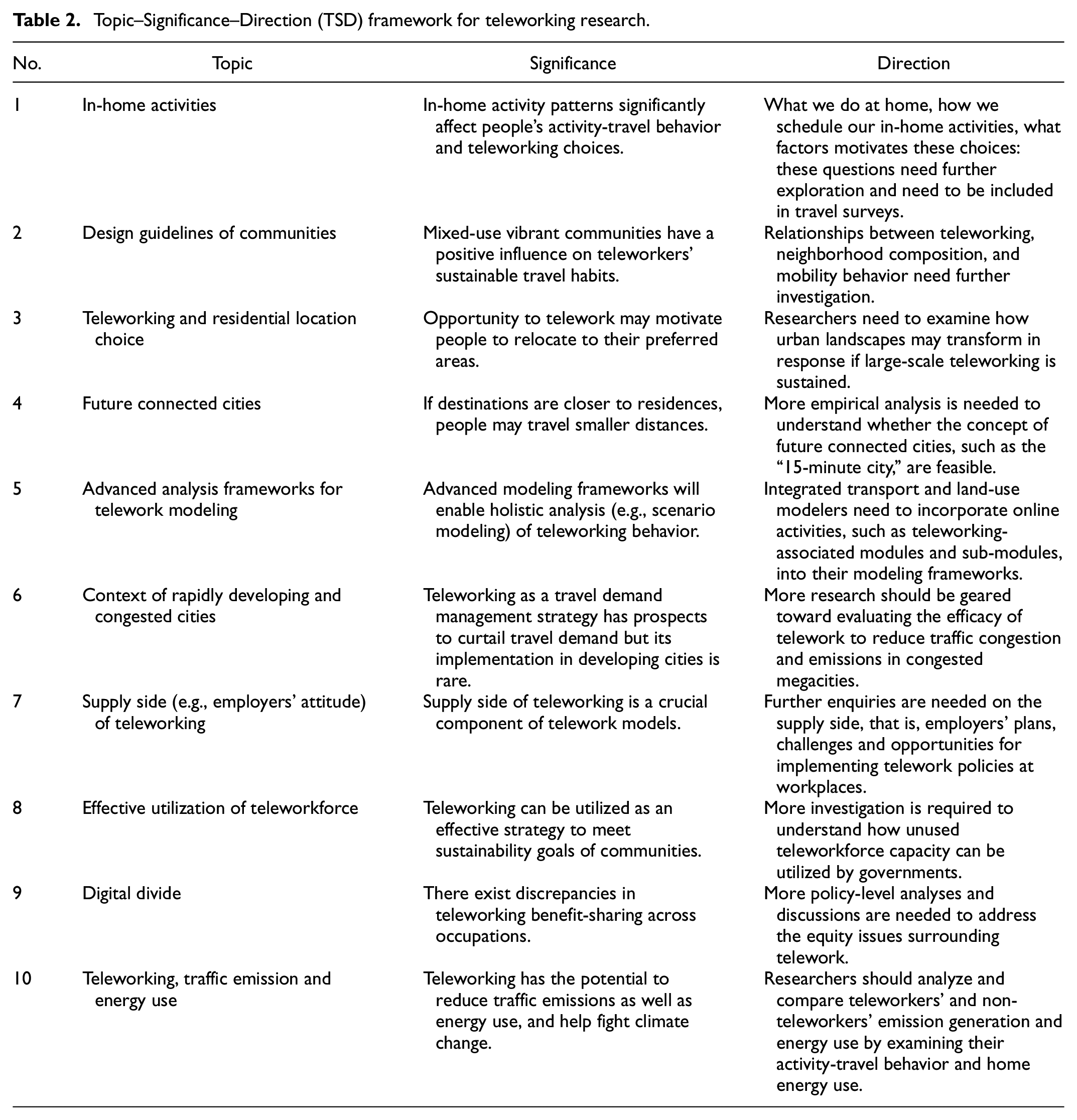
There is clear evidence in the literature that work-from-home will continue to affect urban mobility dynamics (27–32, 40 ). One of the less-explored areas related to this field is in-home activities of people ( 42 ). In-home activity patterns are key components of teleworkers’ daily travel behavior ( 8 , 27 ). What we do at home, how we schedule our in-home activities, what factors motivate these choices—these are questions that need further exploration, as these activities may have serious impacts on the health and well-being of teleworkers. As suggested by Pratt ( 40 ), travel behavior modelers should include “telecommuting”-related questions in future travel surveys to learn more about teleworking factors. Integrated transport and land-use modelers need to incorporate online activity, such as teleworking-associated modules and sub-modules into their modeling framework ( 52 , 53 ). Additionally, if telework is sustained, how may the urban landscape transform in response? Scholars need to examine whether this will be a localized impact, or a global impact. Considering the influence of teleworking on migration patterns ( 13 ), the opportunity to work from home may motivate people to relocate to their preferred areas (e.g., suburbs, smaller cities, close to nature) ( 54 ). This poses critical questions such as: “Will big cities lose prominence as a result?” and “How may it affect land values and real-estate market?” Further analysis is required to understand these phenomena. Reduced demand for office and retail spaces because of COVID-induced telecommuting, home delivery, and online services may lead to the reconfiguration of urban spaces. This is another research area that needs further exploration.
Wider adoption of telework may fundamentally transform origin–destination matrices in cities. In response to the findings that mixed-use vibrant communities have a positive influence on teleworkers’ sustainable travel habits ( 35 ), planners need to rethink the design guidelines of communities. Besides being ideal for teleworkers, mixed-use communities are a safe and lively environment where children can play and people can exchange thoughts, ideas, and share their daily lives. Review analysis in this paper showed that teleworkers often increase their VMT by making more non-work-related trips and traveling greater distances. If teleworkers can be provided necessary amenities (e.g., restaurants, shopping centers, gyms, parks) and institutions (e.g., child-care, religious centers) close to their home, they may not travel far for non-mandatory activities. More empirical analysis is needed to understand whether the concept of future connected cities, such as the “15-minute city,” are feasible.
To accurately forecast the impact of teleworking on traffic emissions, further research is required with proper modeling frameworks. These models should include relevant factors and consider their changeability across contexts. Critical modeling factors include mode choice of workers, distance traveled, amount of commercial and residential electricity use, and what power sources they use. Similar to the balance equation observed in “teleworking and VMT,” if working from home leads to more electricity use and demands additional coal-fueled power plants to come online, it could outweigh the emissions reductions achieved from not driving. On the contrary, if that extra electricity comes from renewable sources, teleworking could reduce emissions.
The majority of the existing studies inspecting the impacts of teleworking on urban travel, land-use, or the environment are based on developed countries. Megacities in developing countries are highly congestion prone; during peak periods, particular roads stay gridlocked and urban life comes to a standstill. Billions of working hours are wasted each year because of traffic congestion in these places. Traffic-related emissions are one of the key contributors to toxic air quality in developing countries, and ever-increasing congestion is making it worse day by day. Although teleworking as an effective travel demand management strategy has incredible prospects to curtail travel demand, its implementation in rapidly growing and developing cities is rare ( 38 ). Therefore, more research should focus on utilizing telework to reduce traffic congestion in those contexts.
Existing research on telework adoption is mostly focused on the demand side ( 38 , 39 ), thus more enquiries are needed on the supply side (e.g., employers’ perceptions and plans in relation to telework, challenges and opportunities for implementing telework policies at workplaces) for a clearer understanding of the competing issues surrounding wider adoption of teleworking. Further analysis is also needed at the policy level to leverage teleworking as an effective strategy to meet community sustainability goals. Research shows that in Canada, four out of ten jobs can be done from home. Governments may consider utilizing the unused teleworking capacity at the aggregate national level ( 44 ). However, they need to have specific plans to integrate teleworking into their planning process and explore financial incentives, such as tax benefits ( 1 ), employment assistance, or other supports (e.g., increased annual leave) to retain it. The “digital divide” may become a crucial problem to solve for decision-makers as well. Overall, studies in “teleworking and equity” are rare. More policy-level analysis and discussions are needed to address the equity issues associated with telework; for example, integrating ICT in rural areas, supporting people whose occupation cannot allow teleworking, and making internet and broadband services more accessible and affordable.
Conclusion
The COVID-19 pandemic has showed that more workers are able to telework than had been observed before the pandemic. This brings up a lot of research questions that need to be investigated. Teleworking in the past was limited, therefore the extent of its impact may not have been observable. Further research on this topic is essential considering a large-scale adoption in the future. It is apparent from existing scholarly works, review articles and discussions that if properly utilized, teleworking can help to alleviate many modern city issues, such as traffic congestion, air pollution, and degradation of energy resources. Governments should evaluate the value of teleworking and examine whether wider adoption of flexible work arrangements can assist in achieving a green recovery from the COVID-19 pandemic. Potential impacts of teleworking on urban mobility and systems in the post-pandemic time are less known. The choice to telework is closely linked to individuals’ daily activity patterns and destination choices, and has significant implications for public spaces, as well as urban and sub-urban land-use configuration. Furthermore, teleworking has critical environmental impacts. These are complex and interconnected phenomena; thus, more research is needed to allow a clearer understanding of these concepts. Through an in-depth and rigorous literature review, this paper tries to identify the gaps in the literature in relation to the effects of teleworking on transport, land-use, and environment, focusing on post-pandemic planning needs. It reviews pre-COVID knowledge on the subject area and analyzes pandemic-time scholarly articles to discuss important avenues for future research. This paper is the start of a project that the authors intend to extend further. Future works will explore the outcomes and propositions of this study through advanced modeling techniques and quantitative analysis of observed data.
Footnotes
Acknowledgements
The authors would like to thank Natural Sciences and Engineering Research Council of Canada (NSERC) Discovery Grant and NSERC COVID-19 Alliance Grant for their contributions in supporting this research. The authors are grateful to Kirstin Poole for her time to proofread the manuscript.
Author Contributions
The authors confirm contribution to the paper as follows: study conception and design: M. A. H. Anik, M. A. Habib; data collection: M. A. H. Anik, analysis and interpretation of results: M. A. H. Anik, M. A. Habib; draft manuscript preparation: M. A. H. Anik, M. A. Habib. All authors reviewed the results and approved the final version of the manuscript.
Declaration of Conflicting Interests
The author(s) declared no potential conflicts of interest with respect to the research, authorship, and/or publication of this article.
Funding
The author(s) received no financial support for the research, authorship, and/or publication of this article.
