



Abstract
Gravel roads form a significant share of the global road network, usually in sparsely populated rural areas. They are important, especially in agriculture, tourism, and forestry, connecting rural to urban areas. This systematic literature study comprises 105 reviewed publications on gravel road maintenance. Review articles on maintenance management practices, especially concerning objective condition assessment and data-driven methods (DDMs), are lacking. Therefore, this review provides a concise overview of current gravel road maintenance practices and ongoing research on objective condition assessment and DDMs for gravel road maintenance. It offers researchers in gravel road maintenance and other related fields a clear indication of where to focus their research efforts, as it suggests the direction for future research. Visual assessment methods are predominant for monitoring the condition of gravel roads, while objective methods and DDMs are not common. Research on gravel roads and their maintenance has increased in the last two decades, especially in North America and Northern Europe. Condition assessment is shifting from subjective to objective methods, utilizing knowledge from technological advancements in image processing, vibration and acoustics analysis, and so forth. There are some excellent research initiatives for objectively assessing the condition of gravel roads and DDMs, but the practical implementation is limited. Implementing objective assessment methods and DDMs generally improves the management of gravel roads with regard to decision-making, maintenance costs, safety, and the stability and comfort of the ride. Objective condition assessment and DDMs have the potential to enhance maintenance practices in the maintenance of gravel roads.
Roads are important assets for the sustainable economic development of a country, as they facilitate communication and the transfer of goods, services, and people ( 1 ). Paved roads constitute the main routes of the road network, while unpaved roads, such as gravel roads, are found in sparsely populated and rural areas. The terms “paved” and “unpaved” are defined differently in different parts of the world. In this article, any road with a constructed layer (surface treated road) is considered paved. In contrast, unpaved roads are unsealed (unsurfaced) roads, including dirt, earth, and gravel roads, as defined in the gravel roads management report by Huntington and Ksaibati ( 2 ). According to the second edition of the American Association of State Highway and Transportation Officials (AASHTO) low-volume road design guidelines ( 3 ), unpaved roads satisfy the criteria of low-volume roads if the average daily traffic volume is 2000 vehicles per day or less ( 3 , 4 ).
Gravel roads play a critical role in agriculture, forestry, wildlife and tourism, fire control, search and rescue services, recreation, and cultural and historical heritage, and affect socioeconomic living conditions in rural areas ( 5 , 6 ), and therefore should be maintained at an acceptable level of service (LoS) ( 7 , 8 ). According to Apronti et al. ( 9 ), around 69% of the road mileage in the U.S.A. consists of low-volume roads and taking traffic counts on such roads is not cost-effective. About 35% of the public road network in the U.S.A. is unpaved ( 4 ), which implies that 34% of paved roads in the U.S.A. are low-volume roads, that is, the average daily traffic volume is 2000 vehicles per day or less, based on the new second edition of the AASHTO low-volume road design guidelines. Similar figures, that is, 35%, are reported for the unpaved road network of Sweden ( 10 ).
Operations and maintenance account for a significant percentage of road assets’ total life cycle cost, but the cost of poor maintenance is even greater ( 11 ). Road performance deteriorates over time like other engineering assets, and the deterioration process could be uncertain if not adequately monitored ( 12 ). Proper gravel road maintenance reduces the deterioration rate, thus postponing costly reconstruction, reducing vehicle operation and maintenance costs, and road failure delays ( 12 ). Gravel road condition assessments are performed to ascertain the road condition with maintenance and rehabilitation decisions, in some cases, based on political and economic factors ( 13 ).
To achieve the required LoS, local authorities require adequate financial resources, human resources, equipment, and quality gravel materials. However, they face the challenges of limited and scarce public resources but are still expected to achieve sustainable gravel road maintenance ( 14 , 15 ). Some agencies prioritize the maintenance of paved and main roads over low-volume gravel roads ( 16 ). Gravel is a non-renewable resource; therefore, maintenance actions such as blading and re-gravelling contribute to the depletion of these natural resources and negative environmental impacts ( 10 ). The scarce resources for gravel road maintenance and the environmental impact of gravel roads are rational motivations to find new and efficient maintenance practices.
This review article thus focuses on the maintenance and management of gravel roads and does not comprehensively address their design and construction. Different standards and manuals have extensively covered the design and construction of gravel roads and differ in different parts of the world. Four of the best manuals for the design, construction, maintenance, and management of gravel roads are the Gravel Roads Maintenance and Design Manual ( 17 ) for maintainers, the Low Volume Roads Engineering: Best Management Practices Field Guide ( 18 ), and Environmentally Sensitive Maintenance for Dirt and Gravel Roads ( 19 ) for design and construction. At the same time, the Unsealed Roads Manual: Guidelines to Good Practice ( 20 ) is mainly for the management of gravel roads but also covers aspects of design and construction. Other manuals and documents for the design, construction, and maintenance of gravel roads are found and include Chong and Wrong ( 21 ), Eaton and Beaucham ( 22 ), and Walker et al. ( 23 ). However, comprehensive review articles on gravel road maintenance are lacking. To address this gap, the article reviews the literature on gravel road maintenance.
Furthermore, the article forecasts the future with regard to applying objective condition assessment and data-driven methods (DDMs) for the maintenance of gravel roads using the technological advancements of Industry 4.0 and closely related areas. Industry 4.0 unlocks the opportunity to shift from experience-based maintenance planning to employing smart sensors, machine learning (ML), and big data analytics for maintenance optimization ( 24 ). The article proceeds as follows. The research approach and the literature search results, including a descriptive analysis of gravel road maintenance evolution, are described in the next section. Then, there follows a brief synopsis of gravel roads and their current maintenance practices. The future direction of gravel road maintenance is then presented, and finally, conclusions are drawn, including proposals for further research.
Research Approach and Descriptive Analysis of Gravel Road Maintenance
This review links and summarizes the searched studies into a qualitative narration, albeit based on a systematic literature survey, that is, a combination of inductive and deductive research approaches is used ( 25 ). Table 1 shows the keywords used in the search representing the study area.
Keywords Used for the Literature Search
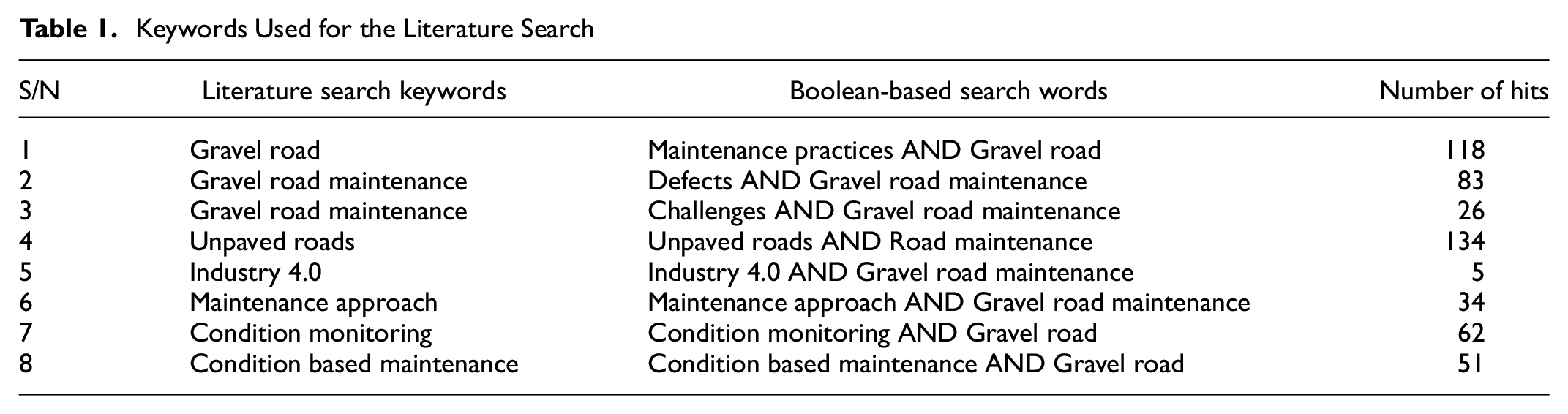
A Boolean-based search was carried out in the search engine “OneSearch” to find journals and publications from 1980 to 2021 with the keywords in Table 1. OneSearch links to databases such as IEEE, Springer Link, Emerald and Science Direct, Google Scholar, and the Linneaus University library database. The delimitation criteria were full text, English language, peer-reviewed, academic journals, conference materials, book chapters, research reports, and manuals with no geographical limitations. The search was broadened to include R Discovery, Academai.Edu, and Elsevier databases. The search results included overlapping articles from the different databases; with the duplicates and non-relevant results removed, 105 relevant hits were considered for the review, including gravel road maintenance manuals, research reports, webpages, and articles that address gravel road maintenance. The references and full texts were managed using the Mendeley reference manager.
Descriptive Analysis of Gravel Road Maintenance and its Evolution
Figure 1 shows an increase in studies on gravel roads and their maintenance based on the reviewed publications from 1983 to 2021, categorized as peer-reviewed journal articles, conference papers, research reports, and others. The 105 reviewed publications are distributed as follows:
journal articles = 55;
conference papers = 21;
research reports = 12;
others = 17.
The sources referred to as “others” include maintenance manuals and standards, dissertations, news articles, and websites.
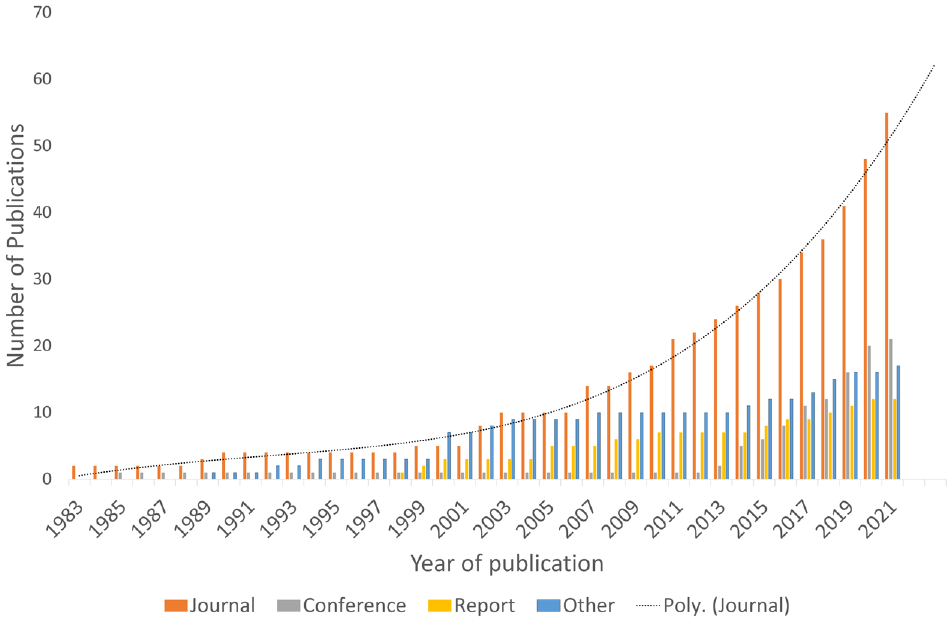
Increase in publications on gravel road maintenance.
Figure 1 also shows a trendline forecasting the expected increase in research (journal articles) on gravel roads and their maintenance.
Research on gravel roads was prominent in the early 1990s, but attention later shifted to paved roads and permanent carriageways ( 26 ). However, studies in the early 1990s were mainly research reports and maintenance manuals, and not scientific publications (journal articles and conference papers). From this review, the first journal article on gravel maintenance was published in 1983, with an exponential increase from then, most noticeable in the last two decades (see Figure 1). The increasing knowledge of the benefits of well-maintained gravel roads and the effects of a poor gravel road network could have contributed to this exponential increase. Gravel road owners and governing bodies seek to minimize maintenance costs because of scarce resources. They are required to follow governmental directives and therefore opt for optimum use of the available sources by employing good construction and maintenance techniques, applying appropriate standards and gravel loss prediction models to attain quality performance and sustainability ( 27 ).
The 55 reviewed journal articles were published in 25 journals, and only seven journals have published more than one article in the period under review, accounting for about 67% of the reviewed journal articles based on this research (see Table 2), and were published in the journals listed in Table 2.
The Top Journals in the Review
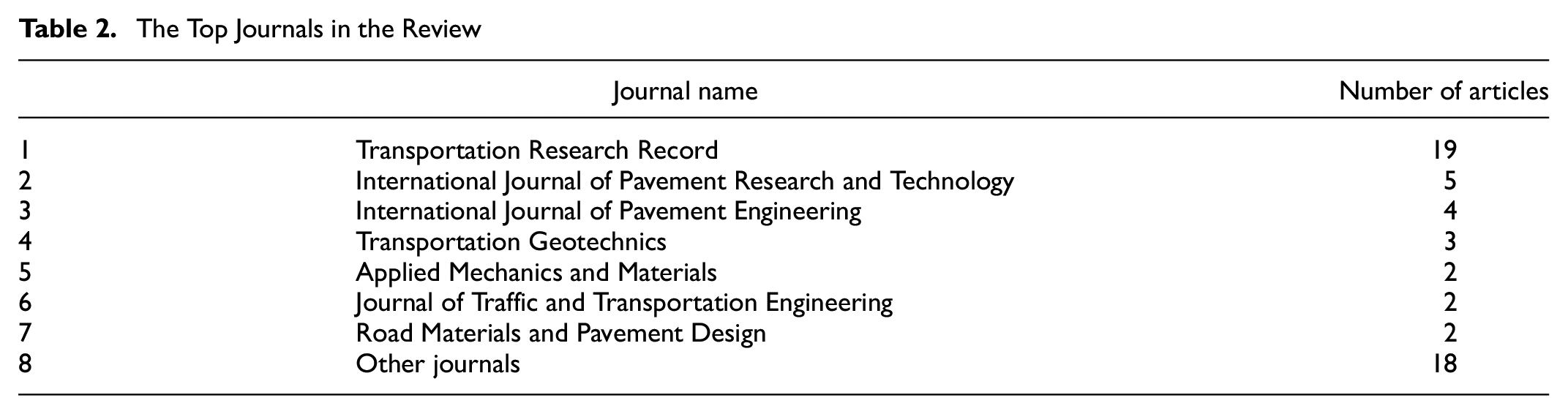
The Transportation Research Record accounts for about 35% of the reviewed articles and thus provides the most coverage on gravel road maintenance (see Table 2). Research on gravel road maintenance has been conducted in 19 countries based on journal publications, especially in North America and Northern Europe. There is active research in Africa as well, particularly in South Africa and Botswana. Figure 2 shows the number of journals on gravel road maintenance classified by country.
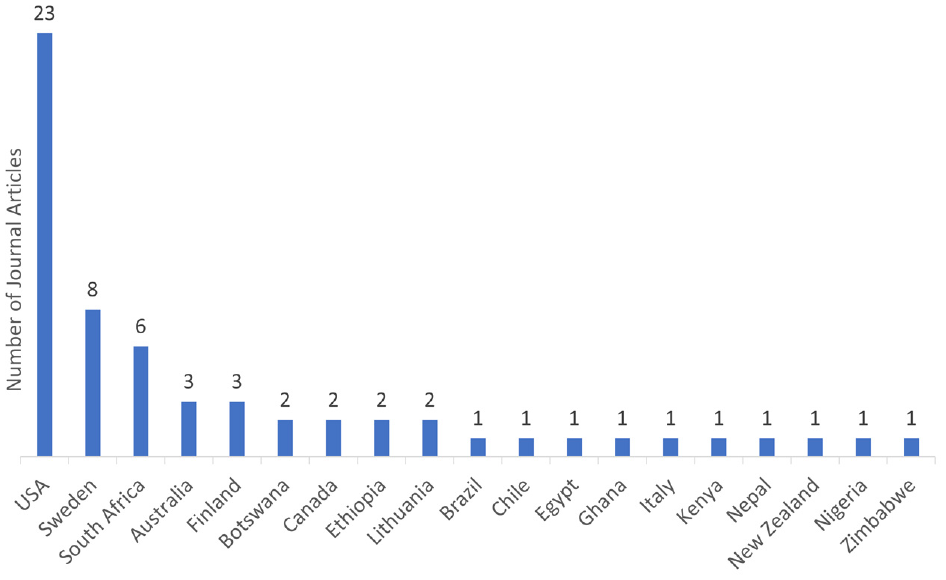
Number of journal publications by country.
About 42% of the research was conducted in the U.S.A., while Sweden accounts for 15%. Interestingly, very few publications were found in Asia and South America (see Figure 2). The lack of research publications from South America and Asia could be because the countries in these regions publish in other languages instead of English; therefore, their articles could not be detected during the literature search.
The number of times other works cite an article is important, as it gives a rough idea of the research’s coverage, relevance, and impact. It can also be argued that the citation count reflects the quality and originality of the research work. For this citation analysis, the Web of Science, Research Gate, Scopus, and Google Scholar were selected to determine how many times each journal article included in this review was cited in other works. It was observed that Google Scholar and Research Gate found more cited references than Web of Science or Scopus. Based on this citation analysis, the average citation of all journal articles included in this review is 12.0. Table 3 shows the citation analysis of the journal articles with more than 15 citations.
Citation Analysis
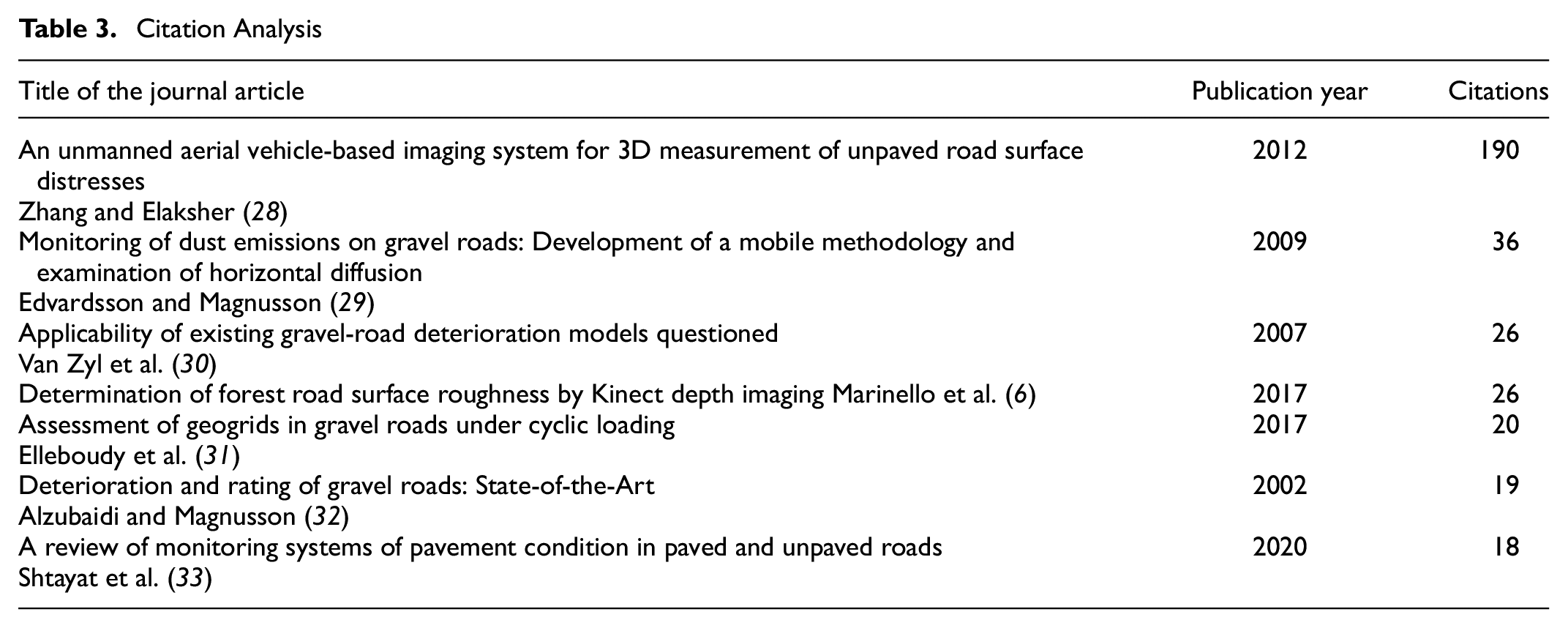
From Table 3, the work of Zhang and Elaksher ( 28 ), who used an unmanned aerial vehicle (UAV)-based digital imaging system for road condition assessment that is capable of providing three-dimensional (3D) information on surface faults with high accuracy and reliability, had the highest number of citations (190). This result indicates interest and a shift from subjective to objective condition assessment methods of gravel roads using digital imaging systems. The study of the road roughness parameters from Kinect depth imaging by Marinello et al. ( 6 ) also received a high number of citations (26). Edvardsson and Magnusson ( 29 ), who studied the dust emitted from gravel roads, received the second highest number of citations (26), implying that dust emission is a concern among the gravel road scientific community. Moreover, there is an increasing interest in road diagnostics and deterioration models, evidenced by the high number of citations of the article by Van Zyl et al. ( 30 ). The strength of gravel roads is of concern to researchers, as seen by the comparatively high number of citations (20) of the article by Elleboudy et al. ( 31 ). They studied the inclusion of a geogrid sheet at the base course layer of the gravel road to reduce vertical deformations. They found that the effective location of the geogrid was the top quarter of the base course layer. Based on the findings in Table 3, the works of Zhang and Elaksher ( 28 ), Edvardsson and Magnusson ( 29 ), and Marinello et al. ( 6 ), who applied objective condition assessment methods, have high coverage and a significant impact, an indication of interest from researchers for objective assessment methods of gravel road maintenance in the future.
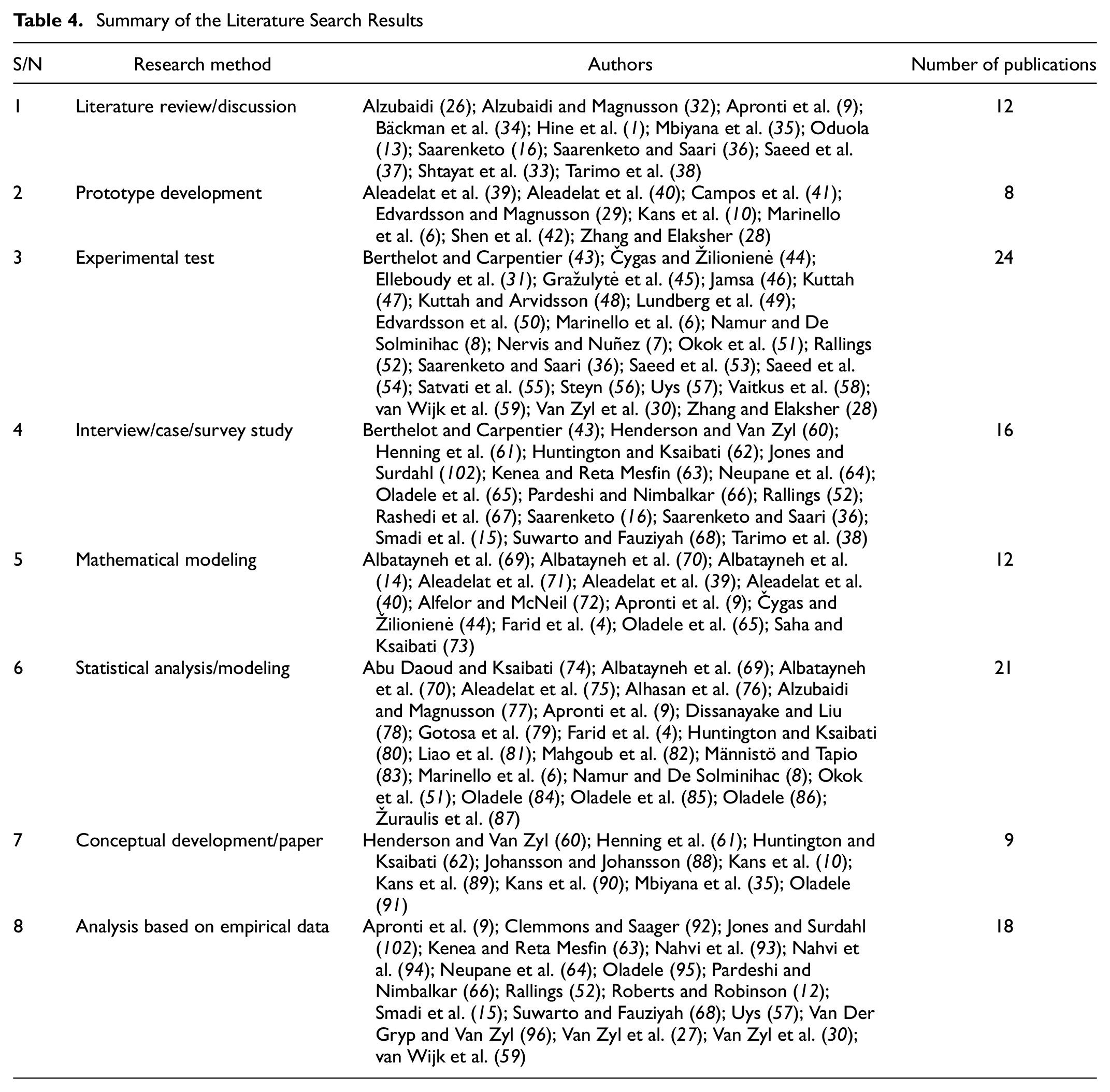
Table 4 summarizes the cited publications categorized based on the research method used. Some publications are categorized using more than one research method. Table 4 does not include publications classified as others (gravel road maintenance manuals, webpages, special reports, maintenance standards). Quantitative studies based on experimental design or statistical and mathematical modeling and analysis are predominant and appear in 57 articles (see Table 4). In addition, eight articles involve prototype development, mainly based on a quantitative approach. Qualitative studies based on interviews, surveys, and cases appear in 34 articles, while conceptual studies, including literature reviews, are found in 21 articles.
Summary of the Literature Search Results
Gravel Roads and their Current Maintenance Practices
Gravel roads, sometimes referred to as unsurfaced, unsealed, unimproved, or unpaved, are roads without cement, asphalt, concrete, or any surface treatment and constitute a subbase load-bearing layer and a gravel surface wearing course layer, which are crowned, creating a crossfall for drainage purposes into ditches ( 38 ), as shown in Figure 3.
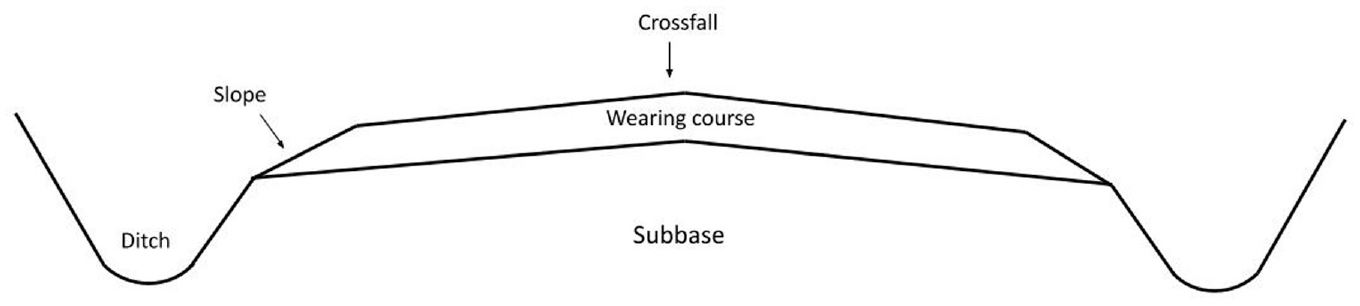
Gravel road cross-section.
Gravel roads have lower traffic and loads compared to paved roads, with less than 400 vehicles per day as the annual average daily traffic (AADT), making surface treatment uneconomical ( 26 ) yet important for rural residents and companies, as well as for recreation. They constitute a significant proportion of the global road network; for instance, in Sweden, about 75% of the national road network is unpaved ( 26 ). About 22% of the public roads administered by the Swedish Transport Administration, Trafikverket, are considered public gravel roads ( 32 ).
The indicator of AADT is critical for decision-making in managing gravel roads ( 38 ). In Sweden, these roads have an AADT below 200 ( 54 ), and in Tanzania, the road manual recommends gravel roads for road design when the AADT is less than 300 ( 38 ). Clemmons and Saager ( 92 ) found that paving a road is justified at 145 vehicles per day, considering road user costs (RUCs), the environmental impact of dust, and road maintenance costs. Although many gravel roads have an AADT of less than 400, a good number of low-volume roads have an AADT greater than 400; for instance, the criteria of low-volume roads according to the new AASHTO low-volume road design guidelines is an average daily traffic volume of 2000 vehicles per day or less ( 3 ).
Gravel Road Faults
Common faults on gravel roads include dust, potholes, corrugation, rutting, inadequate drainage capacity, the disintegration of gravel, loose gravel, and frost damage ( 32 ). Traffic volume and composition, climatic conditions, and vehicle speed influence the occurrence of these defects ( 32 ). Dust is generated by traffic, and the quantity generated is influenced by the traffic volume, the gravel material properties, the air velocity near the road surface, and the weather ( 58 , 69 ). Dust particles affect the air and water quality, leading to health problems in humans and animals ( 26 ). The dust from gravel roads also negatively affects the agricultural sector and reduces photosynthetic activity and crop yield ( 69 ). The cost estimate of the environmental damage and the negative impact on human and animal health of the dust from gravel roads was USD 1.510/km/year ( 40 ). Dust also reduces visibility and contributes to road crashes on gravel roads ( 70 ). Potholes are concave-shaped depressions on the road surface, measuring between 30 and 80 cm at the road surface level with a depth of between 3 and 7 cm, formed when the surface material is washed away by water or removed by forces from traffic action ( 26 ). Water collected inside the depression weakens the road as the finer materials are removed by the traffic and accelerates the propagation of the pothole ( 32 ). However, potholes of depth greater than 10 cm indicate poor road construction design and are of safety concern requiring urgent intervention ( 32 ). Potholes can be classified into regular, transitional, and irregular patterns ( 26 ).
Corrugation, also referred to as wash-boarding, results from traffic volume, vehicle speed, subgrade characteristics, vibrations of vehicle suspension systems, and gravel properties ( 82 ). They are cycles of even elevations and depressions aligned across the width of the gravel road surface, perpendicular to the traffic flow, causing a rough and uncomfortable ride for motorists ( 82 ). The integrity of the gravel influences the presence of loose gravel, and when heavy traffic loads crush the gravel and push it to the roadside, it results in ruts that retain water ( 54 ). Gravel loss contributes to rutting, the undesirable environmental impact of sedimentation and dust, and the reduced structural strength of the gravel road ( 38 , 67 ). Rut depth and vertical deformations increase with increasing water levels and heavy vehicle traffic, underscoring the need for proper road drainage system maintenance ( 48 ). Road roughness influences the ride quality and results from the combined effects of the different faults ( 67 ). Therefore, road surface condition is commonly used for the classification of the gravel road condition and prioritization of maintenance ( 26 , 46 ). Gravel road condition assessments are mainly carried out using subjective visual surveys or a combination of subjective and objective measures, and road classification is based on factors such as the road surface condition and traffic intensity ( 66 , 89 ).
The objective conditions assessment methods of gravel roads that use advanced technologies and DDMs have not been applied holistically ( 35 ). This is evident in the few projects and research focusing on objective methods for maintaining gravel roads in the European context. The ROADEX project, a partnership among Northern European road associations, is one of the initiatives advancing modern technology for condition monitoring of gravel roads ( 97 ). The Sustainable Maintenance of Gravel Roads project is developing a new concept for more sustainable, efficient, and environmentally friendly gravel road maintenance ( 98 ). The WiRMa project has researched new winter road maintenance solutions applying the Industrial Internet of Things (IIoT), exploiting vehicle-based sensor data for maintenance planning and alert management with a visualization system for the end user ( 99 , 100 ). Chapman et al. ( 101 ) describe winter road maintenance and the Internet of Things (IoT) by creating a winter maintenance demonstration corridor in Birmingham, U.K., integrating a road weather information system (RWIS) for improved maintenance decision-making. Advanced research on objective condition assessment in winter road maintenance can be easily modified for gravel road maintenance.
In the U.S.A., the Wyoming Technology Transfer Center (WYT2C) and the University of Wyoming are researching gravel road maintenance and developing a management system for gravel roads ( 40 ). They have applied objective condition assessment methods in some of their work ( 69 , 75 ). However, this is not a comprehensive list of research centers investigating the maintenance of gravel roads and developing management systems. Other ongoing research and development on objective and automated assessment methods are also found ( 54 ). For instance, specialized vehicles and devices are used to assess the condition of the gravel road surface for road condition classification ( 89 ). A central road condition information system for real-time monitoring and a digital platform in specialized vehicles enhance maintenance planning and decision-making ( 89 ). In practice, faults such as dustiness and loose gravel are assessed subjectively, while crossfall and road edges are assessed objectively ( 89 ).
Gravel Road Maintenance
Restoring a gravel road to a “normal” operational state requires maintenance actions. Gravel road maintenance planning aims to achieve the required LoS, so criteria for condition assessment, roads to be maintained, and operation and maintenance measures are of interest ( 26 ). Gravel road maintenance costs comprise approximately 17% of the total maintenance budget for roads, that is, paved roads, gravel roads, bridges, tunnels, and ferries ( 26 ). Gravel roads demand regular maintenance, such as blading, re-gravelling, dust control treatment, and ditching and removing vegetation at least once a year ( 37 ). Gravel road maintenance strategies may include acute maintenance, worst first, employment of coordination benefits, scheduled maintenance intervals, and usage minimization ( 34 , 36 ).
Blading, sometimes called grading, is a maintenance action to restore the shape and surface of the road and improve the drainage and ride comfort ( 72 ). The surface roughness, gravel loss of the wearing surface, rut depth, and loose gravel are indicators of the deterioration and the gravel road condition ( 72 ). Furthermore, the slope/road geometry, camber, potholes, and corrugation are fixed by blading, and if the road surface is too dry, it is moisturized before blading ( 72 ). In addition, trimming vegetation on the road edge improves drainage, while recycling aggregates reduces the environmental impact and maintenance cost ( 72 ).
Aggregates for gravel roads are non-renewable; therefore, preservation and optimization are necessary to sustain rural road systems ( 38 ). Re-gravelling is executed when the gravel thickness falls below a minimum level. Gravel road strengthening and re-gravelling are high-cost interventions; therefore, there is a need to postpone them for as long as possible through timely maintenance interventions ( 95 ). Dust is controlled by dust suppressants that ensure an optimal moisture content ( 67 ). Jones and Surdahl ( 102 ) propose a novel approach for selecting chemical treatments for unpaved roads. Alternative pavement methods, such as the construction of soft asphalt or an Otta seal, are implemented for dust control ( 58 ). Molasses stillage-treated gravel roads showed lower dust deposition rates than water and control treatments ( 79 ). Edvardsson and Magnusson ( 29 ) objectively assessed dust emission from gravel roads treated with dust suppressants using the mobile horizontal diffusion method, and the results compared well with the visual assessment method. Therefore, the mobile horizontal diffusion method is efficient for assessing dust.
Several public and private actors are involved in the management and maintenance of gravel roads. Therefore, using a stakeholders approach, such as in Campos et al. ( 41 ), could be beneficial for outlining the relative positioning (see Figure 4) and the needs of stakeholders in the gravel road ecosystem.
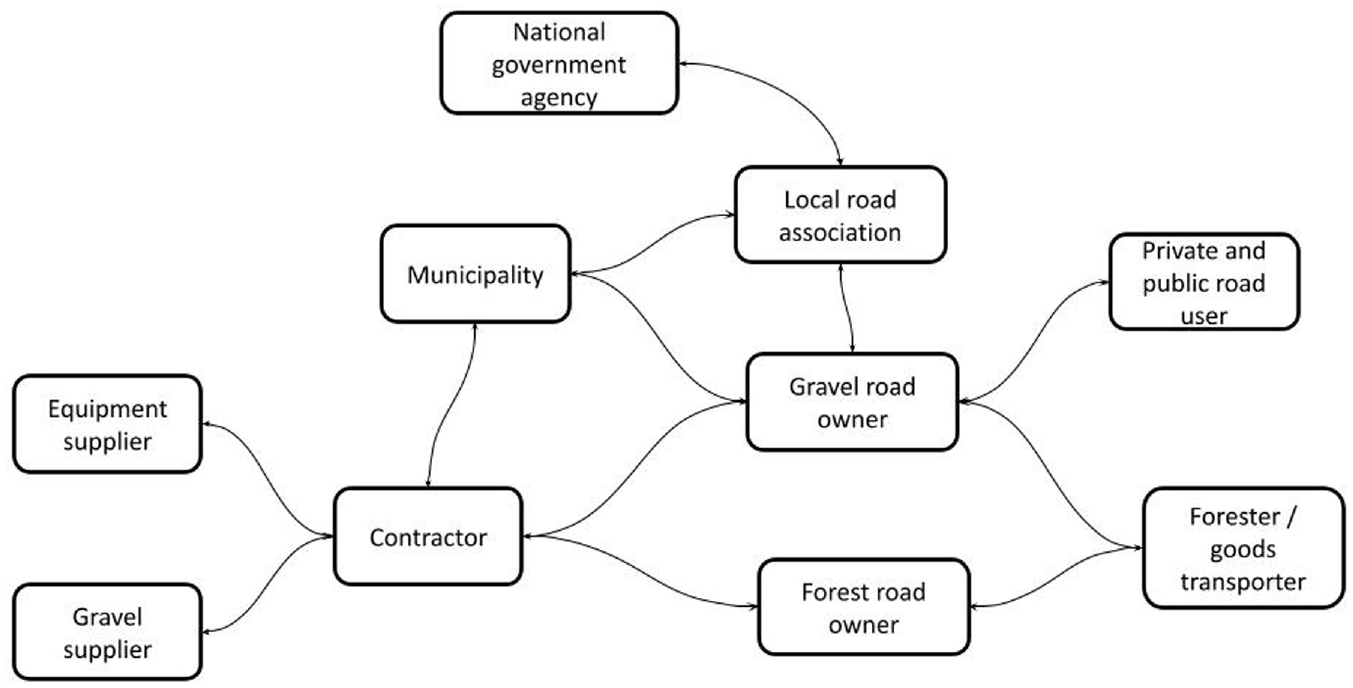
Gravel road maintenance ecosystem in Sweden and its main stakeholders.
The needs of all the stakeholders require consideration during maintenance planning. For instance, accurate road condition prediction results in efficient and effective planning by road owners and municipalities, timely maintenance interventions by maintenance contractors, and, consequently, cost savings by all stakeholders. A maintenance optimization system for gravel roads optimizes both road user and maintenance costs and motivates the investment of maintenance funding for maximum investment returns ( 95 ). Generally, appropriate and timely maintenance interventions, proper equipment and skilled operators, proper road structure and drainage systems, and quality gravel minimize gravel road faults ( 95 ).
A relatively new concept for sustainable maintenance of the road infrastructure is performance-based contracting, which has received much attention in research within a short period. Contrary to traditional road maintenance contracts based on the amount of work executed when paying the contractor, performance-based maintenance contracts are outcome-based, and contractors are paid based on how they meet the predefined performance standard in the contract ( 103 ). Performance-based contracts are usually long-term, thus motivating the contractor to be innovative as they take up all the risks and must provide a service that meets the customer demand. The contractor is responsible for planning, designing, and implementing maintenance activities for a fixed price to achieve the required LoS with the specified risk allocation ( 103 ). According to Iimi et al. ( 104 , 105 ), performance-based road contracts ensure that contractors deliver within the specified period, avoiding cost overruns from delays caused by tightening contractors’ incentives, with Africa reporting an average of 10 months delay in road projects ( 104 ).
According to Sultana et al. ( 103 ), performance-based contracts have been successfully implemented in road infrastructure maintenance in many developed and developing countries, mainly on paved roads. Performance-based contracts are regularly used for paved and unpaved roads in Northern Europe ( 106 , 107 ) and have been implemented in the construction and maintenance of Zambian gravel roads ( 108 ). Jokanovic et al. ( 109 ) conducted a case study on the costs of performance-based maintenance for unpaved local roads in Albania. The study addresses the need to shift from a reactive to a preventive maintenance strategy by introducing performance-based contracting for better management of road assets. In contrast to traditional procurement, implementing performance-based contracts based on DDMs would lead to shared risk, innovation and quality assurance, increased efficiency, and cost savings for road maintenance works ( 103 , 105 ). Other benefits include reduced administrative burden and chance of corruption, road user satisfaction, and increased work flexibility and transparency.
Gravel Road versus Paved Road Investment
Converting gravel to paved roads is an area that is being researched, considering the economic, environmental, and societal impact. Low-cost tenders affect work execution on rural roads, and to attain the required performance standard, an increment of the annual maintenance funding is necessary and would reduce the life cycle cost ( 64 ). The initial investment costs of paved roads are higher than those of gravel roads; still, Suwarto and Fauziyah ( 68 ) recommended the former based on the life cycle maintenance cost, the RUC, the net present value (NPV), and the internal rate of return (IRR). Upgrading to an Otta seal surface has been found in some cases to be necessary to save maintenance costs, improve road users’ safety, improve driving efficiency, decrease environmental pollution, and promote economic development in local areas. For instance, the lifecycle cost analysis (LCCA) of Nahvi et al. ( 94 ) justified resurfacing gravel roads with an Otta seal for 15% of the gravel roads even without considering all the other benefits. The Republic of Lithuania considered implementing double Otta seal road surfacing to reduce the number of gravel roads to improve ride quality, vehicle delay costs, fuel consumption, maintenance costs, and negative environmental impact ( 45 ). Other alternative management strategies include reducing the maintenance of very low-traffic roads and closing those considered unnecessary owing to the shortage of quality gravel supplies, with the optimal strategy based on engineering, economic, and legal consequences ( 15 ).
The Future of Gravel Road Maintenance
Technological advancements, such as the fourth industrial revolution (Industry 4.0) and digitalization, could change maintenance practices in the future, including gravel road maintenance for sustainability, effectiveness, and efficiency. Industry 4.0 hinges on online technologies such as the IoT, cyber-physical systems, cloud computing, big data, and artificial intelligence, making industrial processes intelligent and lean with improved safety, quality, reliability, and availability ( 110 , 111 ). Maintenance shifts from corrective and preventive to predictive and proactive, and links intelligent devices with all stakeholders’ applications and databases ( 100 , 112 ). Maintenance 4.0 is a sub-area of Industry 4.0 ( 112 ), and research shows that significant innovations in maintenance are driven mainly by data ( 113 ). Relevant and quality big data provide prospects for predicting asset failures, leading to better decision-making and maintenance performance ( 113 ). A digitalized maintenance system helps reduce the risk of failure. It minimizes the consequences of unpredicted breakdown by detecting and analyzing abnormalities, identifying the causes, and establishing the required maintenance action ( 114 ). If no anomaly is detected, it predicts future occurrences, determines the risk, and then selects a maintenance plan that supports organizational goals ( 114 ).
Moreover, visualizing the analyzed results is essential in interpreting big data with innovative approaches, such as augmented reality (AR) and digital twins, which combine real world and virtual objects to predict the remaining useful life of a physical asset using physics-based models and data-driven analytics ( 113 ). Failure probability prediction can ascertain the time to failure of an asset and the associated risks ( 115 ). Condition monitoring is a prerequisite for a DDM, encompassing data acquisition, processing, analysis, interpretation, and information extraction to identify deviations in asset health ( 116 ). Knowledge from both maintenance and data science is required to develop a DDM for maintenance ( 113 ). A DDM can be developed using ML algorithms and visual analytics by mapping the monitored data to the physical characteristics of possible failures ( 111 ). Therefore, DDMs for gravel road maintenance should be explored to enhance maintenance practices by utilizing innovative Maintenance 4.0 and digitalization approaches. Standardization for condition monitoring is described in the Open System Architecture for Condition Based Maintenance (OSA-CBM) and Common Relational Information Schema (CRIS) developed by the Machinery Information Management Open Systems Alliance (MIMOSA) to encourage information sharing and publications on maintenance ( 116 , 117 ).
Data-Driven Approaches to Gravel Road Maintenance
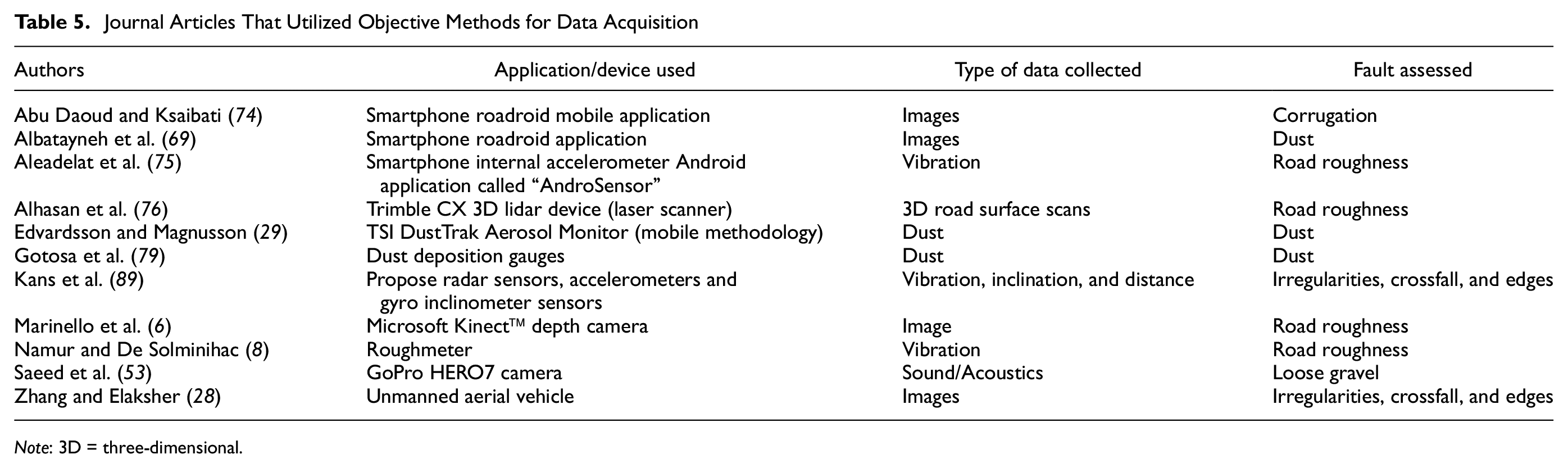
The results of the literature study with regard to the first step in data-driven approaches for gravel road maintenance for data collection by Mbiyana et al. ( 35 ), that is, identifying suitable sensors and data acquisition methods for gravel roads, are presented in Table 5. Mbiyana et al. ( 35 ), Saeed et al. ( 37 ), Saarenketo ( 16 ), and Shtayat et al. ( 33 ) have reviewed objective approaches and methods for road surface assessment.
Journal Articles That Utilized Objective Methods for Data Acquisition
Note: 3D = three-dimensional.
Kans et al. ( 89 ) identified the deficiencies in condition monitoring methods on gravel roads and proposed new measurement techniques and systems and an approach to objectively measure the condition of gravel roads. Several methods are being researched on how the gravel road condition can be assessed for efficient and effective maintenance planning. From Table 5, evidence of ongoing research about the objective assessment of the condition of gravels is found. Saeed et al. ( 54 ) applied acoustic data of gravel hitting the bottom of a car to determine the condition of the loose gravel; it is an objective and cost-effective method of assessing loose gravel. In addition, research on digital image processing for classification, pattern recognition, and feature extraction is growing, using processing algorithms for data collection, providing decision-makers with performance tools for data extraction and classification and facilitating strategic maintenance plans ( 69 ). The objective assessment research has mainly focused on road surface roughness and not individual faults, with dust measurement receiving more attention for distinct faults. Images and vibration data are predominantly researched to assess road condition data. Kans et al. ( 90 ) suggested a new objective measurement approach that adapts to the harsh environmental conditions of gravel roads using a 3 meter aluminum beam mounted with radar sensors, accelerometers, and a gyro inclinometer for inclination measurement. Roadroid, Road Bounce, and RoadSense have been applied for road roughness measurements ( 69 ).
Road surface roughness can be objectively measured using a laser road surface tester (Laser-RST) with light detection and ranging (LIDAR), and ground-penetrating radar (GPR) is used to assess the structural condition of the road ( 89 ). Research is conducted on laser scanners capable of modeling the road surface into a 3D model to calculate the road surface parameters ( 16 , 76 ). Thermal cameras and Android-based smartphones have been applied to estimate gravel roads’ surface roughness and ride quality and are a cost-effective solution ( 6 , 75 ). Research in road surface preview by a host vehicle has also progressed and allows for early recognition of road surface irregularities, providing a basis for advanced active suspension control ( 42 ). Moreover, developments in the automobile industry provide an opportunity to apply sensors on tires, with the new intelligent tire systems capable of detecting variations in the tire and extrapolating the changes into roughness parameters ( 16 ).
The gravel road performance improves when performance prediction models are applied, giving opportune and optimal maintenance planning and mediations. Intervention thresholds for future failures from the determined rate of deterioration are important to determine when to alert for a specific intervention ( 84 , 86 ). A review of roughness deterioration prediction models in unsealed roads is presented by van Wijk et al. ( 59 ). Oladele ( 84 ) and Oladele et al. ( 85 ) developed gravel loss prediction models to ascertain gravel road performance by establishing maintenance decision thresholds for gravel loss and determining the rate of deterioration for timely maintenance interventions. Several optimization methods have been developed to identify the best maintenance strategies for predicting the condition of gravel roads and enhancing maintenance planning and decision support ( 14 , 39 , 40 , 43 , 55 , 72 , 83 , 91 ).
Okok et al. ( 51 ) developed a performance model to predict the service life of treated gravel roads. They found that chemical dust suppressant treatments increased the service life by 10–12 months before dust generation levels and road surface conditions reverted to an erstwhile level. This model supports decision-makers in maintenance planning and allocations of funds. Aleadelat et al. ( 71 ) developed mathematical representations to predict the modes of deterioration of gravel roads in Wyoming, U.S.A. This optimization model included all possible failure modes of gravel roads according to the gravel road rating standard (GRRS) manual to estimate service life; therefore, it is useful for local road agency decision support. Decision-makers require a management system for evaluating investments, future financial risks, and cost-effective maintenance plans to effectively manage gravel roads ( 26 ). An appropriately executed gravel road maintenance system (GRMS) enables analysis of the long-term implications of management decisions, such as upgrading from gravel to a paved road ( 67 ).
Benefits and Challenges of Objective Assessment Methods for Gravel Road Maintenance
Objective assessment methods for gravel road maintenance through DDMs offer road owners and maintainers an optimum maintenance plan for the appropriate maintenance action, when to carry it out, and the precise location ( 16 ). The Roadex project proposes creating partnerships with the local regular gravel road users and equipping their vehicles with sensors to monitor the road condition and transmit the data in real time ( 16 ). Participatory sensing, for instance, also empowers gravel road users to collect and share sensor data using smartphones to a server. The data can be analyzed and presented in graph or map form in real time, but data quality and privacy are difficult to assure ( 37 ). Objective assessment of the gravel road condition and data-based decisions improve decision-making, asset reliability, and resource allocation; therefore, implementing a data-driven approach requires commitment from top management ( 118 ). Lack of support from top management could hinder the implementation.
Difficulties accessing historical data, unclear fusion strategies, and uncertain prediction models hinder objective condition assessment of gravel roads and DDM implementation; it also requires interdisciplinary knowledge ( 90 ). Other challenges include the lack of data quality and relevance, data pre-processing, and data modeling, which can be addressed by the participation of maintenance experts in the development of data-driven approaches ( 115 ). The user-friendliness of the data-driven approach and the lack of quality data can hinder data utilization, leading to decision-making delays ( 118 ). Quality and data relevance can hinder data utilization, resulting in delays in maintenance decision-making ( 118 ). Because gravel roads deteriorate rapidly, the high frequency of condition monitoring is uneconomical when complex trucks are used for assessments ( 37 , 90 ). Cost-effective walking profilers are slower, while UAVs are unsuitable in adverse weather conditions and detection of roadside ditches covered by grass becomes difficult ( 37 ). The working environment of gravel roads could damage the measuring equipment, and the probability of erroneous readings from the sensors is high because of the dust and water on the road surface ( 90 ).
Conclusions
According to the descriptive results of the study, research on gravel roads and their maintenance has increased exponentially, and the forecast indicates more research in the future. North America and Northern Europe are active in research on gravel roads and their maintenance, with the U.S.A. and Sweden accounting for over 50% of the research, while there was a low amount of published work from Asia and South America. The lack of publications, which might signal a lack of research, could hinder the advancement in gravel road maintenance in those regions, as the factors that influence the occurrence of defects vary from region to region. Moreover, research on gravel road maintenance is shifting from experienced-based maintenance planning to innovations driven by data, utilizing advanced technologies and digitalization. Quantitative studies are predominant and based on experimental design or statistical and mathematical modeling and analysis. Qualitative studies based on interviews, surveys, and cases are also found, with a few conceptual studies, including literature reviews.
Based on the citation analysis, researchers are interested in objective assessment methods, especially digital image systems and vibration data for road roughness and ride quality estimation. Dust emissions, diagnostics and deterioration models, gravel road strength, performance prediction, and optimization models are receiving attention among researchers. Current maintenance practices and research topics include the following:
employing efficient construction and maintenance techniques;
applying appropriate standards and optimization methods to attain quality performance; and
optimal use of scarce resources and sustainability.
The Otta seal surfacing for reduced dust emissions has also received attention among researchers and stakeholders in the gravel road ecosystem. However, studies on how Otta seal surfacing improves the load-bearing capacity of the gravel road and how maintenance practices might change are lacking and are not explicitly addressed, therefore requiring further research. A well-designed road has positive effects on future maintenance needs. It is evident that there is a good amount of knowledge on the construction and design of gravel roads, yet comprehensive literature reviews on the construction and design were not found. A literature review on the design and construction of gravel roads is recommended.
As seen in the review of data-driven approaches, excellent research initiatives for objective assessment of the gravel road condition and DDM are found, but there is limited practical implementation as of yet. Advanced research in objective condition assessment methods, including winter road maintenance, can be easily adapted and modified for gravel road maintenance. However, most of the research on objective assessment methods is still at prototype or concept development, mainly based on a quantitative approach, while simulations are not common. In the following, future research for enabling data-driven maintenance of gravel roads is discussed. There is a need for technical development, especially for assessment methods and decision support, as well as ways to enable the realization, which affects several stakeholders.
Assessment Methods and Decision Support
An adequately maintained gravel road reduces vehicle operation and maintenance costs and avoids delays caused by road failures. The aforementioned can be achieved through objective condition assessments and applying DDMs in the maintenance of gravel roads. DDMs improve reliability, resource allocation, and productivity, increase road safety, and reduce unnecessary maintenance, inspection times, repair failures, and life cycle costs. Therefore, DDMs and objective condition assessment methods should be explored in further research. Research should focus on assessing distinct faults, such as loose gravel, ruts, potholes, corrugations, and the structural strength of the road. In addition, gravel road simulations and virtual representations, such as AR and digital twins, should also be explored for gravel road condition forecasting.
Applying DDMs for gravel road maintenance improves maintenance decision-making, resulting in positive economic and environmental benefits. DDMs generally improve maintenance performance as a result of optimized maintenance planning. Data-driven maintenance decisions require quality data for effective implementation. There is, thus, a need to develop user-friendly data-driven maintenance systems for maximum utilization. Participatory system development, that is, letting the users be a part of the system development process, allows for developing user-friendly systems that assure data quality. This is a promising area for further research. Because small municipalities and communities may not have enough resources to invest in expensive, complex technical solutions, further research is needed on cost-effective yet effective and efficient objective assessment methods and DDMs for low-volume roads. Therefore, more research based on conceptualization and prototyping is required, especially applied research where models and solutions are developed in an empirical setting; this allows for developing solutions that meet user requirements and real needs.
Strategic Alignment and Realization
The impact of advanced technologies on gravel road maintenance must be studied and better understood. Expensive investment costs hinder the application of objective assessment methods and DDMs because the complex equipment and technical solutions are uneconomical for low-traffic volume roads. Thus, most smaller agencies and road owners managing gravel and unpaved roads do not have the resources to implement innovative ideas in the short term and would therefore need incentives and support from other stakeholders, especially from the government. Investment and operational costs could be distributed within the organization with other departments to reduce the cost of such technical solutions and could also be shared with other stakeholders. Shifting from traditional maintenance contracts, mainly procurement contracts, to data-dependent performance-based contracts would encourage the implementation of DDMs, with all stakeholders standing to benefit. Therefore, the commitment of top management is needed for DDMs to be successfully implemented and, most importantly, to establish partnerships with local road users and owners. The partners, that is, top management (governing bodies) and local road users and owners, must be assured of the economic gains of implementing DDMs. Access to relevant maintenance-related data could give rise to new business models and contract forms, which is another promising area for further research.
Collaboration amongst researchers in gravel road maintenance, especially from different regions and research groups like the WYT2C, the Transportation Research Board, and the World Bank, would enhance knowledge sharing and lead to improved maintenance and management of gravel roads.
Footnotes
Acknowledgements
The authors acknowledge Jetro Kenneth Pocorni from the Department of Mechanical Engineering at Linneaus University for the helpful and valuable comments on the draft version of the article.
Author Contributions
The authors confirm their contribution to the paper as follows: study conception and design: K. Mbiyana, M. Kans; data collection: K. Mbiyana, M. Kans; analysis and interpretation of results: K. Mbiyana, M. Kans; draft manuscript preparation: K. Mbiyana; Section analysis: J. Campos and L. Håkansson. All authors reviewed the results and approved the final version of the manuscript.
Declaration of Conflicting Interests
The author(s) declared no potential conflicts of interest with respect to the research, authorship, and/or publication of this article.
Funding
The author(s) disclosed receipt of the following financial support for the research, authorship, and/or publication of this article: The research has been partially funded by The Kamprad Family Foundation and was conducted as part of the “Sustainable maintenance of gravel roads” project. The project develops new methods and technologies for efficient, effective, sustainable gravel road maintenance. Familien Kaprads Stiffelse Reference Number: 20180275.
