



Abstract
Freight parking operations occur amid conflicting conditions of public space scarcity, competition with other users, and the inefficient management of loading zones (LZ) at cities’ curbside. The dynamic nature of freight operations, and the static LZ provision and regulation, accentuate these conflicting conditions at specific peak times. This generates supply–demand mismatches of parking infrastructure. These mismatches have motivated the development of Smart LZ that bring together technology, parking infrastructure, and data analytics to allocate space and define dynamic duration limits based on users’ needs. Although the dynamic duration limits unlock the possibility of a responsive LZ management, there is a narrow understanding of factors and analytical tools that support their definition. Therefore, the aim of this paper is twofold. Firstly, to identify factors for enabling dynamic parking durations policies. Secondly, to assess data analytics tools that estimate freight parking durations and LZ occupation levels based on operational and locational features. Semi-structured interviews and focus group analyses showed that public space use assessment, parking demand estimation, enforcement capabilities, and data sharing strategies are the most relevant factors when defining dynamic parking limits. This paper used quantitative models to assess different analytical tools that study LZ occupation and parking durations using tracked freight parking data from the City of Vic (Spain). CatBoost outperformed other machine learning (ML) algorithms and queuing models in estimating LZ occupation and parking durations. This paper contributes to the freight parking field by understanding how data analytics support dynamic parking limits definition, enabling responsive curbside management.
Keywords
Conflicts on the scarce urban curbside use are considered root causes of unsustainability in cities ( 1 ). The limited curb space and decisions on how to use it to foster competitiveness for private transportation and goods movements without hampering livability are challenges that urban transport planners face when allocating curbside space to specific users/services at any given city zone.
Recent practices in urban and mobility planning have shifted curbside use from private car parking to flexible spaces for recreation, shopping, dining, and operations performed by more sustainable transport modes ( 2 ). Researchers and practitioners suggest that although this shift is not a straightforward action, and sometimes seems to be politically unpopular, it is needed to avoid the negative effects that single-purpose curbs have on city livability, inclusion, and sustainability ( 3 ). This shift requires the analysis of infrastructure availability, public space service demand, regulatory frameworks, and stakeholders’ concerns ( 4 ), coupled with technological adoptions that enable flexible curbside uses ( 5 ).
The upsurge of new technologies eases the process of re-thinking curbs and their dynamic management ( 6 ). Some cities have already experienced progress in implementing Loading Zones (LZ) technology ( 7 ). For instance, city authorities installed parking meters and loop vehicle detection sensors on the LZ floor in Lisbon (Portugal). In Lyon (France), a booking system controls LZ use. Vienna (Austria) implemented “i-Ladezone” for LZ monitoring and control to avoid unlawful usage of such bays ( 8 ). Vic (Spain) implemented the app-based Parkunload® for LZ check-in and check-out ( 9 ). But technology itself is not enough. Data provided by connected infrastructure and mobile devices unlock the possibility of designing flexible-use and self-adjusting LZ. Then, data analytics and decision making are needed to complement investments in technology if cities are to achieve dynamic ways of managing the curb.
The lack of analytics and data-driven decisions will inevitably lead to a continuation of public space misuse problems in cities ( 10 ). In the context of freight parking, these problems are related to supply–demand mismatches in infrastructure provision, generated by the dynamic nature of freight operations faced with static regulations on LZ use. The lack of LZ responsiveness leads to empty LZ at off-peak times, which can be used for other purposes, and saturated LZ at peak times that become a challenge for freight vehicles.
Smart Loading Zones (SLZ) represent a promising tool for reducing supply-demand mismatches with the flexible allocation of parking space and the dynamic definition of duration limits for vehicle parking. SLZ are “delimited areas on the curbside where freight Loading and Unloading (L/U) operations occur, equipped with technology that provides real-time information for vehicle detection, parking space monitoring, and parking assignment” (11). A framework for SLZ design, implementation, and operation was proposed in Castrellon and Sanchez-Diaz ( 11 ), with suggestions on data analytics approaches for strategic decisions. Understanding parking durations is highlighted as a tactical decision crucial for responsive LZ management.
Parking duration limits aim to reduce supply and demand imbalances by enhancing quicker turnover of vehicles. Understanding parking durations, and thus LZ occupancy, represents an opportunity to boost flexible and efficient use of public space ( 12 ). Ionita et al. ( 13 ) suggested that regulations on parking durations fail to achieve quicker turnovers at LZ for the following reasons: lack of knowledge about parking demand, weak enforcement, and monitoring of occupation levels at the allocated infrastructure, lack of awareness of the distinct features of freight operations compared with private car parking, and the so-called big-no data paradox, which refers to the inexistent analytics practices after investments in technologies that collect parking big data.
Previous contributions have adapted modeling techniques from private car parking operations, without considering the distinct nature of freight activities that are influenced by, for instance, economic activities, city zones, or vehicle types. Existing literature also limited the scope of the discussions to merely modeling fields without reflection on enabling factors that allow practitioners to make the shift toward flexible curbside management.
This paper, therefore, aims to identify factors that will enable dynamic freight parking regulation and assesses data analytics techniques to support dynamic management of LZ using tracked freight parking data from the City of Vic (Spain). The paper seeks to address the following research questions (RQ): RQ1 What are the key factors needed to define dynamic parking duration limits? RQ2 What is a suitable method to model parking durations and estimate LZ occupancy using as input tracked operations data from LZ? RQ3 How do dynamic parking durations limits leverage the shift toward responsive curbside management?
Related Literature
Although dynamic parking durations modeling is of high interest for public policymakers and private operators, it is a topic that has received little attention in research ( 14 ). Information about either parking availability or occupancy levels of parking facilities is highly valued by travelers and is a critical input for routing models ( 15 ). In transport modeling, durations are the variable component of parking occupancy calculations and the input for parking demand estimations ( 16 , 17 ). LZ literature reports durations as an input parameter from city regulations in parking demand models or LZ management schemes ( 16 ).
From the policymakers’ side, European cities such as Barcelona, Paris, Valencia, Lyon, and Amsterdam have measured durations of L/U operations to find a standard for regulations design. They concluded that 90% of the operations last less than 30 min ( 18 ). Based on these references, cities have defined duration restrictions around this threshold as a standard limit, but little attention has been paid to the features and variabilities of the operation as an input for the regulation design.
Research interest on parking durations has focused on private car parking ( 19 ) and, in the case of freight, on techniques explaining parking durations based on delivery features such as delivery size, vehicle type, type of transport service, and supply chain role (for example, retailer or wholesaler) ( 10 ). The main aim of these explanatory approaches is to gain knowledge about the impact of operational features on freight parking durations. Schmid et al. ( 14 ) and Cherrett et al. ( 20 ) defined parking duration as a variable depending on the size of the vehicle. The authors also considered transfer walk time from the LZ to the establishments as a significant covariate for explaining parking durations. Low et al. ( 21 ) confirmed the significant impact of activity type and volume of goods in estimating duration times and added parking location as another determinant feature. Existing models have used survey data but, nowadays technology can provide operations data which are crucial to understand demand dynamics.
These studies highlighted the need for future research efforts in understanding parking duration patterns for freight vehicles. Yang et al. ( 22 ) pointed out the limited development of parking occupancy analytics as a research gap. Researchers also agreed on the need to overcome limitations on data availability, data collection cost, representativeness, and generalization power summoned to the effort of building more analytical tools for understanding patterns and predicting LZ occupation.
With regard to occupancy forecast using durations, the literature refers to two main approaches for parking occupancy prediction ( 23 ). On the one hand, there are predictions based on model structures for parking processes, that is, queuing models, where future parking occupations are expected values computed with stochastic arrival and departure processes from a parking facility ( 15 ). On the other hand, there are statistical and Machine Learning (ML) algorithms that predict future occupancy levels from observed parking durations and LZ capacity ( 17 , 22 ).
Liu et al. ( 24 ) presented several models to forecast parking occupancy for private cars. The authors found that neural networks outperformed other models with the longest training time. Jelen et al. ( 19 ) used four ML approaches for private parking prediction. Two of them were implemented with parking lot utilization data, and the other two with utilization data plus contextual data such as weather, traffic, or security conditions. Results showed that contextual data significantly influenced parking durations, and their inclusion improved the performance of ML algorithms.
In the case of technology, developments for collecting real-time data are analyzed in ( 5 , 16 , 21 , 25 , 26 ). The authors agreed on proposing shared systems and mobile applications to organize space use for both freight and private cars. These systems have in common the assumption of individuals’ willingness to share information about customer addresses, type of delivery vehicle, time constraints, type of freight, all of which represents a challenge given privacy, confidentiality, trust, and data ownership issues.
In Fahim et al. ( 27 ), a comprehensive review of technologies, user interfaces, computational approaches, and services of smart parking systems was presented. The authors concluded that technology implementation for parking is a dominant trend for smart cities. User interfaces rely mainly on smartphone applications that provide data for planning, that is, occupancy analysis and services, for example, enforcement, payment, and booking.
This paper aim at closing research gaps related to the use of big data for parking durations and occupancy estimation. The research contributes to the duration modeling field from a demand perspective, helpful to define time limit regulations, and complements supply perspectives that aim to predict the probability of finding free places with survival models as in Regal Ludowieg et al. ( 17 ). It also strides forward in the understanding of how data analytics ease the definition of dynamic parking limits that foster responsive curbside management.
Methods
Dubois and Gadde ( 28 ) proposed a “systematic combining” research approach to leverage a continuous interplay among theories, frameworks, the empirical world, and the case study. This paper adapted Dubois’s approach to conducting qualitative and quantitative analysis, see Figure 1.
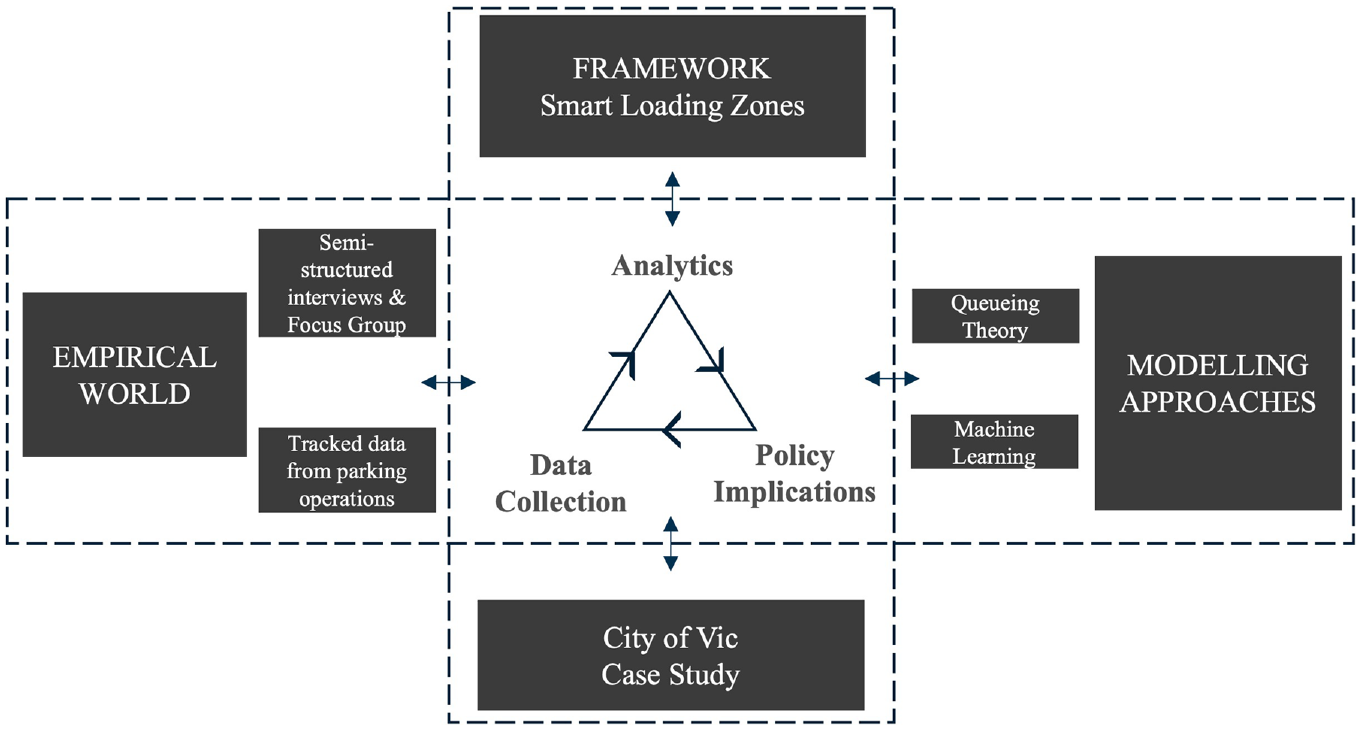
Methodological approach.
The three steps in the center of Figure 1 reinforce an iterative research journey that results in theoretical and practical contributions by activating the interaction among the main components of the systematic combining approach, that is, theories of reference, the framework that defines SLZ, the case study, and the evidence collected from it, the empirical world. In the following subsections, we describe how these steps conducted the qualitative and quantitative studies.
Qualitative Study: Enabling Factors for Dynamic Parking Durations
Semi-structured interviews coupled with focus groups, with the respective thematic coding, have shown effective results to mitigate the lack of knowledge on urban freight transport operations (29). These methods help in reconstructing the empirical world to understand better “some of the decision-making processes involved in urban freight activity and relationships between parties in the supply chain” (30).
The main characteristic of these combined methods, semi-structured interviews and focus groups, is the ex ante nature of the assessment and the aim of predicting and anticipating preferences to support policy design, preventing adverse reactions from stakeholders, and avoiding undesirable implementation outcomes ( 31 ). In the context of this research, this combination of methods aimed to identify stakeholders’ views on SLZ implementation and, specifically, to get in-depth insights into what factors enable dynamic parking durations limits.
The authors conducted 10 interviews with four types of stakeholder related to freight parking operations, that is, public sector (six interviews with traffic planners from the City of Vic, Emilia-Romagna, Prague, Stockholm, and Bogota), carriers (two interviews), urban freight vehicle manufacturing company (one interview), and a parking technology provider (one interview). A focus group was conducted involving all these stakeholder types represented by 11 participants, that is, five from academia, two from a parking technology provider, two municipalities, a carrier, and a truck manufacturer. Some of the focus group participants had already been interviewed. Therefore, the focus group was used to cross-validate the data collected from interviews and compare attendees’ perspectives. Focus group minutes and interview reports are available in Wahid ( 32 ).
NVivo® version 20.5.0 was used to perform content analysis from the transcripts of the interviews and the focus group. Following the back-and-forth cycle from the systematic combining approach from Figure 1, and the constant comparison tool from Grounded Theory described in Bryman and Bell ( 33 ), NVivo allowed the authors to constantly compare the qualitative data subject to coding with the framework of SLZ Management so that theoretical elaboration of enabling factors for dynamic parking durations could emerge.
After data collection and their analysis, policy implications were discussed around the main issues of parking management related to LZ overcapacity and alternative uses of the curb, parking demand profiles, and possible data analytics applications on curbside management systems.
Quantitative Study: Durations Data Analytics for Estimating LZ Occupancy Levels
This subsection presents two approaches that allowed the analysis of duration analytics and LZ occupancy prediction. The first is the implementation of queuing theory for time-varying conditions to estimate the random variable
Data Requirements for Modeling Parking Durations and LZ Occupation
Several technologies can provide parking data ( 27 ). Sensors, cameras, and smartphone apps are some of the sources of big data for parking analytics. Modeling parking systems using queuing theory requires data about time of arrival/departure to estimate probability distributions of birth-death processes. These attributes vary during the day, leading to the time-varying family of queuing models, for example, non-homogeneous Poisson processes (NHPP).
ML algorithms for regression define parking durations as the response variable and model them using operational attributes as covariates, for example, vehicle type, commodity, weather conditions and, time of the day/week/month/year. ML algorithms also explain or predict durations considering the city zone as a latent variable of measures such as an establishment’s features, for example, area, number of employees, and economic activity. Since large amounts of variables cause overfitting, feature selection tools such as Principal Component Analysis (PCA) are suitable for simplifying the analysis, keeping a reduced set of factors with high representativeness on the response variable.
For occupancy analysis, data pre-processing is needed to transform transaction records, that is, parking records with a starting and ending time, into time bins with level of occupancy, arrival and departure contributions from each parking operation at the specific time bin. For instance, in this paper, the authors employed the Hillmaker tool, documented in Isken ( 34 ), to build time bins of 1 min.
Queuing Theory
Queuing theory has been one of the most popular modeling approaches for assessing private vehicles parking occupation. The system is understood as a stochastic process with probabilistic vehicle arrival and departure rates to/from parking stalls that represent servers in a time-varying
Vehicle arrivals follow a Poisson process

Under this modeling approach, LZ traffic intensity


where
Since data availability has represented a constraint for accurate estimations of cruising and parking violations, queuing models for parking have opted for assuming unlimited capacity in systems
For

In the stationary case, with
Machine Learning Algorithms
A set of ML algorithms have been tested in forecasting parking durations and LZ occupancy levels. Tested models were chosen based on their use in previous research related to parking studies. Generalized linear models (GZLM) were the baseline to compare regression trees, gradient boosting machines, and neural networks. ML algorithms had the objective of predicting parking duration

where
Regression trees: Decision trees for regression have as their endpoint a constant value, in the case of this paper, the predicted parking duration
Random forests (RF) improve decision tree algorithms by avoiding potential correlations among predictors. RF for regression consist of a collection of
Gradient boosting machines: XGBoost and CatBoost algorithms for regression were tested in predicting parking duration. The general idea of gradient boosting machines is that, given a loss function, for example, squared error, and a learning procedure, for example, regression tree, the algorithms seek to find an additive model that minimizes the loss function. Readers can refer to Chen and Guestrin ( 37 ) for further algorithm details.
CatBoost is an improved algorithm for gradient boosting machines that reduces overfitting as shown in Dorogush et al. ( 38 ). It was designed to have a better performance when the input data set contains categorical variables. The latter feature is the main reason why this algorithm was chosen within the models’ comparison in this paper.
Artificial neural networks (ANN): Inspired by the dynamics of brain neurons, ANN algorithms for ML look to recognize structures in the data set to generalize what they have learned through an interconnected network of neurons in an input-output logic ( 39 ). One type of network, the so-called Multilayer Perceptrons (MLP) ( 40 ), is built with an input layer that reads the features array. It is connected forward to a determined number of hidden layers, and the latter to an output layer that generates the prediction. The number of neurons per layer and the number of hidden layers must be defined wisely to build an accurate model, despite the lack of theory to support this decision. Zheng et al. ( 41 ) proposed some guidelines for parking applications. For instance, in a perceptron with one hidden layer, they defined the number of neurons in the input layer as the number of features in the data. The number of nodes in the hidden layer equals the mean number of input features and the output dimension.
Results
This section presents the results from the qualitative study on factors that enable dynamic parking durations and then results from the quantitative study on data analytics tools for modeling durations and LZ occupancy levels.
Enabling Factors for Dynamic Parking Duration Policies
The interviews and the focus group with the participation of public authorities, logistics operators, a parking technology company, a truck manufacturer, and researchers from European cities aimed to discuss the main aspects to boosting the implementation of SLZ. With regard to parking durations, participants agreed on the lack of big data to analyze parking demand for more efficient and sustainable urban freight. Besides technological aspects, research opportunities came into play related to the development of data-driven methodologies to understand loading/unloading operations, identifying the type of data required and models to explain/predict parking dynamics.
Furthermore, participants pointed out the challenge of building data sharing schemes to connect users and parking infrastructure and several services operators under compatible protocols that could connect different towns in the same metropolitan region. Nonetheless, this aspect presents major concerns with regard to privacy, confidentiality, trust, and data ownership.
Qualitative analyses from interviews and focus group interventions using NVivo® version 20.5.0 allowed authors to identify the following factors as determinants for dynamic parking duration policies: (a) public space uses, (b) knowledge of parking dynamics, (c) enforcement capabilities, and (d) data sharing strategies.
With regard to public space uses, the conflict of needs is one of the main challenges to face. Policy makers demand tools for designing parking duration regulations to promote flexible uses of public space, giving room to pedestrians, bikes, autonomous vehicles, and freight parking in the enjoyment of the curbside, with changing priorities during a day or week. This action is connected to the second factor related to a better knowledge of parking dynamics. The latter implies identifying turnover rates, capacity, and demand imbalances along the curb, as well as operational features such as types of vehicle, commodities, and establishments in the zone. Policies should vary according to the specific city zone dynamics.
Enforcement capabilities are needed to ensure implementation and supervision of parking regulations. LZ misuses are one of the hindrances to efficient operations in urban areas that logistics service providers reported. Curb misuses lead to transport cost overruns as a result of idle time searching for parking or congestion related to double parking. The fourth factor is linked to this issue as a technology-based solution. As highlighted in the literature and confirmed in interviews, data sharing schemes and their analytics support smart curbside management, although privacy and confidentiality issues must be addressed.
The quantitative study explained below addresses data analytics tools that supported factors (a) and (b). Readers can refer to Nourinejad and Roorda ( 42 ) for a deeper study on (c) parking enforcement policies and to Castrellon et al. ( 43 ) for (d) data sharing strategies in LZ management.
Data Analytics Results from a Case Study
The City of Vic (Spain), a city of 45,040 inhabitants, located in the Barcelona metropolitan area, served as the case study for collecting tracked data on freight parking operations. Since 2018, the city has implemented a parking regulation which allocates dedicated and exclusive space for freight operations on the curbside, the so-called Z-DUMA. Only vehicles performing deliveries can use the LZ for a maximum time of 30 min. The regulation allows private vehicles to park in the LZ if they perform a pick-up/delivery activity. City authorities implemented an app-based parking system Parkunload®, for the management of eight LZ in the city center. More than 103K parking operations were tracked during June 2018 and December 2019. Drivers checked in/out at arrival/departure from each LZ by providing information on professional activity (commercial agent, construction, food, install & maintenance, transport & parcels, local commerce, other); vehicle type (light vehicle [<3.5 Ton], van, truck [3.5 Ton or more], private car); and vehicle technology (high emissions, medium emissions, low emissions, hybrid, electric vehicle).
Parking durations were computed by the difference between check-out and check-in times. Vehicles parked for an average of 17.49 min with a standard deviation of 11.63 min. This mean value is comparable to other contexts reported in the literature. For instance, Schmid et al. ( 14 ) estimated a mean of 15.22 min for New York City and 19 min for Rome ( 10 ). Figure 2 shows the right-skewed distribution plot for all the durations in Vic. Peaks result from high frequencies of a parking duration occurrence, that is, 4 to 8 min and 25 min. Also, they correspond to city regulations on maximum parking durations, that is, 30 min for all eight LZs. It is observed that the parking durations of the vehicles often exceed the limit of 30 min as shown by the peaks in 36 min and 40 min. 75% of the operations lasted 26.68 min or less. The median value for all the recorded operations was 15.17 min and the mode 25.29 min. Readers can refer to Kalahasthi et al. ( 9 ) for a detailed descriptive analysis of parking operations from this case study.
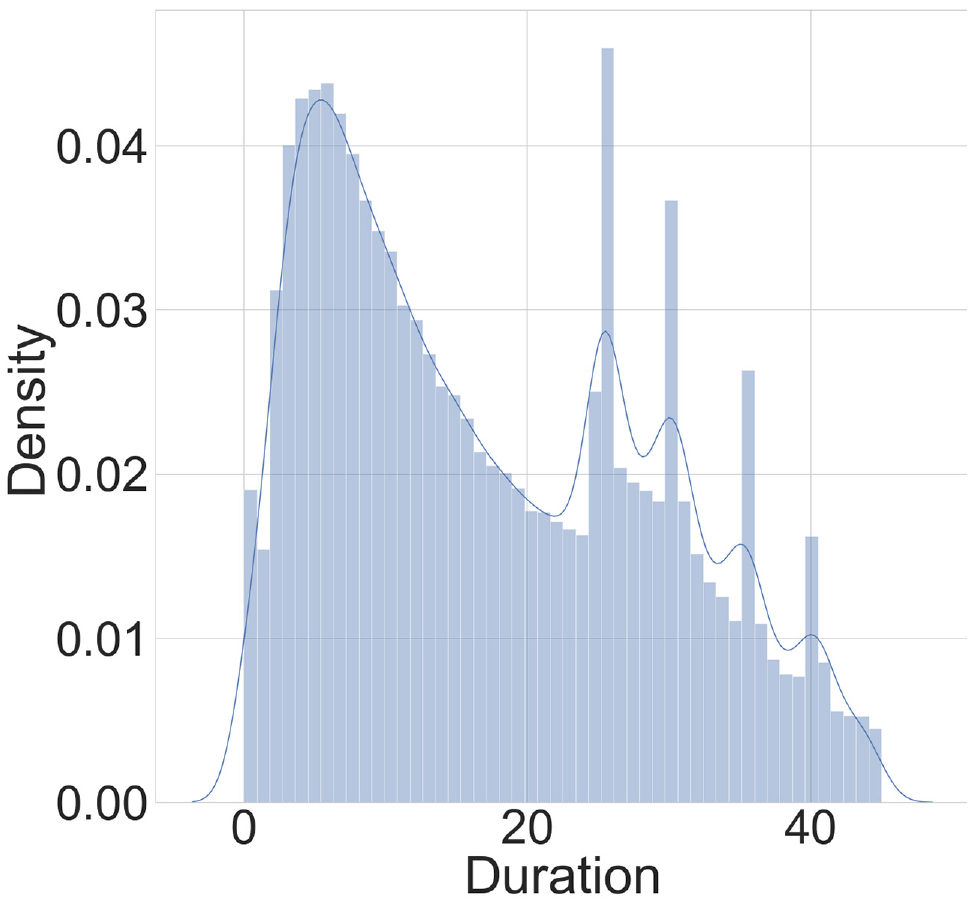
Parking durations (minutes) distribution plot.
Aggregated values for parking durations commonly support generic traffic measures with little understanding of the operational needs and location-dependent dynamics. Big data from the City of Vic made possible more detailed insights into parking operations.
Operational and Location Impacts on Parking Durations
Figure 3 shows variations of parking durations according to LZ location, professional activity, and type of vehicle. Non-parametric hypotheses tests compared parking durations for each of these variables. In the case of differences of parking duration mean among LZ, Kruskal-Wallis’ test rejected the hypothesis of insignificant difference, that is, Kruskal-Wallis’ test statistic of 56.596 and p-value < 0.01. In the case of parking duration mean by professional activity and vehicle type, the test concluded that parking durations were significantly different, that is, test statistic = 5,314.17 p-value < 0.01 and test statistic = 36.9998 p-value < 0.01, respectively. The Dunn post hoc test was conducted using pair-wise comparisons to determine which zones had significant differences in parking durations mean. LZ1-4 and LZ6 did not show a significant difference while LZ5, 7, and 8 did.
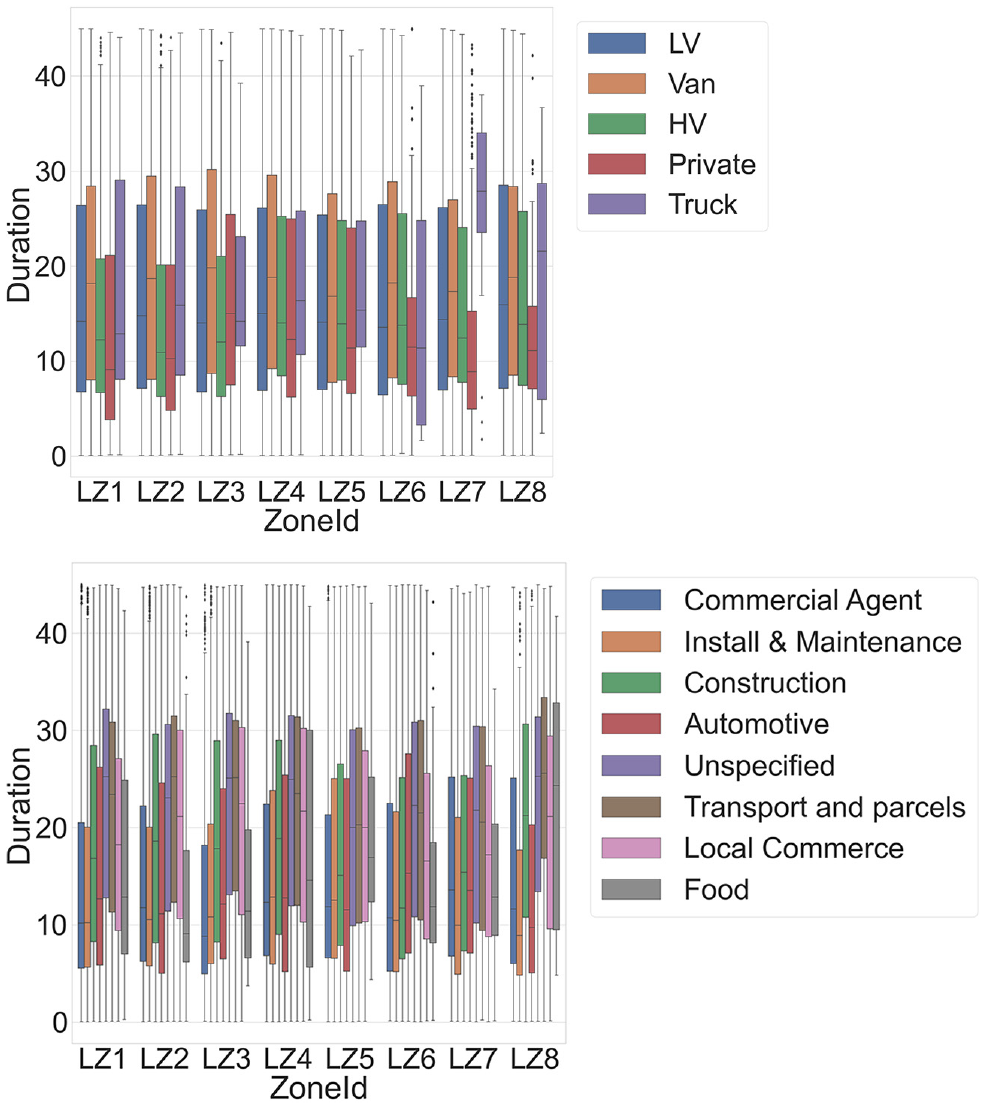
Durations box plots for each LZ according to the type of vehicle (top) and professional activity (bottom).
Since freight parking durations experienced changes under different operational and locational conditions, a generalized linear model (GZLM) was conducted to determine significant associations among these conditions, represented by categorical variables and the durations variance. Environment conditions such as feels like temperature and precipitation were added to each parking record using World Weather Online’s weather API. Time was considered in the categorical variable “Hour”. Table 1 shows the GZLM results, obtained from Statsmodels Python’s library. Statsmodels library specifications used for the GZLM are (i) model family: gamma; (ii) link function: log; and (iii) method: iteratively reweighted least squares (IRLS).
GLZM Results for Associations Assessment
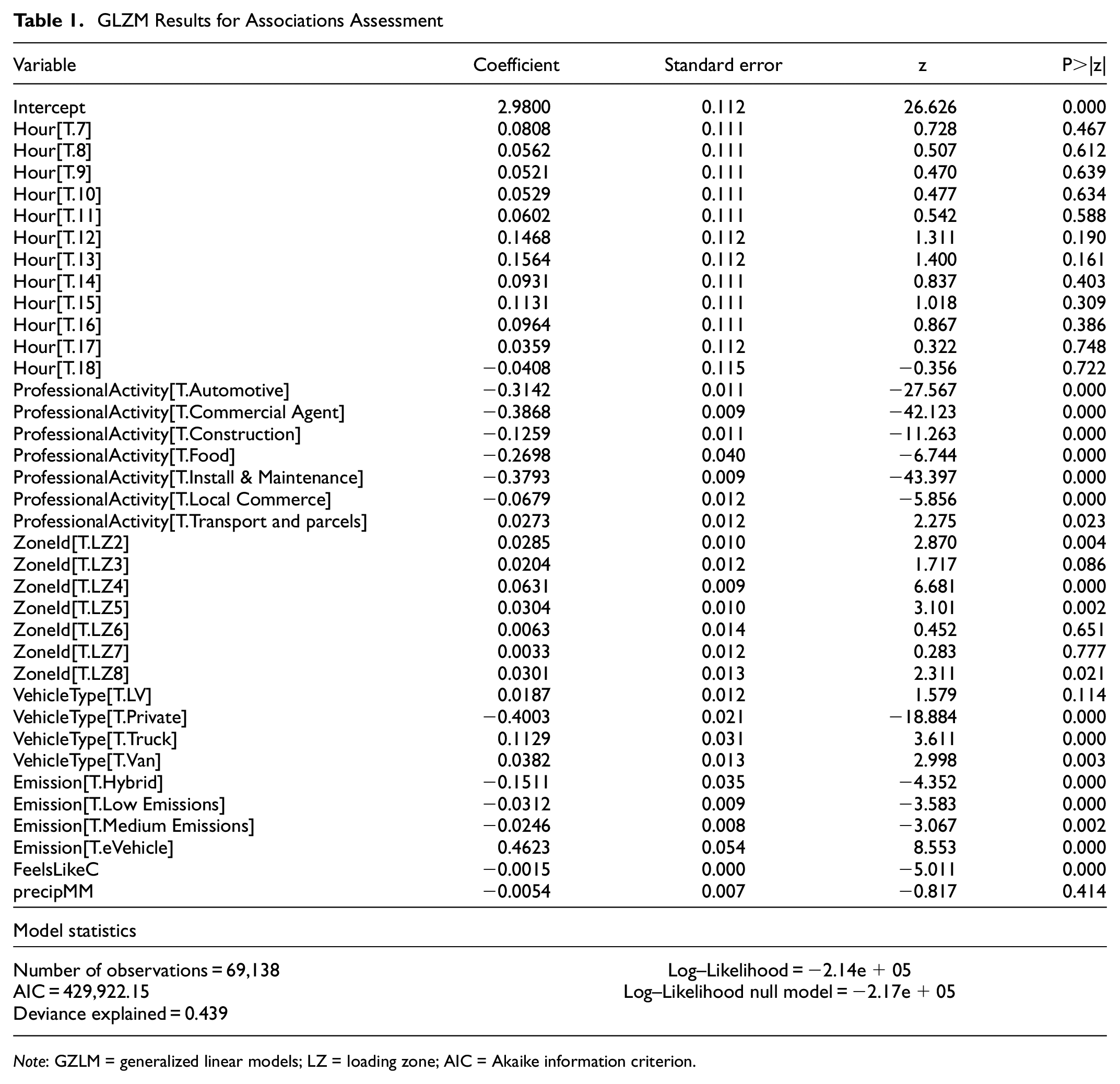
Note: GZLM = generalized linear models; LZ = loading zone; AIC = Akaike information criterion.
Despite relatively low levels of the GZLM fitting metrics, that is, deviance explained = 0.439, some significant associations are evident and need to be confirmed in feature importance assessments later with the ML algorithms. The hour variable did not show a significant association on durations variability. Nonetheless, when modeling the interactions hour–professional activity and hour–vehicle type, some levels had significant associations (p-value < 0.05) on durations variability for example, install & maintenance—15 h, food—16 h, van—10 h, with respect to the reference level categories. These associations are crucial in the time-varying queuing analysis since distinct parking dynamics occurred at peak hours during the morning, from 08:00 to 10:00, and during the afternoon from 15:00 to 16:00.
For weather conditions, feel like temperature showed a significant association with parking duration variability. This result may vary from city to city depending on how extreme the weather conditions are. In the case of Vic, the feels like temperature is, on average, 15.47°C with standard deviation of 9.29°C. For 75% of the year, the temperature ranges between 8°C and 22°C. The precipitation variable was not significant, that is, p-value = 0.414, since in the case of Vic precipitation levels are in average low, 0.11 mm with standard deviation of 0.41 mm.
In relation to professional activities, all the categories significantly affected parking duration variability. This finding is important to support customized policies according to economic activities. With regard to types of vehicle, light (LV) predominated in the use of the LZ, that is, 61.2% of the operations, so their durations have an important weight on the population mean, which makes its impact on duration variance non-significance (p-value = 0.114). Durations from these operations are also the reference point for assessing significant deviations generated by private vehicles, vans, and trucks. Vehicle technology differences had significant impacts on parking durations. This result can be further discussed on strategies involving charging technologies at LZ, promoting nonmotorized transport modes, for example, cargo bikes, or zero-emissions regulations at centric areas.
The categorical variable “LZ” represents locational variables. Close distances between LZs and the homogeneous features of the specific study area at the historical center explained non-significant impacts among the reference durations from LZ1 and LZ 3, 6, and 7.
GZLM gave elements to discuss significant associations among covariates and the response variable. The section on modeling parking durations presents how queuing models and ML algorithms included these covariates in duration prediction and occupancy estimation.
Modeling Parking Durations
This section presents the modeling results from the two approaches for parking durations and LZ occupancy prediction in the City of Vic. The first approach is modeled as a queuing system. The second is implemented using ML algorithms on observed parking operations. The input data set was the same for both approaches. It included all the variables assessed in the GLZM for comparison and confirmation purposes in variables importance and significance.
The data set was partitioned into a training-test set (i.e., records from July 2018 to September 2019) and a validation set (i.e., operations between October 2019 and December 2019). The models’ performance evaluation was conducted visualizing LZ occupation profiles and computing the mean absolute error (MAE) among the estimates and the validation data. Linear regression, gradient boosting machines, and neural networks are the family of ML algorithms compared with tunned parameters and hyper-parameters using random search with cross-validation.
Queuing Theory Approach
Arrival rates and service time distributions are time-varying in the

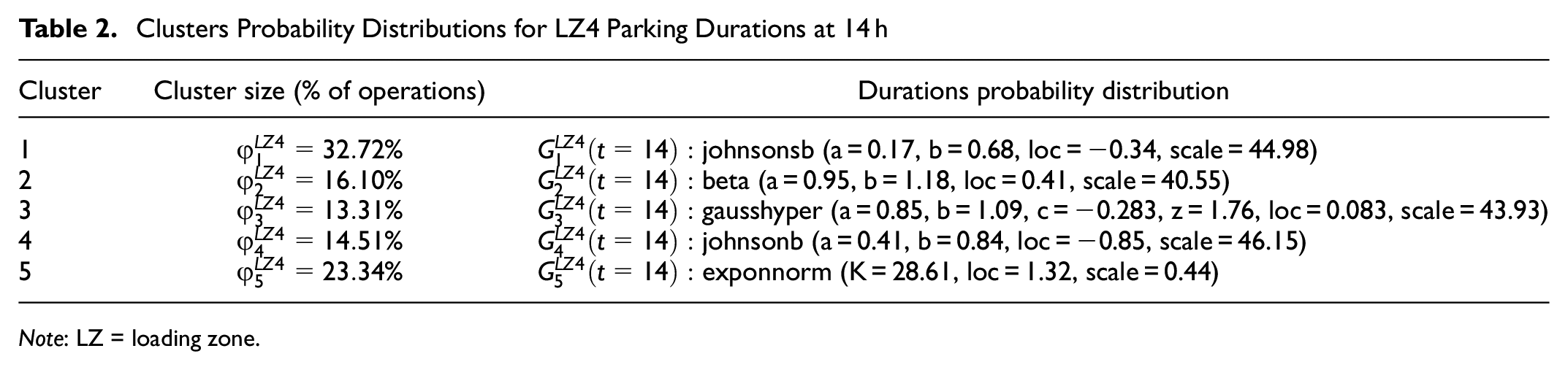
k-means algorithm clustered parking operations into five groups per LZ. The number of clusters was selected based on the silhouette score. Table 2 shows an example for durations modeling at LZ4 for the five clusters at 14h. Distribution fitting was done using Python’s Fitter package version 1.4.0. Distribution parameters correspond to SciPy library notation. This procedure was implemented for all the LZ at the different hours from 06:00 to 18:00.
Clusters Probability Distributions for LZ4 Parking Durations at 14 h
Note: LZ = loading zone.
For the specific case of operations occurring at 14:00, five different probability distributions fitted each cluster duration. Their expected values are useful for computing
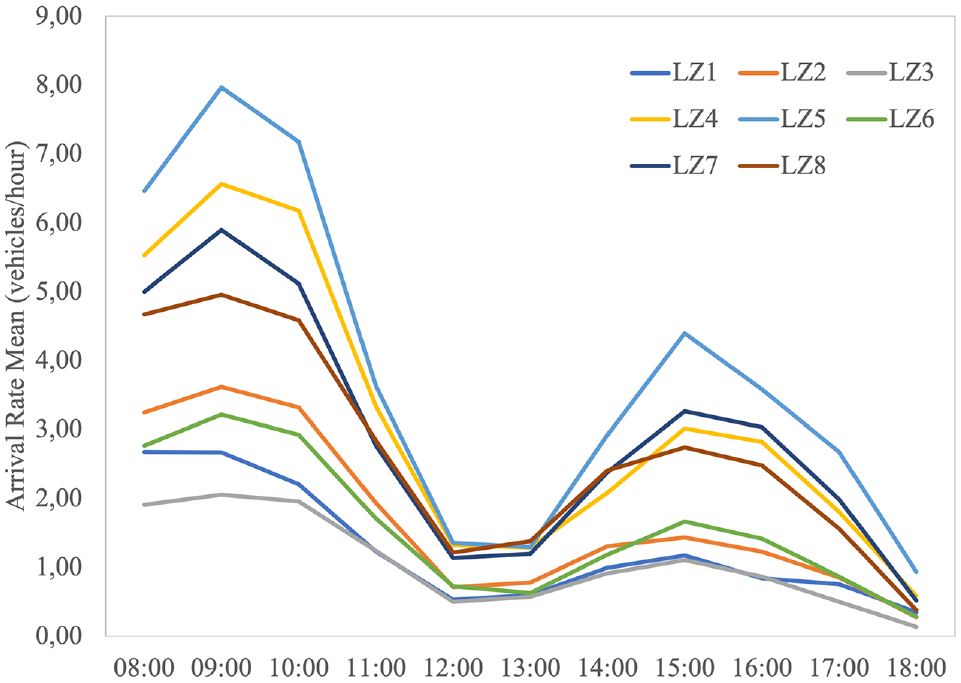
Hourly arrival rate mean
After assessing
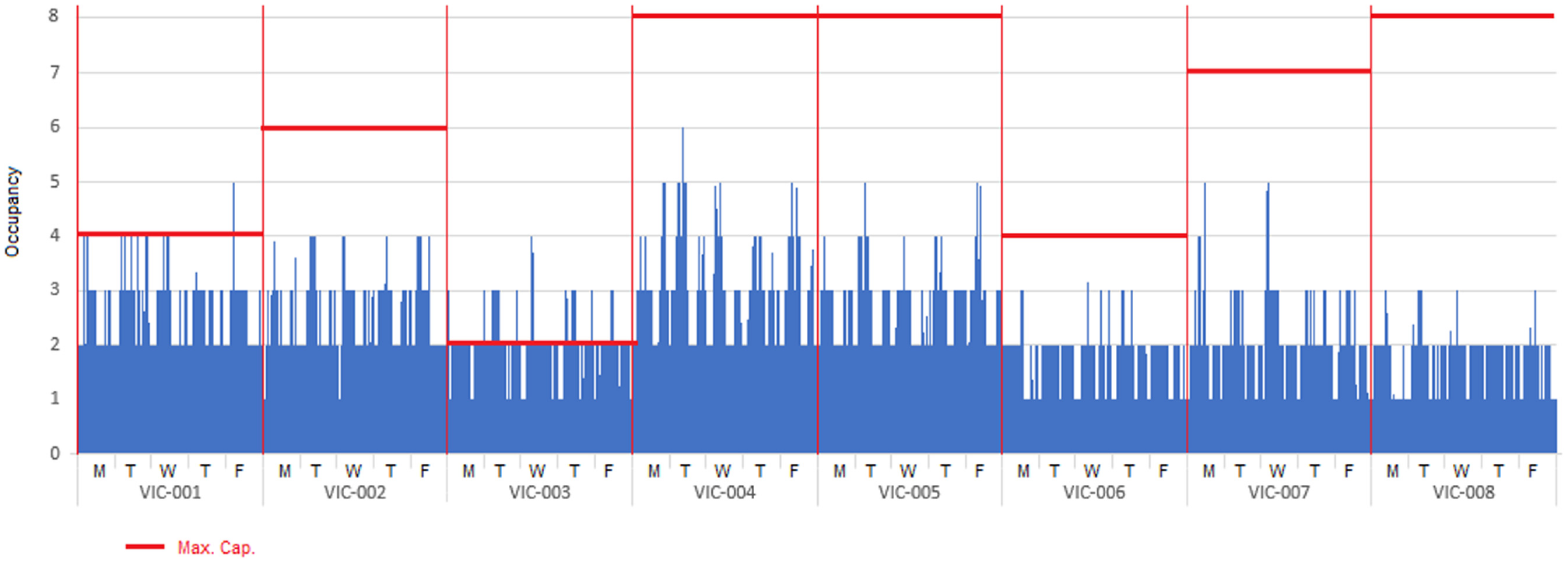
Occupation levels estimation with the queuing modeling.
The performance of queuing modeling in estimating parking occupancy is possible by comparing the estimated
Machine Learning Approach
Scikit-learn library in Python 3.8.8 ran the ML algorithms described in the methods section. The random split procedure separated 80% of the records for the training set and 20% for the testing set. All the operations in the training and testing sets happened between July 2018 and September 2019. All the variables included in the GLZM were considered in the ML models to confirm or identify contradictory conclusions about each variable’s significance. In total, 59 explanatory variables composed the data set, two numerical variables (i.e., feels like temperature and precipitation), and 59 dummy variables representing six categorical variables (i.e., vehicle type, emission, professional activity, LZ, hour of day [1-h bins from 06:00 to 18:00], day of week, and month). After data wrangling, the response variable corresponded to durations of more than 69K parking operations.
A pipeline routine consisting of the variables’ scaling procedure, dimensionality reduction with PCA, and the ML algorithm, was implemented in the randomized search function RandomSearchCV. This function ran the hyper-parameters tuning by optimizing the performance of the learning algorithms. It chose the best combination of the models’ design features based on the cross-validation score. Given the large set of possibilities in selecting models’ hyper-parameters, this random search optimization routine provided a selection of hyper-parameters, based on observed data (training set), that lead to more accurate results in the model implementation with unobserved data (test set) ( 44 ). Table 3 shows the hyper-parameters defined for the ML algorithms on parking data from Vic.
Scikit-Learn Models’ Hyper-Parameters
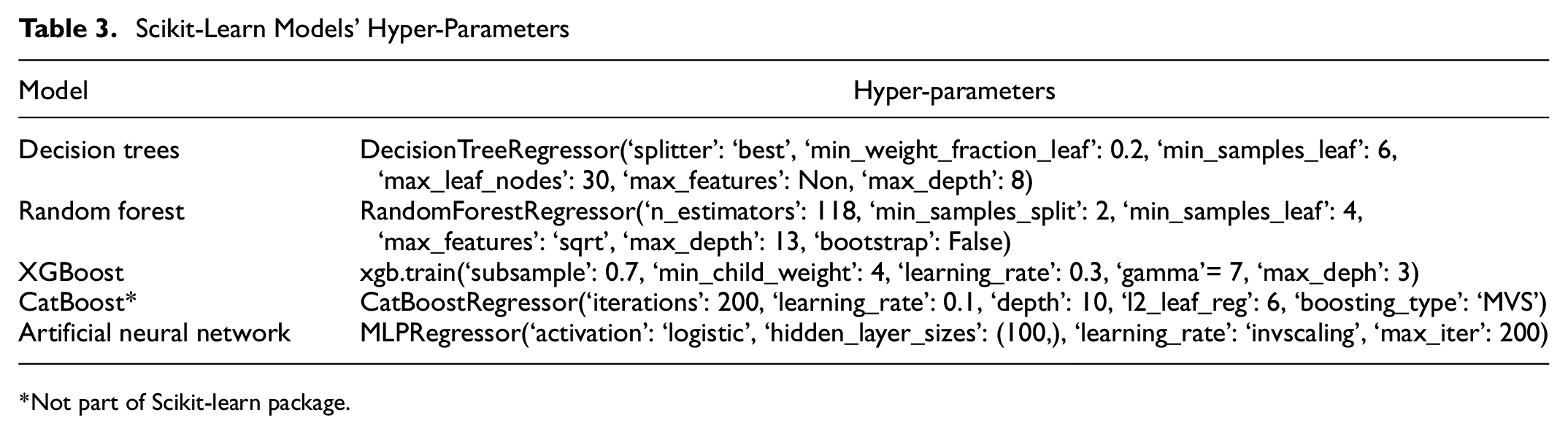
Not part of Scikit-learn package.
After building the selected ML algorithms, the authors evaluated the models’ accuracy and explanatory power using performance metrics in the estimation of durations on the testing data set, that is, coefficient of determination (R2), mean absolute error (MAE), root mean square error (RMSE) and the symmetric mean absolute percentage error (SMAPE). According to the results in Table 4, CatBoost outperformed the other algorithms. Despite related studies reporting better ANN performance ( 24 ), those assessments were on parking occupation predictions instead of parking durations. These results confirmed private parking findings in Jelen et al. ( 19 ) about the high performance of gradient boosting algorithms given the high number of categorical variables in the data set.
Models’ Testing Evaluation Metrics on the Testing Set
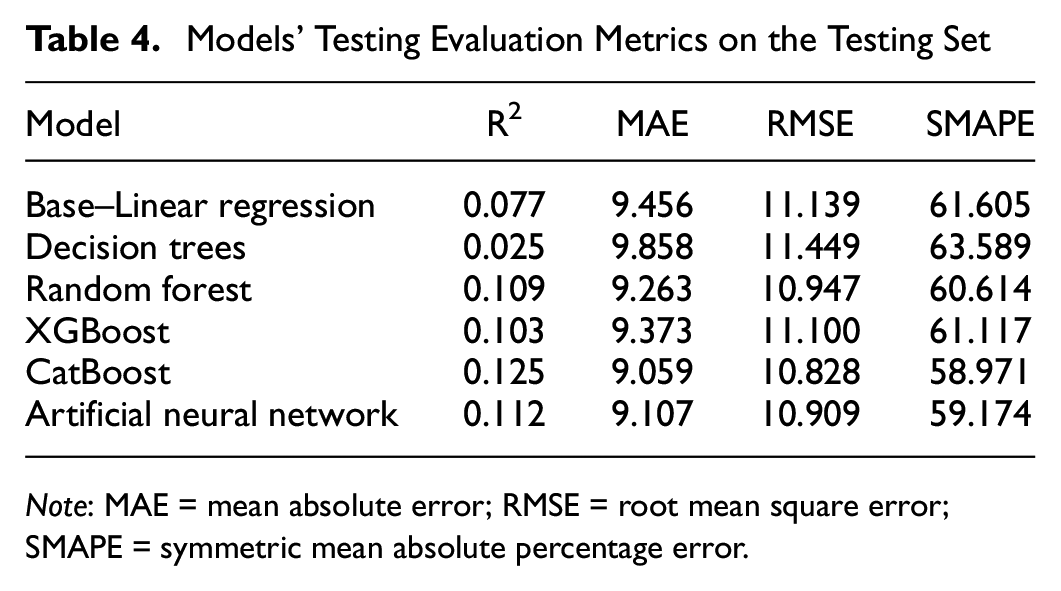
Note: MAE = mean absolute error; RMSE = root mean square error; SMAPE = symmetric mean absolute percentage error.
Figure 6 shows the feature importance plot for the outperformer model, CatBoost. This measure shows how much the estimation varies if the feature value changes on average. The sum of all the scores is 100. The interaction importance score shows the relevance of the variables “professional activity,”“vehicle type,” and “hour of day” in the estimation of parking duration using the CatBoost algorithm.
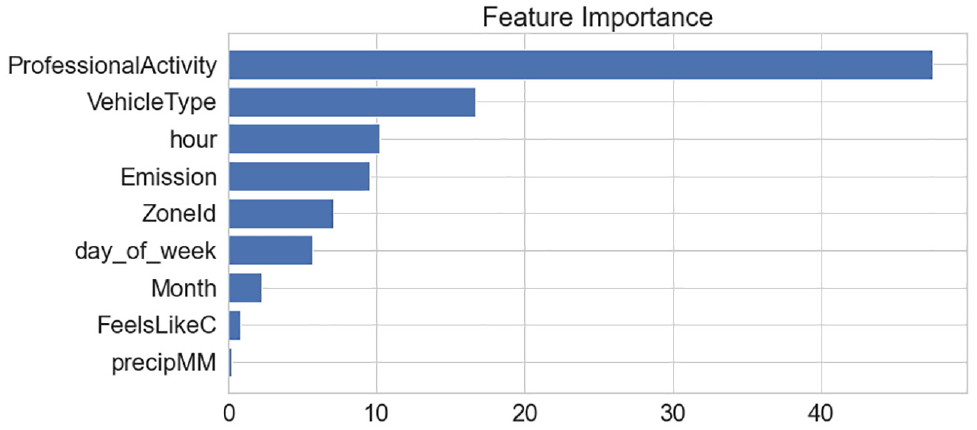
Individual importance values for the top input features in CatBoost model.
Occupancy Prediction–Approaches Comparison
For approaches comparison, the occupation profiles were built in 1-h timestamps for one day, using estimated durations from both queuing modeling with Equation 4, and the CatBoost algorithm with Equation 5. Figure 7 presents the comparison between the observed average occupation profile and the estimated ones for the case of LZ4. MAE for the queuing model and ML estimations were 0.923 and 0.615 respectively.
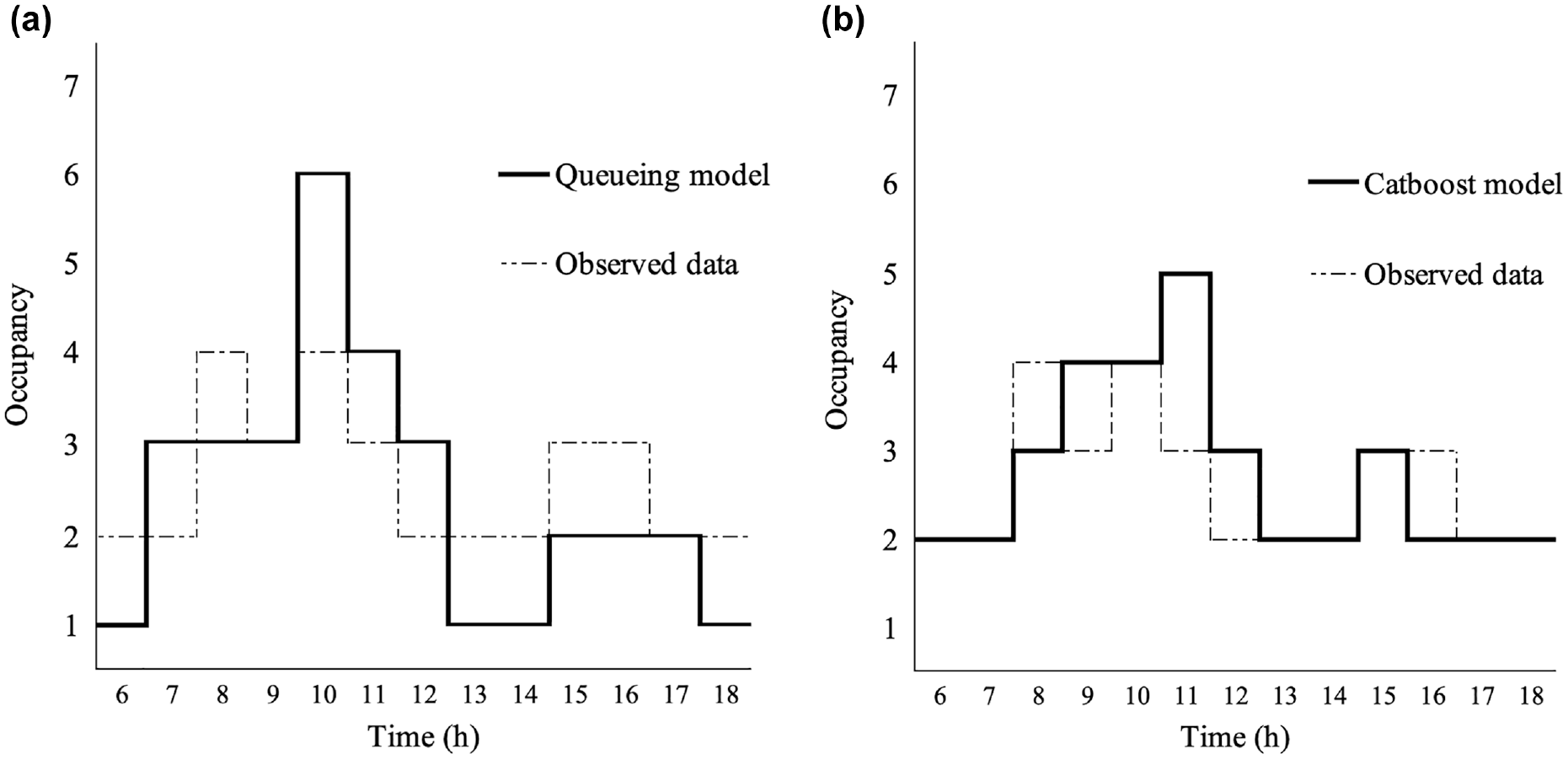
Occupancy levels estimation from compared modeling approaches.
Results Discussion and Policy Implications
Understanding curbside uses and variables that influence parking durations, for example, those ranked in Figure 6, help decision makers in the design of parking limits regulations and the planning process of city areas where new LZs need to be implemented, and no previous information is available. The presented data-analytics approaches can model the so-called parking profiles for districts with no data available. This understanding also improves private sector planning skills with forecasted knowledge about LZ availability when data sharing strategies are in place, as shown in Letnik et al. ( 4 ).
From the qualitative analysis, results suggest that dynamic duration limits optimize public space allocation for freight, satisfying parking demand, and allowing other curbside uses when LZ occupation levels are low. Throughout this research, stakeholders provided insights into factors that policymakers need to consider when defining dynamic parking durations limits (RQ1). Takeaways from the qualitative analysis expanded the discussion on key issues for freight planning addressed in Cherrett et al. ( 20 ). Stakeholders pointed out four factors that enable the design of dynamic freight parking policies: understanding of curbside uses, knowledge of parking demand and variables that influence it, enforcement capabilities and data sharing strategies. This paper showed how modeling parking durations and LZ occupation patterns leverage the implementation of flexible LZ since peak and off-peak times are foreseeable with a reasonable degree of accuracy, that is, MAE of 0.615 in the LZ occupancy. Complementary efforts for parking space management could include demand management strategies such as off-hours deliveries, which effect on parking space demand was quantified in Campbell et al. ( 45 ).
With regard to the data analytics tools (RQ2), both modeling approaches provided formal representations from queuing theory and ML to estimate parking durations and LZ occupation levels, considering operational and locational features. Tailor-made regulations can be designed by applying these approaches to specific contexts and city areas. Based on the LZ occupation forecasting power evaluation, the authors recommend implementing gradient boosting machines since they outperformed queuing models and other ML algorithms. For instance, CatBoost reached the best explanatory power with R2 of 0.125, which is still low compared with the performance of the private cars parking models shown in Jelen et al. ( 19 ). Still, it reached a reasonable MAE of 9 min for duration estimation, almost one-third of Vic’s current 30 min parking regulation. In Jelen et al. ( 19 ), the MAE reached was 6.7 min.
“Professional Activity,”“Vehicle Type,” and “Hour of day” were the most relevant factors for estimating durations using the best performing ML algorithm. The former two covariates confirmed results from previous research ( 14 ) suggested that the type of commodity, type of vehicle, and type of parking were significant covariates. The importance of “Hour of day” is given as a result of input data corresponding to tracked operations instead of sample observations as in Schmid et al. ( 14 ). This result confirms the relevance of studying parking on a time-window basis, as pointed out in Cherrett et al. ( 20 ), not only in ML algorithms but also in the queuing model as shown in Table 2 and Figure 4. Feels like temperature and precipitations ranked low in the feature importance score, in contrast to the results obtained in Jelen et al. ( 19 ) for the case of private vehicles. These contextual factors may represent a higher source of variability in parking durations when weather conditions are more extreme. For instance, high temperatures during the summer may affect stays at the establishments, while winter conditions of snow or ice could affect walking speed.
The presented modeling approaches call for a shift toward flexible curbside management (RQ3) by providing evidence in discussions about LZ overcapacity, alternative curbside uses, parking profiles design, and data analytics applications on curbside management systems.
LZ Overcapacity and Alternative Curbside Uses
For the case study, results can support the possibility of designing time-varying parking duration policies that contemplate flexible schemes according to the commodity type, vehicle type, and hour of day. Policy makers can use these models in developing flexible regulations and complement them with infrastructure adaptations and tailor-made limits for freight loading or unloading. By understanding parking durations, authorities speed up the transition from a “parking city” to a “pick-up and drop-off” city ( 6 ) by encouraging higher turnovers using durations estimation and flexible allocation of public space when LZ are empty.
For the case study, Hillmaker® profiles made evident the time-varying behavior of parking occupation, which opens the possibility of implementing complementary curb services at low demand hours or generating incentives for trucks to switch operations to less congested hours. The results confirmed the overcapacity of LZ that can be solved by reducing the number of available stalls or merging LZ when walking distances between establishments and LZs are reasonably short, for example, less than 200 m.
Parking Profiles Design
Urban planners can use freight trip generation (FTG), the built environment variables, and duration estimations to define parking districts and estimate parking infrastructure needs for areas within a city where there is no parking data availability. Duration estimation can be forecasted using models calibrated with parking data from other areas. These models rely on statistically significant associations between duration and commodities carried, weather conditions, size of vehicle, locational features, and FTG from surrounding establishments. Nonetheless, further research could assess transferability of these estimations to other zones within a city as well as across cities. For instance, Holguín-Veras et al. ( 46 , 47 ) showed that FTG models can be transferable across cities in the US, and Ionita et al. ( 13 ) attempted to scale occupation estimates to zones with no parking data for private vehicles using ML algorithms. A similar attempt at freight parking could expand the knowledge of the durations modeling and the urban parking planning field. An iterative planning process is required to align strategic decisions with tactical ones, where LZ location and capacity require permanent assessments using estimations of LZ occupation levels.
For current infrastructure supply, occupancy analyses, as presented in Figures 5 and 7, allow urban planners to identify overcapacity conditions and adapt idle public space to other citizens’ needs. Technology plays a crucial role in this purpose summed to active stakeholders’ engagement in building tactical urbanism projects.
Data Analytics Applications on Curbside Management Systems
In cities that consider freight operations’ pricing conditions, these analytical models can be suitable for budget planning with the expected parking durations and LZ occupancy levels. Also, these estimations can support adaptative enforcement routines that focus on periods where a higher turnover is needed.
Finally, this paper also contributes to the freight planning field concerning data collection techniques. App-based technologies represent an innovative way to access variables not typically available to a local agency, such as parking arrival and departure times by location, type of commodity, and delivery vehicle. Tracked data enable more accurate parking demand estimations than those based on freight surveys given the population data availability instead of random samples. As data collection could lead to sampling related errors, population data could mitigate these errors. It is noteworthy that data collection techniques vary depending on the context. App-based technology or sensors are slowly becoming more common in developed countries, while developing countries still rely on survey and adapted models in many cases. This paper contributes to the transferability efforts by: i) giving values of references for other cities; and ii) disclosing significant associations among variables and duration estimations, and the magnitude of those parameters. The latter can result in better design of surveys both for sample size design as well as to identify variables that should be included in the data collection.
Conclusions
This paper developed an in-depth analysis for understanding public space use by freight vehicles and their parking dynamics for duration and LZ occupancy levels. Big data from parking operations in the City of Vic allowed the identification of significant associations among operational/locational variables and durations, encouraging the implementation of queuing models and ML algorithms that involved these features in estimating parking durations and LZ occupation.
Comparing the performance of two modeling approaches, that is, queuing theory and ML algorithms, the occupancy profile built with the testing data set showed better results when using the ML algorithm CatBoost. Both kinds of modeling made evident how variable LZ occupancy was along the day/week, motivating the possibility of adapting the curb for different uses apart from freight parking. These results can also drive decisions on LZ capacity or campaigns to push traffic toward off-peak hours.
Besides supporting dynamic parking limits definition, the analyzed methods also constitute advanced tools for designing parking profiles for zones with no data available and trigger possible analytics applications on parking enforcement driven by data sharing schemes.
Nonetheless, an assessment of the transferability of the proposed models to other cities is needed, along with validation of the consistency and suitability of the results. The proposed approach highly depends on the technology used for collecting the data, which in this case was a mobile app. Given the data set structure, cities with other technologies such as cameras, sensors, or parking meters may require different modeling approaches. The low explanatory level of ML algorithms is also one of the limitations of this study, which suggest the need to advance toward tailor-made algorithms for freight parking modeling.
Future research could focus on answering how driver behavior changes with the assignment of tailored-predefined parking time. Also, in providing insights into how parking management systems can influence the parking behavior of commercial vehicle drivers to improve LZ use and reduce congestion. In general, behavioral aspects of freight parking coupled with analytics would give insights to test the impacts of variable parking time limits on LZ misuses, cruising, and congestion. Also, future studies can focus on how these strategies affect sustainability aspects from the three perspectives, that is, social, economic, and environmental.
For parking durations modeling, further developments on ML for parking durations could also explore techniques, such as embedding, for handling high amounts of categorical variables. Another research direction could be to test the proposed models in different contexts and richer data composition with the inclusion of establishment features or contextual data apart from weather, for example, traffic or security conditions.
Footnotes
Acknowledgements
The authors acknowledge the support and guidance from Parkunload and authorities from the City of Vic.
Author Contributions
The authors contributed to the paper as follows: study conception and design: Sanchez-Diaz, Castrellon; data collection: Sanchez-Diaz, Kalahasthi; analysis and interpretation of results: Castrellon, Sanchez-Diaz, Kalahasthi; draft manuscript preparation: Castrellon. All authors reviewed the results and approved the final version of the manuscript.
Declaration of Conflicting Interests
The author(s) declared no potential conflicts of interest with respect to the research, authorship, and/or publication of this article.
Funding
The author(s) disclosed receipt of the following financial support for the research, authorship, and/or publication of this article: This research was made possible through the financial support from the Urban Freight Platform funded by VREF grant Ep+2014-09
