



Abstract
This paper describes the efforts to evaluate the safety impacts of increasing the speed limit from 55 mph to 60 mph on selected two-lane, two-way state highway road segments in Minnesota, U.S. An empirical Bayes (EB) before–after analysis was used to estimate crash modification factors (CMFs) for both segments (1,909.11 mi) and intersections (1,722 3-leg and 1,191 4-leg). Aggregate analysis conducted using all the segment and intersection data showed a 2.9% increase in total crashes, a 2.5% increase in injury (KABC) crashes, and a 0.05% reduction in the injury (KAB) crashes. These results—along with before-and-after operating speed data from another study by Minnesota Department of Transportation (MnDOT) (2019) showing that the 85th percentile operating speed remained the same and that the mean operating speeds increased by 1 mph following the speed limit increase—can lead to a conclusion that the speed limit increase from 55 mph to 60 mph had a minor effect on combined segment and intersection crashes or operating speeds. It is important to note that these results are specific to the corridors that were selected by MnDOT for the increase in speed limit; caution must be exercised when extending these to systemwide increases in speed limits in Minnesota or in other states, and when estimating long-term effects of speed limit increases as operating speeds can change over a longer period of time.
Keywords
Minnesota, U.S., legislature passed legislation in 2014 mandating the Minnesota Department of Transportation (MnDOT) evaluate speed limit increase from 55 mph to 60 mph on the two-lane state highway system ( 1 ). Minnesota has approximately 7,000 mi of two-lane, two-way roadways that are affected by this legislation. The legislation required engineering and traffic investigations to determine segments where speed limits can be reasonably and safely increased to 60 mph. As a result of these investigations, the speed limit was increased to 60 mph on 5,240 mi of the two-lane state highway system, while MnDOT had previously increased speeds to 60 mph on 1,550 mi of two-lane highways ( 2 ).
The objective of this study is to evaluate the safety impacts for two-lane, two-way state highway road segments where speed limits were changed from 55 mph to 60 mph through a before–after evaluation. Crash modification factors (CMFs) are estimated for the following locations, intersection control types, crash types, and crash severities:
Locations: ○ Two-lane, two-way state highway road segments (excluding intersections), and ○ Intersections on two-lane, two-way state highway road segments: ■ 3-legged intersections with lighting ■ 3-legged intersections with no lighting ■ 4-legged intersections with lighting ■ 4-legged intersections with no lighting
Intersection control types:
○ All control types (signalized, minor-road stop-controlled, all-way stop-controlled, and minor-road yield intersections) ○ Minor-road stop-controlled intersections
Crash types: ○ All types combined—total ○ Angle crashes ○ Head-on crashes ○ Rear-end crashes ○ Run-off-road crashes ○ Sideswipe same-direction crashes
Crash severities: ○ Total crashes (also referred to as KABCO crashes) ○ Fatal and all injury crashes (also referred to as KABC crashes) ○ Fatal and serious/suspected injury crashes (also referred to as KAB crashes)
Evaluation of pedestrian and bicyclist crashes was also considered; however, there were not enough crashes to conduct a reliable statistical evaluation. This paper only presents the safety impacts on Total and Injury (KABC and KAB) crashes. Evaluation of the various crash types mentioned above are available in the final report of the MnDOT project ( 3 ).
A prior study by MnDOT looked at the before-and-after operating speed changes following the speed limit increase ( 2 ). Based on a random sample of 46 two-lane, two-way roadway locations in Minnesota where the speed limit increased to 60 mph and 22 locations where the speed limit remained at 55 mph, they found that the 85th percentile operating speed remained at 65 mph both before and after the speed limit change, whereas the mean operating speed increased by 1 mph from 59 mph in the “before” period to 60 mph in the “after” period.
Literature Review
Speed limits are usually set to inform drivers of the highest speed that is appropriate for ideal traffic, road, and weather conditions. Our literature review scan, focused on two-lane, two-way roadways, showed that many studies have been conducted to evaluate the safety impacts of changing speed limits. The results of these studies generally show that increasing speed limits can negatively affect safety. For example, a 2019 IIHS study shows that speed limit increases in the past 25 years are tied to over 37,000 deaths in the U.S. ( 4 ). The study found that a 5 mph increase in the maximum speed limit was associated with 8% and 3% increases in fatality rates on interstates/freeways and other roads, respectively.
Sayed and Sacchi evaluated the safety impacts of increasing speed limits on rural highways in British Columbia, Canada, following a speed limit review initiated by the Ministry of Transportation and Infrastructure (MoTI) of British Columbia in 2013 ( 5 ). As a result of the review, MoTI recommended increasing speed limits on approximately 1,300 km of rural provincial highway segments (65 sections) with the majority of the sections seeing a 10 km/h speed limit increase A full Bayesian before–after evaluation shows this speed limit increase to be associated with a statistically significant 11.1% increase in fatal and injury crashes.
Monsere et al., in their study, analyzed the speed and crash performance changes for 1,400 miles of Oregon highways and interstates where speed limits were increased in 2016 by the Oregon legislature ( 6 ). The legislature raised speed limits to 70 mph for cars and 65 mph for trucks on interstates, and 65 mph for cars and 55 mph for trucks on rural two-lane highways. They found that average operating speeds on the highways that had a speed limit increase showed a statistically significant 3 mph increase along with increases in both the average and percentage of vehicles exceeding 65, 75, and 85 mph. Their preliminary crash analysis found that both the total and total truck-involved crashes increased at a higher rate than what was expected based on changes in traffic volume and the changes in the control sections. The control sections selected for this study represent the lower-volume speed change highways that were not selected by Oregon legislature for increased speed limits. Fatal and severe injury crashes did not appear to increase more than the control section for interstates but did increase for rural two-lane roads. However, overall, on both interstates and rural two-lane highways, there was a reduction in fatal and severe injury crashes involving trucks. These preliminary findings show that increased speed limits led to an increase in crash frequency and severity.
Vadeby and Forsman analyzed the effects of both increased and reduced speed limits as well as changes in actual driving speeds caused by the changed speed limits following a review of speed limits on the national rural road network by the Swedish Transport Administration in 2008 ( 7 ). A reduction in speed limits from 90 km/h to 80 km/h on rural roads caused the number of fatalities to decrease by 14 per year, while no significant changes were seen for the number of seriously injured. An increase in speed limit from 100 km/h to 120 km/h on motorways was associated with an increase of 15 per year in the number of those seriously injured, but no significant changes were seen for the number of deaths. Speed measurement surveys show that a decrease in speed limit by 10 km/h led to a decrease of mean speeds of around 2 to 3 km/h, and an increase of the speed limit by 10 km/h resulted in an increase of mean speed by 3 km/h.
Gayah et al., in their study, evaluated the operational and safety impacts of setting posted limits below engineering recommendations (design speed) using data from rural two- and four-lane roads in Montana ( 8 ). Their findings suggest that setting speed limits 5 mph below the engineering recommended value is associated with a statistically significant reduction in total crashes by 56%, fatal and injury crashes by 40%, and PDO crashes by 57%. Setting speed limits 10 mph below the engineering recommended value is associated with a statistically significant reduction in total crashes by 16% and PDO crashes by 34%, while fatal and injury crashes saw a statistically significant increase of 45%. Setting speed limits 15 mph or more below the engineering recommended value is associated with non-statistically significant increases in total crashes by 21%, fatal and injury crashes by 72%, and PDO crashes by 12%. The operating speed evaluation conducted as a part of this study suggests that drivers tend to comply more closely with the speed limit when the posted speed limit is set equal to or just 5 mph below the engineering recommended value. Overall, this study concludes that the speed limit compliance worsened as the difference between the engineering recommended and posted speed limits increased and suggests that setting posted speed limits 5 mph lower than the engineering recommended practice may result in operating speeds that are more consistent with the posted speed limits and overall safety benefits.
We also recognize that there is a significant body of literature on speed and safety. Though these studies may not directly quantify the safety impacts of the effects of changing speed limits, they do provide insights into the impacts of various operating speed scenarios and speed enforcement activities. For example, the Highway Safety Manual summarizes the relationship between operating speed and crash frequency based on a meta-analysis of 97 published studies ( 9 ). Table 3E-2 in the Highway Safety Manual summarizes CMFs for fatal and injury crashes caused by changes in average operating speed of a roadway. It notes that a small change in average operating speed can have a large impact on crash frequency and severity; for example, a 2 mph increase in the average operating speed of a roadway with an average operating speed of 60 mph can lead to an 18% increase in fatal crashes and a 10% increase in injury crashes.
Hauer, in his paper, tries to answer two questions: “How does speed affect safety?” and “How does what professionals do affect the evolution of speeds?” ( 10 ). He concludes that, given a change in mean speed, one can predict the consequences in injuries and fatalities knowing that, if speed increases while other conditions (vehicles, roads, medical services) remain unchanged, accidents will be more severe and therefore more accidents will be reported. Prior research has also shown that vehicles traveling excessively below or above the speed limit are overrepresented in crashes ( 11 – 16 ).
Albee and Bobitz provide a summary of various proven safety countermeasures including speed safety cameras and variable speed limits ( 17 ). For speed safety cameras, they found that fixed units can lead to a 54% reduction in total crashes and a 47% reduction in injury crashes on urban principal arterials. They also found that point-to-point (P2P) speed enforcement systems can lead to a 37% reduction in fatal and injury crashes on urban expressways, freeways, and principal arterials. For variable speed limits, they found a 34% reduction in total crashes on freeways (alongside 51% reduction in fatal and injury crashes and 65% reduction in rear-end crashes).
Montella et al. evaluated the effects on speed and safety of a P2P speed enforcement system on an urban motorway in Italy ( 18 ). Their findings suggest that the P2P speed enforcement system led to very positive effects on both speed and safety. They noted a 32% reduction in total crashes and a 37% reduction in injury crashes. They also found a 21% reduction in total crashes in the part of the motorway where the P2P speed enforcement system was not activated, indicating a significant spillover effect. Their findings also suggest a reduction in the mean speed, the 85th percentile speed, the standard deviation of speed, and the proportion of drivers exceeding the speed limits.
La Torre et al. evaluated the safety effects of automated section speed control on the Italian motorway network ( 19 ). Their findings (based on a sample of 125 automated section speed control sites) suggest a 22% reduction in total crashes, 18% reduction in fatal and injury crashes, and a 23% reduction in property damage only crashes. They also note that an automated section speed control system is more effective in reducing crashes on high traffic volume motorway sections.
Methodology
The empirical Bayes (EB) methodology for before–after studies was used for this evaluation. This methodology is considered rigorous in that it accounts for the possible bias caused by regression to the mean (RTM) using a reference group of similar but untreated sites and safety performance functions (SPFs) to account for changes in exposure and time trends, and this has been found to reduce the level of uncertainty in the estimates of the safety effect. The following steps are needed to conduct an EB before–after evaluation ( 20 ):
Identify a reference group without the treatment, but similar to the treated sites in terms of the major factors that affect crash risk including traffic volume and other site characteristics.
Estimate SPFs using data from the reference entities relating crashes to the characteristics of the entity. In some cases, if it is not possible to find a reference group similar to the treatment group, or when the treatment is implemented system-wide, the “before” data from the treatment entities is used along with reference or comparison entities to estimate the SPFs ( 21 ). In fact, in this evaluation, the “before” data from the treatment sites were combined with the reference sites for estimating SPFs.
In estimating SPFs, calibrate annual calibration factors (ACFs) to account for the temporal effects (e.g., variation in weather, demography, vehicle population, and crash reporting) on safety performance. The ACF for a particular year is the ratio of the observed crashes to the predicted crashes from the SPF.
Use the SPFs, ACFs, and site characteristics for each year in the “before” period for each treatment site to estimate the number of crashes that would be predicted for the “before” period.
Calculate the EB estimate of the expected crashes in the “before” period at each treatment site as the weighted sum of the actual crashes in the “before” period and predicted crashes from step 4.
For each treatment site, estimate the product of the EB estimate of the expected crashes in the “before” period and the SPF predictions for the “after” period divided by the SPF predictions for the “before” period. This is the EB expected number of crashes in the “after” period that would have occurred had there been no treatment. The variance of this expected number of crashes is also estimated in this step. The expected number of crashes without the treatment along with the variance of this parameter and the number of reported crashes after the treatment is used to calculate the safety effect of the treatment (θ) along with the standard error, which is an estimate of the precision of the estimate of the safety effect. It is important to note that θ is the same as a CMF.
Data Summary
Crash data were available for the period from 2012 to 2018. We reviewed MnDOT’s roadway inventory files for these years to eliminate road segments that had roadway changes based on the roadway inventory files. It is possible that some of these locations experienced some minor changes (e.g., changes in signs) but the information on such changes was not available to the research team. MnDOT also informed us that there were not any large scale systemic changes that affected a lot of sites during this period.
The treatment group consisted of sites where the speed limit was changed in 2015, 2016, and 2017. The reference/non-treatment sites included locations where the speed limit was modified in 2018, locations where the speed limit change will be modified (2019 onwards), and locations where there are no plans for the speed limit to be modified. The sites were distributed into three groups:
Group 1: Sites where speed limit was changed in 2015, 2016, and 2017; at least one year of “after” crash data available
Group 2: Sites where speed limit was changed in 2018 or will be changed in the future; no “after” crash data available
Group 3: Sites where there are no plans for speed limits to be modified
Tables 1 to 3 provide summary statistics for segments and intersections in these three groups that were used in the analysis.
Segment and Intersection Summary Statistics
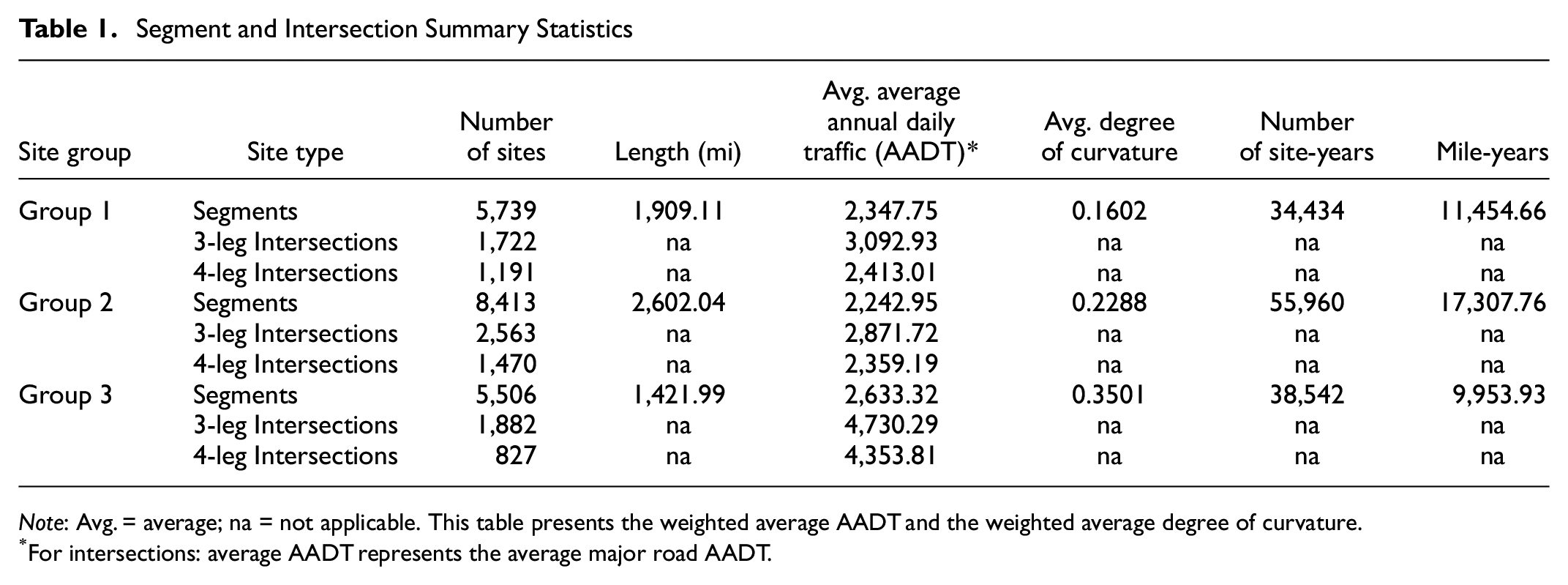
For intersections: average AADT represents the average major road AADT.
Segment Crash Summary Statistics
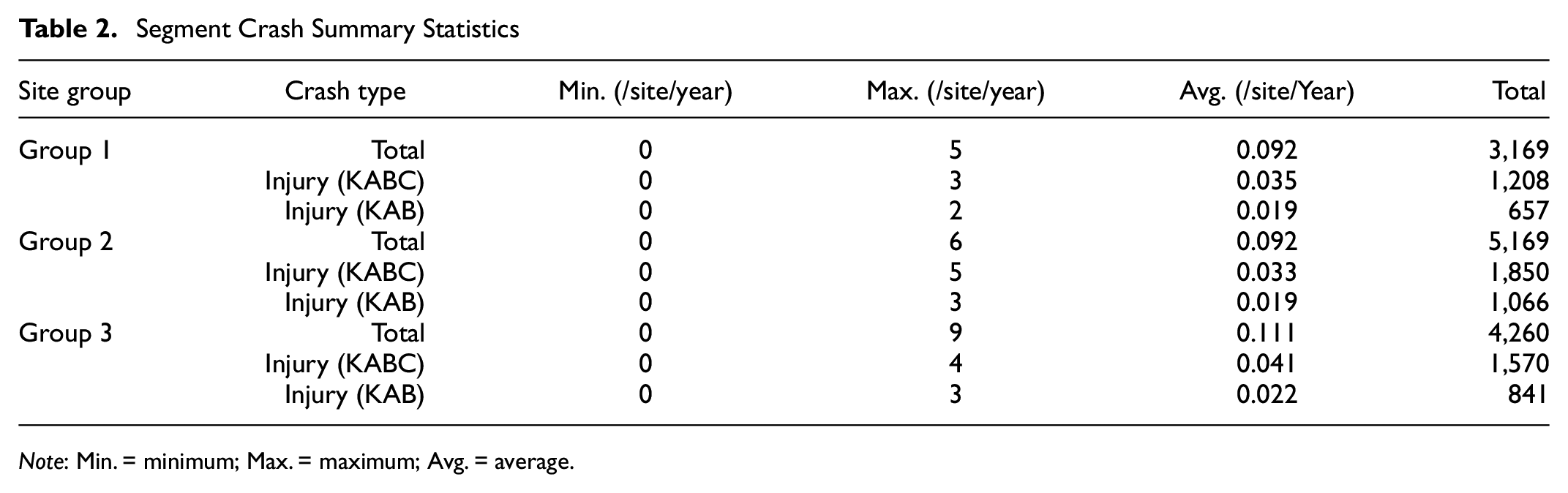
Note: Min. = minimum; Max. = maximum; Avg. = average.
Intersection Crash Summary Statistics
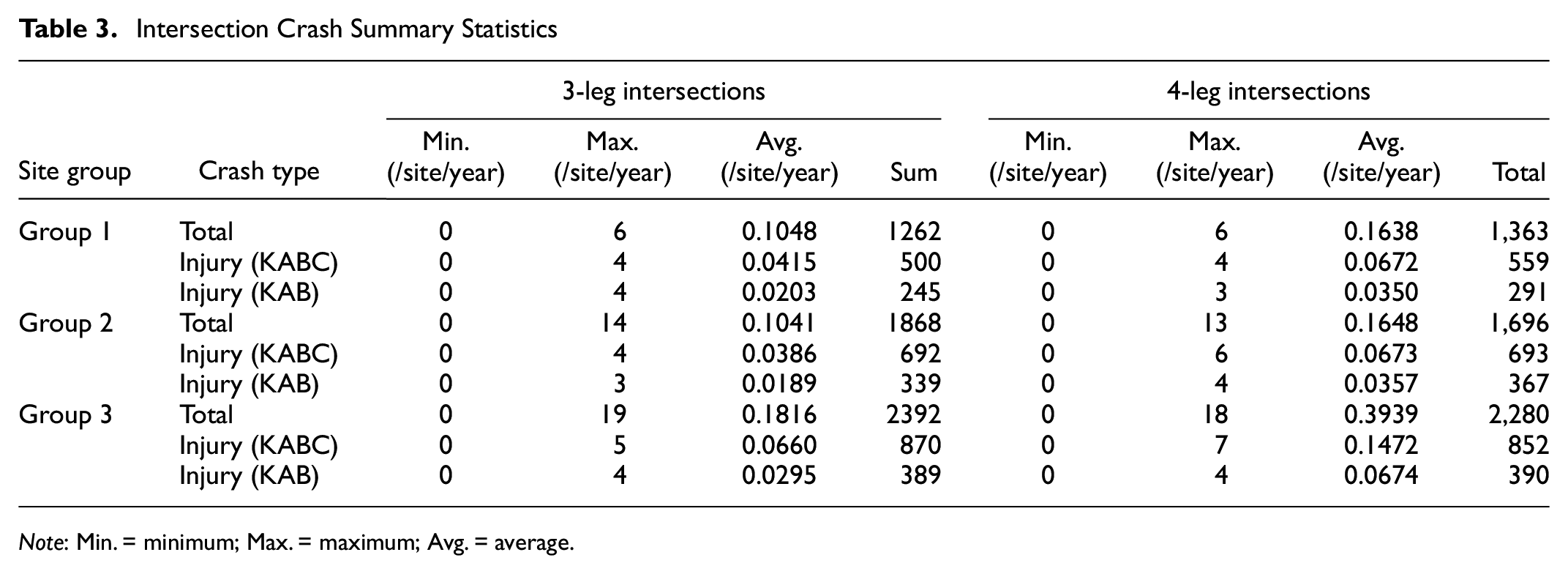
Note: Min. = minimum; Max. = maximum; Avg. = average.
Minor road AADTs for intersections were not available. It should be noted that, for estimating SPFs, data from Group 3 alongside “before” data from Groups 1 and 2 were used. These SPFs were then used to estimate the EB estimates and the resulting CMFs using data from Group 1. With crash data available from 2012 to 2018, the Group 1 “before” period varied between 3 to 5 years and the “after” period varied between 1 to 3 years.
Safety Performance Functions (SPFs)
The evaluation’s first step is to estimate an SPF. Generalized linear modeling was used to estimate model coefficients assuming a negative binomial error distribution, which is consistent with the state of research in developing these models. SPFs were estimated for target crash types and crash severities. The relationship between the crash frequency and the independent variables can be seen in Equation 1.

where
length = the segment length, and
The SPFs for segment crashes are presented in Table 4 (length of the segment was used as an offset in these models). Hauer’s discussion of using complex functional forms was the motivation behind having two AADT terms in the segment SPFs ( 22 ). In addition to AADT, the SPFs also included indicator variables for each year. The SPFs were also used to estimate ACFs. The ACFs are defined as the ratio of the total observed crash frequency to the total predicted crash frequency from the SPF and are calculated for each year. The yearly indicator variables and ACFs are estimated to account for time trends. The ACFs for segment crashes are presented in Table 5. SPFs and ACFs for intersection crashes are available in the final report of the MnDOT project ( 3 ). It should be noted that intersections’ SPFs were developed only using major road AADTs, because of the non-availability of minor road AADTs.
Safety Performance Functions (SPFs) for Segment Crashes
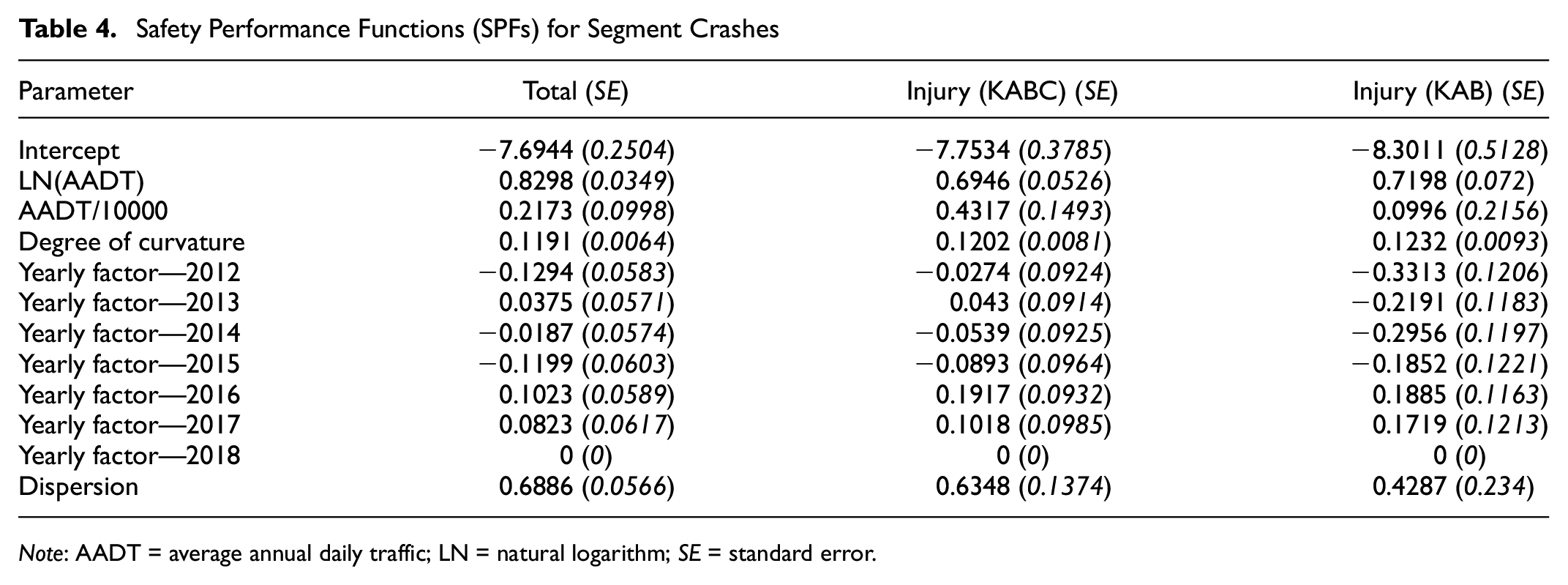
Note: AADT = average annual daily traffic; LN = natural logarithm; SE = standard error.
Annual Calibration Factors (ACFs) for Segment Crashes

Results and Discussion
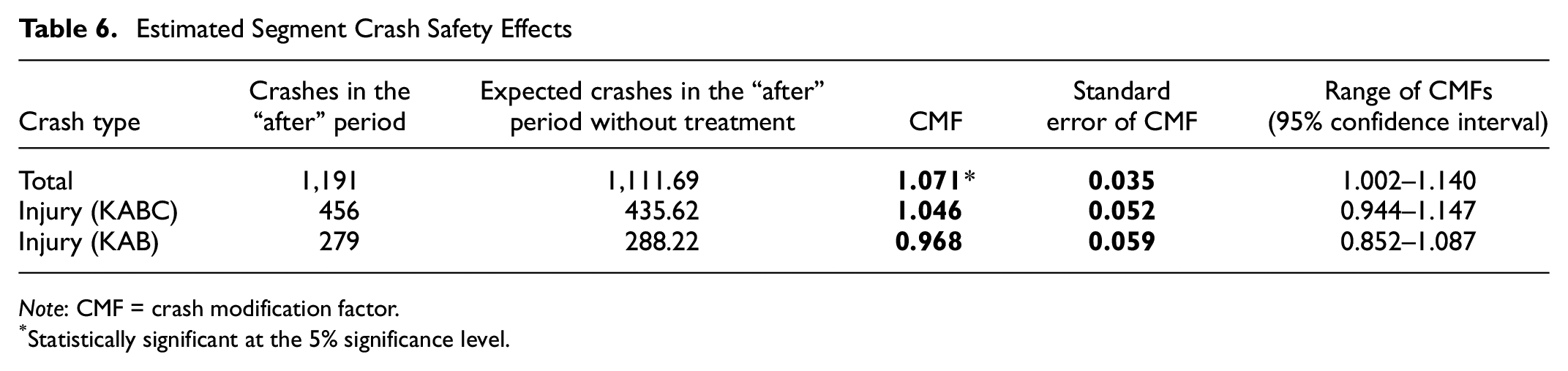
The estimated crash safety effects for segments are shown in Table 6. For each crash type, the EB expected crashes in the after period had the speed limit change not been implemented are shown, along with the actual number of crashes observed in the “after” period, the CMF, the standard error of the CMF, and 95% confidence interval of the CMFs.
Estimated Segment Crash Safety Effects
Note: CMF = crash modification factor.
Statistically significant at the 5% significance level.
The results indicate that increasing the speed limits from 55 mph to 60 mph had minor impacts on segment crashes, especially for the more important injury crashes. The total crashes show an increase of 7.1% (statistically significant at the 5% significance level), along with a 4.6% increase in KABC injury crashes and 3.2% reduction in injury (KAB) crashes, both of these were not statistically significant.
Intersections were divided into two different groups (further divided into four different subgroups each) for estimation of crash safety effects. CMFs were estimated for each of the four subgroups, alongside aggregate CMFs for the two groups.
Intersections on two-lane, two-way state highway road segments—all control types: ○ 3-legged intersections with lighting (n = 66) ○ 3-legged intersections with no lighting (n = 1,656) ○ 4-legged intersections with lighting (n = 92) ○ 4-legged intersections with no lighting (n = 1,099)
Intersections on two-lane, two-way state highway road segments—minor-road stop-control only: ○ 3-legged intersections with lighting (n = 64) ○ 3-legged intersections with no lighting (n = 1,653) ○ 4-legged intersections with lighting (n = 85) ○ 4-legged intersections with no lighting (n = 1,085)
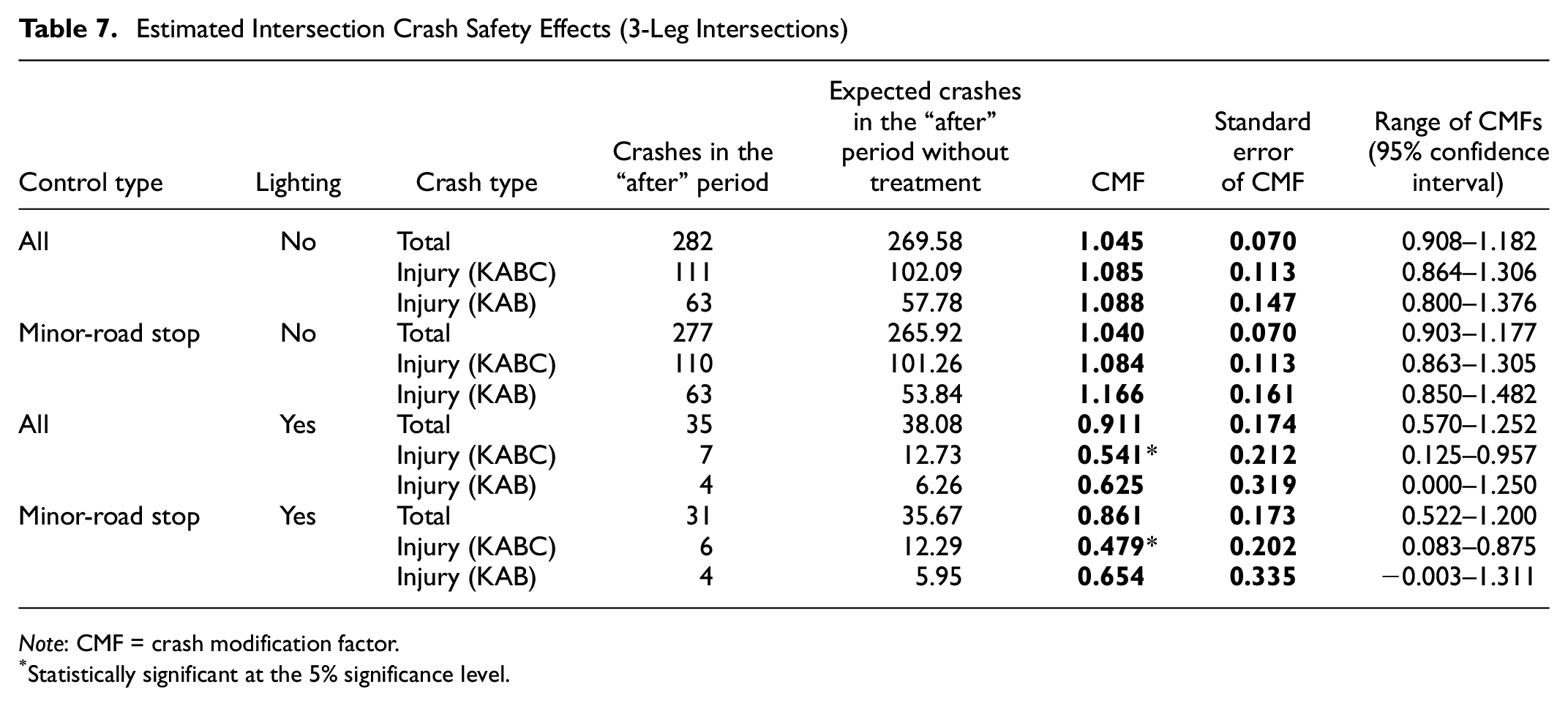
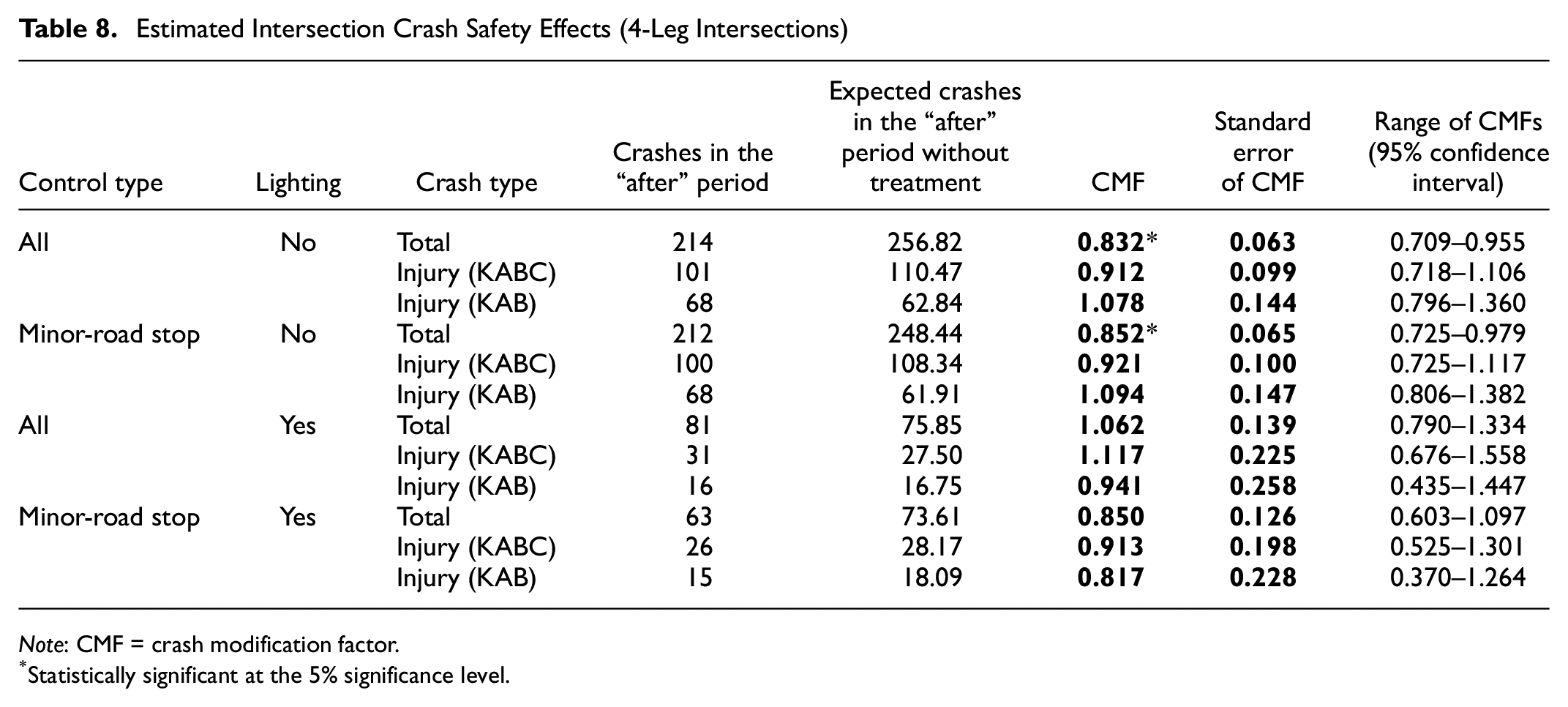
The estimated crash safety effects for the four subgroups of intersection with all traffic control types and minor-road stop-control are shown in Tables 7 and 8.
Estimated Intersection Crash Safety Effects (3-Leg Intersections)
Note: CMF = crash modification factor.
Statistically significant at the 5% significance level.
Estimated Intersection Crash Safety Effects (4-Leg Intersections)
Note: CMF = crash modification factor.
Statistically significant at the 5% significance level.
The results indicate the increasing the speed limits from 55 mph to 60 mph had varying impacts on intersection crashes at intersections with all traffic control types. Most of the safety effects were statistically insignificant except for total crashes (on 4-leg intersections with no lighting—16.8% reduction) and injury (KABC) crashes (on 3-leg intersections with lighting—45.9% reduction), both statistically significant at the 5% significance level.
For intersections with minor-road stop-control, the results indicate that increasing the speed limits from 55 mph to 60 mph had varying impacts. Most of the safety effects were statistically insignificant except for total crashes (on 4-leg intersections with no lighting—14.8% reduction) and injury (KABC) crashes (on 3-leg intersections with lighting—52.1% reduction) showing statistically significant safety effects at the 5% significance level.
The ranges of the CMFs for intersections with all traffic control types and minor-road stop-control only show a wide spread of values showing increases and reduction in crashes. However, the insignificant results coupled with low injury crash counts in some cases makes it difficult to conclude the effects of speed limit change on crashes.
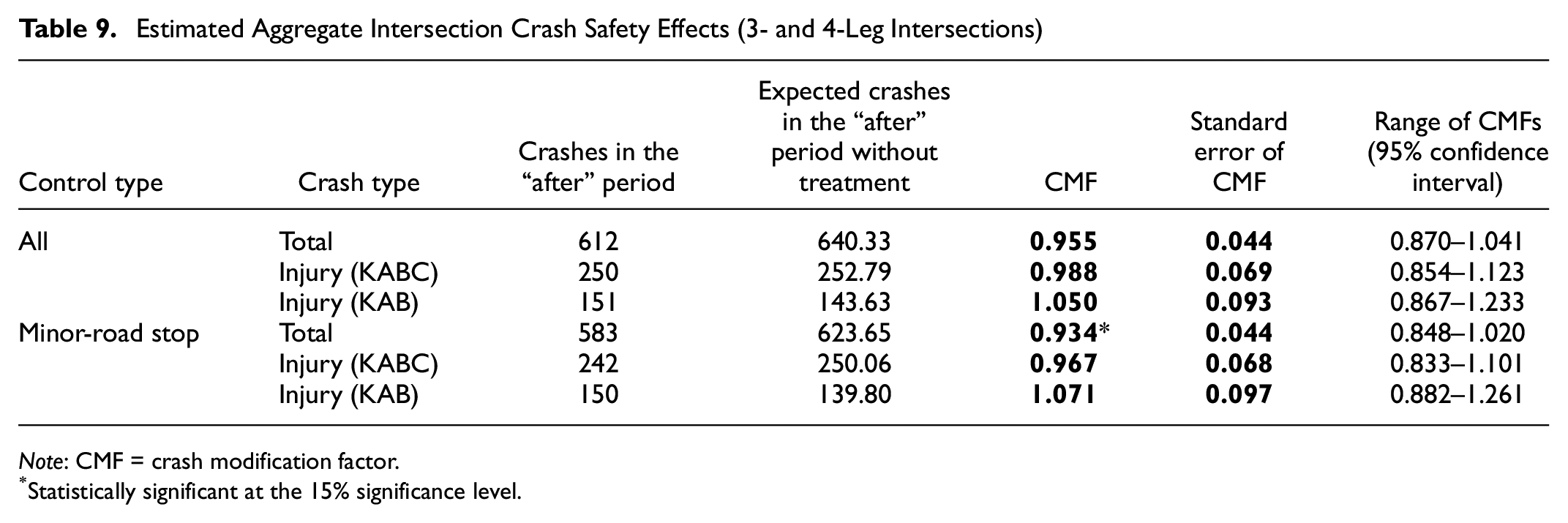
The aggregate estimated crash safety effects for the two main groups of intersections (all traffic control types and thru-stop control only) are shown in Table 9.
Estimated Aggregate Intersection Crash Safety Effects (3- and 4-Leg Intersections)
Note: CMF = crash modification factor.
Statistically significant at the 15% significance level.
The results indicate that increasing the speed limits from 55 mph to 60 mph had varying impacts on aggregate intersection crashes at intersections with all traffic control types and minor-road stop-control. For intersections with all traffic control types, a 4.5% reduction was seen in total crashes, alongside a 1.2% reduction in injury (KABC) crashes and a 5% increase in injury (KAB) crashes, all of which were statistically insignificant. For intersections with minor-road stop-control only, a 6.6% reduction was seen in total crashes (statistically significant at the 15% significance level), alongside a 3.3% reduction in injury (KABC) crashes and a 7.1% increase in injury (KAB) crashes, both of which were statistically insignificant.
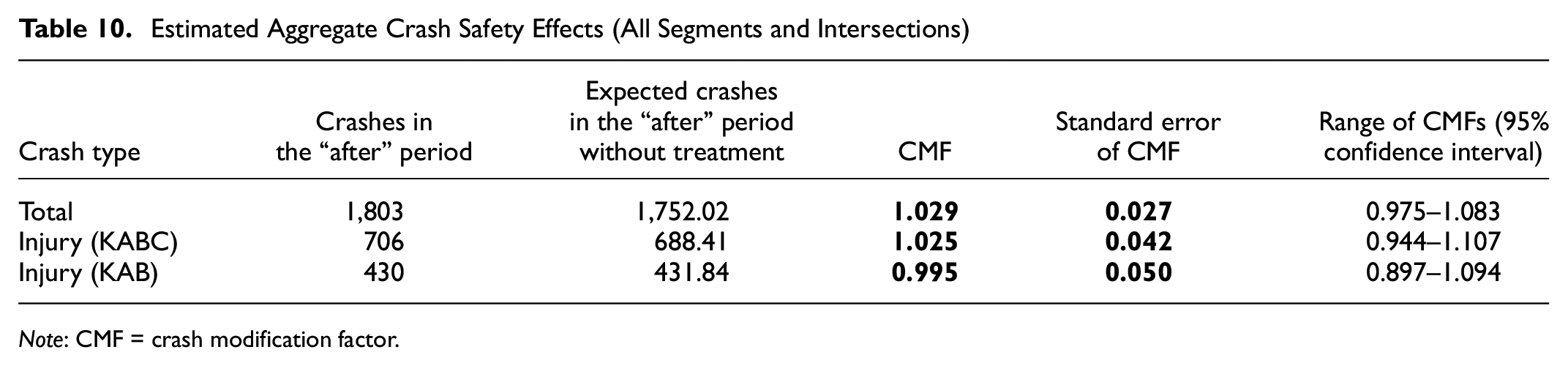
The aggregate estimated crash safety effects (for total and injury crashes) for combined segments and intersection sites are shown in Table 10.
Estimated Aggregate Crash Safety Effects (All Segments and Intersections)
Note: CMF = crash modification factor.
The results indicate that increasing the speed limits from 55 mph to 60 mph leads to a 2.9% increase in total crashes, a 2.5% increase in injury (KABC) crashes, and a 0.05% reduction in the injury (KAB) crashes when all the segments and intersections are used to derive an aggregate safety effect. These aggregate results show that increasing the speed limit had minor impact on the total, injury (KABC), and injury (KAB) crashes. However, it is important to understand that these results align with a study by the Minnesota Department of Transportation that compared the “before” and “after” operating speed changes following the speed limit increase ( 2 ). They found that the 85th percentile operating speed remained at 65 mph both before and after the speed limit change, whereas the mean operating speed increased by 1 mph from 59 mph in the “before” period to 60 mph in the “after” period. The operating speed results are an indication of MnDOT’s data-driven process to select corridors appropriate for a 60 mph speed limit.
Based on the “before” and “after” operating speed data and the aggregate segment and intersection crash safety effects, the speed limit increase from 55 mph to 60 mph had a very minor to no effect on total and injury crashes when looking at the aggregate safety effects for combined segment and intersection sites. However, for segments (Table 6), the 4.6% increase in injury (KABC) crashes is very close to the 5% increase in injury crashes mentioned in the Highway Safety Manual (Table 3E-2, Page 3–57) for a 1 mph increase in average operating speeds at 60 mph ( 9 ).
Conclusions
The objective of this study was to evaluate safety impacts of increasing the speed limit from 55 mph to 60 mph on two-lane, two-way state highway road segments. EB analysis was done to estimate CMFs for both segments and intersections.
The segment analysis showed a 7% increase in total crashes that was statistically significant, alongside insignificant increases/decreases in injury crashes. The intersection analysis was split into two groups (all traffic control types and minor-road stop-control only). The aggregate CMFs for all intersections within these two groups show that most of the CMFs were close to 1. Analysis was also performed on four subgroups (3- and 4-leg, lighting/no lighting) within the two main intersection groups. Disaggregating the intersections into further groups led to smaller sample sizes that led to higher standard errors showing a widespread range of CMFs around 1.
The aggregate analysis conducted using all the segment and intersection data showed very minor increase/decrease in the total and injury crashes. This aggregate result, along with “before” and “after” operating speed data from another MnDOT study showing that the 85th percentile operating speed remained the same and that the mean operating speeds increased by 1 mph following the speed limit increase, can lead to a conclusion that the speed limit increase from 55 mph to 60 mph had a very minor to no effect on total and injury crashes when looking at the aggregate safety effects for combined segment and intersection sites ( 2 ). It is important to note that these results are specific to the corridors that were selected by MnDOT for the increase in speed limit; caution must be exercised when extending these to systemwide increases in speed limits in Minnesota or in other states, and when estimating long-term effects of speed limit increases, as operating speeds can change over a longer period of time ( 10 ).
Footnotes
Acknowledgements
The authors acknowledge the support of MnDOT in providing the data that was used in this research. The authors also thank MnDOT for their support and guidance throughout this effort. The authors would also like to thank Daniel Levitt, Mike Vann, and Amy Worzella for their support in data collection.
Author Contributions
The authors confirm contribution to the paper as follows: study conception and design: T. Saleem; R. Srinivasan; data collection: T. Saleem; R. Srinivasan; analysis and interpretation of results: T. Saleem; R. Srinivasan; draft manuscript preparation: T. Saleem. All authors reviewed the results and approved the final version of the manuscript.
Declaration of Conflicting Interests
The author(s) declared no potential conflicts of interest with respect to the research, authorship, and/or publication of this article.
Funding
The author(s) disclosed receipt of the following financial support for the research, authorship, and/or publication of this article: This research was funded by the Minnesota Department of Transportation (MnDOT) as part of contract entitled Traffic Safety Evaluation, which was led by HDR.
