




Abstract
This study proposes a framework to analyze public discourse in Twitter to understand the impacts of COVID-19 on transport modes and mobility behavior. It also identifies reopening challenges and potential reopening strategies that are discussed by the public. First, the study collects 15,776 tweets that relate to personal opinions on transportation services posted between May 15 and June 15, 2020. Next, it applies text mining and topic modeling techniques to the tweets to determine the prominent themes, terms, and topics in those discussions to understand public feelings, behavior, and broader sentiments about the changes brought about by COVID-19 on transportation systems. Results reveal that people are avoiding public transport and shifting to using private car, bicycle, or walking. Bicycle sales have increased remarkably but car sales have declined. Cycling and walking, telecommuting, and online schools are identified as possible solutions to COVID-19 mobility problems and to reduce car usage with an aim to tackle traffic congestion in the post-pandemic world. People appreciated government decisions for funding allocation to public transport, and asked for the reshaping, restoring, and safe reopening of transit systems. Protecting transit workers, riders, shop customers and staff, and office employees is identified as a crucial reopening challenge, whereas mask wearing, phased reopening, and social distancing are proposed as effective reopening strategies. This framework can be used as a tool by decision makers to enable a holistic understanding of public opinions on transportation services during COVID-19 and formulate policies for a safe reopening.
One of the many sectors that have been hit hard by the COVID-19 pandemic is transportation. Passenger and freight transport have both suffered severe setbacks from the crisis ( 1 ). Daily travel patterns and mobility behavior of commuters have been significantly affected by the pandemic. Trip-making has been significantly reduced during the lockdown period for the following reasons: mandatory stay-at-home orders, closed retail/shops, and fear of contracting the virus. Public transport in particular has seen an all-time low in ridership. People are avoiding public transit in fear of coming in contact with the virus ( 2 ). Crowded public transport is considered a risk for the spread of the virus in urban areas, and as an alternative, people are shifting to private vehicles, bicycles, or even walking as their primary modes of transport ( 2 , 3 ). Some municipalities have responded to this demand by closing streets to vehicles to make more space for pedestrians and cyclists ( 4 ). Experts are hopeful for green urban mobility as the increase of “working from home” may reduce traffic congestion ( 2 ). In particular, the emergence of cycling as an alternative for safer mobility may have long-term implications for green transport policy. Moreover, people are reluctant to participate in activities outside of the home, and the demand for telecommuting has increased ( 3 ). It has been projected that since March, more than 44 million people have been forced to file for unemployment, which in turn reduces travel demand ( 4 ). It is necessary to understand the complex effects that COVID-19 has had, and continues to have, on transportation. Also, impacts on the mobility behavior of people need to be determined with an aim to assist policy makers to approach the “new normal,” which will follow the current health protocols and be resilient in the case of future outbreaks ( 1 ).
The economic fallout from the coronavirus pandemic has been intense on the transport sector, especially after the reduction or closing of public transport services. Easing lockdown measures and restarting the economy will lead to more people on the streets, riding buses, trams, subways, cars, and other modes of transport ( 2 , 3 ). In general, the higher the mobility, the greater the economic activity and human interactions it will entail. Experts from different sectors including transport, health, business, and social science, need to help to develop strategies so that we can safely reopen urban systems, maintaining public health directives that will help stifle a recurrence of the virus ( 1 – 3 ). To make these decisions, it is imperative for us to understand the influence COVID-19 has had on transport modes and travel behavior from different perspectives.
The general public are the primary users of the transportation services of an area. Their opinions and concerns may help us to better understand the challenges and opportunities of the transport system ( 5 ). In addition, the implications of lockdown for people’s mobility and participation in activities can be more clearly understood. Similarly, public discourse and sentiments on mobility restrictions, their opinion and experiences related to transport modes, and reactions to decisions made by government and transport authorities can also provide useful insights into the impacts of pandemics on the transportation system. Furthermore, an in-depth analysis of people’s perspectives will offer directions for countermeasures and reopening of urban systems.
Social media analysis can be an efficient tool to explore public discourse on transportation during a pandemic ( 6 ). With the rise of participatory web and social media platforms (“Web 2.0”) and the resulting proliferation of user-generated content, the general public is playing a larger role in all stages of knowledge translation, including information generation, filtering, and amplification ( 7 ). Therefore, for transport professionals, it is increasingly important to analyze online public response and perceptions during emergency situations, such as COVID-19, to examine the effects and implications of the pandemic lockdown on transport and to produce future plans and their associated reopening strategies. The public are now more actively participating in social media platforms than traditional focus group discussions within planning processes, sharing their concerns, choices, and opinions on all trending topics ( 8 ). People share their beliefs, ideas, preferences, and priorities in relation to almost every topic through communicating with each other over social networking sites (SNSs). This makes SNSs a vast resource of useful information to understand the public and user behavior. Public discussions (posts and comments by users) on SNSs can be extracted and analyzed through different text-analytic methods, such as text mining and topic modeling ( 8 ). These emerging methods can be used to perform both qualitative and quantitative analysis on social media data and elicit general public reactions to the reopening of activity centers, including shops, shopping complexes, schools, community services, and toward government decisions on mobility restrictions.
This research uses public discourse data from Twitter, a popular microblogging application that is ideal for conversations and sharing small posts, to identify the effects of the COVID-19 pandemic on the transport system, and also to identify reopening challenges and opportunities for the economy. Conducting a survey is time consuming and incurs large costs, particularly at the midst of a crisis, whereas social media data are free and provide real-time information on the topics examined ( 9 ). To achieve its objectives, first, this study collects tweets (text) of Twitter users using keyword-sets related to public transit, cars, bicycles, and reopening using TAGS, a free Google Sheet template for collecting Twitter data developed by Hawksey ( 10 ). From May 15 to June 15, 2020, 15,776 tweets were collected on the relevant topics. The scope of the study area is considered worldwide, and only the tweets which are in English language are taken into account for analysis. Next, the collected data are uploaded into NVIVO 12 Pro, widely used qualitative data analysis software, categorized into broad themes, and analyzed based on consultation with transportation and planning experts. Next, the study applies text mining techniques to the collected tweets to identify keywords and their associations using the aid of NVIVO 12 Pro. Finally, using the linguistic analytical approach of topic modeling, it determines topics related to transport modes that are discussed the most, the words associated, along with the probability of association of the words and the topics. The findings of this study will offer decision makers an idea about the public’s concerns, discourse topics, perceptions, and opinions in relation to the transportation systems, and travel behavior, overall providing a better understanding of COVID-19’s associated impacts on transportation services.
Methodology
The methodology adopted in this study is an amalgamation of both qualitative and quantitative research. The study can be divided into the following steps: (i) collecting public discourse data on transport modes and “reopening” from Twitter (tweets), and filtering and preparing them for analysis; (ii) categorizing the tweets into themes (nodes) and sub-themes (sub-nodes); (iii) applying text mining on the tweets to identify frequently occurring words in public discourse; (iv) using topic modeling, identifying the most discussed topics related to transport system during COVID-19, words associated with those topics, along with their probability of association; and (v) discussion of key findings. Figure 1 shows the framework proposed in this study.
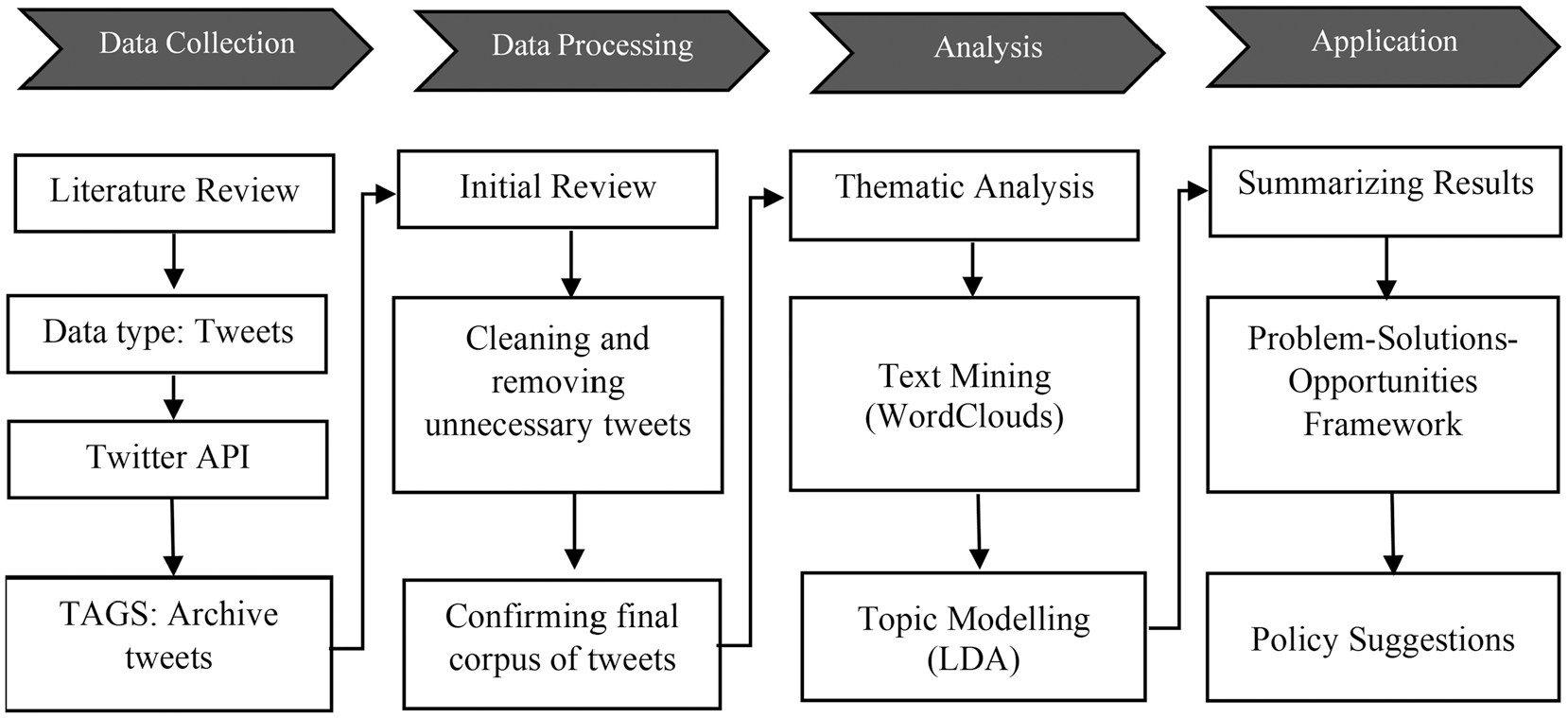
Framework proposed in this study.
Data collection was conducted with TAGS (https://tags.hawksey.info/). TAGS queries Twitter Search API by user-defined search terms and stores the results of the query on a Google Sheet archive. The user can execute the query manually or set up TAGS to update the archive every hour. To extract data from Twitter, TAGS requires an API key from the Twitter Developer website. TAGS offers users the opportunity to extract historical tweets from a defined time period. However, currently there is no text analysis toolkit within the TAGS platform. The extracted tweets must be exported and analyzed separately. Using the geocode option in TAGS, location-specific data can be collected as well.
Data were collected using “public transit and COVID-19,”“car and COVID-19,”“bicycle and COVID-19,” and “reopening and COVID-19” as keyword-set search terms between May 15 and June 15, 2020. Within this period, a total of 15,776 tweets were collected involving the aforementioned four (4) keyword-sets. Twenty randomly selected tweets for each keyword-set from every single day during the collection period were manually coded using NVIVO 12 Pro to avoid trend bias associated with posting. As there are no established methodologies for sampling tweets, the authors were unable to perform a formal sample size calculation ( 9 ). Therefore, the sample size is chosen based on feasibility and determined that 20 tweets per day (N = 600 tweets per keyword-set) would be sufficient in capturing discussion points and concerns of the general public. Any re-posted or “retweeted” tweets using notation “RT @ username” or “RT@username” were excluded to prevent popular posts or spam from saturating the sample. Non-English tweets were also excluded because translation was outside of the study scope. The categorization or coding process of the tweets into nodes and sub-nodes was guided by consultation with practicing transportation and land-use planners, and academicians as well as the researchers’ constructive judgments. Tweets expressing similar ideas were coded into the same node. After coding all the tweets, nodes and sub-nodes were developed to efficiently observe the issues discussed by the public.
Next, the corpus was created with the tweets used for identifying the nodes and sub-nodes, which were afterward analyzed through word cloud construction (text mining) and topic modeling. Text mining is the process of analyzing large amounts of natural-language text to identify lexical and linguistic usage patterns of significance (
11
). In text mining, a collection of text documents is represented by a corpus which is then purified by removing redundant words, numbers, punctuations, and so forth. In this study, the results of text mining were illustrated by word clouds, which is a popular way of visualizing the most frequent terms in unstructured documents. If
With respect to topic modeling, this study adopted Latent Dirichlet Allocation (LDA), which is an autonomous way of discovering topics in unstructured documents. LDA applies bag-of-patterns representation on the text corpus to automatically discover the clusters of topics that are in the unstructured form in the document groups ( 11 , 12 ). It represents documents as mixtures of topics that disclose words with certain probability. The algorithm for LDA is as follows:
The documents are produced with X number of words following Poisson distribution, that is, X ∼ Poisson(µ).
Documents are a mixture of t topics according to Dirichlet distribution, that is, K∼ Dirichlet(λ).
LDA generates each word p: by picking up topics following multinomial distribution, that is, topic lnm∼ multinomial (K), and, by using the topic to generate the word (according to the topic’s multinomial distribution), that is, choosing a word p from P(p|λ,).
Here, K is the distribution of topics over document m, lnm is the topic for the nth word in the mth document,
Text mining and topic modeling revealed public discussions and concerns on various criteria and components defining private car, cycling, and public transport, and also on reopening challenges and strategies during COVID-19. In this study, text mining was conducted using NVIVO Pro’s built-in features and the topic modeling was carried out using the “tm” package of open source statistical analysis software R.
While preparing the corpus, necessary corrections were made, such as the abbreviations in tweets were converted to full forms, irrelevant texts were screened out, names of people were expurgated, and synonymous terminologies were standardized into singular words. Also, the searched keywords, such as “COVID-19,”“coronavirus,”“transit,”“car,” and “bicycle,” were removed from the corpus of text mining considering their redundancy in the dataset.
Results and Analysis
Nodes and sub-nodes of talking points were generated after applying manual coding to the collected tweets. A node may or may not have sub-nodes. The results are shown in Table 1. In Table 1, the percentage of tweets in the whole sample belonging to each node are shown using square brackets (“[ ]”), and the percentage of tweets belonging to each sub-node within their parent node are shown using parentheses (“( )”). The percentage values for all nodes for each keyword-sets (“bicycle and COVID-19,”“car and COVID-19,”“public transit and COVID-19,” and “reopening and COVID-19”) sums up to 1 and they are ranked in relation to their percentage values in the table. However, the percentage values of sub-nodes within a node may or may not add up to 1, as aggregate coding from children (sub-nodes) was checked on for parent (nodes) and parent may have some unique coding references.
Nodes and Sub-Nodes of Tweets with Global Percentages for Nodes (in Square Brackets) and Local Percentages for Sub-Nodes (in Round Brackets)
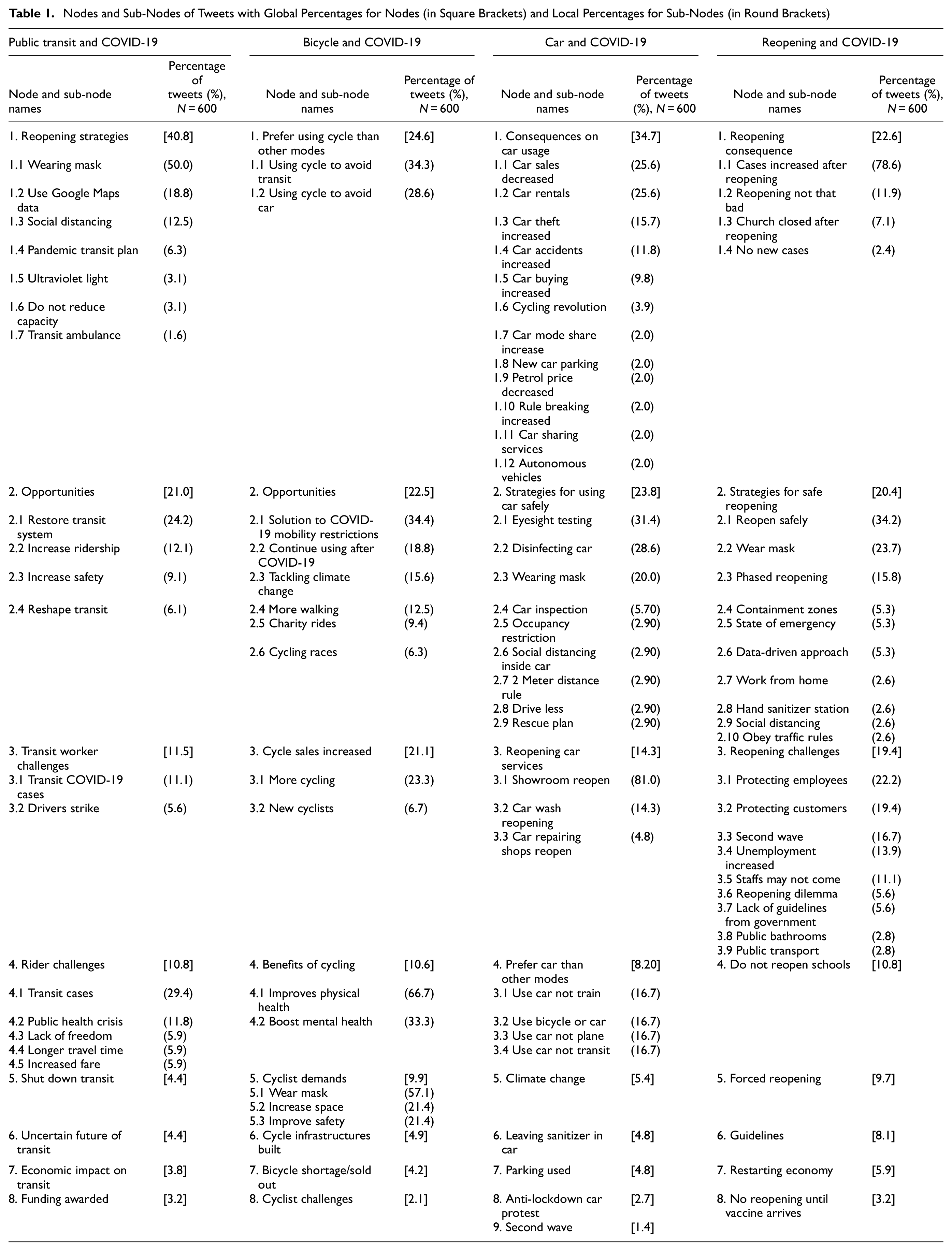
Table 1 indicates that people were concerned and discussed the most about public transit and its reopening strategies adopted by transit authorities [40.8%]. Twitter users requested other users to wear face masks while traveling on public transport and also supported the mandatory mask-wearing rule announced by different public transit authorities (50%). Countries such as Canada and the United Kingdom imposed a mandatory mask rule on public transport as part of their reopening protocols, which forces transit riders to wear masks even if it is a non-surgical one. Moreover, Google Maps data to alert transit riders about potential COVID-19 clusters (18.8%), social distancing inside transit (12.5%), pandemic transit plans (6.3%), using UV light (3.1%), not reducing capacity (3.1%), and transit ambulance services (1.6%) were also brought up as effective transit reopening strategies by Twitter users. The second most discussed subject on public transport was the opportunities for improvement [21%]. People discussed and supported the idea that restoring and reshaping transit and increasing safety can significantly increase transit ridership after reopening. The challenges faced by transit workers were also raised by the public [11.5%]. Those who cannot afford a private car or are unable to walk or bike to their destination have to rely on public transit during COVID-19. They have faced difficulties and complained about longer travel times (5.9%), lack of travel freedom (5.9%), and increased fares (5.9%). Some people on Twitter urged to shut down public transit [4.4%]. Amid the rise of cycling, walking, and the use of private automobiles, people were concerned about the uncertain future of public transport [4.4%]. It is expected that after reopening, transit companies will be aiming to recover the economic losses resulting from COVID-19, which may reduce investments in transit improvement projects. Transport experts think that this approach may have a rebound effect and decrease transit ridership ( 2 , 13 ). Several governments have provided funding to their transit authorities and transit companies to tackle economic losses. Some members of the public welcomed these initiatives and demanded for a safe reopening of public transport [3.2%].
Table 1 indicates that, for the mode “bicycle,” the subject that was discussed the most was the modal shift to bicycle from other transport modes. This subject matter covered for 24.6% of the total bicycle-related tweets. Under this node, people identified cycling as an alternative mode to public transit (34.3%) and car (28.6%) to get to places safely during the pandemic. These results support initial findings of recent studies ( 3 , 13 ). The second most discussed subject on bicycle was the opportunities of biking to solve mobility problems caused by COVID-19 [22.5%]. Different opportunities were identified, such as cycling as a solution to mobility restrictions during pandemic (34.4%), possible bike ridership increase after COVID-19 (18.8%), cycling as one of the solutions to fight global warming (15.6%), more walking trips (12.5%), charity rides (9.4%), and cycling races (6.3%). Another prominent discussion matter was the rapid increase of cycle sales across the world [21.1%]. Possibly fearful of public transit, people are using bicycles as their primary mode of transport. This has led to a bicycle boom across cities. The public also discussed the twofold health benefits of biking [10.6%], which are physical well-being (66.7%) and mental health (33.3%) improvement. A study found that 87% of the cyclists rode bicycle during COVID-19 to improve their physical and mental health ( 14 ). The public demanded the needs of cyclists [9.9%] during and after COVID-19. They urged cyclists to wear a mask (57.1%) and asked for improved cycling infrastructure (21.4%) and safety (21.4%). Public discourse on bicycles also included bike infrastructure projects implemented by different transport authorities across cities to meet the increasing cycling and walking trip demand. Another interesting fact that came out of the analysis was that bicycle shops sold out of products and failed to meet the sudden huge demand of cycles [4.2%]. Each day, more and more bicyclists are on the road and facing challenges, such as difficulty in sharing the road with cars on shared roads, long-distance trips, insurance issues, torrid weather, and so forth. These cyclists’ challenges were also discussed in the tweets analyzed in this study [2.1%].
Table 1 postulates that “Consequences on Car” resulting from COVID-19 is the highest discussed subject matter on private car [34.7%], followed by “Strategies for Using Car Safely” [23.8%], “Reopening Car Services” [14.3%], and “Preference of Car than other Modes” [8.2%]. Because of COVID-19, car sales have decreased abruptly, car rental companies and car sharing services are suffering from economic losses, car thefts and accidents have increased, and gas prices have decreased. Interestingly, people were discussing that the introduction of autonomous vehicles may be delayed because of the uncertainties in the transport industry. Under safe car-usage strategies, people discussed eyesight testing (31.4%), disinfecting cars regularly (28.6%), wearing a mask (20%), car-inspecting protocols (5.7%), limiting the number of passengers (2.9%), social distancing inside cars (2.9%), maintaining the 2-m distancing rule (2.9%), driving less (2.9%), and proper rescue plans (2.9%). Another important finding from the tweet analysis is that people felt safer using cars [8.2%] rather than transit (50%), trains (16.7%), or planes (16.7%). This perception is analogous to the discussion themes of “bicycle” and “public transit”- related tweets, indicating that people are considering that bicycle, walking, and private car are the safest modes of transport during COVID-19. Before the spread of COVID-19, different countries undertook special projects to reduce the mode share of cars and increase walking, biking, and transit trips, to tackle traffic congestion, air pollution, and climate change. As more people are shifting to private cars now, people are concerned about the future of those projects [5.4%]. Another subject matter that was discussed frequently is the risk associated with leaving hand sanitizer in cars [4.8%]. There were discussions of hand sanitizer bottles exploding as a result of high temperatures inside a car, and people were expressing their concerns over Twitter. Literature review has suggested that on a very hot day, significant pressure could build up inside a bottle of hand sanitizer, causing it to rupture, but it would not result in fire ( 15 ). Other subject matters discussed by people related to cars were the use of parking during Eid prayers [4.8%], anti-lockdown car protests [2.7%], and fear of a probable second wave of COVID-19 [1.4%].
Apart from analyzing the tweets related to “bicycle,”“public transit,” and “car,”“economy restarting”-related discourses were also analyzed (Table 1). “Reopening Consequences” was the most discussed subject matter [22.6%] followed by “Strategies for Safe Reopening” [20.4%]. People showed their anger and frustration on the record increase of COVID-19 cases following the reopening of cities (78.6%). Interestingly, some areas (e.g., Georgia, Saskatchewan) found that reopening did not increase the number of cases. Mixed opinions on reopening were found among the public; some were in support of a safe reopening [5.9%], whereas others wanted to wait until a vaccine arrives [3.2%]. Under the strategies for safe reopening, wearing a mask (23.7%), phased reopening (15.8%), containment zones (5.3%), state of emergency (5.3%), mobility data-driven approach (5.3%), telecommuting (2.6%), hand sanitation stations (2.6%), social distancing (2.6%), and obeying traffic rules (2.6%) were all discussed. Challenges associated with reopening were also highly discussed on Twitter [19.4%]. People were calling for employee (22.2%) and customer protection (19.4%) strategies, especially for transit workers and riders. People were worried about a probable second wave of the virus (16.7%) and were concerned about the global unemployment increase (13.9%). People were anxious that after reopening, staff may not join workplaces because of the fear of coming in contact with COVID-19 (11.1%). People also pointed out the lack of guidelines from the government on reopening protocols (5.6%). People’s perceptions were that it would be difficult for authorities to reopen public bathrooms (2.8%) and public transit (2.8%) while maintaining health measures. Consensus was found among the public about “not reopening the schools.” These tweets constituted 10.8% of the total reopening-related tweets. Some countries reopened schools but closed them again after COVID-19 clusters were found in school areas ( 16 ). Another compelling finding was the “forced reopening” idea [9.7%]. Discourses were found on the issue that some countries initiated the reopening project to save their economies even though they knew that it would increase spread of the COVID-19 and potentially further deaths.
Text Mining Results
The finalized four corpuses—one for each of the keyword-sets—were used to generate word clouds as presented in Figure 2, a–d. The size of the word indicates its usage on Twitter, that is, larger sized words reflect more frequent occurrence, suggesting that these words came up in discussions more often.
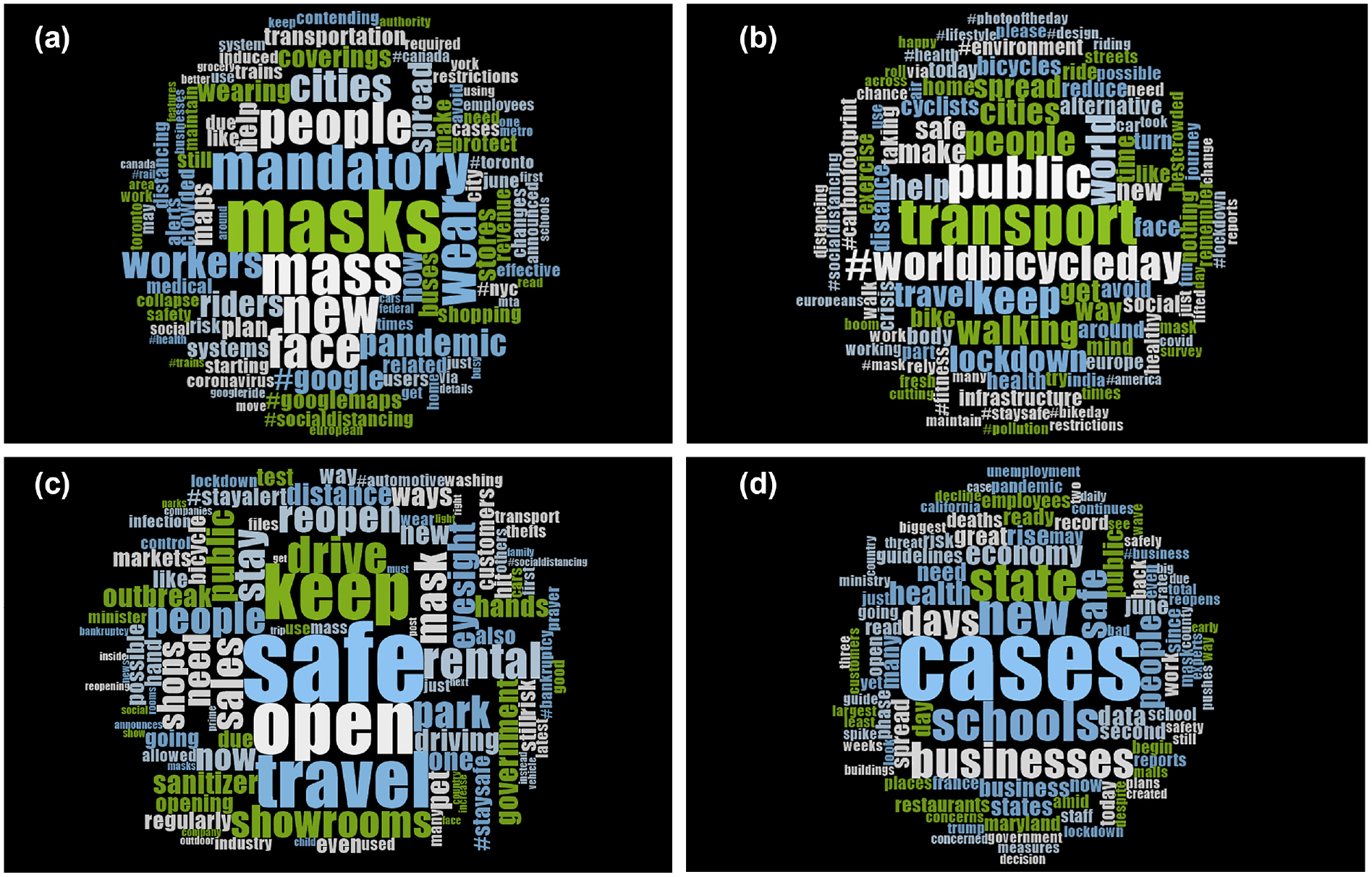
Word clouds of the most frequently occurring words in tweets. (a) Public transit and COVID-19; (b) Bicycle and COVID-19; (c) Car and COVID-19; (d) Reopening and COVID-19.
Figure 2a represents the word cloud derived from the tweets containing the “public transit and COVID-19” keywords. The highly occurring words in these tweets were “masks,”“mandatory,”“people,”“mass,”“new,”“face,”“cities,”“workers,”“riders,” and “wear.” To understand the underlying ideas of these words, tweets containing these words were extracted from the corpus. Those tweets narrow down the following ideas shared by the public: (a) masks should be made mandatory as face coverings for traveling in mass transit. One relevant post opined: “Please! Make masks mandatory in schools, libraries, community centres, stores, and restaurants. Crowded areas, both indoors and outdoors, including protests and busy parks or trails. Public transit…”; and (b) city authorities should identify strategies to protect the transit workers and riders from COVID-19. For instance, one user wrote: “…begins to partially reopen, some public transit workers say safety measures are not in place to protect them or their riders from #Coronavirus infection.” Another post read: “City administrators have to figure out how to restart buses and trains safely….”
It can be inferred from Figure 2b that, the 10 terms (words) with the largest dimensions are “public,”“transport,”“worldbicycleday,”“people,”“keep,”“cities,”“travel,”“walking,”“safe,” and “world,” indicating that these were the most common points on “bicycle and COVID-19” posted by Twitter users. To obtain a clearer picture of the messages that the users wanted to convey, all the tweets containing these words were extracted and evaluated. This revealed that the words used in the tweets contained the following ideas: (a) people across cities considered biking and walking as safe modes of travel, and as an alternative to public transit. For instance, one post said: “Need to make a journey? Protect public transport for those with no alternative. Walking & cycling is a safe way to travel. Reduce the spread of #coronavirus…”; and (b) the celebration of world bicycle day can support the cycling revolution in the world. One post read: “May the world be free with pollution and be fit by using Cheapest mode of transport. "HAPPY CYCLE DAY" #worldbicycleday….”
Figure 2c presents the word cloud of words having high occurrences in tweets with the keywords “car and COVID-19.” The most frequently used terms were safe,”“open,”“travel,”“keep,”“drive,”“mask,”“reopen,”“showrooms,”“sales,” and “rental.” The tweets corresponding to these words were extracted, and analysis revealed that they were associated with the following themes: (a) commuters are considering private cars as a safe mode of transport, but also at the same time are urging to wear a mask while driving or traveling in a car. One of the relevant tweets opined: “Do not use public transport during the #Coronavirus outbreak – it is not safe, and the risks to yourself are too great. Go by car instead….”; (b) car showrooms are reopening and offering new deals to increase sales, and to cover for the economic loss. One user wrote: “Lots of car companies are offering good financing deals right now to make up for poor #coronavirus sales…”; and (c) car rental companies are suffering from great financial loss as a result of COVID-19 mobility restrictions. One relevant post read: “Struggling rental car companies expected to sell vehicles at deep discounts. They don’t need them. And they need the cash….”
Figure 2d indicates that the most frequently used words in “reopening and COVID-19”-related tweets were, “cases,”“new,”“schools,”“state,”“businesses,”“economy,”“safe,”“health,”“days,” and “people.” Tweets containing these words were extracted from the corpus and evaluated. They revealed the following ideas: (a) after reopening the economy, a record spike in new positive COVID-19 cases was found in some of the states of the US, such as, Florida, Maryland, California, New Jersey, and also in countries like India and Bangladesh. One relevant post read: “Florida sets new single-day record for #coronavirus cases since reopening economy, over 4,000 in three days….” Another post read: “India reported a record 9,887 new #coronavirus cases in one day on Saturday and overtook Italy as the world’s sixth-biggest outbreak, two days before the relaxing of a lockdown with the reopening of malls, restaurants and places of worship…”; and (b) schools should not be reopened but considering the economic crisis, businesses can be restarted maintaining health and safety protocols. One of the posts said: “No to the reopening of schools! Build action committees to safeguard children and teachers… .” Another user wrote: “Slowly but surely! We celebrate the reopening of our community. Support local businesses… .”
Topic Modeling Results
As the third phase of analysis, topic modeling was conducted with the Twitter posts, separately for each of the four keyword-sets. The most prominent eight topics related to bicycle, car, public transit, and reopening were extracted and listed in Table 2 in chronological order based on the conditional probability of each topic. Word clusters for each topic and their associated probabilities presenting their influence within the topic are also illustrated in Table 2. To gain a full understanding of these co-occurring words, sentences having these word clusters were extracted from the raw database of tweets and reviewed. As the remaining topics either did not convey any new information or were not found to make any notable rational sense to the authors, they were not listed.
Top Eight Topics from Twitter for each Keyword Obtained through Topic Modeling on Respective Tweets (Probability Value of each Word is given in the Parenthesis)
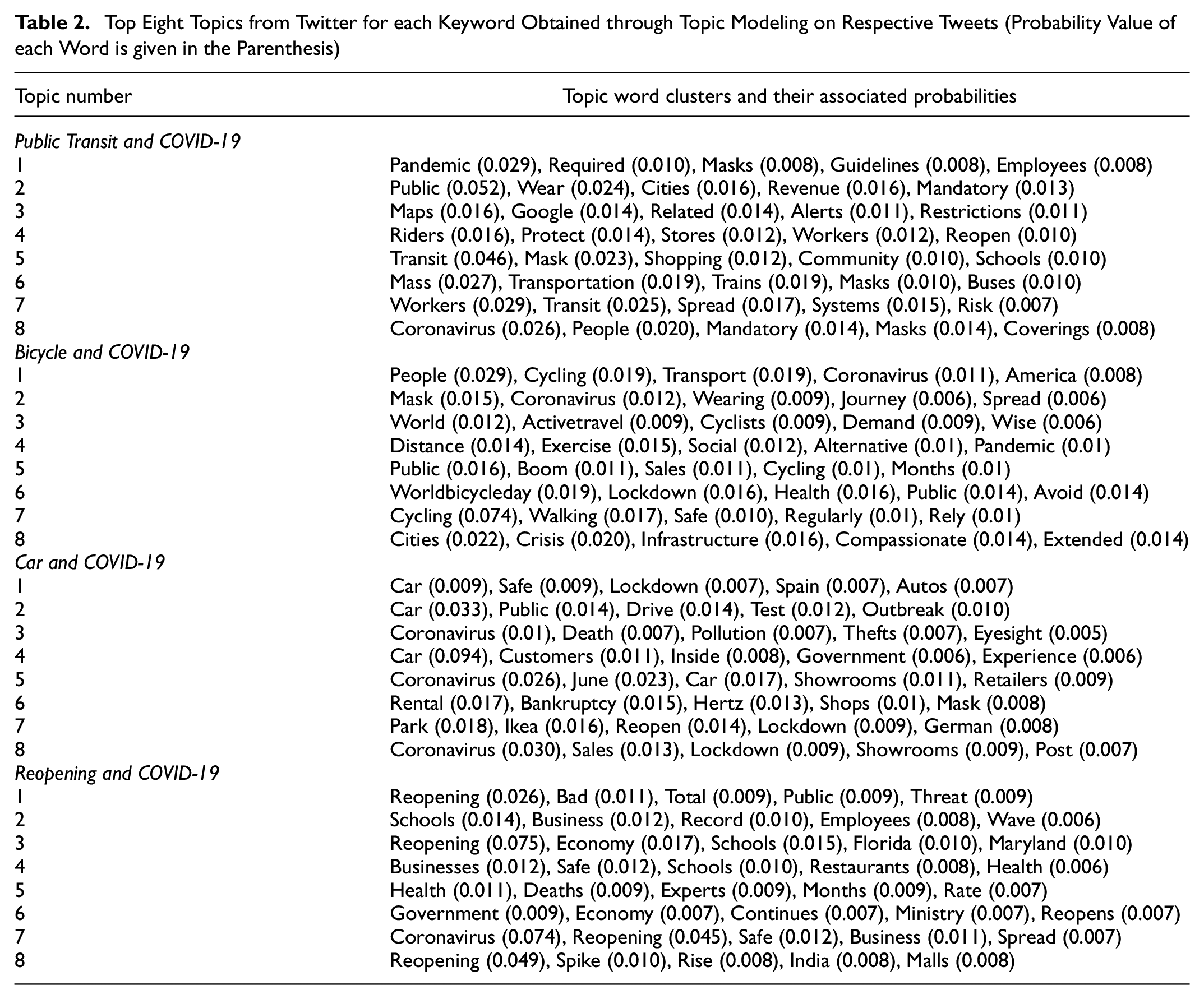
Topic modeling on “public transit and COVID-19” tweets was conducted, and the results are shown in Table 2. It can be seen from the results that, the words with highest probabilities in Topic 1 are pandemic (0.029), required (0.010), and masks (0.008), indicating the urgency of a mandatory mask rule on transit. The other two words in Topic 1 are guidelines (0.008) and employees (0.008) from the tweets expressing the need for proper safety measures to protect transit employees. Topic 2 also supports the idea of a mandatory (0.013) mask-wearing rule and adds the news of public transport revenue (0.016) collapse. After evaluating the tweets involving the Topic 3 word clusters, it was found that Google Maps was alerting transit riders about COVID-19 clusters, and the initiative was saluted by the general public. The fourth topic is on protecting transit workers (0.012) and riders (0.016) after reopening. Similar to Topic 1, Topic 5 brings the mask-wearing (0.023) rule into discussion and additionally, it talks about safely reopening shopping centers (0.012) and schools (0.010) for communities (0.010). The sixth and eighth topics again cover mask-wearing habits on trains and buses while the seventh topic considers transit systems as risky (0.007) because they are enclosed areas and users are more exposed to other riders.
In the “bicycle and COVID-19” Topic 1, the word “people” achieved the highest probability value of 0.029, followed by cycling (0.019), transport (0.019), coronavirus (0.011), and America (0.008), indicating that the talking points of Topic 1 circles around the fact that people are considering cycling as a safe mode of transport during the coronavirus outbreak, especially in the United States. The second topic is on wearing a face mask (0.015) while making bicycling journeys (0.006) to help control the spread (0.006) of the coronavirus (0.012). The third topic related to promoting active travel options (0.009) such as cycling (0.009) and walking around the world (0.012). The need for maintaining social distancing (0.014) while biking is discussed in Topic 4, and it also covers the health benefits (0.015) of cycling. Topics 5 and 6 are on the boom of cycle sales (0.011) and avoiding public transport (0.016) for health safety. The seventh topic, again, indicates that cycling (0.074) and walking (0.017) are considered safe modes of transport, and people can rely (0.01) on them. Finally, the last topic involves the infrastructure (0.016) projects undertaken by cities (0.022) to extend (0.014) their bicycling networks.
According to Table 2, Topics 1 and 2 of “car and COVID-19” tweets deal with considering private cars (0.009) as a safe (0.009) mode of transport. In most of the cities, people were avoiding public transport and instead chose to travel in a car when lockdown restrictions were eased. During the COVID-19 outbreak, air pollution (0.007) decreased but car thefts (0.007) increased significantly. People rejoiced at the greener environment but cursed the car thieves and burglars (Topic 3). In the fourth topic, people were demanding that governments (0.006) should come up with a safety plan to protect customers (0.011) of businesses. Also, staying inside (0.008) a car was considered quite safe by Twitter users. The fifth and seventh topics deal with the news of car showrooms (0.011) reopening. The sixth topic is on the financial suffering of car rental (0.017) companies such as Hertz (0.013), which went bankrupt (0.015) during the COVID-19 outbreak. Additionally, this topic covered the urge made by the public for wearing a mask (0.008) inside a car. The final topic is on the discussion of car sales declining (0.013) and post-lockdown car showrooms (0.009) reopening.
According to Table 2, Topic 1 of “reopening and COVID-19”-related tweets has the following word clusters: reopening (0.026), bad (0.011), total (0.009), public (0.009), and threat (0.009). After extracting and evaluating the tweets containing these words, it was found that people predicted that restarting the economy may be a threat to public health. They were concerned that reopening businesses and public transport may exacerbate the whole COVID-19 situation. Topics 2 and 3 cover the public’s stance on not wanting to reopen schools (0.014). These two topics also highlighted the record increase in new COVID-19 cases after reopening (0.075) the economy (0.017) in Florida (0.010) and Maryland (0.010). Though most Twitter users opposed the reopening of the economy, others advocated for it to be restarted with safety protocols maintained. The reopening of businesses and restaurants following health safety measures were discussed in Topic 4. The fifth and sixth topics are on the angers and frustrations expressed by the public thinking that governments and ministries are forcing the “economy reopening project” against experts’ counsel. Finally, while Topic 7 warrants for a safe (0.012) reopening (0.045) of economic activities, Topic 8 includes the spike (0.010) of new COVID-19 cases after the reopening of shopping malls (0.008).
Problems–Solutions–Opportunities Framework
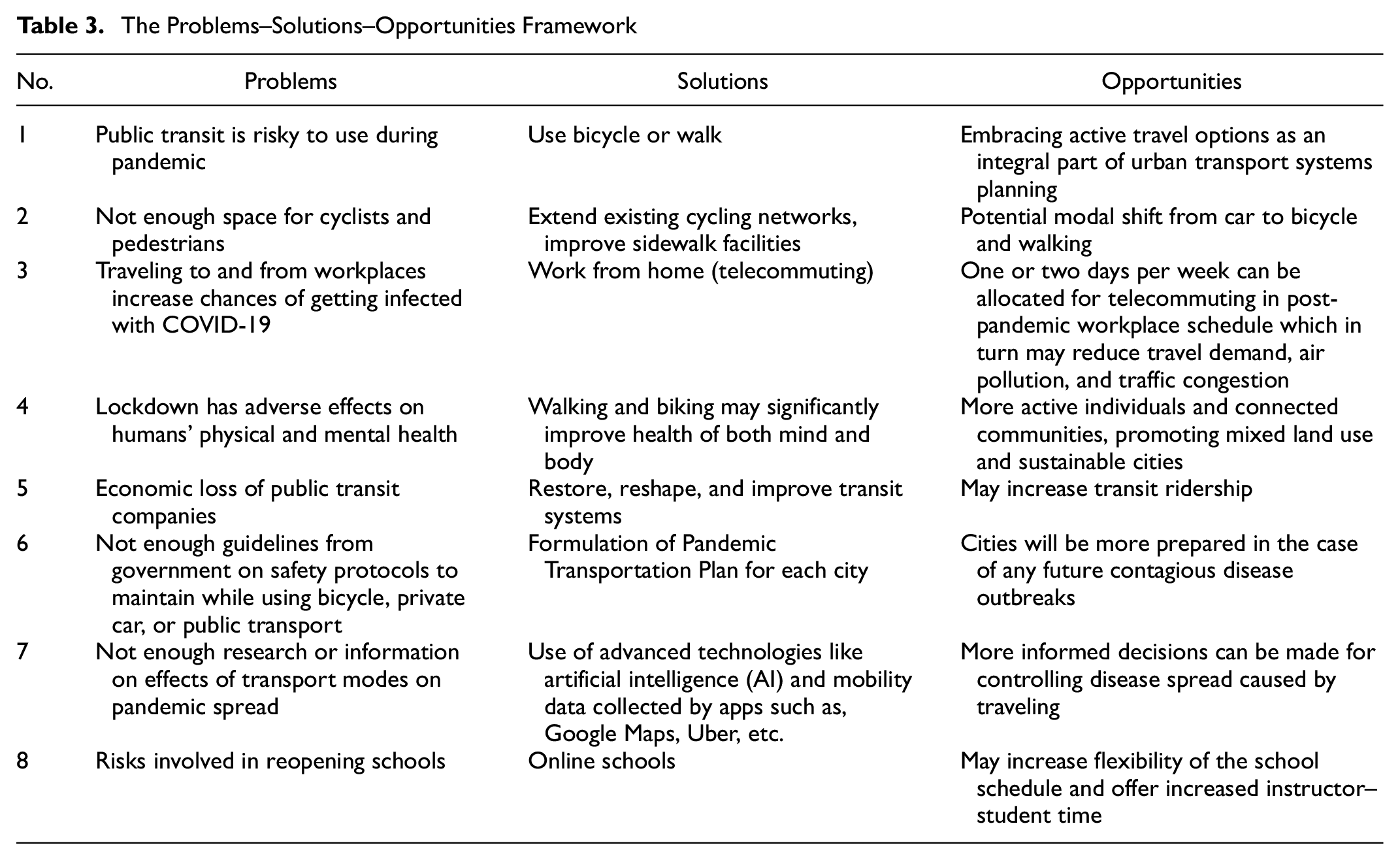
The findings of this study have important policy implications. Through analyzing real-time public discourse this study identifies COVID-19 challenges in priority areas, such as public transport, workplaces, business centers, and retail, that need to be addressed. This study also developed a problems–solutions–opportunities framework to illustrate the identified issues and proposed solutions by the general public. This framework also includes the future potentials of those solutions (Table 3). Demand for more resilient, more equitable mobility was evident in the public discourse, not only to fight the current storm, but to prepare for future catastrophes. The general public identified bicycling as a green solution to mobility problems during and after the COVID-19 world. One encouraging finding from this study was that people are concerned about the environment and welcomed the surge of the new enthusiasm for cycling as a blessing to save the world from global warming. Restoring, reshaping, and enhancing transit systems were proposed as solutions to increasing transit ridership and to make up for the economic losses suffered a a result of COVID-19. Use of advanced technologies to monitor disease spread, pandemic transportation plans for cities, and transit ambulances (free ambulance service for the public), were identified as effective reopening strategies. However, most Twitter users were against reopening schools. Instead of in-person schools, an online school system was proposed by public.
The Problems–Solutions–Opportunities Framework
Conclusions
This research analyzed Twitter posts through text mining and topic modeling to assess public discourses to clearly understand the impacts of COVID-19 on transport modes. It also evaluates the efficacy of analyzing social media data to understand public concerns, demands, and feelings about transport systems during an emergency pandemic situation. The results revealed that people are avoiding public transport, and shifting to private car, bicycle, and walking in fear of COVID-19. Bicycle sales have increased remarkably; some cycle shops have even been sold out, failing to meet the huge demand. People are making recreational trips on bicycles to improve their physical and mental health. Cycling and walking has been identified as green solution to COVID-19 mobility problems, and to tackle climate change in the post-pandemic world. To meet the rise in number of active transport users, transport authorities across cities have extended cycling networks, improved walking facilities, and made way for micro-mobility options, such as electric scooters and bikes. Interestingly, though the world is experiencing a cycling boom, car sales have declined notably during the lockdown period. Car thefts, car crashes, and traffic rule breaking have increased, and petrol prices have decreased strikingly. People requested each other through Twitter to drive only when necessary, wear a mask inside a car, maintain social distancing, not leave sanitizers in car, and disinfect their private vehicles regularly. They also advised each other to use face coverings and maintain social distancing while traveling in public transit. People urged governments and transit authorities to use advanced technologies, such as Google Maps data, to alert transit riders and operators about COVID-19 risky zones. Moreover, they advocated for a pandemic transportation plan for protecting shop customers, staff, transport workers, and riders. In addition, people applauded governments’ decision to allocate funding to public transport companies for covering their economic losses, and at the same time asked for the reshaping, restoring, and safe reopening of public transport. Some tweets were identified that demanded for the immediate shutdown of public transport, and some showed concern about the uncertain future of transit. Mixed opinions were found among the general public on restarting economic activities. One group of people supported the idea of reopening while maintaining safety protocols, whereas the other group wanted to wait until a vaccine arrives. The group in support of reopening identified mask wearing, phased reopening, social distancing, telecommuting, public hand sanitizer stations, and data-driven approaches as effective reopening strategies. They also demanded protection of employees, customers of shops, restaurants, shopping malls, and other business outlets. The group of people in opposition to reopening pointed out the record spike in new COVID-19 cases after reopening, and the lack of guidelines from government on how to reopen safely. They figured that governments are forcing the “project restart,” prioritizing the economy and not the general public’s health. Though these two groups’ opinions differed in reopening business activities, they agreed in opposing the reopening of schools. Online schools were proposed by them as an alternative to in-person classes.
We need to be cautious when using the Twitter data resource, as it represents unfiltered and diverse opinions from the general public. Analyzing public discourse can be considered as the first step of the total policy decision-making process. We need to combine the priorities and concerns of the general public along with behavioral models and analytical frameworks to develop a significant policy guideline. One of the limitations of this research is that it considers the opinions of Twitter users only. Opinions of transport users who do not have access to Twitter were not considered. Another limitation is the lack of a well-defined study population. It was beyond the scope of this study to retrieve every user profile for determining the demographics of the sample. It can be noted, however, that Twitter is predominantly used by Americans, accounting for 50.8% of all users ( 17 ). Additionally, it is estimated that in the US, 55% of Twitter users are female, 45% are aged 18–34, 69% are Caucasian, 49% have less than a college degree, and 58% make over $60K a year ( 18 ). These numbers may provide a sense of population demographics; however, those who tweet about COVID-19 may not necessarily be representative of the Twitter population, and the Twitter population is not representative of the general population. In addition, because TAGS collects tweets from users across the globe, it is difficult to narrow down the study context and compare results with COVID-19 studies that report on a certain geographic region ( 9 ). This methodological issue also exists in traditional studies that attempt to compare their results with papers from different cities or countries ( 19 ). In the future, it may be possible to take advantage of geocoding to address this problem and sort tweets based on location. This study did not consider the non-English tweets in the analysis. This may exclude potentially minority and underrepresented communities who often are not represented in studies or planning processes. As a future scope of this study, tweets which are in languages other than English can be translated and used in the analysis. Furthermore, this study included manual classifications and preliminary automated analyses. More advanced semantic processing tools can be used in the future to classify tweets with more precision and accuracy. Future studies may also explore the impacts of vaccination on transport modes and mobility behavior. Nevertheless, the results of this study will allow transport authorities and planners to become aware of and respond to initial real or perceived concerns raised by the public about transport modes. Also, the outcomes will assist in understanding the impacts of COVID-19 on transport systems, to identify effective reopening strategies, and comprehending future potentials of those strategies.
Footnotes
Acknowledgements
The authors would like to thank Natural Sciences and Engineering Research Council of Canada (NSERC) Discovery Grant and NSERC COVID-19 Alliance Grant for their contributions in supporting this research.
Author Contributions
The authors confirm contribution to the paper as follows: study conception and design: M. A. Habib, M. A. H. Anik, data collection: M. A. H. Anik, analysis and interpretation of results: M. A. Habib, M. A. H. Anik; draft manuscript preparation: M. A. Habib, M. A. H. Anik. All authors reviewed the results and approved the final version of the manuscript.
Declaration of Conflicting Interests
The author(s) declared no potential conflicts of interest with respect to the research, authorship, and/or publication of this article.
Funding
The author(s) received no financial support for the research, authorship, and/or publication of this article.
