



Abstract
Stabilization of the pavement base course using asphalt emulsion is one of the strategies that improves the layer’s strength and, consequently, enhances the pavement performance. In this study, to improve the performance of the asphalt-emulsion-stabilized base course, asphaltenes derived from Alberta oil sands bitumen are added to the mix. Asphaltenes are a byproduct of the deasphalting process of oil sand bitumen and have no significant value in the asphalt industry. The modified mixes are prepared by adding different amounts of asphaltenes in powder form to the mix at ambient temperatures. Marshall stability and indirect tensile strength of the mixtures are evaluated using different contents of asphalt emulsion and asphaltenes. The low-temperature performance properties of the selected mixtures are investigated using an indirect tensile test and for the high-temperature properties a wheel-tracking test is conducted. The results of this study indicate that the addition of asphaltenes to the emulsion-stabilized mix significantly improves rutting resistance, with a slight increase in moisture sensitivity. However, the indirect tensile test results also reveal that modified mixes are slightly more prone to low-temperature cracking than are unmodified ones.
One strategy to enhance load distribution within a pavement to increase its bearing capacity and fatigue resistance is to strengthen the base course by increasing its thickness ( 1 ). However, increasing the thickness has some drawbacks, such as increased cost, time, and environmental impact resulting from the additional materials used. Using higher quality material in the base course will result in higher resistance but will also increase the cost of construction of the layer. Base stabilization, on the other hand, is a promising solution that can overcome these problems ( 2 – 4 ). A well-designed base layer with sufficient thickness can reduce distress in the pavement layers ( 5 ), while the tensile strength of the base layer can be improved through stabilization using an asphaltic or cementitious material ( 1 , 5 ).
Unbounded base courses generally consist of crushed stones and gravels that transfer the load to lower layers and resist it within the particles ( 5 , 6 ). However, these layers have low resistance to the tensile load ( 7 , 8 ). In relation to this, studies have shown that stabilization of aggregate layers will result in higher shear strength, stiffness, durability, and resistance to moisture in asphalt pavements ( 9 ). Asphalt emulsion could be used for stabilization of these layers because of its advantages such as low-temperature application, less energy usage, lower emissions, and it being less hazardous than hot mix asphalts and more environmentally friendly than cutback asphalts ( 10 ). However, disadvantages such as low rutting resistance, higher cracking, longer curing time for asphalt emulsion (to increase the bond between particles), and comparably poor early performance properties have limited its application ( 11 – 13 ). Indeed, some studies have indicated that it may take up to 3 years for an asphalt-emulsion-stabilized layer to reach maximum strength ( 14 – 16 ).
The selection of the proper additive and the correct amount to be added for stabilization has an important role in the performance properties of the stabilized layers ( 3 , 4 , 17 ). Active fillers provide higher mechanical properties, stiffness modulus, permanent deformation resistance, moisture resistance, and fatigue strength when used for asphalt emulsion stabilizations ( 18 – 20 ). Another significant impact of active fillers on asphalt emulsions is that they reduce the breaking and curing time for asphalt emulsions ( 21 ). Cement and lime as active fillers result in relatively slow strength gain and longer curing time. Environmental hazards of some active fillers arising from the nature of their production form another drawback ( 22 – 25 ). In addition, using cement and lime in stabilization for low-temperature conditions will not be as effective as conventional asphalt layers, as the low temperatures have adverse impacts on the strength gain of the stabilized layers ( 26 ). However, the high-temperature properties of the mixtures with active fillers such as cement, hydrated lime, and slag could be enhanced with specific contents of additives ( 23 , 27 ). The rigidity of the mixture after stabilization, adverse effects on the environment, shrinkage cracking, as well as several other drawbacks in cement stabilization make it unsuitable for application in cold climate regions ( 28 , 29 ).
Asphaltenes are waste materials, produced through the deasphalting process of bitumen, that have no significant application in the road construction industry. In addition, asphaltenes are a component of asphalt binders alongside saturates, resins, and aromatics (collectively referred to as “SARA”) ( 30 ). Asphalt as a viscoelastic material is made of polar and non-polar components, the polar components being responsible for the elastic behavior while the non-polar components govern the viscous behavior ( 30 – 33 ). Adding asphaltenes to asphalt materials will result in a stiffening of the mixture, thereby enhancing its mechanical properties ( 30 ). The use of asphaltenes as an additive in asphalt-emulsion-stabilized mixtures has not yet been studied, and, considering the effects of this material on the asphalt binder properties, similar enhancements to other additives are expected in stabilized mixtures. The presence of asphaltenes in the asphalt binder also raises the matter of the compatibility between the two materials, which could be a key factor in the flexibility of the final mixture.
Objective and Scope
The main objective of this study was the evaluation of the low- and high-temperature properties of a well-graded granular base course stabilized with a slow setting (CSS-1H) asphalt emulsion. The layer was modified with a source of asphaltenes derived from Alberta oil sands bitumen. A mix design for the stabilized base course was determined and compared with the modified mixes using the asphaltenes. Indirect tensile strength (ITS), creep compliance and strength, and Hamburg wheel-tracking tests were conducted to evaluate the low- and high-temperature mechanical properties of the mixtures.
Materials and Mix Design
Aggregates
Single source aggregates were used in the mixture preparation for this study. Based on the limitations provided by the Wirtgen Cold Recycling Manual ( 5 ), the City of Edmonton ( 34 ), and Alberta Transportation in accordance with Soliman et al. ( 26 ), the aggregate gradation to be used was determined to be well-graded and within the limitations stated. Figure 1 illustrates the final gradation and aggregate envelopes for three different specifications. The aggregate gradation skeleton consisted of 57.27% coarse aggregates, 36.73% fine aggregates, and 6% filler. The aggregates were tested to determine their physical properties, with the results presented in Table 1. The bulk specific gravity of the aggregates (Gsb-agg) was also determined and was found to be 2.601. The filler amount and Los Angeles abrasion value for the aggregates were controlled to be within the parameters specified in the Wirtgen Cold Recycling Manual ( 5 ) and City of Edmonton standards ( 34 ).
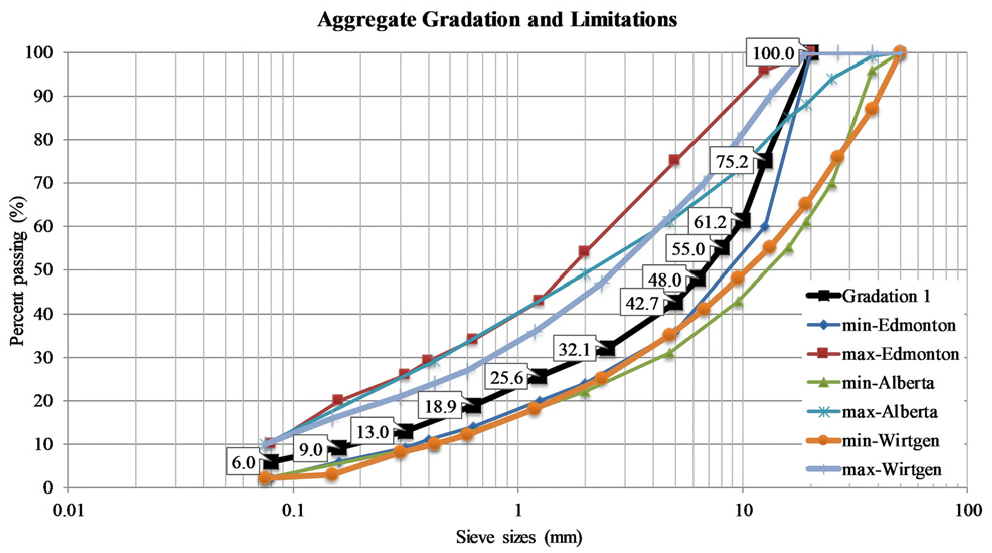
Target aggregate gradation and limitations.
Aggregate Properties
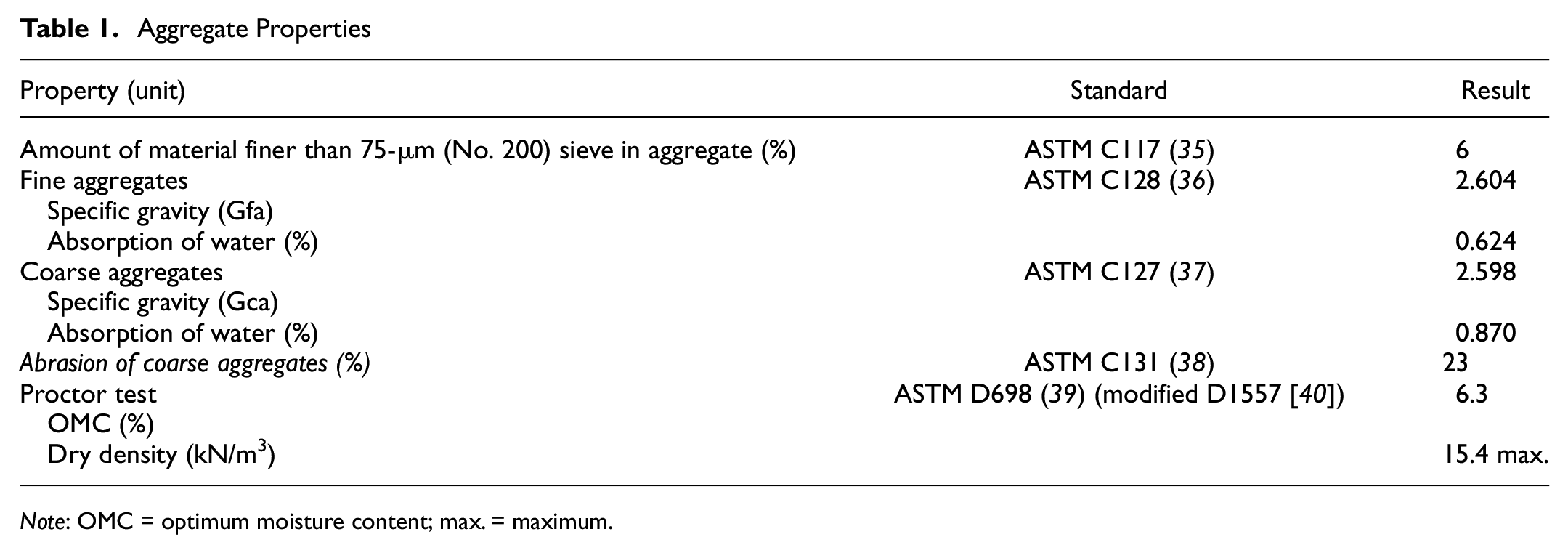
Note: OMC = optimum moisture content; max. = maximum.
Before mixture testing, the optimum moisture content was determined in accordance with the Proctor test with respect to ASTM D698 specification ( 39 ) for the aggregate gradation; the results are shown in Table 1.
Asphalt Emulsion
Cationic slow setting (CSS) is the typical asphalt emulsion used for base stabilization because of the aggregate charge and the minimum time required for the mixing and laying of the base layer ( 5 ). Workability time to allow asphalt emulsion to sufficiently disperse in the mixture is an essential parameter to be considered in this type of mixture. The asphalt emulsion used in this study contains 61% hard binder and 39% water, and it is classified as CSS-1H. The asphalt binder that was used to prepare the emulsion has a penetration of 80/100 and a viscosity of 0.42 Pa·s at 135°C. Various tests were conducted on the asphalt emulsion, and the results are presented in Table 2.
Properties of CSS-1H Asphalt Emulsion ( 41 )
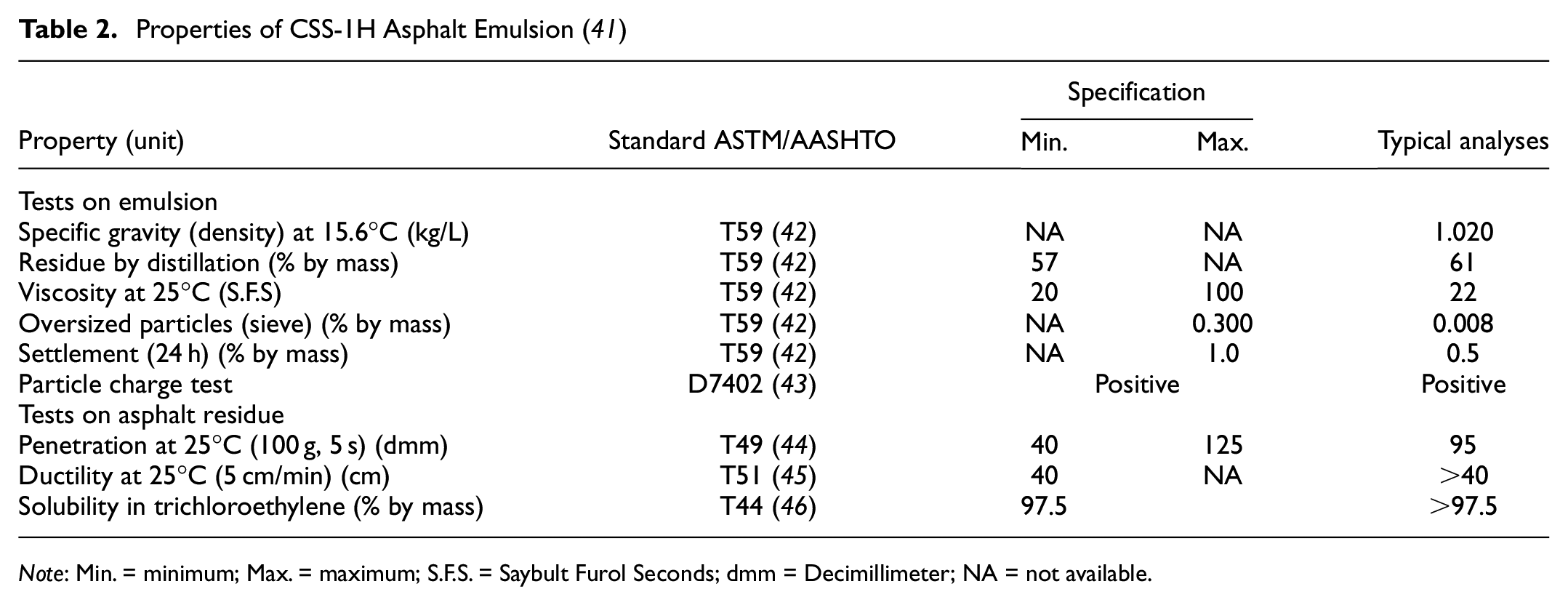
Note: Min. = minimum; Max. = maximum; S.F.S. = Saybult Furol Seconds; dmm = Decimillimeter; NA = not available.
Asphaltenes
The asphaltenes used in this study were sourced from Alberta oil sands bitumen, having been processed through a solvent deasphalting process. The asphaltenes were obtained in solid form as shown in Figure 2 and, to achieve adequate dispersion, they were crushed into powder and sieved through a No. 100 sieve. Considering that the properties of the asphaltenes from different sources depend on the oil and processing method used to produce them, initial tests had to be conducted to determine their percentage purity as well as their chemical composition.
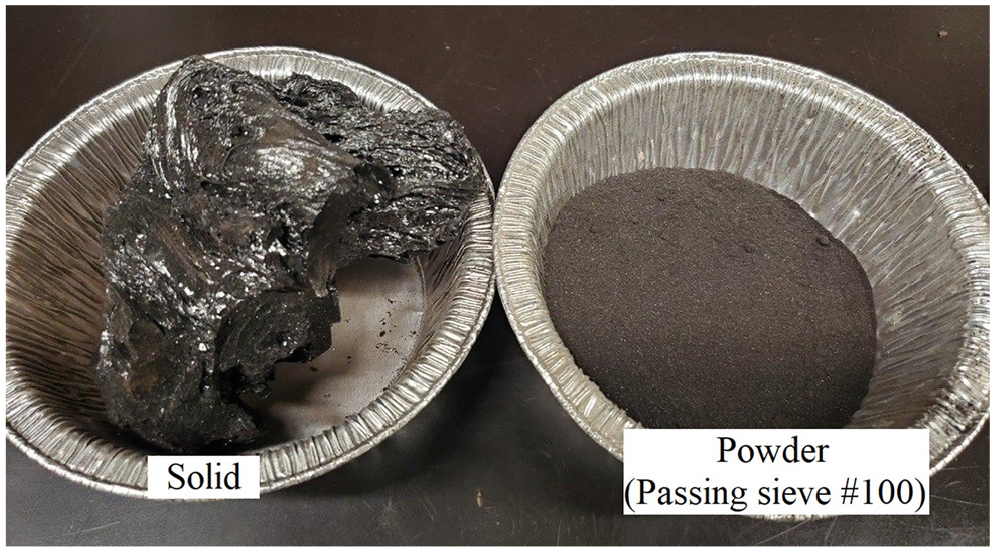
Asphaltenes provided for mixing.
In addition, the SARA test was conducted for the asphaltenes sample to determine the relative quantities of saturates, asphaltenes, resins, and aromatics. According to the results of the SARA content analysis, the sample was found to be composed of 79.63% asphaltenes, and 9.68% aromatics, 6.85% saturates, and 3.84% resin.
Composition of Mixtures and Optimum Emulsion Content
Asphalt Institute specifications ( 47 ) were used to design the mixtures for the well-graded granular base aggregate stabilization. The approximate asphalt emulsion percentage to be used based on this method was calculated with respect to the relationship described in Equation 1 using the result from the ASTM D6997 ( 48 ). The amount of the material retained after distillation was determined to be 61% according to the test results.

where
A = Percentage of residue of asphalt emulsion remaining after distillation (as determined using ASTM D6997 [48]);
B = Percentage of dry aggregate passing through a No. 4 sieve; and
C = Percentage of dry aggregate retained on a No. 4 sieve.
Using this method, the approximate asphalt emulsion content was determined to be 4.89% per total mixture, and four different contents with 1% intervals were prepared to determine the optimum emulsion content (OEC) with respect to Marshall stability and flow as well as the ITS test. Considering the result from the Proctor test for the optimum moisture content (OMC) of aggregates, additional water was used in conjunction with the oven-dried aggregates after cooling down to room temperature and mixed in until the water was uniformly distributed; this was done to achieve the optimum moisture content in ambient temperatures to prevent loss of moisture. Asphalt emulsion was introduced to the wet aggregates in the contents determined in the design matrix and compacted using a Marshall hammer with 50 blows on each side of the sample.
Marshall Stability and Flow Test for OEC
The ASTM D6927-15 ( 49 ) standard was used to perform the Marshall stability test for the samples of different asphalt emulsion contents as determined in the design matrix to select the OEC. The samples were cured in the compaction molds for 48 h in an oven at 60°C following the compaction with the Marshall hammer. After conditioning, the samples were extracted from the molds and cooled at room temperature for at least 2 h. For each of the emulsion contents, three replicates were prepared for the purpose of Marshall stability testing. The stability testing was conducted after conditioning of the samples in a 25°C air bath for a period of 3 h ( 47 ).
According to the results of the stability test, 3.98% asphalt emulsion content per total weight of the mix provided the highest stability for the mixtures; however, the trends for density and stability show that maximum values were attained at about 3.7% asphalt emulsion (Figure 3). This proportion of asphalt emulsion per total mix was thus chosen as the OEC for the performance tests. It should be noted that the ITS test has been suggested by different researchers as an effective means of confirming the results obtained from Marshall stability testing ( 5 , 27 ).
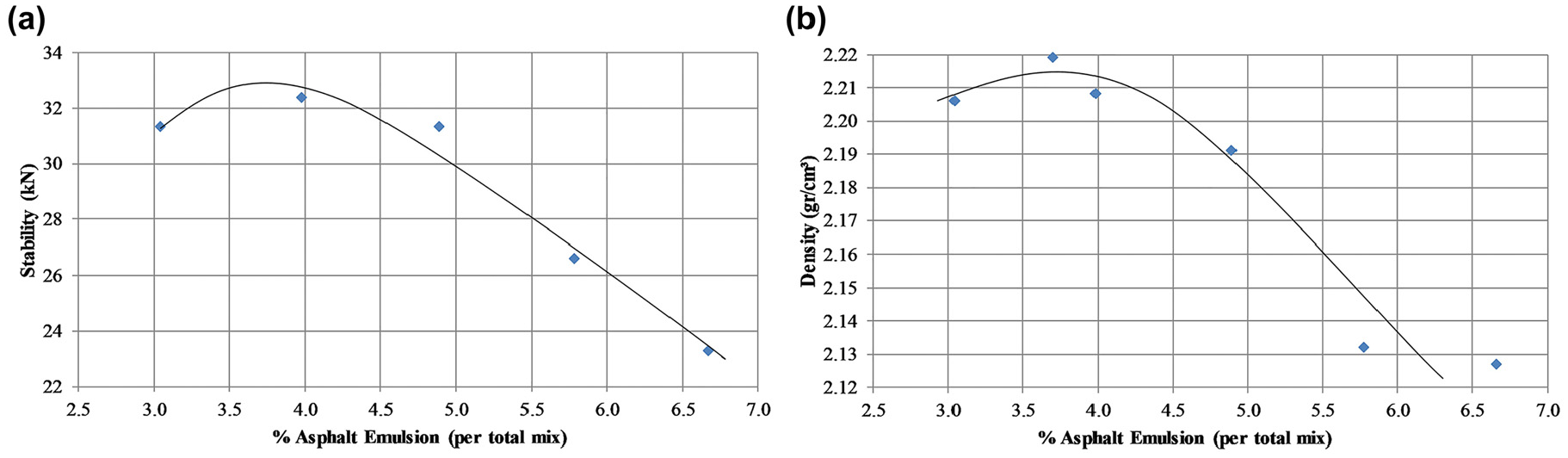
Stability (a) and density (b) values for asphalt emulsion design matrix.
Indirect Tensile Strength
The ITS test was conducted in accordance with AASHTO T283 ( 50 ). Similar contents of asphalt emulsion as determined in the design matrix were used to prepared samples for this test. Each sample was prepared with three replicates. The Marshall hammer was used for compaction of the samples, which were cured using the same process as explained in the description of the Marshall test above. The samples were subjected to 3 h of conditioning in an air chamber at 25°C, in accordance with AASHTO T283 ( 50 ), before testing under a load applied at a rate of 50 mm/min. The maximum load applied to the samples before the failure point was recorded to determine the ITS. The ITS for each of the samples was calculated using

where
St = indirect tensile strength (kPa);
P = maximum applied load (N);
t = average height of the specimen (mm); and
D = diameter of the specimen (mm).
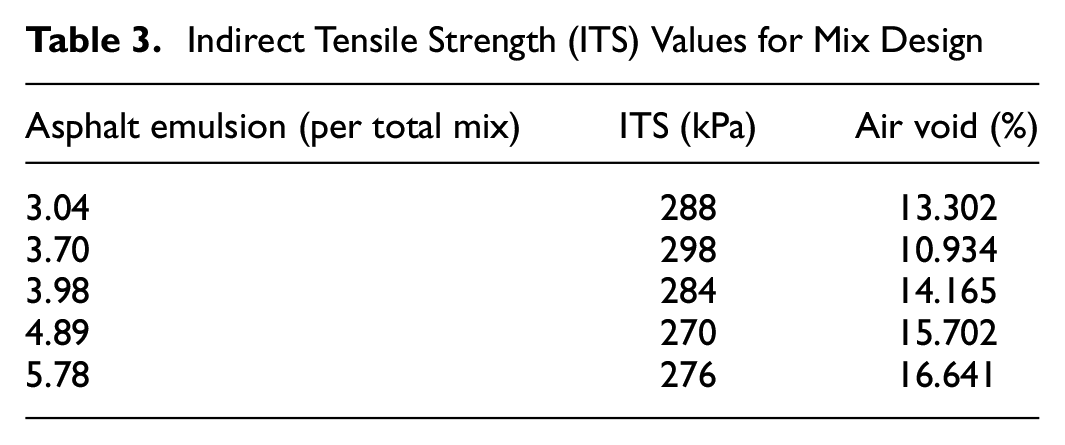
The same asphalt emulsion concentrations were used to prepare the samples for the ITS test, and the results from the ITS test showed the same trend as those from the Marshall test (Table 3). Considering results from both the Marshall and ITS tests, a 3.7% of asphalt emulsion per total mixture weight for OEC was selected. A minimum value of 225 kPa was identified as the lower limit for asphalt-emulsion-stabilized material, in accordance with the Wirtgen Cold Recycling Manual ( 5 ). The ITS was calculated as 298 kPa for the OEC (3.7% of asphalt emulsion per total mixture weight) that satisfies the minimum requirement.
Indirect Tensile Strength (ITS) Values for Mix Design
Asphaltenes Modification Matrix and Sample Preparation
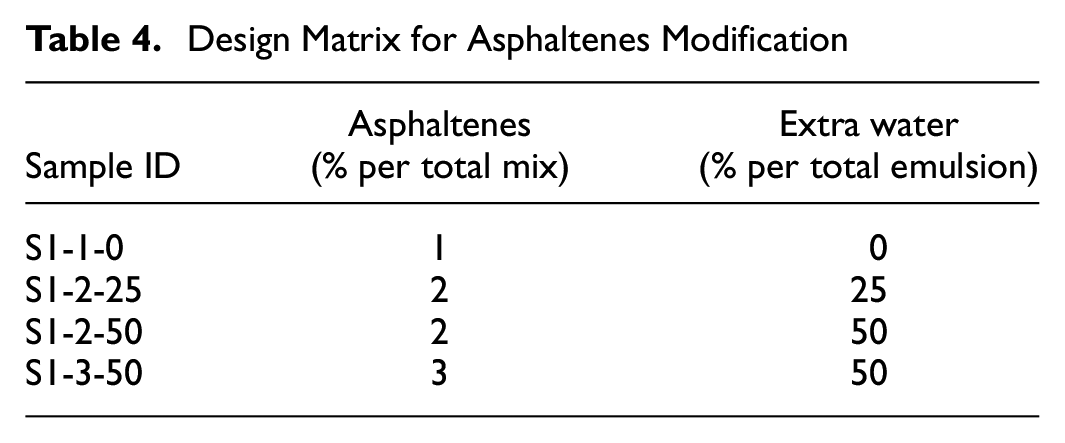
The OEC of 3.7% by weight of total mixture was used to prepare the asphaltenes-modified mixtures throughout the study. The control samples were prepared in a manner similar to the way the design samples for OEC had been prepared, and were compared with the asphaltenes-modified samples. According to the mix design test results, asphaltenes could be added to the dry aggregates before mixing with asphalt emulsion or added to the asphalt emulsion before mixing with the aggregates. Because of the relative ease with which asphaltenes can be mixed into the asphalt emulsion compared with mixing with aggregates, this method was selected with respect to the experimental observations. Proportions of 1%, 2%, and 3% of asphaltenes by total mixture weight were added into the asphalt emulsion and mixed with the aggregates. Three replicates were prepared for each level of asphaltenes content. Among the proportions, the 1% asphaltenes samples were found to be the easiest to prepare, as the asphaltenes content is relatively small. Increasing the asphaltenes content made preparation more difficult, as the asphaltenes caused the emulsion to break quickly and made mixing more difficult. To ease the mixing process, then, more water was added to the asphalt emulsion for the 2% and 3% asphaltenes samples to make them less viscous and easy to mix. Table 4 presents the test matrix for the performance tests.
Design Matrix for Asphaltenes Modification
Testing Program
Indirect Tensile Strength
The ITS test was conducted in accordance with the AASHTO T283 standard ( 50 ) using the design matrix presented in Table 4 and the OEC of 3.7% per total mixture. Three replicates of the samples were prepared at each of the asphalt emulsion contents, and a Marshall hammer was used for compaction using the same procedure described above. The samples also underwent 3 h of conditioning in an air chamber at 25°C before testing. A load with a rate of 50 mm/min was applied on the samples after conditioning, and the maximum value of strength before failing was recorded for each sample to determine the ITS of the samples using Equation 2.
To calculate the tensile strength ratio of modified and unmodified samples, three extra samples were prepared and cured using the same process. Samples were tested in similar conditions as dry subsets according to the standard after saturation at 25°C for 24 h in water, and the tensile strength ratio (TSR) value calculated using the ITS of dry subsets over saturated subsets. The Wirtgen Cold Recycling Manual ( 5 ) was used to control the limits, which were determined to be 50% for TSR values.
Creep Compliance and Indirect Tensile Test
AASHTO T322-07 ( 51 ) was used to perform the creep compliance and strength test of the mixtures using the ITS test setup. The purpose of this test is to capture the low-temperature performance of the mixtures. Marshall samples with three replicates for each of the asphaltenes contents were prepared. However, in this case the surface of the samples was cut to a height of 38 mm to 50 mm. The test temperatures used in this study were 0°C and −10°C considering the base layer and performance grading (PG) of the binder used to prepare the asphalt emulsion. The samples were conditioned in the air chamber for 3 ± 1 h before testing. A fixed static load was applied on the specimens for 100 ± 2 s, and linear variable differential transformers (LVDTs) were used to record the deformation of the samples along both the horizontal and the vertical axes. After completion of the creep test, an ITS test using a rate of 12.5 mm/min was applied to the samples until the failure point of the samples had been reached. Figure 4 presents the test setup, and shows images of a sample before and after testing. The fracture energy (FE) and the ITS of the samples for both temperatures were calculated using the load-deformation values obtained from the test.
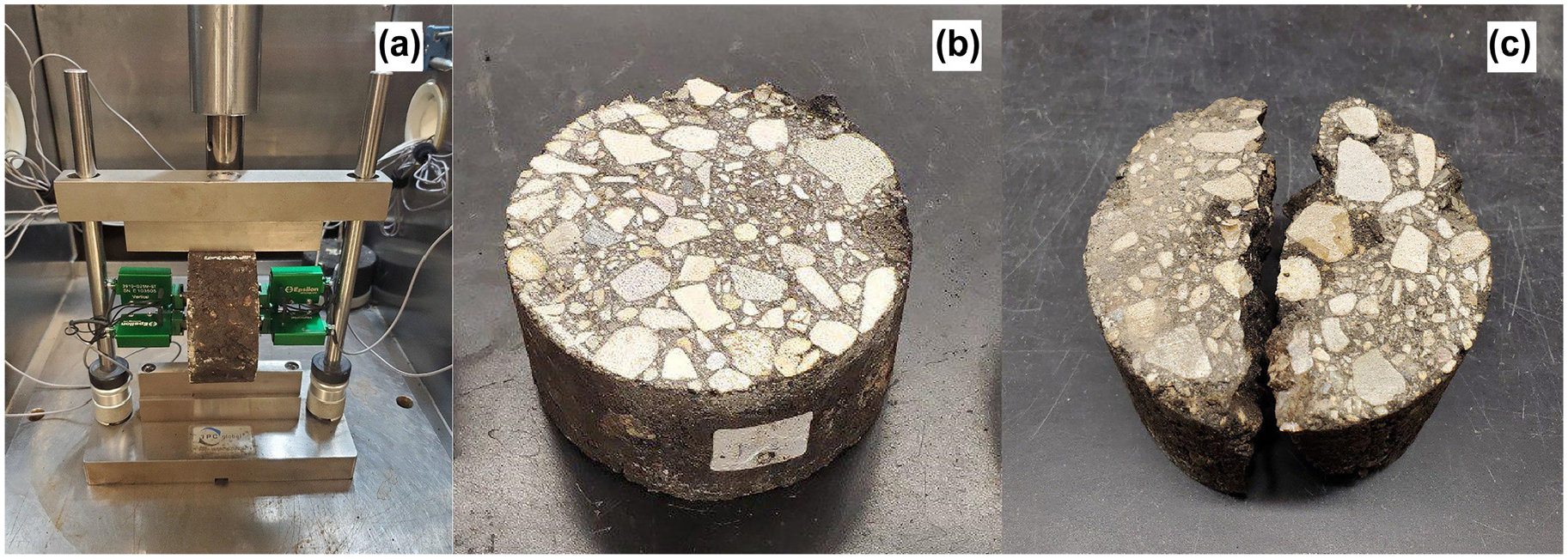
(a) Indirect tensile (IDT) test setup, (b) sample before testing, and (c) sample after testing.
Hamburg Wheel-Tracking Test
A Hamburg wheel-tracking test was performed in accordance with AASHTO T324-19 ( 52 ). Considering the nominal maximum aggregate size, slab samples with dimensions of 400 mm length, 300 mm width, and 80 mm height were used for the test. A roller compactor was used for compaction of the samples, and a similar curing process was followed. The test temperature for the wheel-tracking test was determined to be 40°C considering the binder grade and base layer location. Following the standard noted above, the samples were preconditioned in water for 45 min before testing. A steel wheel with 47 mm width and 705 ± 4.5 N weight at frequency of 52 ± 2 passes per minute and a maximum speed of 0.305 m/s at midpoint was used for this test. A maximum of 20,000 passes or 12 mm rutting depth, whichever was achieved first, was considered as the termination point for the test. The rut depth value and number of passes were used to determine the rutting resistance index (RRI) and stripping inflection point (SIP) to evaluate the rutting potential and susceptibility of the mixtures to moisture damage.
Results
Indirect Tensile Strength
The ITS test was conducted on both the modified and unmodified mixture samples, with the results presented in Figure 5. The results from the ITS test show that modification with asphaltenes had a significant effect on the strength of the samples. The S1-2-25 samples with 2% asphaltenes were found to have the best response for tensile strength; however, an increase in asphaltenes content to 3% was found to cause a decrease in tensile strength of the modified mix. To understand the effect of adding extra water to the mix, samples with 2% asphaltenes but different amounts of extra water content (S1-2-25 and S1-2-50) were compared, and the results indicate that this increase in water content had an adverse effect on the tensile strength of the modified samples. However, as a practical consideration with respect to ease of mixing, this extra water would seem to be necessary for higher levels of asphaltenes content.
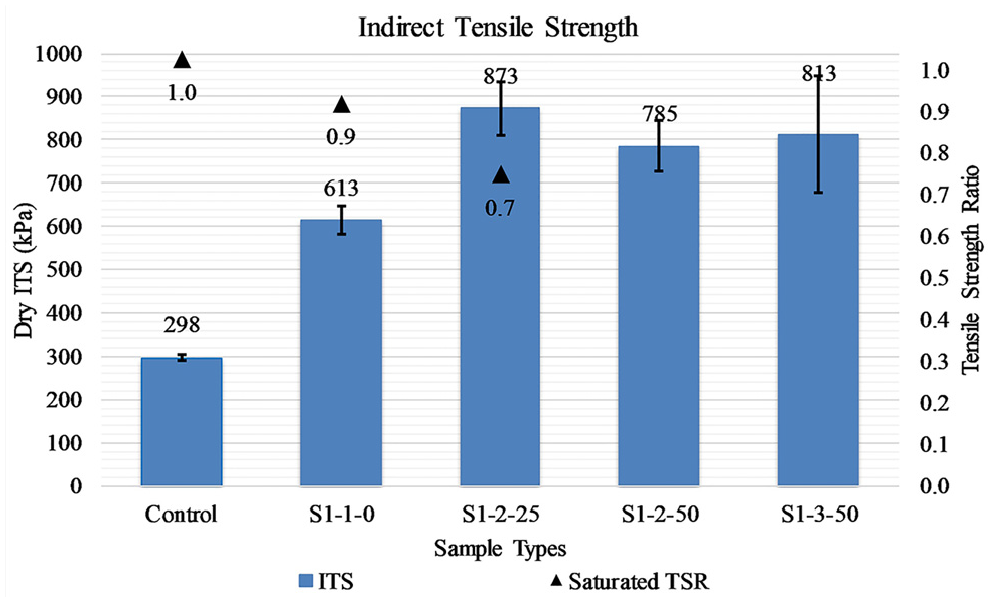
Indirect tensile strength (ITS) and tensile strength ratio (TSR) for control and asphaltenes-modified mixes.
Figure 5 also presents results for a TSR test for samples tested after conditioning at 25°C inside a water bath for 24 h. Control samples for the saturated samples had very similar results to those of the dry subsets, which indicates that TSR is about 1. However, this value decreases after modification of samples to 0.9 and 0.7 for 1% and 2% samples. This indicates that the moisture sensitivity of the modified samples increases. Considering the Wirtgen Cold Recycling Manual ( 5 ), this value should not be lower than 0.5 for saturated stabilized mixtures with emulsified asphalt. It can be seen that the results are satisfying the 50% lower limits for base courses in the targeted mixtures.
The ITS test results for the set of samples with better performance were used to select samples for performance testing. In this respect, S1-1-0, S1-2-25, and the control samples were selected for further performance testing to evaluate their relative performance. The criteria underlying this selection with respect to the resistance of the samples to tensile strength were a higher asphaltenes content and minimal added water. The air void contents were calculated to be 11.4, 11.6, and 13.0, for the control, S1-1-0, and S1-2-25, respectively. These results indicate an increase in air void for the asphaltenes-modified samples. The ITS test results show that all samples satisfied the lower limit for asphalt emulsion stabilization (225 kPa) as determined by the Wirtgen Cold Recycling Manual ( 5 ).
Creep Compliance and Indirect Tensile Test
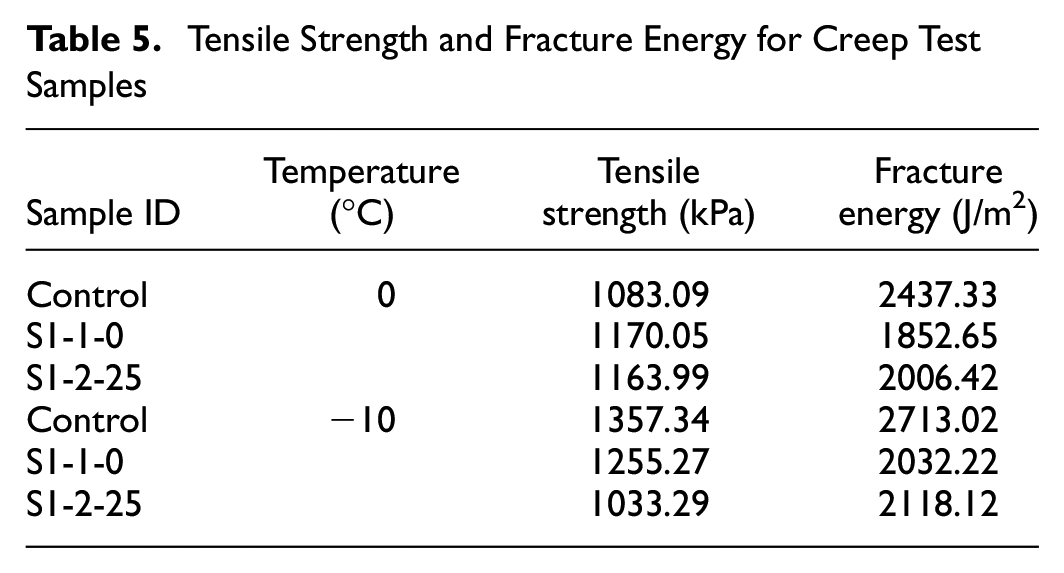
The creep compliance test ( 51 ) was conducted at temperatures of 0°C and −10°C for both the modified and the unmodified samples. The vertical load versus deformation graphs are presented in Figure 6 for 0°C and Figure 7 for −10°C. Table 5 presents the ITS and FE values calculated from the load-deformation graphs for the samples at both temperatures. The results of the ITS at 0°C show that the maximum failure load increased slightly, while the FE for the modified samples decreased (8% and 7.5% increases in tensile strength and 24% and 17.7% decreases in FE of the 1% and 2% asphaltenes samples, respectively, were observed). Comparing these results at 0°C for the different levels of asphaltenes content, it can be seen that there was not a significant difference observed with respect to either tensile strength or FE as a result of an increase in asphaltenes content from 1% to 2% asphaltenes. However, the slopes of the graphs after the peak point for the modified samples are steeper, and this is indicative of more rapid crack propagation. According to these observations and the given mixing procedure, the samples with 1% asphaltenes content were found to be more efficient than the samples with 2% asphaltenes content. These results are indicative of stiffness in the asphaltenes-modified samples, as was expected. The test results at −10°C showed higher values for ITS and FE as compared with those at 0°C, except for 2% asphaltenes content that had a decrease for both tensile strength and FE. Increasing the asphaltenes content at −10°C resulted in a decrease of tensile strength in contrast to 0°C. The reduction in FE was also observed to be more pronounced in the 2% asphaltenes samples than in the 1% asphaltenes samples. The reductions in tensile strength were found to be approximately 7.5% and 23.9% for the 1% and 2% asphaltenes samples, respectively, while the FE decreased by 25.1% and 21.9%. With respect to these results, it is apparent that modification of mixtures with a higher concentration of asphaltenes content makes the sample weaker and more prone to cracking at lower temperatures.
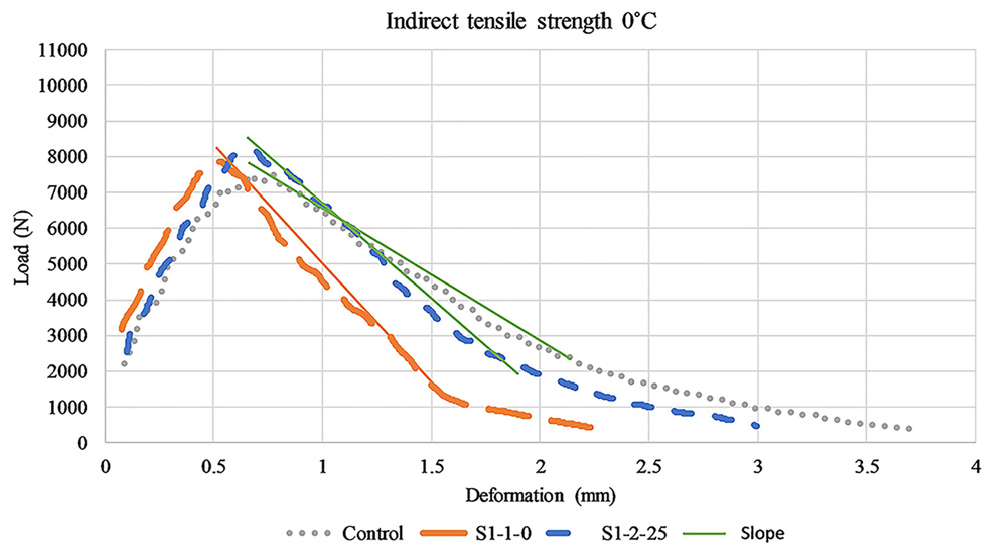
Load-deformation results for 0°C.
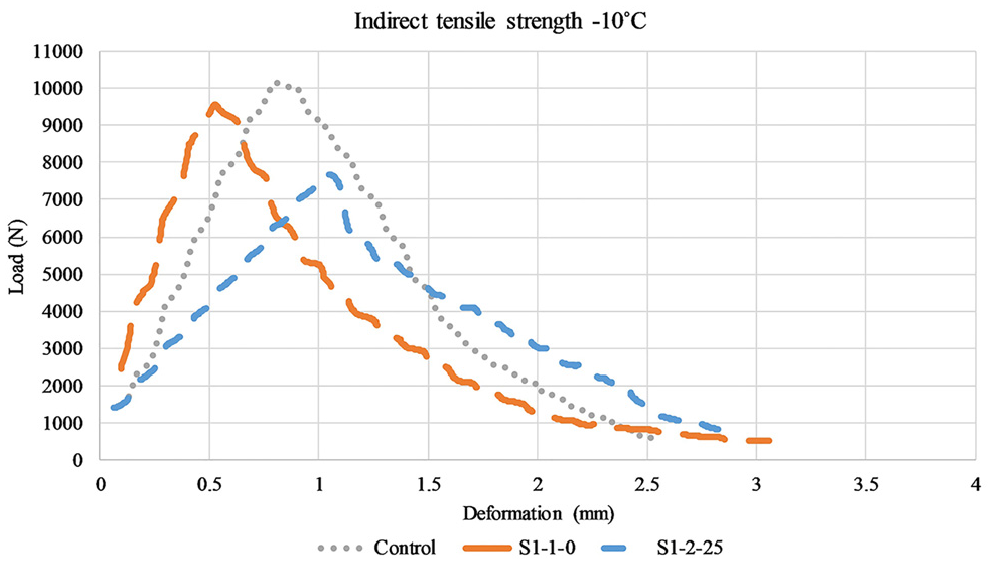
Load-deformation results for −10°C.
Tensile Strength and Fracture Energy for Creep Test Samples
Hamburg Wheel-Tracking Test
The Hamburg wheel-tracking test ( 52 ) was used to determine both the moisture susceptibility and the rutting parameter of the samples. Figure 8 presents the prepared slab samples before and after conducting the test, while Table 6 presents the test results, which show an increase in the number of passes before failure for the modified samples as compared with the control. This increase for the modified mixes indicates a higher resistance to rutting. In addition, the SIP value for the control samples was found to be approximately 3800 passes, whereas adding asphaltenes increased this value to 8200 and 7400 passes for the 1% asphaltenes and 2% asphaltenes samples, respectively. Furthermore, both the 1% and 2% asphaltenes samples showed a significant increase in rutting resistance performance compared with the control samples. The moisture sensitivity of the samples, calculated by dividing the SIP values by the number of passes, had a decreasing trend, indicating the sensitivity of the modified samples to moisture. This index for control samples was about 0.96 and modified samples decreased to 0.94 and 0.86 for 1% and 2% asphaltenes respectively. The RRI was also calculated using the number of passes and the depth of rutting for the samples. As mentioned above, these high values for the modified sample indicate a higher rutting resistance for the asphaltenes-modified samples in comparison with the control samples. In fact, an increase in rutting resistance was observed from 2219.74 for control samples to 5360.97 and 5291.12 for 1% and 2% samples respectively. Both the 1% asphaltenes content and 2% asphaltenes content samples showed better rutting resistance compared with the control samples; however, for the 2% asphaltenes, a slight decrease of about 69.85 RRI was observed compared with the 1% asphaltenes sample. This decrease may be attributable to the slight increase in air voids and decrease in compactibility of the 2% asphaltenes samples compared with the 1% asphaltenes samples. As a result of this test, it can be concluded that asphaltenes modification significantly increased the permanent deformation resistance in the samples.
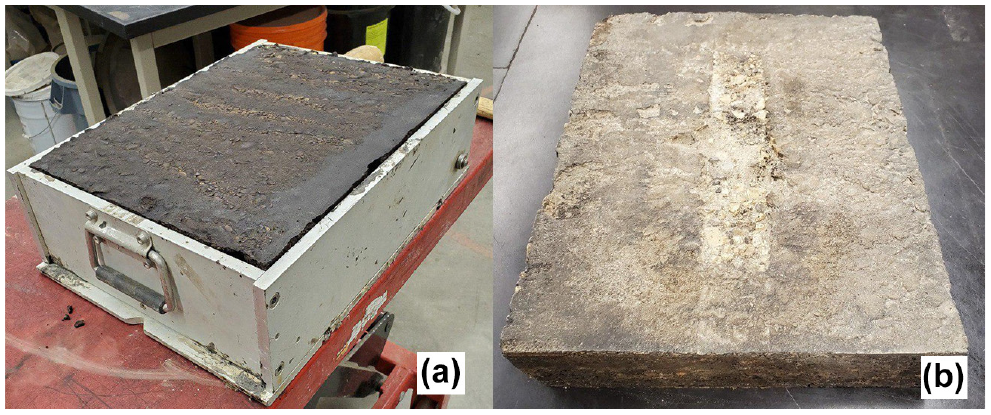
Slab samples compacted by roller compactor before (a) and after test (b).
Rutting Resistance and Moisture Sensitivity Results

Note: SIP = stripping inflection point; RRI = rutting resistance index.
Discussion
Figure 9 presents the comparative data for the creep compliance, ITS, and Hamburg wheel-tracking tests. The control samples for each test were taken into consideration in comparison with the S1-1-0 and S1-2-25 samples to gain understanding of the effect of modification for the base layer with asphaltenes. The strength of the samples at 25°C was found to be significantly higher—about 106% and 193% for the modified samples at both 1% and 2% asphaltenes contents in comparison with control samples. Comparing the results of the ITS at 0°C, a slight increase in strength of the mixtures was observed as a result of increasing the asphaltenes content. This improvement was about 8.0% and 7.5% for 1% and 2% asphaltenes, whereas a decrease in the strength of the samples as a result of asphaltenes modification was observed at −10°C about 7.5% and 24% for 1% and 2% asphaltenes, respectively. In contrast to the results for the intermediate temperature, which showed an increase of about 63% for 1% asphaltenes and 106% for 2% asphaltenes in FE, the results for both low temperatures show a slight decrease in FE for the modified samples. This decrease for 0°C was 24% and 18% for 1% and 2% asphaltenes and for −10°C was about 25% and 22% for 1% and 2% asphaltenes, respectively. These outputs from the creep test indicate an increase in the brittleness of the mixes after adding the asphaltenes to the asphalt-emulsion-stabilized samples. Moreover, while increasing the asphaltenes content has a considerable increasing effect on the strength of the samples for intermediate temperatures, a similar effect was not observed at the lower temperatures.
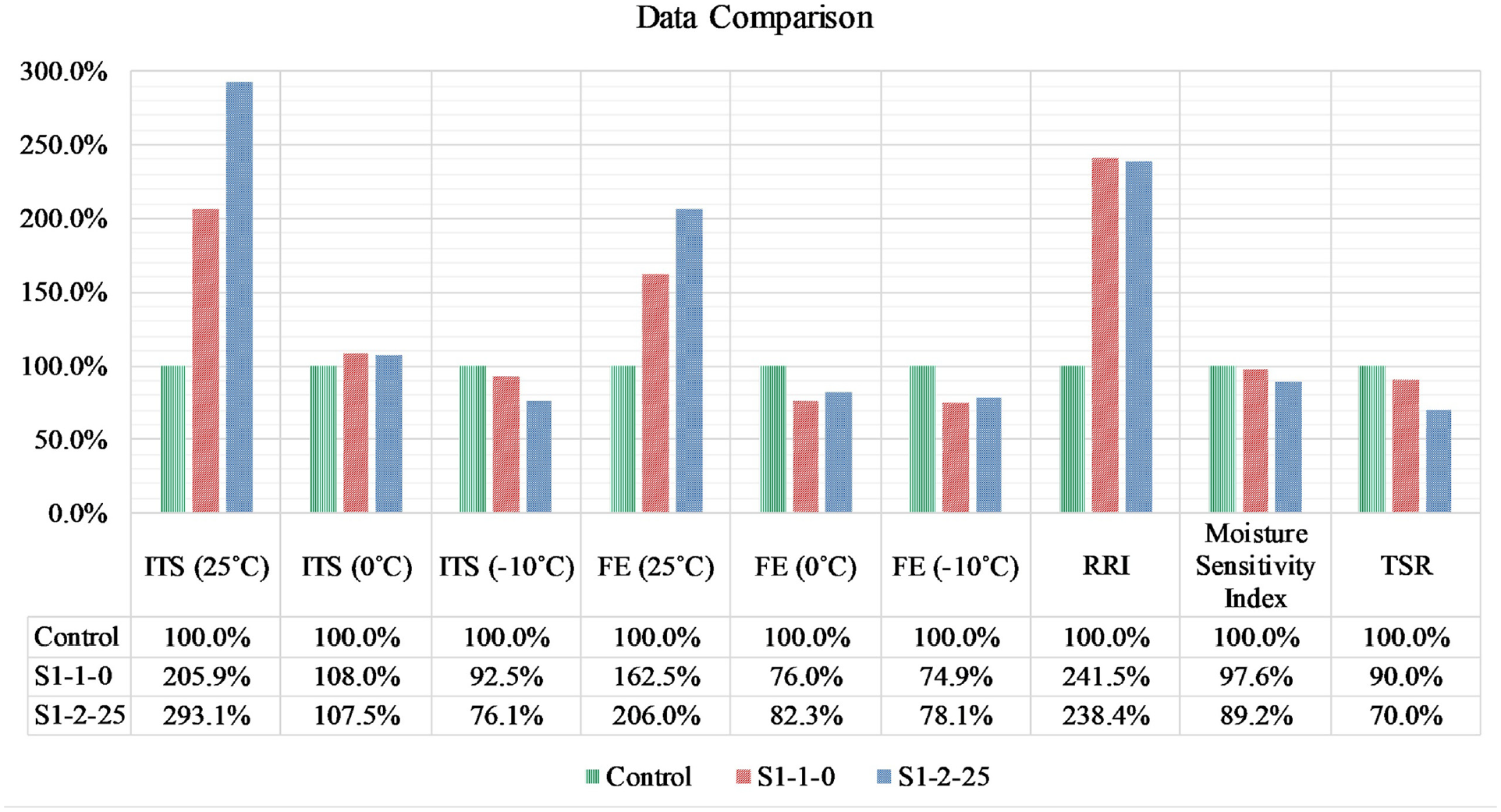
Comparison of performance properties parameters of asphaltenes-modified mixes with the control samples.
The results of the Hamburg wheel-tracking test and RRI values show that modification of asphalt-emulsion-stabilized mixtures with asphaltenes has a significant impact on the rutting resistance (e.g., with respect to the high-temperature performance of the mixtures, the increase was 141.5% for 1% asphaltenes and 138.4% for 2% asphaltenes in rutting resistance). The samples with 1% asphaltenes content were also found to be more effective compared with 2% asphaltenes for improving rutting resistance. This could be related to the ease of mixing and compaction of modified mixes using 1% asphaltenes, as there is no need to extra water during the mixing process and, consequently, the mix has lower air void content.
The stiffness of the modified samples was found to increase at high temperatures according to the wheel-tracking results. This stiffening trend continued for the intermediate temperatures as per the results of the ITS test. However, the ITS results for the low temperatures do not show a significant variation in stiffness in the modified samples corresponding to the trends in the ITS results. Considering the overall results for the low-, intermediate-, and high-temperature tests, it can be concluded that the samples with 1% asphaltenes content are more effective at enhancing the performance properties than the other samples. Also, the impact of 1% of asphaltenes on improving mixes’ intermediate- and high-temperature properties outweighs its adverse effect on the low-temperature properties of the mixes.
Conclusions
Based on the results of the various performance tests and analyses conducted in this study, the following conclusions have been drawn:
The tensile strength at 25°C was found to increase by 105.9% and 193.1% for the samples with 1% and 2% asphaltenes content, respectively. However, it should be noted that the samples with 2% asphaltenes content required extra water to increase the viscosity during mixing with aggregates.
The TSR decreased by 10% and 30% for 1% and 2% asphaltenes contents, respectively. This shows that addition of asphaltenes will increase the moisture sensitivity of the mixes. However, it was not significant for modified mixes using 1% of asphaltenes.
Indirect tensile test results showed that modification of the asphalt-emulsion-stabilized material with asphaltenes resulted in lower FE values and consequently, an increase in the samples’ brittleness at lower temperatures. However, the tensile strength of the modified samples was slightly lower than that of the control samples at lower temperatures.
The Hamburg wheel-tracking test results are indicative of a notable improvement in rutting resistance of the modified mixtures compared with the unmodified samples. The RRI index was found to increase by 141.5% and 138.4% for both the 1% and 2% asphaltenes content samples compared with the control samples.
According to the SIP and moisture sensitivity values, all the samples (both the control samples and the different modified samples) were found to be sensitive to moisture and asphaltenes modification was found to decrease this parameter by about 2% and 10% for the 1% and 2% asphaltenes-modified samples, respectively. The results show the same trend that was observed from the TSR values for 1% and 2% asphaltenes content.
According to the results of the performance tests in different low-, intermediate-, and high-temperature conditions, it can be concluded that 1% asphaltenes content is more effective than 2% asphaltenes content for asphaltenes-modified asphalt-emulsion-stabilized base courses.
Asphaltenes as a waste material have similar, or in some cases, better impacts on the asphalt-emulsion-stabilized courses than do the various commonly used active fillers. This material could be used as an inexpensive and environmentally friendly alternative to improve the properties of mixtures.
Footnotes
Acknowledgements
The authors would like to acknowledge Alberta Innovates for funding this research. Also, Husky Energy, Lafarge Canada, and Nestor Zerpa are acknowledged for providing the material needed for this study. And a special thanks to Jonathan Tomalty for reviewing this paper.
Author Contributions
The authors confirm contribution to the paper as follows: study conception and design: L. Hashemian.; data collection: F. Kamran, M. Basavarajappa; analysis and interpretation of results: F. Kamran, M. Basavarajappa, N. Bala, L. Hashemian; draft manuscript preparation: F. Kamran All authors reviewed the results and approved the final version of the manuscript.
Declaration of Conflicting Interests
The author(s) declared no potential conflicts of interest with respect to the research, authorship, and/or publication of this article.
Funding
The author(s) disclosed receipt of the following financial support for the research, authorship, and/or publication of this article: The project was financially supported by Alberta Innovates through their Bitumen Beyond Combustion (BBC) program (AI 2518).