



Abstract
Much of the existing research on drivers’ understanding of adaptive cruise control (ACC), a type of advanced driver assistance system, was conducted several years ago. Through an online survey, this study aimed to assess ACC knowledge among ACC owners and non-owners now that this system is more widely available. Along with knowledge of ACC features and limitations, demographic information, experience with technology, and experience with ACC (for owners) were also collected to investigate which factors predicted knowledge of ACC features and limitations. Results showed that owners today may have a better understanding of some of the main limitations of ACC compared with research conducted over 10 years ago. However, a large percentage of owners still had misperceptions about their ACC system. While owners had a slightly higher percentage of correct answers overall, they did not differ from non-owners in their knowledge of limitations. As this technology is becoming more common, even non-owners may be becoming aware of common limitations; owning and using ACC does not seem to result in a better system understanding. Higher income was associated with a higher percentage of correct responses on the ACC knowledge questionnaire for both owners and non-owners, and for non-owners, higher education level was also significantly associated with a higher percentage of correct responses. Future research should focus on developing training materials that are accessible to all drivers, so that drivers in lower education and income groups are also supported to understand how advanced driver assistance systems work and benefit from these technologies.
In addition to the standard cruise control capabilities, adaptive cruise control (ACC) can control a vehicle’s acceleration and braking to maintain a set following distance behind a lead vehicle (when the lead vehicle is traveling at or below the set speed). When using ACC, the driver is responsible for monitoring the roadway at all times to determine when they need to resume control of the acceleration and braking ( 1 ). While ACC was initially only available in luxury vehicles, it is now a standard feature on more affordable vehicles like the Toyota Corolla ( 2 ). With ACC becoming more widely available, research on drivers’ understanding of this technology is becoming increasingly important, as drivers’ knowledge of a system’s limitations is critical to them using it safely. In fact, the United Nations Economic Commission for Europe (UNECE) recently proposed a regulation for automated driving systems ( 3 ) that control a vehicle’s lateral and longitudinal movement and allow the driver to disengage from the driving task (i.e., SAE Level 3 driving automation, [ 1 ]). The UNECE regulation requires automated driving systems to be assessed for safety, including consideration of reasonable misuse or misunderstanding by the driver ( 3 ). While the regulation does not cover lower levels of automation (i.e., ACC only), understanding drivers’ misperceptions about currently available driving automation, like ACC, can help inform safety measures for higher levels of automation.
Research shows that an incorrect or incomplete understanding of ACC is associated with a higher willingness to use ACC in situations that are beyond its capabilities ( 4 ). Further, a simulator study showed that among drivers who owned a vehicle with ACC (ACC owners), knowledge that ACC did not react for stationary vehicles was associated with drivers taking over sooner when a stationary vehicle appeared ahead ( 5 ). Thus, being aware of ACC limitations can result in safety benefits for drivers and other road users who will interact with drivers using ACC.
However, one study found that approximately 70% of drivers reported being unaware of any limitations of the ACC in their vehicle ( 6 ). Dickie and Boyle ( 4 ) found that only 42% of ACC owners were aware of all three ACC limitations they were asked about (ACC does not always work in stop-and-go traffic, when there is a vehicle stopped in the lane ahead, or on curvy roads). In a survey study conducted in 2014 that included both ACC owners and non-owners (drivers who did not own a vehicle with ACC), only 17% of respondents correctly answered a question used to measure their understanding of ACC ( 7 ). While informative, these studies were conducted six or more years ago when ACC was less common. The technology has also matured since these studies were published, with many systems now able to slow the vehicle to a stop in stop-and-go traffic. A more recent study surveyed users of Tesla Autopilot, which has both ACC and a lane keeping assist (LKA) system to control steering, and found that most users rated their knowledge level as “above average” ( 8 ). However, the survey did not ask about specific system limitations to confirm whether the users had an adequate understanding of these advanced driver assistance systems (ADAS). More current research is needed to determine what drivers today know about ACC.
There is also limited research on factors that might influence ACC knowledge, such as how drivers learn about the technology. Previous research showed that drivers who own vehicles with ADAS, such as ACC, most often learned about these systems by reading a manual (55% of respondents), with “trial and error” (53% of respondents) and dealership staff (around 40% of respondents) being two other commonly reported ways of learning ( 9 ). However, drivers’ ADAS knowledge was not assessed to investigate whether certain learning methods were associated with a better understanding of the technology. A survey by McDonald et al. ( 10 ) similarly found that ACC owners most commonly learned about ACC from an owner’s manual (48%) and “trial and error” (34%). The authors included several questions to assess basic ACC knowledge, but did not investigate whether knowledge differed based on learning method.
Prior research studying the effectiveness of individual learning methods typically involved training participants in more controlled experimental settings, which may not replicate how people actually learn about ADAS. For example, some studies provided participants with written descriptions of ACC to mimic reading an owner’s manual and found that drivers may forget about limitations that they read about in a manual if they do not experience them ( 11 , 12 ). Krake et al. ( 13 ) found that, in a sample of drivers who had previous experience with ACC, watching videos (containing information from an owner’s manual) did not result in better knowledge of the ACC in that vehicle. While these studies are valuable to inform which training methods may not be effective, in reality, people may pay less attention when reading an owner’s manual, or they may learn using a variety of methods. Thus survey studies are also needed to evaluate different learning methods. There is a lack of research comparing whether certain learning methods, as they are currently used by the driving population, are associated with a better understanding of ACC technology than others.
Other factors, like experience with ACC and demographics, may also affect ACC knowledge. Research has shown that owners who have used ACC for a longer period of time were more likely to be aware of system limitations ( 4 , 14 ). In contrast, Jenness et al. ( 6 ) found that neither driving experience nor age was associated with owners’ awareness of ACC limitations. However, driving experience was measured using mileage driven in the vehicle, and thus it may not have accurately reflected how much the participants used the ACC. Further research is needed to clarify the role of experience on drivers’ understanding of ACC. To the best of our knowledge, other demographics that may influence ACC knowledge, such as education, income, and familiarity with technology, have yet to be investigated. Lee et al. ( 15 ) found that younger age, higher education, and reporting being an early adopter of technology were significant predictors of acceptance of ACC, but research is needed to investigate whether these demographics are also related to ACC knowledge.
We conducted an online survey to understand ADAS (ACC and LKA) knowledge among current drivers. The current paper presents an analysis of the ACC-related components of the survey to address the previously stated gaps in the literature in the following ways. The survey aimed to assess ACC knowledge among ACC owners and non-owners (who had no experience using ACC) now that it is more widely available. Non-owners were included in this study because, with ACC becoming available in an increasing number of vehicles, many non-owners may soon drive vehicles (e.g., rentals) or own vehicles with this technology. Demographic variables and level of experience with ACC (among owners) were collected to investigate their relation to ACC knowledge. Participants were asked what methods they have used to learn about ADAS (either ACC or LKA) in the past. This item is used in the current analysis to assess which ADAS learning methods are currently the most common, but also whether certain methods are associated with a better understanding of ACC.
Methods
Survey Design and Procedure
Participants were recruited through Mechanical Turk (an online crowdsourcing platform), online postings (e.g., Facebook, Kijiji), and emails to individuals who had completed a screening survey for our previous studies and indicated that they would like to be contacted for future studies. Initially, we recruited participants with varying levels of experience with ACC and LKA; the only requirements were that participants had to have a valid driver’s license (so that they were a potential user of ADAS) and live in the U.S.A. or Canada. A brief screening questionnaire was presented before the survey to screen out participants who did not meet the inclusion criteria. Following the screening questionnaire, participants were given information about the study and provided informed consent. They then completed the first section of the survey, in which they reported demographics, driving habits, how they learned about ADAS (ACC or LKA) in the past, and how they would prefer to learn about these systems. Past ADAS learning and learning preference were one question each, and participants were asked to consider both ACC and LKA. Drivers were additionally asked how frequently they used ACC and LKA individually and together in their vehicle (if applicable). Several questions in this section were adapted based on a review of previous surveys about ACC ( 10 , 16 ) and ADAS ( 17 ). The survey was launched in March 2020, after the COVID-19 pandemic resulted in many people spending increasing amounts of time at home. Thus, participants were asked to report their driving habits before the pandemic. They were also asked to report their yearly income from 2019 as income may have also been affected by the pandemic.
To assess participants’ knowledge about ADAS, section two of the survey included a questionnaire about ACC and LKA. The questionnaire was separated by system (i.e., participants completed two questionnaires, one for ACC and one for LKA), however only the ACC data is analyzed in this paper. Whether ACC or LKA was presented first was randomized across participants (55% had ACC first). The items for this section were developed based on a review of previous questionnaires assessing knowledge of ACC ( 11 , 16 , 18 ) followed by a review of owner’s manuals for various vehicles with ACC and LKA to identify the features and limitations of each system. For the ACC questionnaire (see Supplemental Material), participants were presented with 51 items in two parts, and the order of the two parts was randomized (51% had part one first). The first part asked participants whether the given statements about ACC were true (yes or no) and the second part presented participants with a list of situations and asked whether the ACC might have difficulty in each situation (yes or no). Owners were asked to consider their own vehicle when answering whether the statements about ACC were true and whether the ACC might have difficulty in a given situation, whereas non-owners were asked to consider whether the statements were true for any ACC system and whether any system might have difficulty in a given situation. For all items, participants could answer “I don’t know,” however, if they did answer yes or no, they were also asked to rate their confidence in that response from 1 (very low confidence) to 7 (full confidence). Participants also rated their trust in ACC and LKA, using questions adapted from previous research ( 19 ), however the trust analysis is not within the scope of the current analysis. The entire questionnaire went through several rounds of updates based on review and feedback from within our research group. The survey took approximately 20 to 25 min to complete.
An initial round of data collection was conducted, and the data was then inspected to assess the distribution of participants based on their experience with ACC and LKA. Inspection of the data revealed that only a small portion of respondents were non-owners who had used ACC or LKA before (21 out of 136). Thus, these participants were excluded as we did not believe that it would be possible to obtain a large enough sample for this group. Data collection then continued (approximately two weeks later), and for this second round of data collection, participants were required to either (i) be non-owners with no experience with ACC or LKA (referred to as non-owners throughout the rest of the paper) or (ii) own a vehicle with ACC or LKA. For the second round of data collection, the screening questionnaire was updated to include a question that asked participants whether they owned a vehicle with ACC or LKA and if not, whether they had ever used these systems.
Participants
Participants recruited through Mechanical Turk were compensated $4 (USD) for completion of the survey. For participants recruited through other venues, the incentive to participate was entry into a raffle to win a $100 (USD) gift card. One gift card was purchased for approximately every 25 participants, and participants were informed through the recruitment postings and consent form that their chance of winning was approximately 1 in 25. The survey was completed by 160 owners and 303 non-owners. Forty owners and 41 non-owners were excluded for completing the survey in a time frame that was too short to have read and responded to all questions or for failing attention checks (e.g., an item stating “Please answer yes and full confidence” among a list of items in section two of the survey; see Survey Design and Procedure section); these participants were not compensated. Of the remaining 120 owners, 18 were excluded because the vehicle they reported owning did not have ACC as an available option, and a further 12 owners were removed because they indicated that they never used the ACC in their vehicle (final N = 90; 41 female, 49 male; 51% from Mechanical Turk). Of the remaining 262 non-owners, seven were removed because they answered “I don’t know” for all items and two were removed because they were still in high school (final N = 253; 117 female, 136 male; 56% from Mechanical Turk). The average age of the final sample for owners was 35.8 (standard deviation [SD] = 11.4) years and for non-owners was 35.8 (SD = 13.4) years.
Analysis
Owner and non-owner data were analyzed separately because owners’ knowledge was assessed for the ACC in their own vehicle and non-owners’ knowledge was assessed for currently available ACC in general. Owners’ responses were scored based on a review of their vehicle manual. However, if a manual failed to list a known limitation of ACC systems (e.g., difficulty detecting stopped vehicles), that general limitation was still utilized in the scoring of participant knowledge. The review of each participant’s vehicle manual was conducted mainly to assess the ACC features (e.g., could it slow down to a stop) for the purpose of scoring the relevant items correctly. Owners owned vehicles from 21 manufacturers, with the most common being Toyota (34% of owners), followed by Honda (12% of owners). Vehicles from each of the other manufacturers were owned by less than 10% of the participants.
The main dependent variable used to assess ACC knowledge was the percentage of items participants answered correctly (percent correct). For both owners and non-owners, a median split was used on the percent correct data to compare whether participants with a higher percent correct used different methods to learn about ADAS than those with a lower percent correct. Chi-square tests were conducted for each learning method (separately for owners and non-owners) to test whether there was an association between using that learning method (yes or no) and percent of correct answers (higher or lower). When expected values were <5 in any cells, Fisher’s exact test was used.
To investigate the potential factors that are related to knowledge about ACC, regression models were then built (one for owners and one for non-owners) with percent correct as the outcome variable and the following predictors:
Number of learning methods: a count of the number of methods the participant used to learn about ADAS in the past. Participants were asked to check all of the ways they had learned about ADAS from the following: “Read the vehicle manual,”“Asked sales staff at the dealership for information,”“Sales staff at the dealership offered information (you did not specifically ask),”“Asked a friend or family member for information,”“Friends or family were talking about ADAS (you did not specifically ask),”“Looked for information on the internet,”“Searched for online videos,”“Saw a video or commercial by chance,”“Drove the vehicle to learn by trial and error” (for owners only), “Observed ADAS as a passenger,” and “Other (please specify).” For owners: mean (M) = 2.8, SD = 1.6. For non-owners: M = 1.3, SD = 1.4.
Technology familiarity: an average of three items (all ranging from 1 to 10). The first two items, on participants’ level of experience with technology and the degree to which they consider themselves an early adopter of new technology, were taken from Chen and Donmez ( 20 ) and Reimer et al. ( 21 ). The third item, which asked how easy participants found it to learn new technology, was added for this survey. For owners: M = 8.2, SD = 1.4. For non-owners: M = 7.8, SD = 1.4.
Education: highest level of education completed. This predictor had three levels (“high school, some postsecondary, or college degree” was used as the reference group): (i) high school, some postsecondary, or college degree (owner N = 22, non-owner N = 99) (ii) bachelor’s degree (owner N = 37, non-owner N = 106) (iii) graduate or professional degree (owner N = 31, non-owner N = 48).
Age (for owners, M = 35.8, SD = 11.4; for non-owners, M = 35.8, SD = 13.4). (Descriptive statistics for age and sex are also reported in the Participants section, above.)
Sex (for owners, 41 female, 49 male; for non-owners, 117 female, 136 male).
Income: the participant’s yearly household income for 2019. Participants reported income by selecting from nine income ranges. The median income in the U.S.A. for 2018 was $63,000 ( 22 ), which was contained within the “$50,000 to $74,999” range in the survey, so income was split into two levels: less than $75,000 and $75,000 or greater. Fifty-one owners were in the lower income level and 39 were in the higher income level; income less than $75,000 was used as the reference group. For non-owners, this split was imbalanced (lower N = 182, higher N = 71), so the lower group was split further into less than $40,000 (N = 83) and $40,000 to $74,999 (N = 99). Pew Research Center ( 23 ) considers lower income households to be those with an income less than 67% of the median income ($42,000 for 2018), which is consistent with the cutoff point used in this study. For non-owners, income less than $40,000 was used as the reference group.
Experience (owners only): level of experience with ACC. This predictor had two levels: lower (owners reported using ACC rarely or sometimes; N = 65) and higher (owners reported using ACC most of the time or almost every time they drove; N = 25). Lower experience was used as the reference group.
Results
Knowledge About ACC
Owners, on average, answered 51% of all items correctly (SD = 13.5), with scores ranging from 4% to 80%. Figure 1 includes two items from the survey that related to the main purpose of ACC (“Maintains a predetermined speed in an empty lane” and “Keeps a set distance to vehicles driving ahead in the same lane at a slower speed”) and several items relating to features/limitations that are commonly considered in driving automation research (e.g., 4 , 12 , 24–26). While approximately 40% of owners correctly reported that their ACC system might have difficulty when driving on curvy roads or when approaching a stationary vehicle, 46 to 47% of owners incorrectly thought that their ACC system would not have difficulty in these situations.
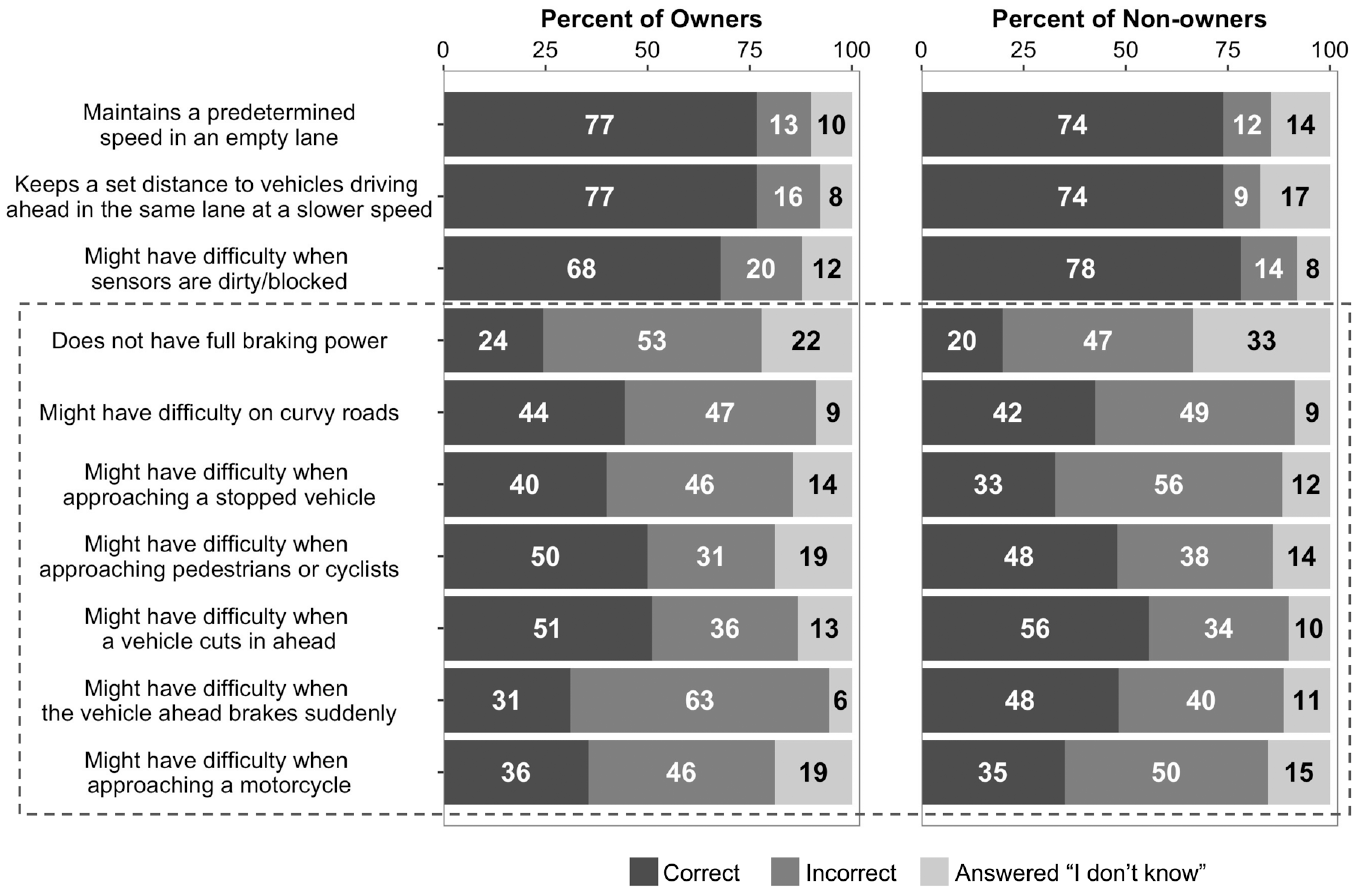
Percentages of owners and non-owners who answered correctly, incorrectly, and “I don’t know” for select individual items on the knowledge questionnaire. For the figure, items were recoded to be true statements. The dashed-line box highlights misperceptions among owners and non-owners (items that a relatively large proportion of participants answered incorrectly).
Non-owners, on average, answered 45% of the items correctly (SD = 15.0), with a range of 2% to 78%. When looking at individual survey items, the responses were similar between owners and non-owners. Most owners and non-owners (68%–78%) knew the main purpose of the system and that it might have difficulty if the sensors were blocked or dirty (the three items at the top of Figure 1). There were also some common misperceptions among owners and non-owners (items in the dashed-line box in Figure 1). Around half of owners and non-owners incorrectly thought that ACC had full braking power. Further, like the owners, around half of non-owners were unaware that ACC might have difficulty when approaching a stationary vehicle or when driving on curvy roads. In fact, the percentage of incorrect responses is similar for owners and non-owners (≤10% difference) for all items in Figure 1, except for “Might have difficulty when the vehicle ahead brakes suddenly,” which 63% of owners answered incorrectly, compared with just 40% of non-owners. These results indicate that even with experience using ACC, the owners do not seem to have a better understanding of their own ACC system compared with non-owners’ understanding of ACC systems generally.
To statistically compare owners and non-owners, a revised percent correct was calculated based on just the items that had the same response for all vehicles (see Supplemental Material: underlined items were removed for this analysis). In other words, the correct answers for these items were the same for non-owners and owners, regardless of their vehicle. Overall, owners had a higher percent correct, t(171.2) = 2.71, p = .007, answering 52% correctly, compared with non-owners who answered 47% correctly. However, when we examined the percent correct for items related specifically to ACC limitations, there was no significant difference between owners and non-owners, t(159.1) = 0.49, p = .6. On average, owners answered 47% of limitation-related items correctly and non-owners answered 46% correctly. The difference in the revised percent correct between owners and non-owners was driven by the other items which asked about the general purpose of ACC and how to operate it (e.g., how to engage/disengage it), t(178.2) = 4.73, p <.001, with owners answering 59% correctly and non-owners answering 49% correctly on average.
Past Learning Methods
All owners reported using at least one method to learn about the ADAS in their vehicle, with most owners (77%) using multiple methods. Owners most frequently reported learning by reading an owner’s manual, however only about half them reported doing so (see Figure 2). The next most common learning methods were learning from staff at the dealership and searching for videos.
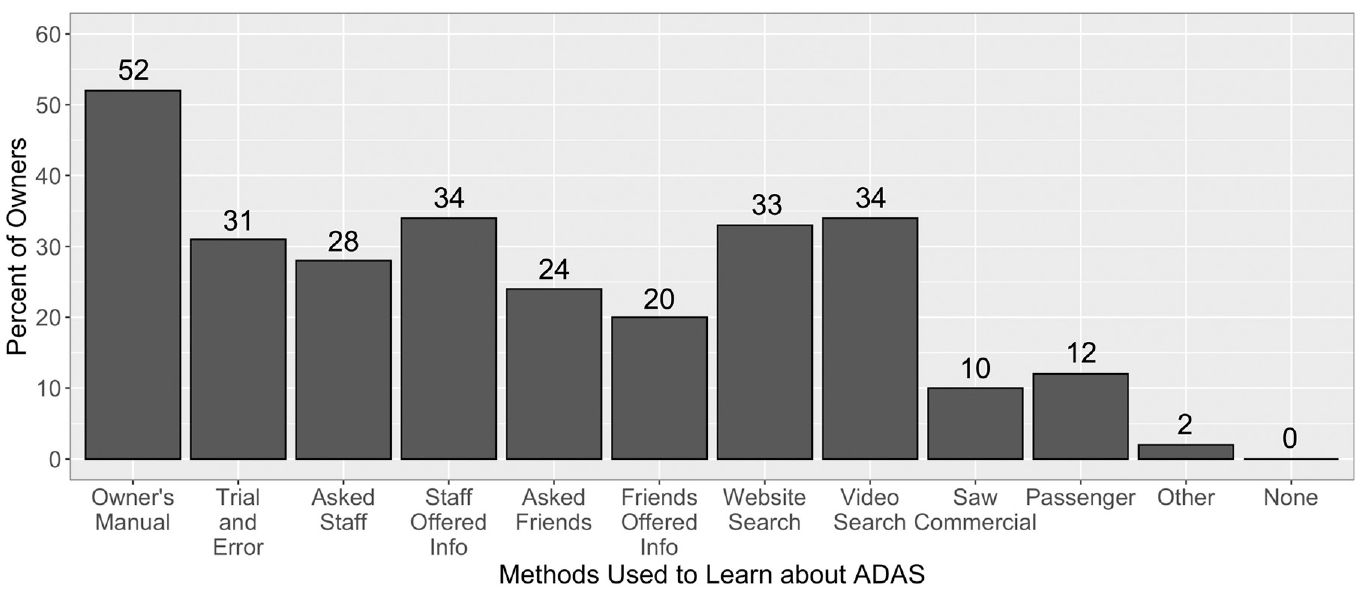
Learning methods used by owners (participants could select all that applied).
Although on average owners did not perform well on the ACC knowledge questionnaire, there was variance in their performance, as reported earlier. We split the data to explore whether owners who had a better understanding of ACC differed from those with a worse understanding in how they learned about ADAS. Owners were split into two groups based on total percent correct (median = 49.0). The higher group consisted of owners who answered more than 50% correct (N = 44) and the lower group consisted of those who answered 50% or fewer items correctly (N = 46). The percentage of owners who used each learning method was plotted for the higher and lower groups (see Figure 3). While various learning methods have slight differences between groups, chi-square tests revealed that “trial and error” was the only learning method that was significantly associated with having a higher percent correct, χ2 = 5.85, p =.02. Odds of being in the higher group were 3.12 times higher (95% CI: 1.22, 8.01) for owners who learned by trial and error. There was a marginally significant effect of searching for information on websites (χ2 = 3.76, p = .053), with the odds of being in the higher group being 2.42 times higher (95% CI: 0.98, 5.96) for owners who searched for information on websites.
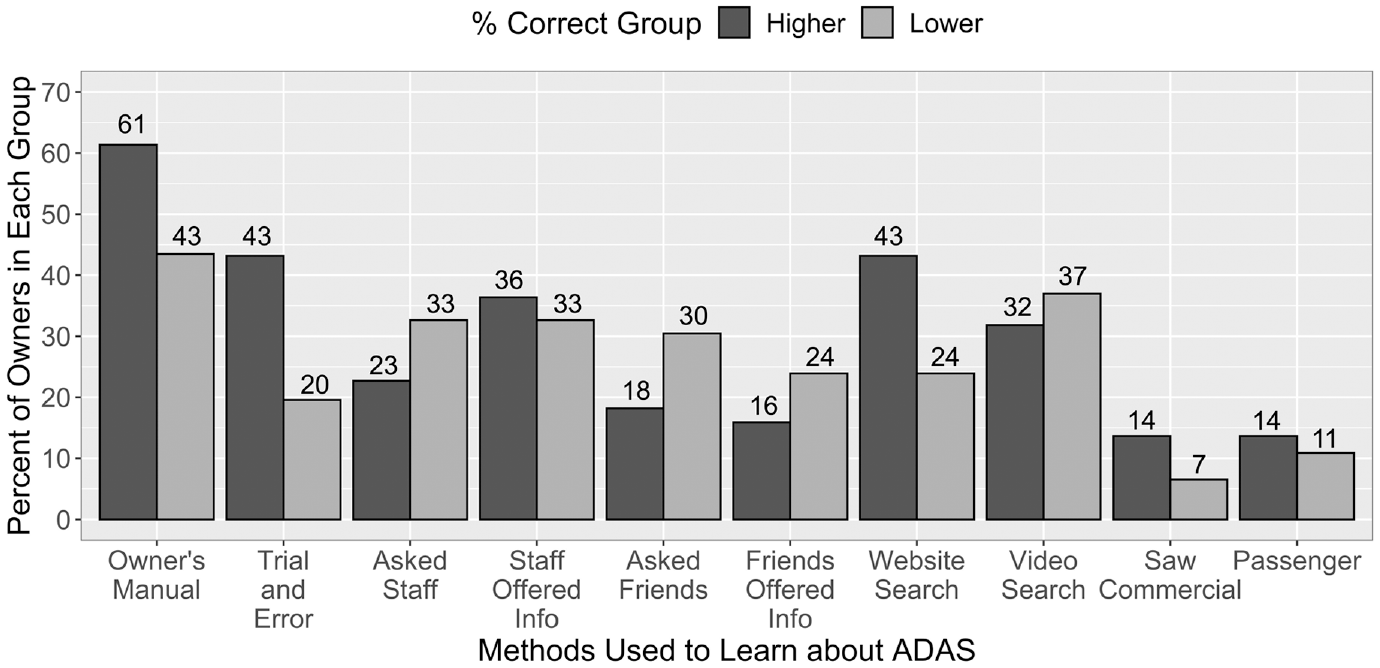
Percentage of owners in the higher and lower groups who used different methods to learn about the advanced driver assistance systems (ADAS) in their vehicle. Higher and lower groups were created using a median split on the total percent of correct items among owners.
Of the non-owners, 39% reported never learning about ACC or LKA. For those who did, the most common method of learning was from a commercial (reported by 36% of non-owners), followed by searching for information on websites and having friends offer information (reported by 24% and 20% of non-owners, respectively). Splitting non-owners into two groups (higher and lower) using a median split on percent correct (median = 47.1), it was found that the higher (N = 127) and lower (N = 126) groups were similar in the learning methods that they used (see Figure 4). Results of chi-square tests indicated no significant associations between using a specific learning method and having a higher percent correct.
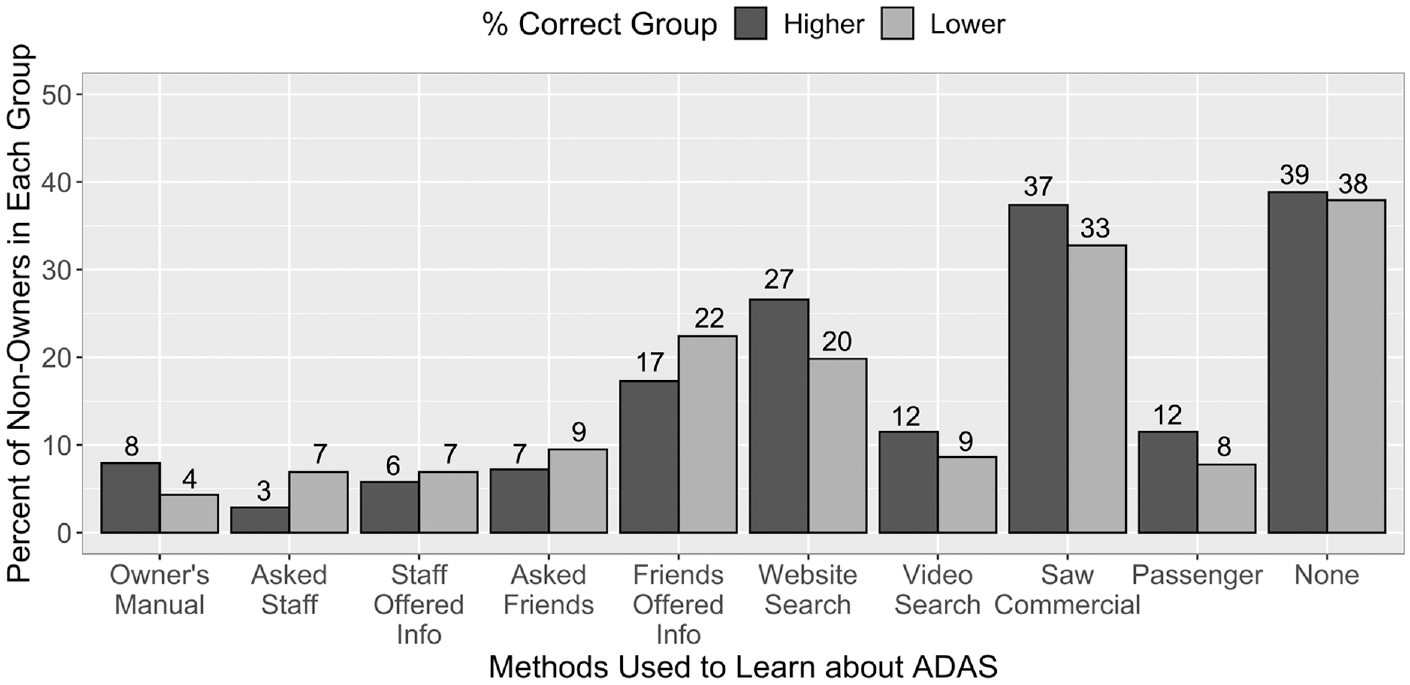
Percentage of non-owners in the higher and lower groups who used different methods to learn about advanced driver assistance systems (ADAS). Higher and lower groups were created using a median split on the percent of correct items among non-owners.
Factors Related to Knowledge About ACC
For owners, income and age were significant predictors of percent correct (Table 1). Owners with a yearly household income of $75,000 or greater answered more items correctly, while older owners answered fewer items correctly. However, there was also a marginally significant age by sex interaction, whereby there was only an effect of age for females (see Figure 5).
Results of Regression Models Predicting Percent Correct for Owners and Non-Owners
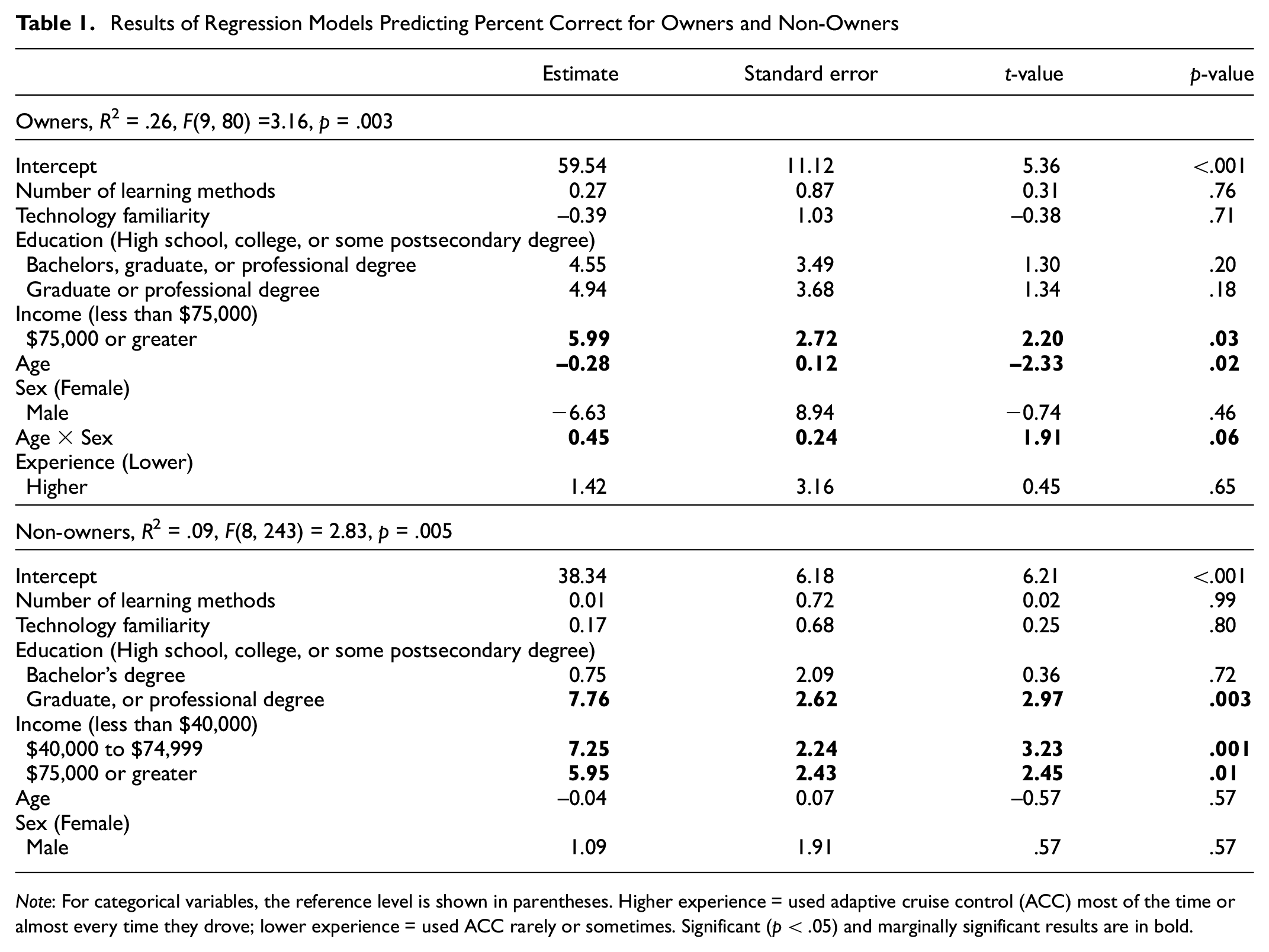
Note: For categorical variables, the reference level is shown in parentheses. Higher experience = used adaptive cruise control (ACC) most of the time or almost every time they drove; lower experience = used ACC rarely or sometimes. Significant (p < .05) and marginally significant results are in bold.
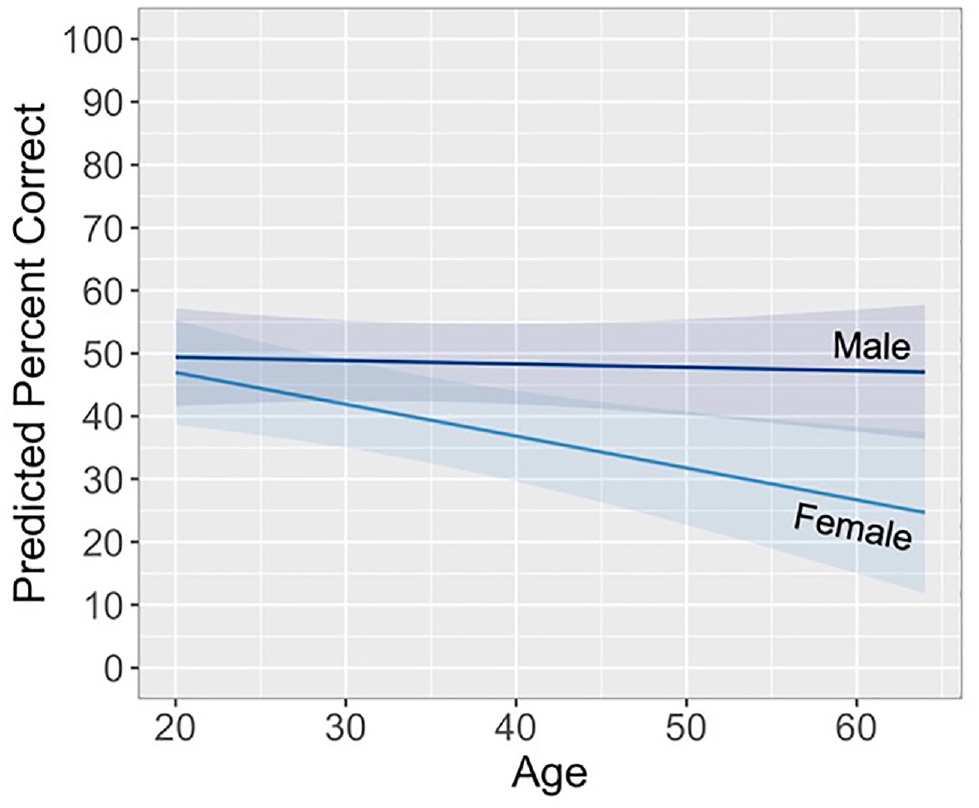
Predicted percent correct by age and sex, based on the regression model for owners. Shaded bands represent 95% confidence interval.
Given that income was a significant predictor of percent correct, further analysis explored whether owners with higher income were more likely to own luxury vehicles, as luxury vehicles may have more sophisticated interfaces that help convey more information about the ACC. Results showed that 44% of owners in the higher income group owned a luxury vehicle, compared with 31% of owners in the lower income group. However, chi-square analysis indicated no significant relationship between income and having a luxury vehicle (χ2 = 0.59, p = .4).
For non-owners, education and income were significant predictors (Table 1). Having a graduate or professional degree and a yearly household income of $40,000 or greater were associated with a higher percentage of correct responses. There was no difference in percent correct between non-owners in the $40,000 to $74,999 income group and those in the $75,000 or greater income group, t(152.6) = 0.36, p = .7.
Discussion
Our results suggest that owners today may have a better understanding of the ACC limitations that have been investigated in survey studies over the past 10 or more years, compared to the participants in those earlier studies. Among owners, 40% correctly reported that their ACC system might have difficulty when approaching a stationary vehicle, and 44% were aware that their ACC system might have difficulty on roads with curves. These results are consistent with Dickie and Boyle’s ( 4 ) 2009 study which found that 42% of the 55 surveyed owners were aware of these limitations. However, larger surveys conducted around the same time indicated that a lower percentage of drivers knew about these limitations. In a 2006 study, only 1% of owners correctly identified that ACC would not detect a stopped vehicle ahead ( 27 ). In their 2008 paper, Jenness et al. ( 6 ) found that 34% of owners correctly identified that their ACC system would work “poorly” or “not at all” on a curvy road, and only 22% correctly reported that their ACC system would work “poorly” or “not at all” when approaching a stationary vehicle. These results, combined with the current findings, suggest that as ACC has been available for a longer period of time and become more common, more owners have become aware of these limitations. However, despite a larger percentage of owners being able to correctly identify these limitations in our study, there was still a large percentage of owners (over 40%) who incorrectly believed that their ACC system would not have difficulty in these situations. In addition, our results showed that while owners had a higher percentage of correct answers than non-owners for items that related to the purpose and features of ACC, there was no significant difference in their knowledge of ACC limitations. As this technology is becoming more common, even non-owners may be becoming aware of the limitations, and owning and using ACC does not seem to result in an increased awareness of system limitations.
Consistent with previous research ( 9 , 10 ), approximately half of the owners reported learning about ADAS in their vehicle from an owner’s manual. While around half of the owners surveyed by Abraham et al. ( 9 ) reported learning about ADAS using trial and error, our results are more in line with those of McDonald et al. ( 10 ), with only 29% of owners in our sample reporting they learned by trial and error (34% in McDonald et al.’s sample). Although an owner’s manual contains information about ACC features and limitations, reading a manual may not be sufficient to understand and remember all of the limitations. When the owner data were split into higher and lower groups based on the percentage of correct responses, a higher percentage of owners in the higher group read their owner’s manual compared with those in the lower group. However, no significant association was found between reading an owner’s manual and having a higher percentage of correct answers. Further, almost half of owners in the lower group also read an owner’s manual, and thus simply reading a manual does not guarantee a better understanding of ACC. It may be that some owners reported reading a manual even if they only read small portions of it. Previous work on driving in general showed that drivers typically do not read an entire manual ( 28 ). In the current study, we did not ask whether owners had read the whole section on ACC, and thus they may have gotten some information about ACC from a manual without thoroughly reading all the relevant information. The quality of the information presented in an owner’s manual could also be a factor. For example, only 24% of owners knew that ACC did not have full braking power. In the current study, owners had vehicles from 21 different manufacturers and the manuals for eight of these manufacturers did not mention that ACC had limited braking power. Thus, even if drivers read the entire ACC section of a manual, training materials may not contain all the relevant information to give drivers sufficient knowledge of the system. The study design did not control for this variation in information across different manuals, which is a limitation of our analysis.
Studies show that limitations are forgotten over time unless they are experienced ( 11 , 12 ), which may explain why “trial and error” was the only learning method among owners that had a significant association with having a higher percentage of correct responses. If drivers forget limitations they have learned (through reading an owner’s manual or any other method) unless they experience them, drivers who experiment with their system through trial and error may encounter and thus remember more limitations of their ACC system. A marginally significant association was also found between searching for information on websites and answering a higher percentage of items correctly. Searching for information on the internet may return information from a wider range of sources that may be easier to understand than an owner’s manual, or owners may be searching for specific information about their ACC system after using it to gain a better understanding of how it works. However, further research would be needed to investigate what information drivers search for on the internet and whether they find it to be more informative than an owner’s manual.
The non-owner data was also split into higher and lower groups based on the percentage of correct responses. Both visual inspection of the data and chi-square tests suggest that for non-owners, none of the learning methods included in this study were associated with better knowledge of ACC. Since we focused on non-owners with no experience with ACC, we could not assess whether learning through trial and error was also effective for non-owners. In general, our results do not indicate that one method of learning clearly results in a better understanding of the system, which is consistent with training research showing that the way ADAS information was presented to drivers (owner’s manual versus multimedia training) did not significantly affect drivers’ knowledge of system limitations ( 29 ). However, an important limitation of our study is that participants were asked how they have learned about either ACC or LKA in the past. In other words, they did not separately report how they learned about ACC. It is possible that no association was found between learning methods and percentage of correct responses because some of the methods participants reported using may have been used to learn about LKA and not ACC. In addition, participants often used more than one method for learning, and thus the comparisons do not reflect the isolated effect of each learning method. Because of sample size limitations, it was not possible to assess the various combinations of learning methods for their effect on knowledge. Future research is needed to confirm our findings based on participants’ past learning about ACC specifically and to investigate whether certain combinations of learning methods are more effective in improving drivers’ knowledge of system limitations.
For owners, age significantly predicted percent correct, with older drivers having a lower percent correct on average. However, there was a marginally significant age by sex interaction, whereby this effect was only found for females. There appeared to be no effect of age on percent correct for male owners. Previous research suggests that males and younger people have a higher interest in automated vehicles (e.g., 30 , 31 ). Thus, males of all ages may be motivated to learn about ACC, whereas for females it may be primarily the younger owners who are interested in learning about and using ADAS. However, the results were only marginally significant and future research is needed to explore this potential age–sex interaction. In addition, income significantly predicted percent correct for owners: owners with a yearly household income of $75,000 or greater had a higher percent of correct responses than those with a yearly household income less than $75,000. One potential reason for this effect may be that owners with higher income own luxury vehicles that have more sophisticated interfaces to convey ACC-related information, which may result in a better understanding of the system. Descriptive statistics revealed that a higher percentage of owners with higher income had luxury vehicles (44%, compared with 31% of owners with income less than $75,000). Statistical analysis indicated no significant association between income and having a luxury vehicle, however, we may not have had enough power with our sample size to detect a significant difference. Future research could investigate differences in owner understanding of ADAS for different vehicle manufacturers. For non-owners, both income and education level were significant. Non-owners with a graduate or professional degree had a higher percent of correct answers, as did those who had a yearly household income of $40,000 or greater.
Higher income and higher education have been found to be associated with greater interest in and more positive attitudes toward automated vehicles, respectively ( 31 , 32 ). The better performance of higher income owners and higher income and higher education non-owners on the knowledge questionnaire may be due, in part, to an increased interest in ACC technology and subsequently seeking out more information about it. However, Spearman rank correlations showed that, for owners, income was not related to number of learning methods used. For non-owners, higher income had a marginally significant (ρ = 0.12, p = .054) association with using more learning methods, but it was not a strong effect. In addition, there was not a significant relationship between education and number of learning methods. It is also possible that participants with higher education or income did not use more learning methods but sought out more information from a given source (e.g., read more of the details from an owner’s manual), which resulted in a better understanding of the system. Alternatively, the better performance of higher income and higher education individuals may reflect that the available information about ACC is not accessible to all drivers. As ACC becomes more commonly available, the barrier of cost is reduced. However, if training or marketing materials are created such that only young drivers or drivers who are highly educated or have a high income can understand how to use ACC safely, the benefits of ACC may not be experienced by drivers who do not fit these demographics. Future research should focus on developing training materials to be easy to understand for all segments of the population, so that drivers do not need to be young, highly educated, or have a higher income to understand how ACC works and benefit from this technology.
Level of experience with ACC was not a significant predictor of ACC knowledge for owners in our study, which is inconsistent with previous work showing that experience is associated with being more aware of ACC limitations ( 4 , 14 ). However, in our study, experience was based on frequency of use, whereas in the previous studies, experience was measured by the length of time the participant had been using ACC. It is possible that drivers in our sample use ACC frequently when they drive but have only owned the system for a short period of time. Especially for owners who have not read their vehicle’s manual, experience over a prolonged period of time may be required for them to experience firsthand many of the ACC limitations and thus to build up a better understanding of the system. Even if they have read their owner’s manual, limitations that are not experienced may be forgotten in as little as two months ( 11 , 12 ). Once limitations are forgotten, it may take several months (or longer) for drivers to encounter situations that remind them of any forgotten limitations, which can then be reincorporated into their understanding of the system. Future studies could investigate training methods such as in-vehicle support that can periodically provide information about the ACC’s capabilities and limitations to remind drivers of information that may have been forgotten (so that they do not have to wait until they experience that limitation) or to prevent knowledge from being forgotten in the first place.
It should be noted that survey data have inherent limitations. First, while we confirmed that owners’ vehicles could be equipped with ACC, we had no way to verify that the owners actually owned the vehicle that they reported owning or that they had ACC, so the results are based on the assumption that all respondents were truthful. Second, correctly identifying certain limitations in a questionnaire does not necessarily mean that drivers will respond correctly or in a timely manner in a safety critical situation (e.g., 33 ). Future research will be needed to investigate whether the same factors that are related to ACC knowledge assessed through a questionnaire are also related to whether drivers use ACC more appropriately or respond more quickly in critical scenarios.
We also acknowledge limitations of our knowledge questionnaire. The questionnaire contained items from previous work ( 18 ) and was further developed based on a review of the literature and existing ACC documentation (i.e., owner’s manuals), along with input from our research group. However, there was no efficacy assessment in the current study. In addition, the questionnaire did not explicitly define what ACC having “difficulty” in a situation would be, and thus it is possible that there was variation in how participants interpreted the relevant questions. Further, the wording of the questions was unbalanced (e.g., participants were asked to consider whether a given statement was true, instead of true or false), which may have also biased the results. Signal detection theory could be applied in future analyses to assess knowledge (i.e., sensitivity) independent of response bias ( 34 ). Future research could also verify our results with more balanced questions and assess the validity and reliability of the questionnaire.
Conclusions
The results of this study suggest that as ACC continues to become more common in consumer vehicles, owners may be becoming more aware of some of its main limitations. However, a large portion of owners still have misperceptions about their system which could lead to overreliance and have dangerous consequences. The results also suggest that the informational materials currently available are not effective in improving drivers’ knowledge of ACC, as the only learning method that was significantly associated with a better understanding of ACC was “trial and error” (although its individual effect could not be isolated among the other learning methods used). While trial and error may be associated with better knowledge of ACC among owners, non-owners who have never used ACC before had a similar level of knowledge about system limitations. Further research is needed to understand the relationship between experience with the system and ACC knowledge. However, learning by trial and error does not address risks in the early stages of use, thus additional training and education methods are required to support drivers’ early interactions with ACC. The results suggest that lower age, higher education, and higher income level are associated with better knowledge of ACC. These findings highlight the need to develop better training materials to make the technology more accessible, so that all drivers can benefit from safe use of ACC.
Supplemental Material
sj-docx-1-trr-10.1177_03611981211011482 – Supplemental material for Drivers Still Have Limited Knowledge About Adaptive Cruise Control Even When They Own the System
Supplemental material, sj-docx-1-trr-10.1177_03611981211011482 for Drivers Still Have Limited Knowledge About Adaptive Cruise Control Even When They Own the System by Chelsea A. DeGuzman and Birsen Donmez in Transportation Research Record
Footnotes
Author Contributions
The authors confirm contribution to the paper as follows: study conception and design: C. A. DeGuzman and B. Donmez; data collection: C. A. DeGuzman; analysis and interpretation of results: C. A. DeGuzman and B. Donmez; draft manuscript preparation: C. A. DeGuzman and B. Donmez. All authors reviewed the results and approved the final version of the manuscript.
Declaration of Conflicting Interests
The author(s) declared no potential conflicts of interest with respect to the research, authorship, and/or publication of this article.
Funding
The author(s) disclosed receipt of the following financial support for the research, authorship, and/or publication of this article: This work was supported by the Natural Sciences and Engineering Research Council of Canada (grant number RGPIN-2016-05580).
Supplemental Material
Supplemental material for this article is available online.
References
Supplementary Material
Please find the following supplemental material available below.
For Open Access articles published under a Creative Commons License, all supplemental material carries the same license as the article it is associated with.
For non-Open Access articles published, all supplemental material carries a non-exclusive license, and permission requests for re-use of supplemental material or any part of supplemental material shall be sent directly to the copyright owner as specified in the copyright notice associated with the article.
