




Abstract
The new concept of virtual coupling (VC) envisages autonomous trains running in radio-connected platoons to significantly improve railway capacity and address the forecasted increase in railway demand. Such a concept will introduce radical changes to current train services, technologies, and procedures, which calls for a deeper understanding of the possible modes of operation and the impacts on the entire railway business. This paper investigates market potentials and operational scenarios of VC for different segments of the railway market: high-speed, main-line, regional, urban, and freight trains. The research builds on the Delphi method, with an extensive survey to collect expert opinions about benefits and challenges of VC as well as stated travel preferences in futuristic VC applications. Survey outcomes show that VC train operations can be very attractive to customers of the high-speed, main-line, and regional market segments, with benefits that are especially relevant for freight railways. In particular, customers of regional and freight railways are observed to be unsatisfied with current train services and willing to pay higher fares to avail of a more frequent and flexible service enabled by VC. Operational scenarios for VC are then defined by setting market-attractive service headways and by characteristics of the rolling stock, infrastructure, and traffic management. An analysis of strengths and weaknesses of such a concept together with business opportunities and threats is carried out. The defined VC future scenario is set to induce a sustainable shift of customers from other travel modes to the railways.
The railway demand of passengers and goods is continuously increasing, which leads to railway capacity saturation, especially in densely built-up areas. This has been challenging for infrastructure managers (IMs) as well as for railway customers, who are increasingly subject to overcrowding, delays, and limited train service frequencies with a consequent lack of flexibility in adapting their travel alternatives ( 1 ).
Virtual coupling (VC) is a recently introduced concept envisaging a railway with no more block segregation and track-side safety equipment, in which train integrity and safe-braking supervision is entirely controlled on board the trains and in which the trains move synchronously in platoons at a relative braking distance from each other (i.e., the distance needed by a train to slow down to a standstill by taking into account the braking characteristics of the train ahead). Such a concept could provide substantial capacity benefits versus plain moving-block operations, enabled by the European Train Control System—Level 3 (ETCS L3) ( 2 ), which instead considers trains being outdistanced by an absolute braking distance. The main limitation in capacity for a plain moving-block is observed for high-speed lines in which absolute braking distances, and therefore train separations, can reach up to 4–5 km at speeds around 300 km/h ( 1 , 3 ).
Although the concept of platoons of vehicles separated by a relative braking distance is already known in the field of road traffic, its adaptation to the railways raises profound challenges. This is mainly because of the much lower rail-wheel adhesion coefficient that makes train operations, such as braking and direction switching, significantly different from cars. The concept of VC introduces safety, technological, and operational issues that need to be brought to the attention of the wider railway industry to understand whether there is potential for market uptake, despite its supposed capacity benefits. Therefore, there is necessity for a deeper analysis of the advantages of VC with respect to fixed- and moving-block signaling and the corresponding challenges to its implementation. The Shift2Rail Programme ( 4 ), funded by the European Commission, is trying to look closely into VC railway technologies addressing a specific stream of research. This paper contributes to widen such an understanding by investigating market potentials and preliminary operational scenarios for VC train operations. To this aim, the Delphi method has been applied in which a survey was used to collect opinions of a significant population of European railway subject-matter experts (SMEs) about VC benefits/challenges from operational, technological, and business perspectives. The survey was extended to representatives of other socio-professional categories to gather general opinions and stated travel preferences of potential railway customers in futuristic scenarios of VC-enabled train operations. Outcomes from this survey supported a preliminary analysis of possible changes in modal choices of travelers and potential shifts from other transport modes because of a more frequent and flexible VC train service. An analysis of strengths, weaknesses, opportunities and threats (SWOT) was then performed to identify advantages and disadvantages of VC signaling as well as the resulting limitations to the railway business. The analysis was carried out for the different market segments defined by the Shift2Rail multi-annual action plan (MAAP) ( 5 ), namely, high-speed, main line, regional, urban, and freight. Advantages and challenges of VC can indeed differ depending on the type of railway market segment, given that speeds and operational characteristics vary substantially.
The following sections provide a more detailed description about VC and its corresponding challenges of safety, technology, and operation. A description of the survey is given along with market case studies used to collect SME opinions and stated travel preferences. Results of the survey are then reported and evaluated with preliminary operational scenarios for VC. A SWOT analysis is eventually provided for each of the market segments, followed by conclusions.
VC: Concept, Signaling Architecture, and Challenges
To further increase network capacity to accommodate the forecasted increase in railway demand ( 6 ), the concept of VC has been recently proposed (Figure 1). VC takes moving-block train operations to the next stage by aiming to separate trains by a relative braking distance and allowing them to move synchronously together in platoons of trains that can be treated as a single convoy at junctions, to increase capacity at bottlenecks. As in ETCS L3, train position is reported by radio communication via a radio block center (RBC). The movement authority (MA) is also broadcast to trains by the RBC. Because of the very short distances between trains under VC, sight and reaction times of human drivers are no longer safe; therefore, automatic train operation (ATO) devices shall be fitted to all trains for automated driving. To implement such a concept, trains need to exchange speed, acceleration, and position information via a vehicle-to-vehicle (V2V) communication architecture ( 7 ).
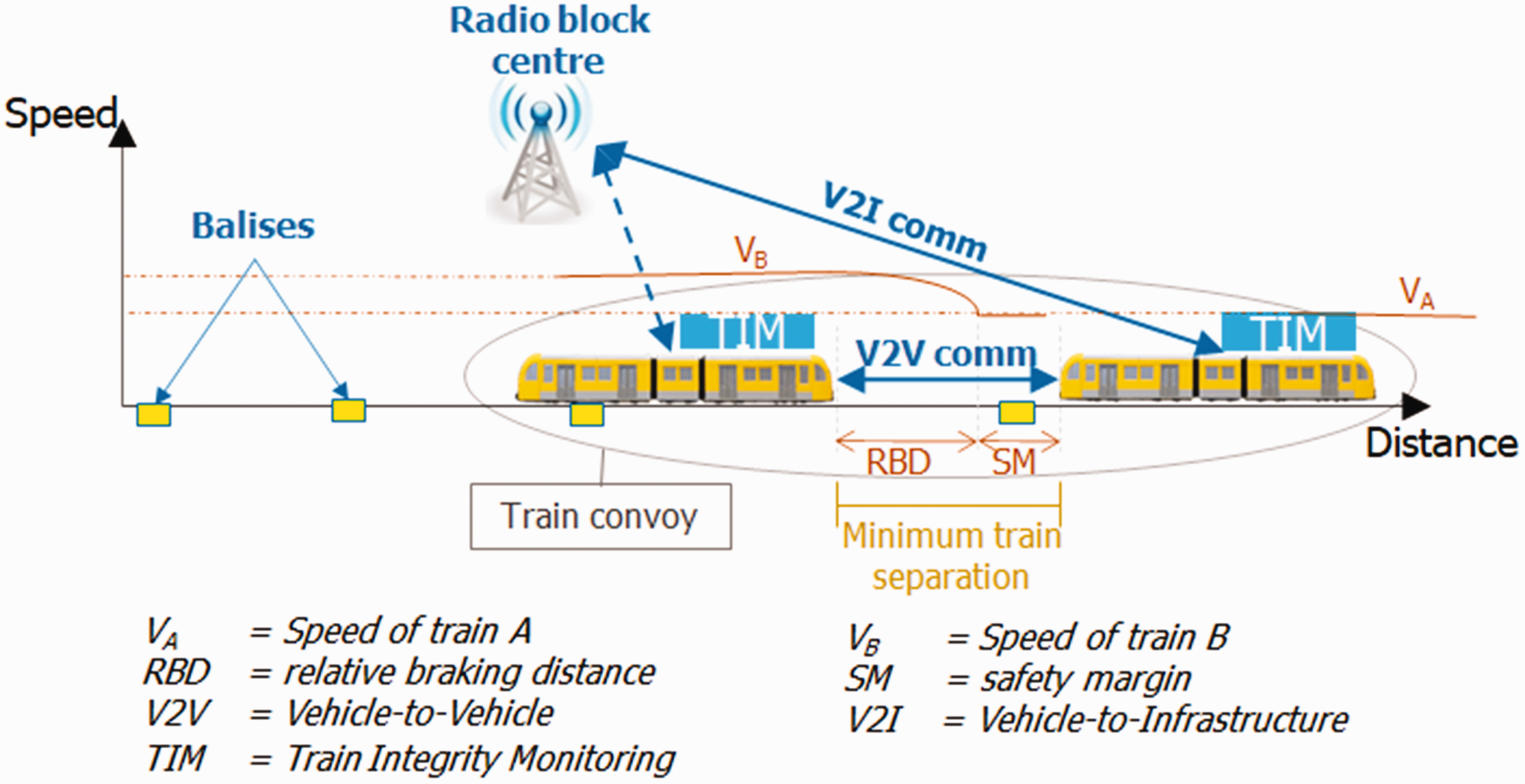
Schematic layout of virtual coupling (VC) train operations.
A few research attempts have analyzed train operations with a separation based on a relative braking distance. In 1998, Ning ( 8 ) referred to relative braking distance train separation between trains. Quaglietta ( 3 ) introduced preliminary operational concepts for VC by defining an extended blocking-time model for comparing capacity occupation of VC with ETCS L3 moving-block operation. In a further work, Quaglietta et al. ( 1 ) developed a train-following model to describe train operations under VC and assess capacity performance under different operational settings.
The train convoy (platoon) concept consists of understanding the behavior between a leading train and a following train. A leading train is controlled by ETCS L3 (2) whereas the following train receives speed and brake command data from the leader. If information is delivered from the leader to the follower, the latest assumes that the leader shall continue on the current trajectory based on high-integrity V2V communication, otherwise it falls back to ETCS L3 (7).
The concept of vehicle platooning has been proved already in the road sector for automated cars under cooperative adaptive cruise control ( 9 ); however, the much longer braking curves of trains and the presence of moving track elements for direction switching (i.e., points) raise non-negligible safety, operational, and technological challenges that need to be carefully addressed.
Safety, Technological, Operational, Infrastructure, and Business Challenges of VC
The purpose of VC is to improve railway capacity and, correspondingly, service frequencies as train headways can be significantly reduced ( 1 ). However, every newly introduced technology has limitations and potential risks, which require serious investigation by experts. Implementation of VC faces several safety, technological, operational, and infrastructure challenges.
Safety challenges relate to the following:
Diverging junctions at which the shorter separation between trains virtually coupled in a convoy might not provide enough time to move and lock the point, thereby raising derailment risks. The frequency of the V2V communication layer; if dynamic information about deceleration controls of the leader in a convoy is not timely broadcast and received by the train(s) behind, then potential train collisions might occur. The heterogeneity of braking characteristics of different trains moving in a convoy, which could raise collision risks if, for example, a train is following another one that has higher braking rates. In this case, it would be necessary to manage braking controls of the trains in a convoy so that all of them brake at the rate of the train with the worst braking performance. Such a challenge is mostly related to main lines in which different categories of trains run on the same network. Train separation consists of different components for VC, including relative braking distance and a safety margin (see Figure 1). The safety margin mainly depends on the speed and a friction factor, in addition to the V2V communication latency and the GPS location inaccuracy.
Technological challenges mainly refer to the following:
The need to integrate the V2V communication layer with the existing train-to-ground communication structure between trains and the RBC, and provide high-frequency, integer, and reliable exchange of dynamic information (i.e., position, speed, and acceleration). Interfaces of the V2V communication layer to be made with the interlocking and traffic management system. Under VC, trains might indeed have an individual autonomous control and no longer be managed by a centralized interlocking and traffic dispatching center. For instance, routes in interlocking areas could be directly set from on board the trains, or trains could control their speeds based on the information received by the V2V layer about the status of other neighboring trains. The upgrade of current ATO functions to react to the broadcast information from the V2V communication layer in addition to that sent by the RBC. From an operational perspective, relevant issues include the following: The necessity of changing current train planning rules by introducing a different set of norms that no longer depend on a single train but on the entire convoy. For example, in VC, the scheduled running time of a train will depend not just on the characteristics of its own rolling stock and route but also on the operational features of the other trains moving together in the same convoy. Potential changes in engineering and operational rules, as virtually coupled trains will have a massive impact on procedures for allocating and managing rolling stock and crew to train services; also, shunting procedures at yards, given that multiple units could also be coupled/decoupled virtually by means of the V2V layer. Potential modification to the protocols for traffic management and train to track-side communication, given two possibilities for the communication of MA. The first refers to a centralized process in which all trains communicate with the RBC. The second uses decentralized communication in which only the leader of a train convoy receives MA from the RBC, whereas the trains in the convoy are able to share information via V2V communication.
The railway infrastructure might also need adaptations to operate trains under VC. Station platforms would need to be extended to allow multiple trains platooning in a convoy to enter a station and stop at the same platform while queueing one behind each other. In addition, platforms might be segregated into multiple sections delimited by physical barriers (e.g., gates, turnstiles) and platform doors, to provide passengers with a platform layout ensuring comfort and safety of boarding/alighting procedures. Upgraded dynamic information systems are also required to give correct indications to passengers about the right train to board and avoid any confusion that might arise from multiple trains queueing at the same platform but heading to different destinations.
Addressing each of the mentioned challenges could lead to several changes in the railway business, specifically for policies, regulations, capital expenditures (CAPEX), and operational expenditures (OPEX).
Methodology
The methodology applied to identify market potentials and preliminary operational scenarios for VC is illustrated in Figure 2.
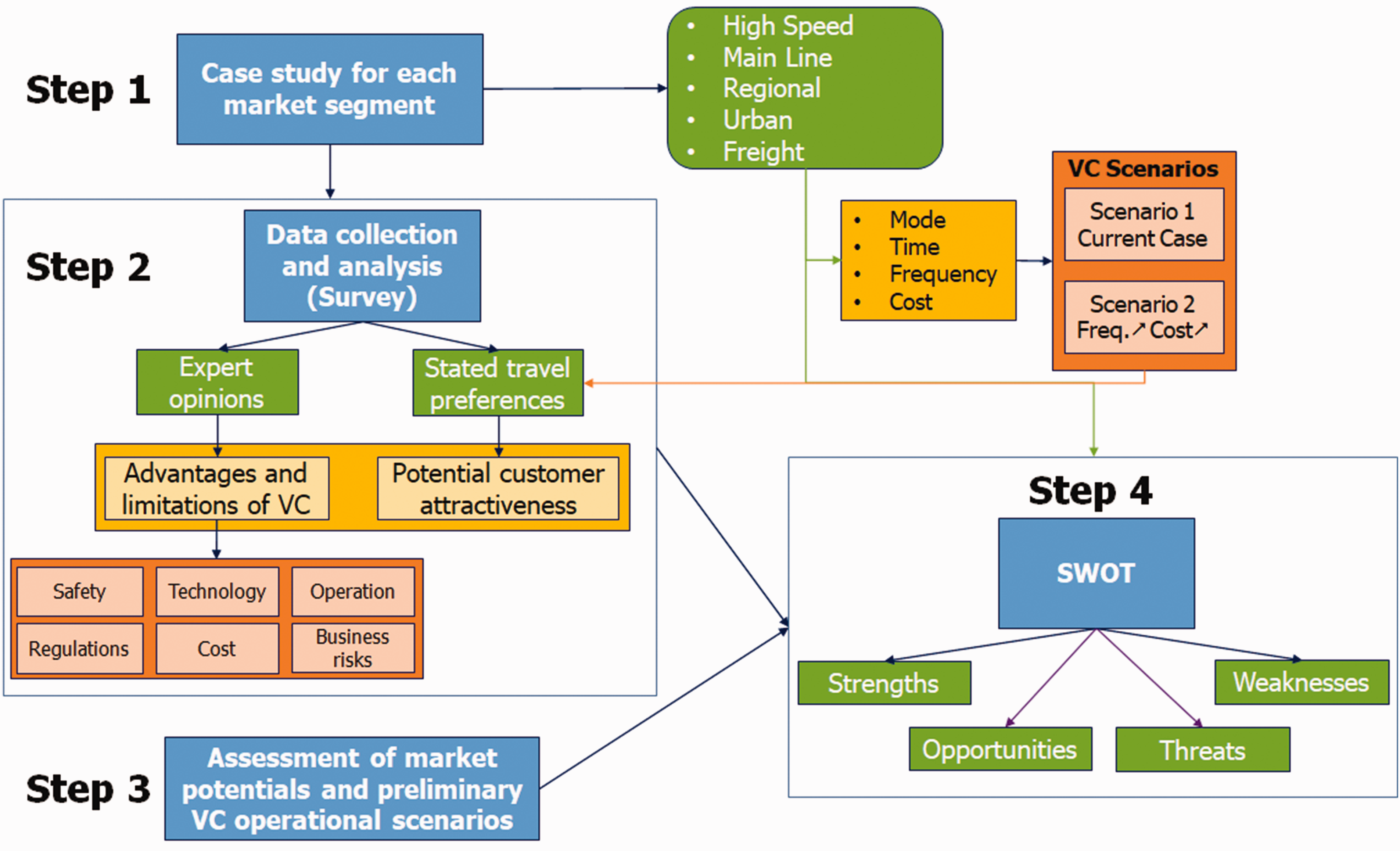
Methodology for investigating market potentials and preliminary operational scenarios of virtual coupling (VC).
As can be seen, four steps are considered as follows:
Defining case studies for each of the main market segments. Collecting and analyzing SME opinions and stated travel preferences using a survey that aims at understanding both the potential customer attractiveness of VC operations as well as the main advantages and limitations of VC with regard to safety, technology, operation, regulations, costs, and business risks. Identifying market potentials and preliminary VC operational scenarios. Using results obtained at Steps 2 and 3 to perform a SWOT analysis that determines needs, targets, potential competitors, and barriers to the deployment of VC.
The survey on the advantages, limitations and customer attractiveness of VC is structured in two main sections:
General section, with questions addressed to collect information about the general public and stated travel preferences. Technical section, with questions addressed to SMEs having expertise, advanced knowledge, or both, of the railways to understand potential benefits, challenges, and business impacts of VC operations.
The general section contains two parts:
Part 1. Basic information: questions related to age, gender, socio-professional category, and education background.
Travel choice on daily routine trips: questions aimed at collecting information on daily routine trips of the interviewees, such as origin/destination and reason(s) of the trip, travel time and distance, average monthly cost, mean(s) of transport, and reason(s) for that modal choice.
If respondents do not travel by train but there is an existing railway connection between their origin–destination (O-D) pair, an additional set of questions is formulated. Such questions aim to understand whether in a future scenario in which VC is implemented, interviewees would be willing to shift from their current travel mode to the railways for a slight increase in ticket cost (because of the higher train frequencies provided). If respondents do not use the railways on their routine O-D trips, they are asked whether they ever use trains, how frequently, and for which type(s) of activity. Part 2. Travel choice on market segment case studies: questions related to modal choice of the interviewees in a future scenario in which they have the possibility of choosing an improved railway service thanks to the deployment of VC. Key performance criteria for the different travel alternatives (i.e., travel time, frequency, and cost) and transport modes support interviewees in providing reliable answers about their travel choice.
The technical section relates to SMEs and includes three parts:
Part 1. Technological and operational scenarios for VC: from a technological perspective, railway experts’ opinions were collected about potential technologies (e.g., ATO, V2V) and modes of operations needed for running virtually coupled trains for each of the market segments. From an operational perspective, preferences were collected for more frequent but shorter trains with a limited amount of on-board facilities (e.g., toilets, bar/restaurant), which could be a potential cause of inconvenience for passengers. Questions also addressed whether having queued virtually coupled trains in the same convoy and at the same platform would confuse passengers in boarding the right train. Possible solutions were identified to allow platoons of trains to enter and stop in station areas. Part 2. Benefits and challenges of VC: questions to gather SME perspectives on potential advantages and limitations of VC for each of the market segments with regard to safety, operation, and technology. SMEs were also asked to provide potential solutions to overcome limitations/challenges that they pointed out. Part 3. Business impacts of VC: questions to understand and foresee possible impacts of VC on CAPEX and OPEX for each market segment.
Case Studies
To investigate the applicability of VC to each of the different railway market segments defined by the Shift2Rail MAAP, real European railway corridors have been considered as case studies. The use of real case studies supports interviewees in providing more concrete comments and stated travel preferences during the survey. The five case studies are as follows:
For the high-speed segment, the Italian corridor Rome–Bologna. For the main-line segment, the route between London Waterloo and Southampton on the South West Main Line in the United Kingdom. For the regional segment, the stretch between Leicester and Peterborough on the Birmingham–Peterborough line in the United Kingdom. For the urban segment, the route London Lancaster–London Liverpool Street on the London Central Line in the United Kingdom. For the freight segment, the Rotterdam–Hamburg corridor between the Netherlands and Germany.
A summary of these case studies is provided in Table 1. For each of them, the current scenario is presented with existing travel alternatives and transport modes (e.g., car, airplane, bus, bike, etc.) as well as a future scenario, assuming that VC is operational. The second scenario envisions a VC-enabled train service with a higher frequency and a corresponding higher ticket fee. Interviewees have the same set of modal alternatives as in the current scenario, keeping the same performances and costs, except for the railways that change in cost and frequency by virtue of the deployment of VC. For instance, if the case study for the high-speed market segment is considered, the current scenario includes four different travel mode alternatives for a routine trip from Rome to Bologna: the high-speed train, with a total travel time of 1 h and 55 min, departing every 15 min, with a ticket cost of €45; the bus, leaving every 4 h and taking more than 4 h, but with a decreased ticket price of €14; the car, which could be taken any time for the same cost as the train but with a travel time of 4 h and 20 min; and the airplane, leaving three times a day and taking 55 min at a cost of €66.
Summary of Virtual Coupling Case Studies for Each Market Segment
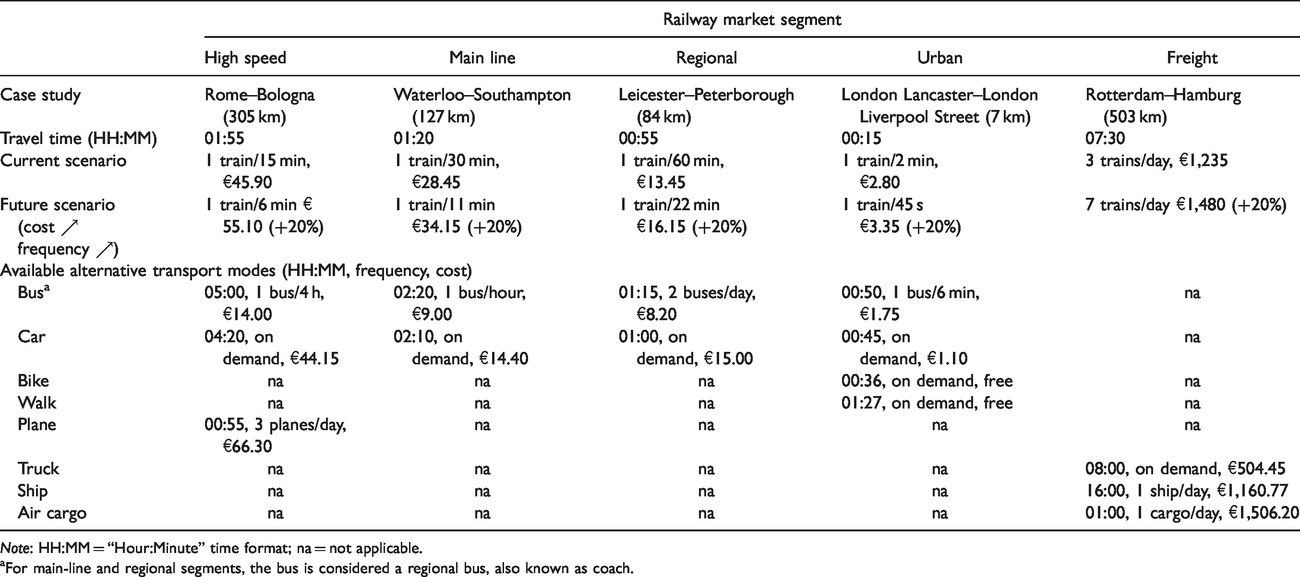
Note: HH:MM = “Hour:Minute” time format; na = not applicable.
aFor main-line and regional segments, the bus is considered a regional bus, also known as coach.
The future scenario proposes that the other modes of transport are available with the same performance (i.e., frequency and travel time) and cost, whereas a VC-enabled high-speed train service is available every 6 min (rather than every 15 min) for a 20% increase in the ticket fee (i.e., plus €9.20). The same rationale was followed for the case studies proposed for the other passenger-related market segments (see Table 1).
For the freight train line from Hamburg to Rotterdam (503 km), the current scenario refers to three available freight trains per day, each transporting 8 containers (i.e., 24 containers per day) at €1,235 per container, with an average travel time of 7 h and 30 min. The road alternative is the truck that, for the same amount and type of goods, would take just half an hour more with a significant price decrease (€505 per container). If goods are transported by means of a ship, the cost per container is around €1,160 for a travel time of 16 h and just one delivery per day. Air cargo can be delivered once a day with a cost of €1,506 per container. In the future scenario, the same travel alternatives are available, again assuming that all modes keep the same performances and costs except the railways. Thanks to VC, railway frequencies increase from 3 to 7 trains per day (i.e., 56 containers per day instead of 24) with shorter trains in length and an increased marginal delivery cost by 20% (€245).
Results
The survey on SME opinions and stated travel preferences was made during an interactive workshop held with representatives of the European railway industry, including IMs, railway undertakings (RUs), suppliers, transport authorities, consultants, and academics. The same survey was then distributed online to extend the sample to members of other socio-professional categories. The questionnaire was built electronically on a total of 66 questions based on a cascading sequence from previous answers. The survey was completed by 201 interviewees.
Because of the particular stratification of the interviewed sample, survey results might be affected by some bias. Part of the bias derives from different perspectives that certain industry representatives (e.g., IMs and RUs) have about the same aspect of the railway business. Another share of the bias might be because of the specific case studies proposed during the interview, which might make obtained results not universally applicable to all railway networks belonging to a given market segment.
Preliminary Analysis on VC Customer Attractiveness and Modal Share
A specific analysis is performed for a preliminary understanding of the modal split and the potential shift to railways that VC could bring in a future deployment scenario.
By aggregating stated travel preferences collected in the survey, the resulting modal share was computed for each of the case studies for the current and future transport scenarios. These are illustrated in Figures 3 and 4 for the passenger (i.e., high-speed, main line, regional, and urban) and freight market segments, respectively.
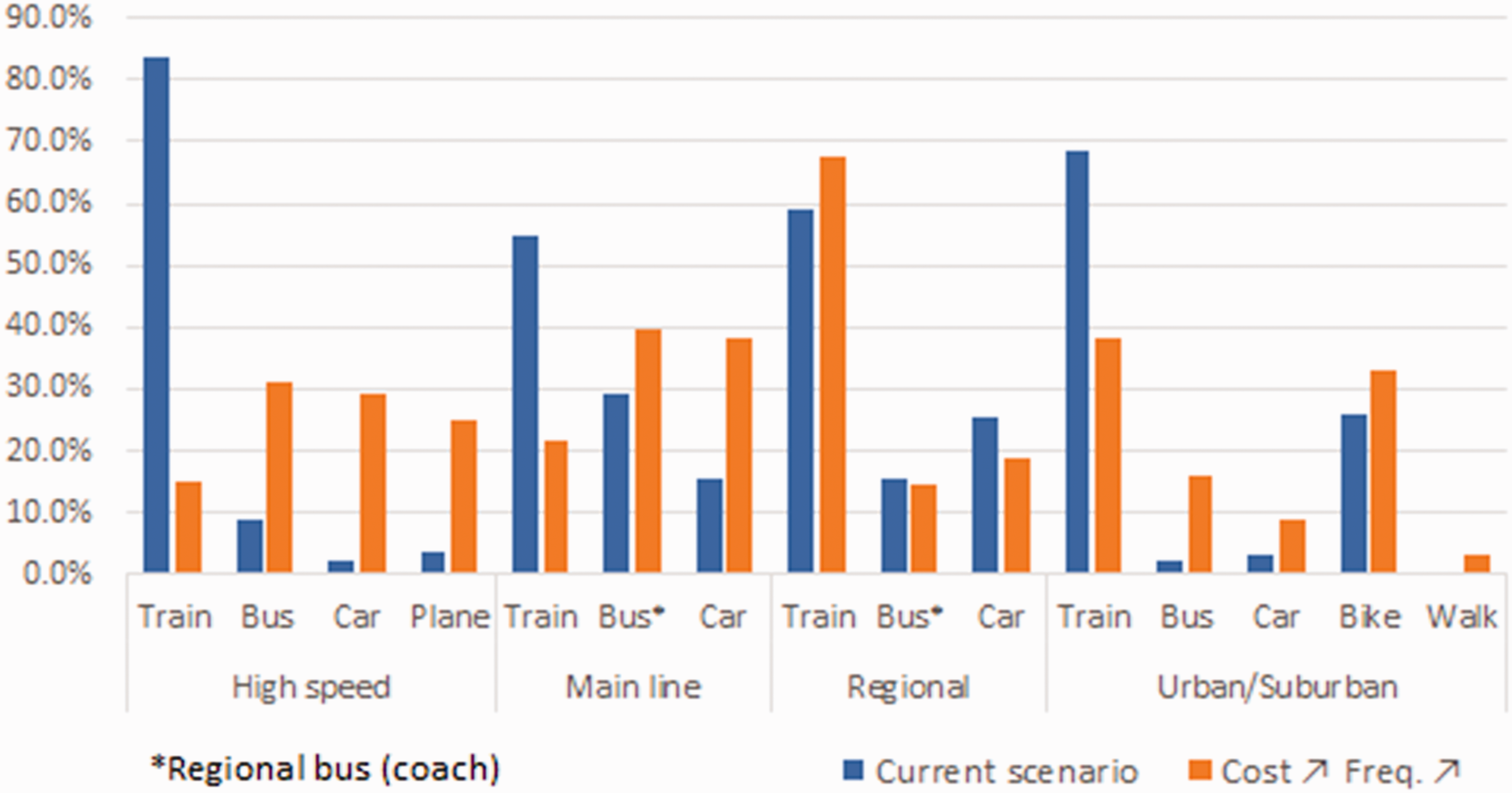
Modal share for each passenger-related case study.
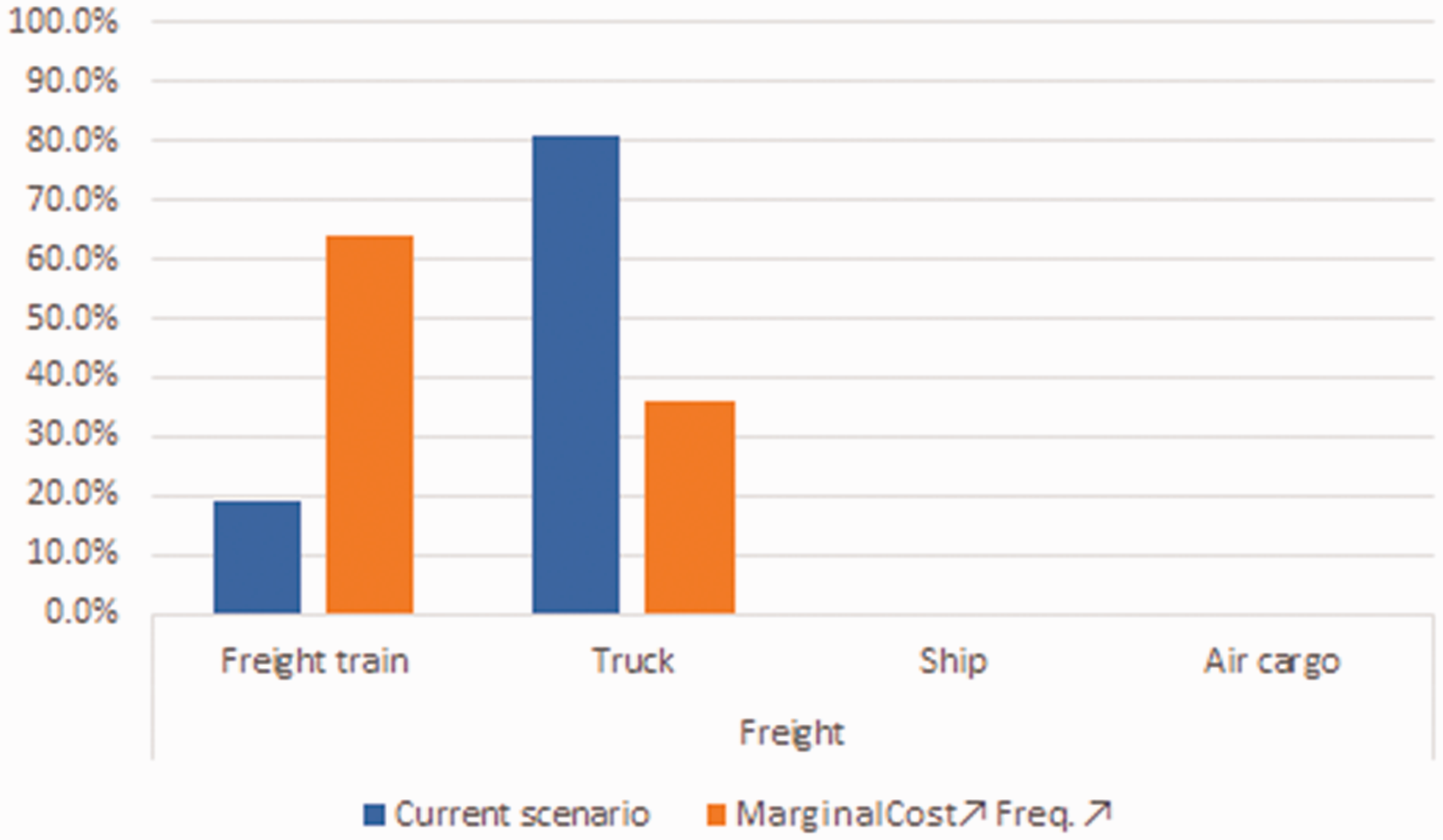
Modal share for the freight-related case study.
Modal choices for the current scenario are reported with blue bars, whereas orange bars represent modal preferences for the future scenario of a VC-enabled train service with increased frequency and ticket fares.
For the high-speed segment, most respondents (84%) prefer traveling by train in the current scenario for distances >300 km (see blue bars in Figure 3). The proposed increase of 20% in the ticket fare (to reduce service headways by 10 min on a 2-h journey) is not perceived as attractive to the interviewees. Having high-speed trains every 15 min seems already satisfactory for most of the respondents. The increase in the ticket cost proposed in the future scenario of a more frequent VC-enabled train service (every 6 min) massively shifts travel preferences toward the car, the bus, or the plane, as shown by the orange bars in the histogram. In general, such outcome shows that VC is not so attractive on high-speed corridors because it already has a service headway of 15 min over a given O-D like for the Rome–Bologna case. However, VC is not only about shortening headways but also about addressing headway shortening capabilities with respect to demand. Therefore, VC is worth applying to address a future massive demand in dense areas.
For the main-line segment, almost half of interviewees (55%) opt for the railways in the current transport scenario, whereas only a small share uses the car (see blue bars in Figure 3). A future scenario of a train service offering 20 min less waiting time for a ticket increase by 20% is not considered that attractive for many of the interviewees who, in that case, would prefer shifting to the other modes of transport, as clearly illustrated by the orange bars in the histogram. Many of them respond that, for this kind of journey, they would prefer arranging their travel schedules around a less frequent train service rather than paying that much more to use an improved main-line connection.
For the regional segment, most respondents choose to use the available railway connection (having a frequency of one train per hour) for the current transport scenario. The remaining would rely instead on the car, followed by bus users (see blue bars in Figure 3). It is interesting to see that for the future scenario of a train every 22 min for a ticket cost increase by 20%, a significant share of the sample would shift from cars to railways (see orange bars in Figure 3). This means that the proposed market scenario is attractive to passengers, as they are not currently satisfied with the delivered railway service and would be willing to pay more for a more frequent regional railway connection.
For the urban segment, the modal share for the current transport scenario is in net favor of the available metro line, because it already has a good frequency of a train every 2 min. By looking at the blue bars in Figure 3, the other used modes are the bike (26%), with a minority traveling by bus or car. In the future scenario of a metro train every 45 s for a ticket increase by 20%, many respondents would shift to other modes of transport, given that they are not willing to pay more for improving a service that is already satisfactory as it currently is. Paying even €0.55 more for a reduction by 75 s in the average waiting time, is not an attractive market scenario. Such a little saving in the waiting times is indeed not perceived positively by passengers, who can already flexibly arrange their trips around the current service headway of 2 min. These results show that service improvements brought by VC on urban lines might not attract customers with an increase in ticket fares. Deployment of VC on such lines could benefit railway stakeholders because of the increased capacity and possible mitigation of delay propagation.
For the freight segment, the modal split in the current transport scenario is an advantage of road trucks, as depicted by the blue bars in Figure 4. Such a result matches with the modal share observed in real life, given a higher flexibility and cheaper truck delivery. Instead, in the future scenario of more flexible and frequent VC-enabled freight railways, a significant modal shift from road trucks is observed even in the case of an increase by 20% in the marginal delivery cost. Such a shift is mainly dictated by customers perceiving the railways as a more reliable mean of transport. Furthermore, a higher flexibility and delivery capacity would be appealing, despite potential increases in the marginal cost, because these increases would be widely compensated by the larger number of units delivered. Such an outcome shows that the implementation of VC on freight railways would be very attractive to the freight transport market, with consequent benefits to the environment because of the reduction of trucks on the roads.
Preliminary VC Operational Scenarios
Preliminary operational scenarios for each market segment have been traced by combining the results from the survey with outcomes from brainstorming sessions and workshops held with railway experts across Europe. Most SMEs belong to academic institutions and railway signaling/manufacturing companies, followed by IMs, governmental railway agencies, and passenger/freight train operating companies.
Each scenario sketches operational characteristics to enable a safe VC train service that increases market attractiveness of each railway segment from both stakeholders’ and customers’ perspectives. The main operational characteristics relate to:
planned service headways for the O-D pair, train composition, on-board customer facilities, train platforming procedures, crowd management at platforms, train power supply, and main principles to control virtually coupled train convoys.
Operational ranges are defined for each of the mentioned characteristics and reported in Table 2. Validity and effectiveness of such operational scenarios will be further investigated in future research by means of accurate modeling (e.g., simulation) and multi-criteria analysis techniques.
Preliminary Operational Scenarios of Virtual Coupling to Each Market Segment
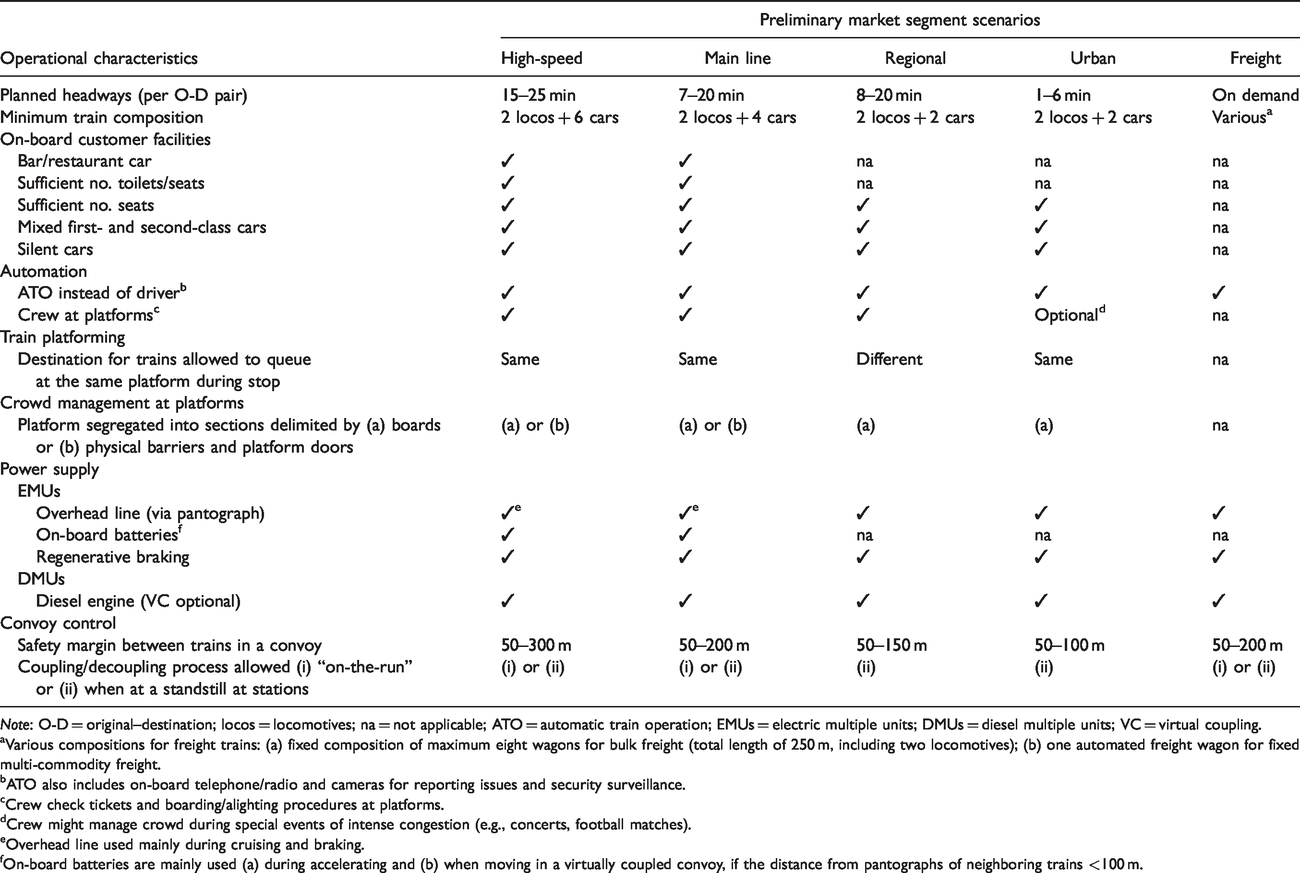
Note: O-D = original–destination; locos = locomotives; na = not applicable; ATO = automatic train operation; EMUs = electric multiple units; DMUs = diesel multiple units; VC = virtual coupling.
aVarious compositions for freight trains: (a) fixed composition of maximum eight wagons for bulk freight (total length of 250 m, including two locomotives); (b) one automated freight wagon for fixed multi-commodity freight.
bATO also includes on-board telephone/radio and cameras for reporting issues and security surveillance.
cCrew check tickets and boarding/alighting procedures at platforms.
dCrew might manage crowd during special events of intense congestion (e.g., concerts, football matches).
eOverhead line used mainly during cruising and braking.
fOn-board batteries are mainly used (a) during accelerating and (b) when moving in a virtually coupled convoy, if the distance from pantographs of neighboring trains <100 m.
For the high-speed, main-line, and regional segments, train compositions are defined to provide customers with enough seating availability, a standard number of toilets per seats, silent wagons, a bar/restaurant service, and the presence of both first- and second-class coaches. For the regional and urban segments, providing a bar/restaurant or a specific number of toilets per seats is no longer necessary because train services on those segments cover much shorter distances. Given the frequencies and lengths defined for high-speed, main-line, and urban trains, platforms will need to be dedicated to a certain group of destinations. This means that only trains heading to the same destination are allowed to stop behind each other at the same platform. Because of the lower frequencies of regional trains, platforms can instead allow for trains going to different destinations to queue at the same platform during a stop. To enable such operational changes, platforms of all passenger market segments will need to be extended and segregated into sections delimited by boards, physical barriers, or both. Also, platform doors will need to be introduced given full automation of operations. In addition, crew might only be present at platforms to check tickets or manage congestion during special events.
Although the use of diesel multiple units would not cause particular issues when trains run in a virtually coupled convoy, specific operational measures need to be introduced instead for electric multiple units. High-speed or fast trains on a main-line system moving at a short distance from each other within a convoy might generate mechanical oscillations in the catenary that could be dangerous for the overhead line system and for the rolling stock. Such trains can be powered via the pantograph only if the distance from the pantograph of the train ahead is >100 m. Also, the power capacity of the substations might become insufficient to feed many trains moving on the same electrical section. For this reason, on-board batteries need to be introduced with regenerative braking to recharge the batteries, feed the substation back during braking, or both.
The distance between stations or yards on high-speed, main-line, and freight networks allows trains operating under VC to couple/decouple when at a standstill in stations or even “on-the-run.” A coupling/decoupling on-the-run is possible for those segments in which distances between interlocking areas are long enough to allow a train to catch up with a train ahead, or to outdistance it by an absolute braking distance. Indeed, on-the-run decoupling at diverging junctions is (for obvious safety reasons) only possible by imposing an absolute braking distance between trains for switches equipped with current technologies. A shorter train separation (i.e., relative braking distance + safety margin) can only be achieved if advanced technologies for fast switching are installed, such as Railtaxi ( 10 ) or Repoint ( 11 ). In the case of regional and urban railways, the shorter interstation distances only consent trains to be virtually coupled/decoupled while at a standstill at stations.
For the freight market segment, a completely new operational setup is proposed and illustrated in Figure 5. Specifically, bulk freight trains going from one source to one single destination will have a fixed composition of 250 m, which is shorter than today’s freight trains (Figure 5a), to allow for higher service frequency and flexibility. A fixed composition of freight trains will also contribute to solving the current limitation of train integrity monitoring for variable train compositions. Multi-commodity freight with different types of goods going to different destinations could be transported by means of single fully automated freight wagons (25–30 m long) that can virtually couple to a main convoy at merging junctions (to increase capacity at bottlenecks) and decouple at diverging junctions to reach their specific destinations. Figure 5b shows an example of how self-propelled autonomous freight wagons going/coming to/from different locations (D1, D2, D3) could virtually couple (represented by radio waves) or decouple (represented by absent radio waves) at merging/diverging junctions.
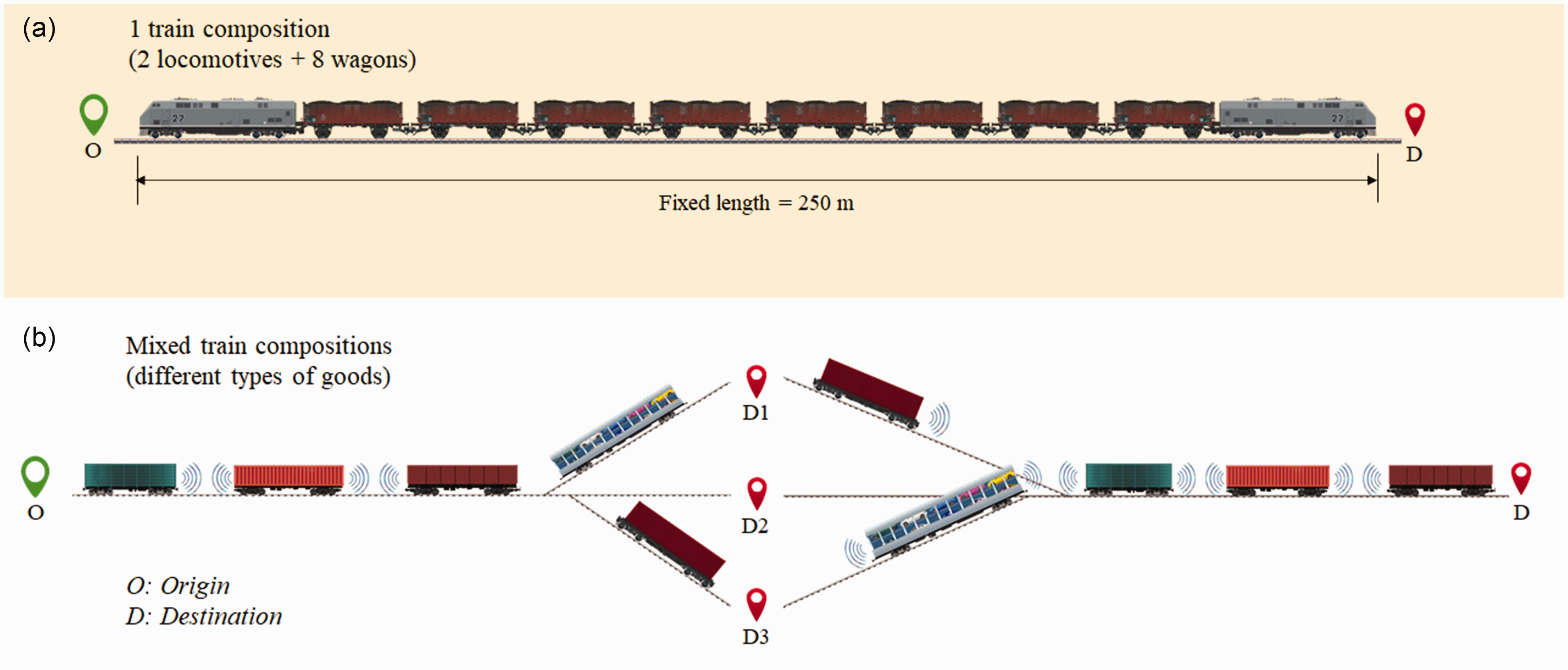
Operational scenario example for (a) bulk and (b) multi-commodity freight trains.
SWOT Analysis
The feasibility of VC depends on the possibility of overcoming the challenges of safety, technology, operation, infrastructure, and business. To this end, a SWOT analysis has been developed to assess strengths and weaknesses of the VC concept and corresponding opportunities and threats potentially introduced to the railway industry.
VC has strengths and weaknesses that are common to all the considered market segments and that lead to the same kind of opportunities and threats. SWOT analysis results are shown in Table 3.
Strengths, Weaknesses, Opportunities and Threats Analysis of Virtual Coupling for All Market Segments
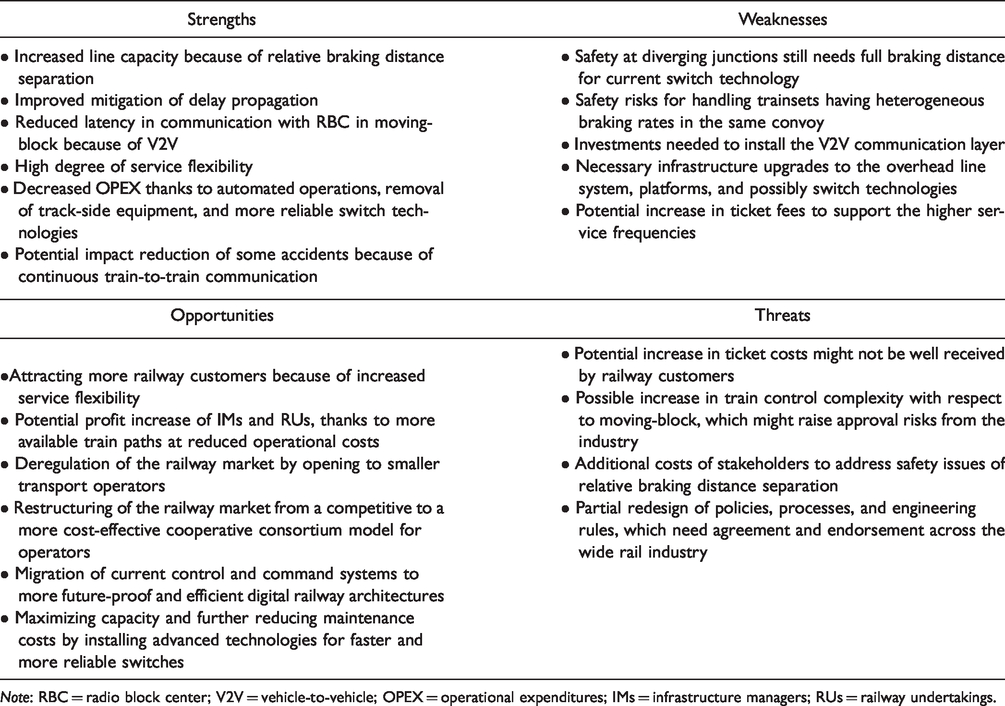
Note: RBC = radio block center; V2V = vehicle-to-vehicle; OPEX = operational expenditures; IMs = infrastructure managers; RUs = railway undertakings.
Main outcomes from the SWOT analysis highlight that VC provides clear advantages over plain moving-block for all the market segments. Strengths include an increase in network capacity and reliability, a potential reduction of operation costs (i.e., OPEX) because of full automation of train operations, the reduction of communication latency, and the mitigation of some types of accidents thanks to V2V communication. On the other hand, several weaknesses relate to an increase in CAPEX because additional devices are required for the V2V train communication, the updating of rolling stock on-board equipment and the overhead line system (i.e., redesigning the electrical power supply). Other issues concern safety to manage trains with heterogeneous braking performance in the same convoy as well as to control convoys at diverging junctions. VC has the potential for opening several market opportunities. Higher capacity means more train paths that could be sold by IMs and more train services that can be delivered by RUs. At the same time, reduced operational costs are possible thanks to full automation of train operations that strongly reduce costs for personnel salary. This leads to a profit increase for both IMs and RUs and a possible deregulation of the current railway market. The deregulation comes as a direct consequence of an increase in available train paths and a decrease in the operating costs, which makes the railway market affordable to smaller transport operators as well, and, therefore, more competitive. Also, the train-to-train communication will need a more intense cooperation among several RUs as trains running by different undertakings will need to exchange dynamic information when operating on shared routes. This will open possible scenarios for cooperative consortia of railway operators instead of the current competitive business model, which can lead to higher benefit/cost ratios, as reported in ( 12 ).
VC also offers the railway industry a chance to accelerate the migration of current control and command systems toward more future-proof digital railway architectures, as well as an upgrade of current switch technologies to faster and more reliable ones. On the other hand, VC might introduce threats, such as a potential increase in ticket fees (needed for delivering a more frequent service), that might not be received well by customers. Moreover, the V2V communication layer could lead to a higher train control complexity than ETCS L3, with risks of approval from the railway industry. Other threats regard the need to partially redesign policies, regulations, and engineering rules currently adopted in the railways, as well as the necessity of facing additional investment costs to address the safety issues introduced by relative braking distance operations.
Additional SWOT captured for each specific market segment is described in Table 4.
Additional Strengths, Weaknesses, Opportunities and Threats of Virtual Coupling (VC) for Each Market Segment
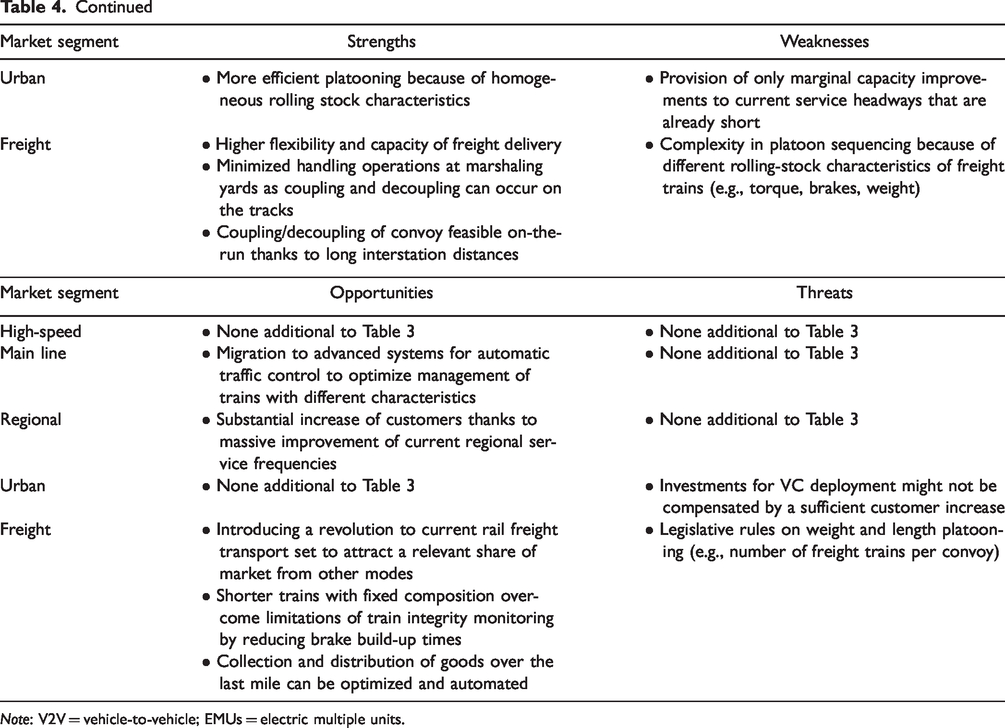
Note: V2V = vehicle-to-vehicle; EMUs = electric multiple units.
Conclusions
A description of the innovative concept of VC has been provided in this paper by detailing key technological and operational characteristics. The core of this paper provides results from an extensive survey focused on representatives of the European railway industry to collect SME opinions about market potentials and challenges for VC. Preliminary operational scenarios and a SWOT analysis have been produced for different railway market segments to assess feasibility of VC and investigate the applicability of such a concept.
Results of the survey highlight that VC can make the railway transport mode more attractive to customers if the increase in ticket costs (for the higher service frequencies) is restrained. On the other hand, these marginal increases in utilization costs are compensated or even nullified by full railway automation that removes costs for on-board personnel and for coupling/decoupling trains at stations or yards.
For dedicated high-speed lines with already high service frequencies (around one train every 15 min), the use of VC would not have a significant impact on the modal shift to railways. However, VC can be extremely beneficial to high-speed lines currently operating with lower frequencies. A negligible attractiveness to customers has been observed for urban lines in which passengers seem to be already satisfied with the current train services having headways of 1–2 min. VC operations are instead very appealing to customers of regional and freight market segments, in which a manifest willing to pay more for using a more frequent train service has been recorded. In other words, if VC is proposed to improve the customers’ satisfaction, then the ticket price increase would not be perceived as negative, as VC would not just merely increase capacity but improve the entire customer experience by delivering a more flexible service more in line with passengers’ travel needs.
Preliminary operational scenarios have been defined for each market segment by combining survey outcomes with brainstorming sessions and workshops held with representatives of different sectors of the European railway industry. Ranges of “market effective” service headways have been identified for each segment, with main operational characteristics such as train compositions, on-board customer facilities, train platforming and crowd management, power supply and control of virtually coupled convoys.
The SWOT analysis provides clear advantages of VC for reduced OPEX and communication latency. Weaknesses result mainly from increased CAPEX and safety at diverging junctions, especially for trains with heterogeneous compositions. Some threats are introduced by the VC implementation because of potential increased ticket fees, higher complexity from train-to-train communication, safety issues of relative braking distance operations as well as the market deregulation. On the other hand, VC opens opportunities to both IMs and RUs. Benefits include reduced operation costs and increased profits, a deregulated and more competitive railway market, as well as potential for cooperative consortia of railway operators leading to higher benefit/cost ratios. VC can result in a possible migration toward more digital railway architectures with upgraded technologies, potentially increasing the number of railway customers. VC can also facilitate the implementation of on-demand train services, which could possibly revolutionize the entire idea of timetabling. An economic analysis for capacity increase will be performed in future research work by means of a multi-criteria analysis.
Footnotes
Author Contributions
The authors confirm contribution to the paper as follows: study conception and design: J. Aoun, E. Quaglietta, R. M. P. Goverde; data collection: J. Aoun; analysis and interpretation of results: J. Aoun, E. Quaglietta; draft manuscript preparation: J. Aoun, E. Quaglietta, R. M. P. Goverde. All authors reviewed the results and approved the final version of the manuscript.
Declaration of Conflicting Interests
The author(s) declared no potential conflicts of interest with respect to the research, authorship, and/or publication of this article.
Funding
The author(s) disclosed receipt of the following financial support for the research, authorship, and/or publication of this article: The research delivered in this paper is funded by the MOVINGRAIL project granted by the Shift2Rail JU of the European Commission under Grant Agreement GA 826347 (4,13).