




Abstract
Oxidative aging takes place in bituminous materials during the construction and service life of asphalt pavements and has a significant effect on their performance. In this study, porous asphalt cores were obtained from field test sections each year from 2014 to 2017. The evolution of the properties of the field cores and the recovered bitumen with time was investigated. Cyclic indirect tensile tests were performed to determine changes in the mechanical behavior of porous asphalt due to aging. Additionally, bitumen was extracted and recovered from 13 mm slices along the depth of the cores. The rheological and chemical properties of the recovered bitumen, as well as that of original bitumen aged in standard short- and long-term aging protocols, were investigated by means of dynamic shear rheometer and Fourier transform infrared spectrometer. The results show that the degree of aging is spatially dependent, resulting in a stiffness gradient within the asphalt layer. Moreover, the results demonstrate a weak relation between field aging and the standard laboratory aging protocols.
Bitumen aging is one of the principal factors in the deterioration of asphalt pavements. Bitumen aging causes asphalt pavements to lose their ability to relax stress during the cooling process, thus the risk of cracking increases ( 1 ). Aging in the field is complicated due to the great number of environmental variables that affect it, such as temperature, ultraviolet radiation, moisture, wind, and atmospheric pressure ( 2 , 3 ). Aging in the field is also difficult to investigate because such studies are highly time-consuming and costly ( 4 , 5 ).
Over recent decades, researchers have attempted to simulate field aging of bituminous materials in the laboratory. The most important techniques for accelerating the aging of the materials are: increasing temperature, decreasing thickness of materials film, and increasing oxygen concentration by increasing air flow and pressure ( 6 ). Existing aging tests combine these techniques to simulate bitumen aging during mixing and construction (short-term aging) and during service years of the pavement (long-term aging).
The commonly used short-term aging tests include thin film oven test (TFOT) and rolling thin film oven test (RTFOT). In TFOT, a bitumen film 3.2 mm thick is aged in a convection oven at 163°C for five hours ( 7 ). As the bitumen is not agitated or rotated during testing, however, aging may be limited to the exposed surface of the bitumen. This concern led to the development of the modified TFOT, which tests bitumen in microfilm thickness, and of RTFOT ( 8 , 9 ), which rotates bitumen in thinner film ( 10 ). The RTFOT method ensures that bitumen flows continuously and all the bitumen is exposed to air. Several modifications have also been made to RTFOT for specific purposes; for instance, modified RTFOT is used for bitumen with high viscosity ( 11 ), rolling microfilm oven test and nitrogen RTFOT are used for bitumen with high volatility ( 12 , 13 ), and rotating flask test is used for bitumen with polymer modified ( 14 ).
The long-term aging of bitumen in service occurs slowly and relates to numbers of environmental factors. The high temperatures used in TFOT and RTFOT make them unsuitable for simulating long-term aging ( 15 ). The commonly used tests to study the long-term aging behavior of bituminous materials are rotating cylinder aging test (RCAT) and pressure aging vessel (PAV), which were developed in Europe and the U.S.A., respectively, in the 1990s. RCAT is similar in concept to RTFOT, but performs at temperatures between 70 and 110°C ( 16 , 17 ). PAV tests bitumen after short-term aging followed by aging at temperatures between 90 and 110°C under pressurized conditions. To consider other aging factors applying to bitumen pavement during service, ultraviolet light and rain have also been involved in some specific long-term aging tests ( 18 , 19 ).
The current practice internationally is to use RTFOT and PAV procedures to simulate bitumen aging during mixing, construction, and service for periods of between five and ten years ( 20 , 21 ). In spite of the considerable advances made in understanding the evolution of bitumen aging and in simulating field aging in laboratory conditions for material specification purposes, there are a number of critical issues that are still not well understood ( 22 – 24 ). Among them is the issue of the pavement depth at which the aging effects become less significant. Aging is strongly dependent on the mixture properties, such as the void content and bitumen film thickness ( 25 , 26 ). It was found that accelerated aging occurs in mixtures with higher void content and less bitumen film thickness ( 25 , 26 ).
Objectives
This study focuses on determining the changes in the chemical composition and rheology of laboratory-aged and recovered field-aged bitumen. The objective of the work is to evaluate the relationship between the results of field aging and standard laboratory aging protocols.
Materials and Aging Method
Field cores were taken from test sections one month after laying and then annually. The samples were cut into three slices with a thickness of 13 mm. The slice samples were then used to extract and recover the bitumen to determine the aging profile across the depth of the asphalt layer. In addition, the original bitumen that was used for the construction of the test sections was aged in the laboratory using RTFOT and PAV protocols to simulate the short- and long-term aging (STA and LTA) of bitumen. The laboratory-aged and recovered field-aged bitumen samples were tested by means of Fourier transform infrared (FTIR) spectrometer and dynamic shear rheometer (DSR).
Materials
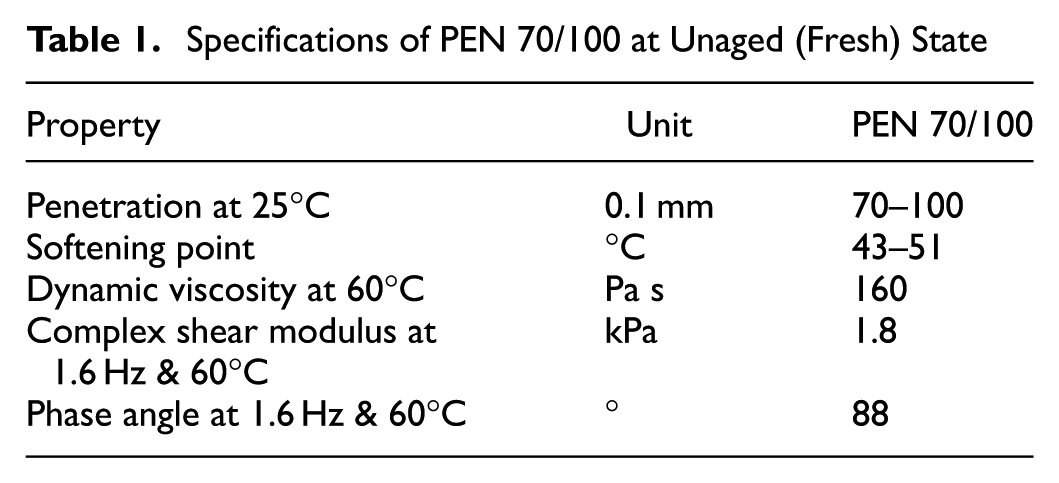
The PEN 70/100 bitumen, which is one of the types most commonly used in the Netherlands, was used in this study. Table 1 shows the main physical and rheological properties of the examined bitumen. The same bitumen type was used for the construction of the test sections and laboratory aging.
Specifications of PEN 70/100 at Unaged (Fresh) State
Laboratory Aging
The samples were tested at unaged (fresh) condition and after they were subjected to laboratory aging. The samples were aged by means of RTFOT and PAV. Short-term aging was simulated by using the RTFOT at 163°C for 75 minutes, in accordance with the EN 12607-1 test standard. This aging step is considered to represent the aging of bitumen during plant mixing, production, transportation, and construction. Long-term aging was simulated by using PAV at 100°C and 2.1 MPa (20 atm) for 20 hours, according to the EN 14769 aging standard. This protocol is thought to mimic age hardening of bitumen during the first five to ten years of pavement service life.
Field Aging
The pavement sections were constructed in October 2014 and since then they have been continuously exposed to the environment. The Netherlands has a temperate maritime climate influenced by the North Sea and Atlantic Ocean, with cool summers and moderate winters. Average daytime temperature varies from 2 to 7°C in the winter and from 15 to 20°C in the summer. Rainfall is distributed throughout the year with a drier period from April to September.
The layers of the full-depth pavement structure are shown in Figure 1. The top layer is porous asphalt (PA), which is the main asphalt type used in the highways network in the Netherlands. The PA layer thickness was 50 mm and the layer was paved in one lift.
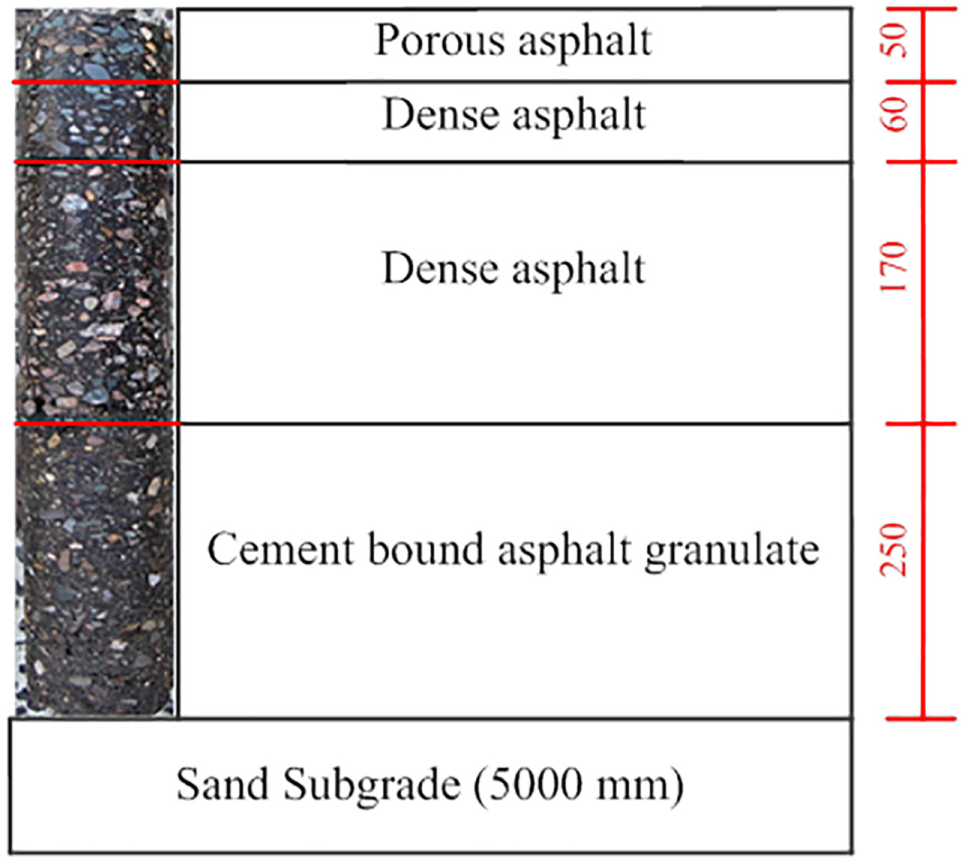
Structure of field test section (length unit: mm).
The PA mixture was designed using Fjordstone aggregates with a nominal maximum size of 16 mm and a binder content of 5%. The target air void content was 16%. Fjordstone is a type of crushed stone from Norway with density of 2740 kg/m3. The aggregate gradation of the mixture is given in Figure 2. Moreover, the Wigro 60 K filler (with density 2780 kg/m3) was used for mixtures. Wigro 60 K is a type of filler with hydroxide which contains hydrated lime.
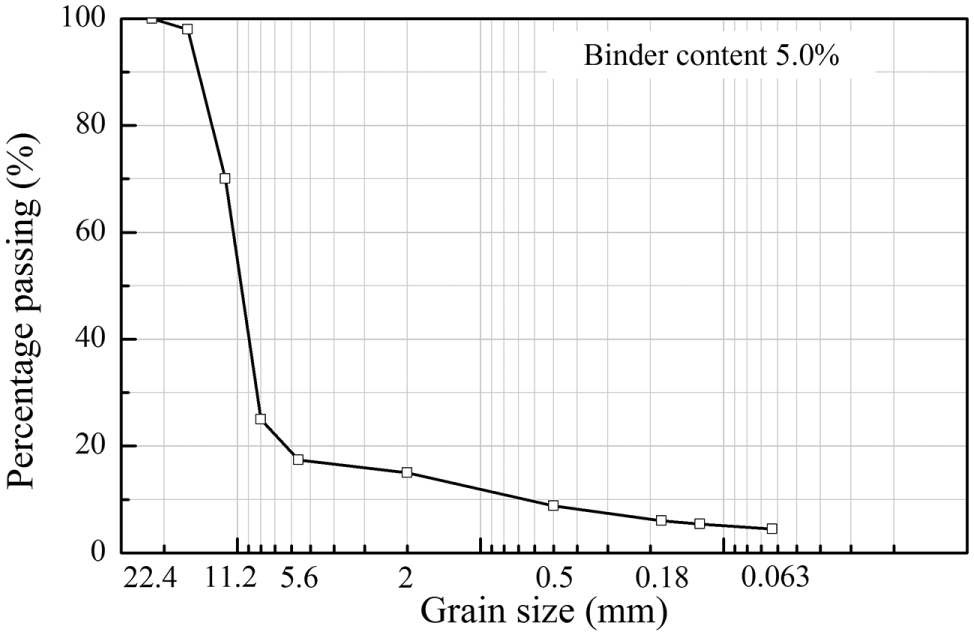
Aggregate gradation of PA mixture.
Four core samples with a diameter of 100 mm were taken from the PA layer each year from 2014 to 2017. Each time, three cores were tested for stiffness by means of a cyclic indirect tensile test (IT-CY). To investigate the effect of depth on aging, the fourth core was cut into three 13-mm slices, from top to bottom, and the remainder of the core was discarded. The slices were marked T (top), M (middle), and B (bottom), respectively, as shown in Figure 3.
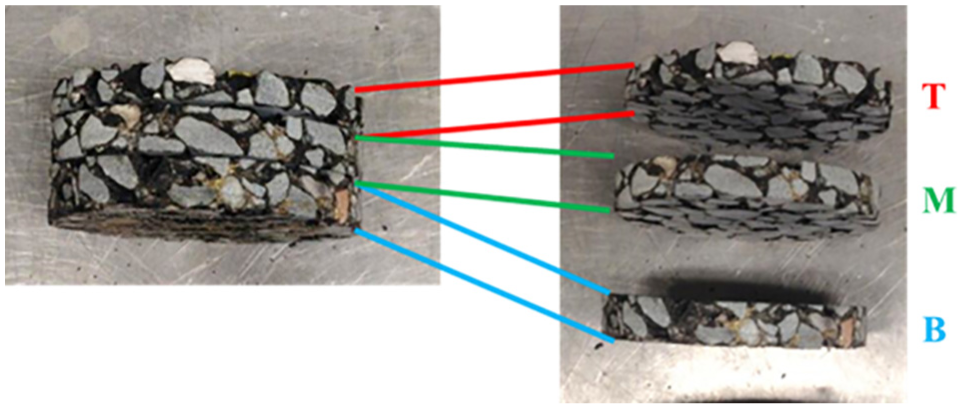
Slices of PA layer core.
Bitumen was extracted from the slices according to the EN 12697-1 European standard using dichloromethane as the solvent. After recovery of the bitumen, DSR and FTIR tests were performed to check if the solvent was fully evaporated. If the solvent was still present in the sample, this would appear in the FTIR results as a special peak in the spectrum, Figure 4a. Moreover, the DSR results showed that the materials were much softer than the actual fresh materials, Figure 4b.
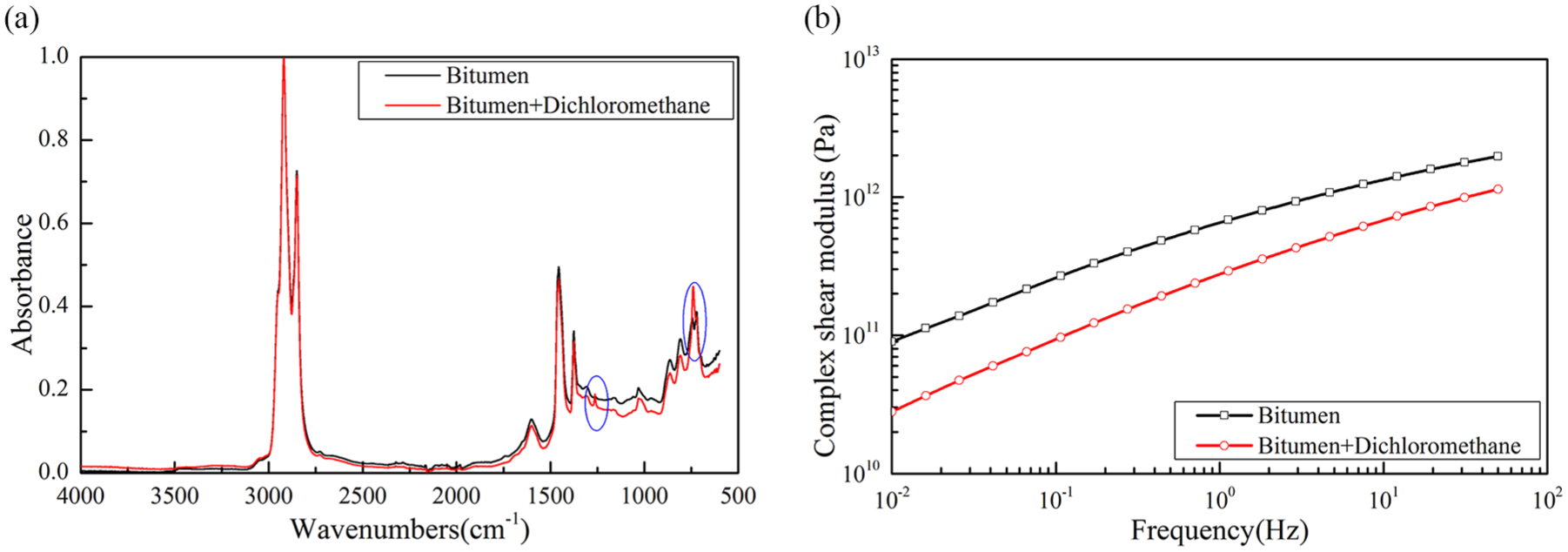
Results of pure bitumen versus bitumen with residual dichloromethane: (a) FTIR results and (b) DSR results.
Experimental Method
Cyclic Indirect Tensile Test
The dynamic modulus of each core was determined by means of IT-CY according to NEN-EN 12697-26. The tests were performed using the universal testing machine (UTM) at five frequencies: 0.5, 1, 2, 5, and 10 Hz and testing temperature of 20°C. The conditioning time before testing was 30 minutes. Three replicates were tested.
Dynamic Shear Rheometer
Bitumen rheology was characterized by means of DSR tests according to NEN-EN 14770. An Anton Paar MCR 502 device was used to analyze the materials’ response over a wide range of temperatures and frequencies. The bitumen samples were tested using a parallel-plates configuration. Initially, the linear viscoelastic (LVE) strain range of bitumen samples was determined using amplitude sweep tests. The frequency sweep tests were performed at five different temperatures (0, 10, 20, 30 and 40°C). During the tests the frequency varied in a logarithmic manner from 50 Hz to 0.01 Hz. At least three repetition tests were done for each aging condition.
Fourier Transform Infrared Spectrometer
The chemical composition of bitumen was evaluated by means of FTIR. A Perkin Elmer Spectrum 100 FTIR spectrometer was used in the attenuated total reflectance mode to identify the chemical functional groups of the bitumen. The sample was scanned 20 times, with a fixed instrument resolution of 4 cm−1. The wavenumbers range was set to vary from 600 to 4000 cm−1. At least three repetition tests were done for each aging condition.
Results and Discussion
Cyclic Indirect Tensile Test
The dynamic modulus of the PA mixtures at 20°C is presented in Figure 5. It can be observed that the dynamic modulus of PA mixtures significantly increases with time, suggesting embrittlement of the PA mixture with time. The results show that the dynamic modulus of the PA_2017 samples is similar to the modulus values obtained in 2016. As time progresses, the rate of aging decreases ( 27 ). It may be therefore that the stiffness of the PA mixture is increasing at a slower rate after three years in the field and tends to reach a plateau value. This hypothesis needs to be verified in the future by collecting data in subsequent years.
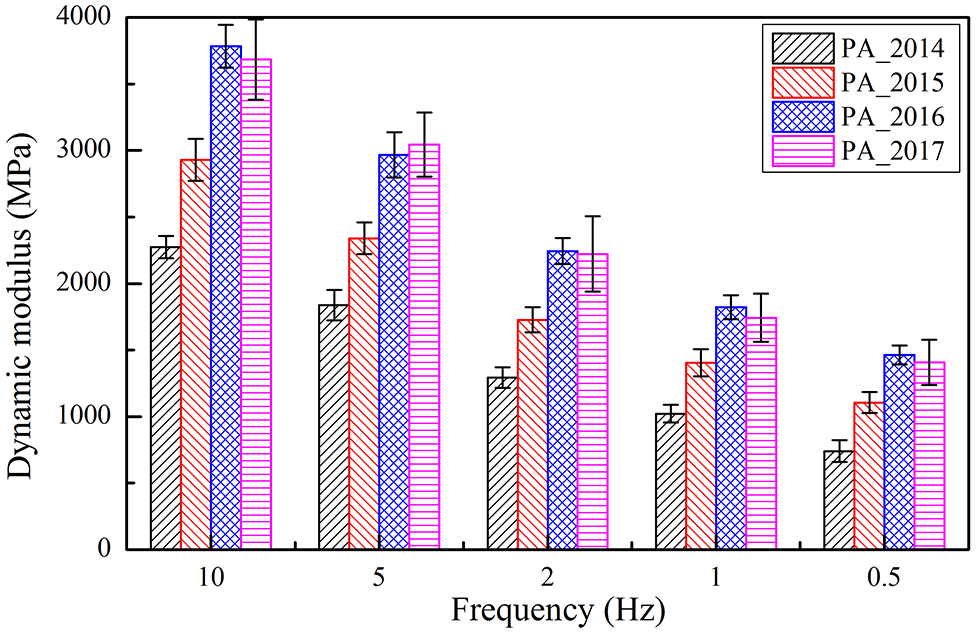
Dynamic modulus of PA mixtures at 20°C.
Dynamic Shear Rheometer
The complex shear modulus and phase angle values were determined during DSR tests. To obtain the visco-elastic behavior in a wider range of frequencies, master curves of complex shear modulus and phase angle were generated at reference temperature 20°C on the basis of the time–temperature superposition (TTS) principle. Figure 6 shows the master curves of PEN 70/100 bitumen in the unaged (fresh) state and after the application of the STA and LTA protocols.
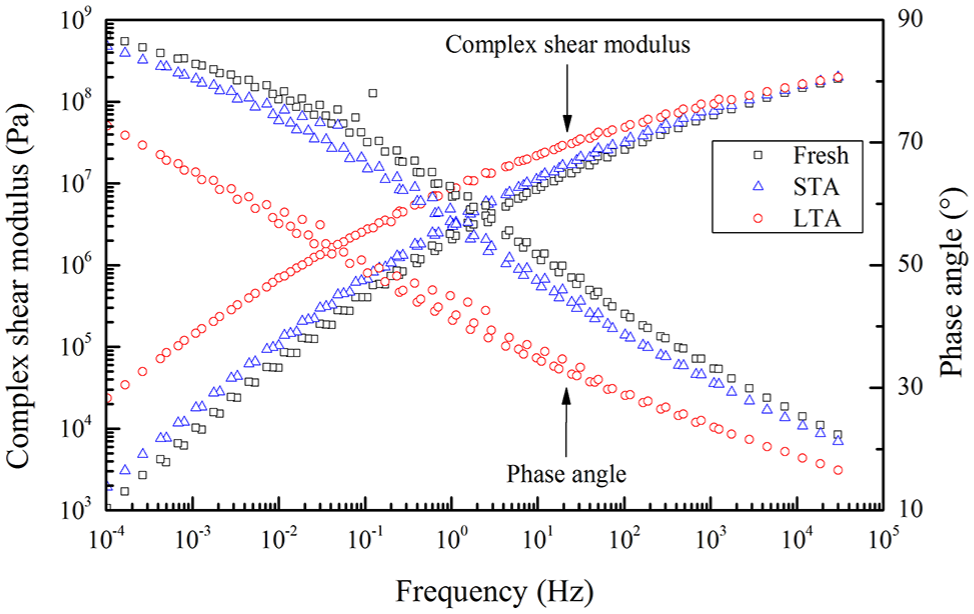
Master curves of complex shear modulus and phase angle of bitumen at fresh, STA, and LTA state.
In Figure 6, the observed differences on the master curves of complex shear modulus are more pronounced at low frequencies where bitumen is in the rubbery flow region, whereas minor changes were observed at high frequencies where bitumen behaves more as a solid. Specifically, the variation of complex modulus between fresh and STA/LTA materials was about 0.1 and 1.1 orders of magnitude at low frequencies, respectively. At the highest frequency, all samples tend to reach an asymptote at a value of 108 Pa. The STA sample results in a slight difference with respect to the rheological response of fresh bitumen. In contrast the modulus of the LTA sample shows a significant difference from that of fresh bitumen. This denotes that bitumen aging mainly occurs after placement and during the lifetime of a pavement. On the other hand, the phase angle decreases substantially for the whole frequency range, indicating a reduction of its viscous flow characteristics.
Aging Across the Pavement Depth
The master curves of the complex shear modulus and phase angle of the recovered bitumen from the PA_2016 cores are illustrated in Figure 7. It can be observed that the complex shear modulus increases and the phase angle decreases from bottom to top. As expected, the results indicate that aging is more severe for the top part of the pavement ( 28 , 29 ), as it is in contact with the atmospheric air and the pavement temperature is higher.
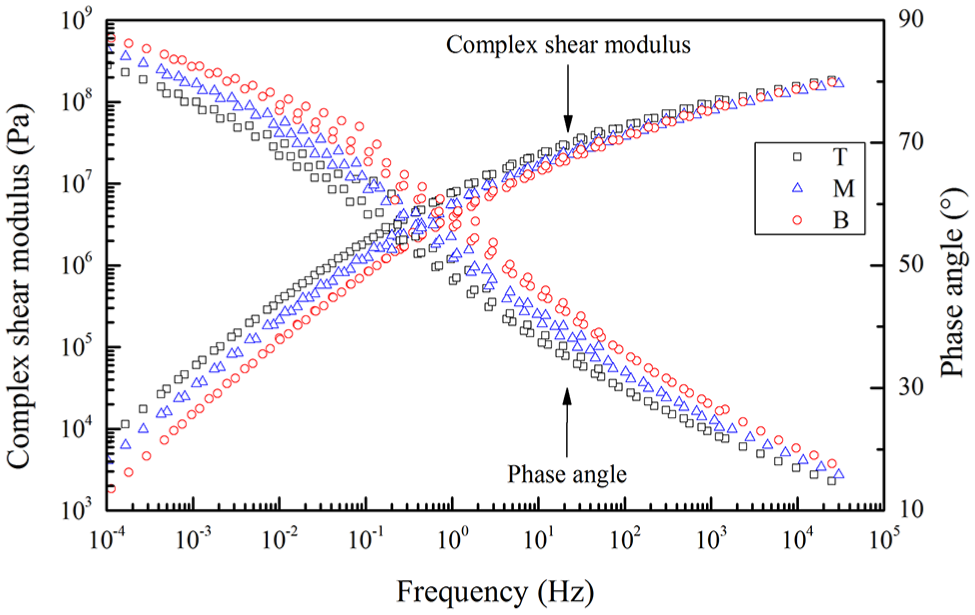
Master curves of complex shear modulus and phase angle of extracted bitumen from PA_2016.
Figure 8 shows the evolution of the rheological properties with time for each slice. It can be seen that the complex shear modulus and the phase angle for the top parts of the pavement change significantly with time. On the other hand, the changes are less obvious for the middle and bottom parts of the pavement; the values indeed change with time but at a slower rate. This finding supports the hypothesis of a stiffness gradient across the depth of the pavement. A stiffness gradient leads to higher tensile stresses at the surface and, as noted in the NCHRP 1-37A Design Guide ( 30 ), hardening near the surface due to aging can play a major role in causing top-down cracking.
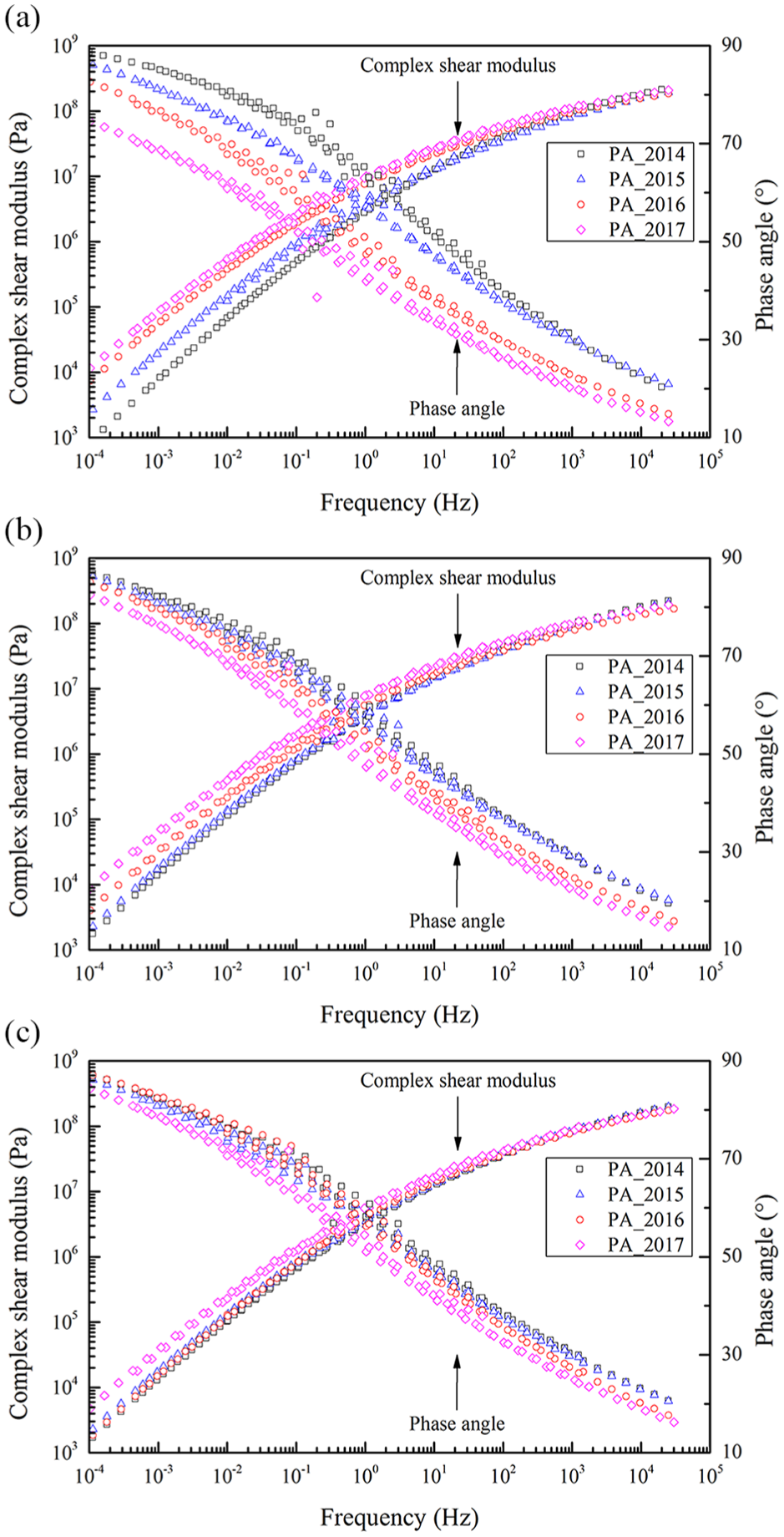
Evolution of complex shear modulus and phase angle master curves with time at different slices of the PA mixture: (a) top slices, (b) middle slices, and (c) bottom slices.
Comparison of Field Aging with Standard Aging Protocols
The rheological properties of bitumen after field aging and laboratory aging using the standard STA and LTA protocols are shown in Figure 9. The master curves show that the stiffness of the bitumen recovered from the PA_2014-B sample is slightly higher than that of the STA sample. The bitumen recovered from the PA_2017-T sample has approximately the same stiffness and phase angle as the LTA sample. It appears that the aging state of the bottom slice of the PA layer (PA_2014-B) was higher for the STA aged bitumen, while the PA_2017-T sample, after three years of field aging, had similar rheological response to the LTA aged sample. These results imply that field aging of porous asphalt at the pavement surface is far more severe than standard laboratory aging and, as such, it is not simulated accurately by RTFOT and PAV aging protocols.
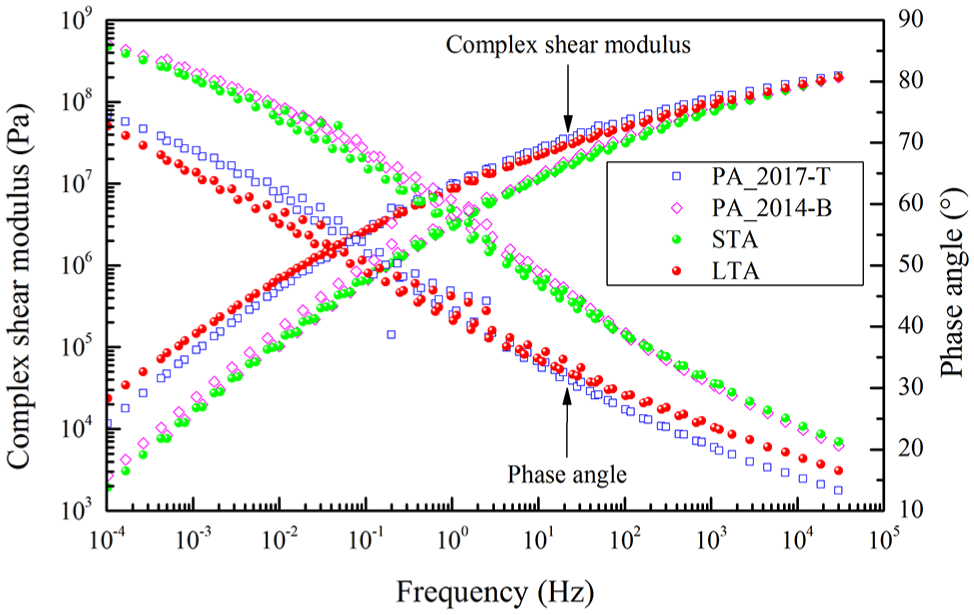
Comparison of master curve (complex shear modulus and phase angle) of bitumen samples from field and laboratory standard aging.
There may be more than one reason to explain the discrepancy between the field and laboratory aging. RTFOT was developed by the State of California Department of Public Works in 1963 and gave a relatively good indication of aging for a PEN 40/60 bitumen used in dense continuously graded mixes ( 31 ). Compared with dense asphalt, however, the thickness of the bitumen film around the aggregates in PA is thinner, as shown in the mortar distribution of the two types of mixture obtained from CT scans, shown in white in Figure 10. Therefore the bitumen would have been more aged during mixing and in service.
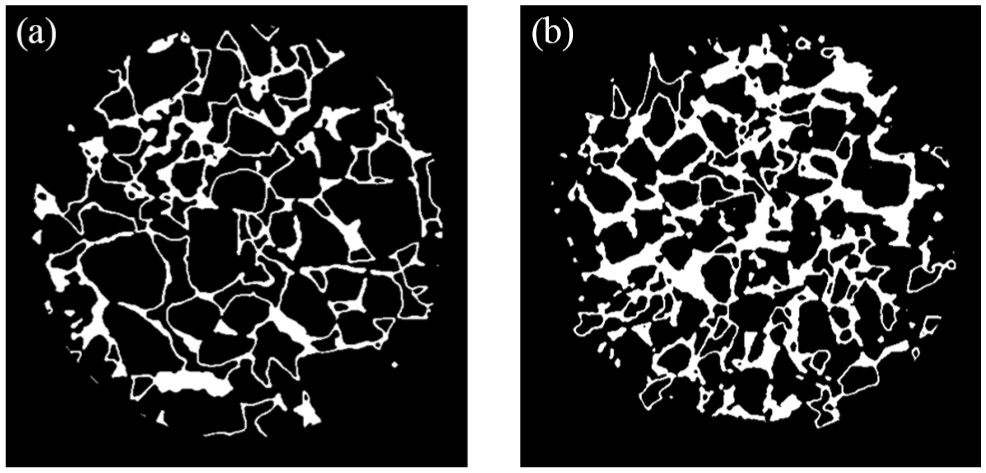
Mortar distribution in two typical mixtures: (a) porous asphalt, (b) dense asphalt.
Similar considerations can be made for the discrepancies observed for the LTA protocol with field aging. Usually the RTFOT and PAV protocols are applied one after the other to ensure the complete simulation of the aging conditions. Presuming that the STA protocol underestimates aging during production and construction, however, this will be reflected later in the results obtained after the LTA protocol. Another reason may be the intrinsically higher aging rate of PA mixtures due to their greater porosity. It is logical to assume that aging progresses faster in an asphalt layer in which oxygen has higher accessibility.
Finally, one could argue that pavements are exposed not only to thermal-oxidative aging in the field, but also to photo-oxidation aging (ultraviolet radiation, which is more relevant to the pavement surface) and moisture. Therefore the rheological profile of the recovered bitumen is the result of the synergistic effects of these factors and cannot be attributed to oxidative aging alone. In addition, the master curves had different slopes, indicating the differences in aging conditions between laboratory and field.
Fourier Transform Infrared Spectrometer
Bitumen samples subjected to standard STA and LTA conditions were tested by means of FTIR. The FTIR spectra were obtained in a wavenumber range from 4000 to 600 cm−1. The changes caused by aging can be found at wavenumbers lower than 2000 cm−1, as shown in Figure 11. These wavenumbers correspond to functional groups related to the oxidation processes.
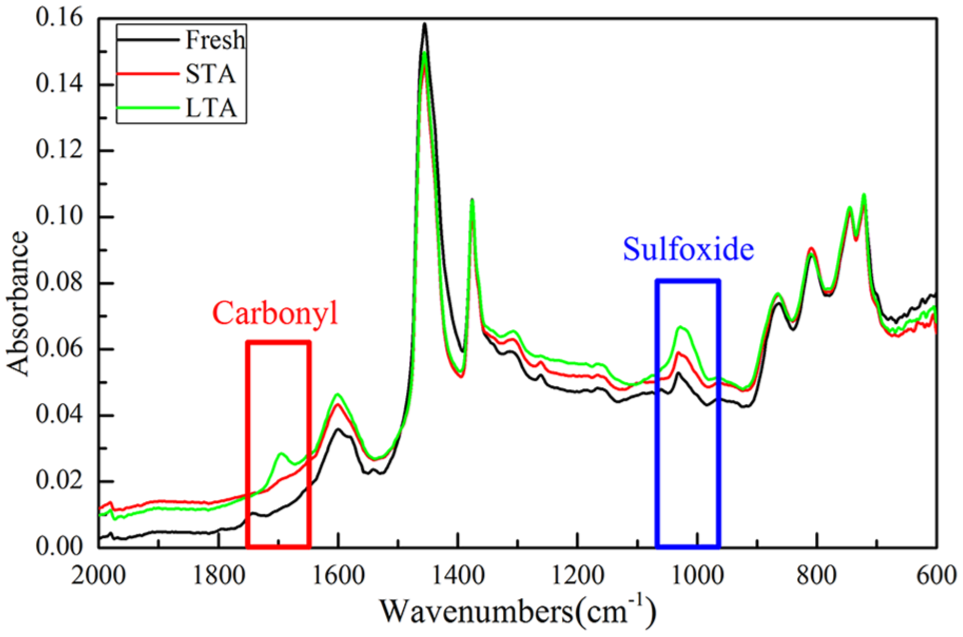
Details of the FTIR spectra of PEN 70/100 at different aging conditions.
Figure 11 shows that the carbonyl groups (wavenumber from 1753 cm−1 to 1660 cm−1) and sulfoxide functional groups (wavenumber from 1047 cm−1 to 995 cm−1) change considerably after laboratory aging; they both increase with aging. In this study, the effects of aging were analyzed considering specific bands of wavenumber as defined by Lamontagne et al. ( 32 ) and the corresponding area under those bands, Figure 12.
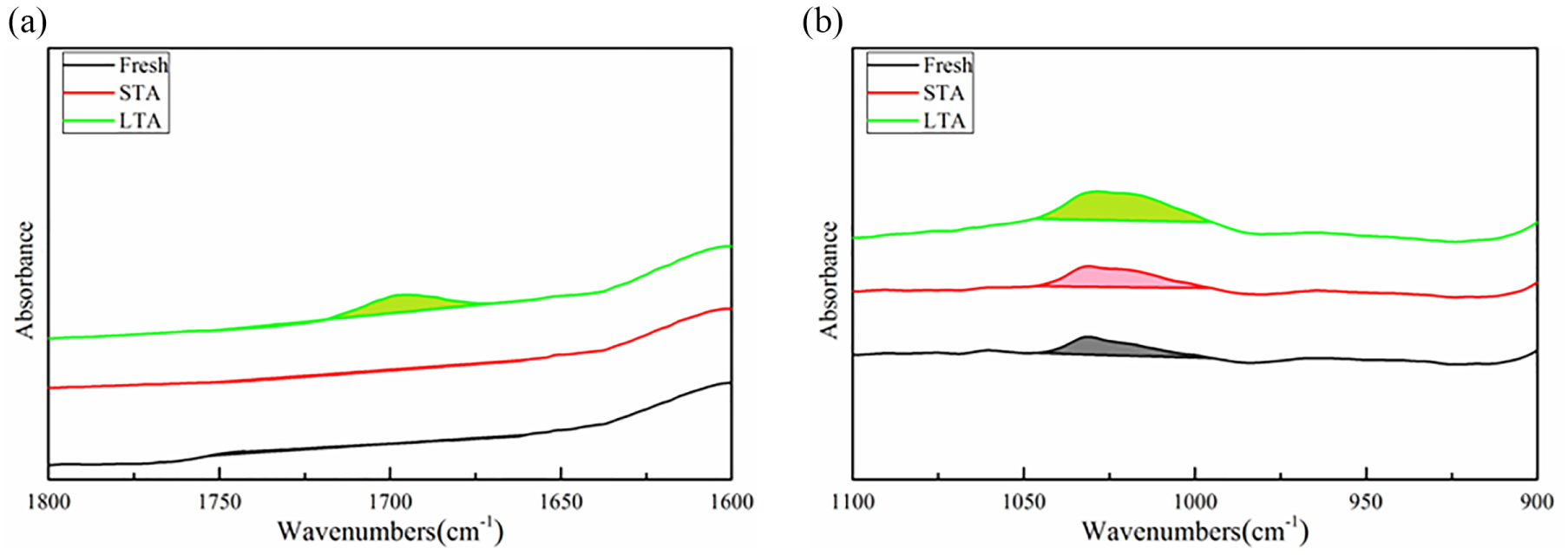
The areas of specific aging by functional group (a) carbonyl, (b) sulfoxide.
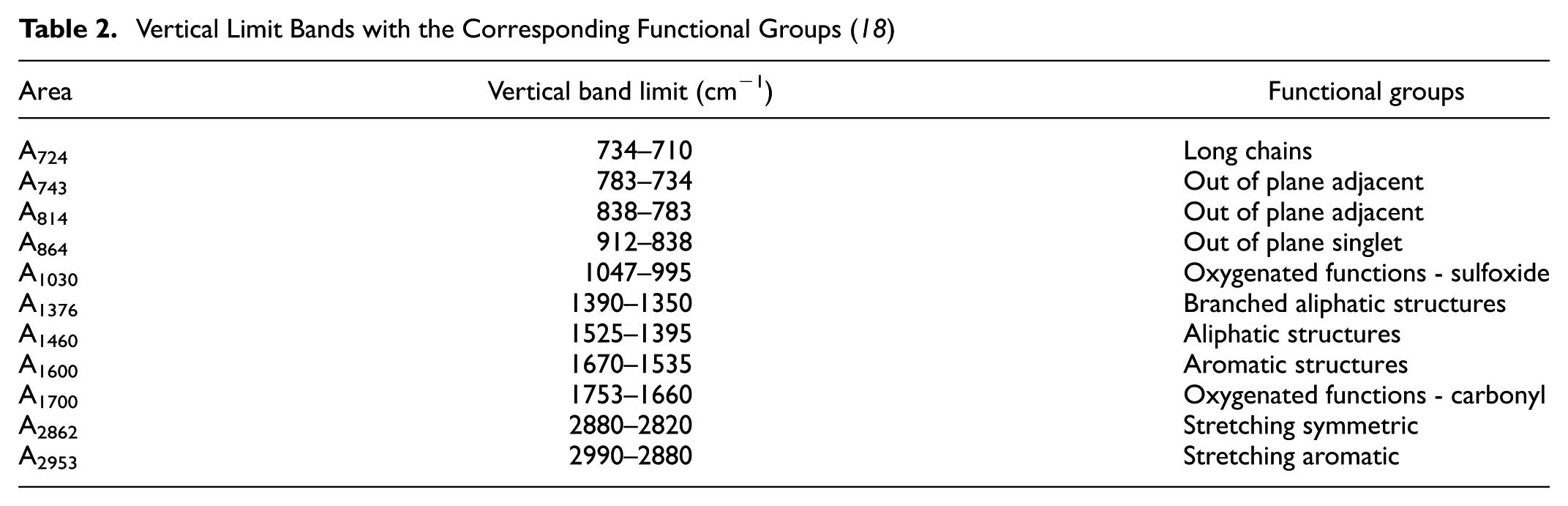
The peak areas were evaluated using quantitative analysis and then the carbonyl and the sulfoxide indices were determined by dividing the area under a specific location of the spectrum by the sum of specific areas, Equations 1 and 2. The vertical limit bands with the corresponding functional groups are present in Table 2.


Vertical Limit Bands with the Corresponding Functional Groups ( 18 )
where
In Figure 12, it is interesting to note that no carbonyls are formed after STA, while the sulfoxides show an increasing trend. This can be explained by the fact that sulfur is more reactive than carbon in bitumen and it verifies the higher rate production of sulfoxides than ketones reported by Lesueur ( 33 ). On the contrary, the formation of carbonyls starts after LTA probably because by that time most of the sulfur has been consumed. This phenomenon was discussed in a previous study ( 34 ). It is therefore suggested that the carbonyl and sulfoxide should be considered together when characterizing aging of bituminous materials, while using only the carbonyls as an aging indicator may lead to incorrect conclusions with regard to the bitumen’s susceptibility to aging.
The quantitative indices for carbonyls and sulfoxides of the laboratory-aged bitumen and recovered bitumen are shown in Figure 13a and b and the combined aging index (sum of the carbonyl and sulfoxide indices) is illustrated in Figure 13c. The results show that the aging indices (carbonyl index, sulfoxide index, and combined aging index) increase with time and that the effect of aging is more significant for the top part of the PA layer than for the bottom, which supports the results presented in earlier studies ( 35 , 36 ) and agrees with the rheological results presented in the previous section.
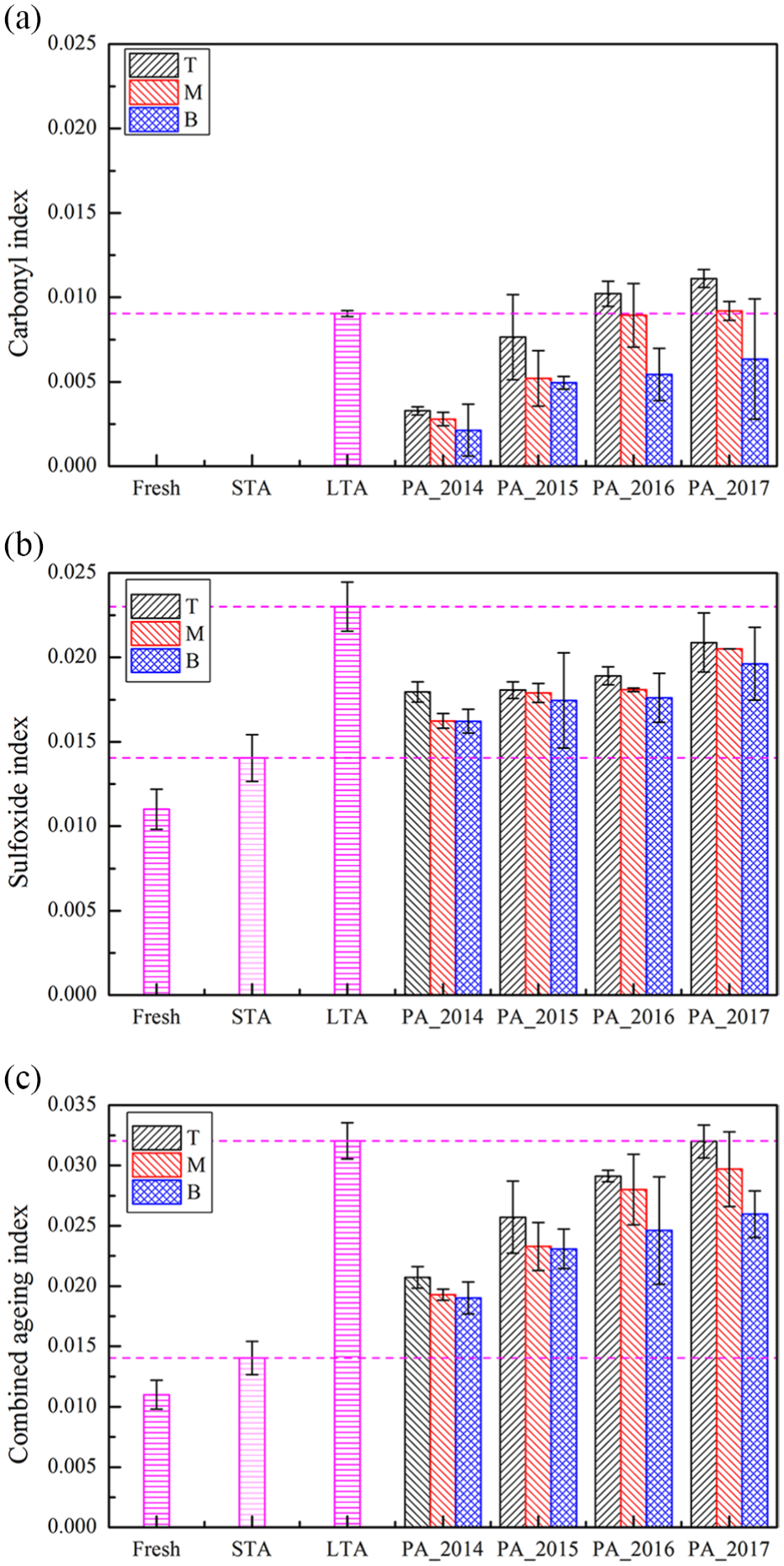
Aging indices of PEN 70/100 at different aging conditions: (a) carbonyl index, (b) sulfoxide aging index, and (c) combined aging index.
From a comparison between the results of laboratory-aged bitumen and recovered bitumen, it is easily observed that carbonyls were not formed in the studied bitumen after STA, whereas carbonyl groups are already present in the samples after laying in 2014, Figure 13a. Moreover, the sulfoxide index of the field-aged bitumen was slightly less than the index of the bitumen after LTA, Figure 13b. On the other hand, the combined aging index in Figure 13c clearly shows that the aging state of the bitumen recovered from the top slice in 2017 has already reached that of the LTA. Overall, the aging indices for the field-aged bitumen and long-term aged bitumen indicate that, for porous asphalt mixtures, laboratory RTFOT and PAV aging is similar to the aging severity at the surface of the pavement after three years of field aging.
In summary, it appears that the standard STA and LTA protocols cannot describe properly the short- and long-term (5–10 years) aging behavior of PA in terms either of rheology or of chemistry.
Conclusion
This study has investigated the changes in the chemical composition and rheology of laboratory-aged and recovered field-aged bitumen and focused on assessing the relationship between field aging and standard laboratory aging protocols. Test sections of PA were constructed in 2014 and continuously exposed to environmental conditions. The rheological and chemical profiles of the recovered bitumen were compared with that of laboratory-aged bitumen after STA and LTA.
The results show that bitumen aging is more severe for the top part of the pavement, as it is in contact with the atmospheric air and the pavement temperature is higher. Therefore, a stiffness gradient develops along the depth of the pavement which may play a major role in the occurrence of top-down cracking.
The laboratory-aged bitumen, following the standard LTA protocol, RTFOT+ PAV, is aged equivalently to the surface of a PA layer that has been in place for three years in the Netherlands. Field aging at the pavement surface is far more severe than standard laboratory aging protocols and cannot be simulated by standard RTFOT and PAV aging. Therefore, the aging protocols have to be re-examined and modified to account for the particularities of PA mixtures which undoubtedly exhibit higher aging rates than dense asphalt mixtures due to their greater porosity. Finally, the rheological and chemical profiles of field-aged bitumen result from the synergistic effects of thermal-oxidative aging, ultraviolet radiation, and moisture. During laboratory aging, though, bitumen is exposed only to combinations of temperature and pressure. To characterize fully the long-term behavior of bitumen pavement, modifications in condition protocols that couple the various environmental factors seem necessary.
Footnotes
Acknowledgements
The authors gratefully acknowledge the Dutch Ministry of Transport, Public Works, and Water Management for funding this project.
Author Contributions
R. Jing and X. Liu planned and supervised the construction of the test sections. R. Jing and A. Varveri conceived the experimental plan and contributed to the interpretation of the results. R. Jing carried out the experiments. A. Scarpas and S. Erkens supervised all project activities. All authors were involved in evaluating the results and contributed to the final manuscript.
The Standing Committee on Asphalt Binders (AFK20) peer-reviewed this paper (19-02607).