




Abstract
The microstructure and chemical composition of asphalt binders have a significant effect on their rheological properties and, therefore, their performance as road paving binders. This study aims to investigate the effects of warm-mix asphalt (WMA) additives, organic type and chemical type, on the rheological properties and chemical internal structure of base asphalt and crumb rubber modified asphalt (CRMA). A set of dynamic shear rheometer (DSR) tests was conducted to obtain the rheological parameters (e.g., complex viscosity, complex modulus, phase angle) of asphalt binders. The flow activation energy was calculated from Arrhenius equation based on viscosity data to rank the thermal susceptibility. Black diagrams and master curves of complex modulus and phase angle were utilized to analyze the rheological properties. The molecular weight distributions of asphalt binders were inverted from the phase angle master curve to evaluate the molecular weight characteristics. It was found that the the addition of crumb rubber into base asphalt improves the rheological properties of enhanced modulus and elasticity. Organic and chemical types of WMA additives have different chemo-physical effects on both base asphalt and CRMA. Phase angle inversion method provides a powerful tool to monitor the molecular structure change and, therefore, the chemo-physical interactions of asphalt binders induced by modifications. Finally, there is a good correlation between flow activation energy and molecular weight.
Recycling crumb rubber from end-of-life tires into asphalt paving has been applied for several decades for its tremendous economic and environmental benefits. It is reported that the incorporation of crumb rubber modifier (CRM) into asphalt binders can improve the overall performance of asphalt pavements ( 1 , 2 ), such as improved aging and oxidation resistance, greater resistance to fatigue/thermal cracking and rutting, lower noise generation, higher skid resistance, and so forth. The above-improved performance of rubberized asphalt pavement relies on the interaction of CRM with asphalt. Depending on different interaction parameters (temperature, time and mixing rate, etc.), rubber-asphalt interaction is generally related to two mechanisms ( 3 , 4 ): (a) swelling of CRM particles in asphalt matrix through absorbing the light aromatic oils of asphalt, and (b) degradation (devulcanization and depolymerization) of CRM through the release of its components into the liquid phase of asphalt.
The improvement of the rheological properties of the rubberized asphalt binders has been observed after the interaction of CRM with asphalt ( 5 ). However, due to the high viscosity of rubberized binders, high mixing and compaction temperatures are required to achieve desirable workability and density of asphalt mixtures. In addition, the consequent high emissions and compromised work conditions during the construction process of rubberized asphalt pavement have been criticized ( 6 ). Warm-mix asphalt (WMA) technologies are developed to substantially decrease the production and placement temperatures of hot-mix asphalt (HMA) through mechanisms of viscosity reduction and lubricity enhancement ( 7 – 9 ). The coupling of WMA technology with rubberized asphalt is supposed to be a sustainable paving technology with the merits of energy conservation, environmental protection, performance optimization and durability extension ( 10 ). WMA products can be categorized into three main types ( 11 ): foaming processed, organic (wax-based) additives, and chemical additives. With the addition of new chemicals, the microstructure and molecular characteristics of original asphalt binders can be alternated. The different characteristics of WMA additives determine the different effects on the rheological properties of asphalt binder. It is vital to investigate the influence of WMA additives on the rheological behaviors and chemical structures of rubberized binders before applying them in the mixture level.
Chemical Interpretation from Rheology
Asphalt is commonly accepted as a multi-disperse colloidal system, where high molecular weight (MW) asphaltene micelles are peptized by resins in low molecular weight maltenes, with rheological behavior resembling that of a low-molecular-weight polymer ( 12 ). The chemical composition and microstructure of asphalt binder has a significant effect on the material rheological properties and, therefore, on its performance as a road paving binder.
A large amount of research works has been done to link the chemical nature of asphalt with its physical behavior, and thus to explain the mechanical performance. Typically, the microstructure and composition of asphalt can be determined through classical chemical characterization techniques, such as atomic force microscopy (AFM) to obtain surface topography, gel permeation chromatography (GPC) to obtain molecular weight distribution, thermogravimetric analysis (TGA) for thermal analysis, Fourier transform infrared (FTIR) spectroscopy to identify functional groups, and so forth (
13
). However, these chemical characterization methods need exclusive instruments, special training, and complex sample preparation. More importantly, due to the chemo-physical complexity of certain asphalt products (modified or emulsified), it is not suitable to use all the above techniques in every case (
14
,
15
). Recently, a few attempts were made to obtain the molecular weight distribution (MWD) and activation energy (
Relationship between Rheology and Flow Activation Energy
Viscosity is a measure of material’s resistance to flow and deformation. The concept of the flow activation energy of asphalt describes the minimum energy barrier which asphalt molecules must overcome for flow to occur ( 16 ). It can be used to differentiate asphalt binders and to characterize the thermal susceptibility of the asphalt binders ( 17 ). The temperature dependence of the viscosity of asphalt can be described by an Arrhenius equation (Equation 1).

where A is a pre-exponential parameter, R is the universal gas constant (8.314 J/[mol·K]),
Since zero shear viscosity (ZSV) is a theoretical concept and it is impossible to measure the absolute value directly, various models were developed to extrapolate the ZSV value (
19
). However, it was found that highly modified asphalt binders exhibit extreme high viscosity gradients at low frequencies, resulting in unrealistically high ZSV values using model predictions (
20
). It was also found in this study that CRMA binders and wax-based additive modified binders yielded unpractical ZSV values. Therefore, the low shear viscosity at 0.01 rad/s was used as a replacement to calculate the activation energy. In addition, the
Relationship between Rheology and Molecular Weight Distribution
It is well known that asphalt is composed of low (aromatic oils), medium (resins), and high (asphaltenes) molecular weight constituents and the incorporation of new additives (e.g., polymers and chemical surfactants) into base asphalt will inevitably change the proportions of these components. Consequently, the MWD alters due to the various interactions. Since MWD is associated with the internal structure as well as the structure-sensitive properties (e.g., rheological properties) of asphalt binders, comparing the MWDs of base and modified binders is a useful method to evaluate the chemo-physical interactions between base asphalts and additives. It is known that the linear viscoelastic parameters of polymer solutions and melts, as well as asphalt, are strong functions of molecular weight. Zanzotto et al. ( 23 ) inverted the fractional model of complex modulus to generate the MWD of regular and modified asphalt and compared with the MWDs obtained by GPC test. It was found that the MWDs calculated from rheological data are in good agreement with the corresponding GPC data. In subsequent research, Zanzotto et al. ( 14 ) found the phase angle to be more sensitive to molecular weight changes than the complex modulus. In addition, they noted that GPC is more sensitive to low molecular weights while the rheological inversion yields a higher resolution in a high molecular weight band. It is noticeable that solvents used to dilute asphalt in GPC test potentially change the microstructure of asphalt, resulting in an erroneous representation of the MWDs of the undiluted asphalt. On the other hand, in case of materials containing insoluble components (e.g., rubber) in common solvents, the use of the chromatographic method is not feasible. Considering the above two limitations of GPC tests for asphaltic materials, in terms of AR binders containing WMA chemicals, deducing MWDs from linear viscoelastic parameters seems a more promising alternative.
Before deriving the MWDs from the linear viscoelastic properties, two important definitions should be known, namely, differential molecular weight distribution (DMWD) and cumulative molecular weight distribution (CMWD). DMWD is a molecular weight distribution function (or a probability density function) of molecular weight. CMWD is an integral of DMWD from zero to a specified molecular weight. The relationship between DMWD and CMWD can be described using molecular weight as follows:

or

where M = molecular weight;

where

Equation 5 explains that, at a given frequency, if the specified molecular weight (

The calibrated values for constants in Equation 6 based on test data were

where
when
when
The relationship between cumulative weight fractions and phase angle can be written as:

Therefore, with the phase angle master curve and the calibration of Equation 6, the molecular weight distribution can be obtained through Equations 2 and 8.
Based on above derivations, one should note that rheological properties actually depend on the apparent MWDs that include the associations of various molecular weight constituents rather than on the MWDs of an individual molecule. Therefore, the MW obtained in this study means the apparent MWs of different molecular associations. Figure 1 summarizes the flow diagram of the steps and representative graphs involved in the conversion of linear viscoelastic data into an MWD, which is called the phase angle inversion method in this study.
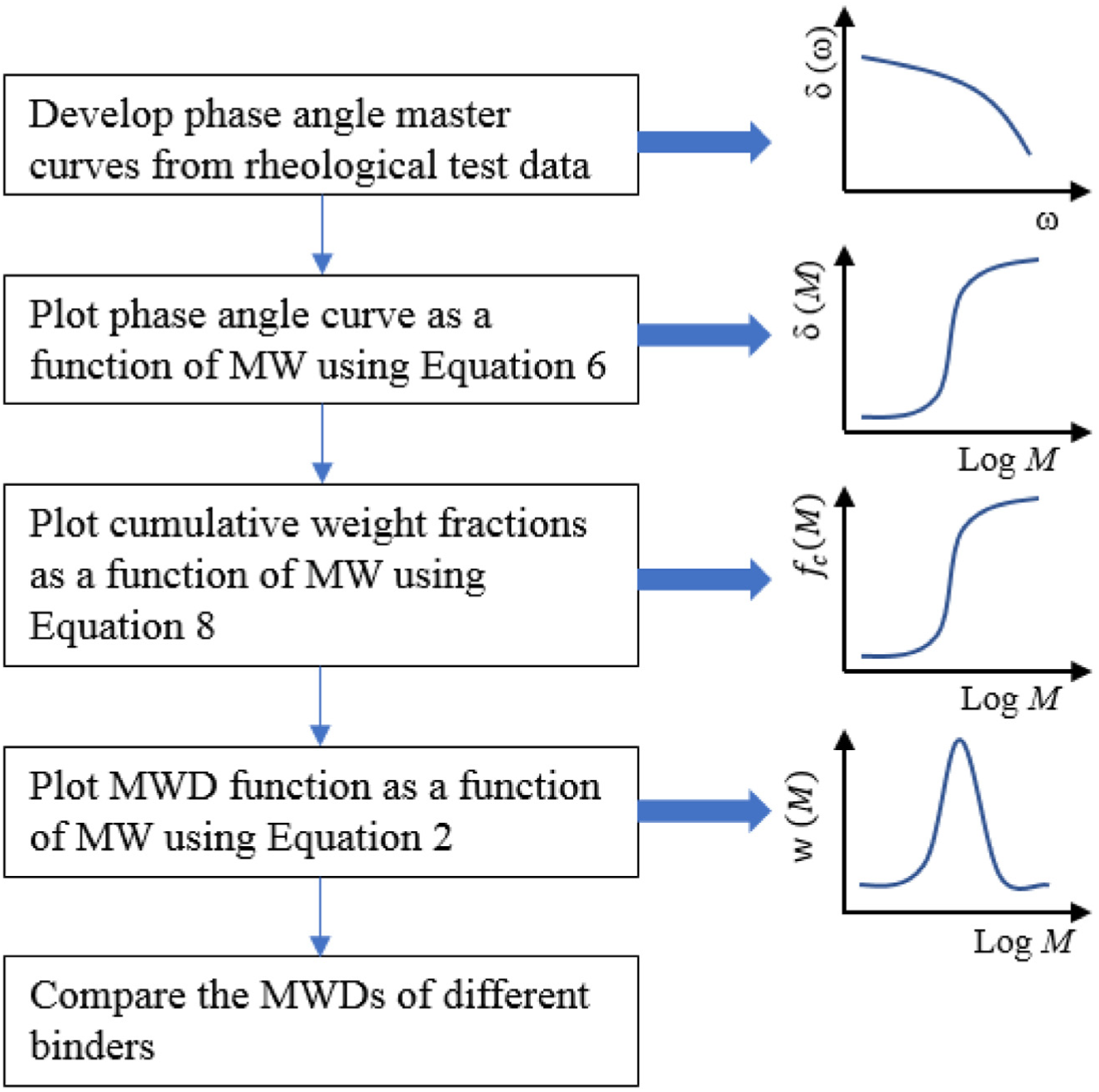
Flow chart of converting phase angle data to MWD data.
Objective
Based on above considerations, the main objectives of this study are:
to investigate the effects of WMA additives on the rheological properties of base asphalt and CRMA;
to obtain flow activation energies and molecular weight distributions (MWD) of asphalt binders based on rheological properties; and
to build up the potential relationship between flow activation energy and molecular weight.
Materials and Methods
Raw Materials
Base asphalt of 70/100 penetration grade commonly used in the Netherlands was provided by NYNAS. The SARA fractions of the base asphalt are 7% for saturates, 51% for aromatics, 22% for resins, and 20% for asphaltenes, respectively. The CRMs, supplied by RUMAL, were produced by ambient grinding of scrap truck tires. The CRMs have particle sizes ranging from 0 to 0.5 mm and consist of about 55% rubber, 30% carbon black, and 15% other impurities. Two types of typical non-foaming WMA additives, wax-based product
Binder Preparation
The CRMA was produced in the laboratory by blending 18% CRMs by the weight of base asphalt based on the previous studies ( 1 ) and trial mixing. Manual stirring for 5 min was applied to pre-distribute CRM in the base asphalt, then the blend was mixed using a Silverson high shear mixer at 180°C and 6000 rpm for 30 min. During the laboratory mixing process, the mixing head was immersed into the hot bitumen to avoid a vortex which may involve the potential oxygen. Each WMA additive was incorporated into both base asphalt and CRMA with the same dosage. The percentages of WMA additives W and C were 2.0% and 0.6%, which were determined based on manufacturers’ recommended dosage and preliminary tests. Therefore, a total of six types asphalt binders were prepared in this study, namely 70/100, 70/100-W, 70/100-C, CRMA, CRMA-W, and CRMA-C. To solely investigate the effect of WMA additives on the rheological properties of binders, all binder samples were tested in fresh states without artificial ageing.
Rheological Measurements
Dynamic shear rheometer (Anton Paar) was utilized to obtain the rheological parameters (complex shear modulus, phase angle and complex viscosity) of different asphalt binders. Frequency sweep tests were carried out from 0.01 to 100 rad/s over a temperature range of 10°C ∼ 50°C with an increment of 10°C. Before the frequency sweep tests, strain amplitude sweep tests were conducted to identify the linear viscoelastic (LVE) range of different binders and thus to guarantee that the frequency sweep tests were undertaken within the binder’s LVE region of response.
Results and Discussion
Complex Viscosity
Figure 2 plots the complex viscosities of different asphalt binders through dynamic shear rheometer (DSR) measurements. Viscosities at various combinations of temperature and frequency showed similar trends and are, therefore, omitted here. It can be clearly seen that the viscosity is dependent on temperature and shear rate (frequency) which decreases as the temperature and/or frequency increases. Figure 2a shows that at 50°C, the base asphalt 70/100 with and without additive C both behave like Newtonian fluids, whose viscosities are almost independent of shear rates. In contrast, 70/100-W and all CRMA based binders exhibit non-Newtonian behaviors as the viscosities increase significantly as the shear rate decreases. It was also found that CRMA presents much higher viscosity than base asphalt.
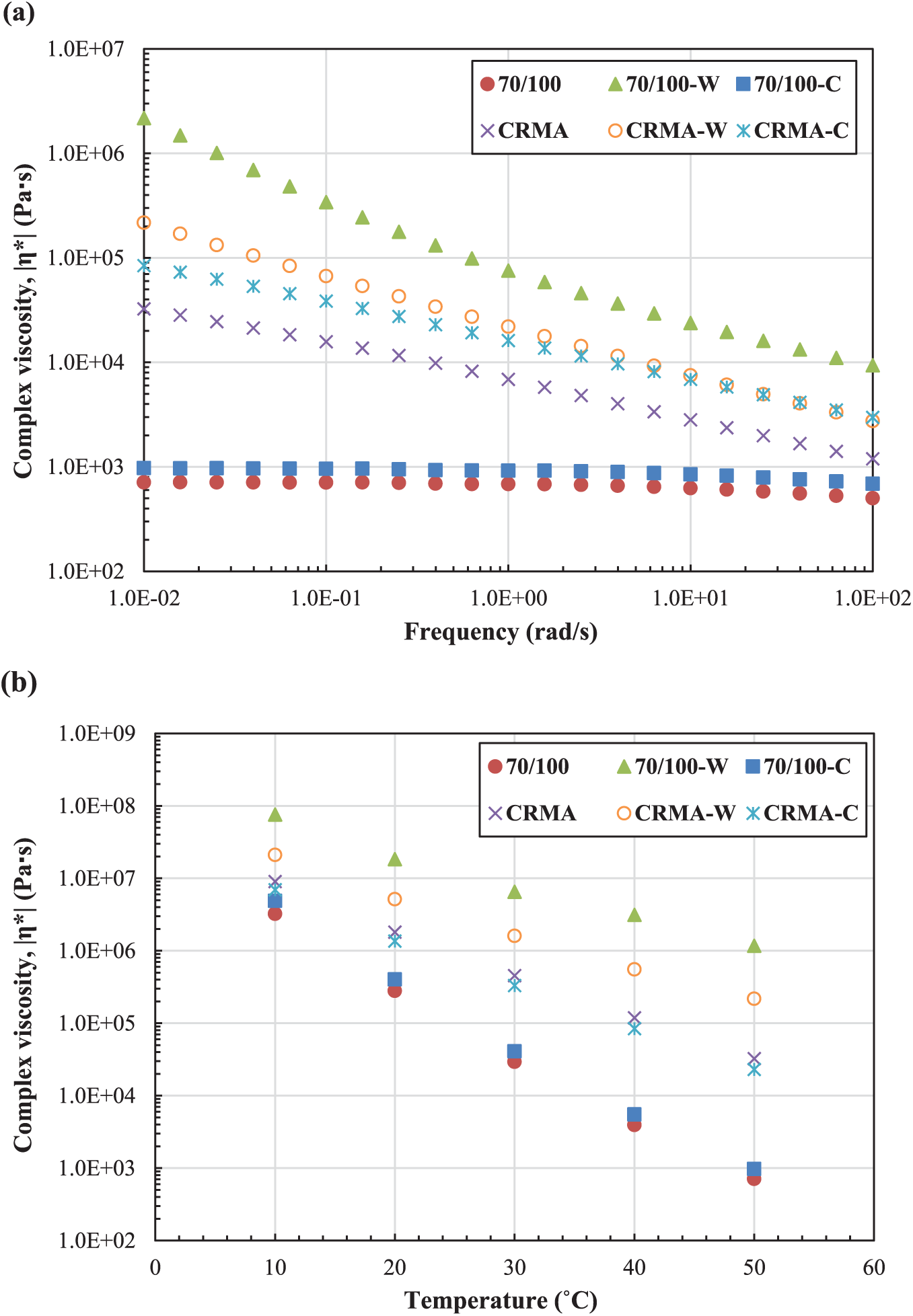
Complex viscosity of different binders versus (a) frequency at 50°C; (b) temperature at 0.01 rad/s.
The addition of chemical WMA additive has an insignificant effect on the viscosity of both base and CRMA binders at a certain shear rate. However, organic additive increases the viscosities of both base and CRMA binders significantly, which seems contradictory to the viscosity-reduction effect of wax-based additive W at high construction temperatures ( 26 ). It should be noted that additive W is a synthetic wax with high molecular hydrocarbon chains, and its melting point is around 90°C. Therefore, when tested at 50°C, additive W in asphalt binders will crystallize to form a lattice structure and, therefore, stiffen the binders. This phase transition characteristic of additive W also explains the improved deformation resistance of binders containing W at service temperatures. In addition, through comparing the slopes of complex viscosity versus temperature curves in Figure 2b, CRMA based binders and 70/100-W are less thermal susceptible than base binder 70/100.
From Rheology to Flow Activation Energy
Figure 3 presents the plot of logarithmic viscosity as the ordinate and reciprocal temperature as the abscissa. The
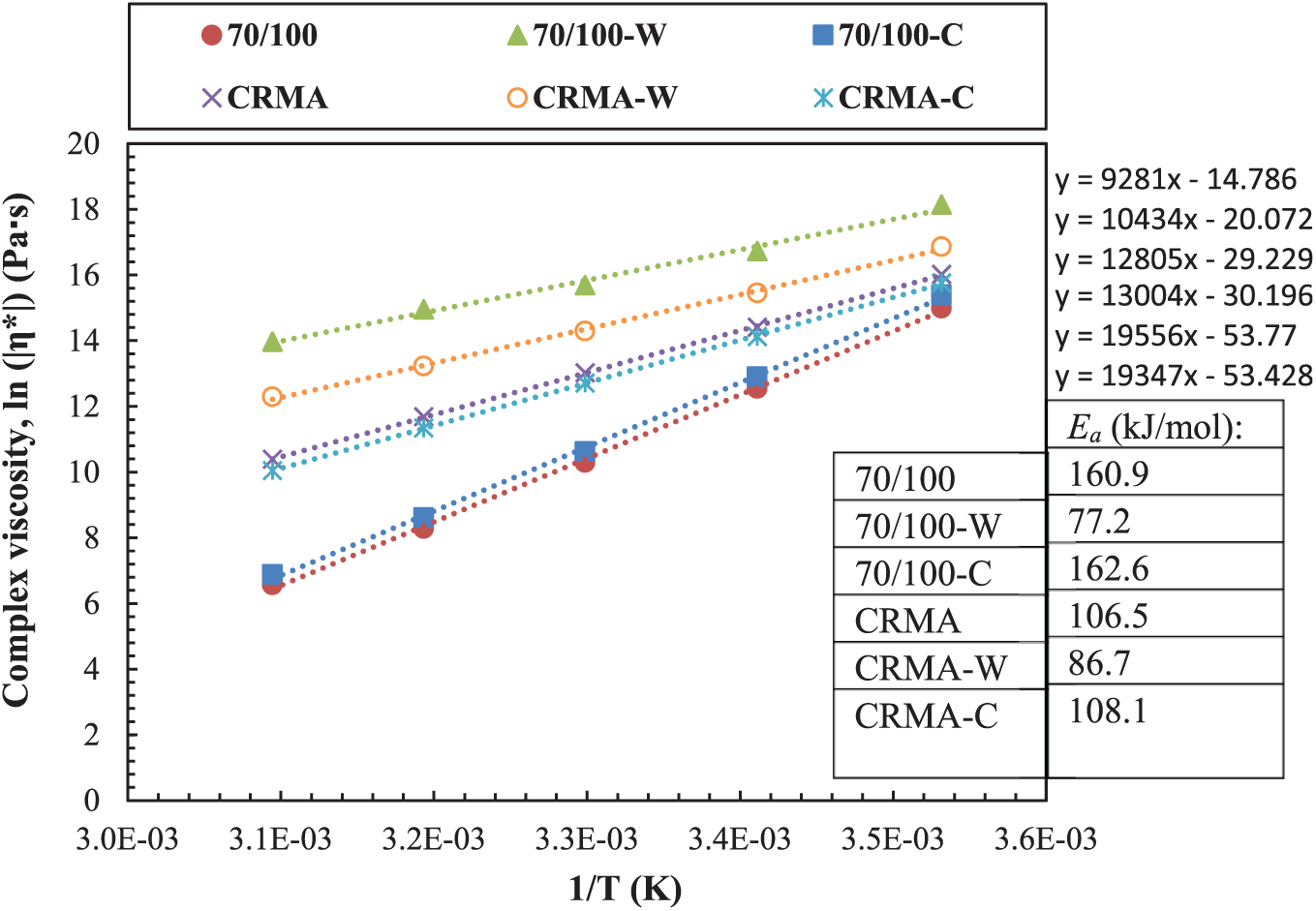
Temperature dependence of low-shear viscosity and calculation of activation energy.
Complex Modulus and Phase Angle
Black Diagram
A black diagram is a graph plotting complex shear modulus (G*) versus phase angle (δ) obtained from frequency sweep tests. This type of representation of test data eliminates the frequency and temperature and allows us to compare the viscoelastic response of bituminous materials without manipulating the raw data through time-temperature superposition principle. Generally, a black diagram is a useful tool in identifying possible discrepancies in test data, in verifying time-temperature equivalence and the thermo-rheological simplicity ( 29 ) of test samples, and in identifying different types of asphalt binders.
Figure 4 shows the representation of dynamic data in black space. It can be clearly seen that the circled data of CRMA binder is out of line compared with the rest of the data. This unconformity indicates instrument compliance errors at the particular temperatures and frequencies. After checking the broad raw data (e.g., shear strain, shear stress, torque), it was found that the torques corresponding to the circled data exceeded the maximum torque value (230 mN·m) of the DSR instrument. Therefore, these erroneous data were omitted before generating an accurate master curve. Except for the limited erroneous data, all the dynamic data produced smooth curves with slight scattering, indicating that the asphalt binders can be considered as thermo-rheologically simple materials. Compared with the base binder and 70/100-C, the addition of CRM and additive W to the base binders results in a shifting of the rheological data toward a lower phase angle (left), which means more elastic behaviors. This could be due to the polymer network of CRM and the crystalline structure of W formed within the asphalt matrix. Since different asphalt binders show different curve patterns in black space, the black diagram can also be used to differentiate materials. Unlike the base binder and 70/100-C, the black diagrams of all CRMA based binders show an inverse “S” pattern which is typically found in rubberized asphalt binders ( 30 ). The single modification by W changes the curve in black space into an inverse “C” pattern which is similar to that of SBS modified binder ( 29 ). At the phase angle of around 57°, there is evidence of phase transition of wax existing in the 70/100-W binder.
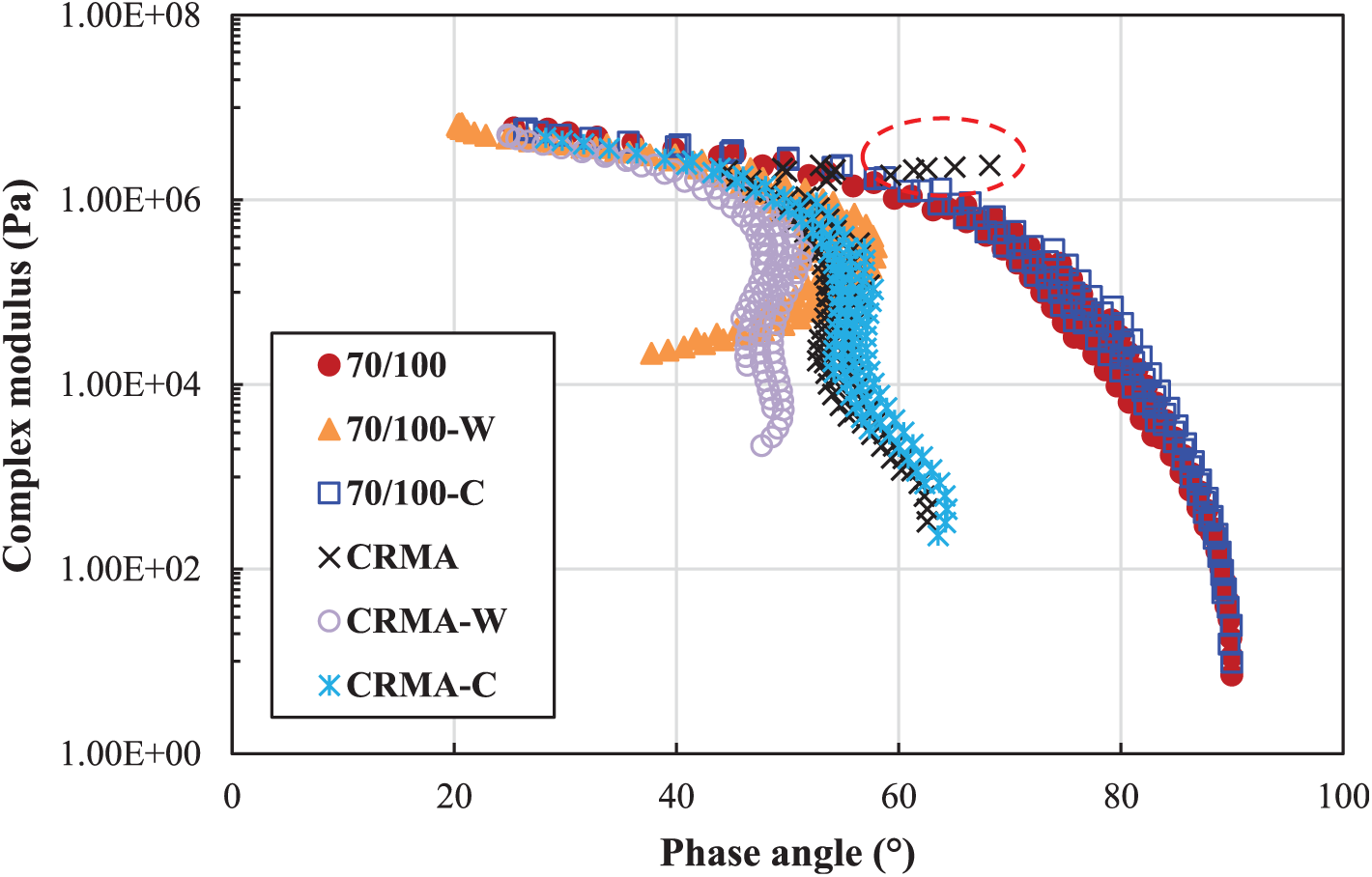
Black diagram of different asphalt binders.
Master Curves of Complex Modulus and Phase Angle
Master curves are developed from the measured linear viscoelastic data using the time-temperature superposition principle at a reference temperature. In the present study, a modified Christensen-Anderson-Marasteanu (CAM) model ( 31 ) and Williams-Landel-Ferry (WLF) equation for shift factors fitting were used to develop complex modulus and phase angle master curves.
The master curves of complex modulus and phase angle at a reference temperature of 30°C are shown in Figure 5. Similar effects of CRM and WMA additives on the rheological properties were observed as previous analysis. From Figure 5a, all the modification of base asphalt increased the complex modulus at relatively low frequencies (elevated temperatures). However, the complex modulus of all binders merged together at high frequencies (low temperatures), where the base asphalt is relatively stiff and the rheological properties of modified binders are dominated by the characteristics of base asphalt. From Figure 5b, the modifications of base asphalt by CRM and additive W showed marked reductions in phase angle. The addition of additive C had insignificant effects on phase angle at relatively low frequencies but increased the phase angle at high frequencies due to the softening effect of the unique chemicals, which may be beneficial to the low-temperature performance. The presence of phase angle plateaus at intermediate frequencies for CRMA based binders indicates the three-dimensional rubber molecular networks or entanglements in the modified binders. The presence of a phase angle peak of 70/100-W again verifies the phase transition behavior of wax in the binder at intermediate frequencies (temperatures). To sum up, the CRM and additive W enhanced the stiffness and elasticity of base asphalt, which is derived from the physical cross-linking of molecules into the three-dimensional network and the unique crystalline lattice structure at the service temperature range, respectively.
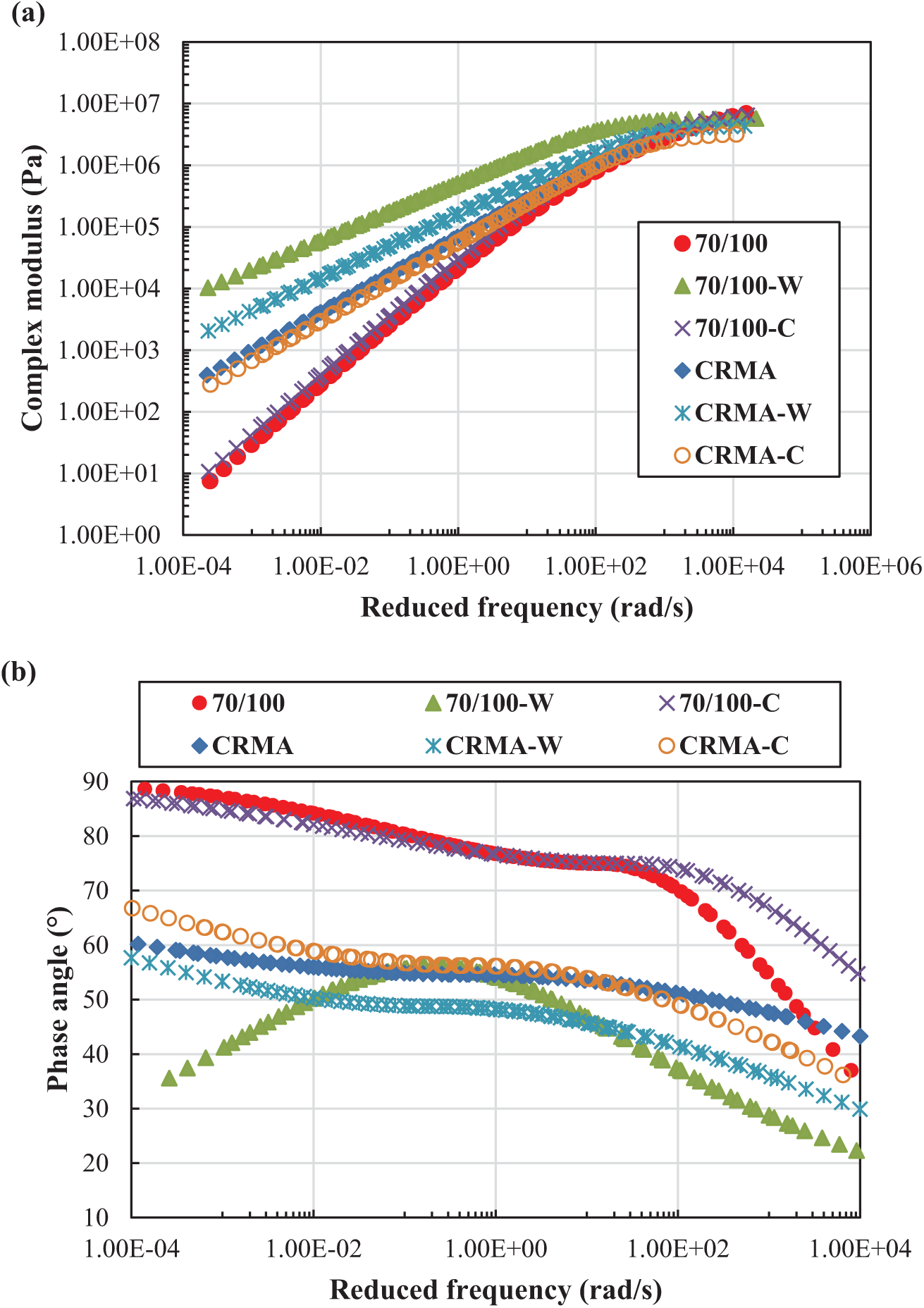
Master curve of (a) complex modulus and (b) phase angle at 30°C.
Furthermore, the phase angle master curves are less uniform than that of complex modulus. Measurements of phase angle are more sensitive to the chemical structure change and thus the modification of asphalt than the complex modulus. This finding has driven the work of linking phase angle to the chemical characteristics of asphaltic materials.
From Rheology to Molecular Weight Distribution
After obtaining the CMWD curve (
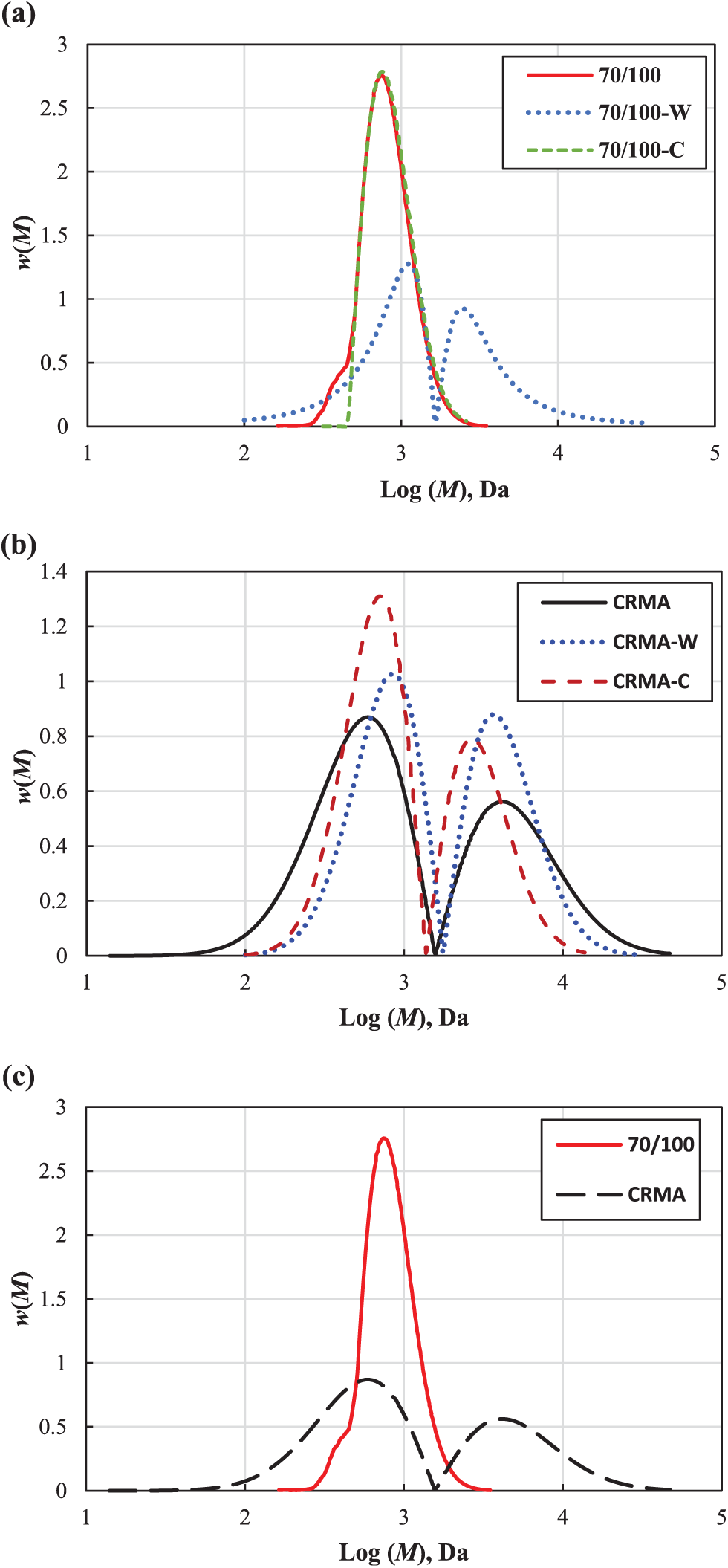
Molecular weight distribution comparisons between (a) base asphalt and warm-mix base binders, (b) CRMA and warm-mix CRMA binders, and (c) base asphalt and CRMA.
In terms of the effect of WMA additives on the MWDs of asphalt binders, it seems the MWD of base asphalt was not affected significantly by the additive C. The addition of W into base asphalt shifted the molecular weight to the heavier direction. It is known that additive W is a kind of microcrystalline wax with high molecular weight hydrocarbons in the range C40∼C120. Besides the molecular population of average MW (
In principle, the valley between two peaks of the MWDs should be smooth for real cases. The appearance of the sharpness in this case is mainly due to the inherent limitations of the phase angle master curve model and numerical differentiation error. Based on the above analysis, it can be concluded that the phase-angle inversion method has sufficient sensitivity to distinguish the structural changes of different binders and give comparable molecular weight distributions. However, the accuracy of this inverse method relies on the calibration of Equation 6 and phase angle master curve. More works need to be done on these two aspects to interpret the real molecular structure of asphaltic materials.
Relationship between Flow Activation Energy and Molecular Weight
The number-average molecular weight for each type of asphalt calculated from the MWD in Figure 6, as well as the flow activation energy, is summarized in Figure 7. It shows a strong linear relationship between molecular weight and flow activation energy. The flow activation energy decreases as the molecular weight increases at a constant shear rate in the tested temperature region. Contradictory results were also presented in the literature. García-Morales et al. (
18
) found that polymer addition leads to a reduction in
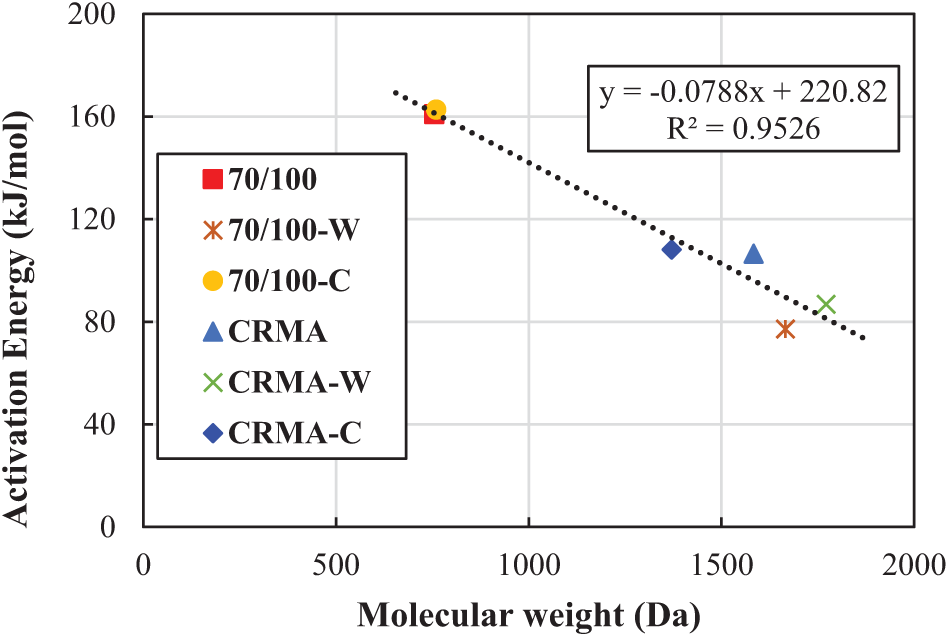
Relationship between molecular weight and flow activation energy.
Conclusions
Warm-mix asphalt technology has been used in the rubberized asphalt paving industry to alleviate the issues of high construction temperature and high emissions stemming from the high viscosity of CRMA binders. Based on the rheological tests and their chemical interpretation, the following conclusions can be drawn:
The incorporation of CRM into base asphalt dramatically increases the complex viscosity. It also improves the rheological properties of base asphalt with enhanced stiffness and elasticity provided by the cross-linking polymer network. Wax-based WMA additive increases the complex viscosity and complex modulus, and decreases the phase angle of asphalt due to the stiffening effect of the unique microcrystalline lattice structure at service temperatures. The chemical type of the additive has an insignificant effect on the rheological properties at the in-service temperatures.
Asphalt binders modified by either CRM or wax-based additive have decreased flow activation energies, indicating lower thermal susceptibility.
The phase-angle inversion method provides adequate and comparable molecular weight distributions, and this simply implemented method offers new perspectives in the interpretation of rheological data to monitor the change in the molecular structure of asphalt. Both CRM and the wax-based additive increased the average molecular weight of asphalt. The chemical-based additive had an insignificant effect on the molecular weight distribution of asphalt.
There is a strong linear relationship between flow activation energy and molecular weight. The activation energy decreases as the molecular weight increases at a constant shear rate in the tested temperature region.
For future research, more fundamental work needs to be done to further explain the mechanism of flow activation energy. GPC tests for various types of asphalt binders at both unaged and aged states should be conducted to produce a more accurate calibration equation for the phase-angle inversion method.
Footnotes
Acknowledgements
The authors acknowledge RUMAL for providing testing materials. The corresponding author would like to thank the financial support from China Scholarship Council.
Author Contributions
The authors confirm contribution to the paper as follows: study conception and design: Xueyan Liu, Tom Scarpas; data collection: Haopeng Wang; analysis and interpretation of results: Haopeng Wang, Panos Apostolidis; draft manuscript preparation: Haopeng Wang. All authors reviewed the results and approved the final version of the manuscript.
The Standing Committee on Asphalt Binders (AFK20) peer-reviewed this paper (18-02433)