




Abstract
Introduction
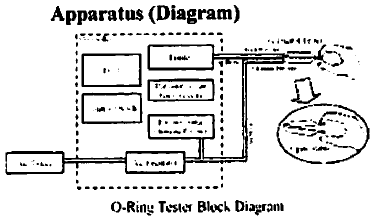
As Bi-Digital O-Ring Test (originated and founded by Prof. Y. Omura in New York, 1997-2009; follow as BDORT) is a diagnosis method that is carried out on the basic theory of the physiological phenomenon called the decline of muscular power of fingers, the examiner and patients (or mediator) are demanded to do BDORT by constant regular power. Namely BDORT is a diagnosis method that estimates the relative muscular decline of the patients, so there is such a view that the results of BDORT are reflected by consciousness of the examiner. The authors used the ORT tester by using air system to avoid the influence of electromagnetic wave and evaluated the decline of the muscle strength and open degree of the O-ring shaped by the patients. The objective verification was made by using the O-Ring shaped by the patient to aggregate the positive rate by sex, by age and by different diseases.
Subjects & Methods
Patients of the Shimotsuura Clinic are subjected and checked by direct BDORT method. When the patient shape the O-Ring, staff member stimulated the parts of the body by plastic stick and push foot switch. Decline of the muscle strength & open degree were evaluated. When the open degree was more than 20%, stimulated points were evaluated as abnormal. Opposite side arm of the O-Ring shaped arm was checked as control.

Results
(1) The detection rate of the abnormality with more than 20% increase of the open degree by the stimulation of abnormal area and checked by ORT tester was 66.2%(86 cases in total 130 cases)
(2)The detection rate by sex of the abnormality with more than 20% increase of the open degree by the stimulation of abnormal area and checked by ORT tester were 61.9% in male (26 cases in total 42 cases) and 68.1% in female (60 cases in total 88 cases)
(3)The detection rates by age of the abnormality with more than 20% increase of the open degree by the stimulation of abnormal area and checked by ORT tester were 100% in 20s (6/6), 100% in 30s (14/14), 65.0% in 40s (13/20), 67.4% in 50s (29/43), 53.1% in 60s (17/32), 45.5% in 70s (5/11) and 50.0% in 80s (2/4).
(4)The detection rates by diseases of the abnormality with more than 20% increase of the open degree by the stimulation of abnormal area and checked by ORT tester were 82.5% in pain patients(47/57), 46.2% in cancer patients(6/13), 55.6% in cancer suspicion patients (15/27) and 58.0% in ischemic disease patients (18/31).
Total:130 lesions (Male: 42 lesions, Female: 88 lesions)
Total Case 50:Average 54.28±14.24 years
(Male: 18, Average 54.61±14.92, Female: 32, Average 54.09± 14.08)

| Total | Male | Female | |
|---|---|---|---|
| Positive Rate (%) (lesions) | 66% (86/130) | 62% (26/42) | 68% (60/88)) |

|
|
20s (3) | 30s(5) | 40s (9) | 50s(13) | 60s(13) | 70s(5) | 80s (2) |
|
|
100% | 100% | 65% | 67% | 53% | 45% | 50% |

| Cancer (Diagnosed & Suspicion) (Integrinα5β positive) | Ischemic Disease (TxB2 positive) | Pain (subjective symptoms) Substance P | |
|---|---|---|---|
| Positive Rate (%) | 53 % (21/40) | 58% (18/31) | 82% (47/57) |
Conclusion & Discussion
Clearly-defined groups by using Bi-Digital O-Ring Test automatic measuring apparatus (ORT Tester) were (A) Cancer (Diagnosed & Suspicion); Integrinα5β1 positive group, (B) Ischemic disease group (Thromboxane B2 positive) and (C) Patients of pain with subjective symptoms (Substance P positive) group. With comparison by using ORT tester, highest extraction rate was group (C) and group (B), (A) in order. As a result, the detection rate was high in group (C) of Pain with subjective symptoms with high consensus about their diseases. Besides the extraction rate was low in cancer response group (A), Integrin α5β1 positive patients with cancer suspicion were more and the patients with diagnosed with modem medicine were less. The comparison between the strength of BDORT resonance and the open degree and muscle tone weakness detected by ORT tester might be necessary. High detection rate of the disease in young people was remarkable. Brain function decline with age is considered to be somehow connected with the reduction in the reaction behavior of BDORT.
Get full access to this article
View all access options for this article.