



Abstract
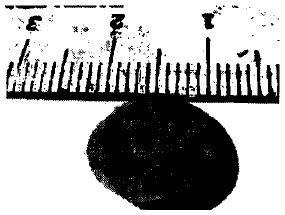
Normally, acupuncture(dry needling) is inserted into muscles and often adds electrical pulse to provide invasive stimulation;called“de qi”. However, athletes often claim that this sensation is uncomfortable, and occasionally there is bleeding on stimulating points (acupoints). Therefore, to avoid these negative consequences, the dry needling method has been superseded by superficial acupuncture (press needle). This needle is 0.6mm long(Fig.l) attached on the sticky side of the bandage and only penetrates into the subcutaneous layers of the skin, preventing painful sensations. Moreover, this type of acupuncture increases die contact time between the needle and the skin, resulting in continuous stimulation of the acupoints.
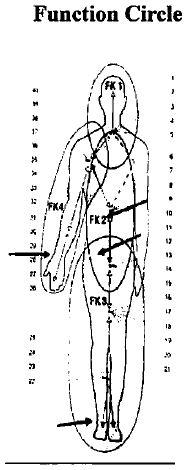
Using the Traditional Chinese Medicine (TCM) method, acupoints are selected fiom both sides of the wrists, ankle joints, and abdomen (Fig2).
However, to select these acupoints individually, the direct method of Omura: Bi Digital O-ring Test (BDORT)is used. By applying the principal of BDORT, the shape of O-ring is formed by the thumb and index fingers. Then, by using the other side of the index finger, the practitioner would find the point where the muscle contraction (within the O-Ring) is reduced (Table 1). At the points where the practitioner is not able to hold the O-ring shape, they are identified as acupoints.
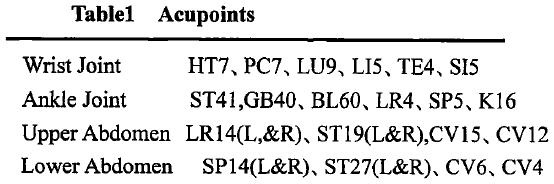
Wrist Joint
HT7, PC7, LU9, LI5, TE4, SI5
Ankle Joint
ST41,GB40, BL60, LR4, SP5, K16
Upper Abdomen
LR14(L,&R) ST19(L&R),CV15, CV12
Lower Abdomen
SP14(L&R), ST27(L&R), CV6, CV4
Superficial acupuncture treatment carried out by using Omura: BDORT method reduces perceived pain and heals musculoskeletal disorders by increasing blood circulation. It also has a positive effect on athletes’ performance by increasing muscle flexibility without losing muscle strength. The effectiveness of this treatment on them usually lasts between24 hours and7 days. However it has a less positive effect on patients who are suffering from structural problems such as fracture.
Get full access to this article
View all access options for this article.