




Abstract
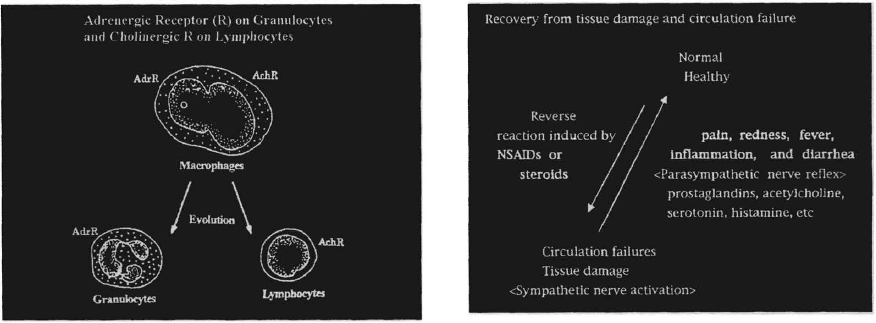
Macrophages, constituting a host defense system, are the most fundamental leukocytes which protect the human body from bacteria and antigens. In the course of phylogenetic development, multi-cellular organisms acquired granulocytes and lymphocytes from proto-macrophages. Granulocytes are beneficial for eliminating bacteria by their phagocytosis, whereas lymphocytes are beneficial for eliminating small antigens by their immune functions. The distribution of granulocytes and lymphocytes (e.g., 60%:35% in the peripheral blood of adult humans) is known to be influenced by the size of microbes which invade our body. In this review, it is also revealed that the distribution of these leukocytes is under regulation of the autonomic nervous system. This is due to the existence of adrenergic receptors on granulocytes and the existence of cholinergic receptors on lymphocytes. For the most part, the variety of leukocytes induced by the autonomic nervous system appears to be desirable for defense of the host. However, if our autonomic nervous system deviates too much in one direction, over-activation of granulocytes or lymphocytes appears, which results in certain diseases.
Get full access to this article
View all access options for this article.