




Abstract
Research on organizational communication in libraries has not been extensively conducted. This study aims to evaluate the current state of research on this subject. A systematic literature review method was utilized. The inclusion criteria focused on studies of organizational communication in libraries and research papers written in English. Searches were conducted in Scopus and ScienceDirect on 14 July 2025. To assess the risk of bias in the included studies, a quality assessment was employed. The analysis involved a thorough reading of the articles, followed by the creation of categories based on their content. Guided by the PRISMA framework, 27 articles published between 1995 and 2025 were analyzed. This review identifies two main categories, i.e. general studies and focused studies examining specific aspects of organizational communication. Most studies employed quantitative methods with descriptive statistics, while qualitative and mixed methods remain underutilized. It proposes practical and policy-level recommendations.
Keywords
Introduction
Organizational communication is the process of creating and negotiating collective, coordinated systems of meaning through symbolic practices aimed at achieving organizational goals (Mumby and Kuhn, 2019). This definition embraces the perspective that organizations are fundamentally constituted by communication. Organizations are not merely physical entities where individuals interact; rather, they exist because people collaboratively construct the intricate systems of meaning we call organizations. From this viewpoint, communication transcends being just one element of organizational life; rather, organizations are fundamentally understood as communicative phenomena.
Organizational communication is a crucial and fundamental element that significantly influences an organization. It impacts both organizational performance (Achieng Otieno et al., 2015; Haroon and Malik, 2018; Sabino et al., 2021) and organizational effectiveness (Gochhayat et al., 2017). Effective communication enables members of the organization to achieve their goals. When an organization reaches a point where its communication is not as effective as it should be, its overall functionality and performance may decline.
The importance of organizational communication extends to libraries as well. It is one of the most significant challenges confronting many libraries (Davis, 2022). Ineffective communication is a major factor contributing to library dysfunction (Henry et al., 2018). Library leaders must prioritize effective communication to foster a healthy organizational environment.
The significance of organizational communication in libraries appears to be underrepresented in library field research. Gould and Mezick (2021) noted that the subject of internal organizational communication is not extensively addressed within library studies. Similarly, Wakimoto (2022) indicated that if published research literature serves as a proxy for the level of focus and interest in a topic, then internal organizational communication is currently not a prominent subject in library studies, receiving even less attention than external communication, such as promotion. This observation is echoed by Davis (2022). Furthermore, library literature does not adequately explore interdepartmental communication between service units (Marcus and Turnbull, 2018). Consequently, there is a research gap owing to the lack of studies on organizational communication within the library field, despite its critical importance.
This study aims to address the research gap by exploring the role of organizational communication research within the library field. A systematic literature review is employed to elucidate the position of organizational communication research in this context. Such a review is crucial as it provides foundational knowledge for researchers in both organizational communication and library science. Previous systematic or bibliometric literature reviews on organizational communication have been documented in the Web of Science (Türk and Mızrak, 2021). In contrast, systematic or bibliometric literature reviews within the library field have focused on various topics, including the quality of library services (Ashiq et al., 2022; Mamta and Kumar, 2024), online learning for the continuing professional development of college librarians (Shahzad et al., 2023), library automation software (Naveed et al., 2023), digital libraries (Borgohain et al., 2022), and green libraries (Li and Yang, 2023). Therefore, conducting a systematic literature review on organizational communication research within the library field represents a novel contribution to the existing body of knowledge.
Methods
This study employs a systematic literature review methodology, following a five-step process derived from Denyer and Tranfield (2009). These steps have also been utilized in several other studies (Barrueco and Termens, 2022; Khalid et al., 2021; Pomirleanu et al., 2022). The steps include: (1) formulating research questions; (2) locating relevant articles; (3) selecting and evaluating existing articles; (4) analyzing and synthesizing the findings; and (5) reporting the results. To assess the quality of this study, the researchers adhered to the Preferred Reporting Items for Systematic Reviews and Meta-Analyses (PRISMA) guidelines (Page et al., 2021).
Formulating research questions
The research questions are: (1) what aspects of organizational communication in libraries are being examined; (2) how is research on organizational communication in libraries conducted; and (3) what are the findings of studies on organizational communication in libraries? This study aims to evaluate the current state of research on organizational communication within the library field.
Locating relevant articles
Organizational communication research within the library field was conducted using the following strategies: (1) databases—Scopus and ScienceDirect; (2) search date—14 July 2025; (3) population—organizational communication, internal communication, communication climate, leadership communication, communication in organizations, workplace communication, and communication problems; (4) intervention—library and librarian (population and intervention are part of the population, intervention, comparison, outcome tool in systematic reviews, helping researchers to define search terms; Cooke et al., 2012); (5) keywords—organizational communication, internal communication, communication climate, leadership communication, communication in organizations, workplace communication, communication problems, library, and librarian; (6) search string: (“organizational communication” OR “communication climate” OR “internal communication” OR “leadership communication” OR “communication in organizations” OR “workplace communication” OR “communication problems”) AND (library OR librarian); (7) search fields—article title, abstract, and keyword fields; and (8) publication timeframe—no time limit. This strategy was adopted owing to the limited research on organizational communication within the library field. These search strategies resulted in 180 articles in Scopus and 18 articles in ScienceDirect. The citation information and abstracts of those articles were exported to a BibTeX file.
Selecting and evaluating existing articles
The articles in the search results were selected and evaluated using the Parsifal online tool, which involved three stages: identifying duplicates; selecting based on inclusion and exclusion criteria; and assessing quality (see Figure 1). In the first stage, duplicates were identified. The duplicates were identical documents. The researchers used Parsifal to detect duplicate articles automatically. A BibTeX file from the step of locating relevant articles was imported into Parsifal. By choosing to find duplicates in the menu, 17 duplicate entries were identified.
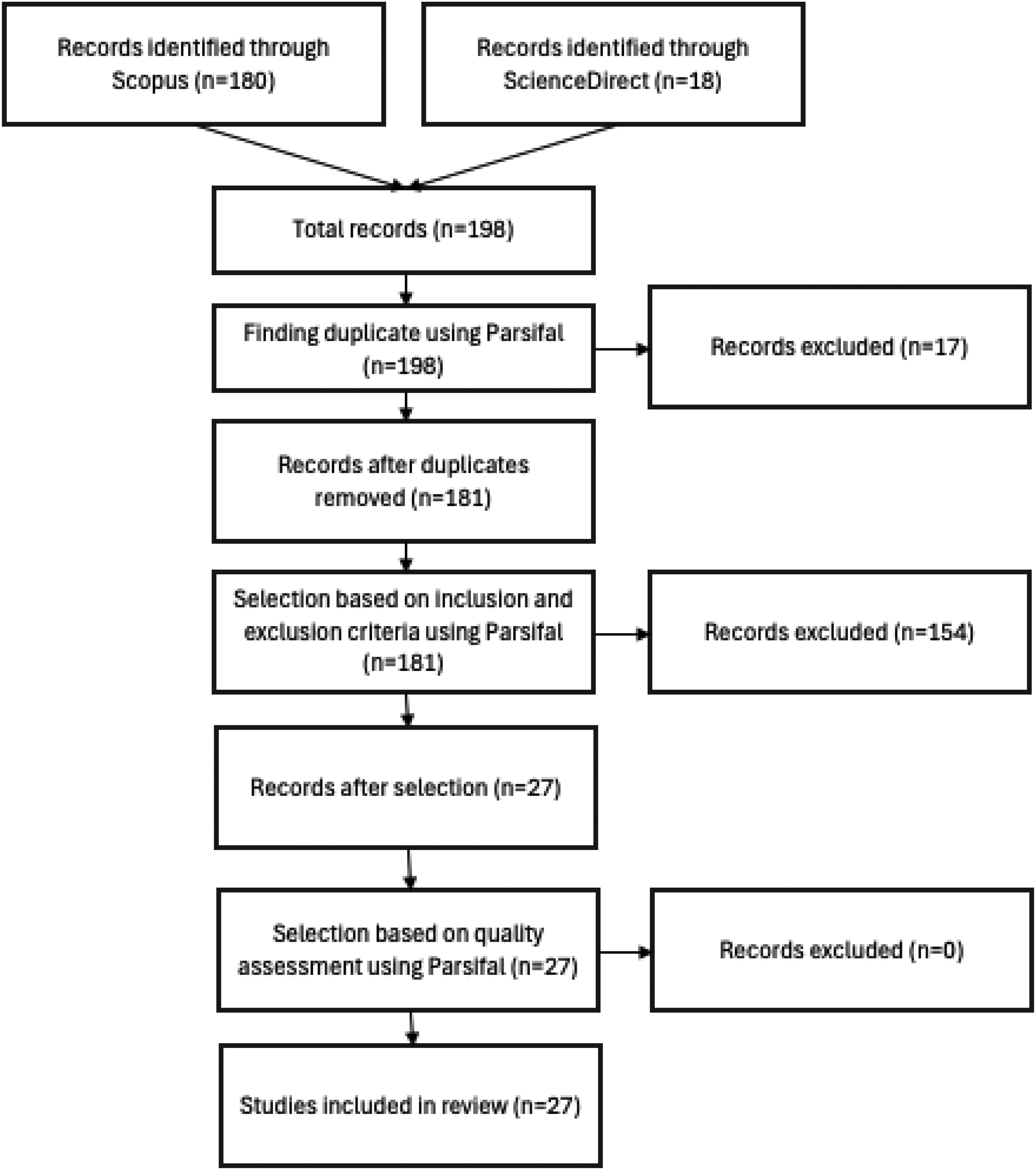
Locating, selecting, and evaluating articles for the study. Source: Created by the authors.
The second stage involved selecting articles based on inclusion and exclusion criteria. The inclusion criteria specified that articles must focus on organizational communication within a library. The exclusion criteria included non-English language articles, documents classified as books, articles for which the full text could not be located, and non-research articles. Non-research articles were defined as review articles on organizational communication in a library that lacked research questions and methodologies. The researchers screened titles and abstracts using Parsifal to determine the subject matter, document type, and language of the articles. To identify non-research articles, we searched and screened the full-text versions. Afterwards, the researchers selected the status menu in each article in Parsifal and decided to reject or accept the article based on the specified criteria. We found 103 articles unrelated to organizational communication in a library, five articles in a non-English language, two documents classified as books, two full-text articles that could not be located, and 42 non-research articles. The results of this second stage yielded a selection of 27 articles.
These articles were assessed using a quality evaluation checklist that included the following criteria: (1) how relevant is the topic addressed in the article to this systematic review; (2) to what extent is organizational communication in libraries the primary focus of the study; (3) is the research question clearly defined in the article; (4) is the research method clearly described; and (5) to what degree are the research articles applicable to this systematic review? The researchers used Parsifal to carry out this assessment. Responses to the checklist were categorized as yes (1.0), partially (0.5), or no (0.0). We completed the checklist on Parsifal. The final score for each article was calculated as the total of all criteria. The assessment results showed 14 articles with a score of 5.0, one with a score of 4.5, 10 with a score of 4.0, and 2 with a score of 3.0. We classified an article as low quality if it scored below 2. Since no article was rated as low quality, no additional articles were excluded from the dataset. In summary, after applying the exclusion criteria and quality assessment procedures, the dataset of selected articles for review was narrowed to 27 that fulfilled all requirements.
Analyzing and synthesizing the findings
The analysis was conducted on 27 selected articles. The oldest article was published in 1995, while the most recent article was published in 2025. The majority of the articles were published in 2022 (see Figure 2). The analysis focused on specific research questions, including the aspects of organizational communication examined, the research methodologies employed, and the findings of the studies. The analysis involved a thorough reading of the articles, followed by the creation of categories based on the content. These categories will be validated through a subsequent review of the articles.
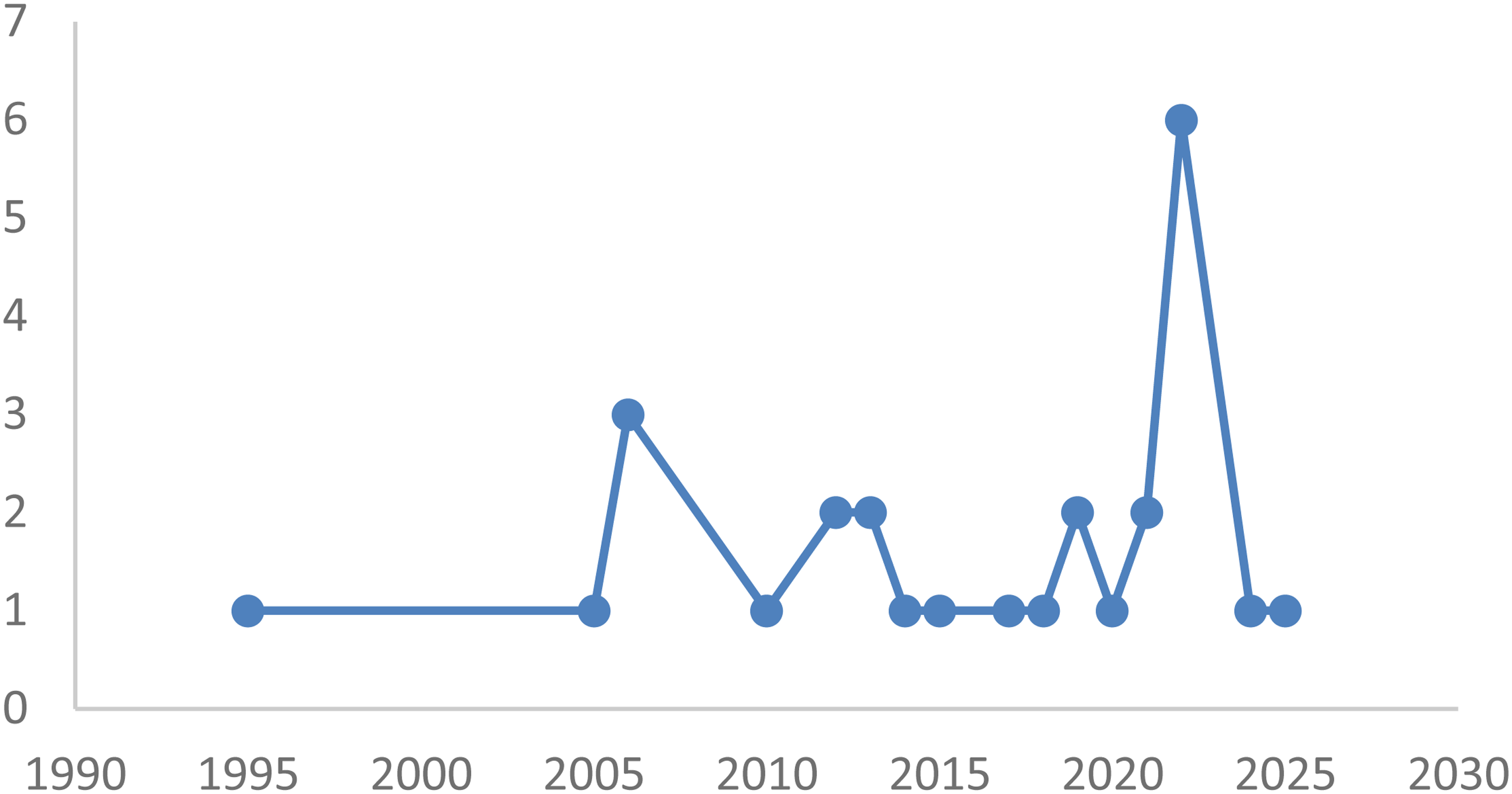
Publication year of selected articles. Source: Created by the authors.
Reporting the results
The findings of the analysis and the subsequent discussion are presented in the Results and Discussion section. The results are categorized according to the research questions posed. Related studies identified by the researchers inform the discussion of the obtained results.
Results and discussion
The categories of research locations include various types of organizations and countries. The types of organizations where the research was conducted are as follows: academic libraries (12 articles), public libraries (4 articles), special libraries (3 articles), multiple types of libraries (4 articles), digital libraries (1 article), library associations (1 article), and unspecified locations (2 articles). The research locations encompass several types of libraries because the studies involved respondents from public libraries, academic libraries, school libraries, government libraries, and other library types (Hall and Duggins, 2022; Marcus and Turnbull, 2018; Sheikha and Younis, 2006). The unspecified locations refer to articles that did not explicitly mention the type of library (Acadia, 2020; Oyelude and Oladele, 2014). Additionally, the countries where the research took place include the United States (17 articles), Iran (4 articles), Nigeria (2 articles), Jordan (1 article), South Africa (1 article), Taiwan (1 article), and Indonesia (1 article).
Aspects of organizational communication
There are two major categories related to aspects of organizational communication in the libraries studied, i.e. general organizational communication and specific aspects of organizational communication. Research on organizational communication broadly identifies internal communication problems as challenges in implementing RDA (resource description and access) (Mantegh et al., 2024), developing librarian leadership (Mort Feldmann et al., 2013), addressing library staff absenteeism (Sheikha and Younis, 2006), adopting cloud computing by reference librarians (Luo, 2012), integrating information and communication technology (ICT) (Oyelude and Oladele, 2014), and empowering female librarians (Nakhoda and Rahimian, 2015). However, these studies did not specifically focus on organizational communication or explore its aspects in depth. Other research has focused on organizational communication and examined specific aspects in more detail. The first key aspects identified in these studies are communication channels (Akintunde and Selbar, 1995; Chalmers et al., 2006; Chan et al., 2012; Costello and Bosque, 2010; Houk et al., 2022; Khoo, 2005; Wakimoto, 2021, 2022). The second key aspects are communication types, including horizontal communication (Chalmers et al., 2006; Costello and Bosque, 2010; Khoo, 2005; McElfresh and Stark, 2019; Rimes et al., 2017), vertical communication (both upward and downward) (Akintunde and Selbar, 1995; Khoo, 2005; Stevenson, 2022), inter-departmental communication (Gould and Mezick, 2021; Marcus and Turnbull, 2018), and intergenerational communication (McElfresh and Stark, 2019). The third key pertains to specific communication areas, such as leadership roles (Houk et al., 2022; McElfresh and Stark, 2019; Wakimoto, 2021, 2022), change communication (Houk et al., 2022), organizational learning (Acadia, 2020; Chen, 2006), crisis communication (Hall and Duggins, 2022; Stevenson, 2022), communication conflict (Rimes et al., 2017), communication satisfaction (Akintunde and Selbar, 1995; Chalmers et al., 2006; Hall and Duggins, 2022), communication audits (Chalmers et al., 2006; Mandiwana and Barker, 2022), and communication climate (Mengel et al., 2013; Rahmi and Laksmi, 2019). These three key aspects are illustrated in Figure 3.
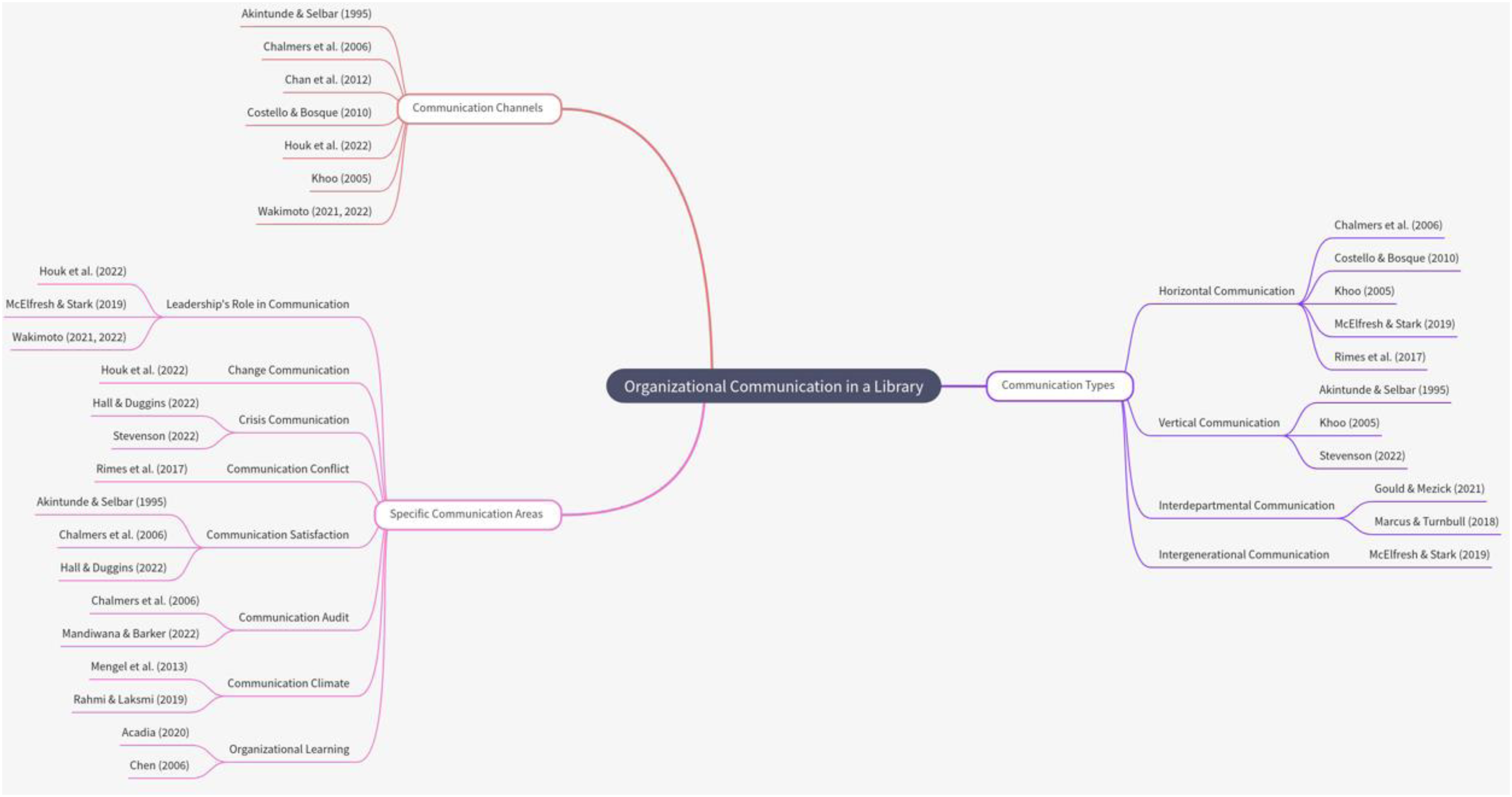
Aspects of organizational communication in libraries. Source: Created by the authors.
Organizational communication research zpproaches
Research on organizational communication in the library context employed three approaches, i.e. quantitative, mixed, and qualitative methods (see Figure 4). Most of these studies used quantitative methods (n = 14). The majority of this research relied on descriptive statistical analysis (n = 12). Only Sheikha and Younis (2006) applied one-way analysis of variance to evaluate the impact of independent variables on the dependent variable, while Rachmani et al. (2025) used structural equation modelling–partial least squares analysis to examine the relationships between variables.
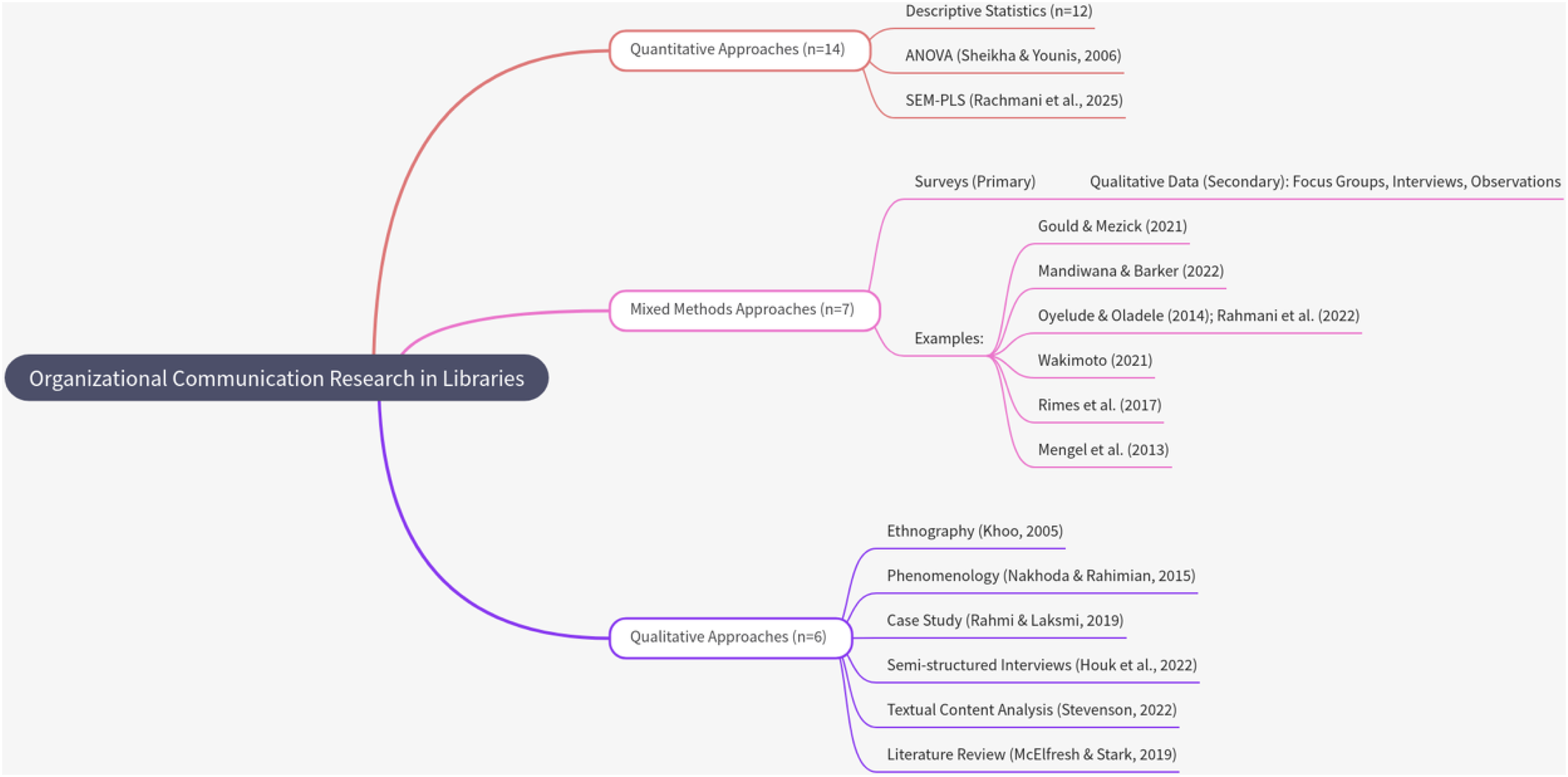
Organizational communication research in libraries. Source: Created by the authors.
Research utilizing a mixed-methods approach is the second most prevalent form of research in library communication organizations (n = 7). These studies primarily employed surveys as their primary data collection method. Most of this research incorporated qualitative data as supplementary, including focus groups (Gould and Mezick, 2021) and interviews (Mandiwana and Barker, 2022), for initial exploration before proceeding to quantification through surveys. Additionally, interviews and observations were used for comparison with survey data (Oyelude and Oladele, 2014; Rahmani et al., 2022), while semi-structured interviews followed up on survey results (Wakimoto, 2021). Furthermore, interviews and focus groups were employed to enhance the interpretation of quantitative survey data (Rimes et al., 2017), and focus groups were utilized to delve deeper into some of the ClimateQUAL results (Mengel et al., 2013).
The other six studies employed a qualitative approach. Khoo (2005) employed ethnography in natural settings, observing members of a digital library project as they performed their daily tasks. Nakhoda and Rahimian (2015) adopted a phenomenological approach, collecting data through semi-structured interviews with nine female managers from leading public libraries. The data were analyzed using a qualitative thematic analysis method, which involves identifying themes through a meticulous reading of the data. Rahmi and Laksmi (2019) implemented a qualitative case study approach, gathering data through observation, interviews, and document analysis at a special library. The analysis was framed using Redding's communication climate dimension framework. Houk et al. (2022) also employed a qualitative approach, collecting data through semi-structured interviews. Meanwhile, Stevenson (2022) concentrated on conducting textual content analysis of open-ended questions. One study reviewed existing literature on inter-generational workplace communication among librarians and other front-facing service employees (McElfresh and Stark, 2019).
Organizational communication research findings
The state of organizational communication within the library is evaluated through a communication climate assessment, an organizational communication satisfaction assessment, and a communication audit (see the ‘Assessment Methods’ point in Figure 5). The communication climate assessment utilized Redding's communication climate dimensions (Rahmi and Laksmi, 2019) and ClimateQUAL (Mengel et al., 2013). An organizational communication assessment was conducted by Akintunde and Selbar (1995), Hall and Duggins (2022), Rachmani et al. (2025), and Rimes et al. (2017). Librarians indicated that their level of organizational communication satisfaction was relatively moderate (Rachmani et al., 2025). The average level of organizational communication satisfaction among college and school library staff during the COVID-19 pandemic was lower than the overall satisfaction of library staff (Hall and Duggins, 2022). Most staff members expressed satisfaction with both memos and face-to-face communication within vertical communication channels (Akintunde and Selbar, 1995). However, the majority of staff members indicated that they were satisfied with the existing vertical communication patterns. Concurrently, Chalmers et al. (2006) conducted a communication audit using three broad categories, i.e. general library communication behavior, perceptions of communication practices, and organizational communication satisfaction.
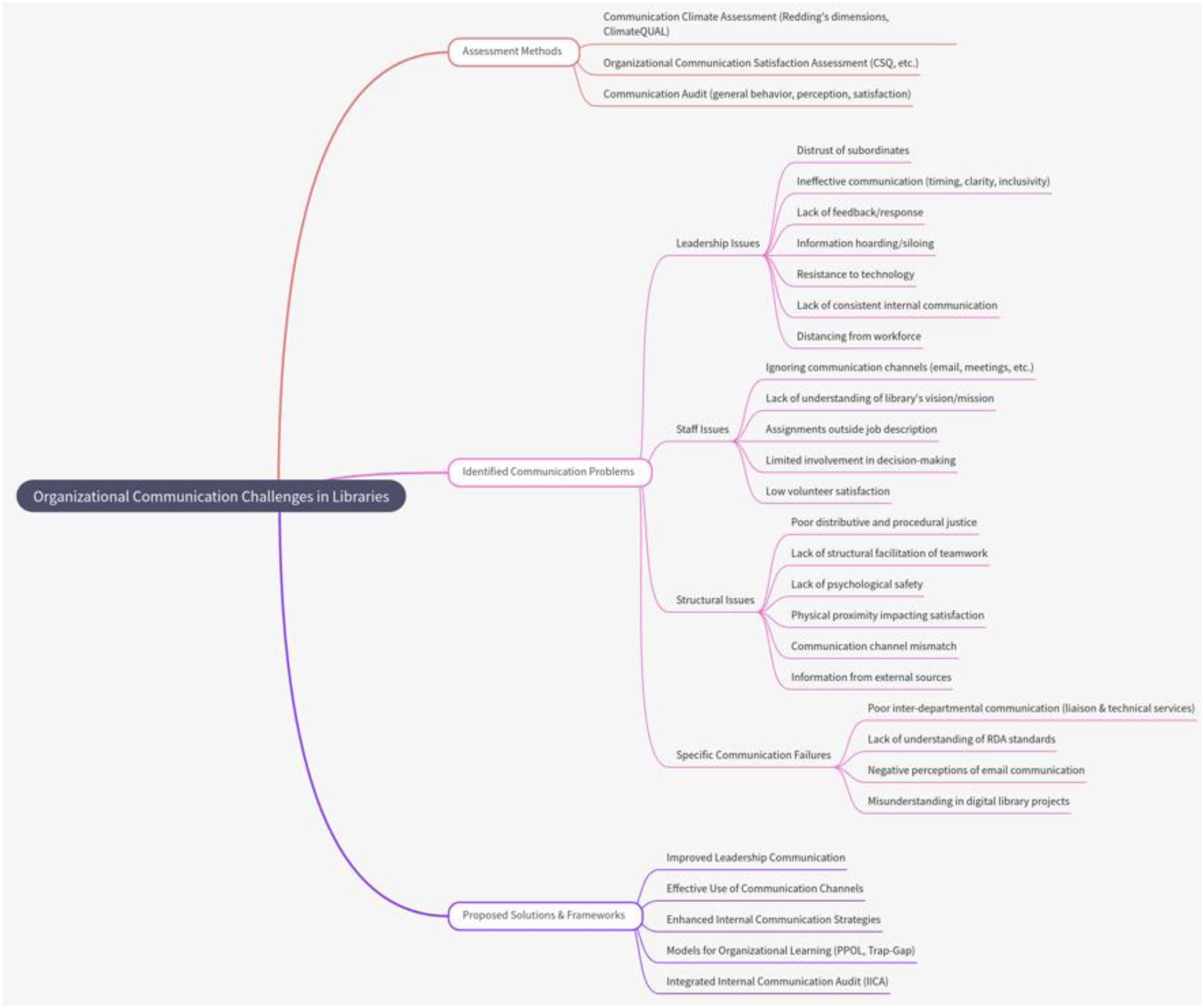
Organizational communication challenges in libraries. Source: Created by the authors.
Communication issues were identified within research (see the ‘Identified Communication Problems’ point in Figure 5). The causes of communication problems within libraries can be linked to both individual staff factors and leadership dynamics. Even a well-structured communication system can fail when library staff neglect to utilize the available communication channels. This includes failing to check email messages, not attending meetings (Wakimoto, 2022), overlooking blog posts, ignoring updates on the organization's website (Houk et al., 2022), assignments falling outside job descriptions, limited involvement of library staff in decision-making processes, and lack of awareness regarding the library's vision and mission (Rahmi and Laksmi, 2019). Staff members failed to listen to volunteers’ ideas and input, and did not provide constructive feedback (Rimes et al., 2017).
Library leaders play a vital role in improving communication within the organization, as they greatly influence its effectiveness. Communication problems arise when leaders communicate poorly, such as not being on time, not being clear, or not involving everyone. Also, they rely on gossip, fail to respond to feedback (Wakimoto, 2022), do not share information (Wakimoto, 2021, 2022), and hoard or silo information (Wakimoto, 2021). Additionally, they may lack reviews (Mandiwana and Barker, 2022), convey excessive information that is often inaccurate, irrelevant, and not transparent (Stevenson, 2022), communicate inconsistently, communicate rarely, fail to highlight key issues effectively, or do not present information attractively (Houk et al., 2022). They might be slow in their communication, provide insufficient information (Hall and Duggins, 2022), and exhibit distrust towards subordinates (Rahmi and Laksmi, 2019). Library leaders were distancing themselves from their staff, posing particular challenges for ICT adoption (Oyelude and Oladele, 2014). Such behavior creates a wide gap, rendering them unapproachable and reducing opportunities for feedback from lower and middle management levels. Library staff may receive communications in different formats and at various times, depending on their supervisor (Hall and Duggins, 2022). Moreover, resistance to technology, mainly among leaders, has caused additional issues (Oyelude and Oladele, 2014).
Communication problems in libraries often also occur owing to contributions from the organizational hierarchy. Information is received from external sources, such as news media, rather than from within the organization. Factors such as physical space and informal communication (the grapevine) influence organizational communication satisfaction (Akintunde and Selbar, 1995). Additionally, there were areas where the library needs to focus its efforts, such as distributive and procedural justice, structural facilitation of teamwork, and fostering psychological safety (Mengel et al., 2013).
Communication problems often arise when the chosen communication channels do not align with the needs and nature of the information being conveyed. The most commonly used communication channels include email, meetings, face-to-face interactions, online bulletins, telephone calls, written communication, social media, instant messaging, wikis, blogs, and intranets (Akintunde and Selbar, 1995; Chalmers et al., 2006; Chan et al., 2012; Houk et al., 2022; Khoo, 2005; Wakimoto, 2021, 2022). Each channel has its own advantages and disadvantages. For example, the benefits of meetings, such as departmental and all-staff meetings, include opportunities for discussion and ensure that everyone receives information simultaneously (Wakimoto, 2021). These meetings also facilitate clarification, feedback, and conflict resolution without wasting time (Mandiwana and Barker, 2022). In contrast, sending information via email is suitable for content that does not require discussion. Email provides a digital footprint, allows for rapid dissemination of information, and ensures that everyone receives the message at the same time (Wakimoto, 2022). Additionally, it serves as written evidence (Mandiwana and Barker, 2022). However, email is effective only if the target audience actually reads the email message. Wikis are useful for storing more permanent information, but utilizing and contributing to a wiki require effort (Costello and Bosque, 2010). Cloud-based file-sharing services have facilitated collaborative work both within the department and across other departments (Luo, 2012). Instant messaging allows for quick and informal communication (Chan et al., 2012).
Organizational communication issues in libraries present fundamental challenges in library management. Nakhoda and Rahimian (2015) identified that the empowerment of women librarians in public libraries is hindered by factors such as inadequate organizational communication systems, negative attitudes towards mistakes, instructive management styles, and a lack of awareness of shortcomings. An analysis of leadership development in an academic library revealed a significant weakness, i.e. a lack of consistent internal communication throughout the institution (Mort Feldmann et al., 2013). Administrative factors contributing to staff absenteeism in both academic and public libraries include poor organizational communication, ineffective leadership processes, inadequate communication practices, insufficient supervision, and passive management (Sheikha and Younis, 2006).
Mantegh et al. (2024) found that more than half of university librarians do not fully understand RDA standards. This significant lack of understanding results in three major challenges during the implementation of RDA, i.e. transitioning to new library software, lacking sufficient information and knowledge for practical implementation, and experiencing communication breakdowns within the library. The difficulties associated with transitioning to new software and the lack of information highlight existing communication problems. Effective communication is essential to ensure a smooth software transition and to enhance librarians’ comprehension of RDA standards. Working groups and principal investigators did not always clearly communicate their understanding of the digital library project to one another (Khoo, 2005). Principal investigators assumed that they and the working groups were on the same page in their understanding of digital library collection development. Vertical communication can yield both negative and positive perceptions. Library frontline staff reported negative experiences regarding the quality of email communication from upper-level management, citing issues such as excessive information, inaccuracies, irrelevance, and a lack of transparency (Stevenson, 2022).
Organizational communication issues encompass not only upward and downward communication but also inter-departmental interactions. Communication between subject librarians in the liaison program department and librarians in the technical services department significantly impacted the procurement of library collections (Gould and Mezick, 2021). Subject librarians engaged with units outside the library, particularly teaching units, to understand ongoing research and the resources utilized for teaching and learning. They serve as liaisons between the teaching units and the technical services department responsible for collection procurement. Communication occurs both formally, through regular meetings, and informally, when the technical services department responds to inquiries from subject librarians via email. Public service units communicate with one another daily (Marcus and Turnbull, 2018). Most staff members reported being moderately familiar with the policies, services, and workflows of other units. However, they expressed a desire for more information regarding current and evolving job responsibilities, departmental issues, and ongoing projects.
The research also proposed a framework (see the ‘Proposed Solution & Frameworks’ point in Figure 5). Library leaders must prioritize the implementation of effective internal communication strategies (Wakimoto, 2022). Improved leadership communication enhances organizational communication satisfaction, while higher levels of satisfaction contribute to greater agility among librarians (Rachmani et al., 2025). Besides ensuring that messages are received, leaders must also ensure that members understand the information. The organization should formulate a communication plan that considers the diverse preferences and significant factors for the members (Houk et al., 2022). A subsequent step involves the analysis of the communication methods preferred by members. It is imperative to employ a multifaceted approach when disseminating information within an organization. Media Richness Theory suggests that non-routine and complex communications should be conveyed through rich media, such as face-to-face interactions (Stevenson, 2022). In contrast, routine and straightforward communications can be transmitted through lean media, encompassing scheduling, policies, directional information, announcements, and related communications.
Library evaluation is an integral component of organizational learning. Chen (2006) proposed the Process and Phases of Organizational Learning model, which uses a framework for communicating information and encompasses the stages of intuiting, interpreting, integrating, and institutionalizing. This model provides a conceptual framework for understanding the learning processes and organizational change within the library. Acadia (2020) introduced the conceptual Trap-Gap Framework to highlight the significance of organizational knowledge (knowing), competence, and strategic dynamics in the library workplace. More than half of librarians report working in dysfunctional libraries. Libraries that struggle with internal operations, such as communication issues, adversely affect both individual employees and the organization as a whole. Therefore, libraries must recognize and adapt to internal challenges by effectively managing organizational information and knowledge to improve their operations.
Considering the continuous changes in policy, personnel, and services, the communication assessment must become a cyclical process to ensure success. Mandiwana and Barker (2022) proposed an Integrated Internal Communication Audit, which was adapted from the Communication Satisfaction Questionnaire, the International Communication Association audit, the Organisational Culture Survey, and the Critical Incident Technique. This audit instrument was designed to assess organizational communication in a South African university library. The instrument focuses on dimensions such as information received, information desired, information sources, communication feedback, information received through formal and informal communication channels, relational aspects, informational/relational dynamics, organizational output, and organizational culture.
Discussion
Most research on organizational communication within the library field is conducted in academic libraries in the United States. This aligns with findings from other organizational communication studies (Türk and Mızrak, 2021) and library research (Ashiq et al., 2022; Shahzad et al., 2023), which indicate that the United States is the most productive country in this area. One possible explanation for this trend is the close relationship between academic libraries and research environments. Additionally, the United States has a wealth of articles addressing organizational communication across various subjects.
There are few studies on organizational communication within the library field, which contrasts sharply with the extensive body of communication research in general. A study identified 1398 articles on organizational communication published between 2000 and 2021 (Türk and Mızrak, 2021). This strengthens the opinion that not many researchers consider the theme of communication organization within the library field. This finding reinforces the notion that relatively few researchers focus on the theme of organizational communication within the library field.
The theme of organizational communication emerged from research on technical issues in libraries. This finding resonates with everyday experiences in library settings. For instance, the Georgetown University Library, which experienced a reduction in its collection development budget, discovered that two-way dialogue between the collection development task force and subject librarians was essential for the success of the collection development review process (Jones and Arthur, 2019). Similarly, the Toledo Lucas Public Library established transparent, empathetic, and consistent organizational communication, enabling it to retain public trust during the COVID-19 pandemic (Carroll and Kucsma, 2022).
Research on organizational communication in libraries indicates that themes related to technology are no longer the primary focus. In the early twenty-first century, there has been significant interest in Web 2.0 and social media applications aimed at enhancing internal communication in libraries (Wakimoto, 2022). Examples include the use of blogs at Vanterbury University and Western Kentucky University libraries, as well as wikis at the University of Houston and Karolinska Institutet (Davis, 2022; Gottfried et al., 2015; Haya et al., 2020). Consequently, there has been a notable shift in the themes explored in organizational communication research within the library field.
Research on organizational communication in libraries is predominantly influenced by a positivist perspective, which emphasizes quantitative methodologies. This approach regards organizational communication primarily as a mechanism for organizations to achieve their objectives. Within this framework, organizations serve as environments where communication occurs, with individuals exchanging information from their various roles within the organization (Mumby and Kuhn, 2019). Communication is understood as the process of transmitting information within an established organizational structure. However, findings from one quantitative study recommend further investigation utilizing a qualitative approach, specifically through interviews, to gain a more nuanced understanding of the subject (Wakimoto, 2022). The limited use of qualitative methods in research on organizational communication in libraries reflects an interpretive perspective. This viewpoint conceptualizes organizations as embodiments of communication. Communication is regarded as the fundamental force that shapes organizations, viewing them as phenomena of communication.
The assessment of organizational communication in libraries should be conducted using both quantitative and qualitative data. Instruments for assessing organizational communication, tailored to library environments, can be further developed, as demonstrated by Mandiwana and Barker (2022). Just as ClimateQUAL from the Association of Research Libraries serves as a communication climate assessment tool specifically designed for libraries, there is also potential for creating additional communication assessment instruments within this context.
An organizational communication assessment will be beneficial for library leaders seeking to enhance communication in areas identified as deficient. The Nanjing Agricultural University (NAU) Library identified management and communication challenges through an organizational climate survey (Liu and Tang, 2019). While the survey was not specifically focused on communication climate, it did reveal several communication-related issues. To foster better communication among members of different departments, the NAU Library hosts an annual knowledge competition. It encourages librarian participation in various interest groups, including outdoor activities, photography, chess, and basketball.
Organizational communication challenges in libraries necessitate a commitment from library leaders to implement practical solutions. Leadership serves as a mediator in managing resistance during the change process, which significantly impacts organizational performance (Sabino et al., 2021). Leaders are crucial in fostering positive employee relations, reducing both individual and organizational resistance, and promoting enhanced employee performance, ultimately leading to improved organizational outcomes. While libraries may face personal and interdepartmental communication issues, strong leadership can effectively address and resolve these challenges.
Limitations and future directions
The limitation of this study is that the research articles were sourced exclusively from two databases: Scopus and ScienceDirect. Future research could benefit from consulting additional databases to identify more articles related to organizational communication in libraries. Furthermore, to enhance the data sources, subsequent studies could include reference searches. This process involves examining the references and works cited in each selected article, adhering to the principle that a relevant article should cite and be cited by other articles on the same topic. Additionally, refining keywords may increase the number of articles available for future systematic literature reviews.
In the future, research on organizational communication in libraries should adopt an interpretive approach that perceives the organization as a manifestation of communication itself. Non-research articles excluded from this review provide valuable insights into organizational communication practices within libraries. Suppose the authors of these non-research articles employ qualitative methods. In that case, it will enhance the depth of information regarding organizational communication practices in libraries and render the findings more scientifically valid.
Further research aimed at enhancing the understanding of organizational communication in libraries can be conducted across various types of libraries and in different countries. Specifically, studies could focus on school libraries or national libraries, as there is a lack of research in these areas. Researchers from diverse countries should engage in this effort to provide a comprehensive overview of organizational communication within libraries in their respective regions.
Conclusion
This systematic literature review demonstrates that while organizational communication in libraries is increasingly recognized as essential, it remains an under-researched and methodologically inconsistent area. The literature reveals a fragmented field characterized by limited theoretical grounding, uneven methodological rigor, and under-representation of critical qualitative insights. Key findings highlight a dominant focus on communication problems rather than strengths or best practices. There is a lack of consensus on conceptual frameworks or models for organizational communication in libraries. The central role of leadership and internal communication satisfaction in shaping communication outcomes is emphasized. Communication audits and climate assessments are identified as promising tools for organizational development. Despite these gaps, the review underscores the potential of organizational communication studies to support library innovation, staff well-being, and service quality.
This research has implications for practice and policy. Library leaders should prioritize clear, consistent, and transparent communication across hierarchical levels; foster a culture of feedback and information sharing, particularly during organizational change or technology transitions; recognize the role of communication satisfaction in staff agility and service performance; embed communication performance indicators in library evaluation frameworks; support leadership development initiatives that emphasize communication competencies; and promote equity and inclusivity by addressing structural and interpersonal barriers to communication in diverse library settings. Practitioners should use communication audits and climate assessment tools to diagnose organizational issues and inform interventions. They should tailor communication channels to match the nature and urgency of information and encourage interdepartmental dialogue to reduce silos and improve coordination. Meanwhile, researchers should expand the use of qualitative and mixed methods to explore communication processes in depth. They should also adopt rigorous appraisal frameworks to enhance the credibility of future studies and broaden the time frame and database inclusion in future reviews to include foundational and global perspectives.
Footnotes

Funding
The authors disclosed receipt of the following financial support for the research, authorship, and/or publication of this article: This work was supported by the Universitas Padjadjaran.
Declaration of conflicting interests
The authors declared no potential conflicts of interest with respect to the research, authorship, and/or publication of this article.