




Abstract
In the last decade there have been many initiatives and projects that have dealt with open educational resources with the goal of making education more available and also of improving formal educational practices. The Erasmus+ project Digital Education for Crisis Situations: Times When There Is No Alternative is such an initiative and one of its planned intellectual outputs is to produce a new open educational resource on the preservation of analogue and digital materials. Planning and creating an open educational resource on preservation needs to be based on an understanding of the content that comprises the complex field of preservation. This also provides the basis for conducting research on the available open educational resources in this field. This article aims to provide an overview of the available open educational resources on preservation through an investigation of open educational resource platforms, finding open educational resources on preservation, and analysing them according to the theoretical background on preservation. This provides an understanding of what kinds of open educational resources exist in the field of preservation and also informs the way a new open educational resource should be created.
Introduction
The rapid development of information and communications technology has caused numerous changes in the way students and teachers experience education and learning. This was especially evident during the COVID-19 pandemic, when schools, universities and other educational institutions, as well as libraries, archives and museums, had to change the way they taught and presented their educational materials, organized exhibits, and so on. Online learning and teaching became the ‘new normal’, and many institutions and individuals were suddenly and unexpectedly faced with it. Open educational resources (OERs) enable this kind of education and have become a common and popular way of disseminating and transferring knowledge to interested users, as well as an effective way of learning (Essmiller, 2021; Huang et al., 2020; Ossiannilsson, 2021; Rimmer, 2020). They first appeared during the 1990s when the Multimedia Educational Resource for Learning and Online Teaching (MERLOT) was created at California State University for the purpose of higher education. This platform provided online curriculum materials, which were mostly available for free. This new way of knowledge dissemination gained momentum and popularity when the Massachusetts Institute of Technology decided to open its courses to students, professors and the public completely free of charge. Since then, numerous OERs and platforms have been made available to interested users. They cover an extensive range of topics and are designed for various educational purposes, from informal learning to formal education (Bliss and Smith, 2017; Boczar and Jordan, 2021; Pawlowski and Bick, 2012; Van Allen and Katz, 2020).
The increasing occurrence of OERs in the modern information society raises the question of their quality as well as applicability to certain areas. It is important that an OER contains information or metadata that defines the authors of the educational materials and their institutions if they are affiliated with one; licenses that clearly state in what way the content can be used; trustworthy references; and technical dimensions that allow the end user to understand what is needed for the use of the educational materials. OER quality assessment is necessary because a certain set of parameters – for example, metadata, author information or content presentation – can be used to determine why some OERs are used more than others, or provide a basis for determining why some OERs are more successful than others. Also, quality assessment can establish which OERs are trustworthy and useful not only as educational materials but also as a product that is used by the end user to learn something. It is possible to develop a framework that allows researchers to analyse OERs according to their content, ways of content presentation (methodology), technical dimensions and design to further enable quality assessment (Almendro and Silveira, 2018; Krajsco, 2016). Nowadays, there are numerous projects that investigate the phenomenon of OERs and their production, categorization and optimization with the goal of making educational materials more available and providing better education. The Department of Information Sciences of the Faculty of Humanities and Social Sciences at the University of Osijek is the main coordinator of such a project. The Digital Education for Crisis Situations: Times When There Is No Alternative (DECriS) Erasmus+ project aims to advance digital education and as one of its six intellectual outputs plans to optimize existing OERs in the field of information science and design a completely new OER on the preservation of analogue and digital materials (Faculty of Humanities and Social Sciences, 2022). The design of a new OER will require extensive preparation and planning, including not only a digital but also a pedagogical dimension. Both dimensions will be considered in a comprehensive approach and will look at not only the specificities of OERs as educational materials but also the specificities of the area that is the topic of the OER (Butcher et al., 2011).
Based on the research already carried out by the DECriS team and numerous literature sources on the topic of OERs, this article considers the topic of preservation as the main theme of the OER that will be developed – that is, the research explores OERs that focus on the topic of preservation in general. At the initial stage of the development of such an OER, it is necessary to understand what kind of OERs are already available on this topic; how are they designed; their granularity; what kind of content they present; and what, if anything, is missing from them. Furthermore, it is important to define the main purpose of such a new OER and precisely select the content that will fulfil its purpose.
Open educational resources
Numerous definitions of the OER concept can be found in the literature on the topic: Open Educational Resources (OER) are learning, teaching and research materials in any format and medium that reside in the public domain or are under copyright that have been released under an open license, that permit no-cost access, re-use, re-purpose, adaptation and redistribution by others. (UNESCO, 2019) In its simplest form, the concept of Open Educational Resources (OER) describes any educational resources (including curriculum maps, course materials, textbooks, streaming videos, multimedia applications, podcasts, and any other materials that have been designed for use in teaching and learning) that are openly available for use by educators and students, without an accompanying need to pay royalties or licence fees. (Butcher et al., 2011: 24) [Open educational resources are] teaching, learning, and research resources that reside in the public domain or have been released under an intellectual property license that permits their free use and re-purposing by others. (Bliss and Smith, 2017: 12)
Definitions of an OER.
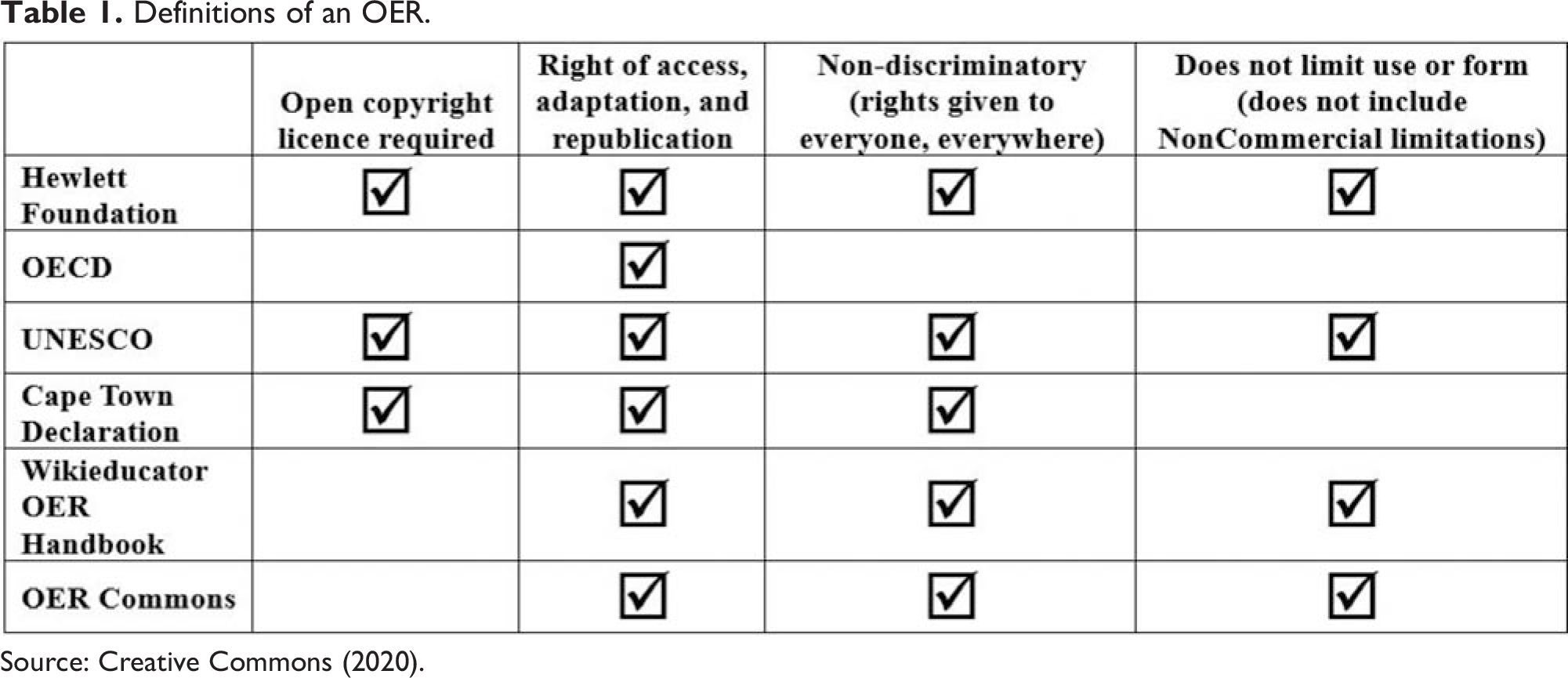
Source: Creative Commons (2020).
In summary, OERs can be, for the purpose of this article, simply defined as educational resources that are freely available for users/students and/or educators to use openly, adapt or reuse the educational content for non-commercial purposes. OERs can also be viewed as tools that support and enable distance education not only in online/digital learning in real time but also as a way of asynchronous learning during which the end user can learn at their own pace independently of a certain time frame (Butcher et al., 2011; Moist, 2017). Another characteristic that differentiates OERs from other educational materials is their openness. By definition, they are intended to be free of charge, which means that the end users of the content should not have to pay a fee to access them. This refers not only to the licenses under which OERs are accessible but also to their already mentioned openness, which can be defined by the so-called ‘5 Rs’ – retain, reuse, revise, remix and redistribute – which enable the free use of OERs. This means that users can freely manipulate the content in a way that is allowed by the OER license and have the possibility to integrate the OER into other material they wish to create (Butcher et al., 2011; Moist, 2017; Wiley, 2014).
Remixing or reusing an OER can be connected to the granularity of the OER, and refers to the way in which a certain OER can be prepared. OERs can consist of various forms of educational resources and, as such, be conceptualized as ‘big’ or ‘small’ in size. The granularity of a certain OER can impact not only its content presentation or the intention with which it was created, but also the way in which the content or parts of the OER can be used or reused. OERs that are big (OpenCourseWare (OCW) or full courses) are usually created by an institution or have passed certain quality assessments, and they offer more comprehensive content to the potential user. This means that they have a specific objective when it comes to teaching. OERs that are small include simple objects such as different texts, images or scientific articles, and have more potential to be reused since they are conceptualized as individual content (Almendro and Silveira, 2018; Centre for Educational Research and Innovation, 2007; Hylen, 2006).
Bearing in mind the openness of OERs, which allows for their reuse and adaptation, granularity and main attribute – being freely available – the question of their quality arises. As has been previously stated, OERs are widely available; it is possible for a variety of individuals or institutions to create their own OERs; and it is necessary to be able to assure a certain level of quality of the presented content as well as the OER in general. Quality assurance is an important question when it comes to the concept of OERs, and in the literature it is possible to find many efforts to create frameworks that can be used for OER evaluation. The quality of OERs is assessed by the ways in which the content is created, presented and technically realized. The criteria to be applied in quality assessment need to include an assessment of the authors that created the OER; the comprehensiveness of the content presented; the way in which the content is presented; the accessibility and discoverability of the OER; and the technological characteristics (design, availability, use) (Camilleri et al., 2014; Kawachi, 2014; Zawacki-Richter et al., 2022). All the above-mentioned criteria can be used to assess the quality of OERs in the field of the preservation of analogue and digital materials, but first it is necessary to determine what kinds of OERs on the subject are available to users. Therefore, an overview of the OERs on the preservation of analogue and digital materials is the central topic of this article. It is also important to understand the complexity of the field of the preservation of analogue and digital materials in order to, in turn, be able to develop a way to approach the basis for searching for OERs on OER platforms.
Preservation of analogue and digital materials
Preservation in general can sometimes be understood as a particular and overly technical process that is the domain of experts, who engage in the material aspect of what is considered to be preservation. This leads to the false perception that preservation is a technical area that includes only conservation and the restoration of materials. The term ‘preservation’ can also be understood as an area that is distanced from the everyday work of information professionals and deals with economic resources and legal frameworks that enable the process of preservation. This illustrates the complexity of the term and the field of preservation. It is a process that involves many different aspects, which needs to be approached comprehensively. Planning and conducting a successful and efficient preservation process includes taking all the above-mentioned issues, as well as sociocultural and educational aspects, into account. Efficient preservation can be achieved through successful preservation management.
Preservation management has its roots in (general) management as an economic concept and serves essentially the same purpose as the management of any other process. By definition, management is the most efficient use of resources to achieve goals and improve quality. This suggests that preservation management can be defined as an organized and systematic approach to ensure the permanence, availability and interpretation of materials in accordance with the mission of a particular information institution through the systematic and planned organization of staff and financial resources. According to the comprehensive preservation management model, preservation must be synchronized with an institution’s economic and legal environment; it needs to consider the human resources that will implement concrete solutions to achieve the effective preservation of the objects/collections in its care. The material with which the objects of preservation are composed (analogue or digital) is the foundation for all preservation activities and its handling presents the core of preservation. It can be concluded that preservation includes numerous activities that enable the preservation of not only the carrier of information (material), but also its content, whether analogue or digital. Directing preservation activities and achieving preservation management, at both the institutional and national levels, can be made possible by a comprehensive approach to the issue of preservation, which includes five key aspects: The strategic and theoretical aspect refers to the design and creation of programmes, strategies and preservation policies that are based not only on scientific and professional knowledge, but also on examples of good practice implemented at the national and international levels. The economic and legal aspect includes planning the financial resources that will be available to heritage institutions and finding additional resources to carry out preservation activities. This aspect also includes the legislative framework within which preservation activities are carried out. The cultural and social aspect refers not only to evaluation and the selection of materials for preservation, but also to the creation of value-added services that contribute to society as a whole. This aspect is extremely important in the presentation of heritage and for targeting designated user groups. The technical and operational aspect deals with the application of preservation methods and techniques, assessment of the storage conditions of materials in heritage institutions, and examination of the conditions of the collection, the results of which can serve as an excellent starting point for the creation of national programmes, projects and strategies for the preservation of analogue and digital materials. The educational aspect includes considerations about not only the preservation knowledge that information experts should have and its inclusion in educational programmes, but also the training and teaching of the staff of heritage institutions to carry out regular preservation activities (Krtalić and Hasenay, 2013b).
This comprehensive preservation management model also presents an effective way of planning the preservation process with a certain starting point in mind. For the purposes of this article, the educational aspect will be the starting point. It will be more thoroughly inspected as a possible first step in preservation planning because it provides a way to shape the knowledge base for preservation professionals, as well as a basis for the creation of effective, target-oriented OERs in the field of preservation. Some of the possible research issues in this educational aspect are the issues connected with designing and developing educational materials in the field of preservation. These issues can include the ways in which the content is presented to an audience in a formal or informal setting, as well as an online environment. This content can be divided into different parts, which correspond to the five aspects, because each aspect represents potential for education in the field of preservation. In order to create or assess OERs in the field of preservation, it is necessary to understand which content will be included and how it will be presented (Hasenay et al., 2011; Krtalić and Hasenay, 2013a, 2013b).
Methodology
As stated previously, there are many OERs on multiple topics available to end users, and the basic idea for this article was to create an overview of the OERs that offer methods, approaches, guides, literature, video materials and open textbooks, for example, in the field of the preservation of analogue and digital materials. The first step in this process was to identify the OER platforms that could be used to search for OERs on the preservation of analogue and digital materials. There is an abundance of platforms that list websites and platforms with OERs and, during the preliminary research, it was identified that many of them contain the same repositories and OER platforms. It was concluded that many of them list almost the same open educational websites, such as MERLOT, OER Commons, Coursera, edX and the Khan Academy, among others. It was decided to use the list of Stony Brook University Libraries because it is extensive and lists the well-known (previously mentioned) open educational websites and many more that could otherwise be overlooked. It is also important to consider a limitation of this research. The abundance of available OERs and OER platforms poses a challenge to a completely comprehensive approach to the research because it is almost impossible to be able to encompass them all. Also, an OER platform intended specifically for the field of the preservation of analogue and digital materials or preservation in general does not exist. Therefore, the research needed to adapt to the existing OER platforms, which enable access to OERs on a variety of topics. The classification of OERs on the preservation of analogue and digital materials was carried out according to the OER’s granularity (big or small) and the comprehensive preservation management model (aspects of the model).
The OER granularity classification refers to the design and technical dimensions of the OERs that were classified and analysed since it clearly states the types of available OERs and the way they are designed for the end user. For example, the big OERs such as massive open online courses (MOOCs) or OCW will be enriched with interactive content and have an overview of a certain topic presented in a user-centred way, while small OERs will be designed as simple resources in accordance with their function – that is, textbooks for reading, pictures for viewing, and so on. The classification of OERs by the aspects of the comprehensive preservation management model allows for a thematic overview of the available OERs and mostly delves into the way the content is or can be presented. It would be possible to further develop the criteria for the quality assessment and assurance of OERs on the preservation of analogue and digital materials, but this article centres on an overview of the available OERs according to their granularity and a thematic framework following the comprehensive preservation management model. It is important to emphasize that during the research there were additional criteria added. This allowed for a more in-depth analysis of the available OERs on the preservation of analogue and digital materials.
In the beginning stages of the research, it was crucial to create a list of keywords to be used for the search of OER platforms. The list of chosen keywords represented the complexity of the area of the preservation of analogue and digital materials, as it was assumed that this would achieve results that would represent the multiple areas found in the field of preservation. These keywords were chosen in such a way that the general term ‘preservation’ was expanded with other, more specific keywords, such as restoration, conservation, preservation of analogue materials, preservation of digital materials, preservation of cultural heritage, preservation of written heritage, cultural heritage, cultural heritage management, written heritage, restoration, book restoration, paper restoration, digital preservation, digital curation and digital stewardship. Based on these keywords, the search on various platforms was conducted and the data for each OER was noted on a Microsoft Excel spreadsheet. The data that was collected enabled the acquisition of data for OER identification – for example, title, author, description, year, field of study, level of study, intended audience, topic and publisher. There were certain challenges during the phase of data collection because some data – such as author, year, level and field of study, as well as the publisher – depended on the available description of the OER, and sometimes the description was missing or not immediately obvious.
The collected data was used to classify OERs on the preservation of analogue and digital materials according to their granularity – that is, whether they were big or small OERs. For the second part of the research, a typology table was created, consisting of criteria representing the type of resource. These OERs were then further classified according to the typology of big or small. For example, the typology of small OERs consisted of courses, curricular programmes and didactic modules, student guides and teaching plans, assessment tools, exercises and examinations, textbooks and research articles, videos, podcasts, images, maps and presentations, multimedia, interactive materials, simulations and games, software, computer and mobile applications (apps), while the big resources included OCW, MOOCs and open textbooks. This typology was based on a literature review and the typology adapted during the DECriS project team’s research. Additional criteria were devised to better analyse the resources and comprised incorporating resources according to the abovementioned comprehensive preservation management model (strategic and theoretical, economic and legal, educational, technical and operational, cultural and social); determining a specific topic (e.g. restoration, conservation or cultural heritage management); and noting the resource type, publisher (university or other institution), language, level of education (formal or informal), approach to preservation (general or specific), year of publication or year when the OER was updated, and the duration of the course and its availability. It is important to mention that availability in this case refers to the cost of the resource – that is, if it was completely or partially free.
The whole process was carried out over a period of one month, starting on 26 September and ending on 27 October 2022, and resulted in 277 OERs that centred on the various topics of preservation. Following this, a further analysis was conducted. It included grouping and categorizing the main themes of the available OERs on preservation according to the five aspects of the comprehensive preservation management model.
Results and discussion
As mentioned above, the total number of OERs on the preservation of analogue and digital materials was 277 and, of these, 60 (22%) were big OERs and 217 (78%) small OERs. These results were further analysed according to the typology of big and small OERs. Big OERs on the preservation of analogue and digital materials mostly consisted of MOOCs, OCW and open textbooks on different topics of preservation. Small OERs were more diverse but there was a prevalent type – textbooks and research articles, and videos, podcasts, images, maps and presentations on various topics of preservation. Small OERs were available in the form of different courses, curricular programmes and didactic models; student guides and teaching plans; and assessment tools, exercises and examinations (see Figure 1). It is important to mention that there were no small OERs in the form of multimedia, interactive materials, simulations and games, and software and computer or mobile apps.
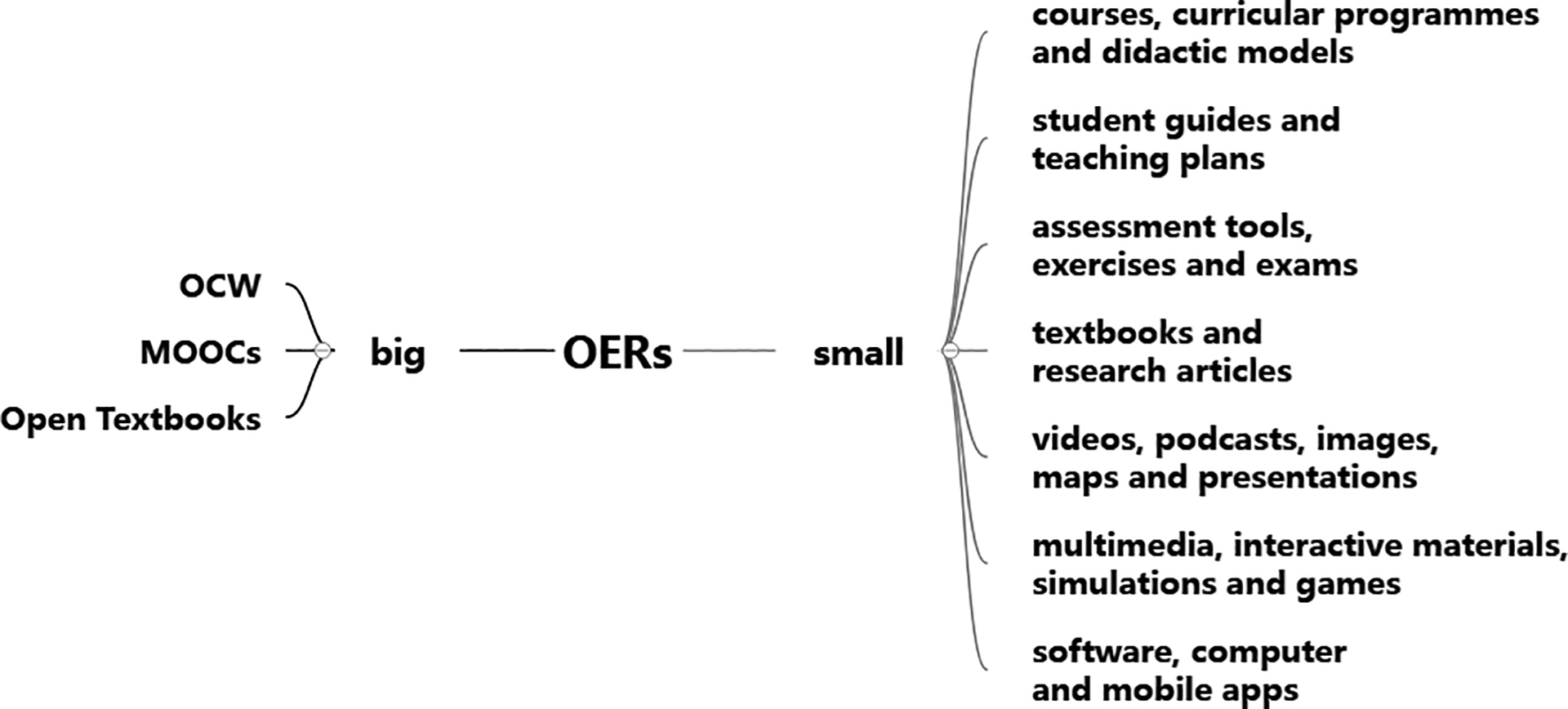
Big and small OERs on the preservation of analogue and digital materials.
The typology based on the granularity of the OERs was not complicated, but it resulted in some difficulties when it came to assigning a particular OER to the subdivision of small OERs. Some could best be defined as simple web pages that consisted of text accompanied by material that was or was not completely connected to the text. It is possible that this was remixed or reused educational material that served as a combination of various small OERs intended for a certain purpose, which was not always explained. A more detailed analysis of the OERs was conducted and included the additional criteria characteristic of preservation aspects in the comprehensive preservation management model. Combining the results according to the granularity of the OERs and the aspect of preservation, the new set of results provided insight into their content. These results showed that most of the OERs (94, 34%) were based on the educational aspect. Based on the number of resources, the following aspects were technical and operational, with 86 (31%); strategic and theoretical, with 45 (16%); cultural and social, with 29 (10%); and economic and legal, with 5 (2%). It is important to state that for 7 resources (3%), the aspect could not be determined because of the lack of a description of the OER. There were 11 resources (4%) that included various aspects in terms of concerning two or more aspects – for example 3 of these 11 resources included both the strategic and theoretical aspect and one other aspect, wile there was only one resource concerning the economic and legal, technical and operational, and strategic and theoretical aspects (Figure 2).
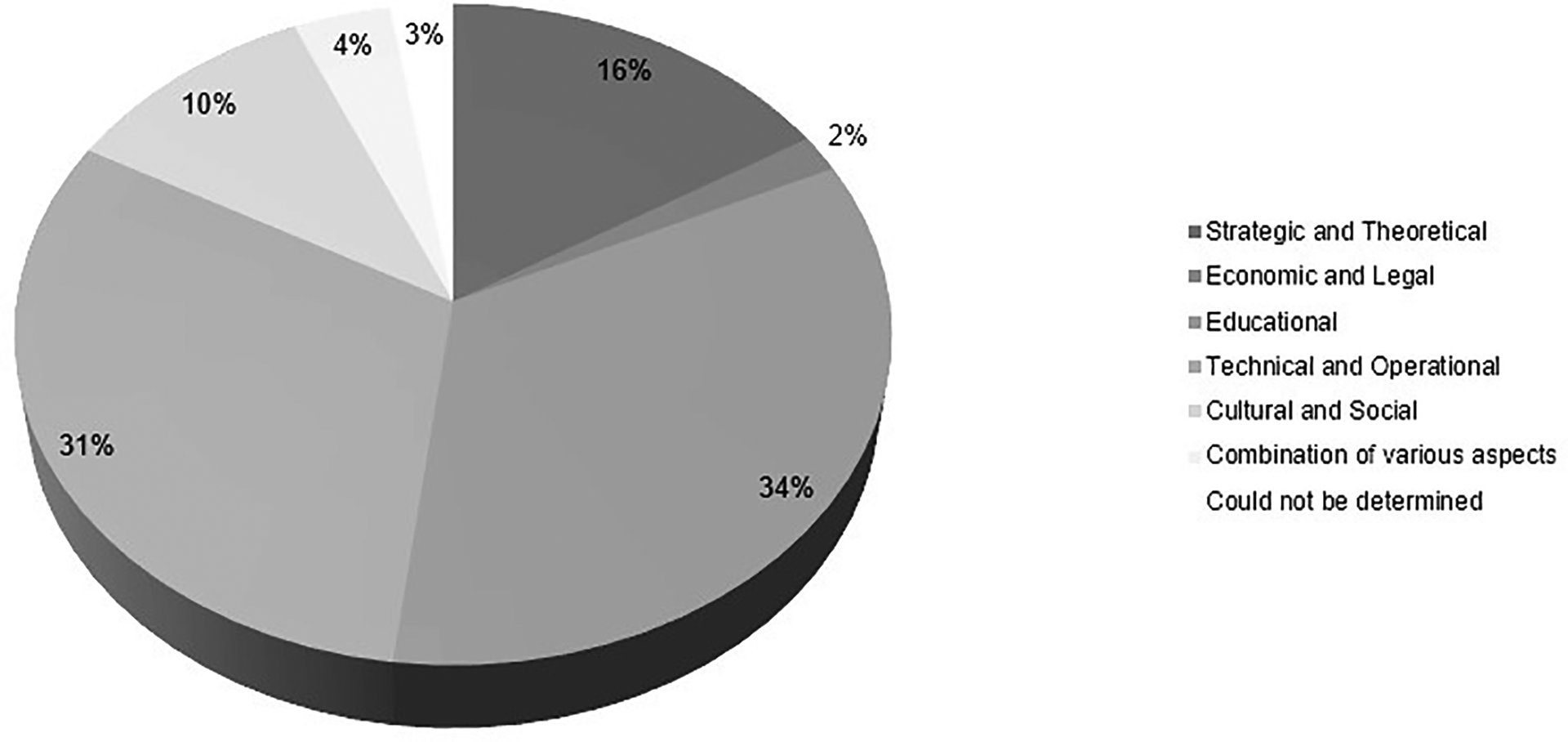
Content scheme of the analysed OERs.
To present a more detailed overview of OERs on the preservation of analogue and digital materials, it was necessary to analyse them even further, according to their thematic frameworks, which were depicted in the individual ‘preservation aspect’ category. All of the thematic frameworks of the OERs were divided into specific and general themes in the field of the preservation of analogue and digital materials. The OERs with a specific thematic framework considered and presented a certain topic that is particular to an element of the complex field of preservation. These OERs contained texts, videos, quizzes, guidelines and lectures, among other things, on only one part of the area of preservation in theory and practice – for example, digital preservation, metadata or acid-free materials. OERs with a general thematic framework were those that encompassed multiple concepts and provided basic knowledge in the field of the preservation of analogue and digital materials. As previously stated and presented in Figure 2, the most represented aspects were educational and cultural and social aspects, followed by technical and operational aspect. The OERs with these aspects had mostly specific thematic frameworks, and the themes they covered were categorized in four groups: preservation, cultural heritage, digital preservation and other topics. This allowed for a more in-depth overview of the specific themes that were covered and presented in the OERs.
OERs concerned with the educational aspect of preservation covered the topics in all four categories (Figure 3). The subtopics concerning the specific theme of preservation were digital preservation in general and the preservation of various materials that comprise library collections, as well as collections in other information institutions, such as paper and textiles. They also included a general overview of preservation, as well as the restoration and preservation of photographs. These OERs specifically targeted areas in the field of preservation that provided a basis for education users on how to apply skills in planning projects and how to identify what it is necessary to preserve, as well as ways of preserving items in both analogue and digital environments. The subtopics of restoration dealt mainly with projects and OERs that presented work carried out during such projects. Under the specific theme of cultural heritage, OERs aimed to present and provide a basis for education professionals and other interested users on the importance of cultural heritage in general and its importance in preserving cultural identity.
There were OERs that presented cultural tourism and the way in which cultural heritage can be used sustainably. The category of cultural heritage was dominant in the educational aspect, although the subtopics it covered were not as extensive as those under the specific theme of preservation. The specific theme of digital preservation in the OERs that were found during the research covered areas such as data management, metadata and digital archives. Users were given the tools that could enable them to improve their technical skills in dealing with digital archives, manage personal information, and learn more about metadata and its importance in digital preservation. The specific category of ‘other topics’ covered a broad spectrum of subtopics that could in one way or the other connect with the preservation of analogue and digital materials. These subtopics included material science, digital humanities, digital libraries, copyright issues and risk management. Risk management and planning is an important subtopic, and the OERs presented it in a way that educated users on how to recognize, identify and possibly avoid the risks that can threaten cultural heritage or the collections found in libraries, archives and museums (Figure 3). All of the subtopics covered in the categories present a significant effort in highlighting the importance of education information professionals and the public regarding preservation and cultural heritage.
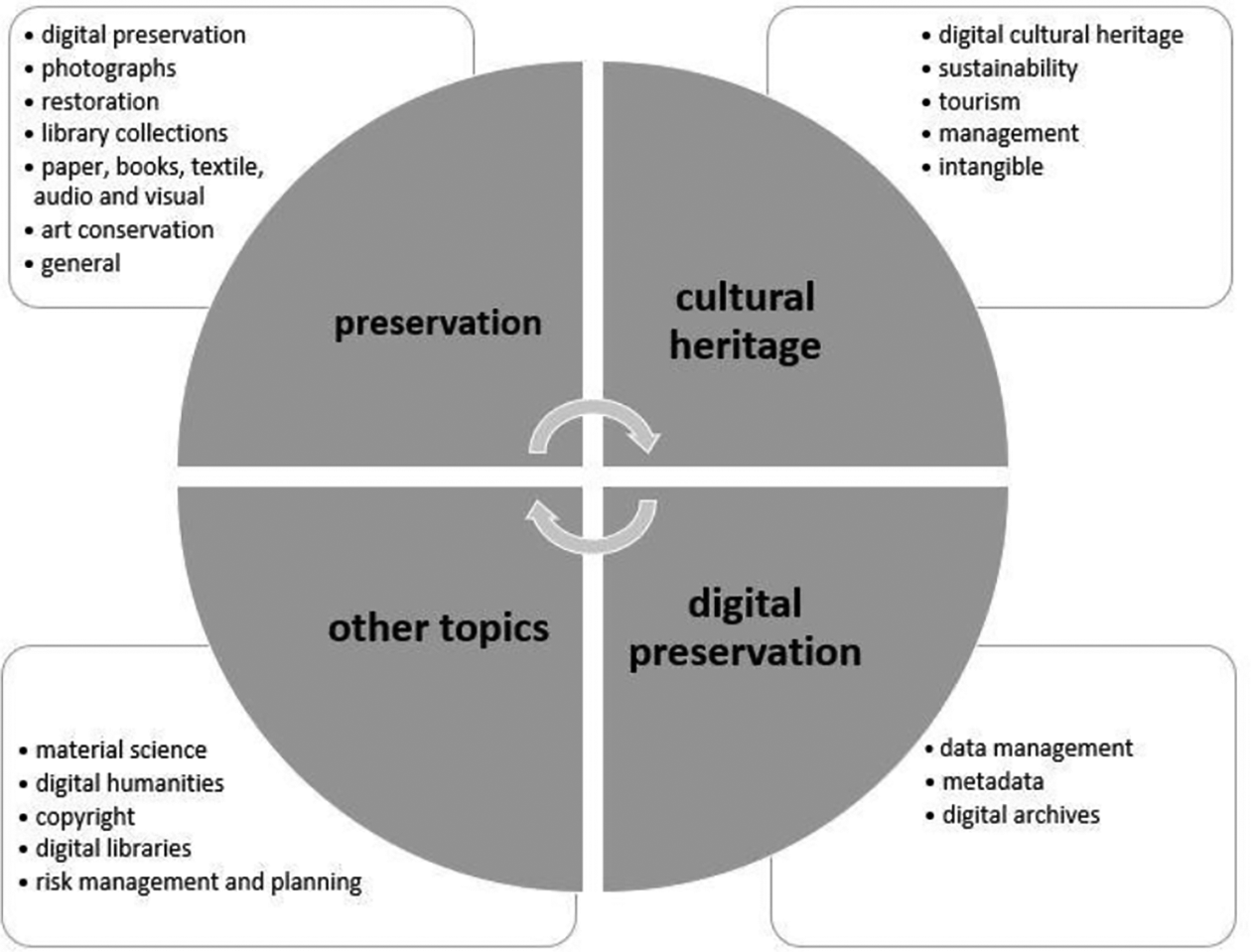
OER themes in the educational aspect of preservation.
The thematic framework for the cultural and social aspect is shown in Figure 4. The OERs in this aspect also covered the four main categories. There are some similarities with the subtopics of the educational aspect. Those that are the same can be found mostly in the category of cultural heritage, and it is important to emphasize that although these are the same topics, they do not have the same end results or learning outcomes. The subtopics in the category of cultural heritage in the cultural and social aspect cover material that refers to the preservation of cultural heritage through its importance for the local community or the world in general. There were multiple projects that presented the way in which cultural heritage can be restored and preserved to serve future generations. The subtopics in the other categories – preservation, digital preservation and other topics (Figure 4) – were presented in a way that emphasized the importance of the cultural and social impact that cultural heritage has. Preservation activities were recognized as an important link in achieving access to cultural heritage and the information it contains and/or conveys.
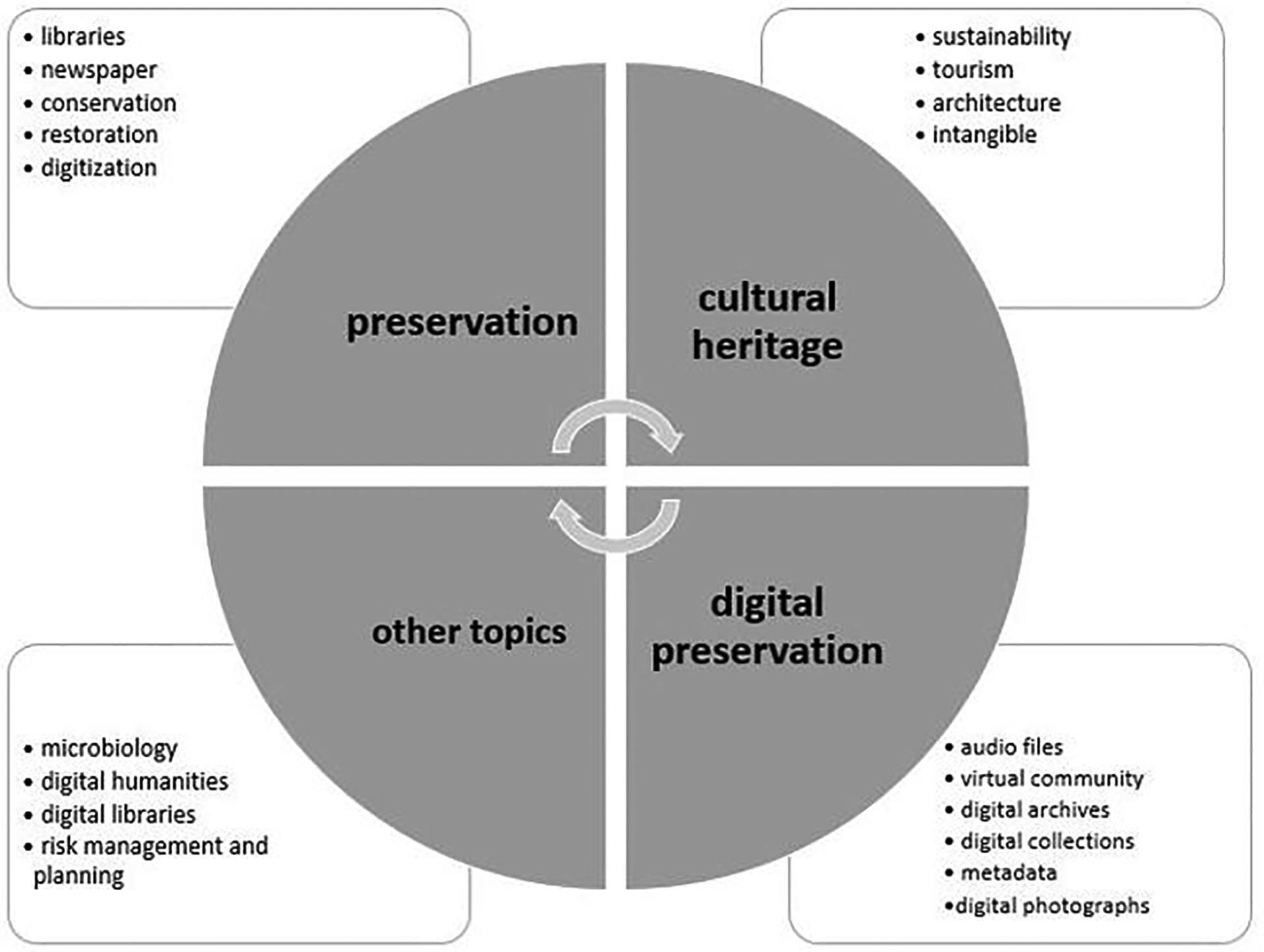
OER themes in the cultural and social aspect of preservation.
The technical and operational aspect is specific since it encompasses all of the aspects of the comprehensive preservation management model. The subtopics covered in the four categories (Figure 5) clearly reflect that all of them can be linked to the subtopics covered in both the educational and the cultural and social aspects. The presentation of the material included in the various OERs was different. It was mostly concerned with the technical side of the preservation process – for example, the processes of restoration and conservation. There were multiple OERs that showcased the way in which certain material can be preserved, and which methods and techniques can be applied. These OERs were mostly concerned with paper as the material for preservation. The operational activities concerned the proper way of handling the materials in libraries, archives and museums, as well as day-to-day preservation activities that can be performed by information professionals. All the subtopics were included in the main category of preservation. Other categories were also represented, and they also covered a more practical approach to preserving cultural heritage, as well as practical digital preservation. The category ‘other topics’ had only one subtopic – computer science – and this may reflect the specificity of the technical and operational aspect, as mentioned above.
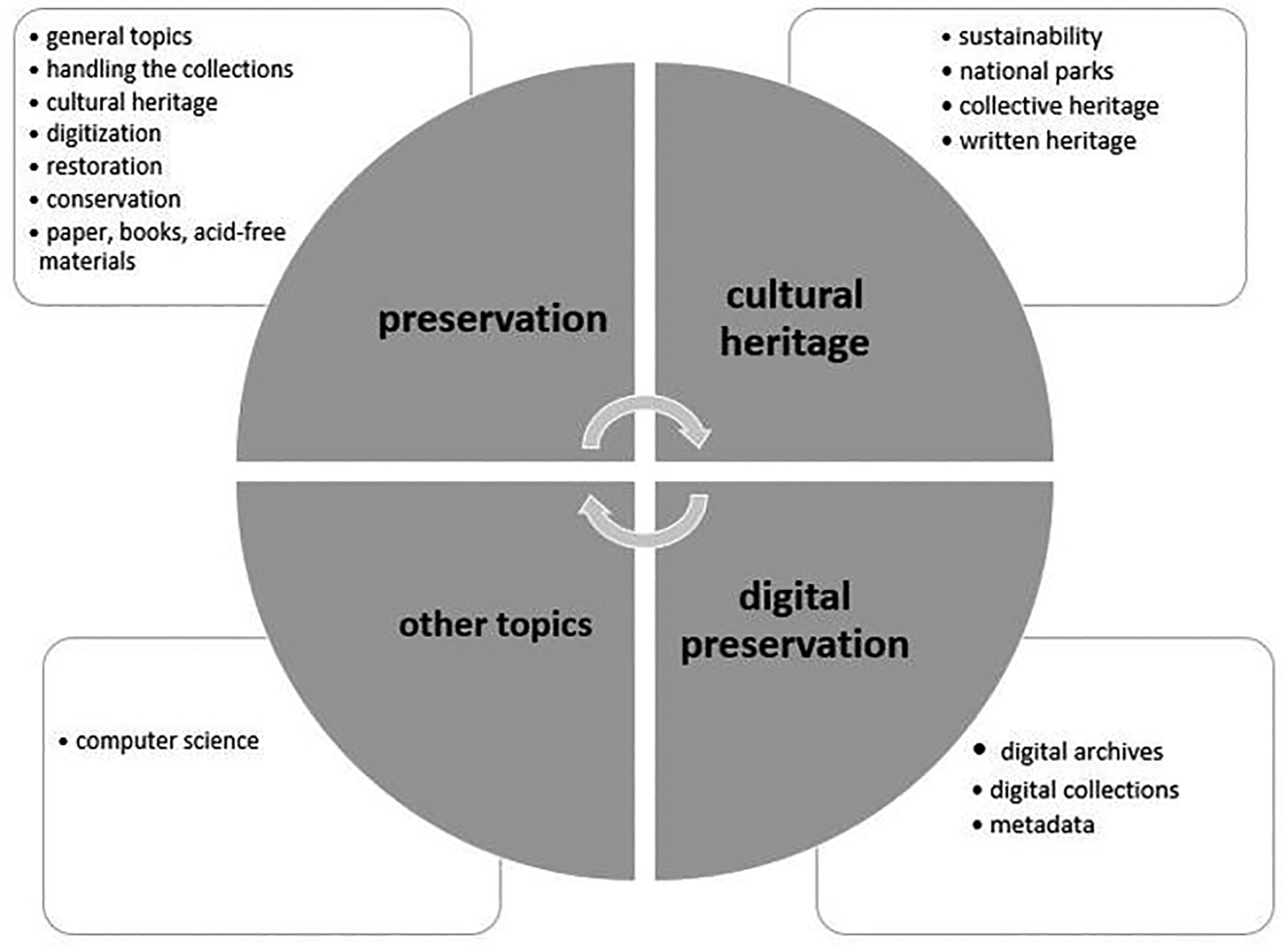
OER themes in the technical and operational aspect of preservation.
The economic and legal aspect and strategic and theoretical aspect were represented by a large number of OERs, so these OERs covered only a few topics. They covered all of the above-mentioned categories and the following themes: preservation in general, cultural heritage, copyright, digital preservation, legislation, and restoration and conservation. The subtopics in these two aspects were not that prominent since the specific approach to one of the themes depended on the outcomes of a certain OER and the aspect. The purpose of these OERs was to present the way in which a preservation plan could be developed; the ways in which an information institution could distribute it financial resources for preservation; and an understanding of the legislation concerning preservation activities, among other things. Resources that covered the content concerning preservation in general were not that numerous. There was only 10 of them and they included 9 small OERs and only one big OER could be found – an open textbook that dealt with general knowledge about preservation.
It is possible to identify a gap in this area and draw the conclusion that there is a need for an OER that presents the main concepts and definitions of preservation in general. This gap is noticeable not only in the thematic criteria but also in the OER granularity. A comprehensive, big OER could be a way in which a comprehensive approach to teaching preservation is achieved. In the context of a specific thematic framework, some of the topics that were mentioned numerous times were digital preservation and different topics in relation to the preservation of digital materials, preservation of cultural heritage, and both restoration and conservation, which were often introduced together in the resources. This could signify that the more practical aspects of the field of preservation are more popular or more suitable for presenting content through OERs. This can be particularly noted for conservation and restoration, and the increasingly popular cultural heritage management. A by-product of this research is determining trends or simply noticing trends in preservation education. Many OER platforms, as well as various institutions, provide courses and other materials that present their work on a certain project, and also courses in areas that are popular with the end user.
Additional criteria for OER analysis
In the context of the sources that oversaw the production and ensured the availability of the OERs, there were different organizations, institutions and societies, including archives, museums, libraries, galleries, schools and conservation centres. Also, the sources of the OERs and their production were individuals – that is, the authors of the resources themselves and universities. In most cases, the purpose of the resources was aimed at informal ways of teaching and learning, and the resources were often intended for all users who were interested in the topics covered, while formal sources were planned for use in higher education – especially, in most cases, for graduate students. This also reflects a particular way of perceiving preservation as a field connected to libraries, archives and museums, and the material aspect, which was showcased through the OERs of conservation centres.
The analysis of the language in which the OERs were written shows that 270 (97%) were written or available in English. This finding is not surprising and was influenced by the keywords that were determined in the first step of the research. The remaining 7 (3%) resources were in other languages – French (1), German (1), Croatian (3), Spanish (1) and Italian (1) – which provides a good practical example of how to find resources in other languages using English-language keyword tagging. This brings the aspect of availability to the fore. The vast majority of OERs are available to a greater number of users if they are written in English, but the factor of inclusivity needs to be considered. If the content is available in other languages, it can reach an even greater number of users and allow them to learn in their own language. This can be achieved by simply providing a translation of the OER.
Determining the year of publication was presumed to be simple but proved to be a challenge. The descriptions of the OERs were not complete and this limitation presented itself in the ways in which different repositories and resources stated information about the year of publication – for example, if the resource was a course, the closest information to the year of publication was the duration of the course or when the current course had started. The analysis by year of publication revealed that only 16 resources had been published in the 20th century, while the others (besides those mentioned with problematic information about the year) were all published in the 21st century, emphasizing that the resources had been published or updated since 2019. Moreover, it is interesting to point out that only 50 resources had been revised or updated in the last few years. This also contributes to the fact that a large part of the resources were in a text format and, apart from hyperlinks, did not contain interactive elements.
The final criterion that was analysed was the availability of the resources. Given that OERs should be widely available, the goal was to examine whether they were truly available to everyone. The research found that 207 (75%) were available in their entirety, while 70 (25%) were available with a login to a system, had an option of a free trial or were available but the user needed to pay for a certificate of completion. The login to a system was justified for courses with multiple topics because, in that way, the user could see what they had studied previously, but some of the OERs were only available to members of the institutions that provided the resource.
The additional criteria for OER analysis provide an insight into the ways in which OERs are made available to end users in accordance with their availability, openness and updating of content, as well as the authors of such educational materials. The thematic frameworks of the OERs on the preservation of analogue and digital materials also provide a basis for further analysis of the available OERs, which could not only focus on their quality but also open new avenues of research on the trends in the field of preservation education in general.
Conclusion
OERs are an extremely powerful and helpful educational tool that can be easily available to a large majority of interested users for a certain topic. Their characteristics are intended to enable a quality learning environment that is suitable for presenting various topics. The quality assurance of OERs is an important part of evaluating OERs in general because it allows their creators to follow a certain set of guidelines while producing OERs. Quality assurance enables OER creators to design educational materials that will present quality content with a certain set of pedagogical and technical attributes, which will, in turn, enable a quality educational experience. When creating an OER on a certain topic, the granularity of the OER – whether it will be big or small – needs to be considered, as well as other criteria, such as its availability, language, openness, licensing and content quality.
This article has focused on OERs concerning the specific topic of preservation. The research explored OER platforms that provided access to various OERs on different topics, and they were searched with a set of specific keywords that reflected concepts in the field of preservation. The research resulted in a sample of 277 OERs, which were analysed according to their granularity, thematic framework and general criteria, such as year of creation, author and topic. The results show that the OERs lacked a comprehensive approach to the field of preservation and that there was a large number of small and specific OERs that covered only a particular area in the field of preservation. The need for an OER in the field of preservation that adopts a general approach has been recognized.
It can be concluded that efforts to create a new OER on the topic of the preservation of analogue and digital materials can be justified, especially since there is an identified gap in the content that the already available OERs present. The new OER should encompass the major concepts of preservation and allow for an overview of the topic. The content should be accompanied by other educational materials – mainly other small OERs that allow reuse to add interactivity to the content as well as feedback for end users.
Footnotes
Declaration of conflicting interests
The authors declared no potential conflicts of interest with respect to the research, authorship and/or publication of this article.
Funding
The authors received no financial support for the research, authorship and/or publication of this article.
