




Abstract
Although librarians have not been traditionally recognized as professionals who provide care for persons with dementia, recent research indicates that libraries can contribute to the development of dementia-friendly communities. They can offer cognitive engagement and social inclusion events for people with dementia, provide information to their caregivers and educate the general public about dementia. In this article, the authors present the findings from a study that attempted to answer the following research questions: ‘How much do library and information science students in Croatia know about dementia?’ and ‘How do they perceive the role of public libraries in developing dementia-friendly communities?’ The study was conducted using a quantitative methodology among 183 library and information science students. Although the respondents had somewhat poor knowledge about dementia, they believed people with dementia have an inherent right to library materials and programmes suited to their specific needs, and that libraries can raise the quality of their life in the community.
Keywords
Introduction
Alzheimer’s disease is the most common type of major neurocognitive disorder (dementia) of unknown cause (Ellison, 2021), and is regarded as a significant cause of disability and dependency among older adults (World Health Organization, 2017). It is a progressive and incurable disease, where dementia symptoms worsen over time. Alzheimer’s disease starts gradually with minor (short-term) memory problems but, over a number of years, develops into more severe symptoms, such as confusion and disorientation in familiar places; difficulties with planning, making decisions and carrying out daily and self-care tasks; problems with speaking; and serious personality and mood changes (Alzheimer’s Disease International, 2016). Ultimately, people with dementia become completely dependent on others and, in the final phase of the disease, require 24-hour support and care. Their (unpaid and uneducated) caregivers are in most cases family members, such as spouses and (grand)children, who provide assistance with eating, personal hygiene and therapy (Brodaty and Donkin, 2009).
The greatest risk factor for Alzheimer’s disease is age (with the majority with Alzheimer’s disease aged 65 and above), but dementia is not a normal part of aging. Next to genetic risk factors, research has established a relationship between dementia and some lifestyle-related risk factors, such as physical inactivity, obesity, an unbalanced diet, tobacco and alcohol consumption, and mid-life hypertension. In 2015, dementia affected 47 million people worldwide (approximately 5% of the world’s elderly population) and it is predicted that this figure will increase to 75 million by 2030 and 132 million by 2050. Dementia leads to increased costs not only for families, who face a significant financial impact, but also for communities and governments. In 2015, dementia costs (direct medical costs, social care costs and the costs of informal care) were estimated at US$818 billion. By 2030, it is projected that the cost for caring for people with dementia worldwide will rise to US$2 trillion (World Health Organization, 2017).
Since the prevalence of dementia is expected to increase exponentially in the coming years due to an increasingly aging population, the World Health Organization (2012) has recognized Alzheimer’s disease as a global public health priority and called on governments and policymakers to implement sustained and coordinated action across multiple levels. In its Global action plan on the public health response to dementia: 2017–2025, the World Health Organization (2017) invites all stakeholders to improve the lives of people with dementia and their caregivers and families in seven action areas: ‘dementia as a public health priority’; ‘dementia awareness and friendliness’; ‘dementia risk reduction’; ‘dementia diagnosis, treatment, care and support’; ‘support for dementia carers’; ‘information systems for dementia’; and ‘dementia research and innovation’. Only a comprehensive and concerted effort by local governments and businesses, health-care institutions, social care services, civil society organizations, and educational and cultural institutions will result in establishment of dementia-friendly communities. The latter are understood as physical and social environments comprising individuals, businesses, organizations and services that are responsive to the needs of people with dementia, where they are understood, respected and supported. In these communities, they are regarded as productive members of society; feel welcome, included and involved; and have choices and control over their day-to-day lives (Alzheimer’s Society, 2015).
People with dementia in Croatia
In Croatia, approximately 300,000 people are affected by Alzheimer’s disease. It is estimated that there are 100,000 people with Alzheimer’s disease and an additional 200,000 people who care for them (Mimica et al., 2015). Many cases of dementia remain undiagnosed until the later stages of the disease, and the majority of people with Alzheimer’s disease are not treated with standard anti-dementia drugs (which are expensive) but with supportive (alternative) medication, such as, for example, Gingko biloba, statins, Vitamin E or curcuma (Mimica and Presečki, 2010). Health-care professionals and social workers do not have adequate training to work with people with Alzheimer’s disease (Samardžija, 2013); the existing capacity for medical care in hospitals, long-term care facilities and day-care centres is insufficient; and palliative care is underdeveloped (Dološić et al., 2019). A national dementia strategy has not yet been adopted, and people with dementia are often exposed to potential human rights violations and loss of dignity (Dološić et al., 2019). Psychological counselling and legal advice are sporadically available in larger hospitals and can be obtained from civic and religious organizations, but it is insufficient because it is available only in some parts of the country and is subject to the availability of resources. It can be said that, currently, there is a wide gap between the needs of people with people affected by dementia in Croatia dementia in Croatia (in relation to diagnosis, treatment, care and support) and the actual provision of dementia services. People with Alzheimer’s disease and their families in Croatia are in urgent need of comprehensive and responsive health-care, legal, social and information systems that will support their needs and help them live a good and dignified life, in spite of dementia (Erdelez et al., 2019).
Literature review
Although librarians have not been traditionally recognized as professionals who provide care for persons with dementia, recently there has been a shift in the way our society thinks about people with dementia. Howarth (2020) explains that such persons are now viewed as citizens with a disability who have legal rights to certain levels of service in support of their autonomy, independence and quality of life in their community, as long as it is determined personally safe to do so. Accordingly, the overview of recent library and information science (LIS) literature indicates that librarians and information professionals have started to critically evaluate the potential contribution of libraries to the development of dementia-supportive environments in the context of their role in community-building, social justice and social inclusion (Dai et al., 2021; Dickey, 2020; Erdelez et al., 2015; McNicol, 2023; Riedner et al., 2020).
Public libraries as local gateways to information that make all kinds of knowledge available to users (IFLA and UNESCO, 2022) can satisfy the diverse information needs of people with dementia and their caregivers, who repeatedly report a lack of knowledge about the following topics: symptoms of the disease and its progression; the genetic aspects of Alzheimer’s disease; medication and treatment; non-pharmacological therapy; caring for people with dementia; coping with the disease; dealing with friends and family; legal and financial information; benefits information; available local services and how to access them; contact details for organizations and places in community where they can obtain reliable information; and advice and psychological support (Alzheimer’s Society, 2010; Erdelez et al., 2019; Petr Balog et al., 2020; Steffen et al., 1999). Since evidence suggests that people with dementia and their caregivers have a preference for printed information, which allows them to go over the information several times and go back to it when needed, and that they often do not know where to go to get the information they need (Alzheimer’s Society, 2010), public libraries are in a perfect position to provide them with access to the required information in their preferred format. By providing their broader communities, and not only people with dementia and their caregivers, with access to relevant resources about healthy lifestyles and dementia (symptoms and risk factors), and opportunities for cognitive activity across the lifespan, which has an association with slower late-life cognitive decline (Wilson et al., 2013), public libraries can assume a proactive role in the prevention of the disease and be recognized as important partners in community-based health literacy efforts and tackling digital health inequality (Gann, 2019).
Since caring for family members with dementia may affect caregivers’ physical and mental health, well-being and social relations, public libraries can provide relevant resources and appropriate information for caregivers (who are non-professionals) not only to improve their knowledge and skills, but also to reduce their emotional stress (Baker et al., 2018; Mortensen and Nielsen, 2007). Therefore, libraries should acquire not only a broad selection of informational (non-fiction) books about dementia, but also dementia memoires or biographies and fiction to meet caregivers’ emotional needs. Adult fiction (different genres), young adult fiction and picture books should be widely available for recreational reading about people living with dementia (Dickey, 2020).
Since public libraries have the ambition to proactively keep their communities informed and aware (IFLA and UNESCO, 2022), they can also encourage and support dementia-friendly attitudes in the community by developing awareness programmes and activities that reduce the stigmatization and discrimination associated with dementia, and foster an accurate understanding of it. Since the attitudes and understanding around dementia among those with whom people with dementia interact can impact their self-esteem, confidence and dignity (Smith et al., 2016), and social stigma and discrimination can heighten the already significant psychological, social, emotional and financial impacts of dementia (World Health Organization, 2021), it is extremely important that libraries raise public awareness and improve understanding of dementia in their communities through collections and programming (events, lectures, exhibitions, living libraries, etc.) that build on fundamental values such as human rights, democracy, equality, diversity and tolerance.
Since people with dementia often feel lonely and isolated, libraries as living forces of inclusion (IFLA and UNESCO, 2022) can support their social inclusion and social interactions through the organization of special programmes and activities such as film screenings, music events (Vincent, 2018) and programmes like ‘Tales & Travel Memories’ (Dai et al., 2021; Riedner et al., 2020). Social interaction and mental stimulation can improve their cognitive engagement and resilience, and have positive effects on their health. Libraries can also organize or host (in collaboration with external organizations) programmes that support social interaction, offer peer support or allow caregivers to share their experiences (Smith et al., 2016). Many libraries organize memory cafes as informal social gatherings, which provide caregivers (and people in the early stages of dementia) with access to relevant information and resources, reduce social isolation, facilitate social interaction and offer brief respite in a safe environment (Dickey, 2020).
Studies have indicated that even as dementia progresses and reading comprehension deteriorates, some capacity for reading, and in particular reading aloud, remains (Bourgeios and Hickey, 2009; Paque and Warrington, 1995; Rimkeit and Claridge, 2017). Reading – like music, dance, pets and the arts – can have therapeutical benefits. Storytelling and reading programmes (such as individual reading, reading aloud and shared reading) can positively stimulate the mind of a person with dementia by encouraging concentration, triggering memory activity and new thoughts, reducing agitation, supporting emotional engagement and fostering social interaction (Billington et al., 2013; Dickey, 2020). Baker et al. (2018) report that people with dementia can benefit from the enjoyment of music and rhythm, the enjoyment of the beauty and inventiveness of language, the stimulation of cognitive performance by evoking memories and the improvement of empathy with others. Riedner et al. (2020) conclude that people with dementia may not read in the same way as they did in the past, but this does not mean that they cannot benefit from books and reading.
Howarth (2020) emphasizes that the preferred materials for a dementia-friendly library collection must follow the principles of person-centred care and be stage-appropriate. Public libraries already have many resources – such as books and magazines, talking books, moving images, music, puzzles, toys, board games and objects – that can be used in library activities designed specifically for this group, such as reminiscence treatment, which uses all the senses to help individuals with dementia remember events, people and places from their lives by providing them with so-called ‘reminiscence kits’ or ‘reminiscence bags’. Next to reading, this therapy has been identified as one of many non-pharmacological interventions that can be beneficial for improving the quality of life of people with dementia by reducing agitation, increasing engagement, improving cognition and slowing the development of the disease. Libraries can buy reminiscence kits from commercial or not-for-profit agencies, or make their own.
Public libraries, as trusted and respected institutions in their communities, are uniquely positioned to take a proactive role in supporting health and well-being, building understanding and raising awareness in their communities. By providing accessible resources, engaging programming, and trusted and non-stigmatized community spaces, libraries can improve the quality of life of people with dementia by focusing on the abilities that have been retained rather than those that have been lost (Riedner et al., 2020). Bearing in mind the growing awareness of dementia among library professionals (Dai et al., 2021), the aim of this article is to understand how future librarians in Croatia understand Alzheimer’s disease and perceive the role of public libraries in the development of dementia-friendly communities.
Research methods
In this article, the authors present the findings from a study that attempted to answer the following research questions: How much do LIS students in Croatia know about dementia? How do LIS students in Croatia perceive the role of public libraries in developing dementia-friendly communities?
The study was conducted from February to April 2022 among undergraduate and graduate LIS students from the Josip Juraj Strossmayer University of Osijek and the University of Zadar, both in Croatia, using a quantitative methodology. A quantitative approach was chosen in order to reach as many respondents as possible.
Printed and online questionnaires were distributed to students during their classes. Out of the 287 students enrolled at both universities, a total of 183 students participated in the study (63.76% response rate). The questionnaire was anonymous and included 13 questions (open-ended, multiple-choice and Likert-type questions). The first group of questions collected the demographic information of the respondents. In this section, the respondents were also asked about their prior contact with dementia in order to learn about their personal knowledge of dementia. In the second part of the questionnaire, the authors sought to learn how knowledgeable the respondents were about dementia. They were also asked to self-assess their knowledge about dementia in order to see how their perceived dementia knowledge correlated with their actual dementia knowledge. In the final section, the respondents answered questions about their perception of the role public libraries play in developing dementia-friendly communities. The quantitative data was analysed using the statistical software SPSS. Only simple descriptive statistics were used, including frequency analysis and the mean for the Likert-type scales.
Findings
Demographic information
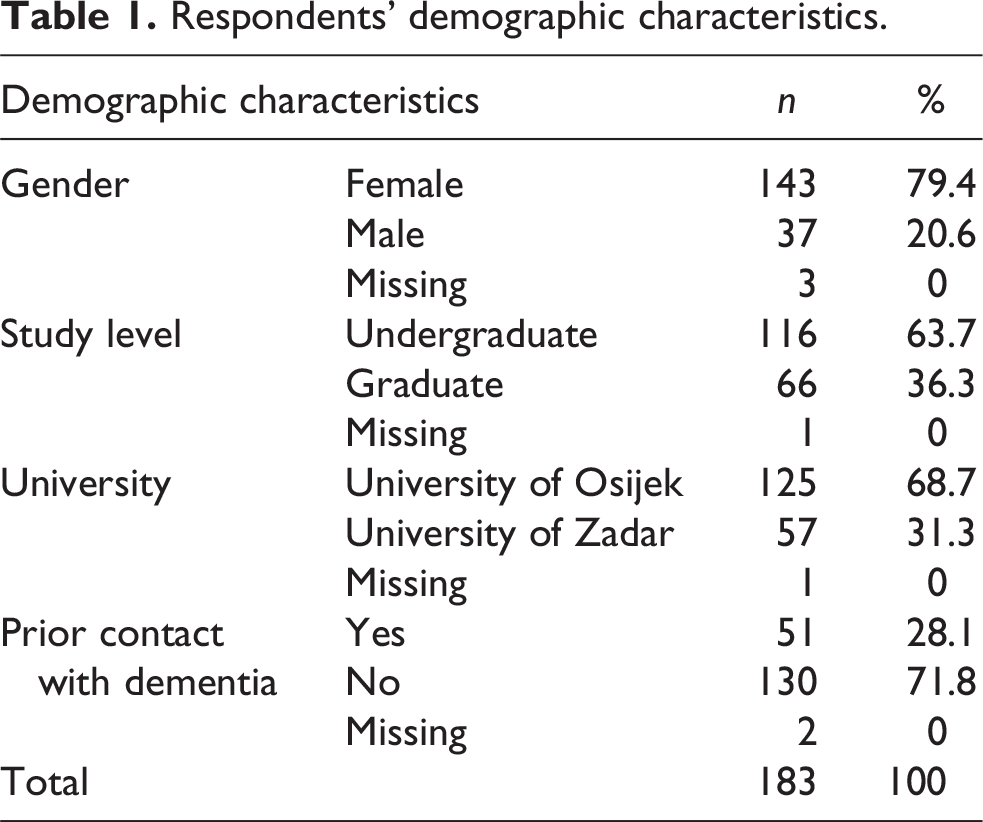
The majority of the respondents were female (79.4%), from the University of Osijek (68.7%) and at the undergraduate level of their studies (63.7%). The university affiliation, study level and gender make-up of the respondents correlate closely with the general make-up of the student population under study. The spread of dementia was confirmed by the finding that almost a third of the respondents (28.1%) had been in contact with someone with dementia (e.g. family members or neighbours) before they took part in this study (Table 1).
Respondents’ demographic characteristics.
Knowledge of dementia
Self-assessment of knowledge of dementia
When asked to self-assess their knowledge of dementia, on a scale from 1 (very poor) to 5 (very good) almost half of the respondents indicated that their knowledge was either poor or very poor. Only 8.2% of the respondents thought that their knowledge of dementia was either good or very good (Table 2).
Self-assessment of knowledge of dementia.

Knowledge about dementia
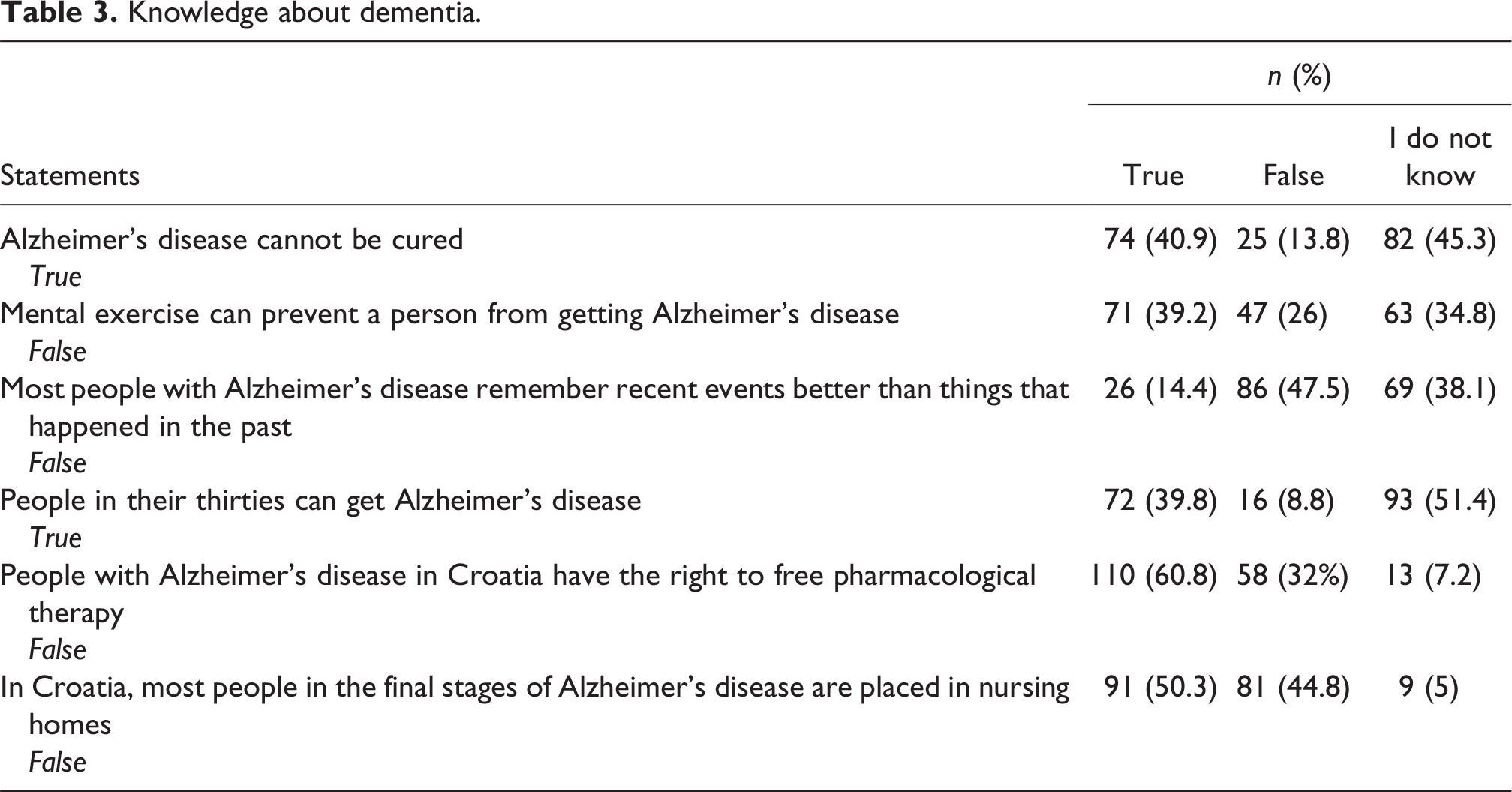
In order to test the respondents’ actual knowledge about dementia – that is, Alzheimer’s disease in general and the circumstances in Croatia – they were asked to state whether six statements were true or false (Table 3). They could also check the option ‘I do not know’ if they did not know the answer and did not want to make a guess. The findings show that only 40.9% of the respondents know that Alzheimer's disease cannot be cured, and 39.2% of the respondents falsely thought that Alzheimer’s disease can be cured, and 39.2% mistakenly believed that mental exercise can prevent a person from getting Alzheimer’s. However, if we agree that the ‘I do not know’ option means that the respondent was ignorant of the issue in question, these numbers are even higher. In this case, we can say that as many as 59.1% of the respondents thought that Alzheimer’s disease can be cured (although it is incurable) and 74% thought that mental exercise can prevent a person from getting Alzheimer’s (although this is not the case). Furthermore, 60.2% incorrectly thought that people in their thirties cannot get Alzheimer’s disease (although younger people can get Alzheimer’s) and 52.5% believed that most people with Alzheimer’s remember recent events better than things that happened in the past (although it is the other way round – they remember past events better). A total of 68% of the respondents thought that people with Alzheimer’s disease in Croatia have the right to free pharmacological therapy and 55.3% thought that people in the final stages of Alzheimer’s live in specialized nursing homes. Both of these statements are not true for Croatia: people with Alzheimer’s disease cannot obtain antidementives on prescription but have to pay for them, and the majority are cared for by their family members at home because the care facilities for people with dementia are almost non-existent. The findings presented in Table 3 indicate that the respondents had relatively poor knowledge about both dementia in general and the circumstances in Croatia: none of the six statements were answered correctly by more than 50% of the respondents.
Knowledge about dementia.
Sources of information about dementia
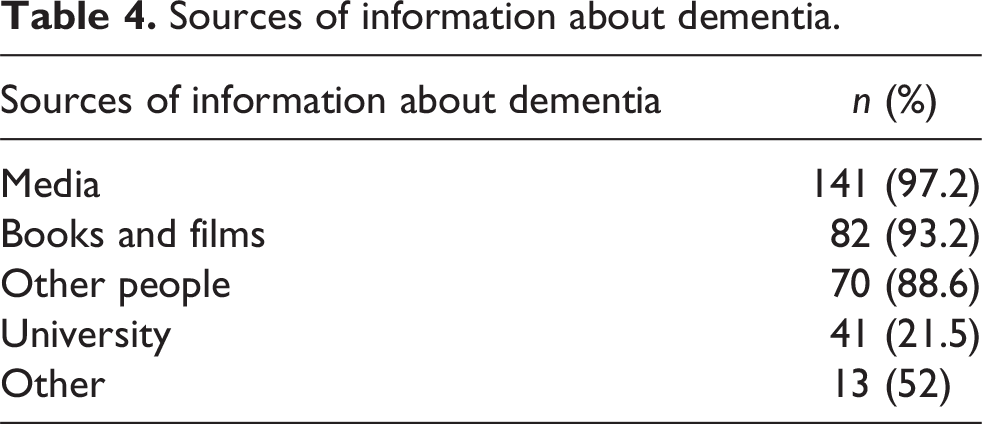
The majority of the respondents (97.2%) learned about dementia from the media (television, newspapers, websites, etc.), films and fiction books (93.2%), and people such as family members (88.6%). Less than a quarter reported that they learned about dementia and working with people with dementia at university (21.5%). Only 2.8% of the respondents further indicated that their study programme had provided them with sufficient knowledge about dementia and providing services for people affected by dementia (Table 4).
Sources of information about dementia.
Perceptions of dementia
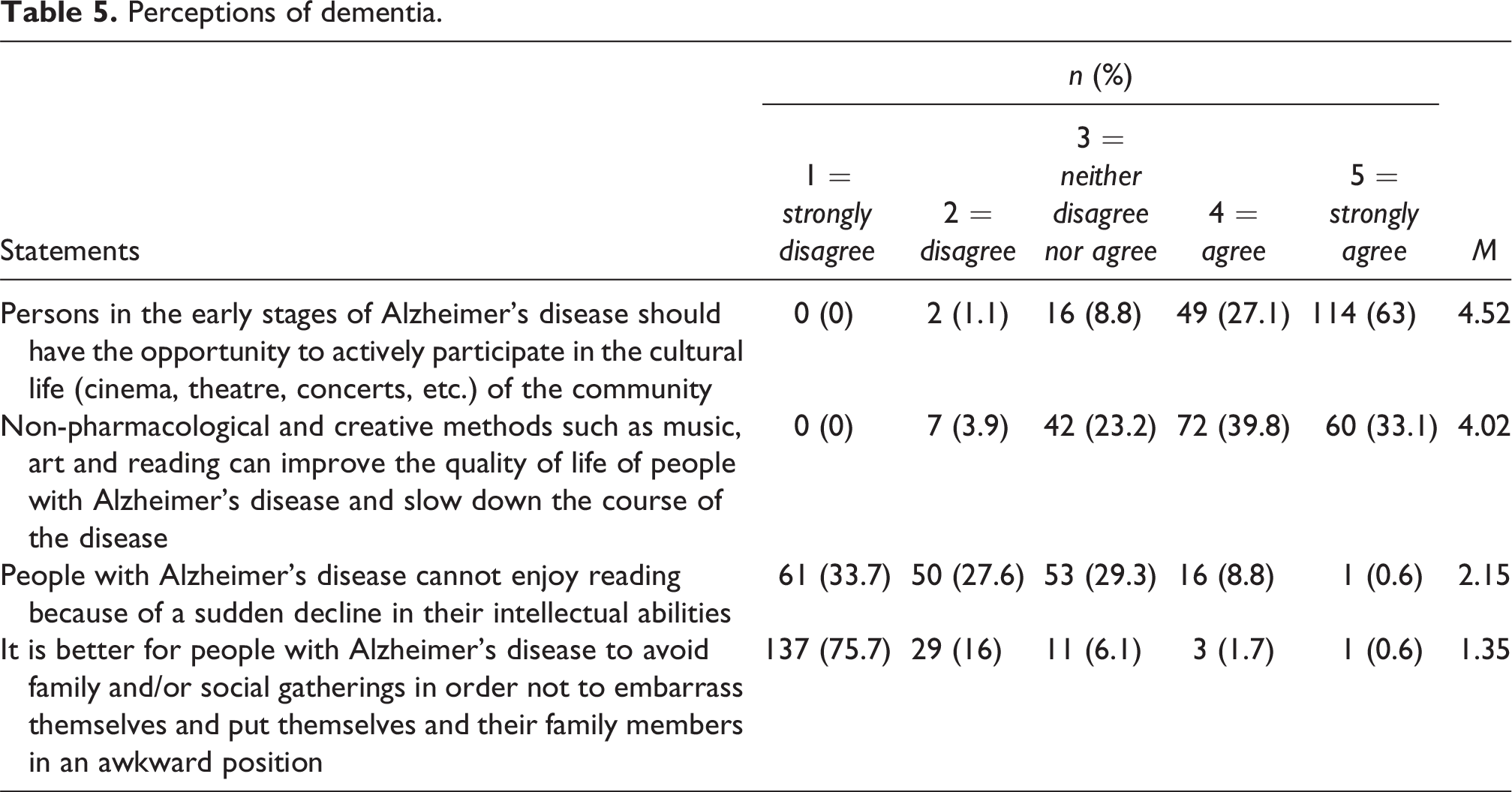
In order to understand how the respondents perceived dementia, in the next question they were asked to indicate the extent to which they agreed with a set of four statements about Alzheimer’s disease on a scale from 1 (strongly disagree) to 5 (strongly agree). The respondents agreed to the greatest extent with the following two statements: ‘Persons in the early stages of Alzheimer’s disease should have the opportunity to actively participate in the cultural life (cinema, theatre, concerts, etc.) of the community’ (M = 4.52) and ‘Non-pharmacological and creative methods such as music, art and reading can improve the quality of life of people with Alzheimer’s disease and slow down the course of the disease’ (M = 4.02). They disagreed with the following two statements: ‘People with Alzheimer’s disease cannot enjoy reading because of a sudden decline in their intellectual abilities’ (M = 2.15) and ‘It is better for people with Alzheimer’s disease to avoid family and/or social gatherings in order not to embarrass themselves and put themselves and their family members in an awkward position’ (M = 1.35). The findings presented in Table 5 indicate that the respondents had an extremely positive perception of people with dementia and did not stigmatize them.
Perceptions of dementia.
Public libraries and dementia.
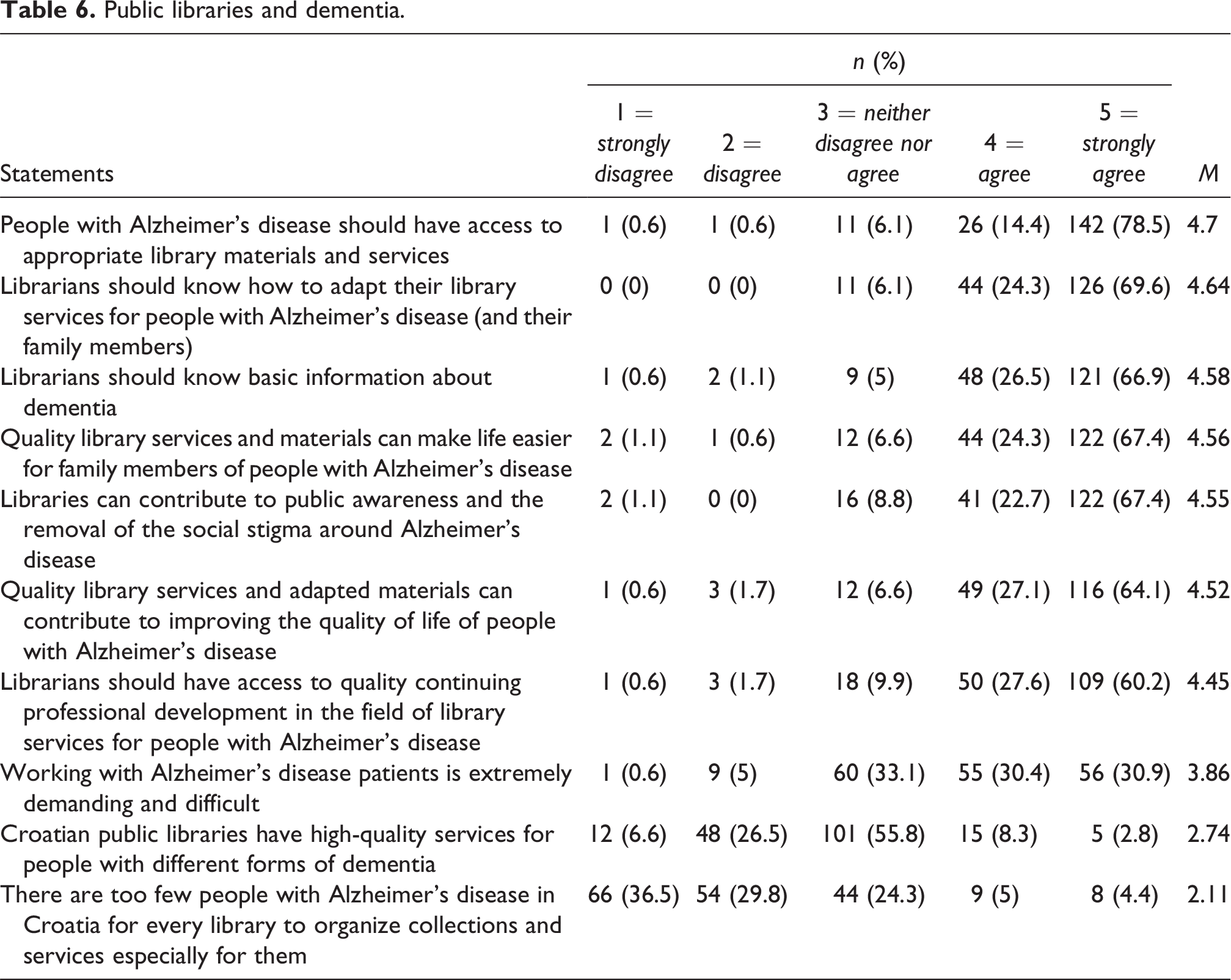
Public libraries and dementia
In the final section of the questionnaire, the respondents were asked to indicate the extent to which they agreed with a set of statements on the role of public libraries in developing dementia-friendly communities on a scale from 1 (strongly disagree) to 5 (strongly agree). Although the majority agreed that working with people with dementia in libraries is demanding and difficult (61.3%), they believed that people with dementia should have access to library materials and programmes suited to their needs and interests (92.9%), regardless of the (limited) size of their community. The respondents also thought that high-quality library services can improve the quality of life of persons with dementia and their family members (91.2%), and that public libraries can contribute to public awareness about Alzheimer’s disease and the removal of the social stigma connected with it (90.1%). They also believed that librarians should have access to continuing professional development programmes that equip them with the knowledge and skills required to provide library services for people with Alzheimer’s disease (87.8%), and that librarians should be taught how to adapt their services to people with Alzheimer’s disease and their family members (93.9%).
Discussion
The study presented in this article aimed to identify the knowledge of Croatian LIS students about dementia and their perceptions of the role of public libraries in developing dementia-friendly communities. It was conducted using a quantitative methodology (an online and printed questionnaire) from February to April 2022 among 183 LIS students at two public universities in Croatia. The response rate was 63.78%.
The findings show that the respondents had a relatively poor knowledge of dementia, which was in line with their poor self-assessment of their dementia knowledge. The majority of the respondents (about 90%) obtained information about dementia from the media, films and books. While only a small percentage of the respondents (about a quarter) reported that dementia and library services for people with dementia were included at a very basic level in their study programmes, they all agreed that librarians need specific knowledge and skills to provide services that are tailored to the needs of people with dementia. Both LIS students and seasoned librarians should be introduced to this topic within their obligatory or elective university courses or continuing professional development programmes that focus on, for example, inclusive library services, library services for people with differing needs, library services for older adults, lifelong learning and health literacy. Educational workshops offered by local dementia groups could also provide them with the required knowledge if such training is provided. Education about dementia, or any other critical problem of society, is necessary because only individuals who possess knowledge about a certain issue or problem can understand it better and contribute to its resolution. If librarians are educated about the risk factors and symptoms of dementia, they will be more able to advise on healthy lifestyle choices, recognize the onset of the disease in their family members or library patrons, and seek a timely diagnosis. If they understand the benefits and impact of diverse non-pharmacological therapies (e.g. reading, the arts, music) for people with dementia, they will be able to make informed decisions, adapt activities to their specific needs, and design meaningful activities and programmes that promote their sense of worth and being valued members of society, thereby maintaining their identity (Alzheimer’s Society, 2015).
The participants in this study had an extremely positive perception of people with dementia and the use of non-pharmacological therapies such as art therapy and reading in its treatment. Moreover, they thought that public libraries can play an important role in developing dementia-friendly communities by improving the quality of life of persons with dementia and their family members, and by contributing to public awareness about dementia and the removal of the social stigma connected to it. Similar results were obtained in a study among Croatian librarians, who did not see themselves as an integral part of the care team for dementia yet believed that public libraries should provide quality services for people with dementia and their family members (Faletar Tanacković et al., 2021).
Although the study’s findings cannot be readily generalized due to the limited sample size, and an additional qualitative study is needed to obtain a deeper understanding of the problem, it offers some novel insights because the literature review did not reveal any previous studies into the knowledge and perceptions of library services for this user group among LIS professionals.
Conclusion
Dementia is one of the most significant public health problems in modern society, where the global increase in dementia cases is bringing about medical, economic and social challenges for individuals, families and communities. In Croatia, as in many other countries worldwide, there is still no adequate health, social, legal and information support system for people with Alzheimer’s disease and their families. As a result, they face numerous challenges in their everyday lives, which often result in their social exclusion, stigmatization and early death. The lack of a strategic direction and systematic response to this critical health-care and social problem is also reflected in the general perception of dementia. A recent study has shown that 45% of Croatian citizens believe that dementia is a mental illness and part of the normal ageing process (HUAB, 2018). Although librarians worldwide are increasingly serving this vulnerable and growing user group, libraries in Croatia currently do not offer any dementia programmes on a regular basis (Faletar Tanacković et al., 2021).
While our respondents – future librarians – had poor knowledge about dementia and current LIS programmes do not teach them about dementia, the findings of this study show that LIS students in Croatia had a feeling of professional responsibility towards this vulnerable population and perceived public libraries as important players in developing dementia-friendly communities in the following key areas: increased awareness and understanding of dementia, increased social and cultural engagement, and the removal of social stigma. They believed that librarians can, and should, help create a world in which dementia is prevented and people with dementia and their caregivers can live well and receive the care and support they need to live their lives with dignity, respect, autonomy and equality.
Despite the limitations of this study (e.g. the drawbacks of the quantitative method itself and the limited sample size) and the relatively poor knowledge of dementia among the respondents, the findings on the students’ perceptions of public libraries and dementia support the emerging role of public libraries as important players in the social justice agenda and the increasing importance of community-based library programmes for socially excluded user groups and people with differing needs. The respondents believed that public libraries, as cornerstones of community services, should join the care team for people with dementia (Riedner, 2015) and participate in community-based dementia care in order to support the development of dementia-friendly communities and improve the quality of life of this underserved social group.
Footnotes
Acknowledgements
Authors thank the participants, LIS students at University of Osijek and University of Zadar, Croatia.
Declaration of conflicting interests
The authors declared no potential conflicts of interest with respect to the research, authorship and/or publication of this article.
Funding
The authors disclosed receipt of the following financial support for the research, authorship, and/or publication of this article: This study was conducted within the project funded by Development of dementia friendly public libraries: theoretical and practical implications (FFOS-02).
References
Supplementary Material
Please find the following supplemental material available below.
For Open Access articles published under a Creative Commons License, all supplemental material carries the same license as the article it is associated with.
For non-Open Access articles published, all supplemental material carries a non-exclusive license, and permission requests for re-use of supplemental material or any part of supplemental material shall be sent directly to the copyright owner as specified in the copyright notice associated with the article.
