




Abstract
Despite numerous policy interventions, poverty still exists. Those most harshly affected are people living in rural areas of low-income countries, regions that are often characterized by information asymmetries leading to market failure. The widespread growth of information and communications technologies (ICTs) in remote areas across the world holds immense potential for lifting the information barriers of the rural poor. However, there is little evidence of the effectiveness of delivery channels, which might be one reason why digital advice differs in its impact. Seeking to ascertain how smallholders can best be served by ICT, the authors investigated information needs and effective ICT delivery channels. Sociodemographic and ICT-related data was collected and a framed field experiment was conducted with smallholders in Cambodia; they were asked to build an object while using various delivery channels for instruction. Employing different regression techniques and matching algorithms, the experiment reveals that multisensory instructions trump all others.
Introduction
Despite global efforts and major progress, around 10% of the world’s population still lives on less than US$1.90 per day (World Bank, 2021). The vast majority of the global poor reside in rural areas, depending on agriculture as their primary source of livelihood (World Bank, 2018). These rural areas are often characterized by poor physical infrastructure and a lack of essential services. This increases search and transaction costs for smallholder farmers, impeding them in making optimal decisions with respect to their farm business (Aker et al., 2016). To combat poverty, national and international policy therefore often focuses on smallholder farmers’ business development by promoting, for example, access to technologies, markets and coping mechanisms in times of difficulty (Food and Agriculture Organization, 2017b). One particularly prominent support channel to reduce search and transaction costs is the information provided through extension workers (Cui et al., 2018; Fabregas et al., 2019).
While in-person extension services have proven to be a beneficial tool – for example, for driving the productivity of smallholders (Cui et al., 2018; Davis et al., 2020; Norton and Alwang, 2020) – extension work in its traditional form is an extremely costly, time-consuming, non-standardized and difficult-to-scale intervention (Anderson and Feder, 2007). Moreover, evidence shows that extension work might not reach all farmers equally (Banerjee and Duflo, 2011). Furthermore, the overall capacity of extension services – which include human and financial resources, knowledge and infrastructure – tends to be low in low- and middle-income countries (Davis et al., 2020). This leads to a ratio of extension workers to farmers of 1 to 1000 (or higher) in many countries (Anderson and Feder, 2007; Davis et al., 2010). 1 The lack of infrastructure in particular can be a problem, as many smallholder farmers live in remote rural areas and thus the transaction costs for visiting one farmer can increase considerably when extension agents struggle with ways to reach them (Davis et al., 2020).
The recent boom in digital hardware around the globe offers great potential for contacting smallholder farmers more efficiently (Aker, 2011). Mobile phones have spread rapidly across the world over the past two decades – in many countries even to the most marginalized regions. Mobile cellular subscriptions in low-income countries rose from 0.11% in 2000 to 60.4% in 2018 (World Bank, 2021). The 2017 Gallup World Poll estimates that about 80% of individuals residing in low-income countries possess a mobile phone (Demirguc-Kunt et al., 2018). 2 This spread of communication devices presents opportunities for digital development by reducing the transaction costs of useful information and education, as well as enabling the monitoring of public services (Aker and Blumenstock, 2015; World Bank, 2016). Information and communications technologies (ICTs) can therefore be a game changer for unserved or underserved areas in the extension realm (Davis et al., 2020; De Silva and Ratnadiwakara, 2008). Increasingly, more projects around the globe are utilizing ICTs for extension programmes (e.g. see Aker, 2011; Fabregas et al., 2019). While there were 33 active digital advisory services for smallholders in 2010, this number had increased to 288 by January 2020 (Phatty-Jobe et al., 2020).
However, while ICT offers promise with regard to improving the lives of smallholders, empirical evidence on the impacts of ICT-based extension services on agricultural adoption, behaviour and welfare is mixed (Aker et al., 2016; Otsuka and Fan, 2021). For example, Cole and Fernando (2012) found that digital agricultural extension improved education levels, drove positive change in management practices, and increased the adoption of more effective inputs by Indian farmers. However, other studies have found no significant effect of digital extension services on the betterment of the livelihoods of farmers (Nakasone et al., 2014). Additionally, Ndimbwa et al. (2021) found that Tanzanian smallholder farmers rated most of the channels used to deliver agricultural information and knowledge either as extremely or very ineffective.
Due to the heterogeneous impact of ICT on the lives of rural residents, Aker et al. (2016: 45) suggest that ‘existing efforts to create ICT for agriculture interventions information would benefit from more careful groundwork including information “needs” assessment’. Aker et al. (2016) point out that while there were over 140 active ICT services for agriculture development at the time of their study, it was a priori not clear whether such programmes would reach the target population. Therefore, not only information needs but also effectiveness (among other things) should be investigated on a small scale before developing and rolling out extensive and costly ICT services. Nakasone et al. (2014) also highlight the importance of investigating both information needs and how the necessary information can be delivered to be effective. Delivery channels are especially important with respect to more complicated topics such as agricultural practices, which cannot be properly conveyed via a text message. While there has been a considerable increase in digital advisory services to date (Fabregas et al., 2019; Phatty-Jobe et al., 2020), evidence of information needs and effective delivery channels is nonetheless scarce, with no evidence stemming from rural Cambodia.
The major problem with ICT for smallholder farmers is as follows: while there are many projects in place, it is often unclear whether these projects are actually effective in transferring information properly to the farmer. This includes both conveying the information needed and the delivery channels used (Aker et al., 2016; Food and Agriculture Organization, 2017a; Nakasone et al., 2014).
Aim and objectives of the study
The aim of this study is to understand how smallholder farmers can best be served with information by ICT so that they can grow their farm business. Thus, we investigate both information needs and effective information delivery channels. More specifically, our objectives include: Analysing recent literature and our primary data set to reveal the specific information needs of smallholder farmers, including less complex information, such as price and weather data, and more complex information, such as cultivation practices and correct input use. Analysing recent literature and our framed field experiment to illicit effective ways to convey information to smallholder farmers. Synthesizing the findings with regard to information needs and effective ways to convey information to establish practical recommendations on how smallholders can best be served by ICT.
To this end, we undertake a study of rural Cambodia. We focus on Cambodia as a least developed country with agriculture as the backbone of the economy (Asian Development Bank, 2014; United Nations, 2018). Moreover, Cambodia presents a unique case with respect to information- and knowledge-sharing, as most of the country’s educational infrastructure had to be rebuilt from scratch in the 1980s (Ke and Babu, 2018). Thus, while it is important across the globe, it is of especially high importance for policymakers in this region to understand the needs of smallholder farmers and to address these effectively in order to promote sustainable economic growth.
Literature review
This section presents selected literature on information needs and information delivery. We restricted the review to studies from low-income economies or lower-middle-income economies so that the information was relevant to our study region. Furthermore, we searched for peer-reviewed articles considering a low-income population with a special focus on smallholder farmers or the rural population in general. We utilized common search engines such as Google Scholar for our literature research, using related keywords such as ‘information needs’, ‘information delivery’, ‘information channels’ and ‘ICT’.
Information needs
There is a large range of information demands and they are site- and time-specific, although market and weather information, as well as more complex information – such as information about the application of fertilizers, disease management and the cultivation of crops – appears to be important in a general sense (Phiri et al., 2018).
Phiri et al. (2019), for example, used a mixed-methods approach to investigate the information needs of 202 rural smallholders in Malawi. Their findings suggest that crop husbandry, pest and disease control, and market and weather information were the most important information needs. Also relying on a mixed-methods approach, Babu et al. (2012) assessed the information needs of 576 Indian rice farmers, finding that their most important needs included disease management, pest management, pesticide application and fertilizer application. Lokanathan and Kapugama (2012) investigated information needs quantitatively and qualitatively. They looked at 505 smallholders and 447 agricultural microenterprises in four Asian countries – namely, Bangladesh, India, Sri Lanka and Thailand – and found that over an entire crop cycle, information on fertilizers, market prices and pesticides held importance.
Understanding information needs is important for advisory services, as an advisory service can only be effective if it offers what people need. However, not all types of information are the same. While it is relatively easy to supply a smallholder with market price information via a simple phone (e.g. a text message), effectively informing a farmer how to apply fertilizer or cultivate crops is more complex. Globally, ‘less complex’ information is predominantly provided through ICT (Aker, 2011; Phatty-Jobe et al., 2020). Aker (2011: 639) suggests that this might be because ‘less complex’ information such as price and weather data is not only easier to transmit, but also easier to gather; ICT programmes that provide more complex information on agricultural practices are rare, probably because ‘this information is more nuanced and difficult to convey’. Aker et al. (2016: 43) suggest that these ‘more complicated concepts’ call for different delivery mechanisms, such as imagery.
In line with the literature, it is of particular interest to understand how to convey both less complex and complex information effectively to smallholder farmers, especially when relaying information digitally.
Information delivery
Agricultural information can be delivered either via personal meetings or through ICTs, or a mixture of both. Traditionally, information has most often been delivered through (1) demonstrations, where a number of farmers gather round a trainer, who demonstrates the new technique; (2) farmer field schools, where approximately 25 farmers meet together with a trained facilitator once a week on a local field to compare two plots over a cropping season; and (3) farmer-to-farmer extension, where one trained farmer trains multiple other farmers (Cai and Abbott, 2013; Franzel et al., 2015; Plant Production and Protection Division, 2015). However, physical extension for rural smallholders has its drawbacks. For example, smallholders tend to live in remote areas that are difficult to reach by extension agents, or they lack human resources or motivation, and extension agents may lack accountability (Aker, 2011). Advisory work through ICTs offers a way to deliver information more cost-effectively compared to physical extension.
Digital devices – especially mobile phones – have reached some of the most marginalized regions of the world (Demirguc-Kunt et al., 2018; Phatty-Jobe et al., 2020) – a trend that offers new ways to overcome the drawbacks of traditional advisory services. Digital advisory services can utilize many channels to reach farmers besides simple or smartphones, such as television, radio or computers. Hoang (2020), for example, used a quantitative questionnaire to study the use of ICT for acquiring agricultural information among 250 smallholder farmers in Vietnam. The findings suggest the use of a wide range of ICT tools for accessing information, with mobile phones, television and radio broadcasts being the most popular. Sangbuapuan and Guha (2016) studied information delivery to 150 rice farmers in Thailand through information kiosks. They used a quantitative survey to illicit basic sociodemographic information and the impact on knowledge and skills of an information kiosk that was set up for their experiment. The authors found that farmers utilized such kiosks and self-reported that the information delivery was useful to them and the community as a whole. Given all of the options, the literature shows that, due to network restrictions and technical illiteracy, among other things, the most important tool to reach smallholders appears to be the mobile phone (Aker et al., 2016; Phatty-Jobe et al., 2020).
With respect to delivery channels, theory offers a useful framework – namely, the multisensory learning framework. It is put forward by a profound stream within the cognitive neuroscience literature, suggesting the beneficial effects of sensory enrichment for processing and remembering information (Mayer et al., 2015; Shams and Seitz, 2008). Due to the novel understanding of multisensory interactions (Ghazanfar and Schroeder, 2006), Shams and Seitz (2008) suggest that learning can involve multisensory processes at any given stage. This, in turn, offers important insights into learning patterns and thus the design of effective training protocols. While some educators have already acknowledged multisensory learning strategies (Montessori, 2013), new neuroscientific evidence further strengthens this approach. Targeting multiple senses – for example, through visual and auditory stimuli – can enhance learning when teaching new material to students compared to targeting a single sense – such as using only auditory stimuli (Lehmann and Murray, 2005; Luriia, 1987; Montessori, 2013).
The most common delivery channel for digital advisory services for smallholders is the voice. This can be through interactive voice response (IVR), outbound voice dialling or helplines, as well as voice messages or radio broadcasts (Aker, 2011; Phatty-Jobe et al., 2020). The second most common way to deliver information is via text channels, such as short message service (SMS) and unstructured supplementary service data (USSD; Phatty-Jobe et al., 2020). However, more diverse delivery channels are emerging. Access to the Internet and the rise of smartphones has sparked the development of online solutions for information delivery – for example, through multimedia content such as pictures, animations and videos on web pages and applications (Aker, 2011; Gakuru et al., 2009; Phatty-Jobe et al., 2020; Saravanan et al., 2015).
The literature is mixed about which delivery channels farmers prefer. Lokanathan and Kapugama (2012) highlight that face-to-face advisory services are the most preferred by Asian farmers, followed by SMS. The success of voice- and SMS-based information services in low- and middle-income countries also suggests the popularity of certain delivery channels. However, despite preferences or popularity in the market, scientific investigations of the effectiveness of either channel are scarce.
Thus, while many studies have concentrated on conveying information to smallholder farmers, it remains unclear how farmers can best be served with information by ICT in order to grow their farm business sustainably. In particular, the open questions include: (1) what kind of (less complex and more complex) farm information is needed by smallholder farmers (where there is no evidence from rural Cambodia) and (2) which delivery channels are actually effective in conveying complex information in particular to smallholder farmers.
Research area and methodology
Research area
Our study considers smallholder farmers from north-eastern Cambodia. With a gross national income per capita of US$1,075, Cambodia is clustered as a least developed country (United Nations, 2018). While experiencing economic growth over recent years, Cambodia is nevertheless among the poorest countries in the region and was thus deemed a reasonable area in which to conduct our study (World Bank, 2021). Furthermore, the country presents itself as a suitable area to study the life of smallholder farmers as approximately 82% of Cambodians are farmers and most are rural smallholder farmers (Sotha, 2019), with each household having on average less than two hectares (Sotha, 2019).
Within Cambodia, we selected the poorest province – Ratanakiri (Asian Development Bank, 2014) – to undertake our data collection (see Appendix 1). We visited 16 villages situated south of the capital of Ratanakiri. While the capital is a rather modern city, the villages surrounding it are traditional and inhabited by ethnic minorities (Padwe, 2020). The inhabitants represent 12 ethnic groups, including Jarai, Lao, Tompoen and Khmer. Of the 150,000 citizens of Ratanakiri, 88% live in rural areas and predominantly depend on smallholder agriculture (Asian Development Bank, 2014; Ritzema et al., 2019). Typically, the farmers in the province cultivate rice for their own consumption. Cassava, cashews and rubber are the main cash crops (Ritzema et al., 2019).
Cambodia is still marked by its recent past, where the Communist Party of Kampuchea (1975–1979) intended to radically and brutally turn Cambodia into a rural, classless society (Chum, 2012; Pheng et al., 2020). For example, today the country lacks an educational infrastructure and crucial experts such as experienced extension officers (McNamara, 2016). Extension structures were destroyed and had to be rebuilt after 1979 (Global Forum for Rural Advisory Services, 2021; McNamara, 2016). Thus, Cambodia presents itself as an extreme version of other developing countries, where the rural population often lacks access to education and extension (World Bank, 2018).
In recent years, despite multiple political initiatives, the agricultural advisory infrastructure in Cambodia has still faced challenges. 3 One major concern is the lack of staff for advisory services. Estimations from 2009 suggest that there were 1,244 extension workers in Cambodia (Global Forum for Rural Advisory Services, 2021). Other estimates from 2010 suggest a ratio of 5.6 extension workers per 100,000 farmers (Ke and Babu, 2018), representing an extension-worker-to-farmer ratio of 1 to 17,857. Nevertheless, the Cambodian Ministry of Agriculture, Forestry and Fisheries is striving to modernize Cambodia’s agricultural sector. For example, the agricultural extension policy of 2014 aims at demand-driven extension with a pluralistic advisory system (Ministry of Agriculture, 2015).
Sampling procedure
The data collection took place from August to October 2018. The sample is spread over 16 villages in the province of Ratanakiri and allows us to analyse the heads of 280 smallholder farmer households. Every participant needed to have at least basic skills in speaking and understanding the national language, Khmer. Since there were no household lists for the region available to researchers, we relied on the expert knowledge of the extension workers from the regional government. Together with the respective village officials, they carefully selected participants to generate a cross section of each village, paying particular attention to randomizing characteristics such as age, gender, education and income level. Local enumerators guided the participants throughout the research sessions, while one author accompanied the enumerator team throughout the entire data collection period. Each participant first answered the questions on the questionnaire and then participated in the experimental session. After approximately three hours, the participants received payment equivalent to a day’s wage.
Research components
To investigate our research questions, we used two main components to collect quantitative data: a comprehensive survey to assess household demographics, information needs and hardware availability, and a between-subject-design framed field experiment. 4 Thus, we designed the research components to be complimentary to each other. While the questionnaire investigated information needs, the experiment thoroughly captured the effectiveness of information delivery channels. To reach our final objective, we aim to combine the insights generated to investigate how useful information can best be delivered to smallholders.
Questionnaire
We conceptualized the questionnaire by starting with a comprehensive literature review to create a qualitative questionnaire for a pre-field visit in March 2018. We conducted 18 interviews with smallholder farmers in the study region and multiple interviews with experts such as village and commune chiefs, as well as extension officers. Following the insights from the qualitative research, 5 we developed a concise quantitative questionnaire, which we tested in Cambodia again during a pilot phase among both students and smallholder farmers. Following some adjustments, we finalized the questionnaire for this study.
Experiment
Set-up
Stemming from the call for more careful groundwork to understand how ICT can effectively reach smallholder farmers (Aker et al., 2016; Nakasone et al., 2014), we developed a framed field experiment. Experiments emerge from the discipline of behavioural economics, where psychological and economic schools of thought merge to gain insights into the actual human behaviour for a given complex (Camerer and Loewenstein, 2003; Friedman et al., 1994). For the experiment, the farmers were asked to build an object with building blocks within a given time frame. A Lego (2000) tower appeared to be suitable following our pilot test, as most of the participants were able to assemble one. 6 Before building with the Lego (see Appendix 2), each participant randomly received one of four possible sets of instructions (treatments) derived from multisensory learning theory (Mayer et al., 2015; Shams and Seitz, 2008).
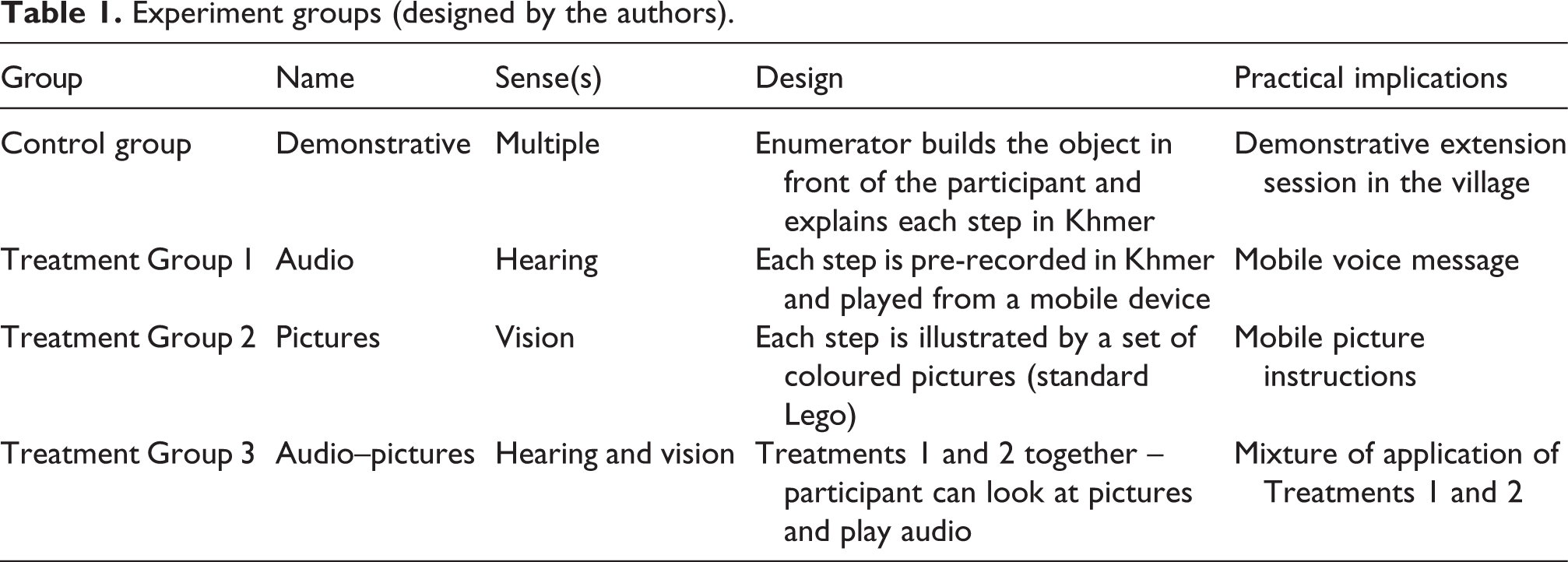
As seen in Table 1, the instructions comprised two treatment groups that addressed one human sense (i.e. audio instructions and picture instructions); one treatment group that addressed two human senses (i.e. audio–picture instructions); and a control group that addressed multiple human senses at the same time (i.e. demonstrative instructions). We designed the treatments to fit our target group and thus ensured that the participants would not need skills for reading, writing or calculation. Moreover, we chose the treatments to fit the circumstances (e.g. by considering practical implications that needed little mobile data). All of the treatments were translated and realized together with agricultural students from Cambodia. All of the content of the treatments was designed in a standardized way, following the eight-step instruction structure put forward by Lego (for an overview, see Figure 1; for the written instructions, see Appendix 2).
Experiment groups (designed by the authors).
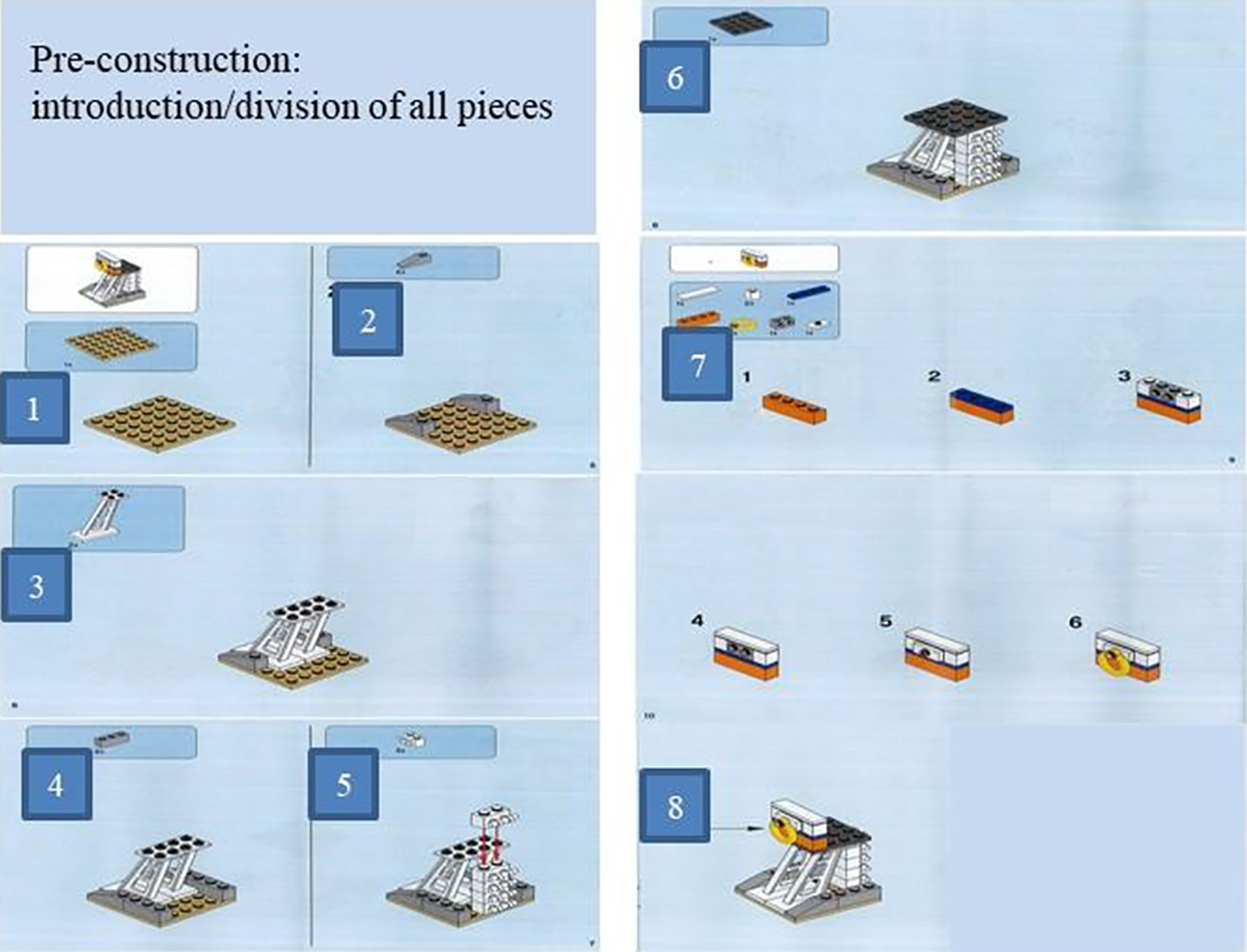
Eight-step instructions (modified by the authors) based on original Lego instructions.
Design
Following the pilot among smallholder farmers from the target region, we set the time limit for the experiment at 10 minutes to make the experiment neither too easy nor too difficult for the participants. The basic structure of the experiment can be seen in Figure 2. The participants received the instructions without any time limit. The instructions they received were drawn by lots. During this pre-construction phase, the participants were also allowed to see the Lego pieces. Once the instruction phase was over, the time started ticking and the participants had a maximum of 10 minutes to build the tower. During this time, they could also decide to stop ahead of time, either because they felt they had finished or they wanted to give up. On finishing, we counted the number of errors made in building the tower, with a maximum of 16 errors. The number of errors (hereafter referred to as mistakes) functions as our performance measure. 7 A mistake was defined as a brick laid incorrectly or not used at all.
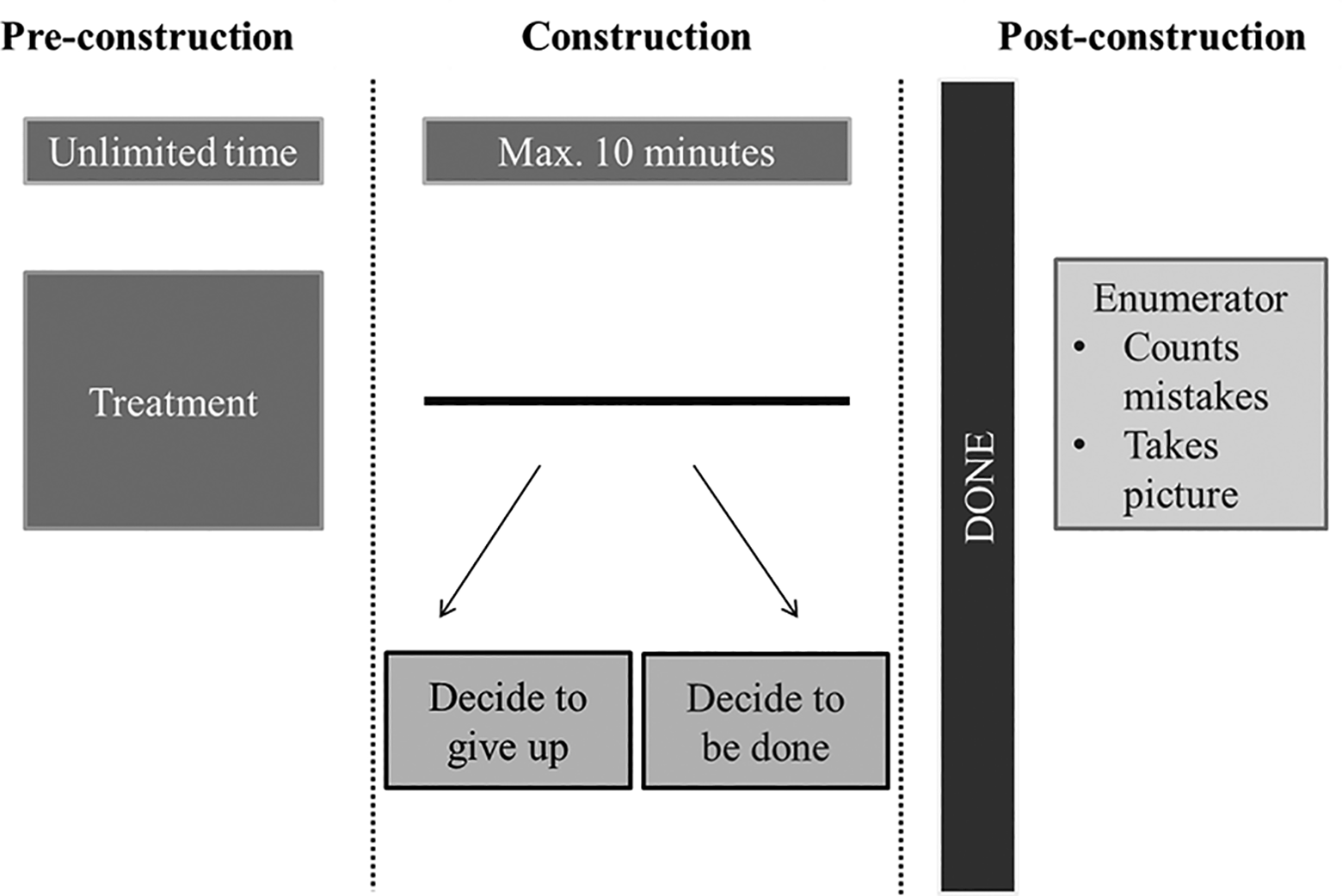
Experiment logic (designed by the authors).
Treatments
Our treatments can be described as follows:
Audio: this treatment group received instructions based solely on vocal stimuli. A voice slowly explained how to build the Lego tower in basic Khmer, the national language. The audio had to be played and listened to once, completely, before the building phase started. Then, while building the Lego tower, the participant could listen to the various sections as often as they liked. In order to listen to the audio, the participants received a tablet, which was operated by the enumerator. Practically, it can be thought of as a voice message received via phone, but – to take a step back – this could even be instructions over the radio or a phone call.
Pictures: this treatment group received instructions based solely on visual stimuli. Here, the participants received the standard series of Lego picture instructions. The participants were asked to study the instructions carefully before the time started and the building phase began. Once the time had started, the participants were allowed to revisit the picture instructions at any time. The idea here was that, with pictures from an e-learning class, an individual can always use the learning material as an expedient. Thus, we allowed the participants to keep the pictures throughout the task to make it as realistic as possible. Practically, it can be thought of as pictures being received via phone or a series of picture instructions.
Audio–pictures: this treatment combined the above-mentioned auditory and visual treatments. It was derived as a treatment to address two senses – rather than solely one – and be practical. Knowledge designed as pictures or voice recordings can be easily spread over the Internet while not requiring much mobile data (compared to a video). The participants had to listen to the recording completely while looking at the respective steps in the picture instructions. Once the time had started and the building phase began, the farmers were always in possession of both the audio recording and the pictures, and could revisit them at any time. Practically, this can be thought of as pictures being sent via phone and an additional phone call or recording explaining the pictures.
Demonstrative: this treatment was designed as the control treatment, as it mirrored one of the most common instruction practices used by extension officers in Cambodia (Cai and Abbott, 2013; McNamara, 2016). Extension workers themselves or model farmers often present a certain practice in front of a group of farmers during a training session. The farmers are then asked/encouraged to try the practice that has been demonstrated on their own farm. Thus, in this treatment, an enumerator constructed the Lego tower in front of the participants, again following the exact same eight steps as in all the other treatments. The enumerator constructed the tower once - providing all explanations in Khmer - answered questions and then deconstructed it afterwards. Subsequently, all of the pieces were given to the participants, whereupon the time started and the building phase began. Once the participants had begun building, they were not allowed to ask any more questions or receive any assistance from the enumerator. This rule was important as we wanted it to model the real-life situation where farmers are left alone with an application after the extension training session is over. During the demonstration, the farmers were allowed to take notes or do whatever they felt would help them afterwards in the building process. However, none of the farmers showed any effort to internalize the instructions other than concentrating on the enumerator.
Validity
We ensured external validity – that is, the transferability of our findings to real-life settings – by designing the experiment as a framed field experiment. Accordingly, we used a non-standard subject pool and framed the experiment in a field context using an imposed environment to reveal the subjects’ behaviour that was similar to their real-world behaviour (Charness et al., 2013; Harrison and List, 2004). We did so to understand how the smallholder farmers behaved given their natural surroundings, where distractions from animals, large family settings or imperfect equipment and facilities, among others, had to be considered. This aided us in revealing data on actual behaviour in the farmers’ normal life settings.
To ensure internal validity – that is, that the outcome was merely due to the treatment given and nothing else – we employed a between-subject design. Accordingly, we divided our sample randomly into various groups and every participant received only one treatment. We did so to avoid carry-over effects (Charness et al., 2012). Moreover, to control for the influence of the heterogeneity of technical skills among the participants, we conducted the experiment without capturing the technical know-how of the participants. The scope of our experiment was to reveal promising delivery channels that could then be used to design information systems and not to assess technical know-how. Furthermore, as is common in psychology (Madsen and Stenheim, 2015), we did not directly incentivize our experiment.
We decided on the Lego tower for both internal and external validity reasons. As it was an object that was unknown to the smallholder farmers, and we could thus control for previous knowledge, it strengthened the internal validity of the experiment. However, another reason was that complex information is often new to farmers – for example, how to plant a previously unknown crop or how to use a new technology that a farmer has never seen before. While there might be some previously developed skills to build on, using a new technology can be a new, previously unknown world for a farmer. The same applied for the Lego tower – it was unknown and the farmers depended on the instructions to build it correctly.
Approach to data analysis
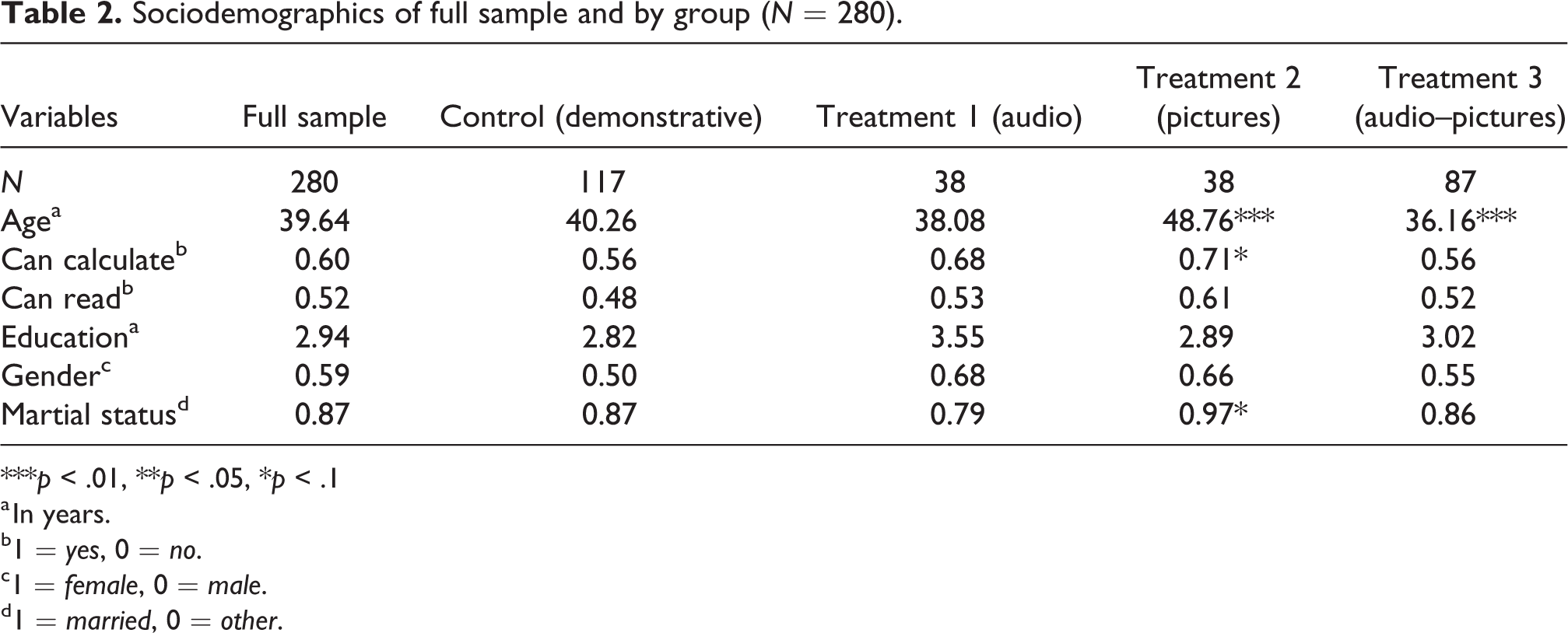
To investigate the farmers’ information needs, we descriptively analyse the information provided in the comprehensive section about digitization on our questionnaire. Further, we estimate a multiple linear regression model to investigate the information delivery channels – that is, the effectiveness of the different treatments employed in our experiment. 8 In our model, the dependent variable – mistakes – represents a counting variable ranging from 0 (the participant made zero mistakes in building the Lego tower, which represents the best possible outcome) to 16 (the participant made the maximum number of possible mistakes in building the Lego tower, which represents the worst possible outcome). The variables describing the study group (see Table 2) are included as control variables. The respecite equation is specified as follows:
Sociodemographics of full sample and by group (N = 280).
***p < .01, **p < .05, *p < .1
a In years.
b1 = yes, 0 = no.
c1 = female, 0 = male.
d1 = married, 0 = other.
Mistakes
i
= α + β1ControlGroup + β2TreatmentAudio + β3TreatmentPictures + β4TreatmentAudio–Pictures + β5Age + β7CanCalculate + β8CanRead + β6Education + β9Gender + β10MaritalStatus + ε
i

In equation (1), i represents the individual responses of each participant and ε i is assumed to be the random error term. The variables of control group, treatment audio, treatment pictures and treatment audio–pictures are included as dummy variables. 9 As a final step, we employ propensity score matching, calculating the matched effect of the treatment on the outcome variable, mistakes, using the condition variables age, can calculate, can read, education, gender and marital status. The results were estimated using Stata 15 and are presented in the following section.
Results
Sample
Clustered in their respective intervention groups, Table 2 depicts the characteristics of our study group. 10
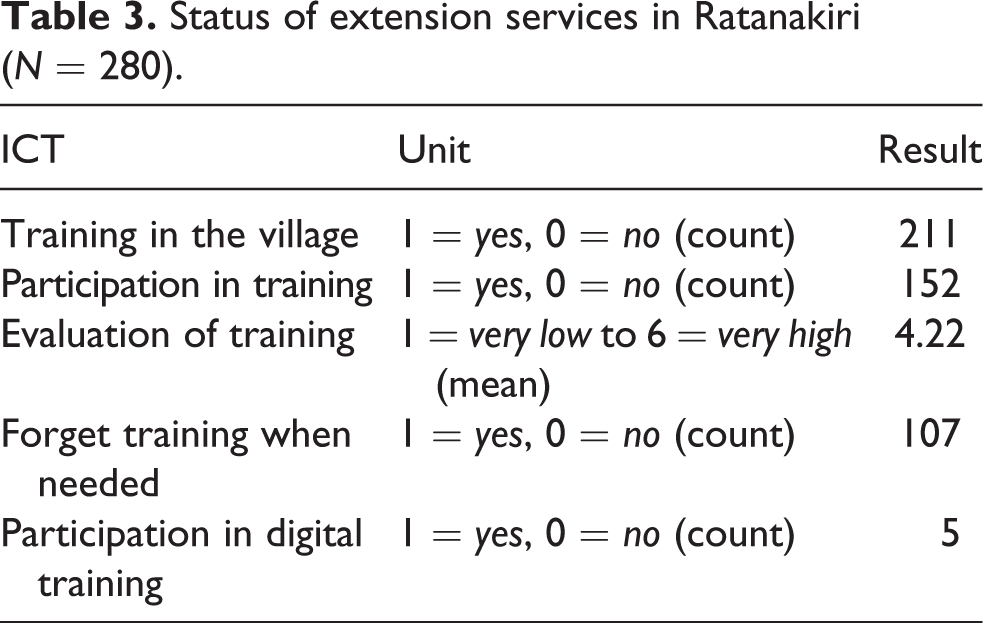
The farmers in our sample were on average 40 years old. They possessed, on average, about three years of formal education. Moreover, on average, about 50% of our sample could read and 60% stated that they were able to perform calculations. Additionally, roughly half of our sample was female (there were slightly more females than males, especially in the audio group) and most often our participants were married. As some of the variables appear to deviate in the group comparison, we have conducted a regression analysis to control for sociodemographic influences. In addition to personal characteristics, we collected information on household hardware and the state of extension work from the perspective of the farm managers. As presented in Table 3, out of the 280 farmers, 211 stated that there was regular extension work going on in their village. Of these 211, 152 stated that they had participated in an extension session. We then asked the 152 farmers how they rated the quality of the extension services received. Most of the farmers rated the extension work as good or slightly good. 11 In general, those who had participated appeared to be rather satisfied with the services. However, one in four of the farmers stated that they did not really understand what was being taught during the extension sessions. Furthermore, we wanted to know more about the usefulness of the extension sessions. Roughly half of the participants (107 out of 211) stated that although they had found themselves in situations in their fields where they could apply the insights taught during an extension session, by that point they had forgotten what exactly had been taught. Five out of the 280 farmers stated that they had had some kind of experience with digital advisory services.
Status of extension services in Ratanakiri (N = 280).
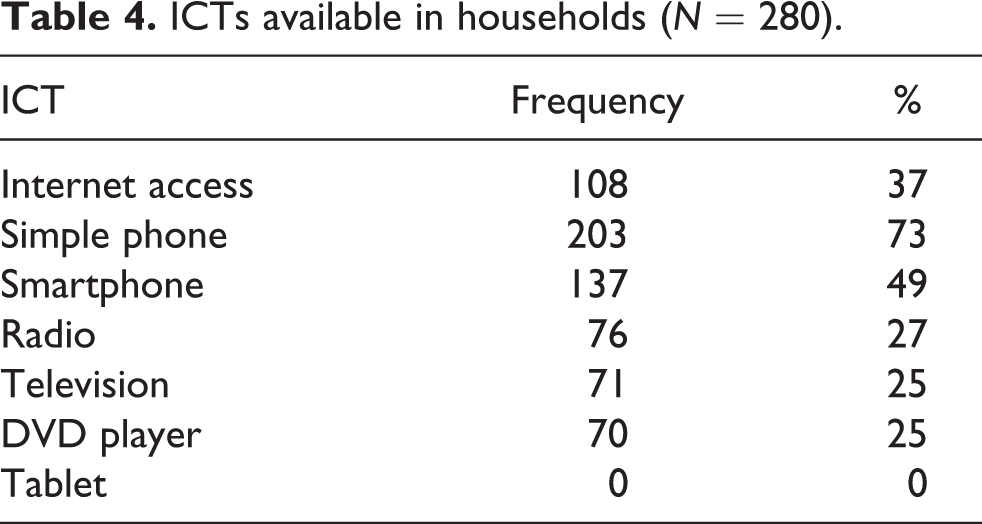
Internet access and hardware ownership were quite prevalent (see Table 4). Of the 280 farmers, 108 stated that there was Internet access in their household. Moreover, 73% of the households possessed at least one simple phone and 49% owned at least one smartphone. While computers and tablets were rarely owned, DVD players, television sets and radios were more prevalent. This is in line with the global trend that simple phones are more prevalent than smartphones among rural communities (Phatty-Jobe et al., 2020). The results are also similar to the findings of Hoang (2020), who found that Vietnamese smallholder farmers used mobile phones, television and radio to meet their information needs.
ICTs available in households (N = 280).
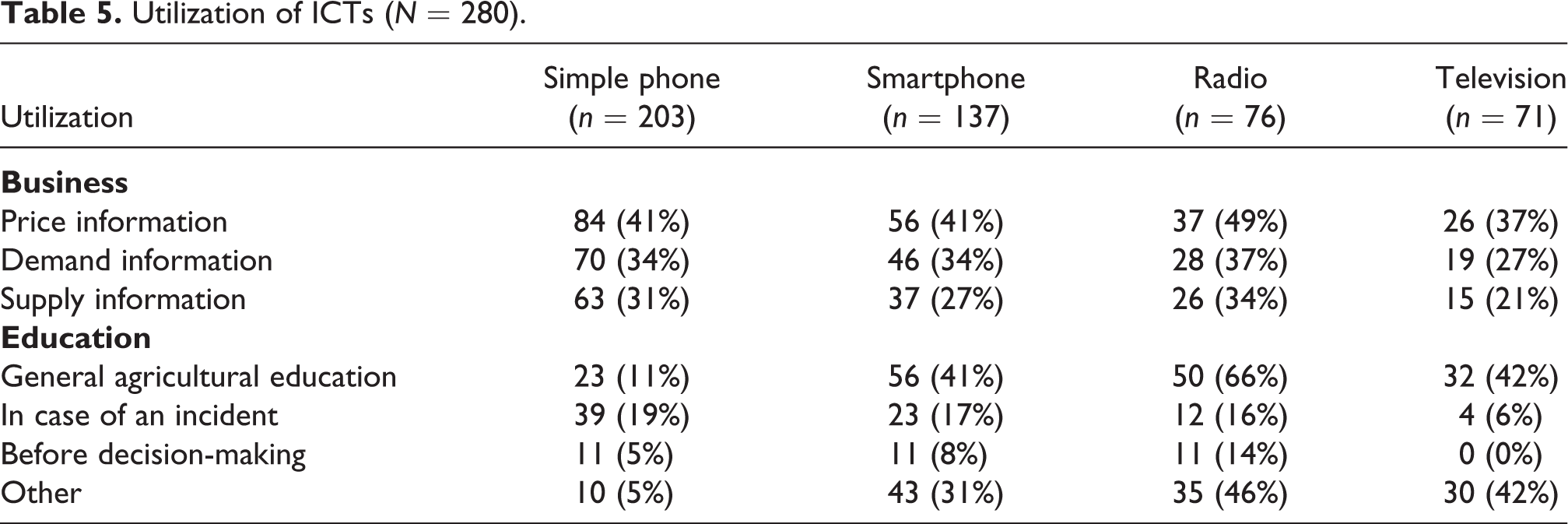
We also asked the farmers about the utilization of their ICTs. As seen in Table 5, the farmers were already using their hardware to access information. 12 With their simple phones, the farmers most commonly accessed price information. Accessing price information was also a popular activity when using a smartphone, the radio or television. However, other business information was also accessed via the hardware in their household. For example, about one-third of the farmers who possessed a simple phone also used it to access demand information – the same proportion is evident for smartphone owners. With respect to education, the farmers were already using their hardware for general agricultural education. Radio in particular (with 66% of radio owners), television (42%) and smartphones (41%) were popular for accessing agricultural education. The simple phone appears to have little importance with respect to education relative to other devices. Interestingly, the farmers stated that they also used smartphones, radio and television to a large degree for purposes ‘other’ than business or education. This is not the case for simple phones, where only 10 out of the 280 farmers stated that they used them for other purposes. ‘Other’ purposes often included use for fun or staying in contact with relatives. However, we did not ask about the channels used. Notably, the predominance of accessing price information in particular mirrors a global trend (Phatty-Jobe et al., 2020).
Utilization of ICTs (N = 280).
Information needs
Table 6 depicts the information that the smallholder farmers in our sample would like to receive via phone. We presented the seven items listed in Table 6 to the farmers and asked whether they would like to receive that information (yes or no). We also included an additional item, ‘other’, where the farmers could express their additional information demands. With 87%, the highest demand was for cultivation information, referring to which crops to grow and how to grow them. This is followed by price information for outputs and inputs, respectively. Over half of our farmers were interested in receiving information about pesticide and fertilizer application. Thirty-nine percent requested information on crop alternatives, such as other crops that suited the soil and circumstances of the farmer.
Information demand over the phone (N = 280).
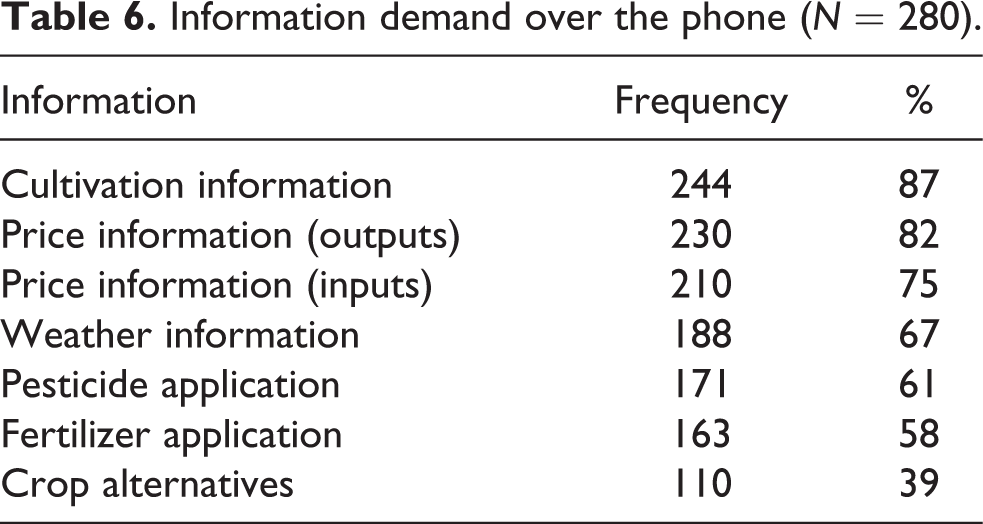
The information needs stated by the smallholder farmers in our sample are somewhat in line with what is suggested in the literature. Market information – which includes prices for outputs and inputs – is a commonly stated information demand (Phiri et al., 2018). However, most commonly, the farmers asked for information on a rather complex topic – namely, cultivation. This can include information on which crops to grow and how to grow those crops correctly. Conveying this information requires many nuances and must be well thought through to stick with the smallholder farmer effectively. The same applies for fertilizer and pesticide application. The importance of information on fertilizer application is also highlighted by the cross-country study conducted by Lokanathan and Kapugama (2012).
With respect to systematizing the farmers’ information needs, crop cultivation and information on pesticide and fertilizer application fall in the category of more complex information, as conveying this information requires more than transferring mere numbers. Price information and weather information, on the other hand, fall in the category of less complex information, as no in-depth explanation is required to transmit these data points. Thus, the most strongly needed information – cultivation information – is a complex topic (Aker et al., 2016), and the delivery channels for this information need to be well thought out.
Information delivery
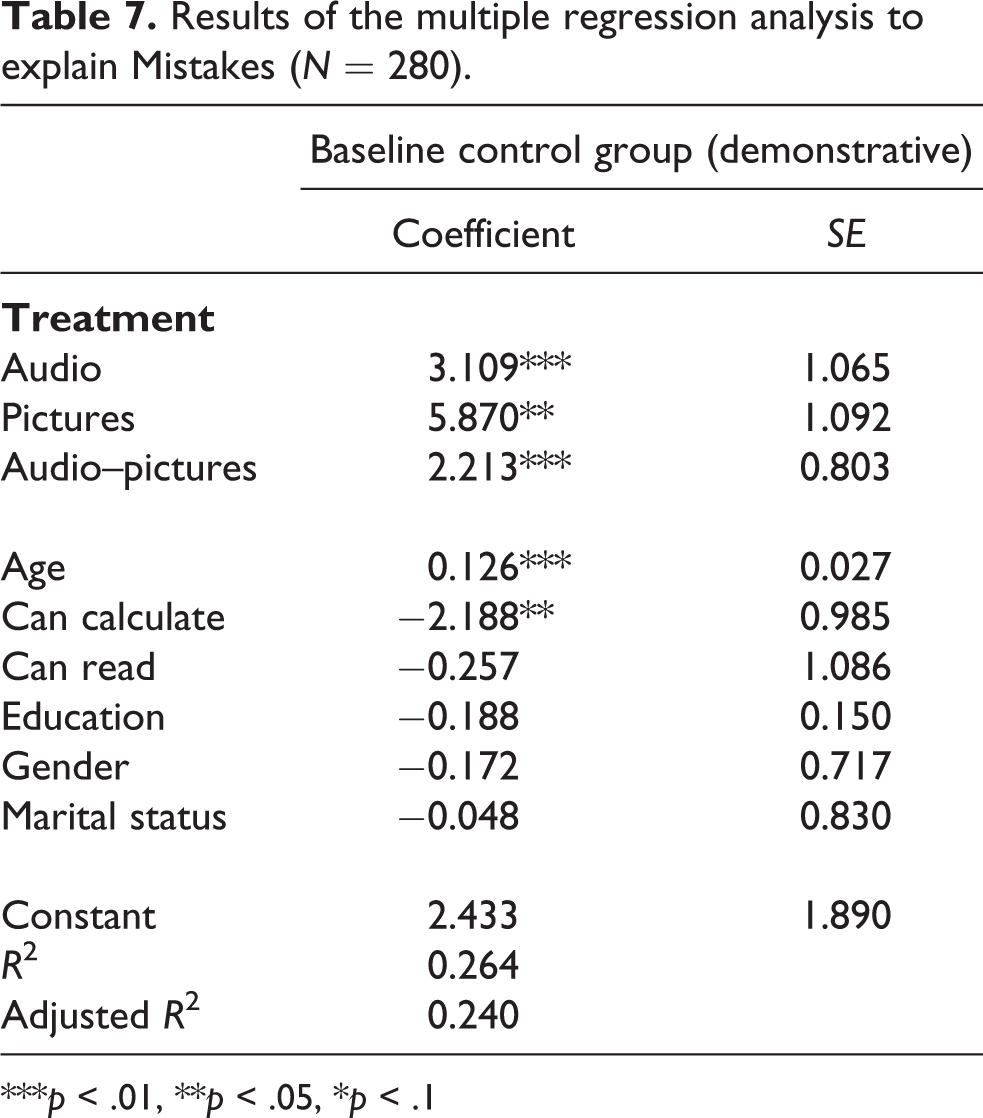
To assess the effectiveness of the information delivery channels, we analysed the performance of the farmers with respect to their treatment in the experiment. Table 7 shows the resulting coefficients and associated standard errors of the multiple linear regression analysis. To analyse our treatments, we used the control group (demonstrative) as our baseline scenario. Our interventions appeared to make a crucial difference when it came to success in the experiment. Compared to the control group, the participants receiving the audio treatment made on average (c.p.) 3.109 mistakes more; the participants receiving the Picture treatment made on average (c.p.) 5.870 mistakes more; and (3) those receiving the audio–pictures treatment made on average (c.p.) 2.213 mistakes more (all significant at a statistical significance level of 1%). Thus, the control group performed the best, making, on average, the fewest errors compared to the treatment groups. The second-best performer was the audio–pictures group, followed by the audio treatment. By far the worst performance was using picture instructions. These results are also mirrored when considering the completed trials. Appendix 3 reveals that the completed–not-completed ratio is worst for the pictures group, as most of the participants did not finish building the tower. The ratio for the audio group is balanced; slightly more participants did not complete the task in the audio–pictures group; and slightly more participants did complete the trial in the demonstrative group. This descriptive overview underlines that pictures can be clustered as the weakest instruction tool.
Results of the multiple regression analysis to explain Mistakes (N = 280).
***p < .01, **p < .05, *p < .1
With respect to the control variables, we found that age had a positive statistically significant effect on the mistakes performance measure at the 1% level. Thus, if a participant was one year older, their number of mistakes increased by 0.126 c.p. on average. Moreover, the ability to calculate had a statistically significant effect (at the 5% level) on the outcome variable. If a participant could calculate, they would on average (c.p.) make 2.188 fewer mistakes in the experiment. Here, the education variable had no statistically significant effect on performance in the experiment. The same applied for gender and marital status, as well as whether or not the participant could read.
To check the robustness of our results, we also employed a negative binomial regression. The results are presented in Appendix 4, as the magnitude and direction of the effect are similar to the effects depicted in Table 7. Furthermore, we conducted propensity score matching to check the robustness of our findings. Tables 8 and 9 show the results of the nearest neighbour matching and radius matching techniques, respectively. For our matching, we calculated the matched effect of the treatment on the outcome variable, mistakes. The treatment variable was the given treatment group (audio, pictures or audio–pictures) and we matched these to the control group (demonstrative). We conditioned our matching on the same variables as those employed in the regression – namely, age, can calculate, can read, education, gender and marital status.
Results of nearest neighbour matching.

Results of radius matching.

The effects of the nearest neighbour matching, as well as the radius matching, are all statistically significant at the 5% level. The average treatment effects on the treated all show the same direction and magnitude as the results from the multiple regression analysis and the negative binominal regression analysis: pictures performs the worst, with an average treatment effect on the treated of 5.65 in the nearest neighbour matching and 6.41 in the radius matching. In other words, a person in our sample receiving the picture instructions made, on average, 5.65 (or 6.41) more mistakes compared to a similar person (with respect to the condition variables) receiving the demonstrative treatment. This effect is very similar to the results from Table 7, where a person receiving the picture treatment made on average 5.87 more mistakes compared to a person receiving the demonstrative treatment. The nearest neighbour matching and radius matching also confirm that people receiving the audio treatment performed slightly better than those receiving the pictures treatment, but worse than people receiving the audio–pictures treatment.
The results mirror the predictions made by multisensory learning theory. The audio and pictures treatments had a unisensory design, whereby they merely targeted either vision or hearing. These groups show the weakest results. The audio–pictures treatment targeted both senses and the participants appeared to experience a higher quality of learning by receiving information through two channels. The demonstrative group shows the highest success rate, which can be explained by multisensory learning theory. In this instruction, the participants could use their vision and hearing, and could even handle the materials. It was an experience that targeted multiple senses simultaneously. Moreover, one explanation for the good performance in this group might be that the participants were used to this kind of instruction from school or extension sessions (211 out of the 280 farmers had participated in extension sessions before). Furthermore, the participants gained a personal face-to-face experience, meaning that they could engage with the enumerator.
Discussion
Information needs
As seen in Table 5, the farmers in our sample already used their devices to access price information. The fact that they nevertheless demanded price information reveals that the current information might not be sufficient. One explanation could be that they are currently calling someone at the market for prices, while advisory services could deliver the information in a systematic and transparent way. This would be in line with findings from previous studies that highlight the importance of the source of information and its trustworthiness. Without sufficient trust in an information source, the information is not likely to stick with the person who receives it (Aker et al., 2016). The same applies for general agricultural information (Table 5). The farmers already accessed agricultural information, especially using their smartphones, radio or television. However, this information might not be sufficient, as there was still a high demand from the farmers for information on, for example, cultivation. One explanation might be that general radio broadcasts or television shows might not deliver the specific, customized information that a farmer needs. Raj et al. (2011) studied the impact of a customized information system on the productivity of farmers in India, finding that information needed to be tailor-made to increase the economic performance of the farmers.
Information delivery
In general, non-digital and digital channels are available for information delivery. While the drawbacks of non-digital extension services include the strong need for and dependence on human resources, the difficulty of scaling and relatively high costs (Aker, 2011; Maulu et al., 2021), there are also drawbacks identified with respect to digital channels. For example, studies conducted by Akpabio et al. (2007) and Munyua et al. (2009) identify that expensive transmission equipment, costly up-front investments for developing learning material such as radio productions, expensive interconnectivity and the lack of electricity are preventing extension workers from utilizing ICT for information delivery (Maulu et al., 2021). Thus, when investigating digital delivery channels, these potential hurdles should be kept in mind.
Our results underpin the effectiveness of demonstrations in the field or model farmer approaches. However, through a non-digital channel (i.e. the extension worker physically visiting the village or household), demonstrations entail many drawbacks, such as being very costly. The use of videos has been suggested for translating demonstrations into the digital domain, as videos too are multisensory and close to a physical demonstration. However, streaming videos requires a lot of mobile data and battery power, which is relatively expensive for smallholder farmers and therefore presents major hurdles for success. Thus, diving deeper into the results, they also suggest that more cost-effective digital advisory services can work when they address multiple senses and ensure a feeling of personal engagement. For example, an audio–pictures treatment could be a cost-cutting way (compared to demonstrations) of communicating with farmers through mobile phones. As suggested in the literature (Aker et al., 2016; Phatty-Jobe et al., 2020), advisory services for rural communities have a better chance of success when targeting simple phones rather than smartphones, and using as little data as possible. Therefore, an IVR system or helpline might be a good starting point. Tailored voice assistance could replace some of the visits of extension workers, and would reach individuals more regularly as well as cut costs (Aker, 2011).
Furthermore, it is interesting that the pictures treatment performed so weakly, as we used the coloured picture instructions offered by Lego. We therefore expected the images to be by far the most intuitive instructions. One reason for this strong aberration might be that farmers are unfamiliar with this kind of instruction. Further research might be needed to clarify this interesting finding. This also hints at an answer to the idea put forward by Aker et al. (2016), who suggest that imagery might be a delivery channel that can be used to convey more complex topics. Against our intuition, this would appear to be the least effective channel to use (relative to the other channels in our experiment).
ICT for smallholder farmers
In our specific case of rural Cambodia, extension services are rare, while the state is eager to set up a more supportive advisory infrastructure for farmers. Moreover, the digital infrastructure and equipment in households present challenges for ICT interventions. In particular, 63% of households reported no Internet access (see Table 4), which makes the streaming of e-learning material over a smartphone rather challenging. However, the majority (73%) of the farmers could be reached via simple phones and roughly half of the sample (49%) could be reached via a smartphone. Moreover, roughly one in four of the farmers reported owning a television, radio or DVD player.
Furthermore, the results reveal that smallholders in rural Cambodia are most urgently demanding complex information on cultivation practices, followed by market information and input information. Moreover, using demonstrations as a delivery channel appears to be the most promising method for effectively conveying information, followed by bisensory and unisensory delivery modes.
Thus, we suggest to policymakers that smallholder farmers can best be served by ICT through digital services targeted at simple phones that convey complex information – specifically, crop cultivation information – with a delivery channel that addresses multiple senses. However, as simple phones cannot receive videos or access applications, and given that many smallholder farmers cannot read properly (in our sample, 52%), multisensory products appear to be rather difficult to design. Therefore, programmes could also use television broadcasts as a complementary strategy. However, the information provided has to fit the needs of the farmers and preferably have a feedback option, otherwise television programmes might also not have any impact on the livelihood of smallholders.
Another way of conveying information could be by using IVR systems or helplines, and possibly complementing them with visits from extension officers, farmer training programmes or television broadcasts. For example, information needs could be collected through a helpline to then produce regular television broadcasts based on those specific needs. Furthermore, recordings might be a useful complementary delivery channel, as 25% of our sample had a DVD player. Stored information might be helpful for farmers in general. In our survey, roughly 50% stated that they did not remember information provided by an extension officer when they actually needed it. This also makes sense as illiterate farmers cannot take notes during an extension session. Therefore, a trained farmer in the village who can be approached in times of need or a DVD recording might be useful for timely access to information.
Concluding remarks
The main objective of this study was to investigate how smallholder farmers in rural Cambodia could best be served with information by ICT, as to date it has not been clear how to communicate (especially complex) information to smallholder farmers effectively.
Specifically, we investigated the information needs of smallholder farmers with respect to their farm business and effective ways in which to convey information. For this purpose, we collected data on the sociodemographics of and ICT in the households of 280 smallholder farmers in rural Cambodia, as well as their information demands. We also conducted a framed field experiment with the same study group to investigate effective information delivery channels. In synthesis, our field study reveals that (1) the farmers’ greatest information demands related to crop cultivation and they asked for more information on prices, the weather, and pesticide and fertilizer application, and (2) information delivery worked best when multiple senses were addressed. The farmers receiving a demonstration instruction performed best in building the Lego tower, followed by farmers receiving the audio–pictures instruction, the audio instruction, and the pictures instruction, respectively. Furthermore, on average, a higher level of literacy and a younger age were statistically significant variables for increasing success in the experiment.
Taken together, we thus recommend very specifically that the Cambodian government set up an IVR system for an information campaign on cultivation practices. For this, policymakers could run a marketing campaign, informing farmers about the number they can call for cultivation information on the most typical crops and maybe also promising new crops. Once the farmers know where to call, they can dial the number of the IVR system whenever needed and be automatically informed about the most frequently asked questions. This could be accompanied by a radio or television cultivation information campaign and extension workers visiting the villages.
Following on from our findings, we recommend generally that policymakers on a national level and in similar geographical settings aim for hybrid extension service systems, where extension agents compliment digital information delivery. Also, we recommend aiming for multisensory learning material and material that can be stored and thus revisited by farmers whenever needed. Furthermore, while in our specific region there were no farmers’ associations reported, these groups could be used to deliver information without the need for every individual to possess a mobile phone or other hardware. The associations could receive printed material to hand out and undertake public viewing events of, for example, videos of cultivation practices.
As mobile phones (both simple phones and smartphones) are on the rise among smallholder farmers internationally, the possibilities to reach out to farm managers through technology are increasing, which, in turn, is increasing ways of delivering high-quality advisory services using ICTs. For businesses aiming to implement ICT products with smallholders, we strongly recommend first undertaking an in-depth market analysis and investigating which delivery channel is most effective – for example, by using a framed field experiment as presented in this study.
Moreover, further research aimed at understanding which delivery channels are effective or not could yield many benefits. While Cambodia suited the objectives of this study, it would be interesting to repeat the study in a different cultural setting – for example, an African country – for a broader generalization of our findings. Larger studies in particular, involving a random-control-trial design, could strengthen the external validity of our experiment and reaffirm and/or extend our findings. Furthermore, changing the incentivization structure by employing a direct incentivizing scheme might reveal interesting results and function as a further robustness check. Additionally, further research to investigate effective information delivery could study how farmers can best request information or explore the differences in outcomes given the digital literacy of smallholder farmers. We suggest that policymakers and institutions in general that are working on digital advisory services should incorporate delivery channels that address multiple senses in a complementary way to potentially increase learning outcomes.
Supplemental material
Supplemental Material, sj-docx-1-ifl-10.1177_03400352211057148 - Information needs and delivery channels: Experimental evidence from Cambodian smallholders
Supplemental Material, sj-docx-1-ifl-10.1177_03400352211057148 for Information needs and delivery channels: Experimental evidence from Cambodian smallholders by Selina Bruns, Oliver Mußhoff and Pascal Ströhlein in IFLA Journal
Supplemental material
Supplemental Material, sj-docx-2-ifl-10.1177_03400352211057148 - Information needs and delivery channels: Experimental evidence from Cambodian smallholders
Supplemental Material, sj-docx-2-ifl-10.1177_03400352211057148 for Information needs and delivery channels: Experimental evidence from Cambodian smallholders by Selina Bruns, Oliver Mußhoff and Pascal Ströhlein in IFLA Journal
Supplemental material
Supplemental Material, sj-docx-3-ifl-10.1177_03400352211057148 - Information needs and delivery channels: Experimental evidence from Cambodian smallholders
Supplemental Material, sj-docx-3-ifl-10.1177_03400352211057148 for Information needs and delivery channels: Experimental evidence from Cambodian smallholders by Selina Bruns, Oliver Mußhoff and Pascal Ströhlein in IFLA Journal
Supplemental material
Supplemental Material, sj-docx-4-ifl-10.1177_03400352211057148 - Information needs and delivery channels: Experimental evidence from Cambodian smallholders
Supplemental Material, sj-docx-4-ifl-10.1177_03400352211057148 for Information needs and delivery channels: Experimental evidence from Cambodian smallholders by Selina Bruns, Oliver Mußhoff and Pascal Ströhlein in IFLA Journal
Supplemental material
Supplemental Material, sj-docx-5-ifl-10.1177_03400352211057148 - Information needs and delivery channels: Experimental evidence from Cambodian smallholders
Supplemental Material, sj-docx-5-ifl-10.1177_03400352211057148 for Information needs and delivery channels: Experimental evidence from Cambodian smallholders by Selina Bruns, Oliver Mußhoff and Pascal Ströhlein in IFLA Journal
Supplemental material
Supplemental Material, sj-docx-6-ifl-10.1177_03400352211057148 - Information needs and delivery channels: Experimental evidence from Cambodian smallholders
Supplemental Material, sj-docx-6-ifl-10.1177_03400352211057148 for Information needs and delivery channels: Experimental evidence from Cambodian smallholders by Selina Bruns, Oliver Mußhoff and Pascal Ströhlein in IFLA Journal
Supplemental material
Supplemental Material, sj-docx-7-ifl-10.1177_03400352211057148 - Information needs and delivery channels: Experimental evidence from Cambodian smallholders
Supplemental Material, sj-docx-7-ifl-10.1177_03400352211057148 for Information needs and delivery channels: Experimental evidence from Cambodian smallholders by Selina Bruns, Oliver Mußhoff and Pascal Ströhlein in IFLA Journal
Footnotes
Acknowledgements
We acknowledge the valuable comments and suggestions of Andreas Diettrich, Alke Martens, Johanna Gather, and anonymous referees as well as the editors of International Federation of Library Associations and Institutions.
Declaration of conflicting interests
The authors declared no potential conflicts of interest with respect to the research, authorship and/or publication of this article.
Funding
The authors disclosed receipt of the following financial support for the research, authorship, and/or publication of this article: We gratefully acknowledge financial support from Deutsche Forschungsgemeinschaft (DFG).

Supplemental material
Supplemental material for this article is available online.
Notes
References
Supplementary Material
Please find the following supplemental material available below.
For Open Access articles published under a Creative Commons License, all supplemental material carries the same license as the article it is associated with.
For non-Open Access articles published, all supplemental material carries a non-exclusive license, and permission requests for re-use of supplemental material or any part of supplemental material shall be sent directly to the copyright owner as specified in the copyright notice associated with the article.
