




Abstract
Temporomandibular disorders (TMDs) and migraine are highly prevalent, overlapping pain conditions that cause considerable burden in the population. These two disorders are of different etiology and pathophysiology, but both are mediated by the trigeminal system. Due to the interrelated anatomy and physiology of the craniofacial and cervical structures, shared molecular links and mutual feedback, there is an inherent potential for exacerbation of symptomatology, perpetuation and progression; however, on a positive note, there is good potential for developing integrated, mutually beneficial management protocols when migraine and TMDs are comorbid. Currently, there are no established protocols of management, and the literature is limited in studies exploring dual therapeutic protocols. So, the question is, how can management be optimized with the evidence available? We should start by recognizing the need for multidisciplinary management to improve patient outcomes and we must highlight the importance of the dialogue between headache medicine and dentistry. The meeting point is where the dental discipline and the specialty of orofacial pain reside. The underlying pathophysiology of this comorbidity points to the need to decrease mutual exacerbation inputs. Therefore, it is fundamental to identify contributing factors of potential sensitization, such as the presence of parafunctional behaviors, cervical spine contributors, the presence of other comorbidities and headache hygiene. Current evidence supports management recommendations that should be developed by a multidisciplinary team as an integrated plan with combination therapy including both pharmacological and non-pharmacological approaches to optimize management. This multidisciplinary team should include the medical provider (neurologist/headache medicine expertise), the dentist specialized in orofacial pain, the physical therapist and the behavioral medicine specialist. Research is needed to support evidence-based integrated protocols for the management of comorbid migraine and TMDs. Evidence has shown that calcitonin gene-related peptide (CGRP) is also involved in TMDs. CGRP-targeting therapies may hold future opportunities for pharmacological monotherapy addressing this comorbidity.
This is a visual representation of the abstract.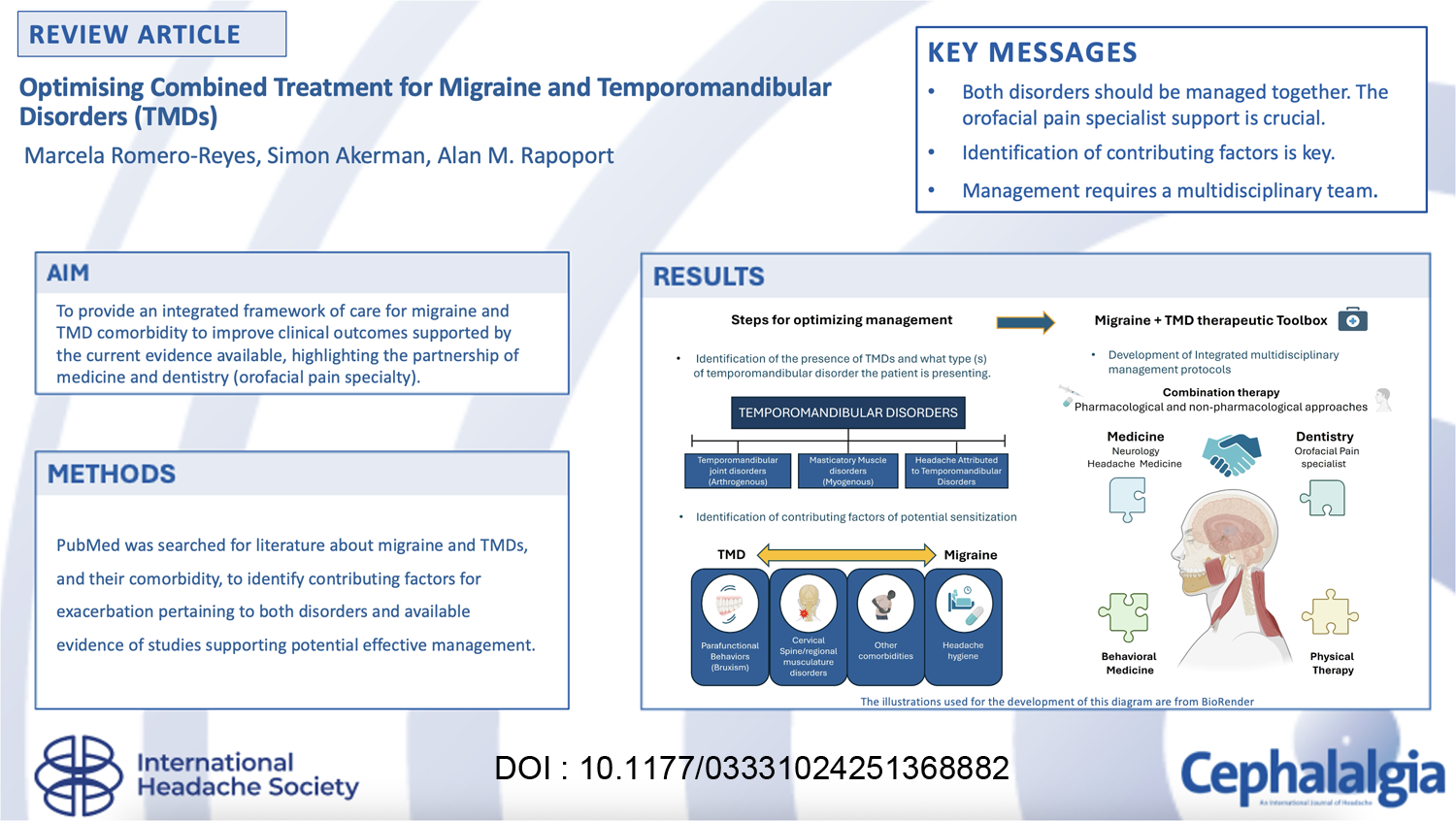
Introduction
Temporomandibular disorders (TMDs/TMD) are the most prevalent musculoskeletal and neuromuscular chronic pain conditions in the orofacial region, involving the temporomandibular joint (TMJ), the muscles of mastication and their associated structures (1,2). In addition, TMDs are the most common reason for patients to seek treatment after dental pain in the dental setting (3,4). Similar to migraine, both conditions are highly prevalent in the population; most documented estimates for migraine suggest a prevalence of 14–15% in the majority of Western populations, being three times more prevalent in women than men, while the prevalence of TMDs varies from 5–12% up to 36% (5–7). There is a lack of studies that specifically explore the prevalence of the comorbidity of migraine and TMDs. In a cohort of 502 TMDs and orofacial pain patients, 49% were diagnosed with tension-type headache (TTH), followed by 34.4% diagnosed with migraine with and without out aura and probable migraine (8). In another large population study TMD symptoms were more common in subjects with any type of headache compared to headache-free people, but the highest association was observed with migraine (9). Among TMDs cases, another study showed that the prevalence of migraine increased nearly ten-fold from 1.2% to 9.7% compared to controls (10). There is great variability in the data due to the unclear specification of what type of headache is being studied, as well as the diagnostic criteria and the methodological factors that warrant further epidemiological exploration.
Even though TMDs and migraine are disorders of different etiology and pathophysiology, musculoskeletal versus neurovascular, they are trigeminally mediated, overlapping pain conditions; when present in isolation, each causes great burden and, when comorbid, they synergistically have an even greater impact on the quality of life of the patient (11,12).
It is well established that migraine is more challenging to manage when TMDs are present (12). A key factor that is fundamental to understand when formulating management protocols is that each disorder influences the other. This is due to the interrelated anatomy and physiology of the craniofacial and cervical structures, as well as certain molecular mechanistic and pathophysiological links that support their mutual feedback. Moreover, TMD related myofascial pain and cutaneous allodynia are both associated with individuals with migraine, and both may increase the risk of migraine chronicity (13,14). There is therefore an inherent potential to exacerbate symptomatology, enhancing the cycle of pain and perpetuating its progression (12,15,16). This means it is essential to identify potential contributing factors that exacerbate symptoms and their likely underlying mechanisms. However, as a result of the close interrelation of these two entities, there is also opportunity for optimal management when each of both conditions are properly treated. For example, when the TMD component is treated, patients have reported that this has a positive impact on the frequency, intensity, duration and disability of their migraine attacks, but they still present with migraine. This supports that both disorders need to be treated together and the importance of the collaborative expertise of the headache specialist/neurology and the orofacial pain specialist/dentistry.
Recognition of the need for multidisciplinary management to improve patient outcomes in these cases is vital, highlighting the importance of the dialogue between headache medicine and dentistry, where the dental discipline and specialty of orofacial pain is the meeting point. Currently, there are no established protocols of management when migraine and TMDs are comorbid, and so our goal is to provide context and recommendations on how to improve the care of this patient population.
Underlying pathophysiological mechanisms of TMDs and migraine comorbidity
To develop management recommendations for this comorbidity, it is necessary to understand their relationship. What is fundamentally common to these pain disorders is the shared anatomical and physiological relationship of the craniofacial structures; the trigeminal nociceptive system (Figure 1). This is very likely a factor in their overlapping presentation. Primary headache disorders are localized most frequently in frontal, temporal, parietal and occipital areas, behind or in the eye (V1 distribution) or the cervical area (C1–C3 distribution) (15,17). That said, they can be localized in the mid-facial region, classified according to the International Classification of Orofacial Pain (ICOP) as ‘orofacial pains resembling presentations of primary headaches’ (18). In migraine, headache is often felt intracranially in the V1 distribution, most commonly in the fronto-temporal area or closer to one eye. It is known that stimulation of the dura mater in patients can induce pain that resembles an intracranial migraine phenotype (19,20), suggesting that trigeminal nociceptive neurons that innervate the intracranial dura mater are crucial to these mechanisms. However, pain can extend through all three divisions of the trigeminal nerve (21,22), which helps to explain the International Classification of Headache Disorders (ICHD) ‘facial migraine’ diagnosis. In a recent preclinical study, we demonstrated that initiation of TMD-like pain with injection of an algesic agent in the masseteric musculature activates and sensitizes trigeminal neurons that receive dural-intracranial and cutaneous-extracranial nociceptive inputs in the V1 distribution (16). This headache-like response confirms that V3 trigeminal neurons that innervate the masseteric musculature converge onto intracranial V1 headache-like trigeminal neurons, and their activation may mediate a headache-like response. This may explain the mechanisms related to ‘headache attributed to TMDs’ (HATMD); a secondary headache intrinsic to TMD.

Anatomical and physiological pathways related to temporomandibular disorders (TMDs), headache and their comorbidity: pain in TMDs and headache is largely mediated by the trigeminal nociceptive system. The trigeminal nerve is split into three major branches: the ophthalmic (V1), maxillary (V2) and mandibular (V3) divisions that project from intracranial (including dural vasculature) and extracranial (cutaneous and muscular) structures, synapsing on second order neurons in the spinal trigeminal nucleus (SpV) and its upper cervical dorsal horn extension (collectively known as the trigeminocervical complex (TCC), via the trigeminal ganglion (TG). Second order neurons from the TCC ascend via the trigeminothalamic tract to third order thalamic neurons, from where they project to the cerebral cortex. Pain in TMD involves the muscles of mastication (including temporalis and masseter), temporomandibular joint (TMJ) and associated structures, innervated by mandibular (V3) trigeminal neurons. Headache, particularly in migraine, is largely in the V1 distribution or the neck (C1–C2) and often felt intracranially. It is assumed to be a consequence of activation of nociceptive trigeminal afferents that innervate the intracranial dural vasculature. Pain can also be experienced in the V2/V3 orofacial regions (e.g. orofacial migraine). Convergent inputs in the TCC from the intracranial dura mater and the cutaneous skin are considered to explain the clinical manifestation of cutaneous hyperalgesia/allodynia during migraine. Additionally, a reflex connection from SpV to the cranial parasympathetic projection, via the superior salivatory reflex (SuS), is considered to contribute to cranial autonomic symptoms. Convergent cervical muscular inputs (including sternocleidomastoid (SCM) and trapezius) also impact TMD and headache pain quality, in addition to contributing to cervicogenic headache. Our recent data demonstrate that nociceptive inputs from the masseteric musculature converge onto trigeminal neurons that also receive inputs from the dura mater, which likely provides a mechanistic anatomical and physiological rationale for the comorbidity of TMD with migraine and its phenotypic profile. DRG = dorsal root ganglion; PAG = periaqueductal grey; RVM = rostral ventromedial medulla; SPG = sphenopalatine ganglion. Created in part using BioRender.
TMD is also a risk factor for the increased prevalence of primary headache, particularly migraine and chronic daily headache (now termed chronic migraine in the ICHD, 3rd edition (ICHD-3)) (9,23–27). Indeed, this relationship is often bi-directional. The presence of one tends to exacerbate the other, with increased prevalence and severity of symptoms (23,28). Together, it suggests that the presence of TMD-like pain in the V3 trigeminal distribution reduces the threshold to mediate headache-like intracranial neuronal responses considered to relate to migraine. While various mediators likely contribute to these mechanisms, including glutamate, nerve growth factors and other inflammatory molecules, there is evidence from preclinical studies suggesting that calcitonin gene-related peptide (CGRP) may provide, at least in part, a molecular link to this mechanism. CGRP is known to be important to migraine mechanisms and, while evidence from clinical studies is not conclusive, preclinical studies do demonstrate evidence of a potential role of CGRP in TMD pathogenesis and as a consequence, a potential therapeutic target for TMDs (16,29–32). Using a combination of injection of an algesic agent into the masseteric musculature, as a surrogate of TMD-like pain, and slow infusion of CGRP, which is known to trigger headache and migraine in patients (33), we found that this combination increases the likelihood of headache-like neuronal activation and sensitization of dural-responsive trigeminal neurons (16), exacerbating these trigeminal neuronal responses. This translates to the increased likelihood of migraine headache in patients with TMD and to the exacerbated headache phenotype observed in patients. Together, these data provide a mechanistic rationale for the overlap of TMD with headache disorders, but particularly migraine, either by mediating a secondary headache or its comorbid phenotypic profile.
Identification of the presence of TMDs and what type of TMD the patient is presenting
Patients with TMDs experience pain with jaw biomechanics including but not limited to pain with mastication, yawning, talking and pain during mouth opening that may limit its opening. Pain may also be experienced as a jaw ache, face pain, earache or headache (1). The first thing to consider in the comorbid patient is identifying which type of TMD is presenting. Contrary to popular belief amongst patients, and even care providers, ‘TMDs’ (or ‘TMD’), are not a sole diagnosis, instead comprising a category of disorders. Similarly, ‘TMJ’ is neither a diagnosis nor a disorder, but refers only to an anatomical structure, the ‘temporomandibular joint’ (1,34). Indeed, there are more than 30 TMDs as shown in the TMDs expanded taxonomy (35). Additionally, not all TMDs are painful. An example of non-painful TMDs is a TMJ disc displacement with reduction commonly described as a ‘clicking’ joint, which is very common in the population and is usually pain free (1). The diagnostic criteria of temporomandibular disorders (DC/TMD) (36) describe the most common intraarticular joint disorders such as degenerative joint disease, disc displacements and subluxation, and these may be painful or not. The most common painful joint disorder is arthralgia (pain in the TMJ), and, from the masticatory muscle disorders, there is myalgia and myofascial pain, in addition to the presence of secondary headache classified as HATMD (36). Usually, patients may present with more than one TMD and, from all the TMDs, the most common are of muscular/myogenous origin, such as myalgia and myofascial pain (37,38). It is important to note that TMDs of myogenous origin are more predominant in patients with comorbid migraine with TMD than arthrogenous disorders (25). Myofascial pain in particular has been shown to increase the impact of disability in patients with migraine (39). Myofascial trigger points are prevalent in migraine and TTH, particularly the presence of active trigger points in migraineurs, but their role in migraine pathophysiology still needs to be clarified (40).
Therefore, a thorough evaluation performed by the orofacial pain trained dentist to detect the source, or sources, of pain as well as their specific diagnoses are necessary. Pain arising either from the TMJ, muscles of mastication, or both, and potential contributing symptomatologies arising from other associated structures (15) are crucial to identify, so that we can develop a comprehensive plan of management tailored to diagnosis and patient needs.
In the medical setting, a preliminary screening for the potential presence of TMDs can be integrated during medical history and evaluation. Palpation of the main external masticatory muscles, such as the masseter and temporalis, in addition to the TMJs, with the goal of replicating the pain symptomatology that the patient is reporting, can be included during general examination (34). A screening instrument with high sensitivity and specificity can be included as an excellent tool to detect the presence or absence of TMDs (Table 1) (41). If responses and symptomatology indicate for the potential presence of TMDs, some initial recommendations can be started to help alleviate the pain and dysfunction with TMJ biomechanics. Recommendations such as a soft diet and application of moist heat for muscular pain, in addition to pharmacological approaches, such as muscle relaxants and the limited use of non-steroidal anti-inflammatory drugs (NSAIDs), can be included (1). These recommendations can be initiated as a preliminary plan while the patient is referred to an orofacial pain specialist for further evaluation and care.
Temporomandibular pain disorder screening instrument.

Items 1 through 3A constitute the short version of the screening instrument, and items 1 through 3D constitute the long version. An ‘a’ response receives ‘0’ points, a ‘b’ response receives ‘1’ point and a ‘c’ response receives ‘2’ points.
Identification of contributing factors of potential sensitization
The development of trigeminal sensitization is a signal for pain exacerbation in both severity and persistence. It is important to recognize that factors that might contribute to sensitization through the presence of TMDs, within a trigeminovascular system that is already compromised during migraine, will challenge the trigeminal system further. Thus, identifying these contributors of sensitization is crucial for assessing progression and potential outcomes, but, more importantly, they provide direction as to how to design the management protocol to attend to imminent needs and prevent further symptomatology and progression. As evidence has shown, both disorders need to be managed when comorbid, therefore preventing feedback and further sensitization (12). Each disorder needs to be evaluated for any potential contributing factors to the common problem, in addition to assessing the contribution of parafunctional behaviors, cervical spine contributors, the presence of other comorbidities and poor headache hygiene.
Presence of parafunctional behaviors such as bruxism
Oral behaviors such as bruxism need to be identified in the comorbid patient since they may contribute to symptomatology; however, it is not fully understood whether they contribute to sensitization, with a clearer correlation and causality between TMDs, bruxism and headache yet to be established (42,43). Bruxism is recognized as a group of oral behaviors of multifactorial and centralized aetiology, described as the repetitive motor activity of muscles of mastication characterized by the clenching or grinding of teeth, as well as by thrusting or bracing of the mandible, either while awake or during sleep (44,45). This motor behavior is common in the population, with a variable prevalence between studies ranging from 22% to 30% for awake bruxism (AB) and 8%, 15% or even 43% for sleep bruxism (SB) (46,47). The definition of bruxism has evolved since it was considered solely to be a pathological disorder involving parafunctional habits or behaviors associated with negative outcomes, although evidence has shown that, in healthy individuals, it can be protective and harmless, lacking any clinical consequences (48). The association of causality of bruxism in TMDs has a long history, but contrasting reports highlight the need to investigate this further. These oral behaviors may be exacerbated by stress, anxiety and some acute neurological illnesses, as well as by certain medications, stimulants and addictive substances, including selective serotonin reuptake inhibitors, aripiprazole, phenethylamines, alcohol and methamphetamine, to mention a few (1,49,50). There is evidence that, in some individuals, bruxism may initiate, exacerbate and perpetuate symptomatology (51–53), but not in all cases, as previously speculated (54,55). While exploring the relationship between TMDs, bruxism and headache disorders, particularly migraine, an observational and retrospective study reported that bruxism may be a confounding factor between probable migraine and painful TMDs (56), but other studies have reported potential association between AB and SB and headache, although they either lack data to clearly provide a headache diagnosis or the details were only by self-report (57,58). AB increases the risk for TTH, but the association with migraine is still to be established (59). However, it has been shown that the presence of both painful TMDs and SB increases the risk of episodic and chronic migraine and episodic tension type headache (24). There is no doubt that better designed studies are necessary to explore causality and that these should be supported with the use of better measurements for analysis, such as the new Standardised Tool for the Assessment of Bruxism (STAB), aiming to establish the extent of the relationship and the contribution of bruxism in this comorbidity (43,60). Available evidence points to a possible contribution and therefore this needs to be considered.
If a patient reports or answers affirmatively during the TMD screening (Table 1) that they have a history of clenching or grinding, and more so if they report experiencing pain or soreness in their face or jaw upon awakening, these may be an indication of the possible presence of bruxism as parafunction. Signs and symptoms will then need to be explored further in the orofacial pain clinical setting to support the use of a stabilization appliance that may be beneficial and could be integrated into the management plan. This intraoral appliance is of common use in dentistry, comprising a custom made, passive and non-invasive approach; its main role is to protect dentition, but it is also used as part of the plan of management for TMDs (1). There are studies that question their efficacy, while other studies have shown therapeutic benefits improving joint and muscular symptomatology (61). It may decrease sleep muscle activity present in SB, but this needs to be supported with more rigourous studies (62). Behavioral modification strategies are used for the management of AB directed to increase awareness due to the subconscious repetitive muscle bracing and teeth contact, therefore reducing the impact of these behaviours while awake (1,63). In a pilot study, the combination of manual therapy and bruxism neuroscience education that focuses on educating individuals about bruxism and contributing factors seemed to improve AB and related complaints (64).
It has been reported in a comprehensive systematic review and meta-analysis that the use of full-arch coverage, maxillary, hard resin, stabilization appliances may reduce headache frequency and severity in TMDs comorbid with migraine, and also TMDs comorbid with TTH (65). Therefore, the use of a stabilization appliance can be advantageous when used under the supervision and care of the orofacial pain specialist as part of the management plan in the comorbid patient. In support of this approach, the use of a stabilization appliance in conjunction with the migraine preventive, propranolol, was beneficial for the management of the comorbidity in a randomized controlled trial (RCT). This study is of great significance since it was the first study that explored combination therapy and its importance to optimize clinical outcomes (66).
Assessment of possible cervical contributing factors
Neck pain is very common in the general population, with a highest prevalence coexisting with migraine and TTH (67). Patients with TMDs also report neck pain, or its presence, sometimes with tenderness, during examination. Indeed, there is a strong association between painful TMDs and cervicogenic headache where the physical therapy management of TMDs is beneficial, supporting the importance of TMD management and its influence on headache (68–70). The cranio-cervical mandibular relationship is a clear example of the interrelated anatomy and physiology of the craniofacial and cervical structures. This needs to be taken into account during examination and management in patients with migraine and TMD since there may be sources of pain arising from cervical spine disorders and the regional musculature contributing to the symptomatology of both (Figure 1) (1,71). The palpation of the cervical musculature and a brief assessment of the cervical spine is included during the TMD evaluation performed in the orofacial pain clinical setting. However, a thorough assessment to detect contributing factors, including range of motion, forward head position and posture, performed by a physical therapist specialized in craniofacial and cervical therapeutics, is vital. Indeed, orofacial pain specialists work in close collaboration with physical therapists to enhance and optimize TMD management (1,72). The consensus of the benefits of physical therapy in patients with migraine, even though potentially beneficial, is still unclear due to the lack of studies and the need for RCT (73–75). However, one RCT has demonstrated that physical therapy management protocols, including manual therapy and therapeutic exercise in the orofacial and cervical regions in patients with chronic migraine and TMD, provided significant improvement in Craniofacial Pain and Disability Inventory (CF-PDI) and Headache Impact Test (HIT-6) scores, as well as pain intensity (76).
Review of other comorbidities
During medical history intake and examination, it is essential to evaluate for the presence of comorbidities and overlapping pain conditions. TMD and migraine share comorbidities with anxiety and depression, sleep disorders, irritable bowel syndrome, low back pain, fibromyalgia, pelvic pain and other pain syndromes (77–80). It is critical to identify these conditions and comorbid pain syndromes because it has been shown that the more comorbidities and overlapping pain conditions an individual presents with, the greater the likelihood for the exacerbation of the pain experience, negatively influencing the clinical presentation, increasing the level of disability and making management more challenging (81–83). Moreover, it is important not to forget that TMDs can provoke intrinsic headache symptomatology secondary to pain related to TMD that shares some similarities with TTH, recognized as a secondary headache and classified as HATMD by the DC/TMD and ICHD-3 criteria. Moreover, HATMD may overlap with temporalis myalgia. A retrospective chart analysis reported similarities between HATMD and temporalis myalgia according to the DC/TMD and the possible consideration as a single entity (84), but further studies are necessary to arise to a clear conclusion.
Headache attributed to TMD is highly prevalent in patients with chronic TMD of muscular origin (17,36,85). Patients with TMDs may mistakenly call this headache ‘migraine’ when it is not. During examination, the headache symptomatology is replicated upon palpation of the temporalis and/or masseter muscles, or TMJs (therefore a diagnosis of pain related to TMD either myogenous or arthrogenous must be present), and elicited or aggravated with TMJ biomechanics or the presence of bruxism, but it does not present with migraine features (8,15). HATMD is more prevalent in patients with migraine (70.1%) compared to patients with TTH (54.1%) (86). It is thus necessary to recognize that patients may present more than one type of headache as an overlapping source of sensitization. The presence of TMD, headache attributed to TMD and migraine facilitates and enhances even more the transformation to a more chronic pain state associated with higher central sensitization markers, somatization, disability scores and high biopsychosocial impact (86,87). Therefore, the clinician needs to pay special attention to the potential presence of this triad.
Headache hygiene
The biopsychosocial model of care should be implemented in the management of this comorbidity to improve clinical outcomes (88,89). Headache hygiene can be of great value in assisting in decreasing sensitization. The use of an electronic headache diary can be helpful to identify whether the migraine days and headache days are decreasing each month along with decreasing TMD symptomatology; a weekly and monthly summary of the above will detail any modification in response to management. Moreover, a conversation to identify and educate about prodrome symptoms, possible triggers in diet and lifestyle, as well as sleep hygiene and/or detection of potential sleep disorder, in addition to reviewing medication intake and determining whether it is taken at the correct dosage and early within onset, can be very helpful. Also, if this is viewable in an electronic headache diary, it can easily show what acute care medications are taken to stop a headache, how many and how often, and whether they are effective. A discussion or diary report will determine whether the patient is having four or more migraine days and therefore may be eligible for preventive medication or dual management with non-pharmacological modalities, such as neuromodulator devices. Recommendations can then be implemented in both the neurology/headache medicine and the orofacial pain clinical settings. Special attention should be given to assess for the possibility of the trend towards, or the actual presence of, medication-overuse headache (MOH) accompanying the migraine headache and TMD comorbidity (12,17). It is not unusual that patients with TMD symptomatology use, with high frequency, over-the-counter non-opioid analgesics, such as paracetamol (acetaminophen) and NSAIDs, in an attempt to alleviate their TMD symptomatology, as well as to alleviate the pain of other overlapping pain conditions. Depending on the type of medication and the frequency of its use a diagnosis of MOH can be made if the overuse has persisted for three months or more (17). When this is the case, it is essential to educate the patient about the risks of increasing headache frequency with the intake of these types of medications and refer to either a dentist specialized in orofacial pain for appropriate TMD management and/or a headache specialist for MOH treatment. Treating MOH is easier today when using the CGRP/CGRP receptor targeting medications, based on their safety and effectiveness (90,91). The patient can be educated to try to decrease the acute care medications they are overusing because an abrupt withdrawal is usually not necessary. In these cases, a review of the current migraine management is important to assess the need for any modifications, with consideration of non-pharmacological and/or pharmacological approaches without risk of MOH.
Developing a TMD and migraine management toolbox
Evidence shows that it is essential to manage both disorders for optimal patient outcomes (12,66). The information gathered during the identification and assessment of potential contributing factors of sensitization is then incorporated into the development of the management plan. This plan should be integrated as a ‘Toolbox’ (Table 2) and developed in conjunction with the medical provider (neurologist/headache medicine), the dentist specialized in orofacial pain, the physical therapist (craniofacial and cervical therapeutics) and behavioral medicine. The goal of the integrated plan is to give the comorbid patient access to different combinations of resources, including pharmacological and non-pharmacological modalities.
Migraine and temporomandibular disorder comorbidity management toolbox.

Multidisciplinary management developing a combination of pharmacological and non-pharmacological approaches are necessary for migraine and temporomandibular disorder (TMD) comorbidity. This dual management toolbox is tailored to patients’ needs to give access to different combinations of resources in an integrated manner and under providers’ supervision. For a simple example, if the patient presents migraine without aura (episodic or chronic) and TMD of myogenous origin, such as myofascial pain in the masseter muscles, the migraine management component should be following guidelines integrating pharmacological and non-pharmacological approaches for optimal care.92,93 For the TMD component, trigger point therapy could be a good option to integrate into management, as well as non-pharmacological approaches, such as the use of a stabilization splint, if bruxism is present. In addition, education and self-help modalities should also be central to TMD management. It could be decided that the patient may benefit from skilled craniofacial and cervical therapeutics by a physical therapist, to assist in TMD management, as well as if poor posture and cervical myofascial pain sources are found to contribute to symptomatology. In addition, behavioral therapy can be included to support both disorders. During TMD examination, both masticatory pain and joint pain may be present. Most common TMDs are myogenous, and it is important to emphasize that they may involve not only the masseters, but also other muscles of mastication. If pain and dysfunction is indicating primarily to a TMJ disorder (arthralgia or other intraarticular disorders) other modalities may be included under the care of the orofacial pain specialist.
*Oral medications are used in conjunction with non-pharmacological approaches and usually for a short time.
**Special considerations if prescribed to avoid the possibility of medication overuse headache (MOH).
Propranolol showed potential in a randomized controlled trial (RCT) for TMD (101), but it is not used as a standard of care. Combination therapy of propranolol with the use of a stabilization appliance in comorbid patients was beneficial as shown in a RCT (66).
NSAID = non-steroidal anti-inflammatory drug.
Pharmacological and non-pharmacological migraine management, including neuromodulatory devices and behavioral therapy, should follow established guidelines (92–94). TMDs are complex multisystem disorders and need to be managed within a biopsychosocial framework that is patient-centered, in which multidisciplinary management is required to address contributing and perpetuating factors and comorbidities (2,75). Management should be evidence-based, conservative, reversible and include behavioral approaches with the goal of decreasing pain and restoring function (1,76), as well as tailored to the TMD diagnosis and patient needs. This is formulated as a management plan integrating pharmacological and non-pharmacological modalities (1). Non-pharmacological modalities are key and generally include patient education, self-care modalities, behavioral medicine therapy, physical therapy and the use of oral appliances such as stabilization splints. Pharmacological approaches include NSAIDs, limited corticosteroids, muscle relaxants and tricyclic antidepressants (TCAs), as well as trigger point injection therapy. In specific cases for disorders of the TMJ, TMJ injection therapies, as well as minimally invasive surgical interventions (e.g. arthrocentesis), may be provided if needed (77,78).
Pharmacological approaches for migraine and TMD comorbidity
TCAs may be a pharmacological option to consider in the plan of management for the comorbidity because they are often used for the treatment of each of these disorders, but there is still a lack of robust studies that assesses the impact of this class specifically in this comorbidity. It is known that TCAs, such as amitriptyline and nortriptyline, are probably effective in migraine and can be used as migraine preventives (92,93,95). They are also used in the management of TTH (96). Amitriptyline and nortriptyline have been reported to provide reduction of pain and discomfort in patients with chronic TMD and especially when myofascial pain and headache attributed to TMD are present (97–99); however, there is a need for better designed and RCT studies. Another potential approach is the use of propranolol. Propranolol is a migraine preventive (100) that is not used as a standard of care for TMD management, but an RCT demonstrated benefit for chronic painful TMD achieving facial pain index reductions compared to placebo, providing justification for further research to explore its use for TMD management (101). However, even though this was a study to assess the efficacy of propranolol in TMD, at baseline, 52.3% of participants met criteria for migraine or probable migraine and reported a mean HIT-6 score of 54.8. The study did not assess whether the effect of propranolol on TMD in the participants with migraine may have been the result of a decrease in migraine symptoms, and so further research is necessary to clarify effect. Moreover, as noted previously, dual therapy of propranolol and a stabilization appliance was shown to be effective in comorbid patients in a RCT (66). Further RCT studies that explore different dosages of propranolol by itself or in dual therapy with a stabilization appliance, as well as the impact of TCAs alone or in dual therapy with an stabilization appliance, are necessary to provide evidence and further support to the pharmacological management component of this comorbidity. The use of injectables such as onabotulinumtoxinA (botulinum toxin A (BoNTA)) could have a role for the comorbid patient as a potential adjunct therapy or monotherapy, but it has not been explored fully. Even though BoNTA is well established and approved for the prevention of chronic migraine (102), and is also offered in different dental settings as a management of TMD, it is important to clarify that its use is not standard of care in TMD management; in the USA, it does not have Food and Drug Administration (FDA) approval but its off-label use could be considered for refractory cases and not as first line (12,103). There is compelling evidence that supports the effectiveness of BoNTA in myogenous TMD and when significant bruxism is present (104–106), but at the moment, there are no standardized protocols for its use in TMD. There is also a need of prospective studies because there are some concerns of decreased condylar bone density, as well as muscle changes in response to its use, that need to be investigated further (107,108). Accordingly, its use, even in refractory cases, needs to be considered with caution. There are some studies for BoNTA use in headache comorbid with TMD. Its potential use has been shown for TTH comorbid with myogenous TMD (109), but it is not approved for treatment of TTH. In a small retrospective study, a decrease in migraine frequency using the PREEMPT (i.e. Phase 3 REsearch Evaluating Migraine Prophylaxis Therapy) injection protocol was reported, including the ‘follow-the-pain’ approach to inject the masseter muscles for patients presenting chronic migraine and TMD (110). Overall, great potential exists for the use of this neurotoxin since its effectiveness has been shown for each disorder, but it is necessary to explore this further with RCT to develop and standardize protocols.
Myofascial trigger points are prevalent in TMD and headache disorders (40). Other injectables such as muscular trigger point therapy with local anesthetics are a useful adjunctive therapy option to include in the management tool box since they have a role in TMD management, as well as in migraine and tension type headache (111).
CGRP-targeted therapies represent a new era in migraine management. Using preclinical approaches, we have previously demonstrated that TMD by itself, or comorbid with migraine, share CGRP as a molecular targetable link (16,29). The use of CGRP receptor antagonists or monoclonal antibodies (mAbs) that target the CGRP/CGRP receptor pathway open up an exciting avenue of management that should be explored in RCT as a potential novel pharmacological monotherapy, and in combination with non-pharmacological approaches for TMD and migraine, including neuromodulatory devices (12). Moreover, another potential combination that warrants further research in RCT not only as a protocol for refractory cases of migraine, but also for TMD and migraine comorbidity in refractory cases, is the exploration of combination of BoNTA and CGRP mAb therapy. In an observational study exploring this combination, patients with intractable chronic migraine reported an improved response to treatment when compared to BoNTA alone (112).
Non-pharmacological approaches for migraine and TMD comorbidity
Non-pharmacological modalities are a key component for the management of this comorbidity. Generally, for TMDs, they include patient education, self-care modalities, physical therapy and the use of oral appliances such as stabilization splints, as already mentioned. Education and the development of a self-management program is central to TMD management in the orofacial pain setting. Unfortunately, there is plenty of misinformation about TMDs easily accessible to patients online and on social media platforms. Therefore, it is very important to educate the patient properly about TMD symptomatology, as well as giving reassurance to empower and reduce anxiety. A self-management program is tailored to the TMD diagnosis and patient needs, with the goal of allowing healing and preventing further injury (1). It includes education, self-exercise, self-massage, thermal modalities, diet modification and parafunctional behavior (SB/AB) awareness and modification (1,113). Physical therapy is a valuable component that can be integrated for a more comprehensive plan to deliver craniofacial and cervical therapeutics (72). Moreover, the use of a stabilization appliance to include in the management plan should be considered in the presence of bruxism because it has been shown to be beneficial for comorbid management (65,66).
The use of neuromodulation for migraine is well established and can be incorporated as a standalone or in combination in migraine management (93). Transcutaneous nerve stimulation (i.e. TENS) is a modality that has shown effectiveness in TMD and is usually incorporated into physical therapy protocols (114). However, unlike migraine management, there are no established evidence-based protocols to incorporate into treatment with neuromodulation for TMD, since it is still being explored. While one RCT study showed that a single session of repetitive transcranial magnetic stimulation (i.e. rTMS) was safe and induced immediate mild analgesic effects in individuals with TMD, there was no sustained effect post-intervention, but it does suggest that further exploration is appropriate (115). In another study, using transcranial direct current stimulation (i.e. tDCS), a non-invasive brain neuromodulation, showed effectiveness up to four weeks post-intervention in TMD patients with chronic myofascial pain (116). Overall, while studies support the use of neuromodulation for migraine, the role of neuromodulation for TMD remains to be determined. There are no studies exploring the potential use for the current migraine neuromodulator devices, cleared by the FDA for and/or preventive migraine therapy, in TMD or its comorbidity. Neuromodulation may be incorporated in the comorbid patient for the management of the migraine component, but its effects on TMD or influence in comorbidity symptomatology are unknown.
Behavioral interventions are an integral part of the multidisciplinary management of orofacial pain to support distress and pain reduction and improve patient outcomes (117). These may include different approaches, such as cognitive behavioral therapy, life style counseling, comprehensive stress management, biofeedback training and lifestyle and relaxation modalities (1,118). As noted, the identification of overuse or parafunctional habits such as bruxism, as well as the development of strategies for behavioral modification, are a central part in the management plan for patients with TMD, despite their unclear contribution role (1). Biobehavioral interventions, including mindfulness-based therapies and acceptance and commitment therapy, are also used in a tailored program as standalone or adjunct therapy in migraine (93). Cognitive behavioral therapy, biofeedback training and relaxation therapies demonstrate grade A evidence for their use in preventive migraine treatment (93). Currently, there are no studies that assess the effectiveness of behavioral therapy in patients with TMD and migraine comorbidity; however, behavioral therapy is an approach used in both. A combination of behavioral interventions with pharmacological and other non-pharmacological approaches may enhance benefits and can be a powerful combination modality that should be integrated into the plan of management for this patient population.
Discussion
TMDs and migraine are complex disorders that can be difficult to treat. The optimal management of this comorbidity demands the integration of a multidisciplinary team in which dentistry (orofacial pain), medicine (neurology/headache medicine), physical therapy (craniofacial and cervical therapeutics) and behavioral medicine meet to offer an integrated approach to patient centered care (12).
The field of orofacial pain connects dentistry and medicine in many ways due to its shared umbrella of disorders, including musculoskeletal, neuropathic and neurovascular. Orofacial pain is a dental specialty that involves the diagnosis and management of pain disorders of the jaw, mouth, face, head and neck; it is devoted to the evidence-based understanding, prevention and management of orofacial pain disorders, with the commitment to improve access to interdisciplinary care (119). Orofacial pain was recognized as the 12th dental specialty in the USA in 2020, supported by the efforts of the American Academy of Orofacial Pain (AAOP), as well as by the National Commission on Recognition of Dental Specialties and Certifying Boards (NCRDSCB), in compliance with the requirements of the American Dental Association for recognition of Dental Specialties (119,120).
Patients with migraine, as well as other headache disorders, are commonly seen in the orofacial pain clinical setting. Indeed, in addition to migraine, other primary headache disorders such as TTH are also prevalent in the TMD population (121). A patient may present different types of headaches, such as a combination of migraine and TTH, which together are shown to increase TMD prevalence (122). Articles that cover TMD and TTH in more detail are available elsewhere (26,121). One of the reasons dentists specialized in orofacial pain receive headache education is because they may be the first provider to identify the presence of a primary headache disorder, either migraine, TTH or both, as well as the presence MOH in the TMD patient and can assist in halting disease progression in this comorbidity. A common scenario is when patients refer to their overall symptomatology of headache and orofacial pain as TMD only or ‘TMJ’, when they are actually presenting with migraine and TMD comorbidity. Moreover, in other situations, the orofacial pain specialist may be the first care provider to identify that the ‘atypical facial pain’ that the patient is presenting with is actually a headache disorder. There are orofacial pains resembling primary headache disorders (18) that are localized in the mid-face region (Figure 1) and may be confused with dental pain or even TMDs. Indeed, they may be orofacial migraine or neurovascular or autonomic orofacial pains (18,123). Orofacial pain specialists and medical specialists need to work as a team in these cases. Some neurologists are unfamiliar with the value and great resources for help that dentists specialized in orofacial pain can give to the headache patient, while some headache specialists are fully aware, and work closely with them.
We need more research conducted with better methodologies because current questionnaires may not be ideal. When more than one type of headache, such as migraine and TTH, may be present, and more so with associated musculoskeletal factors, it has been shown that further research is needed to enhance the level of evidence for the existing measurement instruments for multiple headaches, aiming to increase accuracy (124). In addition, there is a great need for better designed studies and RCTs for TMDs to allow conclusions to be drawn. This can start with more clearly defined criteria to confirm the TMD diagnosis of the population of study, supported by the DC/TMD, as well as the headache diagnosis according to ICHD-3. The high prevalence of allodynia in subjects with TMD of myogenous origin, such as myofascial pain and migraine, is a factor that should also be taken into account because cutaneous allodynia, an indicator of central sensitization, is a risk factor for progression to chronic migraine (13,14). This could support the addition of the migraine screening questionnaire and the allodynia check list into the DC/TMD instrument set in the decision tree of the DC/TMD protocol (125–127).
Currently, there are no standardized protocols for the management of migraine and TMD comorbidity and research is needed to support evidence-based protocols. However, there is some support for building a toolbox for better care outcomes based on the mechanistic relationships and the contributing factors that may influence exacerbations, together with the current evidence of care for each disorder, including when comorbid. The key to success is the effective management of both disorders, accomplished by designing a treatment plan that addresses both and is supported by a multidisciplinary team. This plan needs to include education in both disorders, so that the patient feels empowered to be compliant and vigilant in identifying potential contributing factors, as well as to practice good headache hygiene. This plan may include different pharmacological and non-pharmacological combination approaches that will be tailored to the patient according to TMD diagnosis and migraine care needs.
The future may hold opportunities for monotherapies addressing the comorbidity. The most obvious example is CGRP-targeting therapies. A strong and growing body of evidence supports the role of CGRP in TMD (16,29,30). Combined with the integral role CGRP in migraine and the success of targeting the CGRP/CGRP receptor pathway in treatment and prevention, it is suggested that this may be the ideal place to explore monotherapy approaches to this comorbidity. Preclinical validation alongside RCTs should be the next step to support this approach. The use of the vast array of CGRP/CGRP receptor targeting therapies, as noted in the proposed toolbox (Table 2) for the migraine management component of this comorbidity, may positively impact not only migraine, but also TMD. As more studies into the molecular mechanisms of this comorbidity are conducted, it is hoped that new and innovative approaches that link their pathogenesis will be described that not only support novel targets for each disorder individually, but also comprise monotherapy approaches when migraine and TMD are comorbid.
Conclusions
Neurologists need to recognize the great ally that the orofacial pain specialist is to support the care of this patient population. The optimization of the management of migraine and TMD when they are comorbid requires the integrated care of medicine and dentistry following the mutual goal to make patients feel better and thrive. Understanding both disorders and their relationship is key for the identification of contributing factors of sensitization. These factors need to be considered when developing effective management protocols. The design of these protocols requires a multidisciplinary team where medicine (neurology/headache medicine expertise), dentistry (orofacial pain), physical therapy (craniofacial and cervical therapeutics) and behavioral medicine work together supporting patient centered care.
Key findings
The effective management of migraine and TMDs when they are comorbid requires the integrated care of medicine and dentistry. Collaboration with a dentist specialized in orofacial pain is essential to optimize patient outcomes. The identification of contributing factors of sensitization in both disorders is key. The development of management protocols requires a multidisciplinary team.
Footnotes
Declaration of conflicting interests
The authors declared no potential conflicts of interest with respect to the authorship and/or publication of this article. MRR reports consultancy fees/honoraria from Pfizer, Kallyope, Pain Medicine (co-section Editor, Headache & Facial Pain) and Headache Cooperative of the Pacific; has received research support from Amgen Inc., the US Department of Defense (DoD), and the National Institutes of Health (NIH/NINDS), and Dr Romero is Member at large Board of Directors of the AHS; all unrelated to this work. SA reports grant funding from the US Department of Defense and National Institutes of Health, and consultancy fees/honoraria from Septerna, Allergan, Kallyope, Curie.Bio, Guidepoint, Patent Legal work, American Academy of Orofacial Pain, and Headache Cooperative of the Pacific. Dr Akerman is also Associate Editor for the journal Headache; all unrelated to this work. AMR reports serving as an advisor for AbbVie, Amneal, Axsome, Doctor Reddy's and Satsuma; he is on the Speakers Bureau of AbbVie, Amneal and Teva Pharmaceutical Industries. Dr Rapoport is on the Editorial Board of CNS Drugs; all unrelated to this work.
Funding
The authors received no financial support for the research, authorship and/or publication of this article.
