




Abstract
Environmental and climate-based concerns are essential to contemporary leadership scholarship and practice. While organisations are endeavouring to respond, ambiguity persists regarding the effective role of leaders and leadership in driving corporate social responsibility and environmental, social and governance (ESG) agendas. This study aims to investigate the motivations behind leaders’ engagement in sustainability and examine the influence of leaders and leadership on organisational environmental sustainability. By conducting a systematic literature review using the PRISMA protocol, this study identifies 123 studies on the effect of leaders and leadership on organisational environmental sustainability. Thematic analysis highlights the driving factors of leadership styles, leader values and demographics. We further categorise leader and leadership effects on environmental sustainability in employees’ environmental behaviour, environmental measurements, green innovation and environmental management and strategy. Nuanced differences between the roles of leaders and leadership on environmental sustainability are highlighted. Future research trajectories are proposed on leaders’ motivations to pursue environmental sustainability, sustainable leadership development and an increased emphasis on sustainability challenges. This review offers both theoretical and practical implications for academia and practitioners to equip leaders for environmental sustainability initiatives.
Keywords
1. Introduction
In recent decades, economic uncertainties such as climate change, biodiversity loss and resource scarcity have had significant impacts across global economies. According to the Intergovernmental Panel on Climate Change (2018), the increase in global mean surface temperature has risen by 0.87°C compared to the pre-industrial period due to human-induced greenhouse gas emissions. World Meteorological Organization (2022) recently announced that there is a 50% chance that the average global temperature will increase to 1.5°C above pre-industrial levels over the next 5 years. Given the intensifying context, organisations across the world have taken up initiatives to address climate challenges. The United Nations has responded by establishing a series of frameworks and standards which include the Paris Agreement, the 17 Sustainable Development Goals (SDGs) and the United Nations Climate Change Conferences. In addition, other institutions such as the World Bank Group are helping businesses to build their climate resilience strategies.
The increasing focus on risk and corporate sustainability (Jia and Li, 2020) has motivated greater scrutiny of how leaders engage in ethical decision-making (Crawford et al., 2020). Leaders are expected to make decisions that align corporate behaviour with broadly accepted expectations of responsible conduct (Orlitzky and Swanson, 2002). Impactful leaders are also required to advance and foster the fundamental value of sustainability at the individual, organisational and societal levels (Peterlin et al., 2015). Academically, there has been a shift of placing greater emphasis on investigating the direct or indirect impact of leadership on environmental sustainability. Various leadership styles such as transformational leadership (Huang, Guo, et al., 2023) and ethical leadership (Dey et al., 2022) significantly contribute to green initiatives. Emerging forms of leadership such as sustainable leadership (Iqbal et al., 2020) have served as a catalyst for corporate social responsibility initiatives within organisations, fostering socially oriented changes and endeavours. The role of women leaders is also significant in facilitating corporate social responsibility and organisational outcomes (Ali et al., 2023).
Evidently, there are global sustainability leaders who are passionate about bringing sustainability to businesses and seeking transformational changes. Under the leadership of Unilever’s CEO, Paul Polman, the organisation has embedded sustainability as a fundamental business value and strategic objective. Since 2010, Unilever (2023) highlights it has reduced the product greenhouse gas impact across the lifecycle by 19%. In contrast, some top leaders make unethical decisions that detrimentally influence the environment. In the case of Volkswagen ‘Dieselgate’ scandal, the top leadership team engaged in deliberate deceit, violating environmental regulations and resulting in legal penalties. This misconduct has had adverse effects on public health and the environment, further eroding public trust. The increasing evidence indicates the demand for sustainable leaders to drive environmental sustainability. Fundamentally, understanding the motivations driving leaders to engage in sustainability actions before investigating their impact on organisational sustainability may help leadership developers better prepare leaders for impact. Motivation is a key determinant of behaviour that influences individuals’ selection of environmental actions (Meyer et al., 2004). Ryan and Deci (2000a) have categorised motivations into intrinsic and extrinsic motivations. Intrinsic motivation relates to individuals’ internal values towards sustainability, manifesting when one fully accepts the significance of sustainable practices (Sheldon et al., 2016). In contrast, extrinsic motivation indicates performing pro-environmental actions driven by external incentives such as rewards, social approval or avoidance of penalties (Li et al., 2020). Despite the critical role of motivation, a significant gap remains in the literature regarding the motivational factors behind leaders’ engagement in sustainability. Moreover, robust debate exists concerning the extent to which leaders represent the key factor in shaping environmental sustainability (Orlitzky et al., 2011). Prior studies have indicated the impact of leadership on the broad concept of sustainability (Rego et al., 2017). Recent reviews have begun to conceptualise sustainability-related leadership (Sajjad et al., 2024) and explore its relationship with sustainable performance (Arici and Uysal, 2022; Piwowar-Sulej and Iqbal, 2023). However, these studies have not thoroughly examined the impact of leaders and leadership on environmental sustainability. To address these gaps, this study has two primary objectives: (1) to identify the underlying motivations that drive leaders to engage with sustainability and (2) to examine how leaders and leadership practices influence environmental sustainability outcomes.
To address these objectives, we conducted a systematic review of 123 publications. Our study contributes to the literature in three ways. First, the results provide a comprehensive understanding of leaders’ motivations behind sustainability and the influences of leaders/leadership on organisational sustainability. Second, we emphasise the distinct differences between the impact of leaders and leadership on environmental sustainability, contributing to a nuanced understanding of their respective roles in the context of sustainability. Third, the methodology highlights key historical patterns and significant themes across the literature, which informs further research agenda on investigating the impact of leaders and leadership on corporate environmental sustainability.
The remainder of this article is structured as follows. Section 2 presents the theoretical background on environmental sustainability, leaders and leadership and motivation. Section 3 describes the research method used to conduct this study. Section 4 outlines the research results. Discussion on the research findings, implications and future research agenda are presented in Section 5. Section 6 concludes the study.
2. Theoretical background
2.1. Environmental sustainability
The concept of sustainability is far-reaching. Sustainability was advanced by the World Commission on Environment and Development (1987) as ‘the development that meets the needs of the present without compromising the ability of future generations to meet their own needs’ (page 34). Within the broad categories of sustainability, environmental sustainability has gained significant attention, because the world is unlikely to achieve economic growth if it suffers environmental deterioration (Hickel and Kallis, 2020). In this study, we recognise the increasing emphasis on environmental sustainability. Specifically, we define environmental sustainability as sustainable business practices that utilise resources to ensure continued availability for the long term, safeguard the environment and promote healthy and resilient ecosystems (United States Environmental Protection Agency, 2023).
Environmental sustainability is crucial for the global economy because it can reduce environmental risks, improve resource efficiency and promote economic development (Jänicke, 2012). Business leaders are now facing transformational challenges (Rico et al., 2020) due to the increasing emphasis on environmental sustainability, including corporate social responsibility (Jo and Harjoto, 2011), sustainability disclosure (e.g. Taskforce on Nature-related Financial Disclosure, 2023) and environmental, social and governance (ESG) considerations (e.g. mandatory ESG disclosure). We have also observed the increasing focus on environmental sustainability in diverse domains, extending beyond green supply chains (Blome et al., 2017), sustainable procurement (Etse et al., 2022) and sustainable construction (Tabassi et al., 2016). To address these challenges, business leaders are required to build green business models that uphold the standards of environmental sustainability in strategic management.
2.2. Leaders and leadership
Corporate performance is driven by effective leaders and leadership (Wang et al., 2011). Given the critical role of both leaders and leadership in organisations, studies often highlight the importance of distinguishing between the two (Day et al., 2014; Newstead et al., 2021). The aim of addressing this distinction is to provide comprehensive insights into the multidimensional dynamics of leader traits, behaviours and leadership styles in managing organisational complexity (Oreg and Berson, 2011). In this study, we therefore explicitly recognise the distinction between the concepts of leaders and leadership. The term leader focuses on individuals (i.e. the person), whereas leadership focuses on a process that inherently involves multiple individuals such as leader-follower dyad and leaders in a group (i.e. the process) (Day et al., 2014).
Leaders hold a crucial role within organisations. Effective leaders have been claimed to have a significant impact on organisational development through mindset, conscientiousness and emotional stability (Colbert et al., 2014). Kotter (1996) highlighted that leaders take responsibility for developing organisations’ vision and mission, setting strategic goals and empowering actions. Great leaders build a positive work environment that inspires employees to discover their potential and achieve the best performance (Černe et al., 2014). Also, when facing challenges, good leaders contribute to building resilient organisations by building trust, empowering, motivating and creating commitment among stakeholders (Barasa et al., 2018).
Impactful leadership is the process that involves individuals’ actions, attitudes and behaviours aimed at influencing and inspiring others to collaboratively pursue a common objective (Guarana and Avolio, 2022). Leadership styles such as transformational leadership have been found to have a positive impact on organisations (Bass and Avolio, 1993). In the dynamic context, strategic leadership is also crucial for organisations as it impacts firm performance, strategic choices, innovation and social and ethical issues (Samimi et al., 2022). In recent years, there has been a growing interest in authentic and ethical forms of leadership based on practices of self-awareness, processing information in a balanced fashion, focusing on relational transparency with close others and guided in their actions by positive morals to influence without positional power (Crawford et al., 2020).
2.3. Motivation
Motivation is an essential component in the human behaviour change process as it directs and sustains goal-oriented actions (Deci and Ryan, 2013). From a psychological perspective, it has been proposed that individual behaviours are driven by a series of hierarchical factors, including physiological, psychological and self-actualisation needs (Maslow, 1958). In the workplace, understanding the factors that drive individual behaviours is crucial to organisational success. Motivation influences individual levels of engagement, productivity and job satisfaction (Borzaga and Tortia, 2006). Individuals who have higher levels of motivation are more likely to show higher levels of work commitment, creativity and proactive behaviours (Amabile, 1993). Therefore, companies that prioritise employee motivation tend to experience higher retention rates and better performance (Kyndt et al., 2009).
There are multiple motivational factors influencing individual behaviours, with the literature categorising motivation into two primary types: intrinsic and extrinsic motivation. In terms of intrinsic motivation, Bandura’s (1977) theory of self-efficacy elaborates that individuals with strong beliefs in their capabilities are more likely to set and achieve specific goals, thus performing tasks successfully. Similarly, Ryan and Deci (2000b) further clarify and emphasise the significance of intrinsic motivation as outlined in self-determination theory. They argue that individuals achieve higher job satisfaction and exhibit greater initiative when their needs for autonomy, competence and relatedness are met. Second, from the perspective of extrinsic motivation, Vroom’s (1964) expectancy theory suggests that motivation arises from anticipated rewards or consequences of a behaviour, thereby guiding individual actions. Aligning with this, individuals are extrinsically motivated to perform certain actions at the workplace because they have the intention to attain positive outcomes (e.g. incentives) or to avoid negative outcomes (e.g. punishments) (Ryan and Deci, 2000a).
3. Method
This study was conducted by adopting the Preferred Reporting Items for Systematic Reviews and Meta-Analyses (PRISMA) protocol (Moher et al., 2009). PRISMA guides scholars to perform comprehensive literature reviews to ensure high review quality (Liberati et al., 2009). PRISMA has been applied intensively to develop systematic literature reviews (Fischer et al., 2020). To identify themes relevant to the objectives of this study, we adopted the thematic analysis approach (Braun and Clarke, 2006), which has become a well accepted method used in review literature. To gain a comprehensive understanding of the literature, we also used HistCite (Garfield, 2004) as a visual presentation to facilitate the mapping of themes and validate the themes identified through thematic analysis. HistCite is primarily used to produce genealogical maps of publications within a research field, providing insights into the field’s structure and history. HistCite allows us to map the most influential publications, investigate the development of thought on the topic and identify knowledge gaps within the literature (Linnenluecke et al., 2020). HistCite has been used widely to perform systematic literature reviews on environmental sustainability topics (Daugaard and Ding, 2022; Linnenluecke and Griffiths, 2013). In this study, we performed three procedural steps in the searching phase.
3.1. Search strategy
3.1.1 Step 1: string identification
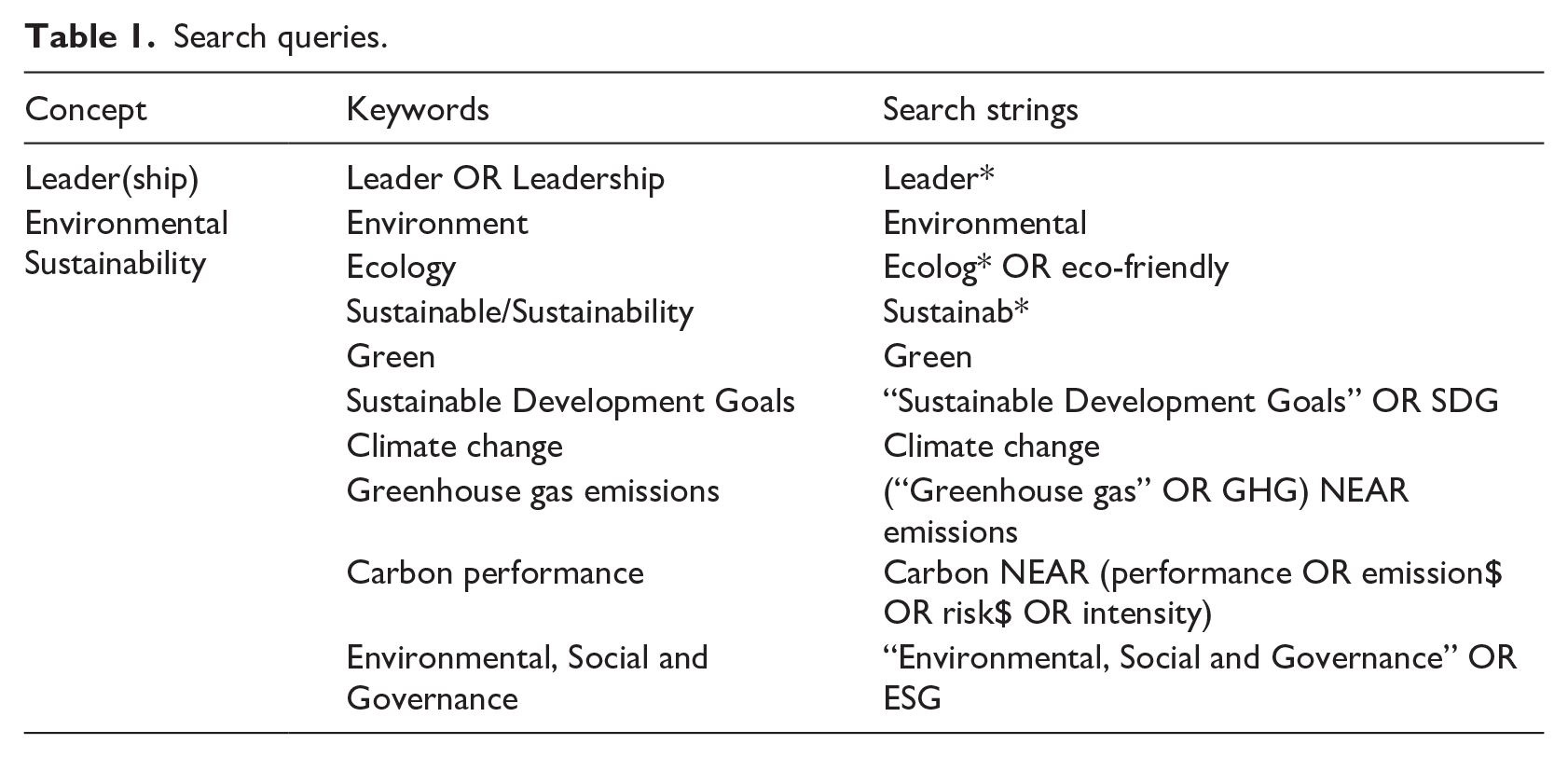
We selected Web of Science as the main database due to its comprehensiveness in maintaining published journal articles. The search strings were constructed to combine published journal articles addressing the aims of this study: leaders’ motivations to engage with sustainability and the influence of leaders and leadership on corporate environmental sustainability. From a search strategy perspective, the search includes three concepts: ‘leader(ship)’, ‘motivation’ and ‘environmental sustainability’. Searching ‘leader(ship)’ and ‘environmental sustainability’ will generate a comprehensive list of studies encompassing all literature on these topics. As a result, studies on leaders’ motivations to engage with sustainability will form a subset within the search results. The search, therefore, has two concepts: leader(ship) and environmental sustainability. The keywords that represent each concept were developed. For example, ‘leader or leadership’ was identified to be associated with the concept of ‘leader(ship)’; ‘environment/ecology/sustainability/’ was to be related to the concept of ‘environmental sustainability’ (see Table 1). The search strings contained relevant terms that were stemmed and extended by using wildcards and Boolean operators to ensure exhaustivity. For example, in line with the literature, we used the asterisk (*) and NEAR (Qiao et al., 2018) to allow more variations in the search. The search was conducted across journal article titles, abstracts and keywords.
Search queries.
3.1.2 Step 2: journal identification
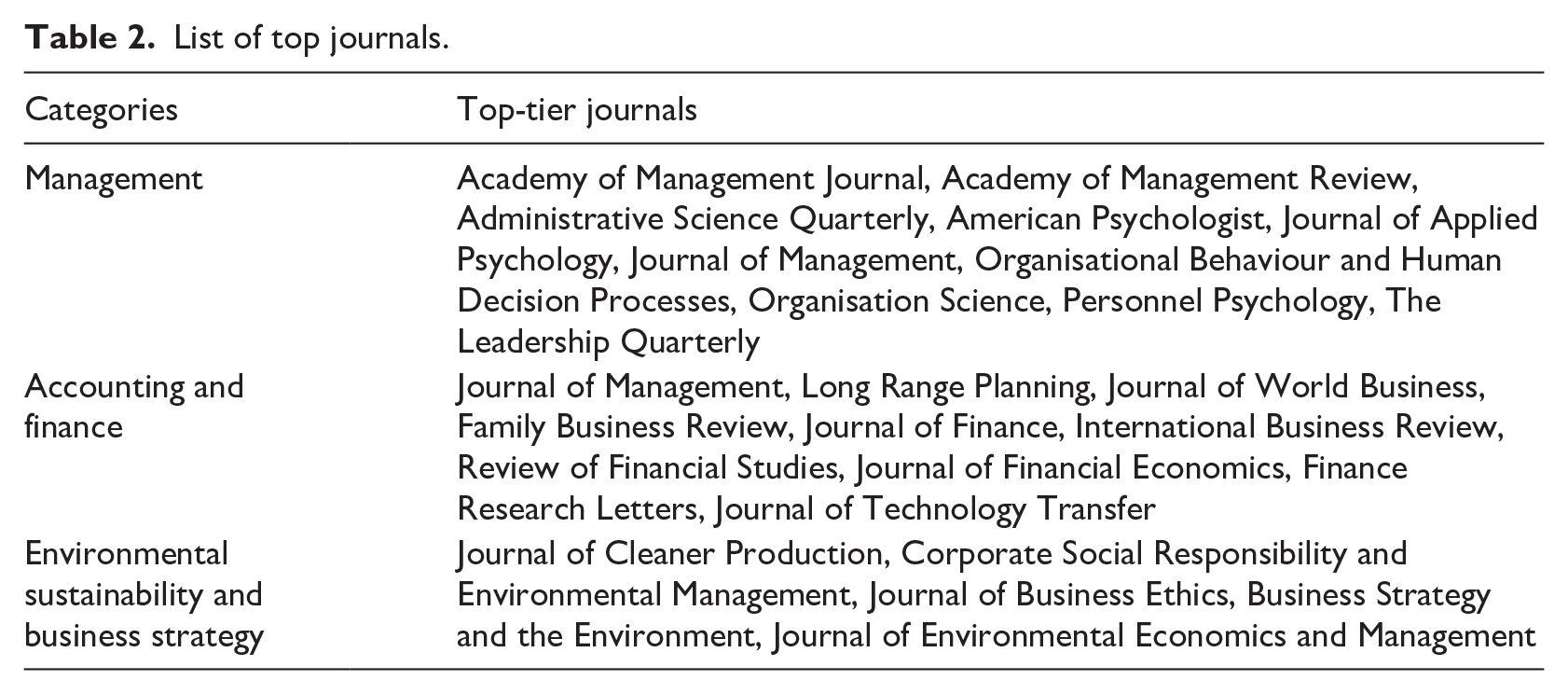
We only considered top-tier journals for this review. Top-tier journals have high impact factors through published articles that receive frequent and broad citations. Such journal articles are impactful by both their advanced methods and unique study topics. Furthermore, publications within top-tier journals are often regarded as primary sources for seminal scientific findings within specific disciplines (Saha et al., 2003). This practice has been widely used to conduct systematic literature reviews (Dinh et al., 2014). Given the nature of this study, the list contains three categories: (1) management; (2) accounting and finance and (3) environmental sustainability and business strategy (see Table 2). In line with the leadership literature, we selected 10 top-tier management journals, which are considered to represent the ‘top tier’ of leadership research (Dinh et al., 2014). To support consistency, 10 top-tier journals from accounting and finance were selected based on their Scopus ranking. In Scopus, we filtered the subject area to include only accounting and finance. The results were automatically ranked and the top 10 were selected. Scopus ranking was used because of its significant coverage of citation networks (Meho and Rogers, 2008). Compared to Web of Science, Scopus also offers a broader range of metrics including CiteScore, highest percentile and citations. The comprehensiveness of the metrics provides a better indication of research impact (Pranckutė, 2021). It also has independence from the search engine (Web of Science) used in the String identification stage, thereby enhancing the inclusivity. Finally, we selected the five top journals that focus on environmental sustainability and business strategy. Only five journals were targeted because of the multidisciplinary nature of environmental sustainability. As there are no clear selection criteria for journals with the scope of sustainability and business strategy, the selection was performed manually. We filtered the subject areas to include general business management, sustainability and the environment in Scopus. We manually checked the scope of the journals to ensure they cover business strategy and sustainability. The selection was based on face validity, using the criteria of a high h-index (i.e. h-index > 100) in the SCImago Journal Rank and inclusion within the top quartile of the Scopus ranking.
List of top journals.
3.1.3 Step 3: other criteria
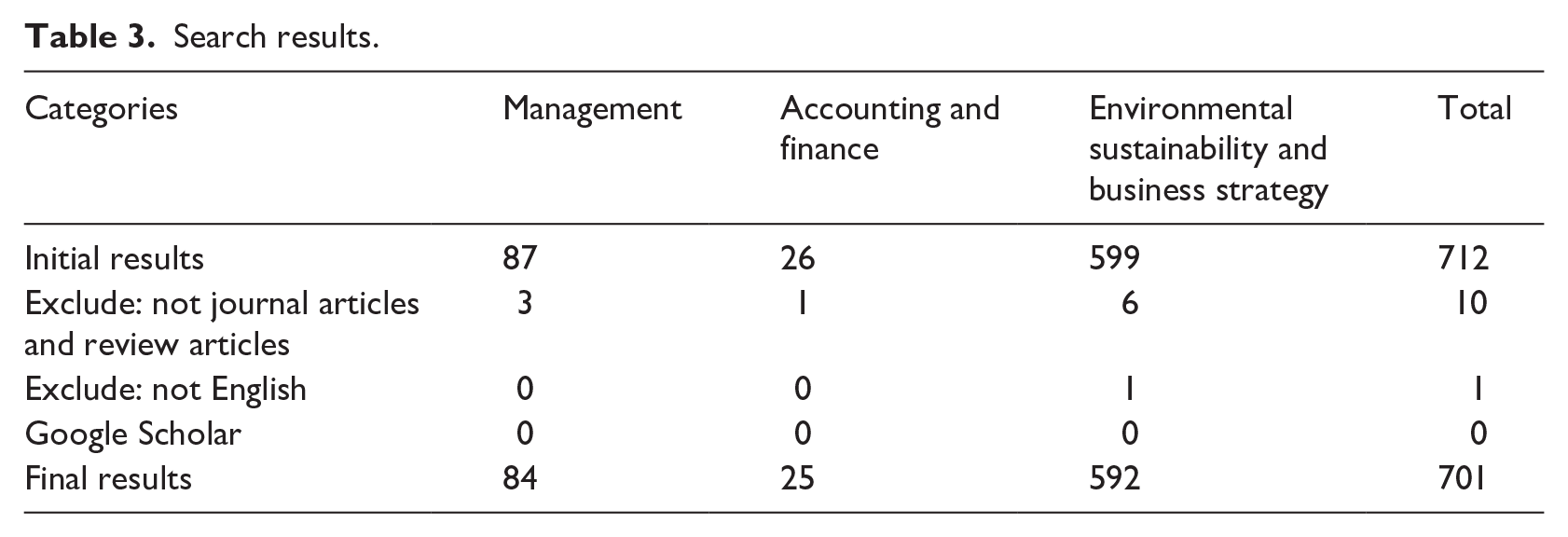
We limited the search to academic journal articles, early access articles and reviewed articles in the language of English only. In line with the literature (e.g. Merli et al., 2018), no chronological restriction is applied as we aim to evaluate the trajectory of scientific studies on this topic. This approach allows us to gain a comprehensive understanding of the evolution of leaders/leadership and environmental sustainability. The queries were performed on 24 May 2023. In addition, a manual search on Google Scholar was conducted to identify missing articles (limited to the first 10 pages) (Grafström and Aasma, 2021). Table 3 summarises the filtering process and the total number of journal articles.
Search results.
3.2. Selection procedure and quality assessment
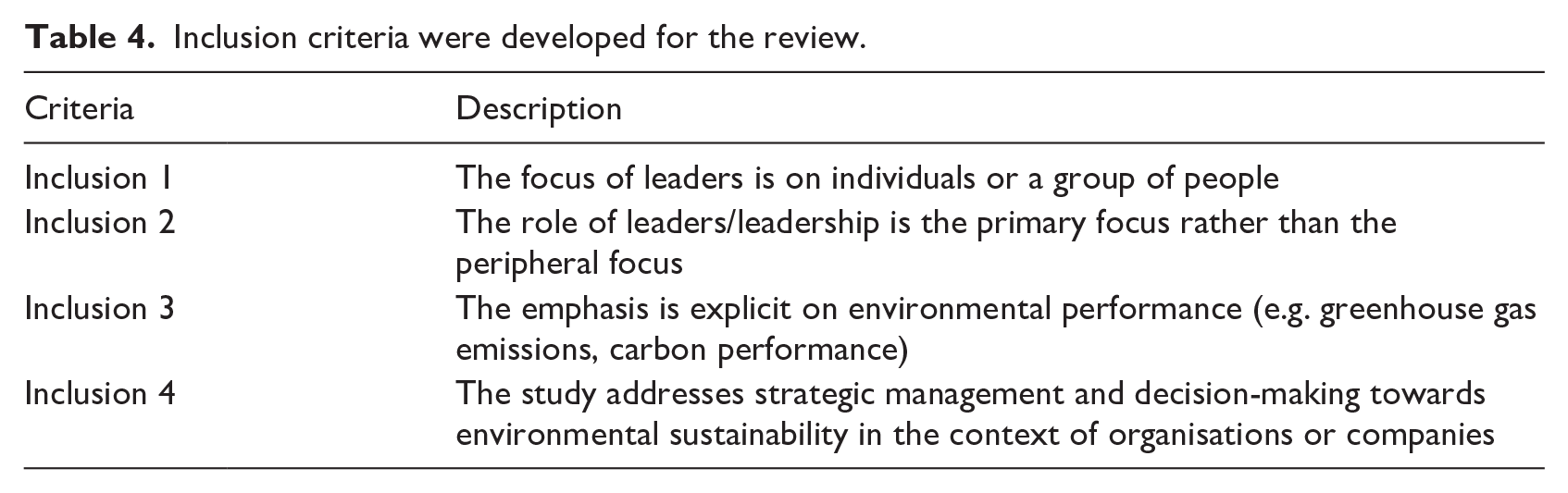
By adopting the review protocol of PRISMA, we initially identified 701 studies that were potentially included. The eligibility criteria were then developed before the title and abstract screening stage to ensure the alignment between the article selection and the review scope. Table 4 lists the inclusion criteria. To validate the search result, we applied a double screening procedure to two stages of review: title and abstract and full text. For the systematic literature review, double screening has been proven to be more effective as it improves the inclusion accuracy of relevant studies (Waffenschmidt et al., 2019). Where conflicts existed, the research team reviewed and discussed these studies until a consensus was generated. In the title and abstract screening, 506 irrelevant studies were removed (Cohen’s Kappa, κ = 0.85). The full-text review further reduced the collection of 72 studies (κ = 0.86) because they were not within the scope of the inclusion criteria. The final sample included in this study is 123 publications (see Figure 1).
Inclusion criteria were developed for the review.
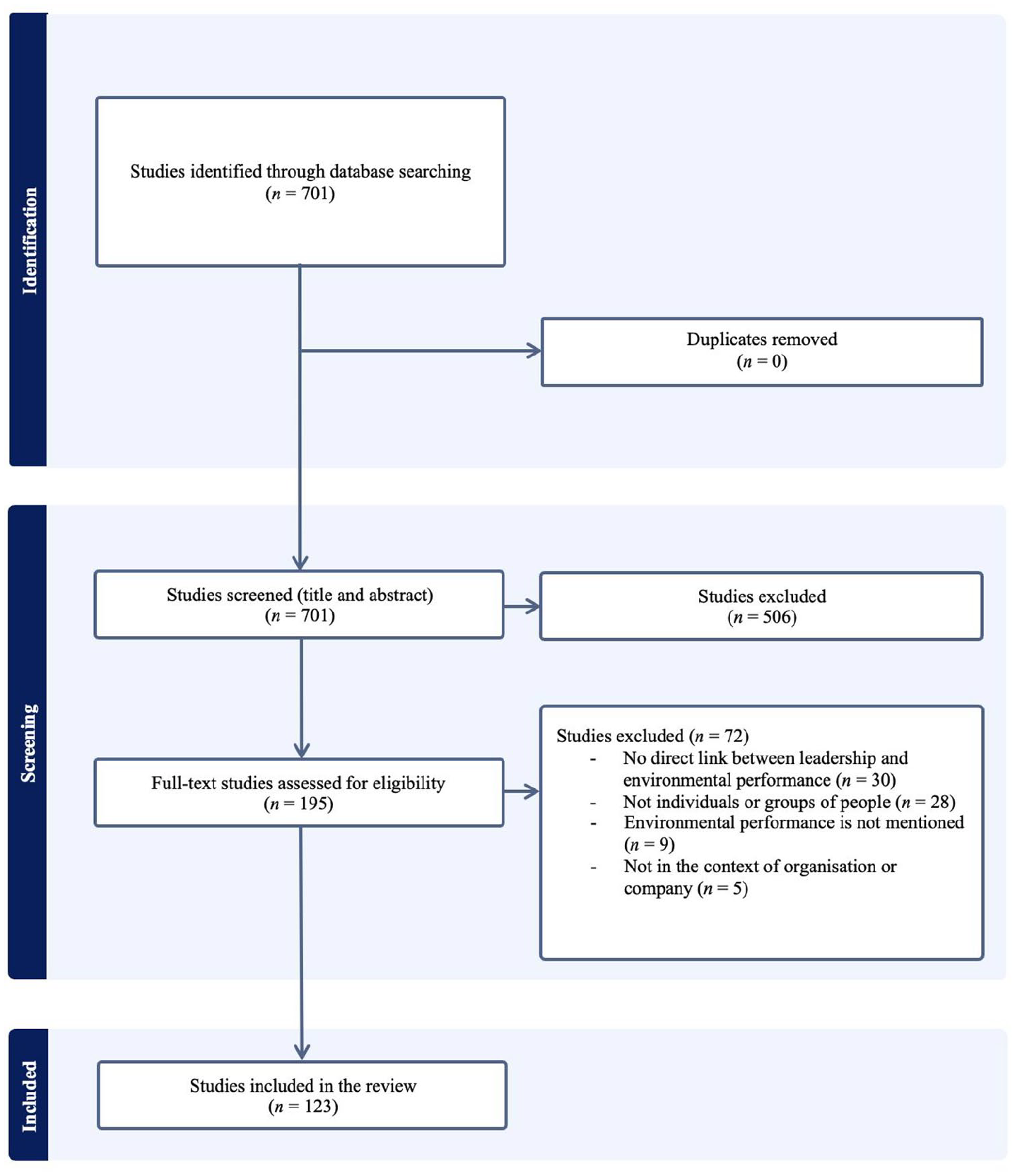
PRISMA statement.
3.3. Data abstraction and analysis
We performed thematic analysis to identify themes and sub-themes based on the six phases by Braun and Clarke (2006). Thematic analysis is considered the most suitable for synthesising a mixed research design (Flemming et al., 2019). The purpose of thematic analysis is to provide a comprehensive interpretation of the data with a focus on the identification of latent patterns (Braun and Clarke, 2006).
First, we familiarised ourselves with the literature by conducting the selection procedure and quality assessment (see Section 3.2.). Following this, we generated four sets of initial codes based on the key concepts from the research objectives: leader, leadership, motivation and environmental sustainability. Third, when searching for themes, we adopted a deductive approach to generate themes. Deductive coding is a top-down approach to data analysis which is guided by predefined key concepts, offering a more detailed analysis of the knowledge base. We systematically examined the entire selected samples, giving full and equal attention to each data item. For example, when labelling data that matched the predefined code of ‘leaders’, we analysed the articles and labelled segments such as ‘women leaders’, ‘leaders’ beliefs’ and ‘leaders’ consciousness’. We collated codes into potential themes by gathering all segments exhibiting similar patterns. In the aforementioned example, the labelled segments were grouped into two potential themes: leader demographics and leaders’ values. In the fourth step, we reviewed the themes to ensure they were coherent in relation to the collated codes and the entire data set. For example, we assessed whether leader demographics formed a coherent pattern with codes such as ‘women leaders’ and ‘younger CEOs’. In the final two steps, we related our findings back to the research objectives, generated clear definitions for each theme to write against.
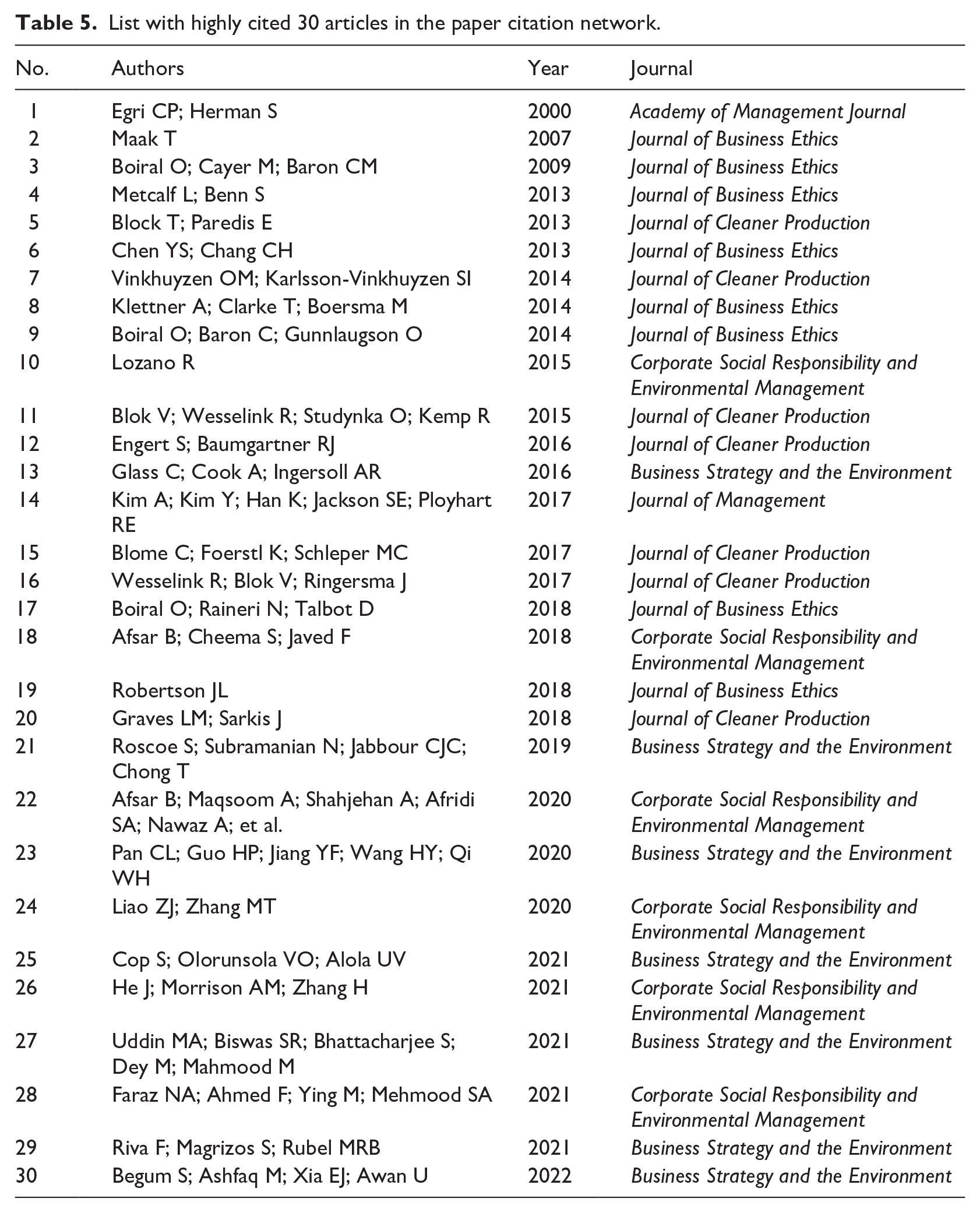
Following the thematic analysis, we used HistCite to reveal the way influential ideas developed and shaped the literature. Specifically, we map the most highly cited 30 articles (Table 5) within the literature to visualise the historical development of knowledge. By indexing all the interrelated citations across our article collection, HistCite identified the 30 most influential articles based on their local citation score. This indicates the number of times a study is cited by others within our final selection of articles (Garfield, 2004). By focusing on these articles (Shah et al., 2020), we can clearly highlight the key articles that have most significantly contributed insights to this research field. The clusters of articles highlight this literature’s major themes and thereby test and potentially validate the major ideas identified through the thematic analysis.
List with highly cited 30 articles in the paper citation network.
4. Results
By analysing the 123 studies, our review highlighted four categories of results including bibliometric analysis, relationships investigated between leaders and leadership and environmental sustainability, topic trends and thematic findings.
4.1. Bibliometric analysis
The final collection of literature focusing on the impact of leaders on environmental sustainability is from the year 2000 to 2023 (see Figure 2). Within the collection, the literature begins with Egri and Herman (2000) who used transformational and transactional leadership to develop a preliminary model of environmental leadership. Although the year 2015 and 2016 experienced a low number of publications, there was accelerated growth in the number of publications afterwards. Interestingly, the publications in 2021 dropped by 47.37% compared to the previous year. The search from 2023 has 10 articles due to the limited months available. An index growth was performed for projection on 2023 publications. Overall, the trendline shows that there is an incremental growth in publications in the last two decades. The increasing trend indicates that in academia, there is a growing recognition of the importance of leaders in corporate environmental sustainability.
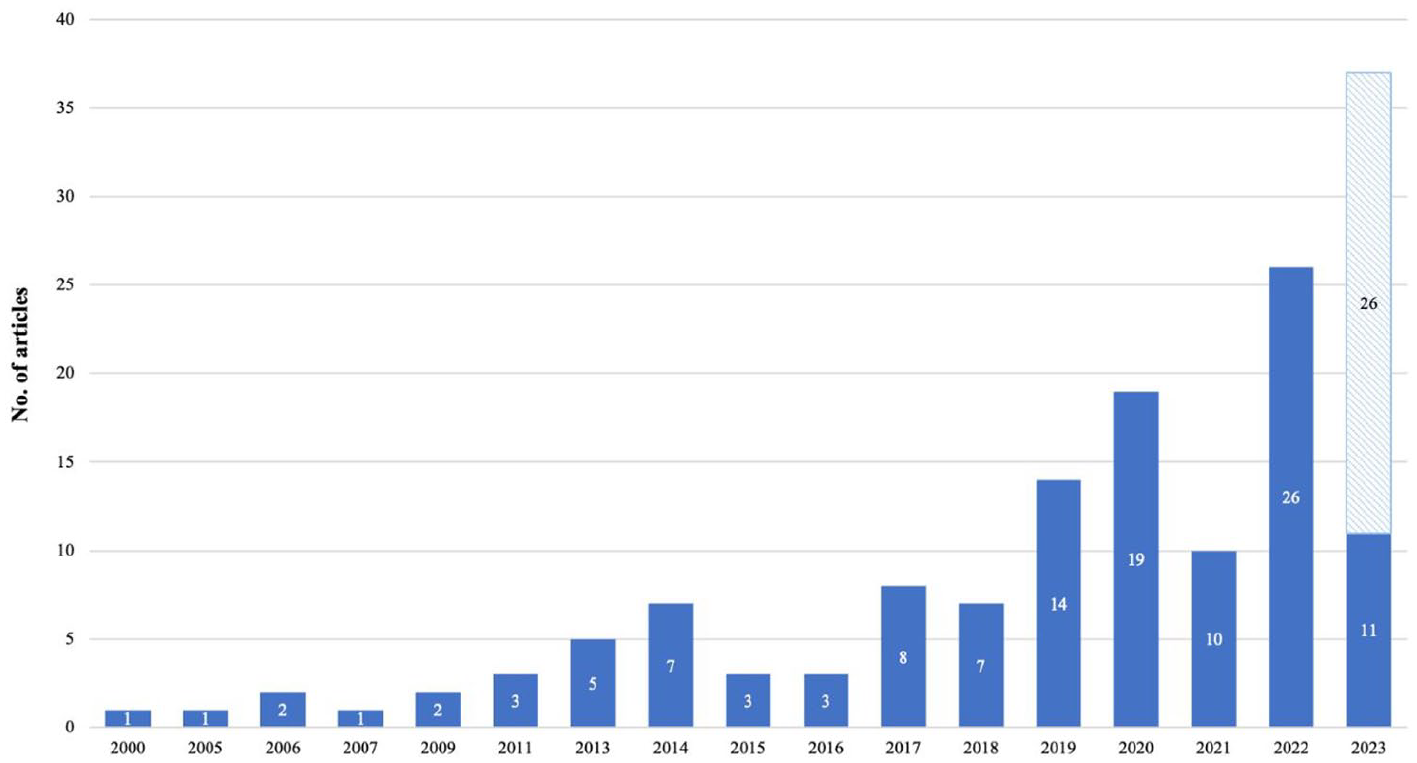
Publications by year.
Within the targeted 25 top journals in the searching phase, the final sample aligns with publications originating from seven journals (see Figure 3). Journal of Cleaner Production is the most prominent journal with 46 publications (37.40%). The other three journals: Business Strategy and the Environment (n = 26, 21.14%), Corporate Social Responsibility and Environmental Management (n = 23, 18.70%) and Journal of Business Ethics (n = 21, 17.07%), also make significant contributions to the literature. A small number of publications (n = 7, 5.69%) are from leadership and management studies. This indicates that leaders on environmental implications engage with interdisciplinary and transdisciplinary concerns (Gordon et al., 2019).
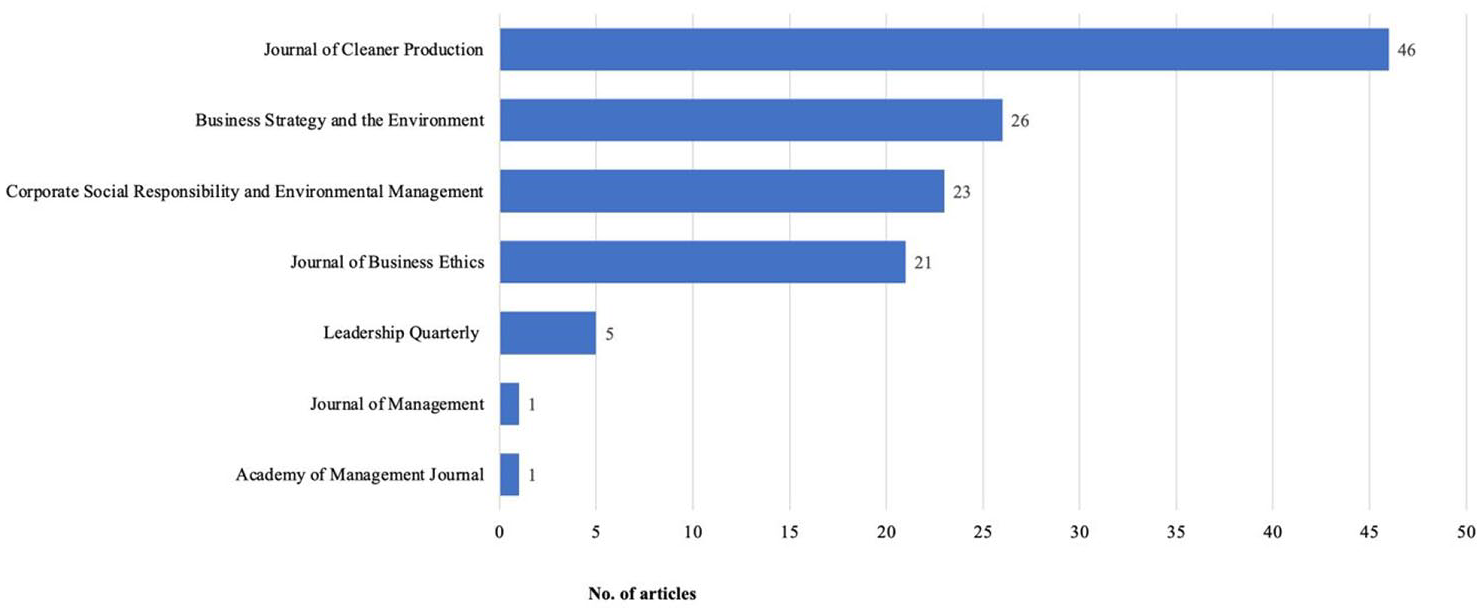
Publications by journals.
Within the sample, an analysis of managerial levels was conducted in 111 articles (excluding 12 review articles) (see Figure 4). The predominance of unspecific managerial level (n = 63, 56.76%) indicates the lack of studying in designated managerial positions for environmental sustainability in the literature. The level of the top management team has a significant portion (n = 30, 27.03%), indicating the importance of upper echelons in strategic decision-making on corporate sustainability (Shahab et al., 2020). The presence of multi-level leaders (n = 15, 13.51%) suggests that the literature is recognising leaders’ contribution to environmental outcomes irrespective of leaders’ hierarchical levels. However, with the limited representation of senior level (n = 2, 1.80%) and mid-level (n = 1, 0.90%), the scholarly examination has not extensively delved into these two managerial levels.
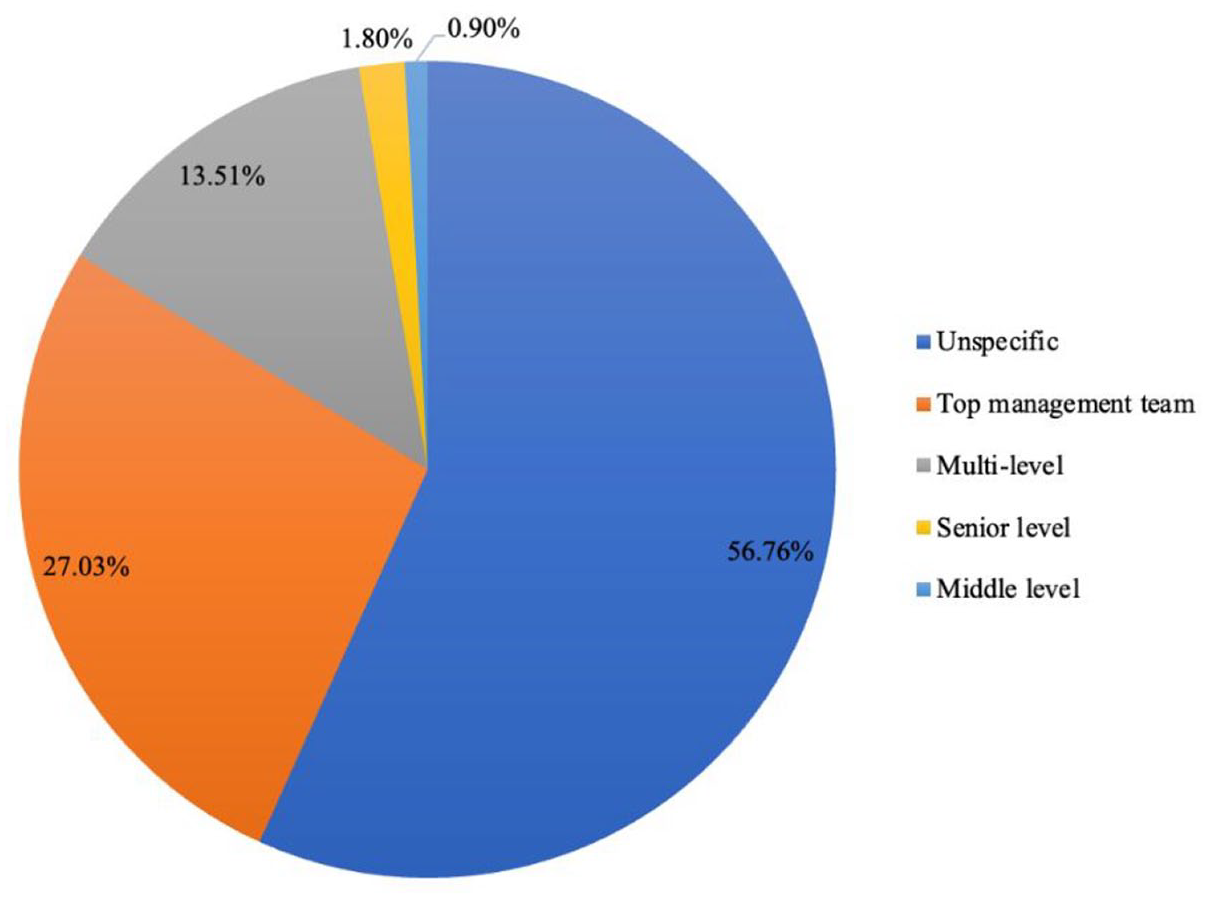
Managerial levels.
In the selected sample, scholars have studied different countries worldwide. China is the most extensively studied country with 23 research studies. Moreover, a substantial number of studies (n = 11) adopt a multinational lens focusing on companies operating worldwide. These multinational studies often rely on secondary data sourced from third-party platforms. In addition, attention has been paid to Bangladesh and Pakistan (n = 5), particularly within the context of their respective manufacturing industries. The United States and Australia have also received considerable attention in select studies. It can be concluded that the predominant focus of the investigation lies on emerging economies (i.e. China) and developing nations such as Bangladesh and Pakistan.
Table 6 provides an overview of the most frequently used underlying theories. Stakeholder theory is the predominant theory, as a multi-stakeholder approach is essential for engaging with environmental sustainability (Freudenreich et al., 2020). From a strategic management perspective, a substantial of studies focus on the upper echelon theory, with top management teams being the most influential power at the strategic apex of an organisation for environmental strategies (Cannella et al., 2009). Resource-based view theory is applied to emphasise that companies need to develop their dynamic capability in pursuit of sustainable competitive advantage (Barney, 1991). When investigating how leaders influence employees’ environmental behaviours, social identity theory and social exchange theory have been used extensively.
Summary of underlying theories.
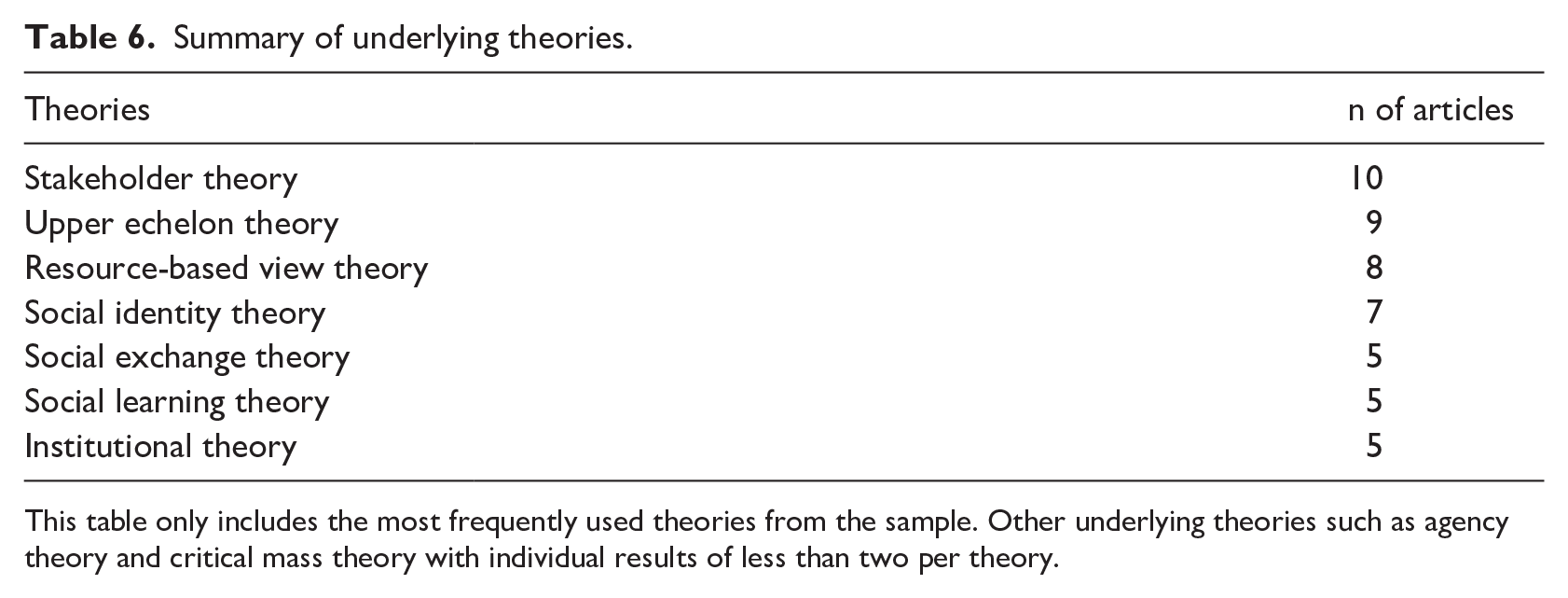
This table only includes the most frequently used theories from the sample. Other underlying theories such as agency theory and critical mass theory with individual results of less than two per theory.
4.2. Relationships and topic trends
Figure 5 highlights the nomological network of leaders and leadership in environmental sustainability. The literature has highlighted that leaders and leadership have a significant positive impact on environmental outcomes in employees’ environmental behaviour change (Chen and Yan, 2022) and green innovation (Begum et al., 2022). There were only a few studies indicating a negative relationship, focusing on transactional leadership and the role of CEOs in the field of corporate governance (Chiu and Walls, 2019; Testa et al., 2020).
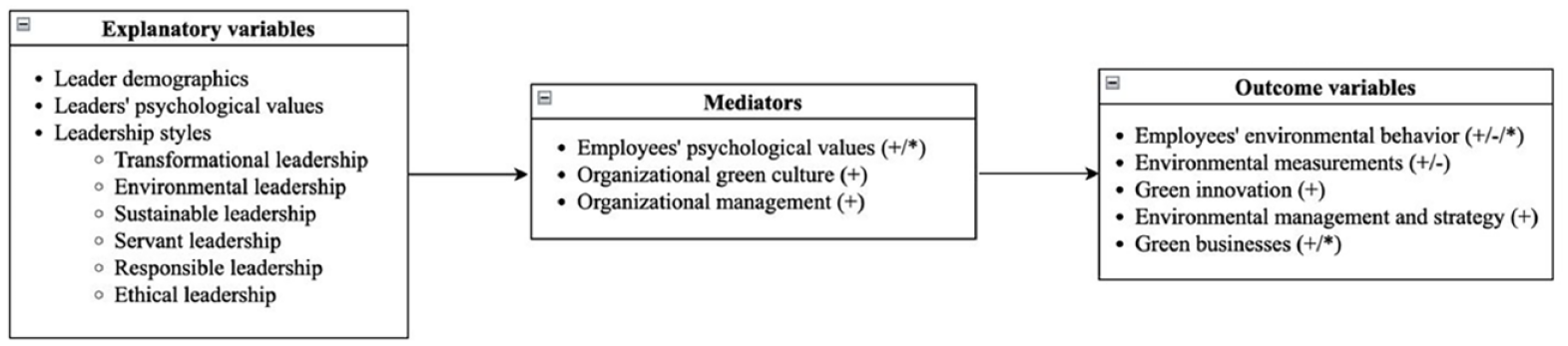
The nomological network of leaders in environmental sustainability.
Three categories of mediators have been identified as playing important roles in the relationship between leaders and leadership and environmental sustainability. These include employees’ psychological values (Dey et al., 2022), organisational green culture (Al-Swidi et al., 2021) and organisational management (Lu et al., 2022) (see Figure 5). The mediating mechanisms focus on both personal and organisational levels. At the personal level, the attention has been focused on the mediating effect of employees’ psychological values. These factors include employees’ green motivation (Graves and Sarkis, 2018), green self-identity (Huang, Guo, et al., 2023) and green engagement (Cop et al., 2021). At the organisational level, empirical evidence has indicated the mediating role of organisational green culture and management. Al-Swidi et al. (2021) claimed that green organisational culture guides employees’ behaviours, thereby contributing to building environmentally friendly organisations. Hossain et al. (2022) also highlighted that organisational management such as knowledge management and human resource management plays an essential role in organisational operational mechanisms to promote sustainability.
We also identified the moderating effect of leadership in the literature (see Figure 6). The moderating effect of leadership has been mainly studied at the organisational level. The emphasis has been on the moderating effect of leadership on the relationship between: (1) corporate environmental sustainability and employees’ environmental behaviours (De Roeck and Farooq, 2018) and (2) corporate environmental sustainability and green innovation (Zhang and Ma, 2021). Within this context, environmental leadership has received particular attention. There is a consensus that environmental leadership has a significant positive moderating impact on organisational green innovation capability (Aftab et al., 2022) and employees’ green behaviours (He et al., 2021). Interestingly, Cui and Wang (2022) have argued that green leadership performs a nonlinear function. The authors found that green innovation reaches its peak at an intermediate level of green leadership, while it is relatively lower when green leadership is at a low or high level.

Leadership as a moderator.
Mapping the patterns of referencing through time validates much of our thematic results but also provides insights on origins of this literature. The HistCite mapping identified the topic trends of leaders and leadership on environmental sustainability shown in Figure 7. These studies originate from the foundational work of Egri and Herman (2000), who emphasised the substantial influence of leadership development in the environmental context. Subsequent developments in this field have focused on the development of leaders’ post-conventional stages of consciousness (Boiral et al., 2014), leaders’ capability (Metcalf and Benn, 2013) and the creation of social capital (Maak, 2007). In addition to revealing this development of sustainable leadership and leaders’ thinking, HistCite mapping subsequently validates the major findings from the thematic analysis. Specifically, in the recent decade, there has been an obvious shift in the literature towards investigating the impact of leaders on green innovation and employees’ green behaviour. The shift could have two possible explanations. First, organisations have recognised the growing significance of green innovation in achieving competitive advantages (Dangelico, 2016) and improving economic performance (Banerjee, 2002). Therefore, both academia and practitioners have directed substantial attention towards green innovation as a key driver of corporate environmental sustainability. Second, from the lens of leadership theory, there has been a growing emphasis on the cognitive structures of leaders, followers and the decision-making process (Dinh et al., 2014). As a result, emerging studies have increasingly focused on how leaders impact followers’ environmental behavioural change at the cognitive levels. In addition, there is a growing interest in articulating the importance of women leadership when addressing environmental issues (Glass et al., 2016).
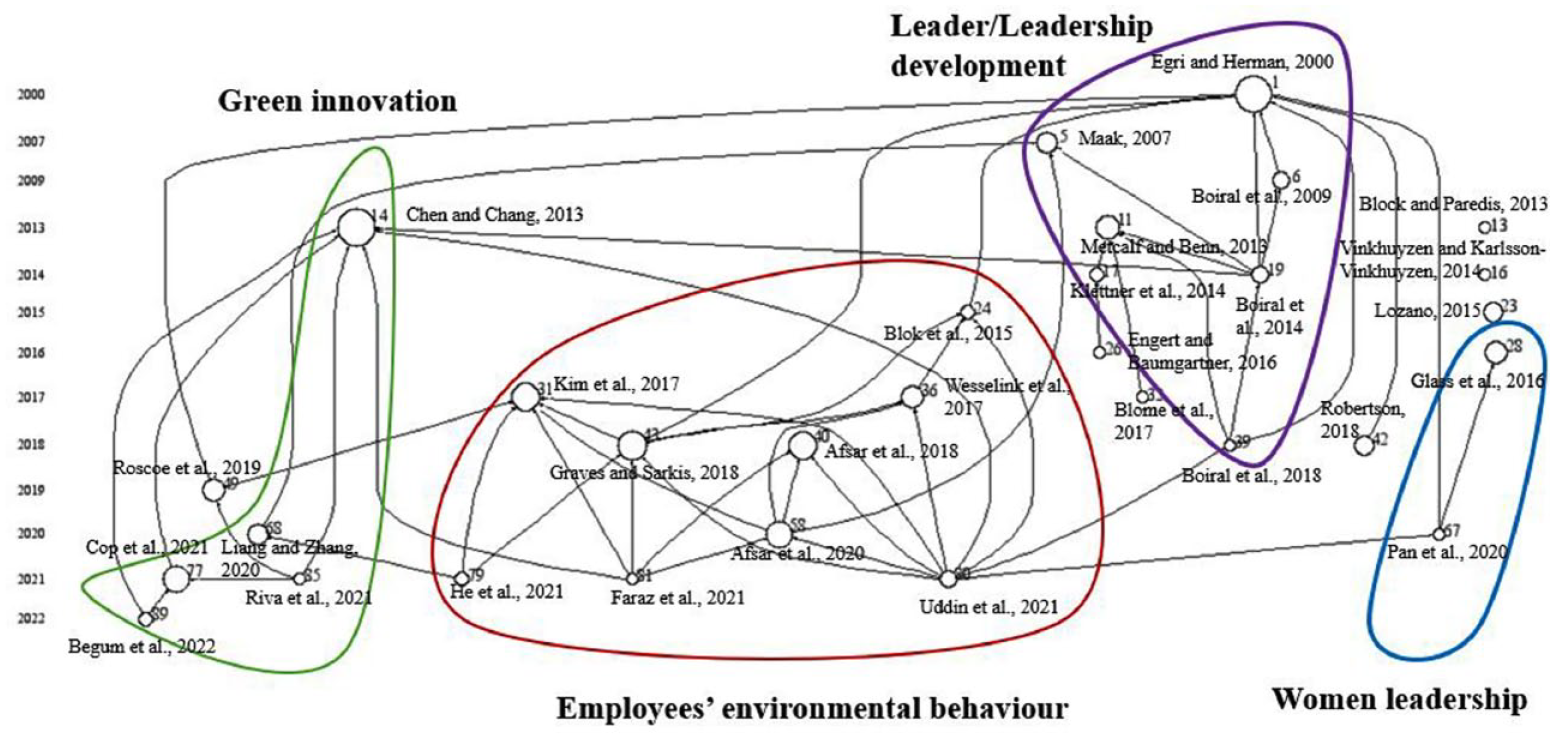
HistCite mapping.
4.3. Thematic findings
In this section, we highlighted leaders’ motivations for engaging with sustainability. We also summarised how leader-related green attributes and the adaptations of traditional leadership styles to green contexts impact environmental sustainability respectively. Finally, we identified leaders and leadership influence on environmental sustainability in employees’ environmental behaviour, environmental measurements, green innovation, environmental management and strategy.
4.3.1. Leader motivations
There is a limited number of studies (n = 2) discussing leaders’ motivations for environmental sustainability. Eide et al. (2020) identified personal motivation as a key driver for pro-environmental activities. Their study suggests that personal motivation is expressed when individuals align with the value of an activity or behaviour, arguing that sustainability activities are more congruent with values-based motivations. Therefore, personal motivation for sustainability is inherently linked to environmental values and is expressed when individuals internalise the importance of sustainability. Their results highlighted the significance of leaders’ personal motivations for sustainability in shaping corporate sustainability strategies. Interestingly, one study emphasised the external motivational influence for leaders to engage with sustainability. Chiu and Walls (2019) studied CEO turnover and corporate sustainability, highlighting that newly appointed CEOs are more likely to engage in sustainability activities to gain positive attention and trust from stakeholders. In summary, with only two studies, the current understanding of leaders’ motivations to engage with sustainability is limited.
4.3.2. Leader-related green attributes
In this section, we focused on the influence of leaders (i.e. the person) on environmental sustainability. The results include two categories: leader demographics and leaders’ values. An increasing number of articles investigated the impact of leaders’ demographic attributes on environmental outcomes (n = 16). From the perspective of corporate governance, these studies include demographic factors such as age, gender, professional experience and CEO duality. Board gender diversity has gained substantial attention as a strategy for enhancing corporate sustainability as women leaders have been claimed to be more altruistic, stakeholder-focused and long-term oriented (Glass et al., 2016). Women leaders exhibit different leadership styles compared with their male counterparts, often being perceived as more participative, democratic and communal (Ben-Amar et al., 2017). With women leaders on boards, there is an increased likelihood of improvements in the environmental strategy (Xie et al., 2020), green innovation (Galbreath, 2019) and ESG performance (Amorelli and Garcia-Sanchez, 2023). Therefore, having women leaders on boards is an important driver of corporate sustainability, as female executives significantly improve corporate environmental performance (Birindelli et al., 2019). Furthermore, despite evidence suggesting that younger and more experienced leaders positively affect corporate environmental outcomes (Huang, Chang, & Zhang, 2023), the literature has thus far allocated limited emphasis on this.
Leaders’ values also have an impact on corporate environmental performance (n = 14). Zeng et al. (2005) claimed that leaders’ environmental consciousness is crucial for companies to adopt environmental standards such as ISO14001. They argued that environmental consciousness is required for both top leaders and middle management to support effective environmental management. Harley et al. (2014) posited that contemporary companies are now operating in a complex system. Various levels of collaboration from leaders are needed to solve complex challenges (e.g. organisational sustainability). Regarding the leader-follower dynamic, leaders’ pro-environmental behaviour (PEB) significantly cultivates sustainable workplace practices among employees (Wesselink et al., 2017). Therefore, leaders should recognise the extent of their behavioural influence and should serve as role models for environmentally responsible conduct. Furthermore, Gopalakrishna-Rennani et al. (2022) indicated that perceived top management teams’ beliefs play a constructive role in fostering the adoption of sustainability practices, which ultimately lead to improved organisational environmental metrics including a reduction in waste and air emissions. In summary, there was a consensus that leaders’ values are influential drivers of environmental sustainability.
4.3.3. Green adaptations to traditional leadership styles
In this section, we highlighted the influence of leadership (i.e. the process) on environmental sustainability. The results include transformational leadership, green leadership and other relevant types. Transformational leadership emerges as the predominant leadership style in the sample (n = 25). In the context of environmental sustainability, transformational leadership is defined as management’s proactive approach to providing inspiration and motivation aimed at achieving organisational environmental objectives (Chen and Chang, 2013). The four factors of transformational leadership (Avolio et al., 1991) have been adopted as the theoretical framework to examine the relationship between green transformational leaders and corporate environmental sustainability (Eide et al., 2020). These four factors include (1) idealised influence, which is the capacity that leaders to motivate followers and provide them with a sense of purpose; (2) inspirational motivation, wherein leaders provide followers with meaningful challenges to inspire followers to achieve collective good; (3) intellectual stimulation, which leaders encourage followers to challenge conventional problem-solving approaches and foster innovative improvements; (4) individualised consideration, where leaders seek to understand the unique individual needs and support individuals to realise their full potential. Green transformational leaders can promote employees’ PEB change including activities such as advocating for greenery (Crucke et al., 2022) and fostering a green self-identity (Huang, Guo, et al., 2023). Consequently, there is a call to develop and promote transformational leadership in organisations (Chen and Yan, 2022). There is also a consensus that environmental transformational leadership positively impacts organisational green innovations which include both product and process innovations (Begum et al., 2022). A number of studies have also investigated the impact of green transformational leaders on environmental measurements. Their findings indicated that with transformational leaders, companies are more likely to engage in activities such as reduced emissions, recycling and the adoption of renewable energy (Roscoe et al., 2019). Furthermore, transformational leadership significantly contributes to enhanced environmental management (Tomsic et al., 2015), comprehensive environmental strategy formulation (Roman, 2017) and the establishment of greener businesses (Cop et al., 2021). To summarise, transformational leadership has been claimed as a key determinant of corporate sustainable performance.
Green leadership is a nascent category in the literature (n = 4), which includes environmental and sustainable leadership. Environmental leadership is defined as an environmentally responsible practice that mobilises both inside and outside stakeholders to achieve environmental goals (Jiang et al., 2020). The authors claimed that environmental leadership exhibited by top managers could contribute to green innovation, subsequently leading to green-conscious entrepreneurial organisations. Furthermore, expanding the scope to the dynamics of climate change, economic integration and cultural conflicts, sustainable leadership has emerged as a distinctive leadership style (Iqbal et al., 2020). Through the investigation between sustainable leadership and economic, environmental and social outcomes, Iqbal et al. (2020) contended that sustainable leadership plays a central role in connecting individuals, communities and the natural environment.
There is a range of other leadership styles influencing corporate environmental sustainability (n = 12) including responsible leadership, servant leadership and ethical leadership. The primary finding is that leadership styles positively impact employees’ PEB (Faraz et al., 2021). However, Afsar et al. (2020) argued that the indirect relationship between responsible leadership and PEB, mediated by employees’ organisational commitment, lacks statistical significance.
4.3.4. Leader and leadership-driven environmental outcomes
This section highlights leaders and leadership drive environmental sustainability in employees’ environmental behaviour, environmental measurements, green innovation and environmental management and strategy. Furthermore, based on the quantitative studies (n = 71) in the sample, we identified distinct patterns in leader attributes and leadership styles that have been extensively studied to these outcomes (Figure 8).
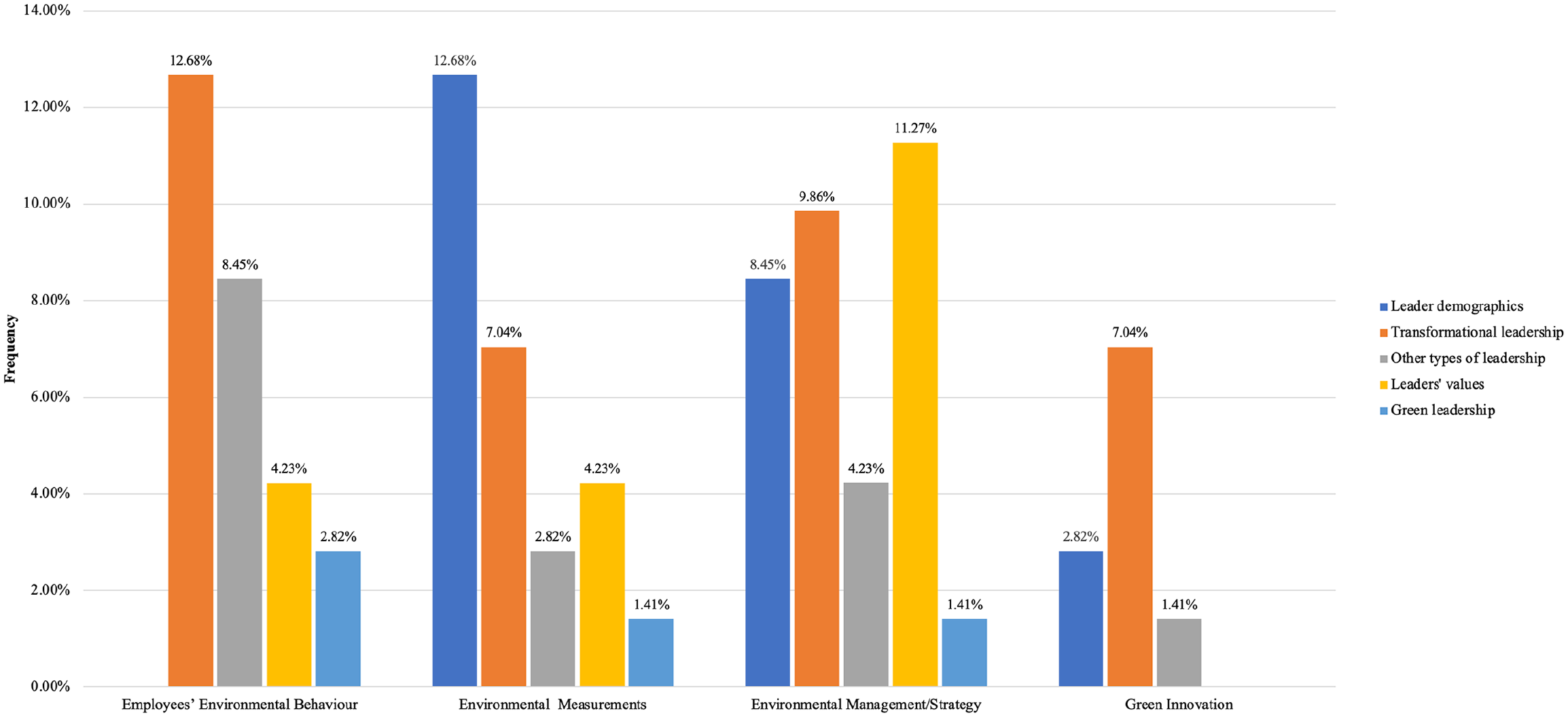
Patterns of leader and leadership in key factors of environmental sustainability.
Figure 8 indicates that a significant number of studies focus on the impact of transformational leadership on employees’ environmental behaviour and green innovation, representing 12.68% and 7.04%, respectively, of the sample. Leader demographics have been the most extensively studied aspect in relation to environmental measurements (12.68%). For environmental management and strategy, leaders’ values have been the most examined factor (11.27%), followed by transformational leadership (9.86%).
Employees’ environmental behaviour
Employees’ environmental behaviour is classified into two categories: PEB and organisational citizenship behaviour for the environment (OCBE). Employees’ green behaviour is the key driver of successful organisational environmental outcomes (Biswas et al., 2022). This highlights the importance of employees’ environmental behaviour as an intermediary mechanism for corporate environmental sustainability. The literature defined PEB as conscious actions taken by individuals that aim to reduce the negative impact of their conduct on both the natural and built environment (Kollmuss and Agyeman, 2002). Shoaib et al. (2022) argued that PEB is a type of nonrewarding and discretionary activity within the organisation, oriented towards improved environmental performance. Graves and Sarkis (2018) differentiated between basic PEB and advanced PEB, by indicating that basic PEB (e.g. recycling) was short-term oriented. Conversely, advanced PEB (e.g. environmentally innovative working) adopted a long-term and proactive approach. Similarly, OCBE is also a discretionary behaviour that remains external to the organisational formal reward system. OCBE has been recognised to promote organisational mechanisms both at the individual level (e.g. employees’ participation ability) and organisational level (e.g. pro-environmental culture) (Mi et al., 2019). These mechanisms collectively contribute to environmental performance. Zhang et al. (2023) further emphasised the voluntary nature of OCBE, which contributes to building sustainable organisations through the mechanism of ecological participation, help and advocacy.
Environmental measurements
A variety of metrics have been used to assess companies’ environmental performance, which falls into three categories: environmental protection, sustainability disclosure and ESG performance. For environmental protection, organisations have actively engaged in the reduction of emissions, resource consumption and waste (Riva et al., 2021). In addition, Zhang and Wei (2021) have articulated that environmental sustainability transcends mere regulatory compliance. It also entails companies’ ability to limit their environmental impact beyond compliance obligations. Scholars further claimed that companies need to be sustainable both financially and environmentally (Dey et al., 2022). Consequently, sustainable metrics that cover financial, social and environmental dimensions are needed to evaluate how companies balance between profitability and social objectives to achieve long-term development. Second, there was an emphasis on the importance of participating in sustainability disclosure by global businesses, given the tangible climate-related risks they are facing. Focused on the Global 500 firms, Hsueh (2019) used the Carbon Disclosure Project to measure the proactive engagement of international businesses in addressing climate risks by voluntarily disclosing greenhouse gas emissions. Finally, ESG performance has also become an emerging criterion for corporate adoption of sustainable initiatives. Environmental assessments primarily drew upon ESG scores collected from external third-party platforms such as Refinitiv (Birindelli et al., 2019). It is noteworthy that ESG disclosure was not employed as an environmental indicator within the selected sample.
Green innovation
Green innovation has become a long-term strategic focus for companies to address environmental challenges. Early research has suggested that green innovation can be influenced by external pressures such as stakeholder demands and government regulations (Kammerer, 2009; Liao, 2018). In this study, we found the influence of organisational internal factors such as top management teams on companies’ capacity for green innovation (Liao and Zhang, 2020). Green innovation is defined as the organisational ability to improve product design, production technology and process innovation to mitigate adverse environmental impacts (Huang, Chang, & Zhang, 2023). Ureña Espaillat et al. (2022) asserted that green innovation must be intrinsically tied to responsibility given its inclusive and participatory nature to environmental preservation. Green innovation was further classified into incremental and radical innovation (Kennedy et al., 2017). Incremental innovation focuses on the efficiency of utilising existing resources, while radical innovation involves the creation of new knowledge and technologies to advance environmental protective initiatives. With an emphasis on radical green innovation, Cui et al. (2023) claimed that radical environmental innovation leads to fundamental or revolutionary enhancements in the environmental outcomes of existing products and processes.
Environmental management and strategy
A growing body of research focused on effective environmental management and strategy. Corporate environmental management is a series of initiatives undertaken by organisations to minimise adverse impacts on the environment (Bansal, 2005). Through investigating how leadership ability contributes to corporate waste management, Mitra (2022) posited the necessity of addressing leadership in effective environmental management processes. In the same vein, leadership support in lean management is essential for companies to achieve economic and social benefits (Klein et al., 2022). Hossain et al. (2022) claimed that leadership is important in knowledge management, which represents a philosophical framework involving knowledge creation, sharing and utilisation to effectively align with organisational strategic goals. Effective environmental strategies include four categories: inactive strategy, reactive strategy, pollution prevention strategy and sustainable development strategy (Xie et al., 2020). Pan et al. (2020) advocated that companies need proactive environmental strategy development rather than passively responding to environmental issues. Therefore, the strategic decision-making processes of the upper echelons are crucial for the effective formulation of environmental strategies. It has been argued that the successful implementation of environmental strategies increases the likelihood of companies achieving higher financial performance in the long term (Eide et al., 2020). Furthermore, improved environmental strategies are needed across different sectors. Blome et al. (2017) addressed the need to investigate greenwashing, considering its large impact on suppliers and the implications for the overall environmental footprint of focal firms in supply chain management. Within the construction industry, Tabassi et al. (2016) oriented their attention to sustainable construction practices, emphasising sustainable construction plays an essential role in environmental preservation through the reduction of greenhouse gas emissions.
5. Discussion
While previous studies have significantly advanced our knowledge of leaders and leadership and their impact on environmental sustainability, several key areas remain underexplored in the literature. Based on insights from this systematic literature review, the balance of this discussion will be dedicated to addressing these gaps and proposing a future research agenda.
5.1. Lack of leaders’ motivations to pursue environmental sustainability
Motivation acts as the guideline for individuals’ behaviours, having a significant influence on both the ‘what’ and ‘how’ of individual conduct (Meyer et al., 2004). The literature indicates that leaders’ engagement in corporate environmental sustainability is driven by two key factors. Leaders are intrinsically motivated to engage in sustainability activities when their personal values align with environmental principles. In such cases, leaders’ personal motivations for sustainability have a significant impact on shaping corporate sustainability strategies (Eide et al., 2020). From the perspective of extrinsic motivations, leaders are motivated by the desire to meet stakeholder expectations, build trust and improve their reputations (Chiu and Walls, 2019).
However, further discussions on leaders’ motivations influencing corporate sustainability remain limited. Several reasons account for the paucity of studies on this topic. Many studies prioritise examining the types of leadership styles that impact sustainability and the outcomes of sustainability practices (Jiang et al., 2020). This emphasis constrains the understanding of the different factors that motivate leaders’ sustainability actions. In addition, exploring these motivations is challenging. As mentioned by Boiral et al. (2014), while leaders may be personally concerned about environmental issues, they often have other priorities within the company, making it difficult to translate personal motivations into company responsibility. Due to the multidisciplinary nature of this topic, studying leaders’ motivations involves business management, psychology, environmental science and sociology. This requires investigating multiple interrelated factors such as personal values, organisational culture, external market forces and regulatory environments, posing significant challenges to capture and quantify. Therefore, future studies could explore the feasibility of measuring leaders’ motivations in corporate sustainability activities.
5.2. Sustainable leadership development
The research in sustainable leadership development has experienced a pause in recent years. We argue that there is a continuing need to develop effective sustainable leadership. From the perspective of stakeholder theory, sustainable leadership has been claimed as an effective way to engage with various stakeholders such as employees, suppliers and customers to achieve SDGs (Freudenreich et al., 2020). Taking an organisational development viewpoint, leaders have been acknowledged as having a positive impact on organisational environmental strategic direction, organisational culture and risk mitigation (Subramaniam et al., 2015).
However, it is essential to recognise that there are no one-size-fits-all solutions. Sustainable leadership development should be specific to the leader levels and industry context. The findings of this study indicate a degree of variability in the sampled leadership levels, with more than 50% of the studies lacking clearly defined levels. In addition, the literature has predominantly focused on emerging countries (e.g. China) and industries (i.e. manufacturing industry). The outstanding questions that arise regarding the suitability of different types of sustainable leadership for diverse contextual factors such as countries and industries. Furthermore, limited attention has been paid to investigating effective green leadership within distinct organisational categories such as multinational institutions, publicly listed corporations and small- and medium-sized enterprises. Future studies should investigate the dynamics of leadership across diverse organisational contexts, thus contributing to a comprehensive understanding of sustainable leadership. Finally, focusing on the internal structure of organisations, the issue arises of whether sustainable leadership development initiatives should exclusively target the upper echelons of management or be extended to broader organisational levels. This matter presents further opportunities for scholars to investigate and develop effective strategies.
5.3. Addressing challenges of environmental sustainability
We highlighted the environmental outcomes driven by leaders and leadership in the literature, including employees’ environmental behaviour, environmental measurements, green innovation and environmental management and strategy. Most studies focused on the positive outcomes of leaders and leadership on corporate environmental sustainability. However, there is a lack of study on the practical challenges that arise when leaders address environmental sustainability issues in organisations.
In the current context, leaders are facing complex challenges. Leaders in today’s organisations are required to transcend the traditional pursuit of profitability and extend towards fulfilling a broader organisational purpose (Edmans, 2020). Given that the underlying framework of environmental sustainability is a stakeholder approach, leaders should address both internal and external challenges. Internally, leaders need to shape organisational orientations, cultivate the company’s green culture and lead employees’ green behaviours (Graves and Sarkis, 2018). Externally, leaders must remain attuned to the emerging requirements of the market, government regulations and industry standards (Porter and Kramer, 2006). For example, the Task Force on Nature-related Financial Disclosures recently introduced a comprehensive disclosure framework that aims to provide guidance for organisations in reporting and addressing impacts, risks and opportunities related to nature. Australia has also to introduce mandatory climate-related reporting requirements for companies commencing from 2024. The dynamic external environment requires leaders to be equipped with a diverse skill set, including, but not limited to accounting, finance and climate literacy (Ye and Kulathunga, 2019). Therefore, it is important for future research to emphasise the multifaceted challenges that leaders face in addressing environmental sustainability issues. This could include identifying effective leadership practices that balance financial profitability with environmental stewardship (Eyo-Udo et al., 2024) and developing training programmes to enhance leaders’ competencies in sustainability (Muff et al., 2022). In addition, due to the complexity of environmental sustainability, multidisciplinary collaboration from various fields such as accounting, finance and environmental science is essential to provide a comprehensive understanding and innovative solutions to these challenges.
6. Conclusions
Addressing climate change requires a deep understanding of the critical role of leaders and leadership in advancing environmental sustainability. Effective leadership is essential for embedding sustainability as a foundational societal value. In response to the increasing significance of leaders and leadership in environmental sustainability, we systematically review the current state of research on their relationship with environmental sustainability. Our findings indicated four key areas: leader motivations, leader-related green attributes, green adaptations to traditional leadership styles and leader and leadership-driven environmental outcomes. The literature is characterised by limited discussions on the underlying motivations driving leaders to engage with environmental initiatives. While leaders’ intrinsic and extrinsic motivations have been studied in shaping corporate sustainability strategies, there remains a gap in understanding how to effectively measure these motivations within corporate environmental sustainability contexts. Furthermore, we highlight that leaders drive corporate environmental sustainability through demographical characteristics (e.g. gender) and leaders’ values (e.g. beliefs and consciousness). In addition, there is a significant trend of adapting traditional leadership styles (e.g. transformational leadership) to build green organisations. Finally, we emphasise that leaders and leadership impact employees’ environmental behaviour, environmental measurements, green innovation and environmental management and strategy.
Through this systematic literature review, we shed light on possible future research opportunities. We suggested the importance of investigating the potential leaders’ motivations that influence environmental sustainability within complex organisational settings. Sustainable leadership development is also a critical area for future research. Given the complex nature of environmental issues, sustainable leadership development should consider different contexts such as countries, industries and organisations. In addition, we highlighted the importance of addressing the practical challenges that leaders face when tackling environmental sustainability issues in organisations. The study calls for collaboration across disciplines such as accounting, finance, management and environmental science to achieve a comprehensive understanding and innovative solutions to these challenges.
Key research and practical implications
Footnotes
Acknowledgements
The authors would like to thank the editorial team and the reviewers for their valuable time and constructive feedback throughout the review process.
Final transcript accepted on 15 May 2025 by Rui Xue (AE CSR).
Funding
The author(s) received no financial support for the research, authorship, and/or publication of this article.
