




Abstract
This article explores the career development and underrepresentation of Indigenous Australians in leadership and management positions within the Australian Football League (AFL); it explains the continued underrepresentation as a case of ‘avoiding discrimination’. Using institutional theory, this research fills a gap in existing scholarship by contributing to understanding the mechanisms by which organisations avoid addressing underrepresentation and enforce discriminatory practices in three significant ways. First, organisations may claim equality and assume that the organisation is characterised by a climate of inclusion as a way of ignoring issues of underrepresentation. Second, organisations utilise diversity management to improve the image of the organisation and engage in legitimising practices that contribute towards improving the brand. Third, organisations also engage in silencing practices by exercising internal control over employees, in this case players, and prohibiting them from participating in public debates about racial abuse. This study concludes that avoiding underrepresentation contributes to the continued exclusion of Indigenous Australians in leadership positions within the AFL, conceptualised here as a case of ‘discrimination by avoidance’.
JEL Classification:
M540 Personnel Economics: Labor Management
Keywords
1. Introduction
The field of sport has been argued to promote social cohesion, inclusion and mobility but also mirrors the social inequalities and discrimination found in society (Browne-Yung et al., 2015; Kearney, 2012) based on class, gender, ethnicity or racialised logic. Unequal opportunities and structural inequalities raise barriers for athletes from minoritised backgrounds who wish to advance their careers beyond the playing field into positions of leadership and reflect the imperial power relations of Western history (Apoifis et al., 2017; Elgenius and Garner, 2021). Cunningham and Fink (2006) have argued that managers of sports organisations combat discrimination by actively working for diversity management, a contested claim given the underrepresentation of minoritised groups, including women, working classes and ethnic minorities (e.g. Kalev et al., 2006; Tolbert and Castilla, 2017).
This study responds to why there are so few Indigenous Australians in leadership positions, including coaches, managers or members of executive boards; it explores the mechanisms by which organisations adopt, address or avoid diversity practices. Given their overrepresentation, Australians of Indigenous descent do not advance to the same degree beyond the position of a player within the Australian Football League (AFL). Regarding terminology, Indigenous Australians or Indigenous are umbrella terms used to describe Aboriginal and Torres Strait Islander people in Australia (Australian Bureau of Statistics (ABS), 2015). We use these to refer to a minoritised population and to individuals who identify as being of Indigenous descent. Ethno-national terminology may contribute towards essentialising heterogeneous populations, and the minoritised status and position (see Elgenius et al., 2022) of this population is the focus of this article. Thus, this article aims to investigate the mechanisms contributing to the underrepresentation of Indigenous Australians by exploring how the AFL approach manages or avoids diversity. The sports sector is a neglected sector of labour market research, especially regarding the increased participation of disadvantaged and minoritised groups. Given that the sports sector often prides itself on being inclusive and welcoming people from diverse backgrounds, this study problematises such claims and highlights this sector’s struggle to achieve inclusion (Bradbury, 2013; Hallinan and Judd, 2009).
2. Theoretical framing: institutional management
Building upon scholarship about diversity management and institutional theory, a theoretical framework that deals with ways organisations handle social change is explored. A central part of institutional theory is the regulative, normative, and cultural-cognitive pillars that create meaning and stability for social institutions and impose restrictions through the legal, moral, and cultural boundaries imposed (Li et al., 2008). The regulative pillar rests on laws and regulations and includes government-regulated diversity management practices such as affirmative action and employment equity programmes (Kalev et al., 2006). The normative pillar relies on social and professional norms that provide the foundation for organisational practices and policies around, for example, recruitment and is affected by coercive pressures (Harcourt et al., 2005). In contrast, the cultural-cognitive pillar provides the basis for practices such as formalised staffing systems to reduce discrimination in promotions and career advancement (Konrad and Linnehan, 1995). To gain legitimacy, acceptance or approval from internal and external stakeholders, organisations conform to these three pillars or pressures exerted by institutions (Scott, 2014).
When the above pressures are exerted upon organisations within the same field, the result can be the development of similar administrative structures. In such cases, organisational homogeneity is likely (Scott, 2014). However, the extent to which organisations conform to mimetic pressures and replicate the effective practices of other organisations depends on the ambiguity of their goals or the amount of environmental uncertainty they experience. Arguably, sports organisations are influenced by the diversity and inclusion of other successful organisations, and normative pressures, structures and practices tend to be similar across organisations due to similarities in the managers’ educational and professional experiences (DiMaggio and Powell, 1983). In sum, the system imposes constraints on social behaviour but may also grant rights and privileges (Scott, 2014).
If the assumed way of doing things relies on traditional management practices, these have become institutionalised, explaining why organisations experience difficulties and barriers to change and developing more effective approaches to managing diversity (Yang and Konrad, 2011). One of many institutionalised practices that prevent change is racialised logic or racism that acts as barriers for many to reach leadership-level coaching and administrative positions (Cunningham, 2010). When organisations engage in ceremonial structural conformity, it is implied that they change their formal structures to show they have conformed to pressures. However, internal activities and behaviours indicate otherwise (Scott, 2014). Narrowly defined diversity management practices separated from other systems and processes can be ceremonial or transformational. Institutional theory clarifies what diversity management practices an organisation may adopt, how they decide on specific practices and not others and whether these remain ceremonial or transformational (Yang and Konrad, 2011). In sum, institutional theory helps examine whether formal policies and practices are decoupled from being implemented in daily activities (Tolbert and Castilla, 2017).
3. Diversity management and (un)equal opportunities in sport
The underrepresentation of minoritised groups in leadership positions in the sports sector has received some attention in the literature regarding unequal chances, stereotypes and discrimination and the role of diversity (Apoifis et al., 2017; Bradbury, 2013). The policy rhetoric about cultural diversity within sports organisations emphasises the inclusion of people from various ethnic backgrounds by creating safe environments (Spaaij, 2013). Sports organisations have also introduced equal opportunities or affirmative action policies (Human Rights and Equal Opportunity Commission (HREOC), 2006). However, the extent to which these policies have been translated into sports management practice is questionable, as the marginalisation or underrepresentation of ethnic minorities still exists (Adair et al., 2010; Spaaij, 2013). Employers have a crucial role as they possess the power to influence the extent of these inequalities (Bradley and Healy, 2008). Acker’s (2006) concept of inequality regimes highlights that all forms of inequalities, be they based on class, gender, ethnicity or racial logic, are maintained by organisations and interrelated processes, practices and meanings that support workplace and management cultures. European sport is no exception, where minoritised groups occupy less than 1% of positions as senior administrators and executive committee members in professional clubs or national federations (Bradbury et al., 2011).
In comparison, 30% of the professional players of English football belong to minoritised populations but only 3.3% hold management or head coaching positions (Bradbury, 2017). However, this can be viewed in two different ways. First, this representation discrepancy needs to be rectified, or second, the ethnic minority makes up a small percentage of the overall society, and therefore, their representation within sport is over-represented. However, proportionality is not the focus of this article, but rather diversity management practices and their impact on representation (Lakisa et al., 2023).
The timeliness of this research is demonstrated by the racism inquiry review of Cricket Scotland, which revealed 448 examples of institutional racism. It also found a lack of equality, diversity or anti-racist training; a lack of transparency in the selection process; an absence of practices to handle racist incidents; and ‘a lack of diversity from board level to coaching’ (Plan4Sport, 2022). Minoritised players have been the subject of racialised representations through the practice of ‘stacking’ or overrepresentation (Spaaij et al., 2015), whereas the dominant positions have been occupied by the white majority (Perchot et al., 2015). Thus, affecting ethnic minority players’ perceptions as they often view ‘Europeans’ as authority figures and, therefore, those who occupy these leadership roles (Ferkins et al., 2016). Barriers to mobility include the lack of access to professional and informal networks (Cook and Glass, 2013). Racialised and dominant power relations position minority coaches outside professional coaching environments, maintaining the underrepresentation of minority coaches over time (Bradbury et al., 2016). Through the notion of national sport, we can understand inequality regimes, existing hierarchies and racialised logic inherent in Western nations and national identities (Elgenius and Garner, 2021). As a national game, Australian rules football reflects the nation’s race relations as any other social, political, cultural, and economic institution marked by the underrepresentation of Indigenous Australians (Gorman et al., 2016; Kearney, 2012).
Indigenous Australians have been identified as the most disadvantaged group in Australian society (Browne-Yung et al., 2015). For example, the life expectancy of Indigenous Australian men and women is 7.8–8.6 years lower than that of non-Indigenous men and women (ABS, 2018a). In 2016, non-Indigenous Australians were 1.4 times more likely to be employed than Indigenous Australians (ABS, 2018b). Thus, Indigenous Australians suffer from a long history of ethnic and racial discrimination, which constitute barriers towards securing employment on equal terms. The unequal chances and opportunities in the labour market have been analysed by Heath and Cheung’s conceptualisation of inequality as an ‘ethnic penalty’ that produces similar ‘ethnic hierarchies’ in all Western economies (Heath and Cheung, 2006). With reference to the latter, Heath and Cheung (2006) conclude, ‘Indigenous and involuntary minorities tend invariably to come at the bottom of the ethnic hierarchy in their respective countries’ (p. 641).
However, Indigenous players have overcome some barriers as they are strongly represented in playing roles within Australian football. Indigenous Australians constitute about 3.2% of the country’s population (ABS, 2021) and approximately 11% of the professional AFL players (Atkinson and Lawson, 2020). It is therefore puzzling that there are so few Indigenous coaches and leaders. For instance, only 3 out of 150 coaches identify as Indigenous, alongside one board member in the 18 AFL clubs and one in an executive role (Atkinson and Lawson, 2020; Ferrer and Turner, 2017; Gaskin, 2019). Therefore, it is essential to examine whether sporting organisations aim to create a diverse and inclusive climate for all their employees, especially in their post-playing careers.
Research has focused on the experiences of Indigenous players and the recruitment of managers (e.g. Apoifis et al., 2017; Bennie et al., 2019). However, less is known about managers’ role in establishing diversity practices and how these practices and policies impact the opportunities of certain groups (Yang and Konrad, 2011). Furthermore, managers are change agents in creating more diverse and inclusive workplaces because they translate policies and activities into practice (Arenas et al., 2017; Bradley et al., 2007). Little is known about how diversity is managed within the AFL. However, Cook and Glass (2013) indicate that Indigenous players face barriers and stereotypes about their leadership capabilities as they reach for head coaching positions. The aim of this study is, therefore, to identify and investigate the underrepresentation of Indigenous Australians in leadership positions and, in so doing, explore the implementation of diversity policies and current practices. While the inclusion of the Indigenous voice is important and would contribute to this research, our focus is on the managers currently involved in the sport.
The AFL is a non-profit organisation that supports its 18 league clubs, seven state and territory bodies, regional offices, community football staff, Auskick centres (children’s programme), and the community clubs and their teams, coaches and umpires (AFL, 2021a; HREOC, 2006). The AFL has broad national objectives and strategies for game development spanning six core areas, including participation, coaching and sports first aid, umpiring, community development (such as multicultural programmes) and programmes for Indigenous Australians that focus on engagement, talent and education. They aim to develop football and leadership skills. The AFL writes that it is committed to creating an inclusive industry and promoting change in society through its Reconciliation Action Plan (RAP) programme, which also aims to develop and support its members (AFL Players Association (AFLPA), 2015). However, whether the strategies and activities of these plans have an impact is unclear (Morgan and Wilk, 2021). In 1995, the AFL introduced a Discrimination, Racial and Religious vilification code, now called ‘the Peek rule’ (AFL, 2021b), due to several acts of racial discrimination against Indigenous players on and off the field. Despite such efforts, Indigenous players have expressed that teammates and staff lack cultural awareness (Nicholson et al., 2011). Indigenous players have been described as highly athletic and well-suited for the AFL leadership. However, participation does not extend to roles that may indicate a real or imagined threat to white Australian dominance (Judd, 2010; Stronach et al., 2014). Stereotypes are often motivated by racial and cultural prejudices that assign groups particular qualities, here as great performers on the pitch but unsuitable for decision-making, management or leadership roles (Hallinan and Judd, 2009; Kearney, 2012).
4. Method
This research aims to examine managers’ work on diversity, particularly concerning policies, practices and strategies used by clubs and organisations within Australian football in terms of Indigenous underrepresentation in management and leadership positions. To this end, participants were selected through purposive sampling. The aim was to recruit managers from clubs and organisations within Australian football who work within the Human Resource (HR) and/or Player Development areas and are involved in the organisations’ policy development. The Australian football industry gives these managers various titles, such as People and Culture, Community, Welfare or Development Managers. A list of possible interviewees was created based on employee information (e.g. work email) provided on the websites of football organisations and clubs and they were contacted via email. Follow-up calls were made if there was no reply after this initial contact.
Sixteen semi-structured interviews were conducted with respondents representing nine (of the 18) AFL clubs and three AFL state organisations located in various parts of Australia. No demographics of the respondents were included to avoid traceability of the respondents. The interviews lasted between 55 and 75 minutes and were conducted face-to-face on-site at the respondents’ place of work or in a location close to their workplace. An interview guide was used to ensure that specific themes were addressed and to establish a sense of direction and purpose. Questions were constructed to facilitate natural discussion rather than short answers, and probing questions were used to gain in-depth data. The questions included background information on the interviewee and their current role, career planning for all players and specifically for Indigenous players, particularly with examples of how players are supported and how the career planning works. Questions around career planning issues and successes were asked to emphasise whether the club has mechanisms to identify talent for leadership and coaching roles, specifically for Indigenous pathways. Finally, questions were asked about how diversity is ensured within the club’s leadership and whether diversity is encouraged and supported in leadership, management and coaching roles.
All interviews were recorded, transcribed and resubmitted to the interviewees to ensure accuracy (Alsaawi, 2014). The interviews provided the perspective of those responsible for implementing practices and processes in the organisations. Missing gaps in the data included an examination of additional sources such as documents, which included RAPs, AFL and club policy documents and newspaper articles. These documents and the media texts assisted in answering the questions of how diversity and inclusion are managed within the AFL industry and what career opportunities are available for Indigenous players.
The analysis included line-by-line coding of the interview transcripts, organisational documents and media text with a focus on identifying actions, processes and hidden discursive assumptions (Charmaz, 2014; Roulston, 2014). The meanings of the initial codes were then assessed and compared to determine their analytic strength, resulting in a set of focused and conceptual codes synthesising larger parts of the data. Memos were also written and used throughout data collection and analysis. The process of taking apart codes and data, comparing them, analysing their meanings and defining links between them led to ideas and questions. This design involved the simultaneous data collection and analysis process, whereby the analysis was conducted in parallel to the collection (Charmaz, 2014). The data analysis method included analysing the respondents’ actions and processes through coding and thematic analysis using NVivo (Welsh, 2002). One overarching theme and three sub-themes were identified. Quotes from all respondents have been used in this article.
Ethical considerations were considered around any questions that could be considered personal or sensitive. Informed consent was established at the outset of the interview. Interviewees were advised of their confidentiality, the right not to respond to questions and to stop the interview at any time, including removing their responses from the data collection at any stage. Interviewees determined the location of the interview to ensure that they felt comfortable.
Notably, the ethical restrictions placed on this study meant that interviews with athletes that identified as Indigenous were beyond the scope of the research. In addition, access to players was not sought, as the aim was to explore the activities of career development by managers from organisations within the AFL. Furthermore, not all AFL organisations are represented in this research. Gaining access to the clubs was done through the snowballing technique, so several respondents were found through suggestions by others and website searches.
The authors of this article are allies to Indigenous Australians with no direct experience of the AFL; thus, no one had an insider perspective.
5. Results and discussion
The main themes and sub-themes that emerged through the analysis provided the framework displayed in Figure 1. The overarching theme of ‘avoiding underrepresentation’ was broken down into three sub-category themes: ‘claiming equality’, ‘legitimising practices’ and ‘silencing’. Each of these three sub-category themes presented an additional two third-level themes. Results, including supporting quotations, are presented below.
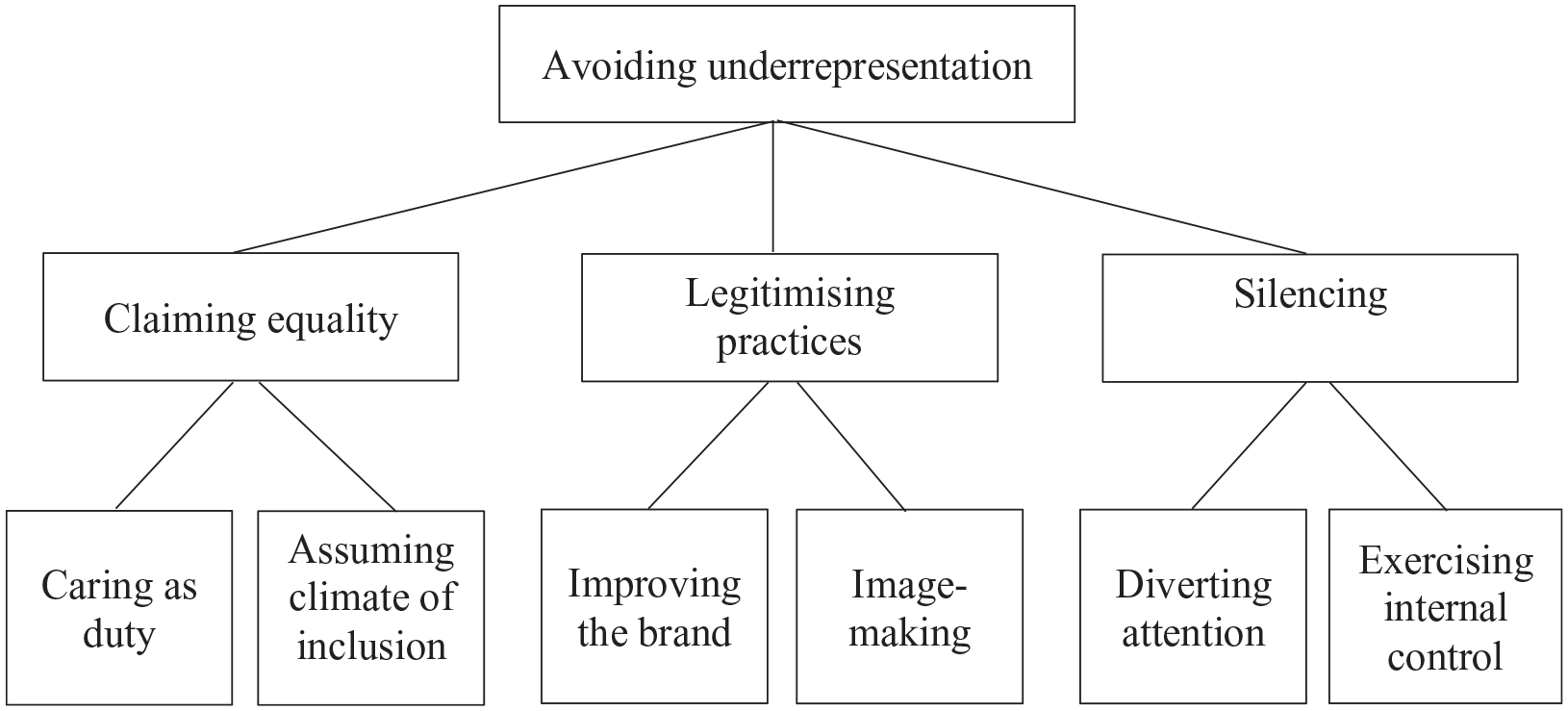
Mechanisms that contribute to the underrepresentation of minoritised groups.
5.1. Claiming equality
This theme refers to the equality that the clubs claim exists for their players. Two sub-themes emerged from the data and indicate that the organisations care for their players. First, caring as duty reflects the expectation placed upon the organisation to care for their players and actively work on their career development plans. Assuming a climate of inclusion reflects the claims made by managers that career opportunities are open to all, and the players can choose whichever career they like off the football field, despite evidence to the contrary. While there is no reason to dispute that the clubs care for their players’ welfare and well-being, there is a sense that this does occur without any evident interpersonal discrimination (Hebl et al., 2008). The managers of the organisations believe that players are treated fairly. While no overt discrimination is identifiable, the emergence of these themes reflects that managers do not recognise the links between underrepresentation, inequality and discrimination. Table 1 presents additional quotes to support how the elements included within this theme emerged analytically.
Claiming equality.
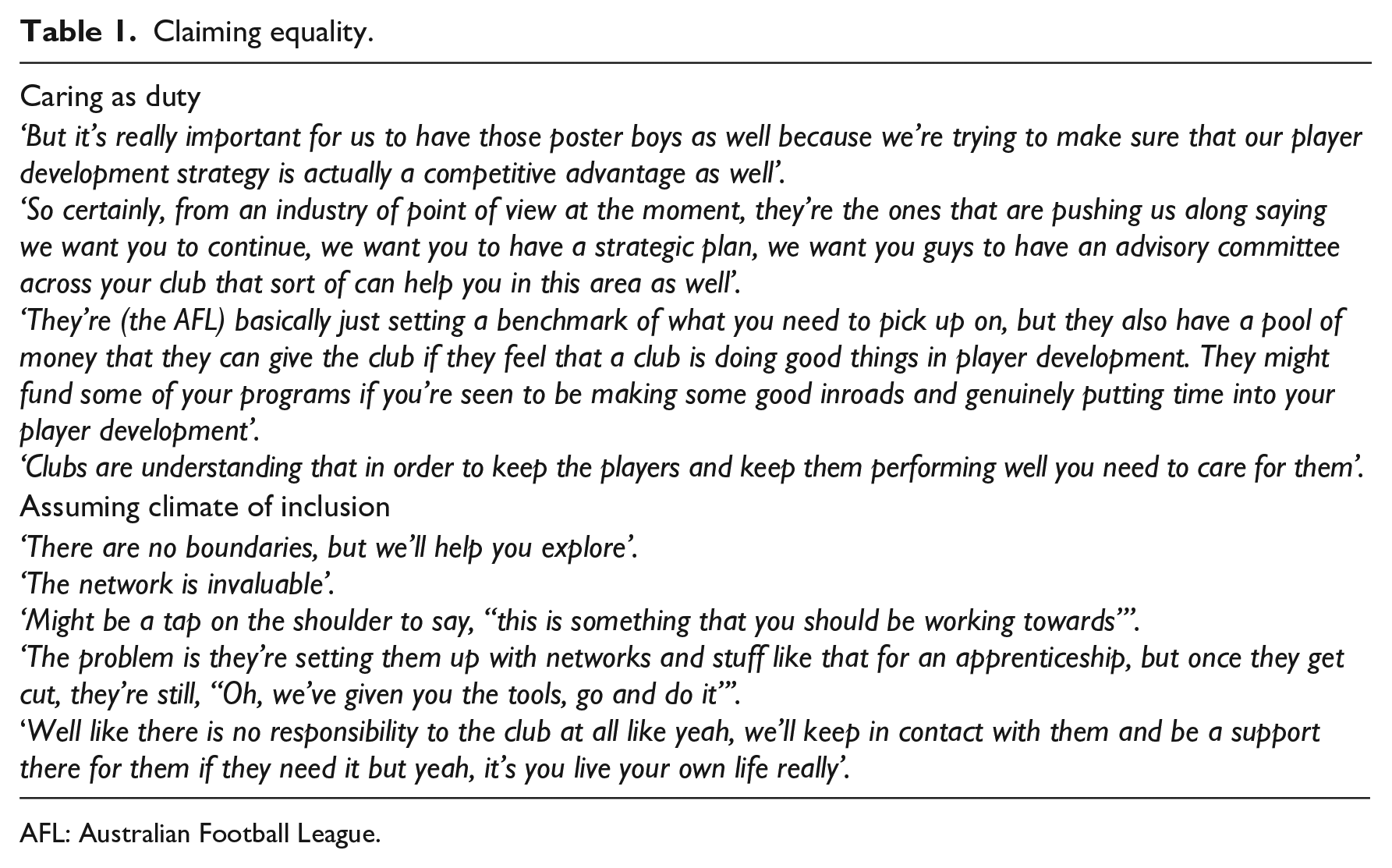
AFL: Australian Football League.
5.1.1. Caring as duty
The ‘duty of care’ featured as a significant aspect for our interviewees that worked directly or indirectly with career development. An individualised action plan is developed with the player and focuses on the development areas, on playing, personal and professional areas. This process was consistent, emphasising the players’ career development in activities outside the football field. The respondents expressed a sense of responsibility in easing the players’ transition from football to the rest of the labour market by engaging them in other activities. ‘So, every player has got a career development plan’ was a commonly expressed response. However, whether a career development plan was always initiated or mandatory was unclear. It was evident from all organisations that career development was mandatory regarding the players’ football career but not necessarily regarding their off-field career. Responses such as ‘so what are they (players) doing in addition to being a full-time footballer and a non-footballing career’ alongside ‘your primary purpose is to be the best AFL footballer you can be’ were common. The difficulty in achieving an off-field balance, ‘we’re really encouraging the players to have outside interests’, highlighted the importance of this aspect.
While the AFL highlights duty of care as one of their obligations in their vilification framework as acknowledged by the clubs, ‘the (AFL) governance committee, it has some powers in terms of making clubs accountable for their player development programmes’, it is clear that more needs to be done. This coercive approach by the AFL as the governing body should ensure that opportunities emerge for Indigenous players. However, while important in overcoming underrepresentation, Indigenous players’ career development plans often lack a focus on developing leadership skills. Clubs identify this through commentary such as ‘potentially to the football department where there is a lack of Indigenous employees, ensuring that we promote opportunities in areas where minority groups get access as well’.
While mindful of the AFL directives that existed, the clubs, as independent organisations, were cognisant of their need to consider each athlete as an individual. As one respondent indicated, ‘they’re (players) from all over Australia so we can’t treat the Indigenous people the same, they’re all different. So, you’ve got to get to know the person and you treat them as individuals’. However, there was also criticism directed towards the notion of care: ‘I see all these AFL clubs, they have all of their values as care, (club name) have got it, (club name) have got it, well what does care mean? You know, do you really care about your athletes?’.
Thus, ceremonial structural conformity exists as the actual internal activities and behaviours do not necessarily conform across organisations (Scott, 2014). Based on the criticism towards the AFL’s care and support, to include ‘duty of care’ as an organisational value or in a policy essentially is no more than a symbolic act. Behavioural change is required for the organisation’s antiracism to be considered practical (Hylton, 2010).
5.1.2. Assuming a climate of inclusion
A striking feature of the material is that all managers articulate that the AFL was characterised by a climate of inclusion and expressed that any player could advance their career into leadership positions. The managers that worked directly with the players’ career development also indicated that they encouraged all players’ career ideas and wishes and assisted them in engaging in the activities that led towards those careers. While many mentioned that players could become accredited coaches through leadership programmes within or outside the AFL, reference was also made to the few positions available and inherent ability and interest. For instance, ‘players that get on the front foot as far as educating themselves in areas like coaching while they’re playing, (they are) at the front of the queue’. One manager articulated, I have asked several of them (referring to Indigenous Australians), experienced senior players, whether coaching is something they’re interested in. I haven’t met too many yet that are interested in coaching, and I’ve asked all of them whether there’s any discrimination, do they feel like there’s a prejudice against them because of the colour of their skin, and the answer is an emphatically, no!
Feeding into the assumption of a climate of inclusion, respondents were uncertain whether there was a talent identification strategy, but all players were welcome to network. Most spoke about the importance of networking and that managers assist players in setting up networks, with some clubs using their corporate network to introduce the players to new contacts. In sum, any post-career strategy is placed in the hands of the individual, which leads individuals to be less able to maximise their opportunities. Players of Indigenous descent were also allocated projects and programmes to support ‘Indigenous activities’, as noted below: ‘some of the Indigenous players that have come through see themselves working back within Indigenous communities, and there are some things that we do to help them develop some skills and some learning in that space’.
One could argue that these findings point towards a normative system as highlighted by institutional theory. Dominant ideologies of meritocracy, individual choice and personal responsibility are present in this system. The notion of ‘open to all’, access and progression to any career and coaching accreditation that of equal opportunities (Hylton, 2010). The idea that any player, regardless of their background, can progress into a senior leadership or coaching position is a normative expectation and an ingrained belief of the respondents. Demonstrating a degree of ignorance on behalf of the organisational culture to avoid addressing existing structural inequalities and their impact on discrimination and disadvantages in accessing leadership opportunities (Rankin-Wright et al., 2016). As hinted by one respondent, ‘in terms of coaching, I certainly feel like the delivery of the coaching course would need to be a little bit more tailored, you have to understand their background and work with them (Indigenous players)’.
Indigenous players may be further disadvantaged if they are not granted access to important networks linked to the recruitment of coaches, management opportunities and pathways to reach these (Bradbury et al., 2016; Lakisa et al., 2023). Due to the deeply racialised and dominant power relations that exist within these networks, players of Indigenous descent could be excluded from professional coaching environments altogether (Bradbury et al., 2016). The impact of dominant ideologies contributes to institutional racism, whereby Indigenous Australians pay an ethnic penalty for their background (Heath and Cheung, 2006). In addition, the nurtured idea about coaches’ physical and intellectual abilities may also be understood as a racial project that contributes towards excluding players of Indigenous descent from leadership roles (Hallinan and Judd, 2009; Hylton, 2010).
5.2. Legitimising practices
The AFL organisations varied in their adoption and implementation of diversity strategies. Some respondents were more active about diversity, whereas others were in their early stages and uncertain about how to proceed. For instance, one club had developed their diversity work to the extent that it could be described as an emerging inclusive culture, whereas most respondents legitimised their current practices. The importance of improving the brand and image-making were sub-themes that emerged in relation to clubs’ work on diversity. These themes highlight avoiding underrepresentation as diversity practices are used to justify claims that a diverse and inclusive climate already exist, where everyone is welcome. Table 2 presents additional quotes to support this coded theme.
Legitimising practices.
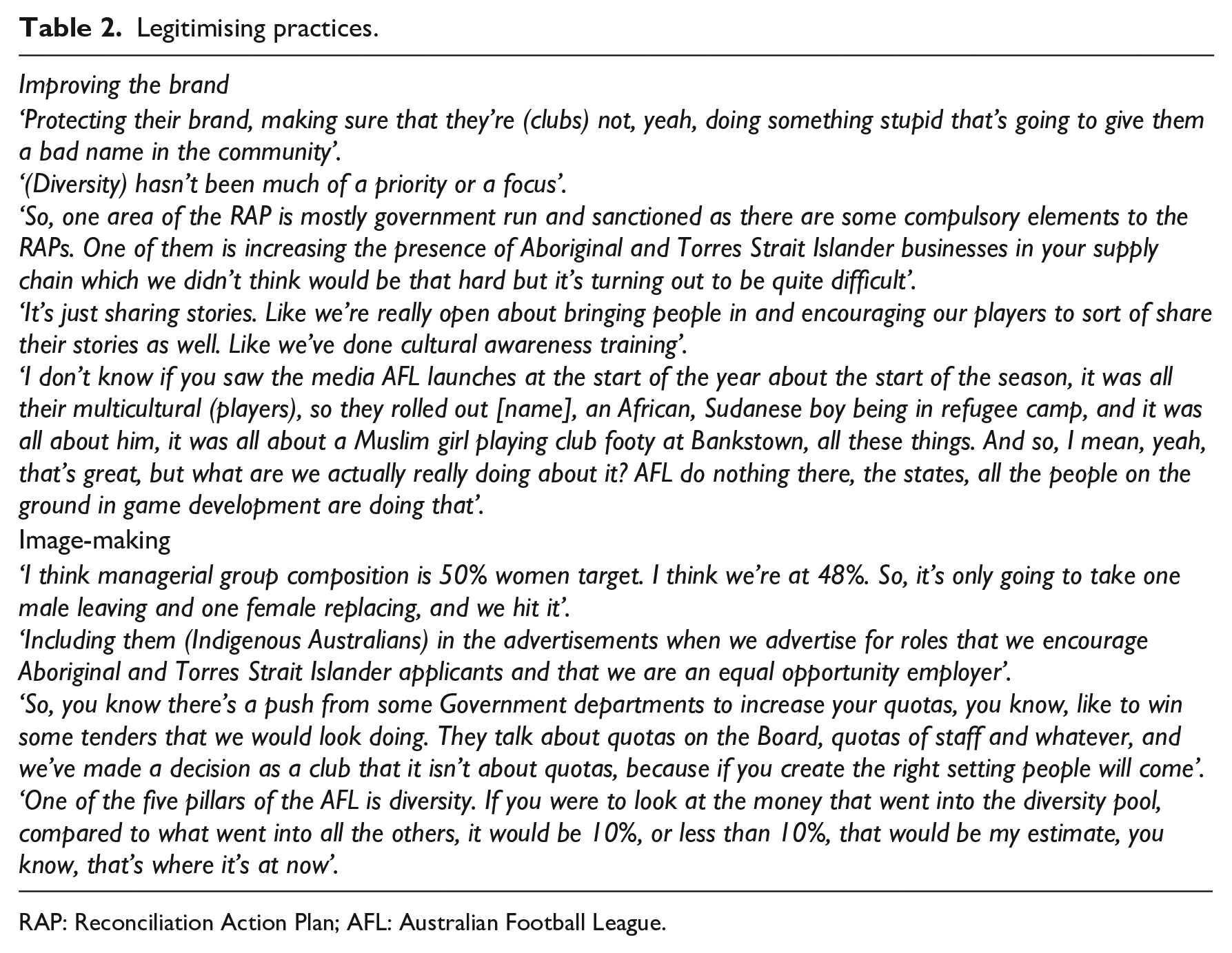
RAP: Reconciliation Action Plan; AFL: Australian Football League.
5.2.1. Improving the brand
The brand and perception of the clubs and the players who represent them are considered important by respondents. Part of the players’ personal development at the club is learning to present (brand) themselves to the public. Several respondents spoke about what they are promoting, how they want to present the club and players and how important it is to protect their brand. Reference was also made to the traditional and historic perceptions of clubs and how the clubs attempted to change this by engaging with ‘diversity’. For example, respondents referred to their club’s perception of being ‘men’s club’ or ‘boys’ club’, as well as ‘Anglo-Saxon’ and ‘white’. Notably, these references were made by respondents who had developed diversity strategies in more depth and could see that ‘sometimes we’re looking at it through a very Anglo lens’ or ‘that our shopfront is Anglo male, white Anglo male’.
In effect, the respondents describe a culture with the common frame of whiteness and masculinity, symbolising those who represent the organisations (Elgenius and Garner, 2021). Such a working culture may be institutionalised to different degrees and linked to other pillars of the organisation and its normative base (Scott, 2014). Engaging in diversity for the single purpose of changing the club’s perception will not change deeply rooted assumptions and actions without problematising and acknowledging the structural and cultural factors contributing to maintaining subordinate and dominant racial positions (Acker, 2006).
Respondents regularly mentioned cultural awareness training as being an essential part of their diversity work, which is also included as an activity in the AFLPA’s RAP and best practice guidelines; ‘The AFL is, you know, promoting and pushing inclusion and diversity to some extent, some clubs are more successful than others’. Although this indicates inconsistency between discourse and action, few respondents explained that the training had any implications other than greater knowledge about ‘Indigenous culture’ as if separate from Australian culture. Mentioning diversity training was a way to show that clubs are working with diversity. As highlighted, ‘as a club, I think we’re pretty well aware of the challenges that Indigenous players, or Indigenous culture faces and better understand where our players might be coming from’. However, whether this training is effective can be questioned, as criticism has been directed to the way that the AFL (and clubs) have handled cases of vilification. Whereas much has been done to eradicate racial vilification within the AFL, incidents still occur, such as those in early 2021 where the Collingwood Football Club faced a review about systemic racism, Adelaide Football Club had to deal with a racial slur by one of its captains, and Port Adelaide player Aliir Aliir was vilified on social media (Rucci, 2021).
Findings reveal that greater importance is articulated about promoting the organisational brand as opposed to creating an inclusive climate for players and employees. The pressure of maintaining legitimacy is closely linked to protecting their brand and portraying an image of a diverse and inclusive culture. However, using the word ‘commitment’ is not always a sign of action; rather, it is meant to signal to the public that the institution is active in its commitment. The vilification policy and framework of the AFL mention several regulations and laws, which implies that the institution is complying with Australian law. Although the framework states that vilification is not tolerated within the AFL industry, it is a way for the organisation to show they are against this while concealing vilification when it occurs within the industry. Opposing vilification is also an expression of organisational pride, and the sign of commitment increases the value assigned to it (Ahmed, 2006).
Furthermore, decoupling diversity policies from their implementation in daily activities means that the organisation is engaged in ceremonial structural conformity, as suggested by one respondent, ‘the RAP’s great but the RAP’s no good if it’s just a document, like it’s got to be something that’s actioned across all teams. Everyone’s got to have an understanding of it’. Some organisations are changing their formal structures to conform to pressures while there is no actual change to the internal activities. It is evident in the lack of support given to vilified players. The adoption of a RAP comes through coercive pressures from the government that leads some organisations to engage in certain activities to gain legitimacy, while the strategy of replicating policies from the governing AFL bodies is largely due to mimetic pressures. The organisation is uncertain of how to begin its work for inclusion and is therefore modelling the work of other organisations perceived to be legitimate or successful. This does not necessarily have to be negative as it is convenient and less problematic than diverging from the governing bodies. However, it does not mean that the replicated policies will be effective in promoting inclusion at each AFL club (DiMaggio and Powell, 1983).
5.2.2. Image-making
Organisations use diversity to create a favourable image, sometimes achieved through the numerical representation of diverse employees. Responding managers were aware and often mentioned the number of Indigenous employees and players and ‘reaching targets as part of the diversity plan’ but simultaneously referred to it as something that ‘happens organically’. One respondent criticised the extent to which the AFL is invested in their diversity work and the motives behind their image-making methods: ‘Now the AFL is reaching out to culturally diverse and Indigenous communities because they realise it was an opportunity to expand their market. Not because they want to create harmonious communities. Not because they want to deconstruct racism’. Concerning tokenism and quotas, critical views were heard about the AFL using their RAP to show they have included one ‘Indigenous person’ on one of their boards.
The organisations’ work for numerical representation has been misunderstood for a climate of inclusion and that it would guarantee against inequality and prejudice within the organisation (Burdsey, 2011). By associating diversity management with inclusion, and as numerical and statistical exercise, the organisation has both concealed and denied racial inequalities (Gillborn, 2010; Rankin-Wright et al., 2016). Therefore, discriminatory elements of an institutional nature are left unexposed, as is the underrepresentation of certain groups (Gillborn, 2010). As questioned by one interviewee, ‘you all have to play football on the same ground. Therefore, everyone has the same platform that they start on. Nevertheless, suddenly, once they leave the game, why do only the white guys go into sports media?’. The reluctance to recognise the racial logics that privileges white Australians means that discriminatory practices and the status quo remain unchallenged (Bonilla-Silva, 2010). Therefore, Indigenous Australians are undoubtedly suffering from ethnic penalties (Heath and Cheung, 2006). Furthermore, the image-making around diversity and the normative expectations that the AFL ought to be diverse and inclusive put external pressure on the organisation to conform, at least formally, to enhance its legitimacy (Scott, 2014).
5.3. Silencing
The theme of silencing emerged in the coding of the data with specific reference to ways in which the experience of minoritised populations is silenced about marginalisation, disadvantage and discrimination. The sub-themes that emerged referred to diverting attention away from underrepresentation, making assumptions about Indigenous Australians, and exercising internal control, through controlling the image of the organisation by prohibiting players from engaging in, for example, public debates. These themes all refer to ways in which organisations avoid underrepresentation by silencing employees, directly or indirectly.
Silencing.
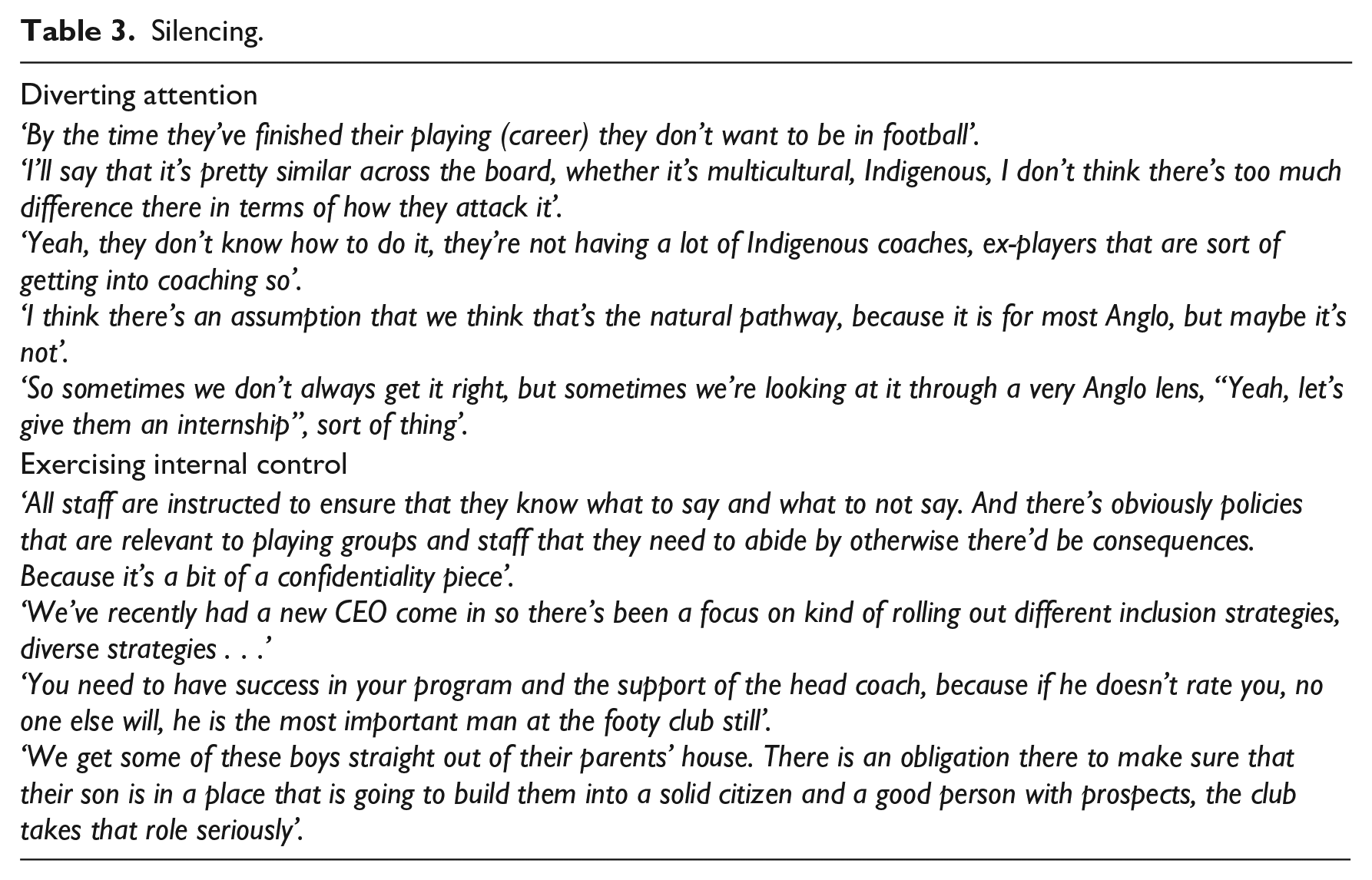
5.3.1. Diverting attention
Attention was diverted away from underrepresentation in different ways when questions about the lack of Indigenous coaches were raised, and explanations did not directly answer the question. However, some respondents highlighted that they were not the expert in this area and that others worked more directly with talent identification or that players did not want to be coaches. Other diversions included the clubs’ work to encourage Indigenous players to take on leadership roles or conduct cultural awareness training. It was also conveyed that recruiters were not biased towards applicants’ ethnicity. Another reference to diversion is related to the AFL’s vilification policy, where dealing with incidents of vilification and discrimination is outlined.
A lack of awareness concerning the systemic inequalities and intersecting challenges that Indigenous players may face when aspiring to become coaches indicates the invisibility of whiteness and its privileged power (Rankin-Wright et al., 2016). Although a few respondents could point out their organisations as being dominated by whiteness, others could not identify race as an influencing and intersecting factor in Indigenous players’ access and progress into coaching and leadership roles (Long, 2000; Lusted, 2009). Adopting a colour-blind approach means the underrepresentation of Indigenous players may remain hidden (Hylton, 2010). Constant references to the provision of a supportive process reflect the general assumptions and institutionalised management practices (Yang and Konrad, 2011).
Moreover, the denial of racism is a critical component of colour-blind ideologies and serves in the interests of those who wish to maintain the current system (Long, 2000), or in the words of a former AFL player: ‘When a person of colour speaks about his or her reality, people have an issue with confronting that reality because of the system they’re in’ (Wilson, 2017). Any statements of commitment to inclusion are instead used as support by the organisation when its actions are challenged (Ahmed, 2006). The AFL’s (2013) vilification policy can therefore be seen as a way to engage in ceremonial structural conformity (Scott, 2014).
Many respondents commented on the work they believed Indigenous players wanted to do once they finished playing football. Most respondents referred to Indigenous players wanting to return to ‘their communities’ as cultural differences were emphasised, such as the importance of family and lifestyle that allegedly influence Indigenous players’ career decisions and make ‘them’ leave the clubs. Further comments pointed out that coaching was ‘perhaps not a pathway’ for Indigenous players; in the same way, this was assumed to be a more natural path for non-Indigenous players. Thus, stereotypes about physical and cultural traits and preferences are held about Indigenous Australians, embedded in a historical tradition about racialised logics and subordination. The framing of Indigenous players’ exclusion from coaching positions is also dominated by harmful myths and stereotypes (Hylton, 2010). Through these, the issue of Indigenous underrepresentation in leadership positions is being avoided. By shifting focus away from the organisation and onto individual choices and personal responsibility, the dominant power relations that privilege whiteness are maintained (Elgenius and Garner, 2021) and create a diversion away from systemic racialised discrimination (Rankin-Wright et al., 2016). By referring to Indigenous Australians’ cultural incompatibility with the ‘Anglo’ clubs or their unwillingness to work anywhere but in the Indigenous communities, the blame for underrepresentation is being transferred onto the minoritised population. Seemingly, it is suggested that ‘others’ are not actively ‘choosing’ to progress into coaching or are not ‘fit’ to be in positions of power since organisations are, after all, ‘open’ and ‘providing opportunities’, thus serving to legitimise the status quo (Long, 2000). Using self-exclusion and cultural differences as explanations for underrepresentation, racist practices are justified (Hylton, 2010), demonstrating that both institutional racism and ethnic penalties are present. Normative and cultural-cognitive systems are present in all forms of nationalism and national identity; here, managers articulate that Indigenous Australians do not share the majority understanding or conform to their ‘Anglo’ norms.
5.3.2. Exercising internal control
Internal control takes silencing one step further and refers to the impact those with the most influence in decision-making processes may have on organisations, given their level of authority. The internal control exercised within the AFL, and affiliated clubs and state organisations impact the career development of players. For instance, one manager expressed (Table 3), ‘I do think, from my experience, there is a significant block in the delivery of courses for Aboriginal players’. Respondents indirectly referred to control when they described the rules and responsibilities of the organisations, which all employees and players abide. The players also have specific duties stipulated within their contracts that they are required to fulfil. The aspects of confidentiality emphasised in the vilification policy that the organisation must follow may be a way of exercising control if it serves existing power relations. The league or club assigns complaints officers to resolve the matter. In the first process of a complaint, the decision is made based on ‘the reasonable opinion of the League Complaints Officer/s’ about whether it is possible to go ahead with an informal resolution (AFL, 2013). Based on the discourse of the vilification policy, no evidence is gathered, and no witnesses are heard at this stage of the process (AFL, 2013). Through policies such as this, the AFL and affiliated organisations can exert indirect and direct control, including regulations, rules and punishments. One of the reasons behind the AFL’s silencing of players, as in the cases of Heritier Lumumba and Eddie Betts, who speak up about racism, is that the AFL does not want to lose their legitimacy. One way to stay legitimate is to control the narrative. In doing so, the AFL has the mandate to restrict the information channelled about the organisation as conceptualised through Acker’s ‘inequality regimes’ (2006). Its unwillingness to address the issue of racism and white hegemony is a way to ignore or avoid facing the inherent lack of diversity and inclusion in the industry (Rankin-Wright et al., 2016). A recent independent review of one AFL club indicated that the club failed to address incidents of racism and that actions ought to be taken to reward as opposed to punishing people who speak out against racism (Behrendt and Coombes, 2021).
Another dimension of control is powerful actors, such as coaches, who are present in the recruitment of coaches and related leadership positions. For example, several respondents highlighted the coach’s role in influencing the players’ career development and the CEO as crucial to changing the work culture and enforcing diversity strategies. Such governance systems, both normative and coercive through codes, norms and rules, are enforced by, for example, the AFL’s vilification policy and monitoring players in terms of how they act and portray themselves in the media. The AFL industry coerces and normalises behaviour through several regulatory processes, such as setting rules and ensuring that others conform to them. The authority to discipline players in this context and underrepresentation conditions could be understood as a way to privilege whiteness and reflect the white establishment granting Indigenous players the right to play the white game. The freedom and independence to act are also affected by this hierarchy of privilege existing between black and white people (Long and Hylton, 2002).
6. Implications and conclusions
The AFL was chosen as a case study due to its high proportion of Indigenous players and their underrepresentation in leadership positions. Little is known about diversity management in the sports sector and the role of managers or diversity policies, as well as the encumbrances Indigenous players face when seeking leadership positions. Building on the theoretical framing of institutional theory (Scott, 2014), related conceptualisations of inequality regimes (Acker, 2006) and the persistent ethnic penalties in Western labour markets (Heath and Cheung, 2006), we find the presence of both inequality regimes and ethnic penalties in the sports sector too. The mechanisms contributing to the underrepresentation of Indigenous leadership within the AFL from the perspective of non-Indigenous managers and researchers are discussed below.
Diversity is handled and managed through legitimising practices, such as image-making and attempts to improve the brand. Legitimising practices such as these restrict Indigenous players as legitimising practices appear in combination with claims about equality and equal chances and silencing mechanisms. Together, claiming equality, legitimising practices and silencing support the overall mechanism of avoiding underrepresentation, which is conceptualised as avoiding discrimination. While sports organisations articulate that they have initiated changes to promote equal chances, there is not a great deal of evidence to support this. The sports sector in Australia takes pride in its ability to include people from diverse backgrounds, yet the social inequalities and discriminatory practices found elsewhere are found here too. Indigenous Australians, therefore, remain a minoritised population disadvantaged in Australian society and its sports sector.
One key supporting mechanism for avoiding discrimination is claiming equality for all through the notion of caring as duty and assuming the organisation is characterised by a climate of inclusion. This refers to the perceptions held by managers that the institution they represent is caring for its players through career development strategies and providing a safe environment for all of them. However, institutional pressures have led some respondents to query whether the care is genuine. Notably, the discrepancy between the discourse of the AFL’s vilification policy and the players’ experiences indicates that the AFL’s stance against vilification and discrimination may be a symbolic act. Thus, assuming a climate of inclusion and the perception that career opportunities and networks are open to all players is a mechanism that prevents equality work by not acknowledging that Indigenous players face disadvantages by the structural inequalities of the AFL industry. The football institution has therefore been described as a racial project (Hylton, 2010), given the racialised ideas of physical and intellectual ability expressed by respondents. These may be habitual but make it important for the organisation to address the racial logics of whiteness inherent in Western nationalisms and extensions of these (Elgenius and Garner, 2021). Research has also shown that the perceived abilities of coaches create an element of favouritism given an individual’s characteristics (Reskin, 2003). The further complication is the discourse about Indigenous Australians as having ‘natural’ physical ability to play football but not seen as fit to be leaders (Hallinan and Judd, 2009; Kearney, 2012).
In Western economies and countries, such as Australia, leadership positions have traditionally been held by the white male majority, and others have been excluded from the privilege of such networks. Thus, inequalities play out in networks and networking for several reasons. Networking is a barrier for individuals subjected to racial stereotypes and discrimination in the labour market (Cameron et al., 2017; Hallinan and Judd, 2009). The underrepresentation of minority leaders is perpetuated if the recruitment and selection process is characterised by homosociality (Bradbury, 2013). Thus, the mechanism of claiming equality for all and that Indigenous players can easily enter into positions of leadership contributes to avoiding the conditions under which the underrepresentation of Indigenous leaders and managers continues. Thus, if organisations take limited action, they cannot be seen as agents of transformation (Bradley and Healy, 2008) who play an important role in promoting increased diversity across levels (Arenas et al., 2017). With reference to the role of HR, it has long been acknowledged that HR managers can be agents of transformation or change agents of inclusion within organisations as they carry out HRM practices (Arenas et al., 2017; Tatli and Özbilgin, 2009).
Another mechanism that contributes to avoiding underrepresentation and discrimination is the legitimising practice of diversity management within the AFL, such as image-making and branding. The motivation behind most managers’ work on diversity was said to be to change the perception of the clubs. Some managers argued that the AFL organisations were characterised by inequality but did not highlight their responsibility or awareness of the structural inequalities that may exist in the organisation (Tatli and Özbilgin, 2009). Since employers and managers influence organisational culture through the behavioural standards they monitor and uphold, inequalities may not be challenged unless required (Bradley and Healy, 2008). Notably, the government has not created a framework, incentives or commitment to equality that could help create an inclusive workplace climate (Cunningham, 2008; Mor Barak et al., 2016).
Referring to cultural awareness training as a tool to promote diversity could indicate the lack of cultural awareness within the AFL industry, and research has shown it may be more likely to activate bias (Dobbin and Kalev, 2016; Kalev et al., 2006). However, this training may be ceremonial as some organisations view diversity from a business-driven perspective by referring to its costs and benefits. This version of diversity is narrow and tends to mean the aim is to simply engage people from diverse backgrounds (Spaaij et al., 2014). To be driven by targets and the numerical representation of diverse players and employees can be argued to reflect organisations that do not have a meaningful culture in which values of equality, diversity and inclusion are respected and promoted (Burdsey, 2011). Thus, legitimising practices contribute to avoiding the underrepresentation of Indigenous employees in the Australian football institution by creating the illusion of a diverse and inclusive climate. Meanwhile, players testify that they continue to be vilified and do not receive enough support in these situations.
Some suggest that a single focus on increasing diversity in the workforce is not enough. Diversity management must be part of an inclusive workplace climate to improve work outcomes (Mor Barak et al., 2016). Diverse and inclusive organisations are characterised by inclusive work practices and the employees’ involvement in organisational decision-making processes. However, diversity management practices may not change unless the organisation moves from a focus on diversity to inclusion (Roberson, 2006). It is a slow and gradual process where policies are aligned with broader values, strategies and priorities. Thus, many organisations have failed to include minoritised groups even if diversity policies have been part of their strategies.
The third mechanism that contributed to avoiding the underrepresentation is silencing, for instance, by diverting attention from the issue, making assumptions or exercising control through actors and discourse. The respondents assumed that the barriers to leadership are due to the cultural traditions of Indigenous Australians and their reluctance to adapt to dominant practices (Lusted, 2009). These responses fail to acknowledge systematic inequalities and show a lack of awareness that hamper equality work. As noted, the extent to which individuals are aware of inequalities also determines their visibility of inequality (Acker, 2006). The respondents’ answers point towards an unawareness or denial of white privilege as a barrier for minoritised groups. It is therefore important for antiracism to constitute part of policy and practice (Hylton, 2010) and to act on recommendations made, such as those in the ‘Do Better’ report (Behrendt and Coombes, 2021), to demonstrate that inclusion is not merely symbolic but performative (Ahmed, 2006). The control exerted by sports authorities can be viewed as a mechanism that maintains authority and thereby also inequalities through rules and norms. Thus, silencing contributes to avoiding the underrepresentation of Indigenous employees in the Australian football institution by minimising the underlying inequality.
There are several further questions to ask about the underrepresentation of minoritised groups, exemplified here by the underrepresentation of Indigenous Australians within senior levels of the sports sector. The findings reveal that several mechanisms contribute and combine towards avoiding the conditions of underrepresentation, which has been found in similar studies on diversity, such as gender (e.g. Clark Blickenstaff, 2005). This study has not responded to the impact of these exclusive mechanisms on the experiences of Indigenous employees, given its limitations of focus and time, and more research is required about this. Nevertheless, there are some promising signs, such as the AFL’s announcement to appoint an Indigenous Player Development Manager for each club (AFL, 2022). This cohort and its impact should be examined in future research. In addition, further research is also needed about the mechanisms behind successful policies and good practices that have contributed towards the mobility and career trajectories of minoritised populations and managed to combat the mechanisms of avoidance addressed within this study.
