



Abstract

Introduction
A SCOBY is a ‘symbiotic culture of bacteria and yeast’, commonly used as a starter in the preparation of sour foods and beverages such as kombucha. 1 A SCOBY is the gelatinous cellulose-based microbial mat found floating at the liquid-air interface of such cultures. Through a fermentation process, layers of cellulose are formed over each other, creating a progressively thickening membrane with a high tensile strength. 1 Because of its strength and stability, a SCOBY has been used as an artificial skin for teaching invasive medical procedures: in 2018, van Dreven et al. reported the use of a SCOBY to teach medical students suturing and skin excision skills. 2 They found the SCOBY to be superior to ethylene-vinyl acetate (EVA) pads, and equivalent to pig tissue, for this purpose. 2 However, to the authors' knowledge, there have been no further published reports of the use of a SCOBY as artificial skin for training in other medical procedures.
Through our in-hospital simulation centre, the Capital, Coast and Hutt Valley Simulation Service, our anaesthesia department runs regular Can’t Intubate, Can’t Oxygenate (CICO) training sessions based on the Vortex model³ and Andy Heard’s Royal Perth Hospital training method. 4 We currently use the VBM Crico-Trainer ‘Frova' (Figure 1) and VBM Crico-Trainer ‘Adelaide' (VBM Medical, Germany) 5 with supplied artificial skin during these sessions. In our experience, participants often comment on the low fidelity nature of these trainers, particularly with regards to the foam skin which is provided. As a result, we recently introduced the SCOBY as an alternative skin (Figure 2), based on our impressions of its potential advantages. In addition to increased fidelity compared to the artificial skin provided with the VBM Crico-Trainer models, other benefits of SCOBY skin include low cost, ability to easily grow customisable shapes and sizes, ability to be repaired and reused, and environmental benefits in using a biodegradable product.
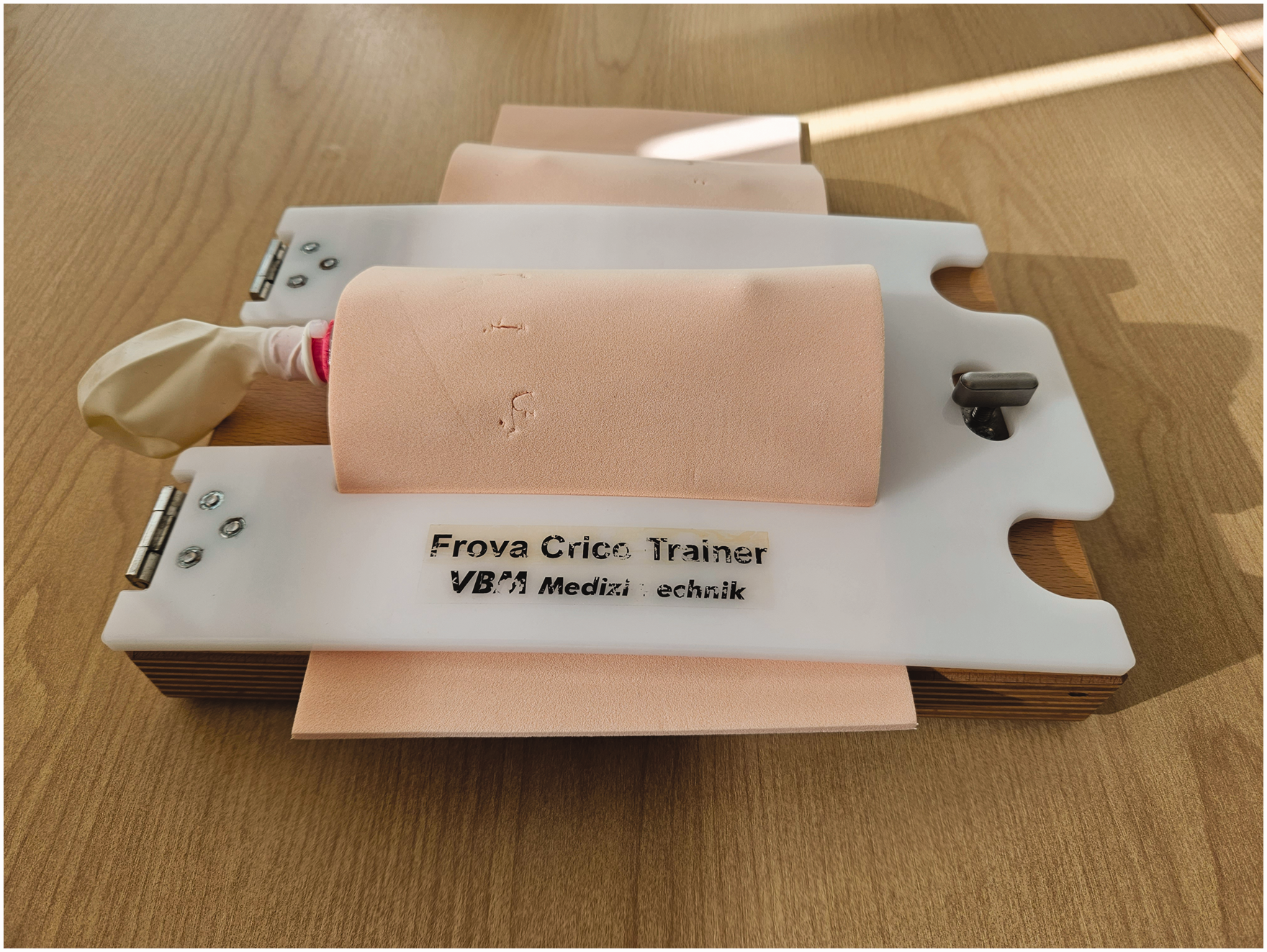
Standard Frova skin (VBM Medical, Germany).
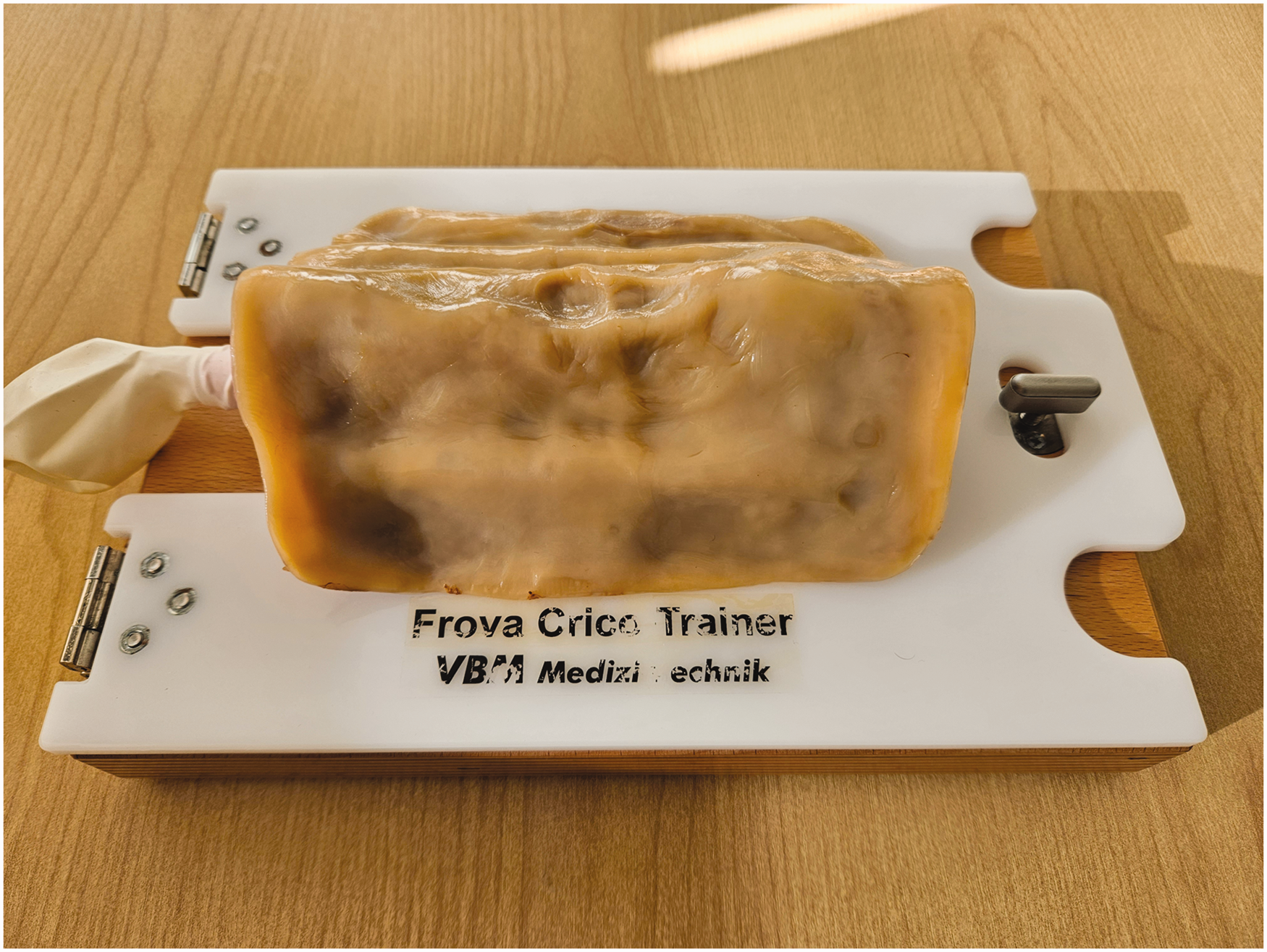
Symbiotic culture of bacteria and yeast (SCOBY) skin.
A SCOBY may be purchased commercially, as it is sold for home-brewing kombucha. However, costs can vary and it may not be easily available in all locations. Whilst purchasing of commercial SCOBY for use in medical education is possible, growing a SCOBY in-house is likely to be a more cost-effective approach. There are numerous guides on brewing kombucha that are freely available online, but few resources exist on growing the SCOBY in large quantities for medical education.
The aim of this article is to propose a method for safely producing, storing and reusing the SCOBY in large quantities for medical simulation purposes. We reviewed the method used by van Dreven et al., 2 and consulted the staff at the Manawa Simulation Centre, Waitaha, Canterbury, New Zealand, who were also experimenting with the SCOBY for medical education. We went through a process of trial and error to develop a method that is easily reproducible. Here we provide an outline of how our team has developed a ‘SCOBY farm’ to create a regular supply of SCOBY skins for CICO training at Wellington Hospital. Further details can be found on our Wellington Simulation Centre website (https://www.ccdhb.org.nz/news-publications/news-and-media-releases/2023-09-05-the-wellington-simulation-centre-scoby-farm/).
Developing a ‘SCOBY farm’
Our method differs from that previously described by van Dreven et al. 2 in several ways. We have increased the concentration of tea and sugar, which we believe has resulted in a faster growth rate. We also suggest additional infection control procedures regarding glove use and observation for potentially harmful mould growth, and we provide information about reusing the SCOBY skin after it has been used for training.
Essential equipment
An existing SCOBY culture and starter liquid Containers – we used repurposed 3 l square plastic food containers Breathable fabric cloth Gloves – reducing contamination risk A large pot Black tea, hot water and sugar
Method
Prepare a batch of sweetened tea:
10 tea bags and 2 cups of sugar to 3 l of boiling water.
Steep for 10 min and remove the tea bags.
Cool completely.
Add the tea to your desired container.
Note that the SCOBY will grow to fill the profile of the container, so choose the shape of container accordingly.
Carefully place the SCOBY and any liquid that is with it into the container. Ideally the SCOBY should sit on the top of the liquid. Leave some space above for fermentation and expansion.
Cover the container with the breathable fabric cloth and secure with elastic.
Allow to ferment for 2–3 weeks. Periodically check for new fermentation – there should be bubbles and a ‘slimy/shiny’ layer on the top of the SCOBY. This will be fragile – handle with care.
If the SCOBY rises above the liquid, push it down to resubmerge.
Check for mould on a weekly basis. If there is mould growth (black dots, fuzzy patches), discard the brew and the SCOBY.
After 2–3 weeks, replace the tea to maintain growth. Brew and cool sweetened tea as above. Remove the SCOBY from the liquid and place on a clean towel or tray. Top-up the liquid with fresh tea and return the SCOBY to the container.
Repeat this process until the SCOBY is at the desired thickness. Layers that are 2–3 cm thick may break away – these can be used to start another container.
Storage
The SCOBY should be stored out of direct sunlight and at a temperature close to 25°C to facilitate fermentation. 5 We have achieved adequate SCOBY growth at standard hospital room temperature and humidity. A strong vinegar-like smell is produced in the fermentation process, making it preferable to store the SCOBY in a dedicated room.
Cost
A starter SCOBY can be purchased online, currently retailing at approximately NZD$30 + freight. Our starter SCOBY was kindly donated by a local kombucha brewery (KB Kombucha, Wellington, New Zealand).
Other essential items are largely available at minimal cost (recycled food containers, basic sugar and tea). Breathable fabric and elastic are available at less than NZD$20/m if unable to be repurposed from other uses. Ongoing maintenance is essentially the cost of black tea bags and sugar, and storage space in the institution.
Growth and alteration
Through a process of trial and error we have identified that:
The SCOBY is more robust to handle when at a thickness of >1 cm. We have had successful growth in containers with a surface area between 150–500 cm2. Growth rate decreases with larger sized containers, which appears to be due to the inability of a SCOBY to adhere and float at the correct level. Growth rate increases with higher sugar concentration. A SCOBY will take up food colouring, allowing a pink/red stain more closely resembling human tissue. Dried samples feel more like ‘real skin' than fresh wet samples, i.e. ideally samples should be removed from the culture and allowed to air dry between 4–24 h before use. Samples can be reused after training if they are returned to the culture within 48 h. They will generally continue to grow in a fresh liquid, and small holes will repair themselves.
Safety and disposal
The SCOBY is non-toxic and biodegradable, and it can be safely disposed of in compost, food waste disposal or household waste. All staff involved should be aware that brewing kombucha for consumption requires a higher standard of hygiene, and the fermented tea should not be consumed. Additionally, any SCOBY and tea brews with mould growth should be discarded. Wearing gloves and ensuring that equipment is clean may prevent mould growth.
The safety of kombucha for human consumption is well documented, 1 though pregnant and lactating women are advised to avoid it due to the small alcohol content (usually <0.5%). We do not believe this poses any risk to pregnant or breast-feeding participants when handling the SCOBY. We were unable to find any significant documented risks in the production and handling of the SCOBY and, in our opinion, this is a safe activity to undertake if simple hygiene precautions are used, as described in our method. Advice from our local kombucha manufacturer is that respiratory protection is not required. We also consulted our Hospital Occupational Health and Safety (OHS) team, and we would advise anyone producing a SCOBY in their workplace to obtain OHS approval.
Preliminary experience
Staff in our anaesthesia department (a mixture of 26 consultants and trainees) performed a mixture of CICO rescue techniques (cannula technique, scalpel-bougie technique, or both) on the Crico-Trainer, using both the provided skin and SCOBY skin. They reported that the SCOBY skin more closely resembled the clinical reality of cutting/needling through skin for a CICO procedure. They commented on the superior texture, compressibility and resistance to needle and scalpel insertion. Thicker SCOBY samples were felt to give a better experience than thinner samples. Dryer samples were preferred to samples freshly removed from the tea, possibly due to these feeling more like real skin. Participants also made positive comments about the move to a biodegradable product from disposable commercial products. With the cannula technique, participants valued the ability of SCOBY skin to provide a true negative aspiration until passing into the trachea. The only negative comments made by the participants on the use of SCOBY skin were related to the vinegar-like smell, which is consistent with previous studies, 2 though this was not significant enough an issue to prevent participants from use of the SCOBY.
Discussion
We have outlined a method of developing a SCOBY farm to allow production of SCOBY supplies in large quantities for medical education. We have also reported our preliminary anecdotal experience of the use of the SCOBY as an artificial neck skin with commercially available CICO models such as the VBM Crico-Trainers (VBM Medical, Germany). 5
Traditionally, CICO training models have used either disposable artificial skins or animal models. Animal models offer a higher fidelity experience, but have ethical and cultural barriers to use in medical education. The SCOBY has been found to be preferable to pig tissue for suturing and skin excision by some medical students due to cultural reasons. 2 Anaesthetised animal models, used in live-animal workshops, also have much higher costs, personnel requirements and legal disposal requirements. Disposable models are generally of a lower fidelity than animal models. Whilst they are likely to be cheaper than live-animal workshops and without the ethical and cultural barriers associated with any animal product, they do still have significant ongoing cost and potential supply chain issues, along with increasing concern around environmental waste and sustainability.
On a spectrum of fidelity in CICO training, we feel that it is likely that the SCOBY lies between the low-fidelity disposable products currently available commercially, and the high-fidelity experience offered by animal products, particularly live-animal workshops. We believe the SCOBY may represent a favourable balance between fidelity and the described cost, ethical and environmental concerns of traditional commercial and animal models. We have now adopted the use of SCOBY skins for all of our CICO training sessions.
We are extremely grateful for the initial work in this area by van Dreven et al. 2 and the Manawa Simulation Centre, Waitaha, Canterbury, New Zealand. As mentioned above, our method provides some advantages to the previously described method. 2 The major advantage is that it increases growth rate, allowing substantially quicker development of large quantities of the SCOBY for medical education. We have also provided some additional information regarding start-up costs, customisation of the SCOBY size, shape and colour, optimal drying time prior to use in order to more closely resemble human skin, and instructions on reusing the SCOBY after training to reduce waste. We acknowledge that the use of the SCOBY in medical education is at a very early stage, and it is likely other institutions will develop and adapt techniques to optimise growth further.
We believe that the SCOBY has the potential to be a cost-efficient, biodegradable, reusable and customisable artificial skin for moderate fidelity medical education. Demonstrated uses include skin suturing and excision, and now CICO training, but the SCOBY could potentially be used as an artificial skin for any invasive medical procedure simulation. In clinical anaesthesia this could include intravenous access, regional anaesthesia and neuraxial anaesthesia. We anticipate that in combination with modern 3D printing technology, institutions may be able to develop low-cost, low-waste, training solutions for many of these procedures.
We encourage other training institutions to consider trialling SCOBY use in medical education, using the method provided as a template for creation of an in-house ‘SCOBY farm'. Many institutions run similar CICO training sessions, and this type of session is an easy way to introduce the SCOBY into the medical education arsenal. With time, more formal comparisons of the SCOBY as an alternative to commonly available commercial products are warranted to demonstrate the benefit to training participants, along with quantification of other described benefits.
Footnotes
Author Contribution(s)
Declaration of conflicting interests
The authors declared no potential conflicts of interest with respect to the research, authorship, and/or publication of this article.
Funding
The authors received no financial support for the research, authorship, and/or publication of this article.
