



Abstract
‘The safety of albumin is so high that it rarely warrants discussion.’
James Tullis, 1977 1
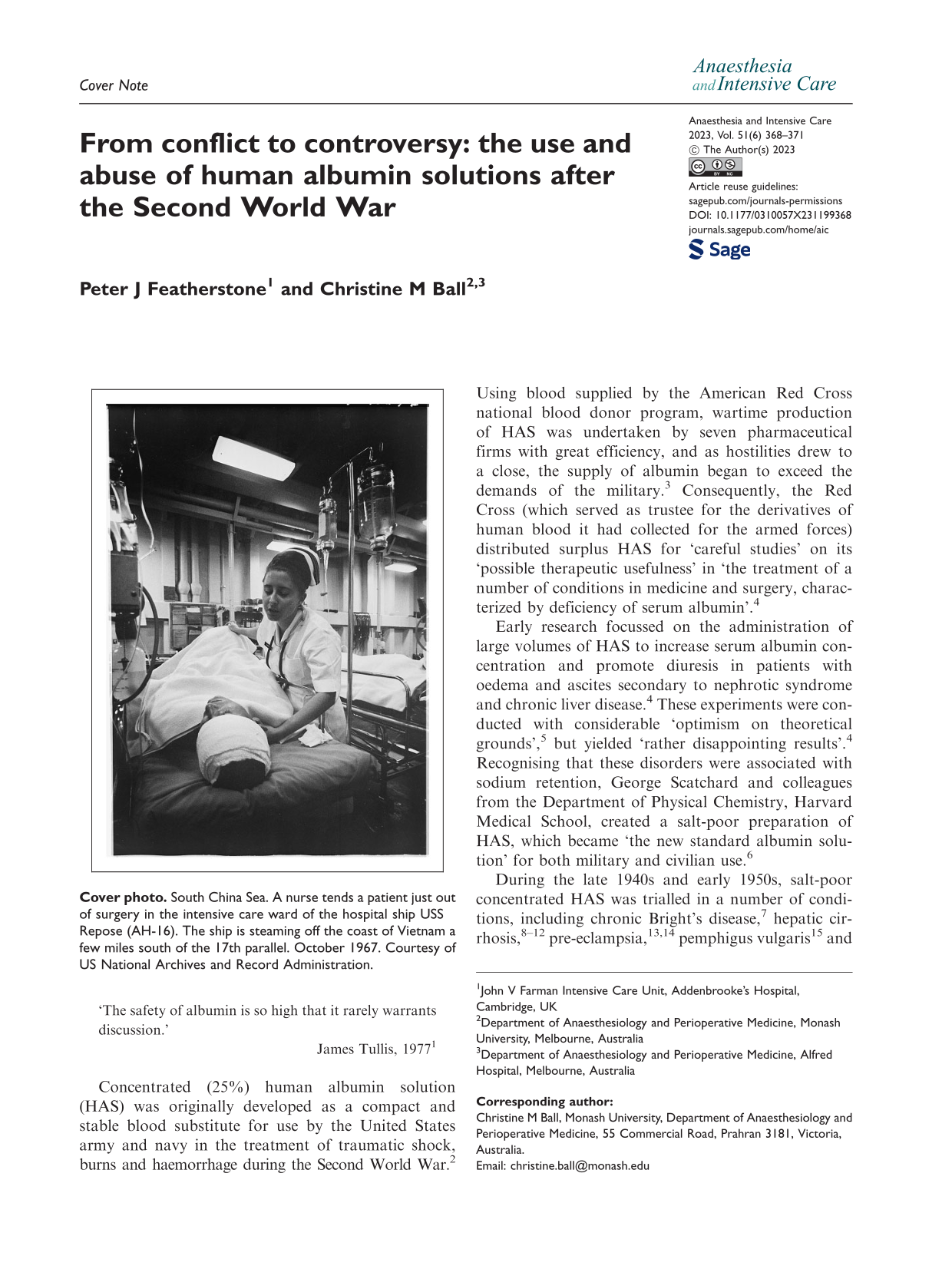
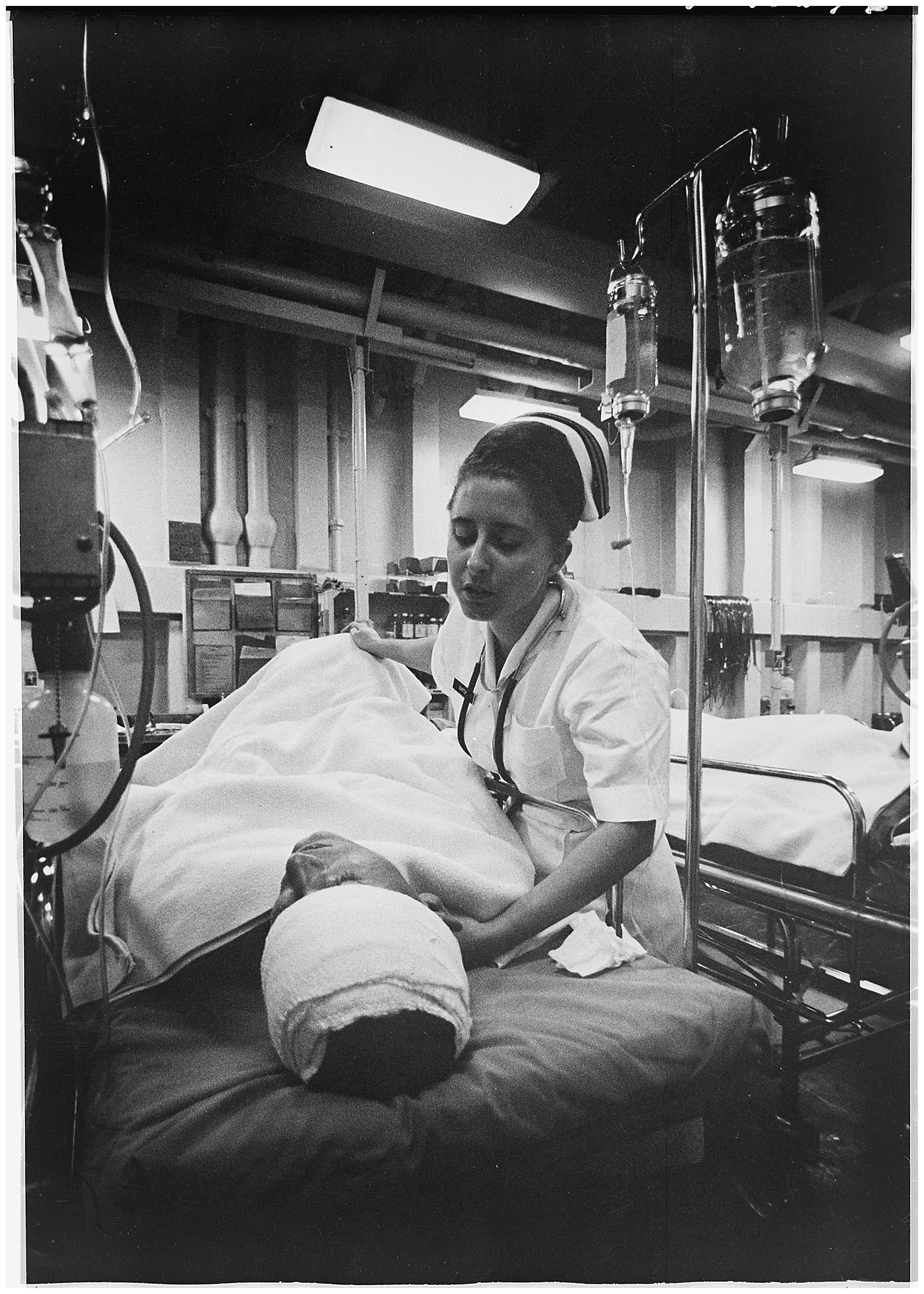
Concentrated (25%) human albumin solution (HAS) was originally developed as a compact and stable blood substitute for use by the United States army and navy in the treatment of traumatic shock, burns and haemorrhage during the Second World War. 2 Using blood supplied by the American Red Cross national blood donor program, wartime production of HAS was undertaken by seven pharmaceutical firms with great efficiency, and as hostilities drew to a close, the supply of albumin began to exceed the demands of the military. 3 Consequently, the Red Cross (which served as trustee for the derivatives of human blood it had collected for the armed forces) distributed surplus HAS for ‘careful studies’ on its ‘possible therapeutic usefulness’ in ‘the treatment of a number of conditions in medicine and surgery, characterized by deficiency of serum albumin’. 4
Early research focussed on the administration of large volumes of HAS to increase serum albumin concentration and promote diuresis in patients with oedema and ascites secondary to nephrotic syndrome and chronic liver disease. 4 These experiments were conducted with considerable ‘optimism on theoretical grounds’, 5 but yielded ‘rather disappointing results’. 4 Recognising that these disorders were associated with sodium retention, George Scatchard and colleagues from the Department of Physical Chemistry, Harvard Medical School, created a salt-poor preparation of HAS, which became ‘the new standard albumin solution’ for both military and civilian use. 6
During the late 1940s and early 1950s, salt-poor concentrated HAS was trialled in a number of conditions, including chronic Bright’s disease, 7 hepatic cirrhosis,8–12 pre-eclampsia, 13 , 14 pemphigus vulgaris 15 and acute pancreatitis. 16 , 17 While the effects were occasionally ‘striking’, the administration of albumin proved neither specific for the relief of symptoms nor markedly beneficial in the treatment of the underlying disease in the majority of cases. 11 More promising results emerged in the fields of paediatrics and anaesthesia. In a study conducted at Gallinger Municipal Hospital, Washington, DC, repeated injections of HAS appeared to promote weight gain and reduce morbidity and mortality in a cohort of premature infants. 18 Meanwhile at the Mayo Clinic, Rochester, Minnesota, anaesthetists found albumin ‘to be a most effective agent for the reduction of cerebral oedema’ secondary to head trauma and perioperative anoxic brain injury. 19
Around the same time, facilities for plasma fractionation were established outside the United States. Commonwealth Serum Laboratories commenced production of concentrated salt-poor HAS in Melbourne in 1952. 20 Supplied to hospitals free of charge through the Australian Red Cross Blood Service, albumin was quickly accepted by clinicians, and in the decade that followed, its use increased dramatically. 21 , 22
In other counties, the rising employment of HAS was associated with significant financial expenditure. In many institutions, albumin became the single largest item on the pharmaceutical budget, 23 , 24 forcing hospital managers to scrutinise its prescribing. At Memorial Sloan Kettering Cancer Center, New York, the utilisation of albumin increased in ‘leaps and bounds’ during the 1960s (with the exception of 1965–1966, when supplies were diverted to the military in Vietnam). On further investigation, however, it transpired that ‘one or two units were given with almost any type of surgery’, and HAS was commonly used ‘to feed patients, improve wound healing, and as a general tonic’. 25 Similar prescribing practices were reported elsewhere, and it became ‘abundantly clear’ that clinicians largely administered albumin on ‘questionable physiologic grounds … empiricism and clinical observation more than on carefully conducted studies demonstrating therapeutic effectiveness’. 26
In an attempt to ameliorate this situation, the first prospective randomised controlled trials involving albumin were undertaken in the early 1970 s, 27 , 28 and in February 1975, the Division of Blood and Blood Products, Food and Drug Administration, and the Division of Blood Diseases and Resources, National Heart and Lung Institute, organised a 2-day symposium in Bethesda, Maryland, to critically review albumin, and formulate guidelines for its appropriate use. 1 , 29
Two years later, pharmacists at the Veterans Administration Hospital, Iowa City, assessed concordance with these guidelines. More than 40% of HAS continued to be prescribed ‘inappropriately’, at an annual cost to the institution of approximately US$40,000. 30 Concomitantly, evidence began to emerge that the administration of HAS for volume replacement (hitherto considered safe and efficacious) lacked benefit, and might be associated with harm. In a prospective randomised trial comparing albumin with crystalloids in severe hypovolaemic shock, HAS ‘did not decrease the mortality rate, nor the incidence of pulmonary failure… however, it definitely increased the cost of resuscitation’. 31 In a similar study published in 1978, patients receiving albumin had a greater dependence on invasive mechanical ventilation, leading the authors to conclude: ‘the continued unscientific emotional use of an expensive agent that may be harmful should be abandoned’. 32
Nevertheless, HAS continued to be used in the management of a diverse range of medical and surgical conditions throughout the 1980s and 1990s, fuelled partly by the association between low serum albumin levels and mortality. 33 , 34 In an editorial entitled ‘Wonderful Albumin?’ published in the BMJ in 1995, Neil Soni questioned the widespread use of HAS to correct hypoalbuinaemia, noting that this had ‘more to do with word association and the treatment of items that are marked on the pathology form with an asterisk than with scientific medical management’. 34
On 25 July 1998, the Cochrane Injuries Group Albumin Reviewers (CIGAR) published a systematic review of randomised controlled trials comparing administration of albumin with no administration or with administration of crystalloid solution in critically ill patients with hypovolaemia, burns, or hypoalbuinaemia. Extracting data from 30 trials, including 1419 randomly assigned patients, the authors found no evidence that albumin reduced mortality. Furthermore, they reported that overall the risk of death was 6% higher in those receiving HAS. 33 In a subsequent press interview, the lead author highlighted his fear that the use of albumin might represent ‘one of the biggest medical disasters in a long time’, and put forward the argument that it ‘should not be used outside the context of a properly concealed and otherwise rigorously conducted randomised controlled trial with mortality as the end point’. 33 , 35
The publication of the CIGAR systematic review unleashed a storm of controversy. An article in The Times newspaper suggested that up to 30,000 patients in Britain might have died as a result of receiving HAS, 36 doctors were faced with concerns from patients and relatives about ‘the killer fluid’, 37 and Ian Chalmers, director of the Cochrane Centre, openly stated that he would attempt to sue anyone who gave him an infusion of albumin. 38 Despite a series of ‘incandescent letters’ in the medical press attacking the study’s findings and defending current practice, 39 many clinicians believed the review made the on-going employment of HAS ‘legally indefensible’. 37 By the end of 1998, demand for albumin had fallen by 40% in the United Kingdom. 40
This unsatisfactory situation was ultimately resolved by the Saline versus Albumin Fluid Evaluation (SAFE) study, conducted by the Australian and New Zealand Intensive Care Society Clinical Trials Group, the Australian Red Cross Blood Service, and the George Institute for International Health, between November 2001 and June 2003. This multicentre, double blind, randomised controlled trial included 6997 patients, 3497 of whom were assigned to receive 4% HAS, and 3500 to receive 0.9% sodium chloride. Study fluids were supplied in identical 500 ml bottles, and blinding was ensured through the use of specially designed masking cartons and administration sets. The SAFE study demonstrated equivalent rates of death during the 28-day study period, and no significant differences in length of stay, duration of mechanical ventilation, or days of renal replacement therapy. 41 In an accompanying editorial, Deborah Cook lauded the study as a ‘landmark trial’ and a ‘milestone for the discipline of critical care medicine’. 42
In recent years the use of albumin has increased significantly.
43
,
44
It continues to engender debate.
Footnotes
Declaration of conflicting interests
The authors declared no potential conflicts of interest with respect to the research, authorship, and/or publication of this article.
Funding
The authors received no financial support for the research, authorship, and/or publication of this article.