




Abstract
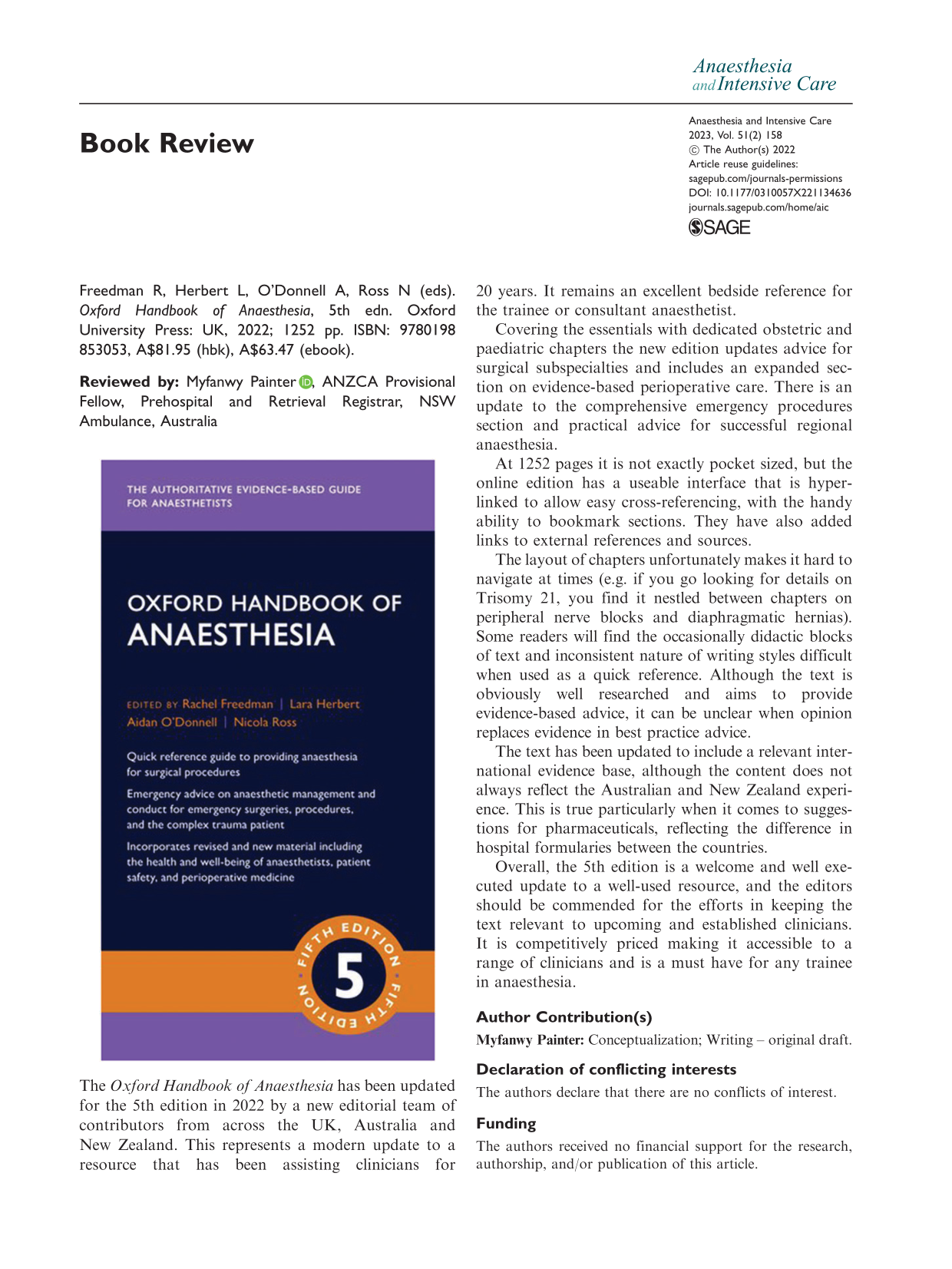
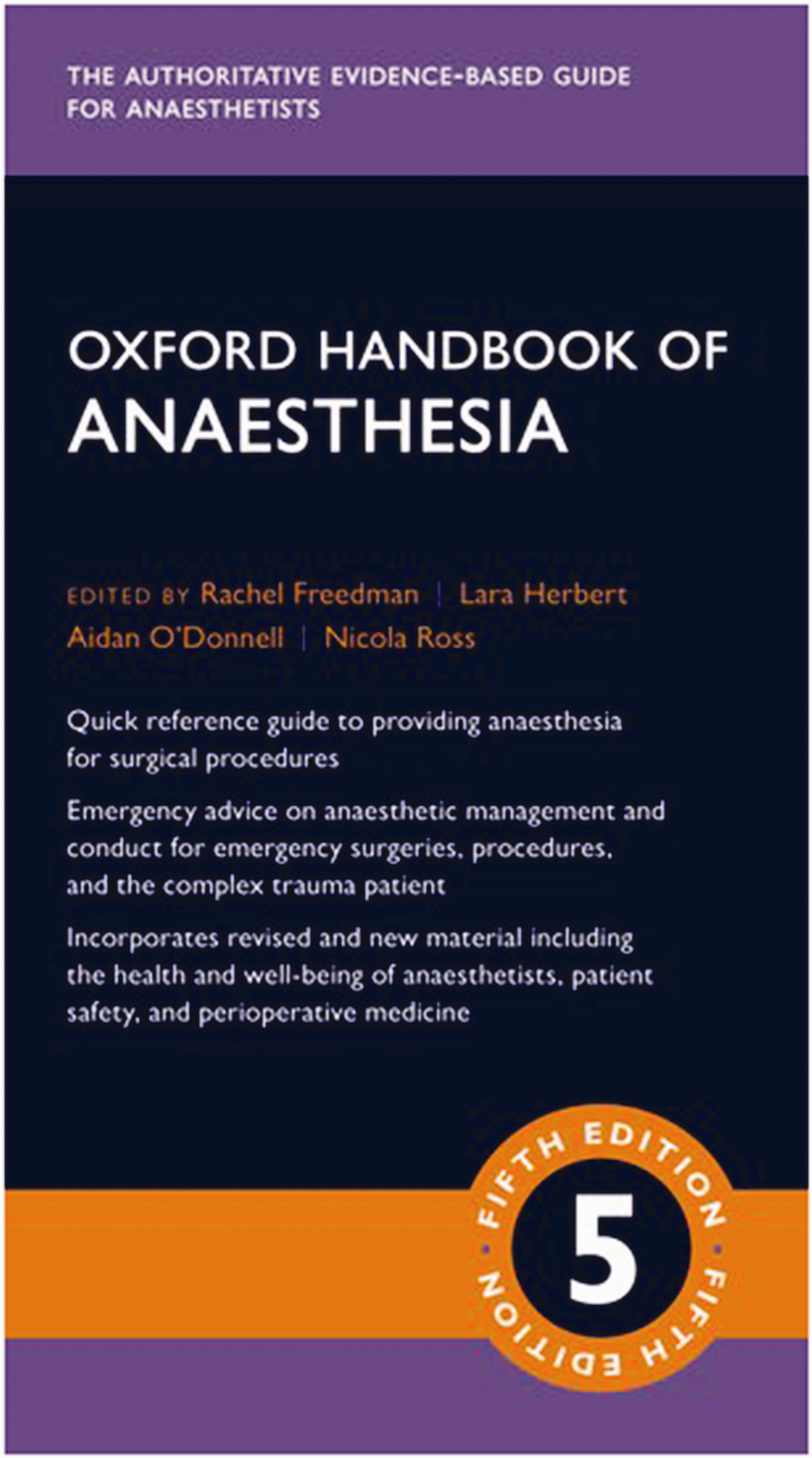
The Oxford Handbook of Anaesthesia has been updated for the 5th edition in 2022 by a new editorial team of contributors from across the UK, Australia and New Zealand. This represents a modern update to a resource that has been assisting clinicians for 20 years. It remains an excellent bedside reference for the trainee or consultant anaesthetist.
Covering the essentials with dedicated obstetric and paediatric chapters the new edition updates advice for surgical subspecialties and includes an expanded section on evidence-based perioperative care. There is an update to the comprehensive emergency procedures section and practical advice for successful regional anaesthesia.
At 1252 pages it is not exactly pocket sized, but the online edition has a useable interface that is hyperlinked to allow easy cross-referencing, with the handy ability to bookmark sections. They have also added links to external references and sources.
The layout of chapters unfortunately makes it hard to navigate at times (e.g. if you go looking for details on Trisomy 21, you find it nestled between chapters on peripheral nerve blocks and diaphragmatic hernias). Some readers will find the occasionally didactic blocks of text and inconsistent nature of writing styles difficult when used as a quick reference. Although the text is obviously well researched and aims to provide evidence-based advice, it can be unclear when opinion replaces evidence in best practice advice.
The text has been updated to include a relevant international evidence base, although the content does not always reflect the Australian and New Zealand experience. This is true particularly when it comes to suggestions for pharmaceuticals, reflecting the difference in hospital formularies between the countries.
Overall, the 5th edition is a welcome and well executed update to a well-used resource, and the editors should be commended for the efforts in keeping the text relevant to upcoming and established clinicians. It is competitively priced making it accessible to a range of clinicians and is a must have for any trainee in anaesthesia.
Footnotes
Author Contribution(s)
Declaration of conflicting interests
The authors declare that there are no conflicts of interest.
Funding
The authors received no financial support for the research, authorship, and/or publication of this article.