



Abstract
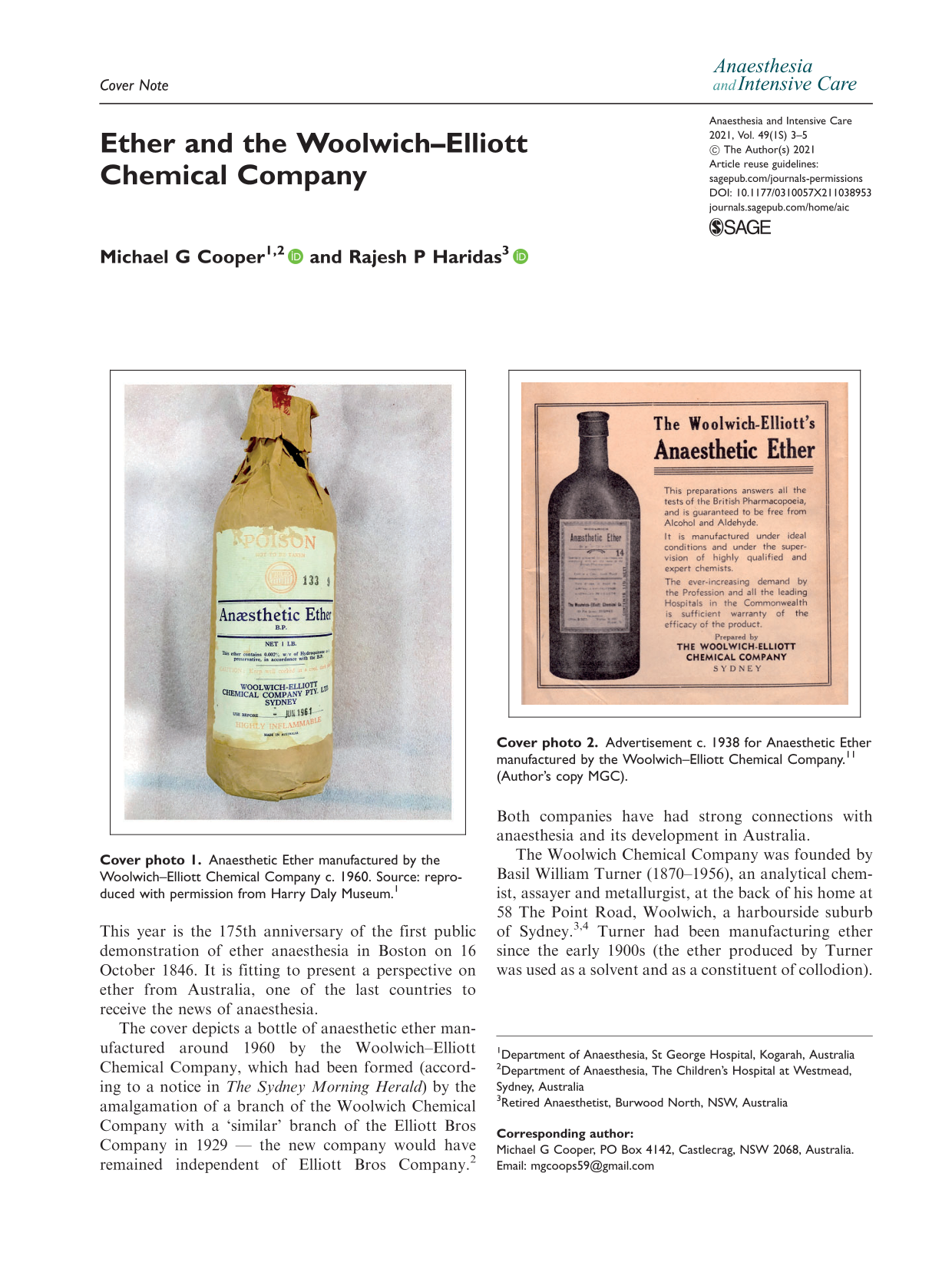
This year is the 175th anniversary of the first public demonstration of ether anaesthesia in Boston on 16 October 1846. It is fitting to present a perspective on ether from Australia, one of the last countries to receive the news of anaesthesia.
The cover depicts a bottle of anaesthetic ether manufactured around 1960 by the Woolwich–Elliott Chemical Company, which had been formed (according to a notice in The Sydney Morning Herald) by the amalgamation of a branch of the Woolwich Chemical Company with a ‘similar’ branch of the Elliott Bros Company in 1929 — the new company would have remained independent of Elliott Bros Company. 2 Both companies have had strong connections with anaesthesia and its development in Australia.
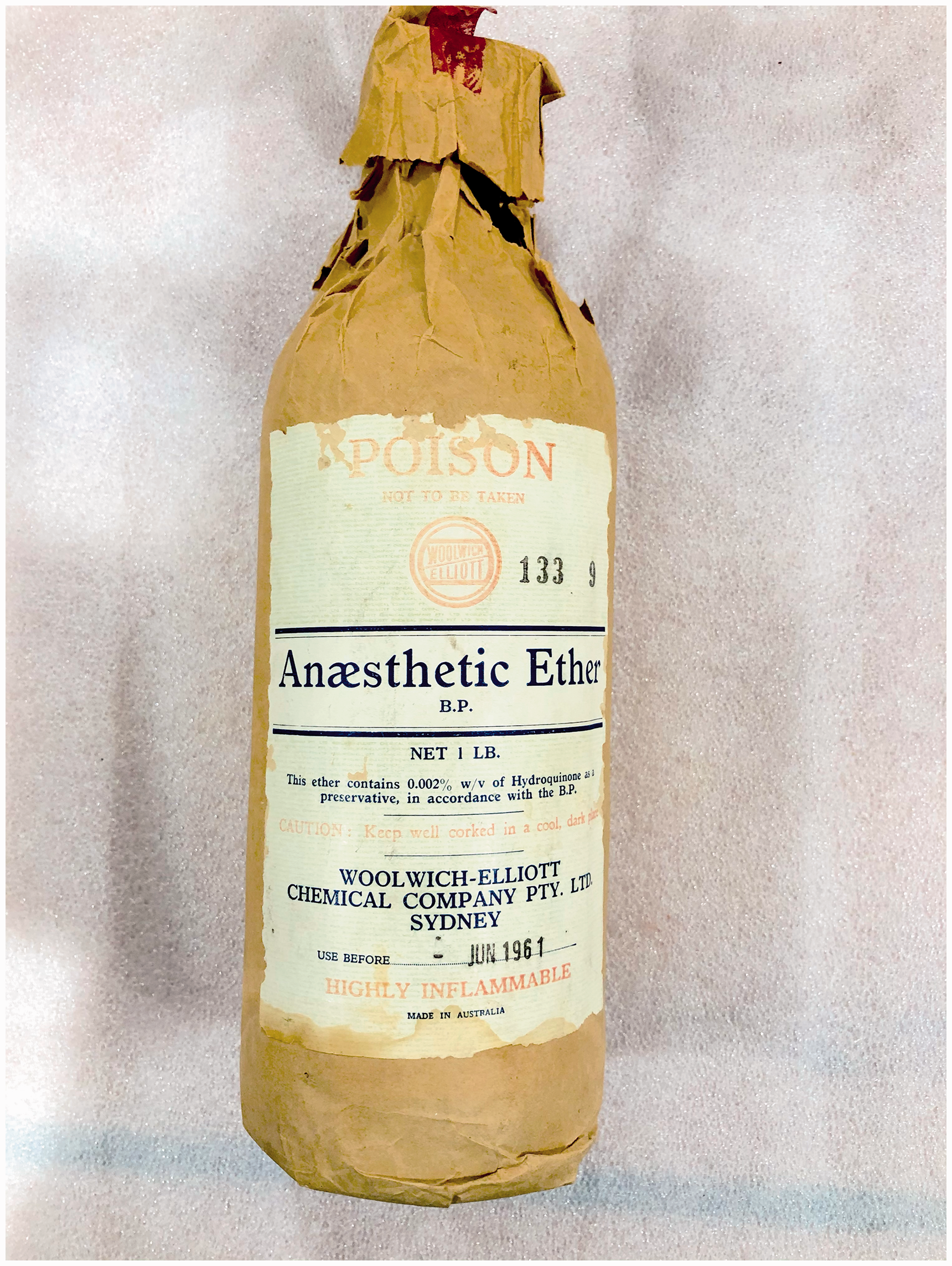
Anaesthetic Ether manufactured by the Woolwich–Elliott Chemical Company c. 1960. Source: reproduced with permission from Harry Daly Museum.1
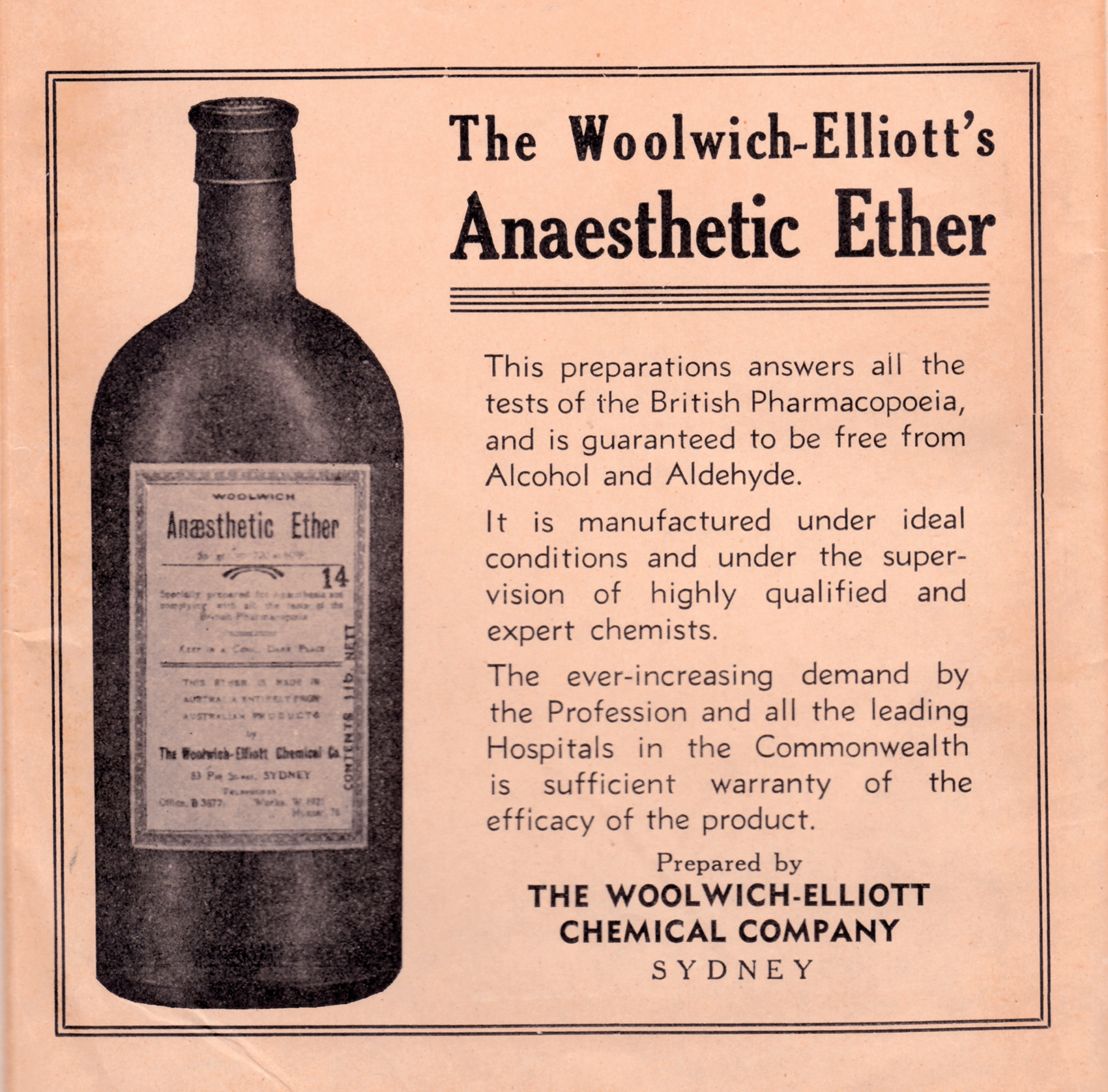
Advertisement c. 1938 for Anaesthetic Ether manufactured by the Woolwich–Elliott Chemical Company.11 (Author’s copy MGC).
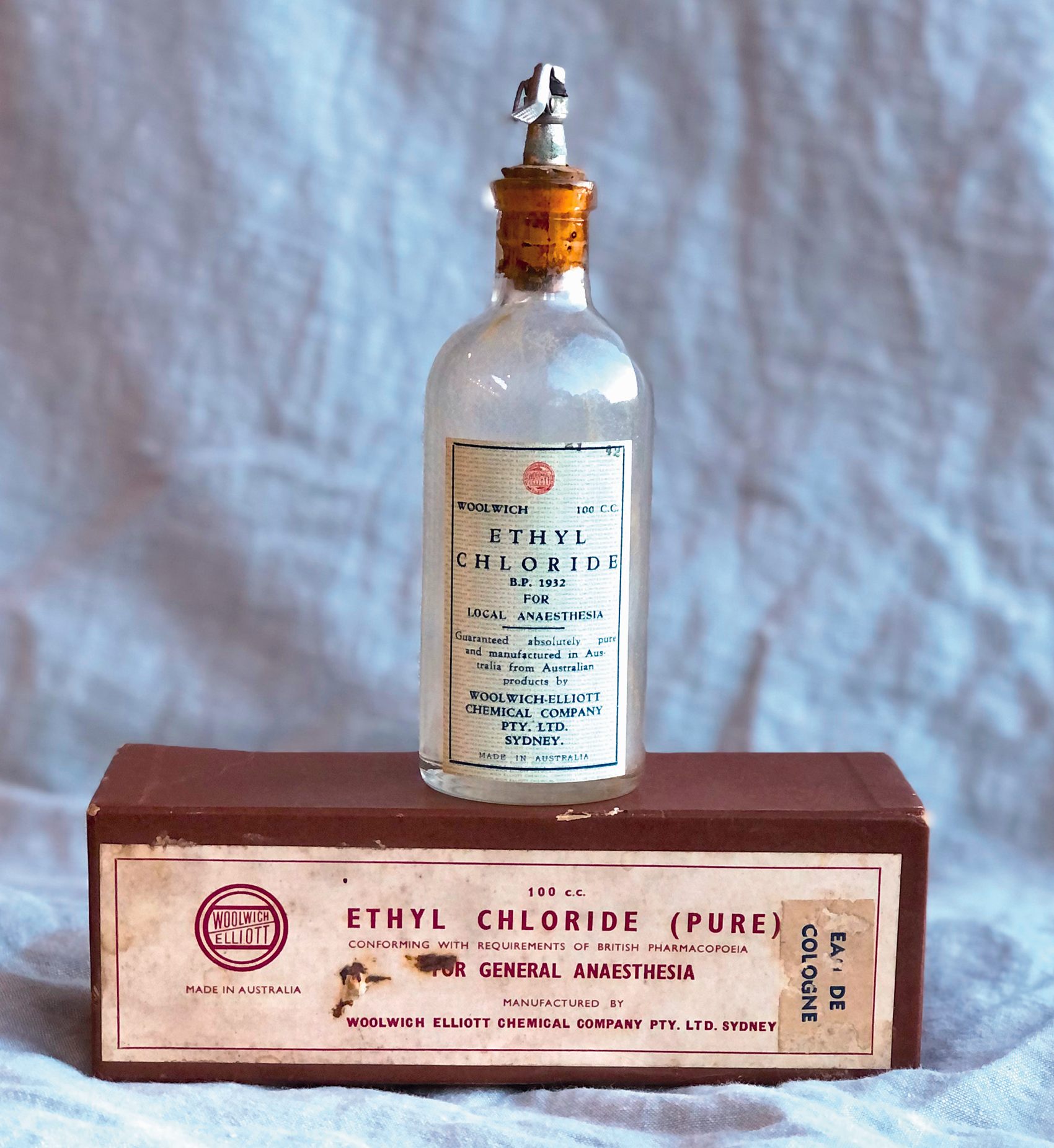
Ethyl chloride, manufactured by the Woolwich–Elliott Chemical Company, was used both topically for local anaesthesia and to induce general anaesthesia when eau de cologne was added. (Author’s object MGC).
The Woolwich Chemical Company was founded by Basil William Turner (1870–1956), an analytical chemist, assayer and metallurgist, at the back of his home at 58 The Point Road, Woolwich, a harbourside suburb of Sydney.3,4 Turner had been manufacturing ether since the early 1900s (the ether produced by Turner was used as a solvent and as a constituent of collodion).
In 1914, with the commencement of the First World War, the Australian government approached Turner to supply anaesthetic ether, which at that time was principally sourced from the German company Merck. 5 To expand the business, Turner entered into a partnership with James Alexander Schofield (d. 1934), then Assistant Professor of Chemistry at the University of Sydney. 6 In 1915, Turner and Schofield, who had been fellow students at the Royal School of Mines, London, became advisers to the Munitions Section of the Defence Department in Australia.3,4
Production at Turner’s home increased dramatically, even taking over the family tennis court. Needless to say, there was concern from the immediate neighbours about the local manufacturing in a residential area, and there were regular inspections from a Customs Officer and the Inspector of Public Nuisances, but the ether manufacture was condoned for the war effort. 3 The supplies of ethanol (from the Colonial Sugar Refining Company) and sulphuric acid (possibly from Elliott Bros) arrived on horse-drawn drays which then took the finished product to the Valentia Street Wharf in Woolwich.3,4 From there, the flammable cargo was taken by lighter (a flat-bottomed barge) to the city wharves, for shipping all around Australia, New Zealand and the military services overseas. Ether was always carried as deck cargo due to its high flammability.3,4 In 1932, the company responded in the Medical Journal of Australia to criticism of their prices for ether and ethyl chloride. 7
During the Second World War, the company’s manufacturing plant in Melbourne (in the suburb of Preston) was making most of the ether for Australia and was declared to be a protected undertaking under National Security Regulations tabled in the Senate of the Parliament of Australia on 10 February 1944. 8 This served to maintain a supply of quality ether for the remainder of the war. In 1960, the Woolwich–Elliott Chemical Company became a wholly owned subsidiary of Drug Houses of Australia Ltd, founded in 1929 as an amalgamation of the leading Australian pharmaceutical companies at that time. 9
The Elliott brothers, George, Frederick and James, originally from Scotland, had settled in Sydney in the 1840s. George, the eldest brother, was a medical practitioner in the suburb of Balmain. Frederick opened a pharmacy in the city. In 1859, the brothers purchased Youngman and Co., a wholesale chemist and druggist business in Pitt Street, Sydney. In 1865, they established the Balmain Chemical Works, later known as the Elliott Bros Chemical Works. 10 The Elliott Brothers Ltd catalogues of the late 1920s through to the 1940s were profusely illustrated with the anaesthesia apparatus of the day. 11 In the late 1930s, Elliott Bros was one of the first in Australia to make intravenous solutions in locally made glass bottles called Soluvac™.
‘Anaesthetic Ether’ contains 0.002% w/v hydroquinone, an antioxidant, in accordance with the British Pharmacopoeia standard. Hydroquinone inhibits the formation of potentially explosive peroxide degradation products.
Footnotes
Author Contribution(s)
Acknowledgements
Professor David Gibb, Dr Scott Fortey and Emeritus Professor Laurie Mather.
Declaration of conflicting interests
The author(s) declared no potential conflicts of interest with respect to the research, authorship, and/or publication of this article.
Funding
The author(s) received no financial support for the research, authorship, and/or publication of this article.
