




Abstract
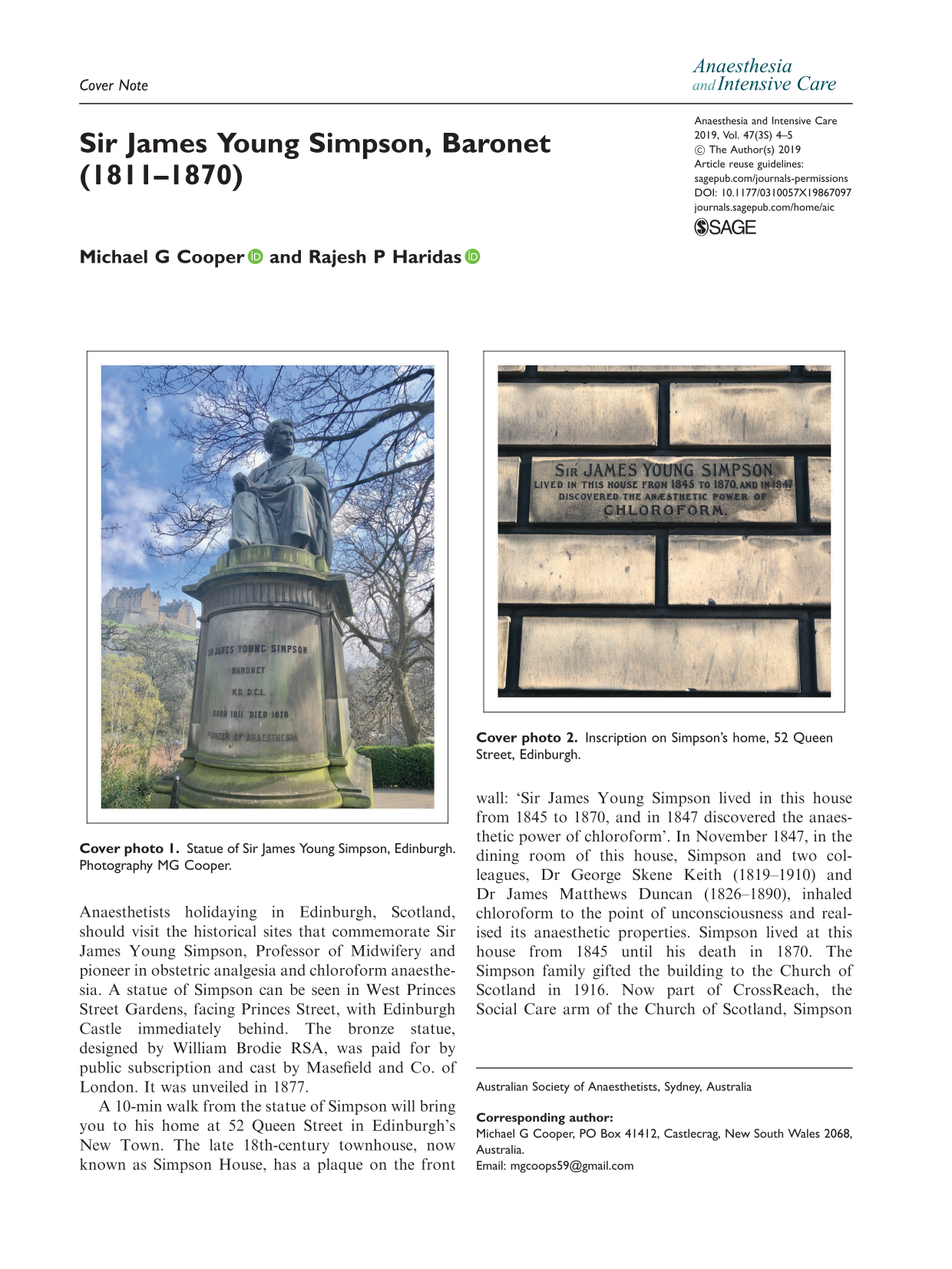
Anaesthetists holidaying in Edinburgh, Scotland, should visit the historical sites that commemorate Sir James Young Simpson, Professor of Midwifery and pioneer in obstetric analgesia and chloroform anaesthesia. A statue of Simpson can be seen in West Princes Street Gardens, facing Princes Street, with Edinburgh Castle immediately behind. The bronze statue, designed by William Brodie RSA, was paid for by public subscription and cast by Masefield and Co. of London. It was unveiled in 1877.

Statue of Sir James Young Simpson, Edinburgh. Photography MG Cooper.
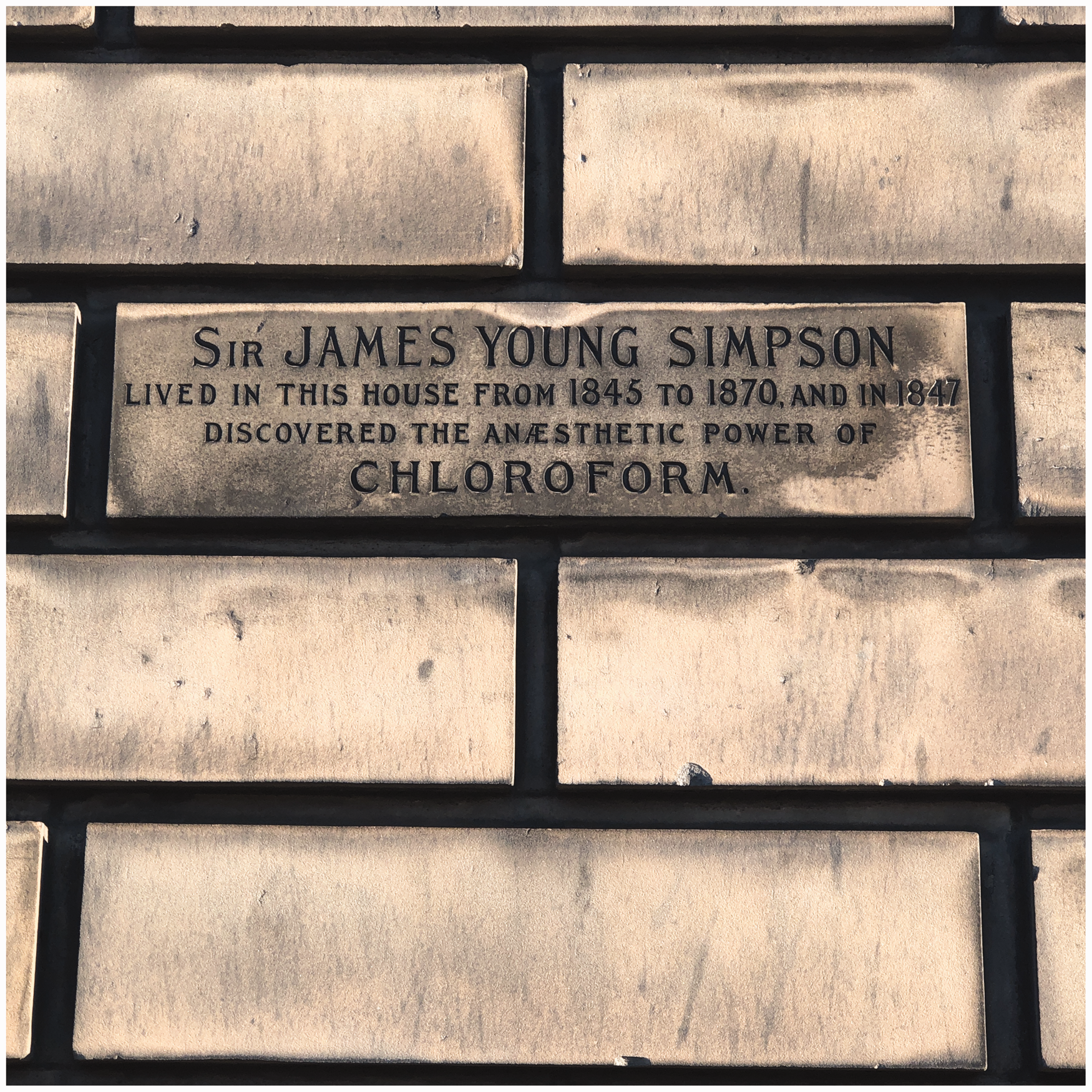
Inscription on Simpson's home, 52 Queen Street, Edinburgh.
A 10-min walk from the statue of Simpson will bring you to his home at 52 Queen Street in Edinburgh’s New Town. The late 18th-century townhouse, now known as Simpson House, has a plaque on the front wall: ‘Sir James Young Simpson lived in this house from 1845 to 1870, and in 1847 discovered the anaesthetic power of chloroform’. In November 1847, in the dining room of this house, Simpson and two colleagues, Dr George Skene Keith (1819–1910) and Dr James Matthews Duncan (1826–1890), inhaled chloroform to the point of unconsciousness and realised its anaesthetic properties. Simpson lived at this house from 1845 until his death in 1870. The Simpson family gifted the building to the Church of Scotland in 1916. Now part of CrossReach, the Social Care arm of the Church of Scotland, Simpson House provides counselling and support services to people affected by substance abuse.
Simpson was President of the Royal College of Physicians of Edinburgh from 1850 to 1852. The College holds a collection of Simpson's papers and a marble bust of Simpson. A memorial bust of Simpson is also in St Andrew's Chapel in Westminster Abbey, London.