




Abstract
This article is a photo essay that presents the emotions of union activists in Hong Kong on the day the Confederation of Trade Unions (CTU) decided to cease their operation. It is nested within a larger research project on the new unionism movement in Hong Kong triggered by the anti-extradition law protest. Reflecting on these emotions, this article explores the possibility of using photography to facilitate more discussions on unionisation and labour activism. Such reflection could offer much insight into the leftist scholarship on solidarity and the revival of unionism in the contemporary global landscape.
Leftist sociologists of work build on the insights of Karl Marx (1967 [1867]), who argued that the structural antagonism between capitalists and workers and the inherent exploitation in capitalist production leads workers to struggle within their workplaces for improved working conditions and wages. More than this, the consciousness formed from these experiences gives rise to broader forms of organisation and political struggle. This argument was further developed by ‘new leftists’ like E.P. Thompson, who highlighted the role of common work culture, social life and struggle experience in forming class consciousness. Thompson (1980: 10–11) argued that class identity is a ‘historical phenomenon’ influenced by ‘traditions, value systems, ideas, and institutional forms embodied in a real context of class struggle. The development of class theory, however, came to a bottleneck as the (socialist) labour movement diminished in Western capitalist economies in the late 20th century.
In this regard, Barbalet (1998) argued that inequalities both between and within classes can inspire collective action. He further suggested that the feeling of resentment is crucial in influencing the processes of class systems, as it motivates and drives actions. Also, individuals sharing the same emotional experiences due to a common socio-structural position may lead to collective identification and the articulation of shared grievances. According to Barbalet, class resentment is an emotional reaction to the unequal distribution of material resources and power, emerging when social groups feel that they are unjustly denied such resources. Researchers (e.g. Goodwin et al. 2001; Thompson 1971) have also shown how anger, indignation, fear, disgust, joy, and love are involved in politics and social protest, contributing to moral outrage, collective identities, or imaginings of a new and better society. Indeed, material interests and emotions should be seen as equally powerful catalysts for collective action. Unions recognise that emotion is a basis of collective identity, friendship, and trust. Together, these characteristics contribute to solidarity. Scholz (2008) sees political solidarity as an antagonistic stance against dominant power, collectively felt in terms of ‘feeling others’ suffering. This feeling leads to a commitment to others in a shared struggle and a willingness to expose oneself to risk to protect someone else.
In Hong Kong’s emotion-rich context, studies show that political activism in the city involves creating new symbolic meanings, interpretations of structural issues, and collective practices. All of this was seen in the social movement that arose during the 2019 protest against the anti-extradition law (e.g. Li & Whitworth 2021; Cheng et al. 2022). In March 2019, the Hong Kong government proposed a bill that would have allowed the extradition of citizens, including political dissidents, from Hong Kong to mainland China. Although ethnically Hong Kong is dominated by a Chinese population (91.6%) (Census and Statistics Department 2023), who are primarily immigrants from mainland China and their descendants, these people have developed a unique identity as a result of the long-lasting ideological and cultural differences between Hong Kong and China (Hong Kong Public Opinion Research Institute (HKPORI) 2023). In general, there is distrust in the Chinese legal system among the people of Hong Kong: They fear that once it is passed, this bill will be used to silence political dissidents, creating a chilling effect that consequentially restricts everyone’s rights to protests and their freedom of expression and association on topics that are sensitive to Beijing’s viewpoint (see also Liu 2021).
The government’s proposal soon sparked a wave of protests that mobilised up to 2 million people in the city (that is more than a quarter of the population) (see also Pringle 2021). While these demonstrations remain peaceful at large, Hong Kong police responded to the protesters with aggressive tactics that were being criticised as failing to comply with international standards (Hong Kong Free Press 2020). The movement then evolved into a wider call for change in Hong Kong’s election system and the protesters’ demands quickly swelled to reflect a wide range of such underlying grievances as an independent investigation of police brutality against protestors and journalists.
Similar to political activism in other countries, indignant citizens and their grievances contribute to and shape movement actions in Hong Kong, including unionisation and industrial actions. Recent labour activism in Hong Kong has been discussed in some academic writings (e.g. Chan et al. 2023; Chan & Lau 2023; Taylor & Chan 2022), but rarely through a photographic essay. However, we argue that a photo essay can offer some unique contributions to the understanding of unionism in Hong Kong: photographic images are a particularly rich source of information; they are ‘holistic, direct, personal and emotional’ (Grady 1991: 30). Researchers (see, for example, Kostopoulos 2013) studying political activism often point out how mainstream media present social movement through a particular reducing, stereotypical lens that limits the social imagination of these actions: while foreign media often features the chaotic scenes of street protest and the violence between the police and protesters, labour unions, however, have received far less attention, despite the fact that they formulate the backbone of mobilising the working-class in the city.
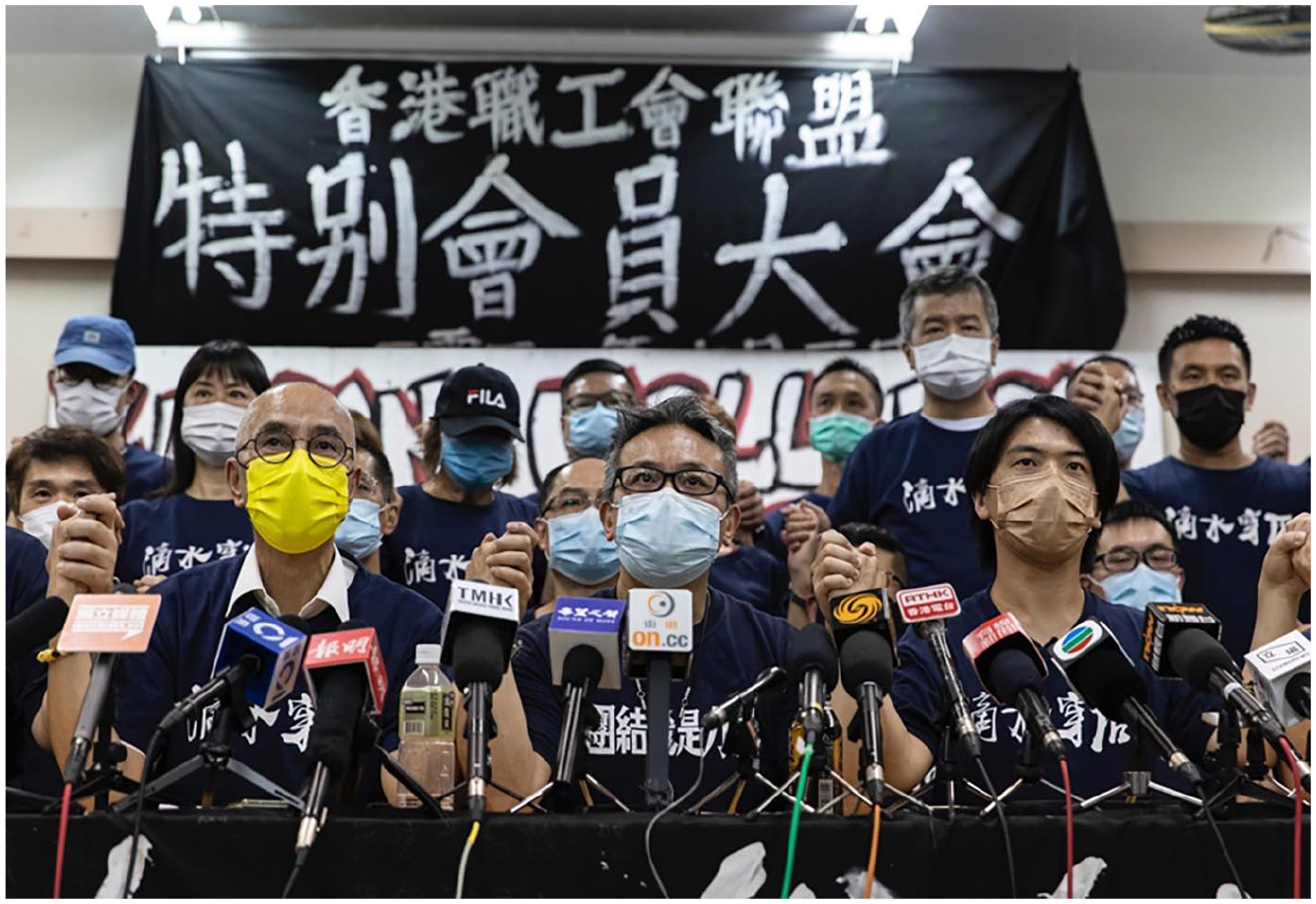
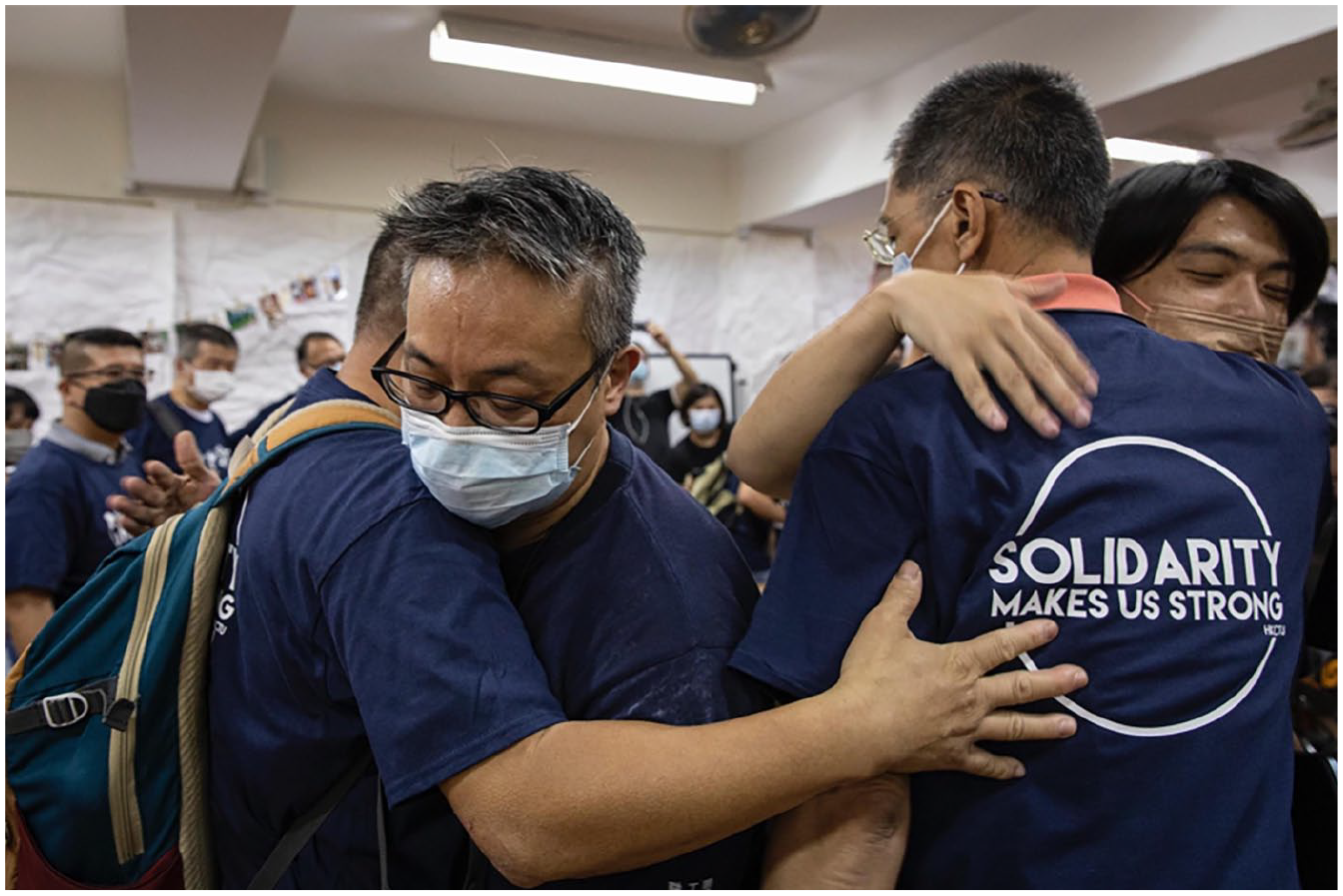
In this regard, this photo essay focuses on a facet of the social movement in Hong Kong that might seem static and peripheral, in comparison to the sense of violence in the streets. Through these images, we offer a glimpse into the state of mind of these union activists in Hong Kong. Despite the facemasks, which were compulsory at the time due to the COVID pandemic, these photographs show the emotions of CTU members and how they retain their solidarity and support each other. This essay hopes to turn the attention away from the singular, dominant discourse of the 2019 Hong Kong protests and enable readers to re-visit the movement from a working-class perspective.
Founded in 1990 as an independent labour confederation, The Hong Kong Confederation of Trade Unions (CTU) was Hong Kong’s largest pro-democracy union coalition, representing 145,000 members from almost 100 affiliated organisations spanning the economy. In October 2021, members of the CTU gathered in their headquarters for an extraordinary meeting and eventually voted to break up. During the meeting, CTU chairperson Joe Wong mentioned that some key members of the CTU had received messages making them feel they could face threats to their physical safety if they continued operations, as reported by the Hong Kong Free Press (2022).
This photo essay presents the emotions of union activists in Hong Kong on the day the CTU decided to cease their operation. It is nested within a larger research project on the new unionism movement in Hong Kong triggered by the anti-extradition law protest. The first author is a researcher interested in union politics in Hong Kong. He met the second author, a photojournalist who took the photos while covering the events of that fateful day. He captured over 100 images during and after the press conference, including a tour led by CTU executive committee members Wong and Tang. They showed journalists the CTU headquarters, including artefacts showcasing the organisation’s history. All photos were taken from the event attendees’ perspective, and they were the natural interaction between the event participants; none were staged. After the event, the two authors discussed co-producing some academic and journalistic writings.
While neither author has ever been a member of the CTU, both are convinced that this event deserves more scholarly and media attention. Together, they selected the following images, and the first author drafted the text. These photos were selected, grouped, and arranged in an order that aims to bring readers to the event as eyewitnesses. We provide minimal captions to the photos and invite readers to immerse themselves in the range of emotions in this visual exploration. In particular, reflecting on these emotions, we would like to explore the possibility of using photography to facilitate more discussions on and to develop the basis for international solidarity in unionisation and labour activism. Such reflection could offer much insight into the leftist scholarship on solidarity and the revival of unionism in the contemporary global landscape.
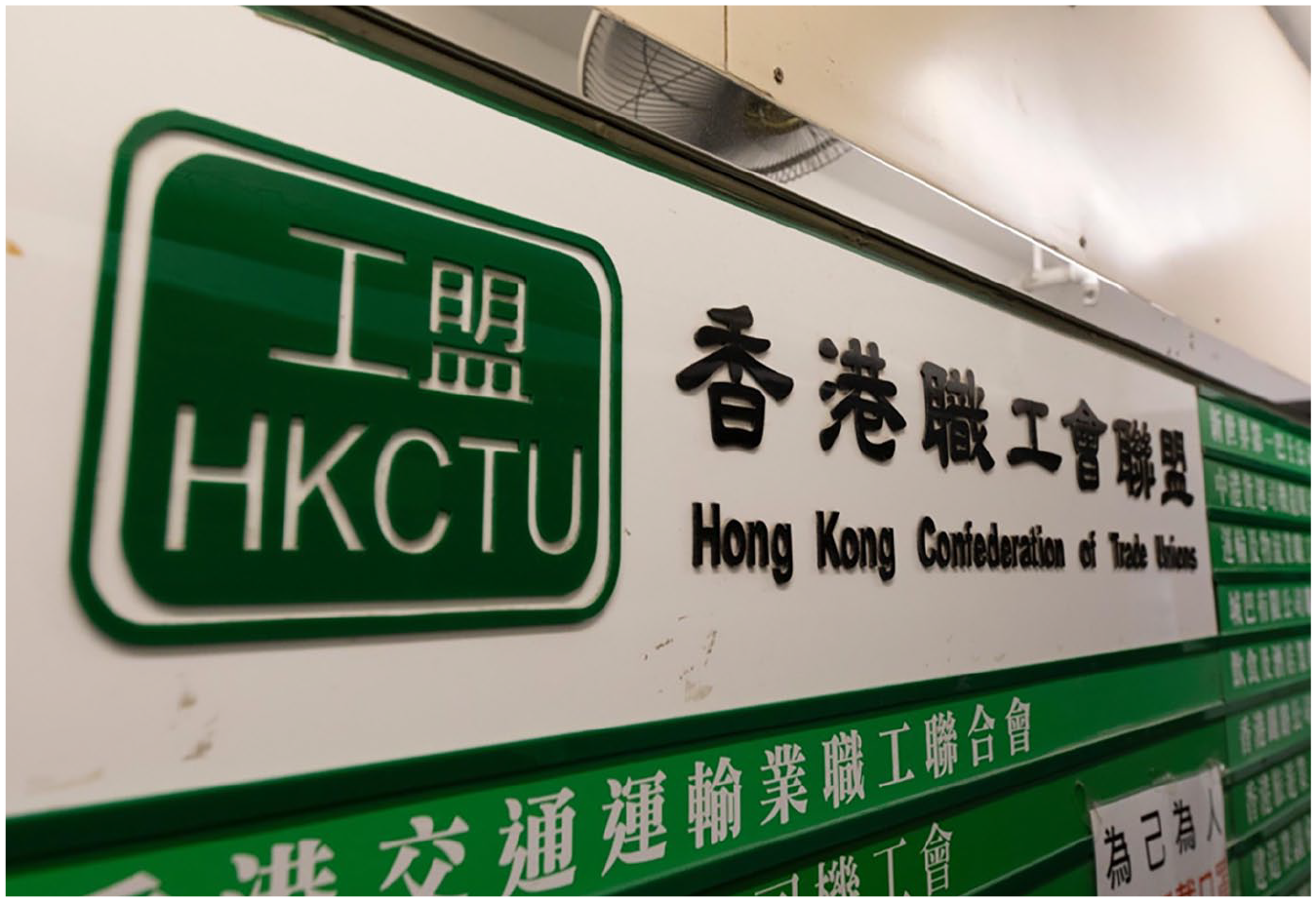
A picture of its directory at the headquarters in Yau Ma Tei, Kowloon, Hong Kong.
A press conference was held after the extraordinary meeting to announce the union’s immediate cessation of operations.
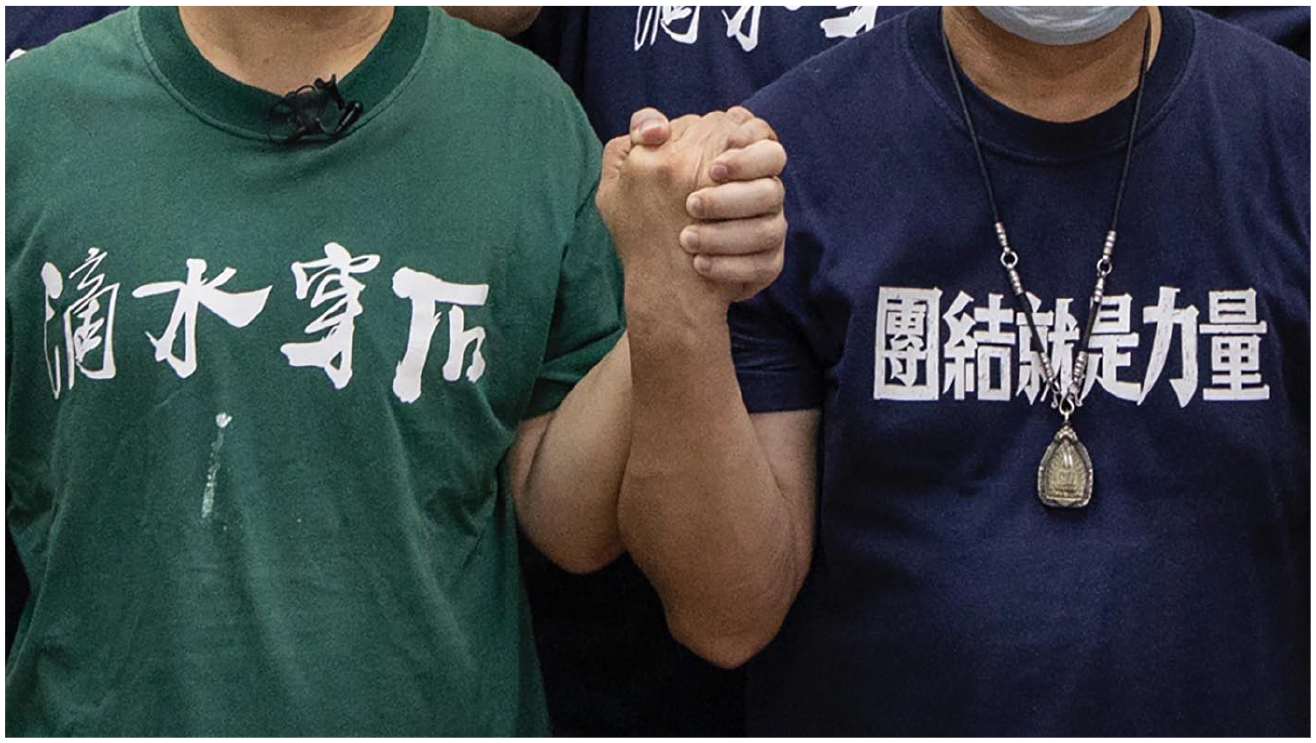
Left: ‘Constant dripping of water wears away the stone’ is the Chinese equivalent of the well-known phrase, ‘little strokes fell great oaks’. Right: ‘Solidarity makes us strong’.
CTU members hug and wish each other the best in the future.
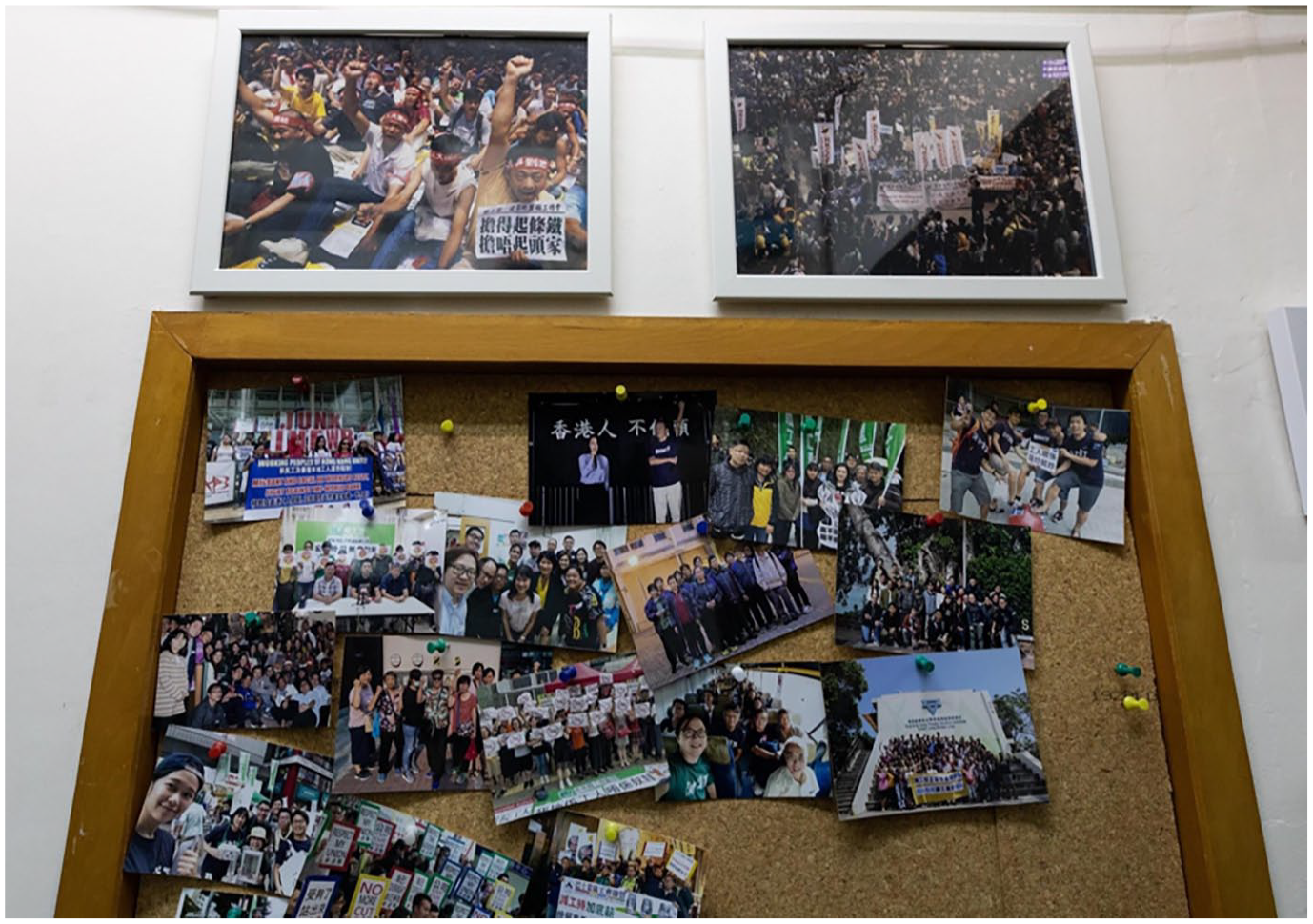
After the press conference, Leo Tang led the press to the history corner in CTU’s office.
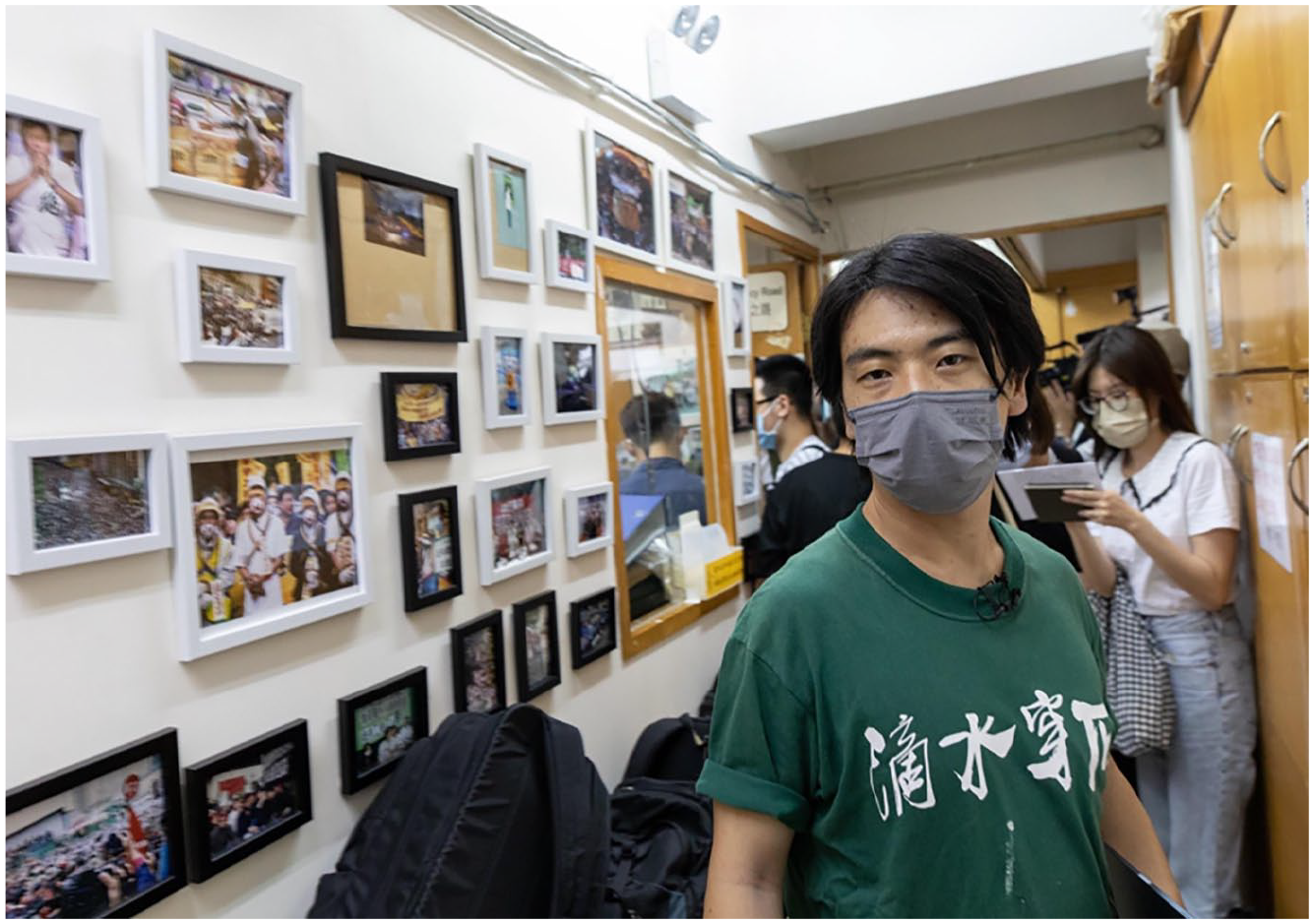
Photographs of past protests and demonstrations.
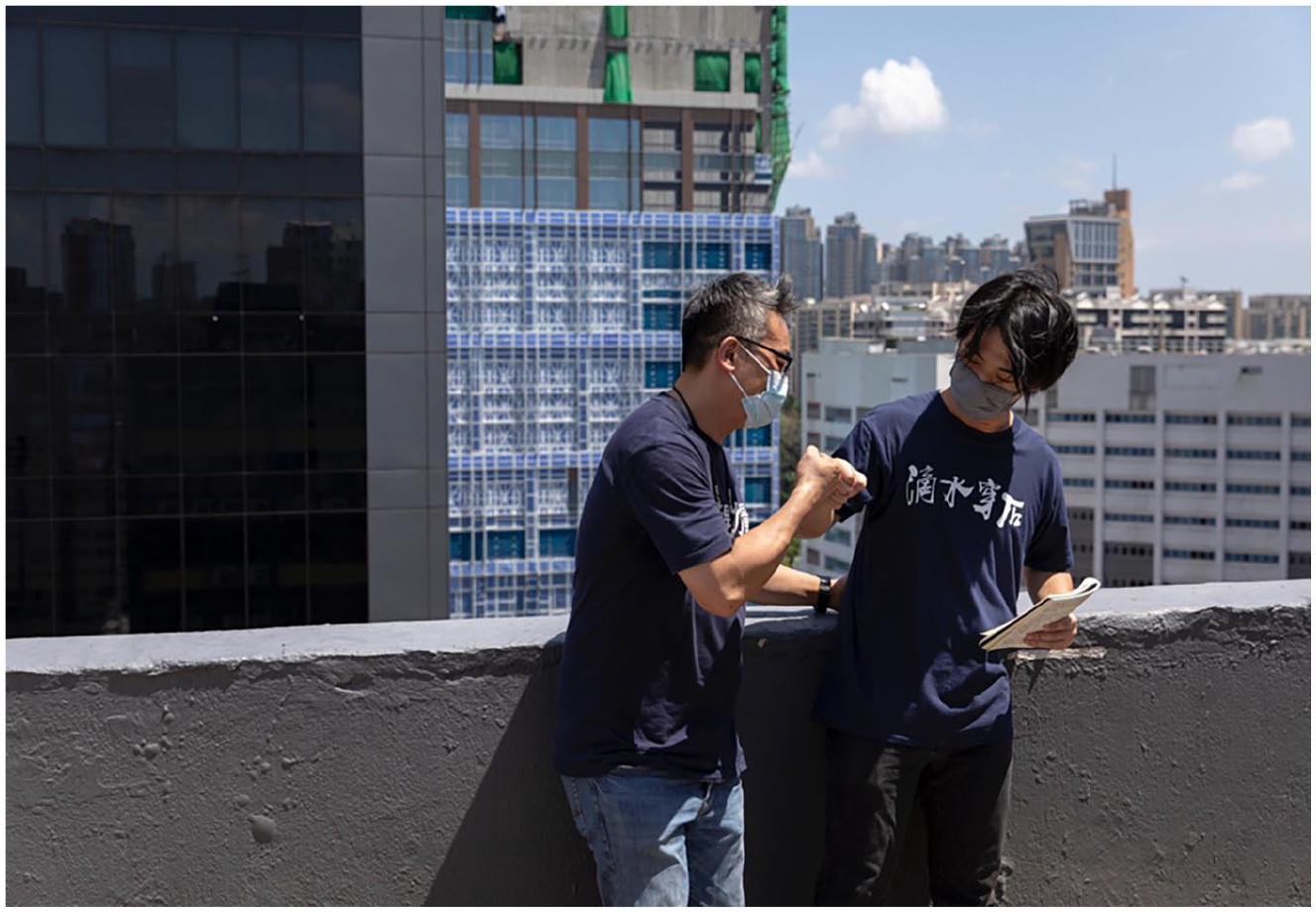
This picture was taken when Joe Wong (left) and Leo Tang (right) were auditing and removing CTU’s protest props on the roof.
To view more photographs of the event in higher resolution, please go to https://drive.google.com/drive/folders/1TTCUazwf8bqHIguZWuB2eWUxy7sOoIUu
Postscript
Although CTU members voted to cease operations in October 2021, Joe Wong and Leo Tang remain hopeful that they will return to the frontline of labour service. However, in 2022, Tang was arrested by the National Security Department of the Hong Kong Police Force and accused of violating the Societies Ordinance by failing to respond to a series of questions issued by the National Security Department (see The Standard 2023 for details). In 2023, after the COVID social district restrictions were lifted, Wong applied for police permission to hold a rally on Labour Day. He was then ‘disappeared’ from his home and was ‘unreachable’ for 4 hours. According to the media, he had an ‘emotional meltdown’ during those 4 hours and withdrew the application (see Hong Kong Free Press 2023 for details). At present, the future of labour activism in Hong Kong remains challenging and deserves continuous attention.
Footnotes
Acknowledgements
The authors thank the journal editor and people who gave their feedback on an earlier version of this article.
Declaration of conflicting interests
The author(s) declared no potential conflicts of interest with respect to the research, authorship, and/or publication of this article.
Funding
The author(s) received no financial support for the research, authorship, and/or publication of this article.
