




Abstract
This study provides a comparative analysis of offshore and onshore wind turbines, focusing on efficiency, design, environmental impacts, and regulatory frameworks. Offshore turbines, benefiting from higher, more consistent wind speeds (∼9 m/s at hub height), achieve capacity factors exceeding 50%, with individual outputs reaching up to 15 MW. Onshore systems operate at lower wind speeds (∼5–8 m/s), achieving capacity factors of 30–40% and outputs of 2–4 MW. Offshore systems, exemplified by Hywind Scotland’s 56% capacity factor, offer scalability but involve higher levelized cost of energy (LCOE) of $80/MWh and potential marine ecosystem impacts. Onshore turbines, more economically viable ($50/MWh LCOE), face land-use conflicts, and biodiversity risks. The study underscores the need for site-specific solutions, balancing energy efficiency, sustainability, and cost-effectiveness, with technological advancements like floating foundations and modular designs enhancing future wind energy scalability. These findings guide investments in clean energy systems tailored to geographic and economic contexts.
Keywords
Introduction
Wind energy is a cornerstone of sustainable energy transitions, contributing significantly to reducing carbon emissions. Wind power stands out as a highly developed and economically viable renewable energy technology, showcasing its ability to play a crucial role in enhancing energy security and advancing decarbonization initiatives. The implementation of wind turbines requires careful consideration of two main systems: onshore and offshore wind turbines. Although both technologies seek to utilize wind energy to produce electricity, they exhibit significant differences in terms of efficiency, design, environmental impacts, and regulatory frameworks. The identified distinctions underscore the necessity of conducting a thorough comparative analysis to enhance the optimization of wind energy investments. Onshore wind turbines are prevalent owing to their well-established infrastructure, economic viability, and ease of access. They are typically installed in rural regions or expansive areas characterized by moderate to high wind velocities, which facilitate relatively uncomplicated installation and maintenance procedures. Technological advancements have significantly improved the efficiency and scalability of onshore turbines, making them a feasible option for many regions. Nonetheless, onshore wind energy faces several challenges. These include restricted land availability, public resistance due to concerns over visual and acoustic impacts, and variability of wind resources influenced by geographical features and obstructions like buildings and trees. These factors introduce complexities into site selection and project feasibility, especially in densely populated areas (Global Wind Energy Council, 2023; Musial and Ram, 2010). Offshore wind turbines benefit from stronger, more consistent wind speeds over open water, resulting in higher energy output per turbine. They also allow for large-scale development without the land-use limitations faced by onshore systems. However, these advantages come with considerable trade-offs. Offshore systems must endure harsh marine environments, requiring durable and often expensive materials and designs to resist saltwater corrosion, wave forces, and extreme weather events. The logistical difficulties of accessing offshore sites make maintenance and repairs more challenging and costly. Despite these challenges, the scalability and efficiency of offshore turbines make them a compelling option, particularly for regions with limited land availability or high-energy demands (International Renewable Energy Agency, 2023; Zhou et al., 2024).
The environmental impacts associated with both onshore and offshore turbines represent a significant area of consideration. Onshore systems have the potential to disrupt local ecosystems, threaten avian and bat populations, and lead to habitat fragmentation. In the meantime, offshore turbines have the potential to influence marine ecosystems, possibly leading to changes in habitats, migration patterns, and water quality. Addressing these impacts necessitates a thorough environmental assessment and the implementation of sustainable design practices. Moreover, regulatory policies play a crucial role in shaping the implementation of wind energy systems. Onshore wind projects are required to navigate local zoning laws, engage with community processes, and comply with land-use regulations. Offshore developments, conversely, must navigate intricate maritime laws, adhere to international treaties, and comply with rigorous environmental protections (Msigwa, 2023; U.S Department of Energy, 2023).
As of 2024, the global installed capacity of wind energy exceeds 1000 GW, with onshore wind accounting for approximately 94% and offshore comprising the remaining 6% (Global Wind Energy Council, 2023). China, the United States, and Germany lead onshore deployment, while the United Kingdom and China are global leaders in offshore wind. Offshore arrays typically range from 50 MW to over 1 GW, with projects like Hornsea 2 in the UK reaching 1.3 GW from over 150 turbines (Ørsted, 2023). Onshore farms are more variable, often comprising 10 to 100 turbines per site, depending on land availability and local grid capacity. Projections from the Global Wind Energy Council (GWEC) estimate offshore capacity could exceed 380 GW by 2035, driven by advances in floating platforms and favorable coastal policies (International Renewable Energy Agency, 2022). Including these deployment metrics is crucial for understanding the technological, environmental, and economic contexts in which wind turbine systems operate.
This study offers a novel contribution by systematically integrating simulation-based performance modeling with a comparative review of offshore and onshore wind turbine systems. Previous studies often examine these systems separately or focus only on cost or capacity. In contrast, this paper integrates Simulink-generated electrical output with deployment data, design parameters, and environmental impact assessments. This integrated approach enables a more holistic and practical framework for evaluating deployment decisions, addressing a documented gap in existing literature that often overlooks system-level operational performance in site-specific contexts.
Literature review
In order to solve climate change, the switch to renewable energy is vital; wind energy has become a top choice. Regarding efficiency, design, environmental impact, and regulatory laws, both onshore and offshore wind energy systems have special benefits and difficulties. The results of the current body of research are synthesized in this review to offer a complete study of these systems. Evaluating wind energy systems mostly depends on efficiency. Stronger and more consistent wind speeds over open waters allow offshore wind turbines to often show more energy output than onshore turbines. Compared to 35–40% for onshore systems, Musial and Ram (2010) found that offshore turbines could reach capacity factors surpassing 50%. Less turbulence and less obstacles in marine areas help to create this efficiency advantage.
Offshore systems have higher running and maintenance expenses, nevertheless. Often offset by their higher energy output, offshore wind farms call for specialized vessels and trained workers for installation and servicing, according to Zhou et al. (2024). In places with enough wind resources, onshore wind systems—which gain from simpler accessibility and reduced logistical costs—are more affordable. For developers, the harmony between performance and economy of cost still is a major factor. The maintenance of offshore wind turbines poses unique challenges due to the harsh marine environment and limited accessibility. Xie et al. (2019) emphasized an opportunistic maintenance strategy that evaluates accessibility to optimize maintenance schedules and reduce downtime. Offshore turbines experience higher wear and tear because of saltwater corrosion, strong winds, and wave action. This study proposes a framework combining predictive maintenance with accessibility windows to enhance operational reliability. In contrast, onshore turbines, while easier to access, rely more on traditional maintenance strategies and are less affected by environmental constraints. The selection of optimal locations and turbine parameters is critical for maximizing the efficiency of offshore wind farms. Bonou et al. (2016) highlighted that offshore sites with average wind speeds exceeding 9 m/s at hub height provide significant energy output, with individual turbines capable of generating up to 15 MW. By leveraging advanced simulation techniques, the authors propose methodologies for selecting turbine capacity, rotor diameter, and installation depth. Onshore turbines, with lower wind speeds (∼5–8 m/s), require careful terrain analysis to mitigate turbulence and optimize energy capture. This distinction underlines the scalability advantage of offshore systems compared to the logistical simplicity of onshore installations. The historical review by Kumar et al. (2018) traces the evolution of wind power from its initial application in windmills to modern large-scale wind farms. The study outlines technological advancements that have driven improvements in turbine efficiency, capacity, and durability for both offshore and onshore systems. Offshore wind power is a relatively recent development, enabled by advancements such as floating foundations and large rotor diameters. Onshore systems, with a longer operational history, have undergone significant refinements in modular design and noise reduction technologies. This historical perspective emphasizes the complementary roles of offshore and onshore wind power in achieving energy diversification and decarbonization. Modern onshore turbines use modular designs, according to Msigwa (2023), to fit various geographical settings. Furthermore, influenced by the visual and aural effects of turbines are ideas like noise reduction technologies and simplified designs meant to decrease public opposition.
One important focus of research is the environmental consequences of wind energy systems. As Bhutia et al. (2024) demonstrate in their comparative analysis of Alberta’s energy systems, renewable sources like wind power can reduce carbon footprints by up to 98.5% compared to fossil fuels. This underscores wind power’s critical role in achieving decarbonization and energy sustainability. Offshore wind turbines upsetting marine ecosystems may impact all fish migration, bottom habitats, and marine biodiversity. Before building offshore wind farms, Watson et al. (2024) underlined the need of doing extensive environmental impact analyses. Relocating turbines to less sensitive sites and using monitoring systems help to minimize ecological disturbances. Environmental issues confronting onshore turbines also mostly include habitat fragmentation and avian mortality. A study on Lakshadweep Island demonstrated that a hybrid diesel-wind-solar system could deliver electricity at a levelized cost of $0.432/kWh, while simultaneously reducing CO2 emissions and ensuring reliable energy supply for a remote, oil-dependent region (Mahtab et al., 2025).
Musial and Ram (2010) underlined the need of strategic location and the application of sophisticated radar systems to lower collisions with bats and birds. Public opposition to onshore turbine environmental effects has underlined even more the need for community involvement and environmentally friendly design. The execution of wind energy systems depends much on regulatory policies. Complicating regulatory settings including maritime laws, international treaties, and environmental protection rules surround offshore wind projects. The U.S. Department of Energy (DOE) (2023) observed that allowing offshore projects sometimes delays implementation by involving many parties and drawn-out approval procedures. While subject to less legal restrictions, onshore projects must negotiate local zoning rules, land purchase concerns, and community opposition. According to Wiser et al. (2011), the effective implementation of onshore wind farms depends on streamlined regulatory procedures and proactive community involvement. Achieving sustainable development requires clear and supportive policies in both areas.
Comparative studies of onshore and offshore systems can show cost as a deciding element. Because they require less installation and maintenance, onshore wind systems are usually more reasonably priced. Though their energy potential is higher, offshore wind farms incur large capital and running costs. Although technological developments have been lowering the LCOE for offshore systems, research by Tumse et al. (2024) showed that it stays higher than that of onshore systems. Still, offshore wind is progressively viewed as a good choice for areas with limited land access or strong energy use. Tusar and Sarker (2023) noted that offshore systems appeal for highly populated coastal areas since they provide scalability and lower land-use conflicts. These trade-offs ensure that wind energy investments complement local requirements and resource availability. Adoption of wind energy depends much on its social aspects. Because of their visual and aural effects as well as perceived environmental hazards, onshore wind farms may run against resistance from nearby towns. Early participation of stakeholders in the planning process might help to solve issues and raise public acceptance, stressed by Wiser et al. (2011). Although less aesthetically disturbing, offshore wind farms may run up opposition from other maritime users including fishing villages. Watson et al. (2024) observed that include these participants in the decision-making process helps to lower disagreements and promote cooperative solutions. Both systems gain from open communication and community participation. The future direction of wind energy is still shaped by technological advancement. Development in floating wind turbines and autonomous maintenance technology is increasing viability and lowering costs for offshore systems. Particularly as floating technology spreads, International Renewable Energy Agency (2022) underlined the possibility of offshore wind to be crucial in reaching world renewable energy ambitions.
For onshore systems, developments in noise reduction technologies and turbine efficiency are solving long-standing problems. Combining wind and solar energy systems is one of the hybrid solutions that Musial and Ram (2010) observed would improve energy dependability and lower environmental impact. These developments suggest a time when ecological, socially acceptable, and more efficient wind energy systems will rule. The literature emphasizes several dimensions of wind energy deployment, including efficiency, design, environmental issues, regulatory systems, and social acceptance. Although offshore wind systems have more energy output and scalability, their costs and environmental impact increase. While they have less efficiency and land-use problems, onshore wind systems are more affordable and easily available. Maximizing wind energy investments and moving the world renewable energy targets forward depend on a balanced assessment of these elements.
Recent advancements in wind turbine technology emphasize the importance of wake development under varying atmospheric conditions. Adjiri and Nedjari (2024) conducted an in-depth study on horizontal axis wind turbines (HAWT) operating under thermal stratification. Their findings demonstrate how thermal stratification impacts wake dynamics and, consequently, turbine efficiency. This understanding is crucial for optimizing turbine placement, particularly in large wind farms where wake interference can significantly reduce energy output. Design modifications also play a critical role in improving wind turbine performance. Barnard et al. (2024) introduced a novel approach involving guide rings to enhance the aerodynamic efficiency of HAWTs. Their research highlights how this design not only increases energy capture efficiency but also reduces structural loading, potentially extending turbine lifespan. Such innovations underscore the evolving nature of turbine design aimed at maximizing energy yield while minimizing operational costs. Incorporating hybrid solutions in renewable energy systems is another emerging trend. Tummala and Pendyala (2024) proposed mounting solar panels on wind turbines to create a hybrid power generation system. This integration leverages the advantages of wind and solar resources, particularly in regions with complementary weather patterns. Their study shows that this approach can improve overall power generation capacity and enhance grid stability, marking a step forward in renewable energy solutions.
This paper offers a comprehensive comparative analysis of offshore and onshore wind turbines, focusing on key factors such as efficiency, design considerations, environmental impacts, regulatory frameworks, and economic feasibility. By integrating quantitative findings with qualitative insights, the study provides a well-rounded perspective that bridges a significant gap in existing literature. Unlike previous studies that often examine these systems in isolation, this work evaluates the trade-offs and synergies between them, offering practical insights for optimizing wind energy investments. Key contributions include the identification of offshore systems’ advantages, such as capacity factors exceeding 50% and the ability to generate up to 15 MW per turbine. This study also addresses challenges, including higher installation costs and environmental risks to marine ecosystems. Similarly, the paper highlights onshore turbines’ economic viability, with a lower LCOE at $50/MWh, while addressing challenges like land-use conflicts and biodiversity impacts. Through detailed analysis, the study proposes site-specific strategies to maximize wind energy efficiency, balance environmental trade-offs, and navigate complex regulatory landscapes. It also introduces novel findings by integrating capacity and energy output metrics with environmental and policy considerations, helping policymakers, engineers, and developers make informed decisions. Ultimately, the paper provides a valuable framework for advancing the adoption of wind energy systems, ensuring a cleaner and more sustainable energy future.
The data presented in this study are derived from a combination of publicly available global datasets and published literature. Wind speed profiles and power densities were generalized from regions including the North Sea (offshore Europe), the U.S. Great Plains (onshore North America), and coastal China. These sites represent typical high-potential wind zones across major markets. Cost-related figures such as LCOE values ($80/MWh for offshore and $50/MWh for onshore) are based on aggregated findings from the International Renewable Energy Agency (IRENA) (2022) and studies conducted in Europe, North America, and East Asia. Capacity factors referenced for offshore turbines (exceeding 50%) are exemplified by Hywind Scotland and Hornsea 2, while onshore values (30–40%) reflect operational data from U.S. and German wind farms. This geographic diversity enhances the representativeness and generalizability of the findings (Global Wind Energy Council, 2023; International Renewable Energy Agency, 2022; Ørsted, 2023; U.S Department of Energy, 2023).
System architecture and operational context
This study utilizes a simulation-based framework to perform a comparative analysis of offshore and onshore wind turbines under realistic operational conditions. Wind speed and power density data were compiled from multiple publicly available global datasets and extant literature, focusing on representative high-potential regions such as the North Sea for offshore and the U.S. Great Plains for onshore installations. These datasets provide detailed time-series wind profiles at multiple heights (10 m, 40 m, and 80 m), capturing the spatial and temporal variability inherent in wind resources. The environmental data serve as critical inputs to a MATLAB/Simulink simulation environment developed to model the electrical performance of typical wind turbines. The model incorporates turbine parameters characteristic of offshore systems (rated power 10–15 MW, rotor diameter approximately 150 m, hub height 80–110 m) and onshore systems (rated power 3–5 MW, rotor diameter approximately 100 m, hub height 80–110 m). External operational parameters, including a fixed pitch angle of 35.5° and generator rotational speed, were applied as control inputs to simulate aerodynamic blade pitch adjustments and generator behavior across varying wind speeds. Aerodynamic torque is computed within the Simulink model based on wind velocity inputs and turbine geometry, with mechanical power subsequently converted into electrical outputs via simplified generator dynamics. Voltage, current, and power are calculated considering load characteristics and electromagnetic relations encapsulated in the simulation blocks. Additionally, the model enforces realistic operational limits by incorporating turbine cut-in and cut-out wind speeds at 3 m/s and 25 m/s, respectively. This integrated simulation approach facilitates a dynamic and comprehensive evaluation of wind turbine electrical performance over a broad spectrum of wind conditions, effectively linking environmental variability with mechanical and electrical system responses. The methodology thus provides a robust platform for contrasting the efficiencies, output stability, and control responsiveness of offshore and onshore wind turbines, aligning with the study’s comparative objectives.
Figure 1 provides a detailed schematic representation of a wind turbine within a hybrid renewable energy system, emphasizing its critical components and their specific roles. The rotor blades often aerodynamically optimized and ranging in length from 55 to 65 m for onshore turbines to up to 107 m for offshore models like the Haliade-X, capture kinetic energy from the wind and convert it into mechanical power. This energy is transferred to the nacelle, which houses essential components such as the generator, gearbox, and control systems. Offshore turbines frequently utilize direct-drive generators to reduce maintenance in challenging environments, while onshore turbines may use geared systems for cost efficiency. The tower elevates the nacelle to heights that optimize energy capture, with offshore towers often reaching up to 200 m and onshore towers typically between 80 and 120 m, depending on site-specific wind conditions. The foundation, which provides structural stability, differs significantly between offshore and onshore turbines. Offshore foundations may include monopiles, jacket structures, or floating platforms designed to withstand saltwater corrosion, strong currents, and wave forces, whereas onshore foundations are commonly reinforced concrete adapted to local soil and terrain. This system is integrated within a hybrid configuration that combines wind turbines with solar photovoltaic arrays and battery energy storage. This setup ensures continuous power availability and mitigating the intermittency of wind and solar resources. The diagram also highlights the grid connection infrastructure, which includes undersea cables for offshore systems and overhead or underground cabling for onshore turbines, enabling efficient energy distribution. Overall, this figure emphasizes the technical sophistication and adaptability of wind turbines in hybrid systems, showcasing their capacity to enhance energy reliability and scalability in diverse operational environments. Schematic diagram of a wind turbine integrated into a hybrid renewable energy system.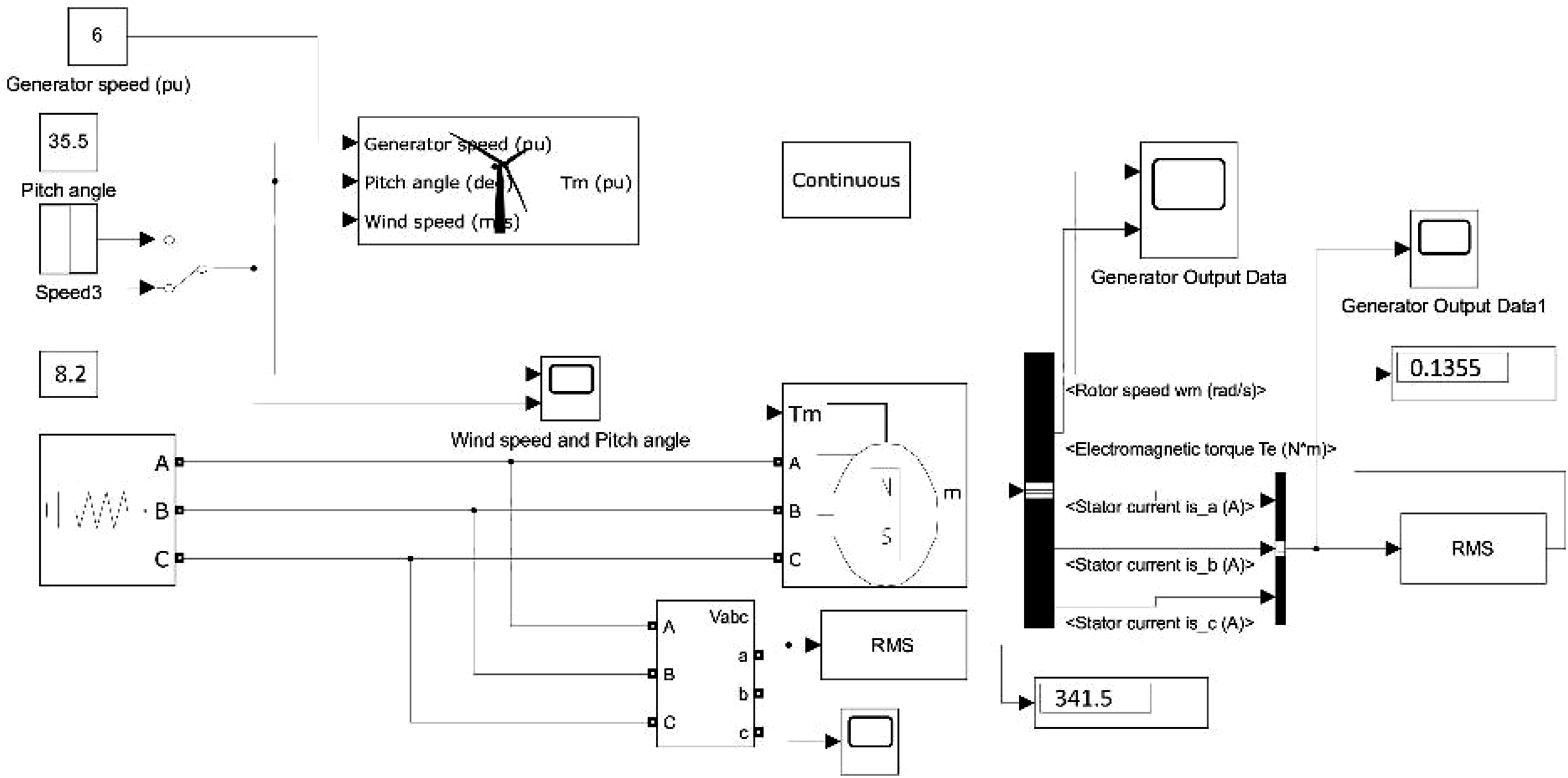
Comparative analysis of offshore and onshore wind turbines
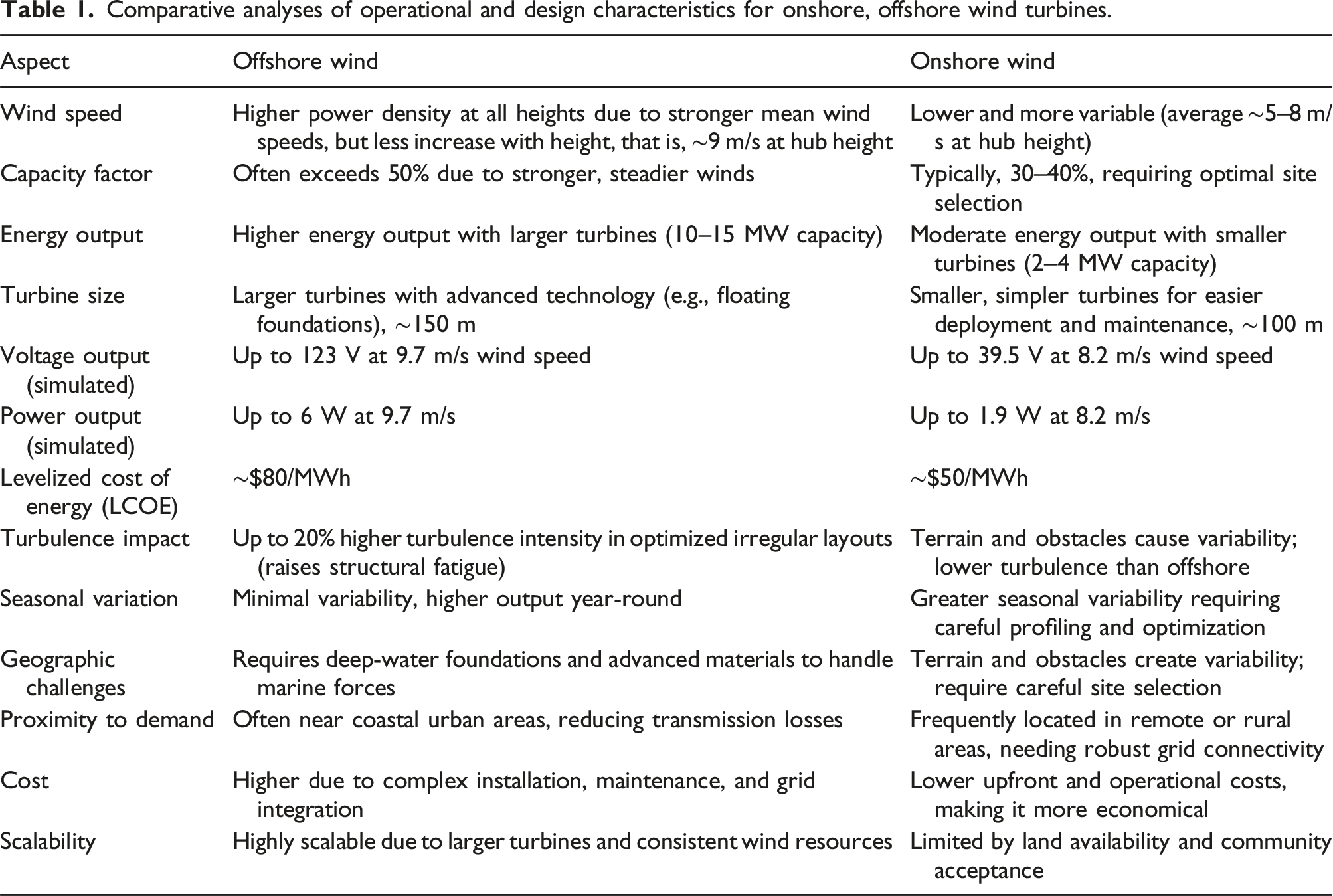
The fundamental differences in the design of offshore and onshore wind turbines stem from their environmental conditions and operational goals. Offshore turbines are built to harness stronger, more consistent winds at sea, requiring robust structures to withstand marine forces. Their larger size and higher power output come with greater construction and maintenance costs. Onshore turbines, on the other hand, are designed to optimize cost-effectiveness and logistical feasibility. They face greater turbulence and lower wind speeds, necessitating more compact designs and careful site selection.
Particularly designed for installation in wide oceans, offshore wind turbines have greater and more consistent wind speeds. Larger with rotor diameters sometimes reaching 220 m, these turbines may generate more than 10 MW apiece. For example, the 14 MW capacity SG 14-236 DD turbine from Siemens Gamesa represents innovative offshore turbine technology meant to enhance energy extraction from the high wind speeds prevalent offshore (Siemens Gamesa Renewable Energy, 2023). Water depth and seabed characteristics determine the bases of offshore turbines. Common in shallow waters up to 30 m are steel made monopile foundations driven into the seabed. Jacket foundations—lattice constructions offering stability—are extensively employed for medium-depth waterways between 30 and 60 m. As the Hywind Scotland project shows, which runs in waters more than 100 m in depth Statoil (2022), floating foundations anchored to the seabed with mooring lines have been built in deeper waters. These foundations are made to withstand strong wind speeds, tidal currents, and dynamic forces of waves. Offshore turbines have to survive in hostile surroundings like strong humidity and saltwater corrosion. Construction uses corrosion-resistant materials such composites and coated steel in order to meet these difficulties. To further reduce running downtime at these far-off sites, the turbines also include sophisticated monitoring systems and automated maintenance tools. To guarantee system dependability, for example, drone-based inspections and predictive maintenance algorithms ae used more and more (Dos Santos Cabral et al., 2024).
Conversely, onshore wind turbines are meant to be used on land where turbulence levels are higher, and wind conditions are less constant. These turbines run from 1.5 MW to 5 MW and have rotor diameters of less than 150 m. For instance, General Electric’s GE 3.6-137 turbine, which boasts a 137-m rotor diameter is best, suited for moderate wind speeds (General Electric, 2023a). Onshore turbines have simpler, more reasonably priced foundations than offshore projects. Commonly utilized, specifically for the soil characteristics of the site, reinforced concrete bases are conducting geotechnical studies helps to guarantee that the foundation can support the turbine’s loads. Furthermore, turbine location and orientation are much influenced by the topography. To optimize exposure to prevailing winds, sites with raised heights—such as ridges or plateaus—are advised. Onshore turbines use simpler towers and quieter blade designs to meet issues about visual intrusion and noise pollution. For example, sophisticated aerodynamic profiles and serrated blade edges help lower running noise levels (Rishon et al., 2025). Near residential areas, these qualities are especially crucial. Their design is also influenced by the installation and movement of onshore turbines. Road or train to far-off mountainous areas must deliver large parts like blades and nacelles. Prefabricated components and modular designs help to solve logistical difficulties and streamline installation site assembly.
Reducing greenhouse gas emissions and reliance on fossil fuels makes wind turbines—offshore or onshore—very beneficial for the surroundings. They have certain environmental consequences, though as well. Land use problems, disturbance of habitat, and noise pollution connected with onshore turbines are related. Studies reveal that especially during migratory seasons, onshore wind farms can affect populations of birds and bats (Marques et al., 2020). Careful site selection and better turbine blade design to lower collision chances are among the efforts meant to alleviate these effects. Since offshore wind farms are remote from populated areas, they cause less visual intrusion and noise. Still, they jeopardize marine ecosystems. The construction of offshore foundations affects bottom habitats, and operational noise can interfere with echolocation (Thomsen et al., 2006); thereby affecting marine mammals including whales and dolphins. Nowadays, offshore wind projects depend on environmental assessments involving underwater noise studies and biodiversity monitoring to guarantee minimum disturbance of the ecology.
The control of wind turbine deployment depends much on regulatory systems. Strong land use, zoning, and environmental impact policies surround onshore developments. Particularly for turbines close to residential areas, policies can demand developers answer public complaints including noise, visual intrusion, and shadow flicker (Devine-Wright, 2022). Strict zoning rules guarantee that wind farms are located far from critical ecological zones and populated regions in nations including Germany and Denmark. Conversely, offshore projects fit complicated maritime rules involving several parties including government authorities, environmental agencies, and international groups. While environmental impact studies are required to get licenses, Exclusive Economic Zones (EEZs) control turbine location. For instance, the Marine Strategy Framework Directive of the European Union seeks to strike a compromise between offshore wind development and marine protection, European Commission (2023).
The first floating wind farm in the world, Hywind Scotland offers a trailblazing case study for offshore wind development. Comprising five floating turbines with a total capacity of 30 MW, it is located 25 km off the coast of Scotland. This study proved the viability of floating wind technologies, which let turbines be placed in deep seas where wind speeds are more constant and higher. Hywind Scotland exceeded the normal onshore capacity factor of 30%–40% in its first year by attaining an amazing capacity factor of 56% despite high startup expenses (Statoil, 2022). One prominent example for onshore wind is the Texas Roscoe Wind Complex. Among onshore wind farms worldwide, this one has a capacity of more than 780 MW. Setting a standard for major onshore wind development, the project showed good community involvement and adherence to environmental rules (Blair, 2012).
Location (onshore or offshore), size (small, medium, or big), and axis orientation—horizontal-axis or vertical-axis turbines—all help to define wind turbines. Because of practical considerations including transportation and installation, onshore turbines are often smaller than offshore ones. With capacity more than 14 MW offshore turbines like the Haliade-X mark the extreme of the spectrum. Because of its great scalability and efficiency, horizontal-axis wind turbines (HAWTs) rule onshore and offshore sectors. However, less prevalent, vertical-axis turbines (VAWTs) are attracting interest for use in urban and limited contexts because of their small scale and capacity to gather wind from all directions (General Electric, 2023b).
Higher and more regular wind speeds of offshore wind turbines make them more efficient than their onshore equivalents. Whereas onshore turbines have capacity factors between 30 and 40%, offshore turbines often have more than 50%. Still, better efficiency comes with more expenses. Because of the difficult marine environment offshore projects demand, they call for costly foundations, specialized installation vessels, and more maintenance (McKenna et al., 2025). Less efficient yet more reasonably priced are onshore turbines. Reduced total expenses result from simpler access for maintenance and less complicated foundations. The International Renewable Energy Agency (IRENA) claims that whilst offshore wind has a LCOE of $80 per MWh, onshore wind has an LCOE of $50 per MWh (International Renewable Energy Agency, 2022). Still, constant technological developments like floating foundations and bigger turbines are closing the cost difference between the two.
Onshore and offshore wind farms both provide special difficulties. Noise, shadow flicker, and visual impact cause public opposition to onshore projects most of which comes from Furthermore restricting onshore wind farm growth are land availability and rivalry with urban development or agriculture (Devine-Wright, 2022). Although free from many of these limitations, offshore developments present technological and logistical difficulties. Turbines installed and maintained in far-off marine areas are difficult and expensive. Advanced materials and coatings also meet corrosion and material fatigue brought on by seawater exposure. Moreover, grid connectivity is still difficult since offshore turbines need underwater cables and substations to send electricity to onshore systems (Wu et al., 2024).
Comparative analyses of operational and design characteristics for onshore, offshore wind turbines.
Results
Offshore sites show more constant wind flow and faster wind speeds than onshore ones. Open sea surfaces free of buildings, trees, and changing topography let for consistent and strong wind flows. Depending on the area, studies have indicated that average wind speeds in offshore sites can reach 9 m/s at hub height (Musial and Ram, 2010). Often surpassing 50%, this better wind profile directly translates into greater capacity factors for offshore wind turbines. Higher wind speeds let turbines run nearer to their rated capacity, hence optimizing energy output. For example, the Global Wind Energy Council found that, given ideal wind conditions, offshore turbines in the North Sea routinely beat onshore systems in Europe (Global Wind Energy Council, 2023).
Because of terrain, vegetation, and other obstacles, onshore wind speeds vary significantly. Depending on where you live, average wind speeds at hub height usually fall between 5 and 8 m/s. Although these rates are sufficient for the creation of energy, the fluctuation makes it difficult to sustain constant output. Onshore wind systems, on the other hand, are more easily available and can be positioned deliberately in areas with suitable wind conditions, such plains and hilltops. Optimal locations for onshore wind farms are sometimes found using advanced computer models and meteorological studies, therefore enhancing their performance and viability.
Governed by the cube of the wind speed, the link between wind speed and energy output is exponential. Small wind speed increases so produce much more energy production. This link helps offshore wind farms to achieve better capacity factors than onshore systems. For instance, compared to 30%–40% for well-placed onshore systems, offshore wind farms in Northern Europe often reach capacity factors above 45%. Greater wind speeds in offshore locations help to enable the growth of bigger, more highly rated turbines. While some more recent versions reach 15 MW or more, offshore turbines typically run between 10 MW. High wind speeds and thus larger turbines make offshore wind farms extremely scalable, which helps to generate significant volumes of electricity to satisfy rising energy needs (Musial and Ram, 2010; Zhou et al., 2024). Onshore wind turbines, on the other hand, are usually smaller with capacities between 2 and 4 MW. Although smaller turbines let for simpler deployment and maintenance, land availability and community approval limits onshore system scaling. Higher and more regular wind speeds offshore help to provide a stable electricity supply, therefore enabling simpler integration with energy systems. Often situated close to highly populated coastal areas, offshore wind farms offer a means to directly supply electricity to places with great demand, therefore minimizing transmission losses (Setiawan et al., 2019). Though physically scattered, onshore wind farms find it difficult to link to electricity systems in outlying or less developed regions. Realizing the possibilities of onshore wind energy depends on transmission infrastructure, especially in areas with lots of wind resources but poor grid connectivity (Msigwa, 2023).
For offshore and onshore systems, the variations in wind speed have spurred separate technological advancements. Modern aerodynamic designs and strong materials found in offshore turbines help to maximize efficiency and resist marine environments. Particularly floating foundations let offshore wind farms maximize strong wind speeds in deep-water areas, therefore greatly increasing the construction possibilities. Though simpler in design, onshore turbines have gained from developments in site-specific optimization including modular construction and variable-speed technology. These developments increase the general competitiveness of onshore systems by enabling their effective operation in various and demanding surroundings (Tumse et al., 2024). Greater energy output resulting from higher wind speeds offshore helps to balance the higher capital and running expenses connected with offshore wind farms. Nevertheless, the complexity of installation, maintenance, and grid connectivity makes the LCOE for offshore systems still greater than that of onshore systems. While technological developments are lowering the LCOE for offshore systems, Tusar and Sarker (2023) observed that they are still more appropriate for areas with great energy demand and limited land access. For areas with modest wind resources and accessible land, onshore wind systems—benefiting from reduced upfront and operating costs—continue to be a more affordable choice. These technologies especially help in places where energy needs can be satisfied without significant infrastructure expenditure.
Figure 2, generated using our customized in-house Python code, provides a comparative analysis of monthly wind speed variations for both offshore and onshore locations, measured at three different heights: 10 m, 40 m, and 80 m above ground or water level. The code was specifically developed to process time-series wind data and visualize it through a sunburst plot, which effectively captures both the seasonal distribution, magnitude of wind speeds across multiple layers of data, the averaged value. The analysis reveals key differences in wind speed trends and seasonal variability, which are important for wind energy development. At offshore locations, wind speeds measured at 10 m height begin at 8 m/s in January, peak at 8.9 m/s in August, and then decrease to 8.1 m/s by December. At 80 m height, offshore wind speeds are consistently higher, starting at 9 m/s in January and peaking at 9.7 m/s in August. These higher wind speeds at offshore sites are attributed to the absence of obstructions such as buildings or trees, allowing for smoother and more consistent wind flow over open water. The consistent trends across the months make offshore locations particularly favorable for wind energy generation, with turbines benefiting from higher capacity factors. Monthly wind speed distributions throughout a year for offshore (upper row) and onshore (lower row) at different heights (a, d) 10 m, (b, e) 40 m, and (c, f) 80 m.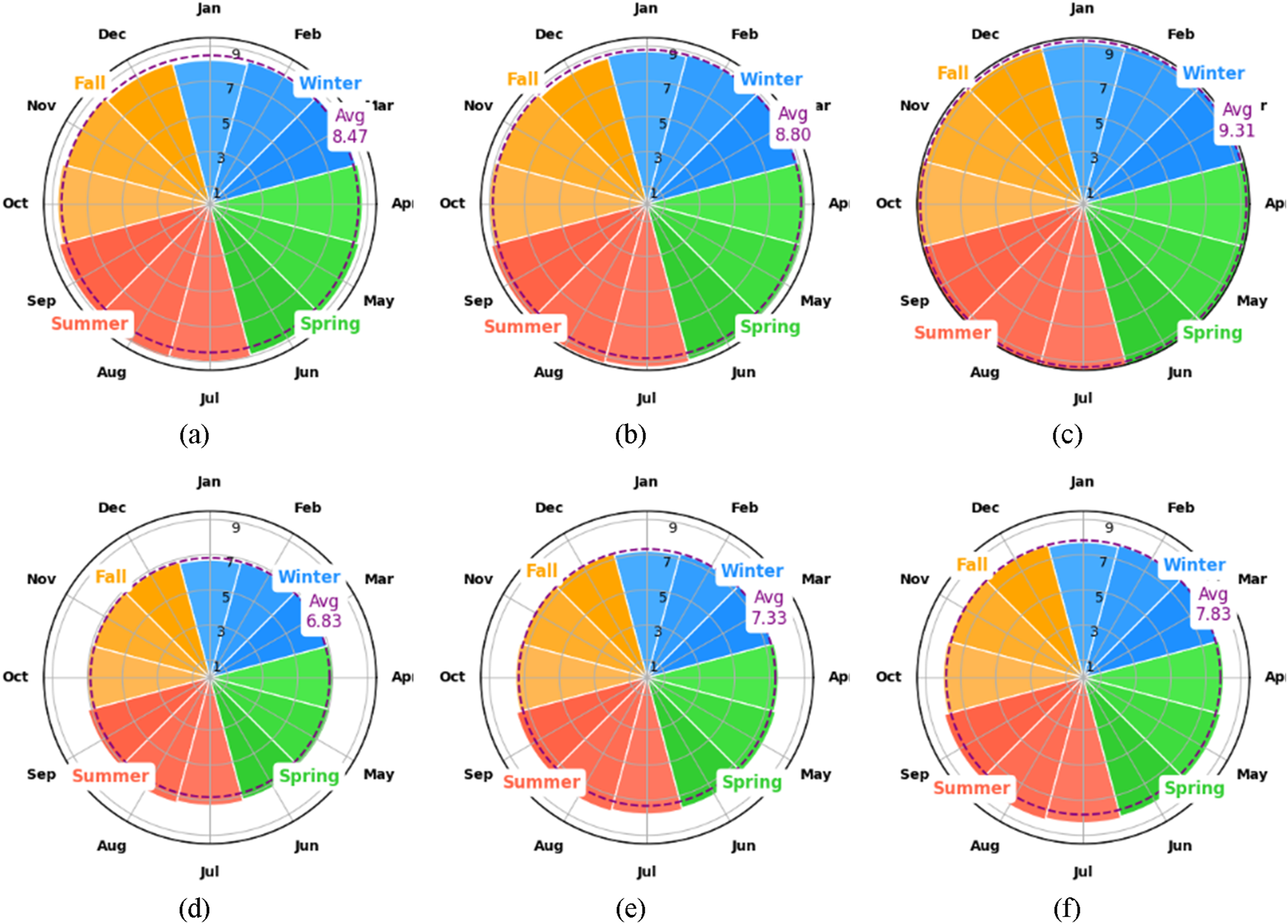
Figure 3, which is generated by our in-house Python code, illustrates the monthly variation in wind power density (W/m2) for offshore and onshore locations at three heights, 10, 40, and 80 m above ground or water level. Offshore wind power density at 40 m begins at 350 W/m2 in January, peaks at 385 W/m2 in August, and decreases back to 350 W/m2 in December. At 80 m, offshore wind power density is significantly higher, starting at 400 W/m2 in January, reaching a maximum of 465 W/m2 in August, and returning to 405 W/m2 in December. The higher values than 80 m demonstrate the increased energy potential at greater heights due to reduced drag and higher wind speeds. Offshore locations benefit from consistently high wind power densities throughout the year, attributed to steady wind conditions over open water. Monthly wind power density distributions throughout a year for offshore (upper row) and onshore (lower row) at different heights (a, d) 10 m, (b, e) 40 m, and (c, f) 80 m.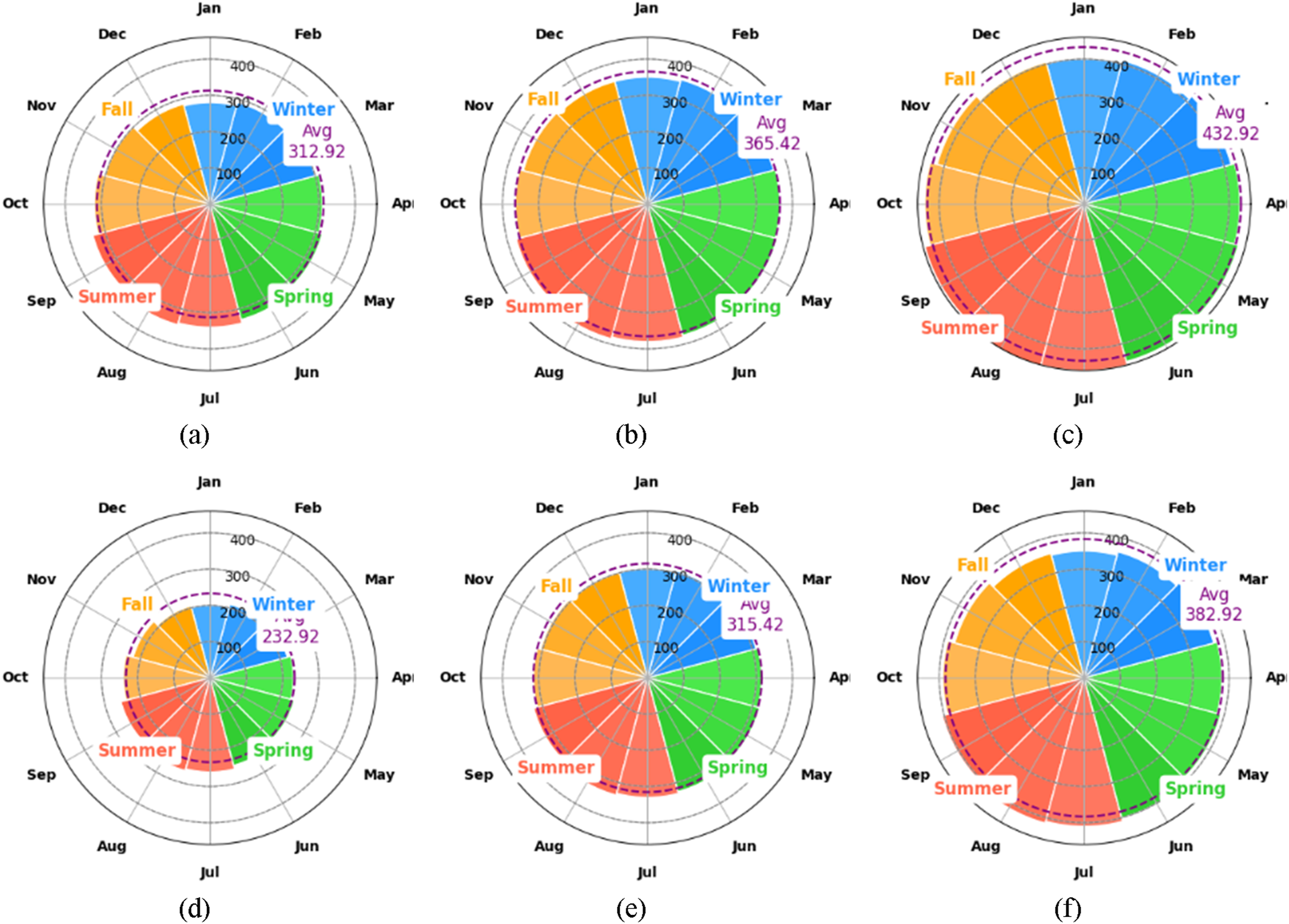
Wind speed data for offshore and onshore locations at various heights can be generalized from various studies and meteorological data. Offshore wind speeds at 10 m, 40 m, and 80 m typically range from 6–8 m/s, 8–10 m/s, and 10–12 m/s, respectively. Onshore wind speeds at the same heights are generally lower, with ranges of 4–6 m/s, 6–8 m/s, and 8–10 m/s. Commonly cited regions for offshore data include the North Sea, the Gulf of Mexico, and wind farms along the coast of the United Kingdom. For onshore data, examples often include the Great Plains in the USA, interior regions of Denmark and Germany, and coastal regions of the Netherlands (Technical University of Denmark, 2021).
Wind speed and power density data used in this study were derived from a combination of global datasets, published literature, and standard analytical models. Offshore and onshore wind speed profiles at various heights (10 m, 40 m, and 80 m) were obtained from the Global Wind Atlas (Technical University of Denmark, 2021) and generalized from typical high-potential regions such as the North Sea and the U.S. Great Plains. Power density values were calculated using the standard equation P = 0.5ρV3, assuming an air density of 1.225 kg/m3 at sea level, consistent with established methodologies. Where direct measurements were unavailable, representative mean wind speeds were adopted from documented site-specific studies and adjusted using Weibull distributions to reflect realistic variability. This approach aligns with practices recommended by Manwell et al. (2010) and Burton et al. (2011), ensuring that derived values are consistent with industry-standard wind resource assessments.
The difference in wind speed between the two heights is notable for both locations. Offshore, the wind speed at 80 m is approximately 1 m/s higher than at 10 m, which is attributed to reduced air drag. Seasonally, both offshore and onshore wind speeds show higher values during the summer months (June–August), with peaks in July and August. This is likely due to atmospheric circulation patterns that strengthen winds during these periods. Conversely, wind speeds are lower in the winter months (December–February), reflecting seasonal changes in wind systems. These variations highlight the need for supplementary energy storage or grid integration to address periods of lower wind speeds.
In summary, the figure highlights the clear advantage of offshore locations for wind energy development due to higher and more consistent wind speeds. Offshore turbines, especially at 80 m, can harness stronger winds, ensuring higher energy output and efficiency. Onshore wind farms, while more accessible and cost-effective, require optimization in site selection and turbine placement to overcome the challenges posed by lower wind speeds and surface roughness. The analysis underscores the importance of height optimization and seasonal wind profiling in designing effective wind energy systems for both offshore and onshore locations.
Figure 4 compares the voltage output of wind turbines based on wind speed for offshore and onshore conditions. Figure 4(a) shows the performance of offshore turbines, where the voltage output increases steadily with wind speed. At 8 m/s, the voltage is 30.2 V, rising to 54.39 V at 8.5 m/s, 81.36 V at 9 m/s, 92.84 V at 9.2 m/s, and peaking at 123 V at 9.7 m/s. In contrast, Figure 4(b) depicts the onshore turbines, which generally produce lower voltages at comparable wind speeds. For onshore turbines, the voltage starts at 22.43 V at 6.5 m/s, drops to 8.46 V at 7 m/s, further declines to 1.677 V at 7.3 m/s, then increases to 17.17 V at 7.7 m/s, and reaches 39.52 V at 8.2 m/s. Overall, offshore turbines demonstrate significantly higher and more consistent voltage output than onshore turbines as wind increases. The voltage output values presented in Figure 4 were obtained through MATLAB simulations using wind power data for offshore and onshore conditions. The simulations incorporated wind speed variations, turbine specifications, and environmental parameters to calculate the voltage output across a range of wind speeds. Comparison between the voltage versus wind speed for (a) offshore and (b) onshore turbines.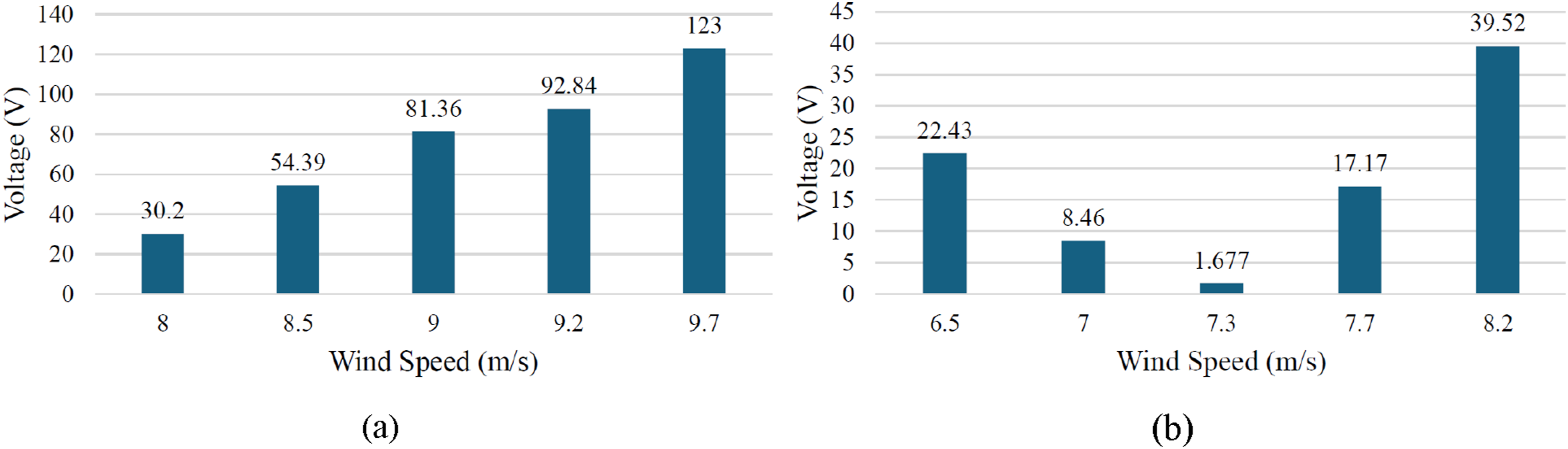
Figure 5 illustrates the current output derived from MATLAB simulations based on offshore and onshore wind power data. The simulations accounted for wind speed fluctuations and turbine design characteristics to evaluate the current output under different conditions. Figure 5 represents a comparison of current output from wind turbines based on wind speed for offshore and onshore conditions. Figure 5(a) illustrates the offshore turbines, where the current increases progressively with wind speed. At 8 m/s, the current is 0.01199 A, rising to 0.02159 A at 8.5 m/s, 0.03229 A at 9 m/s, 0.03685 A at 9.2 m/s, and reaching 0.04883 A at 9.7 m/s. Figure 5(b) depicts the onshore turbines, which generally generate lower current levels compared to offshore turbines. For onshore turbines, the current starts at 0.008904 A at 6.5 m/s, decreases to 0.00336 A at 7 m/s, drops further to 0.0006657 A at 7.3 m/s, then increases slightly to 0.006816 A at 7.7 m/s, and reaches 0.01569 A at 8.2 m/s. Overall, offshore turbines produce significantly higher and more consistent current output compared to onshore turbines as wind speed increases. Comparison between the current versus wind speed for (a) offshore and (b) onshore turbines.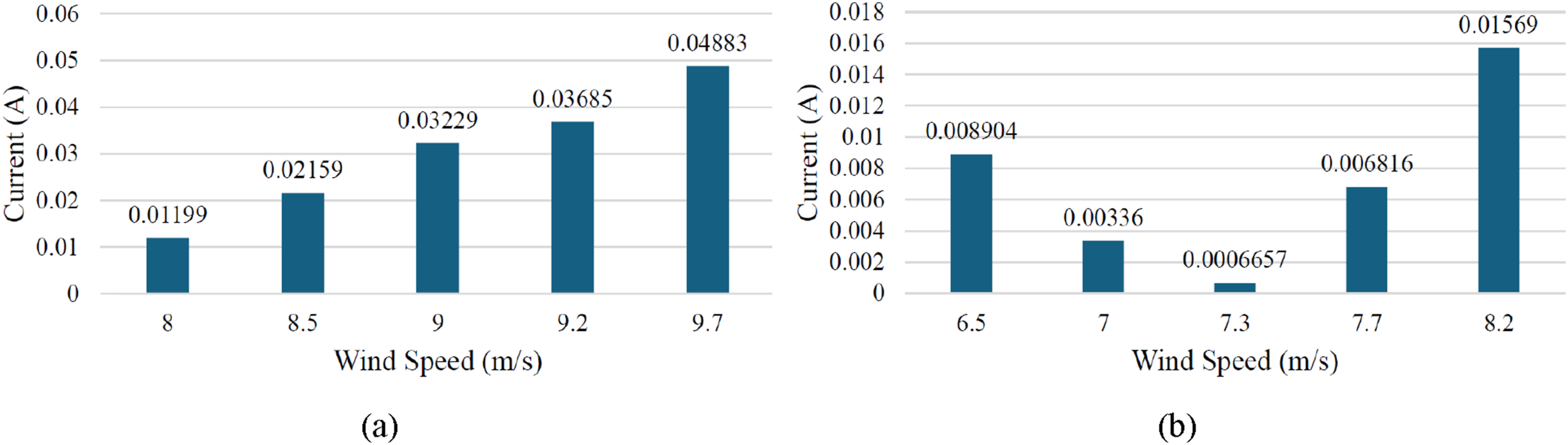
Figure 6 compares the power output of wind turbines based on wind speed for offshore and onshore conditions. Figure 6(a) represents offshore turbines, where power output increases sharply with wind speed. At 8 m/s, the power is 0.3621 W, rising to 1.1748 W at 8.5 m/s, 2.6271 W at 9 m/s, 3.4212 W at 9.2 m/s, and reaching a peak of 6.0061 W at 9.7 m/s. Figure 6(b) illustrates onshore turbines, which produce lower power output at similar wind speeds. For onshore turbines, the power starts at 0.2694 W at 6.5 m/s, decreases to 0.1827 W at 7 m/s, drops further to 0.0542 W at 7.3 m/s, increases to 0.6327 W at 7.7 m/s, and reaches 1.9298 W at 8.2 m/s. Overall, offshore turbines exhibit significantly higher and more consistent power generation than onshore turbines as the wind speed increases. The power output values shown in Figure 6 were calculated through MATLAB simulations using offshore and onshore wind power data. These simulations integrated wind speed profiles and turbine operational parameters to determine the power output variations across the examined wind speeds. Comparison between the power versus wind speed for (a) offshore and (b) onshore turbines.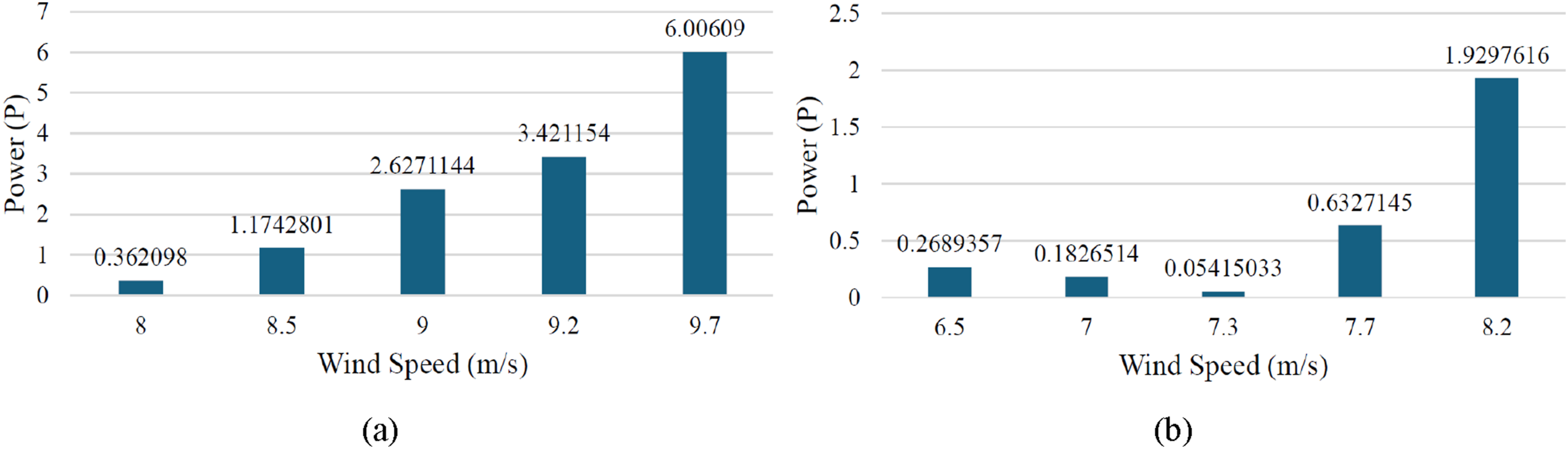
The voltage, current, and power output data presented in Figures 4–6 were generated using a MATLAB/Simulink model developed to simulate wind turbine electrical performance under variable wind conditions. The simulation used a representative turbine with the following specifications: 3–5 MW rated power (onshore) and 10–15 MW rated power (offshore), rotor diameters of approximately 100 m (onshore) and 150 m (offshore), and hub heights of 80–110 m. The wind speed input ranged from 6.5 m/s to 9.7 m/s to reflect typical onshore and offshore average conditions. Air density was set to 1.225 kg/m3, assuming standard sea-level conditions. A constant pitch angle of 35.5° was used in the aerodynamic model, with cut-in and cut-out speeds set at 3 m/s and 25 m/s, respectively. The Simulink model calculated aerodynamic torque based on wind input and turbine parameters, then converted mechanical power to electrical output using a simplified generator block. Voltage was modeled as proportional to rotational speed and flux linkage, while current and power outputs accounted for load characteristics. These parameters and assumptions ensure that the simulations realistically approximate typical operational responses for both offshore and onshore turbines, supporting comparative analysis.
Figure 7 illustrates a comparison of stator currents at two different wind speeds, 9.7 m/s and 8.2 m/s, with a constant pitch angle of 35.5°. In Figure 7(a), corresponding to a wind speed of 9.7 m/s, the stator currents exhibit sinusoidal waveforms with higher amplitudes, reflecting greater power output due to the increased kinetic energy of the wind. In contrast, Figure 7(b), at a lower wind speed of 8.2 m/s, shows similar sinusoidal patterns but with reduced amplitudes, indicating a drop in power generation caused by the reduced wind energy. Comparison between (a) offshore and (b) onshore current with optimum pitch angle.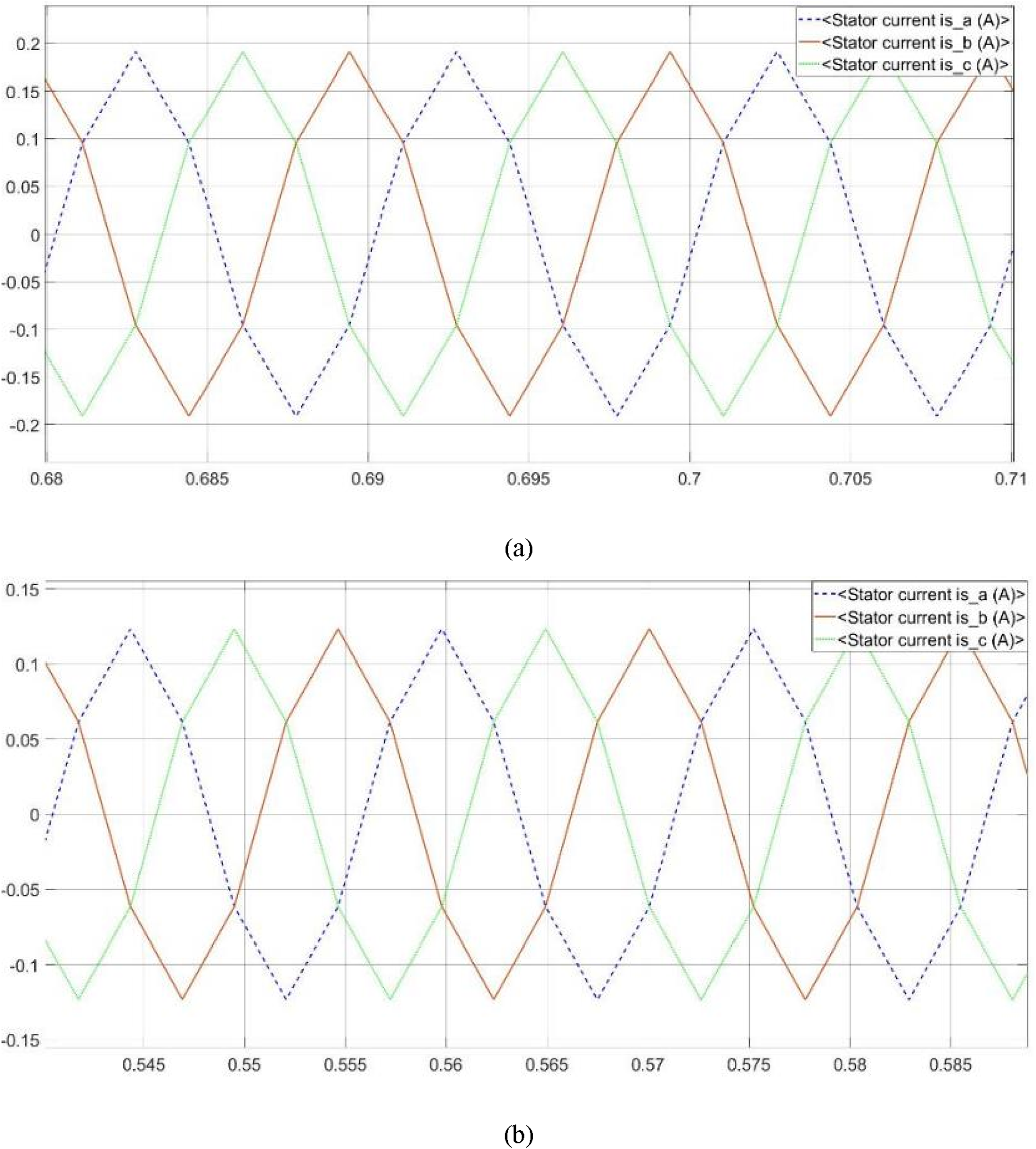
This comparison highlights the impact of wind speed on the stator current, where higher wind speeds result in larger currents, as expected from the relationship between wind energy and turbine performance. The constant pitch angle of 35.5° ensures that changes in the current are influenced solely by wind speed, with no aerodynamic adjustments made to the blades. While not explicitly shown, the differences between offshore and onshore turbines would typically reflect the offshore turbine’s ability to generate smoother and higher currents at similar wind speeds, due to the more stable and stronger wind conditions offshore. This figure underscores the direct relationship between wind speed and stator current, demonstrating the critical role of environmental factors in wind turbine performance.
The power available in the wind is calculated as
The mechanical power extracted by the turbine is
For electrical output simulations in Simulink, the generated voltage was modeled as proportional to rotational speed and magnetic flux linkage, while current and power outputs were calculated from the electrical load characteristics. These simplified dynamic blocks represent the turbine’s response under varying wind speed conditions.
Discussion
The comparative analysis of onshore and offshore wind turbines reveals distinct characteristics, strengths, weaknesses, opportunities, and threats associated with each system. Onshore wind turbines, being a mature technology, offer cost-effective installation and maintenance with quick investment recovery periods. However, they face challenges such as land-use conflicts, visual and noise pollution, and limited site availability due to urban expansion and high land costs. Offshore wind turbines, by contrast, benefit from higher and more stable wind speeds, superior capacity factors, and reduced visual impact from populated areas (Afridi et al., 2024; Desalegn et al., 2023). Despite these advantages, they are associated with significant drawbacks, including high installation and maintenance costs, environmental risks to marine ecosystems, and technical challenges in deep-water operations. From an economic perspective, offshore systems require advanced designs and specialized infrastructure, leading to higher levelized costs of energy LCOE. However, technological advancements, particularly in floating offshore systems, are reducing these costs, paving the way for deeper water installations and increased energy yield. On the other hand, onshore systems continue to dominate global installations due to their economic feasibility, contributing approximately 95% to the global wind energy mix. However, the projected growth in wind energy capacity could challenge this dominance by 2050. Environmental considerations further differentiate these systems. Onshore turbines face public resistance due to noise and ecological impacts on local fauna, while offshore turbines, though less disruptive to humans, introduce noise and electromagnetic disturbances to marine environments. Mitigation strategies, including site-specific designs and ongoing impact assessments, are critical for both systems to align with sustainability goals (European Wind Energy Association, 2009).
Conclusion
This comparative analysis of offshore and onshore wind turbines integrated simulation-based evaluation and literature-driven performance metrics to examine key differences in design, output, and feasibility. Offshore wind turbines, typically rated between 10 and 15 MW with rotor diameters exceeding 150 m and hub heights above 100 m, demonstrated higher capacity factors (≥50%) due to stable wind speeds and lower turbulence. Simulink-based voltage and power output simulations confirmed smoother electrical profiles under offshore wind conditions, with less fluctuation in terminal voltage and a more stable power envelope over time. Onshore turbines, modeled at 3–5 MW capacities with rotor diameters around 100 m, exhibited lower capacity factors (30–40%) and greater variability due to land-induced wind shear. Economically, onshore systems maintained a lower LCOE ($50/MWh) versus offshore systems ($80/MWh), though the latter offer greater scalability for high-demand coastal regions. Environmental analysis showed reduced land-use conflicts for offshore deployment but raised concerns over marine habitat disruption. These findings reinforce the importance of site-specific deployment decisions, where offshore systems are suited for utility-scale integration and onshore systems remain viable for distributed, inland generation. The comparative framework adopted in this study highlights the trade-offs between efficiency, cost, and environmental impact, emphasizing that no single system is universally superior. Instead, deployment choices must align with local resource availability, grid infrastructure, and socio-environmental priorities. By combining simulation results with real-world performance data, the study also enhances methodological consistency and strengthens the validity of the conclusions. Future extensions of this work may involve dynamic grid modeling, wake effect simulation, and techno-economic optimization of hybrid wind configurations. Such advancements would provide deeper analytical insights and support evidence-based policy and investment strategies for large-scale renewable integration.
Footnotes

Author contributions
Conceptualization, S.T.; methodology, S.T. and A.E; software, S.T.; validation, S.T.; formal analysis, S.T. and A.E.; investigation, S.T. resources, A.E. ; data curation, S.T.; writing—original draft preparation, S.T.; writing—review and editing, S.T. and A.E.; supervision, A.E.; project administration, A.E.; funding acquisition, A.E. All authors have read and agreed to the published version of the manuscript.
Funding
The author(s) received no financial support for the research, authorship, and/or publication of this article.
Declaration of conflicting interests
The author(s) declared no potential conflicts of interest with respect to the research, authorship, and/or publication of this article.
Data Availability Statement
The data will be made available upon reasonable request.