




Abstract
Morocco has a significant wind energy potential due to its favorable climate proximity to the Atlantic Ocean, and temperature conditions. The governments recognize the importance of transitioning to sustainable energy sources and have taken strategic steps to promote the renewable energy sector, particularly wind energy, to reduce dependence on finite fossil fuels and promote eco-friendly alternatives. Local and international enterprises, along with private investors, have undertaken various wind energy projects in the country. Despite overreliance on conventional resources like coal and gasoline leading to an energy crisis, Morocco sees wind energy as a viable solution due to its increasing accessibility and cost effectiveness. This study comprehensively explores Morocco’s wind energy landscape, defining wind energy and its global and local potential. It highlights challenges and opportunities in wind energy development and outlines strategies to enhance wind resource utilization. By 2021, Morocco achieved a significant milestone by raising the proportion of clean energy in its mix to 37, 6% with wind energy contributing 45% of this. Building on this success, Morocco aims to further increase its renewable energy capacity, targeting 52% of total capacity from renewable source by 2030 according to (IRENA). This showcases Morocco’s commitment to sustainable energy and its progressive approach to creating a greener and more resilient energy future.
Introduction
Literature review
The burning of fossil fuels such as oil, natural gas, and coal is one of the main causes of increased greenhouse gas emission in the atmosphere, which contribute to climate change. When these energies are burned, they release carbon dioxide (CO2) and other greenhouse gases (GHGs) into the atmosphere, leading to an increase in the average temperature of the earth. To reduce these GHG emissions a help mitigate and limit climate change, it is important to develop and promote reliable, sustainable, and renewable energy sources such as solar, hydro, geothermal, and wind, which are always available, unlike fossil fuels.
There are five types of renewable energy: Solar (photovoltaic, thermal or thermodynamic), the hydraulic, geothermal energy, the biomass, and wind energy.
Wind energy is a source of energy that relies on the wind (usually, the sun heats the earth creating areas of different temperature pressures around the globe, and fro; this difference in pressure, movements of air called wind are created) (Hicham, 2022).
This energy is used to generate electricity in wind turbines, also known as wind generators, using the speed of the wind. These wind generators powered by the wind, produce millions of megawatts of useful power in isolated sites and also feed into the electric distribution network.
They consist of rotating blades that are driven by the wind, which are usually three blades with diameters that generally exceed 20 m in length for a 150 KW/h unit. Attached to these blades is the nacelle, which is the driving component of the whole unit, with a generator that delivers the electrical current, a multiplier that amplifies the speed of the blades a safety brake that puts the blades at rest, and an inverter at the output of the generator, as we want to have a stable frequency given the variation of wind speed to stabilize the frequency between 50 and 60 Hz (Allouhi et al., 2017).
These wind turbines are usually installed in places where there are constant winds, such as along coastlines or on hilltops. Research on wind energy aims to improve the efficiency and profitability of this source of energy, as well as to determine the best location for the installation of wind turbines (Ifekoya, 2019; MASEN, n.d.; Wind energy, n.d.).
The amount of energy a wind turbine produces depends on the wind quality, tower height (hub height), rotor diameter, and operation and maintenance management. Wind turbines can typically generate power at wind speeds between 5 and 25 m per second. However, maximum electricity generation is generally reached between 11 and 25 m per second (Mostafa, n.d.).
Authors (Masri and Al-Jabi, 2022) propose different scenarios for each season to predict wind speed, direction, and mechanical power. Authors in (Wang and Wang, 2015) evaluate the feasibility of extracting wind energy in terms of hydrogen energy in a suburban environment incorporating artificial intelligence techniques.
According to IRENA, Morocco has a significant wind energy deposit, rapidly increasing wind power production from 0.3 TWh in 2007 to 3.0 TWh in 2017. This effective deposit results from its geographical position (Masri and Al-Jabi, 2022): linking the Atlantic Ocean with the Mediterranean Sea gives it a significant offshore wind potential. On the Atlantic coast, wind speeds reach more than 9 m/s with a total potential of 135 GW; on the North Shore, the wind potential amounts to 43 GW (Figure 1).
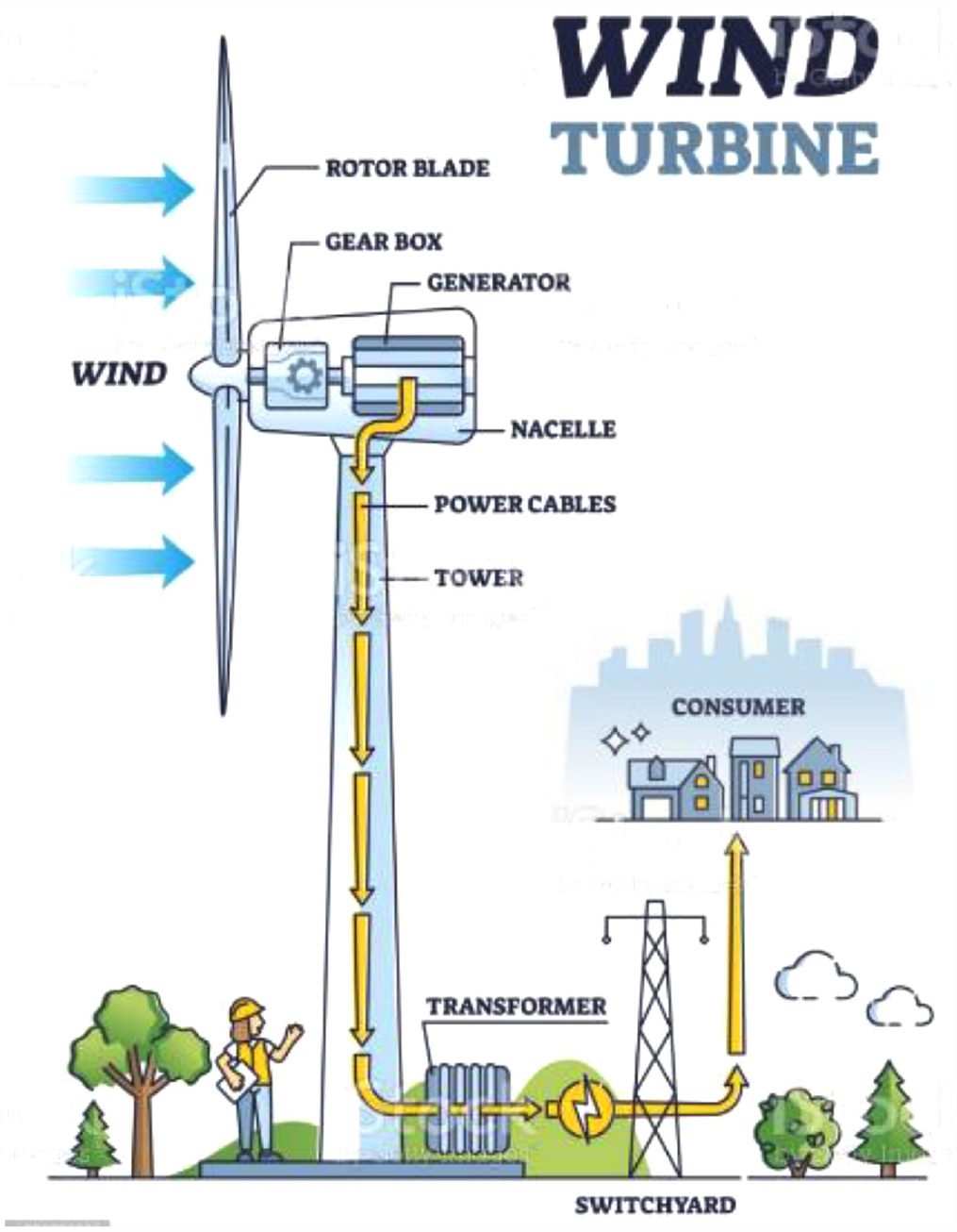
Operating principle of the wind turbine (Wind energy, n.d.).
Methodology
This paper conducts an exhaustive investigation on wind power in Morocco, which has rarely been done previously. The format is as follows: Section 2 discusses wind energy’s advantages and limitations. Then, the factors for evaluating potential, geographical characteristics, and wind power capacity in Morocco are discussed exhaustively in section 3. Also, it provides a GIS map of wind resources in Morocco, an evaluation of potential in six coastal regions in Morocco based on the wind rose, and a discussion of results. An analysis of challenges and opportunities related to wind energy development in Morocco, such as regulatory obstacles and deployment costs, is discussed in the fourth section 4. Finally, section 5 introduces the challenges and proposes the approach and orientation to accelerate the deployment.
Advantages and limitations of wind energy
Wind turbines have several advantages as a source of energy (Elmahmoudi et al., 2009; Kousksou et al., n.d.; Wang and Wang, 2015).
- They are clean and sustainable: they do not produce greenhouse gases or nuclear waste, making them an eco-friendly option for producing electricity.
- They are abundant and inexpensive: wind is an inexhaustible resource, and wind turbines do not require expensive fuel to operate.
- They can be installed in many regions: unlike some energy sources, wind turbines can be installed in many locations, even in isolated or remote areas.
- They are easy to maintain: they have a lifespan of between 20 and 25 years and require little maintenance.
- They contribute to job creation: constructing and maintaining wind turbines can create local jobs.
- It is important to note that wind turbines also have disadvantages such as noise and visual impact. However, they can also be managed properly through proper planning and management.
- The limitations of wind energy are described as follows:
- Visual impact: wind turbines can be considered an obstacle by some people, mainly if they are installed in areas where they are visible from a distance.
- Noise: they produce noise when turning, which can annoy some people. However, modern wind turbines are much quieter than older models.
- High initial cost: Although wind energy is inexpensive once installed, installing wind turbines can be costly.
- Weather dependence: wind turbines produce electricity only when there is wind, which means they are not always reliable as an energy source.
- Impact on wildlife: There have been concerns about the effect of wind turbines on wildlife, particularly birds and bats. However, many studies have shown that the impact of wind turbines on wildlife is minor and can be appropriately managed.
- Wind turbines can be an obstacle to the propagation of waves such as radar and can also cause fires on mobile telephones, radio, internet, GPS, etc.
Wind potential
Wind potential worldwide
The global wind potential is enormous and can provide significant clean and renewable energy. According to estimates, the global wind potential is approximately 72,000 GW (more than seven times the current energy demand). However, it is essential to note that the exploitable wind potential is limited by several factors such as land availability, economic viability, and technical obstacles…
Wind energy is at the heart of the energy transition. Today, it represents 873 GW of installed capacity worldwide, with an increase of 12.4% compared to 2020, according to “The Global Wind Energy Council”
The regions of the world with the strongest and most consistent winds are the high latitudes of the Northern Hemisphere, and some places in the ocean have the most significant wind potential. However, coastal areas also have a high potential due to the strong winds that often blow on maritime fronts (Masri and Al-Jabi, 2022; Mostafa, n.d.; Wang and Wang, 2015).
In addition, regions in the United States, Europe, China, India, Australia and Africa all have strong wind potential (Figure 2).
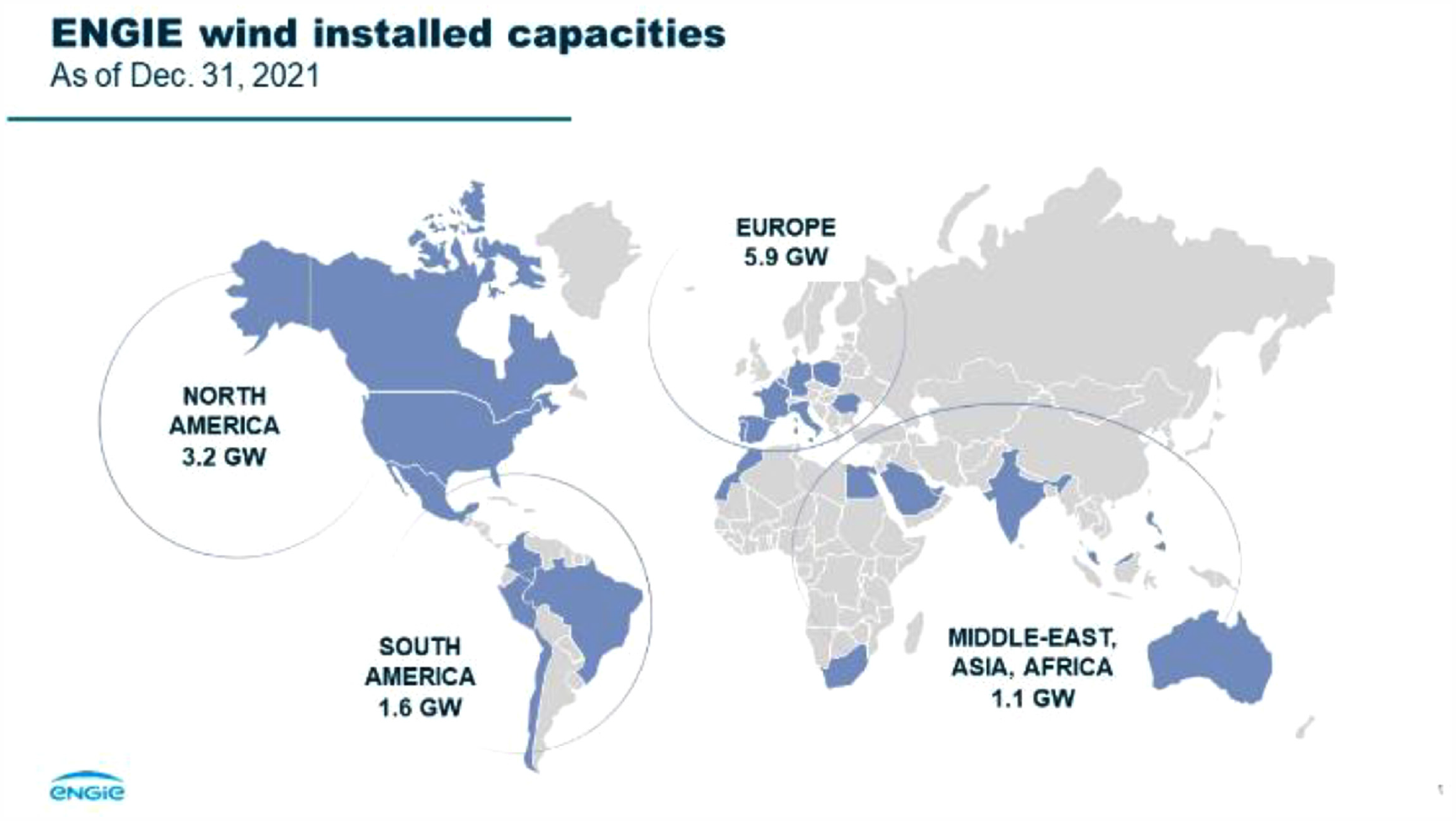
Wind power capacity installed in the world (Renewable energy, n.d.).
In terms of global wind capacity by country:
This chart shows wind energy capacity worldwide in 2018, by country and gigawatts. For example, China’s wind energy capacity was approximately 184 GW, more than any other country at that time (Renewable energy, n.d.) (ADEREE (2013). The United States ranked second, with a wind energy capacity of nearly 100 GW (Figure 3).
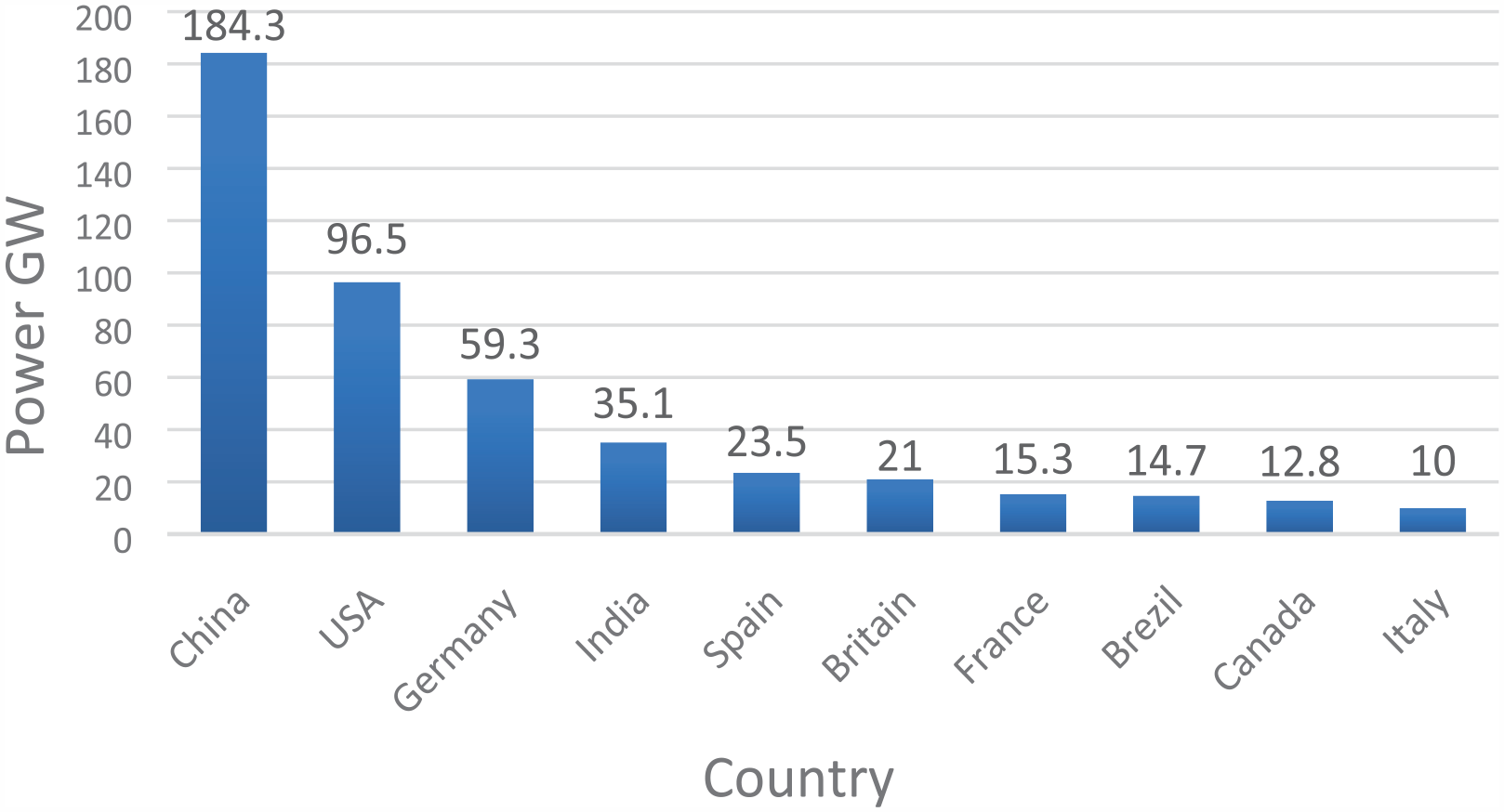
Worldwide wind power capacity in 2018, by country.
In terms of installed capacity, here is a ranking based on the most recent available data:
✓ China—approximately 220 GW.
✓ United States—approximately 96 GW.
✓ Germany—approximately 78 GW.
✓ India—approximately 40 GW.
✓ Spain—approximately 23 GW.
✓ France—approximately 18 GW.
✓ Italy—approximately 16 GW.
✓ United Kingdom—approximately 15 GW.
✓ Denmark—approximately 14 GW.
✓ South Korea—approximately 13 GW.
It is important to note that these rankings can vary depending on the methodology used and the rating criteria. These rankings do not reflect the actual efforts of countries and do not consider the economic and social levels of countries.
There are many recent studies on wind potential worldwide; here are a few examples:
✓ A 2020 “Nature Communication” study estimated that offshore wind energy clouds will provide over 20% of global electricity by 2050.
✓ A 2020 study published in “Renewable Energy” examined the wind potential of different regions worldwide and concluded that Africa and South America had the most significant untapped wind potential.
✓ “Global Wind Energy Outlook 2020” published by GWEC (Global Wind Energy Council) in 2020 shows an installed wind capacity worldwide increase to 1 and 2 TW. by 2050 with wind energy growth of 7%–16%.
✓ The “Special Report on Renewable Energy Sources and Climate Change Mitigation” published by the Intergovernmental Panel on Climate Change (IPCC) in 2011 evaluates the potential of various renewable energy sources, including win energy. Furthermore, it identifies challenges and opportunities for their large-scale deployment.
✓ “Renewable Power Generation Costs in 2020,” published by the International Energy Agency (AEI) in 2021, shows that wind energy costs are decreasing and becoming competitive in many countries.
Many other reports and studies can be found online that focus on specific regions or aspects of wind energy, such as costs, environmental impact, policies, etc.
Because wind energy development continues to grow worldwide, many countries, including Morocco, are increasingly investing in this energy source to meet their growing demand and reduce their dependence on nonrenewable energies, particularly fossil fuels.
Wind energy potential in Morocco
Morocco has strong potential for wind energy due to its consistent winds and proximity to the ocean and its availability of vast land areas for wind deployment. As a result, the country has recently invested in wind energy and has set up several wind parks and projects (Elmahmoudi et al., 2009; Wang and Wang, 2015) (Figure 4).
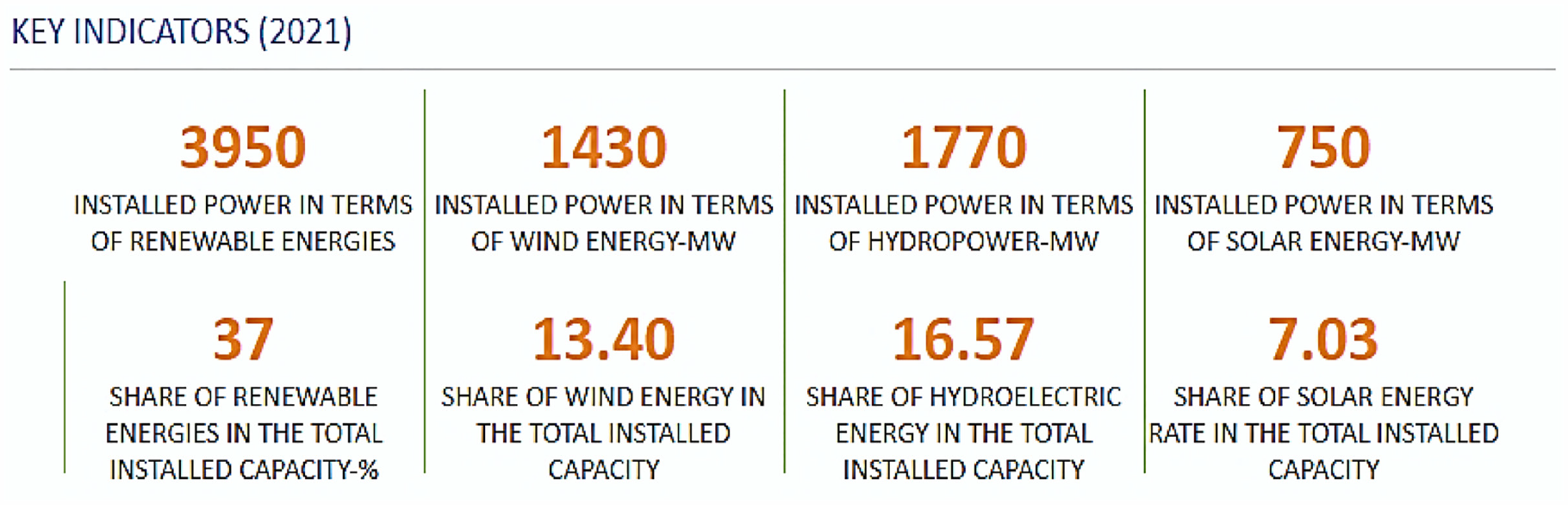
Key indication concerning the distribution of renewable energies in Morocco in 2021 according to MASEN.
Today, wind energy accounts for approximately 10% of Morocco’s electricity production, with a capacity of over 2000 MW. Morocco aims to reach a 52% renewable energy capacity by 2030, primarily using wind energy.
According to the Moroccan Agency for Solar and Wind Energy (MASEN) (Kousksou et al., n.d.), the country’s wind potential is estimated at approximately 3000 MW with average winds of 7–8 m/s in certain regions, mainly located in the southern and northern regions of the country (Mouline, n.d.).
However, there are still challenges to overcome to fully develop this potential, particularly in the financing, electricity transmission, and energy policy.
On a global scale, Morocco is considered an essential player in the development of installed energy, although it is not yet among the main wind energy producing countries.
In terms of capacity, Morocco currently ranks in the top 20 with approximately 2 GW. However; it is important to note that this ranking of countries in terms of installed wind capacities can vary from year to year, depending on new projects being built or commissioned in different countries.
In Africa, Morocco is currently the leader in installed capacities with approximately 2 GW, Egypt is also a significant player with about 1.5 GW of installed wind capacities, and Ghana, Kenya, Ethiopia, and Senegal have important wind projects under development.
It should be noted that Morocco ranks fifth in the world in the 2022 Climate Performance Index due to its climate performance efforts. In this ranking revealed at COP26 in Glasgow, The Kingdom comes after Denmark, Sweden, Norway and the United Kingdom with a general performance score of 71, 64.
These figures may vary depending on the progress of projects and the most recent data available; wind energy is overgrowing in Africa, with many projects under development and newly announced regularly. It is, therefore, advisable to follow future trends in this field.
A study published in 2020 by the
The study also revealed that Morocco could produce almost 30 TW/h of wind energy annually, representing approximately 20% of the country’s total consumption. This study report also emphasized that the development of wind energy in Morocco effectively achieves greenhouse gas emission reduction goals and improves energy security.
In 2020,
Furthermore, the study by
Soon, according to a recent note by the
In addition, Morocco is currently building the NOOR OURZAZATE wind farm, which is the world’s largest integrated wind project; this will further contribute to increasing the installed wind capacity in the country.
In summary, Morocco aims to develop renewable energy, particularly wind energy, to diversify its energy mix and reduce its dependence on fossil fuels. Morocco launched an ambitious National Solar plan in 2009, aiming to install 2 GW of wind capacity by 2020, then 5 GW by 2030, and 42% of the development of electricity production from renewable sources by 2030. It also launched a strategy for developing renewable energy in 2013 that aims to install 52% of the country’s electrical capacity from renewable sources by 2030. As a result, the government exceeded its wind production goals in 2020 with an installed capacity of 2.6 GW.
Energy dependency in Morocco
Conventional energy sources such as coal, gasoline, and other fuels negatively affect the environment and economy. Here are a few reasons why Morocco has become dependent on renewable energy, particularly wind:
Morocco has limited oil and gas reserves, making meeting the county’s energy needs difficult.
Morocco imports approximately 97% of its energy needs, which results in high costs.
Morocco is located in a region with abundant wind resources; according to MASEN, the country has a potential of approximately 8 GW.
Morocco has become aware of the importance of developing clean and renewable energy resources to reduce greenhouse gas emissions and improve energy security.
In summary, many factors, such as limited: oil reserves, high costs of energy imports, abundant wind resources, and sustainable development goals, have led Morocco to turn to renewable energy, particularly wind, to meet its current and future energy needs (Javaid et al., 2022).
Exposure of various wind energy initiatives and projects in Morocco
Morocco has implemented a national strategy to develop its energy sector, focusing on wind power, aiming to produce 52% of its electricity by 2030. This vision has begun to bear fruit, with 111 renewable energy projects completed or under development. As a result, the installed capacity of renewable sources has reached 3950 MW, representing approximately 37% of the electricity mix (710 MW from solar sources—1430 MW from wind sources—and 1770 MW from hydroelectric sources) (MASEN, n.d.)
Several wind projects are underway or have recently been completed in Morocco by national and foreign companies and private investors to achieve these objectives.
Morocco relies on international cooperation to develop wind projects. Therefore, the country has established partnerships with countries and international partners to increase investments and promote technology transfer in the field of wind energy (Figure 5).
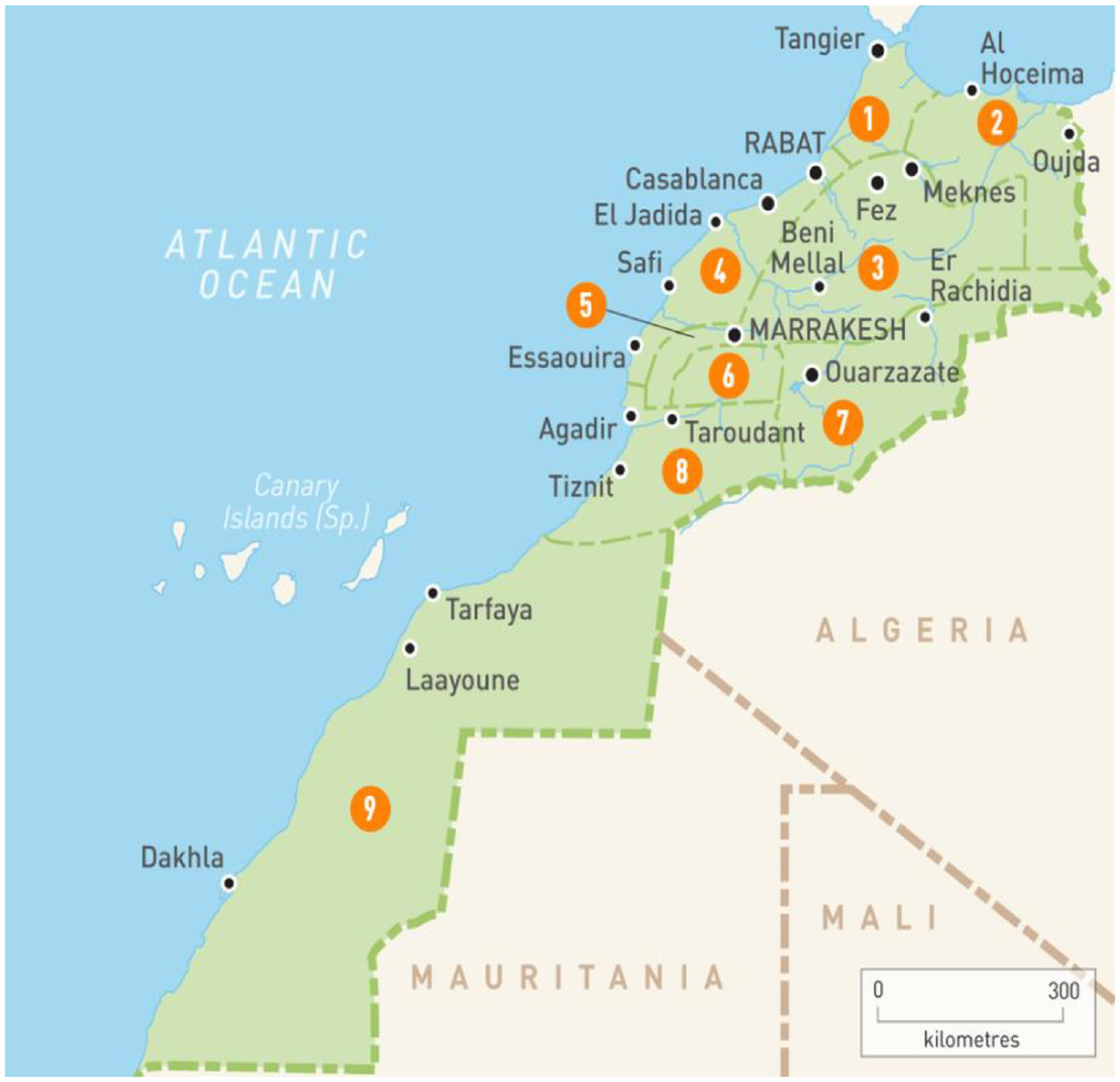
The map shows all wind projects that have been developed or are currently under development in Morocco (MASEN, n.d.).
Morocco has also signed cooperation agreements with various countries to develop wind projects, particularly with European countries such as France, Spain, and Germany, which have advanced technologies and significant experience in developing renewable energy.
Furthermore, Morocco has established partnerships with international organizations such as the United States Agency for International Development (USAID) and the French Development Agency (AFD) to support the development of wind projects and investments in renewable energy (Asghar et al., n.d.; Onshore Wind Farm Project, 2013; Renewable Energies, n.d.).
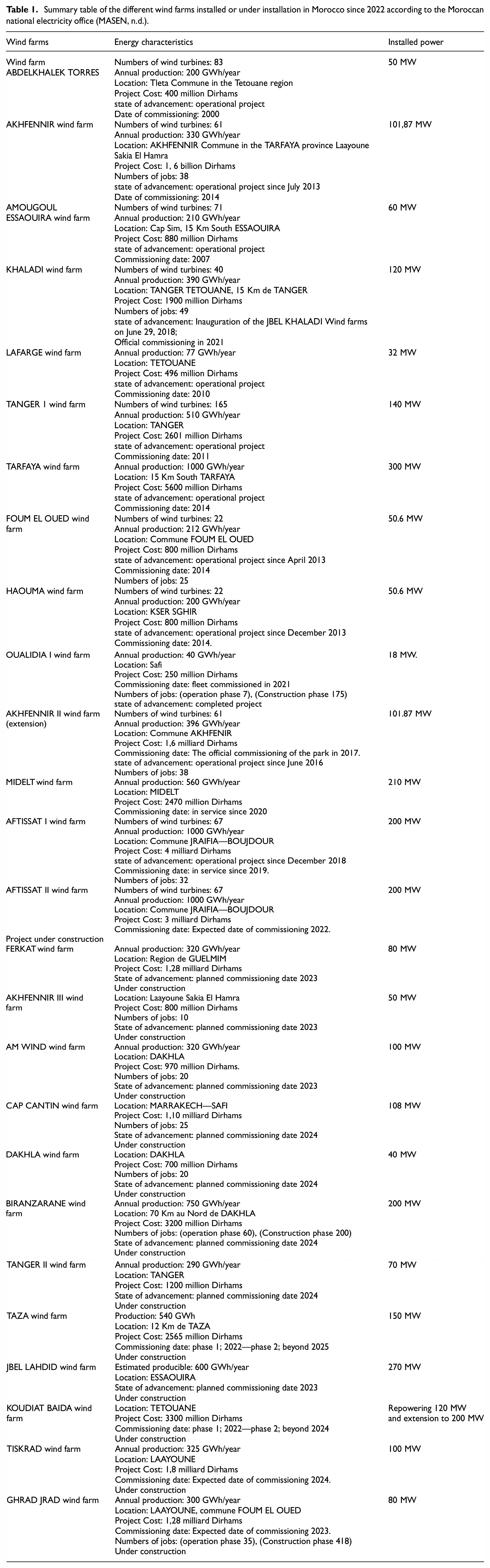
Morocco has also participated in international initiatives to promote renewable energy development, such as the DESERTEC initiative, which aims to develop renewable energy in desert regions for use in Europe and North Africa. Table 1 shows the Summary of the different wind farms installed and under installation in Morocco since 2022 according to the Moroccan national electricity office with their characteristics (Numbers of wind turbines, Annual production, Location, Project Cost and operational project). In all, we can observe that 1652,94 MW is already installed, and 1398 MW is under construction
Summary table of the different wind farms installed or under installation in Morocco since 2022 according to the Moroccan national electricity office (MASEN, n.d.).
Furthermore, other projects are being launched, including:
✓ The TANGER-TETOUANE-El HOCEIMA Wind Farm of 150 MW project was carried out in partnerships with Moroccan and Spanish companies, including Nerva Holding, Siemens Gamesa and Acciona.
✓ The MIDELT Wind Farm, with an installed capacity of 150 MW, is a project that was carried out in partnership with Moroccan and Spanish companies, including EDF Renewable, MASEN and Acciona.
✓ The TISKARD Wind Farm, with an installed capacity of 358 MW, is a project that was carried out in partnership with Moroccan and Spanish companies, including EDF Renewable, MASEN and Acciona.
✓ The NOOR OURZAZATE Wind Farm, which is the world’s largest integrated wind project with a capacity of 5 GW., is currently under construction and will be carried out in partnership with Moroccan and foreign companies, including EDF Renewable, MASEN, Acciona and the European Investment Bank.
There are also other wind projects under development, which are supported by Moroccan authorities, private investors, and foreign companies to increase the installed wind capacity in the country (Hicham, 2022; Renewable energy, n.d.; Wang and Wang, 2015) (Table 1).
In summary, Morocco has significant wind potential and has taken concrete steps to improve this energy source. As a result, Morocco has become a leader in the field of wind energy in Africa and is considered a model for other countries in renewable energy sector development.
Evaluation of the wind energy potential in Morocco
Before implementing a wind park or project, it is necessary to evaluate its potential production to determine if it is worth investing. The methods commonly taken into consideration during a wind potential evaluation include:
In brief, it is important to combine all these methods to evaluate the wind potential of a given region.
Factors considered during an evaluation of a region’s wind potential
Several important factors need to be considered when evaluating the wind potential of a given site, including: Wind speed is the most important element when evaluating, as it is the driving force behind wind energy. Wind speed and direction data must be collected over an extended period to obtain an accurate picture of a site’s wind potential.
Wind speed regularity: The variation in wind speed is also essential to consider because it determines the reliability of the energy produced.
Wind direction: This is a crucial factor for wind turbine design. Knowing if the wind primarily blows in a given direction is necessary to maximize wind efficiency.
Wind height: height is also an essential factor because it devalues the power of the wind at different heights.
And it can be expressed by the equation below:

With
H is the height where we want to estimate the wind speed;
The area’s topography, such as mountains or hills, can influence wind speed and consistency at a given location.
Land availability: Having enough land for wind turbine installation is important.
Proximity to electrical lines: connecting wind turbines to existing electrical lines is easier and less costly than building new ones.
Construction and maintenance costs: Considering the costs of building and maintaining wind turbines when evaluating regional potential is important.
Consider environmental and community impact, as well as local regulations and policy.
These factors are integrated into geographic information systems (GIS) using a hierarchical analytical process approach to calculate their relative weight, identify areas with high wind potential, and map the best locations for wind farms. This approach allows the identification of appropriate locations for installing wind turbines. A preliminary study phase is crucial to identify the conditions and constraints related to the site and climate to maximize electricity production (Asghar et al., 2022; Hussain Baloch et al., 2019; Manaky Seasons in Pakistan, n.d.).
The kinetic energy of the wind is expressed according to the following equation:

Where R is the radius of the turbine blades (m), V is the wind speed (m/s), ρ is the air density of the area (kg/m3).
Geographic characteristics and wind power production capacity in Morocco
The Kingdom of Morocco is located in the northwest of the African continent. The Atlantic Ocean borders it to the west, the Mediterranean Sea to the north, Algeria to the east and Mauritania to the south. Its total area is
Morocco is characterized by various landscapes, ranging from coastal plains to the high mountains of the Atlas. This geographical diversification offers great potential for wind power, particularly in mountainous and coastal regions.
The main wind regions of Morocco are the Middle Atlas, the Rif, the TANGER_TETOUANE_AL HOCEIMA, the LAAYOUNE-SAKIA EL HAMRA region, and the south. These regions were selected due to their strong wind potential, access to infrastructure, and political stability (IRENA, n.d.; Ministry of Energy, Mines, Water and Environment, n.d.; Triantaphyllou, 2000).
The Middle Atlas is the windiest region of Morocco, with dominant northwest winds and average speeds of 7–8 m/s.
The Rif is also windy, with dominant northwest winds and average speeds of 6–7 m/s.
The TANGER_TETOUANE_AL HOCEIMA region is also windy, with dominant northwest winds and average speeds of 6–7 m/s.
The LAAYOUNE-SAKIA EL HAMRA region is also windy, with dominant northeast winds and average speeds of 6–7 m/s.
Finally, southern Morocco is also windy, with dominant southeast winds and average speeds of 6–7 m/s.
Regarding current and future capacity, Morocco has seen an increase in installed power in renewable energy, going from 1221 MW in 2000 to 4067 in 2021. Production of 7972 GW/h was injected into the transmission grid in 2021, an increase of 9.5% from 2020, increasing the percentage of renewable energy in the Moroccan electricity market. The national electricity mix is mainly composed of wind (36%), hydro (32%), solar (21%), and pumping energy transfer stations (11%). Morocco continues to develop renewable energy sources to increase its production capacity and reduce its dependence on fossil fuels.
Morocco has also launched a national plan to develop renewable energy, aiming to reach 42% of production by 2020 and 52% by 2030 (Manaky Seasons in Pakistan, n.d.). This plan includes large-scale wind projects, such as the TRFAYA wind farm, which has an installed capacity of 300 MW, and the TANGER-TETOUANE-AL HOCEIMA wind farm, which is the largest wind farm in the country with an installed capacity of 532 MW (Figure 6).
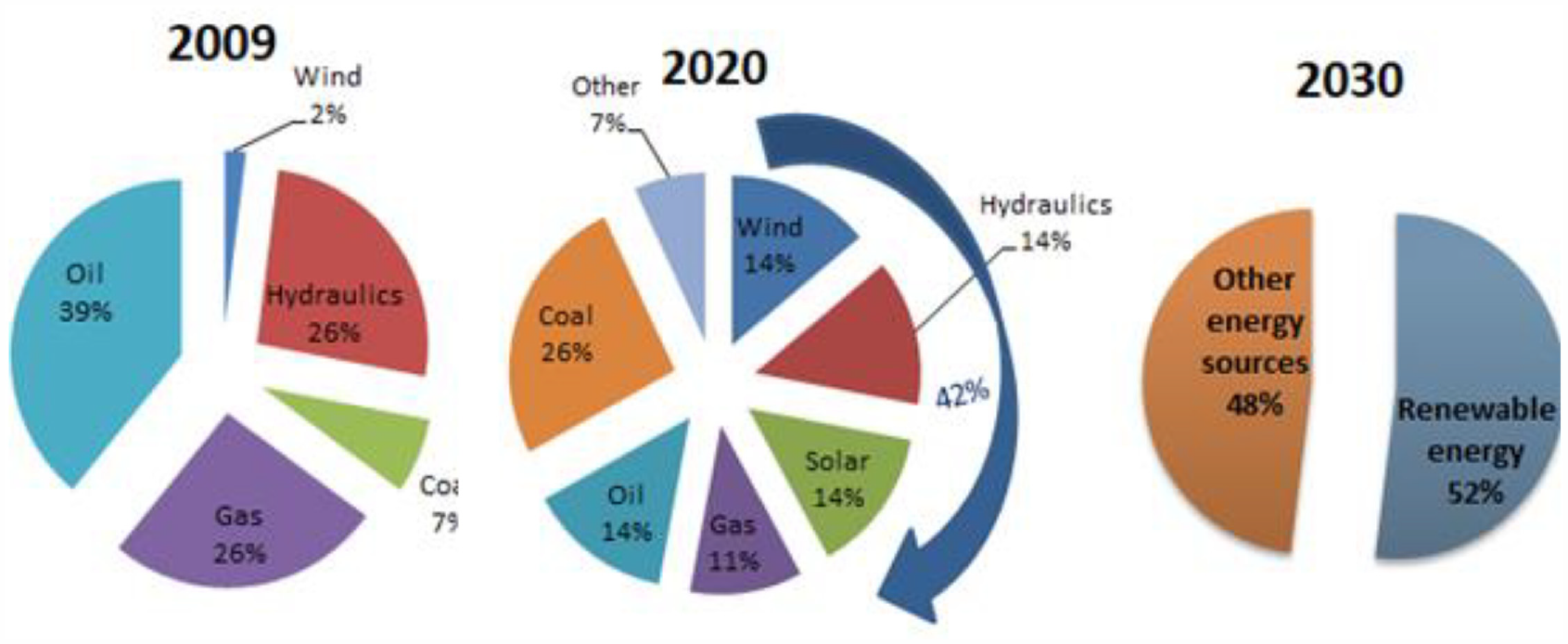
Evolution of the shares of different energies in electricity production in Morocco 2009/2030 (IRENA).
It is crucial to consider that mentioned percentages correspond to the goals set for Morocco by 2020. However, it has become evident from the provided data that these goals have not been fully achieved. It is noteworthy that the figure depicts the percentages as excepted targets rather than actual accomplishments.
It is worth noting that the actual wind potential may vary depending on the height of the wind turbine used, and it is therefore necessary to make wind speed measurements at different heights for a more accurate assessment of the wind potential of a given area. Additionally, wind potential maps may be subject to change over time due to new wind measurement data, new wind turbine technologies, and new energy policy developments (Abdessamad et al., 2019; Ezzaidi et al., n.d.; SIE - Energy Investment Company, n.d.; Tizgui et al., n.d.).
Map of wind energy in Morocco
Morocco benefits from an important wind deposit with regions having average annual wind speeds above 10 m/s. This deposit was highlighted by the Center for the Development of Renewable Energies (CDER) with the help of the German cooperation (GTZ), which allowed the installation of several measuring masts on different sites and the monitoring of the data for periods of at least 1 year. As a result, the north of the nation (from TANGER to TETOUANE) and the coastal strip from TARFAYA to LAGOUIRA are the most potential areas for the development of wind projects (Ait and Khomri, n.d.; International Energy Agency, 2013; International Renewable Energy Agency, 2014). There are several classifications of areas in Morocco based on wind speed. These classifications are generally based on wind speed measurement data and aim to identify the most suitable areas for wind energy production.
One of the most commonly used classifications is the classification of wind areas into five categories based on wind speed at a height of 10 m:
Category 1: Wind speed below 4 m/s.
Category 2: Wind speed between 4 and 5 m/s.
Category 3: Wind speed between 5 and 6 m/s.
Category 4: Wind speed between 6 and 7 m/s.
Category 5: Wind speed above 7 m/s.
According to this classification, the most suitable regions for wind energy production are those with high wind speed values, that is, categories 4 and 5. The coastal areas of the Atlantic, the mountainous regions of the Rif and Middle Atlas, and the southern regions of Morocco are considered the most productive wind energy.
Note that this classification based on wind speed measurement data has a height of 10 m and that the actual wind values may vary depending on the height of the turbine used. This leads to wind speed measurements at different heights for an accurate assessment of the wind potential of a given area (Enzili et al., 1998; Global Wind Energy Council (GWEC), 2016; Zejli and Bennouna, 2009).
There are several maps that show the wind potential in Morocco. These maps are generally based on wind speed measurement data and aim to identify the most suitable regions for wind energy production. There are also maps that show windy areas with low wind density, and these maps show regions where it is unlikely to install wind farms (Figure 7).
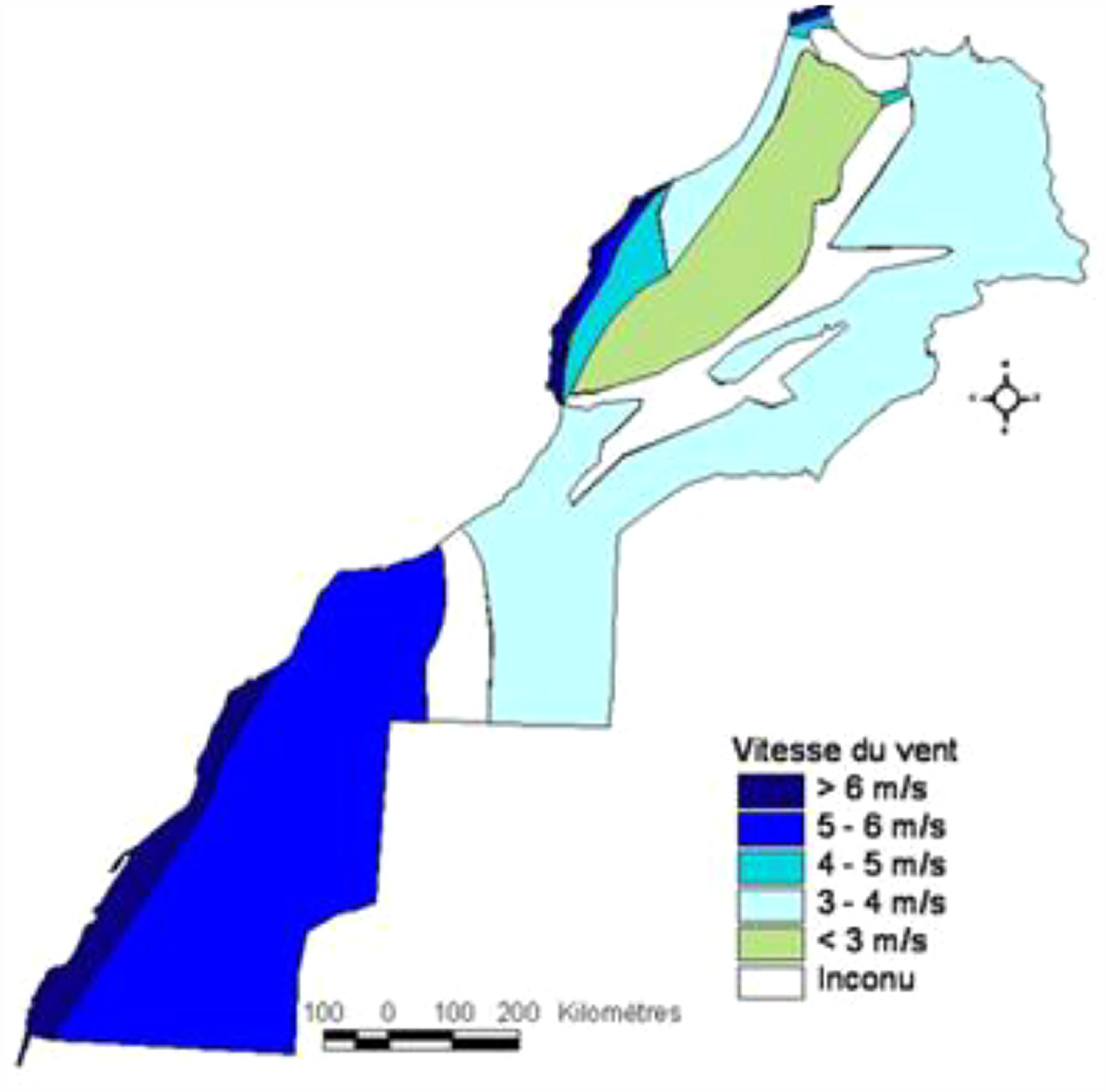
Map of wind in Morocco taken by the Renewable Energy Development Center (El Khchine et al., 2019; Mouline, n.d.).
Evaluation of wind potential coastal regions of Morocco
The most suitable regions for wind energy production are those in the northeast and southwest of the country. The northeastern coastal regions, such as TANGER-TETOUAN-AL HOCEIMA and the Oriental, have strong and regular winds that are conducive to wind energy production. The southwest of the country, especially the regions of SOUSS-MASSA and GUELMIM-OUED Noun, also have strong and regular winds that can be used for wind power production (Alami et al., 2023; Haddouche, 2006; Salime et al., 2023).
In addition, southern Morocco, notably the regions of LAAYOUNE and DAKHLA, also has significant wind potential thanks to the winds targeting these regions. Wind projects in these regions have been developed to meet local energy needs and to diversify the country’s energy sources.
Studies have evaluated wind power density using wind speed data and the WEIBULL distribution. The findings demonstrated that various sites’ wind power density and speed varied. Therefore, the writers also examined the various locations and determine which would best utilize wind energy. Based on the wind rose at different sites in the country, such as AL HOCEIMA, ASSILA, DAKHLA, ESSAOUIRA and southwest, particularly LAAYOUNE, wind performance was evaluated at various sites in Morocco (Figure 8) (
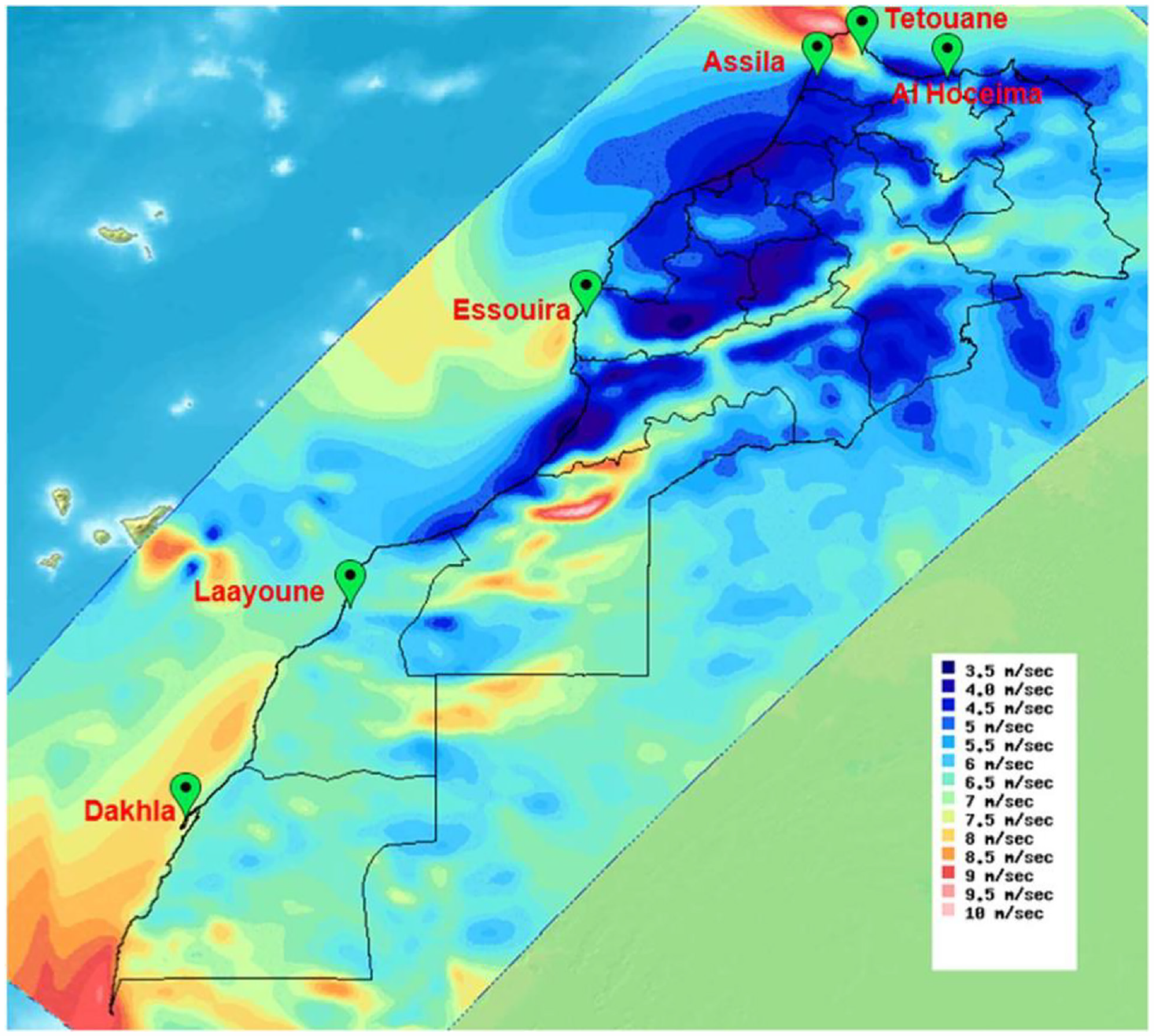
Morocco wind’s map (Allouhi et al., 2017).
Wind rose definition
A wind rose is a meteorological polar graph to represent wind speed distribution and direction at a specific location. It is often used in wind farm site studies to characterize wind resources. It shows the time during which the wind blows in each sector and can also show the energy of the winds in different directions (Bouderbala et al., 2022; Majout et al., 2022b).
Observations and results
For AL HOCEIMA (Figure 9(a)), the dominant wind direction is mainly from the east and west For TETOUANE ((Figure 9(b)), the dominant wind direction at a height of 50 m is from the east with an occurrence of 17.5%. At these three sites, it was noted that the weakest and least frequent wind directions were from the north and south.
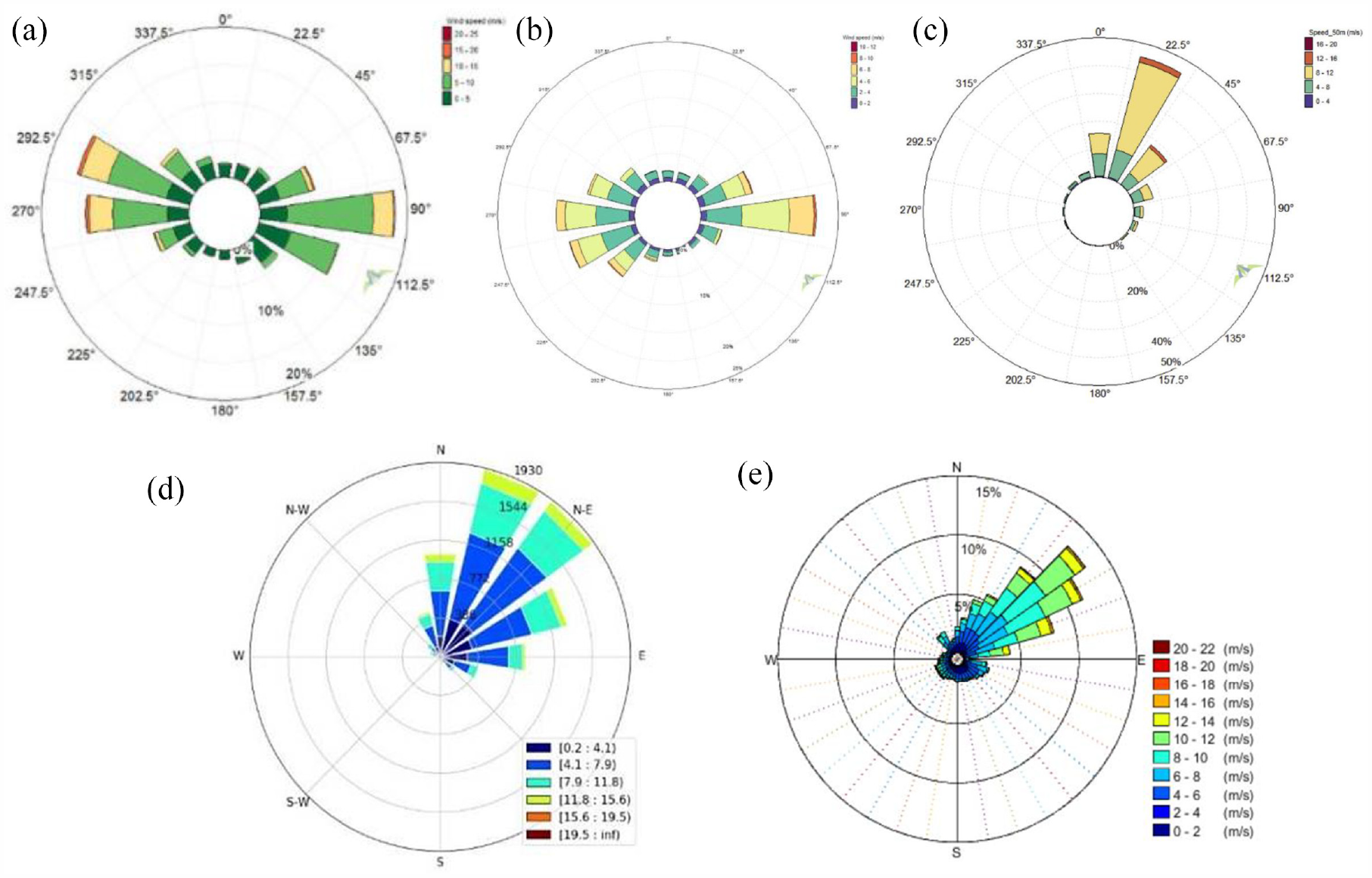
Wind roses in various regions of Morocco (Allouhi et al., 2017): (a) wind rose polar diagram for ALHOCEIMA (Renewable energy, n.d.), (b) wind rose diagram for TETOUANE (Allouhi et al., 2017), (c) wind rose polar diagram DAKHLA site (Kousksou et al., n.d.), (d) wind rose diagram for LAAYOUNE (Asghar et al., n.d.), and (e) wind rose and wind speed at ESSAOUIRA (Onshore Wind Farm Project, 2013).
The most frequent wind direction observed in DAKHLA (Figure 9(c)) and LAAYOUNE (Figure 9(d)) was 22.5° (north direction), with 37% and 42% occurrence, respectively. For ESSAOUIRA, the dominant wind direction at a height of 50 m was northeast. According to these data, Morocco’s regions with the strongest and most consistent winds are generally located in the northwest of the country near the Atlantic coast and in the southeast near the Algerian border. Other regions in Morocco, notably the Middle Atlas and the Rif, have more regular and less powerful winds.
The analysis of wind turbine performance showed that the DAKHLA and LAAYOUNE sites are the most suitable for grid-connected wind energy systems, while the ESSAOUIRA (Figure 9(e)) site are more suitable for stand-alone wind energy applications. The other sites (Al HOCEIMA and TETOUANE) are less suitable for wind power applications (Figure 9).
It is also important to note that winds vary in intensity and direction throughout the year due to seasonal weather variations. Therefore, monitoring wind conditions is important to ensure wind turbines are operating optimally.
The Morocco of large projects, with multiple challenges
Morocco has launched many projects in the field of renewable energy to break its dependence on fossil fuels. These projects represent a significant challenge for Morocco, as they require significant investments, effective coordination between different stakeholders, and adaptation to the country’s weather and geographical conditions.
Challenges and obstacles
Several obstacles and challenges must be overcome to achieve Morocco’s wind energy development goals.
Despite these obstacles, Morocco continues to implement policies and initiatives to overcome challenges and achieve its wind energy development goals. Moroccan authorities are also working closely with companies and investors to overcome these obstacles and promote wind energy development in the country.
Approach to accelerate the deployment
Several recommendations and steps can be taken to accelerate wind energy deployment in Morocco.
Developing large-scale wind projects, such as the NOOR OURZAZATE farm, can contribute to increasing the installed wind capacity in the country and attracting investments in the sector.
Encouraging private investments through tax incentives and support programs.
Improving transmission infrastructure to transmit wind energy produced to consumption centers, maximizing the use of produced wind energy.
Promoting community participation
Continuing to invest in research and development to improve wind technologies and reduce installation and operation costs of wind projects.
Improving regulatory frameworks to make wind energy development more reliable and predictable for investors and developers.
In summary, it is necessary to continue implementing policies and initiatives to accelerate wind energy deployment in Morocco, working closely with companies and investors to overcome challenges and obstacles and promote wind energy development in the country.
Strategy and plan to optimize renewable energy
The optimal utilization of renewable energy in each region of a country relies on a combination on internal mechanisms, education, and specific research and development (R&D) programs. Here’s how these elements can contribute to the development of renewable energy tailored to the needs and resources of each region.
In summary, to ensure the successful development of renewable energy tailored to the needs and resources of each region in a country, it is essential to combine favorable internal mechanisms, effective education, targeted R&D programs, and coordinated regional initiatives.
Conclusion and prospects
Morocco is a pioneer among MENA countries in implementing a regulatory framework for developing renewable energy efficiency. This paper has conducted a comprehensive survey of wind energy in Morocco, defining wind energy and its potential in the world and in Morocco. It covers the barriers and opportunities associated with wind energy development and several strategies to increase and expand the use of wind resources.
In conclusion, The Moroccan government has implemented wind energy initiatives and projects to reduce its dependence on fossil fuels.
Consequently, Morocco has abundant wind resources; coastal regions such as the TANGER-TETOUANE-AL HOCEIMA region, the Oriental region, the Atlantic region, and the country’s southern regions have strong and constant winds that are conducive to wind energy production. Nevertheless, transmission issues and high costs are the obstacles that Morocco must overcome to achieve its objectives. However, despite these obstacles, Morocco continues implementing policies and initiatives to overcome these challenges and achieve its goals.
As a result, the country has increased the share of clean energy in the electricity mix to 37.6% by 2021, of which 45% is reserved for wind. In addition, it has accepted the new challenge of increasing its share of RE installation to a total capacity of 52% by 2030.
Key institutions
Ministry of Energy, Mines, Water and Environment: www.mem.gov.ma.
AMEE—Moroccan Agency for Energy Efficiency: http://www.amee.ma/index.php/en/AMEE (formerly ADEREE) advises the private and public sectors and deals with standardization and harmonization of standards. It also provides technical and financial advice on energy efficiency.
ONEE—National Office of Electricity and Drinking Water: http://www.one.org.ma
ONEE (electricity division) has, among others, the following objectives:
To ensure the public service of production and transport of electrical energy.
To manage the total demand for electricity in the Kingdom;
Satisfy the country’s demand for electricity in terms of electrical energy
At the best quality-price ratio;
Work for the promotion and development of renewable energies.
SIE—Energy Investment Company: https://www.siem.ma/
SIE, founded in 2009, is the financial arm of the government for the realization of the planned energy mix. The organization develops projects in the energy sector with the help of partners, investors and developers. EIS has a capacity of MAD 1 billion (approximately 100 million euros) available through the Electrification Development Fund (FDE). A quarter of their capacity is allocated to energy efficiency and three quarters to renewable energy.
MASEN—Moroccan Agency for Solar Energy:
ANRE—The National Electricity Regulatory Authority: https://anre.ma/en/
IRESEN—Institute of Research in Solar Energy and New Energies: http://www.iresen.org/ IRESEN is a research institute on solar energy and new energies. It offers opportunities to create synergies between the socioeconomic world and the scientific world.
Footnotes
Declaration of conflicting interests
The author(s) declared no potential conflicts of interest with respect to the research, authorship, and/or publication of this article.
Funding
The author(s) received no financial support for the research, authorship, and/or publication of this article.
