




Abstract
Background:
Stability during standing is achieved by a complex coordination process between various human systems. The stability of normal subjects and patients with various neuromuscular disorders has been evaluated by common methods based on force plate data analysis for one minute. However, most of the people frequently stand for a prolonged period during daily activities.
Objectives:
This study aimed to evaluate the stability of subjects during a longer period of time. Moreover, the new method was introduced to analyze the stability of subjects with musculoskeletal disorders.
Study Design:
Experimental.
Methods:
Four groups of normal adults and children, individuals with spinal cord injury (SCI) and Perthes disease were recruited in this study. Stability of the subjects was evaluated by using parameters collected from centre of pressure (COP) sways obtained while subjects standing on force plate for one and then five minutes based on the old and new methods. Two sample t-test was used to compare the stability of the subjects by the commonly used method. The number of stable to unstable frames was selected for final analysis based on the new method.
Results:
Based on the traditional method, the SCI and Perthes patients were more stable than normal subjects (p < 0.05). Moreover, children were more unstable in the anteroposterior plane than adults. However, based on the new method, SCI and patients with Perthes disease were more unstable than normal adults. Moreover, in mediolateral direction the results of stability analysis with the new method differed from that of the traditional method.
Conclusion:
The new method of stability analysis seems to be more sensitive and accurate than that of the traditional commonly used method. Based on the new method, stability is the ability of a subject to return from an unstable position to a stable one and to remain in a stable one for a certain period of time.
Clinical relevance
The results of this research can be used by most clinicians to evaluate the stability of subjects with various musculoskeletal disorders.
Background
Stability during standing is achieved by a complex process which involves the coordination of various systems of the body such as neuromuscular and musculoskeletal systems.1,2 Stability is measured in static (quiet standing) and dynamic conditions (maintaining a stable position while undertaking a prescribed movement) by the use of a force plate, which provides accurate information about postural control through calculation of centre of pressure (COP) or the point of application of the force distributed under the feet.2-5
Various parameters have been used to measure stability based on the force plate output including: COP excursion, velocity of COP sway, and path length of COP sways in the mediolateral and anteroposterior directions.5-7 Although most of the researchers asked the subjects to stand on the force plate for one minute, a few of them measured stability during prolonged standing (30 minutes).8-11 It is noticeable that in our daily life we frequently stand for a prolonged period while talking, waiting in a line or standing in a work environment. There is no doubt that continuous slow sway of the body is associated with fast and gross body movement to diminish discomfort caused by physiological factors. 10
Increased postural sway during prolonged standing can be viewed as a neuromuscular indication of fatigue and discomfort. Standing for a long period has been shown to cause fatigue and low back pain. The other problem associated with stability analysis for a long period of time is that it is time consuming. Therefore, a new method of stability analysis has been developed by the author. In this method, subjects stand on a force plate for five minutes. The main reason for selecting this length of time, is that it is not as time consuming as the previous methods of stability analysis during prolonged standing. Moreover, it mostly represents the situation of standing in daily activities. The stability of subjects is determined based on the parameters collected from the COP sways in both mediolateral and anteroposterior directions. In the new method the output of force plate is divided into 20-second frames. The most stable position is determined based on the minimum value of the COP sway. In order to determine the stability of the subject with respect to time, the difference between the stability of the subject in the most stable frame and other frames will be determined by two sample t-tests. The numbers of stable to unstable positions determine the stability of the subject. It seems that the new method of stability analysis is more sensitive than the old methods. However, there is no research to show the sensitivity of the new method in contrast to commonly used methods. Therefore, the aim of this research was to measure the suitability of the new parameter in contrast to commonly used ones. In order to compare the suitability of the new method, the stability of normal and pathologic subjects was evaluated by two methods.
Methods and materials
Subjects
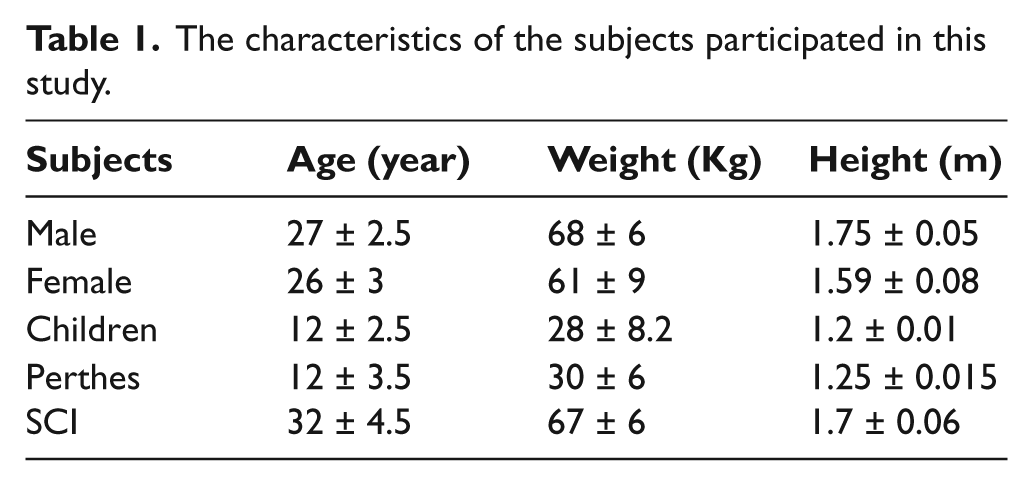
Four groups consisting of 30 adult normal subjects (male and female), 10 healthy children, five patients with Perthes disease and two paraplegic subjects participated in this study. They had no contraindication for prolonged standing based on the past medical records. The paraplegic subjects had an incomplete lesion at level T12. The main reason to select two groups of normal subjects with various ages and two groups of patients was to determine the sensitivity of the new method to determine the effects of age, gender and musculoskeletal disorders on standing stability. The characteristics of the subjects who participated in this research study are shown in Table 1. Ethical approval was granted from the Isfahan University of Medical Sciences ethical committee. All subjects were asked to sign a consent form prior to data collection. The subjects with Perthes were able to stand without using any orthoses. However, paraplegic subjects could stand with the use of Mohammad Taghi Karimi Reciprocal Gait Orthosis (MTK RGO), without crutch or walker.12,13
The characteristics of the subjects participated in this study.
Equipment
A Kistler force plate instrument with piezoelectric force transducer was used to measure the centre of pressure (COP) which is recognized to be a good approximation of sway of centre of gravity (COG) in a horizontal plane. The force plate and amplifier associated with it produce six voltage outputs representing the mechanical input into: Fx, Fy, Fz, Mx, My, Mz. The location of COP can be determined based on the following equations, in which 0.057 is the thickness of the force plate.5,14


Procedure
The subjects were asked to stand on the force plate for a period of five minutes. They were instructed to look forward with their arms at their sides. The output of the force plate was filtered with a Butterworth low pass filter with a frequency of 10 Hz. The first 20 seconds of the data were deleted to avoid the effects of the subjects’ movement at onset of standing on the force plate. The data were split out into 20-second periods. Stability of the subjects was determined through the following parameters:
a) the excursion of the COP in the mediolateral plane b) the excursion of the COP in the anteroposterior plane c) the path length of the COP sway in the mediolateral direction d) the path length of the COP sway in the anteroposterior direction.
The following equations were used to calculate above-mentioned parameters.5,7,15




Where SPAP, SPML, COPEAP and COPEML are the sway path length in the antroposterior direction, the sway path length in the mediolateral direction, the COP excursion in the antroposterior direction and COP excursion in the mediolateral direction, respectively.
The normal distribution of the aforementioned parameters was determined by use of the Shapiro-Wilk test. The most stable position was defined as a position which had the minimum value of the COP sway. The stability of the subjects in the most stable position and other 20-second periods was compared by use of paired sample t-test with a significant point of 0.05. If the p-value of the difference (between the most stable position and other positions) was more than 0.05, the frame was defined as stable. The unstable position was defined as a position which had a p-value less than 0.05. The number of stable to unstable positions represented the stability.
Results
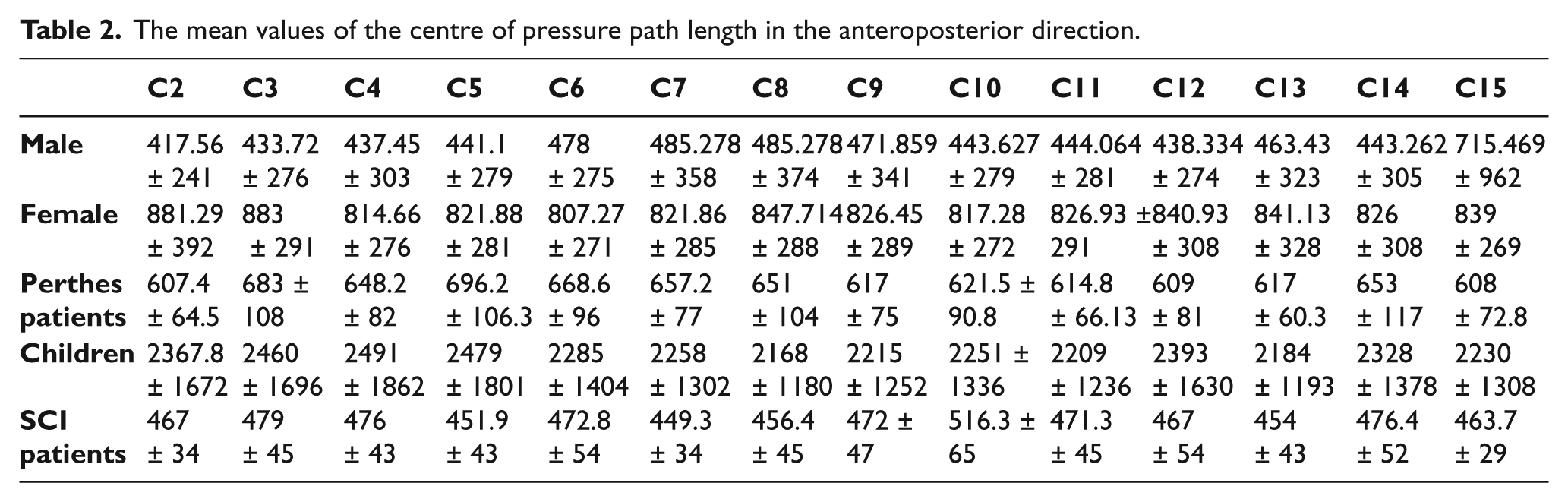
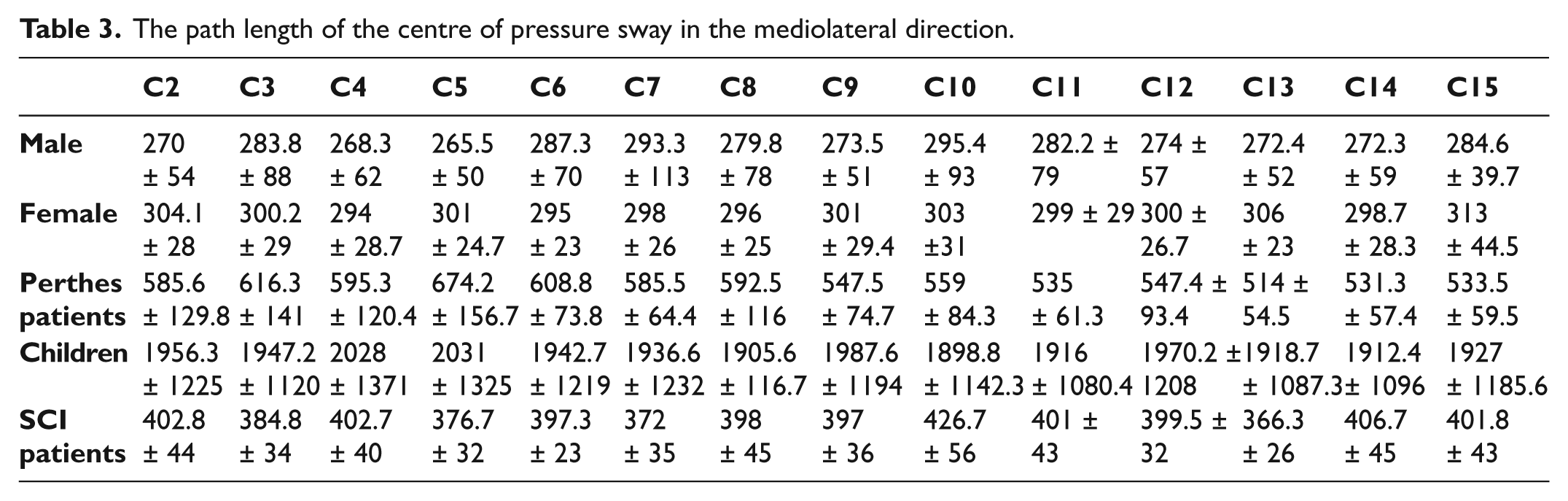
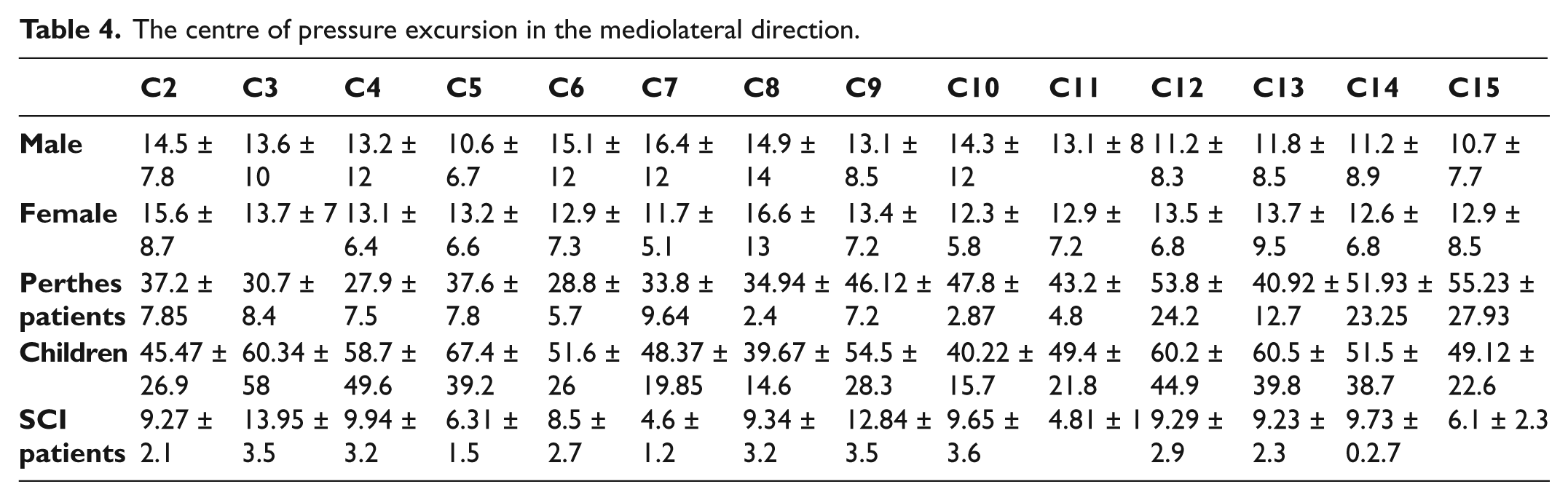
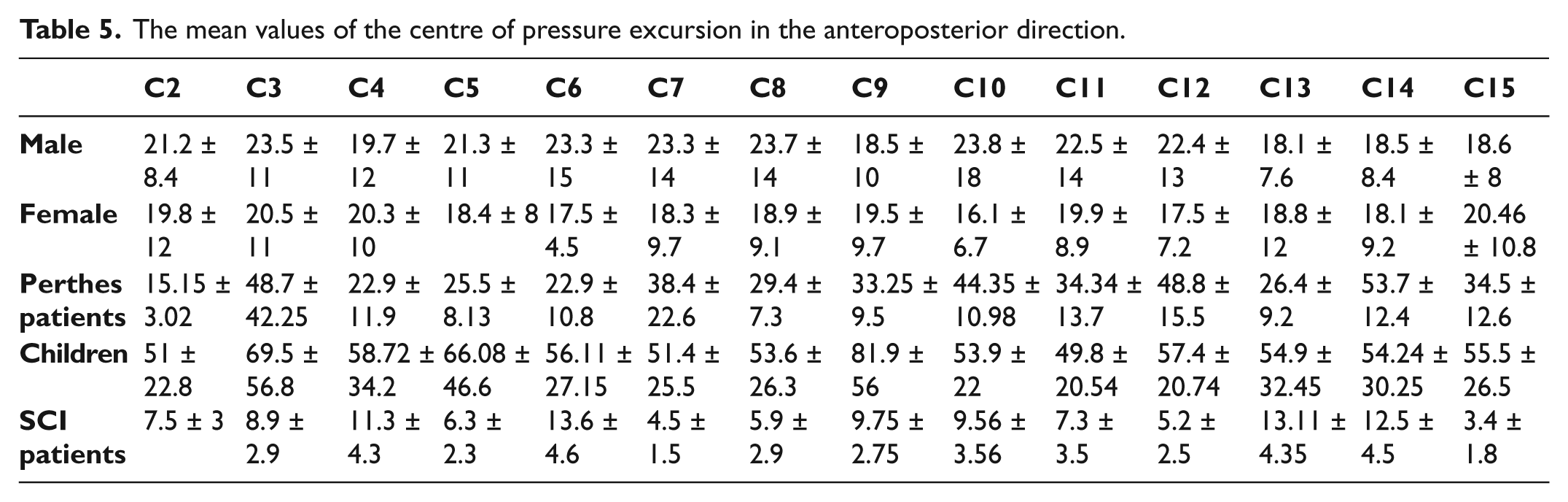
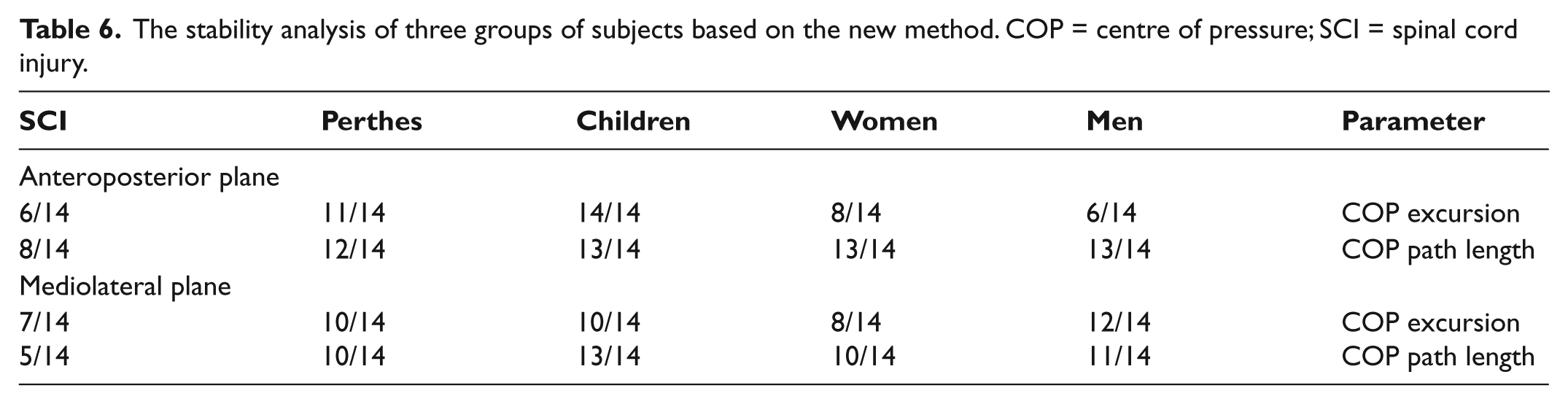
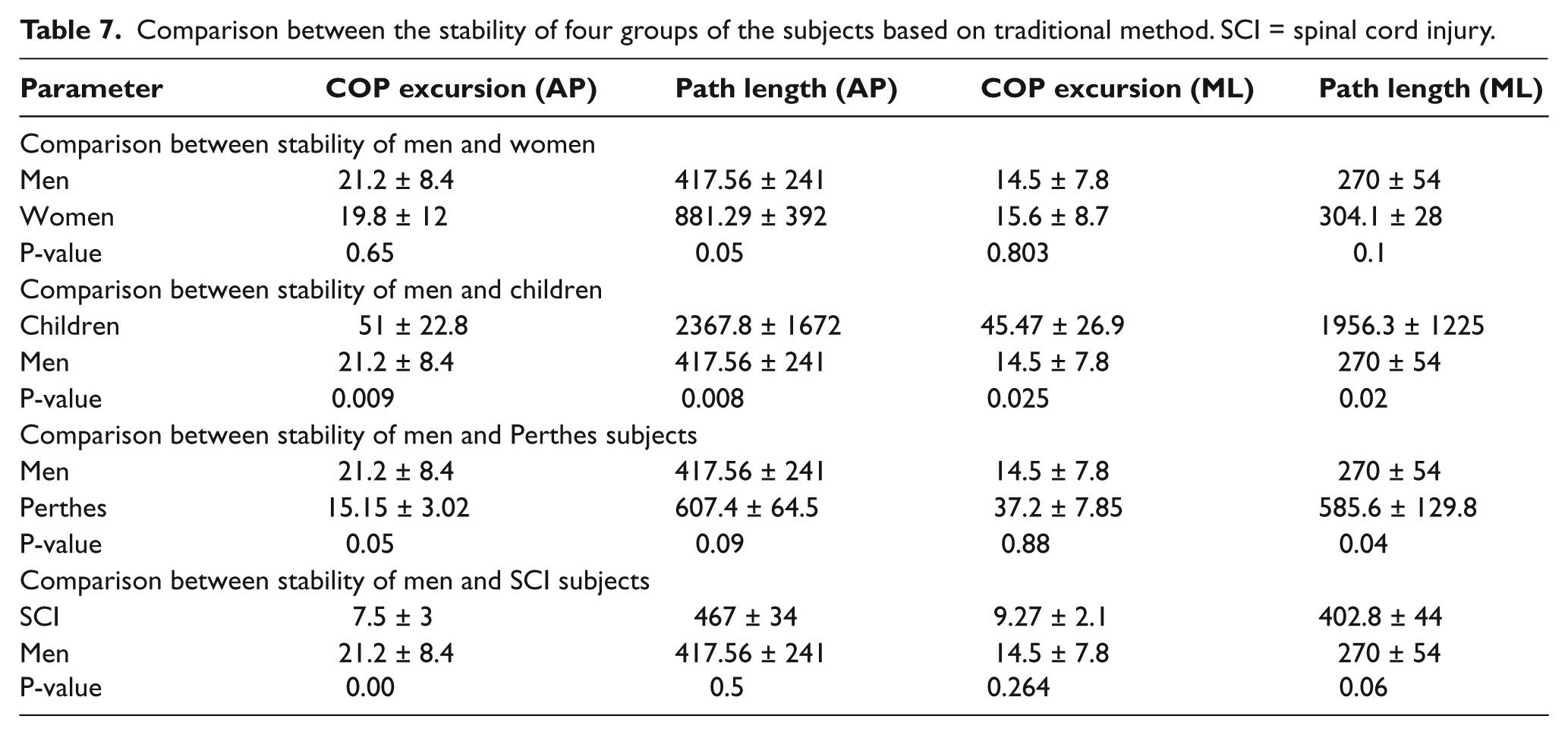
The mean values of stability parameters for all three groups calculated based on the above-mentioned method are shown in Tables 2 to 5. As it can be seen, the mean values of the stability parameters varies among frames. Figures 1 and 2 represent the patterns of stability during quiet standing for a period of five minutes. The most stable position was defined as the position in which the excursion of the COP, and COP path length has the minimum value. The most stable and unstable positions were presented in dark and light green colours, respectively in Figures 1 and 2. The unstable position was presented in red colour. The numbers of stable to unstable positions are represented in Table 6. As can be seen from this table there was no significant difference between the stability of female and male participants in this research project. The comparison of stability of four groups of participants with the old method is shown in Table 7.
The mean values of the centre of pressure path length in the anteroposterior direction.
The path length of the centre of pressure sway in the mediolateral direction.
The centre of pressure excursion in the mediolateral direction.
The mean values of the centre of pressure excursion in the anteroposterior direction.
The stability analysis of three groups of subjects based on the new method. COP = centre of pressure; SCI = spinal cord injury.
Comparison between the stability of four groups of the subjects based on traditional method. SCI = spinal cord injury.
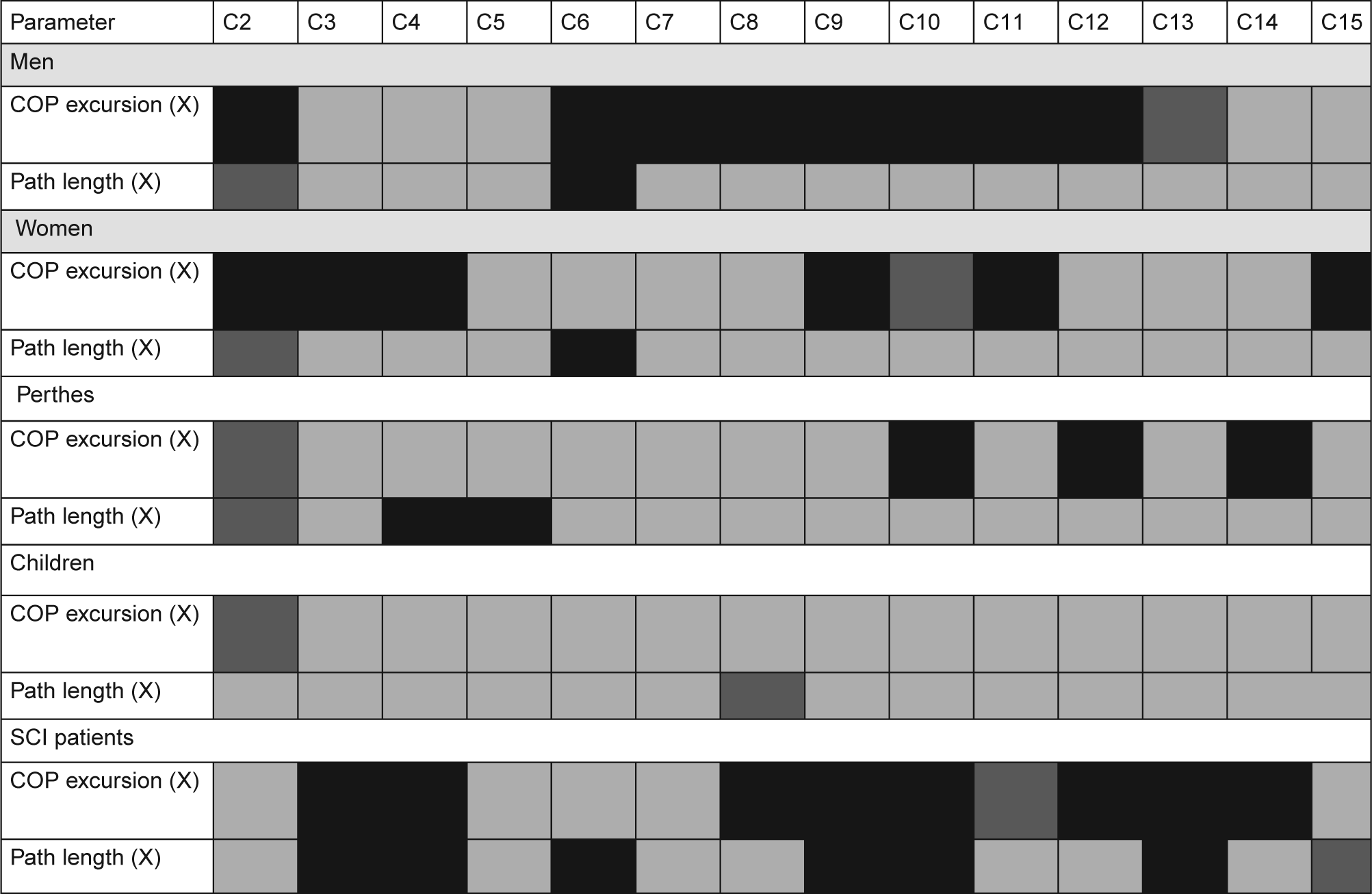
The pattern of the stability in the anteroposterior direction. COP = centre of pressure; SCI = spinal cord injury. (Stable = dark and light green; unstable = red).
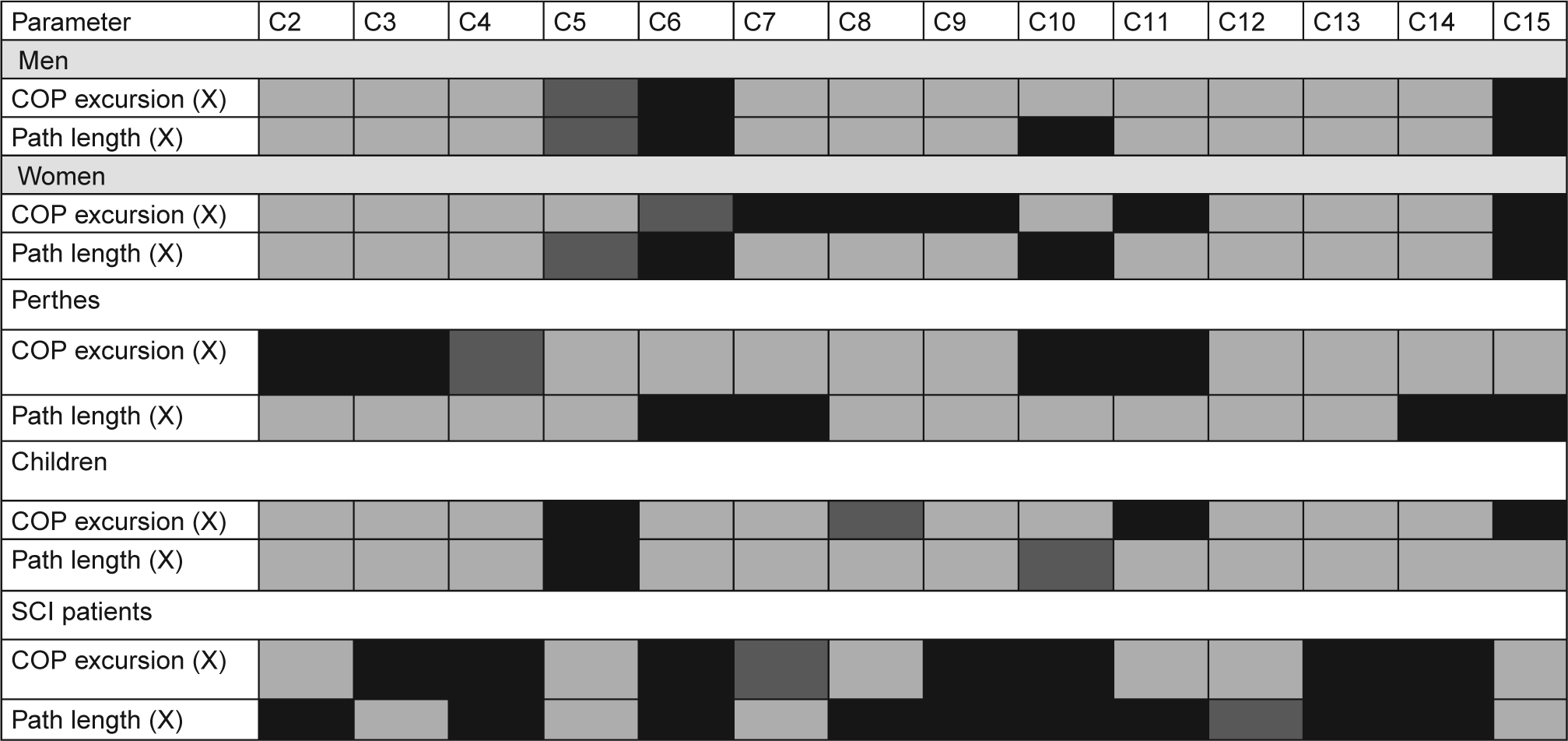
The pattern of the stability in the mediolateral direction. COP = centre of pressure; SCI = spinal cord injury. (Stable = dark and light green; unstable = red).
Discussion
In normal everyday life we stand for a long period of time. During prolonged standing there are continuous low amplitude sway movements with some occasional fast postural changes to prevent fatigue and discomfort. It has been shown that in normal healthy adults, one to two fast postural changes are made per minute, in order to decrease the influence of fatigue on standing stability.8-11 There is no doubt that the muscle fatigue influences the stability of the subjects. Therefore there would be another view regarding stability which is the ability of the subject to move and stand in a stable position from an unstable position. It does not matter how great the difference between the stability parameters of the controls and patients are. However, it is important that the subject has an ability to return and remain in a stable position. By considering this point of view the important parameter which represents the stability of the subject would be the number of stable to unstable positions.
Unfortunately, the traditional method of stability analysis cannot represent the stability based on the new definition, as the data are collected for a short period of time. There is no research in the literature regarding the use of the new method. Therefore, it was aimed to determine the stability of the controls and patients with various musculoskeletal disorders based on the new method. Moreover, it was aimed to determine which method can better distinguish between the stability of various participants.
The stability of male and female subjects was compared to evaluate the usability of the new method in contrast to the old. There is no significant difference regarding the stability of male and female subjects in the literature.16,17 Although it seems that the stability of females is more than that of males because of the difference between the height of female and male, there is no strong research to support it. Generally, the studies that have reported gender difference in balance performance have failed to normalize their data to body size. The results of the current study showed that the stability of male and female based on the traditional method differed from each other; here was no difference between the stability of the subjects based on the new developed method.
This study revealed that using traditional methods to evaluate stability (one-minute stability test) is not an acceptable method in this regard. The reason is that the most stable and unstable positions are located in the second, third and fifth minutes, respectively.
The stability of paraplegic subjects while standing with the MTK RGO orthosis was compared with that of the normal subjects to compare the outcome of stability analysis based on the new method with that of the traditional one. Based on the traditional method of stability analysis used by some investigators, the paraplegic subjects are not as stable as normal subjects. The results of stability analysis of paraplegic subjects (standing with the new design of orthosis) showed that they were more stable than normal subjects, based on the traditional method of stability analysis (Table 7). 18 However, as is shown in Table 6, they were more unstable during standing based on the new method of stability analysis. There is no doubt that the paraplegic subjects cannot be as stable as the normal subjects,1,15,19,20 since they have lost the strategies required to stabilize the ankle, knee and hip joints.18,21
When the stability of normal subjects was compared with that of Perthes subjects, it was shown that the subjects with Perthes were more stable in the antroposterior direction compared with normal subjects based on the traditional method (p-value < 0.05). There was no significant difference between the stability of normal and Perthes subjects in the mediolateral direction based on the traditional method. However, based on the new method the stability of subjects with Perthes disease differed significantly from that of normal subjects only in the mediolateral direction. The results of gait analysis of subjects with Perthes disease showed that they had weakness of muscles surrounding the hip joint in the mediolateral direction. 22 Therefore, these subjects have an unstable posture in the coronal plane. It can be concluded that the new method can represent the stability better than the traditional method.
Evaluation of the difference between the stability of children and adults was the other parameter used to compare the suitability of the new method compared to the old one. Although, it has been shown that the physiological function of the systems responsible for postural control declines with age,23,24 the influence of age on balance during stance is controversial. Different results concerning the association between balance and age with a platform have been reported and some of them indicated that older subjects are less stable than adults. Some studies also fail to show any significant difference in standing balance of older and young subjects.25,26 Although, it has been reported that younger adults are more stable than children.23,27 However, the influence of proprioception and vision on balance control seem to be completely developed between the ages of three and four. 28 The same results also reported by Hirab, Rich and Hayes.29,30 The ages of children and adult subjects who participated in this study were 27 ± 2.5 and 12 ± 2.5, respectively. Based on the above-mentioned results it seems that there should be no difference between their stability. Furthermore the results of nonlinear analysis presented by Stergio showed that the complexity of COP sway was approximately the same for children older than five and adult subjects. 31 Therefore, it can be concluded that the stability of adults and children in this research should be the same. As can be seen from Table 6, the output of the new method coincides with the above-mentioned beliefs.
From the results of the research discussed above, it can be concluded that the new method can represent the stability of normal and handicapped subjects better than the commonly used method. However, there are some limitations which need to be acknowledged in this study as follows:
a) only patients with Perthes disease and paraplegic subjects participated in this study b) the data were collected only for one trial c) the sensitivity of the new and old methods was not evaluated in this study d) the repeatability of the new parameter was not measured in this study
Finally, it is recommended that the stability of other patients is evaluated based on the new method of stability analysis. Moreover, the sensitivity of the new and old methods should be investigated in further studies.
Conclusion
After a comparison of a new and old method of stability analysis, it can be concluded that the new method could represent stability better than the traditional method.
Footnotes
Funding
This research received no specific grant from any funding agency in the public, commercial, or not-for-profit sectors