




Abstract
The purpose of the current study is to establish the deformation in a two-dimensional, isotropic, rotating half-space with gravitational field and initial stress that also has a heat source at the half boundary-space under magnetic field for Green and Naghdi II model. For the solution of the required problem, the methodologies of normal mode and approximate eigenvalues has been utilized. For graphical representation of different physical quantities such as displacement components, stress components, as well as the temperature distribution, Matlab software has been used. These results were compared with previous results in the same direction, and it was found that the treatment method for the aforementioned problem may form a basis for examining the effect of each of the gravitational field, magnetic field, rotation, and initial pressure on a thermally elastic body in the form of half an area without energy decay when neglecting some external influences.
Keywords
Introduction
In recent years, attention has been given to relevant issues, including coherence between numerous applications and beneficial aspects of the dynamic interaction between the thermal field and the mechanical field in solid materials can be found, particularly in contemporary aeronautics, space navigation, nuclear reactions, and high-energy particle accelerators, which play a crucial role in many branches of science and technology. The classical theory includes an inseparable linear and elastic thermocouple that is characterized by an infinite speed of propagation of heat signals, which is inconsistent with physical observations. As for the non-classical theory, it deals with thermal elasticity without dissipating energy at limited speeds of heat transfer, and this in turn supports what is called the second acoustic effect, and the statistics of this process usually differ from the Gaussian distribution (normal). The observed internal wave field’s non-Gaussian character has been mentioned for many areas of the world ocean by Wang and Gao. 1 A linear theory of eigenvalue approaches to coupled thermoelasticity without energy dissipation is suggested in Refs,2–4 in which the molecules of the material are exposed to classical displacement, a temperature field, and perhaps temperature. Radial vibrations of a rotating elastic hollow cylinder using the elasticity theory has been studied by Yahya and Abd-Alla. 5 The natural frequencies of the flap-wise radial vibrations of a rotating hollow cylinder have been determined while taking into account the spatial variation of the axial force. In 2008, the reflection of P-wave and SV-wave have been introduced by Das et al. 6 These waves are considered at the boundary of a half-space through a homogeneous, isotropic elastic thermal medium under a strain gradient elasticity theory. Also, they considered the influence of isothermal and insulated boundaries for the mentioned waves and solved it analytically. Ezzat and Youssef 7 employed the normal mode technique to study magneto-generalized motion through a perfectly conductive thermoelastic medium. The Green-Naghdi model is used in Taheri et al. 8 to examine thermal and mechanical waves on a layer’s thermoelastic solution. Green and Lindsay 9 presented an extended thermoelasticity theory by including double relaxation durations in the governing equations. Bagri et al. 10 investigates an alternative generalization of classical thermoelasticity to those that are currently available by using a combination of polynomials and trigonometric functions as form functions. Using an eigenvalue technique, Alzahrani and Abbas 11 analyzed generalized thermoelastic diffusion in a nanoscale beam. The mechanical loads on a generalized thermoelastic media with diffusion were explored by Choudhary and Deswal. 12 Two-temperature magneto-thermoelasticity was given the eigenvalue method by Sarkar and Lahiri. 13 Othman and Abbas 14 conducted significant research on generalized thermoelasticity and the thermal shock problem in a heterogeneous hollow cylinder with an energy decay. The approximate eigenvalues of thermoelasticity are obtained by Das et al. 15 for a transversely rotational isotropic medium. Lord and Shulman 16 developed a generalized theory of thermoelasticity. According to three theories of thermoelasticity, Ezzat et al. 17 looked into generalized thermoelectricity with temperature-dependent elastic coefficients. The solution of the out-of-eigenvalue method to micropolar thermoelectricity without energy dissipation was developed by Kumar et al. 18 Hetnarski and Ignaczak 19 browsed key features of generalized thermoelectricity. Thermoplastic interaction in cubic elastomeric crystals heated arbitrarily as shown by Abbas et al. 20 Kumar and Deswal 21 look at the disturbance brought on by thermo-mechanical causes in a thermoplastic homogenous micropolar in the shape of a half-space. Multi-layered piezoelectric nanostructures are now one of the most promising materials for smart nanodevices and nanocomposites, which are frequently employed as sensors and actuators in nano-electromechanical systems (NEMS) due to their remarkable performances in a wide range of material systems. For more information in this direction, see Refs.22–24 Li et al. 25 investigate transient responses of a spherical shell subjected to instantaneous thermal and chemical shock loadings at external surface, while it is assumed that a permeating substance is in contact with the rigid surface at its internal surface. A complete rate-dependent constitutive model of thermoelastic diffusion by fully considering temperature rate, strain rate, and chemical potential rate has been developed by Li et al. 26 Since studies of the coupling of thermodiffusion and mechanical deformation in solids have piqued the interest of those involved in the miniaturization of micro/nano-electromechanical devices and the widespread application of ultrafast heating technologies, Li et al. 27 investigate generalized thermoelastic diffusion problems with fractional order strain within the extended thermodynamic framework.
In the present work, using the Green and Naghdi 28 II model, deformation in a two-dimensional, isotropic, rotating half-space with gravitational field and starting stress is investigated. This half-space also features a heat source at the boundary, under a magnetic field. The components of displacements, stress components, and temperature distribution are obtained by utilizing the technique of normal mode and approximative eigenvalues are also used to tackle the topic under discussion. Furthermore, the MATLAB program is used in this instance to depict temperature, displacement distributions, and thermal stress for the model under consideration. In addition, the fundamental elements have been mathematically and visually reproduced with our contributions, such as the gravitational field, magnetic field, rotation, and initial stress.
The problem formulation
Here, we shall use Green and Naghdi’s theory
28
to investigate a homogeneous magneto-thermo-elastic half-space under the effect of a time-dependent heat source as well as via the impact of rotation, gravitational field, and initial stress as illustrated in Figure 1. To analyze our problem, we use the Cartesian coordinate system, with the origin on the surface (
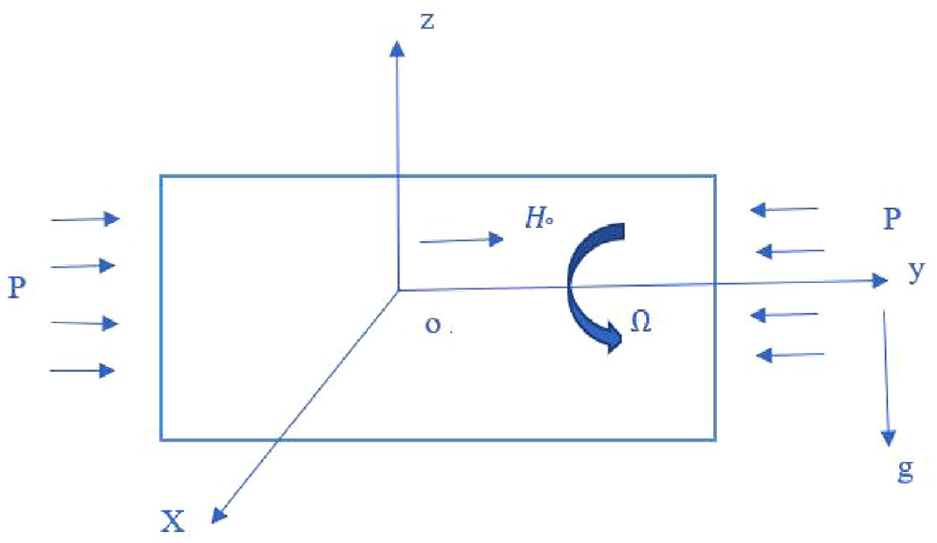
Geometry of the problem.
Maxwell equations
The controlling Maxwell’s equations are given by Wang and Dong 29 for the electrodynamics system as follows:
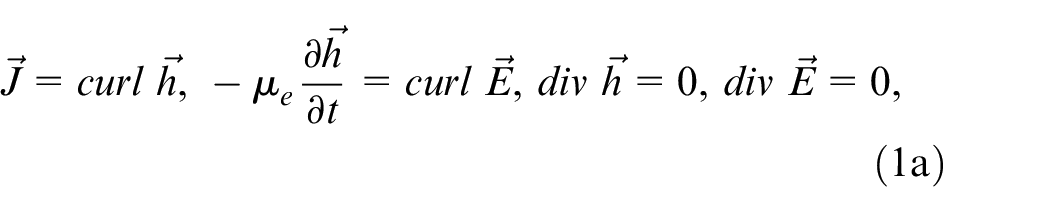

where
From the above equations, we can write
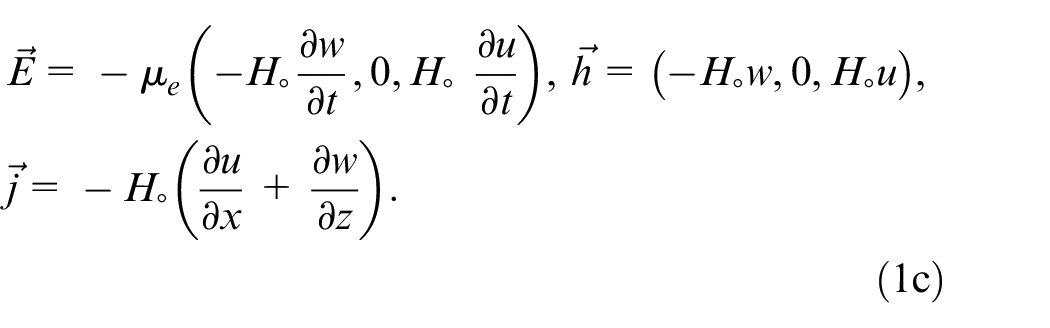
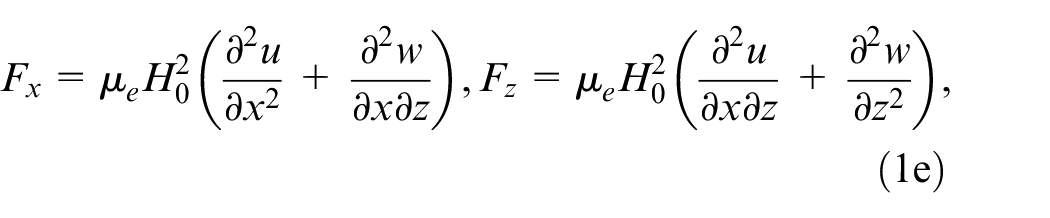
The force of Lorentz

So, we can obtain
Basic equations
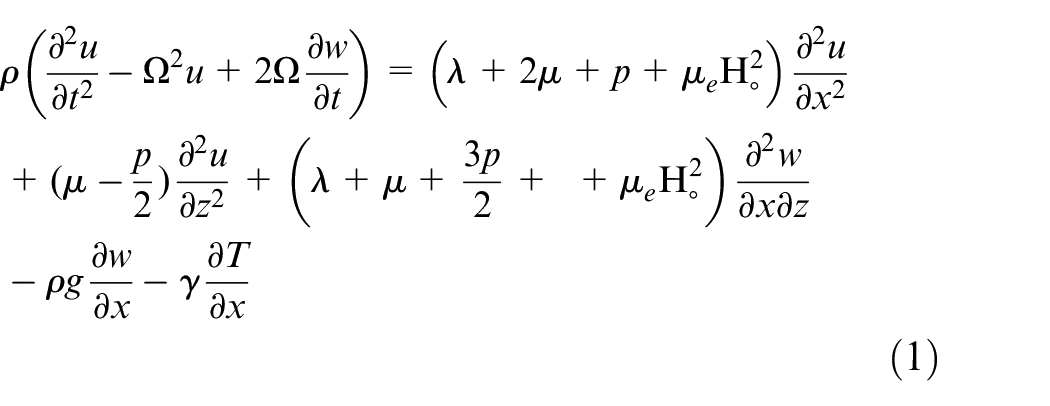
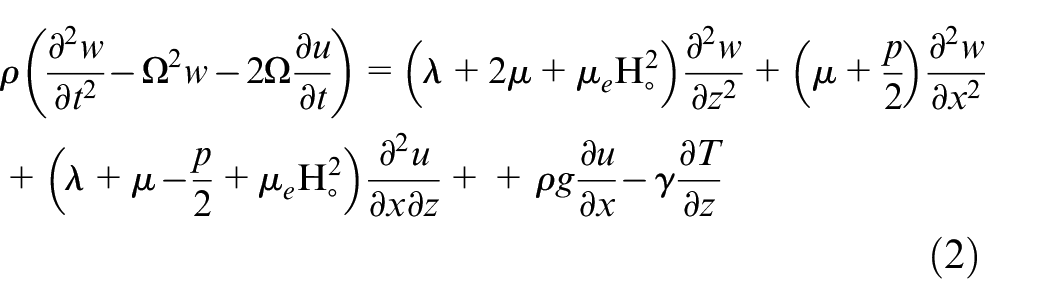
For a uniformly rotating, linear, homogeneous, isotropic, magneto-thermo-elastic solid under the effect of initial stress, gravity field and in the presence of heat source, the field equations of motion is given by
The heat conduction equation under Green-Nagdhi theory, is given by

The stress-displacement-temperature relations are:
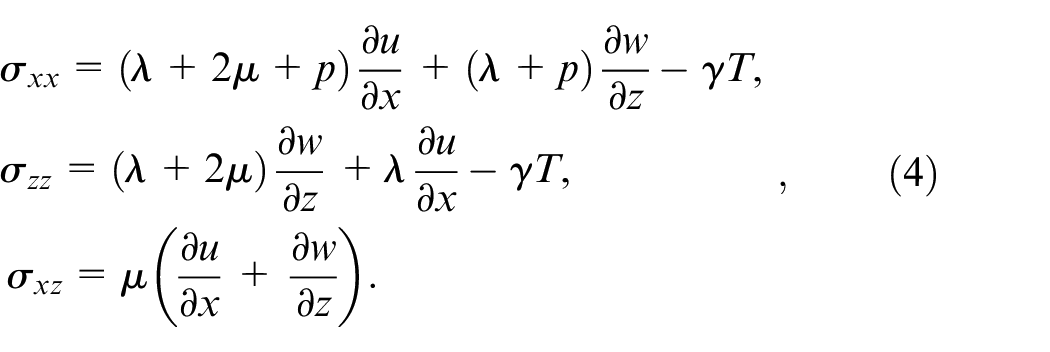

where λ and μ are Lame’s constant,
Now, the non-dimensional quantities are defined as follows:
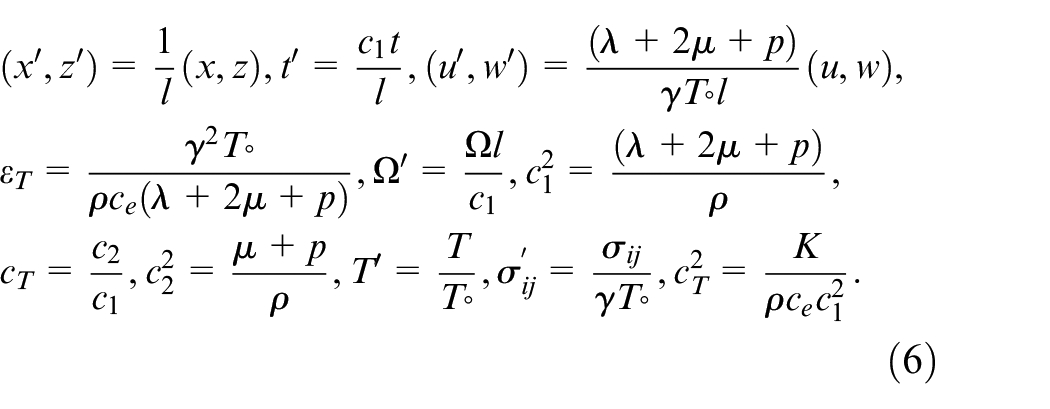
where
Applying the quantities in equation (6) to equations (1)–(5) yields
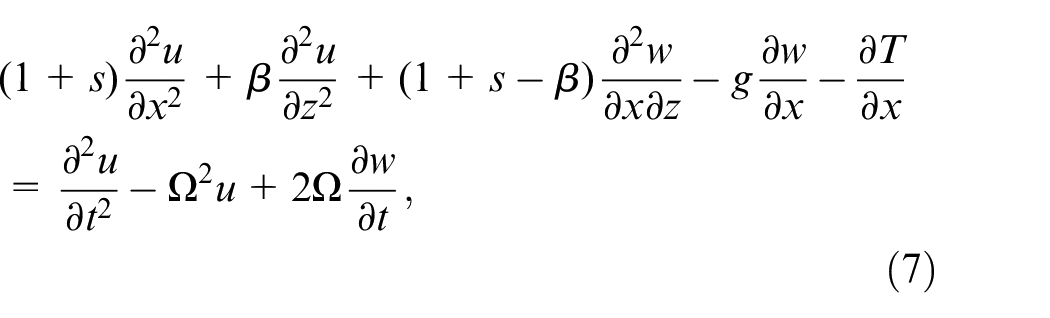
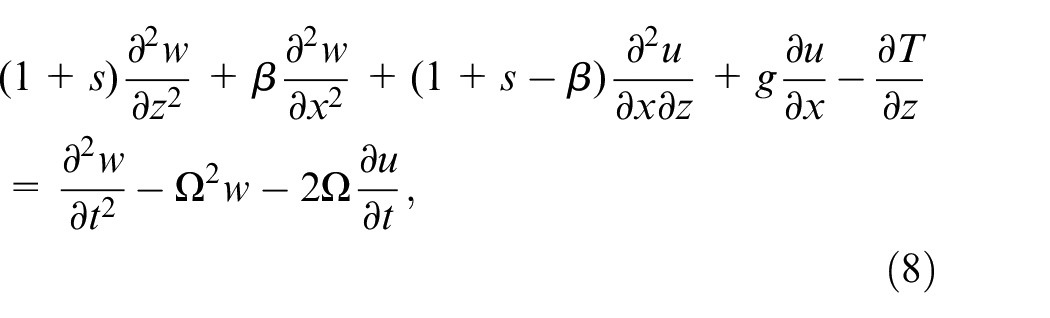

where
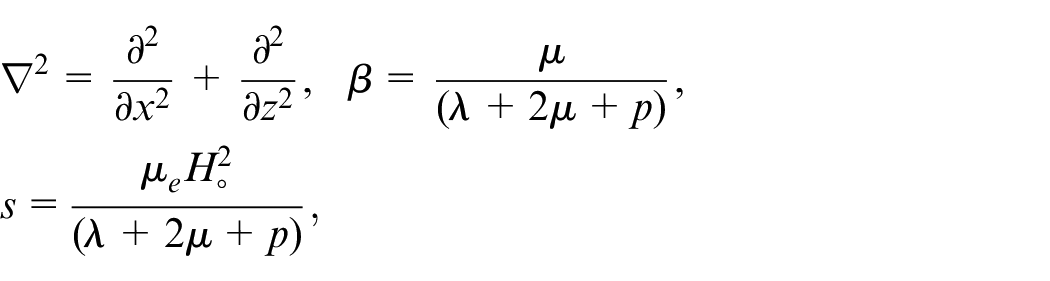
And the prime was omitted for simplicity’s sake.
Equations (7)–(9) can be written by using equation (5) as follow:
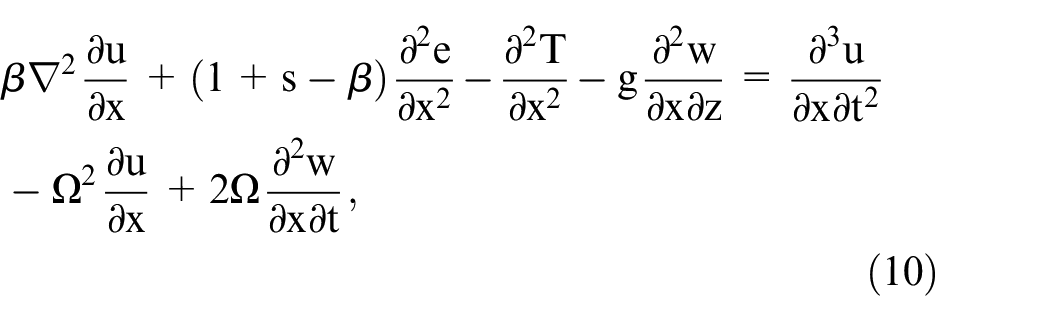
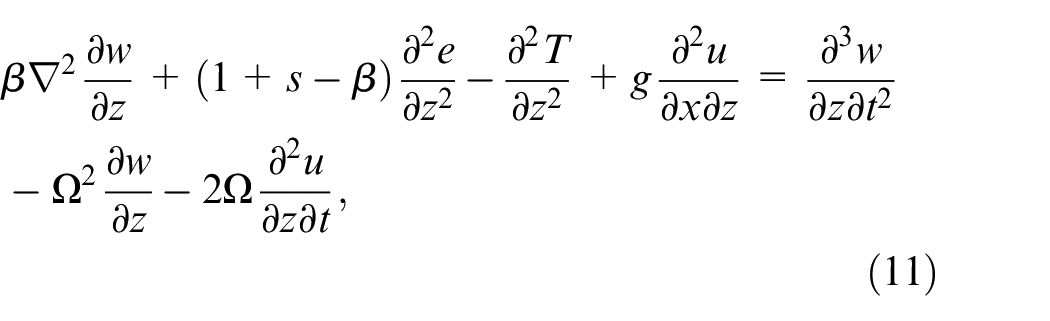


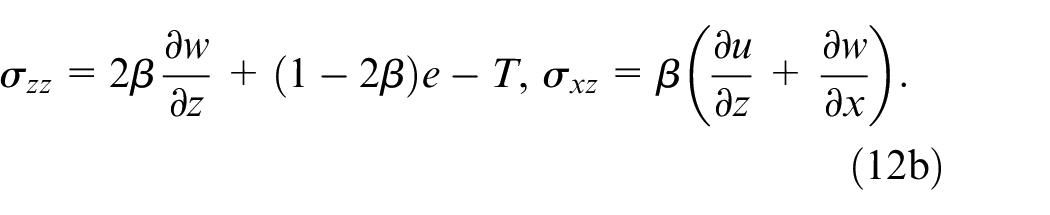
Solution of the problem
Normal mode analysis
In this section, normal mode technique is employed, which has the advantage of finding the exact solutions without any assumed constraints on the field variables. The solutions of the physical variables can be decomposed in terms of normal modes 30 in the following form

where



Where
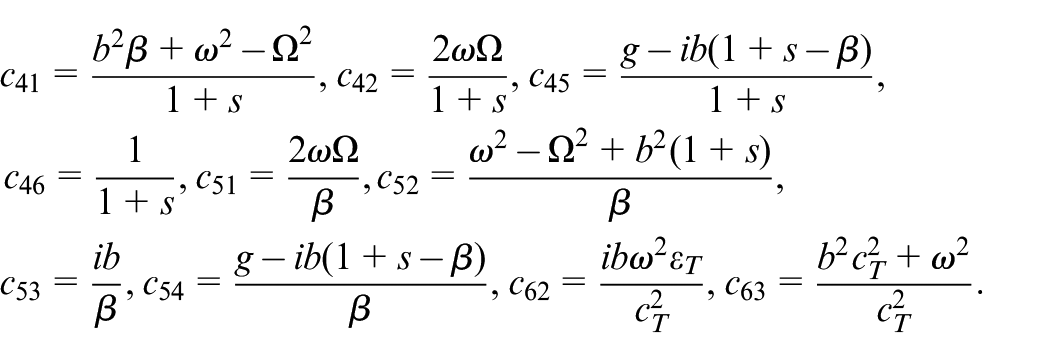
Equations (14a), (14b), and (14c) can be expressed as a differential equation with a vector-matrix as below:

where
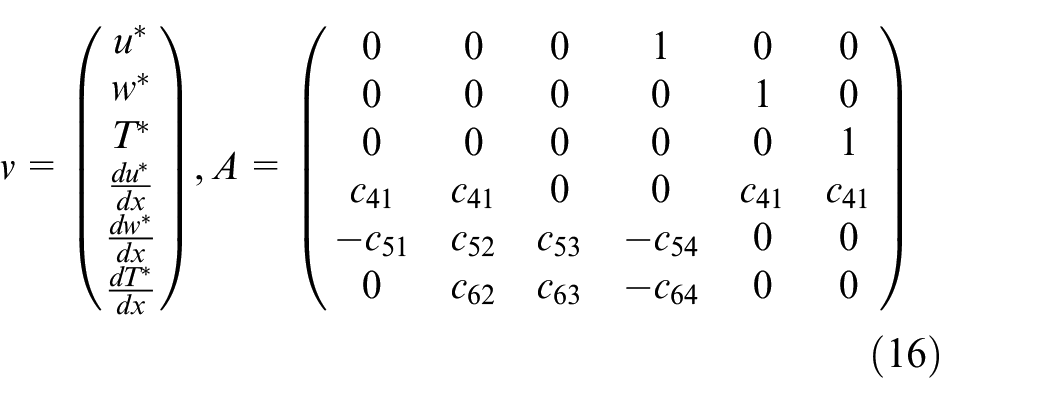
As in Das and Bhakta, 31 we now use the eigenvalue technique to solve equation (15) a matrix A’s characteristic equation, which has the form

The roots of the equation (17) are
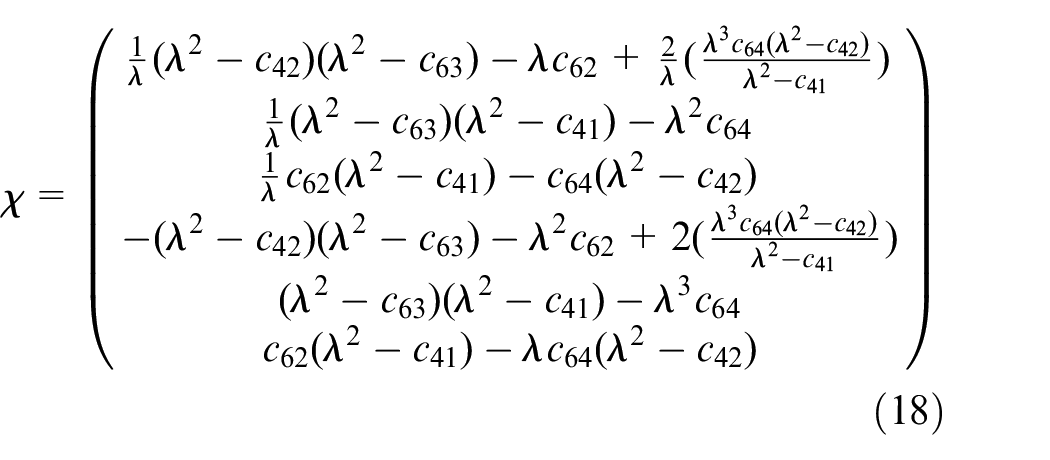
It is simple to determine the eigenvector

Considering the regularity criterion at infinity, the answer to equation (22) is as follows:

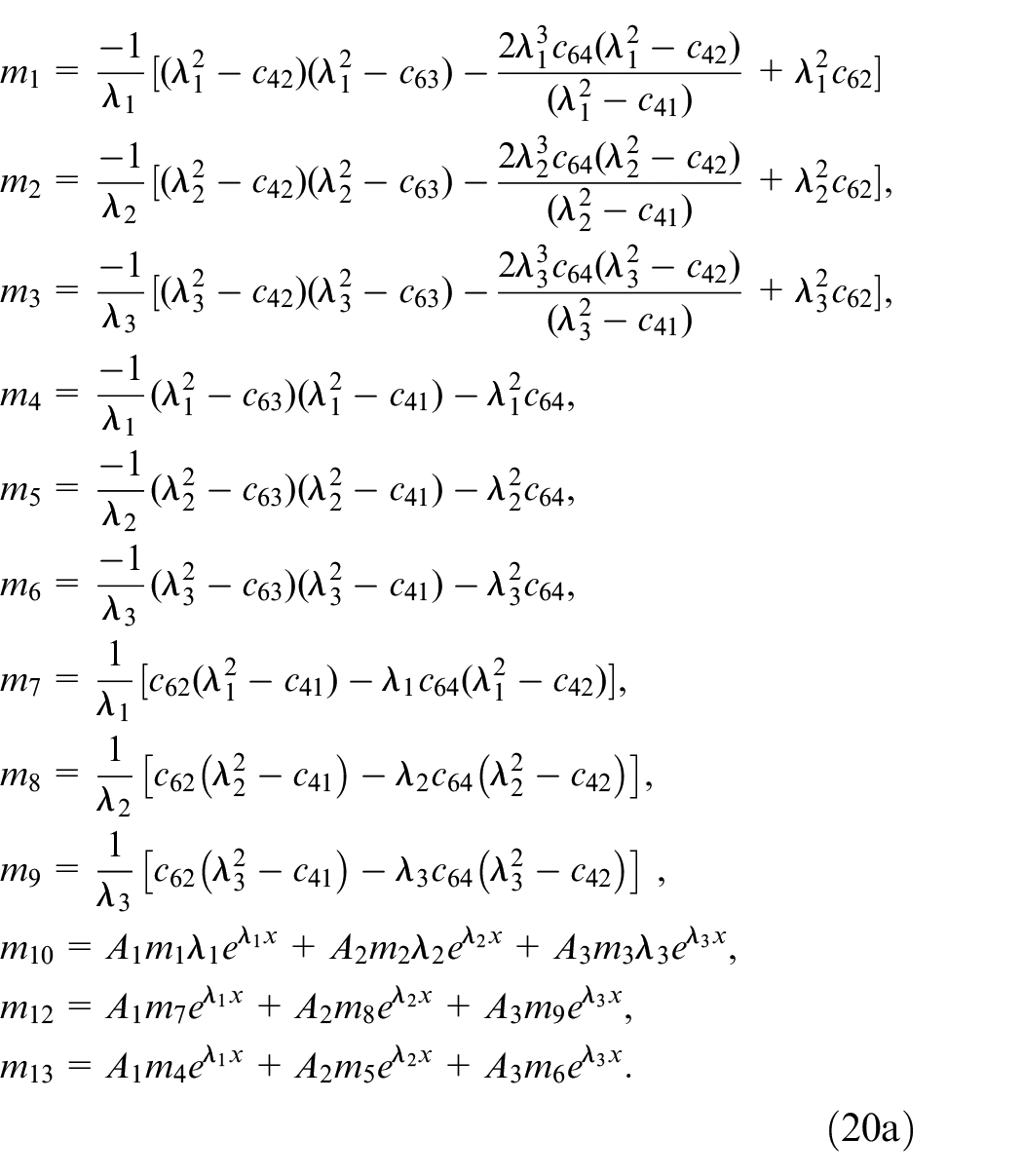
where
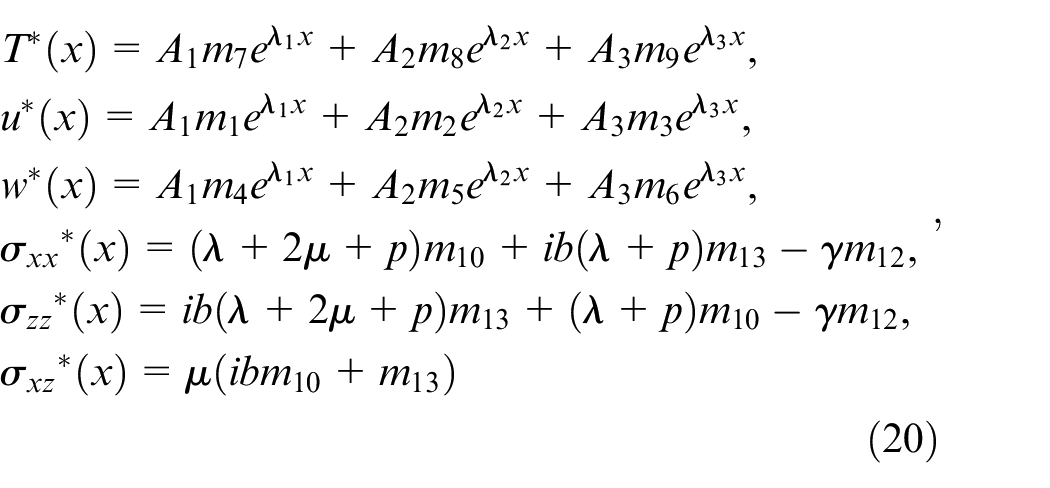
where
Boundary conditions
In this section we will apply these boundary conditions to our problem are given by Das and Bhakta. 31 In our proposed model, we consider the free surface is traction free. Then, the stress and thermal conditions at the free surface as
Mechanical boundary conditions
The surface

Thermal boundary conditions
The surface x = 0 is formed as

where

We find from equations (21) and (22) as well as equation (13) that

For the constants
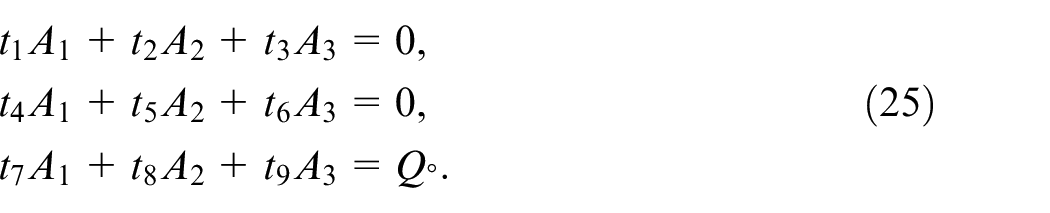
where
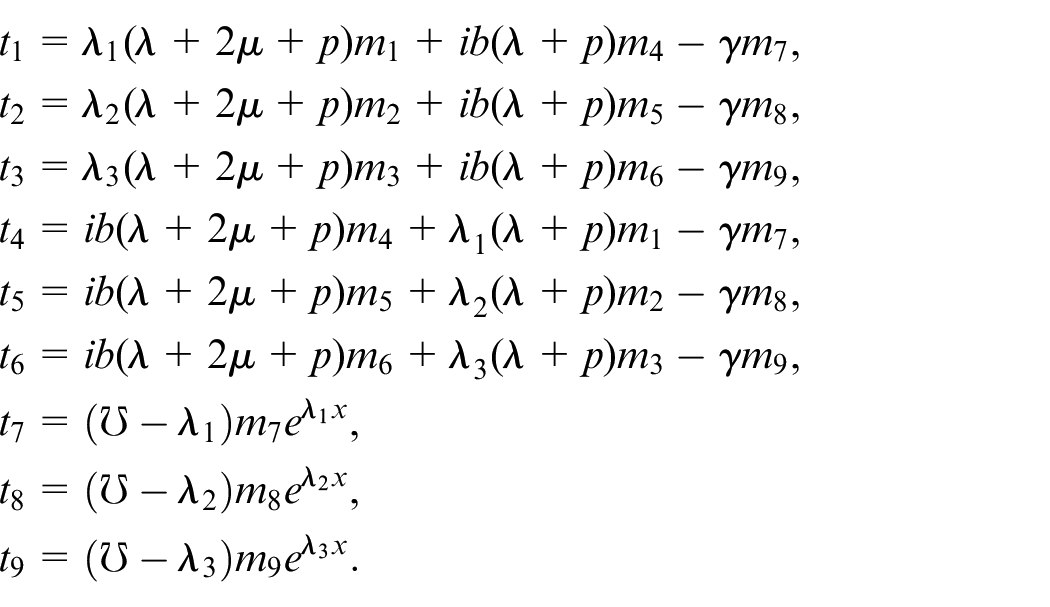
Since there is one non-homogeneous equation in equation (25) that may be used to calculate the constants

where


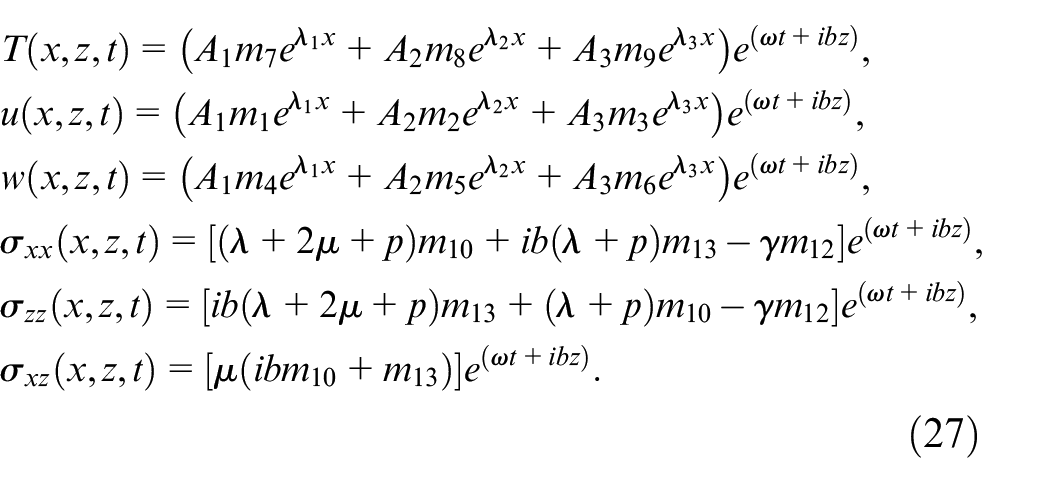
By applying equations (20) and (13), it is possible to determine the dimensionless temperature
Physical discussion of the problem
The knowledge (thermoelasticity without energy dissipation) can be utilized by engineers, more particularly by mechanical engineers for designing machine elements like heat exchangers, boiler tubes, and so on, where temperature induced elastic deformation occurs. Nowadays wave motion in the context of thermoelasticity without energy dissipation has a great role in ceramics. Saggio-Woyansky et al. 32 examined that porous ceramics are either reticulate or foam and are composed of a porous network with relatively low mass, low density and low thermal conductivity. Reticulate porous ceramics are often used for molten metal filters and diesel engine exhaust filters and as catalyst supports and industrial hot-gas filters. Both types of ceramics are used as light structure plates and in thermal insulation and fire protection materials and also in gas combustion burners.
Numerical results and discussion
With an aim to illustrate the analytical procedure presented earlier, we now present some numerical results. The results depict the variations of displacement components, stress components and temperature distribution. The numerical computations and graphical representations are done with the help of MATLAB software. For the purpose of simulation, the values of relevant parameters are taken as Othman and Abd-Elaziz 33 :
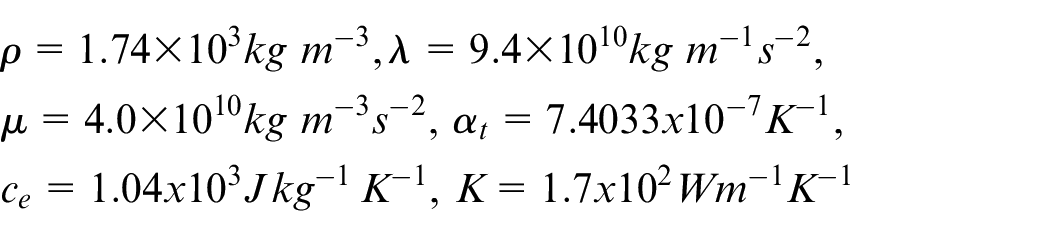
By using the aforementioned numerical values, we have derived the displacement components, stress components, and temperature corresponding to an incident coupled wave at various
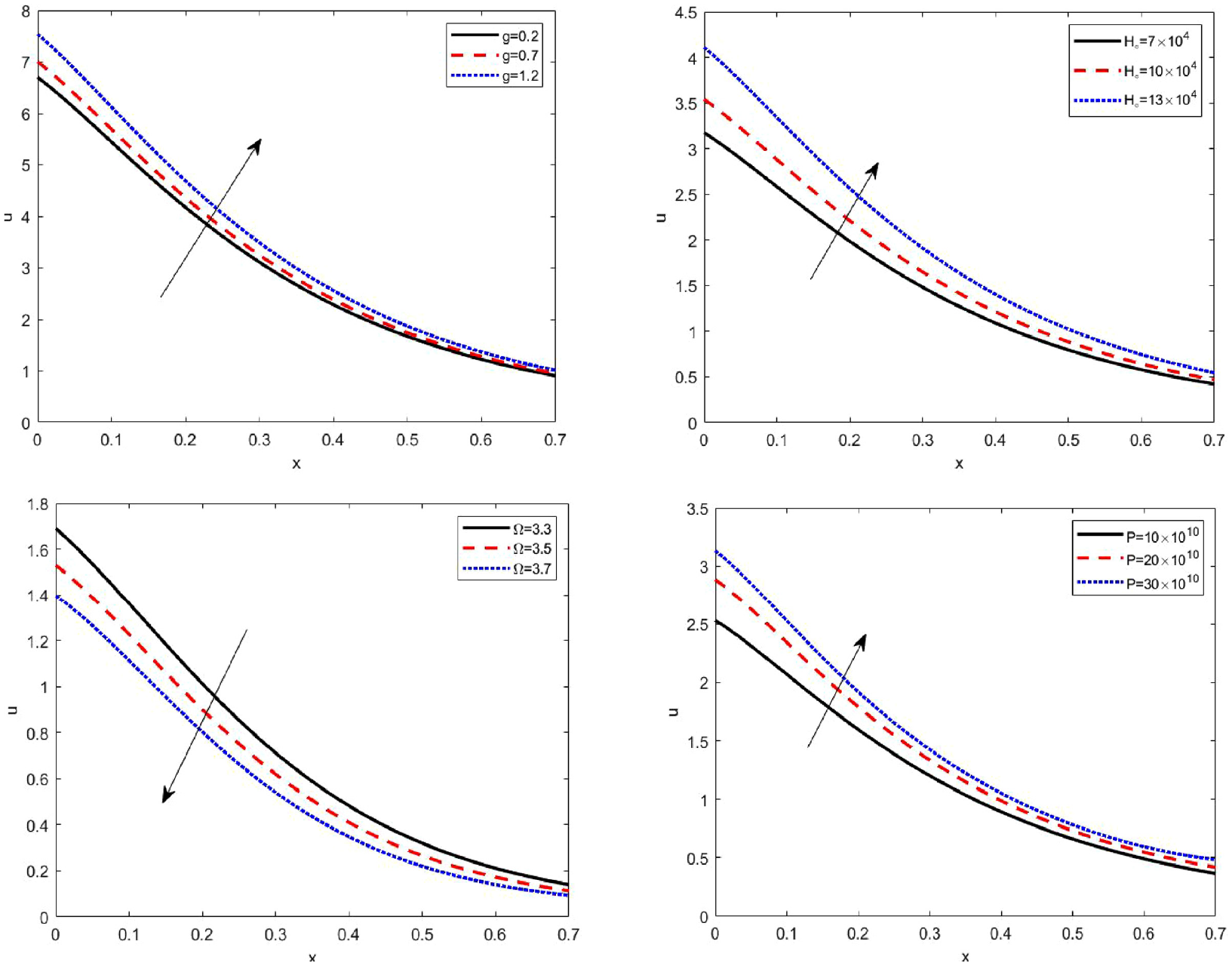
Figure 2 displays the influence of parameters
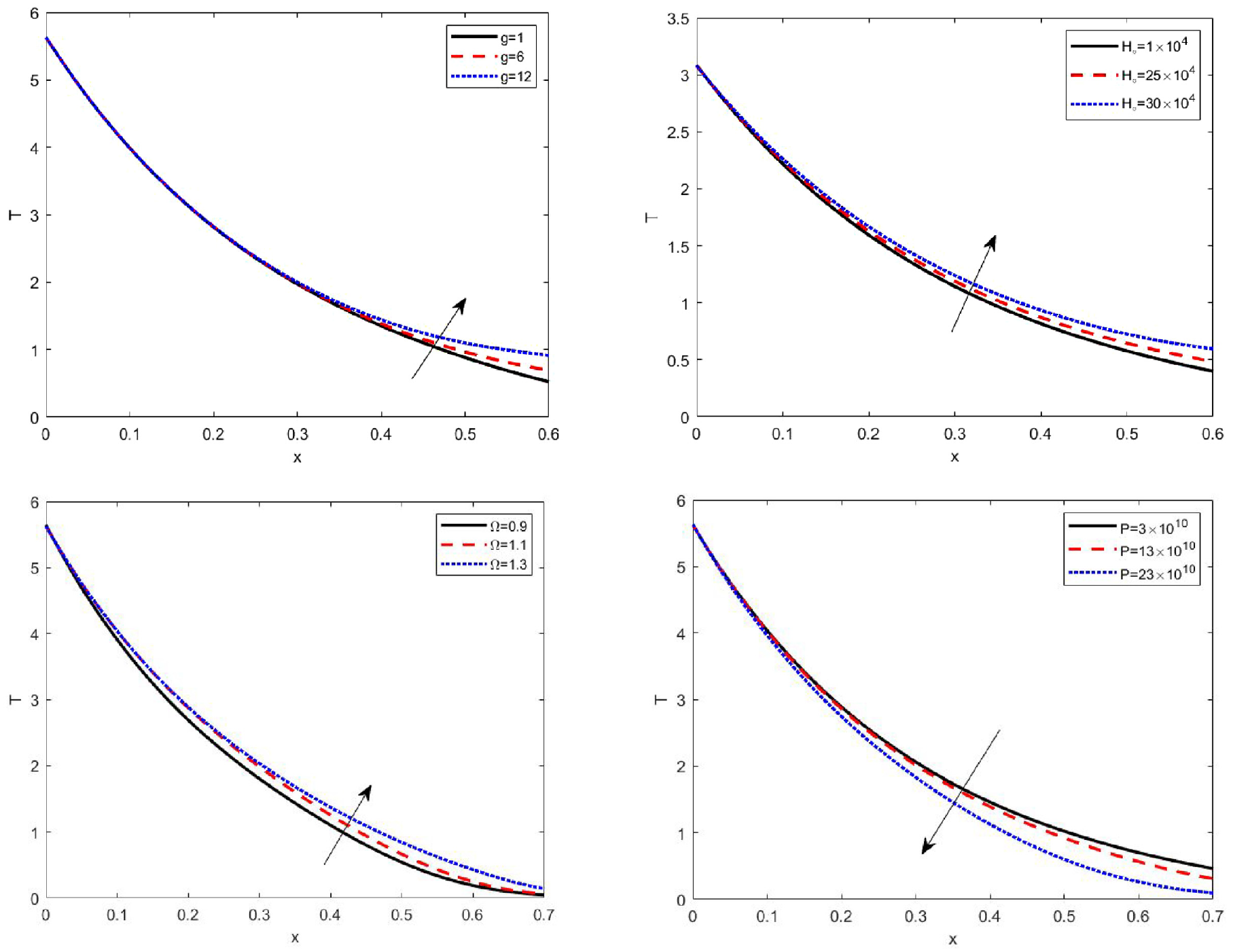
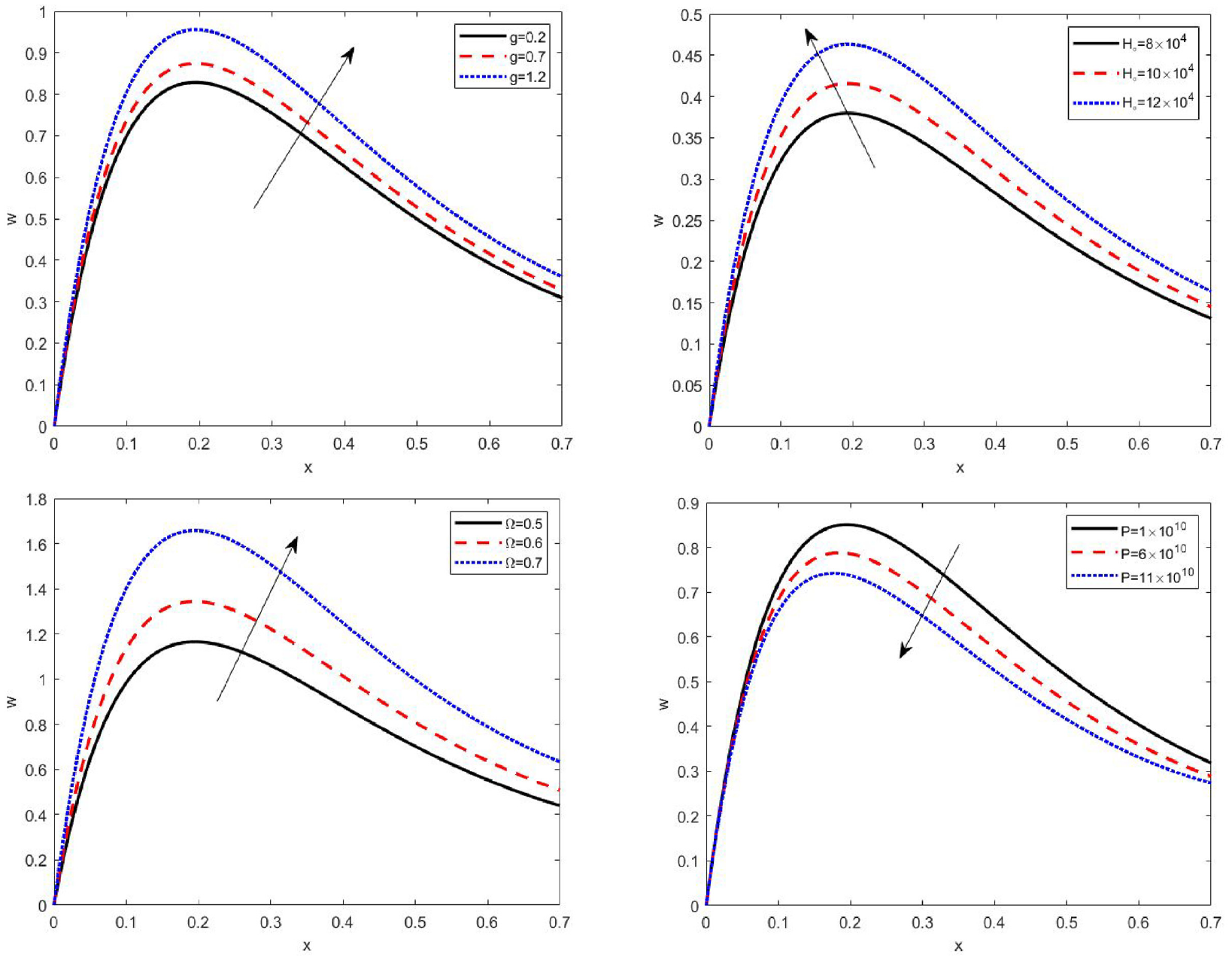
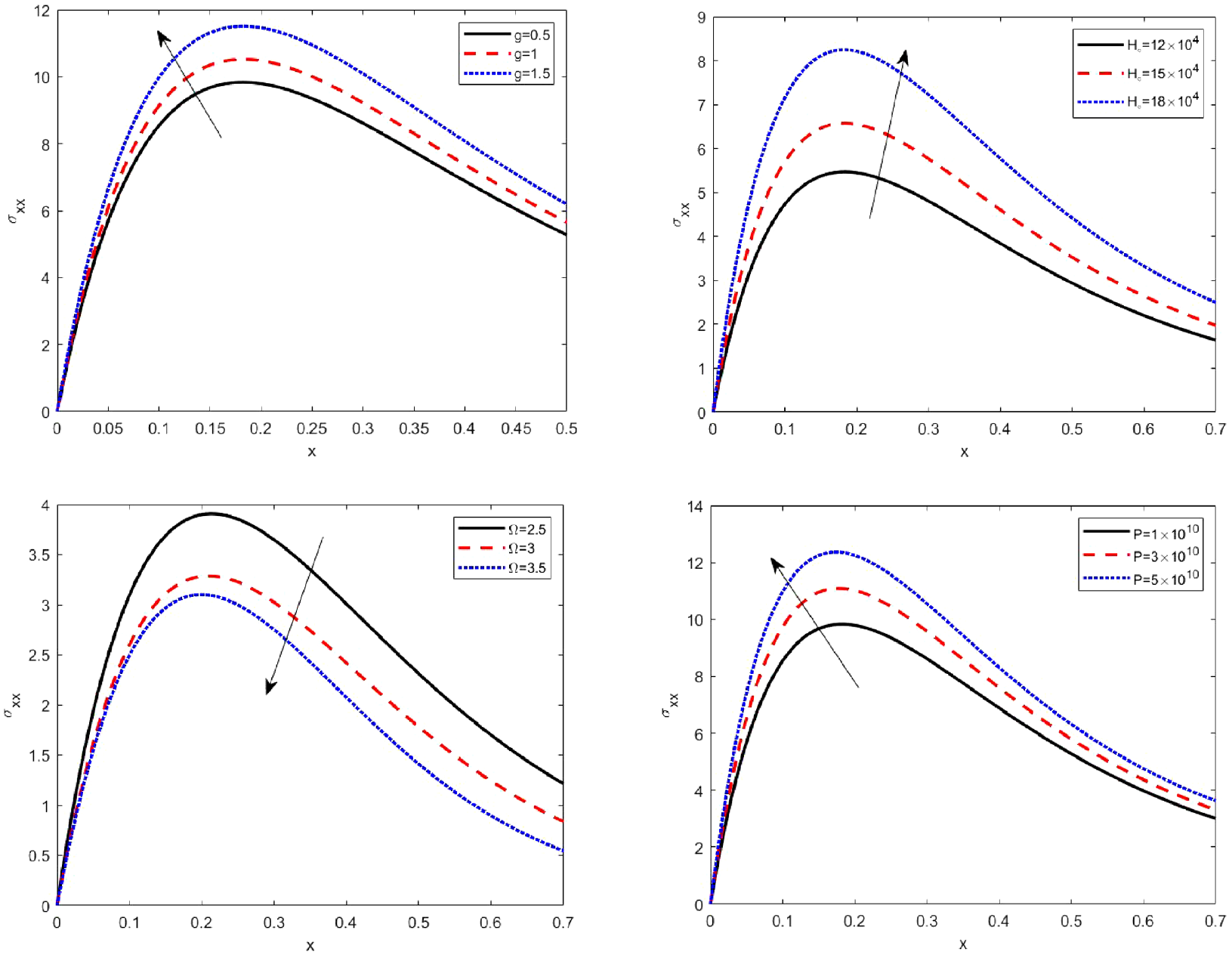
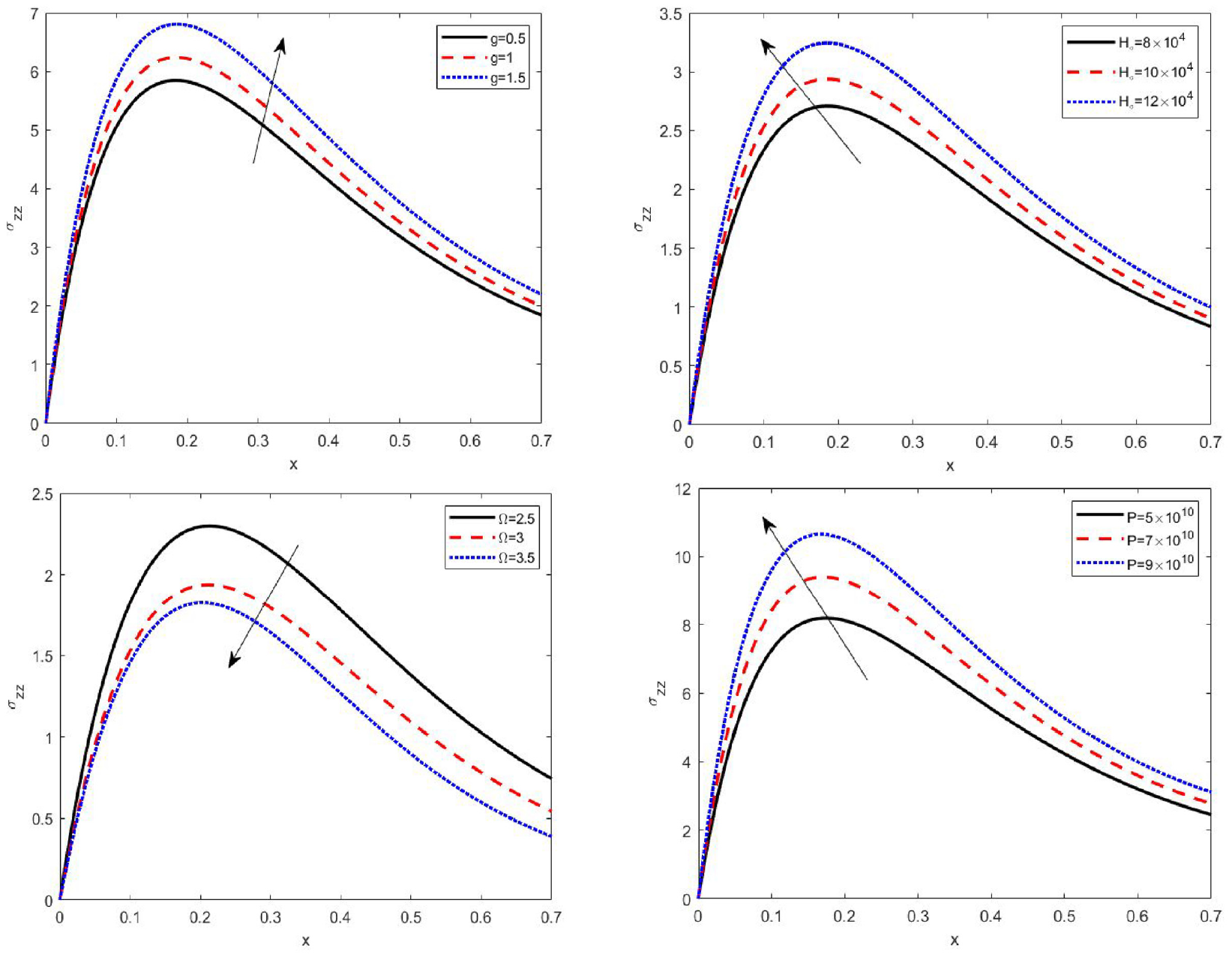
The change of the main physical quantities
Figures 3 and 4 depict the changes in the values of the normal displacement component and the axial displacement with respect to
The change of the main physical quantities
The change of the main physical quantities
The change of the main physical quantities
The change of the main physical quantities
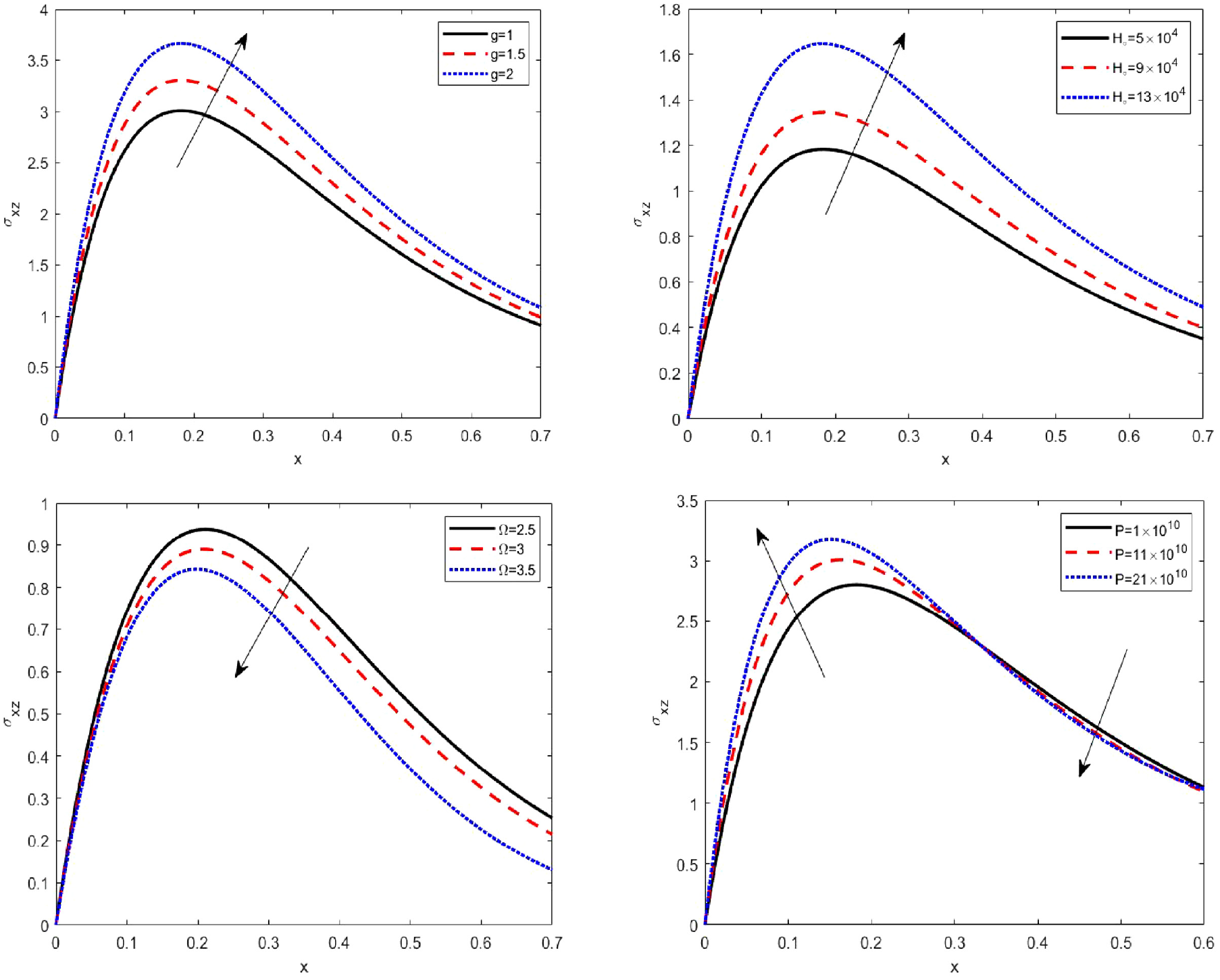
The change of the main physical quantities
Conclusion
The main goal of the current study is to explore the impact of a displacement, stresses and temperature distribution on various parameters for the considered half-space. Some exceptional cases have been derived. The effect of all parameters has been expressed theoretically and graphically in this study. Additionally, a comparison study has been carried out to examine the impact of the parameters . The essential conclusions from this study are as follows:
Displacement components, stress components and temperature distribution show almost similar pattern for different values of gravity field, magnetic field, rotation and initial stress causes a decrement and increment in the values of all the fields, which is very obvious from the figures.
Rotation has a deceasing effect on normal displacement and temperature distribution while it has an increasing effect on normal stress throughout the domain.
The impact of the rotation parameter is significant for the components of temperature, displacement, and stress. As the rotation parameter value increases, the numerical values of the temperature and displacement components rise; however, the effect on the values of the displacement component
A significant increasing effect of magnetic field is clearly seen on all the physical field variables. Therefore, while designing a realistic model, the effect of magnetic field should be taken into consideration. This is mainly due to the fact that effect of magnetic field corresponds to the term signifying positive forces that tend to accelerate the metal particles.
Initial stress and gravitational constants have been found to have a remarkable effect on the displacement components, stress component and temperature.
In all the figures, it is clear that variations in various fields are restricted to a limited region and outside the region values vanish identically, which is in accordance with the notion of generalized thermoelasticity theory and supports the physical facts.
Phenomenon of finite speed of propagation is manifested in all the figures and solution curves are quite close to each other with increase in distance, which is in agreement with the generalized theories of thermoelasticity.
The model presented here is supposed to be useful for the scientists working in the field of thermoelasticity and in understanding the viscoelastic properties of human soft tissues and may lead to improved diagnostic applications. The results obtained may prove helpful in both theoretical and observational wave propagation.
Footnotes
Declaration of conflicting interests
The author(s) declared no potential conflicts of interest with respect to the research, authorship, and/or publication of this article.
Funding
The author(s) received no financial support for the research, authorship, and/or publication of this article.
