



Abstract
Water exhibits various politico-economic dynamic. Water scarcity can lead to conflicts, and it lies at the core of Iran’s environmental crises. The literature on Iran’s water crisis indicates the effects of this issue in terms of multidimensional environmental degradation, community disintegration, and state-society and intercommunal conflict. Approximately 28 million of Iran’s 85 million residents reside in water-stressed areas, a situation identified as ‘water bankruptcy’. The water shortage is experienced differently across the country. The plateau’s central regions, home to Iran’s major industries, are where the worst water deficit is occurring. However, regions with abundant water resources have also been impacted. These regions – known as ‘donor basins’ – due to intensive and disproportional inter-basin water transfer and other engineering interventions deployed by the Government to deal with the water shortage of the central regions, suffer from a different form of water crisis. A condition of asymmetrical and conflictual power relations between the state and subaltern communities in Iran’s peripheral regions has been created. This paper argues that this constitutes environmental racism, characterised by multilayered impoverishment and unsustainable development among communities in the donor regions.
Introduction
Iran’s ecological and environmental conditions have alarmed many observers. The disproportionate construction of dams and inter-basin transfer (IBWT) projects, as well as the excessive use of surface and underground water resources in Iran, have resulted in widespread deforestation and desertification, water pollution, the drying up of wetlands and lakes, and many other examples of environmental degradation
Iran’s water policy, particularly the government’s approach to managing the country’s water shortage and supplying drought-stricken regions in the central part of the country with water, has shown to be unsustainable. An important aspect of Iran’s water crisis is that the experience of water shortages and the causes of these differ from one region to another (Figure 1). Transferring water from Iran’s northern, western, and southwestern regions and provinces, including Chahar Mahal and Bakhtiari (Ch & B), Khuzestan, Kurdistan, and Mazandaran (the donor basins), to the country’s dry and desert regions, including Isfahan, Kerman, Qom, Semanan, Yazd, and Golpayegan (the recipient basins) in the central part of the country, has caused irreparable socioeconomic damage and deprivation to the donor regions. This asymmetric water policy has exacerbated an already tense power relationship between the centre and people in the country’s peripheral regions. A multifaceted movement for environmental justice, denouncing the government’s environmental policy towards their regions and resources as discriminative and unsustainable and demanding responsible water consumption and fair distribution and access to water resources, has been established in Iran’s peripheral regions (Mirzavand and Bagheri, 2020; Timothy, 2005). Map of Iran’s water-stressed regions (Zarei, 2018).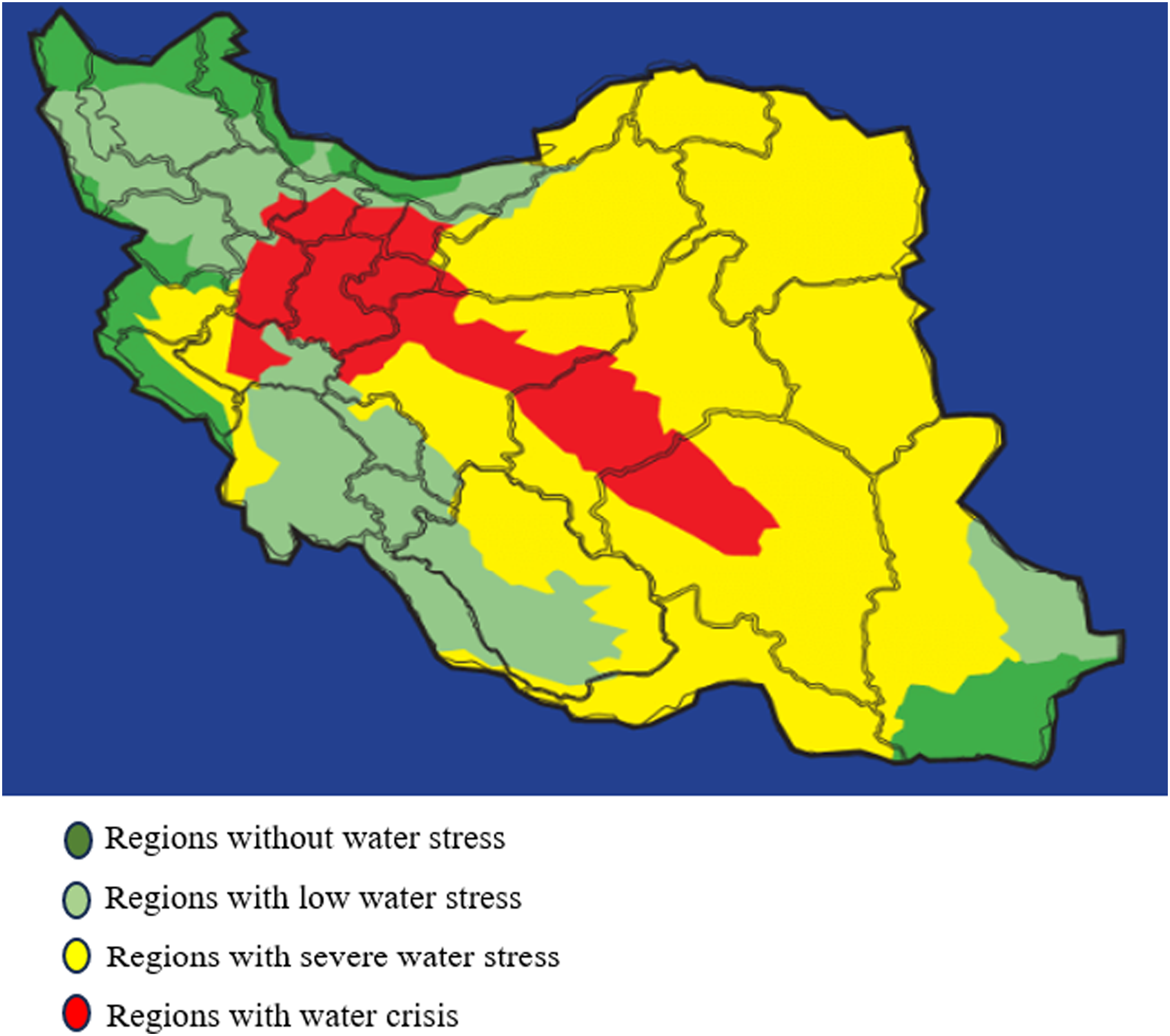
This paper argues that Iran’s water policy is blatantly centralist (Kurdistan Regional Water Company, 2021, p. 3), discriminatory, and ethnicist, favouring the supply of a specific sector of society at the expense of other communities and resulting in severe environmental and socioeconomic damage. In the following sections, this will be explained, and data and evidence will be provided, revealing the degrading impact of the Iranian government’s water policy on the people and communities across Iran’s peripheral regions and provinces, resulting in further deprivation and marginalisation.
Methodology
Research aims and data collection
This paper explores the asymmetric centre-periphery relationship in Iran and the contestations around the government’s approach to water security. It argues that the government’s water policy is contentious and has massive socioecological ramifications for Iran’s subaltern communities (Winnefeld and Morris, 1994). An understanding of Iran’s environmental crisis and its impact on the emergence and intensification of intercommunal conflict serves several purposes. Such studies enable the identification of more sustainable resource and environmental policies and the establishment of more equal, inclusive, and democratic centre-peripheral relations in a conflict-prone country such as Iran. This paper employs qualitative content analysis as a research method to analyse data within a specific context in view of the meanings people attribute to them. Policy papers, government documents on IBWT and dam construction, political campaign speeches, and other materials designed for specific purposes are among these data. The analysis of these data must keep these purposes in mind. It is thus possible to conduct a rhetorical analysis and draw conclusions about the communicator, text, or message, the circumstances of its development, and (sometimes) the sociocultural context of the communication (Krippendorff, 2004). This approach focuses on subjective interpretation and does not intend to quantify data in numerical terms. Instead, it involves identifying different themes or patterns in the data.
To investigate the impacts of the state’s water policy on subaltern communities in Iran, the critical views held by environmental activists, scientists, and non-governmental organisations (NGOs) acting on behalf of the communities affected by this policy were also taken into account. These negative perceptions and denunciations of the government’s development approach are also subject to content analysis. To conduct this research, a comprehensive search for data took place. I obtained data for this paper from a variety of sources using a multilingual search that included Persian, Kurdish, and English. Over two hundred peer-reviewed documents, social media posts, blogs, news articles, and reports about water and the environment were examined and analysed. In this regard, data was retrieved from different online portals such as Meidaan (https://meidaan.com/) and environmental NGO’s Instagram and Telegram accounts (i.e. t.me/kanibell, t.me/sedayepayeab1 and t.me/WllatBokan). ‘Water scarcity/shortage’, ‘dam’, ‘IBWT’, and ‘environmental discrimination/racism’, in the Iranian context, were among the key words used in the search for data included in this paper. The followings are other sources of obtaining data, strategic papers and documents about water development activities and projects. These are mainly in Persian: Geography and Human Relations (Joghraafia va Ravaabet Ensaani), Centre for Strategic Studies (Markaz Barresi-haaye Esteraatejhik), Economic Magazine (Majaleh eghtesaadi), Journal of Water Resources and Ocean Science (Nashrieh 'elmi pajhooheshi oghyanoos shenaasi), Iran Water Resources Management Company (Sherkat modiriat manaabe' aab iraan), Scientific Quarterly of Environment and Cross-sectoral Development (Faslnaameh 'elmi mohit zist va toseh faraabakhshi), and many others.
In addition to the introductory and methodological sections, this paper consists of three sections. 1. The conceptual framework is to discuss and explain how concepts such as environmental racism, hydro-social cycle, and hard path (supply-side water management) versus soft path (demand-side water management) apply to Iran’s water policy. 2. IBWT and dams in Iran: This section offers an overview of the total number of dams, canals, tunnels, and other hydro-infrastructures targeted by the IBWT plans. Focusing on a few examples of the destructive hydro-infrastructures in the region and provinces under investigation. It also analyses how the Iranian authorities have justified these constructions and their detrimental effects on socioecological sustainability. 3. The section ‘Environmental issues as a risk multiplier’, provides a broader overview of the socioecological impacts of the government’s environmental policy across different regions of Iran.
Environmental racism
The subject is mainly analysed through the conceptual framework of environmental racism, discussed in further detail below. Aspects of Iran’s water policy, including excessive dam construction and other hydro-engineering infrastructure transferring water from peripheral provinces to the central regions, are viewed as environmental racism imposed on non-Persian national groups, such as the Kurds who inhabit the eastern regions of Iran, Arabs in Khuzestan in the southwest, and Gilaks in Mazandaran in the north. This paper also reflects on dams not only as environmentally destructive but also as serving the interests of Iran’s so-called ‘water mafia’. This paper identifies the ecological and socioeconomic damage experienced in some of Iran’s peripheral regions, namely, Ch & B, Khuzestan, Kurdistan, and Mazandaran, through the theoretical lenses of environmental racism (Bullard, 1993; Egan, 2002). The existing literature on political ecology discusses how politics and the environment interact, how oppression and resistance interact, and how the state’s economic and environmental policies impact the sustainability of subaltern communities (Rodríguez-Labajos and Martínez-Alier, 2015). Scholars have well documented the entwinement of environmental conflicts with human identity conflicts, territorial disputes, and resource struggles (Gleick, 1993; Khan and Awan, 2020; Ranjan, 2012).
The term environmental racism was coined in 1982 by Benjamin Chavis, former executive director of the National Association for the Advancement of Colored People and a long-time civil rights community organiser and activist (Lazarus, 2000, pp. 257–258). The claim of environmental or ecological racism brings about environmentalists’ demands for ethical, fair, and responsible use of land and renewable resources in the interest of a sustainable planet for all people and other living elements. Bullard refers to environmental racism as any policy, practice, or directive that differentially affects or disadvantages individuals, groups, or communities based on race or colour. Additionally, it entails practices that hinder members of underprivileged groups from participating in regulatory commissions and governing organisations (Bullard, 1993, pp. 23–26). Racism plays a key role in environmental planning by government institutions, with race being a factor influencing the likelihood of exposure to environmental and health risks and access to health care (Bullard, 1993, p. 17; Lazarus, 2000).
The term environmental racism also illustrates how racial, ethnic, and religious factors cause marginalised groups to be more exposed to environmental threats and damage than privileged communities. Environmental racism in diverse societies (such as Iran), where relationships between communities can often be characterised as the relationship between the privileged and the disadvantaged, emerges when environmental policies are elitist and biased, reduce subaltern communities’ influence on environmental affairs, and expose them to environmental degradation and deprivation of natural resources (Pulido, 1996, p. 142). Nevertheless, there is no scholarly consensus on how to define the term environmental racism, which some believe to be misleading. However, Holifield’s case for this concept justifies its use in this paper despite its methodological complications. He assumes that we should not treat environmental justice and environmental racism as simple descriptive terms, as they have never been. Alternatively, Holifield suggests that: We must accept that people in different geographic, historical, political, and institutional contexts understand the terms differently. Instead of regarding the lack of universal definitions as a barrier to progress, however, we need to treat the breadth and multiplicity of interpretations as guides to more relevant and useful new research. In addition, we must acknowledge that interpretations of the terms have inevitable political implications. Our research should make our assumptions about the nature of racism and justice explicit (Holifield, 2001, p. 78).
The movement for environmental justice often raises questions such as ‘How are the benefits and burdens of environmental policy distributed? Who gets what, where, and why? Do development activities have regressive impacts’? Bullard (1992) posited numerous similar questions. Some of these will be addressed through the research question, ‘How has Iran’s water policy contributed to environmental injustice and social marginalisation within the country’s peripheral regions and provinces’?
Hard path versus soft path
Water problems are complex and have profound effects on human health and the ecosystem’s sustainability. Identified as ‘classic hard problems’ (Gleick, 2003), their solution calls for a combination of sound scientific and governance approaches. A variety of approaches, such as the ‘soft path’ and the ‘hard path’, are available for the management of water resources. Due to their essentially dissimilar perspectives on water as a resource, supply and demand management techniques diverge. The hard path views fresh water as virtually infinite and develops resources to meet human needs. The soft path, on the other hand, recognises that freshwater supplies are limited and concentrates on improving effectiveness rather than seeking endless sources of new supply. Therefore, reducing usage rather than automatically supplying more of the service or resource is the solution for demand management when the issue is water scarcity (Brandes and Kriwoken, 2006; Gleick, 2003). This strategy includes involving local populations in decision-making about water management, allocation, and usage while also promoting long-term sustainable system operation with an equitable distribution of water resources. Moreover, according to this approach, ‘society’s goal should be not the use of water but improved social and individual well-being per unit water used’ (Gleick, 2003, p. 1527). Considered a sustainable approach to the management of water resources in a time of water scarcity, Brooks and Peters (1988, p. 3) define demand-side water management as ‘any measure that reduces average or peak withdrawals from surface or groundwater sources without increasing the extent to which wastewater is degraded’.
The government’s development of hydro-ecologically damaging infrastructures, such as dams and IBWT plans, along with the excessive use of water resources (i.e. for agricultural and industrial purposes), suggests that the supply-side water management approach is the dominant approach in Iran. Then, different Iranian governments’ visions for growth and development are comparatively devoid of a soft path strategy, comprising long-term, all-encompassing water management policies and investments. The failure of these governments to effectively implement demand-side water management can be attributed to mismanagement, corruption, and ethnic favouritism that affect this aspect of society, environment, and resources (Hassaniyan and Sohrabi, 2022). Recognising the limitations of supply-side approaches, demand-side management in Iran has also been considered. Given its proximity to the Arab/Persian Gulf, desalination plants have also been established in coastal areas to enhance supply-side management and augment freshwater resources (Paparella, D’Agostino and Burt., 2022). However, the soft path strategy seems minor and insignificant, given the damaging effects of the country’s supply-side water management. Nevertheless, the soft path represents a revolutionary approach to water management that ‘will require institutional changes, new management tools and skills, and a greater reliance on actions by many individual water users rather than a few engineers’ (Gleick, 2002, p. 373).
According to hydro-social studies, the flow of water is considered a hybridised socio-natural phenomenon that inexorably connects nature and society. It is both a physical and social process (Labbaf Khaneiki, 2020; Swyngedouw, 2009). This paper, drawing inspiration from Swyngedouw’s comprehensive study of the political economy and ecology of the hydro-social cycle, posits a close interconnection between the sociotechnical structure of the hydro-social cycle, the corresponding power geometries that control access to and exclusion from water, and the unequal political power relations that impact water flows. In the words of Swyngedouw (2009, p. 59) ‘there is indeed a close relationship between hydro-social ordering and political-economic configurations or, in other words, between the “nature of society” and the “nature of its water flows,” every hydro-social project reflects a particular type of socio-environmental organization’. Therefore, considering the state of water in Iran, one can argue that water-related conflicts in this country are likely to increase due to a complex combination of variables, including institutional restraint (i.e. mismanagement, corruption, and favouritism), an overemphasis on supply-side management, and inadequate demand-side water management.
IBWT and dams in Iran
Inter-basin water transfer in Iran
Although physical hydro-facilities, like dams and IBWT networks, have been beneficial to billions of people worldwide, they have also resulted in significant and frequently unanticipated socioeconomic and ecological damage (Gleick, 2003). Iran’s IBWT schemes are rapidly and aggressively expanding, degrading the ecosystem, culture, and community of the donor regions. Political pressure backs the submission of proposals for new projects to the government each year. Although IBWT projects have helped to reduce the intensity of water shortage in the recipient areas, their ramifications for the donor regions are significant. According to scientific advice, IBWT projects should only be approved if the donor basin’s present and future environmental conditions are prioritised, the donor basin’s water system is unaffected, and its population does not object. Additionally, Meador (1992) recommends only employing IBWT for household requirements, not for industrial and agricultural water supply. The authorities in Iran, however, disregard environmental and scientific criteria and recommendations pertaining to IBWT due to ethnic bias and state corruption. The government continues to build dams and IBWT infrastructure despite severe droughts, water crises, and desertification in the donor regions (Abbasi, 2021; Faani and Marufi, 2017).
Emphasising the political and economic significance of water, according to Robert F. Kennedy, ‘We are witnessing something unprecedented: Water no longer flows downhill. It flows towards money’ (cited in Swyngedouw, 2009, p. 56). Considering the criticality of such a statement, Swyngedouw (2004) argues that the political-ecological perspectives on water indicate an intricate connection between social, political, economic, and cultural power relations and alterations in the hydrological cycle at the local, regional, and global levels. State ideologues and officials such as Akbar Hashemi Rafsanjani, President of Iran from 1989 to 1997 and a prominent figure from the Iranian Revolution of 1979 until his death in 2017, have encouraged Iran’s current water policy of promoting dam construction to improve IBWT to the interior of Iran, home to Iran’s mega industries and where most Iranian ruling politicians come from. In this policy, the construction of mega-infrastructure, canals, and tunnels is among the fundamental measures to enhance IBWT, in addition to dams. Despite the negative effects this strategy has on the environment, the government is eager to execute and implement it (IRNA, 1996). The circumstances indicate that the changing Iranian governments’ interventions in the organisation of the hydrological cycle’s structure are political in nature, and the financial nexus is being used more and more to define the hydro-social circulation process, making these subject to debate and controversy.
Hydro-social arrangements typically mirror the political, social, and cultural preferences of the hegemonic group. Therefore, it is imperative to investigate the complex interactions between political systems, water consumption, management, and distribution, as well as the structure of the hydro-social system (Swyngedouw, 2004). The Iranian Government’s 2019 Water Document/Policy, according to Mehdi Pezhohesh, a scientist at Shahr-e Kord University, ‘is unjust, designed on behalf of builders, and serves the interests of desert areas’ with the provinces in interior Iran (Pezhohesh cited in Meidaan, 2021a). Massive IBWT is required by the expansion of water-intensive industrial activities in desert areas, disrupting the balance between water supply and consumption. Therefore, Pezhohesh questions the government’s development strategy, arguing that ‘these large water-consuming companies need to be located in provinces with abundant water resources rather than those with scarce water resources’ and raising the question of ‘why provinces in the Zagros region, with great potential for growth, are overlooked and left in poverty while the water-consuming industries are located in the desert provinces of Isfahan, Yazd, and Kerman’ (Meidaan, 2021b).
In Iran, food production, agriculture, the steel industry, and population growth are among the major demand factors, reflecting the interactions between domestic institutions and environmental pressures. For instance, the Iranian government’s vision of food self-sufficiency and allocation of disproportionate amounts of water to the agricultural sector make this section the most water-consuming industry in Iran. Among many other controversial projects, the award of a licence to the Vanak-Solgan IBWT is justified by the pursuit of the aim of food sufficiency. Such schemes are awarded licences under political pressure from influential figures and institutions rather than based on scientific environmental standards (Mergan, 2017). Additionally, Rafsanjan County in Kerman Province, central Iran, receives water transfers to supply pistachio orchards. Under the direction of Mohammad Marashi, the Rafsanjan Development Company (Sherket-e ‘Omran-e Rafsanjan) has been overseeing the execution of the Vanak-Solgan IBWT project since 2017. This project’s goal is to provide the Rafsanjan pistachio orchards with water. According to the water company Mahab Qods, ‘transferring water along a 637-kilometre route to serve pistachio orchards is commercially viable’ (Mergan, 2017). Water has also been transferred to Rafsanjan from the Vanak Dam in Ch & B. In the early years of Mohammad Khatami’s presidency (1997–2005), its operation was suspended temporarily. But water transfer has continued since 2013, with approval from the Environmental Agency during the government of President Hassan Rouhani (2013–2021). Environmentalists have exposed the covert nature of this scheme and its failure to meet IBWT standards (Meidaan, 2019a).
The government’s attempt to revive the Zayend-e Rood Basin in Isfahan, which dried up due to overconsumption and climate change, is an example of an expensive and controversial IBWT project. A variety of donor basins, mainly Kohrang in Ch & B, supply water to Zayend-e Rood. Three tunnels (Kohrang I, II, and III) form the complete Kohrang Water Transfer Network, the construction of which has resulted in severe socioecological degradation (Halabian and Shabankari, 2010). The Kohrang Water Transfer Network can transfer 250 million cubic metres of water from the Karun River to the Zayend-e Rood (Meidaan, 2019a).
IBWT projects have encouraged water overconsumption in the recipient regions. For instance, Semnan Province has a higher water usage per person than the national average, but instead of seeking to reduce this consumption, the government has established more water-intensive heavy industries, such as steel manufacturing, in the province (Kiadeliri cited in Meidaan, 2019b). The central provinces’ steel industry benefits investors greatly but has a negative impact on the environment and water resources. For instance, the manufacture of steel uses around 230,000 litres of water for every tonne of steel produced. Defying all scientific advice, most of Iran’s steel plants are located in dry regions, such as the provinces of Khorasan and Isfahan, which have had a severe experience with the water crisis. Despite the water shortage, construction is underway on two additional industrial towns, totalling 3200 hectares, adjacent to the existing 12,000-hectare industrial town in Isfahan.
Such industrial expansion in the so-called desert regions has taken place, while regions like Ch & B, Lorestan, Khuzestan, Kurdistan, and Sistan and Baluchistan, despite their potential, have been ignored by the Iranian government. These areas lack manufacturing and employment opportunities, and the government has made it a systemic policy to keep them impoverished and underdeveloped. As critics such as Hasan Forozanfard have noted, ‘such decisions are made because of an elitist belief that the economic benefits of these activities should go to certain provinces, where state officials are from’ (cited in Meidaan, 2021b). Indeed, peripheral regions’ economic prospects have been actively damaged, for instance, as a result of the destruction of regions in central Zagros (Minberi, 2018), induced by disproportionate dam construction and the implementation of IBWT projects from the sources of the Karun and Dez rivers. According to Birgani (2017), ‘the generation of wealth in places such as Yazd, Ardakan, Mobarakeh, Kerman, and Rafsanjan happens at the expense of environmental destruction and deprivation of people in the periphery’. The water-intensive heavy industries in Isfahan, Kerman, and Yazd could be relocated to regions with abundant water resources, such as the shores of Chabahar in Sistan and Baluchistan, or Hormozgan. As discussed below, the government’s policy on IWBT and dams is driven by the vested interests of a corrupt elite, or ‘water mafia’.
The Iranian water policy is devoid of any incorporation of ecological values, and hard paths with physical solutions are consistently relied upon to solve the water shortage in this country, but these solutions are facing increasing opposition from communities where water is taken from by the state. There have been many protests against IBWT across the donor regions (Figure 2). In Ch & B, protests have been triggered by water shortages affecting 460,000 people, or half of the population of the province, who have no access to safe drinking water. Protesters in Shahr-e Kord, chanting ‘No to water transfer’, claimed that with the construction of the Kohrang Ⅲ, Gulab Ⅱ, and Beheshtabad tunnels, the whole of Ch & B Province would quietly perish. According to Qasim Taghizadeh Khamsi, Ministry of Energy, in the summer of 2021, the number of cities involved in water tension reached 300, and out of these, 101 cities were identified as having a highly critical red condition. IBWT projects and disagreements over who should have access to this water and how this have fuelled many sociopolitical tensions (Hassaniyan and Sohrabi, 2022), including conflicts between provincial authorities in the recipient provinces of Isfahan and Yazd and intra-communal disputes in the Province of Kerman. For instance, in the case of Kerman, experts and residents of south Kerman assert that the purpose of water transfer is to provide drinking water to Kerman’s households, but this water is delivered to the industrial section (Peykeiran, 2021). Protest of the people of Khuzestan against the water transfer from Karun to Isfahan. The banners read: ‘Karoun for Khuzestan, no Isfahan; We save Karoun’ (Golkarami and Kaviani Rad, 2017, p. 129).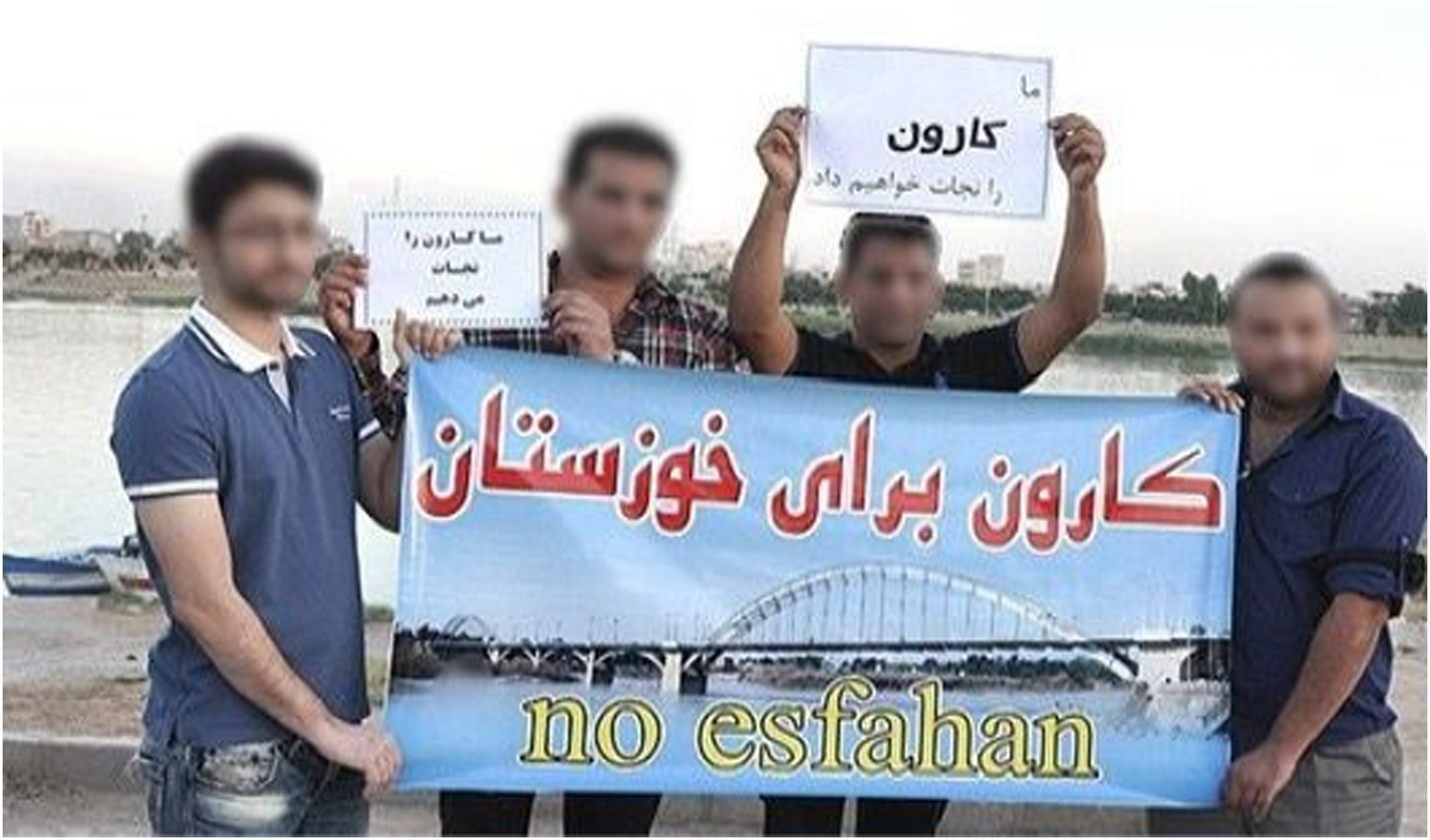
Dams in Iran
While dams as a form of hydro-technology could animate a state’s hegemonic projects and development, in Iran they are widely opposed for a wide variety of reasons. Economic activities are the primary cause of environmental issues around the world. Economic growth and development are both sources of wealth and threats to the environment; they also contribute to and perpetuate inequality. Uneven development and trade have shaped power relations between nations and individuals over the past four centuries. These relationships have been pinpointed in several ways, including ‘colonialism, imperialism, internal colonialism, and institutional racism’ (Hamilton, 1993, p. 63). Sustainable development is essential for subaltern nations and communities’ viability (Hassaniyan, 2021; Rahmani, 2023), particularly for people ‘that suffer not only from unwise environmental politics but also from growing poverty, cultural denigration, and a lack of political power’ (Pulido, 1993, p. 123).
Dams are important infrastructures for water resource management. During the second Pahlavi era (1941–1979) in the early 1940s, Iran initiated the construction of its first modern dams, justifying them alongside other infrastructure and economic projects to boost agricultural output. However, dam construction in Iran has become an industry controlled by and serving the interests of corrupt state institutions, groups, and individuals, enriching them while putting people in the periphery at risk of severe socioecological injustice and conflict. As noted by Fatemeh Zafarnejad, an expert on sustainable development, ‘Dams will not bring water to people, but bring bread to some companies’ (cited in Aman, 2016, p. 6).
In line with its other corrupt and dysfunctional institutions, Iran also has a ‘water mafia’ or ‘dam construction mafia’, which some opponents of the dams have linked to the political insistence on their construction (Meidaan, 2016). In many cases, governmental environmental agencies have been against aggressive dam construction and IBWT policy, but other actors and institutions promote these activities, and their power is above that of the state (Seyed and Maryam, 2014). For instance, the Islamic Revolutionary Guard Corps (IRGC) and its subcontractors are typically in charge of these constructions, with huge economic benefits from both the building of dams and IBWT infrastructure and from the commercial and industrial activities supplied by water from IBWT. Many of the engineering and construction companies and contractors belong to the IRGC, the Mostazafan Foundation under the control of Iran’s Supreme Leader Ayatollah Khamenei, the religious commercial foundation Astan Guds Razavii, and other such organisations. Borrowing from Swyngedouw, this condition underlines that ‘the sociotechnical structure of the hydro-social cycle, the corresponding power geometries that control access to and exclusion from water, and the unequal political power relations that impact water flows are all closely interconnected’ (Swyngedouw 2009). Environmentalists, directly and indirectly, refer to these culprits as Iran’s water mafia.
We can regard politicians from the central provinces of Iran, such as Mohammad Reza Aref, Habibullah Bitaraf, Ishaq Jahangiri, Mohammad Khatami, Ali Akbar Olya, Ali Akbar Hashemi Rafsanjani, Mohammad Haj Rasouliha, and Rasoul Zargar, as the architects of IBWT in Iran. Each of these officials has, in their own way and at different periods of time, contributed to the development and systematisation of IBWT schemes. These have benefited their political constituencies, demonstrating the nepotism and ethnic favouritism of the Iranian political system but also revealing that there is ‘a close relationship between hydro-social ordering and political-economic configurations’ (Swyngedouw, 2009, p. 59). To realise their aim of transferring water to their home provinces and supplying their own businesses, these officials ordered rivers to be diverted, building hundreds of dams and thousands of kilometres of tunnels and canals, incurring significant financial expenditures for the state. This ‘water mafia’ manifested itself clearly while Bitaraf served as Khatami’s Minister of Energy from 1997 to 2005. The damaging dams of Gatundaliya and Karun II, as well as the IBWT project transporting water from Aligudarz to Golpayegan and Qom (Qam Rood), are among Bitaraf’s legacies. Bitraf triumphantly stated in an interview with the Yazd-based Aftab newspaper on March 28, 2017, that ‘deceptive and opaque decision-making procedures enabled the IBWT from Dez and Karun to Yazd’ (Birgani, 2017).
Since the 1990s, the dam building sector has experienced substantial growth, being elevated to the top of the country’s priority list for development initiatives (Manouchehri and Mahmoodian, 2002; Zafarnejad, 2009). Iran’s water resource management policy is inspired by a policy of supply management (modiryet-e ‘erz-e), and many dams have been constructed to serve this (Balout, 2022, p. 37). According to official data, Iran has hundreds of dams (648 operational, 137 under construction, and 544 under consideration). More than 250 of these dams are in the provinces of Ch & B, Khuzestan, and Kurdistan. Iran’s Karun IV Dam, at 230 metres high, is the second-highest dam in the world, second to China’s Jinping I Dam (305 metres). However, the unfinished Bakhtiari Dam, which is being constructed on the Bakhtiari River in Ch & B, is expected to be the tallest dam in the world when completed at 325 metres (Nasab, 2018, p. 3). Many of Iran’s dams have safety issues, either because environmental safety evaluations were not passed, the dams were constructed without receiving environmental and safety approval, or no safety assessment was carried out (Kurdistan Regional Water Company, 2021, p. 63). Many of Iran’s dams, particularly those that supply drinking water to local communities, are in poor condition. According to data provided by the country’s water and sewage company, ‘88 dams supplying drinking water in the country have a bad condition, while 56 of these are in a critical condition’ (Iranian Students’ News Agency, 2018), proving the traditional hard path approach to water management is at the same time expansive, unsustainable, and environmentally destructive.
One recent example of a dam that will cause significant community disintegration is the Tang Sorkh Dam, now under construction, located on the Bashar River in the province of Kohgiluyeh and Boyar Ahmad. Hundreds of thousands of residents of Kohgiluyeh and Boyar Ahmad Province depend on the Bashar as their primary source of drinking and irrigation water. Environmental activist Moradi claims that ‘the construction of Tang Sorkh will result in the displacement of tens of thousands of residents, destroy wildlife and farmland downstream of the Bashar River, and dry up most of the province’s water source’ (Payamema, 2021). In 2021, during Iranian President Ibrahim Raisi’s visit to Yasouj and the Tang Sorkh dam construction site, despite the expectations of the local population for the suspension of the project, Raisi instructed the contractor to speed up the construction process. This paper considers in greater depth only a few instances of dams and IBWT projects in Ch & B, Khuzestan, Kurdistan, and Mazandaran to demonstrate the extent of the socioecological destruction Iran’s water policy has caused.
The dams of Chahar Mahal and Bakhtiari and Khuzestan
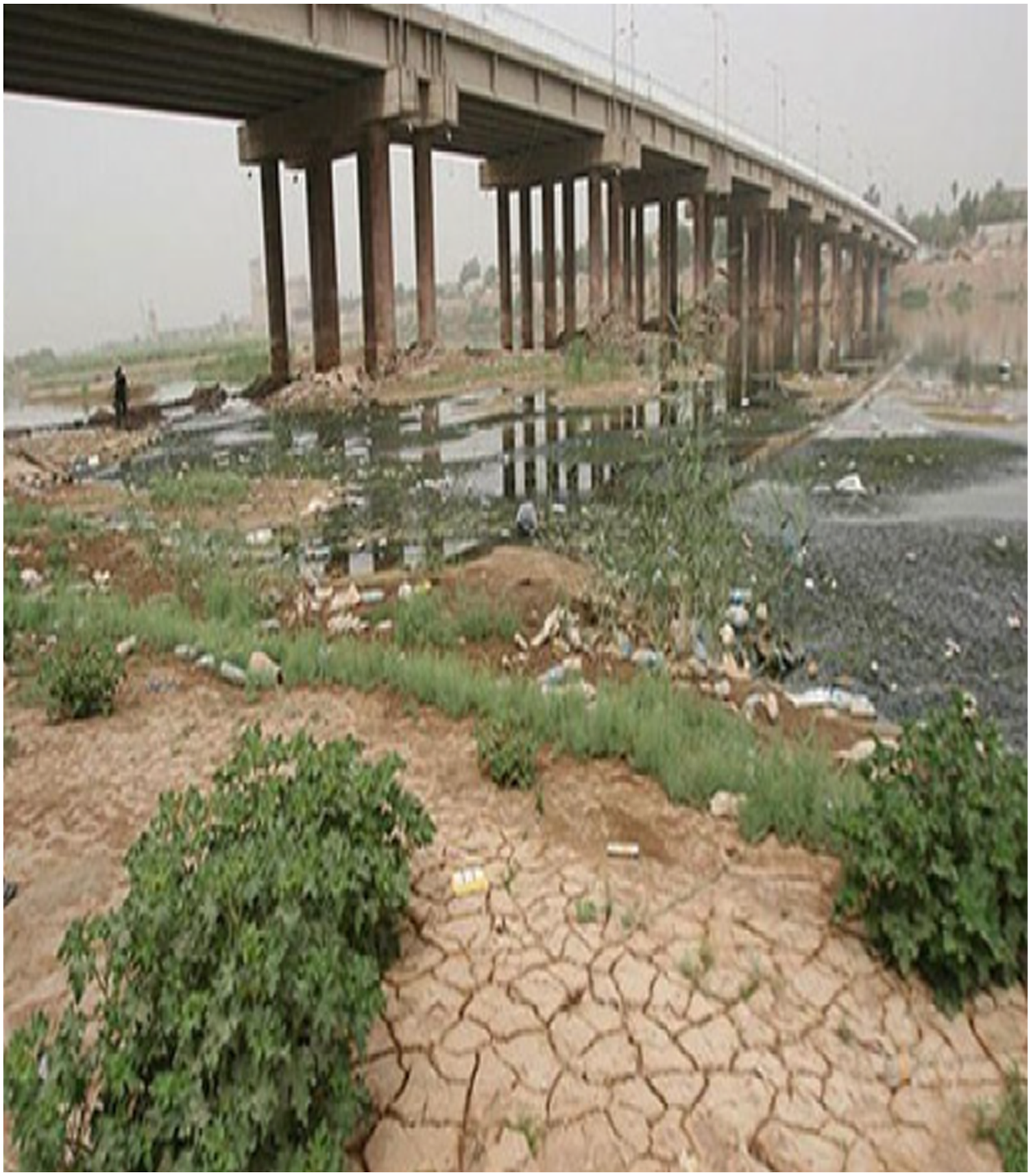
The largest and only navigable river in Iran, the Karun River (Roodkhaney Karoon), which flows out of the middle Zagros Mountains and through the Khuzestan Plain suffers greatly as a result of IBWT (Figures 3 and 4). Karun is, at present, in a critical condition because of the construction of 24 dams along its catchment areas (Kaab, 2021, p. 92). The main tributaries of this river have also suffered from the implementation of a dozen IBWT projects. One of the largest is the Kohrang Water Transfer Network, as mentioned above. Figure 3 shows Karun before drying up (Meidaan, 2015). Figure 4 is Karun dried and destroyed following dam building and IBWT on its catchment (Saed News, 2020).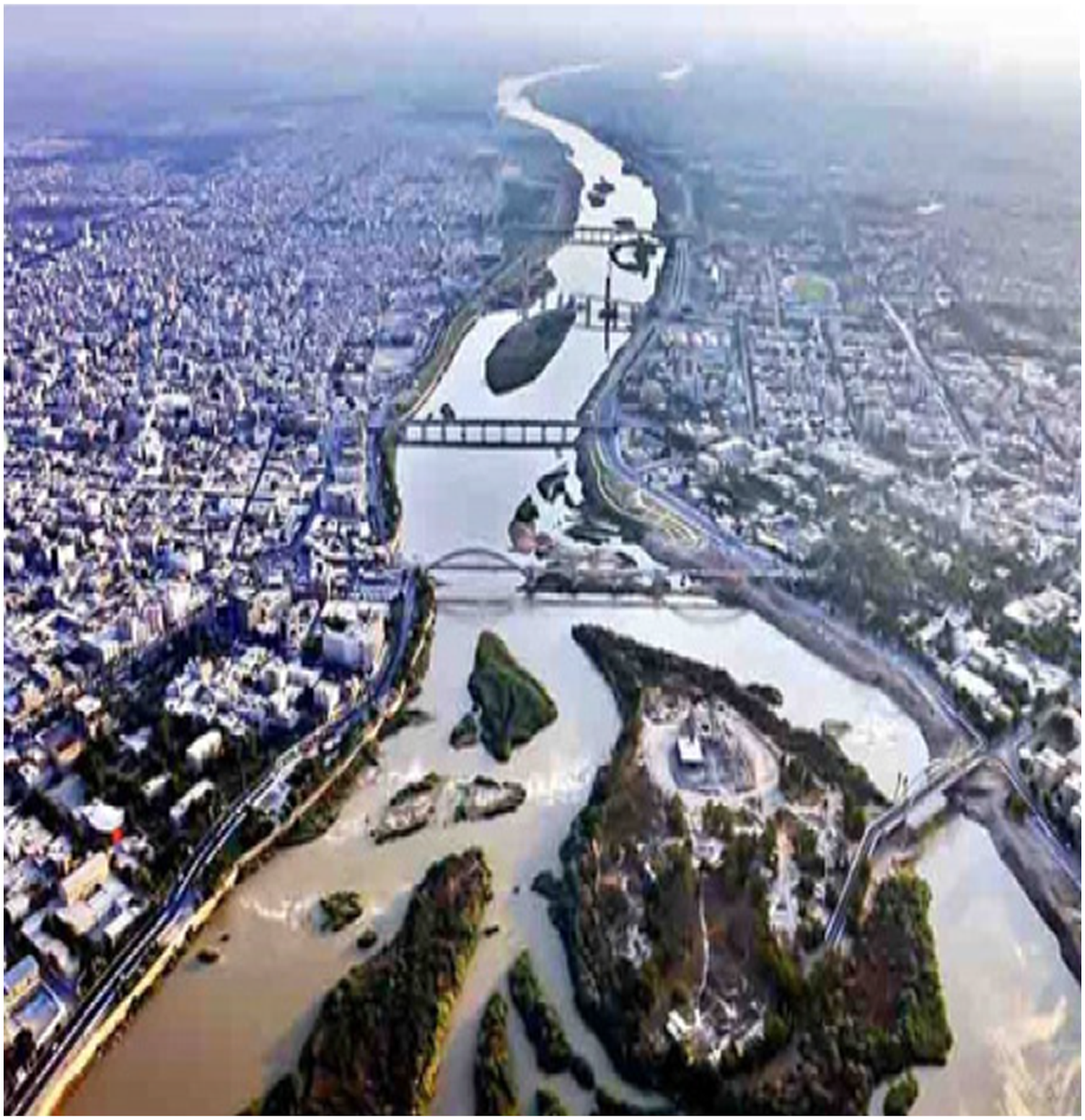
Ch & B Province is home to two large rivers, the Karun and Zayand-e, as well as a portion of the Dez, and has historically provided its neighbouring provinces with water when they needed it. However, in recent years, a number of disproportionate dams and IBWT projects have made it difficult for this province to provide safe drinking water to its own population. More than 200 villages now receive their drinking water from tankers as a result of desiccation. Water rationing has also had an impact on this province’s already-fragile industrial activities.
Karun has seen the construction of numerous problematic dams, including the Gotvand and Karun III and IV Dams, for the purpose of IBWT. Gotvand is a prime example of Iran’s construction of mega-dams. Its construction was initiated in the second Pahlavi era, but it was only completed during the last years of Mahmoud Ahmadinejad’s presidency in 2012 (Shahriariha, 2021). Gotvand, which the Iranian government initially hailed as a masterpiece and a testament to the country’s engineering prowess in the field of hydro mega-infrastructure, has in fact proven to be an ecological disaster on multiple levels. The location of the reservoir of this dam on a salt bed has caused massive environmental destruction. Gotvand’s water is 10 times saltier than average; the reservoir is thus referred to as Iran’s largest saltwater tank. In just one region of Khuzestan, Gotvand has caused the salinity of Karun to rise massively, destroying 400,000 date palm groves. Such ecological destruction has profound economic consequences, since Khuzestan produces 40% of Iran’s dates for export (Mirzakhani, 2018). Data from 2021 shows that 40% of Khuzestan’s palm trees have been destroyed. According to Seyyed Sultan Hosseini Amin, Vice President of the Ahvaz Chamber of Commerce, ‘drought has increased the salinity of the water, and the dates do not taste good. It has reduced the quality of our product; we have become weak in the competitive market, and customers are not interested in our product anymore’ (cited in Didbaniran, 2021). Surveys of Khuzestan’s palm groves reveal a tremendous ecological catastrophe, in which 5 million palm trees have been lost over four decades of various calamities, including war, environmental and agricultural mismanagement, water shortages, and water salinity (Kaab, 2021, p. 318).
Gotvand’s construction also resulted in massive local displacement, including the complete demolition of 41 villages along the dam’s banks. According to Golzar (2020a), ‘the tragic tale of Khuzestan’s villagers being displaced owing to dam building is not a recent one; in fact, it began in 1962 when communities surrounding the Dez Dam were uprooted’. The Karun Dam Ⅲ (completed in 2005) in Khuzestan and the Karun Dam Ⅳ (completed in 2010) in Shahr-e Kord in Ch & B to serve IBWT have also dried the Karun and destroyed hundreds of wetlands in these provinces, causing desertification and sandstorms. The construction of Karun Dam III resulted in the displacement and forced evacuation of residents from 63 villages. These displaced people, according to Golzar (2022b), are the victims of the water mafia or the sad salaran (lords of dams) – officials, institutions, and companies with deep involvement and interest in irregular and harmful dams, as well as institutions and persons with vested interests who profit greatly from these projects.
Irregular dam construction has dried up swathes of Khuzestan. Jareh, Karkheh, Karun, Maron, and Zahra, Khuzestan’s once-abundant water basins, are on the verge of complete desiccation due to decreased rainfall and continuous IBWT. According to Khuzestan’s Environment Agency, more than 40% of this province’s wetlands, including the Shadgan Marsh, have dried up as a result of extensive IBWT projects (Fuladavand and Sayyad, 2015; Shokrani, 2018). More than 62% of Khuzestan’s dams remain below their expected capacity. In spite of this, the government has authorised the construction of two additional mega-dams in Khuzestan, known as Mard and Bahmanshir.
Examples from Mazandaran and Kurdistan
Narmab, Finsk, and Zarem Rood are three instances of destructive water projects with severe socioecological implications for local communities in northern Iran. Situated in the Chehl Chai area of Golestan Province, neighbouring Mazandaran Province, the Narmab Dam (completed in 2022) has greatly displaced and torn apart communities. Locals have been displaced in masse because of Narmab’s construction; 1200 families from four villages close to the dam’s reservoir have been forced to abandon their homes.
The Finsk Dam, situated at the intersection of the two provinces of Semnan and Mazandaran, is in one of Iran’s most pristine natural areas. Its purpose is to supply water to Semnan Province. Before its construction, environmental activists warned that its construction and the plundering of water sources from the tributaries of the Tajen River, the second-largest river in the Northern Basin, would cause the death of the river and the drying up of waterways. Activists accused the dam of being a failed project that mainly served the interests of unscrupulous individuals in the water mafia. Activists accused the dam of being a failed project that mainly served the interests of unscrupulous individuals in the water mafia. The Finch Dam’s reservoir has submerged the three villages of Tem, Talajim, and Maladeh, along with nearly 400 hectares of agricultural land, causing serious economic damage to more than 25 communities downstream (Golzar, 2022b). Construction is currently underway on the Zarem Rood Dam, Mazandaran’s fourth-largest dam, which will submerge several villages and over 240 hectares of rice fields in the area. The pretext of providing Mazandaran with sustainable drinking water has justified this construction. However, critics argue that this dam, similar to Gotvand, will be among the most environmentally damaging projects in Iran. To build this dam, situated in the dense Hyrcanian Forests, environmental scientists and activists estimate that between 300 and 400 hectares of forests and agricultural lands will be lost. Additionally, millions of cubic metres of fertile soil will be submerged beneath this dam’s reservoir (Rahimi, 2021). Also situated in the Hyrcanian Forests, the Shafarood Dam remains one of Iran’s most disastrous construction projects, leading to the destruction of 93 hectares of the Hyricanian Forests and other negative impacts (Rezaei, 2015).
The Iranian government’s racial, discriminatory, and aggressive water and environmental policies have had a significant negative impact on Kurdish regions, also known as Rojhelat or East Kurdistan. Kurdistan Province is home to Iran’s five major watersheds: Karkhe, Qzel Ozen (Wezan), Sirwan, Zab Kochek (Minor Zab) and Zarineh Rood. Despite such water abundance, Kurdistan’s water crisis is so severe that Sanandaj (Sine), the capital of Kurdistan Province, is among the three Iranian cities with the most critical water shortage. The water shortage in Kurdistan has resulted in many campaigns and protests, including the campaign for safe drinking water in Sanandaj, which has gained widespread support in the province. In Kurdistan, people view these dams as sources of calamity, constructed solely to feed the centre through IBWT (Fatahi et al., 2016, p. 26).
Iran’s Environmental Agency stated in 2014 that in Kurdistan Province alone, the government intended to build 53 additional dams in addition to those already existing and that the large number of dams being built was a disaster for the environment. Construction on these dams has already begun, despite environmental risk assessments not being carried out. For instance, 13 dams have been built in the Sirwan Basin, situated in the Kurdish provinces of Kermashan and Kurdistan. The construction of these projects aims to complement the four significant IBWT projects currently operating in this region. Kurdish environmentalists have called these ‘dams in our name but built for the sake of others’ (Wllat Bokan 2018).
The fact that Kurdistan’s dams are constructed to provide the water necessary for agriculture and industry in neighbouring provinces and areas rather than in Kurdish-inhabited areas is another crucial feature of Iran’s water strategy in Kurdistan. For instance, Talwar Dam is situated in Bijar, a city in Kurdistan Province, but it provides water for agriculture, industries, and households in Hamadan and Zanjan Provinces; only 8000 hectares of Bijar’s agricultural lands are irrigated by water from this dam. Talwar is managed and operated by water companies based in Zanjan. According to Fatahi et al., (2016, p. 27) ‘construction companies profit greatly from these projects, while the Kurdish people and their environment suffer due to the devastation, displacement, submergence of agricultural land and forests, water shortages, and water contamination’. These dams have destroyed large-scale cultural and archaeological sites in Kurdistan. For instance, the Talwar project has resulted in the inundation of 18 ancient hills and historic sites, including an ancient monument that dates back 7500 years. Although Talwar is constructed on the rivers of Kurdistan, ‘displacing the residents of submerged villages and submerging massive fertile agricultural land is what the Kurdish people gain from it’ (Fatahi et al., 2016, p. 27).
In his 2010 book National Security and Iran’s Economic System, former President Rouhani describes the water shortages as the biggest crisis facing Iran’s economic growth. Rouhani suggests that transferring the waters of the Zagros Mountains, which span Ch & B, Khuzestan, Kurdistan, and Lorestan, to central Iran is the only way out of this crisis. Dams have therefore been constructed in regions close to the border with Iraq, populated by Kurds on both sides (Wllat Bokan, 2018). Belbar, Darian, Palangan, and Siazakh (EWRDC, 2022) are just a few examples of dams within a short geographical distance from the border in Kurdistan Province that have resulted in massive socioecological destruction.
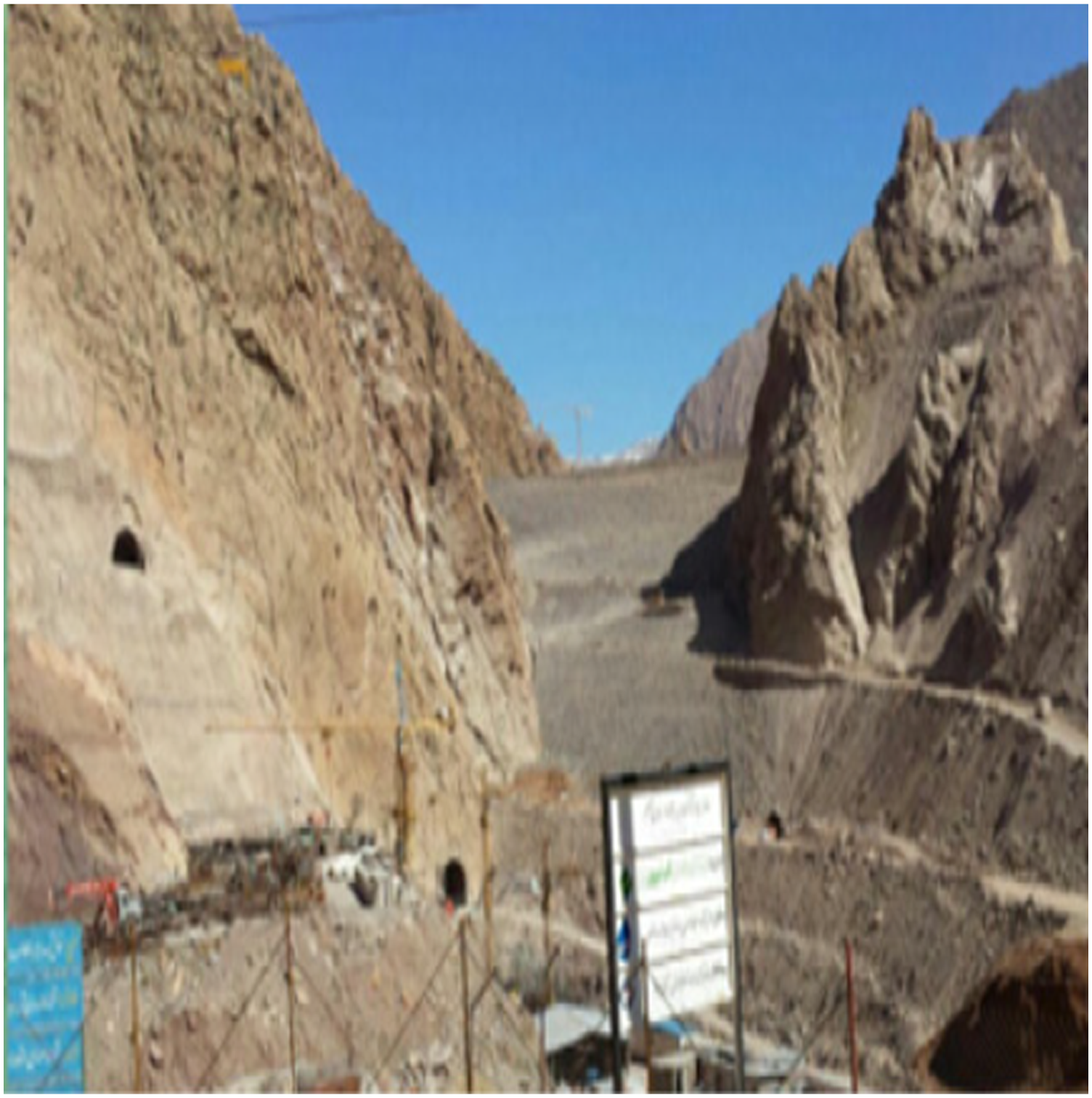
The Darian Dam, in particular, has had an immense negative impact on the Kurdish people’s natural environment and heritage. It was built despite massive public protests, resulting in a campaign to save Kani Bell, a waterfall and one of 14 springs to have been submerged under Darian’s reservoir. Many families and communities once part of the same village have been divided by Darian’s reservoir. Displaced villagers now residing in poor and underdeveloped suburbs in cities such as Kermashan, Pawe, and Sanandaj have added to further marginalisation and deprivation in Kurdistan. Darian has also caused massive deforestation, causing aridification in some areas (Figures 5 and 6), submerging rare trees, vegetation, and habitats for other species, and hundreds of hectares of pastures and forests (Amini et al., 2018, pp. 170–171). Over 5000 hectares of Hawraman’s valuable orchards were destroyed by Darian’s construction, including the region’s pomegranate orchards (Majidi, 2015, p. 1). It is thus arguably not without justification that environmental activists in the area have referred to Iranian water policy as ‘technofascist’ and ‘ISIS-like attackers’ of the environment, and institutions involved in these activities as ‘water mafia’. Applying Menga and Swyngedouw’s (2018, p. 2) general analysis of hydro-social configurations to the Iranian context allows to argues that ‘water is not just a natural resource and a physical agent, but it is also deeply embedded in social, political, and economic processes’, and access to water is understood and seen as organised through market mechanisms and the power of money, irrespective of social, human, or ecological need (p. 58). Apparently, traditional, and centralised water policies are insufficient, and therefore, a transition to a soft path ‘that complements centralized physical infrastructure with lower cost community-scale systems, decentralized and open decision-making, water markets and equitable pricing, application of efficient technology, and environmental protection’ is required (Gleick, 2003, p. 1524). Figure 5 shows the landscape before the construction of the Darian Dam on the Sirwan River (Kani Bell, 2018). Figure 6 shows the landscape after the construction of the Darian Dam on the Sirwan River (Kani Bell, 2018).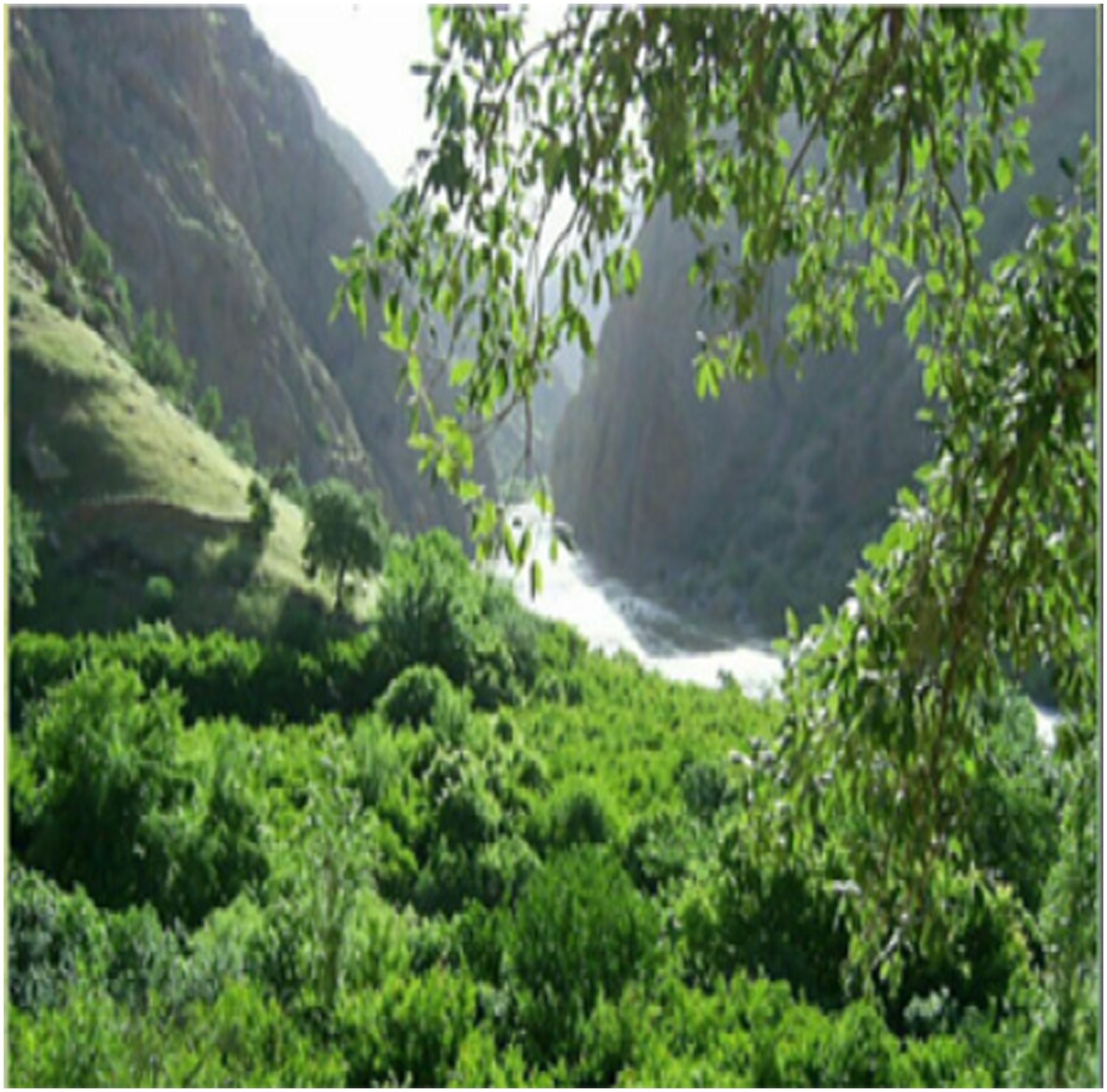
Environmental issues as a risk multiplier
Other issues faced by people in the donor regions include drought and soil erosion affecting agriculture, dust waves and sandstorms, health (particularly respiratory) issues, mass migration (environmental displacement), and unemployment. Soil erosion is widespread across Iran, making many regions both flood-prone and desertified and showing the severity of the country’s environmental challenges. Jajarmi et al. (2013) emphasise that soil erosion in Iran is six times higher than the global average, amounting to an annual loss of 1 million hectares of agricultural land. Official statistics reveal that 14 provinces of Iran, namely, Alborz, Ardabil, East Azerbaijan, Fars, Golestan, Hamedan, Isfahan, Kerman, Khorasan Razavi, Markazi, Qazvin, Semnan, Tehran, and Yazd, are suffering from land subsidence (Jinga Parezan Saghez, 2019). Soil erosion has also caused dust waves and sandstorms in donor basin areas in the periphery, resulting in respiratory health issues and cancer. The impact of sandstorms on local economic security has led to further marginalisation, causing damage to agricultural activities and food production, a decline in household income due to disruptions in economic and industrial activities, and an increase in health-care expenditures. In Khuzestan and its largest county, Ahwaz, sandstorms have seriously damaged the infrastructure, deterring both internal and external investments (Anderson, 2019). Sandstorms have posed a threat to communal sustainability. In rural areas of Khuzestan and Sistan and Baluchistan provinces, internal displacement is one of the many socioeconomic problems that have emerged as a result of Iran’s rapidly desertifying terrain and the sandstorms. For instance, according to official data, 124 villages in southeast Sistan and Baluchistan Province were buried by sandstorms in 2002, destroying the livelihood of a large community (Jajarmi et al., 2013). According to environmental activist Mohammad Darvish (2021), ‘Mass migration, where 10,000 teachers have left the province [Khuzestan] and another 10,000 are in the queue to leave’, is an example of how this province has suffered from environmental destruction.
This phenomenon of internal displacement has created what has been referred to as ‘environmental migrations/refugees’ (Myers, 2001) and has played a major role in the depopulation of rural areas. Mass environmental migration from rural areas in response to disproportionate environmental degradation and economic deprivation is one result of Khuzestan’s environmental challenges (Anderson, 2019). The destruction of agriculture and the water-based economy have also led to forced migration of many villagers, particularly in Khuzestan (and Sistan and Baluchistan) to central parts of Iran. Nevertheless, despite possessing rich natural resources, Khuzestan has become a region with many abandoned villages. The internal migration rate is an important indicator for measuring the severity of environmental problems. According to official statistics, between 2010 and 2016, over 200,000 people migrated from Khuzestan (Kaab, 2021, p. 107).
Conclusion
This paper has applied the concept of environmental racism to the Iranian government’s water policy regarding peripheral regions. The state’s systematic exploitation of water and other natural resources has resulted in multidimensional socioecological deterioration in Iran’s peripheral regions, home to Kurds, Arabs, Gilaks, Turkmens, Baluchis, and others. Essentially, the policy of water transfer is ‘robbing Peter to pay Paul’ – in the Iranian context, robbing water from Ch & B, Khuzestan, and Kurdistan to create wealth and growth in the central part of Iran. The abovementioned development shows that the Iranian government is eager to continue its supply-water management approach to be able to provide the central regions with water, which undermines any notion of demand management. Evaluating Iran’s water policy exposes the employment of controversial and expensive hydro-infrastructures, such as dams and IBWT plants, to address the country’s prevalent water crisis. Yet, disregarding the socioecological devastation and injustice brought about by these policies and practices reveals that the supply-side management approaches supported by favouritism are not the way to address the water shortage, but they will lead to additional ecological devastation, intercommunal conflict and confrontation, and hydro-social injustice, which will be imposed primarily on the populations of donor basins. It is important for governments to recognise that development must be preconditioned by consideration of the present and future generations regarding the environment, and that in order to achieve sustainable development, environmental protection must be regarded as an integral part of development and not a separate element of it. I hope that this paper and future studies will initiate a critical academic dialogue and encourage further research on concepts like socioecology, sustainable development, and subalternity in Iran.
Footnotes
Acknowledgement
I express my gratitude to Greg Shapland, Michael Mason, Kamal Soleimani, and Umut Kuruüzüm for their insightful comments and feedback on the earlier draft of this article. Along with the two anonymous reviewers, I am also grateful to Karen Anderson, Lynn Resler, and Jayne Brian from PPG for their valuable comments and feedback. I am grateful for the University of Exeter's generous contribution to covering the costs of publishing my article as Open Access.
Declaration of conflicting interests
The author(s) declared no potential conflicts of interest with respect to the research, authorship, and/or publication of this article.
Funding
The author(s) received no financial support for the research, authorship, and/or publication of this article.
