




Abstract
This paper analyzes the stabilizing effect of stone dust, granite dust, marble dust, and calcium lignosulphonate on construction materials and natural soils during road construction. The ultimate aim was to enhance the soil’s engineering properties such that the pavement constructed could correctly withstand the load applied. To achieve this, every stabilizer was amalgamated with the soil at various percentages between 5 and 50%. Measurements were made of Atterberg limit tests, moisture content, and specific gravity. The research demonstrated that a diminution in optimal moisture content was seen, with an elevation in maximum dry density and California bearing ratio (CBR). Enhancements in the unconfined compressive strength were also identified. The outcomes determined that the untreated soil’s CBR was 2.27% and in the case of soil with 45% additives, the CBR attained was 5.05%. When the soil was mixed with 50% additives, performance of 30.21%, 17.42%, and 12.82% was exhibited for (a) liquid limit, (b) plastic limit, and (c) plasticity index. Moreover, via the addition of presented stabilizers, the soil’s mechanical properties were elevated appreciably.
Introduction
Soil is a very important construction material (Patil et al., 2019), the characteristics of which vary spatially and also with depth and changes in loading, drainage, and environmental circumstances (Kumar et al., 2021). To enhance a soil’s mechanical properties when it has poor strength, stabilization of the soil is typically necessary (Kalkan, 2020). When weak soil dries out in the summer, it readily absorbs water, causing it to expand, soften, lose tenacity, shrink in volume, and generate cracks (Gautam et al., 2018). In major engineering applications, the mechanical qualities of natural soils can be insufficient. So, to enhance the intact soil’s mechanical strength, soil stabilization (SS) is frequently used (Hataf et al., 2018). With the incorporation of stabilizing agents, the soil’s shear strength and overall bearing capacity are elevated. Once stabilized, soil loses some of its permeability, which in turn diminishes the soil’s ability to contract or swell in response to changes in temperature and moisture content (Salwi and Hamzah, 2021). Stabilization is utilized to raise the soil’s shear capacity and diminish unfavorable features like permeability and consolidation potential (Kassa et al., 2020). Adding materials that contain chemical properties to reinforce the soil is one SS technique (chemical approach) (Mina et al., 2019). The problematic soil’s engineering properties are therefore improved by mechanical and chemical SS (Jalal et al., 2020). Typical admixtures utilized for stabilizing soil include (a) lime, (b) cement, (c) ground granulated blast furnace slag (GGBS), (d) fly ash (FA), along with (e) bottom ash (BA) (Sudhakaran et al., 2018).
More research is required to identify an appropriate stabilizing alternative that is cheap, environmentally friendly, and better at improving sub-grade soil, making pavements and embankments stronger to support heavier loads, along with widening and renewing roads. This work aims to propound a technique utilizing waste products for stabilizing soil. The novel aspect of this research is the use of four additives to enhance soil stability with cost efficiency. The additives include dust materials along with calcium lignosulphonate. Its objectives are as follows: • To evaluate waste materials like Stone Dust (SD), Granite Dust (GD), Marble Dust (MD), and Calcium Lignosulphonate (CLS) as soil stabilizing agents in pavement construction. • To assess the waste material’s optimum percentage when utilized for the construction of pavements. • To analyze Atterberg’s limits, compaction characteristics, specific gravity, and California bearing ratio (CBR) values on diverse samples by altering percentages of waste materials in the soils.
The following section reviews previous research on soil stabilizing additions as a precursor to our focus on additions of waste materials for stabilization.
Literature review
Stabilization using marble dust
Rai et al. (2020) examined the impacts of waste marble powder (MP) along with magnesium phosphate cement (MPC) on soil properties. Waste MP and MPC were utilized as an additive in soil stabilization. They found that the soil’s stability was elevated by the MP and MPC addition, which was found to be cost-efficient and eco-friendly. The MPC as well as MP mixtures were deemed as a good ground enhancement approach for weak soil engineering projects in which it could serve as a replacement for deep foundations. Amena and Kabeta (2022) utilized plastic waste together with marble waste dust (MWD) to analyze an expansive soil’s engineering properties. The stabilized soil’s engineering characteristics were determined by following several laboratory examinations, and found elevated strength parameters owing to the MWD and plastic strip’s inclusion. Since the expansive soil treated with polyethylene terephthalate (PET) plastic together with MWD satisfied the minimal standard requirements, it was a suitable subgrade material. Abdelkader et al. (2021) used MWD for soil stabilization as a local low-cost material along with the eradication of its negative environmental effects. By soil’s dry weight, the MWD was mixed with expansive soil samples in distinct percentages. For natural and MD stabilized soils, diverse tests were conducted that included CBR, Atterberg’s limits, linear shrinkage (LS) tests, standard proctor compaction (SPC), X-ray diffractometer (XRD), Unconfined Compression Strength (UCS), X-ray fluorescence (XRF), along with swelling percentage analysis. Significant effects were seen in elevating the expansive soil’s properties.
Stabilization using granite dust
Eltwati et al. (2020) focused on the impact of granite powder additions on soil behavior when subjected to loading. Soils blended with numerous quantities of granite powder (4%, 8%, 12%, 16%, and 20% of the entire weight) were investigated. For evaluating untreated and treated soil performance, the CBR, compaction, as well as direct shear tests were performed. The findings established that the shear strength, CBR, and soil dry density were elevated noticeably by adding granite dust. It was found that the most appropriate outcomes among other contents of GD were yielded by the addition of 8% GD to the natural soil. Balasubramanian et al. (2020) explored the mechanisms of inappropriate highway subgrade stabilization with the amalgamation of GD and surkhi to elevate its properties. To stabilize the soil with a combination of GD and surkhi, laboratory examinations were undertaken to conform to the Indian Standard Code of practice. For natural soil and treated soil samples, Index property, grain size analysis, SPC, UCS, and CBR were performed. A significant reduction in the Plasticity Index (PI) was found, along with a corresponding elevation in soil density. Zainuddin et al. (2018) identified the probability of employing GD acquired from demolished tile material (DTM) for elevating the marine clay’s geotechnical properties. The impact of DTM’s percentages on marine clay’s physical and mechanical properties was examined by utilizing experiential techniques. Marine clay’s plasticity and pH were augmented by the DTM. Water holding capability was diminished by DTM addition. The insignificant decrease in the marine clay’s plasticity was caused by the diminution in water-holding capacity.
Stabilization using other wastes
A range of other wastes have been investigated. Mishra et al. (2019) illustrated an economical solution, which was executed by subgrade soil’s mechanical stabilization using stabilizers like a coarse aggregate of 10 mm in size, and stone dust. For determining the Optimum Moisture Content (OMC) that is necessitated for soil to attain maximal compaction, the mechanical stabilization effect on proctor compaction tests, such as Maximum Dry Density (MDD), OMC, and CBR was examined. According to the study, CBR and MDD values increased with the inclusion of stabilizers to subgrade soil whilst OMC diminished. For the “3” sorts of fine-grained soils examined in this study, mechanical stabilization led to an elevation in soaked CBR. Liu et al. (2019) utilized waste resources for expansive soil stabilization. Rice husk ash (RHA) acquired from biomass power plants, along with calcium carbide residue (CCR) attained from acetylene plants, were combined to form a cementing material. By weight for soil stabilization, the RHA/CCR’s mixing ratio was adopted as 65:35 based on the RHA-CCR mortars’ compressive and flexural strength. A series of examinations were made of the stabilized expansive soil’s swelling, shrinkage, and strength properties. After adding RHA-CCR, a significant elevation in UCS, cohesion, and internal friction angle was observed. Njideka and Ngene Ben (2018) investigated the sodium chloride, cement, and brick dust’s stabilizing effect on clay soil. Powder samples of each of the three materials were incorporated with the clay soils in several percentages. The moisture content, SG, sieve analysis, and Atterberg limit tests were evaluated. A gradual elevation was found in the MDD value with the incorporation of cement along with sodium chloride at 2% to 14%. A gradual elevation of up to 6% was exhibited by the brick dust content, after which it started to diminish at 10% and 14%.
Other works
Various examples of the use of other additives for SS exist. Darsi et al. (2021) employed lime along with Ground Granulated Blast-furnace Slag (GGBS) as an additive to elevate expansive soils’ engineering characteristics. Lime at 2%, 4%, and 6%, and GGBS at 5% and 10% of GGBS were utilized for experimental work. CBR, UCS, SPC, and Atterberg’s limits tests were executed. A note-worthy augmentation was identified in the soil’s UCS and CBR. Dajiang et al. (2020) investigated the macroscopic properties and the stabilization mechanism of CLS-modified expansive soil. X-ray diffraction analysis, X-computed tomography, Zeta potential, and rheological tests were performed and compared with natural soil. An elevated UCS along with a diminished free expansion rate was exhibited by the soil modified by 4% CLS. Moreover, the potential for an efficient eco-friendly soil stabilizer was developed by the addition of a moderate amount of CLS. Thomas et al. (2018) examined the efficacy of alkali-activated GGBS along with enzyme contrasted with Ordinary Portland Cement (OPC) on soil sources from the Tilda region of Chhattisgarh, India. Effects on OMC, MDD, PI, and UCS, along with shear strength parameters were evaluated. When analogized with OPC for soil stabilization, the utilization of non-conventional stabilizers like alkali-activated GGBS and enzymes was found to be appropriate and eco-friendly.
Wu et al. (2021) presented an architecture for unifying diverse industrial by-products (IBPs) as composite binders for potentially substituting OPC in soft clay stabilization. The fractions of diverse IBPs were determined using the concept of “three chemical moduli” (TCM) together with the strength activity index (SAI). The new framework was employed to stabilize coastal soft clay by distinct IBPs along with gypsum. By merging an apt quantity of gypsum, the formation of ettringite was found to engender pore infills, and large water consumption along with causing a cementation impact to the IBPs’ stabilized soft clays. This may lead to an MDD and hence this higher strength.
Karami et al. (2021) examined the efficiency of SS using FA-centered additions, which was further increased by utilizing secondary additives. The base additive utilized was Class F-FA, which was an industrial by-product. The secondary additives included lime, enzyme, and CSA cement, together with polymers. For investigating the densification as well as cementation effects on diverse combinations of additives in the stabilization of soil, a sequence of mechanical along with microscopic tests like CBR, SPC, SEM, XRD, FTIR, and TGA were executed. They found that fly-ash-centered SS efficiency could be elevated by the addition of secondary additives.
Kushwaha et al. (2018) analyzed the soil’s stabilizing effects with poor geotechnical properties using the Eko Soil (ES) enzyme. With ES percentages ranging from 1% to 6%, an elevation of 347% and 334% in CBR and UCS were found, respectively.
Cabalar et al. (2020a) conducted several plate loading tests on clay encompassing three construction and demolition (CD) materials prepared in a reinforced concrete circular box, at a 10% ratio and compressed at optimum water content. The clay’s ultimate bearing capacity was augmented by the CD materials. Arulrajah et al. (2012) analyzed five types of CD materials’ geotechnical and geo-environmental properties. For usage in pavement sub-bases, properties like recycled concrete aggregate (RCA) along with waste rock (WR) have geotechnical engineering properties. Cabalar et al. (2019a) examined the usage of CD materials with clay for road pavement subgrade. CD materials were mixed with low-plasticity clay by dry weight, and large increases in UCS were achieved by employing clay in every aggregate.
Mohajerani et al. (2020) examined waste rubber application in construction materials for earthworks as well as infrastructure construction. For earth structures, asphalt concrete, cementitious concrete, along with granular materials were encompassed in the waste rubber. Ductility together with strength-to-weight ratio was enhanced when crumb rubber was deployed as a sand substitute in flowable concrete fill.
Mohammadinia et al. (2018a) presented an alternate precursor alkali-activation that stabilizes CD materials using lime kiln dust (LKD) and Class F-FA. For optimizing the alkali-activation effect, several LKD and FA mixtures were assessed for effectiveness in augmenting the CD material durability under repeated loads. For road bases/subbases, alkali-activation with an optimum FA content was a viable replacement. Arulrajah et al. (2017) employed cement kiln dust (CKD) along with FA blends for the demolition aggregates’ stabilization as an alternative binder. For detecting the resilient modulus (MR), repeated load triaxial (RLT) evaluated the CKD + FA stabilized materials’ durability. To stabilize CD materials, optimum performance was acquired at the mix design with 20% CKD + 10% FA. Mohammadinia et al. (2014) analyzed the usage of cement-treated CD materials in pavement base and sub-base applications. Reclaimed asphalt pavement (RAP), recycled concrete aggregate (RCA), along with crushed brick (CB) were the examined materials. With an augmentation in cement content, curing duration, along with confining pressure, the CD materials’ resilient moduli were enriched.
Cabalar et al. (2020b) developed a few geotechnical property outcomes of lower plasticity clay mixed with steel computer numerical control (CNC) milling waste spirals. For a mixture with 20% waste, the highest CBR value (11.22%) was acquired; whereas, for a mixture with 15% waste, the maximal UCS value (390.11 kPa) was attained. Wang and Yu (2013) aimed at residual stresses in cohesive frictional materials by employing finite element analysis on residual stress enhancement in a cohesive-frictional half-space beneath recurrent moving surface loads. As per the numerical outcomes, how residual stresses impact cohesive frictional materials’ behavior under repeated loading conditions was depicted. Mohammadinia et al. (2018b) conducted an alkali-activation of FA and CKD mixtures for demolition aggregate stabilization. Under repeated loading, the stabilized materials’ durability was examined. It attained an optimum ratio of FA:CKD of 50:50.
Cabalar and Alosman (2021) developed the usage of rock powder as an agent for enhancing organic soil behavior, which contains 30% or more organic components like residues of dead plants, animals, and other organisms. The dramatic diminution noted in energy absorption values signified that the additive provides the mixture a comparatively brittle behavior even though unconfined compressive strength values have been maximized by adding rock powder. Cabalar et al. (2019b) evaluated swelling in clay treated with several CDs using CBR and oedometer testing. Following oedometer testing, the attained swelling values were larger compared to those acquired in the CBR. For every mix ratio examined, the clay mixed with dragged asphalt pieces had the superior swelling value; whereas the clay with crushed brick grains had the least swelling value.
Despite the extensive work summarized above, and even though dust particles seem to have a better role in enhancing the soil, limited studies have taken place into utilizing dust particles in the enhancement of expansive soil properties. In this paper, three types of dust particles along with CLS were added to virgin soil to assess stabilization effects, in laboratory conditions.
Materials and methods
Soil
The soil sample chosen was from the sloping regions of the Badvel and Jammalamadugu present in the geographical area of Kadapa district and Prakasam region, situated between 15° 20′ 54.4668″ and 15° 20.9078′ N latitude and 79° 33′ 37.2384″ and E 79° 33.6206′ longitude. Since the top-soil could encompass organic matter along with other foreign components, the soil was gathered by excavating test pits at a depth of 1 m. Many portions of the region are covered in expansive soil with poor bearing capability.
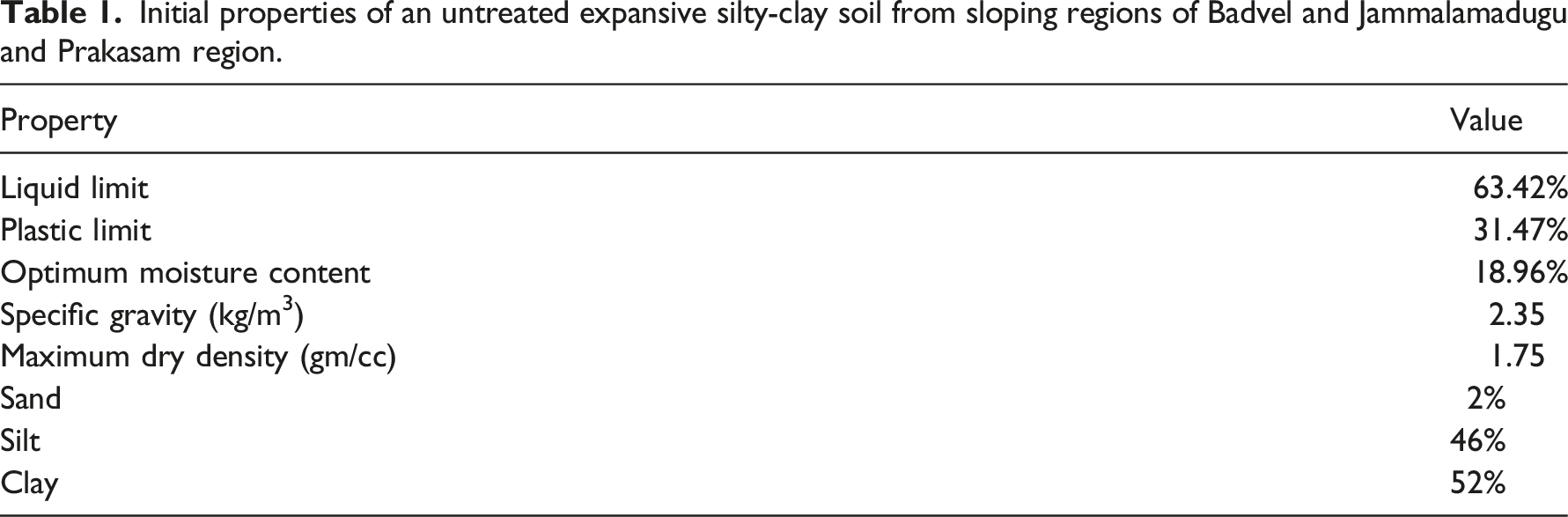
After air-drying and sieving, the chosen sample was crushed into particles. From the relevant Indian standards, diverse preliminary tests were executed on collected soil samples. As per the Indian standard classification system (IS: 1498–1970), the soil is characterized as silty clay. The soil’s particle size distribution curve after crushing is depicted in Figure 1. Table 1 presents the gathered soil’s initial properties. Particle size distribution curve of the collected expansive silty-clay soil from sloping regions of Badvel and Jammalamadugu and Prakasam region. Initial properties of an untreated expansive silty-clay soil from sloping regions of Badvel and Jammalamadugu and Prakasam region.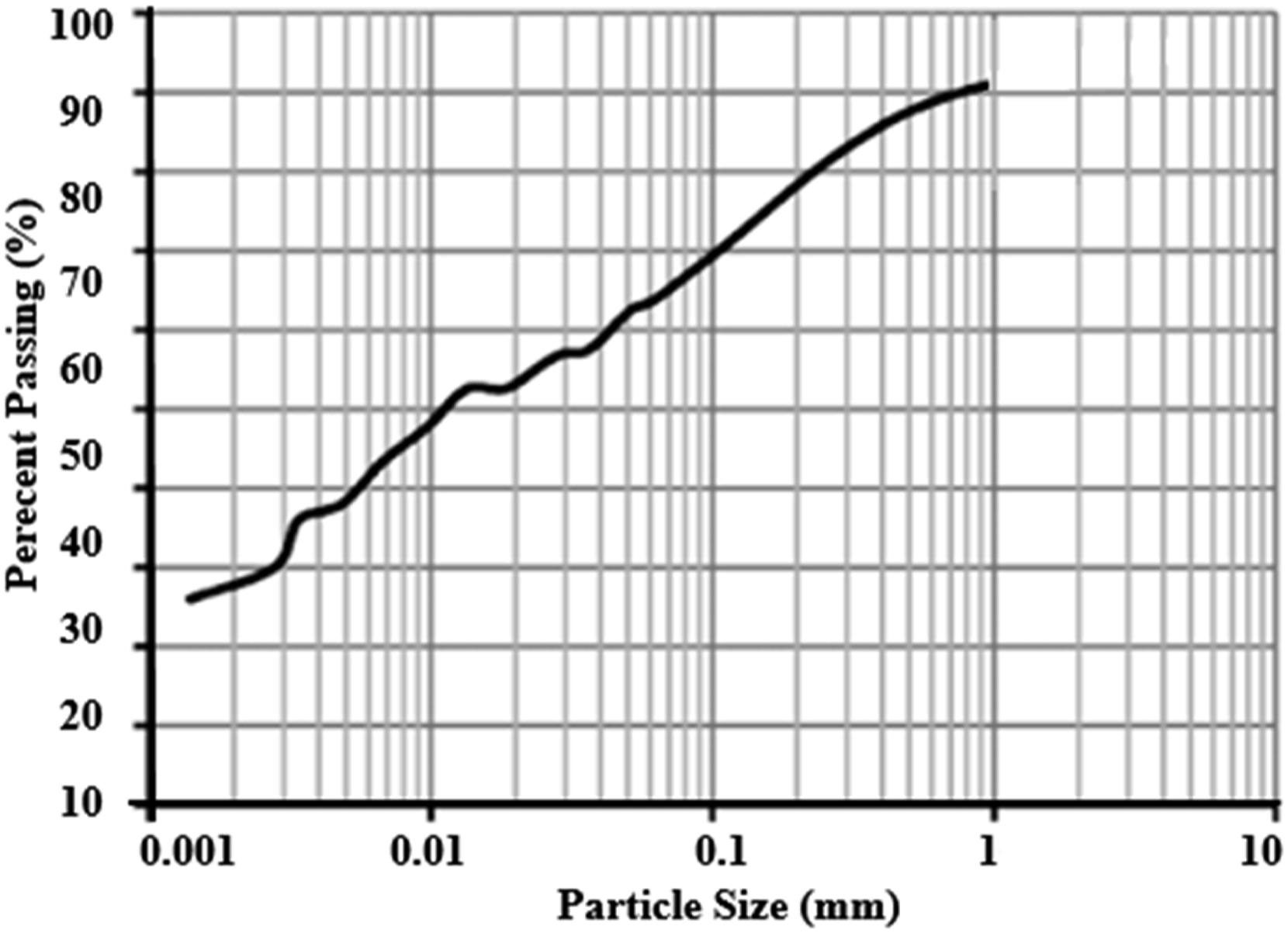
The soil was modified by adding stabilizers, namely SD, GD, MD, and CLS at varying proportions. Figure 2 exhibits the presented methodology’s flow. Flowchart of the stepwise methodology.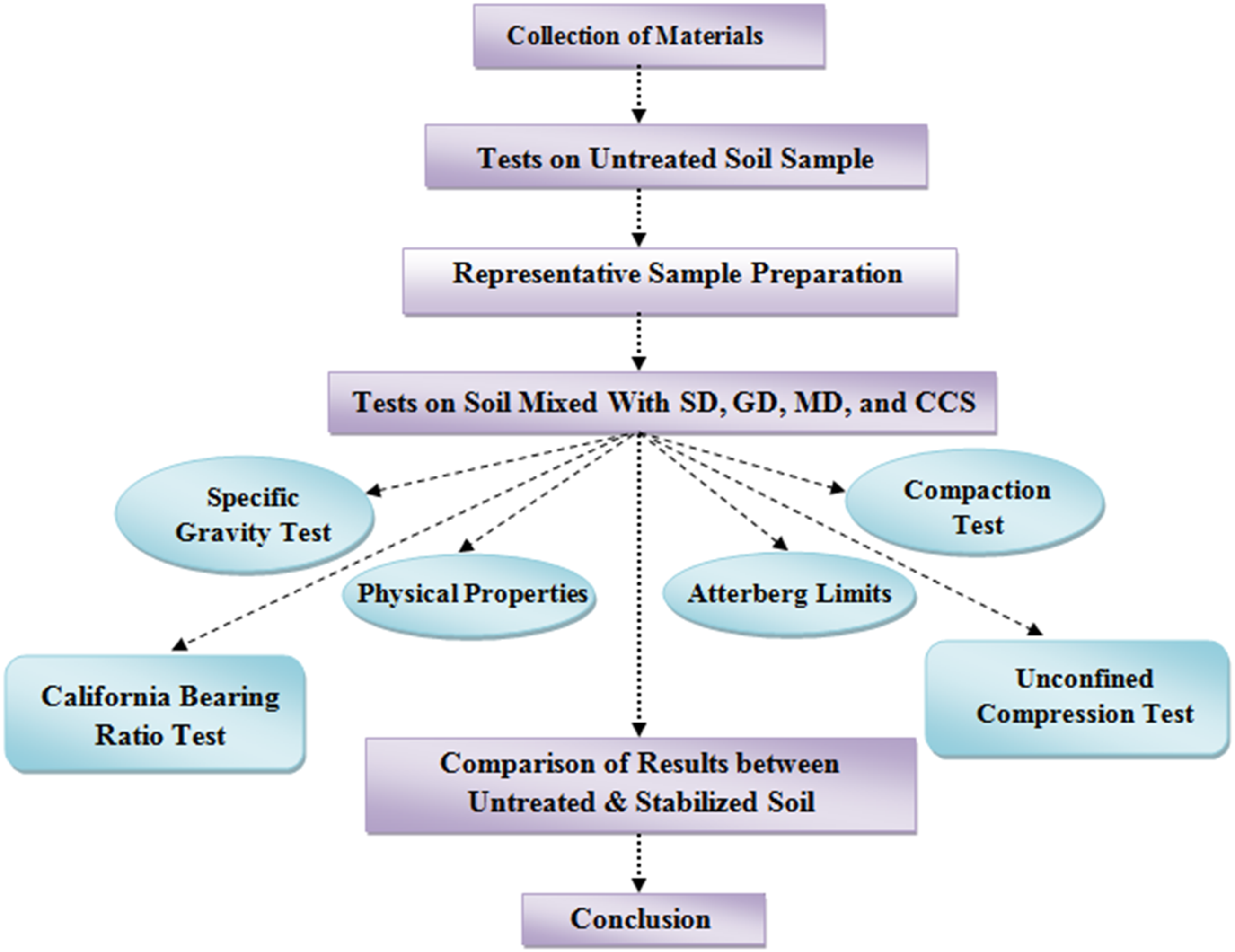
Stone dust
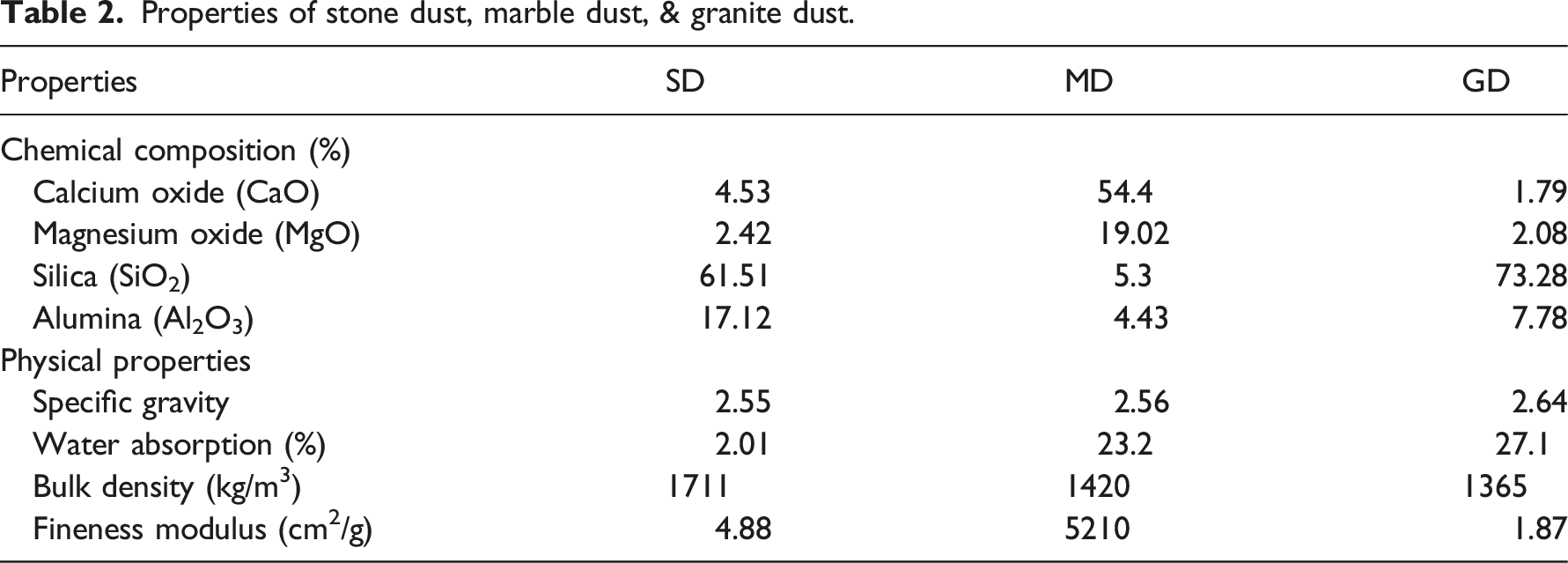
A solid waste material that is produced as of the stone crushing industry is stone dust, which includes a small number of pozzolanic properties and has a high California bearing ratio (CBR) value. A size limit of ≤250 µm was used for the stabilization process. Waste SD collected from the stone crushing industry was sieved through a 4.75 mm sieve; in addition, the particles retained over the sieve were separated. The best scheme to treat the expansive soil is utilizing the SD as a mechanical stabilizer. It elevates the soil’s geotechnical properties by augmenting its compaction characteristics and diminishing plasticity. It was recognized that crusher dust exhibited higher shear strength; also, it benefits as a geotechnical material. Elevation in load-carrying capacity, settlement reduction, lateral deformation, and providing a good support layer are achieved by adding SD to the soil in appropriate proportions. To study the workability and compressive strength of pavement constructed utilizing SD as a partial replacement for fine aggregate, several exercises were executed. X-ray diffraction (XRD) analysis, which is a technique to determine the crystallographic structure of powdered specimens, identified that the stone powder is comprised of silicon dioxide, calcium carbonate, and another aluminum silicate containing calcium (Figure 3). XRD patterns of the stone dust utilized in experiments.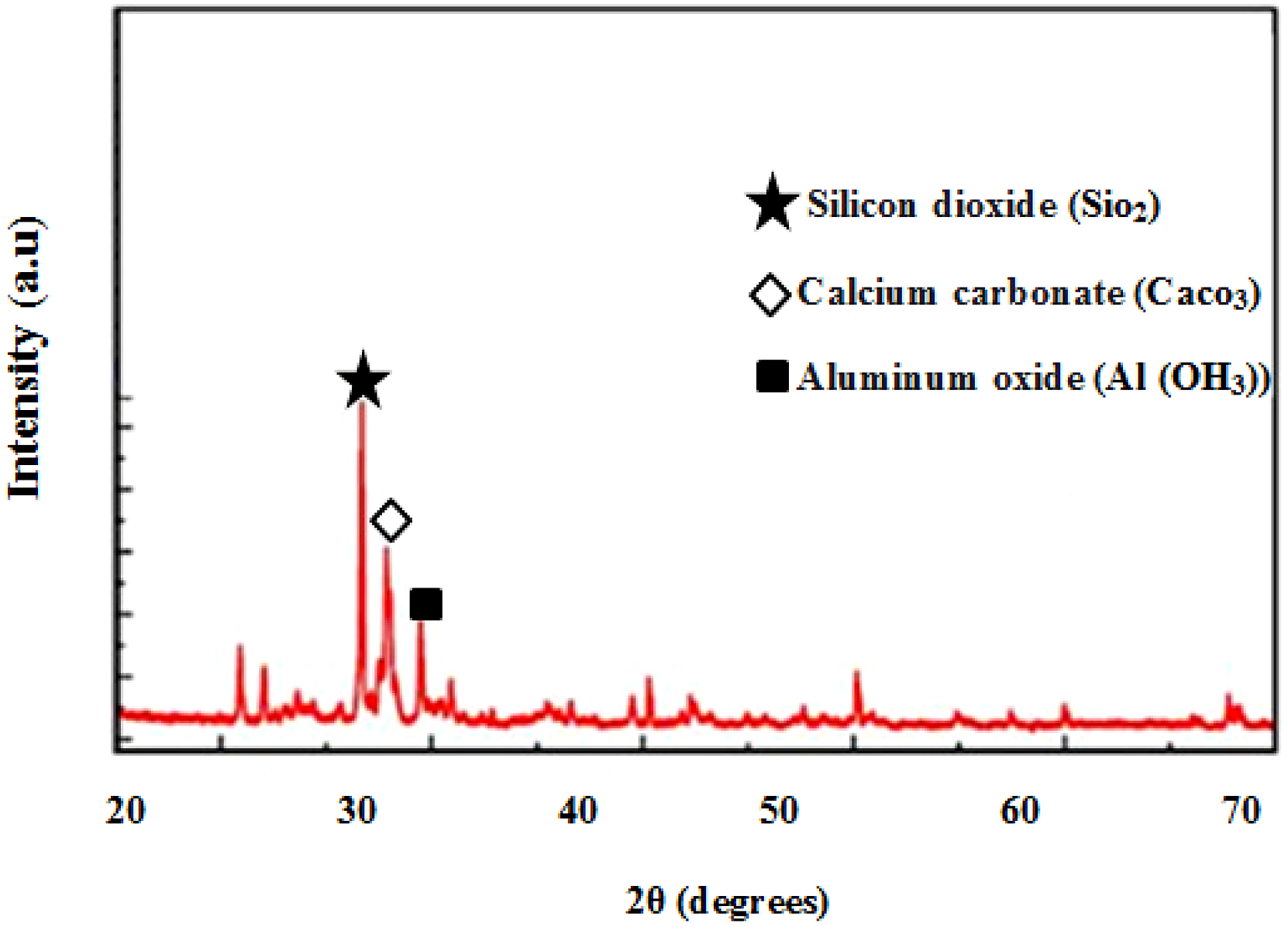
Granite dust
Granite dust (GD), as a non-plastic material, couldn’t be influenced by water. Owing to the enhancement in coarser fraction and the SG of soil-GD mixes, the MDD can be elevated and OMC diminished by adding GD to the soil. GD originates from the sawing process of granite blocks. Calcium carbonate (90%) is the major constituent of granite dust that assists in the soil’s stabilization. At our sampling site, cooling water carried the dust to a sedimentation pond, where the dust was collected. GD taken from the sedimentation pond was dried and sieved from a sieve of no.: 200, having a sieve size of 75 µm. Subsequently, it was mixed with granular soil at varying ratios. Figure 4 exhibits the XRD pattern analyzed for GD. XRD pattern of granite dust utilized in experiments.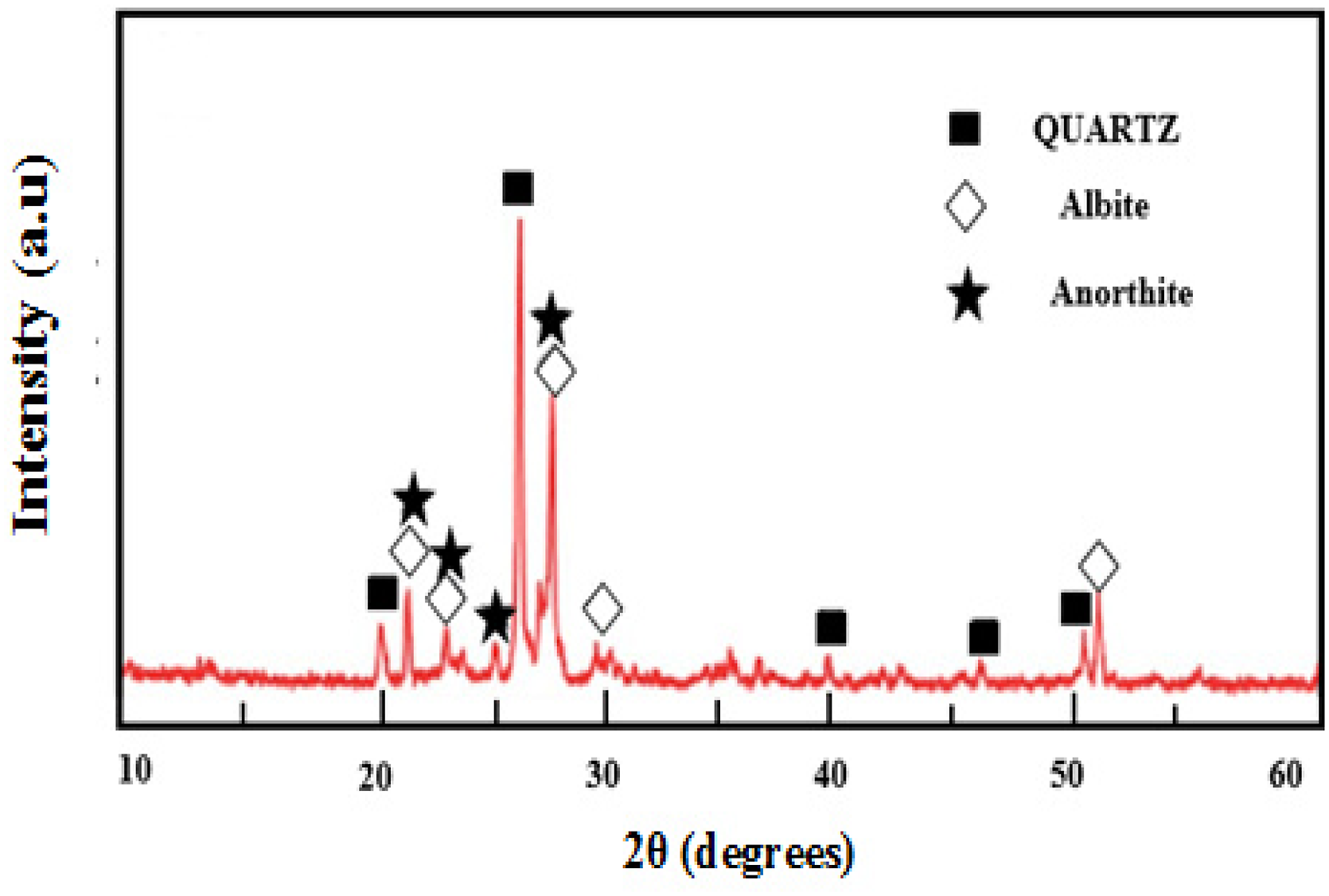
As per XRD patterns from Figure 4, the granite wastes’ main mineral phases were quartz, albite, and anorthite.
Marble dust
For soil stabilization, marble dust (MD), which upgrades (a) the compaction qualities, (b) subgrade characteristics, (c) swelling characteristics, and (d) compressibility characteristics, is a successful waste material. MD that is used was obtained in wet form as slurry from marble processing factories. MD is made during the trimming, smoothening, and grinding of marble stones. Industrial MD is produced in the form of solid and slurry waste; solid waste being the rejected waste from processing units. A high amount of calcium, alumina, and silica was included in MD, which can significantly stabilize the soil. MD’s mineralogical composition as detected by the XRD technique is shown in Figure 5. The obtained XRD spectrum was, XRD spectrum of marble dust utilized in experiments.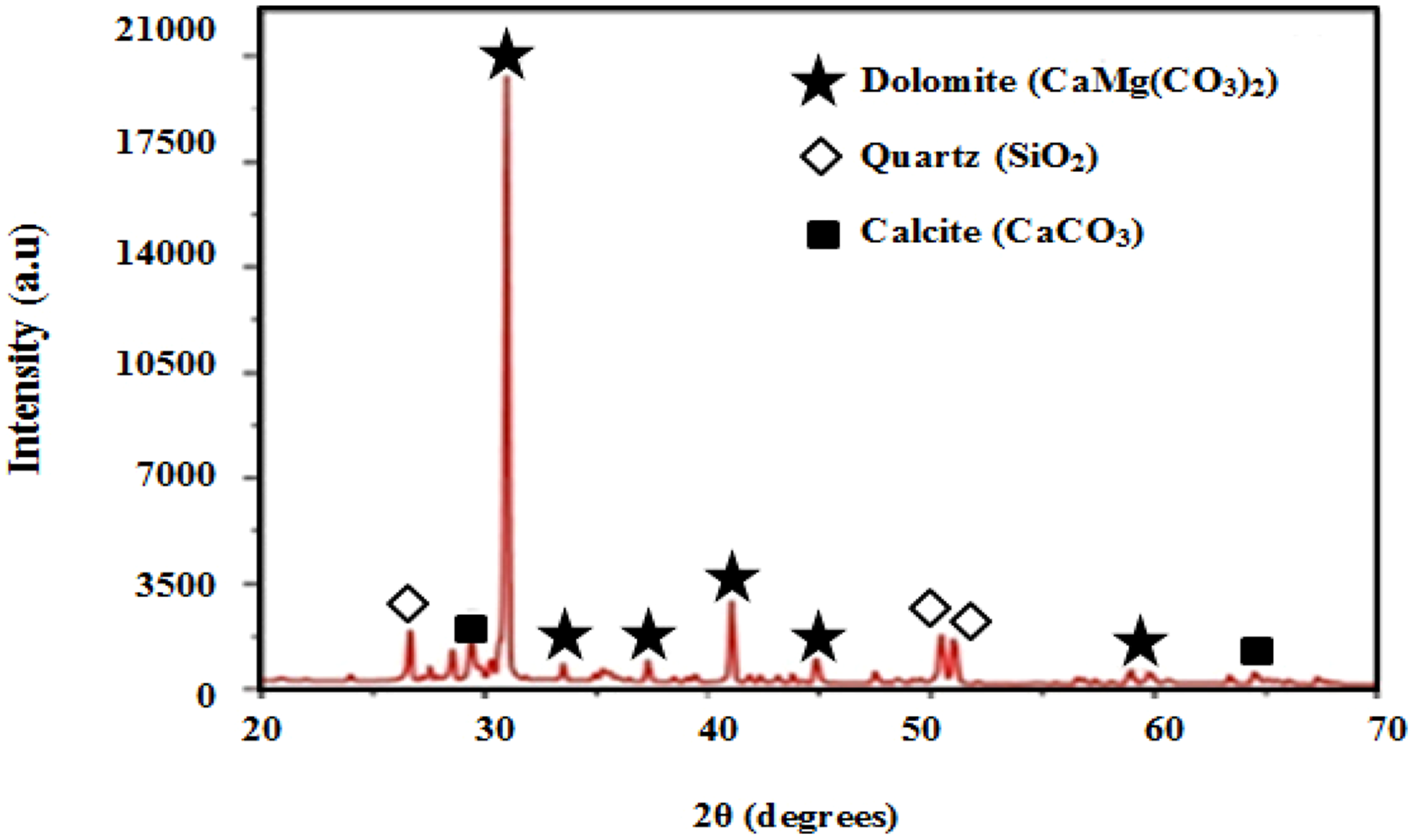
Properties of stone dust, marble dust, & granite dust.
Calcium lignosulphonate
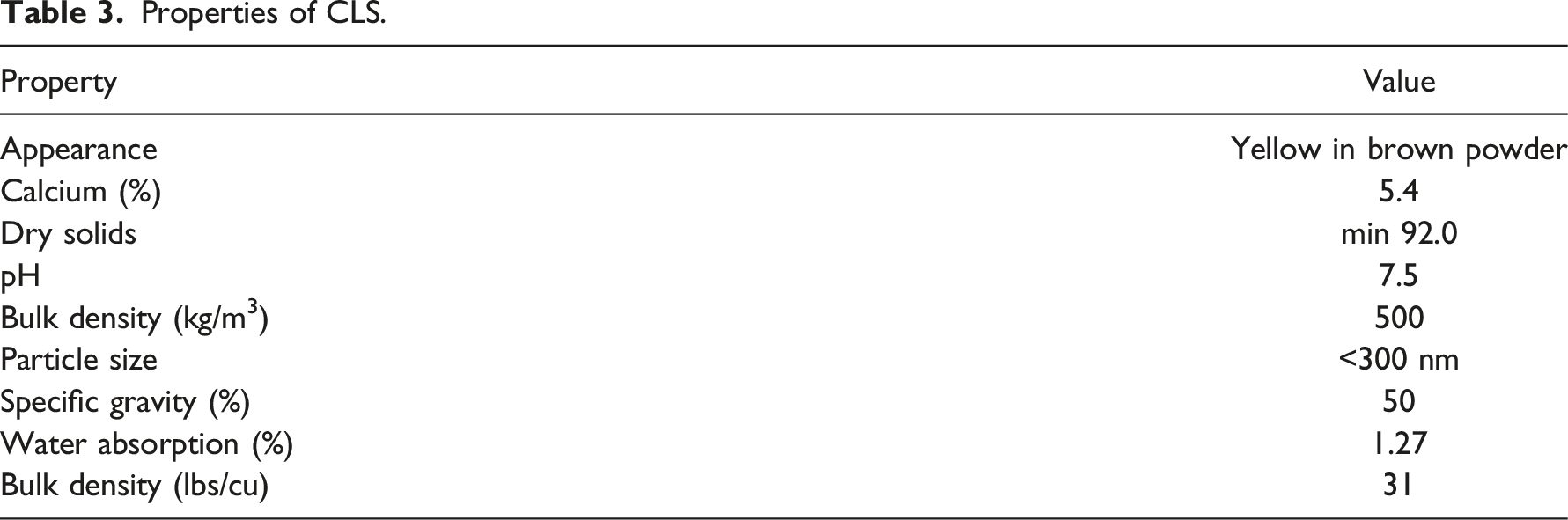
A non-toxic, non-corrosive waste product formed in the wood and paper processing industries is lignosulphonate. An amorphous material derived from lignin is known as CLS (40–65), which is a light-yellow-brown powder. A bio-based polymer acquired as the paper industry’s sub-product is termed the CLS. When wielded as a soil stabilizer, the soil properties are enhanced; also, the economic and environmental costs of disposal are eliminated. It is water soluble but practically insoluble in organic solvents. CLS, when used in small doses, can efficiently cement soil particles and increase soil cohesion, increasing the improved soil’s tensile strength. Cohesive soils’ engineering properties are enhanced by a small amount of CLS mixed with non-plastic materials like granite dust, fiber, etc. by producing a net diminution in the pore volume, helping in the quick generation of ettringite, as well as augmenting the tensile strength (Amulya et al., 2021). CLS neutralizes the negative charges on the dust particle surface; also, it uses covalent and hydrogen bonds to build a polymer chain in order to agglomerate the dust particles (Amulya et al., 2022). The XRD pattern was studied using crystallography (Figure 6) XRD pattern of CLS.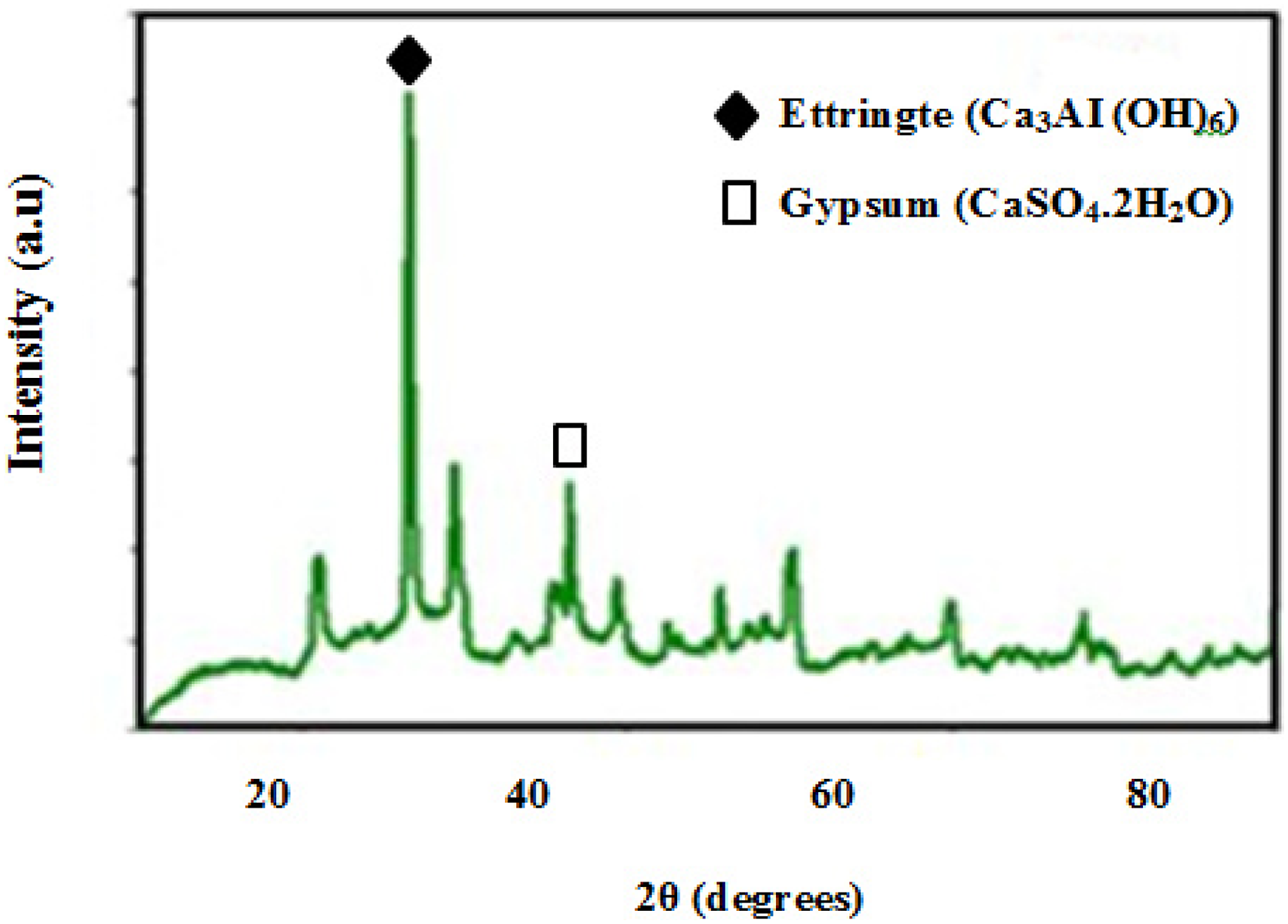
Properties of CLS.
Methodology
Both the soil samples and stabilizers were dried before mixing. The soil samples were primarily dried in clear sunlight, and all clods were broken down. They were then dried in an oven at 105°C for 24 h. Stabilizers were mixed with the soil at 10%, 20%, 30%, 40%, 45%, and 50% proportions. To identify the effects of various amounts of admixtures on the index properties, as well as engineering properties, soils stabilized with the mixture of SD, MD, GC, and CLS were tested for the following strength parameters: OMC, MDD, CBR, and UCS Figure 7. SEM pictures of the materials used: (a) untreated soil, (b) stone dust (SD), (c) granite dust (GD), (d) marble dust (MD), and (e) calcium lignosulphonate (CLS).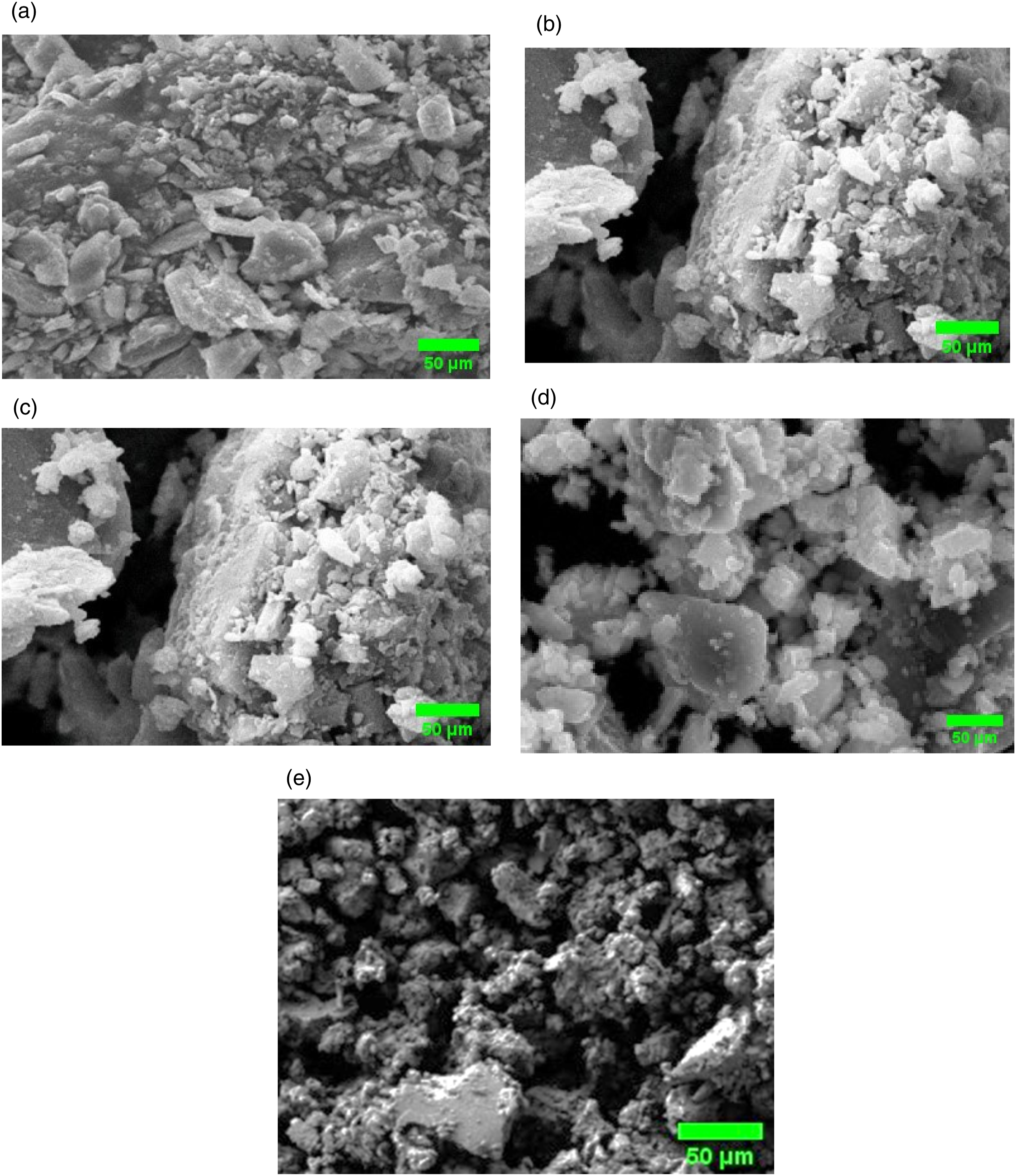
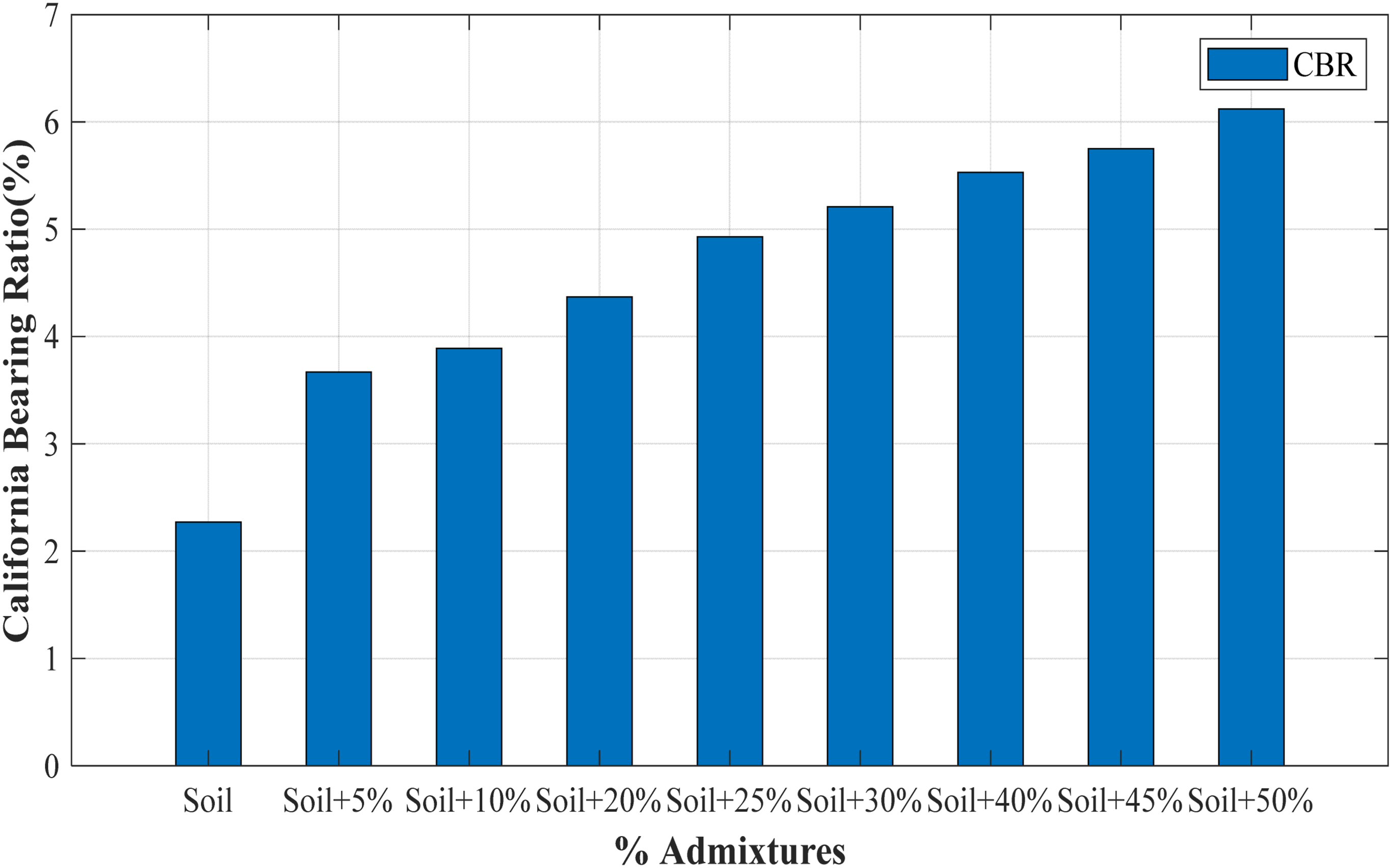
California Bearing Ratio (CBR) measures the strength of the road’s sub-grade or else other paved area and the materials utilized in its construction. The test was conducted to attain the specific soil material’s bearing strength value. It was performed following IS 2720–16. Figure 8 exhibits the CBR values for diverse waste proportions. CBR is calculated as follows Effect of stabilizers on CBR of the soil.
Atterberg limits are employed for measuring the engineering properties of fine-grained soils. PL and LL are some of the Atterberg limits considered in the model. The examination was done by utilizing the IS: 2720–5 1985 guidelines. The liquid limit (LL) and plastic limit (PL) tests were done by taking a 21 gm sample and passing a 426-mm sieve for each test.
UCS is a measure of soil shear strength. Prior to placing the specimen in the testing chamber, the two plates were cleaned carefully. The load was gradually elevated for shearing the sample; the readings are obtained periodically as of the force applied to the sample along with the resulting deformation. The test was conducted by using the IS: 2720 (Part 10): 1991 code. At a rate of 0.5 MPa/s to 1.0 MPa/s, the load was applied consistently till the failure occurred.
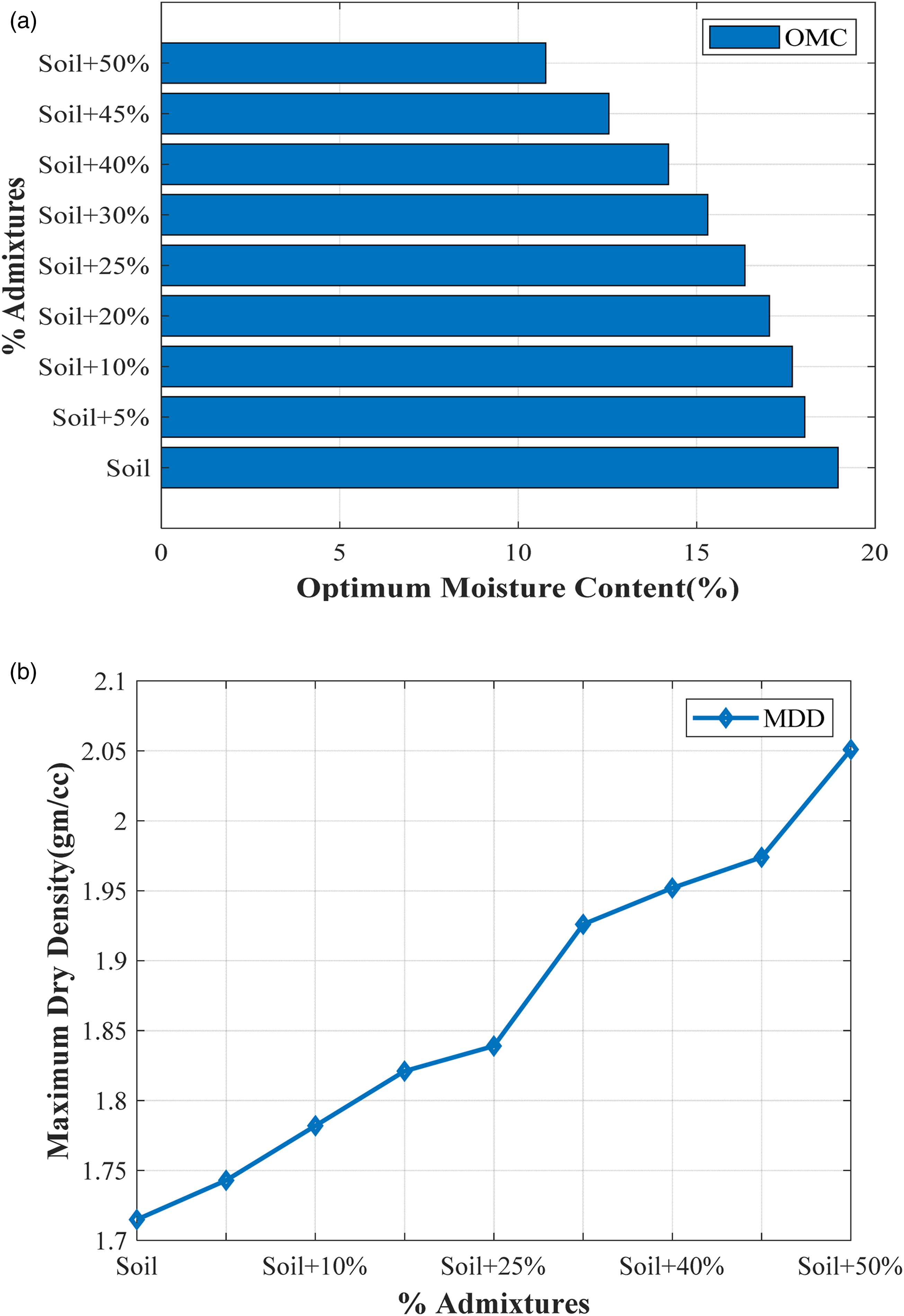
The Proctor Compaction test is the experimental methodology for determining the OMC at which a given soil sort becomes most dense and achieves its MDD. Thus, OMC and MDD are the measures of the compaction level of the prepared samples to reach the required load-bearing strength. It was performed following IS 2720–7 1980 guidelines. The water content at which the soil attains MDD is OMC. The soil’s dry density cohering with the OMC is named MDD. Figure 9 illustrates the MDD and OMC values for diverse waste proportions Effect of stabilizers on (a) OMC and (b) MDD of the soil.

Specific gravity is the ratio of a substance’s density to the given reference material’s density. The examination was done by following the IS 2720 (Part III) – 1980 guidelines
Results and analysis
The experimental test outcomes and analysis are presented here, including the soil’s compaction characteristics mixed with the additives and the mechanical test outcomes.
The Scanning Electron Microscope (SEM) pictures of (a) untreated soil, (b) stone dust (SD), (c) granite dust (GD), (d) marble dust (MD), and (e) calcium lignosulphonate (CLS). SEM uses electrons rather than light to form images in microscopic length scales usually about 50 μm long as well as graduated intervals that range from 1 μm to 20 μm.
Compaction characteristics for soils with different proportions of a mixture comprised of stone dust, granite dust, marble dust, and calcium lignosulphonate.
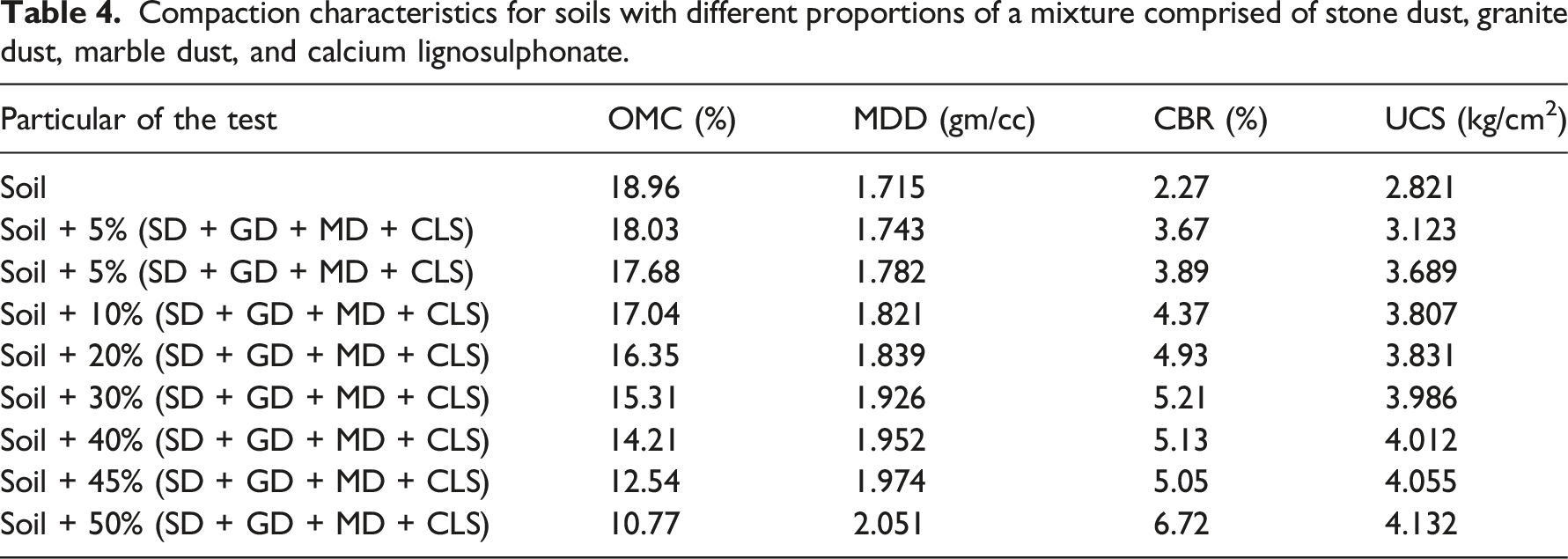
CBR test performed on the normal soil and the soil altered by the addition of stabilizers is shown in Figure 8. As the percentage of the stabilizers increased up to 30%, there was an elevation in the CBR ratio from 2.27% to 5.21%. For a further elevation in the percentage of stabilizers, the values are increased to 6.12%. With the proper bonding of additives like SD, GD, MD, and CLS, there was an elevation in CBR.
The augmentation in MDD and OMC in soil including stabilizers is shown in Figure 9. Owing to the lower saturation coefficient that proffers a huge number of unfilled voids in the mix, the amount of water required for saturation was reflected by the change in OMC. A noticeable effect on treated soils’ mechanical and engineering properties was demonstrated by an elevation in MDD and a diminution in OMC. When there is an augmentation in the percentage of additives, OMC diminishes from 18.96% to 10.77%. An average of 8.19% reduction in OMC was found due to the inclusion of dust materials. A reasonable elevation in MDD was made by the addition of mixtures, from 1.715 gm/cc to 2.051 gm/cc.
Figure 10 exhibits the outcomes obtained for the UCS test. The compressive strength characteristics are marginally impacted by adding additives to the soil sample. The UCS was 2.821 kg/cm2 for the unprocessed soil sample. This elevated to 4.132 kg/cm2 by adding the mixture of SD, GD, MD, and CLS. The compressive strength has been improved by an average of 1.311 kg/cm2 when contrasted with the untreated soil sample. The outcomes exhibited that the soil properties appropriate for pavement construction were elevated by the addition of CLS with dust materials. Effect of stabilizers on UCS of the soil.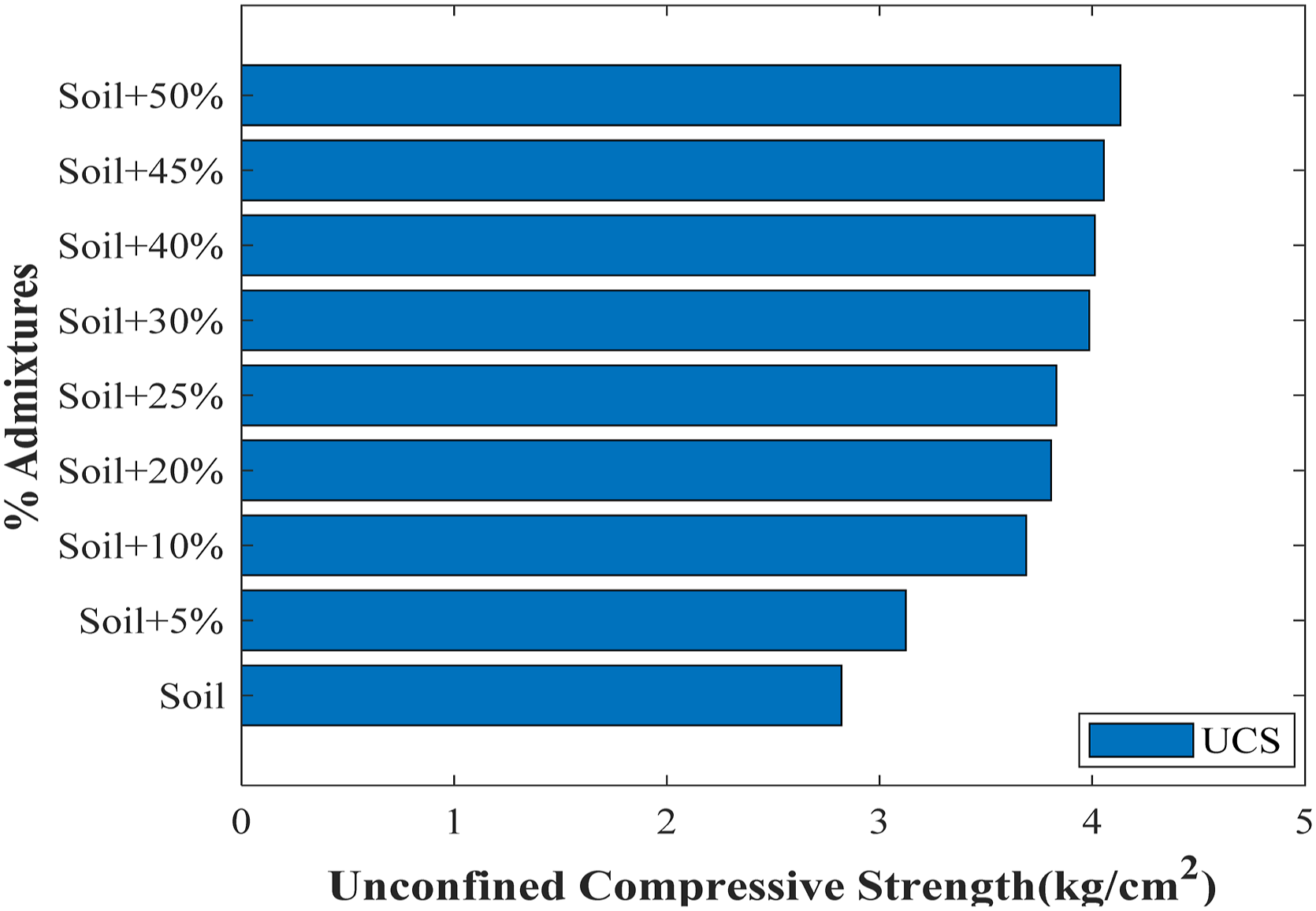
Atterberg’s limits of soil mixed with SD, GD, MD, and CLS.
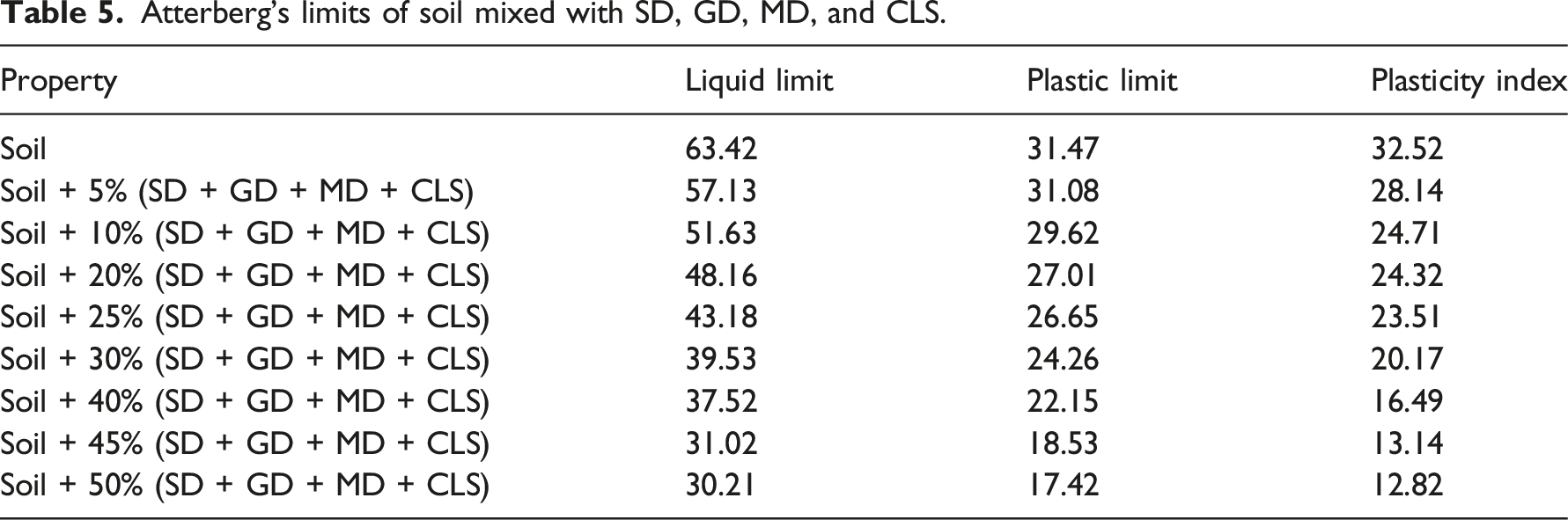
The effects of elevating the percentage of soil additives on Atterberg’s limits are shown in Figure 11. Atterberg limits correspond to soil moisture levels, where soil consistency varies from one stage to another. In Figure 11(a), the untreated soil’s LL is 63.42%, which diminishes to 30.21% with the elevation in the percentage of additives. A diminish in values to 31.08%, 29.62%, and 27.01% for the 5%, 10%, and 20% proportions of additives, respectively, was observed regarding PL. For the various percentages of SD, GD, MD, and CLS mixtures, the PI diminishes from 32.52% to 12.82% as shown in Figure 11(c). Owing to mechanical stabilization and the addition of non-plastic material, there was a diminution in Atterberg’s limit of the modified soil. Effect of stabilizers on Atterberg limits of (a) liquid limit (b) plastic limit and (c) plasticity index.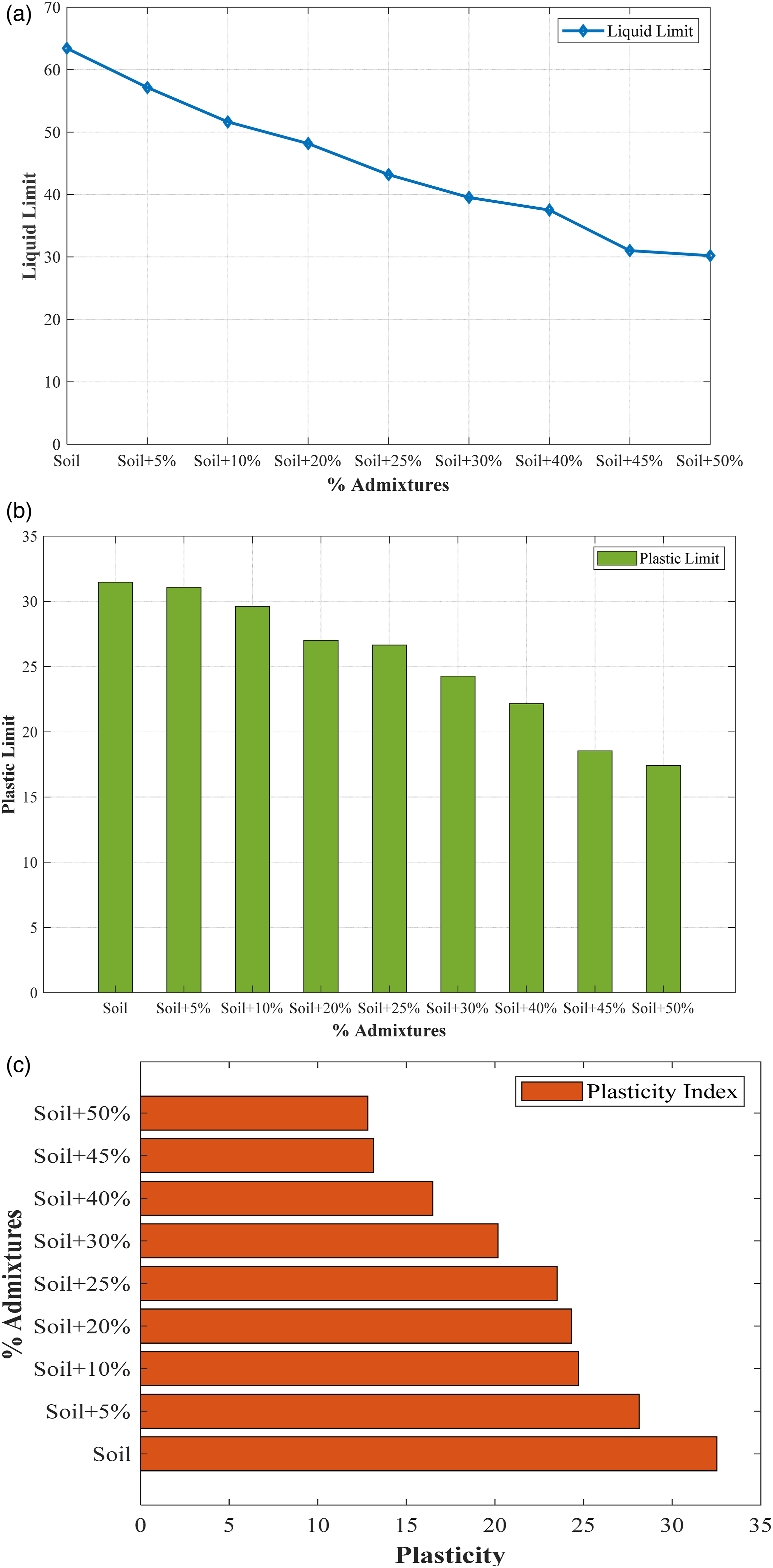
The SG of both unmodified and stabilized soil is shown in Figure 12. The untreated soil had an SG of 2.35. As the percentage of stabilizers increased, there was an elevation in the SG. The soil’s SG increased from 2.35 to 2.78 (Figure 12). Thus, the stabilized soil had a greater density compared to the untreated soil. Effect of stabilizers on CBR of the soil.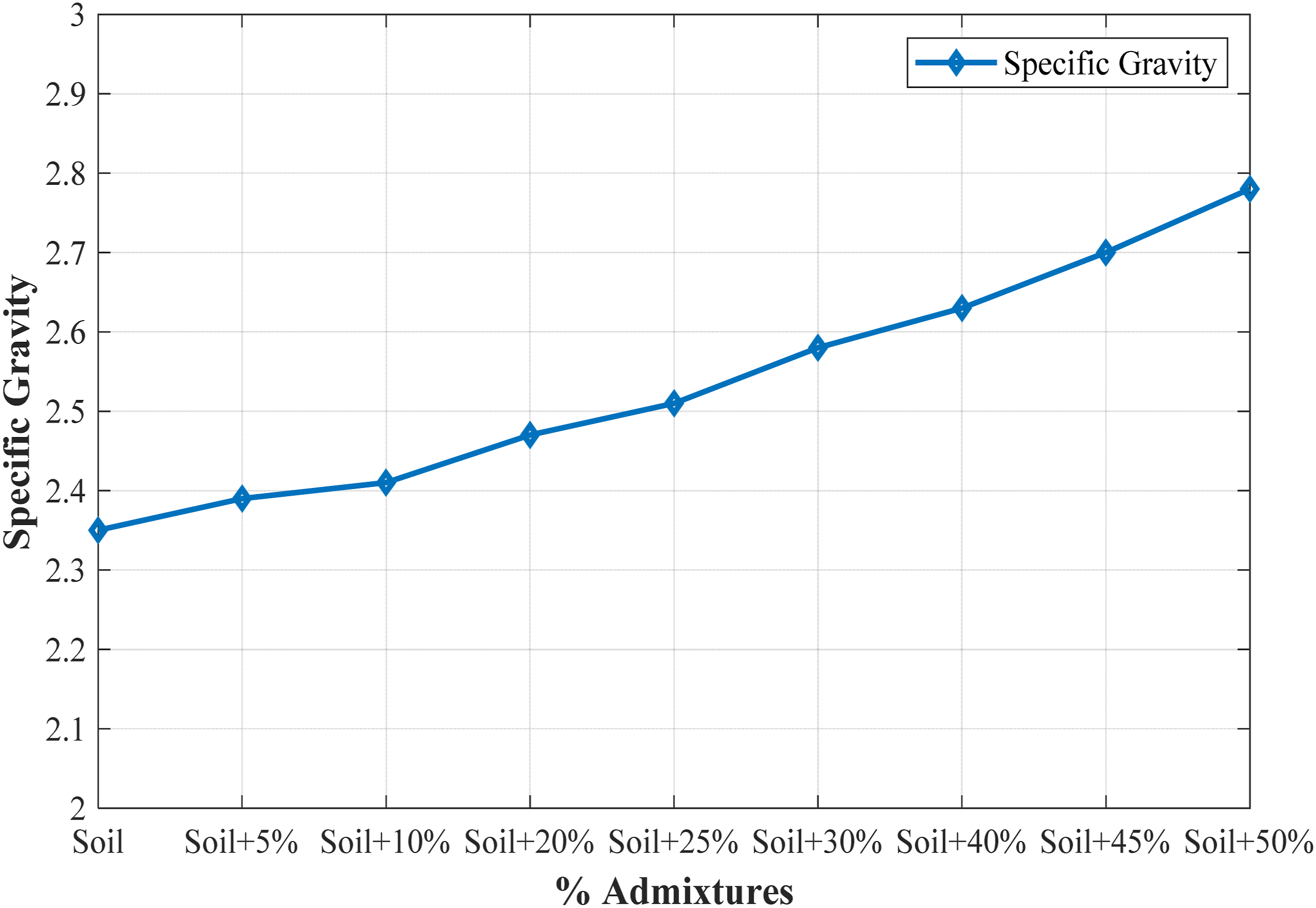
Cost analysis
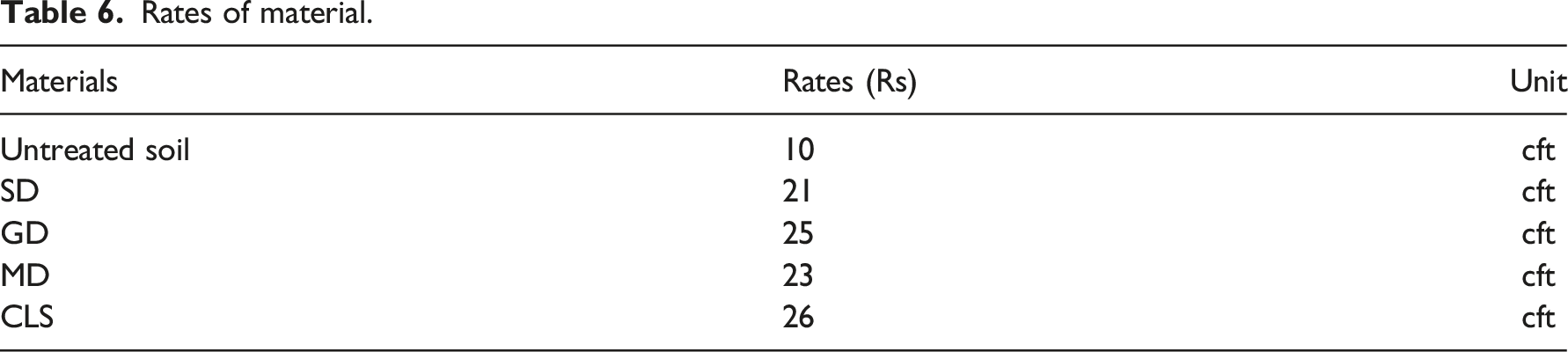
Rates of material.
Cost of material for different proportions of mixtures.
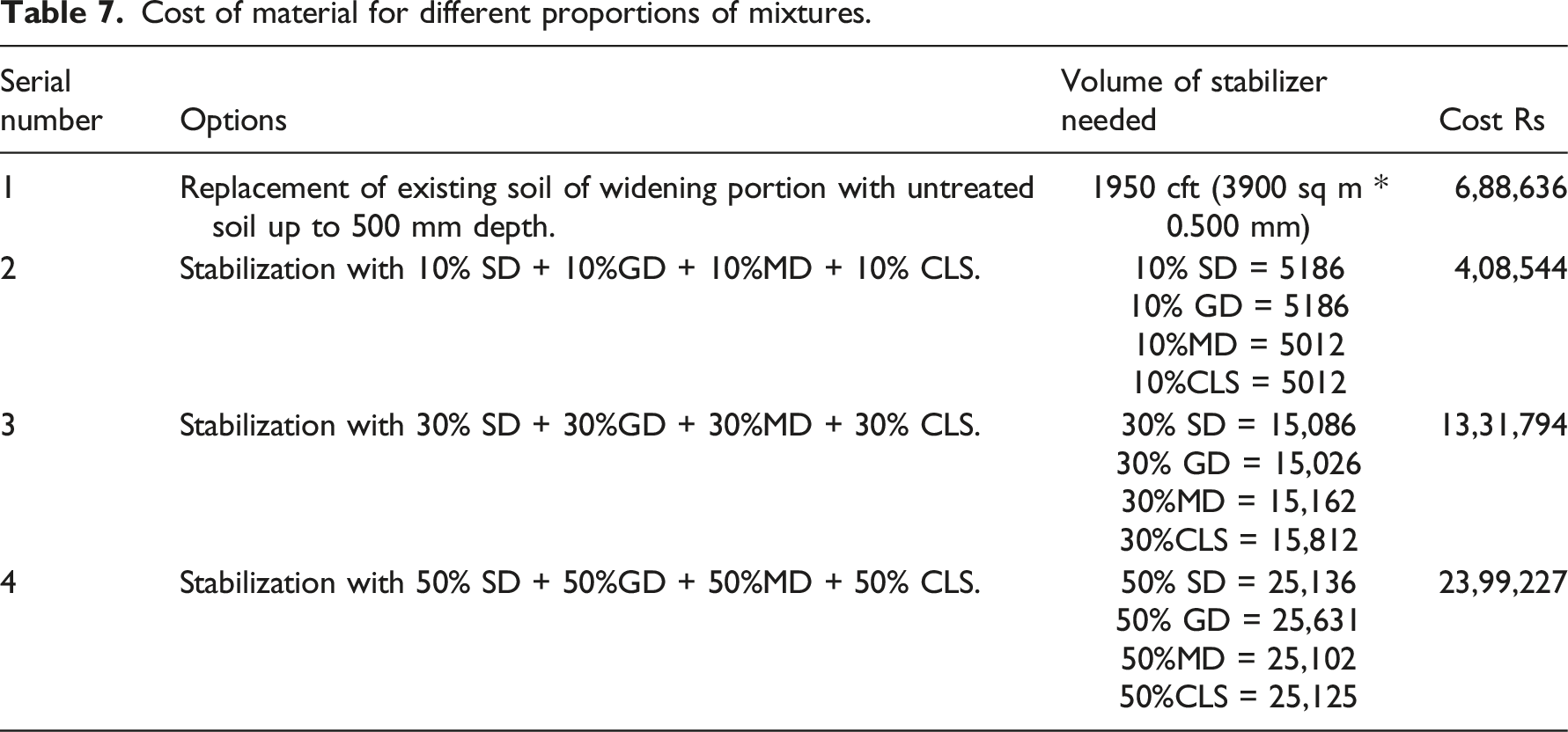
From above Table 7, the most economical stabilization option would be the mixing of 10% of all mixtures. Mixing 10% MD is cheaper by 923,250 than 30%. Subsequent to 10%, mixing with 50% of all mixtures is 1,990,683 cheaper than replacement. The cost estimation was performed under the assumption that the transport cost per unit quantity of untreated soil, SD, GD, MD, and CLS of 10 mm size is the same. Figure 13 exhibits the cost estimation analysis graphically. Cost analysis based on various mixing proportions.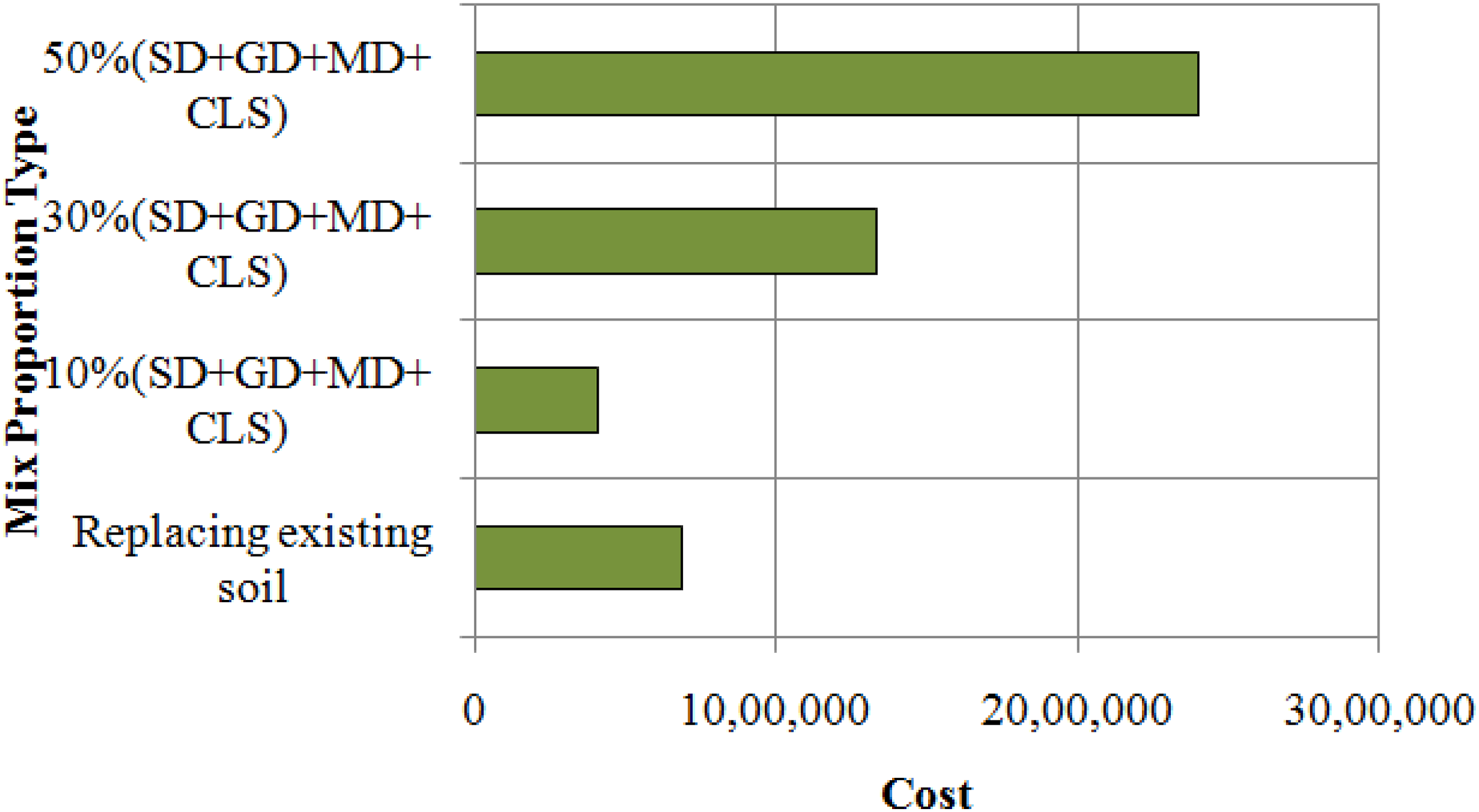
Comparative analysis of the proposed and previous approaches
Here, the proposed approach’s performance was compared with existing approaches mentioned in the literature survey based on MDD and CBR.
Figure 14 illustrates the comparison of the MDD and CBR values obtained by the proposed approach and the existing soil stabilization approaches offered by Amena and Kabeta (2022), Karami et al. (2021), Kushwaha et al. (2018) in section 2. Karami et al. (2021) utilized fly ash as the admixture in the proportion of 7.5% and 10%. Amena and Kabeta (2022) used eco soil as the stabilizer in the proportion of 1% to 6%. Kushwaha et al. (2018) utilized plastic waste and marble waste dust in the proportions of 10, 15, and 20%. Existing works have concentrated only on admixture to enhance the stability of the soil. But, the presented approach has used three types of dust particles and CLS to increase soil performance. The graph clearly indicates that the presented approach has exhibited higher values of MDD and CBR compared to other stabilization approaches. Performance comparison with existing papers.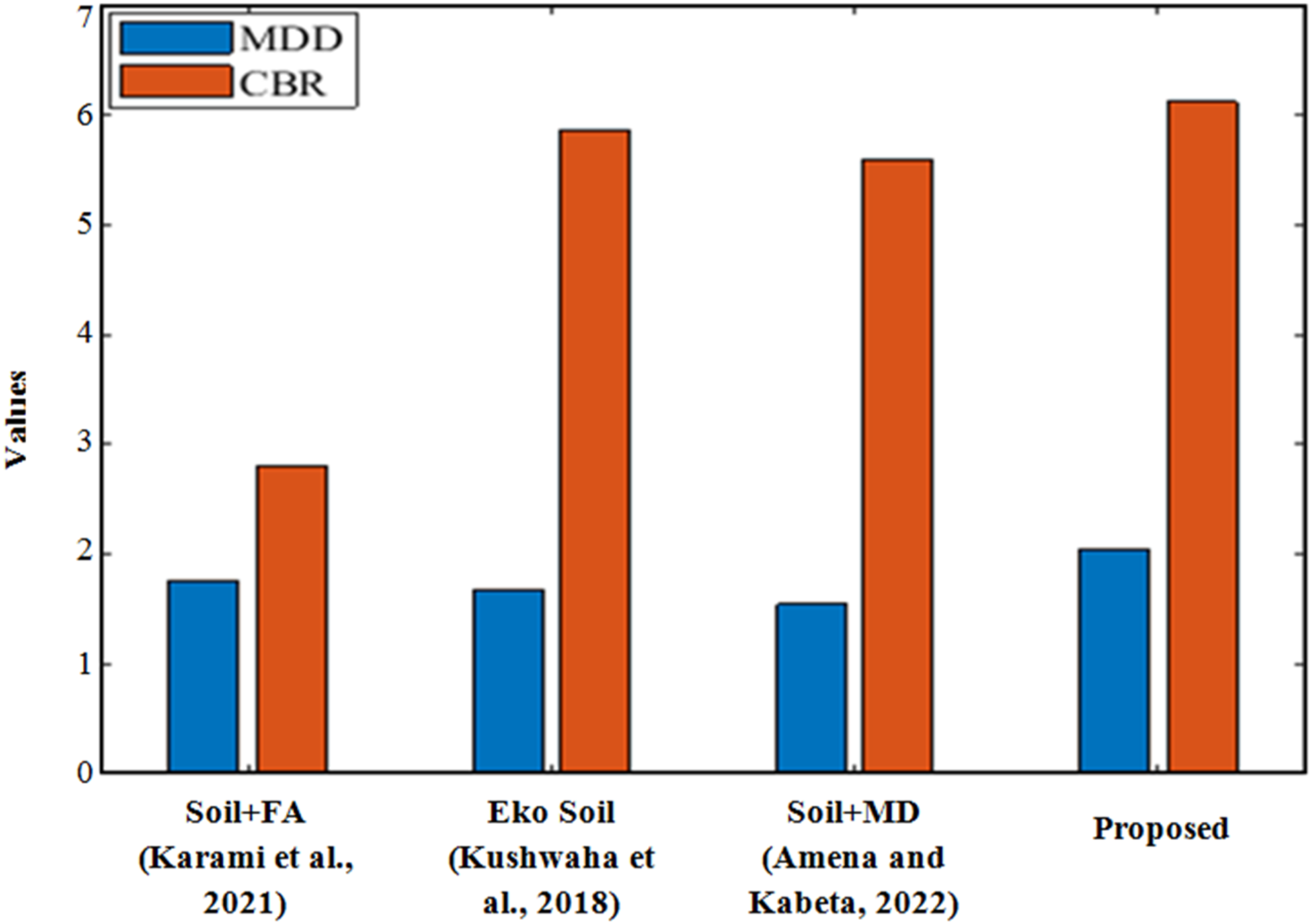
Conclusion
CLS, GD, MD, and SD were all employed for soil stabilization in the work. According to the experimental findings, adding aggregates like SD, MD, GD, and CLS augmented the soil’s characteristics, such as durability stiffness, soil strength, and diminished swelling/shrinkage potential and soil plasticity. In the experimental outcomes, diminution in the LL, PL, and PI were reported with an elevation in the additives’ percentage. Moisture content diminished with an elevation in the proportion of stabilizers. It may therefore be beneficial in diminishing the water quantity requisite during compaction. As the percentage of additives rose, the maximum dry density also increased and attained 2.051 gm/cc. The untreated soil’s CBR was 2.27%, whereas the CBR for soil with 45% additives was 5.05%. The OMC showed a decrease of 10.77% with a mix ratio of 50% and MDD showed an increase of 2.051 gm/cc when the soil was mixed with 50% additives. The augmentation of 6.72 in CBR caused a 38% expansion in CBR estimation in soil. As a result, the findings show that the newly proposed stabilizers’ composition elevated the soil properties, making it more cost- and energy-efficient for the construction of pavement. The feasibility of CLS to be utilized as a potential substitute for natural soils was demonstrated. This also has the potential to help with the mine wastes’ safe disposal, minimizing the carbon emissions and energy consumption related to their disposal (Ashfaq and Moghal, 2020; Ashfaq et al., 2020). The stabilized soil will have lowered environmental pollution, reduced construction and disposal costs, along with superior performance. Stabilized soil has a broad range of applications in the construction of building cushions, airfield foundations, subgrade of roads and railways, dam filler, and other earthworks as an ideal backfill material.
Footnotes
Declaration of conflicting interests
The author(s) declared no potential conflicts of interest with respect to the research, authorship, and/or publication of this article.
Funding
The author(s) received no financial support for the research, authorship, and/or publication of this article.
