




Abstract
Peatlands are carbon-rich ecosystems that comprise the largest terrestrial carbon store. Peatland preservation has been acknowledged on the global scale as a key nature-based component in addressing climate change. Despite their importance, there is no globally recognised definitions for peat or peatland, which influences efforts in quantifying global peat carbon stocks. We present a critical review on peatland definitions, including peat nomenclature and changing criteria for peatland classification through time. We focus on two important criteria: the minimum depth of the surface organic layer and the minimum percentage of organic carbon. We highlight the disparity between definitions, peatland nomenclature and peatland classifications. It is challenging to determine whether one definition should take precedence over another, even when considering the most common criteria. We propose that future peatland definitions focus on carbon storage and potential greenhouse gas emissions. This involves four physical and chemical characteristics of the peatland deposit: (1) Peatland extent, (2) peat thickness, (3) peat carbon content and (4) peat bulk density (volumetric carbon content). The growth dynamics and carbon flux of the peatland deposit should also become a routine part of inventories. In future, international technical agencies and experts can advise on the standardisation of concept definitions and methods, these must focus on the preservation of peatlands from the perspective of climate science.
Introduction
Peatlands are estimated to cover 3% of the global land surface and are distributed across almost every country on the planet (Page et al., 2011; Xu et al., 2018). Peatlands are terrestrial wetland ecosystems that facilitate the growth of peat (Dargie et al., 2017). Peat is a type of organic-rich soil that consists of partially decomposed organic matter, derived mostly from plant material, which has accumulated under conditions of waterlogging, oxygen and nutrient deficiency, and high acidity (International Peatland Society: IPS, 2021). Peatlands provide multiple ecosystem services that are significant to the Sustainable Development Goals (Food and Agriculture Organization: FAO, 2020), most important with respect to regulation of global climate as peatlands are the largest natural terrestrial carbon store (Rieley and Page, 2016; Xu et al., 2018). The collective global effort to reduce anthropogenic impact on climate has placed greater importance on vulnerable natural carbon sinks (Friedlingstein et al., 2019; Minasny et al., 2019).
Peat and peatlands have been recognised on the global scale as essential to several international conventions and policies that focus on protecting habitats, biodiversity, carbon sinks and reducing greenhouse gas (GHG) emissions (FAO, 2020). The first Peatland Pavilion took place at the 2021 United Nations Framework Convention on Climate Change (UNFCCC) Conference of Parties (COP) 26, highlighting the importance of global peatlands for climate, people and the planet – peatlands being a key nature-based solution to climate change (International Union for Conservation of Nature: IUCN, 2021). The UNFCCC included peatlands in the 1997 Kyoto Protocol, the 2015 Paris Climate Agreement, and national GHG accounting and reporting (FAO, 2020). The Intergovernmental Panel on Climate Change (IPCC) produced guidance on reporting on GHG emissions from drained, re-wetted and burning organic soils (IPCC, 2014) that must be transparent with respect to measurement and verification (FAO, 2020). Measurement involves quantifying the different physical and chemical properties of the peat (Joosten et al., 2017a), but an underlying assumption is that there is a common understanding of what constitutes peat. Research is continuously contributing to the refinement of definitions, but further research is needed over all applications (Hiraishi et al., 2014; FAO, 2020; IPS, 2021). This is of particular concern in regions across Africa where land use change threatens peatland conservation (Murdiyarso et al., 2019; Lupascu and Wijedasa, 2021). Despite the importance of peatlands, there is no globally recognised definition for peat or peatland (IPS, 2021).
At the start of the 21st century, international peatland terminology was in a state of confusion (Joosten and Clarke, 2002). Broad definitions of both peat and peatland that are widely cited: ‘peat is sedentarily accumulated material consisting of at least 30% (dry mass) of dead organic material. A peatland is an area with or without vegetation with a naturally accumulated peat layer at the surface’ (Joosten and Clarke, 2002: 24) and ‘“peatlands” are areas with a minimum peat depth of 30 cm’ (Joosten and Clarke, 2002: 42). Despite wide use for these definitions, researchers, national authorities and peatland interest groups have continued to use a range of definitions for peat and peatland, some of which are developed internally (Tanneberger et al., 2017; Wu et al., 2017; Xu et al., 2018). Definitions also vary across scientific discipline (IPS, 2021).
Contradictions in definitions most frequently relate to the minimum depth of the soil surface organic layer and the minimum percentage of organic carbon (Tanneberger et al., 2017; Xu et al., 2018; IPS, 2021). This is problematic as it affects estimates of the extent of peatland, and determinations of the volume and carbon content (Joosten, 2010; IPS, 2021). These have implications for national and continental peatland inventories that are combined to estimate global peatland coverage and carbon stocks (Tanneberger et al., 2017; Xu et al., 2018). The FAO (2020) highlights the range of country-specific definitions, recommending that international technical agencies and experts in peatland science advise on the standardisation of concepts, definitions and methods. In this study, we provide a critical review of the development of peat definitions, and the current state of definitions including nomenclature and classifications and propose recommendations regarding peat definitions that would benefit international peat science.
Peatland definitions: A brief history
There is a distinction between peatland classifications and peatland definitions. Peatland classification refers to the act of assigning peat to classes (groups or orders) according to common relations or characteristics and then assessing the distribution of classes (Lindsay, 2016). Peat definitions refer to semantics, a statement of the meaning of the word peat that is based on specific defining criteria and thresholds regarding the physical and chemical properties of the soil layer (Joosten and Clarke, 2002).
Peat is mentioned during the Roman times, as during the 12th and 13th century it was an important energy source across Europe (Joosten et al., 2017a). Peat is still used as a fuel source, particularly in Belarus, Estonia, Finland, Indonesia, Ireland, the Russian Federation and Sweden (World Energy Council, 2013). The oldest systematic classification of bogs in written literature dates to 1652 (Joosten et al., 2017a). In the early 20th century, Arman (1923) defined organic soils as soils containing 20–100% organic content and <80% ash content from an engineering perspective (Figure 1). The First International Congress of Soil Science was held from 13 to 22 June 1927 in Washington D.C. and was a landmark event in the development of soil science (Shull and Thone, 1927). It was followed in 1930, by the Second International Congress of Soil Science where peat was defined as an organic soil at least 50 cm thick, 1 ha in aerial extent and containing <35% ash (Tie, 1982). This definition included extent as a defining parameter, but an extent threshold has rarely been used as a criterion in updated definitions or applications. Development of peat definitions through time. 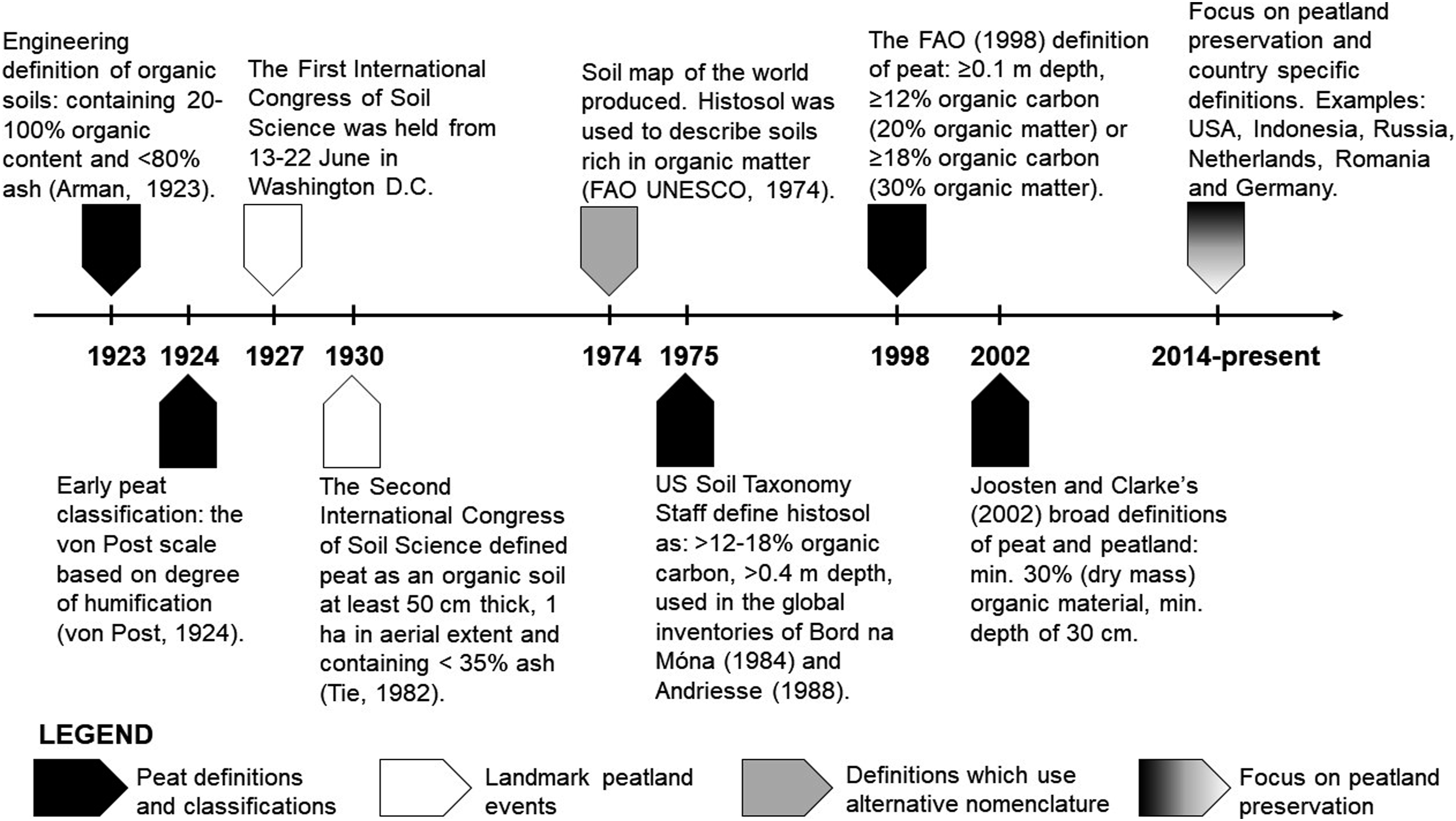
An important early development in peatland science and classification was the von Post scale (Von Post, 1924). The von Post scale classifies peat on its fibre content, and the related degree of humification or decomposition (Zulkifley et al., 2013). Although widely cited, the von Post scale remains a subjective and qualitative measure of decomposition (Grover and Baldock, 2013). Solid matter volume, bulk density and dry density have been used as proxies for decomposition and have the benefits of being objective, quantitative and easy to measure (Bloemen, 1983; Grover and Baldock, 2013). Ash content was used to differentiate between peat and muck (Davis, 1946), and continues to be used as a defining criterion in more recent definitions (Osaki et al., 2016)
In the FAO – United Nations Educational, Scientific and Cultural Organization (UNESCO) 1974 Soil map of the world, histosol was used to describe soils rich in organic matter (FAO UNESCO, 1974), and was used in parallel with other peat nomenclature used throughout the world: ‘Moor peats’ (Australia); ‘Organic soils’ (Canada.); ‘Sols hydromorphes organiques’ (France.); ‘Moorböden’ (Germany.); ‘Histosols’ (USA) and ‘Bog soils’ (USSR: FAO UNESCO, 1974) (Supplement Material). This definition acknowledged the different regional nomenclatures for peat and introduced the histosol as a defining concept. Although the definition made use of the term histosol, it did not include details regarding organic carbon content as stipulated in the definition for histosol provided by the US Soil Taxonomy Staff of >12–18% organic carbon (US Science and Education Administration, 1975). The FAO UNESCO (1974) definition included only depth and bulk density (>0.4 m, or >0.6 m if the organic material consists of sphagnum or moss or if it has a bulk density of less than 0.1) and is one of the very few definitions that includes bulk density as a defining criterion.
Defining histosol as >12–18% organic carbon, >0.4 m depth (United States Science and Education Administration, 1975), was the same as that used in the global inventories of Bord na Móna (1984) and Andriesse (1988). The definition for organic soil deriving from soil science from the FAO (1998) differs from this only with regards to depth (≥0.1 m). The FAO (1998) definition appreciates both organic carbon and organic matter percentage in its defining criteria. Broadly speaking, the definitions between Joosten and Clarke (2002) and FAO (1998) concur in terms of organic matter percentage, but differ in terms of soil depth, with Joosten and Clarke (2002) requiring >0.3 m, and FAO (1998) requiring ≥0.1 m. The definition of histosol prior to the peat definition proposed by Joosten and Clarke (2002) meant that older peatland inventories are based on the histosol definition (Montanarella et al., 2006; Xu et al., 2018).
Over the last decade, the focus of the literature has steered in the direction of preservation of peatlands (Finlayson and Milton, 2018; Rieley and Page, 2016; FAO, 2020). According to Minasny et al. (2019), establishing a national definition for peat, including minimum thickness, is important in defining mapping methodologies. Recent examples of national definitions for peat include countries such as the USA (United States Soil Taxonomy Staff, 2014), Indonesia (Osaki et al., 2016), the Russian Federation, Netherlands, and Romania (Tanneberger et al., 2017), and Germany (Schulz et al., 2019). In the IPCC 2013 Wetlands Supplement, it is “good practice” that when a country uses another definition of organic soil in accordance with its national circumstances, the concept (and its possible subdivisions) is clearly defined, and that the definition is applied consistently across the entire national land area and over time (IPCC, 2014).
Defining peatlands: current state and discrepancies
Peatland nomenclature
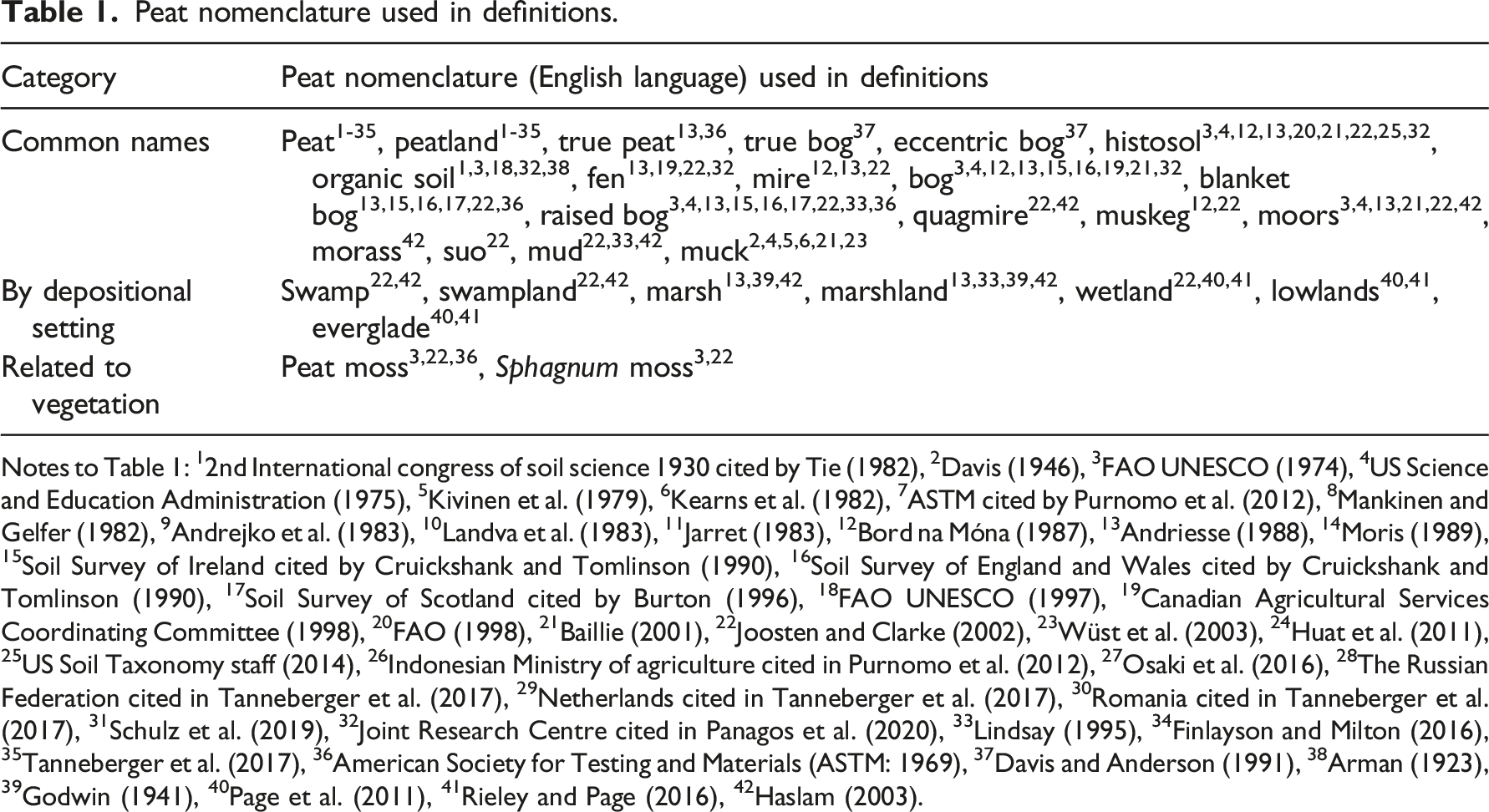
Peat nomenclature used in definitions.
Notes to Table 1: 12nd International congress of soil science 1930 cited by Tie (1982), 2Davis (1946), 3FAO UNESCO (1974), 4US Science and Education Administration (1975), 5Kivinen et al. (1979), 6Kearns et al. (1982), 7ASTM cited by Purnomo et al. (2012), 8Mankinen and Gelfer (1982), 9Andrejko et al. (1983), 10Landva et al. (1983), 11Jarret (1983), 12Bord na Móna (1987), 13Andriesse (1988), 14Moris (1989), 15Soil Survey of Ireland cited by Cruickshank and Tomlinson (1990), 16Soil Survey of England and Wales cited by Cruickshank and Tomlinson (1990), 17Soil Survey of Scotland cited by Burton (1996), 18FAO UNESCO (1997), 19Canadian Agricultural Services Coordinating Committee (1998), 20FAO (1998), 21Baillie (2001), 22Joosten and Clarke (2002), 23Wüst et al. (2003), 24Huat et al. (2011), 25US Soil Taxonomy staff (2014), 26Indonesian Ministry of agriculture cited in Purnomo et al. (2012), 27Osaki et al. (2016), 28The Russian Federation cited in Tanneberger et al. (2017), 29Netherlands cited in Tanneberger et al. (2017), 30Romania cited in Tanneberger et al. (2017), 31Schulz et al. (2019), 32Joint Research Centre cited in Panagos et al. (2020), 33Lindsay (1995), 34Finlayson and Milton (2016), 35Tanneberger et al. (2017), 36American Society for Testing and Materials (ASTM: 1969), 37Davis and Anderson (1991), 38Arman (1923), 39Godwin (1941), 40Page et al. (2011), 41Rieley and Page (2016), 42Haslam (2003).
In any scientific discipline, when terms are translated, difficulties occur as different languages often do not have identical concepts, and this is especially true for peatland definitions (Joosten et al., 2017a; Tanneberger et al., 2017). Joosten et al. (2017a) present an updated review on peatland nomenclature and terms used in Europe, but do not engage exhaustively on terminology used elsewhere. Peatland literature in different languages is extensive (Joosten, 2004; Joosten et al., 2017b; Osaki et al., 2016; Tanneberger et al., 2017). Confusion even exists within the border of a single country or within one language, as the meaning of the word may change depending on the discipline or historical context (Tanneberger et al., 2017; Xu et al., 2018). For example, in the United Kingdom, Farm Bog in London is a fen and Holme Fen in Cambridgeshire is a bog, and terms such as ‘basin bog’ and ‘valley bog’ would more accurately be termed ‘basin fen’ and ‘valley fen’ for groundwater-fed peatlands (Lindsay, 2016). Andriesse (1988) mention ‘true peat’ has 100% organic matter, ‘true peat’ is defined by the American Society for Testing and Materials (ASTM) as organic material of plant origin, excluding coal, with at least 75% organic matter (ASTM, 1969). The use of the term ‘true peat’ or ‘true bog’ as defined by Davis and Anderson (1991) may also be misleading if used in the wrong context and should perhaps be avoided as it invites other terms such as ‘false peat’ or ‘untrue peat’.
Peatland classifications
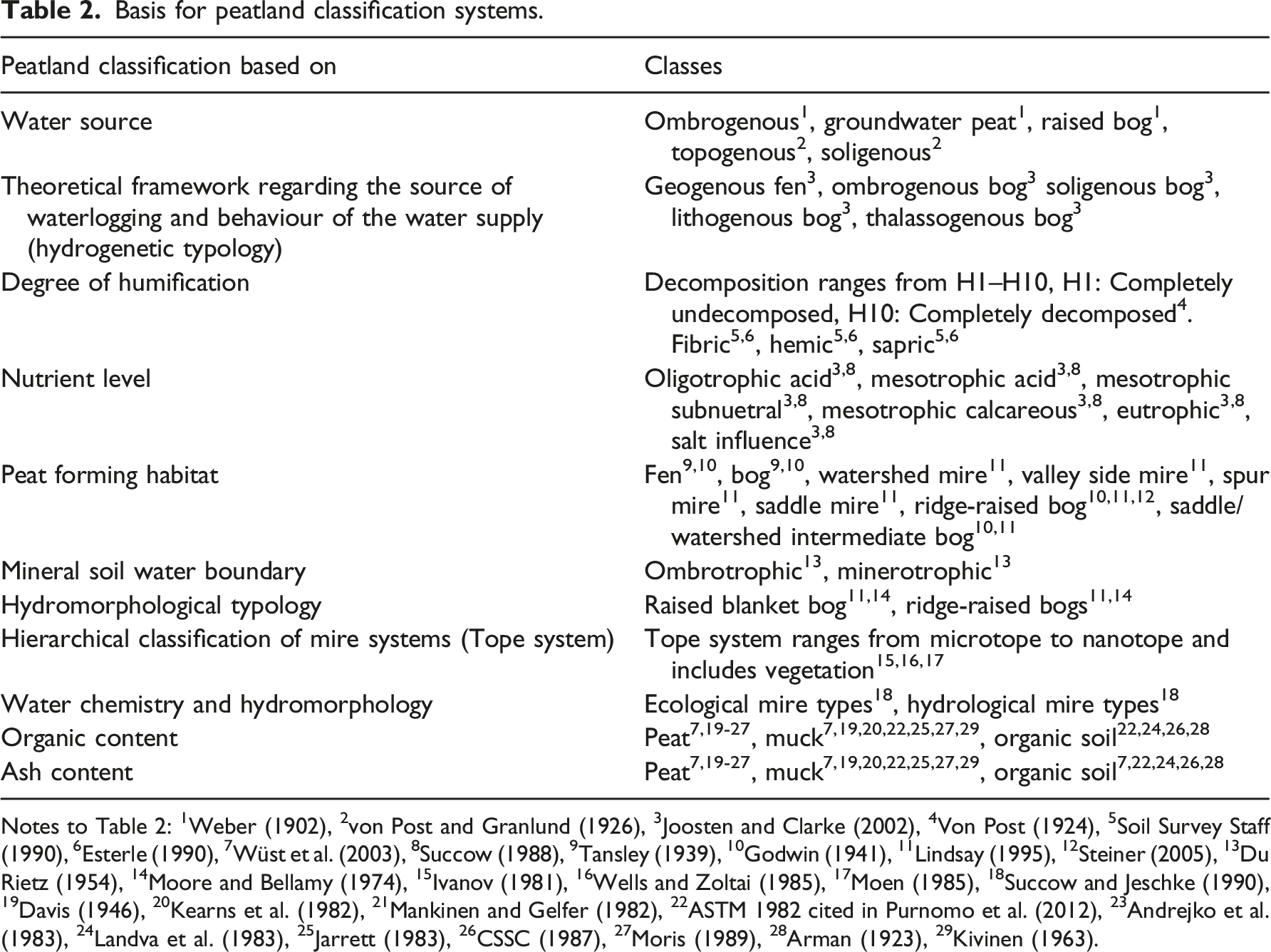
Basis for peatland classification systems.
Notes to Table 2: 1Weber (1902), 2von Post and Granlund (1926), 3Joosten and Clarke (2002), 4Von Post (1924), 5Soil Survey Staff (1990), 6Esterle (1990), 7Wüst et al. (2003), 8Succow (1988), 9Tansley (1939), 10Godwin (1941), 11Lindsay (1995), 12Steiner (2005), 13Du Rietz (1954), 14Moore and Bellamy (1974), 15Ivanov (1981), 16Wells and Zoltai (1985), 17Moen (1985), 18Succow and Jeschke (1990), 19Davis (1946), 20Kearns et al. (1982), 21Mankinen and Gelfer (1982), 22ASTM 1982 cited in Purnomo et al. (2012), 23Andrejko et al. (1983), 24Landva et al. (1983), 25Jarrett (1983), 26CSSC (1987), 27Moris (1989), 28Arman (1923), 29Kivinen (1963).
Classification may be based on the properties of the peat, such as thickness, extent, pH, carbon content, ash content, water table depth or degree of humification (Table 2; Huat et al., 2011). The most common way to distinguish these properties is to express differences on a numerical scale (Huat et al., 2011). As there are several possible defining properties, and each with its own continuous scale, the number of peatland types could be countless without variable associations (Joosten et al., 2017b). For example, Wüst et al. (2003) propose a classification system for tropical organic-rich peatland deposits, focusing on the use of ash and organic content, with 11 different classifications emerging on the basis of these alone. Peatland classification according to properties such as ash and organic content are only measurable by laboratory techniques. By contrast, Lindsay (2016) provides a review on classifications that focus on peatlands as ecosystems, including classifications based on peatland vegetation, chemistry, source water, hydromorphology and an integrated hierarchical system. Classifications that focus on peatlands as ecosystems are largely observational, requiring in-depth field observation and documentation (Lindsay, 2016).
From the perspective of climate science, accounting for carbon stocks in peatlands is essential for the carbon inventory, carbon sequestration and conservation (Law et al., 2015; Xu et al., 2018). Minasny et al. (2019) present a review on digital mapping of peatlands with calculations for carbon stock accounting. They argue that the amount of carbon in peat depends on the peatland extent, peat thickness, carbon content and bulk density. There are numerous, and often complex, expensive and time-consuming, methods for determining peatland extent (Dargie et al., 2017; DeLancey et al., 2019; Lourenco et al., 2022), whereas peat thickness, carbon content and bulk density can be determined by relatively simple and well-established field and laboratory methods (Nelson and Sommers, 1996; Chambers et al., 2011; Parry et al., 2014; Minasny et al., 2019).
Peat definitions according to depth
Peat defined according to depth from various sources.
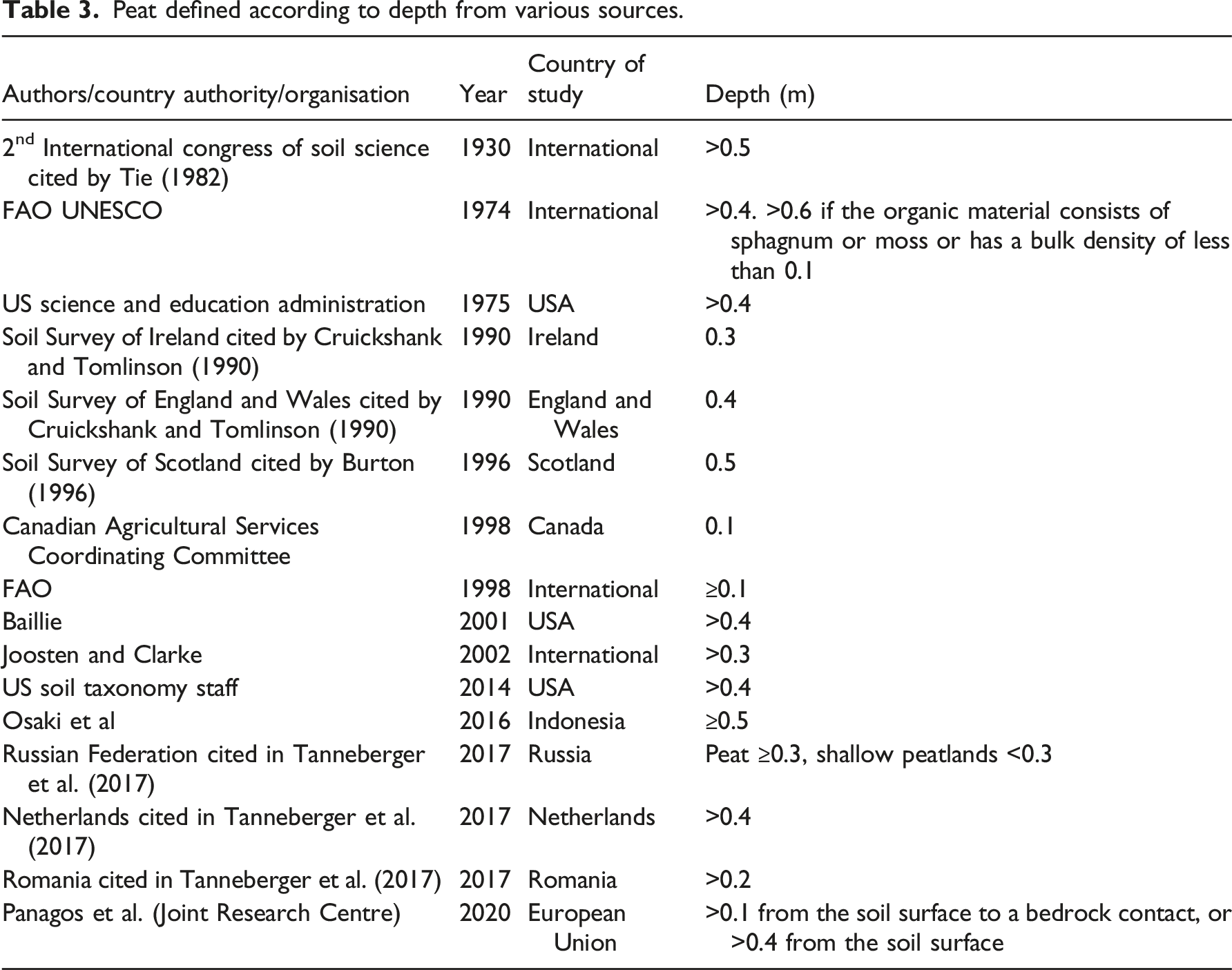
Sixteen peat and peatland definitions from various sources, spanning at least 11 different countries are listed in Table 3. The average depth among these sources is >0.3 m for a deposit to be defined as peat, but it ranges between >0.1 m and >0.6 m, with the most common depth threshold being >0.4 m. In more recent literature, peatlands as thin as 0.15 m have been recognised to hold a larger proportion of carbon stock compared to a high-carbon stock forest growing on mineral soil (Barthelmes et al., 2016). Most definitions do not recognise or classify thin peatlands; only the Russian Federation define both peat >0.3 m and paludified shallow peatlands <0.3 m (Tanneberger et al., 2017). Shallow peatlands are often more drained and degraded as they are not recognised in definitions (FAO, 2020). Thin peatlands should be included in national inventories, including the status of peatland health, reported emissions and monitoring to ensure peatland preservation (Van der Velde et al., 2021). Such monitoring systems would not be possible if inventories are based on older or even outdated definitions that do not recognise thin peatlands (FAO, 2020).
Peat definitions according to organic carbon, organic matter and ash content
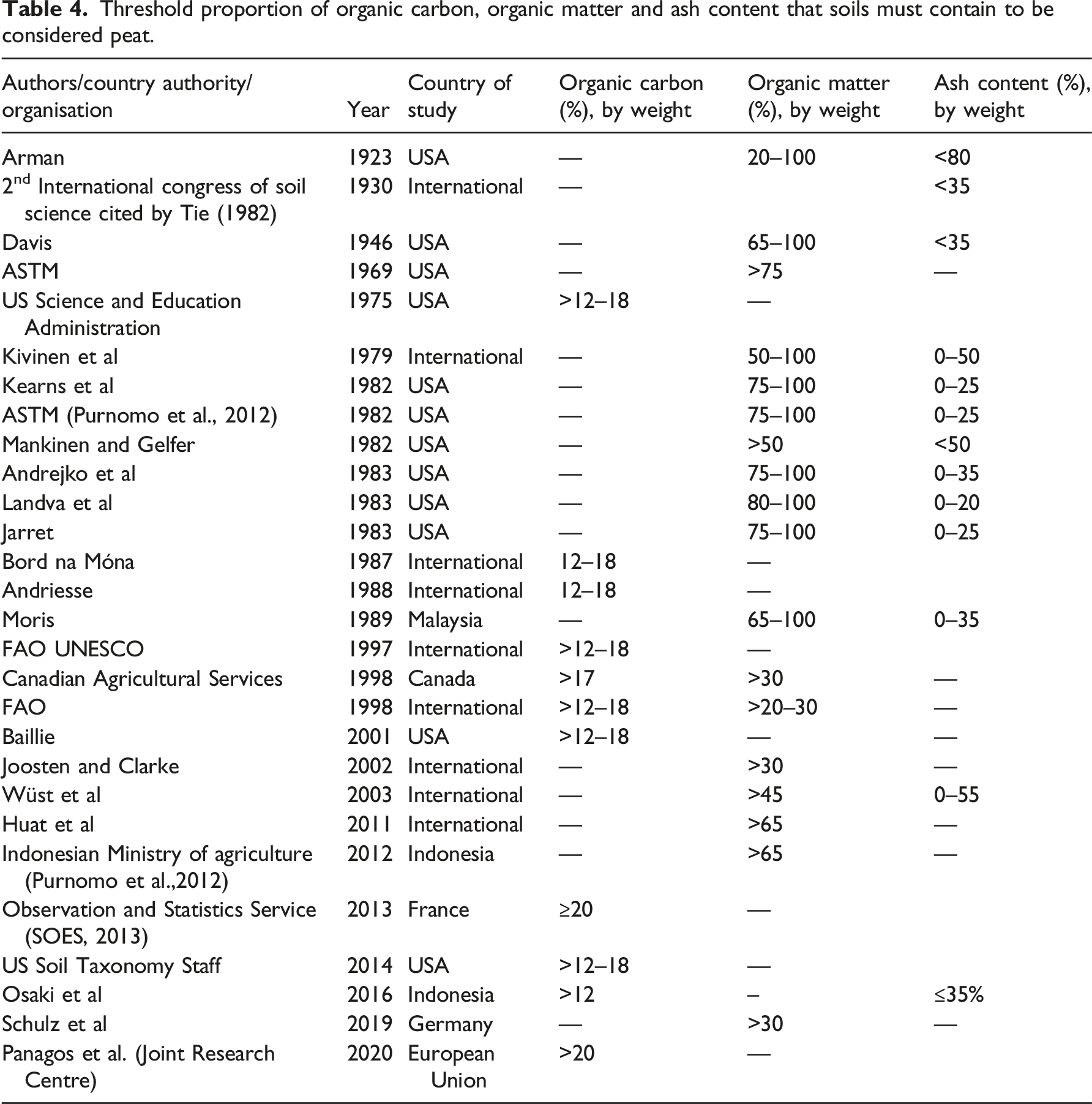
Threshold proportion of organic carbon, organic matter and ash content that soils must contain to be considered peat.
According to the FAO (1998) definition, which has been used in the IPCC 2006 Guidelines for national greenhouse gas inventories and the IPCC 2013 Wetlands Supplement (IPCC, 2014), soils are organic if they satisfy requirements 1 and 2, or 1 and 3 from the following list: 1. ‘Thickness of organic horizon greater than or equal to 10 cm. A horizon of less than 20 cm must have 12% or more organic carbon when mixed to a depth of 20 cm. 2. Soils that are never saturated with water for more than a few days must contain more than 20% organic carbon by weight (i.e. about 35% organic matter). 3. Soils are subject to water saturation episodes and have either: a. at least 12% organic carbon by weight (i.e. about 20% organic matter) if the soil has no clay; or b. at least 18% organic carbon by weight (i.e. about 30% organic matter) if the soil has 60% or more clay; or c. an intermediate proportional amount of organic carbon for intermediate amounts of clay’. (FAO, 1998: 45).
Organic soils are differentiated from mineral soils based on the dry weight percentage of organic carbon (FAO, 2020). In soil science, soils are considered organic when the threshold of 18% carbon is reached (FAO, 1998; Tubiello et al., 2016). According to Kazemian (2017), soil scientists define peat as organic soil with organic content of >35%, hence soils can be considered organic but not considered peat where the organic content is below this threshold. For example, in geotechnical engineering all soils with an organic content >20% are known as organic soil, while peat is an organic soil with organic content >75% (Kazemian, 2017). The FAO (2020) argues that this distinct value differentiating organic soil (18% carbon) is not suitable from the climate science perspective as the percent organic carbon does not include details regarding volumetric carbon content, the amount of carbon that would be emitted if the peatland were to dry and be exposed to oxygen.
If volumetric carbon content is considered, mineral soils and peatlands can emit the same amount of carbon dioxide (FAO, 2020). This is because by comparison, although mineral soils have much lower carbon content, the weight of mineral soils is much more than peat (organic soils) and therefore have just as much carbon (Nelson and Sommers, 1996). The FAO (2020) argues that the traditional definition of a peat soil based on 18% carbon content by weight or higher is thus problematic as many soils with lower carbon content – but equal or higher emission potential – can be overlooked by historical definitions. The problem of low-percentage and high-density carbon soils, which has already been recognised by various countries reporting emissions from peaty soils or peat-like soils, needs more attention from the scientific community (Barthelmes et al., 2018).
While the use of threshold values of organic carbon percentage presented in Table 4 are broadly similar, thresholds for organic matter and ash vary greatly among the definitions. The range of organic matter (Table 4) is 30–100%; the 20–100% from Arman (1923) defines organic soils and not peat. The most common threshold is 75–100%, relating to definitions originating from the USA during the 1980s 65–100% organic carbon (proposed first during 1946, and repeated as recently as 2016) is also common among definitions originating from Malaysia, Indonesia, USA and international studies. Joosten and Clarke’s (2002) and the FAO’s (1998) definitions concur in terms of organic matter percentage with Joosten and Clarke (2002) requiring >30%, and FAO (1998) requiring 30% depending on the clay content. When considering the minimum percentage organic matter (by weight), the average from all (18) of the definitions presented in Table 4 which use organic matter as a defining criterion is 55%. This is almost double the threshold presented by Joosten and Clarke (2002) and FAO (1998).
Ash content by percentage weight also varies from 0–80% according to the definitions presented (Table 4). The most common value is 0–35% (proposed as early as 1930 and as recent as 2016) from definitions originating in Malaysia, Indonesia, USA and international studies. According to Wüst et al. (2003), peat classification systems based on ash content do not differentiate between biogenically derived and inorganic terrigenous or detrital matter. Consequently, peat samples with similar ash contents may contain very different amounts of detrital mineral matter and have different physical and chemical properties (Wüst et al., 2003). In more recent definitions since the start of the 21st century, the use of ash as a criterion became less frequent than those that were proposed during the 1970s and 1980s (Table 4).
Implications of disparate definitions
Global and regional estimates of peatland areas and their carbon stock vary widely (Minasny et al., 2019). Several inventories have been produced by compiling rough country estimates and soil maps from global (Maltby and Immirzi, 1993; Joosten, 2010; Yu et al., 2010; Xu et al., 2018) and tropical (Page et al., 2007, 2011; Rieley and Page, 2016) perspectives. Each of these inventories has different results in terms of area, carbon stock, carbon density, average peat thickness and assumed carbon content (Minasny et al., 2019). The large data ranges have been attributed to the compilation of different estimations from various sources (Joosten, 2010; Page et al., 2007, 2011), and the recycling of data without careful consideration of the level of accuracy and the inventory techniques used to arrive at those estimates (Joosten, 2010; Rieley and Page, 2016). As noted by Joosten (2010), acquiring a consistent global overview of peatlands is highly complex, caused by several factors including differences in typologies, scale of analyses, changes in extent over time and error calculations in units of measurement.
While a standardised inventory approach is required, it is challenging to determine whether one definition of peat should take precedence over another, even when considering the average or most common criteria used as a basis for each definition. The ranges in parameterisation are too broad. The use of specific defining criteria is also inconsistent, as some definitions focus on certain criterion and fail to acknowledge others. Only the FAO (1998) definition for peat according to minimum organic carbon content is consistent amongst most definitions that use organic carbon as a defining criterion. However, the 18% minimum organic carbon threshold has received criticism in recent literature (FAO, 2020), especially with regards to volumetric carbon (Barthelmes et al., 2016). The definitions from FAO (1998) and Joosten and Clarke (2002) are the most citied and therefore the most acceptable to use, however, the minimum thickness of 0.3 m from Joosten and Clarke (2002) has also been criticised as thin peatlands (<0.3 m) are overlooked (Barthelmes et al., 2016; FAO, 2020). What is unlikely, and probably impossible, is to create a definition that is applicable in all circumstances across all disciplines, unless the driving force behind the definition is that of peatland preservation. In accordance with the current trend in literature, the preservation of peatlands should take precedence, rather than determining whether the peatland deposit meets the defining criteria thresholds.
Recommendations and considerations for future peatland definitions
Through collaboration of academia and national institutions, the decisions made in the early definitions regarding soil types and classifications, ecological and physical conditions for the identification of an area as a peatland, greatly influence a country’s peatland mapping methodologies, future conservation strategies and GHG emissions (FAO, 2020). Due to historical reasons, conservative approaches in defining peatlands have been used (Intergovernmental Panel on Climate Change IPCC, 2014). As a recommendation from the IPCC working groups, a conservative approach for the definitions of peatland should use a minimum thickness of 0.1 m, which would serve most monitoring and preservation objectives and recognise thin peatlands (Intergovernmental Panel on Climate Change IPCC, 2014; FAO, 2020). Regarding organic carbon, the FAO (2020) recommend that the boundary between organic and mineral soils could be better drawn at 5% carbon owing to volumetric carbon content.
In accordance with the recommendations from the IPCC working groups and FAO (IPCC, 2014; FAO, 2020), we propose that a peatland be defined as an area containing peat soil having at least 5% organic carbon through a depth of at least 0.1 m. At the time of identification, the peatland can be with or without vegetation and be either waterlogged or not waterlogged. The motivation behind this definition is for conservation purposes and from the perspective of climate science, preservation and carbon accounting. Following peatland identification, it is critical to state four important physical and chemical characteristics (irrespective of scale) of the peatland deposit and peat soil: 1. Peatland extent, 2. peat thickness, 3. peat carbon content and 4. peat bulk density measurement (volumetric carbon content). Volumetric peat carbon data should be included as part of peatland assessments and inventories, especially data from low-percentage and high-density carbon soils to address the shortfall in literature pertaining to ‘peaty soils’ and ‘peat-like soils’ (Barthelmes et al., 2018). Estimation of carbon storage and potential GHG emissions is required, and the status of the peatland should be determined and thereafter the deposit should be monitored and protected.
In FAO (2020) the authors highlight that in order for peatland preservation to occur, the focus of national authorities must be placed on mapping peatland extent with accuracy, and in this review, we extend this focus to include data regarding the carbon inventory and carbon emissions potential of each deposit. The implication is that peatland deposits should not just be inventoried as if they represent a reserve that is in a steady state, but emphasis should also be placed on the dynamic of whether a peatland deposit is actively growing (sequestering carbon) or being lost. The critical dimension in climate science is the flux rate, and actively growing peatlands need specific measures to be put in place to preserve them. Details regarding the range of peat carbon content, peat depth and peat bulk density should be included to address potential GHG emissions due to peatland degradation, and ideally the growth dynamics should become part of the routine peat inventory. In this way, it is less important whether the peatland meet the defining criteria, and more important that the deposit is mapped, documented, monitored and preserved.
Supplemental Material
Supplemental Material - Peat definitions: A critical review
Supplemental Material for Peat definitions: A critical review by Mauro Lourenco, Jennifer M Fitchett and Stephan Woodborne in Progress in Physical Geography
Footnotes
Declaration of conflicting interests
The author(s) declared no potential conflicts of interest with respect to the research, authorship, and/or publication of this article.
Funding
The author(s) received no financial support for the research, authorship, and/or publication of this article.

Supplemental material
Supplemental material for this article is available online.
References
Supplementary Material
Please find the following supplemental material available below.
For Open Access articles published under a Creative Commons License, all supplemental material carries the same license as the article it is associated with.
For non-Open Access articles published, all supplemental material carries a non-exclusive license, and permission requests for re-use of supplemental material or any part of supplemental material shall be sent directly to the copyright owner as specified in the copyright notice associated with the article.
